This is default featured slide 1 title

Go to Blogger edit html and find these sentences.Now replace these sentences with your own descriptions.This theme is Bloggerized by Lasantha Bandara - Premiumbloggertemplates.com.

This is default featured slide 2 title

Go to Blogger edit html and find these sentences.Now replace these sentences with your own descriptions.This theme is Bloggerized by Lasantha Bandara - Premiumbloggertemplates.com.

This is default featured slide 3 title

Go to Blogger edit html and find these sentences.Now replace these sentences with your own descriptions.This theme is Bloggerized by Lasantha Bandara - Premiumbloggertemplates.com.

This is default featured slide 4 title

Go to Blogger edit html and find these sentences.Now replace these sentences with your own descriptions.This theme is Bloggerized by Lasantha Bandara - Premiumbloggertemplates.com.

This is default featured slide 5 title

Go to Blogger edit html and find these sentences.Now replace these sentences with your own descriptions.This theme is Bloggerized by Lasantha Bandara - Premiumbloggertemplates.com.

Tuesday, February 9, 2021

Persona 5 Strikers Review – A Powerful Other Self

Publisher: Atlus
Developer: Atlus, Omega Force
Reviewed on: PlayStation 4
Also on: Switch, PC

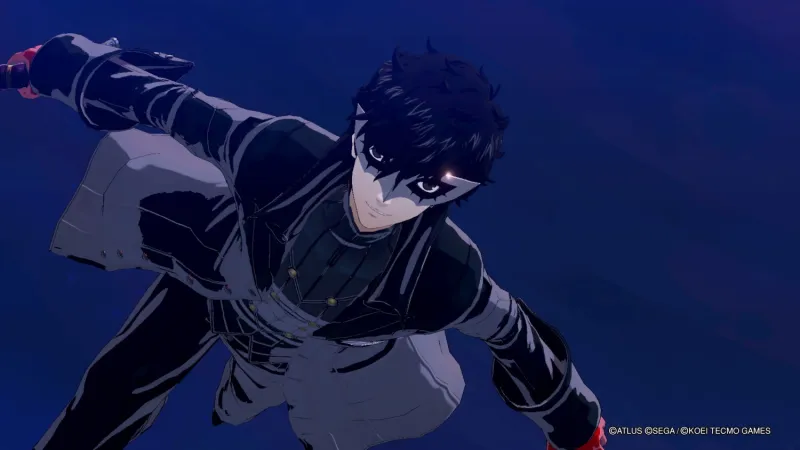
At the end of Persona 5, we parted ways with a terrific cast of characters we grew to love over the course of a 100-hour story. Last year’s Persona 5 Royal gave us an excuse to revisit that same adventure with additional content, but fans yearned for an all-new journey. Persona 5 Strikers reunites the cast from the original game six months later for an all-new trip across Japan. Even though it drastically changes a few key elements of the experience, it still feels like a true, compelling continuation of the game that stole RPG fans’ hearts nearly four years ago.

Many parts of the Persona 5 experience carry into Strikers; after hearing rumors of people abusing their power, you control the Phantom Thieves as you investigate the allegations before jumping to the cognitive world of the Metaverse to infiltrate their dungeon (which are called “jails” this time around) and change their hearts. Along the way, you fight through tons of Shadows as you progress toward the leader of the dungeon for a climactic showdown. While knowing the original game’s story enhances the experience, it’s not a requirement to enjoy Strikers. The familiarity of this formula is like a warm homecoming for those that did play Persona 5, but once you start beating up enemies, it’s evident this is a different beast from the traditionally turn-based RPG series.

When it’s time to battle, Persona 5 Strikers changes from a methodical dungeon-crawler to an all-out action game. The hack-and-slash style of combat from Musou games like Dynasty Warriors is implemented in small-scale encounters; each Phantom Thief has light and heavy attacks you use in different combinations to perform special attacks with status effects. I loved the frenetic and intuitive action that comes from slashing through hordes of enemies and watching them fly off the edge of Joker’s knife or Panther’s whip, but the combat adds extra depth using the characters’ Personas.

Click here to watch embedded media

At any point in a battle, you can summon a character’s Persona; the action pauses as you choose a spell to cast and the area it will affect. If you hit an enemy’s weakness, you open them up for a follow-up attack. If you hit them hard enough, you initiate a powerful All-Out Attack, where the whole team pounces on the enemies at once. The summoning system, when combined with the fast-paced combat and different environmental interactions, delivers a smooth experience that empowers you to take down enemies in stylish and efficient fashion. My favorite battles had me swapping between characters, rattling off different combos, exploiting weaknesses with their Personas, detonating explosive devices, dropping chandeliers, and delivering devastating final blows to close out the show. A constant stream of this action would be exhausting, but Persona 5 Strikers does a good job of pacing the encounters out within the jails.

Jails share many attributes with the palaces of Persona 5. They both exist in the Metaverse, have a ruler you’re trying to defeat to change their behavior in the real world, and are full of Shadows to take down. However, jails don’t deliver the creativity of the palace design. I appreciated the waypoint always telling me where to go, but when nearly every jail is a point-A-to-point-B venture, I eventually felt like I was simply going through the motions to reach my destination. One jail attempts to mix up the formula with a short stealth section and paths with portals that dump you in other areas, but these changes come across more as half-hearted gimmicks that I was glad to see abandoned after one appearance.

Each jail is ruled by a monarch, a powerful individual in the real-world who has found a way to steal the desires of everyday people to essentially enslave them. Instead of giving in to one of the seven deadly sins, monarchs have had their hearts corrupted by some form of personal trauma. I sometimes struggled to sympathize with the characters when the time came for their change of heart, but when this narrative thread works, the story of Persona 5 Strikers delivers some truly touching sequences about how trauma can change a person. These moments are enhanced by how many of them draw parallels to what a member of your team went through in the first game.

Click image thumbnails to view larger version


Catching up with various members of the Phantom Thieves was the element I was most excited for in Persona 5 Strikers, and it delivers for the most part. I loved learning what they’ve been up to since the first game and watching them grow even more through this adventure. However, I was disappointed to have limited social-simulation opportunities. The social-link mechanics are nowhere to be found in Strikers. Instead, you have a bond system that lets you upgrade the party. You can talk to the characters around the city and invite a companion of your choosing to do certain activities during the story, but the conversations are typically inconsequential and underwhelming.

While not every disparate element comes together as well as it did in Persona 5, I was more than happy to go on another adventure with the characters I developed such bonds with back in 2017. The action may play out completely differently, but the heart of the series remains intact.

Score: 8.5

Summary: Even if the action of Strikers is very different, the spirit and heart of the mainline series carries into this enjoyable sequel.

Concept: Embark on another adventure with the Phantom Thieves set six months after the conclusion of Persona 5. Hang out, solve mysteries, and explore dungeons along the way

Graphics: The impressive visuals are overflowing with style and flash during the action-driven battles

Sound: Strikers adds all-new tracks to Persona 5’s already-excellent soundtrack, alongside remixes of old favorites. I loved hearing the original cast reunite to voice their characters once again

Playability: Exploring Metaverse dungeons feels similar to the palaces you remember, but now the turn-based battles are replaced with frantic hack-and-slash fare that is a surprisingly natural fit for the series

Entertainment: While Persona 5 Strikers disappointingly removes the mainline series’ social links, it carries over enough familiar elements to feel like a true successor

Replay: Moderate
Click to Purchase

Little Nightmares II Review – A Horrifying City For Lost Children

Publisher: Bandai Namco
Developer: Tarsier Studios
Release: 2020
Reviewed on: Xbox One
Also on: PlayStation 5, PlayStation 4, Switch, PC

A young boy awakens in a clearing, a disproportionally large television bathing the area an eerie cathode-ray-tube blue. This boy, Mono, will soon meet the hero from the first Little Nightmares – and also get an introduction to what he’s truly up against. In this world, you’re constantly underpowered and pursued by towering creatures who see you, at best, as vermin to be eradicated. It’s a masterfully executed sequel that shows that the first game wasn’t just a fluke.

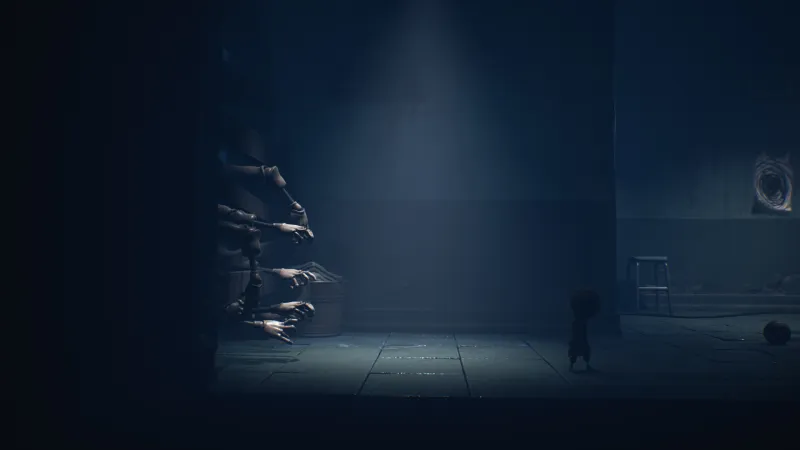
I love Little Nightmares II’s structure, despite its awful inhabitants. It’s broken into several extended vignettes in which Mono and Six contend with an oversized monstrosity while trying to escape to the next area by solving puzzles and staying out of sight. The first game had memorable encounters such as with the janitor, who blindly groped around for Six with his horrifically elongated arms. I wasn’t certain if the follow-up would be able to capture those amazing designs or the dread they created. Those fears were misplaced. 

Click here to watch embedded media

Little Nightmares II has even more ghoulish adversaries, including a teacher who made involuntarily blurt “Nope!” as soon as I understood what she was truly capable of. Part of the fun, if you’d call it that, is watching these oddly animated humanoids lurch around their environments, performing their work while you stay low and search for an escape. You have to be patient, choosing the right moment to scurry past or risk getting caught. That means waiting for the teacher to turn her back and scrawl nonsense on the blackboard or, later, for her to cram suspiciously squishy organs into the empty spots on an anatomical model – a model that’s partially dressed in a school uniform.

There’s an abundance of horrific imagery and dread-inducing atmosphere, but you don’t need to face it all alone. Puzzles are creative and rely on the team dynamic between you and the A.I.-controlled Six. She’s a helpful companion, whether by giving you a boost or pointing out next steps in a tricky sequence. You routinely split up, too, so her presence doesn’t drain the tension out of scenarios. While you still turn your share of cranks and push boxes around to reach high places, new abilities and systems keep things fresh and surprising even in the late game.

Click image thumbnails to view larger version


Little Nightmares II extends the series’ lore in significant ways; you could probably jump right into it, but I’d strongly recommend playing the original and its DLC first. The story won’t be nearly as satisfying without having that background. The second game is an enhanced version of what came before, retaining what makes the formula excellent while buffing out some of its more frustrating elements. For instance, Mono automatically sticks to narrow walkways, which is a godsend considering the camera’s dynamic positioning. Some of the jumps are still a little sloppy, but at least you don’t need to tediously edge along pipes or planks one step at a time or risk plummeting to your doom.

The sensation of being small and powerless in a dangerous world remains at the core of Little Nightmares II. Though Mono does have the ability to defend himself, that combat is where the game is at its weakest. Mono isn’t a melee powerhouse; when he grabs pipes or axes, he’s barely able to drag them behind his diminutive frame. As such, winding up for an attack takes time as he coaxes up the necessary strength. And you’re not fighting the bigger showcase enemies, but smaller, quicker creeps. You can probably see the problem here: If you whiff it, you’re basically dead. Nicely spaced-out checkpoints minimize the frustration of failure, but fighting back rarely feels empowering.

One of my favorite things about the first game was being introduced to a bizarre world and trying to determine Six’s place in it. It’s ambiguous enough to allow for multiple interpretations, and Little Nightmares II continues to invite speculation. There are new elements to consider, but I was still left with an abundance of questions after its shocking ending. Fans of macabre and sinister environmental storytelling, consider this your first essential title of 2021.

Score: 9.25

Summary: This impressive follow-up builds on its predecessor with emotional gut punches and unnerving visuals that stick with you.

Concept: Continue to flesh out the series’ expanding lore, introducing a new child who guides Six through a horrifying city

Graphics: Brace yourself for some truly terrible sights, amplified by eerie lighting and depth-of-focus effects

Sound: The soundscape is sparse, but effective. Bare feet slapping on concrete and ambient hums are the primary sounds for long stretches

Playability: Quality-of-life upgrades make essential actions like carrying keys and scrambling along narrow walkways much easier than they were in the original

Entertainment: This impressive follow-up builds on its predecessor with emotional gut punches and unnerving visuals that stick with you

Replay: Moderately low

Click to Purchase

Friday, February 5, 2021

Olija Review – Cast Away Any Doubt

Publisher: Devolver Digital
Developer: Skeleton Crew
Reviewed on: PlayStation 4
Also on: Xbox One, Switch, PC

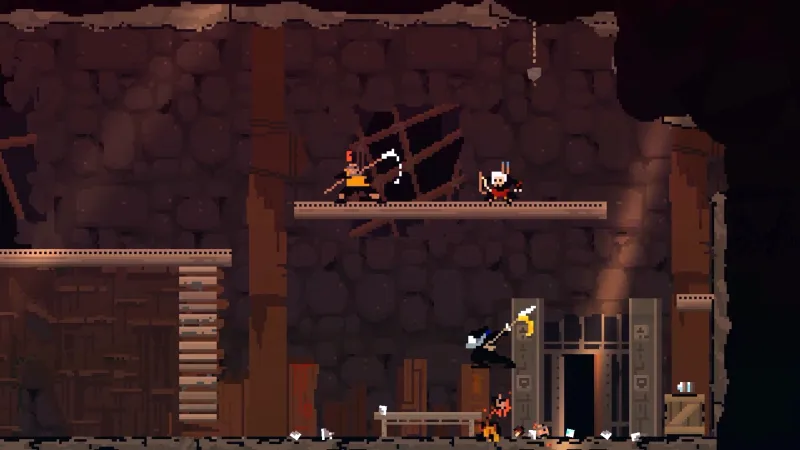
Olija stars Lord Faraday, leader of a struggling fishing village who gets shipwrecked during an expedition. He awakens alone in Terraphage, a collection of islands corrupted by an ancient evil and home to a foreign civilization governed by the mysterious Lady Olija. Who is Olija, what is this malevolent force, and how does Faraday rescue his crew and return home? Answering those tantalizing questions is a blast, because Olija looks good and plays better, making it one of the year’s first pleasant surprises.   

Static images of Olija (pronounced “ooo-lee-ah”) don’t do the presentation any favors. It has a simple, pixelated look, but it’s backed by smooth animation that evokes classics like Prince of Persia and Another World. The game also has style for days thanks to its dramatic cutscenes (expect frequent cuts to black), foreboding soundtrack, and surprising gore. The unfamiliar, subtitled language adds to that cinematic quality, though my favorite moments are communicated nonverbally. One great scene involves delivering a rose to a maiden without her knowing, leading to a cute interaction that doesn’t need a single word to be uttered. 

Click image thumbnails to view larger version


Beneath its simple-looking appearance, Olija is a satisfying action game. Players can unleash multi-hit combos, launch enemies airborne, juggle them a bit, and send them flying into walls – and it feels good. A magic harpoon acts as your primary weapon, and can impale enemies from afar, allowing you to then warp toward them. Teleporting in the face of airborne threats feels slick, as does recalling the harpoon to strike enemies on the return trip. You also have a collection of subweapons, such as the fast and combo-focused rapier or the powerful shotgun. Best of all, subweapons can be swapped on the fly, meaning you can combine attacks and adjust strategies. 

Special hats serve as your sole form of equipment. You craft these items yourself, and each hat bestows a unique perk, such as firing dagger-like feathers while dodging, siphoning health on kills (my favorite), or the ability to spin the harpoon like a buzzsaw. These abilities are largely enjoyable and can definitely help, but they're also not make-or-break assists. You’re bound to one hat per mission, but I rarely felt as though specific headwear was required for any task. While that allows flexibility, it also makes hats feel somewhat inconsequential. They do make Faraday look pretty snazzy, though. 

Levels feature multiple paths and, somewhat strangely, no dungeon maps. Though I didn’t get turned around often, there are larger, tougher-to-track areas where a map would ease exploration. I had a great time exploring Olija’s world. Platforming feels good, and the environmental puzzles are clever. For example, correctly navigating giant mouths that warp (read: spit) Faraday around the map. Unique segments, such as an entirely stealth-focused area and a thrilling escape sequence, keep exploration fresh. Also, I never got tired of throwing the harpoon off-screen, latching onto something, then warping to find a secret collectible or captive crewmate. Generally, you’re looking for keys to open a big, end-of-level door, which usually leads to an entertaining boss fight. While some battles feature large-scale fights against grotesque monstrosities, one-on-one duels with human foes change things up with a more intimate, strategic focus that requires reading behavior instead of just attacking full force. 

Click here to watch embedded media

Between islands you build up Oaktide, a derelict port that serves as your home base. Rescued crewmates return here, and the more you find, the livelier and more jubilant the port becomes, which in itself is a reward. Players can unlock a potion shop to permanently increase the health bar, dine at a soup kitchen to restore vitality, and pay a sea captain to search for additional treasures. I’m a fan of this sort of base-building feature, and while Olija’s version is far from the deepest example of it, it is still gratifying. The only downside is that once you fully upgrade your health and get every hat (which isn’t hard to do) the money and trinkets you continue to collect effectively become useless. 

Olija isn’t a long game; it took me a little over four hours to finish even after gathering most of its collectibles. But it packs a lot of good stuff in that timeframe and never wears out its welcome. With tight gameplay, fun exploration, and an alluring atmosphere, Faraday’s disastrous voyage turns into a rewarding expedition. 

Score: 8.5

Summary: Tight gameplay, fun exploration, and an alluring atmosphere turn a disastrous voyage into a rewarding expedition.

Concept: After getting shipwrecked in a mysterious land, you recover your missing crewmates and battle an ancient menace to return home

Graphics: Olija makes the most of its pixelated art direction with fluid animations and cinematic cutscenes

Sound: A foreboding soundtrack maintains an atmosphere of eerie unfamiliarity and alluring mystery

Playability: The fast-paced combat feels great and teleporting with your magic harpoon acts as a fun tool in battle and exploration

Entertainment: It may be brief, but Olija confidently blends satisfying action and engaging exploration for a treat that shouldn’t be overlooked.

Replay: Moderately High

Click to Purchase