This is default featured slide 1 title

Go to Blogger edit html and find these sentences.Now replace these sentences with your own descriptions.This theme is Bloggerized by Lasantha Bandara - Premiumbloggertemplates.com.

This is default featured slide 2 title

Go to Blogger edit html and find these sentences.Now replace these sentences with your own descriptions.This theme is Bloggerized by Lasantha Bandara - Premiumbloggertemplates.com.

This is default featured slide 3 title

Go to Blogger edit html and find these sentences.Now replace these sentences with your own descriptions.This theme is Bloggerized by Lasantha Bandara - Premiumbloggertemplates.com.

This is default featured slide 4 title

Go to Blogger edit html and find these sentences.Now replace these sentences with your own descriptions.This theme is Bloggerized by Lasantha Bandara - Premiumbloggertemplates.com.

This is default featured slide 5 title

Go to Blogger edit html and find these sentences.Now replace these sentences with your own descriptions.This theme is Bloggerized by Lasantha Bandara - Premiumbloggertemplates.com.

Thursday, March 25, 2021

Story of Seasons: Pioneers of Olive Town Review – Simple Comfort Over Ambition

Publisher: XSEED Games, Marvelous Games
Rating: Everyone
Reviewed on: Switch

No franchise has been in the farming game as long as Story of Seasons, best known as Bokujo Monogatari in Japan (and previously known as Harvest Moon in North America). Celebrating its 25th anniversary, the series created a formula that’s inspired hit games like Stardew Valley. But in recent years, it’s struggled to stay relevant with fresh ideas. Story of Seasons: Pioneers of Olive Town tries to keep the flame alive by having you develop a town and providing fun features (like a photo mode and museum) to fill with discoveries. The loop is entertaining, but the rewards aren’t satisfying enough for the investment required to get them.

Like its predecessors, Pioneers of Olive Town begins with you landing in a small village and starting a new life as a farmer. Olive Town is struggling, and the mayor asks for your help in turning it around. You receive development projects, which require you to gather up the right materials to improve vital elements like roads, benches, and the town hall. Watching the city transform with each upgrade feels worthwhile, since more tourists come to the area and Olive Town begins to look much more attractive. However, don’t expect to have much control over the town’s transformation. You get asked questions as if your opinion and direction matters, but all answers lead to the same place, and going on fetch quest after fetch quest gets tiresome fast.

That being said, the core loop of taking a farm from nothing to a successful operation is still entertaining. I looked forward to every facility upgrade, new animal, or crafting recipe I could unlock. While you’re wandering the wilderness, you can also now tame wild animals and bring them to the farm, meaning you’re not always shelling out cash for new livestock. Money can come easy, but it’s the materials you need for the crafting, townspeople requests, and building improvements that bring on the challenge. I didn’t mind this at first; breaking rocks for ores, cutting down trees for lumber, and cleaning up puddles for clay is simple enough. But these items need to be processed in machines, and each machine has a singular purpose, from converting milk into cheese to turning wool into yarn. The problem? Not only are there far too many of them for each little thing, but inserting the required materials only produces one converted item, so if you need 50 of a specific type of lumber (and you will), it can take a maddening amount of time. You can build more than one of each machine type, but they take up vital space.


My journey through Pioneers of Olive Town was full of highs and lows. Things either came too easy, like wooing the townsperson of my choice, or required too much effort, like unlocking some farm facilities. I was impressed with how much there is to do, but it all comes at a cost; I felt like I could never spend time exploring certain aspects, such as creating clothing or getting into cooking, because they require precious time and feel insignificant compared to your other tasks.

Olive Town’s areas seem small at first, but as you build bridges to new areas, meet Earth Sprites that take you to special locales, and search various caves with treasure-filled floors, things expand a great deal. You are constantly improving your skills as you do the basic tasks of tilling the land, cutting down trees, breaking rocks, and this in turns opens up more crafting recipes to get you things like automatic feeds for your livestock or decorative furniture. This provides a satisfying sense of your character progressing and new things to always look forward to.

I also enjoyed the fun little touches like being able to ride a motorcycle or use the various mounts to get around. Festivals are hit-or-miss, with some being more interactive than others. The game also provides a museum similar to Animal Crossing, where you can donate your treasures, fish, and photos you’ve taken of wildlife. Furniture and house upgrades are also aplenty, even though your house feels a little confined to where you can place things. You have this spacious layout, with only a selected, smaller area to really decorate as your own.

Click here to watch embedded media

For those interested in the social aspects, you get new scenes at a steady rate by walking around the town and talking to villagers, which made me want to take the time to visit them. I looked forward to these scenes to learn more about the people in Olive Town, but overall, I didn’t find this cast memorable or exciting. No one is outright annoying (except for maybe food critic Lovett), but the villagers simply fill their roles as shop owners and members of the community and offer nothing unique beyond that. The events as you progress in a romance fare much better, as they really do capture the chemistry and growth in your relationship.

I mostly had a pleasant time with Pioneers of Olive Town, but it isn’t the most technically sound game. Patches have continued to improve my experience, but expect some annoying loading times, framerate issues (especially stuttering), and the occasional game freeze. Nothing caused me to stop playing in frustration, but be aware that this is still not the smoothest experience.

Pioneers of Olive Town is a decent Story of Seasons entry, but it’s not more than that. I still got absorbed by the core formula of bettering my farm and loved making new discoveries as I explored. I have plenty of things I enjoy about this game, but encountered just as many that didn’t hit the mark. I also can’t get away from thinking, after all this time, shouldn’t this series be making larger leaps forward and leaving a stronger impression?

For more on Pioneers of Olive Town, you can check out these five fast tips from the director!

Click image thumbnails to view larger version


Score: 7.5

Summary: The core farming loop is still entertaining, but the rewards aren’t satisfying enough for the investment required to get them.

Concept: Make a new life as a farmer while developing a struggling town

Graphics: The animal designs are all adorable, but the graphics don’t stand out

Sound: The music varies depending on the events of the day and season, but it’s mostly unremarkable background noise as you work

Playability: This title is approachable for fans and newcomers. Technical issues, like freezes and the framerate, get in the way of a smooth farming experience

Entertainment: Story of Seasons: Pioneers of Olive Town provides a new and entertaining farming adventure, but some design decisions hold it back from becoming a must-play entry

Replay: Moderate

Click to Purchase

Wednesday, March 24, 2021

Devotion Review – An Exceptional And Frightening Homecoming

Publisher: Red Candle Games
Developer: Red Candle Games
Reviewed on: PC

Devotion raised every hair on my body and had me questioning my decision to play it within the first few minutes of stepping into its twisted world. As I braved its dangers, I understood why it earned acclaim when it first launched in February 2019. Unfortunately, only days after that initial release, the game was pulled from online storefronts after a controversy surrounding an in-game joke at the expense of China’s president. Two years later, developer Red Candle Games has finally made Devotion available again. Horror fans who missed it the first time around shouldn't wait; Devotion is a terrifying and memorable adventure worthy of its reputation. 

The bulk of this unnerving experience involves exploring a small apartment in Taiwan over the course of several years in the 1980s. You learn the tragic story of a family torn apart by marital turmoil, professional setbacks, and the stress of raising a chronically ill child. Gameplay consists of collecting clues and items to solve a series of well-made (and sometimes interconnected) puzzles that are satisfying yet stressful to complete because you know there’s usually something sinister waiting around the next corner. Movement is deliberate without feeling slow and that's for a reason; every time I turned around was tense as I braced for the worst – and often found it.

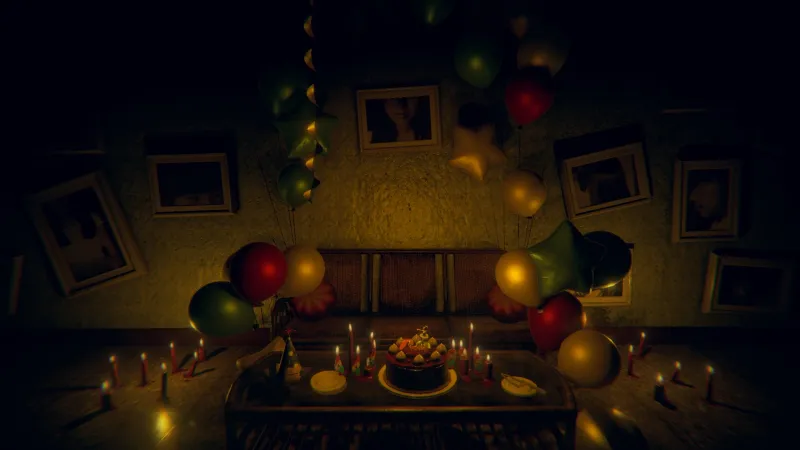
Devotion’s psychological scares keep you on your toes and do a great job of being effective while maintaining impressive creativity. The apartment changes depending on the year, so new types of scares are regularly surfacing, whether it’s something as blatant as a mannequin-laden birthday party or an elaborate mechanical diorama sequence. Thanks to the fantastic sound design (I recommend headphones), simply hearing doors slam or windows rattle from a thunderstorm is enough to have you holding your breath in expectation of the worst. Devotion loves messing with your mind, and it kept me on edge to the point that I was jumping at things that weren’t even there because the atmosphere is so oppressive.

As miserable as I often felt stepping into the next chilling iteration of that cursed apartment, I love and admire Devotion’s commitment to scaring the pants off of you without devolving into cheap or largely predictable tactics. This is a smartly laid out haunted house that seems to know the perfect moments to hit the pedal on the scares before easing back, but it never turns off the gas completely. I also respect that Devotion isn’t a one-trick pony. The story eventually ventures beyond small confines into more otherworldly settings, though it loses a bit of its punch in doing so. However, I like how the puzzle design evolves into more freeform scenarios after a linear beginning.


Devotion may be terrifying, but it also offers a compelling narrative with a surprising amount of heart. The story is ultimately about a child coping with terrible parents on top of her own troubles, and her anxieties made me sympathetic while also creating another, more relatable trauma: the fear of losing your family. You don’t want to see any harm come to this poor kid, especially after a fantastic whimsical sequence where you read her favorite storybook together. These lighter moments aren’t plentiful, but they’re awesome for allowing you to exhale for a bit. They also further demonstrate Red Candles’ chops when it comes to mixing up the adventure with different gameplay ideas.

Devotion wraps up before it loses steam, making it a tightly packed house of horrors worth braving. It’s a shame that the game was inaccessible to players for as long as it was, but now you can enjoy one of creepiest titles in recent memory. If you can muster up the courage, you’ll be rewarded with a delightfully disturbing experience that deserves a chance to terrify a broader audience.

Click image thumbnails to view larger version


Score: 9

Summary: Devotion is terrifying experience backed by a compelling narrative that has a a new lease on life after spending two years removed from sale. Horror fans would do well not to miss it a second time.

Concept: Uncover the fate of a small, troubled family by exploring their apartment in different time periods while confronting a host of supernatural phenomena

Graphics: The spaces are packed with detail, and the ever-shifting imagery keeps you on edge

Sound: Excellent sound design makes every strained creak or gust of wind as alarming as any apparition

Playability: Movement is appropriately deliberate without feeling slow or tedious

Entertainment: Devotion’s powerful atmosphere, frightening sequences, and fascinating story make it a creative and engrossing gauntlet of scares

Replay: Moderate

Click to Purchase

It Takes Two Review – The Joys And Heartbreak Of Love

Publisher: EA Originals
Developer: Hazelight
Rating: Teen
Reviewed on: Xbox Series X/S
Also on: PlayStation 5, PlayStation 4, Xbox One, PC

Beneath exhilarating rollercoaster rides and silly conversations with squirrels, It Takes Two has a heavy heart. It’s about divorce and the toll taken on a daughter who doesn’t want to lose her family. It’s about decaying love and the differences that divide us. It’s about not wanting to face reality and not wanting to let go. It’s also about hope and uncertainty, the past creating a better future, and finding common ground no matter how much it may hurt. All of these elements are beautifully woven into a colorful and soulful adventure that hits hard, both in its moving narrative and clever gameplay. It Takes Two succeeds in being a game that pushes two individuals to work together to create a relationship that works, but for how long?

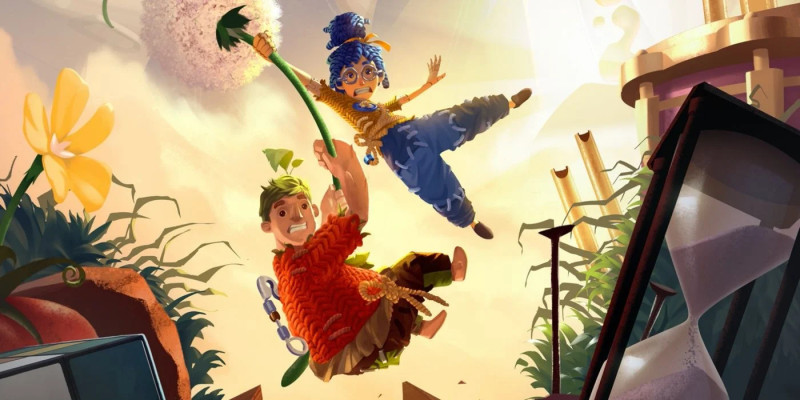
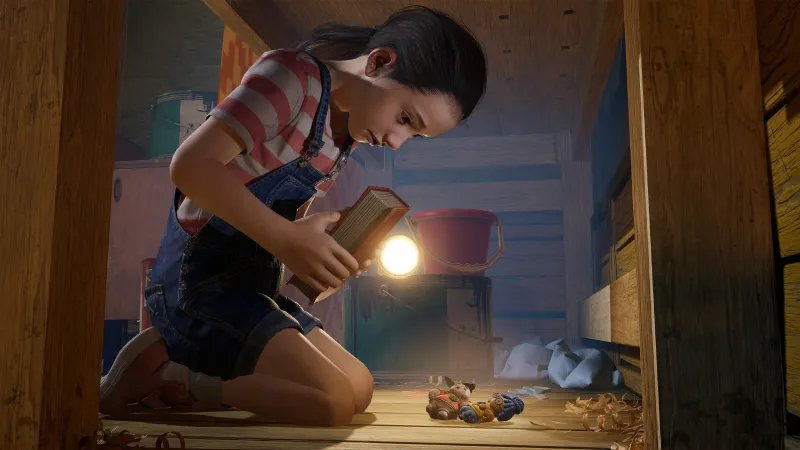
In an emotional opening shot, we see a little girl named Rose run off to her play space after her parents, Cody and May, tell her that they are separating. She’s devastated and keeps saying she just wants them to be “friends." As hard as it is for Rose to accept the news, we learn she’s been expecting it. Not only has she made two action figures of her parents to play make-believe with – to show them the way she wants them to be – she’s also secretly purchased a “Book of Love” to learn how to make them care about each other again.

Rose’s tears fall from her cheeks onto the figures and book, conjuring magical forces that sweep through the house. When we next see Cody and May, their souls have been passed to their miniature, wooden and clay counterparts. As these two adults rightfully panic in their new bodies, the Book of Love greets them as an upbeat, comical figure named Dr. Hakim, who promises to help them mend the bond they once shared. The entire adventure is told from this diminutive perspective and delivers a nicely written story that unfolds amid treacherous action sequences. The blending of narration and gameplay works incredibly well, giving you plenty of insight into the minds of Cody and May as they leap about and race to find a way to return to their normal lives (and sizes).

Dr. Hakim doesn’t want them to move so fast, however, and thinks they should stay small to work out their differences. This somewhat nefarious desire of his is brilliantly transformed into the foundation of the adventure. As the name of the game implies, It Takes Two can only be played cooperatively by two people, either sitting on a couch together or online. While each player is asked to complete individual platforming challenges, not much progress can be made unless the duo is working together. Almost every significant movement demands teamwork, communication, and patience between the two players. Even when playing online, the screen is always split in two so you can see exactly what your partner is doing, an excellent touch that allows for the other player to problem solve with verbal guidance.

Click image thumbnails to view larger version


Cody and May share the same basic moves, but are given different tools to use in each world. This makes them feel distinct and sets the stage for one person to always have ownership over a specific type of action. For instance, Cody has explosive gel, but it can only be detonated with May’s rifle. Later in the game, Cody can change sizes, while May is equipped with magnetic boots – an odd pairing that is used to let both characters interact in the world in different ways to open up new routes.

Combining the actions of both players is used in almost every sequence, which are usually wonderfully designed, delivering plenty of laughs, edge-of-your-seat moments, and a unique flow that necessitates teamwork. A few sequences push both characters to do the same type of action, but with slightly different thinking and motions for each, such as having to spin the water wheels on a boat in different directions to avoid running into mines. This is the type of activity that will have you yelling back and forth as you stumble with what you want the other player to do in conjunction with your movement.

While It Takes Two will be talked about for its cooperative-only design and subject matter, developer Hazelight’s biggest triumph is the variety in action. When a particular gameplay idea has been explored fully, the action transforms into something new, which is taken for a ride in fun ways before expiring and presenting another idea. It's amazing how many different concepts are explored, almost coming across like a greatest hits of everything you can do in action games. Some of these ideas work better than others, but most of Hazelight’s attempts are incredibly well executed, such as riding on the back of a magical catfish, roaring down an icy slope in a bobsled, or using a fidget spinner to launch into the air.

Click image thumbnails to view larger version


The core gameplay of running and jumping is consistent in every world, but the problem-solving elements are always being shaken up. Hazelight even provides a breather from the action from time to time through amusing minigames that allow you to compete against your partner, give them a helping hand, or in some cases, take out your stress on them (like hitting them on the head in a game of whack-a-mole).

Constant verbal communication is an absolute must for almost every little sequence, which again gives this game a bit of a unique stance. Many of the challenges will have you saying phrases like “throw the switch…now!" Some of the co-op feats can be brutally difficult both in timing and movement, leading to both players dying plenty, but checkpoints are liberally dispersed. If you miss a jump, you usually start again right at that spot (or just a few gameplay steps back from it). Progress being updated so often helps save the game from its slightly stiff and imprecise platforming mechanics. If both players die, they'll have to restart a boss fight or backtrack to redo a little of the level, but a nicely designed quick self-revive mechanic limits those moments.

Click here to watch embedded media

The platforming is sophisticated, requiring double jumps and air dashes, along with rope swings and more. None of these actions are completely reliable or as fluid as you want them to be, but are good enough to get the job done. Hazelight is quite aware of just how often timing missteps can be made and aids the player by having characters automatically be pulled to a ledge rather than miss if they are close. It’s odd to see Cody or May magically move through space, but it’s better than having to try a difficult action again. The helpful warping happens everywhere in the game, whether you are a good five feet under a rail slide and suddenly find yourself on it or are about to miss a jump to a tree branch.

It Takes Two may not be the platforming juggernaut that it aspires to be, but it more than makes up for it with its big heart, wealth in variety, and gorgeous imagery. All of its individual actions are things we’ve done in other games, but when applied to this distinct cooperative approach, they take on a whole new life and are used in wonderful ways over a long adventure. The action will have you laughing and screaming at your TV, and the story stays strong throughout, creating the backbone for an entertaining adventure that roars with excitement and should keep you glued to the controller to see if this couple’s lost love can be rekindled.

Score: 9.25

Summary: Hazelight's cooperative adventure is clever, different, and loads of fun.

Concept: An expertly designed cooperative experience that pushes each player to do different things in concert to solve challenges

Graphics: The worlds soar with realistic details. It’s fun to see how ordinary objects are brought to life to either transform into bosses or NPCs

Sound: Your characters often converse as the action unfolds, and the music fits the sequences well, even conjuring up familiar melodies of classics like “Flight of the Valkyries”

Playability: Many different gameplay ideas are explored, and none overstay their welcome. The variety is great, but the core platforming mechanics are not as reliable as they should be

Entertainment: A roaring success both in its diverse co-op-driven gameplay and mature story themes that unfold in playful and heartfelt ways

Replay: Moderately High

Click to Purchase