This is default featured slide 1 title

Go to Blogger edit html and find these sentences.Now replace these sentences with your own descriptions.This theme is Bloggerized by Lasantha Bandara - Premiumbloggertemplates.com.

This is default featured slide 2 title

Go to Blogger edit html and find these sentences.Now replace these sentences with your own descriptions.This theme is Bloggerized by Lasantha Bandara - Premiumbloggertemplates.com.

This is default featured slide 3 title

Go to Blogger edit html and find these sentences.Now replace these sentences with your own descriptions.This theme is Bloggerized by Lasantha Bandara - Premiumbloggertemplates.com.

This is default featured slide 4 title

Go to Blogger edit html and find these sentences.Now replace these sentences with your own descriptions.This theme is Bloggerized by Lasantha Bandara - Premiumbloggertemplates.com.

This is default featured slide 5 title

Go to Blogger edit html and find these sentences.Now replace these sentences with your own descriptions.This theme is Bloggerized by Lasantha Bandara - Premiumbloggertemplates.com.

Tuesday, April 6, 2021

Lost Words: Beyond The Page Review – A Touching Tale Full Of Emotional Highs And Lows

Publisher: Modus Games
Developer: Sketchbook Games
Reviewed on: Switch
Also on: PlayStation 4, Xbox One, Stadia, PC

Growing up is a time of discovery – for better or worse. Adolescents are trying to figure out who they are, while confronting life’s complexities and harsher realities. Lost Words: Beyond The Page dives into this confusing time by allowing you to interact with a young girl’s journal as she pursues her dream of being a writer. You see two sides to her life: the story coming to life in her imagination and personalized entries showcasing her feelings as she faces her own hardships. The two begin to intertwine in interesting ways, making for an emotional tale about acceptance, perseverance, and coming of age that made me misty-eyed on more than one occasion. Lost Words: Beyond The Page is worth the experience for this reason, but you have to contend with some shortcomings to get to the beauty.

In Lost Words, the narrator, Izzy, is struggling to write her first story. We get insight into the frustrations and challenges through her journal, where she reveals what’s going on in her personal life. The experience is heavily focused on atmosphere and narrative, right down to selecting certain aspects of Izzy’s story, such as the character’s name and attire and choosing the words to convey her emotions. You platform your way across words as she writes them in her journal, and you interact with the fantastical world she creates by selecting words from your journal and moving them to obstacles with your cursor, like using the word “repair” to fix a bridge or “rise” to raise platforms.


Because words matter so much, a strong narrative is essential. Thanks to the work of writer Rhianna Pratchett, who worked on Heavenly Sword and the Tomb Raider reboot, the narrative is certainly the best part of the game. Izzy’s journey is relatable to anyone who’s had to find their way. Like every young person, she struggles with her self-esteem and having confidence in her own abilities, but what resonates the most is her feelings when she experiences an unpredictable tragedy that causes her to examine the darker parts of life. I won’t spoil anything, but I will say that Lost Words can be a punch in the gut; I felt so much for Izzy as I watched her spiral into depression and struggle to accept the events unfolding around her.

Overall, I enjoyed the main story and its message, but it does play out pretty predictably and occasionally overdoes it in the motivational speech department. However, outside of the main narrative’s slow start, the way the game mechanics tell Izzy’s story is quite beautiful. A few scenes will always stick with me, like when Izzy gets the ability to use the word “ignore” to get past crowds, symbolizing her shutting out others. Sadly, these great moments don't occur regular enough, forcing you to put up with some boring gameplay. It doesn’t help that the environments in the fantastical world are barren, linear almost to a fault, and not very interesting to explore. Even navigating these spaces with their various challenges and obstacles gets dull fast, because the mechanics rarely change or evolve enough to be satisfying or offer a challenge. For instance, I loved when the word “rise” transformed into a new gameplay mechanic when I was able to go underwater, but this is the only time I felt the game did anything interesting with the words at your disposal.

Click here to watch embedded media

I haven’t even addressed another issue: the finicky controls. You often move words around the screen to make an extra jumping platform or so you can interact with objects, but this process feels awkward; sometimes it’s hard to match things up precisely and the controls aren’t as responsive as they should be. For instance, I experienced a delayed response for some actions, like using the word “break” to split a tree branch. I also ran into some technical issues with slow load times, disappearing objects, and framerate chugging. These mishaps don’t occur regularly enough to be overly frustrating, but I hope future patches smooth things out.

Lost Words: Beyond The Page affected me more than most games do, but it’s not always engaging to play. In the end, the touching story wins out over the flaws, but be prepared for an inconsistent experience. Sometimes I found myself nodding off going through yet another boring platforming sequence; others, I had to turn to the next page of Izzy’s journal to make sure she’d be okay. Lost Words: Beyond The Page is an interesting way to tell an interactive story, venturing into territory that isn’t often explored in video games and I’m glad it exists, despite its flaws.

Click image thumbnails to view larger version


Score: 7.75

Summary: Lost Words: Beyond The Page is an interesting way to tell an interactive story, venturing into territory that isn’t often explored in video games.

Concept: Through her journal entries, learn about a young girl’s mission to become a writer as she confronts big life challenges

Graphics: The vibrant and creative journal pages hold your attention. Unfortunately, the fantastical world isn’t as exciting to explore, leaving much to be desired in the graphics department

Sound: Music and voice acting punctuate emotional moments, but neither are memorable elements of your journey

Playability: The game is easy to learn, but awkward controls and technical hiccups bring down the experience

Entertainment: Lost Words: Beyond The Page features fantastic writing that tackles complex topics about the human condition, but the gameplay doesn’t hold the same allure

Replay: Moderate

Click to Purchase

Outriders Review - Chaos That Surprises In The Best Way

Publisher: Square Enix
Developer: People Can Fly
Release: 2020
Rating: Mature
Reviewed on: PC
Also on: PlayStation 5, PlayStation 4, Xbox One

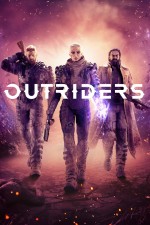
Outriders is an explosively chaotic looter shooter that pulls from the best of the best of People Can Fly's previous games while offering a new tale that takes some seriously wild turns. Despite launch day connection issues, I couldn't put Outriders down and after running two complete character builds through the main story and endgame content, I'm happy to say that this game has lived up to every one of my expectations and hopes. 

I love shooters and RPGs, and Outriders amalgamates these genres perfectly. The entire adventure is macabre with a dark narrative that centers on survival, the ability to adapt, and the journey to prove you're the biggest badass on the playground. That storyline is more immersive than I expected, and while it takes about an hour to really pick up momentum, it eventually becomes a cacophony of in-your-face action. That action coincides with a tale that rests within sci-fi fantasy but holds a modicum of truth regarding human instincts and how we react when there is nothing left to lose and everything to lose at the same time. It also has the subtle, dry humor that People Can Fly is known for, especially to Bulletstorm fans.

Outriders begins its adventure with a cutscene heralding the arrival of humans on a new planet called Enoch, a world that was meant to be their salvation brimming with promise as a fresh start for humankind. While the beginning sequence goes all-in with the action, the true start of the story kicks in soon after and goes hard on the fight-or-flight instinct in a new world that challenges what it means to be a survivor. The fast-paced, action-packed moments convey the need to keep moving, and those moments are even starker thanks to calm-before-the-storm story sequences that introduce the characters along the way. The characters feel wildly different from each other, with some offering a return of innocence to this world and others showing off the brutal reality of what it’s like to stay on top when the rest of the planet wants you dead. The intermittent scenes of normalcy add a layer of depth that enriches the game. 

Like other People Can Fly games, Outriders is more about the feel rather than the look. This distinction is clear in all aspects of the game, from the class variation to the subtle smirks and exasperated looks between speaking characters. From combo-ing an epic attack against the final boss to dealing with the petty shenanigans of your cohorts, Outriders' adventure is full of dimension. That nuance is felt in the combat, the leveling, and the story, with characters that become more and more compelling as the narrative continues on.

Leveling up in Outriders is satisfying and easy to manage. The skill tree draws obvious inspiration from the Diablo franchise, but there are other influences such as Path of Exile. The four classes each have three branches to perfect their combat style. I love charging into battle like Leeroy Jenkins, so the Pyromancer and Devastator classes are my favorites, and I specialized each by choosing the more offensive branching skills. There are more strategic branches as well, taking on full defense, or a hybrid approach, all of which are streamlined in a way that isn’t overwhelming and didn’t leave me second-guessing if I made a wrong choice.

Regarding the four classes themselves, Outriders provides a playstyle for everyone, and that left me excited to replay it to try out the different types of combat. The Trickster allows you to teleport behind an enemy when they are paralyzed for a K.O. It feels intrinsically satisfying, and nothing compares to being able to slow time itself to control the battlefield. Devastators are the tank of all tanks and the backbone of any group. Devastators are strong, meaty, and can control gravity, which gives them a protective edge, letting them draw fire from your crew and sending enemies into the abyss. Pyromancers are a medium-ranged class that specializes in AOE damage by wielding the destructive power of fire. The firewall skill plows through enemies in an especially satisfying way.  While not as durable as other classes, a Pyromancer's explosive arsenal makes them the perfect addition to any group taking on the world of Enoch.

Lastly, the Technomancer is a great class for those who love engineering specs because it harnesses technology meaningfully to rain damage from the sky. This class is incredibly versatile, taking on the role of support with the ability to heal teammates while outputting intense damage.  

The gear in Outriders matters, which is something that some loot-based games have failed to master. People Can Fly did a great job providing a wide variety of weapons of all types that offer a meaningful impact on the moment-to-moment action. This adds a layer of immersion and thoughtfulness that a lot of looter-shooters haven’t offered. It's also one of the many reasons why franchises like Borderlands continue to be a standard in this genre; that, and its off-the-wall humor, which is something that Outriders also has, though it doesn’t truly shine until later on in the story. 

There are varying degrees of gear as well, including the coveted Legendaries. Some of these designs are insanely detailed and impressive. Outriders has some of the best weapon designs of any game out there, including one gun that looks like it popped straight out of Bloodborne. Another looks like it popped straight out of Egypt. One shotgun looks like an Apex Legends character threw pure radiation at a wall and decided to turn it into a weapon. The creative team clearly had a lot of fun designing this aspect of the game, and kept me motivated to hunt down Legendaries; even if I didn't necessarily care about the stats, I wanted everything I could possibly find to see what other elaborate designs the team came up with.

But as I said, Outriders is much more about how the game feels versus how it looks and the gunplay feels just as impressive as the aesthetics insinuate. The baseline guns themselves all feel very different from one another. The kickback of a shotgun, the recoil of a sniper rifle, the quickfire action of dual pistols; each weapon-type feels unique, as they should, but they also feel weighted in a way that reminds me of how gunplay felt in Gears of War Judgement, another title by People Can Fly. 

Weapons continue to scale up in power as you progress, but players have the option to tailor that combat style even further with the use of gear mods. Mods help to further that customizable experience with different options to equip in order to achieve a certain build. Mod types include buffs, ways to enhance current skills, and how to boost your offense and/or your defense. They aren't the end-all-be-all of character craftsmanship, but like Destiny – they are a vital part of taking your character to the next level. Some even help you heal faster when fighting, which is especially helpful for those exploring Enoch solo. Fire damage, decay, leeching, there are a ton of different mods out there that are broken up into three tiers. 

Click image thumbnails to view larger version


Another positive aspect of Outriders is that this game doesn't have any microtransactions. While it is always online (something I wish wasn't the case due to not wanting to be tethered to the status of servers), it is not a live service game. There are no paywalls, no locked content, but there is still more adventure to uncover even after the main campaign is completed. When the story is finished, there are additional quests called Expeditions and these are so much more fun than I anticipated. Endgame quests are often a bit of a grind or can feel meaningless, especially after concluding a storyline that progressed in a dramatic way. I was really happy to see that Expeditions weren't treated like an afterthought, it's obvious that People Can Fly wanted players to feel like the journey didn't have to be over when the credits rolled and it did a really good job at doing just that. If you're a gear hunter like I am and have a never-ending FOMO regarding the best of the best, the 14 missions within the endgame content help achieve better drops. These high-end missions feel rewarding because they are time-sensitive challenges that are designed to make players sweat. They are hand-crafted new levels that aren’t just recycled content from the campaign, they are something unique entirely with their own challenges and their own gameplay mechanics. 

Click here to watch embedded media

As an obsessive Destiny 2 player, I can say that the endgame isn't anywhere to that level, but Outriders content feels meaningful in a way that will draw dedicated players while not leaving casual gamers feeling like they are missing out. The campaign and the endgame are balanced thoughtfully and in a way that does the looter shooter genre a profound service.

Outriders isn’t revolutionary, and it’s not trying to be. Outriders is a well-thought-out shooter with expertly tailored RPG twists. It's an enjoyable ride that is made infinitely better by playing with friends, but not inherently hurt by running solo either. This game takes the best parts from other looter-shooters and the best aspects of sci-fi RPGs and blends these elements into an experience that is worth diving into because of its high replayability, customizable play style, and fun story. I'm already strapping in for another run. 

Score: 9

Summary: Outriders lived up to every single expectation I had and then some.

Concept: Level up your Outrider, master your Altered powers, and find out what went wrong when searching for paradise

Graphics: Overall, the graphics are a little dated, but the cutscenes display stunning facial animations that offer a subtle layer of realism to all character interactions. The different areas of Enoch are incredibly beautiful

Sound: The music ramps everything up to level 10, especially in combat. While not a focus, the music paired with different ability sounds makes it easy to get lost in the fray in the best way possible

Playability: Navigating skill tree and gear leveling is easy to use and enjoyable to experiment with, and the gun mechanics feel weighted in a realistic way that is satisfying

Entertainment: Taking to combat and combo-ing skills with other players is immensely satisfying and make each run-in with enemies feel exhilarating rather than a chore

Replay: Moderately High

Click to Purchase

Narita Boy Review – Easier On The Eyes

Publisher: Team17
Developer: Studio Koba
Rating: Teen
Reviewed on: PlayStation 4
Also on: Xbox One, Switch, PC

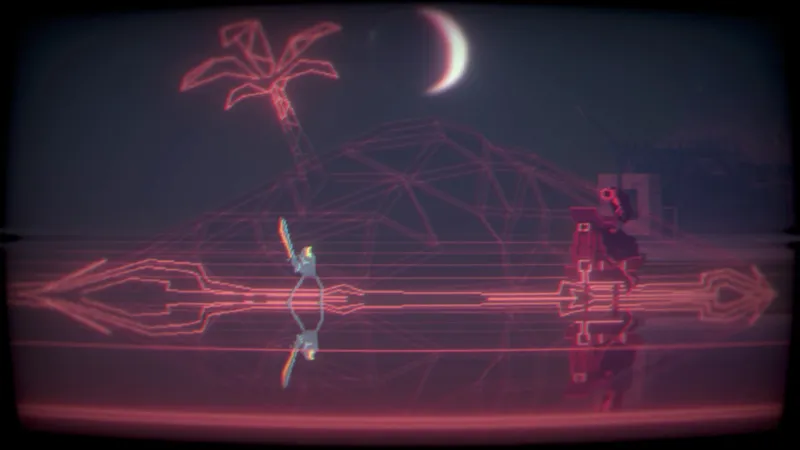
Narita Boy's slick presentation hooked me before I even picked up my digitized sword. 1980s homages are nearly played out, but Studio Koba’s action title manages to reinvent that retro style of cool with an imaginative presentation that goes a step further than “let’s just slap neon and grid lines everywhere.” Narita Boy’s gameplay doesn’t quite live up to its killer looks, but if you can put up with some headaches, it winds up being an enjoyable romp. 

I can’t stress enough how awesome Narita Boy’s presentation is. Studio Koba borrows heavily from Tron in that the entire game is set inside a computer world known as the Digital Kingdom. Your goal: eradicate an evil program and restore the memories of the Kingdom’s human creator. This monarchy, consisting of a desert kingdom and coastal village, among other locations, feels fully realized, both in visual design and lore. The synthwave soundtrack rocks, and the CRT-style overlay is the chef’s kiss of the whole package. I loved gawking at Narita Boy’s art, and even those lacking programming knowledge or nostalgia for the time period should appreciate the creativity on display, like “what if digital horses were just four-legged computer rigs?” 

Click here to watch embedded media

Narita Boy almost plays as good as it looks. The combat consists largely of satisfying hack n’ slash action using your legendary sword, but you also have a shotgun side arm. The shotgun sounds cooler on paper than in practice; I regularly forgot about it as it never feels useful or necessary. Slaying enemies starts as a basic affair but becomes more robust, and entertaining, as you unlock new sword attacks and screen-wiping summons. Color-coded power-ups offer another cool perk; it lets you kill enemies of a matching color (represented by a flame) more easily, though at the risk of taking more damage yourself. Best of all, Narita Boy doles out new abilities and mechanics until the very end, including neat, one-off sequences like piloting a giant mech version of yourself. 

You’ll need all the help you can get because Narita Boy is no walk in the park. The game boasts a plethora of challenging enemy types and has no problem dumping them all over players, which feels overwhelming at times. There’s a fun challenge in figuring out how to use your arsenal of moves to take down combinations of vastly different opponents but a few of the enemy types are a flat-out pain to fight. For example, an armored foe with a nigh-impassable shield was never fun to deal with, and I always groaned when it appeared. The worst part about getting your pixelated butt handed to you are the inconsistent checkpoints that feel almost arbitrary. Some start you close to where you died, but too often are you kicked back further than you’d expect.

Click image thumbnails to view larger version


Combat isn’t perfect but offers a good time overall. I wish I could say the same for the platforming. Jumping feels stiff, slippery, and floaty all at once. I’d often land on a ledge only for the sensitive movement to take me over it. Jumping wall to wall can take multiple attempts due to how wooden your character feels. Upgrades like a rising sword attack/high-jump doesn’t feel satisfying since you can’t use it as an actual double-jump and hitting the Up and attack buttons at the same time is tough to pull off in hectic scenarios. 

It wouldn’t be so bad if the game was largely action with basic platforming, but Narita Boy falters by routinely introducing obstacle courses it doesn’t feel equipped for. Riding atop a computer horse sounds great until you’re crashing through spikes you can’t reliably dodge thanks to your character’s deliberate animations. The same is true of surfing atop a giant floppy disk; it’s awesome in concept, less so in execution. This becomes especially irritating in combat. One boss lobs energy cubes that require precise dodging; I crashed through half of them, and my survival boiled down to having enough hit points to absorb the onslaught. 

Still, as much as I didn’t like gingerly hopping across platforms and would yell “come on!” after failing another difficult combat arena, I couldn’t help but fall in love with Narita Boy’s style once the dust settled. I love every inch of its wonderfully designed world, and the gameplay is good enough to carry the adventure. In a way, it’s like booting up an old computer. If you can put up with the cumbersome interface and some outdated design, there’s a beauty and appreciation in how it still manages to get the job done.

Score: 7.75

Summary: Narita Boy has more style than it knows what to do with and boasts a killer-looking world, but setbacks in gameplay can make it more fun to admire than to engage with.

Concept: Liberate a digital kingdom from a malevolent code while uncovering the memories of your human creator

Graphics: Creative character designs, such as horse-like computer monitors, look awesome. Having the entire game viewed from a CRT is the icing on top of the nostalgic cake

Sound: The groovy synthwave soundtrack will have you bopping in your seat as it injects even more style into the experience

Playability: Combat generally feels good, but the stiff jumping makes platforming and dodging an annoying exercise

Entertainment: Narita Boy has more style than it knows what to do with, and that helps carry it past its gameplay flaws

Replay: Moderate

Click to Purchase