This is default featured slide 1 title

Go to Blogger edit html and find these sentences.Now replace these sentences with your own descriptions.This theme is Bloggerized by Lasantha Bandara - Premiumbloggertemplates.com.

This is default featured slide 2 title

Go to Blogger edit html and find these sentences.Now replace these sentences with your own descriptions.This theme is Bloggerized by Lasantha Bandara - Premiumbloggertemplates.com.

This is default featured slide 3 title

Go to Blogger edit html and find these sentences.Now replace these sentences with your own descriptions.This theme is Bloggerized by Lasantha Bandara - Premiumbloggertemplates.com.

This is default featured slide 4 title

Go to Blogger edit html and find these sentences.Now replace these sentences with your own descriptions.This theme is Bloggerized by Lasantha Bandara - Premiumbloggertemplates.com.

This is default featured slide 5 title

Go to Blogger edit html and find these sentences.Now replace these sentences with your own descriptions.This theme is Bloggerized by Lasantha Bandara - Premiumbloggertemplates.com.

Thursday, April 22, 2021

Nier Replicant ver. 1.22474487139 Review – New Blood, Old Veins

Publisher: Square Enix
Developer: Toylogic
Reviewed on: PlayStation 5
Also on: PlayStation 4, Xbox One, PC

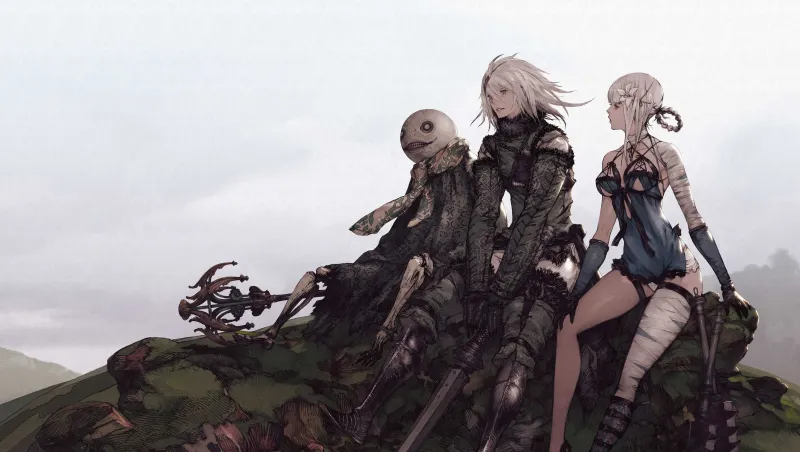
Nier Replicant’s bleak world is over a decade old (the original Nier released in 2010), and yet its morbid commentary on human frailty still resonates. This bittersweet narrative is supported by enhanced character models, satisfying hack-and-slash mechanics, and a haunting soundtrack that spins a riveting tale of its own. At the same time, outdated features that made the original game tedious to play remain present, and that’s because Nier Replicant is neither remake nor remaster of that 2010 title. Creative director Yoko Taro prefers the term “version upgrade,” and this moniker fits perfectly – for better and for worse.

Fans will immediately notice Nier: Automata’s influence; Replicant’s combat is simple and flashy. A new lock-on camera makes parries and evasive maneuvers much easier to perform, but light and heavy attacks remain your bread and butter. Chaining combos with an array of different weapons or executing incapacitated foes emerge as the fastest ways to win engagements. Fancy animations, like midair twirls and slow-motion ground slams, made the melee action feel exciting enough for me to actively seek out clusters of adversaries of my own volition.

Click image thumbnails to view larger version


A repertoire of dazzling magic truly brings these barren battlefields to life. You can equip two abilities at any given time, so experimentation is key. I usually paired Dark Whirlwind – which conjures spinning, crimson blades to deal AoE damage – with Dark Blast’s rapid-fire bullets so I could always stay on the offensive. You can also give commands to your companions, but other than outright ordering them to disengage from time to time, I never noticed any changes in their behavior.

You need these mystical powers to survive because the world is dying. Small settlements dot the countryside where umbral monsters called “shades” rove in packs. What’s more, a mysterious disease is slowly eating away last vestiges of civilization. The withering state of humanity is far more personal for you than anyone else: Yonah, your little sister, is slowly succumbing to a plague called the Black Scrawl. Strange runes continue to spread across her flesh as you venture into the wilds to find a cure. But you’re never alone. A floating tome named Grimoire Weiss, a kind-hearted boy named Emil, and a foul-mouthed, scantily clad warrior named Kainé accompany you throughout the far reaches of the continent. Together, you brave stormy deserts, dash along the beaches of seaside towns, and scour spooky mansions to save Yonah. Hard-hitting story beats like generational trauma and the cycle of hatred offered thrilling surprises that left me in emotional shambles on multiple occasions.

I also loved Nier Replicant’s quirky cast, and this extends beyond the main crew. Conversations that you strike up with characters are filled to the brim with profound, albeit campy, sentiments. Side missions give narrative flavor to an otherwise bland game world, but I wish these tasks had more variance as most amount to forgettable fetch quests. Additionally, in contrast to your gorgeously realized party members, all the NPCs are poorly textured. Because of this, the emotional stakes and resolutions of side missions fall flat. It’s hard to relate to a character when their facial features are practically indiscernible.

Shades are the most common enemy you encounter during your travels. They strike in mobs, but don’t be fooled by their numbers; they’re pushovers, save for the high-tier damage sponges that spawn in the late game. Shade attacks are considerably easy to anticipate and counter, making their constant ambushes more annoying than anything else. Boss fights, however, are fun sequences that push your mechanical skills to the limit, forcing you to quickly react to a flurry of magical and physical attacks, often, at the same time. Atmospheric choruses coupled with the visual smorgasbord of blood and sword-sparks makes each of these tense confrontations memorable.

Click here to watch embedded media

It’s too bad that strengthening your equipment to comfortably clear these battles is less enjoyable. Combat mods, called Words, drop from slain shades and can be slotted into weapons or magic abilities for permanent buffs. You can also collect raw materials scattered throughout each location and exchange them for upgrades. Both options (especially the latter) require hours of monotonous grinding, backtracking, and luck. At one point, I spent close to five hours in one location trying to collect enough “Eagle Eggs” to level up my favorite one-handed sword and spear. Harsh random number generators are common in RPGs, but Nier Replicant’s implementation makes for a frustrating exploration loop.

Despite some dated shortcomings, this “version upgrade” is more than the sum of its parts. Novel design choices like camera and genre shifts are as impressive today as they were more than 10 years ago. Main characters are dynamic with their own interesting backstories, and the plot is as deliciously devastating as you’d expect. Nier Replicant might not convert players that were turned off by the original or Automata, but there are more than enough quality-of-life updates and story-centric nuances to keep longtime fans and new initiates coming back for subsequent playthroughs.

Score: 8.25

Summary: Nier Replicant's colorful characters, sprawling story, and updated gameplay mechanics help make up for its old-fashioned quest design and empty world.

Concept: Fight alongside a band of oddball heroes to save your sister (and maybe even the world for good measure) from a relentless plague

Graphics: The protagonist and his friends look stellar in cutscenes, but in-game environments and NPCs are disappointingly drab

Sound: Vocalist Emi Evans’ masterful usage of “chaos language” – a blend of two or more languages (in this case, Japanese, English, Spanish, Italian, Portuguese, French, and Scottish Gaelic) – creates strikingly unique melodies unlike anything you’ve ever heard

Playability: Combat is supremely satisfying because the controls are so easy to pick up, and the auto-sprint is a nice touch

Entertainment: You’ll spend most of your time going from Point A to Point B collecting materials for forgettable NPCs, but the main questline will keep you on the edge of your seat

Replay: Moderate
Click to Purchase

Tuesday, April 20, 2021

Before Your Eyes Review – An Emotional, Eye-Opening Experience

Publisher: Skybound
Developer: GoodbyeWorld Games
Reviewed on: PC

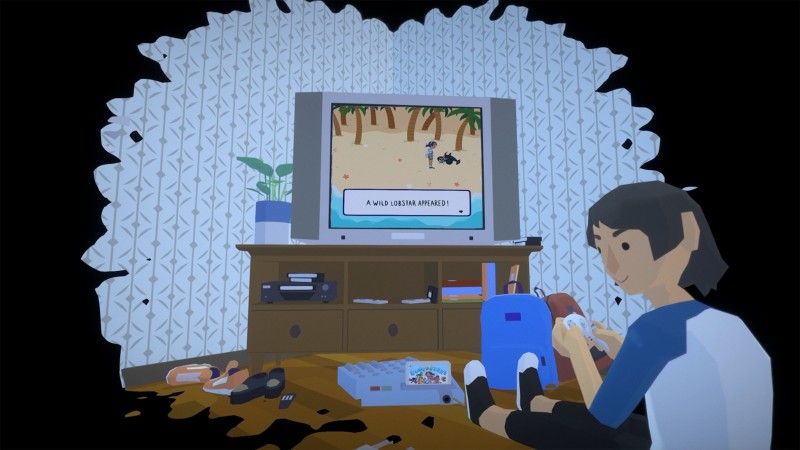
Blinking for the first time in Before Your Eyes is a genuinely magical moment. I don’t mean hitting a button to close your virtual eyes. Through the power of a webcam, Before Your Eyes tracks when you blink which allows you to progress through a wonderful narrative adventure title from GoodbyeWorld Games. It may seem like a novel gimmick on the surface, but the mechanic is used so inventively that it meaningfully enhances the already powerful storytelling that fans of narrative adventure titles would be mistaken to write it off as a shallow trick.

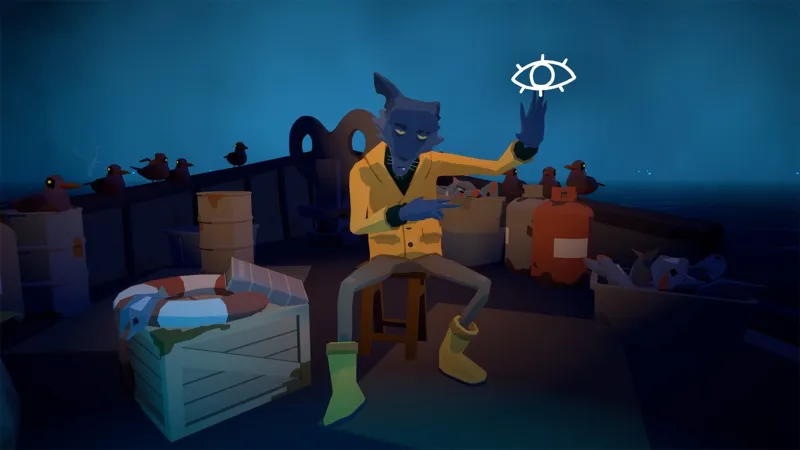
Players take on the role of Benjamin Brynn, a lost soul who has already passed on. At the beginning of the game, you encounter a canine ferryman who forces you to relive the events of Ben’s life, beginning at birth. This is all to impress a being called the Gatekeeper who wants an honest assessment of the kind of person Ben was.  

By blinking when prompted, you’ll jump days, weeks, and sometimes years forward in Ben’s life. I’m impressed by how the game accurately recognizes eye-tracking. I never had an issue where a blink didn’t register or my camera needed recalibration. I also never felt disoriented or uncomfortable playing using eye tracking, but those factors will vary by person. On that note, it’s good that there’s an option to play the entire game using traditional mouse clicks, but I think you’d be doing yourself a major disservice in doing so.

Having played Before Your Eyes twice, once using blinks and the other using the mouse, I think the story loses a fair bit of its magic when playing with solely traditional control inputs. Closing your eyes, then opening them to a brand-new scene creates the awesome sensation that you’re reliving a life through an old-school View-Master toy. Ben’s memories are fleeting, and the mechanic sells that point perfectly. Yes, I was occasionally disappointed after I blinked involuntarily and advanced the story sooner than I would have liked. However, I didn’t mind it for long because I found that doing so lends to the game’s dreamlike quality and the sensation that even cherished memories eventually fade even – when we hope that they won’t.  

Some of my favorite moments involve closing my eyes to better eavesdrop on hushed conversations or so my childhood bestie could leave a heartfelt note embarrassment-free. It's also just more fun to "look and blink" instead of pointing and clicking on objects. Even while playing with your eyes, you still use a mouse for other actions like connecting stars in the night sky to write a cosmic message or to keep in rhythm with a piano tempo. These interactions are largely basic but are still delightful.  

No matter how you play, Before Your Eyes’ story is a heartfelt tale that me close to tears at several points. Despite its pleasantly whimsical veneer, the narrative’s themes of depression and existentialism hit hard, as does understanding life’s meaning from the perspective of a person who, despite having a great family and born with prodigious gifts, struggles to find personal fulfillment. The writing is earnest and thoughtful, and the story takes some unexpected turns culminating in a bittersweet final message that lands harder than I was prepared for (in a good way). 

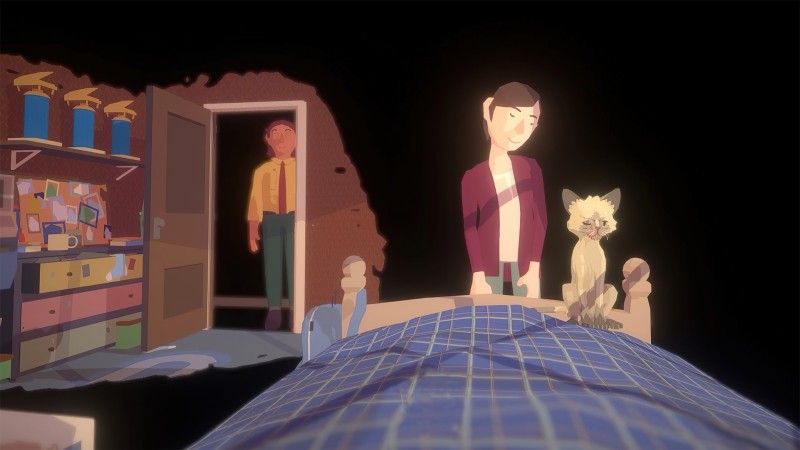
A great story needs good characters, and Before Your Eyes has that in spades. Ben’s parents, a caring yet demanding mother and a lovably goofy father, are sweethearts. The same goes for Chloe, your mischievous neighbor who comes off as a genuinely endearing kid you can’t help but want to impress and hang out with. I was surprised by how attached I became to the cast in such a short time, but the superb performances and well-written dialogue do their job and ingratiated me to the characters.   

Throughout the story you’ll make some choices, but I was disappointed in how little they impact the overall narrative. Don’t stress too much over whether to sneak out with your friend or get much-needed sleep for your big piano recital; this is one of those games where you’re merely choosing what colors to paint the road as opposed to creating whole new paths. Since the game only takes about an hour or so to get through, it’s worth replaying just to see a few of those scenes, but I wish my decisions had more weight given the large number of choices presented.

Before Your Eyes’ story left me reeling by the end, and it’s a memorable journey worth going out of your way to play. You rarely get a lot of first-of-a-kind experiences in games anymore, and Before Your Eyes largely nails the execution of its primary hook. It’s a concept I’d love to see further explored in a follow-up, and I couldn’t be happier that something like this exists.

Score: 8.5

Summary: Before Your Eyes puts its unique blinking mechanic to great use, offering a novel and fun method of interacting with this memorable, bittersweet tale.

Concept: Relive the memories of a troubled child prodigy by using your actual eyes to blink forward in time

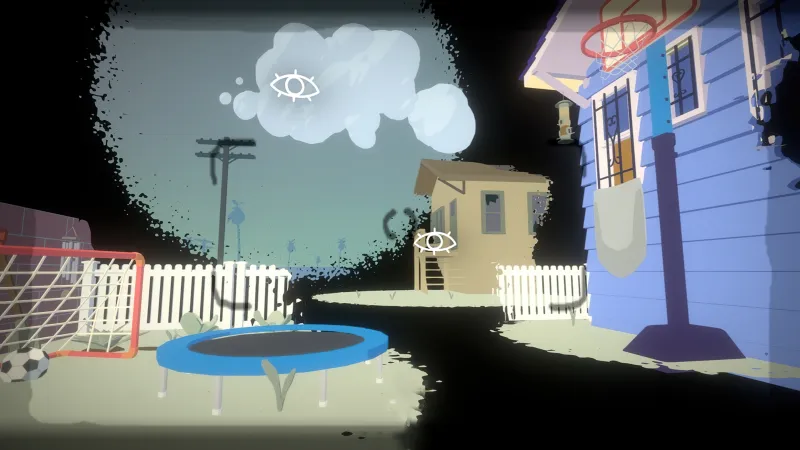
Graphics: The visuals trade realism for colorful stylization, and it’s fitting for the dream-like premise

Sound: The voice performances are excellent, and made me grow attached to the small cast faster than expected

Playability: Provided your webcam works, the blinking mechanic works great and is used ingeniously during certain moments. Playing with a mouse works fine but doesn’t capture the same magic

Entertainment: Before Your Eyes is much more than a neat gimmick. It offers a wonderful method of interacting with a touching and impactful story that’ll stick with you long after the credits roll

Replay: Moderately High

Click to Purchase

Thursday, April 15, 2021

Oddworld: Soulstorm Review – A Bad Batch Of Brew

Publisher: Oddworld Inhabitants
Developer: Oddworld Inhabitants
Release: 2020
Rating: Teen
Reviewed on: PlayStation 5
Also on: PlayStation 4, PC

Playing Oddworld: Soulstorm is as arduous as Abe’s quest to liberate his Mudoken brethren from slavery. Each step is a supreme test of patience as you methodically guide your followers through challenging hazards, sweating over the fact that one slip-up could unravel all your effort. If you enjoy putting up with that old-school challenge, you might love this journey. However, if you’re a newcomer or a fan that believes this style of platformer hasn’t aged very well, turn back now. Soulstorm doesn’t do enough to modernize the series’ tedious gameplay, and a litany of severe technical hiccups spoil Abe’s attempted comeback. 

A reimagining of Oddworld: Abe's Exoddus, Soulstorm’s gameplay remains largely the same: you recruit and guide followers through 2D platforming stages littered with dangers. As charming as the classic Oddworld games are, they can be frustratingly difficult and that hasn’t changed much in Soulstorm. Most Slig enemies and other hazards mow Abe down instantly, and I was infuriated by how little wiggle room I had to correct course when things went sideways. Abe drops so fast that it makes the health meter seem like a cruel tease. While playing Soulstorm, I often felt like I was walking on eggshells because of that high price of failure, retracing every step, re-recruiting every Mudokon, and carefully guiding them through a gauntlet of foes is soul-crushing when it all falls apart in seconds. Dying to unexpected perils, like being suddenly gunned down by off-screen enemies, feels cheap and happens way too often.

Click here to watch embedded media

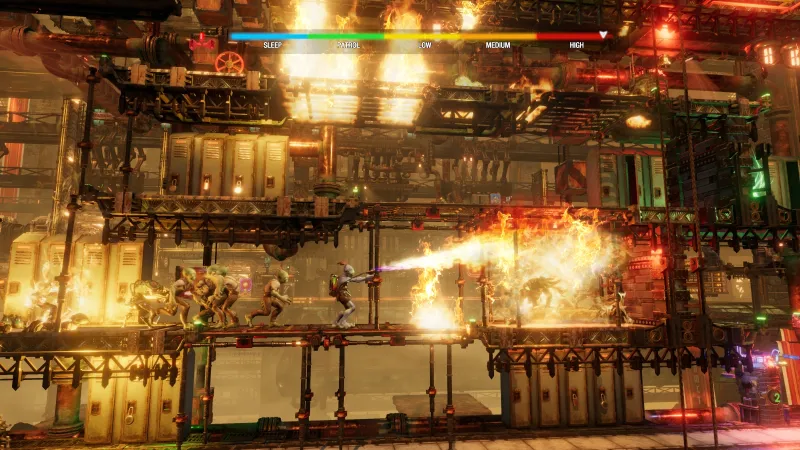
A crafting system serves as Soulstorm’s biggest addition, but it doesn’t feel necessary. You must repeatedly gather the same ingredients every time you die (by searching lockers, trash cans, and fallen foes), which wore me down in a hurry after repeatedly replaying certain sections. The crafted tools themselves, like proximity mines, smoke screens, even a flamethrower, do add a welcomed element of flexibility and improvisation to gameplay. Dropping smoke screens to create hiding spots anywhere is nice, but I wished I didn’t have to make these items myself and grew tired of digging around the same spots over and over.  

Even when Soulstorm’s difficulty eases up, the gameplay is bland. The action feels largely the same from previous games in the series, and that formula doesn’t evolve significantly beyond the first few hours. Even the more interesting sequences, like facing down a giant mech aboard a speeding train, are far too punishing to be fun. I’m glad that Abe controls better now (he even has a double jump), but the controls still have a mushy unresponsiveness that makes entertaining actions, like possessing Sligs, feel like a hassle. The controls also lead to additional deaths because Abe doesn’t act as swiftly as you need him to, especially during the ill-fitting, overly demanding combat arenas that pit you against waves of baddies while you try to protect fleeing Mudokens.

Soulstorm would be a tough recommendation for anyone outside of diehard fans if it performed flawlessly, but I encountered several progress-sabotaging bugs (even after installing the big day-one patch) that should scare off even those players. When I died, Mudokens sometimes failed to respawn alongside me even though my tally indicated they were still alive and under my command. That meant I lost out on turning in followers that I’d spent ages trying to safely liberate, which negatively affected my overall quarma – a vital metric in determining which of the four endings you get. 

Abe occasionally gets stuck in environmental geometry, forcing a restart. At one point, I fell into an infinite loop. One escape portal permanently vanished once I reached it, forcing me to abandon followers. A gun in a late-game turret sequence failed to shoot despite working fine in previous segments. After multiple restarts, I randomly discovered that clicking the right stick “fixed” the weapon for some reason, allowing it to fire. I spent over an hour trying to lead a large group of followers through a particularly challenging area, but once I opened the exit door an invisible wall prevented me from moving forward. I was forced to restart this entire, lengthy sequence twice before the exit worked properly. Soulstorm’s gameplay pushed my patience to its limits, but these bugs sent me over the edge and made me nervous every time I started a new level. “What on Earth is going to screw me over this time?” I regularly asked myself.

Soulstorm’s faults are a shame because its narrative and presentation brought a smile to my face. Abe and his pals are goofy, delightful underdogs I couldn’t help but root for. The enjoyable story is packed with heart, and the cutscenes look great. I wanted to welcome Abe into a new generation of gaming with open arms, but Soulstorm fails to make a case for why its brand of cinematic platforming works today. In fact, Soulstorm only reaffirmed that Abe’s past adventures are best viewed with rose-colored glasses.

Score: 5

Summary: Soulstorm retains the series' signature charm, but it's not enough to forgive its tedious and dated design as well its litany of swear-inducing technical issues.

Concept: Help Abe liberate his fellow Mudokons from Glukkon tyranny while unraveling the truth behind his own destiny

Graphics: The CG cutscenes look great, and I love seeing the camera pan out while dozens of Mudokons scurry in the background

Sound: This voice-acting remains charming and humorous, but the soundtrack is unremarkable

Playability: The platforming feels much better when compared to New ‘n’ Tasty, but these controls are still stiff and clunky and can cost you your life against the quick-drawing enemies

Entertainment: Soulstorm has oodles of charm, but tedious design and annoying bugs make an experience that only the most hardcore and forgiving Oddworld fans might enjoy

Replay: Moderately Low

Click to Purchase