This is default featured slide 1 title

Go to Blogger edit html and find these sentences.Now replace these sentences with your own descriptions.This theme is Bloggerized by Lasantha Bandara - Premiumbloggertemplates.com.

This is default featured slide 2 title

Go to Blogger edit html and find these sentences.Now replace these sentences with your own descriptions.This theme is Bloggerized by Lasantha Bandara - Premiumbloggertemplates.com.

This is default featured slide 3 title

Go to Blogger edit html and find these sentences.Now replace these sentences with your own descriptions.This theme is Bloggerized by Lasantha Bandara - Premiumbloggertemplates.com.

This is default featured slide 4 title

Go to Blogger edit html and find these sentences.Now replace these sentences with your own descriptions.This theme is Bloggerized by Lasantha Bandara - Premiumbloggertemplates.com.

This is default featured slide 5 title

Go to Blogger edit html and find these sentences.Now replace these sentences with your own descriptions.This theme is Bloggerized by Lasantha Bandara - Premiumbloggertemplates.com.

Wednesday, May 19, 2021

Famicom Detective Club: The Missing Heir Review – A Beautiful Update To A Boilerplate Mystery

Publisher: Nintendo
Developer: MAGES
Rating: Teen
Reviewed on: Switch

The Famicom Detective Club games are a special part of Nintendo’s adventure game history. Released in the late ‘80s for the Famicom Disk System, they were influential in opening the door for visual novels on the console market, and Famicom Detective Club’s creator, Yoshio Sakamoto, went on to be a driving force behind the Metroid series. Three decades later, thanks to new remakes of both titles on Switch, audiences outside Japan can finally step into the shoes of a young detective trying to get to the bottom of a couple of deadly mysteries. The Missing Heir was the first in the two-game series, exploring an affluent family’s cursed history.  

The mystery in The Missing Heir centers on the powerful Ayashiro family, who built a corporate empire from the ground up. But the family has a few skeletons in their closet that come to light after the head of the family ­and chairwoman of its corporation, Kiku Ayashiro, releases her will. Greed, betrayal, and murder ensue. That’s where you come in. As a young hotshot detective, you must uncover the truth about this family dynasty entangled in lies and well-kept secrets. But you’re not in the best shape yourself: you have recently washed ashore with a nasty head wound and have no recollection of your past. There’s a serious tone from the onset that helps sell the stakes, and plenty of red herrings kept me guessing along the way. However, none of that distracts from the obvious: the plot is well-worn with a tired amnesia trope.

That said, considering this game came out in the late ‘80s, the adventure still holds up. With suspenseful moments and exciting twists, I stayed invested until the end, even if parts are predictable and I figured certain details out well before the credits rolled. My biggest disappointment is that the key players in the story never evolve beyond suspects or plot devices – don’t expect much character development or any meaningful dialogue exchanges to advance the plot.  The storytelling is run-of-the-mill, which could be a testament to the game’s age, but it is unfortunate nonetheless, especially in a visual novel where the narrative drives the game.


As mentioned, the Famicom Detective Club games are visual novels with some adventure elements, meaning you read a lot of text as you examine surroundings, interview the locals for information, and collect evidence to get new clues. You don’t enter the courtroom like in the Ace Attorney games, but you do investigate and make deductions based on your findings. I was a bit disappointed with the limited interactivity, and the bulk of my strategy boiled down to asking questions and presenting evidence at the right times. The occasional riddle shakes things up, but I didn’t find them very interesting to solve, as they usually require following tedious instructions. I enjoyed trying to learn more about each family member so I could piece together motives, but the slow pacing and repetitive dialogue often brought down the momentum.

For this update, Nintendo recreated the graphics, added Japanese voice acting, and updated both the music and sound effects, which helps modernize this classic visual novel. Unfortunately, this remake only goes so far in fixing antiquated elements, which is a shame because some archaic design choices hold the game back. For instance, you often must ask characters the same question three times before getting the response you want, and sometimes you have to approach questioning and evidence presentation in a specific order to progress the plot. I often resorted to trial-and-error, spamming every possible option in every potential order to get past certain sequences. This isn’t fun and breaks immersion when you just want to see the mystery unfold.

As the first entry in the Famicom Detective Club series, The Missing Heir gives you a chance to experience a key point in visual novel history. Piecing together this mystery and seeing where it leads has this undeniable appeal. However, while the new graphics offer a beautiful leap in quality, this remake doesn’t alter some of the more archaic aspects of the experience, or even attempt to make the characters or story more interesting to keep with modern times. If anything, it’s an enticing way to look back at the history of this franchise, which I’m glad to have as it satiates my curiosity about this classic series. Unfortunately, it doesn't make more of an impact than that.  

Click image thumbnails to view larger version


Score: 7.25

Summary: The Missing Heir gives you a chance to experience a key point in visual novel history.

Concept: As a detective with amnesia, you must unravel the dark history behind a wealthy family that’s being targeted for murder

Graphics: This remake’s updated visuals are straight-up gorgeous, with colorful backdrops and detailed character models that make an instant impression. Too bad the environments aren’t all that interesting to explore

Sound: The music and sound effects help sell intense moments and bring personality to situations, but they are minimal. Also worth noting is the voice acting, which is in Japanese with English subtitles

Playability: Some archaic and obtuse design choices make advancing the plot of this standard visual novel a bit of a chore

Entertainment: Famicom Detective Club: The Missing Heir lets Western audiences experience an adventure game they never could before. The story is engaging for what it is, but its pages are well-worn, and it shows

Replay: Moderate

Click to Purchase

Aerial_Knight's Never Yield Review – Running Wild

Publisher: Headup Games
Developer: Aerial_Knight
Rating: Teen
Reviewed on: Switch

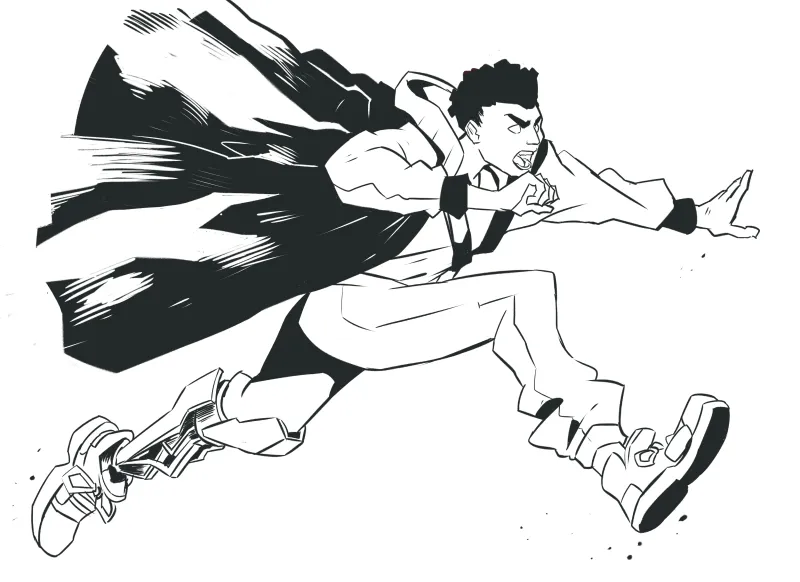
On its surface, the gameplay of Aerial_Knight's Never Yield is not all that interesting. You run from left to right, sliding, jumping, and sprinting past obstacles until you reach the end of a level a few minutes later. After a while, it gets a bit bland on the easier difficulties. However, bolstered by a fantastic soundtrack and strong-if-redundant art style, Never Yield is an engaging journey through a dystopian Detroit that, at only an hour or so, is worth taking.

You assume the role of Wally, as he races through Detroit after retrieving his stolen property. Along the way, police, drones, traffic, and all manner of roadblocks get in his way, attempting to stop him from taking back what’s his. The story, which is told through brief cutscenes before each level, is serviceable at best and not much deeper than the set-dressing that establishes why you're running and what you're running from. But in a game that consists of only running, it is enough to get the job done.

Never Yield is an autorunner, so Wally automatically dashes forward, leaving you to focus on dodging what's in your way. You have four moves at your disposal – small jump, high jump, slide, or dash – each tied to a different directional button and colored to match on-screen prompts. For example, when Wally approaches a slide, blue highlights appear on the right side of the screen. Additionally, the hurdle itself is blue, and time slows briefly, allowing you to gauge the distance before you need to pull off your move. I really like how Never Yield telegraphs oncoming obstacles before I reach them. More often than not, missing one felt like my fault; I had the information needed, I just messed up the execution. There were only a few exceptions. For example, I struggled to nail the timing in one mid-game level where I jumped over a moving van. I had to retry this sequence more times than I wanted, which tested my patience, but these moments are few and far between.

On the Normal difficulty, there's an argument to be made that Never Yield is actually too good at warning you about oncoming threats. Throughout my first playthrough, I rarely felt challenged. By the end, the whole game started to feel bland, as the difficulty rarely ramps up from one level to the next.

Never Yield feels specifically made for its harder difficulties, where the time-slow and warnings are either diminished or removed and obstacles appear more frequently. I became much more engaged with my runs when playing on higher difficulties, and in turn, found the gameplay a lot more interesting and fun when actually challenged. I recommend bumping your difficulty up as soon as you can.

Never Yield's Detroit takes liberal inspiration from cyberpunk properties that came before – which is mainly to say it's an American city viewed through the lens of Tokyo. While amalgamating an American city with an Asian one to insinuate retro futurism is pretty derivative at this point, Never Yield does have a good style. The cel-shading makes the game look slick and the neon against the nighttime sky offers a nice contrast. Even though I can't say I was floored by the game's setting, I did enjoy it.

What did blow me away in Never Yield was its soundtrack, which without a doubt is the star of the entire game. Composed by artist Danime-Sama, the soundtrack combines jazz, hip-hop, rock, and a whole host of different genres into a completely fluid soundscape that fits the gameplay and setting in equal measure. Every time I went to a new level, I was excited to hear the next song, and never once did any of them disappoint. There's even a level where you fight against a guitarist, who's playing the solo in that level's song, creating physical music in the world you must avoid. That rules.

Never Yield is a slick package. Once I raised the game's difficulty, the fantastic soundtrack, fun world, and engaging gameplay made it an experience I've enjoyed playing through a couple different times. Especially on Switch, it’s a game worth seeking out if you can. While it may have some minor stumbles, I found it a worthwhile run.

Click here to watch embedded media


Score: 7.5

Summary: A fun run through cyberpunk Detroit

Concept: Run through a cyberpunk Detroit, jumping, dodging, and dashing past obstacles in your way

Graphics: While cyberpunk cities are overdone at this point, the cel-shaded art style lends itself to a pretty, if derivative, world

Sound: Combining jazz, hip-hop, rock, and more, Never Yield's soundtrack is the best part of the game, complimenting its graphics and gameplay excellently

Playability: A bit too easy on its Normal difficulty, once bumped up to be harder, it’s an engaging and fun experience

Entertainment: Amplified by the soundtrack, Never Yield is a fun run through Detroit, one I felt encouraged to take multiple times

Replay: Moderately High

Click to Purchase

Friday, May 14, 2021

Mass Effect Legendary Edition Review – A Great Way To Honor Commander Shepard’s Legacy

Publisher: Electronic Arts
Developer: BioWare
Reviewed on: PlayStation 4
Also on: PlayStation 5, Xbox One, PC

Influential and poignant, the Mass Effect trilogy left a lasting impression on gamers, advancing the impact of choice in games and proving that personal connection endears players to the overall experience. It could have been a story merely about saving the galaxy, but BioWare created a rich and complex world full of unique and realistic viewpoints that factored into the difficult choices that must be made. With the fate of the galactic civilization on your shoulders, nothing came easy in Mass Effect, and that’s part of the reason the series still resonates with people all these years later. 

The Mass Effect trilogy is a gaming experience that shouldn’t be missed, which is why finally having a remaster is such a big deal; not only in terms of keeping the series’ legacy alive, but also in allowing players an easy way to access and play through the story the way it is meant to be played with its DLC. While it’s not a perfect remaster, BioWare did an excellent job of updating Commander Shepard’s adventure to make it a better and smoother ride on the Normandy, and not just in the visual department.

The first Mass Effect received the most attention, which makes sense considering that game is now a teenager and hasn’t aged well. Even back when it launched in 2007, the first game was rough around the edges, as BioWare was still trying to figure out how to balance action gameplay with role-playing systems. Mass Effect’s unique sci-fi future always won out over any flaws or frustrations, but going back to relive these great moments came with some unfortunate caveats. With the remaster’s improvements, that is no longer the case, and I enjoyed playing through the first game a lot more in the remaster. 

Many mechanical aspects have been tweaked here, from removing class-based weapon restrictions to providing a more modernized HUD, but some changes feel more significant than others. For instance, the new Mako controls made a huge difference in my enjoyment of the game; the traditionally lumbering vehicle steers better, moves faster, and has better aiming mechanics for shooting. I used to dread hopping into this six-wheeled vehicle of chaos, but that all dissipated thanks to these smoother controls.

Click image thumbnails to view larger version


Speaking of better controls, ME1’s shooting is much improved and closer to ME2’s gameplay, with smoother targeting and all different gun types being useful from the get-go. You won’t forget you’re playing an older quasi-shooter, but it makes playing this first game much better. The visual enhancements here hit the hardest, especially the added detail to the lush environments, which now have richer vegetation, new particle effects, and improved lighting. The structures of these levels haven’t changed, but the way they’ve been visually improved makes them way more interesting to explore and I stopped to take in the sights more than ever before. 

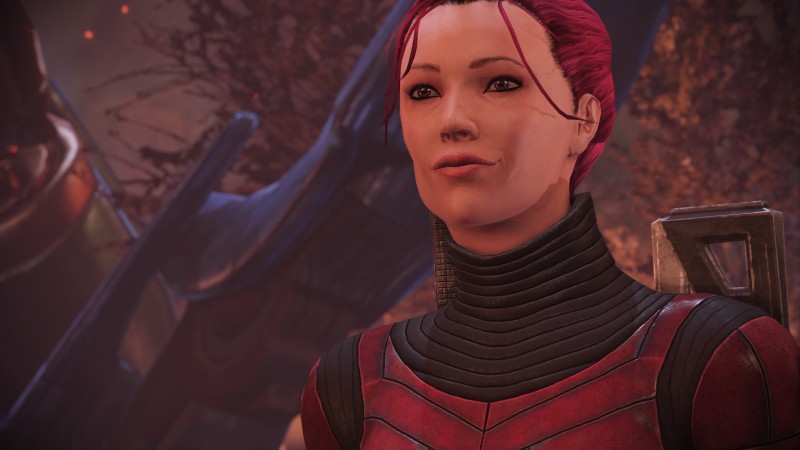
The visual improvements aren’t as vast in ME2 or ME3, but everything looks better overall. Enemies and alien species are the biggest beneficiaries, but the trilogy’s age is evident in the poorly lip-synced human faces. However, characters like Miranda look more natural, thanks to the better lighting and more realistic make-up alongside her fuller hair. In addition, most armor and casual clothes have better shine and realistic folds, especially on characters like Tali and Liara. These may seem like little details, but they are noticeable, adding to the immersion and just making for better-looking games. 

In addition, better camera angles help scenes feel more organic, but, unfortunately, some flaws still carry over from the original entries, like characters having stiff movements or awkward mannerisms. You also still see the occasional technical hiccup; I experienced a few stutters, freezes, and instances of Shepard getting caught on the geometry. Also, be aware that while the load times are reduced (especially in the elevators), they’re still a little longer than what we’ve come to expect today. 

Part of the fun of having the entire trilogy easily accessible in one place means being able to play the games back-to-back and seeing the evolutions and improvements between entries. I really appreciated being able to create a Shepard in ME1 that I could take across each game and not having drastic differences in her appearance between each game, adding a cohesive feeling. The new customization options for your avatar’s appearance aren’t grand, but I did like the more natural hair textures. A new photo mode also allows you to capture your favorite moments; it’s pretty standard and gets the job done, but the filters are limited.

Click here to watch embedded media

Another great aspect of this package is it contains most of the DLC, such as standouts like The Citadel, Lair of the Shadow Broker, and Leviathan. Sadly, The Pinnacle Station isn’t included due to being unable to recover the source code, and BioWare chose not to carry over Mass Effect 3 multiplayer at this time. The latter is the most glaring and disappointing omission. At the very least, the galactic readiness progress in single-player is no longer tied to this.

Even all these years later, Commander Shepard is a powerful force that lives up to their iconic status, and the trilogy is still captivating and worth your time. The Legendary Edition provides a great way to experience this powerful story, adding just enough enhancements to provide a better experience while still staying true to the original. If you’re a longtime fan or haven’t had a chance to play through one of gaming’s milestone franchises, this is a wonderful way to do so.

Seeing your choices carry over across three games is exciting, but it’s also about the squadmates you meet along the way. So, become Commander Shepard, rally people to your cause, make painstakingly difficult choices, and watch others around you grow stronger because of your influence. The sacrifices and rewards will stay in your memory, and the Legendary Edition is a terrific reminder of why all these years later, people still can’t stop talking about this series.
 

Score: 9

Summary: Even all these years later, Commander Shepard is a powerful force that lives up to their iconic status, and the trilogy is still captivating and worth your time.

Concept: Provide a one-stop-shop remaster to experience the iconic Mass Effect trilogy which includes the majority of the DLC and various quality-of-life improvements

Graphics: The graphical enhancements are mostly for the better, especially in the more detailed environments and different alien species. The humans and their mannerisms are hit-or-miss

Sound: A moving soundtrack and stellar voice performances make Commander Shepard’s journey shine brighter

Playability: BioWare made the trilogy much more approachable for a modern audience, especially with the updates to the first game, which include smoother Mako controls and better gunplay

Entertainment: Mass Effect Legendary Edition updates the trilogy in smart ways while retaining its essence, giving fans and newcomers alike a fantastic way to experience one of the most memorable series in gaming

Replay: High

Click to Purchase