This is default featured slide 1 title

Go to Blogger edit html and find these sentences.Now replace these sentences with your own descriptions.This theme is Bloggerized by Lasantha Bandara - Premiumbloggertemplates.com.

This is default featured slide 2 title

Go to Blogger edit html and find these sentences.Now replace these sentences with your own descriptions.This theme is Bloggerized by Lasantha Bandara - Premiumbloggertemplates.com.

This is default featured slide 3 title

Go to Blogger edit html and find these sentences.Now replace these sentences with your own descriptions.This theme is Bloggerized by Lasantha Bandara - Premiumbloggertemplates.com.

This is default featured slide 4 title

Go to Blogger edit html and find these sentences.Now replace these sentences with your own descriptions.This theme is Bloggerized by Lasantha Bandara - Premiumbloggertemplates.com.

This is default featured slide 5 title

Go to Blogger edit html and find these sentences.Now replace these sentences with your own descriptions.This theme is Bloggerized by Lasantha Bandara - Premiumbloggertemplates.com.

Wednesday, December 6, 2023

Avatar: Frontiers of Pandora Review - Tripping Through Jungles

Reviewed on: PC
Platform: PlayStation 5, Xbox Series X/S, PC
Publisher: Ubisoft
Developer: Ubisoft Massive

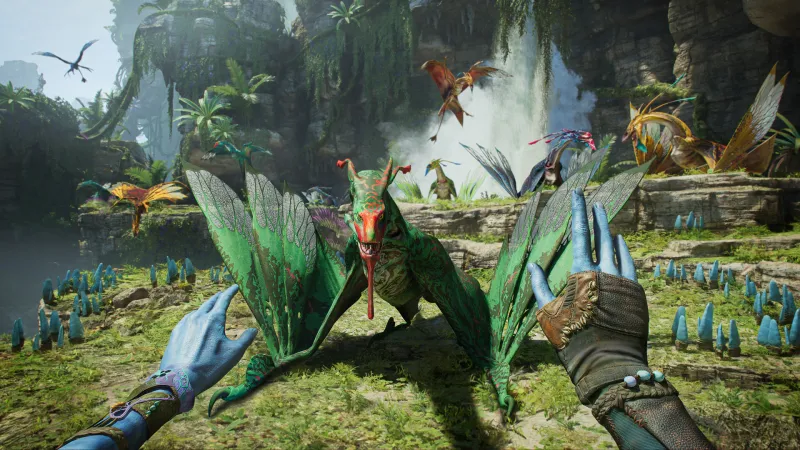
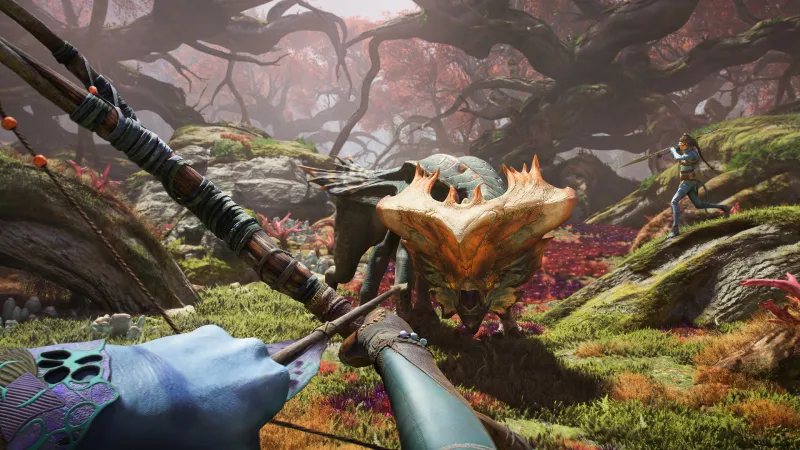
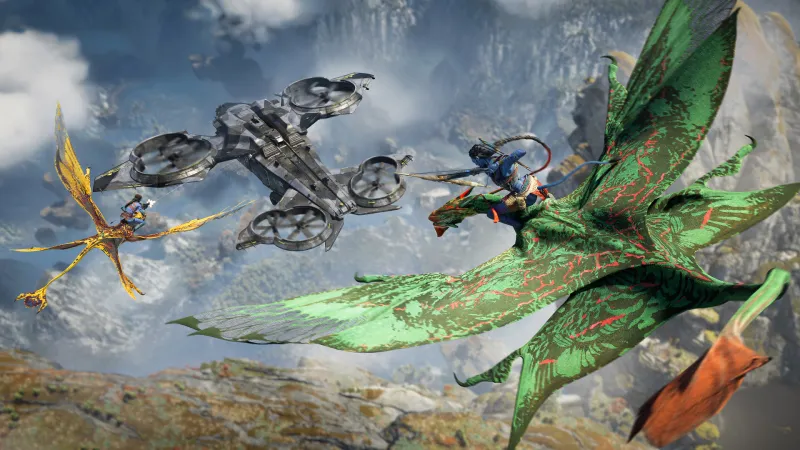
The Avatar films are great fun but have never blown me away with original storytelling. Instead, the translation of familiar formulas into a vibrant and visually arresting alien world elevates the films. Avatar: Frontiers of Pandora follows that same tack, featuring first-person exploration and combat that borrows liberally from franchises like Far Cry. But here, an enormous and detailed fantasy world breathes life into the experience, making it both more engaging and sometimes needlessly obtuse – but always with a flair for the source material.

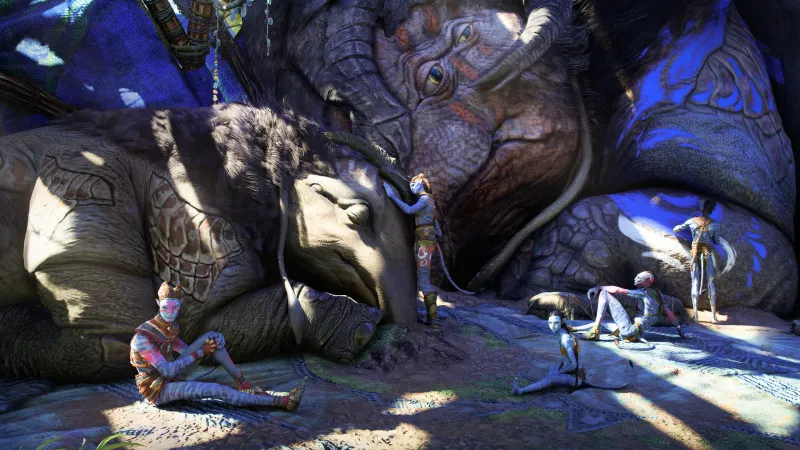
While concurrent with the movies, Frontiers of Pandora tells a separate standalone story about a small group of young Na’vi raised by the villainous and ecologically reckless RDA, and one individual Na’vi’s gradual rediscovery of their heritage and connection to nature. The overt environmental themes of the franchise are accentuated by a pointed indictment of child separation and forced re-education among indigenous populations. Developer Massive Entertainment has done a phenomenal job capturing the unique fictional nuances of the Na’vi, adding several fresh wrinkles in the form of new clans and individuals. It’s a genuine treat for franchise fans that adds substantially to the lore.

Gameplay is all about running and leaping through dense jungles, plains, and caves, while simultaneously learning the many secrets of Pandora’s flora and fauna. The richness of the ecosystems is unmatched in any game I’ve encountered. I had fun learning the properties and potential of the many strange living things along my path. As I did, new skills and gear enhanced my Na’vi’s potential, and I steadily climbed to mastery.

The visual presentation is gorgeous and does justice to the many colors and majestic natural backdrops from the films. Surprisingly, the lush and detailed world was both a joy and hindrance. Sometimes, the onscreen visuals are so overgrown and hard to parse that the game becomes visually confusing. I frequently became lost in the overwhelming stimuli, often missing key objects or clues amid the clutter.

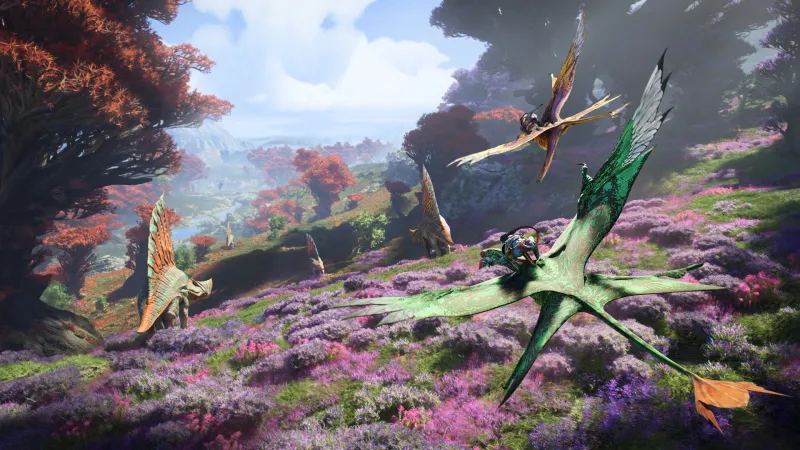
Moving through these richly presented landscapes is great fun, thanks to a generous traversal system of climbing, jumping, sliding, and environmental objects (like plants that bounce you high into the air) that combine to memorable effect and lead to smooth and parkour-like navigation. Enhancing exploration is your dragon-like Ikran mount, allowing you to fly across the vast map easily and quickly.

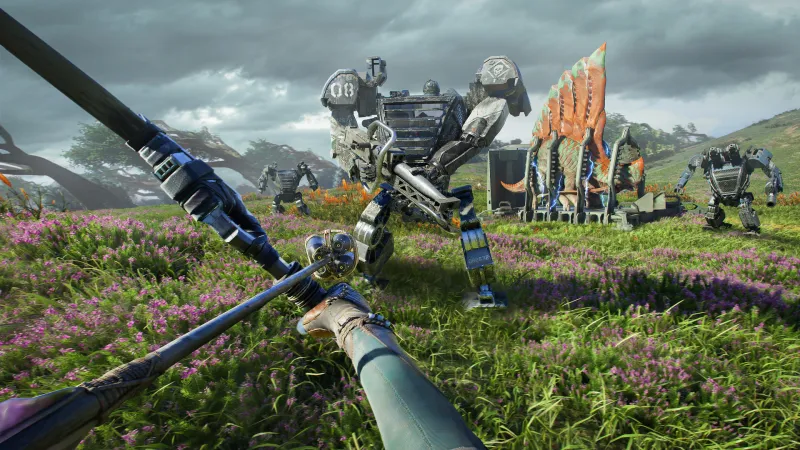
Along the way, combat using bows and assault rifles adds punch to the action, often accompanied by the chance to take an alternate stealthy route instead. I found both experiences good but not great. Too few tools and abilities allow for stealth approaches, so taking my chances with a fast and direct approach was usually more expeditious. The battles themselves are intense and lethal but rarely elevated above an attempt to peek from behind cover points for pot shots at bad guys. Active close-range melees align more with the expectations established by the movies, but that approach is usually not viable.

 

Hunting, gathering, crafting, and cooking are central features. There’s a lot to experiment with, and creating that great new chest piece or fish dish can sometimes be thrilling. But I eventually found the breadth of options overwhelming. Dozens of different tree barks, mosses, animal hides, and pine cones – many of which can only be optimally gathered at certain times of day or weather conditions – eventually began to swim together in my mind. The game virtually demands that you engage with these mechanics to make meaningful progress, and I frequently found it got in the way of narrative pacing, or it became too frustrating to track down the things I wanted.

In between the action and exploration, Frontiers of Pandora puts a wealth of more minor mechanics and systems in your way. Again, these often hamper the fun as frequently as adding to it. Hacking constant power systems and doors, tedious investigations for forensic clues in a scene, tracking multiple currencies and favor with the clans – there’s so much here that it sometimes distracts from what’s genuinely fun: the action and discovery of a breathtaking alien landscape.

Even so, I found a lot to love in Frontiers of Pandora, including the welcome addition of two-player online cooperative play, which lets players enjoy the game with a friend. With time, the many interlocking features started to make sense, and I pushed past any frustrations to find a remarkably large and rewarding game. Enter Pandora’s vast wilderness with patience and a willingness for a measured march to understanding, and I suspect you’ll uncover what I did – a flawed but still praiseworthy addition to this growing science fiction universe.

Score: 7.75

About Game Informer's review system

Purchase
Monday, November 27, 2023

SteamWorld Build Review - A Bustling Town Built on Shaky Ground

SteamWorld Build

Reviewed on: PC
Platform: PlayStation 5, Xbox Series X/S, PlayStation 4, Xbox One, Switch, PC
Publisher: Thunderful Publishing
Developer: Thunderful Development
Rating: Everyone 10+

The most endearing aspect of the SteamWorld series is how each of its games relates to one another despite their disparate genres. From tower defense to turn-based RPG, each title offers a unique spin on a specific gameplay experience while adhering to a shared mythos, resulting in a fun collection of games that coalesce thematically. SteamWorld Build, Thunderful's city-builder/RTS hybrid, serves as the latest iteration of this formula. Sporting streamlined genre mechanics, intuitive controls, and charming visuals, many essential parts are in place. Unfortunately, despite a solid foundation, SteamWorld Build struggles to maintain an engaging experience throughout its campaign.

Like most of the SteamWorld series, Build doesn't directly connect to any of the previous games. Instead, it tries to provide a unique perspective on critical events that feed into the series' overarching narrative. This familiar setup works in parts. The plight of a group of travelers settling near an abandoned mine at the behest of a mysterious robot companion is initially attractive. Fans will especially enjoy the nods to past happenings and some extra lore surrounding an established planetary threat. That said, it won't take long for players to realize that SteamWorld Build's campaign is paper thin.

While the SteamWorld series isn't known for its character-driven stories, each new release offers more meaningful reasons to dive into its steampunk universe. SteamWorld Build's nearly nonexistent story is a step backward in this regard. There aren't any notable characters, worthwhile encounters, or imaginative events to speak of. Essentially, the why of it all doesn't matter, as the campaign's few cutscenes offer just enough exposition for it to be considered a means to an end.

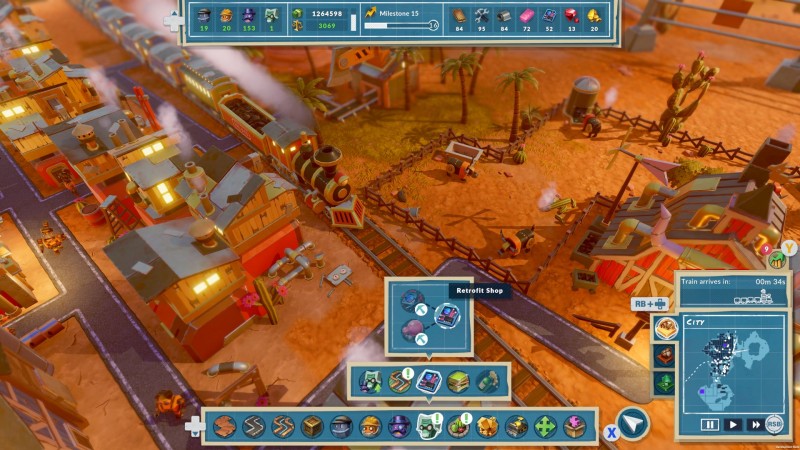
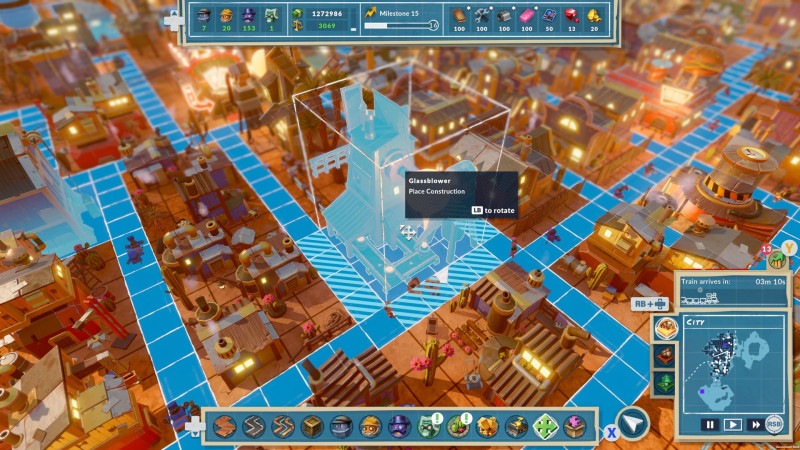
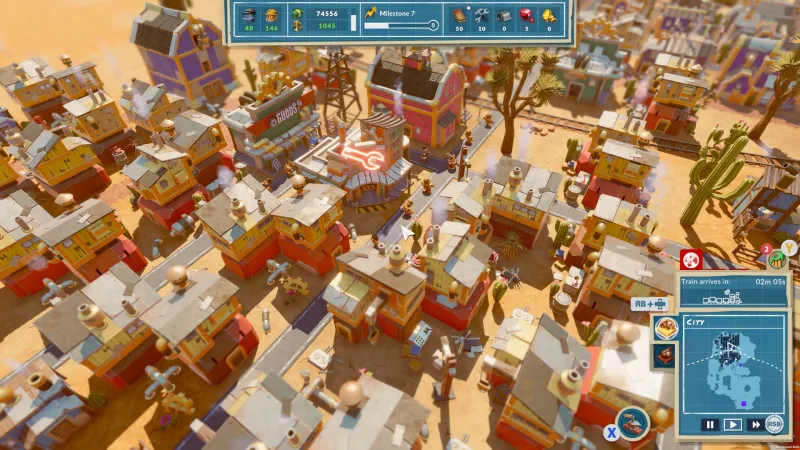
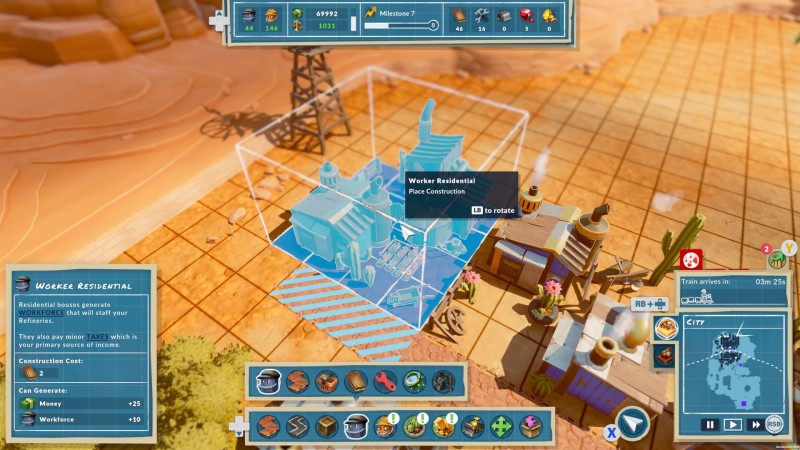
Story woes aside, SteamWorld Build is entertaining. This is partially due to the streamlined approach to city-building and solid tutorial prompts. There are some genre staples, especially when it comes to building placement. You'll be told, for instance, to place Foresters (a giant tree-chopping machine) and lumber mills next to wooded areas to acquire logs. But most of the finer details involving the inner workings of a town/city – tax rates, zoning, population density in relation to the neighboring structures – are either handled automatically or simplified to a large degree.


There's no urban decay or adverse environmental issues to worry about. As long as your buildings are connected to their corresponding facilities and the central train station by road, they'll function as expected. And since the game's intuitive controls (whether using a gamepad or keyboard and mouse) do most of the heavy lifting, nearly every action can be carried out with just a few button presses. SteamWorld Build is more arcade than sim, offering a welcoming experience for newcomers.

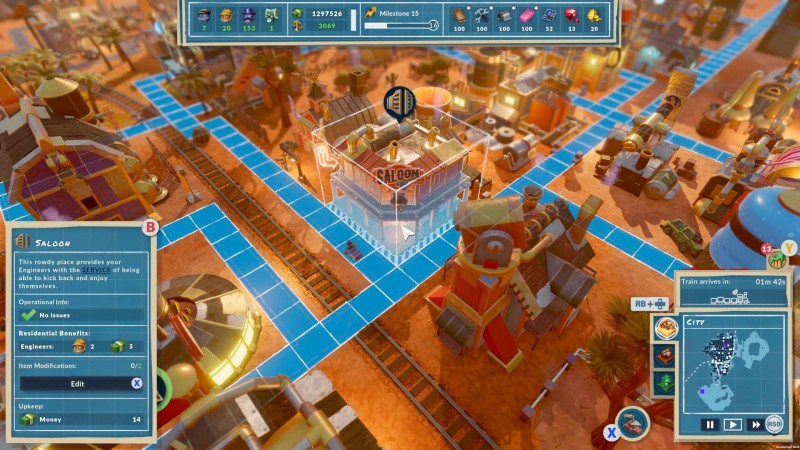
Despite its simplified mechanics, SteamWorld Build appeals to genre vets thanks to its puzzling play. Instead of fixating on every minor detail linked to actual urban planning, the game emphasizes keeping your steambots happy by placing key structures. Your workers, who start economically at the bottom of the totem pole, are usually satiated by a general store and service shop. They don't need much to stay productive. Once you hit certain milestones, usually tied to the town's number of employable steambots, you can upgrade them into engineers. This next tier of citizens requires more service buildings and attractions to stay in good spirits. They also pay more in taxes.

Your main goal is to develop your town to the point where its citizens can mine specific relics (namely rocket parts) needed to escape a seemingly dying planet. This makes the continual growth of your town important as each tier of citizen is responsible for specific branches of productivity. This process can prove tricky as the requirements needed to satisfy them all are weighed against your town's overall needs. Creating too many workers means spending less money on new construction projects. Too few, and you won't have enough steambots to gather the basic materials (wood, coal, etc.) needed to keep the town functioning. The same goes for higher-tiered citizens; their larger financial contributions are offset by the cost of keeping them content. 

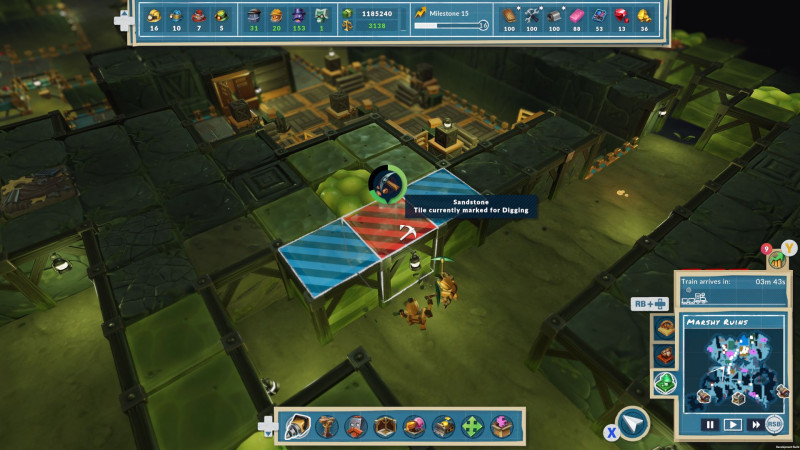
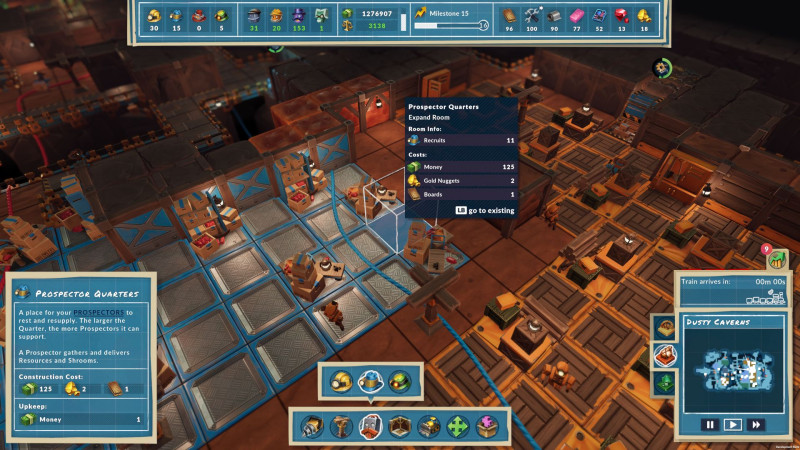
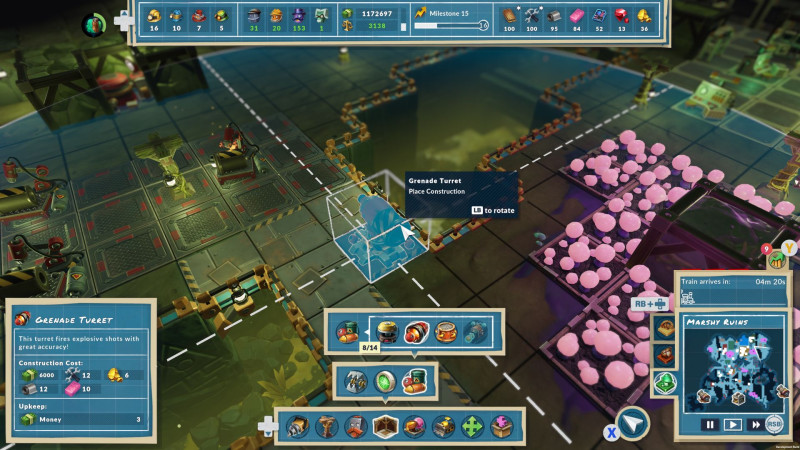
Learning to juggle these different factors is vital when playing SteamWorld Build early on. Some of it comes down to properly positioning certain services and attractions. Plopping a general store at the corner of an intersection makes it accessible to more workers. You can also use stat-boosting items, tradable resources, improved roads, and more. Your management duties double once you gain access to the mines. These underground areas feature RTS mechanics requiring a more hands-on approach. Instead of buildings, you place miner, prospector, mechanic, and guard quarters needed to spawn the corresponding steambots around the map. Aside from the guards and mechanics – who are there to protect and heal bots/build machines, respectively – these bots aren't autonomous. They must be assigned jobs like mining gold deposits, knocking down walls, placing turrets to repel pests, and building machines to harvest important materials.

Most of my time playing SteamWorld Build was spent hopping between my town's surface and subterranean areas. Watching the tiny steambots carry out their tasks as I slowly upgraded my residential areas was fun. I also enjoyed overseeing the developments underground; micromanaging these steambots offered a nice contrast to the above-ground activities. 

All of that changed during the game's last few hours due to a combination of competing systems. To collect the final component needed to leave the planet, I had to turn a few of my bots into scientists and make sure they were content for a set duration of time. The problem is that this directive has no wiggle room. When the other steambots weren't at 100 percent, and their collective numbers started to dwindle, the few that remained still pitched in. That wasn't the case here, as it was an all-or-nothing situation.

The other issue was that the scientist was the highest citizen level, meaning it takes a lot to keep them happy. Since my town had grown, it was easy for a given resource – water, food, etc. – to occasionally dip below a certain threshold. During those moments, my scientists became unhappy. I tried to mitigate some of this by improving all my roads, trading for the needed items, relocating attractions, buffing facilities, and so on. Nothing worked. The only thing I could do was wait for my steambots to produce enough of whatever was missing to meet my scientists' needs briefly.

Many sim-based games have this point where the player has seemingly optimized themselves into a corner. Their final objective is within reach, but because its strict parameters don't allow for alternative completion options, they can only wait as the game plays. That's what happens with SteamWorld Build. It's a shame, considering how enjoyable the core gameplay loop initially is. Things fare a little better once you've finished the campaign, though. Since each of the five maps offers rewards like free roads or faster miners upon completion, starting a new campaign with these unlocked bonuses is possible. You can also sidestep the story and focus on building the best town you can, which might be the ideal scenario.

SteamWorld Build is a unique hybrid that entertains for a time. Its early hours are fun, thanks to how well it uses simplified genre staples to create a more arcade-friendly gameplay loop, a sentiment bolstered by a solid tutorial and intuitive control scheme. Regrettably, SteamWorld Build's campaign overstays its welcome. The lackluster story and rigid final objectives turn what was initially an engaging experience into a tedious grind.

Score: 7

About Game Informer's review system

Purchase
Friday, November 17, 2023

The Talos Principle II Review – Profoundly Puzzling

The Talos Principle 2 review

Reviewed on: PC
Platform: PlayStation 5, Xbox Series X/S, PC
Publisher: Devolver Digital
Developer: Croteam
Rating: Teen

The Talos Principle II often left me staring at my screen in awe. Sometimes, from sheer intimidation in the face of a seemingly formidable puzzle. Other times,  from my incredulous pride after unraveling said problem. But most of all, the experience regularly gave me pause as I pondered a philosophical idea or argument that challenged my viewpoints on the nature of existence and humanity’s place in the cosmos. These moments spurred me to solve the game’s 100+ puzzles in search of answers, and I’m largely satisfied with what I discovered. 

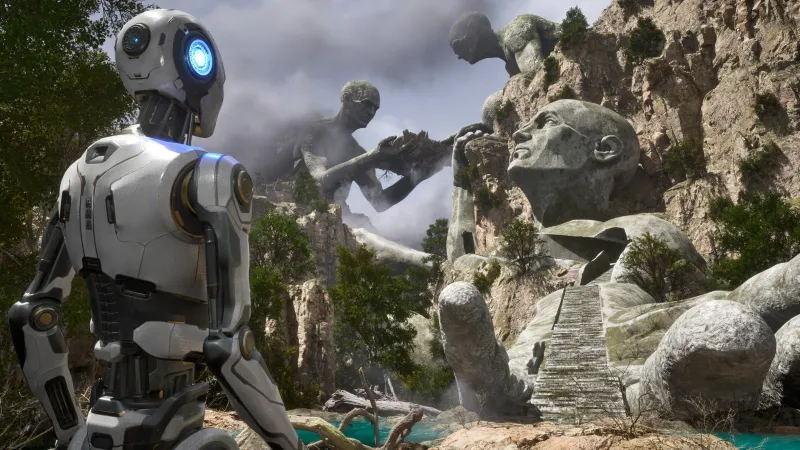
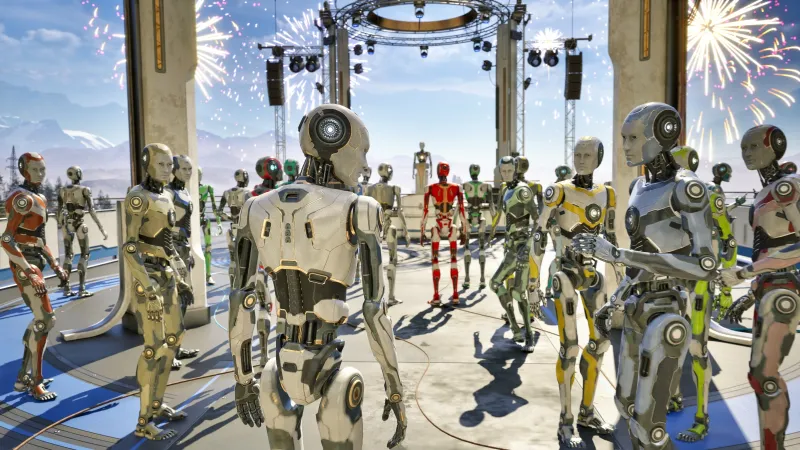
Set hundreds of years after its 2014 predecessor, The Talos Principle, you awaken in a utopian civilization as its 1000th – and final – sentient robot resident. Following mankind’s extinction due to a global virus centuries prior, intelligent machines designed by a brilliant scientist have inherited the Earth. As the sum of all human knowledge, these machines have resigned themselves to living within a single, modest city with strict population, exploration, and consumption limits to avoid repeating humanity’s mistakes. However, these beliefs are flipped on their heads when a mysterious entity taking the form of the Greek titan Prometheus beckons the machines towards a mysterious island with a pyramid-like megastructure, towers, and, of course, puzzles. You join a small expedition to discover the island’s origin and purpose. 

Despite the puzzles being the stars, I enjoyed The Talos Principle II’s focus on storytelling and character development, highlighted by choice-driven conversations that do a great job of emphasizing the machines’ inherited sense of humanity. I became invested in getting to know my crew, such as two close friends with opposing yet valid viewpoints on how society should advance or having more lighthearted chats with a resident unsure of whether or not to keep its surfer-style speech pattern. Decisions influence the city’s direction and your standing in ways you won’t see for hours, and while I found the outcomes to be adequately satisfying, some optional threads, such as choosing whether or not to join an Illuminati-style secret group, don’t always lead to an impactful payoff.

Regardless, The Talos Principle II presents many angles on important topics and leaves it up to its cast and players to decide what they believe. Fascinating philosophical concepts on the morality and responsibility of being an intelligent entity in a chaotic universe, numerous lore notes and audio logs, and even the city’s social media feed had me reconsidering my biases and beliefs in enriching and enlightening ways, even if I didn’t always agree. I’m still mulling over a log’s musings over humanity’s puzzling attitudes on natural extinction versus human-made extinction.  

I like that the game doesn’t prop any viewpoint as the “correct” one, and it doesn’t need to; the point is that you should ask such questions to see things from as many angles as possible, and players will draw their own conclusions to determine one of the story’s several endings. A plethora of dialogue choices does an admirable job of letting players express several potential perspectives, while the plot is an engaging and insightful mystery boasting neat twists and heavy revelations. 

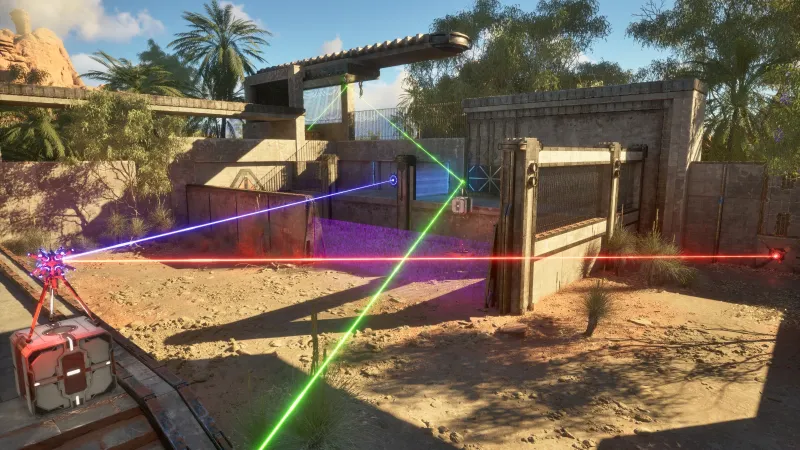
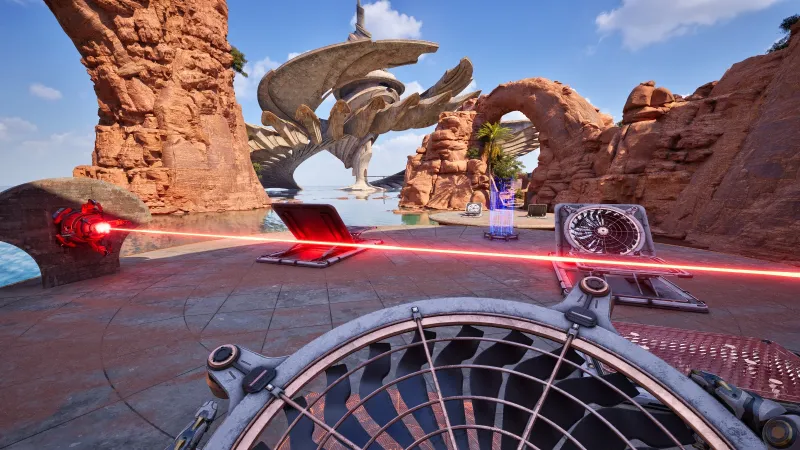
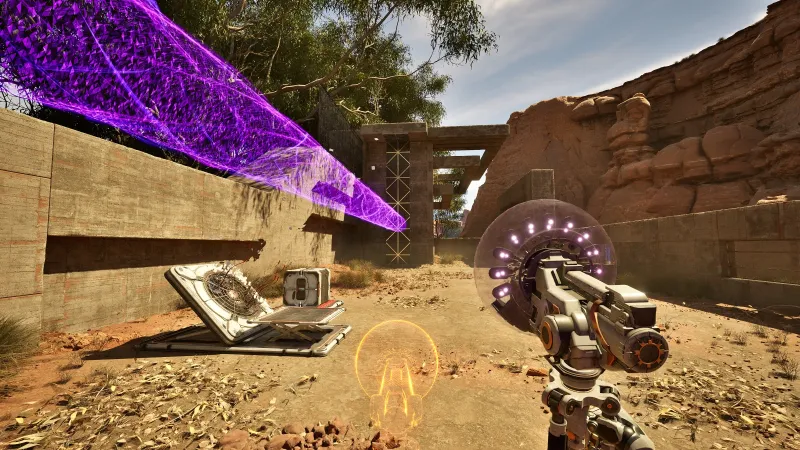
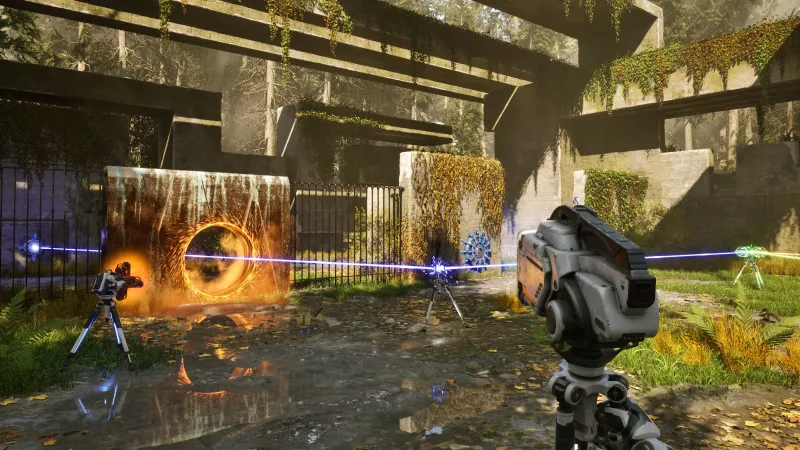
Like the first game, placing crystal refractors to direct light beams around obstacles to the correct lock(s) to open the exit is the core puzzle-solving experience. New mechanics add exciting and creative layers while eliminating the annoying death-dealing hazards, such as bombs and turrets, from the last game. New tools include a device that creates portals on certain surfaces, an anti-gravity machine that lets players (and objects) stand on walls and ceilings, and a refractor that inverts light colors, among others. Each tool is a treat to work with alone, but the game soars highest when challenging you to use several in concert. 

Puzzle-solving is still a tricky exercise of placing, moving, and/or stacking objects in the correct spots or sequence, a process thankfully expedited by speedy player movement. Still, lengthier puzzles require a lot of running around to rearrange things, which sometimes wore on me. The final puzzle is the worst offender, as it requires a tedious amount of back-and-forth trekking to execute such a precise order of operations that slipping up often meant restarting the whole thing from scratch. Despite these headaches, I was consistently impressed with how developer Croteam managed to concoct so many well-thought-out puzzle rooms, and solving them never stopped feeling like a well-earned achievement. 


Unlike the last game, there’s no hint system, but you can skip puzzles entirely by spending a collectible resource. The catch is that finding these helpful tokens is a task in itself, as they’re hidden throughout the open areas. I don’t mind this as someone too stubborn to skip unless a puzzle is truly mind-boggling, and it gave me another excuse to explore, but it does create more work for those eager to move on and see the rest of the narrative. 

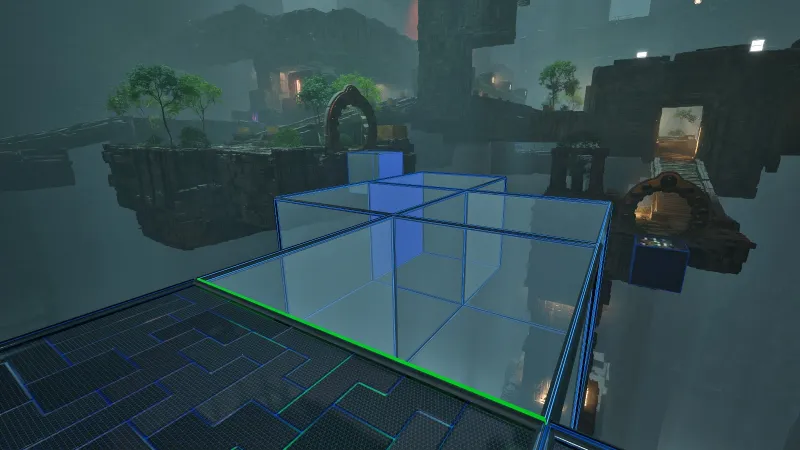
The biodiverse island is broken up into four cardinal regions composed of three smaller open hubs, each sporting eight primary puzzles plus optional riddles and collectibles. I enjoyed roaming these expansive regions between puzzles in search of smaller rewards such as lore notes, ancient human tech, or secret laboratories containing tantalizing secrets. The worlds also look quite nice despite frequent geometry pop-in. Though an overhead compass provides some guidance on how to find points of interest, the lack of a proper map made relocating some destinations more of a chore than I would have liked. Environmental puzzles, such as rerouting an island-wide light beam or chasing hidden particle clouds to statues, offer neat side diversions and welcomed breaks from the critical path. The other major recurring puzzle comes in the form of assembling bridges by correctly rotating and connecting giant Tetrinomo pieces, though this exercise lost its luster after a few hours. 

The Talos Principle II is a long game, perhaps to a fault. I clocked in around 34 hours, and despite my generally consistent enthusiasm, I was ready to see the end before it hit me with another round of puzzles or a story-focused exploration segment. It’s an ambitious and ultimately well-made package with many social, artistic, and scientific ideas that I’ll be thinking about for the foreseeable future, long after the solution to its final riddle has faded from memory. That enlightenment makes The Talos Principle II’s challenges worth the effort.

GI Must Play

Score: 8.75

About Game Informer's review system

Purchase