This is default featured slide 1 title

Go to Blogger edit html and find these sentences.Now replace these sentences with your own descriptions.This theme is Bloggerized by Lasantha Bandara - Premiumbloggertemplates.com.

This is default featured slide 2 title

Go to Blogger edit html and find these sentences.Now replace these sentences with your own descriptions.This theme is Bloggerized by Lasantha Bandara - Premiumbloggertemplates.com.

This is default featured slide 3 title

Go to Blogger edit html and find these sentences.Now replace these sentences with your own descriptions.This theme is Bloggerized by Lasantha Bandara - Premiumbloggertemplates.com.

This is default featured slide 4 title

Go to Blogger edit html and find these sentences.Now replace these sentences with your own descriptions.This theme is Bloggerized by Lasantha Bandara - Premiumbloggertemplates.com.

This is default featured slide 5 title

Go to Blogger edit html and find these sentences.Now replace these sentences with your own descriptions.This theme is Bloggerized by Lasantha Bandara - Premiumbloggertemplates.com.

Tuesday, January 23, 2024

Tekken 8 Review – Aggressively Absurd

Tekken 8 Review

Reviewed on: PlayStation 5
Platform: PlayStation 5, Xbox Series X/S, PC
Publisher: Bandai Namco
Developer: Bandai Namco
Rating: Teen

The bar for the fighting game genre has been uppercut to astronomical heights in recent years. Exceptional one-on-one combat remains the primary bullet point, but other series have complimented their packages with robust suites of destinations, from cinematic story campaigns to comprehensive training dojos. Although Tekken 8’s fighting remains a treat thanks to some neat tweaks to its strong formula, the rest of the package, while respectable, falls short of some of its contemporaries.

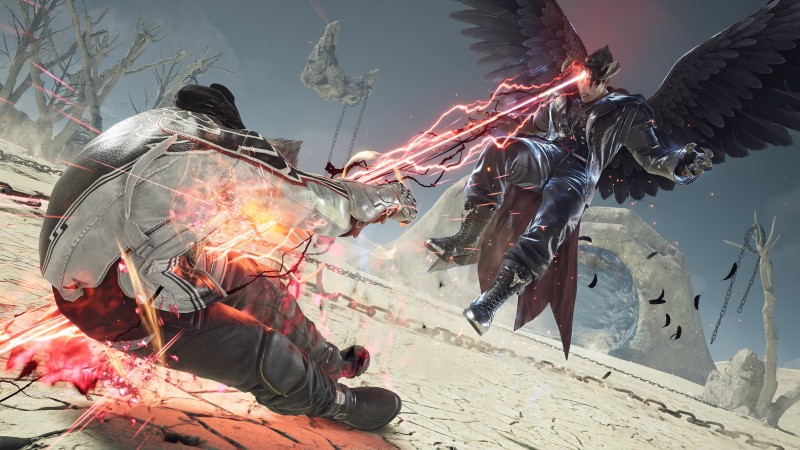
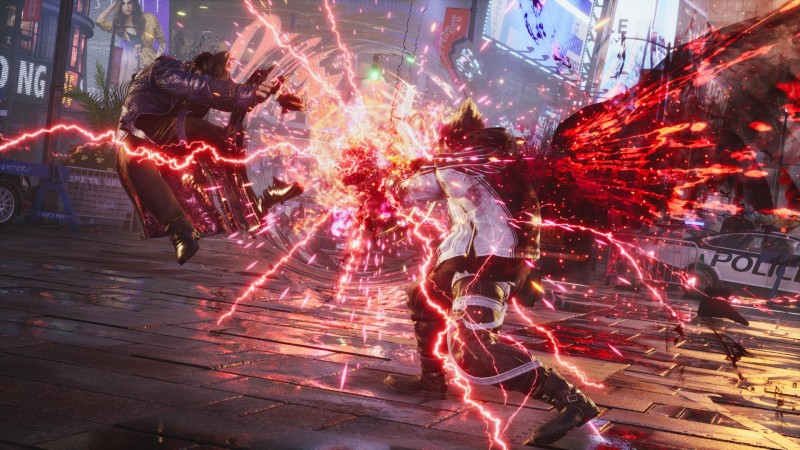
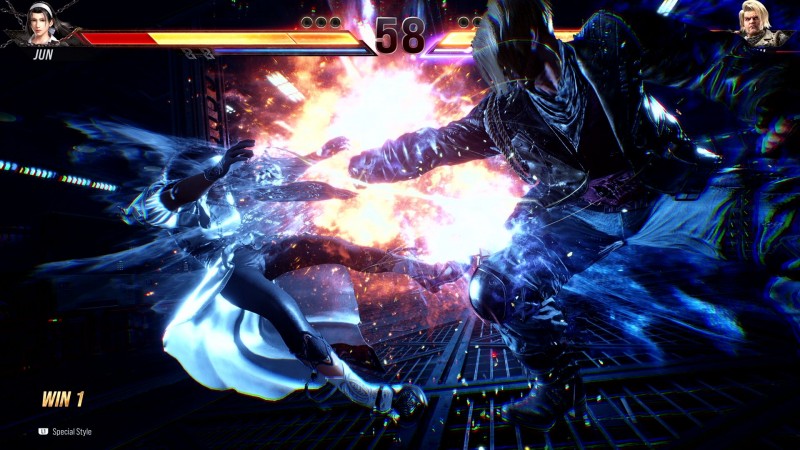
The Heat system is the big new addition, adding a new gauge that, when activated, adds chip damage to attacks, buffs your blocks, and even adds follow-up moves to extend certain combos. My favorite use is spending the full meter to unleash a unique and powerful combo attack, and weaving this into an assault can be devastating. Heat offers a fun and effective new trick that rewards aggression while also providing a solid counter to an opponent’s relentless assault. Combined with the returning Rage system, it’s another way to help turn the tide of a one-sided battle without feeling like a protective crutch – pure skill still wins the day. 

Rage Arts have been smartly simplified to a universal button for easier execution and more spectacular finishes. Another good tweak is that health bars are divided into sections displaying recoverable and non-recoverable HP, the former of which is replenished by attacking (even if blocked). I like seeing when I should turn up the heat to regain a few hit points. I also like being encouraged to end an opponent before they can heal themselves, once again promoting aggression in a way that speaks to my playstyle.

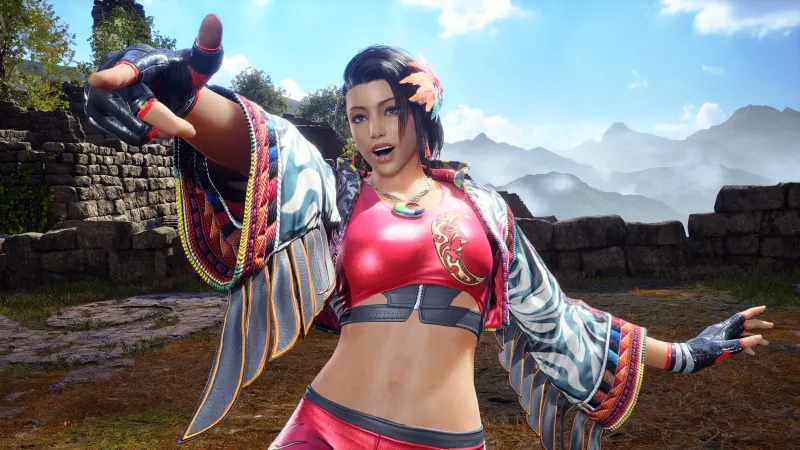
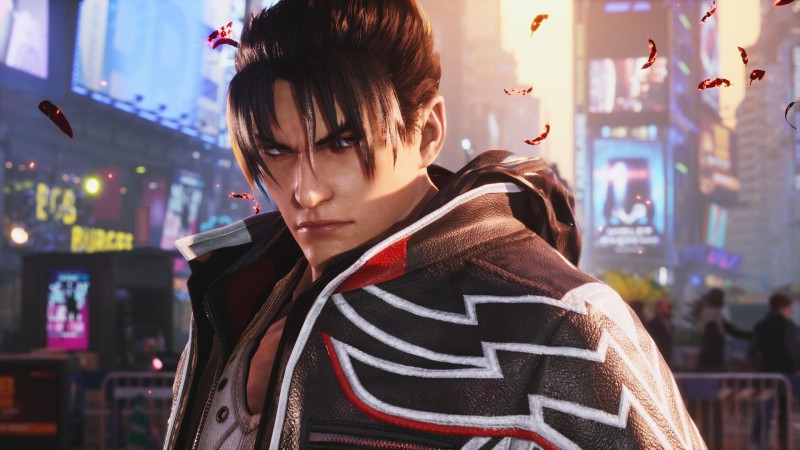
Tweaks aside, as far as the basic meat and potatoes go, if you want some good old-fashioned Tekken, this eighth entry delivers. The 32-character roster feels as great as it ever has, and new faces, such as the enigmatic Reina or the coffee-obsessed Azucena, are fun additions I’m enjoying mastering. Tekken 8 also scores a win in the looker category. Powered by Unreal Engine 5, our favorite combatants have never looked or been animated better. Stages pop and are packed with details, whether you’re battling under the neon lights of an urban city square or amid Peruvian ruins with roaming alpacas. As nice as they appear, they fall apart even better when you’re knocking opponents through walls or slamming them through the floor. 

Tekken 8’s cinematic story mode, which centers on the ultimate clash between Jin and Kazuya, is a step above Tekken 7’s. Admittedly, that’s a low bar to cross; not having a monotone journalist narrate the tale already raises it several notches. Absurdity is the name of the game, thanks to the narrative’s onslaught of laugh-worthy action scenes, culminating in a final bout that takes the series as high as it’s ever been on the “outrageous” meter. While more fun than Tekken 7’s story, Tekken 8’s tale is still an uneven experience. A choose-your-fighter tournament arc in the middle is a cool idea, but your selection is meaningless. A gigantic battle reminiscent of Avengers: Infinity War unfolds as a generic, ill-designed brawler where players pummel waves of foes in a manner reminiscent of Tekken 3’s Tekken Force mode, and feels just as dated. The final confrontation, while epic, drags on for so many rounds that it becomes a slog. It almost feels like a parody of climactic boss fights while playing it totally straight. 

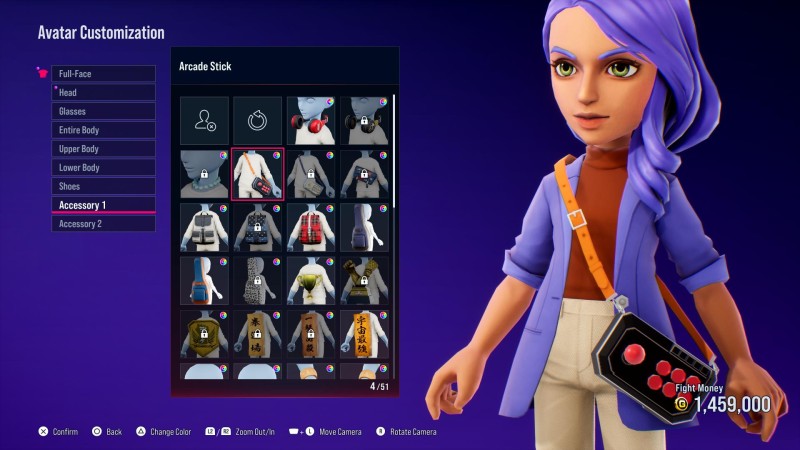
While the main story mode is a solid starting point for Tekken 8, Arcade Quest offers another narrative-driven quest better suited for teaching players the ropes. As a customizable Xbox 360-esque avatar, you and your Tekken-obsessed friends travel to various arcades to climb the ranks of the competitive scene while learning the power of friendship and having fun. It does a decent job of providing thorough tutorials on new mechanics like the Heat system and teaching helpful combos and general fight psychology, making it ideal for both newcomers and returning veterans. The downside is suffering through a supremely bland tale that feels more like a saccharine lesson in fighting game etiquette (i.e., let people play how they want and don’t be a jerk) for kids. 
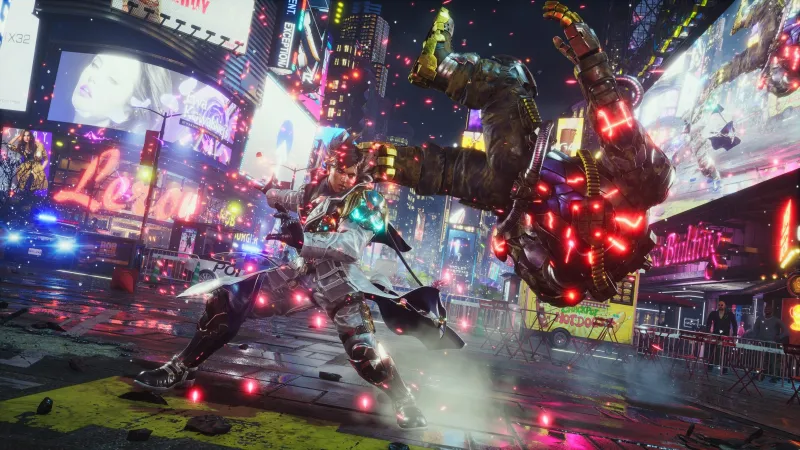
 

Offline offerings are otherwise underwhelming. Character Episodes remain succinct ladder climbs to watch Tekken’s trademark humorous fighter endings. Tekken Ball returns as a cute addition, but nothing worth revisiting after a round or two. I enjoyed testing myself in Super Ghost Battle, which pits you against a learning A.I. mirroring your behavior and tendencies. While the practice mode features robust breakdowns of stats such as frame data, a more guided experience would have been welcomed. You’re still largely left to wade through menus for desired lessons (which boil down to inputting commands without much context as to why it’s effective and when to use them) and sift through tons of combo lists. The Gallery is disappointingly slim compared to 7’s, leaving the bulk of fight money spent on unlocking new pieces for the popular character creator. 

Hardcore players will likely spend their time trading blows in the largely smooth online mode. Bandai Namco has jazzed up online play with an explorable hub to show off your Arcade Quest avatar while challenging players to bouts. This presentation is mostly for show; you still access the same menu options available elsewhere. But it adds a little flair to the tried-and-true fun of gaining ranks and spectating fights. 

As a complete package, Tekken 8 doesn’t reach the heights of recent rivals like Street Fighter 6 and Mortal Kombat 1. But when the match begins, and you’re exploiting openings to unleash flashy combo strings and air juggles, it remains a thrilling, if very familiar, one-on-one experience. The latest King of Iron Fist tournament still has work to do to feel wholly satisfying or ground-breaking, but it remains a fun arena to test your mettle against friends and rivals.

Score: 8.25

About Game Informer's review system

Purchase
Monday, January 22, 2024

Apollo Justice: Ace Attorney Trilogy Review - Doing Ace Attorney Justice

Reviewed on: Switch
Platform: PlayStation 4, Xbox One, Switch, PC
Publisher: Capcom
Developer: Capcom
Rating: Teen

Outsiders of the Ace Attorney series might not be familiar with the name Apollo Justice, but fans know the character is a big deal. He's second only to Phoenix Wright in terms of playable appearances, and his new collection, the Apollo Justice: Ace Attorney Trilogy, gathers all of those outings in one convenient package. While there's not much new content in this package, quality-of-life improvements and a visual overhaul do a lot to modernize Apollo's courtroom saga, making it a worthwhile journey for fans new and old.

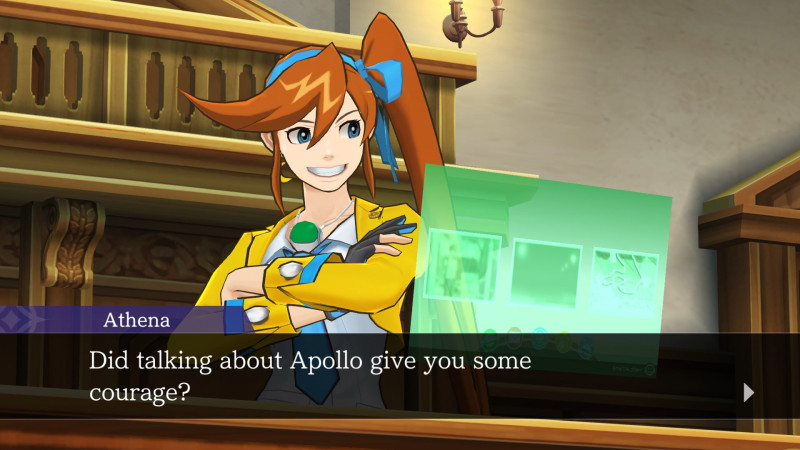
The package includes three games: Apollo Justice: Ace Attorney, Phoenix Wright: Ace Attorney - Dual Destinies, and Phoenix Wright: Ace Attorney - Spirit of Justice. While Apollo's name is only in one of these three titles, he's a crucial character in all three games, so the name is a fitting one. The package also includes DLC trials and outfits from the 3DS games, so if you want to rock Phoenix's classic suit in Dual Destinies or dress Athena as a maid in Spirit of Justice, you're free to do so. The DLC trials vary in quality (the second is great, the first is not), but they're meaty pieces of content that I'm glad made it into the final collection.

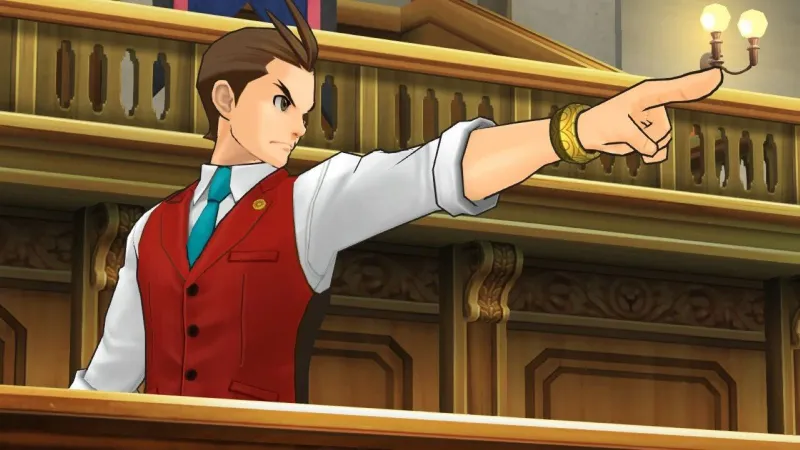
Apollo Justice prepares for his first trial in Apollo Justice: Ace Attorney

Besides the obvious convenience of being available on modern platforms, there are two main reasons to play the Apollo Justice Ace Attorney Trilogy instead of the original games. The first is the improved graphics; the Trilogy looks excellent. I'll miss the pixel art of the DS days, but I quickly got used to the updated art style in Apollo Justice's first outing. The animations translate exceptionally well – the series hasn't lost an ounce of charm. The real improvement, however, comes in the latter two games in the Trilogy, which were originally released on the 3DS. While the first game is a good translation of the old art style into a new form, the 3D games look much better, and I often had to remind myself they weren't released on the Switch from the get-go. It's also great to view their anime cutscenes on a full-sized TV.

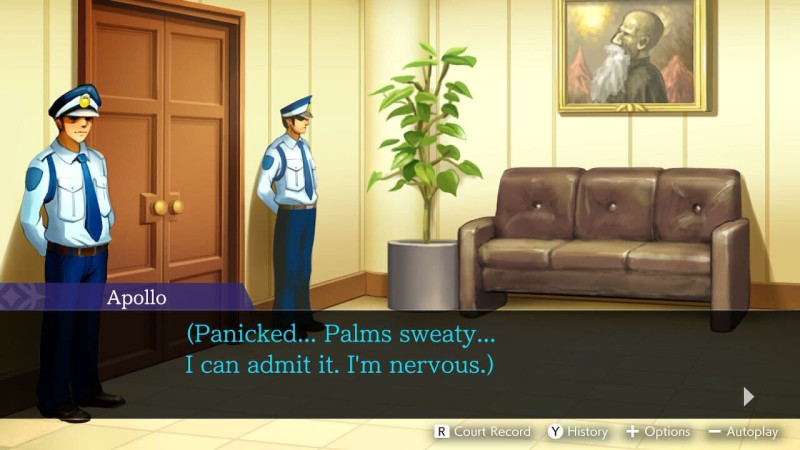
The other reason to play the Trilogy over old versions is its wonderful suite of quality-of-life improvements. I especially love Auto Advance, which moves the dialogue forward without forcing me to mash buttons, and the History button, which allows you to scroll back through dialogue you might've accidentally skipped. This game also includes a story setting, which automatically advances the game through trials and investigations if you don't feel like solving any puzzles. While they're mostly returning features from other modern Ace Attorney collections, the quality of life improvements return for a reason – they make these games significantly smoother to play, and I am extremely grateful to have them here.

Athena Cykes in Phoenix Wright: Ace Attorney - Dual Destinies

Apollo Justice: Ace Attorney Trilogy also includes a Museum section that allows players to look at concept art, listen to music, rewatch cutscenes, and look at character animations from each game in the Trilogy. It's a nice touch, and I had some fun glancing at some of the art and animations, but it's more of a novelty than anything else. 

Outside of quality-of-life improvements, the games are unchanged and still worth your time. Apollo Justice: Ace Attorney is a relatively faithful continuation of the original Trilogy that stars Apollo Justice, a plucky new protagonist. With 2D art and game direction by series creator Shu Takumi, it's essentially an epilogue to the original Phoenix Wright games, giving players a glimpse into its world seven years after Ace Attorney 3. Today, its trials hold up as an exciting exploration of the failings of the court system and why it's important to let a new generation take the reins.

Where Apollo Justice: Ace Attorney honors the older games, Dual Destinies seeks to forge a separate path with a new game director, three protagonists, and a new 3D art style. It's the weakest game of the series, especially at the start, but the last few trials tie everything together with a genuinely satisfying conclusion. Its ambitions don't always pay off, but now that a decade has passed, I can appreciate those ambitions more, especially how they paved the road for the next game.

Phoenix Wright in Phoenix Wright: Ace Attorney - Spirit of Justice

Spirit of Justice is the final game in the Trilogy and my favorite. It primarily occurs in the fictional country of Kura'in, where defense attorneys are sentenced to the same fates as those they defend. To complicate things even further, the royal family can conduct séances to play back the memories of the dead as evidence. The new location and heightened stakes do a lot to make this entry feel distinct from the others. In fact, Spirit of Justice is the first game in the Trilogy that doesn't feel like it's struggling to match the tone of the older games, fully setting itself apart by putting its trials in a new context. It's not just the best in this collection; it's one of my favorites in the entire series.

Apollo Justice: Ace Attorney Trilogy succeeds with everything it sets out to do, bringing three great games to modern consoles in their most approachable forms to date. I was fully immersed in its classic courtroom battles in the 80 or so hours it took me to get through all three titles. Even though not every trial is a winner, the majority are, and with a new suite of quality-of-life improvements, it's never been easier or more enjoyable to experience Apollo Justice's journey.

GI Must Play

Score: 8.5

About Game Informer's review system

Purchase
Monday, January 15, 2024

Asgard's Wrath 2 Review - Worthy Of The Gods

Asgard's Wrath 2

Reviewed on: Quest 3
Platform: Quest 3, Quest 2
Publisher: Oculus Studios
Developer: Sanzaru Games
Rating: Mature

Asgard’s Wrath 2 stands out in a sea of virtual reality titles available on the market today. As the showcase piece for the Meta Quest 3, this sequel offers an experience rarely seen in the category, weaving together an exciting blend of action, intricate puzzle design, and semi-open-world environments. With the clever use of VR mechanics, you discover new surprises even after playing for dozens of hours. Asgard’s Wrath 2 is a VR game that’s difficult to put down, even as the Quest 3’s battery life often requires you to. However, while it does start out strong, it hits a few stumbling blocks along the way.

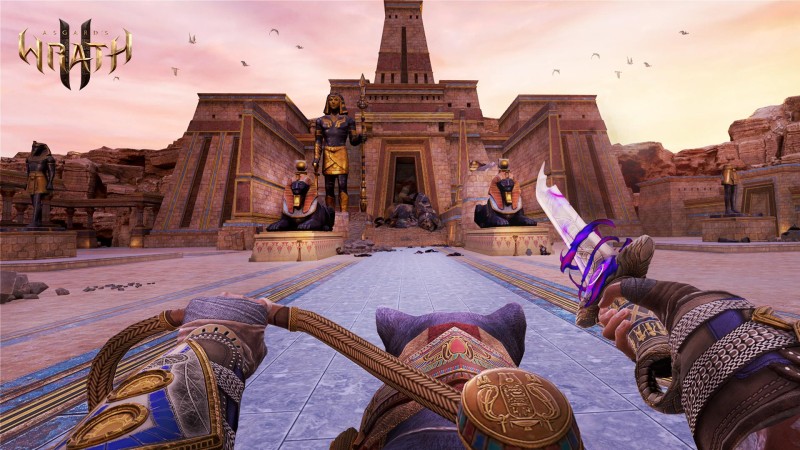
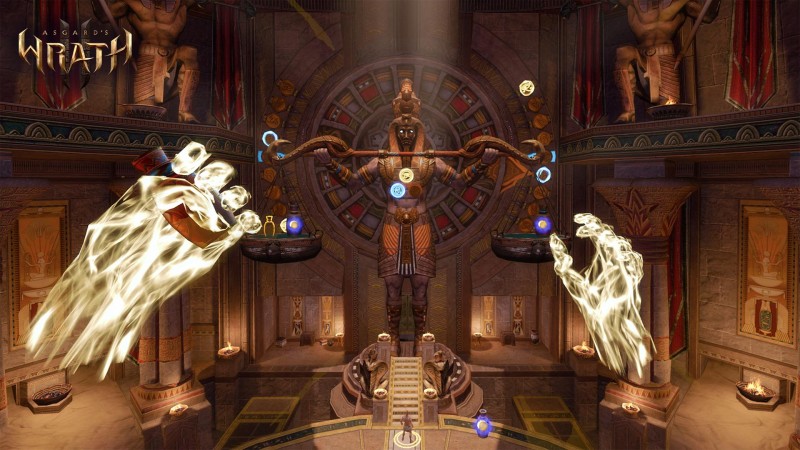
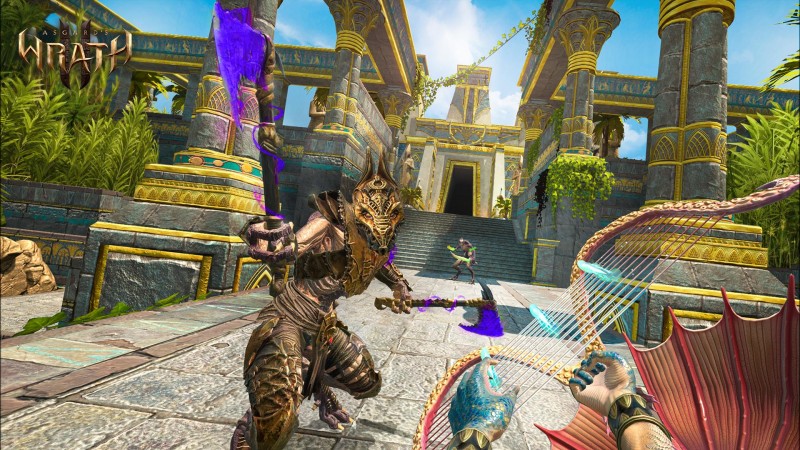
Asgard’s Wrath 2 immediately follows the events of the first game. The god of mischief, Loki, has managed to escape, and it's up to you to track him down. The big difference now is that your journey takes you to the vast sand seas of Egypt, where you meet other deities willing to help you in your search.

There’s an immense world just waiting to be explored, which gave me a sense of awe as I looked at my surroundings and the sheer scope of what Sanzaru Games crafted. Moreover, the game’s visual flair, powered solely by a standalone headset like the Quest 3, remained impressive from a technical standpoint as I ventured through the picturesque landscape in this lengthy action RPG.

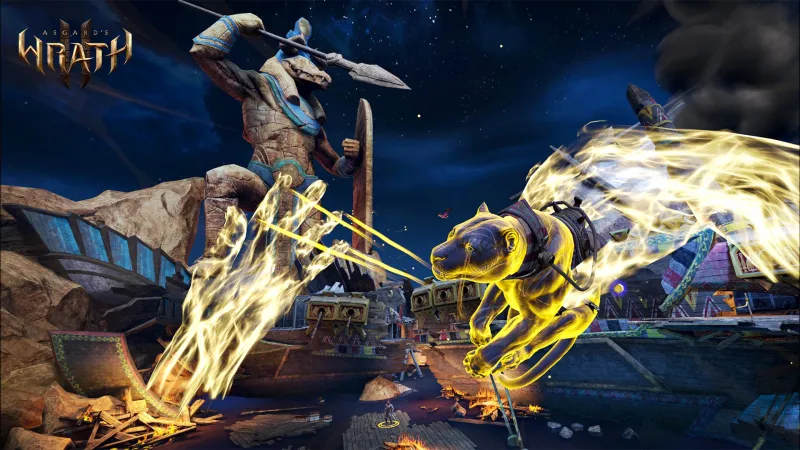
As you play through Asgard’s Wrath 2, you control distinct heroes with their respective narrative arcs. For example, you encounter the warrior Abraxas as he’s robbing a tomb. Later on, you control the river nymph Cyrene in her own chapter. You also meet various animal companions, such as a boar that can wade through lava and a panther that can cause illusory blocks to solidify. These concepts, in terms of traversal and puzzle-solving, make each companion’s functions quite unique, though the A.I. noticeably fumbles during battles. In some cases, they won’t even attack an enemy right next to them until you manually target that foe.

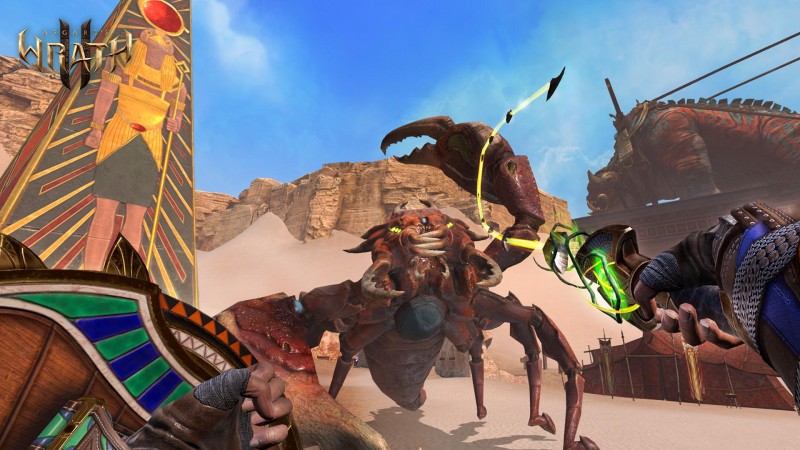
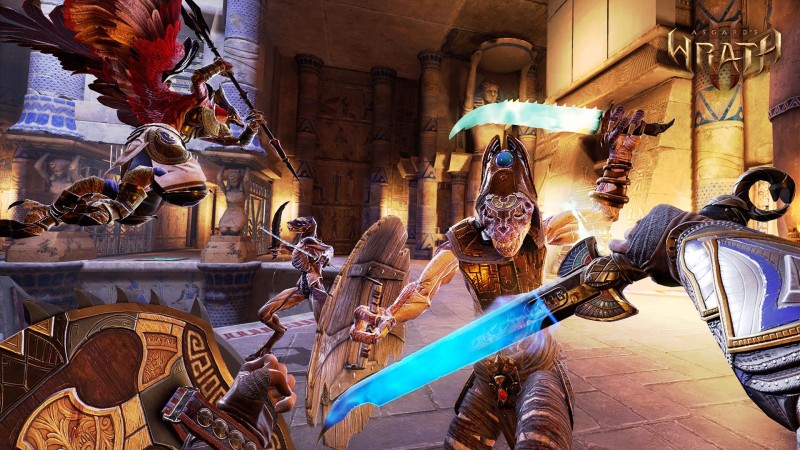
Combat mechanics push the boundaries of what VR gameplay can be, thanks to each hero’s assortment of weapons. This arsenal creates genuinely unique and refreshing playstyles. For instance, I’d get into the thick of the fray as Abraxas, slashing with a whip-sword in my right hand while tossing axes with my left. Meanwhile, the ranger Alvilda required me to perform rapid flicking motions to shoot different magic arrows. Surprisingly enough, the most mechanically complex character was an undead scribe named Djehuty; I had to place both hands in front of my headset and make a pulling motion to decapitate the character; then, I could use the head to possess foes.

Regrettably, I had a few issues with the controls, especially when grabbing weapons, since the controller has difficulty detecting the action unless I sit upright. Likewise, throwing weapons or firing projectiles, even with aim assist options enabled, became frustrating and tiring.


Still, the most fascinating feature of Asgard’s Wrath 2 is its puzzles, which show what can truly be achieved by VR games in terms of immersion, creativity, and engagement. Since you’re playing as a god, you can use your divine form to take control of larger structures, often switching to your hero character, who then traverses the area with the help of animal companions. The highest praise I can give Asgard’s Wrath 2 is that, at times, it feels like the Zelda VR game enthusiasts have been waiting for. Major puzzles are presented as grand set pieces – moments that filled me with wonder upon reaching these sections and a sense of satisfaction upon coming up with a solution.

Sadly, the sheer abundance of puzzles leads to poor pacing during specific segments, such as escaping a dungeon’s traps, only to realize that another brain teaser awaited instead of a climactic boss battle. The game’s last few chapters also feel rushed compared to the arcs of the first two heroes. 

Asgard’s Wrath 2 still boasts an epic campaign that can take upwards of 70 hours to complete, chockful of numerous locales, lairs, and secrets to discover. Likewise, an infinitely replayable roguelike mode is waiting for you well after you're done with the campaign and the overworld areas. In spite of a few qualms, Asgard’s Wrath 2 remains an offering worthy of the gods.

GI Must Play

Score: 9

About Game Informer's review system

Purchase