Pages

Monday, November 30, 2020

World Of Warcraft: Shadowlands Review – Old Ghosts And Bold Beginnings

Publisher: Blizzard Entertainment
Developer: Blizzard Entertainment
Reviewed on: PC

Compared to the lifespan of most games, World of Warcraft is ancient - but it’s hardly a relic. Even today, Blizzard’s MMORPG continues to keep the content flowing for players old and new. Shadowlands is the eighth expansion, and this journey through the afterlife comes with fresh features alongside systems that will be extremely familiar to veterans of the game. At the core, Shadowlands succeeds with powerful world-building fantasy, player identity, and bold gameplay elements.

Click here to watch embedded media

Shadowlands’ premise is simple and straightforward. You invade the many realms of the afterlife to foil the plans of a mysterious arch-enemy called the Jailer. He is exceptionally boring as a villain right now, and takes a backseat to the true all-stars of the afterlife: the four distinct factions that the player explores and eventually aligns with as they reach the level cap. Making the choice to side with one of the realms comes with a ton of flavor and personality. 

I aligned myself with the crushed-velvet, soul-sucking, vampiric aristocracy of Revendreth. Its gothic horror trappings, magic mirrors, and giant bats gave me a different perspective of the world than players who sided with other factions. I even got to host VIP parties to try sucking up to nobles to get big payoffs. However, my nature-loving friend sided with the gorgeous ethereal forests of Ardenweald, where they put on plays in the woods and tend gardens. Whatever your decision, it feels more like you’re becoming part of these soul societies and not just jumping on an endgame progression treadmill. There’s flavor behind the functionality, and it counts for a lot, even if you are still roaming from zone to zone completing world quests. Each dungeon has elements that can be interacted with from a faction standpoint as well; discovering I could tame the gargoyles in a Venthyr dungeon to help defeat enemies was a nice surprise.

Click image thumbnails to view larger version


Each zone in the afterlife is beautifully constructed and sells the fantasy well. While the sacred fields of Bastion and its angelic warriors bored me, it’s a necessary realm to serve as a foil to the darkness of Revendreth. All of the zones are impressive to view from above, and they look incredible considering how old the core of World of Warcraft is. Each zone is markedly different from the others in terms of aesthetics, personality, and feel. Blizzard takes advantage of being able to tap into heroes and villains of ages past; as this is the afterlife, it’s a great chance to bring the greatest hits from across WoW history into the spotlight. Great attention has been paid to bring forth major characters, obscure single-quest references from a decade ago, and popular newcomers like Battle for Azeroth’s Bwonsamdi.

Shadowlands serves up many staples of what is now understood to be the norm. While world quests, dungeons, war tables, and other endgame progression features are all still around with a sparkling coat of faction flavor, they don’t really alter anything in a fundamental way. Many of the quests on the way to level cap feel like stale and tired filler fare, like collecting acorns or killing fifteen cultists, with some interesting larger scale beats scattered in. However, new systems within an incredibly dangerous zone the Maw (It’s supposed to be hell) and a roguelike run experience known as Torghast make Shadowlands stand out. 

The Maw is an incredibly hazardous realm that offers risk-reward balance as you hang out in the Jailer’s backyard, battling lethal monsters without any real safety net to speak of. You may even have to run back to where you die to recover some lost resources. The Maw adds some pressure and challenge to an open-zone environment, which is absolutely refreshing in a game in which it’s all too easy to end up on autopilot world quest mode while watching Netflix. Participating in Maw activities raises the ire of the Jailer, who focuses on you like the Eye of Sauron in Mordor as you slay his fiends. While it’s functionally just another way to gate how much you can do in The Maw every day, it’s again the colorful packaging that makes the difference here.

The pinnacle of Shadowlands content is Torghast. Take the variance and unpredictability of roguelike runs and do them on your WoW character, alone or with friends, in a damned dungeon tower that’s different every time. After doing a decade of dungeon runs that never change, Torghast is a beyond welcome addition. Even the greatest curated dungeons lose their luster after completing them a dozen times, so the prospect of something new each dive is tantalizing. Each run is another opportunity to try out different builds and strategies as your powerups and situations change constantly. One run may turn you into an overpowered god stacking multiple scaling sources of damage to annihilate everything in sight or accumulating enough regeneration to handle anything. Complete puzzles to open caches, rescue some companions you can take back to your hideout, run into a mimic, or slay a rare miniboss that confers special powers. The Torghast climb is great fun and quite replayable – I found myself going back in even after I had capped my rewards for the week just to explore, experiment, and enjoy.

Click here to watch embedded media

It’s worth mentioning that the new leveling experience that rolled out with Shadowlands is excellent, allowing you to get a character leveled, geared, and into the new content in a fraction of the time it would have taken before, so you have time to learn your class easily before hitting the Shadowlands. This allows players to level up through any of WoW’s old expansions at a rapid pace, tempting adventurers to enjoy the old content whilst keeping it relevant in a new era. I leveled several characters for fun just to explore the old expansions, and it felt great to have a few more options in my stable to explore Shadowlands with.

Shadowlands plays it safe with numerous takes on established systems and structures, but lets players enjoy those features with a plethora of personality via the covenant factions and themed zones. Shadowlands also takes chances with a deadly zone that promotes teamwork and careful play alongside a fantastic roguelike run tower that’s full of surprises. Shadowlands is a satisfying addition to the annals of World of Warcraft expansions, and with a robust and revamped leveling experience rolling out with it, it’s a great time to come back to the MMORPG that made the genre mainstream
 

Score: 8.75

Summary: Venture to the great beyond in World of Warcraft's latest adventure.

Concept: Save the world by entering various realms in the afterlife, meeting old friends and enemies along the way

Graphics: Breathtaking and striking environments make it hard to imagine that the game is 16 years old

Sound: The core sounds of World of Warcraft haven’t changed much, but there are always unit barks and meme-worthy boss quips to enjoy

Playability: A revamped and customizable levelling process makes Shadowlands a great time for new or returning players to join in

Entertainment: Shadowlands adds some daring elements into the mix while also retaining many of the same hooks that have kept the MMO going over the years

Replay: High

Click to Purchase

Immortals Fenyx Rising Review – Divine Inspiration

Click here to watch embedded media
Publisher: Ubisoft
Developer: Ubisoft Quebec
Release:
Rating: Teen
Reviewed on: Xbox Series X/S
Also on: PlayStation 5, PlayStation 4, Xbox One, Switch, Stadia, PC

When a powerful titan defeats the Greek gods and scatters them across the Golden Isle, an unproven shield-bearer named Fenyx washes up on shore. More of a storyteller than a soldier, Fenyx must now write a legend of their own, reuniting the gods and challenging the evil force known as Typhon in an ultimate underdog story. Much like its protagonist, Immortals Fenyx Rising strives to be more than a game that just repeats the glories of others; it adds its own mythical flair on top of developer Ubisoft Quebec’s previous work on Assassin’s Creed Odyssey. The result is an exciting and unique open-world adventure worthy of a place in the gaming pantheon.

Exploring the Golden Isle is a joyous experience. Rich visuals (inspired by Studio Ghibli’s films) create lush and diverse biomes, and your traversal abilities make it simple to navigate the world. Fenyx (who can be male or female) can climb nearly any surface as long as they have the stamina, or jump off a mountain or statue and glide across long distances with ease. Even when I had fast-travel options to reach my destination quicker, I typically opted to make the journey manually. Every corner I turned or nook I explored rewarded me with puzzles to solve or enemies to battle for gear, resources, and other rewards.

Click here to watch embedded media

As Fenyx progresses, Immortals fulfills a terrific power fantasy. At first, the combat system emphasizes basic attacks, parries, and dodges, but that run-of-the-mill repertoire quickly builds to one that allows you to chain together awesome, godlike powers. You can command your bird companion to rain death from above while you summon a cluster of spears from beneath the ground, then finish the combo with a devastating swing of a giant hammer. Immortals consistently delivers stylish action that encourages you to build your combos and optimize your gear to suit your playstyle. Unfortunately, the enemy types get repetitive; by the end of the journey, I was tired of battling the usual cyclopes and griffins, which is why I actively sought out the unique optional bosses.

When I wanted a tough fight, I took on the corrupted forms of legendary heroes like Achilles and Odysseus, or tracked down Mythical forms of monsters like Medusa or Ozomene. Though you grow rapidly in power as you continue Fenyx’s adventure, these optional fights provide distinct, edge-of-your-seat battles that test your skills and strategy – and reward you with unique gear.

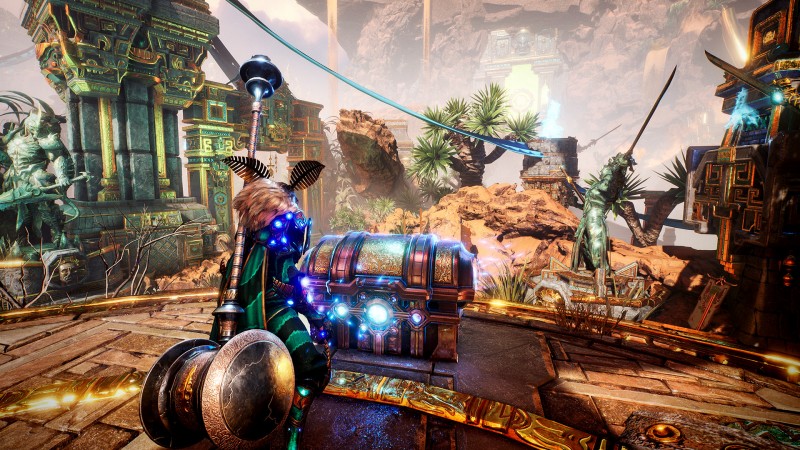
Outside of the challenging fights, my favorite tasks to undertake in Immortals are the often-outstanding Vaults of Tartaros. Much like the Shrines in the Legend of Zelda: Breath of the Wild, these large, themed rooms throw distinct puzzles your way, with a different tactic required for each one. I enjoyed the innovative ways Immortals forced me to wrack my brain. One tasked me with activating gusts of wind to blow over obstacles, while another had me figuring out how to move boxes to pressure switches without getting destroyed by lasers. These Vaults feature such careful and intentional design that I always appreciated how clever the solutions were when I finally saw the big picture. Standard Vaults are often short and sweet, but God Vaults, which usually take place at the end of main storylines, are long, involved rooms that can take up to an hour to complete. Not only did I love working through these longer Vaults, but they serve as the perfect way to put a bow on the story arcs featuring some of Greek mythology’s most iconic characters, as voice lines play as you progress through the Vault, giving additional insight into the true nature and motivations of that god.

Click image thumbnails to view larger version


With a narrative that involves a world-reshaping beast alongside the mightiest warriors, gods, and monsters of Greek mythology, you may think Immortals Fenyx Rising takes itself seriously. However, its high stakes and dark premise are punctuated by comedy, providing a lighthearted tone full of endearing moments with many of its characters. While the jokes don’t always land, I appreciated the strong mix of sarcasm, self-deprecation, and fourth-wall breaking. While an out-of-nowhere joke has the potential to take you out of the action-packed story, the writing is done in a masterful way that keeps the tone consistent throughout, making neither the serious moments or the comedic ones feel out of place.

Immortals contains all the ingredients I want from an epic, open-world adventure steeped in mythology. With empowering combat, rewarding exploration, and a story that shines a spotlight on its characters through humor, Immortals Fenyx Rising leverages its myriad inspirations to discover its own identity and deliver an outstanding open-world experience.

Score: 9

Summary: Immortals Fenyx Rising draws inspiration from movies and other games to create a unique and exciting mythological journey worth embarking on.

Concept: A humorous, action-packed adventure in which players explore a massive island brimming with prominent figures and creatures of Greek mythology

Graphics: The characters may look like strange puppets, but the world they populate is utterly gorgeous

Sound: An appropriately heroic score accompanies your feats, and the funny narration (by Zeus and Prometheus) hits the mark more than it misses

Playability: Though some of the environmental puzzles are poorly executed, the challenge-room Vaults are often clever, creative, and fun

Entertainment: Rewarding exploration, satisfying combat, and imaginative puzzles converge with endearing storytelling and well-executed humor to provide an excellent open-world experience

Replay: Moderate

Click to Purchase

Wednesday, November 25, 2020

Destiny 2: Beyond Light Review – Smaller World, New Trajectory

Publisher: Bungie
Developer: Bungie
Reviewed on: PlayStation 4
Also on: PlayStation 5, Xbox One, Stadia, PC

Beyond Light has the feel of a turning point. In a long-running living game with many expansions and seasons to its name, Destiny 2 is always changing, but this installment feels different. The past and future of the franchise rotate around this release, which clears away much of the old and sets the stage for new story and gameplay beats. Like a tree that needs to get pruned back to allow for healthy growth, it also means that Beyond Light’s release leaves the game looking especially barren. Even as I’m excited to discover new powers and activities, the breadth of the overall experience has been reduced.

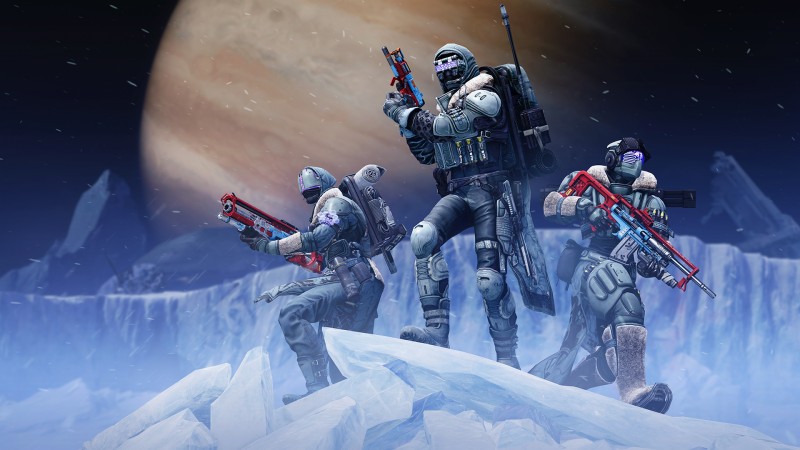
Several separate storylines converge to kick things off, sending players to the frigid moon of Europa to meet a couple of long-missing allies and fight a surging army of ice-cold Fallen aliens. In a plot turn that doesn’t feel especially earned after years of fighting its encroachment, your Guardian is forced to take on the powers of Darkness itself to hold back the tide. The campaign features several fun missions, but I was surprised at the way it is balanced, demanding either significant grinding or several battles that are frustrating endurance chores to tackle solo.

The Darkness-infused Stasis powers are mostly used against you by enemy bosses in the early hours, and it simply isn’t much fun to be frozen in place in a game all about speed and freedom of movement. Once the Stasis powers open up for regular use, the new subclasses add an interesting strategic tool to explore, and feature some gorgeous visual and sound effects that recall crystalline ice formations and shattering showers of sleet. The Hunter and Warlock powers are exciting and distinct, though I was disappointed by the Titan’s similarity to its own existing Arc powerset. No matter the class, I enjoyed using Stasis in PvE activities, but I’ve struggled to warm to its presence in PvP, where it feels like the barriers and freezing slow down the pace of play. I was also frustrated by the grindy nature of unlocking the subclasses for multiple characters; for the significant percentage of players who like to try out all three, it’s quite tedious.

Click here to watch embedded media

Huge swaths of old activities and destinations have been swept away in Beyond Light, and a design decision to “sunset” the majority of old weapons and armor combine to subtract a lot of beloved playstyles. Simply put, the absence is keenly felt. Europa is a beautiful new location to uncover, filled with vast snowy plains and mysterious underground facilities, but in a game about ever-expanding horizons, it’s strange to suddenly have fewer places to play out missions. Europa is forced to bear too much weight as a gameplay and mission destination, without the relief of more alternate locations. And as of now, there are too few new armaments to justify the obsolescence of so much of players’ existing collections.

I was pleased to see the return of the original Destiny’s Cosmodrome destination. The site is largely unchanged, but notable because it now houses the best onboarding for new players that the franchise has ever seen. The New Light mission thread echoes the opening steps players first encountered way back in 2014, but with several new twists that confront the challenging task of introducing the many interlocking systems that make up the game.

Bungie continues an admirable trend of introducing seasonal content that gradually evolves the state of the world’s story and activities, and these first couple of weeks in Beyond Light prove that effort is ongoing. The arrival of the Crow character is a clever plot twist that reintroduces an old foe in an intriguing new role, and his hunting missions are a good time, with some simple touches that give you the sense that you’re stalking a dangerous wounded animal. Meanwhile, the new Deep Stone Crypt raid once again proves Bungie’s flexibility and eye for balancing complex encounter design. Equally important, the raid’s initial completion also kicked off a whole new loop of missions and story for all players in the game. That sort of reactivity makes the universe dynamic and unpredictable, and I love it.

I respect the hard decisions that were involved in chopping the size of Destiny 2 down and consolidating the focus of play, and the similar moves that were involved in refocusing on gear acquisition rather than letting players continue to endlessly reuse old favorites. But it doesn’t change the reality that Destiny 2 feels greatly stripped back at the moment, even with the addition of several new ventures in these early weeks of Beyond Light. As an expansion, Beyond Light introduces some captivating narrative beats and missions, but it’s not enough all on its own to carry the load of the Destiny universe. I’m left ambivalent, with plenty of enthusiasm for the new content, and excitement about what comes next, but also the sense that for the first time, my longtime hobby game feels lesser than before.

Click image thumbnails to view larger version


Score: 7.75

Summary: Beyond Light is a major turning point for the franchise in both story and gameplay, but the accompanying departure of older content diminishes the game in significant ways.

Concept: Rediscover the lost and frozen moon of Europa, and take steps along the dangerous path of wielding new powers of Darkness

Graphics: The new frozen locale emphasizes massive scale and boundless space, and the new shifting blizzard weather patterns deepen immersion and a sense of place

Sound: New music maintains Destiny’s reputation as one of the most compelling soundtracks in gaming, and the voice actors turn in strong performances

Playability: The initial campaign features a difficulty curve ill-suited to casual play. Significant grinding is necessary across this expansion to see the full scope of core missions and new abilities

Entertainment: An engaging story feels like a turning point in the canon, but the game feels diminished after stripping away roughly half of the locations, activities, and other core content

Replay: High

Click to Purchase

Friday, November 20, 2020

NBA 2K21 Review – New Polish On The Court

Publisher: 2K Games
Developer: Visual Concepts
Rating: Everyone
Reviewed on: Xbox Series X/S
Also on: PlayStation 5

Any athlete will attest that you can do all the right things in the off-season and still come up short. Visual Concepts clearly worked to up its game with NBA 2K21 and deliver better results. However, this wasn’t a typical off-season for Visual Concepts; the team wasn’t just trying to take NBA 2K to the next level, it was trying to take it to the next generation, being the first sports game to go all-in on the new console power of the PS5 and Xbox Series X. The result is a valiant effort, full of great new features and impressive visual leaps, but it’s clear there’s still some seasoning and adjustments to the playbook that need to be done. 

Visual Concepts released a version of NBA 2K21 back in early September (for PS4, Xbox One, PC, and Stadia), but this next-gen edition was built from the ground up to harness the power of the new hardware. Some things from the earlier release carry over, like the bulk of Junior’s MyCareer story, but it also has new modes, as well as important tweaks such as smoother movement and more realistic contact. Most importantly, the long load times that have plagued the series are a thing of the past. Games load in seconds, getting you right into the action. The only hiccups I noticed were when my player went to the bench for a substitution and between periods; sometimes your player just stands stoically for a few moments during this transition. It breaks the immersion since everything else functions just like you’re at an actual arena, including a lively crowd and staff performing various tasks.

Minor issues aside, Visual Concepts continues to deliver stellar gameplay that looks and feels straight out of the NBA. The new-gen tech has only added more authenticity and variety to the on-court action. Being able to change up the speed of your dribble and size-up moves makes ball-handling feel great and gives you tons of options. I loved being able to use hesitations, escapes, stepbacks, and crosses to throw off defenders, and this new dribbling quickly became my favorite upgrade. Passes also look more realistic, especially alley-oops off the glass to teammates. A new lead-pass mechanic, alongside the addition of bounce-touch passes, makes it so you always have varied ways situations can play out. 

As with past entries, certain players have signature moves, and Visual Concepts has only added to the realism with new skills like LeBron James’ suspended dribble. It’s cool that players move or play differently depending on who they are, their position, and how they’re built. I was constantly wowed by the level of detail in every player model, from their likeness to their real-world counterparts right down to their facial expressions and dripping sweat in intense moments. NBA 2K21 is easily one of the best-looking games on the new consoles. 

Another high point is the addition of The W, which allows you to can create your own WNBA MyPlayer for the first time and build your own path to stardom by playing for one of the league’s 12 teams. The level of detail in this mode is great, as I loved learning more about the league and its players from the announcers and games feel different from the NBA with a more technical and team-centric style. The W doesn’t have a cinematic experience like the main MyPlayer mode, but you do get to build up your popularity, wealth, team chemistry, and progression by choosing between different things to do on your day off, like volunteering for a youth program or streaming NBA 2K21. 

You have to fill in the blanks to your own story through these small choices, interacting with other players via text messages, and your social-media feed, but the crux is focused on being a visible role model and bringing other young girls into the sport, which I think is fantastic. I just wish it had its own self-contained storyline, and I’m disappointed that your female MyPlayer cannot be brought into the main multiplayer space: The City. You can play with other players in The W Online, but playing in a small gym isn’t the same experience as having tons of shops and courts at your disposal. 

Click image thumbnails to view larger version


The City is an evolution from The Neighborhood, where players come together in a multiplayer space with their created MyPlayers to play pick-up games and shop. The City is a big attraction, and exclusive for this next-gen version of the game. It’s clear Visual Concepts has some big ideas for it, as you get assigned an alliance and help build up its reputation by participating in events. I enjoy walking through this massive metropolis, stumbling upon special vendors selling unique apparel, and unlocking special challenges like teaming up with cover star Damian Lillard to take on legends Clyde Drexler and Terry Porter. You even get to spin a wheel for a daily log-in bonus that gives you cool freebies. Most recently, I scored a free tattoo, which made me happy because spending VC (which you can earn in-game or spend real money to acquire) isn’t my thing, especially for cosmetic items. Unfortunately, if you’re like me, you’re most likely going to be grinding to get anything cool or hoping your luck serves you well when you spin the wheel – though I have yet to get a high-tier item that way. Good items are very expensive, and grinding for them requires an unreasonable amount of patience; it feels like a blatant effort to drive players toward microtransactions, which feels gross. 

The City is a cool idea, but it is also where the biggest problems surface. To enter The City, you must first get your rank up by grinding out wins in Rookieville. This is miserable, as you’re in a sequestered area where you can’t access any part of The City and must just wait for games and play with others. Losses don’t do much for your rank, so every game feels like you’re fighting for entry to the show. I encountered many players who had clearly bought VC to boost their character’s stats and put themselves at the best advantage – which makes it even harder to win if you don’t pay real money yourself. 

As I walked around Rookieville, I rarely came across a player who wasn’t rated 86 or higher. Badges only further complicate this, because badges can let you make unrealistic shots or avoid easy steals. This has made me hate online play, because the games don’t unfold fairly or realistically. They’re just not fun. Visual Concepts needs to figure out a better way to reward teamwork, because players don’t want to pass the ball and just shoot all day long with these modifiers. It’s becoming more of a problem, especially as online play continues to be a focus. 

Outside of these frustrations, you can still expect the other basic modes and some tweaks. My NBA is now an all-encompassing franchise mode, combining MyGM, MyLeague, and MyLeague Online. It gives you more customization options than ever before, from toggling certain league rules to bypassing some of the annoying role-playing elements. MyGM is still in need of a complete overhaul, even if I do appreciate the revamped boom/bust system and more variation in player potentials. I also enjoyed that there are some little variations from the old-gen version, such as a new path in Junior’s MyPlayer story, where you can join the G-League and brush shoulders with some familiar players from the series’ fiction. 

NBA 2K21’s full-team on-court action plays the best it ever has, and the graphical leap is impressive to boot, but it still comes up short in some key areas. Visual Concepts still hasn’t figured out a great way to elevate its online play, and microtransactions continue to destroy what should be a fun part of the experience. I love creating specular plays and the thrill of sinking a buzzer-beating three, but the moment I walk into the online space, that feeling evaporates. It becomes about the money, not about the love of the game. 

Score: 8

Summary: The full-team on-court action plays the best it ever has, and the graphical leap is impressive to boot, but it still comes up short in some key areas.

Concept: Built from the ground up to leverage the new consoles’ power, this edition brings faster load times, better physics, and new features alongside gameplay improvements

Graphics: This is the best the series has ever looked, from the ultra-realistic player models and their on-court moves to the expanded crowd and their reactions to plays. Even with occasional graphical hiccups, the overall tech is at a new, impressive level

Sound: Excellent commentary not only responds appropriately to the play at hand but also educates you on the league and its history. New songs join the already-stellar soundtrack to give you great background beats

Playability: The mechanics are easy to learn, but putting it all together on the court takes time, patience, and high basketball IQ. Online features, like The City, are not newcomer-friendly

Entertainment: NBA 2K21 takes some great steps to bring the series into a new generation and impress on the court, but some parts of its game still need work

Replay: Moderately High

Click to Purchase

Fuser Review – A Fresh Remix

Fuser

Publisher: NCSoft
Developer: Harmonix Music Systems
Reviewed on: Xbox Series X/S
Also on: PlayStation 4, Xbox One, Switch, PC

Developer Harmonix has made its mark on the video game industry with its unique integration of music and gameplay. While Guitar Hero might be the studio’s best-known outing, Fuser is an even more evolved manifestation of Harmonix’s vision; it’s a game that uses popular songs to deliver a musical experience that is as enjoyable to shape as it is to listen to.

Fuser puts you behind the turntables and mixers, giving you full command of a catalogue of hit songs spanning rap, R&B, dance, rock, and country music. Using four turntables (controlled with  your gamepad or mouse), you mix different elements of these songs to craft your own creations. I was often surprised by how well these songs melded together; I never could have guessed combining the beat of Childish Gambino’s "Summertime Magic" with the bassline of Donna Summer’s "Hot Stuff," the synth of Billie Eilish’s "Bad Guy," and the vocals of Smash Mouth’s "All Star" would work so well in concert. Discovering surprises such as this is often an organic process in Freestyle mode, where you have no limitations or focus on score, but Fuser does a terrific job of teaching you the gameplay through career mode.

You’re cast as an up-and-coming performer, working to gain the respect of the hottest DJs on the festival scene. While these personalities are often grating and cartoonish, the career mode is a thinly veiled (yet effective) tutorial set to a rise-from-obscurity narrative. In this mode, you learn the basics through objectives designed to please the crowd and boost your score, including changing the tempo or key, applying different effects to discs, or cuing up multiple discs to jump to simultaneously through the awesome riser function. Swapping out discs individually works well enough when trying to find what works with a certain sound, but the riser feature seamlessly transitions from your current creation to an all-new masterpiece.

Click here to watch embedded media

The library of songs available at launch is impressive and diverse, giving you ample tracks in each genre to choose from. Each song brings something unique, whether it’s the hot Latin beat of Bad Bunny’s "Yo Perreo Sola" or the heavy guitar riff of Rage Against the Machine’s "Killing in the Name." While certain combinations work better together than others, I rarely found any that sounded downright bad; a testament to the impressive technology Harmonix uses to blend sounds and songs together in organic ways. If you happen to find the perfect audio concoction, you can save a snapshot for easy access in the future.

Once you get the feel for marrying disparate songs into cohesive and infectious mixes, you can use other tools to take your creations to the next level. Adding effects like delays, filters, and tape stops add extra flourishes to help make your fusion your own, but nothing allows you to customize quite like performing on the several available instruments. You can’t play whatever note or pattern you’d like, but you can choose from various instruments including distorted vocals, a string section, and trap drums to create your own loops to drop into the soundscape. While I rarely preferred these custom-instrument tracks over the established songs that make up the core tracks, nothing made my songs standout more than adding my own custom piano loop.

Creative expression is obviously crucial to the core gameplay experience, but it carries over into how you present your set. You can customize your character’s appearance, including unlockable clothing and accessories, but I love tinkering with different stage setups and light shows. Going beyond how customized the song mechanics are, choosing the perfect pyrotechnics, fireworks, and laser shows to match the mood I’m setting in my performance is a lot of fun.

Click image thumbnails to view larger version


Music can certainly be enjoyed alone, but the festival scene is a social experience, and Fuser allows you to go online for collaborative multiplayer. When you hop into a lobby, you take turns with up to three other people to perform your perfect production. It’s always fun to see what other people come up with, which is why I love this mode, as well as the social section, which holds themed events featuring songs from different genres and decades. You can submit your own creation to these events or listen to recordings from other players.

Battle mode is a chaotic competitive multiplayer option where you take on other players using ever-evolving songs you come up with on the fly. Unfortunately, even more than a week after launch, battle mode does not work on Xbox. While you can undoubtedly have fun with Fuser’s other avenues of play, the fact that Harmonix released a non-functional mode as part of the package is disappointing. However, this is a comparatively small portion of Fuser as a whole, so those who can’t get into a match aren’t missing much.

By affording you such command of a terrific catalogue of diverse hits and certifiable classics, Fuser allows you to aptly fulfill the DJ fantasy better than ever before, without the need for clunky peripherals you’ll only use for one game. Though I poured hours into the experience, I still feel like I have so many corners and interactions to explore within the library of available tracks. Fuser transcends musical genres to deliver a magical and intuitive music creation toolset within the framework of a game.

Score: 8.75

Summary: Fuser is a magical music experience that will have you dreaming up new ways to incorporate different songs and sounds into your next creation.

Concept: Step into the colorful shoes of a DJ, mixing components of various songs across myriad genres to please the crowd

Graphics: Cartoony, dated character models are overshadowed by the electric festival atmosphere, which includes your custom stage show

Sound: A diverse collection of hits from a wide spread of genres allows for eclectic creations that meld together in satisfying fashion

Playability: Even as you progress through your career and accumulate new abilities at a frantic pace, the skills at your disposal feel manageable and intuitive

Entertainment: Combining elements from multiple songs to spin your own creations delivers a special kind of magic

Replay: Moderately high

Click to Purchase

Wednesday, November 18, 2020

Dirt 5 Review – An Approachable And Exciting Off-Road Racer

Dirt 5

Publisher: Codemasters
Developer: Codemasters
Rating: Everyone
Reviewed on: Xbox Series X/S
Also on: PlayStation 5, PlayStation 4, Xbox One, Stadia, PC

Muddy tires, breakneck speeds, and whiplash-inducing drifts are the name of the game with Dirt 5, the latest off-road racing title from rally veterans Codemasters. Dirt 5 embraces approachable, arcade-style gameplay, enabling more players to enter the race. With a variety of events to take on, you’re never at a shortage of routes to drive and donuts to do.

Dirt 5 continues the series’ hallmark of delivering terrific off-road racing. Thanks to the tight, precise controls, traveling the world and speeding past the beautiful sights feels awesome. I loved tearing through a muddy course under the shimmering Aurora Borealis in Norway and drifting around an icy corner with New York’s Roosevelt Island Bridge serving as the backdrop.

Performing well in Dirt 5’s races requires you to master the delicate balance of when to accelerate, brake, and throw the handbrake for harsh drifts. This light-speed calculus becomes even more complicated when you have to take into account other vehicles that can soften your cornering, or how the different surfaces feel when you’re going into a turn at 60 miles-per-hour; I can be more reckless on muddy surfaces than I can on ice, while the pavement is much less conducive to drifting. I love how you can truly feel the different surfaces in how your vehicle performs. On top of that, driving in the dark or inclement weather adds an additional layer of challenge, with lower visibility coming from heavy snow and the track being illuminated only by your headlamps. It’s unnerving and beautiful at the same time.

Click here to watch embedded media

While the main attraction is the racing (either lap-based or point-to-point), Dirt 5 also includes events like Path Finder and Gymkhana to change things up. Path Finder puts you on a hilly course full of narrow paths, rocky terrain, and near-vertical ascents and tasks you with carefully traversing it as quick as possible; I enjoyed each course, though the extremely uneven terrain sometimes caused my vehicle to bounce around or turn over, resulting in frustration as the clock keeps ticking. Gymkhana is a stunt mode where you’re tasked with completing drifts, donuts, and jumps on your way to (hopefully) a high score. I always looked forward to each Gymkhana event, but the short timer and limited set of obstacles make them fall flatter than a stunt-based mode should.

The various events come together in a meaningful way in career mode, which lets you plot your path through a branching tree of events on your way to becoming an off-road superstar. After completing a race in South Africa, I could opt to stay for a Gymkhana event rather than going to Greece for a difficult rally race. In addition to earning performance-based stamps that unlock new chapters, you also have optional objectives, which add a ton of flavor to events and get you noticed by other racers. Once you complete enough of these, you can challenge rivals to one-on-one Throwdown events.

Dirt 5’s career is fairly straightforward; there’s no vehicle customization outside of decals and paint jobs, but I loved replaying events to complete as many of the special objectives as possible. Most are actions I would probably do anyway, like trading paint with other racers, drifting a set number of times, or sustaining a minimum speed, but the “finish the race in reverse” objective always had me scratching my head.

Unfortunately, most modes outside of the career don’t give you enough incentive to stick around. Sure, I could try to post a better time-trial score on the leaderboard, but the feeling of repetition becomes unavoidable. The custom races let you adjust everything down to how quick the weather changes, but these settings don’t make up for the lack of optional objectives, making the races feel less eventful than their career counterparts.

Click image thumbnails to view larger version


Because of this, I’ve found myself returning again and again to the community-driven custom course mode, Playgrounds. Here, I can use intuitive tools to build my own course for racing or Gymkhana, then share it online. While you can’t make a huge course like the ones in other modes, you use gates, barriers, platforms, and obstacles to deliver fun experiences completely distinct to this mode. I loved browsing the discover tab to find twisting Gate Crasher courses full of jumps and spirals. Even after I finished career mode, I regularly returned to Playgrounds’ community tab to check out the latest creations.

If you’d rather play with others, Dirt 5 supports local splitscreen with up to four players (even in career mode), as well as online play through traditional racing and party games like Vampire, a game of tag where you avoid the “infected” cars until the timer runs out, or King, an event where you try to capture a crown then hold onto it for as long as possible by avoiding others in the arena. Unfortunately, I struggled to find online competition through matchmaking; my most reliable method was to join up with friends, but even then, finding party games proved unfruitful. This is disappointing considering how new the game is.

Though some of the modes don’t provide the deepest experiences, I enjoyed my time racing around in Dirt 5 thanks to a fun career mode and a community section bustling with potential. Whether you’re earning your spot among the superstars or creating a vehicular obstacle course of your dreams, Dirt 5 is worthy of a spot on the podium.

Score: 8.5

Summary: Dirt 5 offers a fun career mode and exciting community features, but lacks depth in its peripheral modes.

Concept: Hop into the driver’s seat of a variety of vehicles and compete in events across pavement, dirt, mud, and ice

Graphics: Everything looks terrific. Sunlight hits your car, lightning strikes during storms, and your vehicle gathers dirt and dust over the course of a race

Sound: An appropriately amped-up soundtrack provides excellent accompaniment to the on-the-track action, but the roaring engines are the stars

Playability: Easy-to-understand controls allow for anyone to drive up to the starting line, but mastering the tight corners and the way the different surfaces behave is essential to grabbing a spot on the podium

Entertainment: With a fun choose-your-path career mode and community-driven custom courses, Dirt 5 provides a thrilling and approachable off-road experience

Replay: Moderate

Click to Purchase

Hyrule Warriors: Age of Calamity Review – Well-Worn Fanservice

Publisher: Nintendo
Developer: Omega Force
Rating: Teen
Reviewed on: Switch

For many, The Legend of Zelda: Breath of the Wild was a revelation. Nintendo smartly rethought old conventions and delivered an adventure that felt new while holding true to the spirit of the series. I put almost 200 hours into Nintendo’s open-world epic, and after I’d put the controller down for the last time, I was hungry for even more. Hyrule Warriors: Age of Calamity delivers that "even more" while we wait for the true sequel. It’s far from a revelation, but it is an adequate diversion.

Like the original Hyrule Warriors from 2014, Age of Calamity relies heavily on developer Omega Force’s Dynasty Warriors formula. Link and his fellow Hyruleans drop into sprawling battlefields and carve their way through armies of hundreds as they take over enemy encampments and ultimately turn the tide of war. The action is a bit monotonous, and I completed several combat encounters by spamming the basic attack button. Occasionally, I would throw a heavy attack in the mix just to change it up, but that was rarely necessary. 

Click image thumbnails to view larger version


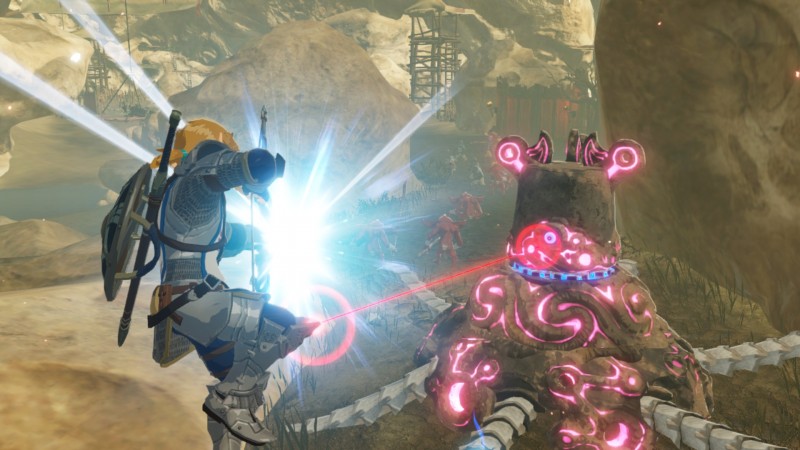
Age of Calamity gets more interesting once you encounter a squad leader. Unlike enemy grunts who fade to dust after three or four hits, leaders have health bars and require a bit more strategy. Link is equipped with a Sheikah Slate that lets him unleash a series of Rune attacks similar to Breath of the Wild. For example, you can freeze enemies with a stasis ability, and then slash at them with your sword. Alternatively, you can shield yourself from powerful attacks with giant blocks of ice. These Rune powers shake-up Hyrule Warriors' otherwise stale combat. Moreover, some enemies are especially susceptible to Link’s Rune abilities, so if you time your strikes, you can set them up for a quick finish. I especially loved tossing a bomb in an enemy's face as they were winding up for a big attack.  

Link is a well-rounded hero, but he is joined but some equally capable allies. During your journey, you unlock additional playable characters, such as the Ninja-like Impa and all four Divine Beast champions featured in Breath of the Wild. All of these heroes perform largely the same, but they have one or two special abilities that set them apart. I enjoyed chaining together electric attacks as Urbosa, and lobbing explosive chunks of magma across the battlefield as Daruk the Goron. On missions where you have multiple heroes on the battlefield, you can freely swap between them and even issue commands to your allies. While I appreciated being able to tell my heroes where to direct their efforts, the game doesn't make use of this feature in a meaningful way. I never felt encouraged to think about hero positioning or strategy, which feels like a missed opportunity. 

Click here to watch embedded media

Between battles, Link and his crew return to a Sheikah tower where they are presented with a map of Hyrule. This is the same map from Breath of the Wild, which is a nice touch. During this downtime, you can upgrade your weapons, buy items, or complete side missions. These quests are incredibly simple – almost trivial – and often have you delivering various resources to people across Hyrule. Completing these quests isn’t very satisfying, but it opens up new shops and sometimes unlocks new combos for your characters so it feels worth taking a few extra minutes to clean them off the map. These side missions offer a needed break from Hyrule Warriors' action, but the missions are so shallow they don't add anything noteworthy. 

Hyrule Warriors: Age of Calamity looks a lot like Breath of the Wild, but it lacks the exploration and puzzle-solving elements that define the mainline Legend of Zelda series. Age of Calamity may not resemble a traditional Zelda game, but it’s not a bad time. The action is repetitive, but also relaxed and comfortable. It trades on your love for Nintendo’s classic franchise, and I was happy for the excuse to return to this version of Hyrule. I still feel like I'm chasing Breath of the Wild's high, and Age of Calamity is a small solace. 

Score: 7.5

Summary: Hyrule Warriors: Age of Calamity is far from a revelation, but it is an adequate diversion.

Concept: A narrative prequel to Nintendo’s phenomenal Breath of the Wild that features mindless-yet-serviceable action

Graphics: Breath of the Wild looked like a watercolor painting come to life, and Age of Calamity decently mimics that aesthetic

Sound: The score is subtle but nice, though the voicework tends to be a bit hammy

Playability: Most combat encounters can be completed by mashing a single button over and over, but later levels require some grinding

Entertainment: The action is tedious, but cutting through swaths of Bokoblins and single-handedly clearing a battlefield is still rewarding

Replay: Moderate

Click to Purchase

Friday, November 13, 2020

Godfall Review – A Soulless Warrior

Publisher: Gearbox Software
Developer: Counterplay Games
Reviewed on: PlayStation 5
Also on: PC

Backed by razor-sharp combat, Godfall is at its best when a boss steps into the arena. These foes put up good fights and push you to use everything in your arsenal. The back-and-forth clashes against these titans are intense and lengthy, demanding speed, skill, and strategy. When you eventually deliver a finishing blow, you're rewarded with a feast of loot raining down in a dazzling showering of next-gen particle effects. The gear you obtain is almost always beneficial, giving you more powerful weapons and currency needed to make your existing equipment better. What comes next, however, is a daunting amount of repetition leading up to the next exciting boss encounter.

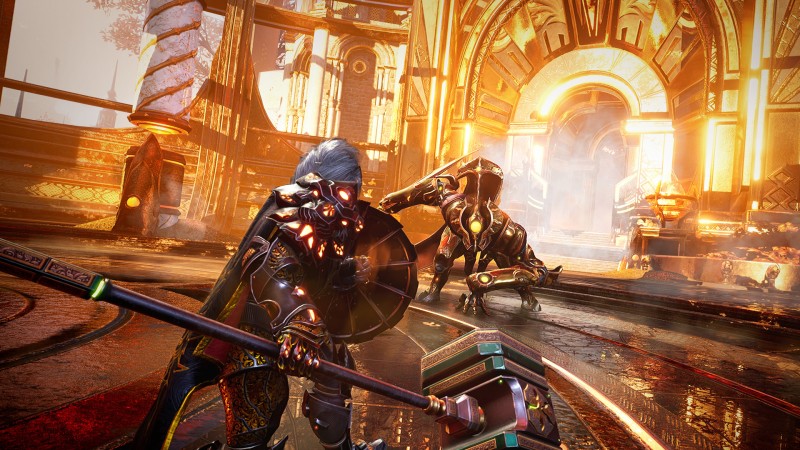
The meat on Godfall’s bones is little more than warriors with swords, but the visual stylization over that basic setup is beautiful and different. You’ll never once see a humanoid face; every character is outfitted in garish armors, usually themed after some kind of beast. These suits of steel have a stunning design, and convey the game’s unique blend of fantasy and science-fiction. The story, while beginning with a flashy cinematic of thousands of troops clashing on the battlefield, is surprisingly intimate, pitting your character, a fallen king named Orin, against his power-hungry brother Macros, who will destroy the world in his pursuit of becoming a god.

To reach Macros, you must first take down all of his lieutenants – each coming out of the woodwork after a certain number of story missions are completed. At this point, the narrative quickly loses its pulse and never recovers, being dominated by bland conversations with an A.I. being, and concluding with one of the most anticlimactic cliffhangers I’ve seen.

The mission designs and small open-world environments are equally as lifeless, serving up tedious steps required to unlock the next boss encounter. The worlds are highly detailed, but there isn’t much variety in the plant life or architecture, and it all starts to blend together into the same snapshot. You spend a lot of time snaking down the same paths for different mission objectives, and eventually realize you can skirt every encounter and just beeline it to the objective. After a few missions in the same area, I didn’t think twice about hoofing it; I made a habit of getting to the heart of the matter quickly.

Click here to watch embedded media

The one benefit of grinding out fights against the same groups of enemies in these areas is to gain experience that eventually awards skill points. Again, Godfall does a nice job of high-fiving players with statistical and functional bumps that immediately make a difference and make Orin more of a force on the battlefield. The standard enemy varieties perish quickly, but are still fun to take on, especially if you focus on weakening their guard to open them up to flashy finishers. You can also use Soulshatter, which allows you to bank damage that you can use to decimate an adversary, making them explode in an impressive spray of mist. No matter what your approach is, the game pushes you to alternate between two weapons, as damage dealt with one powers up the other. You have five weapon types in total, and all are fun to wield, feeling distinct with different timing windows and benefits.

A little variety is also tied to Valorplates, which are complete armor sets that impart slightly different combat capabilities, but not enough to truly change how you play. The Valorplates all look amazing, but have their own loadouts, which can be a bit of pain, as you need to unequip gear if you want to use it on another suit.

Each mission consists of three difficulties, with the highest limiting the number of attempts you get. On the lowest difficulty, if you die, you come right back to life and the damage you dealt to the enemy remains (although sometimes the game bugs out and resets it anyway). The higher difficulty is best played cooperatively with two friends, and is also where Godfall’s boss battles truly shine. A good deal of fun comes from coordinating strategies and trying to lure a foe your way to set him up for an uncontested assault from a friend.

Whether you are pairing two similarly leveled characters or a high-powered with a newcomer, the battles are balanced nicely for all involved, either upping the damage output for the player or making the fight harder. Loot is also individualized. I was impressed by just how well the cooperative play worked, although you can’t matchmake if your friends aren’t around. You need to group up with people you know. The campaign delivers plenty of missions to dive into, a robust co-op-focused endgame, along with an endless Tower of Trials that pumps out excellent loot (again recycling an environment you've already explored).

Like most loot-based games, you spend a lot of time in Godfall’s menus, equipping new swords and upgrading items to truly make enemies feel your wrath. Just know it’s a game that lives in the moment of combat and dies whenever attempting anything else, whether it’s drawing players into the worlds or trying to make them care about the characters and story.

If you want a looter-slasher that’s all about the stat bumps and the delight of seeing enemies suffer from the enchantments you worked hard to unlock, Godfall delivers plenty of that and is backed by a hell of a combat system. It hits that one note and holds it from start to finish.

Score: 7

Summary: Loot is handled remarkably well and combat is fun, but the world, story, and missions don't have much of a pulse.

Concept: A rewarding loot fest with dynamic combat and great boss battles that struggles with level design and story

Graphics: Godrays and particles are everywhere. The environment details and animations are top notch, but the worlds don’t feature much unique architecture, so it all looks the same

Sound: Orin sounds like Liam Neeson trying to be a Transformer – it works, but the dialogue still made me cringe. The pounding score and clanging of steel are nicely layered into the experience

Playability: Combat is simple in technique, but offers plenty of strategy in when to use specific attacks to take down the bosses

Entertainment: Fun to play solo or with friends, but both avenues are filled with monotonous level design

Replay: High

Click to Purchase

Thursday, November 12, 2020

Call Of Duty: Black Ops Cold War Review – Mind Games And Motorized Mayhem

Click here to watch embedded media
Publisher: Activision
Developer: Treyarch
Rating: Mature
Reviewed on: PlayStation 5
Also on: PlayStation 4, Xbox One, PC

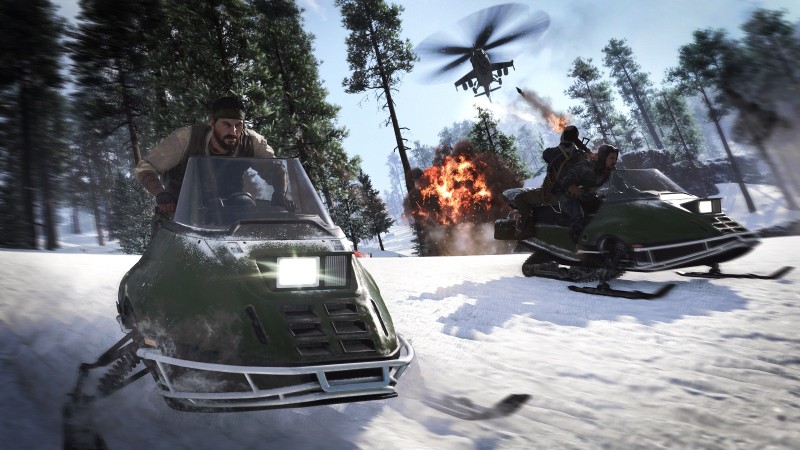
Call of Duty: Black Ops Cold War isn’t defined by any one standout mode; like its predecessors, it launches a trifecta of exciting experiences. Head back to the era of Ronald Reagan and the Cold War in a spy-thriller campaign, take on traditional multiplayer with a focus on vehicles, and blast away against the undead in zombie modes. As always, each part of the whole stacks up differently, but the annual Call of Duty release is once again a polished pearl of first-person shooting, even if it doesn’t shake up established systems.

Click here to watch embedded media

The campaign is an enjoyable-but-short return to form for Black Ops. It starts out with a classic Call of Duty guns-blazing soiree, transitions into more of a spy-vs-spy affair, and then goes off the rails with some absolutely wild, reality-warping fare. Taking Call of Duty to these weird places has been hit-and-miss in the past, but this story resonates well as you unearth its mysteries and make choices. While the multiple ending paths you can take won’t blow you away, they’re a neat little incentive to go back and replay missions another way. 

A character creator allows you to pick several profile perks to tailor your approach to the campaign. Subtle bonuses let you alter various aspects of your playstyle; I selected traits for a higher health pool and taking less damage while stationary, allowing me to handle trading fire from cover much more easily. Picking these bonuses doesn’t drastically change the action, but they provide a nice avenue for customization. 

While your core mission is to hunt down a covert Soviet operative known as Perseus, the journey takes you all over the world and even to the recesses of the mind. The best missions in the game have a “choose your own adventure” feel to them. One tasks you with playing a double agent through the famous KGB headquarters Lubynaka building, letting you solve some puzzles and come up with solutions as to how to sneak your strike team in. The absolute highlight of the late-game takes place in Vietnam, a mission with a well-designed looping structure that left me grinning and dumbstruck. 

While those missions steal the show, even the rank-and-file excursions around the globe pack plenty of punch and creativity. One trip takes you deep behind Soviet lines to discover a training facility where soldiers practice incursions on a quaint simulated USA town – and you can bet that gets rowdy in a hurry. While you can barrel through the critical path in the boisterous campaign in about five hours, you’d be passing up optional missions and plenty of secrets, including old Activision games to play. Of the three core pillars to this Call of Duty title, the campaign stands out as the winner despite its brevity.

Click here to watch embedded media

The multiplayer suite has plenty of options and modes for players of all types, but it all features the same excellent gunplay and choice that have formed the core of Call of Duty for years. Gunsmith lets you tweak and customize your weapons to fit even the most eclectic methods of play, and Combined Arms modes are much more vehicle focused than many CoD offerings. If you don’t like them, the other critical tried-and-true game modes are available, but there’s some nice variation to be had rolling around with gunboats and tanks. New weapon attachments and vehicle-buster equipment add another layer of depth to what’s already expected. However, that’s not the real draw of multiplayer. 

Click image thumbnails to view larger version


Fireteams is a 40-person mode with four-person squads, and it features large-scale, team-based firefights similar to Call of Duty’s free-to-play battle royale, Warzone. However, Fireteams takes a more focused approach, without the unchecked chaos of Warzone (and without the threat of being booted). If you enjoy working with your friends in big battles and huge maps, this is the perfect opportunity to show off your teamwork. While the mode could be fun with random people, you’re going to want to bring three buddies you can talk to on voice chat for the best results – if you queue up and spray-and-pray like a team deathmatch, you’re going to get demolished. As a big fan of team-oriented Call of Duty with friends, this mode is an enjoyable change up from the frenetic fury of Warzone.

Finally, there’s Zombies. Call of Duty: Black Ops Cold War adds some new quirks to the core zombie experience by letting players bring their own loadout into the massive undead slaughterhouses. It feels good to take your honed weapons into the arena instead of relying on what you can find there, but wall-buying guns, powerups, and Juggernog buffs are all still critical parts of the mode. You can also now call a chopper and bail early on the wave-based horde instead of waiting to die, rewarding bonus points. If you’ve played Zombies before and love it, you’ll feel right at home. If you’ve been waiting for Zombies to do something new to get you onboard, this probably won’t do it. Cold War plays it dangerously safe with a mode that was once a revolutionary concept.

Click here to watch embedded media

PlayStation players also get access to Onslaught, a smaller-sized Zombies mode exclusive to PS4 and PS5 for one year. This is a kind of horde mode designed for one to two players instead of the standard four. With different perks, powers, and weapons every time, it’s a decidedly average (and repetitive) way to spend some time with a friend as you take out elite zomboids. Lastly, Dead Ops Arcade 3 is here for twin-stick shooting action and tomfoolery, which is a nice mode to relax with your buddies in because it’s so off-the-wall in terms of setting, humor, and structure. A sort of ode to the coin-op games of yesteryear, the game is a nice way to blow off steam after a few hours of standard Call of Duty.

If Call of Duty: Black Ops Cold War excels at anything, it’s options. This isn’t uncommon for a Call of Duty title, but with a vast array of game modes for myriad player profiles and a fun campaign that retains a summer-blockbuster feel while getting weird and wild, the ride is a good one. 

Score: 8.75

Summary: Call of Duty goes back to the 80's with a captivating campaign.

Concept: Track down a Soviet spy in the 1980s, engage in vehicle-infused multiplayer carnage, and co-op comradery in zombie modes

Graphics: A wide variety of entertaining and captivating environments take you through snow-swept valleys and gaudy interiors. It looks good and performs well on next-gen systems, but the visuals aren’t breathtaking

Sound: From big explosions to minor ricochets, the sound effects are on point. A powerful soundtrack keeps the pulse pounding even in the loadout menu

Playability: Several difficulty modes ensure you can tackle the campaign regardless of your shooter skills. The core gunplay feels smooth and is as solid as ever

Entertainment: Call of Duty: Black Ops Cold War serves up a great campaign, solid multiplayer with fresh spins, and the zany zombie modes that we’ve come to expect from Treyarch

Replay: High

Click to Purchase

Carto Review – Putting The Pieces Together

Publisher: Humble Games
Developer: Sunhead Games
Rating: Everyone
Reviewed on: Xbox One
Also on: PlayStation 4, Switch, PC

The game’s world is divided into square tiles that can be connected and manipulated on the map screen. However, tile borders must have matching topographical features, such as roads, rivers, and forests, to connect. Anyone that’s played Carcassonne should feel at home with Carto’s map-making mechanic. Whatever you change in the map alters the world in real time. Need a quick way to cross terrain? Just move the tile you’re occupying where you want to be instead of walking there manually. It’s a neat mechanic, and there’s a magical feeling in seeing your makeshift terrain instantly come to life.

Carto is still enjoyable when you only focus on creating routes, but it shines brightest when it uses its mechanic to encourage out-of-the-box thinking. These situations usually involve solving clever riddles or using visual hints to determine how to orient tiles to make new pieces appear. Some are obvious, like creating a river mouth to spawn flowers that grow in such places. Others make you feel like a genius for figuring them out, like assembling entire landmasses based on ancient carvings. One of the cleverest cases involves using map rotation to solve a combination lock. Square tiles eventually give way to Tetris-style pieces and tiles with additional movement rules; Carto regularly introduces new twists on its base gameplay, keeping the experience fresh throughout.

Click here to watch embedded media

Despite Carto’s cutesy veneer, the puzzles become surprisingly challenging in good and bad ways. Don’t be surprised to spend long periods staring at the map or rotating tiles to find that one path to success. Most of the tougher riddles are rewarding to solve, but a few are too vague for their own good. One aimless trek through a foggy forest left me feeling as confused as Carto herself. At that point, the game becomes an exercise in trial and error, constantly opening the map to move a tile, take a few steps, rinse and repeat. I happened upon a couple of solutions by pure luck. Although not frequent, technical hiccups may raise their heads too, such as a progress-halting bug that required some online troubleshooting. 

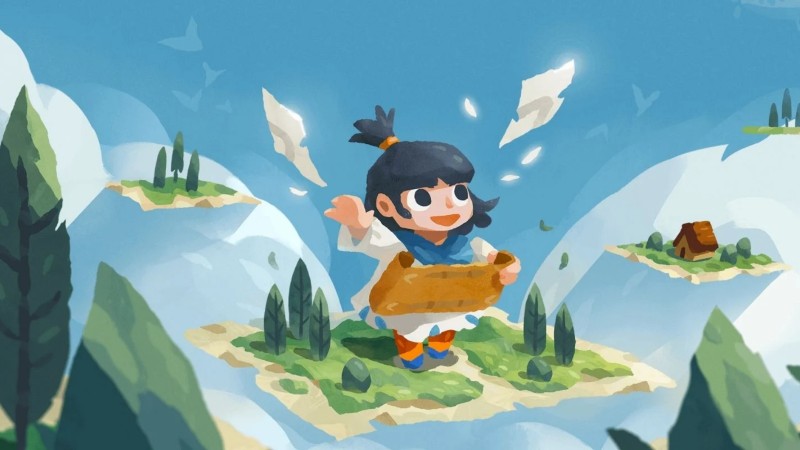
The adventure takes Carto to different isles, from volatile volcanoes to frigid icebergs. The painted art style looks fantastic, giving the sense that you’re exploring a children’s book. Mixing and matching paths usually means a lot of backtracking, and Carto moves pretty slow in the opening hours. She eventually gains an item that puts more pep in her step, but it really should have been her default speed from the beginning. Collecting various key items is another disappointment since the game usually leads you to their correct destination instead of letting you figure it out. 

Carto’s humorous cast and heartwarming tale about finding your way while bringing people together inject the game with heart. When the going got tough, the narrative always put a smile back on my face. Even with a few mismatched elements, Carto fits its pieces into a largely enjoyable whole. 

Score: 8

Summary: Rearrange pieces of the game map to forge your own path in this fun, challenging, and heartwarming puzzle adventure.

Concept: Arrange map tiles to create paths in real-time to track down your adventurous grandmother

Graphics: The charming art direction evokes the painted illustrations of children’s books

Sound: While not memorable, the music does its job of being pleasant without disrupting your train of thought

Playability: Placing tiles correctly feels satisfying, and simple controls allow the puzzle-solving to shine

Entertainment: Carto’s heartwarming story is backed by its inventive (and challenging) take on puzzles and exploration

Replay: Moderate

Click to Purchase

Demon's Souls Review – Hello Dark Souls, My Old Friend

Publisher: PlayStation Studios
Developer: Bluepoint Games, From Software
Rating: Mature
Reviewed on: PlayStation 5

In 2009, FromSoftware’s Demon’s Souls ushered in an age of challenging action/RPGs that are defined by amazing world-building, beautiful environments, epic boss battles, and player choice. During a period when players were being inundated with lengthy tutorials and heavily guided gameplay, Demon’s Souls let us explore, discover, and triumph against incredibly dangerous adversaries. Today, Bluepoint Games’ remake of FromSoftware’s PS3 original shows reverence and adherence to the classic while providing a whole new adventure to those who got into the series later. This new vision of Demon’s Souls looks, feels, and runs like a dream.

If you’ve never played a Souls-like game before, know that the road is hard. The road is tough. The road will chew you up, spit you out, and then stomp on your splintered corpse. Demon’s Souls has bosses that are probably easier than FromSoftware’s recent projects, but some of the level design can be incredibly unforgiving by comparison. As with modern Souls games, Demon’s Souls isn’t really about the difficulty; it’s about the eventual victory, the besting of the unbeatable, and the knowledge that you can do it. 

Click here to watch embedded media

The PS5-exclusive Demon’s Souls is a painstakingly touched-up ode to the original that veterans will be instantly familiar with. From updated and enhanced visuals to some minor quality of life improvements, Bluepoint does well to only make the slightest gameplay changes to an already powerful design. Bluepoint’s deft rework allows for updated technology to enhance what was already a great game, but rough around the edges in terms of implementation. The strong gameplay of the original shines bright through it all. 

Demon’s Souls demands the player be curious, careful, and bold. It’s about a wild dodge, a frantic lunge, or the self-control to not fall prey to greed, waiting until just the right moment to go in for that final strike. It’s about turning an often-chaotic chord into smooth jazz, reaching deep down into whatever spirit you have left and press on through the deadly dragons, brutal knights, and vile necromancers; to shout into the void (or your living room) that today is not the day you will fall without a fight. The eventual wins are moments you never forget.

Click image thumbnails to view larger version


Choosing how you accomplish those goals is a big part of the fun. Whether you want to pick your opportunities with a shield and heavy armor, assault the enemy with magical salvos, or run around stabbing foes in the back and shooting arrows, the world is yours to engage with as you choose. For my first playthrough of the remake, I went with a giant two-handed weapon, a ton of endurance, and lots of rolling. Smashing enemies into dust while balancing around my own vulnerabilities feels as good as ever.

One of the major changes that Bluepoint has made is altering how many healing items can be carried. Realistically, this does not affect your PVE experience, as you can still carry a huge supply to soak a ridiculous amount of damage. This change will have more of an impact on online interactions. Players are no longer be able to carry absurd quantities of consumables into other people’s games as they carry on epic-scale invasions with the intent to murder them. If you don’t feel like being slaughtered by someone looking to make an already intense game even more extreme, always remember you can play in soul form to keep things to yourself.

Bluepoint’s creation takes a few liberties with the source’s art direction here and there, but the overall reimagining is vibrant and awesome. The Storm King’s bizarre majesty in the pouring rain, the maze-like prisons and spires of Latria, and the depths of the Stonefang Tunnels all shine in brilliant new ways. These are not just levels; they feel like realized worlds. When the lightning bolt hit the tree in Shrine of Storms, I audibly gasped. I felt like I could feel the wind and rain as I took on the Storm King – and that’s not even hyperbole. The constant 60 frames-per-second makes a huge difference in terms of responsive, fluid combat compared to the original. Using the Archstone system, you can move from world to world at will, meaning you can take the encounters on in any order you like and explore areas out of your level/gear range if you’re feeling spicy which is a freedom that adds a lot to the game. This isn’t a new system, but it’s unlike the construction of the Souls games that came after.

Click here to watch embedded media

Yes, the remake adds a little bit of light and visibility to dank and decrepit areas like the Valley of Defilement. Will you still get turned around and lost in the poison muck and slowly wander in the darkness until you die? Absolutely. Do the new Fat Officials look weird if you’ve grown accustomed to the old design? Yeah, sure. And I prefer some of the original soundtrack to the new takes. While some small details may upset the Demon’s Souls purists out there, the vast majority of the remake’s alterations, additions, and designs are impressive. The PS3 version hasn’t gone anywhere, and you’re welcome to play that if you prefer it. 

Demon’s Souls is the predecessor to a slew of FromSoftware titles, and players can see tons of inspirations for environments and encounters that would reappear later in the Dark Souls series. Having not played the original in ages, this remake was like walking through a fascinating interactive museum in some respects, witnessing the precursors to Blighttown, the Pursuer, and many other series staples. If you’ve already played Demon’s Souls to death, the new Fractured Mode lets you add a little variety to your runs by altering the maps a bit to hopefully throw off your muscle memory and footing. 

For newcomers, Demon’s Souls will be the first exploration into the duality of despair and triumph, and hopefully go on to become a starting point for new Souls fans. For veterans, it’s a homage to an experiment that kicked off a fantastic genre. Either way, it’s wonderful that the nascent ethers from the original classic have coalesced and given us this delightful treat.

Score: 9.25

Summary: Bluepoint serves up a scintillating remake of FromSoftware's classic.

Concept: Create your own playstyle as you journey through challenging dark fantasy lands to restore or doom the world

Graphics: The lush environments and lighting do justice to the source material, bringing a next-gen shine to a classic game

Sound: Immaculate clanking and clashing of steel, eerie cries of manta rays, and the thumping of threats contribute immensely to the immersion

Playability: Demon’s Souls demands much of the player in terms of tenacity, patience, and willingness to carry on even when defeat and frustration beckon

Entertainment: At once both a fascinating history lesson for the now ubiquitous Souls-like genre and an enjoyable romp in its own right, this remake gives plenty of reasons to return to the Nexus

Replay: High

Click to Purchase