Pages

Wednesday, January 27, 2021

The Medium Review – Grave New World

Click here to watch embedded media
Publisher: Bloober Team
Developer: Bloober Team
Rating: Mature
Reviewed on: PC

With our five senses, we perceive a great deal of the world around us. But what if another world exists behind the one we see? What if a second reality sits just behind the façade of our experiences? And, what if this reality is full of spirits we cannot see and cannot touch, who brush past us on a daily basis? Bloober Team attempts to explore this mysterious spirit realm with its puzzle-filled horror adventure, The Medium. Sadly, Bloober Team’s vision for an unseen reality isn’t that exciting to look at.

Marianne is a supernatural medium who can talk to the dead, but when she receives a mysterious phone call summoning her to a derelict hotel on the outskirts of Kraków, Poland, her talents are truly tested. When Marianne arrives at the resort, the only inhabitants she encounters are tormented lost souls and an invisible monster who forces Marianne to wrestle with her past. The Medium’s narrative starts with a lot of promise, but quickly loses steam. Marianne doesn’t have much of a personality, and is little more than a cipher to move the plot along. Moreover, certain details are hard to follow, and The Medium's few interesting twists (near the end of the game) feel unearned.

Click image thumbnails to view larger version


It’s unfortunate that The Medium’s narrative doesn’t shine, because a solid story may have pulled me through its uninspired gameplay. As Marianne communes with the dead, she is occasionally tasked with solving simple puzzles, such as rerouting the power to a car lift or finding the missing pieces to a broken mirror. Sadly, only a small handful of these puzzles ask the player to look for clever solutions. For example, I enjoyed paying attention to clues in my environment to decipher the passcode for a locked door, but most of the time I felt like I was completing grunt work, hauling random items from one end of the environment to the other so I could place them back where they obviously belong.

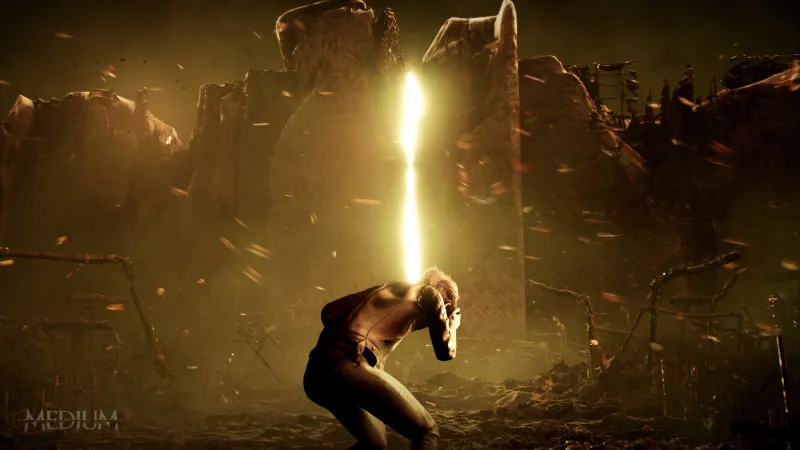
The Medium’s one unique element comes from how it handles the spirit realm. At designated points in the story, Marianne inhabits both the real world and the spirit world at the same time. During these sequences, the screen splits in half to show Marianne’s location in each realm. A room that is blocked off in the real world might be open in the spirit realm, which encourages you to carefully explore both realities and find a way forward. This is a neat idea, and I enjoyed manipulating objects in one realm to affect the other. But even in the spirit realm, most puzzles boil down to returning objects to their proper place. The spirit realm is also incredibly drab, and its overtly grotesque design diminished my enthusiasm for crossing realities. I love good, creepy atmosphere, but The Medium’s environments are simply grotesque environments formed of human-like skin, not terror-inducing locales.

Click here to watch embedded media

Like a lot of modern horror games, The Medium forgoes traditional combat mechanics in an effort to amplify the scares – but this doesn't do enough to turn up the tension. The Medium sets the stage for several chilling moments, but often fails to deliver. For example, Marianne occasionally encounters a powerful beast that forces her to either run or hide. These moments seem thrilling at first, but the monster is so easy to evade that it quickly stops feeling like a threat. The stealth sequences are particularly disappointing because they are so linear that there is never any question on where you need to hide; these moments are more like trials in patience as you wait for the monster to move on so you can creep forward to the next hidey-hole. 

Some of the best horror games of the last decade have offered combat-free frights. After all, abandoned buildings are scarier when you can’t push back against the shadows. However, The Medium’s lack of combat highlights the challenge of letting atmosphere and puzzles carry a horror experience. The idea of exploring split realities is neat, but Bloober Team needed another gameplay hook to hang its hat on, because this horror show is a bit shallow.

Score: 6.75

Summary: This is a horror game with more tedium than tension.

Concept: Marianne is a spiritual medium who can commune with the dead, but when she receives a mysterious call from the past, she has to contend with her personal demons

Graphics: The backgrounds are well detailed, but the art design is bland, and the simple facial animations don't always match the dialogue 

Sound: Eerie ambient effects amplify the creepy atmosphere, but the generic soundtrack did nothing for me

Playability: The Medium is fairly straightforward. Most of the puzzles simply require that you run across the environment and find the right item to open the next area

Entertainment: This is a horror game with more tedium than tension

Replay: Moderately Low

Click to Purchase

Monday, January 25, 2021

Cyber Shadow Review - A War Of Attrition

Publisher: Yacht Club Games
Developer: Mechanical Head Games
Reviewed on: PlayStation 5
Also on: PlayStation 4, Xbox One, Switch, PC

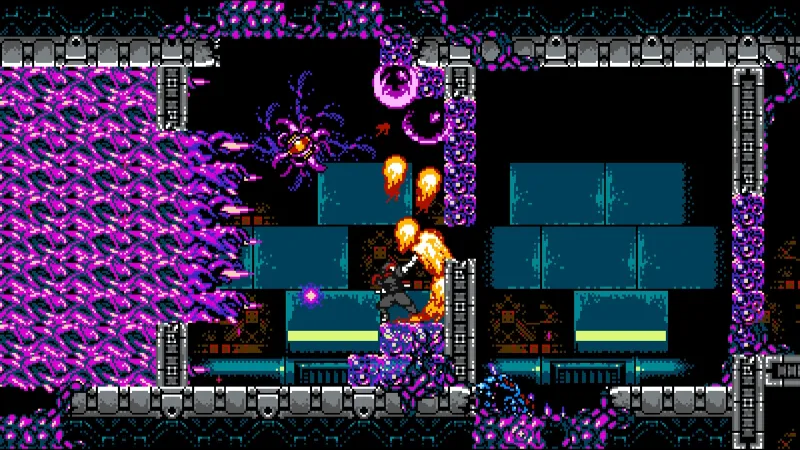
Cyber Shadow will kick your butt. Make no bones about it, this retro-inspired action title will chew you up and spit you out, much like the classic Ninja Gaiden series that inspired it. As in the NES staple, the fun comes in trying to overcome that steep challenge. Unfortunately, Cyber Shadow doesn’t back up its challenge with gameplay and progression that feels consistently fun or rewarding. 

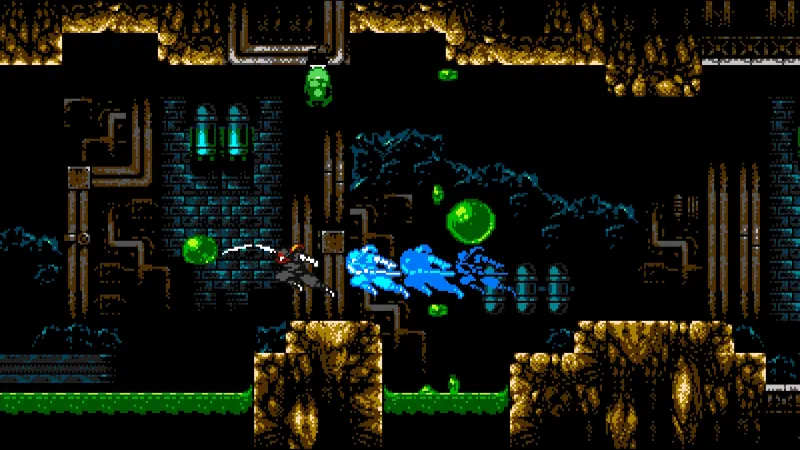
For better or worse, Cyber Shadow nails the era it tries to evoke thanks to a faithful 8-bit presentation, stylish animated cutscenes, and demanding difficulty. Armed with a trusty katana, you test your reflexes by slicing through a robot apocalypse in order to free your ninja brethren and rescue your master. Stages are devilishly designed, with seemingly mean-spirited hazards placed exactly where you need to go (or where you land when you slip up), and may as well be giant, pixelated middle-fingers. Making that crucial leap only to be hit by a stray laser and knocked back into the pit you just avoided is nothing short of maddening, and Cyber Shadow is filled to the brim with such moments. It doesn’t help that checkpoints are sparse, meaning you must replay long, arduous stretches to reach a new spot to exhale. 

Players can ease their journey by purchasing permanent perks for individual checkpoints. These perks include basic health/mana regeneration, but you can also get one of many tools, like a shield, turret, or my favorite: the yo-yo-like swag blade. A few tools, like the slow-firing turret, feel impotent and not worth the money, but others can mean the difference between failure and success. While these upgrades are technically optional, some sections feel nigh impossible without them, and it’s easy to find yourself with an empty wallet and no way to purchase help. In some cases, you may have to grind to proceed, but that’s neither fun nor entirely feasible, since some areas don’t have enough enemies or breakable objects to quickly gather the necessary funds. 

Cyber Shadow starts simple with only a jump and attack to players’ names. That limited arsenal falls flat once the nostalgia wears off (assuming you have fond memories of games of this ilk). Your repertoire eventually expands, but the game takes too long doling out abilities that make basic traversal more exciting, such as a wall-climb or sprint. Hitting a running jump and air-dashing through a foe feels great once you learn to do so, but Cyber Shadow demands players stick it out for seven of the game’s ten chapters to get there. Requiring players to endure two-thirds of a punishing game just to obtain skills that belong in every ninja’s starter kit does not feel satisfying. 

The default control scheme also makes executing certain actions tough. Most abilities are mapped to a cardinal direction on the d-pad/analog stick plus the attack button. This setup works decently enough, but during the frantic platforming segments, it’s easy to trigger the wrong ability, like transitioning from an air-dash to a shuriken throw. Given how often you need to change course in a split second, having the d-pad carry so many functions eventually feels cumbersome. Basic actions and sprinting can be remapped (I highly recommend moving sprint to the right shoulder triggers) but actual abilities can’t. That’s disappointing, since hitting two buttons to launch shurikens feels clunky compared to what a single face button would have accomplished. 

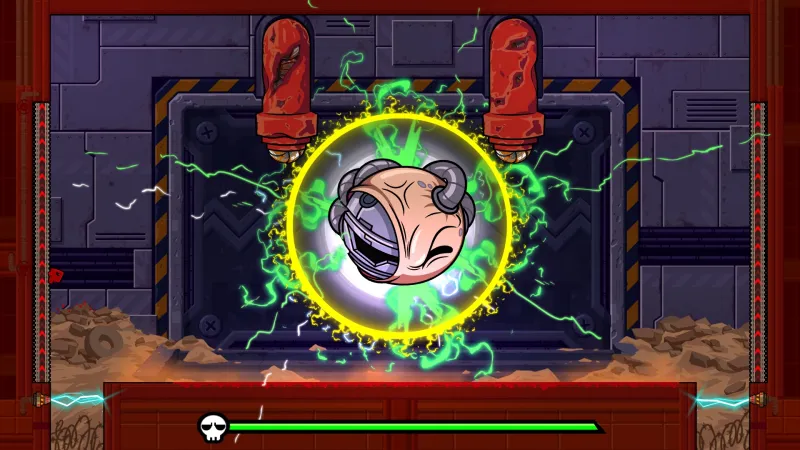
When things do click, Cyber Shadow can provide solid entertainment. The action becomes more fluid and engaging once you obtain all the abilities. The boss fights are my favorite encounters; they bring the pain but are exciting and feel mostly fair (save for a tedious water battle against a mechanical dragon). There’s also decent gameplay variety, including a motorcycle chase sequence and digitized battles inside of computer terminals.   

Even with such diversions, Cyber Shadow doesn’t do much that’s surprising, and can sometimes be too tough for its own good. However, those with plenty of patience and an appetite for pain will find fun in this modern throwback. Just be aware that the price of admission may be your sanity, and that’s a high price to pay for this competent-but-flawed war of attrition.

Score: 7.5

Summary: This competent yet flawed throwback will beat you down, but solid fun awaits those willing to put up with its drawbacks.

Concept: Hack and slash your way through a dystopian future ruled by evil robots to rescue your master and free your clan

Graphics: The 8-bit presentation looks good, and the cutscenes successfully nail the classic Ninja Gaiden style

Sound: Most of the chiptune soundtrack is serviceable but uninspired, though a couple of tracks evoke a feeling of struggle and triumph

Playability: The basic controls feel mostly fine, but the game takes too long giving players simple, fun maneuvers like dashing and wall-jumping

Entertainment: Equal parts fun and infuriating, Cyber Shadow isn’t for the weak of heart

Replay: Moderate

Click to Purchase

Tuesday, January 19, 2021

Hitman 3 Review – A Killer Conclusion

Click here to watch embedded media
Publisher: IO Interactive
Developer: IO Interactive
Reviewed on: PC
Also on: PlayStation 5, PlayStation 4, Xbox One, Switch, Stadia

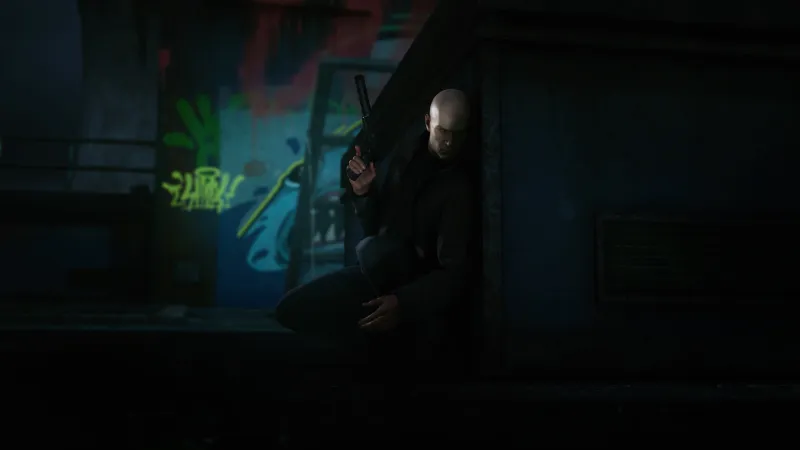
Agent 47 has been an arbiter of death for decades now, using his finely honed skillset in a variety of dirty business around the world. With Hitman 3, his World of Assassination trilogy comes to its inevitably bloody end. Over these three games, IO Interactive boldly set out to create a seamless Hitman experience that felt consistent, from the tutorial mission to the conclusion. After playing through this stunning finale, I’m relieved that the studio stuck the landing. Every mission in the final arc is a statement, demonstrating a mastery of level design and a darkly playful willingness to subvert expectations laid out five years ago. Hitman 3 is not a good place to begin your Hitman journey, but it’s a satisfying way to say goodbye.

Hitman has always been about dropping players in unfamiliar locations, giving them a target, and then letting them run wild. The most recent games have taken that design philosophy to new heights. At its best, Hitman offers an experience like no other, delivering intricately crafted scenarios and giving players the tools they need to tackle missions in different ways. The first time I explored Hitman 3’s bombastic opening mission in Dubai, I methodically explored as much of the Sceptre skyscraper as I could before killing my targets. Hours later, I was able to efficiently roll through without dawdling, killing both without anyone even knowing I was ever there. It’s like visiting a supermarket; sometimes you want to comparison shop, and other times you just want to grab some milk and get out of the store. 

Click here to watch embedded media

Hitman 3 introduces new elements, including a camera gadget, but the most notable are its persistent shortcuts. By unlocking specific doors or accessing ladders, those newly available paths are open to you on subsequent runs. They’re a great compliment to the series’ unlockable starting locations, ultimately giving you the ability to bypass sections of a level and make a beeline for whatever – or whoever – you’re most interested in pursuing. I loved meeting a partygoer outside of Berlin’s nightclub area and getting a guided tour of the map, but was relieved when I found a side door that let me slip right past him and security. Some shortcuts are in riskier locations, so you have to weigh that additional danger, but I enjoyed having access to more options.

IO Interactive has been crafting these types of missions for years now, and that experience shows. Nearly every mission introduces something that upends what longtime players have come to expect. The end goal of killing your targets is always part of the deal, but Hitman 3 proves that there’s still plenty of room for more variety. One mission offers a lengthy (and optional) murder mystery to solve, putting you in the unusual role of private investigator and interrogator. In another, you begin without having any knowledge of your targets’ identities. Working without intel, you have to methodically observe and listen to conversations before springing into action. If you’re impatient, you can simply go on a rampage and hope for the best. Five of the six levels offer up a wealth of improvisational opportunities; I spent nearly two hours infiltrating a high-tech firm in China, and was captivated by just about every moment. The final mission is more linear than the others, but it’s no less satisfying.

Hitman 3 is a worthy conclusion to the trilogy, but if you haven’t been impressed with previous entries it’s not likely to change your mind. Its improvements, welcome as they may be for longtime fans, are incremental upgrades rather than the larger leaps that you might be accustomed to seeing in more traditional sequels. I enjoy its slow-burn pacing and love the tension that comes from slipping past guards unnoticed. I love looking at each level as its own weird puzzle, and something about poking the simulation to see what is and isn’t possible really clicks with me. However, if you think the previous two installments have mediocre gunplay or find them too fussy, those elements haven’t changed. You can technically jump into Hitman 3 without playing the previous games, but that is doing yourself a disservice. Much of the game’s emotional and narrative weight hinges on you having experienced the trilogy.

Hitman 3 concludes a chapter in the greater Hitman story, but it doesn’t feel like an ending. There’s an  abundance of content and side activities on offer, and the trilogy as a whole is bound to be a long-term destination for would-be assassins. IO Interactive’s final act in the trilogy anticipates and rewards player experimentation, features meticulous level design, and has moments of ghoulish catharsis that makes me cackle aloud. My enthusiasm for it all is as indelible as the barcode tattooed on the back of Agent 47’s head.

Score: 9

Summary: Every mission in the final arc is a statement, demonstrating a mastery of level design and a willingness to subvert expectations laid out five years ago.

Concept: Wrap up Agent 47’s latest trilogy with a new batch of sandboxes and targets for his grim work

Graphics: Hitman's clean aesthetic makes situations easy to interpret, whether you're in a glistening skyscraper or a sweaty club

Sound: Audio cues provide a great way to keep track of guards and other potential issues, while a minimalist score punctuates the action when necessary

Playability: The trilogy’s intentionally seamless nature means that any muscle memory you’ve developed over past installments carries over into the finale

Entertainment: Agent 47’s journey ends on a high note, at least as far as players are concerned. New levels are memorable and cater to the freedom fans have come to expect

Replay: High

Click to Purchase

Friday, January 8, 2021

Alba: A Wildlife Adventure Review - A Good Deed

Publisher: ustwogames
Developer: ustwogames
Rating: 4+
Reviewed on: PC
Also on: PlayStation 4, Xbox One, Switch, iOS

Alba is an adorable young girl who can’t wait to spend a vacation with her grandparents on a scenic Mediterranean island. However, things take a turn for the dastardly when the small town’s mayor partners with a shady building developer to construct a massive resort on the site of a beloved nature preserve. Armed with her trusty smartphone, Alba embarks on an altruistic quest to photograph the island’s wildlife to remind residents of what’s truly at stake and garner enough support to oppose the resort’s development.

Alba: A Wildlife Adventure is a wonderfully charming experience from Ustwo Games, the team behind the Monument Valley series. Instead of challenging players with M.C. Escher-style puzzles, it mellows them out with a relaxing, feel-good experience designed to promote conservation in an entertaining manner.


You spend much of your crusade taking photos of wildlife, and it’s a lot more fun than it might sound. Alba taps into the Pokémon Snap-like excitement of hunting down a critter, lining up that perfect shot, and filling out her wildlife journal. I found myself anxious to photograph every creature, and dozens of animals await Alba’s camera eye, some rarer than others. My excitement dulled over time, however, because so many of the animals were birds.  

To lure some animals into the open, players must clean up the environment by collecting garbage or repairing fixtures such as birdhouses. It’s nothing fancy or complicated, but there’s an undeniable satisfaction in removing a pile of trash and watching a flock of ducks swoop in to enjoy the now-tidy area (and thus providing more fodder for your camera). The photos you take are implemented in other fun ways, such as replacing the images on weathered trail markers, or impressing an equally nature-conscious park ranger. 

Overall, the goal is to collect 50 petition signatures by the end of the week. Don’t stress, though: You can end any day at your leisure, and I appreciated the allowance to take my time. Capturing photos and cleaning up pays off in signatures, as does fulfilling simple tasks by the town’s colorful residents. These uncomplicated tasks range from finding a lost dog to convincing a woman to sample the latest ice cream flavor. That simplicity might be an indictment in other games, but Alba’s breezy atmosphere makes cruising through the fluff more relaxing than boring.

Click here to watch embedded media

The small island makes it easy to check off the game’s entire to-do list, a task I felt compelled to do even if it’s not entirely required. Plus, the extra running around provides more opportunities to watch Alba sprint with her arms out in airplane mode, which always succeeded in making me say “aww.” And amid this playfulness, the game succeeds in promoting conservation without being too preachy. 

Alba: A Wildlife Adventure reminds players that happiness can be found in supporting worthy causes bigger than yourself. It feels nice to play a game about actively improving the world, and it does so with skill and charm instead of cringe. It’s the video game equivalent of sneaking vegetables into a tasty smoothie. This is one good deed that shouldn’t go unrewarded

Click image thumbnails to view larger version


Score: 8

Summary: Alba: A Wildlife Adventure is a lighthearted and enjoyable lesson on the importance of conservation

Concept: With your trusty phone and can-do attitude, restore and preserve the natural beauty of a Mediterranean island endangered by corporate development

Graphics: Vibrant colors and doll-like character models make this easy on the eyes. Watching Alba’s running animation go from skipping to imitating an airplane is heartwarming

Sound: The Spanish-influenced soundtrack conveys the culture and serenity of your surroundings

Playability: Taking photos of animals is a cinch, and winds up feeling more exciting and gratifying than you’d expect

Entertainment: Enjoyable gameplay, charming writing, and a chill atmosphere promote an important message without beating players over the head with it.

Replay: Moderate

Click to Purchase

Thursday, January 7, 2021

Ratropolis Review – Real-Time Rategy

Publisher: Cassel Games
Developer: Cassel Games
Reviewed on: PC

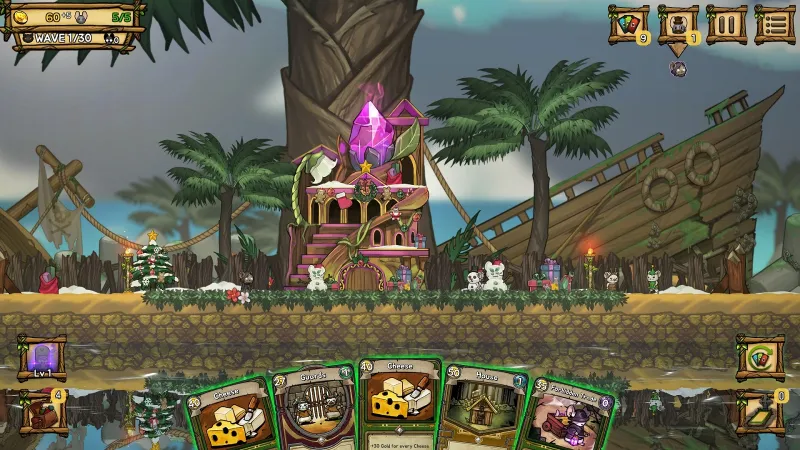
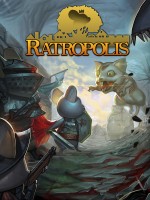
The deckbuilding genre, once relegated to the physical tabletop, has seen explosive growth on the indie PC scene in recent years. Now, skilled developers are mixing, mashing, and combining traditional deckbuilding mechanics with other genres. In Ratropolis, Cassel Games successfully integrates card construction with city-building and defense to create a charming strategy mix. The resulting amalgamation is a satisfying soiree of rodents, robots, and giant ducks that keeps you coming back game after game. Your army of adorable mice and machines must restore the glory of the ratropolis! Yes, that’s like a city for mice.

Click here to watch embedded media

The goal is simple: You must survive 30 waves of onslaught as you build up a city. To that end, you select a main commander mouse that dictates what cards are available on each run. Each mouse has a variety of strategies to employ, and while you start with basic loadouts like the military-oriented general and the money-laden merchant, later unlockable characters like the scientist, shaman, and naval officer add many timing considerations and more advanced foibles to the game. 

Each run starts simple and fresh, with you defending your fledgling ratropolis from two different lanes. As you begin adding cards to your deck, you cycle through economy boosts, troops, and buildings. Each class plays differently, and the unique commander mechanics keep the experience crisp when it could otherwise get bogged down. For instance, the merchant’s military units are quite powerful – but they only stick around for so long after they’re paid. The scientist can morph and mutate troops, and shamans collect the souls of fallen units. The action takes place in real time, though the assault pauses when you’re looking through cards to purchase. It’s a fun and frenetic mind-teaser to play all your cards, draw a new hand, and keep blasting through your deck. In addition to having different archetypes with their own special cards and abilities, you can also play in multiple biomes like deserts, coasts, and forests each with their own sets of power ups and enemy types.

Click image thumbnails to view larger version


Cycling through cards, pruning weaker options from your deck, and hoarding resources is interrupted by random events that often force you to make tough choices. Will you sacrifice some of your unit cap or all your gold to a mouse insurrection? These random happenings offer up choices that can have big impact. During one run I even had a special event happen that funneled all the enemy forces into a single lane of attack, making it a much easier defensive endeavor than fighting on two fronts. Combined with the variety in cards, builds, abilities, biomes, and hero choices, the random elements in the game feel tightly tuned toward letting you have plenty of different experiences that all feel fair, even if you get smashed by some barricade-hopping pirates or sleep-inducing sirens.

After each run, you’re awarded points that unlock new cards and advisors (essentially buffs that can be discovered during a run to help you out), which allow you to dive into additional strategies and try new things. Want to try a run that focuses on casting spells or just constructing tons of defensive structures? Unlocks help you out and offer incentives to keep playing your favorite classes, explore outside of your comfort zone with others, and keep you plodding on wave after wave. Once you’ve mastered the standard mode, you can begin exploring ascending pollution ranks, increasing levels of difficulty that add more challenging foes and other quirks to play around, like restricting your building space. Despite getting repetitive after I mastered core tactics, I had a great time pushing forth again and again, many hours after my first few victories.

Ratropolis has that ethereal “one more game” quality where the clock vanishes as you pour hour after hour into your feisty mice companions. When you lose a cool flame tank or a giant hatched duck lord, it’s a bit sad, but there’s always another game right around the corner. As more alchemic creations spawn from the deckbuilding surge, Ratropolis offers a lot of interesting and stylish entertainment for lovers of multiple brain-busting genres.

Score: 8.5

Summary: A satisfying romp as you restore glory to your rodent empire, defend against waves of flavorful foes, and recruit colorful companions.

Concept: Survive and thrive as you build a rodent-filled city and hold back waves of weasels, snakes, and other dangerous town-wreckers

Graphics: Stylish and sometimes adorable, the cartoony mice are entertaining to watch as they wander the village and battle threats

Sound: Adorable little mouse barks and quips as they battle endless tides keep you engaged from wave to wave (with help from a solid soundtrack)

Playability: The basic mechanics are easy to grasp, though don’t be discouraged if you lose while learning the ropes

Entertainment: Beating back the tide with a variety of mouse-related strategies is an enjoyable romp

Replay: High

Click to Purchase

Super Meat Boy Forever Review – Hardcore Hurdling

Publisher: Team Meat
Developer: Team Meat
Rating: Teen
Reviewed on: PC
Also on: PlayStation 4, Xbox One, Switch

A decade ago, the original Super Meat Boy released into what almost feels like a different industry. Team Meat's hardcore platformer was at the forefront of the modern indie renaissance; games like Super Meat Boy helped show that even small teams of dedicated developers could make a big mark on the gaming landscape. A few years later, Team Meat announced the follow up, Super Meat Boy Forever, a pseudo-sequel that would take Meat Boy into the world of autorunners. Naturally, this raises a few questions: can Team Meat distill Meat Boy’s pixel-perfect platforming into a game where players are limited to a single input? And, does Super Meat Boy Forever have any chance of leaving the same kind of cultural mark on the industry as its forerunner? Now that I’ve played the game, the answers are clearly “Surprisingly yes,” and “No chance in hell.”

Because Super Meat Boy Forever is an autorunner, Meat Boy takes off running the second you press start, and you can’t control the direction of his movements or his speed. This might sound like it would simplify the action and neuter Meat Boy's difficulty, but that isn't the case. While this is technically a simple game, it’s far from easy. Given Super Meat Boy Forever’s streamlined action, Team Meat has put extra focus on precision platforming, setting up a series of harrowing obstacle courses that force you to carefully time your jumps. There were a few times I wished I had a little more control over Meat Boy, but, for the most part, I quickly forgot about his limitations once I was sliding under buzzsaws and bounding up walls.

Click image thumbnails to view larger version


This Meat Boy is called “Forever” because its levels are procedurally generated, meaning you can theoretically play the game endlessly. Procedurally generated games often lack that hand-crafted feel, but Super Meat Boy Forever’s levels flow seamlessly together in ways that usually feel natural. Each level is composed of fragments taken from a pool of over 7,000 bite-sized platforming sections, which means that every player gets a unique experience. After I finished one playthrough, I generated a new set of levels and was surprised by how different they felt.

Even without procedural generation, Super Meat Boy Forever’s action evolves as you progress. In one set of levels, I dashed through storms of falling glass. In another, I used Meat Boy’s dash punch to move blocks across the screen, creating new platforms. I particularly enjoyed the levels featuring pickups that allow Meat Boy to teleport through walls. Each new set of levels emphasizes different obstacles, which continually kept me on my toes. I was genuinely surprised by how fresh the action felt throughout, and the game was throwing new mechanics at me up to the end.

Click here to watch embedded media

Super Meat Boy Forever’s controls are generally superb, but my one complaint has to do with Meat Boy’s ability to punch enemies. When you press the jump button twice, Meat Boy dashes forward and slams his oversized fist into any helpless enemy standing in his way. The critters don’t pose much of a threat, and usually serve to help Meat Boy cross large gaps; Meat Boy’s punch resets after it connects with an enemy, meaning he can stay airborne as long as his fist is flying. This mechanic is a lot of fun, and I appreciated having a few enemies to whack around. Unfortunately, Meat Boy’s jump and punch are tied to the same button, so trying to jump as you touch the ground makes it perilously easy to throw a punch off the side of a cliff instead. Given the precise timing needed to complete many of Super Meat Boy Forever’s challenges, having punch and jump on separate inputs could have prevented a lot of irritating mistakes.

Super Meat Boy Forever’s simplified controls produce a bit of frustration, but this is a game that rewards pushing through the pain for the thrill that comes with completing a harrowing platforming sequence. My thumb grew numb, but that didn’t stop me from wanting to play more. In fact, on some levels, I died over a hundred times, but I rarely cared because Super Meat Boy Forever’s respawns are mercifully quick, its checkpoints are short, and its bite-sized platforming sequences are a total rush.

Score: 8

Summary: Super Meat Boy Forever’s simplified controls produce a bit of frustration, but this is a game that rewards pushing through the pain for the thrill that comes with completing a harrowing platforming sequence.

Concept: The evil Dr. Fetus kidnapped Meat Boy’s kid so our blood-soaked hero must platform through a series of deadly obstacles and rescue his whippersnapper

Graphics: Simple and crisp, Super Meat Boy’s art design is zany and gross – but in a fun way

Sound: This metal soundtrack isn’t nearly as good as the original’s chiptune beats, but it gets the job done

Playability: The autorun functionality places the focus on a series of exceedingly challenging platforming sequences, but the jumping around feels great

Entertainment: Like the original, Super Meat Boy Forever tests your resolve, but it’s easy to jump back into the action and the thrill of success is worth the endurance

Replay: Moderately High

Click to Purchase