Pages

Thursday, February 25, 2021

Bravely Default II Review – Switching Up The Grind

Publisher: Square Enix
Developer: ClayTechWorks
Reviewed on: Switch

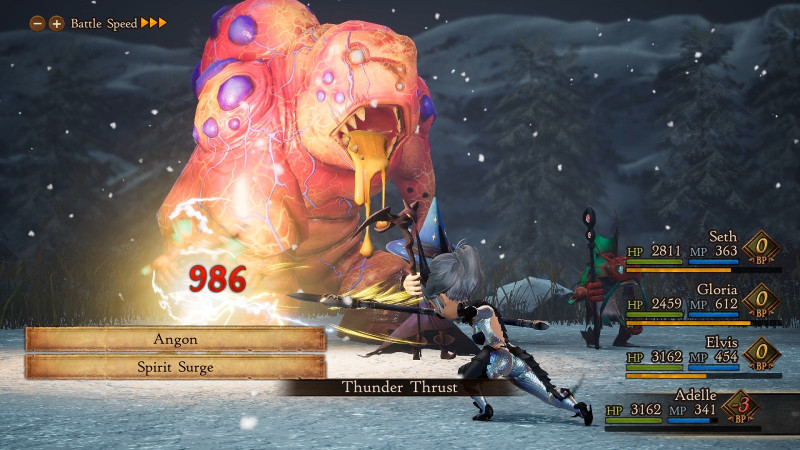
Bravely Default II hearkens back to another age of fantasy role-playing games, where players would find tiles to pace back and forth on, taking on random encounters to gain experience and resources before proceeding to the dungeon boss. Managing a team of four, players change jobs to access a wide variety of skills and abilities, combine them with gear choices, and craft their own satisfying builds to take on encounters. The overall experience is a nice trip for those looking to immerse themselves in job experiments, exploration, and monster-slaying, but the ride is firmly rooted in a formula that can drift toward dull at times.

Click here to watch embedded media

Environments are all over the place in terms of quality as you tackle myriad dungeons. A few are quite picturesque and memorable with visual trappings like flying bats or scrying clouds, but the majority are drab caves, earthy sprawls, and undercityscapes. Some neat lighting effects accompany some of the surroundings, but outside of a few exceptions, the world is a forgettable backdrop for monsters to crawl around in.

Epic signature fights at the end of each dungeon are often multi-phase affairs that can force you to craft a team designed to capitalize on its strengths and weaknesses, which may mean you’re going back to the grind. It feels good to “solve” a boss puzzle, but it also means you can’t rely on a single team with stacked abilities to get you through each encounter, as using the wrong sets of skills for a particular battle can have you annihilated in moments. The experience of crushing through a dungeon, collecting all the loot, and then getting the entire team slaughtered in a single attack by the area boss can be humbling (and definitely frustrating), but working out how to combine and craft a team to handle various challenges is satisfying as well.

Grinding is a big part of the game, so if you don’t enjoy doing it, this one probably isn’t for you. Luckily, Bravely Default II is cognizant of its own nature, and provides players the tools to fly through skirmishes once your setups get going. By taking advantage of ultra-fast combat speed and monster treats that allow you to stack up a bunch of battles into one for additional rewards, you can take the sting out of hours of grinding and turn it into a much more palatable pastime.

While grinding, it’s time to start thinking about job abilities in interesting and fun ways to forge lawnmower compositions that gobble up experience and loot in ridiculous quantities. For instance, I loved making my basic attacks hit all enemies with additional basic attack chances on top with stealing effects, allowing my crew to hit every target on screen with each attack and rob them at the same time. By combining skills and abilities, there’s no problem getting the job experience and gear needed to overcome the tough fights.

The “dungeon, savepoint, boss” template is slightly broken up by refreshing side quests and world exploration activities that include massively overpowered rare monsters that can be found in out-of-the-way areas on the world map. There’s even an entertaining Triple-Triad-style card game that you can dig into to break the standard routine. Still, killing reams of opponents loses its luster and feels monotonous from time to time, even with the alternative activities. On one occasion when I unloaded in town, I had approximately 80 of one axe drop to sell – a testament to just how many challengers I’d downed on that farm session.

Click image thumbnails to view larger version


While these side activities are most welcome, you’re still going to have to be comfortable with hours of monster mashing. As I harbor a good deal of nostalgia for old-school RPGs, this wasn’t a problem for me, but if you’re expecting a captivating story, interesting dialogue, or villains that don’t produce massive eyerolls, you won’t find those things here. The baddies have some of the hammiest quips I’ve ever seen, combined with lame responses from our heroic cast.

Fans of previous games may notice that the ability to turn off enemy encounters has been removed in this outing of Bravely, but don’t worry about it too much. Enemies that are weaker than the party will run quickly away, meaning they only need to be battled if you opt in to that fight. This allows you to turn your monster treats on for farming, and move through areas without a single battle when focused on progression.

Bravely Default II succeeds at delivering what it’s best at: offering a taste of the past with the emphasis on creative class combinations, hordes of foes, and big boss battles. Bravely Default II deftly harnesses some of the ancient enchantment of classic grind-and-go console RPGs – but don’t expect anything beyond that.

Score: 8

Summary: A love letter to a different time in role-playing history.

Concept: Turn-based battle your way through a world in peril with a highly customizable crew of adventurers

Graphics: While some of the dungeon environments are quite beautiful, many areas are nondescript. Plus, the chibi characters are sometimes strange situated against other backdrops

Sound: The soundtrack is solid and will have you humming along in dungeons

Playability: A casual difficulty mode is offered for players who don’t want to struggle with too much of a grind, but be aware some job combos must be experimented with even on the easier setting

Entertainment: If you enjoy the RPGs of eras long past, Bravely Default II captures some satisfying whimsy and nostalgia, but its formulaic structure can feel tedious

Replay: Low
Click to Purchase

Tuesday, February 23, 2021

Ghosts 'N Goblins: Resurrection Review – The Beauty Of Nostalgia

Publisher: Capcom
Developer: Capcom
Reviewed on: Switch

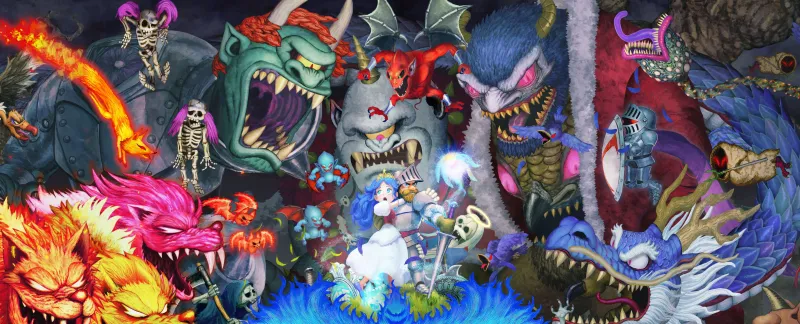
Ghost 'n Goblins: Resurrection is a game that time forgot, designed to transport players to the heyday of the Super Nintendo where visual beauty meets gameplay brutality, dazzling and pummeling in equal parts. The stack of corpses Resurrection piled up during my playthrough made me swear like a sailor, and yet I walked away singing its praises as one of the best throwbacks I’ve ever played.

Legendary hero Arthur and his more famous pair of boxer shorts return to be lit on fire, knocked into pits, and munched by a cave made of teeth, much to the chagrin of the player and delight of Capcom’s designers (which is spearheaded by Tokuro Fujiwara, who directed the original 1985 Ghost n’ Goblins game and SNES sequel). You can almost hear the latter group saying “Gotcha!” after each death that the player didn’t’ see coming. While nostalgic in its character movement and action dynamics, the level designs are wickedly clever and always changing, keeping you in a constant state of panic in fun and terrifying ways.

Skeletons rapidly rise from their graves as Arthur inches forward, and there’s always some kind of airborne threat positioned to knock him into a pit. The action demands split-second reflexes, but even more memorization of enemy patterns and placement, which is developed by dying. An edge can be obtained through Arthur’s weapon of choice, be it the quickly thrown daggers, the spreading fire of holy water, or a handful of other useful tools that can make short work of any foe. The action is simplistic in scope; you just jump and shoot in four directions, but it feels incredibly dynamic, making everything you do feel skillful.

All levels deliver wildly different challenges that make good use of the same moveset, yet players have some agency in how they progress through it. From the outset of the adventure, a choice between two levels is given, delivering either a shorter playthrough or the option to backtrack to missed stages to take on new horrors and earn more Umbral Bees. This oddly named collectible is a form of currency used to purchase useful spells, such as being able to turn every enemy onscreen into a frog or rain down lighting on them. The wealth of skills is worth the effort, as some can be game changers in specific stages, much like getting the right weapon for a boss in Mega Man.

Click image thumbnails to view larger version


The entire game can also be played cooperatively, with the second player controlling a trio of ghosts called the Three Wise Guys, who can be swapped on the fly. Each of the guys aid Arthur in different ways, like being able to create a protective shield or lift him across a gap. It’s a cool idea for co-op play that helps take some of the sting out of the game’s difficulty. While the second player isn’t experiencing the core gameplay, they can still have a significant role in the outcome.

Even with the aid of a friend, the game is quick to alert you that you can lower the difficulty if situations are too challenging. If that doesn’t produce results, you can activate a magic metronome to slow the game’s speed to a crawl, giving you a hell of an advantage to fill enemies full of lances, safely bound up crumbling staircases, and grab Umbral Bees that may zip past you otherwise. If you think the game is too easy, the metronome can also be used to speed it up and make it more challenging. If you just want to see the entire game without any cares in the world, the lowest difficulty setting lets you instantly respawn where you die, although some of the late-game surprises are removed when played like this.

Click here to watch embedded media

After the final boss is slain, players can restart their adventure to experience a slightly rearranged playthrough. This again holds true to the series’ roots, with transformed stages and new challenges within them. This is an awesome reason to play an amazing game again, and also gives the player a chance at earning every skill.

As much fun as I had getting my butt handed to me by Resurrection, one of the best parts of it is the visual design. It looks like a storybook drawn with pencils and colored to make every moving element pop. Yes, some of the classic enemy designs are fairly uninspired, and the worlds are fairly plain in details, but together they jump off of the screen and frame the action perfectly.

Ghost 'n Goblins: Resurrection is a game of try and try again, and should you not have the chops to make it, has built in solutions to allow you to keep making progress. I didn’t think I needed another Ghost n’ Goblins game, but Capcom proved me wrong, and now I want more.

Score: 9

Summary: This retro revival is challenging, fun, and worth playing twice.

Concept: A long-overdue sequel to the Super Nintendo game, Ghouls n’ Ghosts, that is wonderfully nostalgic and fantastically modern in its brutal action

Graphics: Basic enemy designs and backdrops are given flair with storybook-like details. Some of the animations almost look like they are made using stop-motion. It all adds up to a beautiful picture

Sound: Iconic retro melodies flow through the entire adventure

Playability: The simple acts of jumping and shooting are heightened by excellent scenario design and do-or-die moments

Entertainment: An incredible continuation that is a showcase of clever stages and pitch-perfect twitch reflexes

Replay: High

Click to Purchase

Wednesday, February 10, 2021

Super Mario 3D World + Bowser's Fury Review – The Cat's Pajamas

Click here to watch embedded media
Publisher: Nintendo
Developer: Nintendo
Reviewed on: Switch

When Super Mario 3D World was released in 2013, the adventure was widely praised for its outstanding level design, precise gameplay, and chaotic co-op. However, since it debuted on the poor-selling Wii U, it is often overlooked in discussions about the best games in the Mario franchise. Now, Nintendo is giving a wider audience a chance to play the superb 3D adventure (this time with online co-op) while also adding an all-new experience in a fun side game called Bowser’s Fury.

The meat of the package is the port of Super Mario 3D World. Nearly 100 linear, fixed-camera stages wait for you to run, jump, and explore by yourself or with up to three friends. Each one presents clever gimmicks; my favorites include levels based on timing your jumps with the music across disappearing platforms, using ever-increasing clones to open new areas, or playing through sections of a stage with only the shadows cast on the walls.

Every level contains secrets galore, including collectible stamps and green stars, but the power-ups offer the greatest rewards. The Super Bell, which turns Mario and company into cats, adds useful melee and climbing abilities. Old favorites like the Super Leaf, Boomerang Flower, and Fire Flower give players diverse ways to take on platforming challenges and enemy encounters.

Click here to watch embedded media

Super Mario 3D World is a blast by yourself or with others, especially now that online play is an option. Cooperative gameplay in platforming titles is often fun, but usually hinders your progression due to the sheer chaos of having multiple players trying to reach the same areas. In Super Mario 3D World, those moments still occur – I accidentally picked up my co-op partners on more than a few occasions – but your road to the final showdown with Bowser might be easier with friends this time. That’s all thanks to levels that reward taking chances, rules that allow you to treat your co-op partners like a safety net, and areas that give you enough space for four characters.

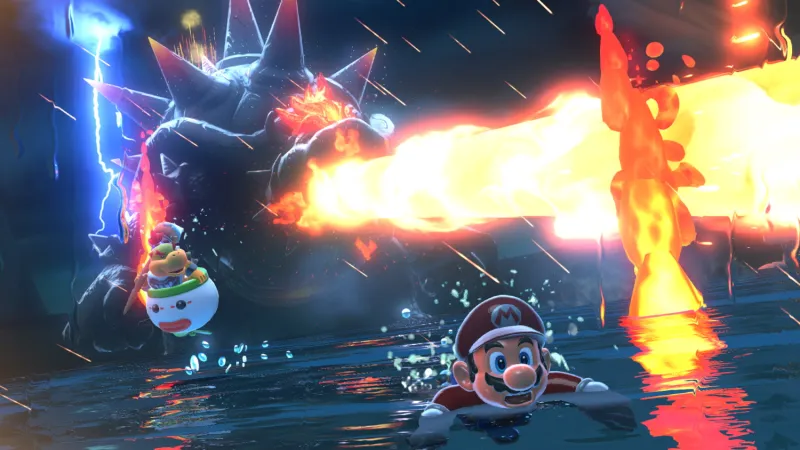
The tweaks to Super Mario 3D World are minimal, so if you’re looking for something new, this package also includes a second game called Bowser’s Fury. This additional adventure, which lasts a few hours, takes the gameplay and power-ups of Super Mario 3D World, but swings the camera behind Mario, removes the linear individual stages, and adds the looming threat of a monstrous form known as Fury Bowser. This massive, corrupted beast hibernates in the middle of the feline-themed Lake Lapcat as you run around a large open area, completing objectives.

Rather than dumping you into a hub world and letting you select the stage you want to play like in 3D World, Bowser’s Fury takes place in an open map with distinct islands for you to explore. These areas feature some of the most enjoyable playgrounds Mario has ever encountered. The most memorable sequences include a labyrinth of pipes, a lengthy ascent on invisible platforms, and a downhill course full of ramps and obstacles where you ride an ice skate and nab collectibles. You can also use Bowser Jr., who is your ally in this game, to attack enemies and uncover secrets.

The objective structure takes a page from games like Mario 64 and Odyssey, where you are given a mission name and environmental clues to try and earn a Cat Shine, the main collectible in Boswer’s Fury. I loved jumping across moving platforms en route to a boss battle or riding on the aquatic dino Plessie to complete various swimming challenges. These missions are exciting on their own, but the intensity ratchets up when Fury Bowser awakens.

Click image thumbnails to view larger version


Every so often, it starts raining; that’s your first sign. Soon, Fury Bowser awakens to harass you for the next couple of minutes. Once the beast emerges, all bets are off as the pleasant Mario music gives way to a roaring guitar riff and storm clouds block out the sun. Fury Bowser drops down spikes and fireballs and stalks you with his fiery breath. While this certainly provides a thrilling experience, if it happens at the wrong time, it also ups the frustration; on one occasion, I finally made it past a tricky part of a rotating obstacle course, only to have Fury Bowser wake up and cause me to fall all the way back to the bottom. Occurrences like those are rare, but that didn’t stop me from cursing his name.

Fury Bowser’s arrival isn’t all bad, as you can use his attacks to open areas containing additional Cat Shines. Also, if you have enough Cat Shines when he appears, you enter a boss battle against the behemoth. In these face-offs, Mario grows to match his longtime adversary as Giga Cat Mario. These battles require you to dodge the all-out offensive brought by Fury Bowser and pounce on any chance to hit his weakness, whether that’s waiting for him to expose his underbelly or by returning projectiles to knock him over. These battles can get repetitive, and Bowser sometimes gets caught on the environment, but they offer a white-knuckled thrill unlike most other battles in this two-game package.

Having another chance to revisit Super Mario 3D World (or experience it for the first time) is reason enough to be excited. However, with an excellent, all-new game joining the Wii U port, Super Mario 3D World + Bowser’s Fury is a compelling option for anyone who wants more Mario in their life.

Score: 9.25

Summary: By bundling one of the best 3D Mario games with an all-new adventure, Super Mario 3D World + Bowser's Fury is a compelling package for all fans of the Nintendo mascot.

Concept: Relive one of Mario’s greatest 3D adventures with an additional campaign that uses the same gameplay within a distinct structure

Graphics: The colorful charm of Nintendo’s flagship franchise is in full effect, and Fury Bowser is a sight to behold

Sound: Terrific music and cute cat sounds accompany your adventures to take down Bowser

Playability: Whether you’re reliving past glories with Super Mario 3D World or taking on new challenges in Bowser’s Fury, Mario’s movement is precise and responsive. The power-ups are among the best in the series

Entertainment: This package combines tried-and-true gameplay and level design with unique concepts (plus an all-new game) to earn its place among the elite games in the franchise

Replay: Moderately high

Click to Purchase

Tuesday, February 9, 2021

Persona 5 Strikers Review – A Powerful Other Self

Publisher: Atlus
Developer: Atlus, Omega Force
Reviewed on: PlayStation 4
Also on: Switch, PC

At the end of Persona 5, we parted ways with a terrific cast of characters we grew to love over the course of a 100-hour story. Last year’s Persona 5 Royal gave us an excuse to revisit that same adventure with additional content, but fans yearned for an all-new journey. Persona 5 Strikers reunites the cast from the original game six months later for an all-new trip across Japan. Even though it drastically changes a few key elements of the experience, it still feels like a true, compelling continuation of the game that stole RPG fans’ hearts nearly four years ago.

Many parts of the Persona 5 experience carry into Strikers; after hearing rumors of people abusing their power, you control the Phantom Thieves as you investigate the allegations before jumping to the cognitive world of the Metaverse to infiltrate their dungeon (which are called “jails” this time around) and change their hearts. Along the way, you fight through tons of Shadows as you progress toward the leader of the dungeon for a climactic showdown. While knowing the original game’s story enhances the experience, it’s not a requirement to enjoy Strikers. The familiarity of this formula is like a warm homecoming for those that did play Persona 5, but once you start beating up enemies, it’s evident this is a different beast from the traditionally turn-based RPG series.

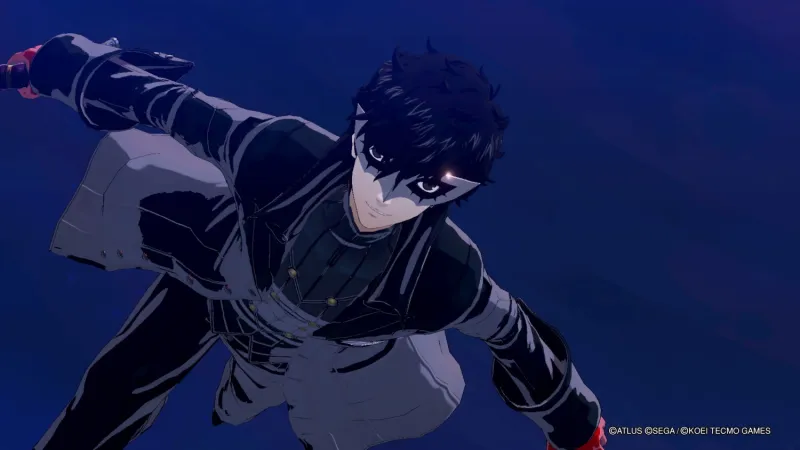
When it’s time to battle, Persona 5 Strikers changes from a methodical dungeon-crawler to an all-out action game. The hack-and-slash style of combat from Musou games like Dynasty Warriors is implemented in small-scale encounters; each Phantom Thief has light and heavy attacks you use in different combinations to perform special attacks with status effects. I loved the frenetic and intuitive action that comes from slashing through hordes of enemies and watching them fly off the edge of Joker’s knife or Panther’s whip, but the combat adds extra depth using the characters’ Personas.

Click here to watch embedded media

At any point in a battle, you can summon a character’s Persona; the action pauses as you choose a spell to cast and the area it will affect. If you hit an enemy’s weakness, you open them up for a follow-up attack. If you hit them hard enough, you initiate a powerful All-Out Attack, where the whole team pounces on the enemies at once. The summoning system, when combined with the fast-paced combat and different environmental interactions, delivers a smooth experience that empowers you to take down enemies in stylish and efficient fashion. My favorite battles had me swapping between characters, rattling off different combos, exploiting weaknesses with their Personas, detonating explosive devices, dropping chandeliers, and delivering devastating final blows to close out the show. A constant stream of this action would be exhausting, but Persona 5 Strikers does a good job of pacing the encounters out within the jails.

Jails share many attributes with the palaces of Persona 5. They both exist in the Metaverse, have a ruler you’re trying to defeat to change their behavior in the real world, and are full of Shadows to take down. However, jails don’t deliver the creativity of the palace design. I appreciated the waypoint always telling me where to go, but when nearly every jail is a point-A-to-point-B venture, I eventually felt like I was simply going through the motions to reach my destination. One jail attempts to mix up the formula with a short stealth section and paths with portals that dump you in other areas, but these changes come across more as half-hearted gimmicks that I was glad to see abandoned after one appearance.

Each jail is ruled by a monarch, a powerful individual in the real-world who has found a way to steal the desires of everyday people to essentially enslave them. Instead of giving in to one of the seven deadly sins, monarchs have had their hearts corrupted by some form of personal trauma. I sometimes struggled to sympathize with the characters when the time came for their change of heart, but when this narrative thread works, the story of Persona 5 Strikers delivers some truly touching sequences about how trauma can change a person. These moments are enhanced by how many of them draw parallels to what a member of your team went through in the first game.

Click image thumbnails to view larger version


Catching up with various members of the Phantom Thieves was the element I was most excited for in Persona 5 Strikers, and it delivers for the most part. I loved learning what they’ve been up to since the first game and watching them grow even more through this adventure. However, I was disappointed to have limited social-simulation opportunities. The social-link mechanics are nowhere to be found in Strikers. Instead, you have a bond system that lets you upgrade the party. You can talk to the characters around the city and invite a companion of your choosing to do certain activities during the story, but the conversations are typically inconsequential and underwhelming.

While not every disparate element comes together as well as it did in Persona 5, I was more than happy to go on another adventure with the characters I developed such bonds with back in 2017. The action may play out completely differently, but the heart of the series remains intact.

Score: 8.5

Summary: Even if the action of Strikers is very different, the spirit and heart of the mainline series carries into this enjoyable sequel.

Concept: Embark on another adventure with the Phantom Thieves set six months after the conclusion of Persona 5. Hang out, solve mysteries, and explore dungeons along the way

Graphics: The impressive visuals are overflowing with style and flash during the action-driven battles

Sound: Strikers adds all-new tracks to Persona 5’s already-excellent soundtrack, alongside remixes of old favorites. I loved hearing the original cast reunite to voice their characters once again

Playability: Exploring Metaverse dungeons feels similar to the palaces you remember, but now the turn-based battles are replaced with frantic hack-and-slash fare that is a surprisingly natural fit for the series

Entertainment: While Persona 5 Strikers disappointingly removes the mainline series’ social links, it carries over enough familiar elements to feel like a true successor

Replay: Moderate

Click to Purchase

Little Nightmares II Review – A Horrifying City For Lost Children

Publisher: Bandai Namco
Developer: Tarsier Studios
Release: 2020
Reviewed on: Xbox One
Also on: PlayStation 5, PlayStation 4, Switch, PC

A young boy awakens in a clearing, a disproportionally large television bathing the area an eerie cathode-ray-tube blue. This boy, Mono, will soon meet the hero from the first Little Nightmares – and also get an introduction to what he’s truly up against. In this world, you’re constantly underpowered and pursued by towering creatures who see you, at best, as vermin to be eradicated. It’s a masterfully executed sequel that shows that the first game wasn’t just a fluke.

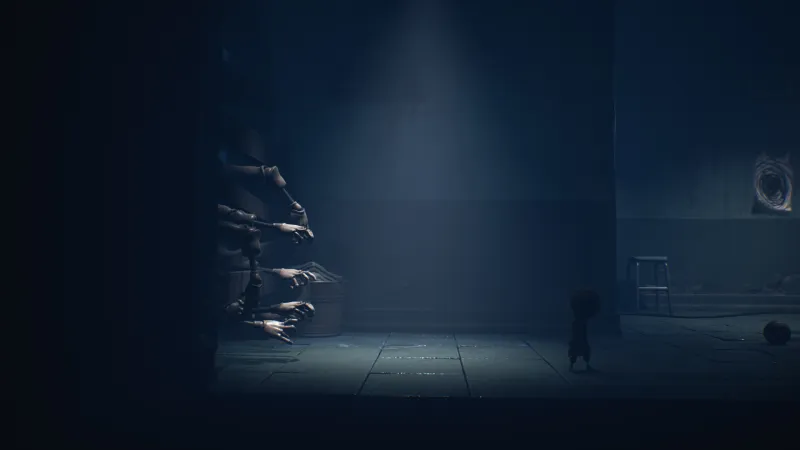
I love Little Nightmares II’s structure, despite its awful inhabitants. It’s broken into several extended vignettes in which Mono and Six contend with an oversized monstrosity while trying to escape to the next area by solving puzzles and staying out of sight. The first game had memorable encounters such as with the janitor, who blindly groped around for Six with his horrifically elongated arms. I wasn’t certain if the follow-up would be able to capture those amazing designs or the dread they created. Those fears were misplaced. 

Click here to watch embedded media

Little Nightmares II has even more ghoulish adversaries, including a teacher who made involuntarily blurt “Nope!” as soon as I understood what she was truly capable of. Part of the fun, if you’d call it that, is watching these oddly animated humanoids lurch around their environments, performing their work while you stay low and search for an escape. You have to be patient, choosing the right moment to scurry past or risk getting caught. That means waiting for the teacher to turn her back and scrawl nonsense on the blackboard or, later, for her to cram suspiciously squishy organs into the empty spots on an anatomical model – a model that’s partially dressed in a school uniform.

There’s an abundance of horrific imagery and dread-inducing atmosphere, but you don’t need to face it all alone. Puzzles are creative and rely on the team dynamic between you and the A.I.-controlled Six. She’s a helpful companion, whether by giving you a boost or pointing out next steps in a tricky sequence. You routinely split up, too, so her presence doesn’t drain the tension out of scenarios. While you still turn your share of cranks and push boxes around to reach high places, new abilities and systems keep things fresh and surprising even in the late game.

Click image thumbnails to view larger version


Little Nightmares II extends the series’ lore in significant ways; you could probably jump right into it, but I’d strongly recommend playing the original and its DLC first. The story won’t be nearly as satisfying without having that background. The second game is an enhanced version of what came before, retaining what makes the formula excellent while buffing out some of its more frustrating elements. For instance, Mono automatically sticks to narrow walkways, which is a godsend considering the camera’s dynamic positioning. Some of the jumps are still a little sloppy, but at least you don’t need to tediously edge along pipes or planks one step at a time or risk plummeting to your doom.

The sensation of being small and powerless in a dangerous world remains at the core of Little Nightmares II. Though Mono does have the ability to defend himself, that combat is where the game is at its weakest. Mono isn’t a melee powerhouse; when he grabs pipes or axes, he’s barely able to drag them behind his diminutive frame. As such, winding up for an attack takes time as he coaxes up the necessary strength. And you’re not fighting the bigger showcase enemies, but smaller, quicker creeps. You can probably see the problem here: If you whiff it, you’re basically dead. Nicely spaced-out checkpoints minimize the frustration of failure, but fighting back rarely feels empowering.

One of my favorite things about the first game was being introduced to a bizarre world and trying to determine Six’s place in it. It’s ambiguous enough to allow for multiple interpretations, and Little Nightmares II continues to invite speculation. There are new elements to consider, but I was still left with an abundance of questions after its shocking ending. Fans of macabre and sinister environmental storytelling, consider this your first essential title of 2021.

Score: 9.25

Summary: This impressive follow-up builds on its predecessor with emotional gut punches and unnerving visuals that stick with you.

Concept: Continue to flesh out the series’ expanding lore, introducing a new child who guides Six through a horrifying city

Graphics: Brace yourself for some truly terrible sights, amplified by eerie lighting and depth-of-focus effects

Sound: The soundscape is sparse, but effective. Bare feet slapping on concrete and ambient hums are the primary sounds for long stretches

Playability: Quality-of-life upgrades make essential actions like carrying keys and scrambling along narrow walkways much easier than they were in the original

Entertainment: This impressive follow-up builds on its predecessor with emotional gut punches and unnerving visuals that stick with you

Replay: Moderately low

Click to Purchase

Friday, February 5, 2021

Olija Review – Cast Away Any Doubt

Publisher: Devolver Digital
Developer: Skeleton Crew
Reviewed on: PlayStation 4
Also on: Xbox One, Switch, PC

Olija stars Lord Faraday, leader of a struggling fishing village who gets shipwrecked during an expedition. He awakens alone in Terraphage, a collection of islands corrupted by an ancient evil and home to a foreign civilization governed by the mysterious Lady Olija. Who is Olija, what is this malevolent force, and how does Faraday rescue his crew and return home? Answering those tantalizing questions is a blast, because Olija looks good and plays better, making it one of the year’s first pleasant surprises.   

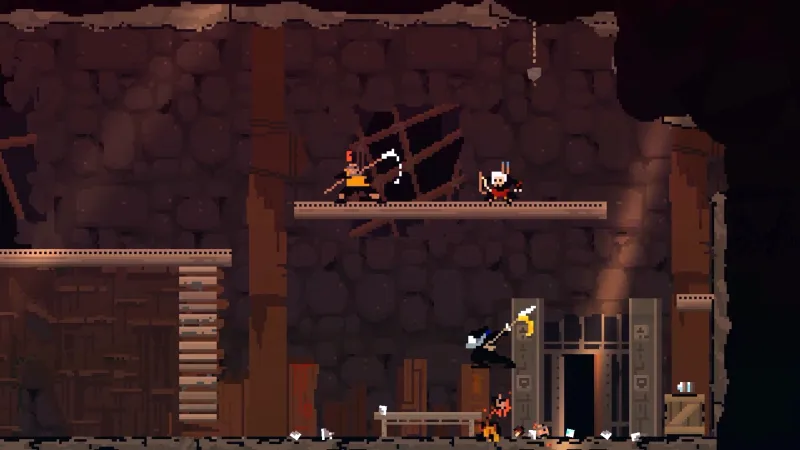
Static images of Olija (pronounced “ooo-lee-ah”) don’t do the presentation any favors. It has a simple, pixelated look, but it’s backed by smooth animation that evokes classics like Prince of Persia and Another World. The game also has style for days thanks to its dramatic cutscenes (expect frequent cuts to black), foreboding soundtrack, and surprising gore. The unfamiliar, subtitled language adds to that cinematic quality, though my favorite moments are communicated nonverbally. One great scene involves delivering a rose to a maiden without her knowing, leading to a cute interaction that doesn’t need a single word to be uttered. 

Click image thumbnails to view larger version


Beneath its simple-looking appearance, Olija is a satisfying action game. Players can unleash multi-hit combos, launch enemies airborne, juggle them a bit, and send them flying into walls – and it feels good. A magic harpoon acts as your primary weapon, and can impale enemies from afar, allowing you to then warp toward them. Teleporting in the face of airborne threats feels slick, as does recalling the harpoon to strike enemies on the return trip. You also have a collection of subweapons, such as the fast and combo-focused rapier or the powerful shotgun. Best of all, subweapons can be swapped on the fly, meaning you can combine attacks and adjust strategies. 

Special hats serve as your sole form of equipment. You craft these items yourself, and each hat bestows a unique perk, such as firing dagger-like feathers while dodging, siphoning health on kills (my favorite), or the ability to spin the harpoon like a buzzsaw. These abilities are largely enjoyable and can definitely help, but they're also not make-or-break assists. You’re bound to one hat per mission, but I rarely felt as though specific headwear was required for any task. While that allows flexibility, it also makes hats feel somewhat inconsequential. They do make Faraday look pretty snazzy, though. 

Levels feature multiple paths and, somewhat strangely, no dungeon maps. Though I didn’t get turned around often, there are larger, tougher-to-track areas where a map would ease exploration. I had a great time exploring Olija’s world. Platforming feels good, and the environmental puzzles are clever. For example, correctly navigating giant mouths that warp (read: spit) Faraday around the map. Unique segments, such as an entirely stealth-focused area and a thrilling escape sequence, keep exploration fresh. Also, I never got tired of throwing the harpoon off-screen, latching onto something, then warping to find a secret collectible or captive crewmate. Generally, you’re looking for keys to open a big, end-of-level door, which usually leads to an entertaining boss fight. While some battles feature large-scale fights against grotesque monstrosities, one-on-one duels with human foes change things up with a more intimate, strategic focus that requires reading behavior instead of just attacking full force. 

Click here to watch embedded media

Between islands you build up Oaktide, a derelict port that serves as your home base. Rescued crewmates return here, and the more you find, the livelier and more jubilant the port becomes, which in itself is a reward. Players can unlock a potion shop to permanently increase the health bar, dine at a soup kitchen to restore vitality, and pay a sea captain to search for additional treasures. I’m a fan of this sort of base-building feature, and while Olija’s version is far from the deepest example of it, it is still gratifying. The only downside is that once you fully upgrade your health and get every hat (which isn’t hard to do) the money and trinkets you continue to collect effectively become useless. 

Olija isn’t a long game; it took me a little over four hours to finish even after gathering most of its collectibles. But it packs a lot of good stuff in that timeframe and never wears out its welcome. With tight gameplay, fun exploration, and an alluring atmosphere, Faraday’s disastrous voyage turns into a rewarding expedition. 

Score: 8.5

Summary: Tight gameplay, fun exploration, and an alluring atmosphere turn a disastrous voyage into a rewarding expedition.

Concept: After getting shipwrecked in a mysterious land, you recover your missing crewmates and battle an ancient menace to return home

Graphics: Olija makes the most of its pixelated art direction with fluid animations and cinematic cutscenes

Sound: A foreboding soundtrack maintains an atmosphere of eerie unfamiliarity and alluring mystery

Playability: The fast-paced combat feels great and teleporting with your magic harpoon acts as a fun tool in battle and exploration

Entertainment: It may be brief, but Olija confidently blends satisfying action and engaging exploration for a treat that shouldn’t be overlooked.

Replay: Moderately High

Click to Purchase

Thursday, February 4, 2021

The Nioh Collection Review – Smooth Suffering

Publisher: Koei Tecmo, Sony Interactive Entertainment
Developer: Team Ninja
Reviewed on: PlayStation 5

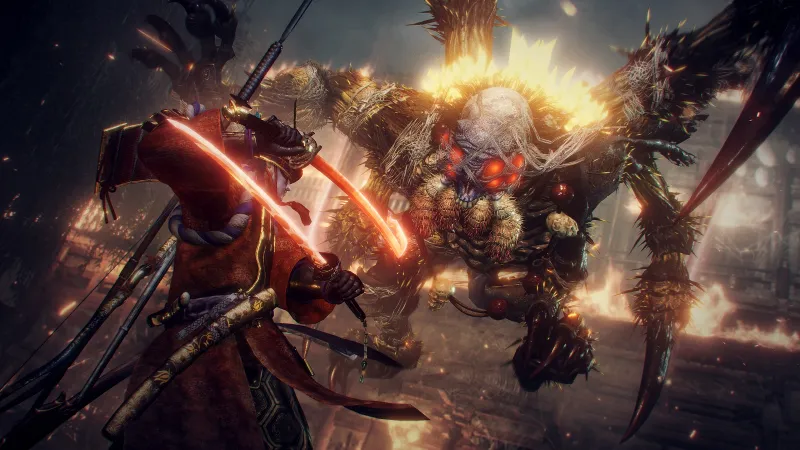
The Nioh games are deliberately difficult uphill battles against all manner of demonic foes. As you slaughter your way through each level, the experiences boast serious loot customization and build variety, tons of content to grind and conquer, and opportunities to take on big bosses with friends. Oh, and there are many deaths to be had as well, as the Nioh games are brutal without remorse. The tough-as-nails samurai slashers are now available as a remastered double feature with the PlayStation 5’s Nioh Collection.

Click here to watch embedded media

This is a great time to dive into the franchise if you’ve been putting it off for any reason, as the package includes remastered versions of both Nioh and Nioh 2, plus their associated DLC and add-ons. While I’d be hard pressed to recommend going back to the original Nioh when Nioh 2 is essentially a much more refined take on that experience, it’s a bonus history lesson if you’re hungry for more (though you can also purchase these remasters individually). Chances are, you won’t be, because you can easily spend a hundred or so hours on the Nioh 2 content alone if you’re shooting for deep endgame, DLC, and more.

The remastered titles included in the Nioh collection feature 4K graphics and up to 120 frames per second. If your television or monitor doesn’t support those amenities, no problem. Both games run incredibly well and look fantastic regardless of your setup. Running at 60 FPS is important for games in the action/RPG genre, as you want to be able to effectively assess the situation before swinging, dodging, blocking, or ki-pulsing your way to victory, and you’ll have that regardless of how awesome your setup is. The fast load times facilitated by the PS5’s SSD are another extreme benefit given how many times you’ll be loading back from death.

Going back to the Nioh games after reviewing both of them separately on launch is an interesting task. Though Nioh games share similarities with From Software’s Souls series, Team Ninja made some striking design choices that players need to be aware of before diving in. For example, Nioh’s worlds are actively hostile, and seek your demise with a sort of sick cruelty behind enemy placement, boss abilities, and more. If you’re willing to take a beating from a bully and smile as you grow stronger, call your friends into the game to help, and grind yourself a massive set of powerful gear, Nioh is the right fit for you. It is fun to come back at your oppressive enemies with a host of gear and magic options hours later and crush demonic Yokai that were giving you nightmares, but you need to have the right temperament and attitude to properly enjoy the challenges that the series unloads on you.

Click image thumbnails to view larger version


If you can put on a happy face as you get one-shot by a demon, enjoy repeating side missions for loot to create a perfectly-rolled item piece, and eventually overcome the most vicious adversaries, you’re going to be right at home. On the flip side, if being absolutely crushed down into the dirt before slowly clawing your way back up isn’t your thing, there are plenty of other action/RPGs to try before coming over to Nioh.

I recommend going to Nioh 2 immediately, regardless of whether or not you played the original. Nioh 2 refines and builds upon virtually every system that the first game offered, and gives you a ton of content and options to explore. Some content is reused almost wholesale from the original game, so you can get all the Nioh you need from just diving immediately into the second game. The original looks and plays substantially better than it did before, but in comparison to the sequel, it feels more like a prototype concept.

Don’t worry about going out of order; the story has never been a big draw for me with this series, and you won’t miss much there.

Even if you’ve already played Nioh 2 and know what to expect, I recommend hitting up some of the new weapons and options offered here with the full DLC on display. The fist weapons let you punch, kick, and brawl your way to victory and shouldn’t be missed for those looking for a new experience. The substantial DLC content in both games is tuned to give even the biggest and baddest demon-slayer out there a challenge, so those offer another great reason to revisit these games.

The Nioh Collection is a worthwhile return for seasoned pros to experience optimized visuals, DLC content, or different weapons and skills. For new players, this remastered collection is absolutely the best way to experience the Nioh games. Just be aware of what demonic delights you’re signing up for!

Score: 8.75

Summary: Experience Nioh and Nioh 2's remastered versions in a complete package on PlayStation 5.

Concept: Experience the punishing Nioh games with silky smooth performance and all their content add-ons

Graphics: Environment variety and flair has always been the franchise’s weakness, and that hasn’t changed here

Sound: While nothing stands out, the music adds subtle and significant inflections to the gameplay. Boss battles get the blood flowing!

Playability: The Nioh games are demanding, and necessitate a will to persevere through challenging (and potentially unreasonable) situations

Entertainment: If you’re a glutton for punishment and precision, look no further, as you battle your way through a dark, monster-laden vision of the Sengoku period.

Replay: Moderate

Click to Purchase

Werewolf: The Apocalypse - Earthblood Reivew – A Silver Bullet To The Heart

Publisher: Nacon
Developer: Cyanide Studio
Reviewed on: Xbox Series X/S
Also on: PlayStation 5, PlayStation 4, Xbox One, PC

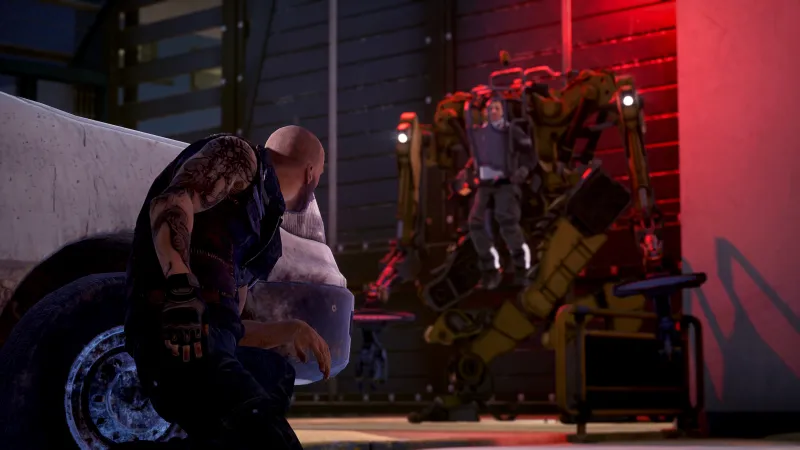
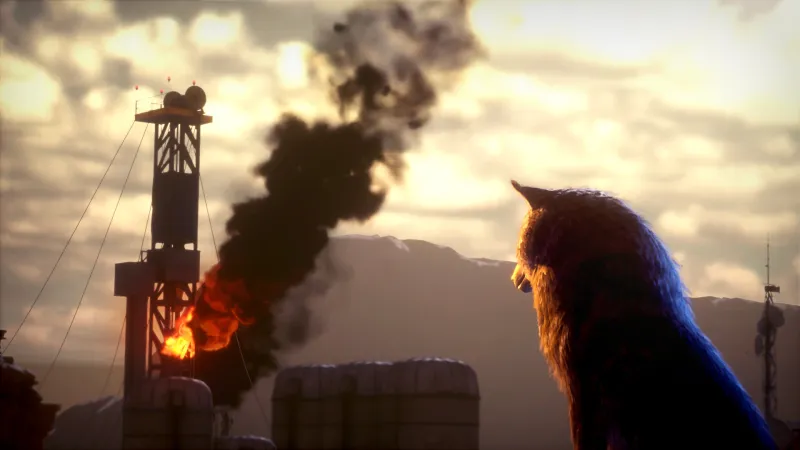
A scan of my immediate surroundings reveals six heavily armed soldiers, two wielding firearms with silver bullets. Behind these soon-to-be-dead guards is a mech menacingly pumping a flamethrower, clearly itching for the chance to light me up. I can quietly break each of their necks in my human form, but another look at the area highlights a vent leading to a security office. I can transform into my wolf form to dart into that space to turn off the security cameras, which would open up a less-patrolled path. I’d still have deal with that mech, though. The best play may be to abandon stealth altogether, reveal my location, and transform into a werewolf that will quickly paint the walls red with their blood. I just hope I have enough rage left in me to take down that pesky mech.

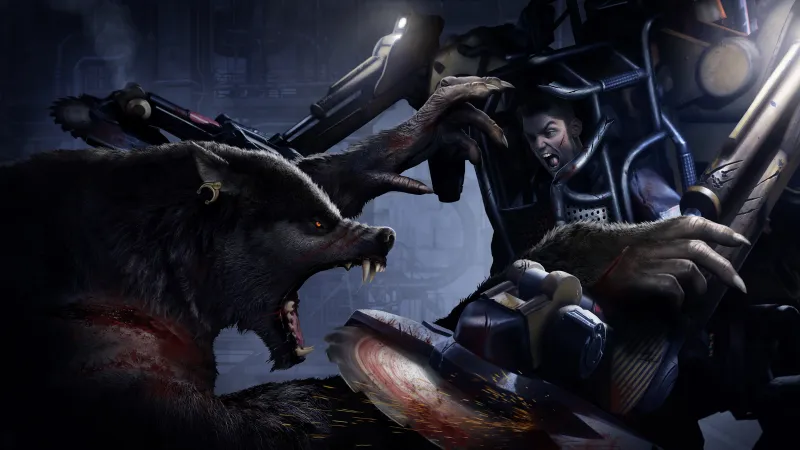
Drawing from the rich lore of the World of Darkness tabletop games, Werewolf: The Apocalypse – Earthblood follows a seasoned hunter named Cahal who can shapeshift between three forms at any time. This is an exciting proposition that sadly cannot escape the crushing weight of repetition that plagues every battle and scenario. The lycanthopic action is extremely violent, and some fun can come from tearing apart enemies like they’re made of paper or tossing them at their cohorts like they are a bowling ball. This fantasy doesn’t last long, and the uninteresting story and upgrade trees cannot save it in any way. This is an experience that doesn’t have much of a bite in anything it attempts, squandering what might have been a cool approach to a stealth game.

Another question this game does not answer is one that hangs over every encounter: Since the werewolf form is the most fun, why shouldn’t players use it all of the time? Developer Cyanide tries to push stealth through story setups and with missions starting with Cahal behind cover, but the player can become a werewolf whenever they want. All they have to do is hit a button to immediately transform or get spotted by an enemy, and then the slow, doldrum of repetition gives way to enemies screaming and a wolf running around like a maniac.

When the werewolf is in play, battles can be completed quickly. Razor-sharp claws and teeth are put to good use to hack away at enemies. The werewolf form controls well, but lacks any semblance of precision. It can also shift combat stances to be on all fours for swift attacks or stand on its hind legs to deal more damage with huge claw swipes. Some enemy types force you to use a particular stance, which can be annoying when they crowd you, but that’s about the extent to the strategy. Just hack away, howl to heal up, and most battles go by in the blink of an eye. Mechs pose some problems as they have huge health bars, but they are easily exploitable.

So what benefit is there to being a human or regular wolf? Hardly any. The wolf form lets you reach rooms containing computer terminals, books that deliver additional story beats, or sprit points that can unlock new skills (which don’t really change the flow of play at all). The human can break necks and shoot a bow gun to knock out lights. That’s about it. Again, controls are not an issue at all. Both of these forms function well, but just lack fun. Sitting back and watching guards move along paths mechanically is as dull as it sounds, and there is no way to spice it up. I tried to see the fun in the stealth, but the monotony of it always led to me transforming into a werewolf to finish a sequence with the hope the next combat encounter would be better. It never was.

Click here to watch embedded media

The repetition also extends to the level designs, which mostly use the same industrial textures and objects from room to room. Cyanide injects some variety into the environments toward the end of the game, which is a welcome change, but the damage is done well before this. Most stages feel like Twilight Zone episodes of going through the same doors over and over again.

Cahal is written and voiced well, but I never once cared about his bid for redemption or to save his tribe’s forest from being fracked to death. The entire experience falls flat, and never truly embraces the complexity of shapeshifting. The idea ends up being a mess that pushes players to just bare their fangs and get through it all as quickly as possible. – Andrew Reiner

Score: 5

Summary: Shapeshifting between three forms brings a surprising lack of variety in this dull hack-and-slash game.

Concept: A barebones stealth experience with one cool hook: If you get spotted, you turn into a werewolf, destroy everyone, and then return to the shadows for the next encounter

Graphics: Decent animations, but the environments are light on details with repeated geometry and texturing

Sound: The werewolf fights are amped up with aggressive metal beats, and the voice work does a nice job carrying the narrative forward since story cutscenes are infrequent

Playability: All missions are the same. You sneak past (or fight) enemies to reach a computer terminal that opens another door. Combat and stealth are handled well, but they lack dimension and grow old fast

Entertainment: Playing as an angry werewolf is fun for a minute, but loses its way through heavy repetition

Replay: Low

Click to Purchase

Wednesday, February 3, 2021

Destruction AllStars Review – Wrecking Havoc In The Arena

Publisher: Sony Interactive Entertainment
Developer: Lucid Games
Reviewed on: PlayStation 5

Destruction AllStars targets the dumbest part of our human brains with a simple proposition: Do you want to drive a car around and smash stuff? As a matter of fact, I do. The PlayStation 5 exclusive feels like a throwback to games like Destruction Derby, but it breaks ranks from its other car-combat cousins by letting players run around on foot after their car is destroyed. It’s a neat twist that emphasizes the disposable nature of everything that’s happening – including the over-the-top drivers themselves. The whiplash-inducing crashes and unique character abilities are initially satisfying, but only the most dedicated rubberneckers will find a reason to stick around.

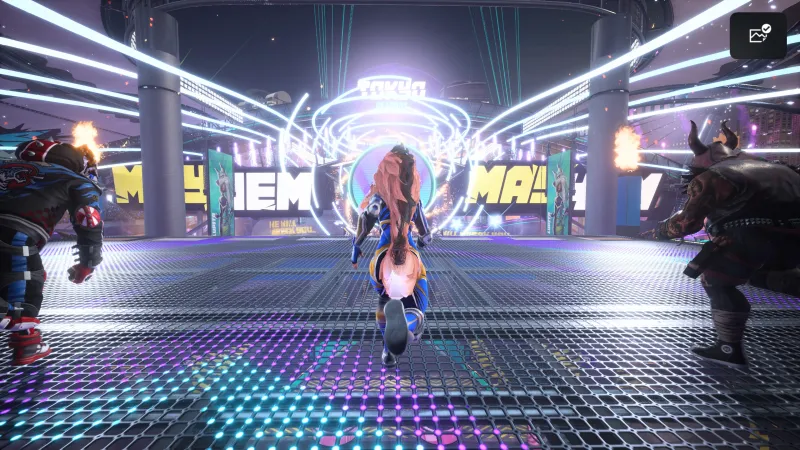
Lucid Games wanted to try something unconventional by making the individual drivers the stars of the auto show. Each of the 16 characters has a bold presence that’s largely conveyed by their wardrobe and cheeky pre-match animations. There’s a lot of pro-wrestling-style posturing, and the introductions by UFC announcer Bruce Buffer are a perfect fit for the game’s vibe. 

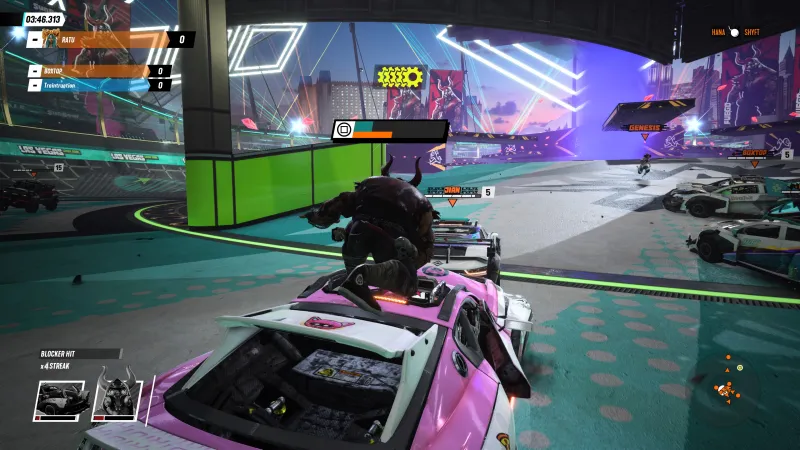
Events start with a mass scramble, as each character sprints to claim one of several available cars on the arena floor. Think of it like a high-stakes game of musical chairs; if two players go for the same car, it’s first come, first served. The second player can leap onto the roof and attempt to yank the other driver out with a button-pressing microgame. A successful takeover gives the victor two options: slide into the driver’s seat, or cause a wreck and find another car. It’s a small moment in the game, but I really like this way of getting into the action. It makes the first moments a weird kind of mind game, as players either try to grab an unclaimed car or – troublemakers unite – they veer toward one that is in the process of getting claimed for the risky opportunity to score a quick K.O.

Click here to watch embedded media

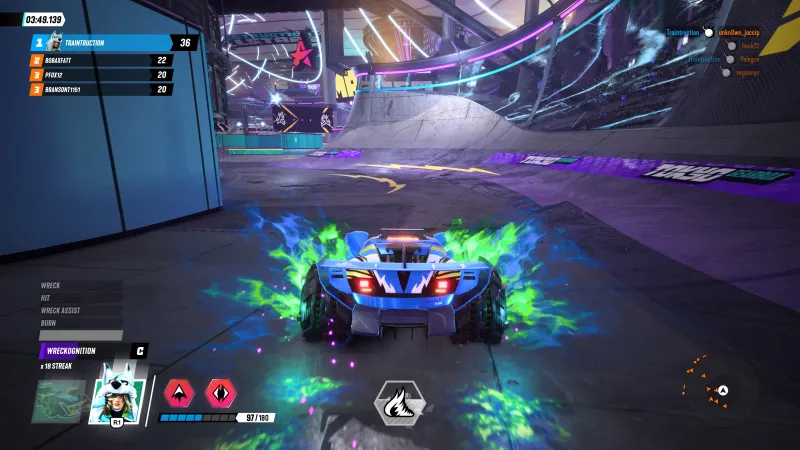
Driving feels fantastic, with the precision handling that you’d find in a top-tier kart racer. I found the simple act of cruising around genuinely satisfying, building up enough speed to ease onto the banked walls that enclose arenas or performing powerslides to drift dangerously close to pillars, walls, and other obstacles. Of course, other players aren’t keen on indulging this Sunday-drive mentality. Fortunately, they’re at least conceptually easy to deal with. Flicking up on the analog stick engages a speed boost, which lets you escape from harm’s way – or smash into another car or hapless on-foot character. Similarly, a quick left or right will enable you to either juke away from opponents or sideswipe them, depending on what’s happening at the moment. Even though my overall enthusiasm dimmed somewhat over time, I never stopped tensing up in anticipation of a big crash against an unaware enemy vehicle. It feels crunchy and satisfying.

Cars accrue a lot of damage over the course of the matches; that’s kind of the point, after all. That’s where Destruction AllStars is at its best. Rather than be stuck in the corner somewhere in a smoldering soon-to-be wreck, you can fling yourself from your car whenever you want. Don’t ask how characters are able to so easily bound into the air. The important thing is how great it feels, and the amount of flexibility it provides once you get the hang of it. When my car was clearly on its last legs – a sensation that’s wonderfully reinforced with the DualSense’s adaptive triggers tugging away at the gas and brakes – I beelined toward one of the myriad driverless cars hovering on platforms above the arena floor. There’s just the right amount of suction that makes it easy to leap from one car into the seat of another and continue on your destructive way. You can also leap out at the last second to avoid a potential wreck, or if you just feel like it. 

On foot, you’re a potential target for anyone, but you’re fairly speedy and have access to some basic parkour techniques like wall running. Sometimes it makes sense to run toward the nearest replacement car, and other times it’s more advantageous to pick up some of the collectable gems that are scattered on various platforms. These items help boost your Breaker meters, which are also built up by making contact with enemy cars. You have two Breaker abilities, one for your character and one for your character’s unique car – which must be summoned by filling the vehicle Breaker bar. Each is unique for the character, which contributes to a dizzying amount of chaos in matches.

Take Lupita, for instance. Her on-foot Breaker allows her to leave a trail of fire behind her, which sets opponents alight. Her unique vehicle’s Breaker has a similar function, leaving Back to the Future-style flaming tire tracks behind her low-slung race car, which can bathe a tightly packed area in devastating flames. Or it can be used defensively to scorch someone who’s following closely behind. Blue Fang, on the other hand, has a burlier unique ride with an array of sawblades mounted on front. For a short while, they can be turned on and, well, you can figure it out from there. His on-foot Breaker makes him resistant to enemy attacks, knocking down on-foot rivals who make the mistake of trying to melee him. I had a lot of fun testing out each hero and seeing how their various moves function. There’s a great training mode that makes it easier to figure out the timing and duration of the Breakers, since each one is so different.

Characters are the source of much of the game’s variety, for better and worse. Destruction AllStars has four modes, two of which are free-for-alls and two are team based. Mayhem is the flagship mode, where 16 competitors battle for points in timed matches. Points are awarded by doing damage and wrecking opponents. It’s about as simple as it gets. Gridfall gives you one life to see how long you can last in an arena that, frankly, doesn’t seem safe. The floor steadily collapses, pushing players closer together and making navigation more and more precarious. Stockpile and Carnado have teams collect gears from opponents and deposit them into safes or a tornado, respectively. Offline, you can play a few story-based missions, like one inspired by Crazy Taxi. The modes are all pretty fun, but I kept coming back to Mayhem. It feels like it’s the one closest to the game’s core identity, and it’s a nice way to blow off some steam.

Lucid and Sony envision this as a live-service game, with new characters and modes coming as time goes on. Players will also be able to purchase cosmetic customizations for their favorite drivers. For now, I don’t see the point of spending either the game’s earned or premium currencies. For a game with such personality, the skins are boring palette swaps. I appreciate the fact that character skins affect the cars, too, but I didn’t feel incentivized to spend the coins I earned over several hours to get a blue version of the thing that was green. You can also buy voice clips, emotes or other doodads, but I didn’t find any of those particularly compelling, either. 

Destruction AllStars is a PlayStation 5 exclusive, and it does show off what the console can do. It’s hindered by the game’s basic design, through no real fault of Lucid Games. Sure, the SSD load times are fast when you’re engaging with the offline single-player combat, but matchmaking can be a drawn-out bottleneck. And the action moves so quickly that it can be tricky to fully appreciate the visual fidelity. Time slows down during your best crashes in single-player, giving you a chance to savor every bit of bent metal. In multiplayer, you’re obviously only given the slow-mo visuals when you’re wrecked. I was stunned to see the level of detail when a giant sawblade sliced my car in half in the London arena. For a few seconds, I could see inside my car’s cockpit and marvel at its lovingly rendered roll cage – and even its emergency fire extinguisher. Those kinds of moments are rare, however, since you’re mostly plowing ahead at such ridiculous speeds that you can’t bask in all the mayhem – or even know that the guy who T-boned you just used an emote they spent several bucks on.

I had a good time behind the wheel in Destruction AllStars, even if I don’t know that it has enough to keep me around forever. That’s not to say there isn’t anything to do; there is a decent-enough selection of modes and activities between online and offline, with more on the way. And I appreciate the instantly satisfying action that’s as easy to drop in and out of as the cars themselves. Even if the novelty of vehicular mayhem isn’t enough to sustain my interest for many more long-haul sessions, I’m looking forward to taking it for a quick spin every now and again.

Score: 8

Summary: Whiplash-inducing crashes and unique character abilities are initially satisfying, but only the most dedicated rubberneckers will find a reason to stick around.

Concept: Smash and crash your way to victory in car-combat arenas, using one of 16 over-the-top drivers

Graphics: Everything moves at a blistering speed, making it tricky to appreciate its visual depths. Car destruction is detailed and satisfying

Sound: The crunching of metal grinding on metal is front and center, with little danger of being upstaged by the sparse arena-side commentary

Playability: Figuring out the basics is as simple as any kart racer, but a relatively high skill ceiling leaves room to master the nuances of each driver

Entertainment: Destruction AllStars’ frantic blend of bumper-car and on-foot action offers plenty of short-term fun, but the thrills are less thrilling after a few hours

Replay: Moderately high

Click to Purchase