Pages

Wednesday, March 31, 2021

Disco Elysium: The Final Cut Review – Still A Superstar

Publisher: ZA/UM
Developer: ZA/UM
Rating: Mature
Reviewed on: PC, PlayStation 5
Also on: PlayStation 4, Switch, Stadia

I wish I could play Disco Elysium for the first time again. This unconventional RPG from developer ZA/UM casts a spell unlike any other game; its surprising narrative, complex world, and flawed characters have the power to transport your mind to dark and delightful places. Though Disco Elysium was exclusive to PC when it originally launched in 2019, The Final Cut brings the experience to consoles, opening this strange world up to a new wave of superstar detectives. And even though it can’t turn back time for those of us who want to relive the first playthrough, The Final Cut’s additions provide a rewarding return trip. 

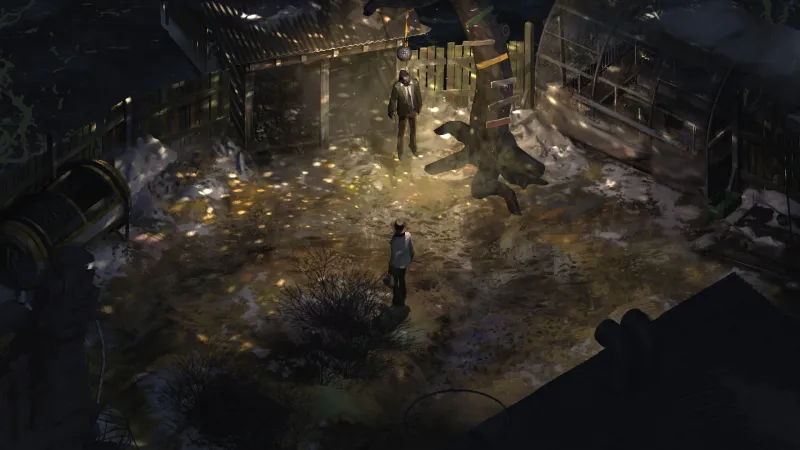
If you’re new to Revachol, the main thing you need to know is Disco Elysium is a story-driven, combat-free RPG that puts you in the role of a police officer investigating a bizarre murder. But as the game begins, that police officer has traveled a drug-addled road to destruction. Through your actions and dialogue during the investigation, you veer toward redemption or ruination (or somewhere in between) as you contend with the warring voices in your head. The tone can shift from hilarious to poignant to soul-crushing in the span of a single conversation, but the writing has a particular knack for highlighting beauty amid bleakness. I don’t want to say too much and risk spoiling any great moments, but Disco Elysium’s unique approach to melding storytelling and gameplay is really something special. For more of the basics, read my original review.

Click here to watch embedded media

Disco Elysium won acclaim from critics and players, but The Final Cut isn’t just a re-release. ZA/UM has made several important adjustments to refine the game, but my favorite is the inclusion of full voice acting. Instead of just getting a few sentences to paint the outline of the characters, you now get a more complete sense of their personalities and mannerisms. I enjoyed all of the performances, but the main narrator (voiced by Lenval Brown, who you can hear in the trailer above) especially stands out; this is a text-heavy game, and Brown delivers a staggering amount of information with a style that fits the atmosphere perfectly.

While most of the core content remains unchanged in The Final Cut, new political vision quests let players choose one of four new tasks tied to different ideologies. These mutually exclusive quests open up based on your detective’s political leanings – like communism and fascism – and you ultimately choose which one you’re going to pursue. After saving/reloading to see what they all offer, I am impressed at how well these new objectives fold into the original experience. They don’t feel tacked-on or extraneous; they are natural extensions of the themes that were already there, acting as satisfying punctuation marks. Some of them introduce new characters and areas, while others let you interact with familiar faces in different contexts. The fascist (a.k.a. racist) thread made me laugh the most, but whichever one you choose, the vision quests are cleverly written and have minor-but-lasting effects on the game once you complete them – like visual changes to the big statue in the roundabout, for example.

Click image thumbnails to view larger version


As an isometric RPG, controlling Disco Elysium was previously a mouse-and-keyboard affair. That obviously wouldn’t work for the console versions, so the interface has been adapted for gamepads (and the PC version supports them now, too). However, the controls are the only part of this package that don’t feel improved. The trade-offs aren’t exactly surprising; moving your character directly with the analogue stick is nice, but the map was still originally designed with a point-and-click interface in mind, so certain paths through the world are difficult to see and navigate. I also had several instances where I pressed a button to interact with an object, but nothing happened until I repositioned myself and tried again. On the one hand, that inconsistency is frustrating. On the other hand, Disco Elysium is not a game in which rapid action and response is necessary, so it didn’t interfere much with my overall enjoyment. 

No two run-throughs of Disco Elysium are quite the same. If you’re returning to it, The Final Cut is a great opportunity to try out different choices, pursue different ideologies, and see new branches of the story. Plus, if you already own the game on PC, The Final Cut is available as a free update. For console players who have waited to see what the fuss is about, this version presents the complete picture of why this unique setting and story have earned so much praise. Disco Elysium is a must-play game, and The Final Cut is the best (and only, for many people) way to play it.


Disco Elysium: The Final Cut is currently available on PS5, PS4, and PC. It will launch on Xbox Series X/S, Xbox One, and Switch this summer.
Score: 9

Summary: The Final Cut opens this strange world up to a wave of new superstar detectives on console, and the additions provide a rewarding return trip for the rest of us. 

Concept: Update an award-winning game with new features, then bring it to consoles for the first time

Graphics: The actual character models are unimpressive, but the stunning art direction and an evocative world present plenty of gorgeous visuals

Sound: Full voice acting gives you an even better sense of the characters, with especially great work from the main narrator

Playability: Adapting a traditional mouse-and-keyboard interface to gamepad involves some trade-offs, but it works (and it’s certainly better than not playing at all on console)

Entertainment: Disco Elysium can be thoughtful, funny, sad, and profound. To see how it artfully navigates that spectrum, you simply need to play it for yourself

Replay: Moderately High

Click to Purchase

Monday, March 29, 2021

Evil Genius 2 Review – A Foiled Plan

Publisher: Rebellion Developments
Developer: Rebellion Developments
Release: 2020
Reviewed on: PC

Evil Genius 2 sounds zany and clever in concept: You control a maniacal overlord who tries to take over the world by building a sprawling base full of disposable minions and devious traps. Plus, it’s all wrapped in stylish audio and visual riffs on ‘60s spy movies. This was also the same pitch as its predecessor (which released in 2004), but the sequel leverages new features and technology to bring the concept to a modern audience. However, the inelegant systems and unsatisfying progression throw a wrench in the grand plan.

I reviewed the original Evil Genius for Game Informer, but you don’t need any familiarity with the first game to understand this one. In fact, Evil Genius 2 hits so many similar notes that you’ll probably enjoy it more if you go into it fresh. But regardless of your prior experience, Evil Genius 2 shines brightest during the opening tutorial. It gradually introduces an array of different options for your base, like an inner sanctum with your impressive throne, and the ability to train guards to defend your corridors. This steady unlocking of devices to build and subordinates to train left me excited about my lair’s trajectory and how my operation would eventually expand. Unfortunately, once all the basic room types are available, everything plateaus; you spend most of your time performing slight variations on the same repetitive tasks.  

Click here to watch embedded media

The main campaign is a series of missions that take you through the process of conquering the world (each of the four available geniuses has a unique doomsday device, which I like). But instead of hatching schemes within schemes, the limited mechanics of Evil Genius 2 make each mission feel like the one before it. You can only arrange “capture someone, research something, train someone, build something” so many different ways before they start to bleed together.

Certain objectives are also tied to finishing tasks on the world map – an abstraction that tries to make you to feel like you have global control, but only provides frustrating busywork through initiate-and-wait missions that gate your progress toward other tasks. Your interactions on the map consist of clicking on pins and launching missions to earn money; it’s a tedious combination of shallow and necessary, requiring just enough babysitting to be distracting, but not enough depth to be interesting.

When you aren’t pursuing formal objectives, you are usually just trying to get more of something. You need more power for your holding cells. You need more traps to fend off infiltrating agents. You need more broadcast strength to upgrade your criminal networks. This kind of ramp-up may be expected from a strategy game, but the problem is how few of these improvements result in interesting changes to your routine. They just feel like numbers going up with no meaningful effect. And the upgrades that do make a difference (like minions automatically attacking trespassers, or being able to cut through hard stone) aren’t available until many hours past the point you recognize the need for them. They are still nice when you get them, but the pacing of the progression feels weirdly throttled.

Click image thumbnails to view larger version


For all of my complaints about the experience, Evil Genius 2 still taps into a simple vein of diabolical entertainment. It features a funny, cartoonish representation of evil. I cackled as agents triggered traps, cheered on my robotic assistant as she interrogated intruders, and steepled my fingers as I activated my doomsday device. The thrill of optimizing your layout and allocating your workforce is enjoyable; it’s often just buried under inconvenience. For that reason, I’d especially recommend starting up a game in sandbox mode after you finish the main tutorial. This mode gives you unlimited resources and unlocks various options that you’d normally have to play for hours to obtain. Though sandbox mode also lacks the clear structure to propel you forward, it at least lets you enjoy the fun of base-building without several of the annoyances that hold the campaign back.

While playing Evil Genius 2, I couldn’t stop thinking about the movie Austin Powers. That probably seems natural at first; in terms of their characters and general aesthetic, both of them lampoon the early era James Bond films. But that wasn’t what I was dwelling on. At one point in Austin Powers, Dr. Evil (who was cryogenically frozen for many years) suggests a paltry ransom of “one million dollars.” His henchman needs to explain to him how times have changed, and such a demand doesn’t really meet villainous standards anymore. Just like Dr. Evil, the Evil Genius name has been on ice a long time, and despite being full of nefarious intent, this sequel’s methods feel outdated on the current world stage

Score: 7

Summary: Inelegant systems and unsatisfying progression throw a wrench in the grand plans of this criminal mastermind.

Concept: Construct a lair, command your henchmen, and take over the world as a criminal mastermind

Graphics: Expressive animations look great when you zoom in close, but you’re usually looking everything from a distance

Sound: The music expertly captures the ‘60s spy-movie aesthetic. It would be the best part of the whole game if there were a wider variety of tracks

Playability: Navigating the menus feels natural with time, but poor minion A.I. and a few unclear requirements makes the simulation feel unresponsive to your commands

Entertainment: Managing your base and bossing people around can be fun, but that simple joy is often obscured by layers of repetition

Replay: Moderate

Click to Purchase

Thursday, March 25, 2021

Story of Seasons: Pioneers of Olive Town Review – Simple Comfort Over Ambition

Publisher: XSEED Games, Marvelous Games
Rating: Everyone
Reviewed on: Switch

No franchise has been in the farming game as long as Story of Seasons, best known as Bokujo Monogatari in Japan (and previously known as Harvest Moon in North America). Celebrating its 25th anniversary, the series created a formula that’s inspired hit games like Stardew Valley. But in recent years, it’s struggled to stay relevant with fresh ideas. Story of Seasons: Pioneers of Olive Town tries to keep the flame alive by having you develop a town and providing fun features (like a photo mode and museum) to fill with discoveries. The loop is entertaining, but the rewards aren’t satisfying enough for the investment required to get them.

Like its predecessors, Pioneers of Olive Town begins with you landing in a small village and starting a new life as a farmer. Olive Town is struggling, and the mayor asks for your help in turning it around. You receive development projects, which require you to gather up the right materials to improve vital elements like roads, benches, and the town hall. Watching the city transform with each upgrade feels worthwhile, since more tourists come to the area and Olive Town begins to look much more attractive. However, don’t expect to have much control over the town’s transformation. You get asked questions as if your opinion and direction matters, but all answers lead to the same place, and going on fetch quest after fetch quest gets tiresome fast.

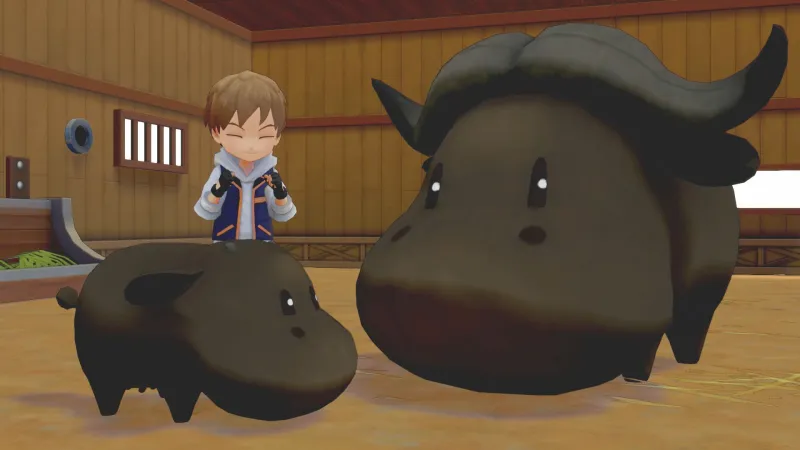
That being said, the core loop of taking a farm from nothing to a successful operation is still entertaining. I looked forward to every facility upgrade, new animal, or crafting recipe I could unlock. While you’re wandering the wilderness, you can also now tame wild animals and bring them to the farm, meaning you’re not always shelling out cash for new livestock. Money can come easy, but it’s the materials you need for the crafting, townspeople requests, and building improvements that bring on the challenge. I didn’t mind this at first; breaking rocks for ores, cutting down trees for lumber, and cleaning up puddles for clay is simple enough. But these items need to be processed in machines, and each machine has a singular purpose, from converting milk into cheese to turning wool into yarn. The problem? Not only are there far too many of them for each little thing, but inserting the required materials only produces one converted item, so if you need 50 of a specific type of lumber (and you will), it can take a maddening amount of time. You can build more than one of each machine type, but they take up vital space.


My journey through Pioneers of Olive Town was full of highs and lows. Things either came too easy, like wooing the townsperson of my choice, or required too much effort, like unlocking some farm facilities. I was impressed with how much there is to do, but it all comes at a cost; I felt like I could never spend time exploring certain aspects, such as creating clothing or getting into cooking, because they require precious time and feel insignificant compared to your other tasks.

Olive Town’s areas seem small at first, but as you build bridges to new areas, meet Earth Sprites that take you to special locales, and search various caves with treasure-filled floors, things expand a great deal. You are constantly improving your skills as you do the basic tasks of tilling the land, cutting down trees, breaking rocks, and this in turns opens up more crafting recipes to get you things like automatic feeds for your livestock or decorative furniture. This provides a satisfying sense of your character progressing and new things to always look forward to.

I also enjoyed the fun little touches like being able to ride a motorcycle or use the various mounts to get around. Festivals are hit-or-miss, with some being more interactive than others. The game also provides a museum similar to Animal Crossing, where you can donate your treasures, fish, and photos you’ve taken of wildlife. Furniture and house upgrades are also aplenty, even though your house feels a little confined to where you can place things. You have this spacious layout, with only a selected, smaller area to really decorate as your own.

Click here to watch embedded media

For those interested in the social aspects, you get new scenes at a steady rate by walking around the town and talking to villagers, which made me want to take the time to visit them. I looked forward to these scenes to learn more about the people in Olive Town, but overall, I didn’t find this cast memorable or exciting. No one is outright annoying (except for maybe food critic Lovett), but the villagers simply fill their roles as shop owners and members of the community and offer nothing unique beyond that. The events as you progress in a romance fare much better, as they really do capture the chemistry and growth in your relationship.

I mostly had a pleasant time with Pioneers of Olive Town, but it isn’t the most technically sound game. Patches have continued to improve my experience, but expect some annoying loading times, framerate issues (especially stuttering), and the occasional game freeze. Nothing caused me to stop playing in frustration, but be aware that this is still not the smoothest experience.

Pioneers of Olive Town is a decent Story of Seasons entry, but it’s not more than that. I still got absorbed by the core formula of bettering my farm and loved making new discoveries as I explored. I have plenty of things I enjoy about this game, but encountered just as many that didn’t hit the mark. I also can’t get away from thinking, after all this time, shouldn’t this series be making larger leaps forward and leaving a stronger impression?

For more on Pioneers of Olive Town, you can check out these five fast tips from the director!

Click image thumbnails to view larger version


Score: 7.5

Summary: The core farming loop is still entertaining, but the rewards aren’t satisfying enough for the investment required to get them.

Concept: Make a new life as a farmer while developing a struggling town

Graphics: The animal designs are all adorable, but the graphics don’t stand out

Sound: The music varies depending on the events of the day and season, but it’s mostly unremarkable background noise as you work

Playability: This title is approachable for fans and newcomers. Technical issues, like freezes and the framerate, get in the way of a smooth farming experience

Entertainment: Story of Seasons: Pioneers of Olive Town provides a new and entertaining farming adventure, but some design decisions hold it back from becoming a must-play entry

Replay: Moderate

Click to Purchase

Wednesday, March 24, 2021

Devotion Review – An Exceptional And Frightening Homecoming

Publisher: Red Candle Games
Developer: Red Candle Games
Reviewed on: PC

Devotion raised every hair on my body and had me questioning my decision to play it within the first few minutes of stepping into its twisted world. As I braved its dangers, I understood why it earned acclaim when it first launched in February 2019. Unfortunately, only days after that initial release, the game was pulled from online storefronts after a controversy surrounding an in-game joke at the expense of China’s president. Two years later, developer Red Candle Games has finally made Devotion available again. Horror fans who missed it the first time around shouldn't wait; Devotion is a terrifying and memorable adventure worthy of its reputation. 

The bulk of this unnerving experience involves exploring a small apartment in Taiwan over the course of several years in the 1980s. You learn the tragic story of a family torn apart by marital turmoil, professional setbacks, and the stress of raising a chronically ill child. Gameplay consists of collecting clues and items to solve a series of well-made (and sometimes interconnected) puzzles that are satisfying yet stressful to complete because you know there’s usually something sinister waiting around the next corner. Movement is deliberate without feeling slow and that's for a reason; every time I turned around was tense as I braced for the worst – and often found it.

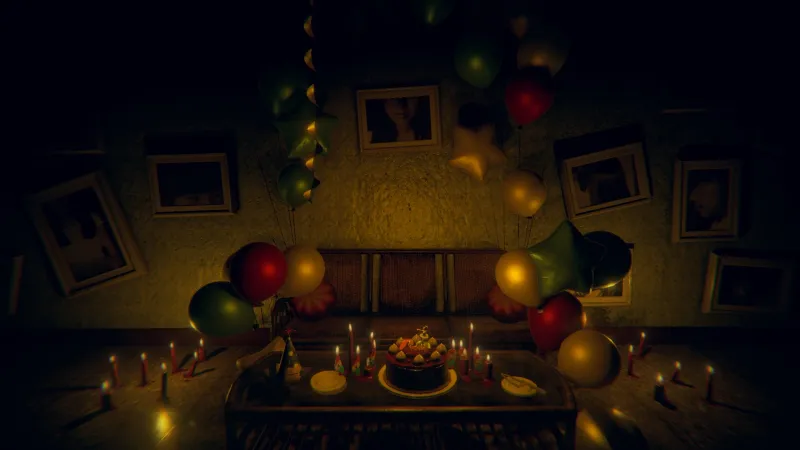
Devotion’s psychological scares keep you on your toes and do a great job of being effective while maintaining impressive creativity. The apartment changes depending on the year, so new types of scares are regularly surfacing, whether it’s something as blatant as a mannequin-laden birthday party or an elaborate mechanical diorama sequence. Thanks to the fantastic sound design (I recommend headphones), simply hearing doors slam or windows rattle from a thunderstorm is enough to have you holding your breath in expectation of the worst. Devotion loves messing with your mind, and it kept me on edge to the point that I was jumping at things that weren’t even there because the atmosphere is so oppressive.

As miserable as I often felt stepping into the next chilling iteration of that cursed apartment, I love and admire Devotion’s commitment to scaring the pants off of you without devolving into cheap or largely predictable tactics. This is a smartly laid out haunted house that seems to know the perfect moments to hit the pedal on the scares before easing back, but it never turns off the gas completely. I also respect that Devotion isn’t a one-trick pony. The story eventually ventures beyond small confines into more otherworldly settings, though it loses a bit of its punch in doing so. However, I like how the puzzle design evolves into more freeform scenarios after a linear beginning.


Devotion may be terrifying, but it also offers a compelling narrative with a surprising amount of heart. The story is ultimately about a child coping with terrible parents on top of her own troubles, and her anxieties made me sympathetic while also creating another, more relatable trauma: the fear of losing your family. You don’t want to see any harm come to this poor kid, especially after a fantastic whimsical sequence where you read her favorite storybook together. These lighter moments aren’t plentiful, but they’re awesome for allowing you to exhale for a bit. They also further demonstrate Red Candles’ chops when it comes to mixing up the adventure with different gameplay ideas.

Devotion wraps up before it loses steam, making it a tightly packed house of horrors worth braving. It’s a shame that the game was inaccessible to players for as long as it was, but now you can enjoy one of creepiest titles in recent memory. If you can muster up the courage, you’ll be rewarded with a delightfully disturbing experience that deserves a chance to terrify a broader audience.

Click image thumbnails to view larger version


Score: 9

Summary: Devotion is terrifying experience backed by a compelling narrative that has a a new lease on life after spending two years removed from sale. Horror fans would do well not to miss it a second time.

Concept: Uncover the fate of a small, troubled family by exploring their apartment in different time periods while confronting a host of supernatural phenomena

Graphics: The spaces are packed with detail, and the ever-shifting imagery keeps you on edge

Sound: Excellent sound design makes every strained creak or gust of wind as alarming as any apparition

Playability: Movement is appropriately deliberate without feeling slow or tedious

Entertainment: Devotion’s powerful atmosphere, frightening sequences, and fascinating story make it a creative and engrossing gauntlet of scares

Replay: Moderate

Click to Purchase

It Takes Two Review – The Joys And Heartbreak Of Love

Publisher: EA Originals
Developer: Hazelight
Rating: Teen
Reviewed on: Xbox Series X/S
Also on: PlayStation 5, PlayStation 4, Xbox One, PC

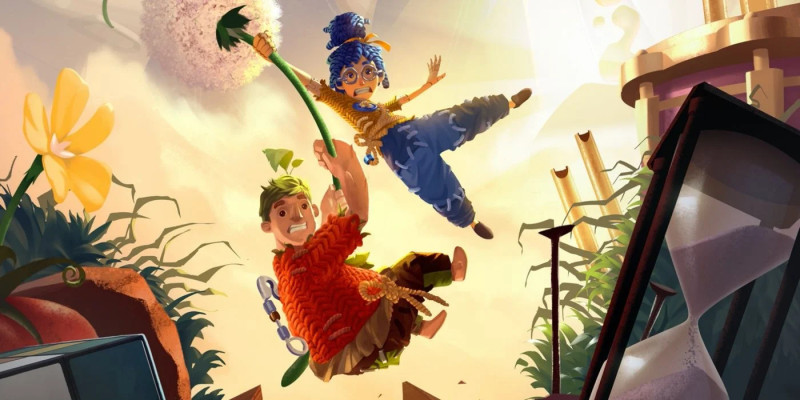
Beneath exhilarating rollercoaster rides and silly conversations with squirrels, It Takes Two has a heavy heart. It’s about divorce and the toll taken on a daughter who doesn’t want to lose her family. It’s about decaying love and the differences that divide us. It’s about not wanting to face reality and not wanting to let go. It’s also about hope and uncertainty, the past creating a better future, and finding common ground no matter how much it may hurt. All of these elements are beautifully woven into a colorful and soulful adventure that hits hard, both in its moving narrative and clever gameplay. It Takes Two succeeds in being a game that pushes two individuals to work together to create a relationship that works, but for how long?

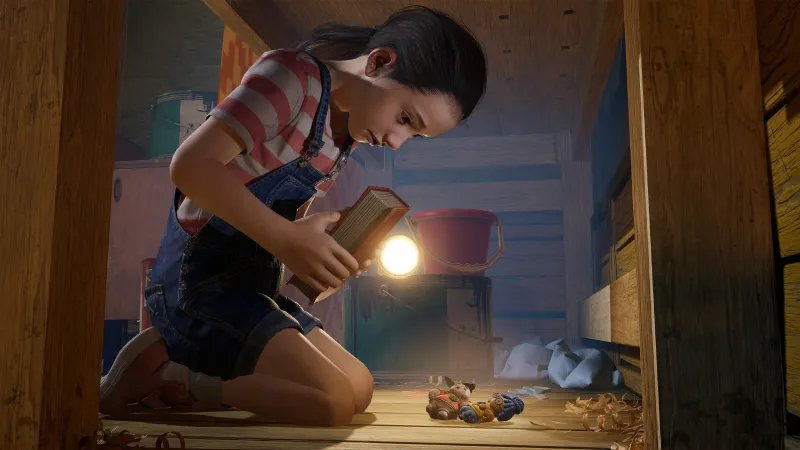
In an emotional opening shot, we see a little girl named Rose run off to her play space after her parents, Cody and May, tell her that they are separating. She’s devastated and keeps saying she just wants them to be “friends." As hard as it is for Rose to accept the news, we learn she’s been expecting it. Not only has she made two action figures of her parents to play make-believe with – to show them the way she wants them to be – she’s also secretly purchased a “Book of Love” to learn how to make them care about each other again.

Rose’s tears fall from her cheeks onto the figures and book, conjuring magical forces that sweep through the house. When we next see Cody and May, their souls have been passed to their miniature, wooden and clay counterparts. As these two adults rightfully panic in their new bodies, the Book of Love greets them as an upbeat, comical figure named Dr. Hakim, who promises to help them mend the bond they once shared. The entire adventure is told from this diminutive perspective and delivers a nicely written story that unfolds amid treacherous action sequences. The blending of narration and gameplay works incredibly well, giving you plenty of insight into the minds of Cody and May as they leap about and race to find a way to return to their normal lives (and sizes).

Dr. Hakim doesn’t want them to move so fast, however, and thinks they should stay small to work out their differences. This somewhat nefarious desire of his is brilliantly transformed into the foundation of the adventure. As the name of the game implies, It Takes Two can only be played cooperatively by two people, either sitting on a couch together or online. While each player is asked to complete individual platforming challenges, not much progress can be made unless the duo is working together. Almost every significant movement demands teamwork, communication, and patience between the two players. Even when playing online, the screen is always split in two so you can see exactly what your partner is doing, an excellent touch that allows for the other player to problem solve with verbal guidance.

Click image thumbnails to view larger version


Cody and May share the same basic moves, but are given different tools to use in each world. This makes them feel distinct and sets the stage for one person to always have ownership over a specific type of action. For instance, Cody has explosive gel, but it can only be detonated with May’s rifle. Later in the game, Cody can change sizes, while May is equipped with magnetic boots – an odd pairing that is used to let both characters interact in the world in different ways to open up new routes.

Combining the actions of both players is used in almost every sequence, which are usually wonderfully designed, delivering plenty of laughs, edge-of-your-seat moments, and a unique flow that necessitates teamwork. A few sequences push both characters to do the same type of action, but with slightly different thinking and motions for each, such as having to spin the water wheels on a boat in different directions to avoid running into mines. This is the type of activity that will have you yelling back and forth as you stumble with what you want the other player to do in conjunction with your movement.

While It Takes Two will be talked about for its cooperative-only design and subject matter, developer Hazelight’s biggest triumph is the variety in action. When a particular gameplay idea has been explored fully, the action transforms into something new, which is taken for a ride in fun ways before expiring and presenting another idea. It's amazing how many different concepts are explored, almost coming across like a greatest hits of everything you can do in action games. Some of these ideas work better than others, but most of Hazelight’s attempts are incredibly well executed, such as riding on the back of a magical catfish, roaring down an icy slope in a bobsled, or using a fidget spinner to launch into the air.

Click image thumbnails to view larger version


The core gameplay of running and jumping is consistent in every world, but the problem-solving elements are always being shaken up. Hazelight even provides a breather from the action from time to time through amusing minigames that allow you to compete against your partner, give them a helping hand, or in some cases, take out your stress on them (like hitting them on the head in a game of whack-a-mole).

Constant verbal communication is an absolute must for almost every little sequence, which again gives this game a bit of a unique stance. Many of the challenges will have you saying phrases like “throw the switch…now!" Some of the co-op feats can be brutally difficult both in timing and movement, leading to both players dying plenty, but checkpoints are liberally dispersed. If you miss a jump, you usually start again right at that spot (or just a few gameplay steps back from it). Progress being updated so often helps save the game from its slightly stiff and imprecise platforming mechanics. If both players die, they'll have to restart a boss fight or backtrack to redo a little of the level, but a nicely designed quick self-revive mechanic limits those moments.

Click here to watch embedded media

The platforming is sophisticated, requiring double jumps and air dashes, along with rope swings and more. None of these actions are completely reliable or as fluid as you want them to be, but are good enough to get the job done. Hazelight is quite aware of just how often timing missteps can be made and aids the player by having characters automatically be pulled to a ledge rather than miss if they are close. It’s odd to see Cody or May magically move through space, but it’s better than having to try a difficult action again. The helpful warping happens everywhere in the game, whether you are a good five feet under a rail slide and suddenly find yourself on it or are about to miss a jump to a tree branch.

It Takes Two may not be the platforming juggernaut that it aspires to be, but it more than makes up for it with its big heart, wealth in variety, and gorgeous imagery. All of its individual actions are things we’ve done in other games, but when applied to this distinct cooperative approach, they take on a whole new life and are used in wonderful ways over a long adventure. The action will have you laughing and screaming at your TV, and the story stays strong throughout, creating the backbone for an entertaining adventure that roars with excitement and should keep you glued to the controller to see if this couple’s lost love can be rekindled.

Score: 9.25

Summary: Hazelight's cooperative adventure is clever, different, and loads of fun.

Concept: An expertly designed cooperative experience that pushes each player to do different things in concert to solve challenges

Graphics: The worlds soar with realistic details. It’s fun to see how ordinary objects are brought to life to either transform into bosses or NPCs

Sound: Your characters often converse as the action unfolds, and the music fits the sequences well, even conjuring up familiar melodies of classics like “Flight of the Valkyries”

Playability: Many different gameplay ideas are explored, and none overstay their welcome. The variety is great, but the core platforming mechanics are not as reliable as they should be

Entertainment: A roaring success both in its diverse co-op-driven gameplay and mature story themes that unfold in playful and heartfelt ways

Replay: Moderately High

Click to Purchase

Tuesday, March 23, 2021

Monster Hunter Rise Review – Runt Of The Litter

Publisher: Capcom
Developer: Capcom
Reviewed on: Switch

Monster Hunter: World was an important paradigm shift for Capcom’s beloved franchise. The well-paced difficulty ramp made progression enjoyable for newcomers, while countless endgame challenges kept expert hunters coming back for more. Monster Hunter Rise’s gameplay often attempts to copy World’s success, which isn’t always a bad thing. Battles continue to be an exhilarating dance with death, gear customization is satisfying, and coordinating hunts with friends makes for awesome fun and unexpected outcomes. Even with the introduction of new mechanics that help amplify these features, Monster Hunter Rise struggles to establish a creative identity of its own.

Encounters with huge and impressive beasts is the centerpiece of the experience, putting your skills with the myriad weapon types to the test. Once victorious, you spend your downtime sprinting around the main hub, upgrading or forging better equipment, nabbing a bunch of pending quests from NPCs, and meticulously preparing for the next hunt. This captures the fundamentals of the fantasy-action series, but Monster Hunter Rise doesn’t venture far beyond that comfort zone.

During the opening hours, the people of Kamura Village are busy preparing for the “calamity,” an army of wild monsters hell-bent on laying waste to everything in their path. As the village’s newly registered hunter, you must slay or capture numerous creatures in the biomes beyond your hometown’s steel gates. As soon as you’re done marveling at the blooming cherry blossom trees and humming along to the gorgeous score, be sure to grab key consumables from your ever-expanding item box, eat a delicious meal at the local eatery for exclusive bonuses, and venture forth into the unknown. This routine has a comfortable monotony that Monster Hunter fans will likely appreciate, but the addition of the “Buddy Plaza” adds a new feature to your return trips.

Click here to watch embedded media

The Buddy Plaza is a base of operations for your palicoes and palamutes (cat and dog warriors, respectively). You can send your trusty pets on missions of their own to procure miscellaneous crafting materials, spend currency to train them so that they’ll be more effective in future engagements, swap out their equipment, or hire even more of them by talking to the handler. Buddies are extremely versatile, and Monster Hunter: Rise constantly rewards you for using the plaza’s various facilities. Still grinding for that rare beak or tail? Your palico “meowcenaries” might surprise you with one from a recent expedition. This kind of positive feedback gives the lulls between combat/exploration some much-needed flavor.

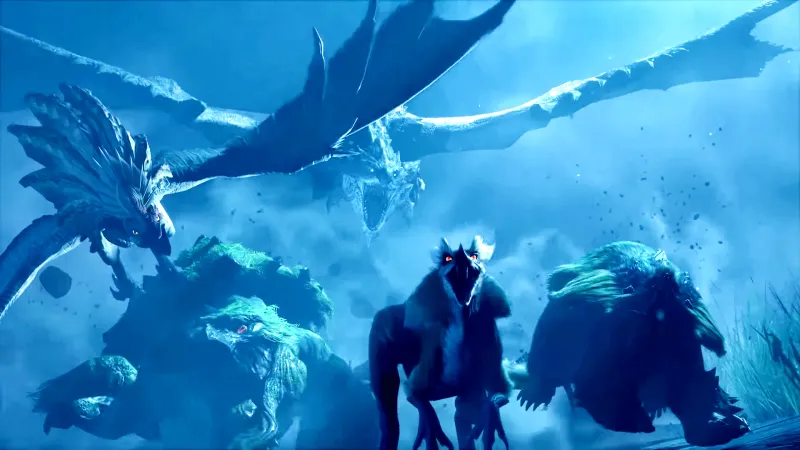
The environments are visually arresting, and house entire ecosystems filled to the brim with endemic life as well as hard-to-find secrets. My two favorite locales – Shrine Ruins and Flooded Forest – are littered with the remnants of ancient civilizations; they have huts wrapped in thick vines and sky-piercing pyramids that loom in the distance. While roaming, I often thought about the histories of these forsaken settlements and the people that once called them home. However, my imagination was often all I had to go on, since the lack of meaningful story beats makes the plot fall flat.

A generic tower defense mode serves a lackluster reminder of the larger narrative; these jarring “rampage quests” involve constructing an array of automated turrets and mountable ballistae around the village’s gates. Waves of monsters clutter the screen and work together to pummel you while also breaking through your defenses. All the enemies are damage sponges, and clearing the arena hardly requires much thought; I often just held the fire button until I was the last one standing. Thankfully, you aren’t required to complete a ton of rampage quests to gain access to Monster Hunter Rise’s main missions.

Click image thumbnails to view larger version


You spend most of your playthrough experiencing the classic loop: Battle gigantic adversaries like the feral Arzuros and Lagombi, collect mundane items, and deliver heavy objects to camp. Be sure to explore the nooks and crannies of every map as floating, colorful birds called “Spiribirds” can be absorbed to increase your health, stamina, attack, or defense. These buffs make completing the above-mentioned missions much easier. Don’t want to do all of that on foot? Ride your palamute to expedite navigation or whip out your wirebug to scale cliffsides and mountain ranges in seconds.

Wirebug attacks, called Silkbinds, add a new layer of intensity to the action. When used repeatedly, Silkbinds force monsters into a mountable state. These short combat sequences are all about using a monster’s power against them by ramming into nearby structures for stagger damage or sprinting towards other unsuspecting adversaries to dish out the pain. Wyvern-riding is my favorite mechanic because it adds an exciting burst of strategy to the franchise’s age-old combat system.

Beyond mounting monsters and using the wirebug to wall-run in spectacular fashion, not much else distinguishes Monster Hunter Rise from the installments that came before. It has enough endgame content to keep you occupied long after the credits roll (if you don’t mind copious amounts of grinding) and multiplayer is still the optimal way to play, but the excitement of my early hunts waned before long. Monster Hunter Rise is far from being the next definitive chapter in the series. Nevertheless, if you’re looking for a polished-but-conventional adventure with a few small-scale nuances, then you’ll be right at home in Kamura Village.

Score: 7.75

Summary: Monster Hunter Rise showcases its commitment to engaging combat with interesting new mechanics, but these changes aren't enough to differentiate it from previous titles.

Concept: Defend your village from angry monster hordes while spending quality time with your growing roster of lovable palicoes and palamutes

Graphics: Character textures don’t always look great, but the world itself is vivid

Sound: From gentle vocal harmonies to blood-pumping battle themes, Monster Hunter Rise boasts the best soundtrack in the franchise to date

Playability: Zipping through each backdrop with the wirebug makes you feel like a nimble acrobat, and controlling mounted monsters feels satisfying

Entertainment: Fighting different beasts is always a blast. However, the time you spend outside of combat pales in comparison to your epic encounters

Replay: Moderately High
Click to Purchase

Friday, March 19, 2021

Curse Of The Dead Gods: A Roguelite Lesson In Greed And Corruption

Publisher: Focus Home Interactive
Developer: Passtech Games
Rating: Teen
Reviewed on: PC
Also on: PlayStation 4, Xbox One, Switch

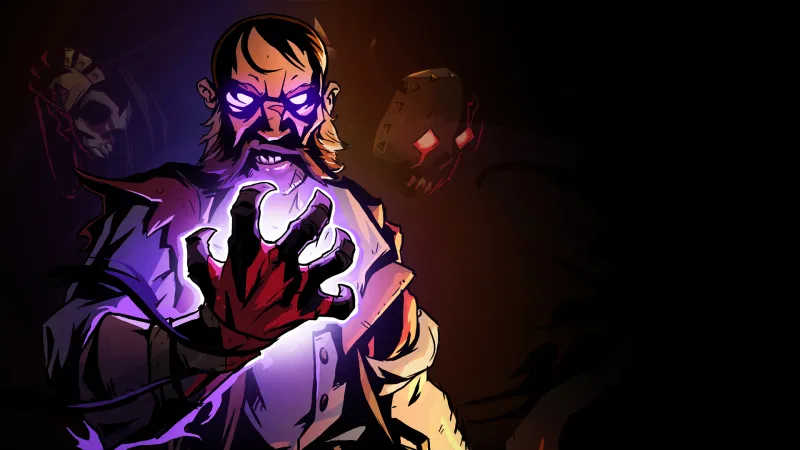
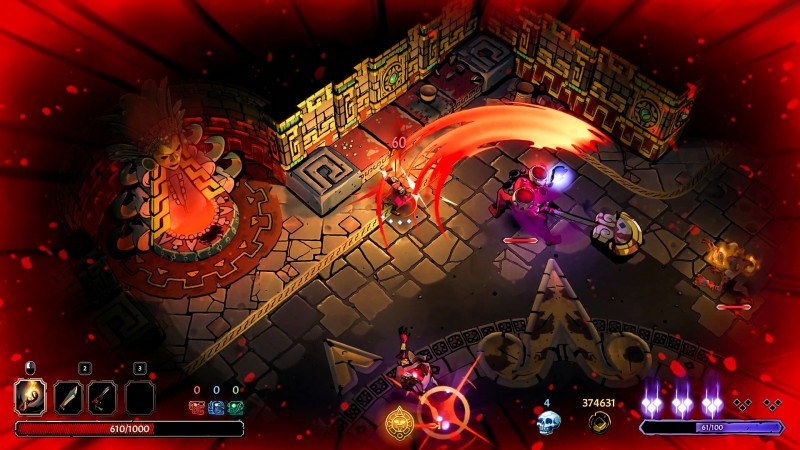
Who doesn’t want to seek out riches beyond their wildest imagination in a quest for immortality and unparalleled power? That’s exactly what Curse of the Dead Gods allows you to do in traditional action/RPG style with some roguelike flair – as long as you don’t mind some pesky curses along the way. 

You are Caradog McCallister, a character thrust into a living nightmare plagued with curses, death, and an endless array of traps meant to torture and maim. Be prepared to die a lot, though persistent progression takes the sting out of your demise. As you fight to survive, you find a plethora of weapons and gear to unlock and rank up, including both primary and secondary weapons, as well as ranged and two-handed. You can also combo different weapon types as well, which makes wading into a dark dungeon filled with terrors a little easier to face head-on. 

The true power of weaponry comes through in the hammers and pistols, but the shields and bows are a close second when gearing up for the next wave of battle. The pistols offer a solid range with an impressive amount of damage, which you can further improve with upgrades. The hammer is my favorite option; it just feels like a beast, even though it’s a little slower when delivering that final blow, the impact it has on foes far outweighs its lack of speed.


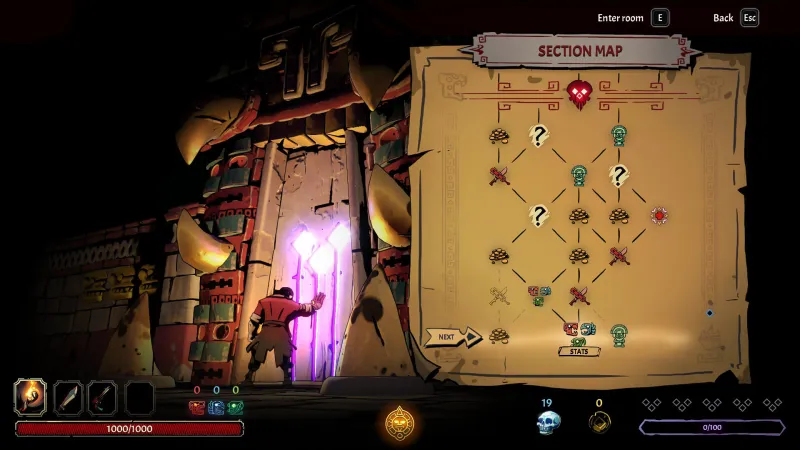
To unlock each weapon, you travel certain paths that indicate the reward waiting for you at the end, so you can plan your own progression to a degree. You also accrue green rings and blue skulls through each run, which are used to unlock new weapons and add new buffs. Leveling up preferred weapons is also pretty straightforward, both with approaching paths with upgrade options available as well as paying tribute to the gods through blood, purity, or gold. This mechanical structure was something that I loved because it made it easier to strategize how I wanted to approach upgrades and what I was willing to give up for better stats.

Tailoring the combat experience to your own liking is easy. For me, I love to combo my attacks, bringing with me a weapon that has range capabilities (like a bow or a pistol), or a heavy-hitter like the aforementioned hammer or a spear. Chain attacks create a more powerful way to approach danger, but it’s important to play to your strengths. If you like taking a more strategic approach, ranged attacks and shields are going to be your best bet. Paired with the right buffs, navigating dangerous curses can be just a little bit easier to do for those that play their cards right. 

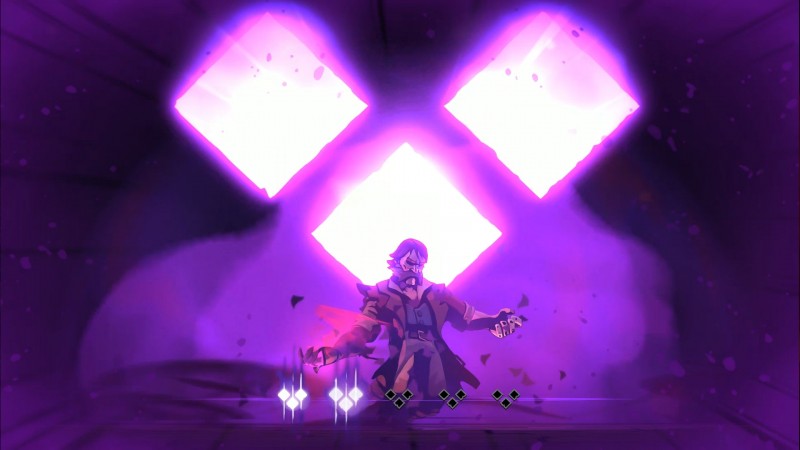
With each run, you encounter different curses that hinder your capabilities in different ways. A meter beside your health bar tracks how much corruption you gain. If that bar reached 100, congrats! You’re now cursed. Every time you walk into a room, your corruption meter rises. It’s an unavoidable part of your adventure, but that doesn’t mean you can’t work around it. 

The curse system makes each playthrough exciting because it alters the variables. Curses can change how you take damage, how your own damage is received. It changes the nature of the temple itself, and it impacts your status. It’s a central part of the gameplay mechanics, making navigation of curses and corruption an interesting aspect of the journey itself. 

Unless removed, curses will remain active the entire run, but the bright side is that you can remove them. At the end of each area map, there is a boss. Take down the boss and the curse is removed. Of course, these are gods we’re talking about, so there is always a catch: You can only remove one curse, so strategy once more plays a key role. 

You can’t control what type of curse you get (they’re randomized), which adds some spice to the repetition of your runs. The only exception to this is the final curse, which always activates when your corruption meter hits the last stage. Since I tend to just go ham when I enter high-danger areas, I had to really brace, because this curse ensures survival is as difficult as possible. Death is inevitable, but this ramped-up danger serves as another way to break up the monotony.

Roguelites feature repetition by design, but the loop in Curse of the Dead Gods gets old pretty quickly. The traps become predictable, the enemies all start to bleed together, and it eventually starts to lose that “shiny new adventure” appeal. Where roguelites like Hades put an inventive spin on the format and take it to new heights, this one takes a more familiar approach. That’s not a bad thing, but it requires a high tolerance for repetition and dedicated love for established conventions.

Click here to watch embedded media

One drawback is the lack of voice acting beyond general grunts, which presents a unique juxtaposition when diving into this world. At first, the quiet makes it easy to feel the desolation of this character; I felt his solitude and his despair. The longer I played, however, the more that silence felt disconnected rather than nuanced. Even a few voice lines peppered in would have helped build this character and world immensely. 

Overall, Curse of the Dead Gods is a solid roguelite, though it doesn’t attempt anything revolutionary or ambitious. Its familiar approach to genre-specific structure makes it easy to dive right into without fearing a loss of the challenge. The different strategic approaches available with the upgrades system also makes progression feel rewarding. The art, the variety of curses, and the overall formula that Curse of the Dead Gods follows make it a tale worth exploring, even if the moral of the story is that greed equals painful and agonizing death.

Score: 7.25

Summary: If you're looking for a more traditional roguelite experience, Curse of the Dead Gods is a solid adventure to jump right into.

Concept: Make your way through an accursed temple seeking endless wealth, immortality, and divinity

Graphics: Vivid paint stylization with cel-shaded flair adds drama to each temple area

Sound: The absence of voice acting juxtaposes feeling disconnected to the character and feeling his desolation

Playability: The mechanics of the Curse of the Dead Gods feel smooth and straightforward, making each run into a new temple an enjoyable feat.

Entertainment: Curse of the Dead Gods is tried-and-true roguelite experience that balances challenge and exploration, but has trouble keeping the action engaging amid its repetition.

Replay: Moderately High

Click to Purchase

Tuesday, March 16, 2021

Mundaun Review – A Sketchy And Unsettling Neighborhood

Publisher: MWM Interactive
Developer: Hidden Fields
Rating: Mature
Reviewed on: PC
Also on: PlayStation 5, PlayStation 4, Xbox One, Switch

Mundaun observes some of the best, well-worn elements of the horror genre – a creepy setting, an emphasis on inventory management, and plenty of puzzle-solving – and sketches them onto a living notebook for players to both admire and grimace at. Because of this, the game doesn’t do too much to differentiate it from its horror contemporaries nor does it entirely replicate the fun of those mechanics. But like admiring the rough sketch of a still image, I find myself enjoying the finished product despite its rough edges. Mundaun serves as a respectable descent into madness that provides its fair share of disturbing moments. 

The narrative takes players on an unsettling journey through a cursed version of the real-life Swiss village of the same name. As the grandson of a retired soldier, you return to the small mountain town to learn the cause of your grandfather’s mysterious demise and get more than you bargained for thanks to the presence of a malevolent entity.

Click here to watch embedded media

Much the adventure is spent finding keys to unlock doors and solving generally solid environmental puzzles. None of the obstacles present any real challenge, and the game walks you through some objectives, but they at least come in many different shapes and sizes. One puzzle tasks the player with creating the right symbols on a series of wheels to open a gate while another has players hitting hanging meat slabs to form the correct sequence of musical notes (somehow). Most problems simply involve finding the right tool for the right job but navigating the clunky inventory menu is a pain. Saving progress also requires a degree of babysitting. The game doesn’t auto-save as regularly as you’d expect, so, unless you’re manually saving regularly, you can easily lose 15 to 20 minutes of progress when you die, which can put a damper on things. 

Mundaun's setting serves as a semi-open hub where players gradually make their way up the summit of a mountain, either by foot or by driving a somewhat unwieldy hay-collecting truck. I enjoyed exploring the charcoal tinted world and uncovering lore-building notes and clues. Mundaun also rewards thorough exploration with upgrades to its three character branches: health, gun-handling, and fear resistance. Things are generally fine during the day, but exploring at night brings out a limited selection of enemies that players can avoid or (eventually) confront. I recommend sticking to stealth as gunplay isn’t great and warding away spirits using a special lantern feels less effective than it should. Thankfully, confrontation is completely optional; you can complete Mundaun without hurting a soul.

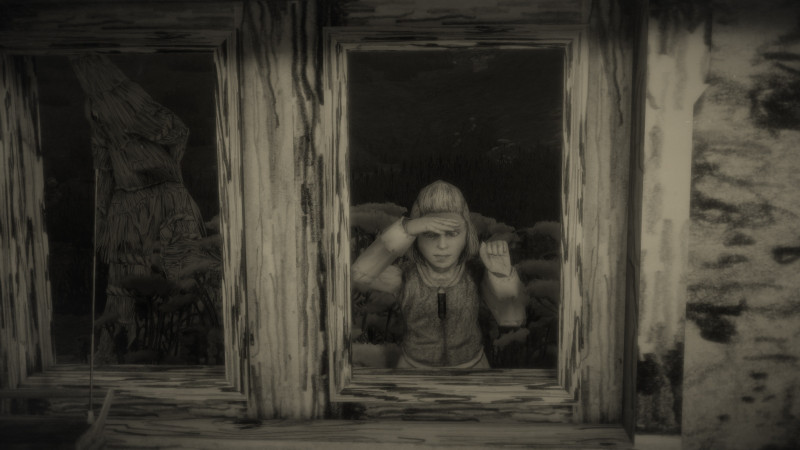
Mundaun’s pencil-drawn art style gives the game a unique and effective visual identity. The experience is best described as a creepy sketchbook come to life, with rough charcoal strokes and scratches that look cool and lend Mundaun an eerie atmosphere. Everything just looks “off,” and I regularly found my hairs rising when I stared at a weird-looking face or creepy photo for too long. The visuals are enhanced by the stilted animations, which actually work in the game’s favor. These rough-drawn characters don’t look like they were designed with fluidity in mind, so the choppy animation adds to their “living artwork” quality.

Click image thumbnails to view larger version


The forboding atmosphere succeeded in keeping me on edge; I only encountered a couple of big jump scares, but they work because they aren’t overused. I found the mystery engaging enough to pull me forward, and the story is more straightforward than I expected. That isn’t necessarily a bad thing; sometimes it’s easier to appreciate the creepy moments when you aren’t trying to unravel a convoluted mystery. Players can steer the narrative to some degree with a small handful of choice-driven dialogue options during the game’s second half. They don’t hurt the narrative, but the choices are boilerplate and feel tacked on.

With a creepy vibe, solid gameplay, and intriguing narrative, Mundaun is a good time even if it won’t blow away horror veterans. It’s worth checking out if you’re looking to experience a few good scares and to see its wicked art direction in motion. Much like its aesthetic, Mundaun winds up being a rough but respectable depiction of some of the best horror games in the genre. 

Score: 7.75

Summary: Mundaun has some rough edges, but solid frights wrapped around an intriguing mystery and an effective art style make for a respectable horror experience.

Concept: Uncover the cause of your grandfather’s demise in small Swiss village overtaken by a decades-old curse.

Graphics: The hand-drawn art makes it resemble a living charcoal sketchbook. It looks great, and the creepy character designs contribute to its eerie atmosphere.

Sound: A foreboding soundtrack gets the job done and a European radio station further immerses players in the setting.

Playability: Combat, driving, and inventory management feel clunky. Exploring the mountain for clues and engaging in decent puzzle solving balances out the fun.

Entertainment: Mundaun has some rough edges, but solid frights wrapped around an intriguing mystery make for a respectable horror experience.

Replay: Moderate

Click to Purchase

Friday, March 12, 2021

Crash Bandicoot 4: It’s About Time Review – Precision Platforming

Click here to watch embedded media
Publisher: Activision
Developer: Toys for Bob
Rating: Everyone 10+
Reviewed on: PlayStation 4
Also on: PlayStation 5, Xbox One, Switch, PC

The early Crash Bandicoot games of the ‘90s were partially experiments in how to navigate 3D space. Crash didn’t freely traverse an open world; he marched down tightly designed digital tunnels. The camera zoomed in and out of the action and panned around the character, which seemed novel at the time. However, Crash’s movement was limited in ways that seem restrictive by today’s standards. In some sense, Crash Bandicoot’s gameplay was a product of those limits of technology as much as it was any single creative vision. And yet, those limitations helped produce one of 1996's most memorable platformers. Crash Bandicoot 4: It’s About Time proves the classic formula still works in 2020.

With Crash 4, developer Toys for Bob sends Crash and his sister Coco on an adventure through space and time. In one set of levels, I battled seahorse-like pirates while dodging cannon fire. In another, I bounced off dinosaur heads and over creeping lava flows. In yet another, I navigated a busy skyway, miles above a futuristic metropolis. Every level is full of wacky sights and sounds that made me smile, and I couldn’t wait to see where I was headed next.

Click here to watch embedded media

However, this experience is more about the journey than the destination, and Crash’s platforming remains faithful to his early adventures in ways both good and bad. On one hand, the controls are more responsive than ever, and I loved bounding from one precarious platform to the next while smashing crates full of Wumpa fruit. On the other hand, Crash 4's precise platforming sequences demand practice. The thrill of mastering Crash 4’s most challenging levels is rewarding, but some of the deadliest pitfalls come out of the blue, which means you have to replay sections over and over again to memorize each level's layout. A “modern” difficulty allows you to play with unlimited lives, which removes some of the sting, but distant checkpoints still tested my patience, as they forced me to routinely jumped through a familiar hoops in order to return to the platforming section that tripped me up.

While Crash’s platforming feels like it fell out of a time warp, this bandicoot does have a few new moves. Throughout his journey, Crash collects a handful of Quantum Masks that grant him new superpowered abilities. For example, one mask allows you to invert gravity so Crash can run along the ceiling, while another lets you transform into a spinning vortex that floats over large chasms. I especially liked the Kupuna-Wa mask, which slows time, so I could platform across falling objects and dodge fast-moving projectiles. These masks pop in and out of the game at predetermined times, so you can’t access them whenever you want, but I was always excited when one showed up. Even more, I'm impressed with how the Quantum Masks add new wrinkles to Crash’s classic gameplay in a way that feels true to the spirit of the franchise.

Click image thumbnails to view larger version


In addition to the Quantum Masks, Crash and Coco are joined by a few unlikely cohorts, such as Doctor Neo Cortex, Dingodile, and Tawna. These new characters have their own unique movesets, which they display in a handful of dedicated levels scattered across the game. These special levels offer a refreshing change of pace. For example, Cortex can’t double jump, so his levels center on using a gun to transform enemies into spongy platforms that launch him into the air. However, my favorite newcomer is Tawna, an alternate-reality version of Crash’s love interest from the first game. Tawna comes equipped with a grappling hook that allows her to zip across massive gaps and smash crates from a distance, and I always jumped into her special levels the second I unlocked them.

In many ways, Crash Bandicoot 4: It’s About Time feels like a game that shouldn’t work. Single-player, mascot-driven, hardcore platformers are few and far between these days. Moreover, most franchises born in the mid-‘90s have had to continually reboot themselves to match the tastes of an ever-changing market. At its core, Crash 4 remains rooted to the old way of doing things, but that’s not a bad thing. The visuals are cleaner now and Crash has a few new gimmicks, but if you squint, Crash 4 looks like the same old platformer you’ve always loved. 

Score: 8.5

Summary: Now that Crash Bandicoot 4 has arrived on PlayStation 5, Xbox Series X, and Switch, read how the game's challenging but fun platforming and entertaining new mask abilities make it a successful return to form.

Concept: A return to the unique brand of ‘90s platforming that put Crash Bandicoot on the map

Graphics: The vibrant, colorful visuals really pop, and enemy designs are goofy in a charming way

Sound: This energetic soundtrack is fun and upbeat, which is good since you’ll be listening to some tracks on loop for a long time

Playability: Controls are tight and precise, which is necessary given the pinpoint maneuvering required in some levels

Entertainment: Mastering Crash’s aerial acrobatics is highly rewarding, but the journey to get there is occasionally frustrating

Replay: Moderately High

Click to Purchase

Wednesday, March 10, 2021

Loop Hero Review – Refreshing Reiteration

Publisher: Devolver Digital
Developer: Four Quarters
Reviewed on: PC

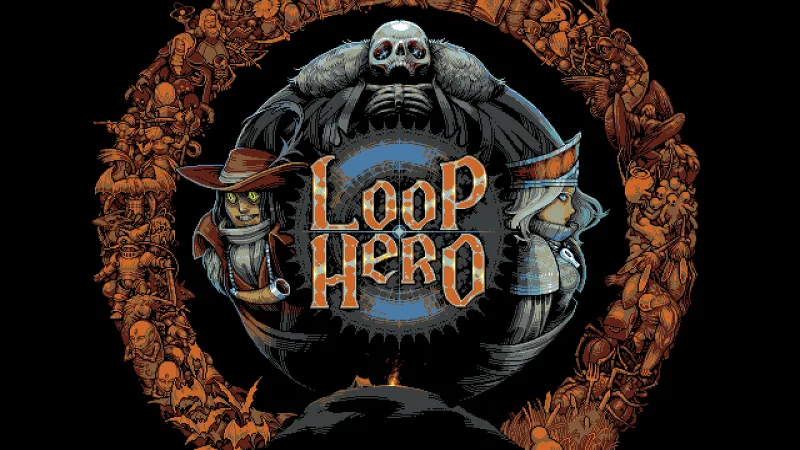
Ever wanted to trudge through a grim, desolate landscape while slaughtering spiders, vampires, and deadly bosses? Yep, you’ve played that game before. But what if, instead of controlling combat directly, you placed all the hazards, bonuses, and environments that your hero would encounter? As you become the worldshaper of a dark fantasy simulation, Loop Hero tasks you with creating a world that won’t kill your character but is tough enough to forge a hero. As the grand designer and dungeon master, it’s up to you to break the game in all sorts of fun and inventive ways. Loop Hero is an addictive amalgamation that captivated me completely with its initial hooks, but the experience isn’t as deep as the first few hours would indicate.

Click here to watch embedded media

As your champion tackles the loop (a never-ending path that heals up every time you complete a cycle), they pass through dangers and boons of your own design. You have no direct control over their actions in combat, from swinging a sword to summoning a skeleton. Once you’re in battle, it’s going to play out a certain way and there’s nothing you can do butch watch. Basically, just imagine that your “attack” button is taped down on your favorite turn-based RPG. However, this isn’t a game for idle minds; effective play requires a quite fastidious attention to detail, planning, and constant tweaking. The path through each loop is filled with decisions big and small, so you are continually thinking about how to improve your current run and the ones after, which feels satisfying and cerebral.

Instead of picking character actions, you engage with simulation-style dungeoncraft by setting up villages for the hero to pick up quests, crafting archer towers to help defeat high-tier monsters, and taking in the healing tranquility of peaceful meadows. Assembling a deck full of the right attractions, environments, and enemies to go with your talent choices and loot drops is the clever challenge of Loop Hero. Building the correct set of elements for your traveler to struggle through is a creative and enjoyable endeavor as you tackle different stages as a warrior, rogue, or necromancer.

Experimenting with your toolkit of tiles and seeing how they combine in interesting ways is the best part of Loop Hero. Combine rocks and mountains to make a towering peak that provides big bonuses, but also summons dangerous harpies that land on the loop.  Turn your vampires into arcane acolytes by setting them up near a bookery, creating vampire mages that drop powerful resources. Use road lights to reduce the number of deadly foes on your carefully assembled battle track. Trying out all the possible tile combinations is delightful for double-digit hours, but once you learn the best possible choices, it drains considerable joy from the exploration. While Loop Hero appears to have a great deal of depth and complexity in tile choices, it has fewer viable options to start each run than it initially appears. After my early enchantment wore off, Loop Hero left me mired in repetitive resource runs until I was ready to take on the final boss.

Click image thumbnails to view larger version


Loop Hero is a roguelite, and you unlock new tools, options, and powers and as you keep playing (and dying) via an encampment you develop outside of the loops. Think of it like building up a tabletop collection of pieces for your Dungeons & Dragons game with new monsters, environments, and treasures. The roguelite elements are quite significant, so even as you fall over and over in your looping quest, you get to keep resources to grow. If you die on a run, you only get to keep a third of the resources you were holding. But if you choose an opportune moment to escape, you get to keep it all, creating a risk/reward dilemma that’s fun to engage with on each dive into the loop. If you’re like me, you’re almost always going to risk it all and curse your judgment after getting annihilated by a boss. That’s okay – you’re still going to grow and learn but it may take a little longer to advance to the harder chapters.

Loop Hero is a creative and clever little game that should be on your radar if you enjoy strategy, RPGs, deckbuilders, roguelikes, or all of the above. While its novelty begins to wither the further you get away from your opening hours, the journey is worthwhile and engaging.

Score: 8.5

Summary: A roguelite dungeon manager simulation that keeps you coming back for more, Loop Hero makes hours fly by.

Concept: Play through roguelike time loops with different adventurers, building up a powerful assortment of options over repeated plays

Graphics: The grainy, pixelated visuals capture a CRT monitor vibe, but the aesthetic works well for the game

Sound: While the effects don’t stand out, the music is incredible and makes your many runs delightful

Playability: Loop Hero’s mysteries make experimenting and exploring satisfying, but don’t expect the game to elaborate on the mechanics and functions

Entertainment: This is a fun and intriguing genre mashup, placing the player in a management role instead of controlling the swing-to-swing minutia of combat

Replay: High

Click to Purchase

Tuesday, March 2, 2021

Rogue Heroes: Ruins Of Tasos Review – Simple Pleasures

Publisher: Team17
Developer: Heliocentric Studios
Rating: Everyone 10+
Reviewed on: PC
Also on: Switch

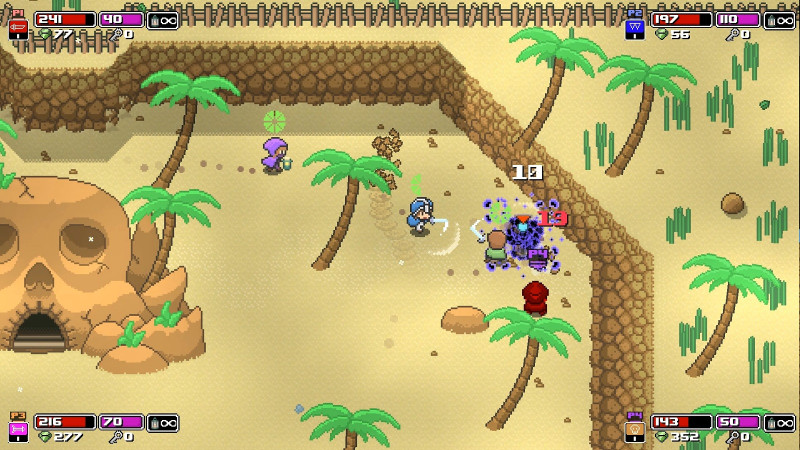
Rogue Heroes: Ruins of Tasos places the player on a fantasy journey of progression, puzzle-solving, and adventure; a jaunt that is clearly inspired by older entries in The Legend of Zelda series, like A Link to the Past. You pick up a boomerang, a magic wand, a grappling hook, and all the other dungeon-crawling essentials. You work your way through flames, swamps, and icy peaks. But you also build up a powerful character. The result is a pleasant journey that’s a snug sweater in winter weather, but there are a few frayed threads. You can take on the trek with up to three other players, which is a nice option, but ultimately a chaotic diversion from the more streamlined single-player affair.
Click here to watch embedded media

As you work your way through the quest-filled overworld and procedurally generated dungeon confines, death is sure to happen. Other roguelikes might offer small boons, but make no mistake, Rogue Heroes essentially rewards the player with experience points that can be spent after each run for substantial, permanent upgrades. As you build up your town from nothing, you create various buildings to increase your health, mana, sword perks, stamina, item powers, and more.

The upgrade system is varied enough to spread your points around across multiple facets and gives incredible power boosts over time – you never struggle to get more powerful to take on any given encounter, even if you want to “face tank” it. This is both a blessing and a curse, as your potent upgrades strip some of the weight out of the final quarter of the game. Early-game tuning seems to be right on par with what could be considered an adventure, while the later boss encounters are a bit anticlimactic in nature as you explode them with a hyper-critical, max-damage sword. That said, the big lean-in on comfort is right in line with what makes Rogue Heroes a special game.

While all the systems are quite shallow, it’s quite pleasant to build up a village from scratch, complete with friendly NPCs, fishing, and farming. It’s a soothing little pixel paradise that you can call your own, and it seems perfect for a cold winter’s day with a cup of cocoa by your side. The world, with its little baby slimes and scattered secrets, conjures up wafts of nostalgia from my old-school Zelda-playing days. If you don’t harbor those enchanted memories, that’s alright too – it’s a welcoming and warm place to be, even if it is filled with monsters and dungeons.

Click image thumbnails to view larger version


The otherwise pleasurable romp through Tasos is marred by several small but potentially significant bugs. On PC, I noticed that the audio would be occasionally marred by a thick crackling, and slowdowns and interference that necessitated a reset every hour or so to avoid the game becoming unplayable.

Multiplayer can be fun but chaotic, depending on how many adventurers you want to cram into a session. I found the sweet spot to be one other companion, where you can resurrect each other while dungeoneering and make light work of puzzle mechanisms together. Dead players can even manipulate the world by activating traps or possessing pots as ghosts while they wait to be brought back to life, which is a nice touch. While I had difficulty ever getting matched into a random game, it was easy to pair with a friend on Steam to play.

Rogue Heroes is simple yet satisfying, painting an enjoyable and low-stress adventure for one or a group of friends. Nothing about the experience is likely to blow your mind but basking in its comfy confines might be just the recipe you’re looking for.

Score: 8

Summary: A fun journey that taps into classic vibes with pixelated charm.

Concept: A cozy dive into the old-school of Legend of Zelda experiences with roguelite and citybuilding development on top

Graphics: While some of the style doesn’t always mesh well with the core aesthetic, much of it looks and feels like a warm homage to the SNES days

Sound: None of the sounds or tracks are inspiring and are mostly forgettable. I encountered some strange audio glitches from time to time

Playability: Don’t let the “roguelite” designation fool you. Rogue Heroes is incredibly approachable, since the RPG aspects allow you to overcome any obstacle

Entertainment: Rogue Heroes is the essence of pixelated comfort food and should put a smile on your face as you work your way through a low-impact adventure pulled from the past

Replay: Moderate

Click to Purchase