Pages

Thursday, April 29, 2021

Returnal Review – Haunting Harmony

Click to watch embedded media
Publisher: PlayStation Studios
Developer: Housemarque
Rating: Teen
Reviewed on: PlayStation 5

Returnal is a powerful roguelike recipe offering intense combat, a drip-fed narrative of palpable dread, and a cohesive combination of artistic elements. Housemarque’s third-person shooter delivers lightning-fast action transfused with incredible exploration, featuring equal doses of intensity and lingering unease. Every run is the start of something new, but what you learn over many failures provides an extra edge as you attempt to chart the sci-fi horror world of Atropos. Returnal deftly combines gameplay, graphics, and musical composition to create a haunting tapestry that’s an absolute joy to partake in, even when a mistimed dodge or a sinister trap claims your life.

Click here to watch embedded media

Returnal is a challenging game that puts relatively high demands on the player. There are no difficulty dials to tweak, so the experience can feel overbearing at times, especially in one of the later stages. While this adds to the overarching horror elements that exude from Returnal’s core and enhances the sweaty grip-for-your-life moment of slaying a massive boss, it’s important to note that it’s possible to lose hours of potential progress in mere seconds should things go awry. Death is inevitable and can be devastating. Being willing to learn and ready to adapt your strategies and glean takeaways for future runs is essential. I felt that the challenges presented by Returnal enhanced the nature of the unknown alien planet and that these elements contributed positively to the overall game. Still, some players may find these asks to be outside of their enjoyment range.

As Selene, who gets stranded on an alien planet, your journey on Atropos brings questions and exciting revelations. The story is communicated slice-by-slice over time as you work through different biomes, with each narrative piece adding one element to a larger puzzle that’s a pleasure to work out. While anything but a blissful fairy tale, the narrative functions more like a soothing balm to the endless cycle of doomed runs and discomforting discoveries. When things were at their worst after a few failed runs, at least I was learning more about the mysteries that tie the world together. Try not to get spoiled by the story before playing the game, as it’s a pleasure to put together clue-by-clue.

Click image thumbnails to view larger version


The exploration through the biomes is procedurally generated in some respects, but you learn to recognize rooms and what’s inside each one over time. This knowledge is power. Exploring carefully and mastering each space can lead to discovering hidden powerups tucked away in hard-to-find places, whether they are behind false walls or just out of sight on a precipice above. In addition to the temporary build that you craft each run, there are other permanent unlocks for your character to uncover. As you make progress, areas that you couldn’t previously access become available via tools like a grappling hook, hazard-protection boots, the ability to travel underwater, and more. Every time you find one of these new tools feels incredible as you can finally access areas that have taunted you with treasures for many, many runs. With each traversal find, you breathe a sigh of relief as a checkpoint is locked in.

Applying learned knowledge to situations and scenarios carries over to combat, which is incredibly fast and rooted in the “bullet-hell” genre. Players must avoid various objects on the screen, each with its own pattern and directional movement. Learning each pattern on standard enemies is a constant battle as you progress, as new and deadlier abilities and patterns regularly appear. Boss battles take this to the next level, and you will find yourself relying on muscle memory and perhaps uttering a quick prayer while attempting to dodge growing rings, moving barriers, and hundreds of projectiles at varying speeds simultaneously. Throughout the game, you may be surprised at just what you can accomplish in this regard. Several times I said to myself, “No way,” as the game pushed another blitz of swirling projectiles onto my screen, but with well-timed dodges and jumps, I shocked even myself. Patterns that seemed challenging at first became laughable as I mastered the game's many systems, and it feels great to complete encounters with finesse.
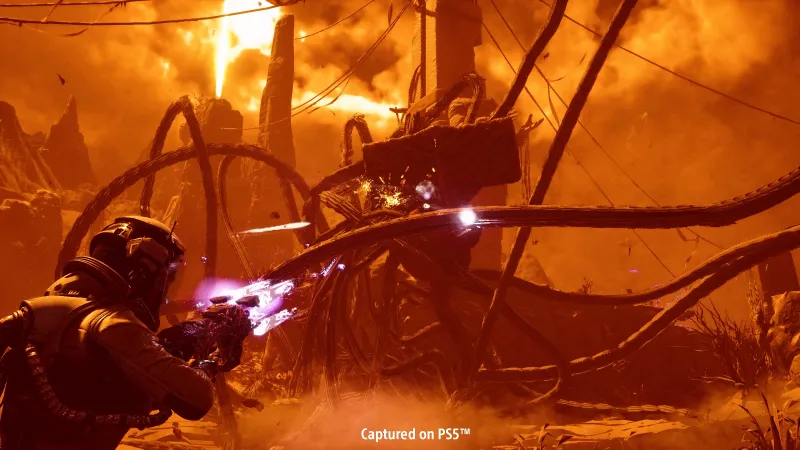
Avoiding things is half of the battle. The other half is shooting back. In Returnal, you unlock a variety of different weapons with various modes of fire and traits to unlock over time, which is sort of a permanent progression mechanic that improves your damage output from run to run. I became a huge fan of the rocket and grenade launcher archetypes and their various tweaks, which allowed me to pay more attention to getting out of the way while issuing my payloads. However, you never really know which weapon will be your best option during a run, so you have to become comfortable using a lot of them regardless. This keeps things fresh and had me stuck with one of my least favorite weapons during a particularly tough boss fight, but it’s all part of the freshness that comes with each run. You never know what you’re going to get, and you have to use everything together to survive. In true roguelike fashion, you may have runs with excellent weapons where you make a ton of progress across multiple biomes, and in others, you may perish a room or two into your adventure.

Risk and reward are intricately tied together in Returnal, as there are numerous upgrades you can find that come with the risk of a malfunction that debuffs your character when you collect them. This means you might be able to increase your health pool or collect some bonus resources, but you might get a serious penalty as a price, like losing 85 percent of your damage while stationary. You can ditch these penalties by completing different goals, so careful planning for when to take on the risk of malfunctions is essential, as they can completely change the way you play. A late-game biome plays with the concept of issuing malfunctions for getting hit by some enemies, which, as you can imagine, is a massive incentive to up your dodge game. Learning how to manage malfunctions is a long process of weighing when and if to pick up specific bonuses, and it can make a huge difference on a run. Again, the theme of learning over time comes into play here, and I enjoyed tinkering with my risk profile on each run. Some runs, say when you are off to a bad start, the philosophy just becomes “well, I’m going to die anyway, why not roll the dice?” And sometimes, those dice roll in your favor.

Click here to watch embedded media

Returnal is a delightful immersion for the senses, even if the aspect it’s trying to convey is horrifying, lingering dread. It nails it in this regard, and is drenched with both in-your-face monstrosities and lurking terror. Enemy designs are hideous amalgamations of tentacles and teeth, which feel right at home in this bizarre alien hellscape. One of the late-game biomes is incredibly distressing to explore and may even significantly deter some players with thalassophobia.

The soundtrack, primarily composed by Bobby Krlic (Midsommar), provides a haunting backdrop that contributes immensely to Returnal’s constant and rising sense of trepidation. The unnerving melodies gnaw at the back of your mind long after you set the controller down. One stage in particular hinges on music, and the feeling that you get while climbing up to the boss as it gets louder and louder exudes cacophonic anxiety. Feedback from the DualSense controller is a nice touch to the overall ensemble, providing nuance from the tiniest droplet of rain to the impact of a titanic monster crashing into you at high speed.

Returnal is a relentless nightmare that’s a dream to play. The journey is full of horror and terrible discoveries, but also unbridled curiosity and wonder. If you have the taste for it, this is an adventure that begs to be experienced.

Score: 9.5

Summary: A deadly alien planet is a playground for your senses and curiosity.

Concept: Battle your way through a mysterious alien world in a third-person shooter roguelike featuring intense bullet-hell action and atmospheric dread

Graphics: Returnal’s presentation is a massive treat, and while you can’t always focus on the luscious visuals and lighting because you’re dodging your demise, they are striking and powerful

Sound: The amazing soundtrack by Bobby Krlic adds gloomy, dire tones to punctuate a potent palate of gunblasts and ruin crumbles that accompany the dark exploration

Playability: Picking up a weapon and firing at your first batch of aliens is easy. However, experiencing Returnal should be accompanied by some tolerance for failure, frustration, and willingness to learn precise timing, as each journey can end abruptly and devastatin

Entertainment: Returnal brilliantly meshes roguelike mechanics with precise combat and enigmatic exploration, making for an excellent game

Replay: High
Click to Purchase

Wednesday, April 28, 2021

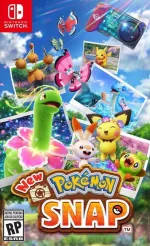
New Pokémon Snap Review – Photographic Memory

Click here to watch embedded media
Publisher: Nintendo
Developer: Bandai Namco
Reviewed on: Switch

More than two decades removed from Pokémon Snap’s debut on Nintendo 64, this unique gaming experience is finally back. New Pokémon Snap effectively carries on the spirit of the original game, tasking you to get the best possible photographs of Pokémon as you travel through environments on a rail line. And while it delivers all the excitement of nabbing the perfect snapshot, like any photography adventure, it's not without a few undeveloped negatives.

New Pokémon Snap has players assisting Professor Mirror in his research of the Lental region, a diverse area of the world featuring foggy forests, bustling beaches, and more. However, instead of helping the professor by catching and battling the monsters, you use your photography skills to capture them in a different sense of the word.

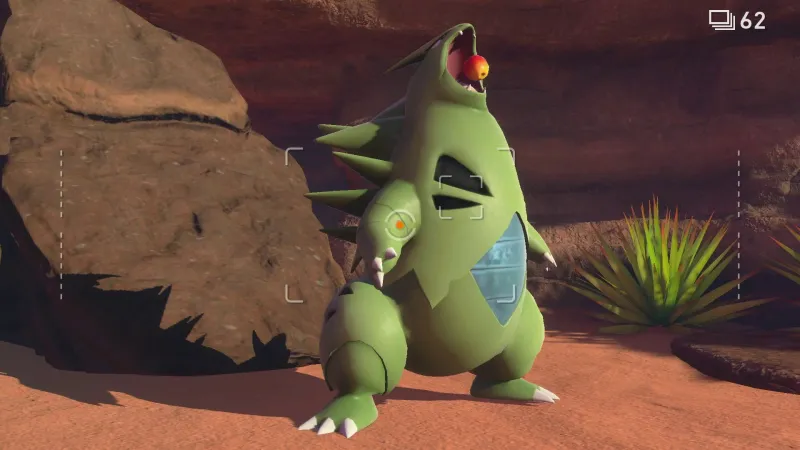
As you phase into any given level, you’re immediately surrounded by critters to frame up in the lens. With intuitive controls to photograph and interact with Pokémon at your disposal, speed is of the essence, as the Pokémon probably won’t stay in place for long. Whether it’s a Pikachu dashing along the shoreline or a Liepard lounging in the trees, you rarely have a shortage of potential subjects to observe and shoot. Seeing these Pokémon all around you from the first-person perspective is a wondrous experience, giving you an up-close-and-personal way to interact with the series’ beloved creatures.

Click here to watch embedded media

New Pokémon Snap does a terrific job of balancing the Pokémon in the environment; I rarely felt bored or overwhelmed by the number of creatures I came across. Since you’re traveling through their habitats, not all of the Pokémon are interested in interacting with you. Thankfully, you have various tools at your disposal to draw their attention. Fluffruit nudges and lures Pokémon to a specific spot, a melody player encourages them to dance, your scanner reveals information about your surroundings, and Illumina orbs cause creatures and plants to glow. I loved trying to figure out which tool would evoke the reaction I want from the Pokémon I’m trying to shoot; one creature might have zero interest in dancing or eating, but an Illumina orb might give them a burst of energy, causing them to perform a signature move.

Even the most swivel-headed photographers are sure to miss plenty their first time through an environment. In my initial journey into a sea level, my jaw dropped at some of the interactions taking place between Pokémon, like when a Wingull swooped down and snagged a Finneon out of the water, and I missed my chance to document them. Thankfully, when you replay the levels (and you will plenty of times), you know what to expect the next time you make the trip. In that same session, I couldn’t figure out how to get the best response out of the darting Sharpedo, but I had plenty of other chances thanks to repeat playthroughs.

Traveling through the environments numerous times can begin toeing the line of tedium, but New Pokémon Snap doles out new opportunities, whether that’s variants of the same level, a new time of day, additional tools, or previously unseen areas. Traveling to the same stage during the night may as well be called a completely new stage due to just how distinct the opportunities are. A lot of species are nocturnal, and New Pokémon Snap capitalizes upon that through the different versions of the levels.

New Pokémon Snap

Even beyond day and night, New Pokémon Snap typically keeps the experience fresh within those same stages. Just as I was growing tired of shooting the same Pokémon on the seafloor, I was given a new tool that allowed me to solve a puzzle and open an entirely new route through the stage. Then, the new Pokémon I discovered on that alternate path gave me enough points to level up that area, creating additional opportunities and introducing even more Pokémon to observe. Unfortunately, if you’re struggling to figure out how to get the best portrait of a particular monster, riding through the entire stage to get to that point only to fail once again can be frustrating.

Once you complete a run, you go through all the pictures you took and select one of each Pokémon to show to Professor Mirror. After you choose the shots you think will further your research (you can also have the game auto-select if you’re in a hurry), it’s time to see what the professor thinks of your work. Your photos are graded based on pose, size, direction, composition, and other factors, then assigned a score that goes towards ranking up the level in which you took them.

Documenting the region’s diverse collection of monsters and filling your Photodex with more than 200 species is rewarding. Sadly, the grading system sometimes misses the mark, rewarding higher points to clearly inferior photos; my close-up shot of Wailord’s tail splashing was given more points than a straight-on portrait of its entire body simply because it was doing a unique pose. Similarly, my clear snap of Pikachu was given a lower score than one where it was partially obscured by a tree. Seeing how my new snaps stacked up against my previous best is one of the most satisfying elements of the game, so it’s disappointing when the grading system misfires.

Click image thumbnails to view larger version


As you build up your Photodex and help Professor Mirror with specific research requests, you unlock various rewards. I often disregarded the inconsequential Research Titles and Profile Icons, but I was always excited to unlock new filters to apply to shots that I saved to my photo albums.

While you can only submit your raw shots to Professor Mirror for Photodex consideration, New Pokémon Snap gives you the opportunity to “Re-Snap” anything in your camera. Using this nifty tool, you can reframe and readjust any picture you took, letting you correct any mistakes you made during hasty shoots. During one expedition, a Vivillon got just a little too close to me for it to be a great shot. However, using Re-Snap and the editing tools in the professor’s lab, I could adjust the zoom, tweak the framing, and apply filters and even stickers to complete the look. These edited images may be useless to Professor Mirror’s research, but they’re fun to create and share.

New Pokémon Snap delivers an experience similar to that of the original while expanding on the formula in ways that prolong the appeal of the expedition. In the two decades since the first game’s release, the Pokémon world has changed in innumerable ways, but the simple appeal of immersing yourself in this universe and taking pictures has remained unchanged.

Score: 8.5

Summary: New Pokémon Snap delivers all the thrills of the original game, but that throwback spirit isn't the only part of the experience that will give you a feeling of déjà vu.

Concept: Travel through on-rails levels photographing Pokémon in their natural habitats

Graphics: Impressive and vibrant visuals are only occasionally brought down by performance hiccups

Sound: Audio cues fill the environment, rewarding those who listen to their surroundings with the best photo opportunities

Playability: Simple and intuitive controls allow anyone to pick up and play

Entertainment: The thrill of nabbing the perfect shot never dulls, but the repetition of traveling through the same environments sometimes grows weary

Replay: Moderately High

Click to Purchase

Thursday, April 22, 2021

MLB The Show 21 Review – A Familiar Crack Of The Bat

Publisher: Sony Interactive Entertainment
Developer: Sony Interactive Entertainment
Rating: Everyone
Reviewed on: PlayStation 5, Xbox Series X/S, PlayStation 4
Also on: Xbox One

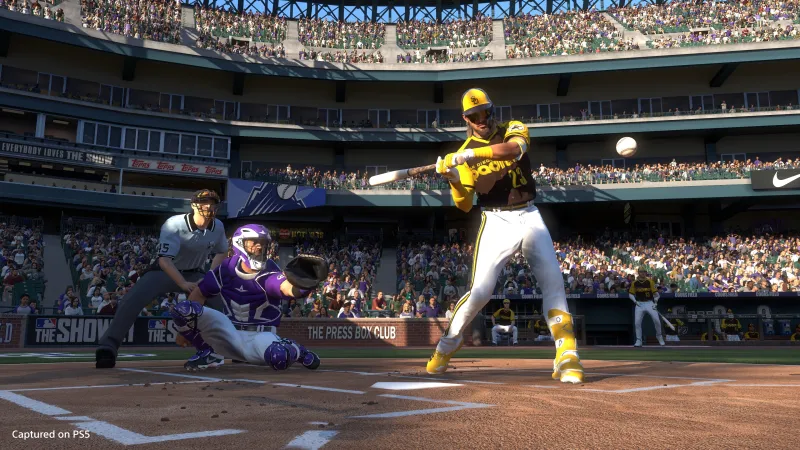
When a long-running sports series migrates to a new console generation, the fan base expects change. Developers usually answer that call with improved visuals, inventive gameplay ideas, and enhanced feature sets that couldn’t be achieved on older hardware. MLB The Show 21 doesn’t make a strong case to upgrade in any of these areas. You have to squint to see the graphical differences, the gameplay is identical, and the only content exclusive to new-gen are post-game commentary videos and a stadium creator.

The biggest improvements are reduced loading (shaving off about 10 seconds at any given time), smoother framerates, and a higher resolution – basically what we see from most cross-generation games. Rather than stepping to the plate as a flashy rookie who will redefine the sport, MLB The Show 21 is more akin to the savvy veteran who has been playing the game for 15 years.

Sony San Diego has achieved great success through yearly iteration, periodically dazzling with a new idea that catches fire. This year’s game focuses intently on improving the core on-the-field play, making it tighter, smoother, and more realistic. While not delivering a new idea will turn heads, a bevvy of gameplay tweaks and additions go a long way to make MLB The Show 21 the best baseball game to date. Yes, it’s long been the only notable baseball game in town, but it shouldn’t be shortchanged for that; the foundation has been fantastic and ranks as one of the best in all of video game sports.

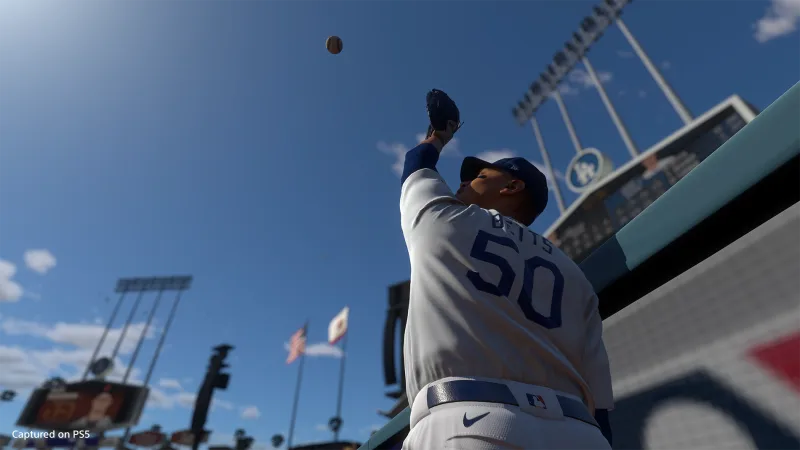
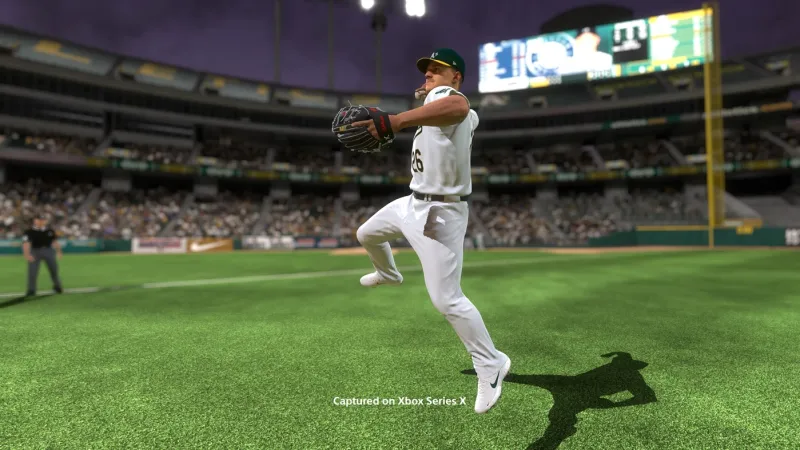
This year, fielding benefits the most from iteration. With hundreds of new animations in place, fielders take more realistic routes to balls, and rather than make awkward turns to adjust to ball trajectories, they can now strafe to course correct. Infielders' swiftness is also highlighted more with cool little wrist flick throws if their momentum is carrying them away from a play. I saw far fewer fielding animation glitches or inaccuracies than I have in years past, and most of the flashy plays looked outstanding. I love the little flourishes that Sony includes, even after a play ends. It’s an incredibly fluid-looking game, and it’s amazing how quickly it can queue up a specific animation for a situation, like a rocket groundball eating a player alive.

Click here to watch embedded media

If you thought all the existing pitching mechanics were too easy to use to paint the corners and make batters’ knees buckle, a new Pinpoint Pitching system delivers a higher level of difficulty, as it pushes you to execute the timing and motion for specific pitches through different analog stick movements. A fastball requires little more than a flick down and up, but to execute a curveball or slider, you’ll need to make smooth circular motions. Any deviation from the required movement and speed leads to a loss in accuracy. While I love seeing the percentage as to how accurate I was with any given pitch, I found this pitching mechanic to be tiring over a nine-inning haul, and not as much fun as the old meter system, which is still in the game and better than ever thanks to rebalancing.

Road the Show is also a beneficiary of subtle, yet noteworthy change. Your rookie can now be a two-way player like Shohei Ohtani, giving the chance to both pitch and play the position of your choice. This player option gives you the best of both worlds; batting and fielding for four consecutive days and then toeing the rubber on the fifth. It's a fun (and rare) entry point into the world of baseball.

Road to the Show's development for all player disciplines is handled well, but too much emphasis is placed on stat bumps coming from collectible gear, like sunglasses, cleats, bats, and more. Player development ends up looking similar to a game like Destiny where you are constantly changing up loadouts for stat boosts. If you are a two-way player, you’ll want different loadouts for pitch and batting, which can be a nuisance having to retreat to the clubhouse to change it up.

Road to the Show’s overall gameplay and progression paths are mostly unchanged, but the post-game presentation and the semblance of a career-based narrative are improved thanks to videos and commentary by former big league players, MLB Network analysts, and other guests. Some of the Road to the Show changes hurt the experience, however. You can no longer truly pick a defined archetype, and given how player progression works, you can’t import your MLB The Show 20 player. That said, I do love how you can bring your new rookie into Diamond Dynasty to see how he fares in the competitive space.

It’ll take tons of playing and awesome loadouts to get him into the range of the 90-plus legends, but seeing your rookie in the lineup between the likes of Roberto Clemente and Ken Griffey Jr is pretty darn cool. The selection of legends offered right out of the gate is fantastic, as are the programs tied to some of them like Jackie Robinson and Eric Davis. Unlocking them takes some effort, as does earning currency to buy packs of cards (which is a bit more generous this year). Notable rewards are tied to the new Daily Moments, and legacy modes like Conquest and Programs have been reworked to reduce the grind and offer better rewards. Diamond Dynasty is once again flush with awesome avenues of play for both single-player and competitive reasons. Even with Road to the Show improving, Diamond Dynasty remains the main attraction, and makes assembling a roster a blast.

Click image thumbnails to view larger version


Franchise mode received significant back-end tweaks that help with player development and evaluation. Revamped depth charts give you a clean look at the organization and who you may want to give a chance. In March to October, prospects now play a role in this single-season format, thanks to fast-track moments that give you the opportunity to boost a rookie to MLB potential. I'm still early in my March season, and haven't seen one of these moments, but I hope it adds a spark of youthfulness to my team late in the year.

If you make your own team in Diamond Dynasty or want a new home for your Franchise team, you now have the chance to create a stadium that fits your needs and style if you are playing on new-gen systems. The stadium creator is fairly complex and not as intuitive as I had hoped, but does allow for a high range of baseball cathedrals to be made. Using the loaded suite of options, I created a classic stadium like Fenway Park with giant blue walls in right and left field, and also a fantasy park with living dinosaurs roaming a prairie beyond the outfield walls. Sony needs to do a better job of highlighting the best user-created stadiums, and also removing the offensive stadiums uploaded by users, but I did manage to find a lot of great creations to explore and draw inspiration from.

For Xbox players who are jumping into The Show for the first time, Sony offers a nice onboarding system with quick and detailed tutorials for all avenues of play. This includes offering up a clear difficulty path right out of the gate for Casual (pick up and play), Simulation (based on player and team ratings), and Competitive (focused on stick skills).

As for what system the game plays the best on, the PS5 DualSense controller delivers better haptic feedback for specific in-game actions as well as 3D audio, but these are the only noticeable difference I saw between the Xbox and PlayStation versions. All paths into this year’s game are equally as good. Crossplay seems to be working great at launch, sans some connection/server errors during launch week.

MLB The Show 21 lacks flash and new experiential paths this season, but continues to improve on the field and beneath the hood, giving an entirely new audience of players a hell of a game to begin their baseball careers with.

Score: 8.5

Summary: Sony's long-running baseball series impress on the diamond yet again, but doesn't deliver many new experiences.

Concept: The best baseball game continues to improve, but doesn’t swing for the fences in its new-gen debut

Graphics: Fielding fluidity is much better this year, showcasing better routes to balls and cleaner transitionary animations. From the play on the diamond to the surrounding stadium, the entire game looks stunning and delivers a high level of realism

Sound: The commentary team follows the flow of play nicely, and the short post-game podcasts help flesh out your rookie’s career in Road to the Show

Playability: The new pitching mechanic adds challenge, but isn’t as much fun to use as the legacy options. Road to the Show and Diamond Dynasty are subtly improved and offer great experiences that go hand-in-hand

Entertainment: Even without many new features, The Show impresses with its play and wealth of content. There’s something for everyone

Replay: High
Click to Purchase

Nier Replicant ver. 1.22474487139 Review – New Blood, Old Veins

Publisher: Square Enix
Developer: Toylogic
Reviewed on: PlayStation 5
Also on: PlayStation 4, Xbox One, PC

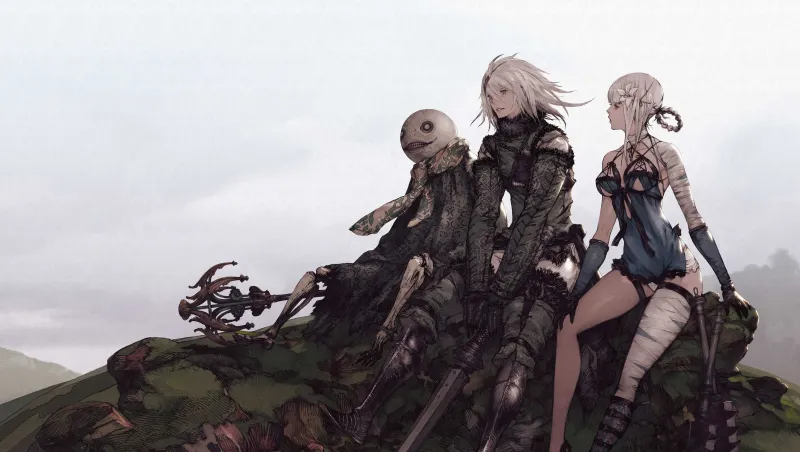
Nier Replicant’s bleak world is over a decade old (the original Nier released in 2010), and yet its morbid commentary on human frailty still resonates. This bittersweet narrative is supported by enhanced character models, satisfying hack-and-slash mechanics, and a haunting soundtrack that spins a riveting tale of its own. At the same time, outdated features that made the original game tedious to play remain present, and that’s because Nier Replicant is neither remake nor remaster of that 2010 title. Creative director Yoko Taro prefers the term “version upgrade,” and this moniker fits perfectly – for better and for worse.

Fans will immediately notice Nier: Automata’s influence; Replicant’s combat is simple and flashy. A new lock-on camera makes parries and evasive maneuvers much easier to perform, but light and heavy attacks remain your bread and butter. Chaining combos with an array of different weapons or executing incapacitated foes emerge as the fastest ways to win engagements. Fancy animations, like midair twirls and slow-motion ground slams, made the melee action feel exciting enough for me to actively seek out clusters of adversaries of my own volition.

Click image thumbnails to view larger version


A repertoire of dazzling magic truly brings these barren battlefields to life. You can equip two abilities at any given time, so experimentation is key. I usually paired Dark Whirlwind – which conjures spinning, crimson blades to deal AoE damage – with Dark Blast’s rapid-fire bullets so I could always stay on the offensive. You can also give commands to your companions, but other than outright ordering them to disengage from time to time, I never noticed any changes in their behavior.

You need these mystical powers to survive because the world is dying. Small settlements dot the countryside where umbral monsters called “shades” rove in packs. What’s more, a mysterious disease is slowly eating away last vestiges of civilization. The withering state of humanity is far more personal for you than anyone else: Yonah, your little sister, is slowly succumbing to a plague called the Black Scrawl. Strange runes continue to spread across her flesh as you venture into the wilds to find a cure. But you’re never alone. A floating tome named Grimoire Weiss, a kind-hearted boy named Emil, and a foul-mouthed, scantily clad warrior named Kainé accompany you throughout the far reaches of the continent. Together, you brave stormy deserts, dash along the beaches of seaside towns, and scour spooky mansions to save Yonah. Hard-hitting story beats like generational trauma and the cycle of hatred offered thrilling surprises that left me in emotional shambles on multiple occasions.

I also loved Nier Replicant’s quirky cast, and this extends beyond the main crew. Conversations that you strike up with characters are filled to the brim with profound, albeit campy, sentiments. Side missions give narrative flavor to an otherwise bland game world, but I wish these tasks had more variance as most amount to forgettable fetch quests. Additionally, in contrast to your gorgeously realized party members, all the NPCs are poorly textured. Because of this, the emotional stakes and resolutions of side missions fall flat. It’s hard to relate to a character when their facial features are practically indiscernible.

Shades are the most common enemy you encounter during your travels. They strike in mobs, but don’t be fooled by their numbers; they’re pushovers, save for the high-tier damage sponges that spawn in the late game. Shade attacks are considerably easy to anticipate and counter, making their constant ambushes more annoying than anything else. Boss fights, however, are fun sequences that push your mechanical skills to the limit, forcing you to quickly react to a flurry of magical and physical attacks, often, at the same time. Atmospheric choruses coupled with the visual smorgasbord of blood and sword-sparks makes each of these tense confrontations memorable.

Click here to watch embedded media

It’s too bad that strengthening your equipment to comfortably clear these battles is less enjoyable. Combat mods, called Words, drop from slain shades and can be slotted into weapons or magic abilities for permanent buffs. You can also collect raw materials scattered throughout each location and exchange them for upgrades. Both options (especially the latter) require hours of monotonous grinding, backtracking, and luck. At one point, I spent close to five hours in one location trying to collect enough “Eagle Eggs” to level up my favorite one-handed sword and spear. Harsh random number generators are common in RPGs, but Nier Replicant’s implementation makes for a frustrating exploration loop.

Despite some dated shortcomings, this “version upgrade” is more than the sum of its parts. Novel design choices like camera and genre shifts are as impressive today as they were more than 10 years ago. Main characters are dynamic with their own interesting backstories, and the plot is as deliciously devastating as you’d expect. Nier Replicant might not convert players that were turned off by the original or Automata, but there are more than enough quality-of-life updates and story-centric nuances to keep longtime fans and new initiates coming back for subsequent playthroughs.

Score: 8.25

Summary: Nier Replicant's colorful characters, sprawling story, and updated gameplay mechanics help make up for its old-fashioned quest design and empty world.

Concept: Fight alongside a band of oddball heroes to save your sister (and maybe even the world for good measure) from a relentless plague

Graphics: The protagonist and his friends look stellar in cutscenes, but in-game environments and NPCs are disappointingly drab

Sound: Vocalist Emi Evans’ masterful usage of “chaos language” – a blend of two or more languages (in this case, Japanese, English, Spanish, Italian, Portuguese, French, and Scottish Gaelic) – creates strikingly unique melodies unlike anything you’ve ever heard

Playability: Combat is supremely satisfying because the controls are so easy to pick up, and the auto-sprint is a nice touch

Entertainment: You’ll spend most of your time going from Point A to Point B collecting materials for forgettable NPCs, but the main questline will keep you on the edge of your seat

Replay: Moderate

Click to Purchase

Tuesday, April 20, 2021

Before Your Eyes Review – An Emotional, Eye-Opening Experience

Publisher: Skybound
Developer: GoodbyeWorld Games
Reviewed on: PC

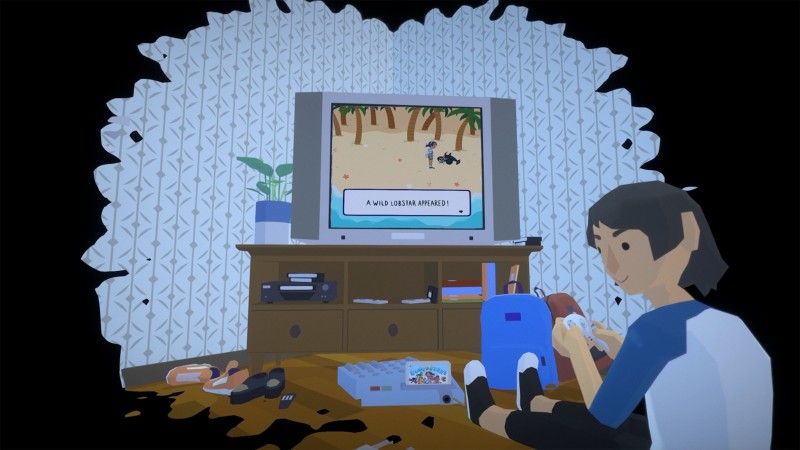
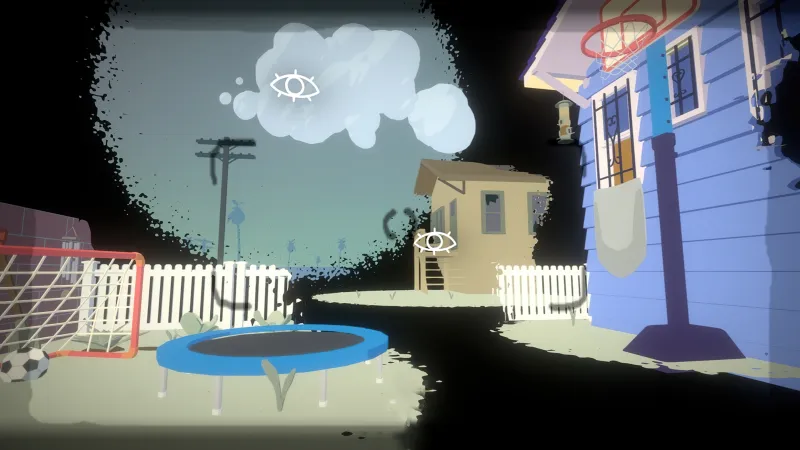
Blinking for the first time in Before Your Eyes is a genuinely magical moment. I don’t mean hitting a button to close your virtual eyes. Through the power of a webcam, Before Your Eyes tracks when you blink which allows you to progress through a wonderful narrative adventure title from GoodbyeWorld Games. It may seem like a novel gimmick on the surface, but the mechanic is used so inventively that it meaningfully enhances the already powerful storytelling that fans of narrative adventure titles would be mistaken to write it off as a shallow trick.

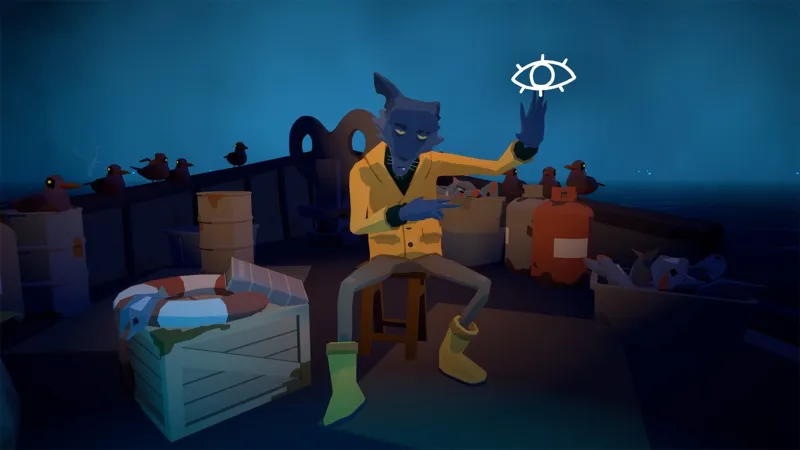
Players take on the role of Benjamin Brynn, a lost soul who has already passed on. At the beginning of the game, you encounter a canine ferryman who forces you to relive the events of Ben’s life, beginning at birth. This is all to impress a being called the Gatekeeper who wants an honest assessment of the kind of person Ben was.  

By blinking when prompted, you’ll jump days, weeks, and sometimes years forward in Ben’s life. I’m impressed by how the game accurately recognizes eye-tracking. I never had an issue where a blink didn’t register or my camera needed recalibration. I also never felt disoriented or uncomfortable playing using eye tracking, but those factors will vary by person. On that note, it’s good that there’s an option to play the entire game using traditional mouse clicks, but I think you’d be doing yourself a major disservice in doing so.

Having played Before Your Eyes twice, once using blinks and the other using the mouse, I think the story loses a fair bit of its magic when playing with solely traditional control inputs. Closing your eyes, then opening them to a brand-new scene creates the awesome sensation that you’re reliving a life through an old-school View-Master toy. Ben’s memories are fleeting, and the mechanic sells that point perfectly. Yes, I was occasionally disappointed after I blinked involuntarily and advanced the story sooner than I would have liked. However, I didn’t mind it for long because I found that doing so lends to the game’s dreamlike quality and the sensation that even cherished memories eventually fade even – when we hope that they won’t.  

Some of my favorite moments involve closing my eyes to better eavesdrop on hushed conversations or so my childhood bestie could leave a heartfelt note embarrassment-free. It's also just more fun to "look and blink" instead of pointing and clicking on objects. Even while playing with your eyes, you still use a mouse for other actions like connecting stars in the night sky to write a cosmic message or to keep in rhythm with a piano tempo. These interactions are largely basic but are still delightful.  

No matter how you play, Before Your Eyes’ story is a heartfelt tale that me close to tears at several points. Despite its pleasantly whimsical veneer, the narrative’s themes of depression and existentialism hit hard, as does understanding life’s meaning from the perspective of a person who, despite having a great family and born with prodigious gifts, struggles to find personal fulfillment. The writing is earnest and thoughtful, and the story takes some unexpected turns culminating in a bittersweet final message that lands harder than I was prepared for (in a good way). 

A great story needs good characters, and Before Your Eyes has that in spades. Ben’s parents, a caring yet demanding mother and a lovably goofy father, are sweethearts. The same goes for Chloe, your mischievous neighbor who comes off as a genuinely endearing kid you can’t help but want to impress and hang out with. I was surprised by how attached I became to the cast in such a short time, but the superb performances and well-written dialogue do their job and ingratiated me to the characters.   

Throughout the story you’ll make some choices, but I was disappointed in how little they impact the overall narrative. Don’t stress too much over whether to sneak out with your friend or get much-needed sleep for your big piano recital; this is one of those games where you’re merely choosing what colors to paint the road as opposed to creating whole new paths. Since the game only takes about an hour or so to get through, it’s worth replaying just to see a few of those scenes, but I wish my decisions had more weight given the large number of choices presented.

Before Your Eyes’ story left me reeling by the end, and it’s a memorable journey worth going out of your way to play. You rarely get a lot of first-of-a-kind experiences in games anymore, and Before Your Eyes largely nails the execution of its primary hook. It’s a concept I’d love to see further explored in a follow-up, and I couldn’t be happier that something like this exists.

Score: 8.5

Summary: Before Your Eyes puts its unique blinking mechanic to great use, offering a novel and fun method of interacting with this memorable, bittersweet tale.

Concept: Relive the memories of a troubled child prodigy by using your actual eyes to blink forward in time

Graphics: The visuals trade realism for colorful stylization, and it’s fitting for the dream-like premise

Sound: The voice performances are excellent, and made me grow attached to the small cast faster than expected

Playability: Provided your webcam works, the blinking mechanic works great and is used ingeniously during certain moments. Playing with a mouse works fine but doesn’t capture the same magic

Entertainment: Before Your Eyes is much more than a neat gimmick. It offers a wonderful method of interacting with a touching and impactful story that’ll stick with you long after the credits roll

Replay: Moderately High
Click to Purchase

Thursday, April 15, 2021

Oddworld: Soulstorm Review – A Bad Batch Of Brew

Publisher: Oddworld Inhabitants
Developer: Oddworld Inhabitants
Release: 2020
Rating: Teen
Reviewed on: PlayStation 5
Also on: PlayStation 4, PC

Playing Oddworld: Soulstorm is as arduous as Abe’s quest to liberate his Mudoken brethren from slavery. Each step is a supreme test of patience as you methodically guide your followers through challenging hazards, sweating over the fact that one slip-up could unravel all your effort. If you enjoy putting up with that old-school challenge, you might love this journey. However, if you’re a newcomer or a fan that believes this style of platformer hasn’t aged very well, turn back now. Soulstorm doesn’t do enough to modernize the series’ tedious gameplay, and a litany of severe technical hiccups spoil Abe’s attempted comeback. 

A reimagining of Oddworld: Abe's Exoddus, Soulstorm’s gameplay remains largely the same: you recruit and guide followers through 2D platforming stages littered with dangers. As charming as the classic Oddworld games are, they can be frustratingly difficult and that hasn’t changed much in Soulstorm. Most Slig enemies and other hazards mow Abe down instantly, and I was infuriated by how little wiggle room I had to correct course when things went sideways. Abe drops so fast that it makes the health meter seem like a cruel tease. While playing Soulstorm, I often felt like I was walking on eggshells because of that high price of failure, retracing every step, re-recruiting every Mudokon, and carefully guiding them through a gauntlet of foes is soul-crushing when it all falls apart in seconds. Dying to unexpected perils, like being suddenly gunned down by off-screen enemies, feels cheap and happens way too often.

Click here to watch embedded media

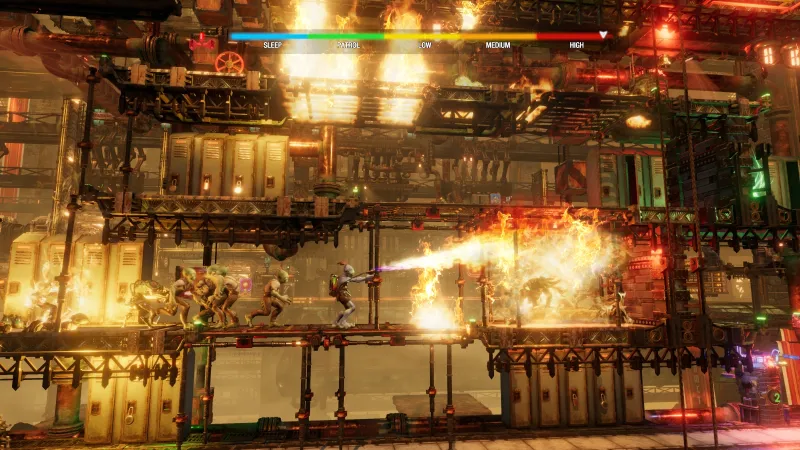
A crafting system serves as Soulstorm’s biggest addition, but it doesn’t feel necessary. You must repeatedly gather the same ingredients every time you die (by searching lockers, trash cans, and fallen foes), which wore me down in a hurry after repeatedly replaying certain sections. The crafted tools themselves, like proximity mines, smoke screens, even a flamethrower, do add a welcomed element of flexibility and improvisation to gameplay. Dropping smoke screens to create hiding spots anywhere is nice, but I wished I didn’t have to make these items myself and grew tired of digging around the same spots over and over.  

Even when Soulstorm’s difficulty eases up, the gameplay is bland. The action feels largely the same from previous games in the series, and that formula doesn’t evolve significantly beyond the first few hours. Even the more interesting sequences, like facing down a giant mech aboard a speeding train, are far too punishing to be fun. I’m glad that Abe controls better now (he even has a double jump), but the controls still have a mushy unresponsiveness that makes entertaining actions, like possessing Sligs, feel like a hassle. The controls also lead to additional deaths because Abe doesn’t act as swiftly as you need him to, especially during the ill-fitting, overly demanding combat arenas that pit you against waves of baddies while you try to protect fleeing Mudokens.

Soulstorm would be a tough recommendation for anyone outside of diehard fans if it performed flawlessly, but I encountered several progress-sabotaging bugs (even after installing the big day-one patch) that should scare off even those players. When I died, Mudokens sometimes failed to respawn alongside me even though my tally indicated they were still alive and under my command. That meant I lost out on turning in followers that I’d spent ages trying to safely liberate, which negatively affected my overall quarma – a vital metric in determining which of the four endings you get. 

Abe occasionally gets stuck in environmental geometry, forcing a restart. At one point, I fell into an infinite loop. One escape portal permanently vanished once I reached it, forcing me to abandon followers. A gun in a late-game turret sequence failed to shoot despite working fine in previous segments. After multiple restarts, I randomly discovered that clicking the right stick “fixed” the weapon for some reason, allowing it to fire. I spent over an hour trying to lead a large group of followers through a particularly challenging area, but once I opened the exit door an invisible wall prevented me from moving forward. I was forced to restart this entire, lengthy sequence twice before the exit worked properly. Soulstorm’s gameplay pushed my patience to its limits, but these bugs sent me over the edge and made me nervous every time I started a new level. “What on Earth is going to screw me over this time?” I regularly asked myself.

Soulstorm’s faults are a shame because its narrative and presentation brought a smile to my face. Abe and his pals are goofy, delightful underdogs I couldn’t help but root for. The enjoyable story is packed with heart, and the cutscenes look great. I wanted to welcome Abe into a new generation of gaming with open arms, but Soulstorm fails to make a case for why its brand of cinematic platforming works today. In fact, Soulstorm only reaffirmed that Abe’s past adventures are best viewed with rose-colored glasses.

Score: 5

Summary: Soulstorm retains the series' signature charm, but it's not enough to forgive its tedious and dated design as well its litany of swear-inducing technical issues.

Concept: Help Abe liberate his fellow Mudokons from Glukkon tyranny while unraveling the truth behind his own destiny

Graphics: The CG cutscenes look great, and I love seeing the camera pan out while dozens of Mudokons scurry in the background

Sound: This voice-acting remains charming and humorous, but the soundtrack is unremarkable

Playability: The platforming feels much better when compared to New ‘n’ Tasty, but these controls are still stiff and clunky and can cost you your life against the quick-drawing enemies

Entertainment: Soulstorm has oodles of charm, but tedious design and annoying bugs make an experience that only the most hardcore and forgiving Oddworld fans might enjoy

Replay: Moderately Low

Click to Purchase

Friday, April 9, 2021

Pac-Man 99 Review – A Great Game To Play While Doing Something Else

Publisher: Bandai Namco
Rating: Everyone
Reviewed on: Switch

I have played 128 games of Pac-Man 99, but I'm only half certain I know what I'm doing. Lacking any kind of tutorial, Pac-Man 99 leaves players to learn and understand its systems for themselves – making for a frustrating introduction to a visually busy game. However, once I cleared that initial hurdle, I found myself reaching for Pac-Man 99 time and time again – if only because of how unobtrusive it is. 

Taking cues from Super Mario Bros. 35 and Tetris 99, Pac-Man 99 is a modern twist on the Pac-Man action you've known for four decades: go around a maze picking up small pellets and larger power pellets while avoiding the five ghosts on-screen that can end your run. The twist here, however, is now you're pitted against 98 other online players. Pac-Man 99 is, essentially, a battle royale experience where you compete against the group to be the last player standing. The bulk of the gameplay features Pac-Man’s classic maze-running action, but pick-ups on the left and right side of the maze allow you to gobble ghosts and send attacks at other players, such as ghost Pac-Men that can either slowdown or end a player’s run. By and large, I found this twist on the familiar formula to be a fun challenge – it's satisfying to figure out when to save your attacks before unleashing them on the opposition.

However, getting to the point where you actually understand how to play Pac-Man 99 is a whole other story. The game lacks any kind of tutorial, which leaves it up to players to figure out how to actually play the game. If you're willing to bang your head against the first dozen matches or so (a frustrating experience, to say the least), you eventually get the hang of it. But in the early hours, there's so much happening on-screen that Pac-Man 99 seems inscrutable. Early in my playtime, the complete lack of tutorials turned me off.

While I've since learned how to enjoy Pac-Man 99, many of its systems remain bewildering. Using the Nintendo Switch's face buttons and right analog stick, you can choose ways to attack other players, with options labeled Stronger, Random, Speed, Knockout, and so on. However, I never fully understood the clear difference between some of those attacks. Pressing and moving the buttons doesn't offer detailed visual feedback, and it’s unclear how my attacks impacted other players.

Click here to watch embedded media

Despite this, I still enjoyed my time with Pac-Man 99. While many of the systems are opaque, through enough trial-and-error, I got good enough to frequently place in the top 25. Unlike many other battle royales, matches of Pac-Man 99 are relatively quick and reloading into a new match is painless, which I also appreciated. On top of the battle royale mode, Pac-Man 99 also has a Score Attack, CPU Battle, and Time Attack single player modes, though by and large I found these unremarkable and not nearly as fun as the base mode. It's also worth pointing out all single player game modes are locked behind a $15 paywall, as is a lot of the cosmetic content, but the battle royale mode is free. If you're itching for more Pac-Man, it's certainly there, but as far as I'm concerned the best this game has to offer is the free mode. 

Pac-Man 99 is not a particularly difficult game, but it is engaging, and I found myself wanting to play more and more. However, the electronic music that plays over the menu and during matches is repetitive and annoying (there are maybe two or three songs in the whole thing), so Pac-Man 99 has become my go-to podcast game. Which, if you ask me, is an underrated genre. The other night I sat down and listened to the new episode of Today, Explained by Vox while playing – I recommend it, it's a good one. 

To enjoy Pac-Man 99, I had to accept the frustrations that came with learning its systems. While it does an embarrassingly poor job of explaining the hows-and-whys of its mechanics, once you figure them out on your own, it's a good way to fill lulls in your day. Pac-Man 99 has become my go-to when I want to do something else, and I can't think of much higher praise for a game of this caliber. It fills a niche in my life where I can stay occupied with something fun without the need to devote all of my increasingly limited attention to it.

Click image thumbnails to view larger version


Score: 7.5

Summary: A lack of any kind of tutorial is frustrating at first, but once you get the hang of the action, Pac-Man 99 is a fun way to fill lulls in your day

Concept: Battle 98 other players in competitive Pac-Man, using attacks and power-ups to gain the upper hand

Graphics: There’s a lot going on on-screen at any given time, from the standard Pac-Man fare, to new enemies and pick-ups. Visually, it’s a lot to take in, but eventually you start to understand it slightly better

Sound: The repetitive electronic music quickly gets old. I played the game on mute almost exclusively

Playability: Pac-Man 99 plays like Pac-Man, but the added challenges create rewarding and tense moments

Entertainment: A lack of any kind of tutorial is frustrating at first, but once you get the hang of the action, it's a fun way to fill lulls in your day

Replay: Moderately High
Click to Purchase

Tuesday, April 6, 2021

Lost Words: Beyond The Page Review – A Touching Tale Full Of Emotional Highs And Lows

Publisher: Modus Games
Developer: Sketchbook Games
Reviewed on: Switch
Also on: PlayStation 4, Xbox One, Stadia, PC

Growing up is a time of discovery – for better or worse. Adolescents are trying to figure out who they are, while confronting life’s complexities and harsher realities. Lost Words: Beyond The Page dives into this confusing time by allowing you to interact with a young girl’s journal as she pursues her dream of being a writer. You see two sides to her life: the story coming to life in her imagination and personalized entries showcasing her feelings as she faces her own hardships. The two begin to intertwine in interesting ways, making for an emotional tale about acceptance, perseverance, and coming of age that made me misty-eyed on more than one occasion. Lost Words: Beyond The Page is worth the experience for this reason, but you have to contend with some shortcomings to get to the beauty.

In Lost Words, the narrator, Izzy, is struggling to write her first story. We get insight into the frustrations and challenges through her journal, where she reveals what’s going on in her personal life. The experience is heavily focused on atmosphere and narrative, right down to selecting certain aspects of Izzy’s story, such as the character’s name and attire and choosing the words to convey her emotions. You platform your way across words as she writes them in her journal, and you interact with the fantastical world she creates by selecting words from your journal and moving them to obstacles with your cursor, like using the word “repair” to fix a bridge or “rise” to raise platforms.


Because words matter so much, a strong narrative is essential. Thanks to the work of writer Rhianna Pratchett, who worked on Heavenly Sword and the Tomb Raider reboot, the narrative is certainly the best part of the game. Izzy’s journey is relatable to anyone who’s had to find their way. Like every young person, she struggles with her self-esteem and having confidence in her own abilities, but what resonates the most is her feelings when she experiences an unpredictable tragedy that causes her to examine the darker parts of life. I won’t spoil anything, but I will say that Lost Words can be a punch in the gut; I felt so much for Izzy as I watched her spiral into depression and struggle to accept the events unfolding around her.

Overall, I enjoyed the main story and its message, but it does play out pretty predictably and occasionally overdoes it in the motivational speech department. However, outside of the main narrative’s slow start, the way the game mechanics tell Izzy’s story is quite beautiful. A few scenes will always stick with me, like when Izzy gets the ability to use the word “ignore” to get past crowds, symbolizing her shutting out others. Sadly, these great moments don't occur regular enough, forcing you to put up with some boring gameplay. It doesn’t help that the environments in the fantastical world are barren, linear almost to a fault, and not very interesting to explore. Even navigating these spaces with their various challenges and obstacles gets dull fast, because the mechanics rarely change or evolve enough to be satisfying or offer a challenge. For instance, I loved when the word “rise” transformed into a new gameplay mechanic when I was able to go underwater, but this is the only time I felt the game did anything interesting with the words at your disposal.

Click here to watch embedded media

I haven’t even addressed another issue: the finicky controls. You often move words around the screen to make an extra jumping platform or so you can interact with objects, but this process feels awkward; sometimes it’s hard to match things up precisely and the controls aren’t as responsive as they should be. For instance, I experienced a delayed response for some actions, like using the word “break” to split a tree branch. I also ran into some technical issues with slow load times, disappearing objects, and framerate chugging. These mishaps don’t occur regularly enough to be overly frustrating, but I hope future patches smooth things out.

Lost Words: Beyond The Page affected me more than most games do, but it’s not always engaging to play. In the end, the touching story wins out over the flaws, but be prepared for an inconsistent experience. Sometimes I found myself nodding off going through yet another boring platforming sequence; others, I had to turn to the next page of Izzy’s journal to make sure she’d be okay. Lost Words: Beyond The Page is an interesting way to tell an interactive story, venturing into territory that isn’t often explored in video games and I’m glad it exists, despite its flaws.

Click image thumbnails to view larger version


Score: 7.75

Summary: Lost Words: Beyond The Page is an interesting way to tell an interactive story, venturing into territory that isn’t often explored in video games.

Concept: Through her journal entries, learn about a young girl’s mission to become a writer as she confronts big life challenges

Graphics: The vibrant and creative journal pages hold your attention. Unfortunately, the fantastical world isn’t as exciting to explore, leaving much to be desired in the graphics department

Sound: Music and voice acting punctuate emotional moments, but neither are memorable elements of your journey

Playability: The game is easy to learn, but awkward controls and technical hiccups bring down the experience

Entertainment: Lost Words: Beyond The Page features fantastic writing that tackles complex topics about the human condition, but the gameplay doesn’t hold the same allure

Replay: Moderate

Click to Purchase

Outriders Review - Chaos That Surprises In The Best Way

Publisher: Square Enix
Developer: People Can Fly
Release: 2020
Rating: Mature
Reviewed on: PC
Also on: PlayStation 5, PlayStation 4, Xbox One

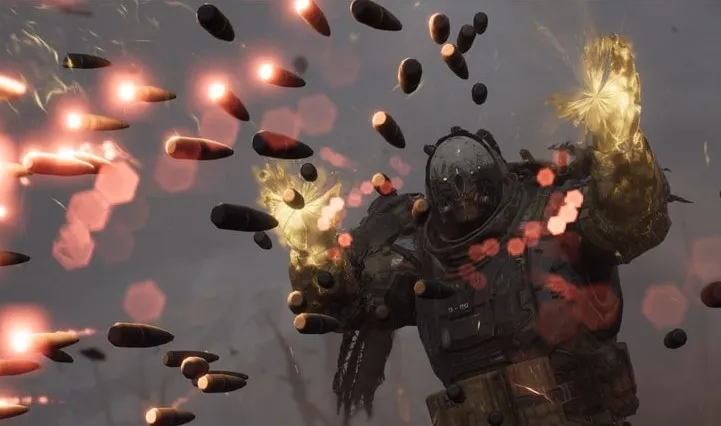
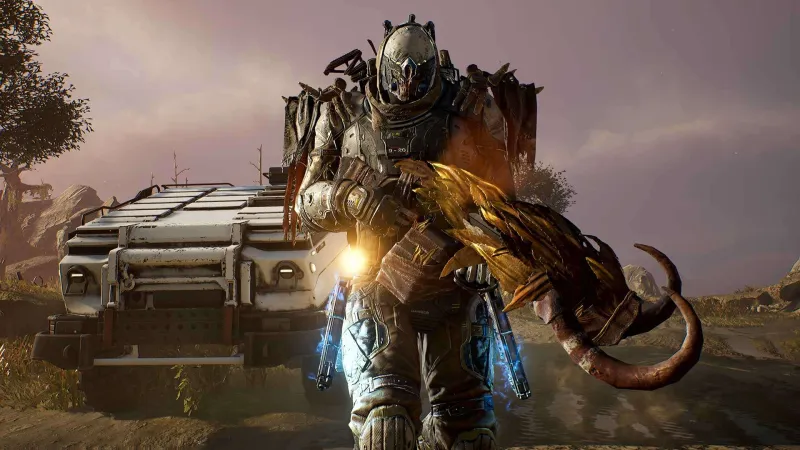
Outriders is an explosively chaotic looter shooter that pulls from the best of the best of People Can Fly's previous games while offering a new tale that takes some seriously wild turns. Despite launch day connection issues, I couldn't put Outriders down and after running two complete character builds through the main story and endgame content, I'm happy to say that this game has lived up to every one of my expectations and hopes. 

I love shooters and RPGs, and Outriders amalgamates these genres perfectly. The entire adventure is macabre with a dark narrative that centers on survival, the ability to adapt, and the journey to prove you're the biggest badass on the playground. That storyline is more immersive than I expected, and while it takes about an hour to really pick up momentum, it eventually becomes a cacophony of in-your-face action. That action coincides with a tale that rests within sci-fi fantasy but holds a modicum of truth regarding human instincts and how we react when there is nothing left to lose and everything to lose at the same time. It also has the subtle, dry humor that People Can Fly is known for, especially to Bulletstorm fans.

Outriders begins its adventure with a cutscene heralding the arrival of humans on a new planet called Enoch, a world that was meant to be their salvation brimming with promise as a fresh start for humankind. While the beginning sequence goes all-in with the action, the true start of the story kicks in soon after and goes hard on the fight-or-flight instinct in a new world that challenges what it means to be a survivor. The fast-paced, action-packed moments convey the need to keep moving, and those moments are even starker thanks to calm-before-the-storm story sequences that introduce the characters along the way. The characters feel wildly different from each other, with some offering a return of innocence to this world and others showing off the brutal reality of what it’s like to stay on top when the rest of the planet wants you dead. The intermittent scenes of normalcy add a layer of depth that enriches the game. 

Like other People Can Fly games, Outriders is more about the feel rather than the look. This distinction is clear in all aspects of the game, from the class variation to the subtle smirks and exasperated looks between speaking characters. From combo-ing an epic attack against the final boss to dealing with the petty shenanigans of your cohorts, Outriders' adventure is full of dimension. That nuance is felt in the combat, the leveling, and the story, with characters that become more and more compelling as the narrative continues on.

Leveling up in Outriders is satisfying and easy to manage. The skill tree draws obvious inspiration from the Diablo franchise, but there are other influences such as Path of Exile. The four classes each have three branches to perfect their combat style. I love charging into battle like Leeroy Jenkins, so the Pyromancer and Devastator classes are my favorites, and I specialized each by choosing the more offensive branching skills. There are more strategic branches as well, taking on full defense, or a hybrid approach, all of which are streamlined in a way that isn’t overwhelming and didn’t leave me second-guessing if I made a wrong choice.

Regarding the four classes themselves, Outriders provides a playstyle for everyone, and that left me excited to replay it to try out the different types of combat. The Trickster allows you to teleport behind an enemy when they are paralyzed for a K.O. It feels intrinsically satisfying, and nothing compares to being able to slow time itself to control the battlefield. Devastators are the tank of all tanks and the backbone of any group. Devastators are strong, meaty, and can control gravity, which gives them a protective edge, letting them draw fire from your crew and sending enemies into the abyss. Pyromancers are a medium-ranged class that specializes in AOE damage by wielding the destructive power of fire. The firewall skill plows through enemies in an especially satisfying way.  While not as durable as other classes, a Pyromancer's explosive arsenal makes them the perfect addition to any group taking on the world of Enoch.

Lastly, the Technomancer is a great class for those who love engineering specs because it harnesses technology meaningfully to rain damage from the sky. This class is incredibly versatile, taking on the role of support with the ability to heal teammates while outputting intense damage.  

The gear in Outriders matters, which is something that some loot-based games have failed to master. People Can Fly did a great job providing a wide variety of weapons of all types that offer a meaningful impact on the moment-to-moment action. This adds a layer of immersion and thoughtfulness that a lot of looter-shooters haven’t offered. It's also one of the many reasons why franchises like Borderlands continue to be a standard in this genre; that, and its off-the-wall humor, which is something that Outriders also has, though it doesn’t truly shine until later on in the story. 

There are varying degrees of gear as well, including the coveted Legendaries. Some of these designs are insanely detailed and impressive. Outriders has some of the best weapon designs of any game out there, including one gun that looks like it popped straight out of Bloodborne. Another looks like it popped straight out of Egypt. One shotgun looks like an Apex Legends character threw pure radiation at a wall and decided to turn it into a weapon. The creative team clearly had a lot of fun designing this aspect of the game, and kept me motivated to hunt down Legendaries; even if I didn't necessarily care about the stats, I wanted everything I could possibly find to see what other elaborate designs the team came up with.

But as I said, Outriders is much more about how the game feels versus how it looks and the gunplay feels just as impressive as the aesthetics insinuate. The baseline guns themselves all feel very different from one another. The kickback of a shotgun, the recoil of a sniper rifle, the quickfire action of dual pistols; each weapon-type feels unique, as they should, but they also feel weighted in a way that reminds me of how gunplay felt in Gears of War Judgement, another title by People Can Fly. 

Weapons continue to scale up in power as you progress, but players have the option to tailor that combat style even further with the use of gear mods. Mods help to further that customizable experience with different options to equip in order to achieve a certain build. Mod types include buffs, ways to enhance current skills, and how to boost your offense and/or your defense. They aren't the end-all-be-all of character craftsmanship, but like Destiny – they are a vital part of taking your character to the next level. Some even help you heal faster when fighting, which is especially helpful for those exploring Enoch solo. Fire damage, decay, leeching, there are a ton of different mods out there that are broken up into three tiers. 

Click image thumbnails to view larger version


Another positive aspect of Outriders is that this game doesn't have any microtransactions. While it is always online (something I wish wasn't the case due to not wanting to be tethered to the status of servers), it is not a live service game. There are no paywalls, no locked content, but there is still more adventure to uncover even after the main campaign is completed. When the story is finished, there are additional quests called Expeditions and these are so much more fun than I anticipated. Endgame quests are often a bit of a grind or can feel meaningless, especially after concluding a storyline that progressed in a dramatic way. I was really happy to see that Expeditions weren't treated like an afterthought, it's obvious that People Can Fly wanted players to feel like the journey didn't have to be over when the credits rolled and it did a really good job at doing just that. If you're a gear hunter like I am and have a never-ending FOMO regarding the best of the best, the 14 missions within the endgame content help achieve better drops. These high-end missions feel rewarding because they are time-sensitive challenges that are designed to make players sweat. They are hand-crafted new levels that aren’t just recycled content from the campaign, they are something unique entirely with their own challenges and their own gameplay mechanics. 

Click here to watch embedded media

As an obsessive Destiny 2 player, I can say that the endgame isn't anywhere to that level, but Outriders content feels meaningful in a way that will draw dedicated players while not leaving casual gamers feeling like they are missing out. The campaign and the endgame are balanced thoughtfully and in a way that does the looter shooter genre a profound service.

Outriders isn’t revolutionary, and it’s not trying to be. Outriders is a well-thought-out shooter with expertly tailored RPG twists. It's an enjoyable ride that is made infinitely better by playing with friends, but not inherently hurt by running solo either. This game takes the best parts from other looter-shooters and the best aspects of sci-fi RPGs and blends these elements into an experience that is worth diving into because of its high replayability, customizable play style, and fun story. I'm already strapping in for another run. 
Score: 9

Summary: Outriders lived up to every single expectation I had and then some.

Concept: Level up your Outrider, master your Altered powers, and find out what went wrong when searching for paradise

Graphics: Overall, the graphics are a little dated, but the cutscenes display stunning facial animations that offer a subtle layer of realism to all character interactions. The different areas of Enoch are incredibly beautiful

Sound: The music ramps everything up to level 10, especially in combat. While not a focus, the music paired with different ability sounds makes it easy to get lost in the fray in the best way possible

Playability: Navigating skill tree and gear leveling is easy to use and enjoyable to experiment with, and the gun mechanics feel weighted in a realistic way that is satisfying

Entertainment: Taking to combat and combo-ing skills with other players is immensely satisfying and make each run-in with enemies feel exhilarating rather than a chore

Replay: Moderately High
Click to Purchase

Narita Boy Review – Easier On The Eyes

Publisher: Team17
Developer: Studio Koba
Rating: Teen
Reviewed on: PlayStation 4
Also on: Xbox One, Switch, PC

Narita Boy's slick presentation hooked me before I even picked up my digitized sword. 1980s homages are nearly played out, but Studio Koba’s action title manages to reinvent that retro style of cool with an imaginative presentation that goes a step further than “let’s just slap neon and grid lines everywhere.” Narita Boy’s gameplay doesn’t quite live up to its killer looks, but if you can put up with some headaches, it winds up being an enjoyable romp. 

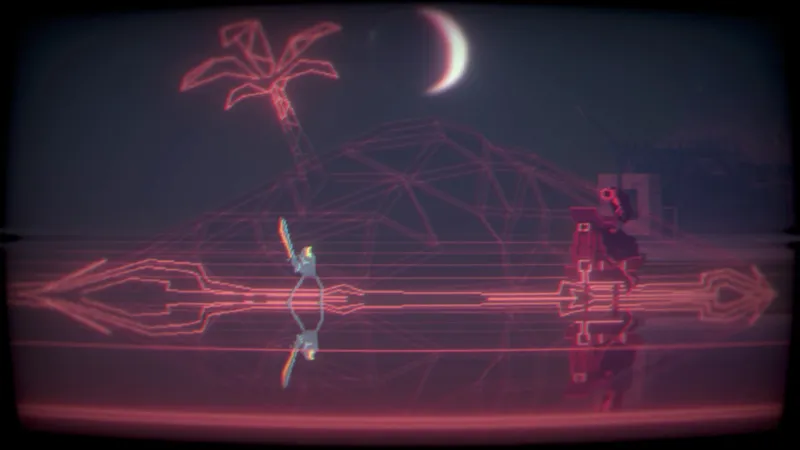
I can’t stress enough how awesome Narita Boy’s presentation is. Studio Koba borrows heavily from Tron in that the entire game is set inside a computer world known as the Digital Kingdom. Your goal: eradicate an evil program and restore the memories of the Kingdom’s human creator. This monarchy, consisting of a desert kingdom and coastal village, among other locations, feels fully realized, both in visual design and lore. The synthwave soundtrack rocks, and the CRT-style overlay is the chef’s kiss of the whole package. I loved gawking at Narita Boy’s art, and even those lacking programming knowledge or nostalgia for the time period should appreciate the creativity on display, like “what if digital horses were just four-legged computer rigs?” 

Click here to watch embedded media

Narita Boy almost plays as good as it looks. The combat consists largely of satisfying hack n’ slash action using your legendary sword, but you also have a shotgun side arm. The shotgun sounds cooler on paper than in practice; I regularly forgot about it as it never feels useful or necessary. Slaying enemies starts as a basic affair but becomes more robust, and entertaining, as you unlock new sword attacks and screen-wiping summons. Color-coded power-ups offer another cool perk; it lets you kill enemies of a matching color (represented by a flame) more easily, though at the risk of taking more damage yourself. Best of all, Narita Boy doles out new abilities and mechanics until the very end, including neat, one-off sequences like piloting a giant mech version of yourself. 

You’ll need all the help you can get because Narita Boy is no walk in the park. The game boasts a plethora of challenging enemy types and has no problem dumping them all over players, which feels overwhelming at times. There’s a fun challenge in figuring out how to use your arsenal of moves to take down combinations of vastly different opponents but a few of the enemy types are a flat-out pain to fight. For example, an armored foe with a nigh-impassable shield was never fun to deal with, and I always groaned when it appeared. The worst part about getting your pixelated butt handed to you are the inconsistent checkpoints that feel almost arbitrary. Some start you close to where you died, but too often are you kicked back further than you’d expect.

Click image thumbnails to view larger version


Combat isn’t perfect but offers a good time overall. I wish I could say the same for the platforming. Jumping feels stiff, slippery, and floaty all at once. I’d often land on a ledge only for the sensitive movement to take me over it. Jumping wall to wall can take multiple attempts due to how wooden your character feels. Upgrades like a rising sword attack/high-jump doesn’t feel satisfying since you can’t use it as an actual double-jump and hitting the Up and attack buttons at the same time is tough to pull off in hectic scenarios. 

It wouldn’t be so bad if the game was largely action with basic platforming, but Narita Boy falters by routinely introducing obstacle courses it doesn’t feel equipped for. Riding atop a computer horse sounds great until you’re crashing through spikes you can’t reliably dodge thanks to your character’s deliberate animations. The same is true of surfing atop a giant floppy disk; it’s awesome in concept, less so in execution. This becomes especially irritating in combat. One boss lobs energy cubes that require precise dodging; I crashed through half of them, and my survival boiled down to having enough hit points to absorb the onslaught. 

Still, as much as I didn’t like gingerly hopping across platforms and would yell “come on!” after failing another difficult combat arena, I couldn’t help but fall in love with Narita Boy’s style once the dust settled. I love every inch of its wonderfully designed world, and the gameplay is good enough to carry the adventure. In a way, it’s like booting up an old computer. If you can put up with the cumbersome interface and some outdated design, there’s a beauty and appreciation in how it still manages to get the job done.

Score: 7.75

Summary: Narita Boy has more style than it knows what to do with and boasts a killer-looking world, but setbacks in gameplay can make it more fun to admire than to engage with.

Concept: Liberate a digital kingdom from a malevolent code while uncovering the memories of your human creator

Graphics: Creative character designs, such as horse-like computer monitors, look awesome. Having the entire game viewed from a CRT is the icing on top of the nostalgic cake

Sound: The groovy synthwave soundtrack will have you bopping in your seat as it injects even more style into the experience

Playability: Combat generally feels good, but the stiff jumping makes platforming and dodging an annoying exercise

Entertainment: Narita Boy has more style than it knows what to do with, and that helps carry it past its gameplay flaws

Replay: Moderate

Click to Purchase