Pages

Thursday, May 27, 2021

World's End Club – Not With A Bang But A Whimper

Publisher: NIS America
Developer: Too Kyo Games
Rating: Teen
Reviewed on: Switch

What happens when a crew of angsty students witness the apocalypse during a seemingly normal field trip? World’s End Club answers this question as it examines the various interpersonal relationships of its ensemble cast. However, janky platforming, predictable story beats, uninspired characters, and a forgettable soundtrack prevent World’s End Club from reaching the heights of the two franchises that directly informed it: Danganronpa and Zero Escape.

You’ll spend most of your time in World’s End Club parsing through extensive conversations that give context to the overarching narrative. These dialogue-heavy moments are glorified exposition dumps. Characters announce their ulterior motives and innermost feelings haphazardly, and when a primary villain enters the fray to “accidentally” reveal their diabolical plans (this happens at an alarming rate), the narrative is stripped of its stakes. At times, I was excited to see plotlines resolved, but the emotional stakes got upended so often that I lost interest. This is particularly frustrating because, despite its cartoonish/light-hearted aesthetic, World’s End Club wants to be a game about complex motifs like deceit, trust, and lasting friendship. This could have been interesting, but, as it stands, the narrative feels hollow.

Silent protagonist Reycho is the daring leader of the Go-Getters Club, a quirky band of misfits. When a meteor suddenly crashes into Tokyo one summer afternoon, the world abruptly ends. After the impact, the crew wakes in an underwater amusement park where a floating, Pokémon-esque creature named Pielope forces them to take part in a dangerous “Game of Fate.” The trials that Reycho and company face push the tight-knit fellowship to the brink. Unfortunately, I quickly discovered that each member of the Go-Getters Club is merely a shallow archetype – from the oblivious airhead Vanilla, to the overweight, gluttonous Mowchan. Moreover, the voiceover fluctuates from mediocre to downright laughable. It became increasingly hard to care about the playable cast when they’re awkwardly robotic during emotionally tense moments and even mispronounce each other’s names from time to time.

Click here to watch embedded media

World’s End Club’s gameplay loop is split into three distinct sections: Act, Camp, and Story. During the unremarkable Act phase, you’ll jump over bottomless pits and push crates to clear blocked passageways. Combat usually amounts to tossing blunt objects at slow-moving targets or running for your life while navigating an array of pesky hurdles. I enjoyed the latter moments, but soon realized that getting away from World’s End Club’s zany creatures was deflatingly easy. The less frequent stealth sequences required me to hide behind objects and time my escape sprints. The Go-Getter’s Club get their down time at Campsites, where you can briefly converse with each member to gain a better understanding of character motivations, which are just as shallow as the Story moments.

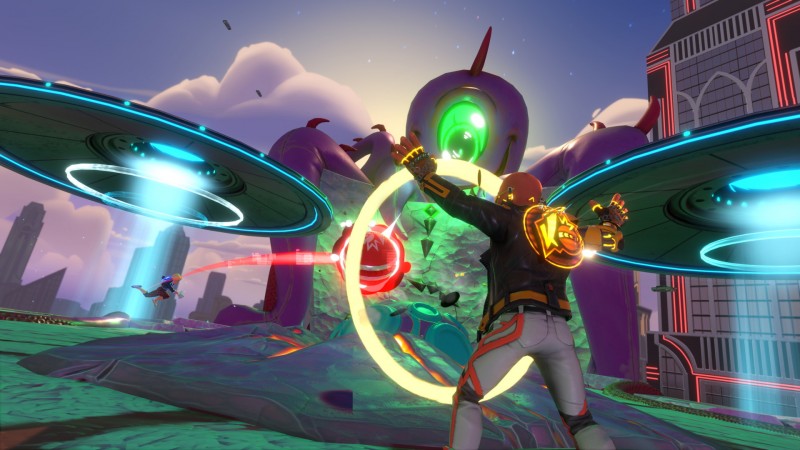
The one-dimensionality of World’s End Club’s characters is apparent the minute they open their mouths, but when their Awakened Abilities activate, their personalities truly come to life. These awesome super moves help you survive in this dastardly world, and they slowly unlock as you progress through story acts. Awakened Abilities made me feel appropriately powerful and lent themselves nicely to most of World’s End Club’s simple environmental puzzles. For example, I enjoyed using Reycho’s “Big League Pitcher” to toss rocks at overhanging structures, forcing them to collapse on enemies patrolling below. I used other Awakened Abilities to wipe out otherwise indestructible geographical formations or simply slow down undefeatable bosses. The sheer number of applicable abilities made the otherwise boring enemy encounters a bit more satisfying and made uneventful platforming sections mildly entertaining.

That isn’t to say that I didn’t run into my fair share of gameplay issues. Countless times, I found myself staring at a Game Over screen because of wooden controls. Sometimes I’d continuously press the jump button just to watch Reycho saunter towards the edge of a platform. At other times, the characters seemed to fight me as I tried to grab ledges or avoid one-hit-kill obstructions. On several occasions, I was spotted repeatedly by adversaries because of unforgiving stick sensitivity; I’d try to move slightly closer to a ledge, but simply fall off the platform and into the clutches of enemies.

Click image thumbnails to view larger version


The monster and biome design, on the other hand, emerged as my two favorite aspects of World’s End Club. My journey through Japan took me to abandoned prefectures teeming with overgrowth and dangerous obstacles like molten lava, pools of quicksand, and mutated foliage. Underground facilities housed rabid, bipedal canines, and dusty mountainsides were home to gigantic, armored beetles. Some creatures were far more grotesque and interesting to look at with serpentine limbs and unnerving, convulsive movements. Nevertheless, these features weren’t significant enough to distract me from World’s End Club’s myriad narrative and mechanical flaws.

World’s End Club tells as uninteresting story full of obvious twists and turns that’s segmented by linear exploration and low-stakes action. On normal difficulty, you’re killed in one hit, which doesn’t mix well with the finnicky controls. Some character designs and their accompanying abilities are particularly inspired, but I didn’t fall in love with any of their static personalities. World’s End Club ultimately wound up feeling like an unimaginative afterschool activity.

Score: 6

Summary: World's End Club's dull platforming mechanics, story, and ensemble cast make it a chore to play.

Concept: Lead your large crew of friends through a post-apocalyptic Tokyo while avoiding death at the hands of mutated monsters

Graphics: A few of the main character designs are cool, but most are middling. The numerous locations you traverse and creatures you encounter are definitive highlights

Sound: At best, the voicework is subpar, and the cacophonous soundtrack detracts from the already lackluster story

Playability: World’s End Club’s unresponsive controls make it easy to miss key jumps or grapples. On higher difficulties, I died a few times because of these finicky controls, but the story checkpoints are quite forgiving

Entertainment: Most Awakened Abilities are fun to use, but puzzles are boring because they’re such a breeze to complete

Replay: Low
Click to Purchase

Monday, May 24, 2021

Biomutant Review – A Flawed Mutation

Click here to watch embedded media
Publisher: THQ Nordic
Developer: Experiment 101
Release: 2019
Rating: Teen
Reviewed on: PlayStation 4
Also on: Xbox One, PC

Much like its gene-spliced protagonist, Biomutant is a hodgepodge of ideas stitched together to form what is ultimately a mixed bag. The game blends elements of open-world design with stylish action, gunplay, crafting, a morality system, and more. Like many jacks-of-all-trades it winds up being a master of none, and a thick layer of technical jank on top of half-baked ideas makes Biomutant feel like a case of feature creep that needed to be scaled back.  

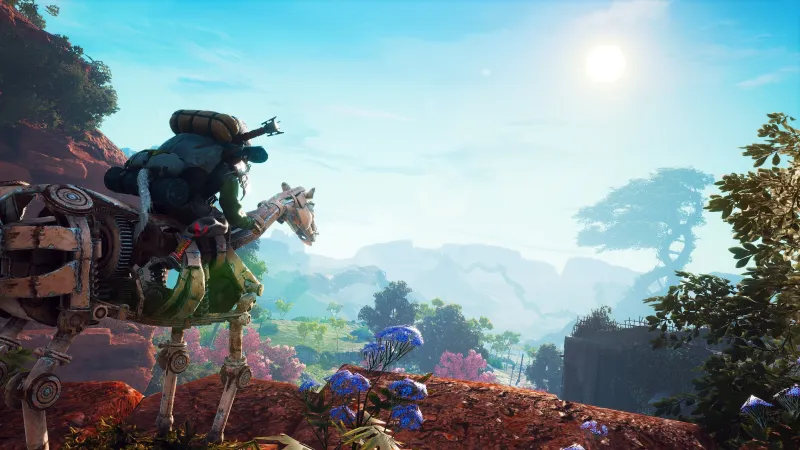
At its core, Biomutant is a typical open-world game featuring a large map littered with basic objectives, points of interests, and various environmental biomes with bizarre wildlife roaming in between. Despite its post-apocalyptic premise, the vibrant overworld is packed with color, and I love how that beauty is juxtaposed with ruins of modern civilization. A majestic Tree of Life sits at the world's center and its four gigantic roots snake for miles overhead for a wondrous sight. The anthropomorphic character and monster designs are a charming blend of strange, funny and, sometimes, unsettling.

I enjoyed Biomutant most when I simply explored, stumbling upon hidden bunkers or abandoned villages and clearing them of their precious loot. Traveling gets even better thanks to a variety of transportation options, from riding various mounts to stomping around in a mech suit to soaring on a glider. Summoning a mech from the sky feels empowering until you realize some vehicles can only be used in vaguely designated zones. Being barred from summoning my boat in one clear body of water but not another puts a damper on the game’s sense of freedom.

Combat blends stylish melee with wacky gunplay but lacks the polish it needs, often feeling messy and imprecise. Parrying feels especially unsatisfying, and the loose lock-on system makes staying on target a finnicky pain. I appreciated the variety of special powers at my disposal such as creating trails of fire or conjuring ice storms. These abilities add a flashy wrinkle to the action, but they also don’t pack as much punch as I wanted in battle, even after investing stat points into them.

Biomutant’s combat became more tolerable once I acquired stronger weapons via a robust and rewarding crafting system. After collecting random junk like old sniper scopes, trumpet horns, or even bananas, you can slap together devastating killing machines. I had a great time maximizing this system, and seeing my creations tear through monsters always felt rewarding. The same goofy satisfaction applies to armor and gear; my character rocked a mascot helmet and a polo shirt that looked ridiculous, but the outfit was augmented to be as sturdy as a suit of armor. The drive to make cooler weapons is potent and scavenging for new parts consistently felt worthwhile even when I found loot that was inferior to what I already had. That’s because you can always sell it or, better yet, break it down into valuable ingredients to craft better parts. 

Biomutant boasts an overwhelming amount of side activities that are mediocre best but too many of them boil down to completing simple actions a set number of times in different locations. The tasks themselves aren’t bad, they’re just the definition of busy work, and the rewards aren’t worth the effort half the time. Still, you don’t need to worry about a lack of content in Biomutant; my quest log overflowed with things to keep me busy for dozens of hours, even if those activities were largely shallow.

While elements around the edges can allow some degree of entertainment, it all feels hollow when it’s funneled into an underwhelming narrative core. Upon bringing your furry hero to life, you’re saddled with several big tasks. Four destructive World Eaters are killing the Tree of Life, and it's up to you to stop them. You also need to bring an end to a tribe war by joining one faction and then uniting or eradicating the rest. On top of that, the brute who murdered your family in childhood has resurfaced and must be dealt with. Did I mention there’s also a life-saving Ark that holds a limited number of seats and you must determine which of your allies gets a free ride should the world go sideways? 

Biomutant juggles a lot of threads but none of them are engaging. Avenging your parents’ death lacks any emotional punch because the killer is barely a factor in the story, and the final showdown unfolds in predictable, anticlimactic fashion. Solving the tribe war simply involves conquering the other settlements in bland confrontations and deciding whether to kill or spare the leaders. World Eater missions have the most meat on their bones by far, with various tasks, such as obtaining vehicles, aimed to prepare you for the big fights. However, facing these beasts consists of sloppily designed boss fights that rob these titanic battles of any sense of awe. The Ark subplot feels entirely unnecessary and doesn’t even make total sense if you manage to save everything anyway. The lackluster storytelling further diminishes an already shallow morality system, which yo-yos between basic black and white choices.

Click here to watch embedded media

Throughout your journey a pleasant British narrator recites the entire adventure. He does an adequate job, but his rampant interjections outside of cutscenes wore on me after a while. The narrator also speaks for every character, which robs them of any individuality, and conversations become tedious since you have to wait for the narrator to translate the native creatures’ gibberish. The only other voices you hear are your two bickering fairies, which represent your light and dark side, and they became my favorite personalities by default for having, well, personality. I like that they’re both jerks constantly belittling each other while rallying you to join their side.

A lackluster presentation and technical issues further spoil the experience. Cutscenes are rough thanks to stilted animations and an overall flat delivery. An occasionally wonky camera can zoom inside of objects during conversations. Cinematics sometimes end abruptly, even cutting off dialogue in progress. Playing on PC offers a smoother outing, but various bugs and hard crashes hindered my adventure on console.

Biomutant consistently shows glimmers of promise but it takes patience and a pair of rose-colored glasses to see them. I genuinely loathed my first several hours with the game, but once I made cooler weapons that made combat more tolerable or admired another postcard-worthy sight, I felt more disappointed than anything. Biomutant has all the ingredients of a unique, entertaining adventure. It just spends too much time doing everything possible to try and impress its audience instead of polishing its handful of strengths.

Score: 6.5

Summary: Despite bursting at the seams with cool ideas, Biomutant is a largely hollow experience that only provides fleeting glimpses of greatness.

Concept: Splice together a hero, save a dying world, avenge your parents’ murder, and end a war in this wildly ambitious open-world title

Graphics: Biomutant’s wonderfully quirky art and creature design makes for bizarre eye-candy but rough animations and an overall lackluster presentation begs for another coat of polish

Sound: The handful of forgettable tracks plus the overwhelming presence of a tiresome narrator makes Biomutant unremarkable to the ears

Playability: Combat feels messier than it looks thanks to rough polish and troublesome targeting but becomes bearable once you craft more powerful and exciting weaponry

Entertainment: Biomutant has fun moments, but it stumbles in too many significant ways to make it a wholly satisfying experience

Replay: Moderately High

Click to Purchase

Friday, May 21, 2021

Knockout City Review – Dodgeball Delight

Knockout City

Publisher: Electronic Arts
Developer: Velan Studios
Rating: Everyone 10+
Reviewed on: Xbox One
Also on: PlayStation 4, Switch, PC

Stepping onto the court for a dodgeball match used to either fill you with excitement or dread depending on where you stood in the gym-class pecking order. The same could be said of multiplayer shooters, as poorly matchmade games deliver feast or famine results based on your level of skill. Knockout City masterfully combines the best from both dodgeball and multiplayer shooters to create an experience that is frantic, fun, and welcoming to players of all skill levels.

Joining a match is hardly an intimidating affair thanks to Knockout City’s streamlined gameplay. All you need to know at the start is that you find a ball on the map, then find someone to throw it at; the game automatically locks on to targets, making the action less about how elite your aim is and more about the strategy of how to approach each rubber-ball firefight. Once you have the basics down, you can learn different kinds of trick shots, ways to capitalize on the various special balls, and how to master the timing of catching incoming balls. These matches become fast-paced, so gaining a keen awareness for when you’re targeted (as indicated by a red outline on your screen) and learning how to read when balls come your way is where most improvement occurs.

As I learned to contextualize the action and strung together effective plays, the excitement ramped up. In one chaotic sequence, I was at a two-on-one disadvantage, and both opponents had a ball. As the first one fired at me, I timed my catch perfectly, which immediately gave me a pre-charged throw, allowing me to fire back at the thrower at full speed before they knew what hit them, knocking them out. Then, I dashed to avoid the second incoming throw, snagged another nearby ball, and performed a spin move to put a curve on my throw, wrapping it around a pole and hitting the second opponent from an unexpected angle. Moments like that, where you flow from one satisfying move to the next off instinct is supremely rewarding, making you feel like a dodgeball master.

Click here to watch embedded media

Despite moments like these, all modes (save for the tense one-on-one Face-Off mode) place you in two teams of three. Teams do more than just even the odds, however, as you can interact with your teammates to perform stronger attacks. Balls gain an instant charge when you pass them to a teammate, letting your friends immediately fire them off at full speed to deliver the final blow to an enemy player. Players can even turn into a ball themselves, allowing teammates to pick up and throw each other at enemies, or perform an ultimate attack which turns the held teammate into a bomb that rains an area-of-effect explosion on targeted players.

Knockout City’s five maps are entertaining playgrounds full of concentrated battlefields, naturally flowing lanes, and unique obstacles. I loved the rotating center structure of the Galaxy Burger map, while the opposing skyscrapers of Rooftop Rumble creates intriguing dynamics with the two teams. The maps are also well populated with balls, meaning you’re rarely struggling to find something to fire your opponents’ way.

Scattered through traditional matches are special balls that augment your dodgeballs so they explode, gain extra distance and speed, and move with moon-like gravity. These power-ups are rare in most modes, but they take center stage in the over-the-top Party Team K.O. where all standard balls are replaced by special balls. Those matches are exciting and unpredictable, but the chaos can be a little too much at times, and during a typical play session I would migrate back to standard Team K.O. after a few Party matches.

Every action you take counts toward a suite of goals listed in the menu. These objectives range from scoring knockouts with a particular type of throw to assisting your teammates in various ways. As you complete objectives and level up, you earn cosmetic rewards and Holobux, which can be traded in for rewards like new outfits, emotes, and gliders. Thankfully, all the upgrades are cosmetic, meaning nobody has a competitive advantage from unlocks.

Click image thumbnails to view larger version


Outside of the approachable gameplay, perhaps the biggest boon to making sure everyone can enjoy Knockout City together is the fact that the title supports crossplay and cross-progression. Without any issues, I was able to party up PC players while I played on my Xbox. I still needed to find each player’s in-game player name, but the intuitive social menu makes connecting with friends and recent players a breeze. You can also join a Crew, a unique twist on the traditional Clan system, letting you further customize your character with a logo, vehicle to enter the match, and more. You also earn additional rewards and experience when you play with your Crewmates.

Unfortunately, Knockout City lacks significant content at launch. The game contains four base modes and only five maps. Developer Velan Studios has ambitious plans for post-launch life, including new maps, modes, and playlists, but that’s all still forthcoming. The existing content is strong, but I grew weary of what was initially on offer after a few short hours.

Content concerns aside, Knockout City has a superb base to build off. With gameplay that eases you in, then encourages you to experiment with those mechanics to increase your mastery, Knockout City offers a refreshing take on both the multiplayer shooter and the classic game of dodgeball.

Score: 8.5

Summary: With a fun core, approachable gameplay, and intense rubber-ball firefights, Knockout City lets everyone get in on the enjoyable dodgeball action.

Concept: Replace the guns typically found in an arena shooter with dodgeballs to reimagine the gym-class staple

Graphics: Cartoony visuals hammer home the fast-paced and lighthearted action

Sound: A fun soundtrack complements the battles well, but the star here is the true-to-life thud the dodgeballs make on impact

Playability: Easy to pick up but tricky to master, Knockout City offers fun for players of a wide range of skill levels

Entertainment: At launch, Knockout City lacks in content, but it makes up for it with a strong base game and a ton of potential to grow in the future

Replay: Moderately High

Click to Purchase

Wednesday, May 19, 2021

Famicom Detective Club: The Missing Heir Review – A Beautiful Update To A Boilerplate Mystery

Publisher: Nintendo
Developer: MAGES
Rating: Teen
Reviewed on: Switch

The Famicom Detective Club games are a special part of Nintendo’s adventure game history. Released in the late ‘80s for the Famicom Disk System, they were influential in opening the door for visual novels on the console market, and Famicom Detective Club’s creator, Yoshio Sakamoto, went on to be a driving force behind the Metroid series. Three decades later, thanks to new remakes of both titles on Switch, audiences outside Japan can finally step into the shoes of a young detective trying to get to the bottom of a couple of deadly mysteries. The Missing Heir was the first in the two-game series, exploring an affluent family’s cursed history.  

The mystery in The Missing Heir centers on the powerful Ayashiro family, who built a corporate empire from the ground up. But the family has a few skeletons in their closet that come to light after the head of the family ­and chairwoman of its corporation, Kiku Ayashiro, releases her will. Greed, betrayal, and murder ensue. That’s where you come in. As a young hotshot detective, you must uncover the truth about this family dynasty entangled in lies and well-kept secrets. But you’re not in the best shape yourself: you have recently washed ashore with a nasty head wound and have no recollection of your past. There’s a serious tone from the onset that helps sell the stakes, and plenty of red herrings kept me guessing along the way. However, none of that distracts from the obvious: the plot is well-worn with a tired amnesia trope.

That said, considering this game came out in the late ‘80s, the adventure still holds up. With suspenseful moments and exciting twists, I stayed invested until the end, even if parts are predictable and I figured certain details out well before the credits rolled. My biggest disappointment is that the key players in the story never evolve beyond suspects or plot devices – don’t expect much character development or any meaningful dialogue exchanges to advance the plot.  The storytelling is run-of-the-mill, which could be a testament to the game’s age, but it is unfortunate nonetheless, especially in a visual novel where the narrative drives the game.


As mentioned, the Famicom Detective Club games are visual novels with some adventure elements, meaning you read a lot of text as you examine surroundings, interview the locals for information, and collect evidence to get new clues. You don’t enter the courtroom like in the Ace Attorney games, but you do investigate and make deductions based on your findings. I was a bit disappointed with the limited interactivity, and the bulk of my strategy boiled down to asking questions and presenting evidence at the right times. The occasional riddle shakes things up, but I didn’t find them very interesting to solve, as they usually require following tedious instructions. I enjoyed trying to learn more about each family member so I could piece together motives, but the slow pacing and repetitive dialogue often brought down the momentum.

For this update, Nintendo recreated the graphics, added Japanese voice acting, and updated both the music and sound effects, which helps modernize this classic visual novel. Unfortunately, this remake only goes so far in fixing antiquated elements, which is a shame because some archaic design choices hold the game back. For instance, you often must ask characters the same question three times before getting the response you want, and sometimes you have to approach questioning and evidence presentation in a specific order to progress the plot. I often resorted to trial-and-error, spamming every possible option in every potential order to get past certain sequences. This isn’t fun and breaks immersion when you just want to see the mystery unfold.

As the first entry in the Famicom Detective Club series, The Missing Heir gives you a chance to experience a key point in visual novel history. Piecing together this mystery and seeing where it leads has this undeniable appeal. However, while the new graphics offer a beautiful leap in quality, this remake doesn’t alter some of the more archaic aspects of the experience, or even attempt to make the characters or story more interesting to keep with modern times. If anything, it’s an enticing way to look back at the history of this franchise, which I’m glad to have as it satiates my curiosity about this classic series. Unfortunately, it doesn't make more of an impact than that.  

Click image thumbnails to view larger version


Score: 7.25

Summary: The Missing Heir gives you a chance to experience a key point in visual novel history.

Concept: As a detective with amnesia, you must unravel the dark history behind a wealthy family that’s being targeted for murder

Graphics: This remake’s updated visuals are straight-up gorgeous, with colorful backdrops and detailed character models that make an instant impression. Too bad the environments aren’t all that interesting to explore

Sound: The music and sound effects help sell intense moments and bring personality to situations, but they are minimal. Also worth noting is the voice acting, which is in Japanese with English subtitles

Playability: Some archaic and obtuse design choices make advancing the plot of this standard visual novel a bit of a chore

Entertainment: Famicom Detective Club: The Missing Heir lets Western audiences experience an adventure game they never could before. The story is engaging for what it is, but its pages are well-worn, and it shows

Replay: Moderate

Click to Purchase

Aerial_Knight's Never Yield Review – Running Wild

Publisher: Headup Games
Developer: Aerial_Knight
Rating: Teen
Reviewed on: Switch

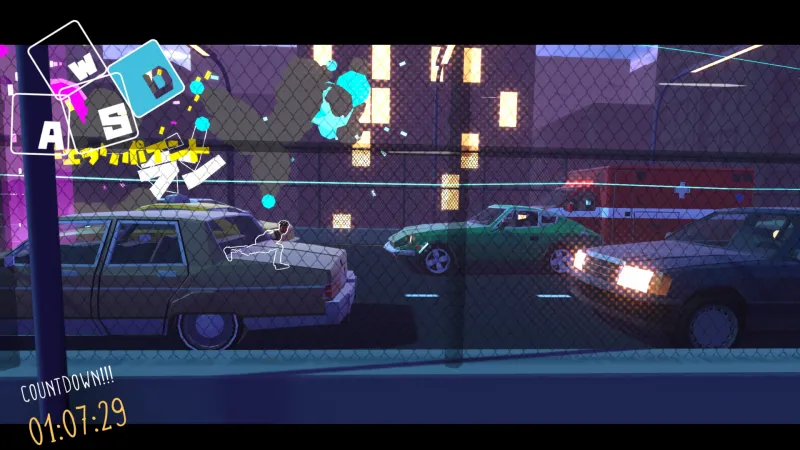
On its surface, the gameplay of Aerial_Knight's Never Yield is not all that interesting. You run from left to right, sliding, jumping, and sprinting past obstacles until you reach the end of a level a few minutes later. After a while, it gets a bit bland on the easier difficulties. However, bolstered by a fantastic soundtrack and strong-if-redundant art style, Never Yield is an engaging journey through a dystopian Detroit that, at only an hour or so, is worth taking.

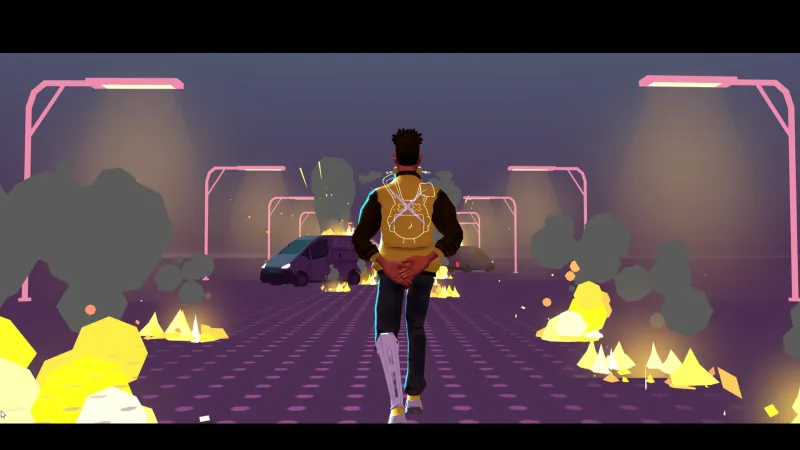
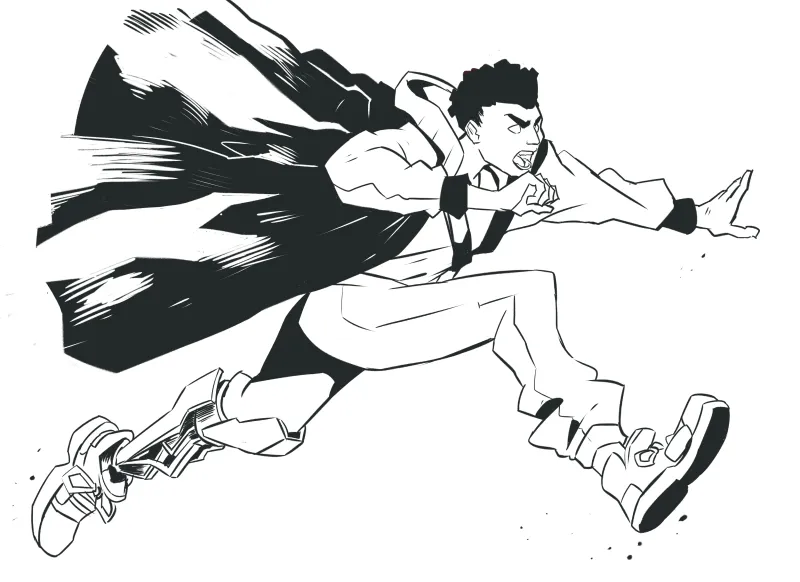
You assume the role of Wally, as he races through Detroit after retrieving his stolen property. Along the way, police, drones, traffic, and all manner of roadblocks get in his way, attempting to stop him from taking back what’s his. The story, which is told through brief cutscenes before each level, is serviceable at best and not much deeper than the set-dressing that establishes why you're running and what you're running from. But in a game that consists of only running, it is enough to get the job done.

Never Yield is an autorunner, so Wally automatically dashes forward, leaving you to focus on dodging what's in your way. You have four moves at your disposal – small jump, high jump, slide, or dash – each tied to a different directional button and colored to match on-screen prompts. For example, when Wally approaches a slide, blue highlights appear on the right side of the screen. Additionally, the hurdle itself is blue, and time slows briefly, allowing you to gauge the distance before you need to pull off your move. I really like how Never Yield telegraphs oncoming obstacles before I reach them. More often than not, missing one felt like my fault; I had the information needed, I just messed up the execution. There were only a few exceptions. For example, I struggled to nail the timing in one mid-game level where I jumped over a moving van. I had to retry this sequence more times than I wanted, which tested my patience, but these moments are few and far between.

On the Normal difficulty, there's an argument to be made that Never Yield is actually too good at warning you about oncoming threats. Throughout my first playthrough, I rarely felt challenged. By the end, the whole game started to feel bland, as the difficulty rarely ramps up from one level to the next.

Never Yield feels specifically made for its harder difficulties, where the time-slow and warnings are either diminished or removed and obstacles appear more frequently. I became much more engaged with my runs when playing on higher difficulties, and in turn, found the gameplay a lot more interesting and fun when actually challenged. I recommend bumping your difficulty up as soon as you can.

Never Yield's Detroit takes liberal inspiration from cyberpunk properties that came before – which is mainly to say it's an American city viewed through the lens of Tokyo. While amalgamating an American city with an Asian one to insinuate retro futurism is pretty derivative at this point, Never Yield does have a good style. The cel-shading makes the game look slick and the neon against the nighttime sky offers a nice contrast. Even though I can't say I was floored by the game's setting, I did enjoy it.

What did blow me away in Never Yield was its soundtrack, which without a doubt is the star of the entire game. Composed by artist Danime-Sama, the soundtrack combines jazz, hip-hop, rock, and a whole host of different genres into a completely fluid soundscape that fits the gameplay and setting in equal measure. Every time I went to a new level, I was excited to hear the next song, and never once did any of them disappoint. There's even a level where you fight against a guitarist, who's playing the solo in that level's song, creating physical music in the world you must avoid. That rules.

Never Yield is a slick package. Once I raised the game's difficulty, the fantastic soundtrack, fun world, and engaging gameplay made it an experience I've enjoyed playing through a couple different times. Especially on Switch, it’s a game worth seeking out if you can. While it may have some minor stumbles, I found it a worthwhile run.

Click here to watch embedded media


Score: 7.5

Summary: A fun run through cyberpunk Detroit

Concept: Run through a cyberpunk Detroit, jumping, dodging, and dashing past obstacles in your way

Graphics: While cyberpunk cities are overdone at this point, the cel-shaded art style lends itself to a pretty, if derivative, world

Sound: Combining jazz, hip-hop, rock, and more, Never Yield's soundtrack is the best part of the game, complimenting its graphics and gameplay excellently

Playability: A bit too easy on its Normal difficulty, once bumped up to be harder, it’s an engaging and fun experience

Entertainment: Amplified by the soundtrack, Never Yield is a fun run through Detroit, one I felt encouraged to take multiple times

Replay: Moderately High

Click to Purchase

Friday, May 14, 2021

Mass Effect Legendary Edition Review – A Great Way To Honor Commander Shepard’s Legacy

Publisher: Electronic Arts
Developer: BioWare
Reviewed on: PlayStation 4
Also on: PlayStation 5, Xbox One, PC

Influential and poignant, the Mass Effect trilogy left a lasting impression on gamers, advancing the impact of choice in games and proving that personal connection endears players to the overall experience. It could have been a story merely about saving the galaxy, but BioWare created a rich and complex world full of unique and realistic viewpoints that factored into the difficult choices that must be made. With the fate of the galactic civilization on your shoulders, nothing came easy in Mass Effect, and that’s part of the reason the series still resonates with people all these years later. 

The Mass Effect trilogy is a gaming experience that shouldn’t be missed, which is why finally having a remaster is such a big deal; not only in terms of keeping the series’ legacy alive, but also in allowing players an easy way to access and play through the story the way it is meant to be played with its DLC. While it’s not a perfect remaster, BioWare did an excellent job of updating Commander Shepard’s adventure to make it a better and smoother ride on the Normandy, and not just in the visual department.

The first Mass Effect received the most attention, which makes sense considering that game is now a teenager and hasn’t aged well. Even back when it launched in 2007, the first game was rough around the edges, as BioWare was still trying to figure out how to balance action gameplay with role-playing systems. Mass Effect’s unique sci-fi future always won out over any flaws or frustrations, but going back to relive these great moments came with some unfortunate caveats. With the remaster’s improvements, that is no longer the case, and I enjoyed playing through the first game a lot more in the remaster. 

Many mechanical aspects have been tweaked here, from removing class-based weapon restrictions to providing a more modernized HUD, but some changes feel more significant than others. For instance, the new Mako controls made a huge difference in my enjoyment of the game; the traditionally lumbering vehicle steers better, moves faster, and has better aiming mechanics for shooting. I used to dread hopping into this six-wheeled vehicle of chaos, but that all dissipated thanks to these smoother controls.

Click image thumbnails to view larger version


Speaking of better controls, ME1’s shooting is much improved and closer to ME2’s gameplay, with smoother targeting and all different gun types being useful from the get-go. You won’t forget you’re playing an older quasi-shooter, but it makes playing this first game much better. The visual enhancements here hit the hardest, especially the added detail to the lush environments, which now have richer vegetation, new particle effects, and improved lighting. The structures of these levels haven’t changed, but the way they’ve been visually improved makes them way more interesting to explore and I stopped to take in the sights more than ever before. 

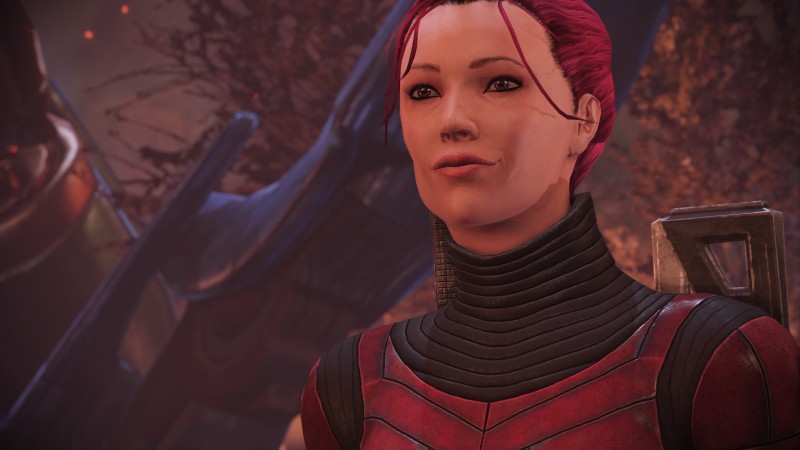
The visual improvements aren’t as vast in ME2 or ME3, but everything looks better overall. Enemies and alien species are the biggest beneficiaries, but the trilogy’s age is evident in the poorly lip-synced human faces. However, characters like Miranda look more natural, thanks to the better lighting and more realistic make-up alongside her fuller hair. In addition, most armor and casual clothes have better shine and realistic folds, especially on characters like Tali and Liara. These may seem like little details, but they are noticeable, adding to the immersion and just making for better-looking games. 

In addition, better camera angles help scenes feel more organic, but, unfortunately, some flaws still carry over from the original entries, like characters having stiff movements or awkward mannerisms. You also still see the occasional technical hiccup; I experienced a few stutters, freezes, and instances of Shepard getting caught on the geometry. Also, be aware that while the load times are reduced (especially in the elevators), they’re still a little longer than what we’ve come to expect today. 

Part of the fun of having the entire trilogy easily accessible in one place means being able to play the games back-to-back and seeing the evolutions and improvements between entries. I really appreciated being able to create a Shepard in ME1 that I could take across each game and not having drastic differences in her appearance between each game, adding a cohesive feeling. The new customization options for your avatar’s appearance aren’t grand, but I did like the more natural hair textures. A new photo mode also allows you to capture your favorite moments; it’s pretty standard and gets the job done, but the filters are limited.

Click here to watch embedded media

Another great aspect of this package is it contains most of the DLC, such as standouts like The Citadel, Lair of the Shadow Broker, and Leviathan. Sadly, The Pinnacle Station isn’t included due to being unable to recover the source code, and BioWare chose not to carry over Mass Effect 3 multiplayer at this time. The latter is the most glaring and disappointing omission. At the very least, the galactic readiness progress in single-player is no longer tied to this.

Even all these years later, Commander Shepard is a powerful force that lives up to their iconic status, and the trilogy is still captivating and worth your time. The Legendary Edition provides a great way to experience this powerful story, adding just enough enhancements to provide a better experience while still staying true to the original. If you’re a longtime fan or haven’t had a chance to play through one of gaming’s milestone franchises, this is a wonderful way to do so.

Seeing your choices carry over across three games is exciting, but it’s also about the squadmates you meet along the way. So, become Commander Shepard, rally people to your cause, make painstakingly difficult choices, and watch others around you grow stronger because of your influence. The sacrifices and rewards will stay in your memory, and the Legendary Edition is a terrific reminder of why all these years later, people still can’t stop talking about this series.
 

Score: 9

Summary: Even all these years later, Commander Shepard is a powerful force that lives up to their iconic status, and the trilogy is still captivating and worth your time.

Concept: Provide a one-stop-shop remaster to experience the iconic Mass Effect trilogy which includes the majority of the DLC and various quality-of-life improvements

Graphics: The graphical enhancements are mostly for the better, especially in the more detailed environments and different alien species. The humans and their mannerisms are hit-or-miss

Sound: A moving soundtrack and stellar voice performances make Commander Shepard’s journey shine brighter

Playability: BioWare made the trilogy much more approachable for a modern audience, especially with the updates to the first game, which include smoother Mako controls and better gunplay

Entertainment: Mass Effect Legendary Edition updates the trilogy in smart ways while retaining its essence, giving fans and newcomers alike a fantastic way to experience one of the most memorable series in gaming

Replay: High

Click to Purchase

Tuesday, May 11, 2021

Subnautica: Below Zero Review – Thrilling New Depths

Publisher: Unknown Worlds Entertainment
Developer: Unknown Worlds Entertainment
Release:
Rating: Everyone 10+
Reviewed on: Xbox Series X/S
Also on: PlayStation 5, PlayStation 4, Xbox One, Switch, PC

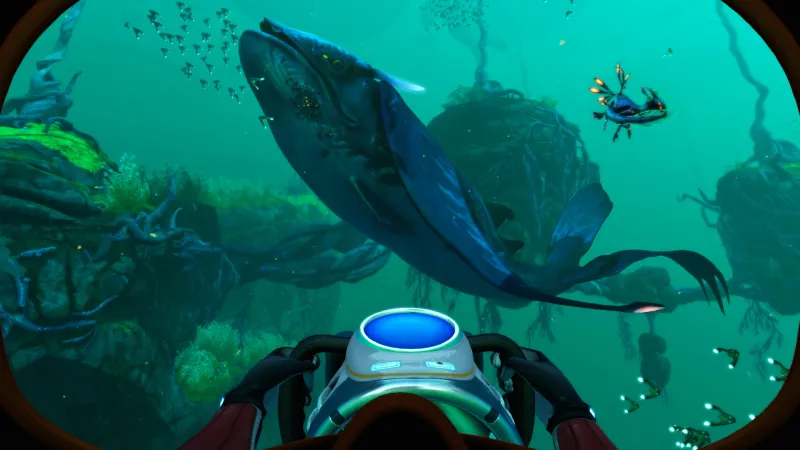
The depths are treacherous. You don’t know what monster is hidden in the blackened waters, but you can hear its terrifying roar grow louder as you dive deeper. You know you are approaching your objective, but feel the monster is even closer. Subnautica: Below Zero delivers a continual sense of wonder and terror in its beautifully designed underwater exploration. Each dive is an empowering experience of discovery and self-preservation. When you come back up for air, you feel like you’ve accomplished something, unearthed a new mystery, and perhaps found what you needed to make your next dive even more rewarding.    

Below Zero is what every sequel should be, building upon the established core formula in clever ways to make the new content feel just as exciting and unpredictable. Holding true to the first game, the main attraction is once again a sprawling alien sea that dazzles with its unusual aquatic life, but the survival gameplay impresses far more now that its been streamlined to the point that it’s rarely stressful or a bother. Even though I would periodically have to fry up a fish to sate my hunger and/or thirst, the majority of my time was spent doing what I wanted at my own comfortable pace and in the order that made the most sense to me.

Click image thumbnails to view larger version


A nicely penned science-fiction story is in lockstep with the discovery element, often overlapping in ways that impact your stance in the world and what you are capable of. Unknown Worlds does a fantastic job of leading the player along to points of interest without clearly labeling them. Audio and visual cues are effectively used, often making you question what something is or where it could go.

I don’t want to spoil what the discoveries are, but many are grand in design, stretching both the narrative and gameplay in directions that make the experience even more enthralling. While I was always on the hunt for the next big thing, the moment-to-moment collection of crafting materials is immensely satisfying and better balanced than that of the original game. Some discoveries have many layers to them. Take the comically named Sea Monkey for example. You learn early on that this curious beast likes your gadgets and will steal them away if you get too close. Later in the game (and after developing more a meaningful connection with the world through a big narrative plot twist), the Sea Monkey becomes your friend and will fetch supplies for you. The gameplay sometimes evolves with the story, and is yet another way Below Zero really impresses with its unexpected depth.

Click here to watch embedded media

I also appreciated just how stress-free most of the crafting is. In the first game, you were immediately tasked to repair a bunch of broken systems in your vessel. In Below Zero, everything is working as it should from the outset. The focus is instead applied to letting you explore on your own and build exactly what you want. That kind of freeing approach is applied to most of the game, even in reducing frustration in exploration. Yes, it’s a sprawling sea, but each area is subtly different in design, making it easy to know exactly where you are and what materials can be found there (especially when you can scan for them). Another nice touch is if you die with a beacon on you, you can find your way back. The air bladder is also much more effective this time around.

Not all discoveries occur underwater. After crash landing on Planet 4546B, xenologist (and protagonist) Robin Ayou gives us an immediate look at one of the sequel’s most effective surprises: true on-foot exploration. From time to time, you’ll step onto land and see what surprises await you, and they can be every bit as meaningful and unexpected as anything you find in the sea. The on-foot gameplay is as basic as it comes (walk and interact), but these sequences give a more complete snapshot of this wild alien world and help change up the gameplay flow.

As more of this planet is explored, you’ll develop the ability to build your own habitats, personalize them how you want (complete with posters and items you find), and eventually become a master of the sea capable of staring down a beast that would make Jaws turn tail and swim away in fright. Just know, these creatures almost always attack when you least expect them to, giving Below Zero some of the best jump scares out there and they aren't even scripted.

Some of these screech-worthy encounters don't exactly go as Unknown Worlds intended and can turn unexpectedly comedic when a beast clearly forgets how to accurately navigate a space, banging into walls and flopping around chaotically. Some escapes also are upended by graphical pop in that makes a giant iceberg materialize out of thin air right in front of you.  Below Zero is a little rough around the edges, but most of my playthrough was nice and smooth.

I can’t stress just how much fun each dive can be, and how fulfilling the discoveries are. Below Zero is one of the best survival games I’ve ever played, showing just how impactful player freedom can be within a world that you’ll want to explore every inch of.

Score: 9

Summary: This second dive into an alien sea delivers a continual sense of wonder with huge discoveries backed by a strong story.

Concept: A sequel that places more focus on story, reduces survival frustrations, and is all about that next great discovery

Graphics: The alien aquatic life is always fun to study and see if you can get close to. The more dangerous biomes and depths are also beautifully brought to life. However, some items pop into existence, and you’ll periodically see odd animations

Sound: A rightfully minimal soundtrack allows the little unknown sounds from the sea pop and potentially fill you with dread. The new voice acting is excellently implemented

Playability: Below Zero is all about figuring out your own path and moving at your own pace. The discoveries are always rewarding, and the nicely designed biomes makes harvesting much easier than before

Entertainment: It’s technically a survival game, but it feels more like a grand adventure that is free of many of the genre’s frustrations

Replay: High

Click to Purchase

Wednesday, May 5, 2021

Resident Evil Village Review – Painting The Ghost Town Red

Click to watch embedded media
Publisher: Capcom
Developer: Capcom
Rating: Mature
Reviewed on: PlayStation 5
Also on: PlayStation 4, Xbox One, PC

Not all monsters hide in the shadows. Ethan Winters discovers this within minutes of setting foot in this isolated village at the foot of a medieval castle. The sun has barely burned off the morning mist when ravenous, fang-toothed horrors attack him. Resident Evil Village’s opening hour establishes an incredibly tense tone, weaving together moody, atmospheric horror with rollercoaster firefights that leave Ethan within an inch of his life. And, like an ultramarathon runner, Village maintains this thrilling pace until its closing credits.

Ethan’s journey forces him to explore a ramshackle shantytown, blood-soaked wine cellars, and a creepy mansion littered with animated porcelain dolls. These locales are perfect backdrops for a series of blood-curdling encounters. My stomach lurched as a deformed baby-like mutation chased me through a dimly lit basement, and I had to stop and catch my breath after a harrowing shootout with a snarling truck-sized hound. Village’s environment and enemy design are superb, making it one of the scariest Resident Evil games to date.

Click here to watch embedded media

Ethan slowly amasses the usual assortment of shotguns, pistols, and grenade launchers to combat this assortment of otherworldly horrors. Village’s arsenal doesn’t hold many surprises, but the overall gunplay is more polished than what we had in its predecessor. Running from Village’s slow-marching enemies isn’t difficult, but navigating their flurry of fangs is still a thrill. Staying calm long enough to line up a series of headshots while these hordes bear down on your position is the true challenge, and I walked away from most encounters with a rush of adrenaline. A handful of other adversaries – such as a meme mistress Lady Dimitrescu – relentlessly hound Ethan throughout the game, much like RE 2’s Mr. X. You never know when one of these villains will stroll around a corner, which creates a palpable tension, but these sequences always eventually resolved themselves in an epic, resource-draining boss battle.

When I wasn’t battling tooth and claw for my life, I was scanning every room from floor to ceiling, looking for more ammo, healing items, and other valuable tools. Like previous Resident Evil games, Village’s map does a stellar job communicating which rooms have been cleared out and which still contain a few hidden treasures. However, some items are better hidden than others. On the one hand, Village encouraged me to pour over its intricately detailed environments with a fine-toothed comb; I enjoyed most of these scavenger hunts, and checking a room off my map was always satisfying. On the other hand, a few items remained stubbornly hidden even after several minutes of scouring, so trying to find every item in every room became a little tedious. Fortunately, even a cursory search of each room yields enough gear to get you through the trials ahead.

Developing a keen eye for detail is also vital for solving Village's handful of environmental puzzles. I love how these puzzles offer a much-needed tension release, and most of Village’s puzzles left me feeling clever. Unfortunately, a couple of puzzle solutions are obscured by fuzzy logic. For example, I had to brute force my way through one puzzle that involved rotating statues, because its clues were misleading. Even after I’d stumbled into the solution, it still took me a while to work out the underlying logic. Fortunately, Village doesn’t throw many puzzles your way, and most of them are satisfyingly simple, so speedbumps are rare.

Click image thumbnails to view larger version


Resident Evil Village’s narrative is more compelling than I expected. Ethan is still a bit of a bland everyman, but his journey to rescue his daughter is full of wild characters and a handful of surprising moments. Village’s narrative was never the main thing driving me forward, but I’m glad to see that Capcom actually put some thought into this world, and a few of the late game twists have me genuinely excited to see where the series goes next.

Resident Evil Village is an impressive package. I loved the recent remakes of Resident Evil 2 and 3, but I’m excited to see Capcom push the series forward again. Village expands on Resident Evil 7: Biohazard’s approach to first-person combat, offering a series of white-knuckle encounters that perfectly complement Capcom’s unnerving environmental design. Thankfully, Village’s amplified action doesn’t diminish its horror. If anything, Village maintains a sense of dread that few games can match. If you have the intestinal fortitude for intense terror, playing Resident Evil Village is a great way to check your pulse. 

Score: 9.25

Summary: Village doesn’t pull any punches when it comes to horror, but a consistent rollout of new weapons and tools makes it hard to walk away from these terrors.

Concept: Resident Evil 7: Biohazard protagonist Ethan Winters travels to a remote village hoping to rescue his kidnapped daughter, only to come face-to-face with a new breed of flesh-hungry monsters

Graphics: From decrepit barns to ornate castle dining halls, Village’s jaw-dropping backdrops are a stunning showpiece for the newest generation of consoles

Sound: Capcom’s haunting soundtrack gets the blood pumping, and the voiceover is solid, but Ethan constantly seems out of breath, which is a bit annoying

Playability: Expect a slow-paced shooter, but the tension remains incredibly high, and the gunplay feels great

Entertainment: Village doesn’t pull any punches when it comes to horror, but a consistent rollout of new weapons and tools makes it hard to walk away from these terrors

Replay: Moderately High

Click to Purchase