Pages

Monday, September 27, 2021

FIFA 22 Review – Short Of The Goal

Publisher: Electronic Arts
Developer: EA Canada
Rating: Everyone
Reviewed on: Xbox Series X/S
Also on: PlayStation 5, PlayStation 4, Xbox One, PC

Sports simulators have gradually garnered the ire and skepticism of their target audience. The EA Sports brand is no stranger to public scrutiny as its many franchises continue to disappoint a bevy of fans. Atop an ever-growing list of grievances are intrusive, pay-to-win microtransactions, neglected game modes, and a lack of significant enhancements that distinguish each new entry from its predecessor. In more ways than one, FIFA 22 looks and feels a lot like the previous installment. “HyperMotion Gameplay Technology” supposedly generates thousands of new animations; it helps create more life-like behaviors on the pitch. Still, no amount of technobabble and exaggerated visual effects can hide the downward trajectory of gaming’s most famous football IP.

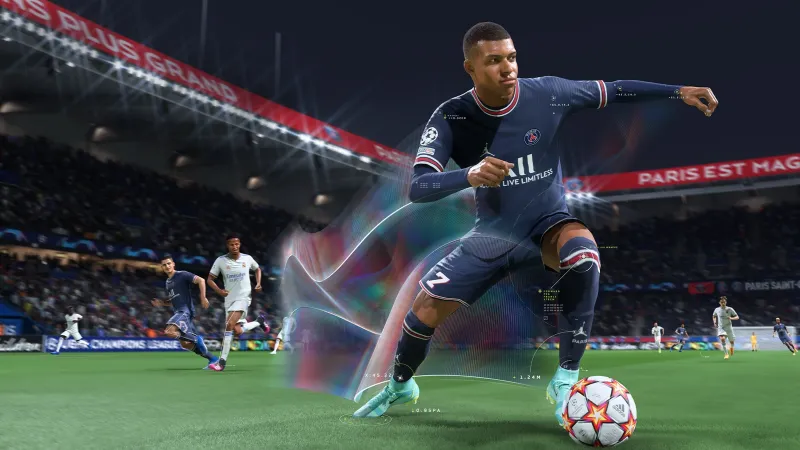
FIFA 22 starts strong with a playable primer focused on fundamental mechanics and the latest features. The tutorials slip cleverly into the overarching narrative – your created avatar is late to an important training session with the legendary Thierry Henry and two-time cover-athlete Kylian Mbappé. You rush down Paris’ lively cobblestone back alleys accompanied by football freestyler and social media personality Lisa Zimouche. Though brief, sprinting past restaurant strips while maintaining ball control and honing pass techniques with excited Parisians was a blast. This introductory cinematic reminded me of the fun Alex Hunter story from many years ago. When it abruptly ended, I couldn’t help but yearn for another full-length narrative.

Click here to watch embedded media

Regrettably, FIFA 22 is devoid of plot. Volta, my favorite mode from last year – small-scale arena soccer – is missing its mildly entertaining rags-to-riches story. This time around, I had to take down AI and player-controlled teams without the motivation or structure a central plot would afford. New “signature abilities” gave me more customization options in addition to my character’s sprawling skill trees. And while I enjoyed unleashing the powers of brute strength (Power Strike), unrivaled speed (Pure Pace), and defensive mastery (Aggressive Tackle) to demolish my opponents, Volta wound up feeling incomplete.

Playing traditional 11v11 football helps quell some of my frustrations. FIFA 22 opts not to reinvent the wheel because it doesn’t have to. Moving down the pitch as a unified front remains tight, dribbles are still appropriately challenging (and marvelous to look at!), and the spectacle of each match is commendable. I was immediately immersed in the experience as full stadiums came to life with synchronized chants, bouts are bookended with dazzling firework displays and award ceremonies, and detailed facial expressions instill each footballer with personality. The HyperMotion Gameplay Technology makes players look more realistic as they go for sliding tackles, flashy crossovers, or angled scores, but that next-gen varnish eventually wears off; there’s nothing here you haven’t seen already.

My Career got a couple of welcome features. Throwing on a pair of cleats and taking to the field as an up-and-coming prodigy means that you’ll have to gain the trust and approval of the coach/organization. Objectives ranging from keeping a high-performance rating to acquiring an arbitrary number of assists gave in-game minutes more weight. Between each match, I upgraded my player with attribute-increasing perks to expedite the path to becoming a starter. Whenever I came off that bench, I prioritized unselfish play and worked hard at avoiding silly turnovers. Watching my avatar’s rapport with his teammates and supervisors gradually strengthen throughout the pre-season and regular season was the highlight of FIFA 22. Playing as a club manager, however, remains relatively unchanged. This isn’t necessarily a bad thing. Balancing roster fitness (stamina) and sharpness (gameday performance) while actively scouting for talent and staying financially stable continues to be a stimulating administrative exercise. The new create-a-team/-stadium option is a definite bonus, but this doesn’t enhance the gameplay or micromanagement mechanics in any way.

Click image thumbnails to view larger version


Of course, if you want to ascend the FIFA 22 ladder, participating in Ultimate Team is the fastest way to do so … if you don’t mind spending copious amounts of real-world money. Ultimate Team’s microtransaction formula remains the same – purchase packs that’ll reward you with uninteresting kits and stadiums instead of star athletes, enter bid races for rare cards, and dedicate hundreds of hours to competing solo or against other high-tier collectors. Big spenders constantly reap the rewards, and the rest are subject to an unforgivable, overt grind. If you’re a casual FIFA player, do yourself a favor and steer clear of this troublesome game mode.

FIFA 22 offers minor tweaks more than anything else. For every substantial update – new goalkeeper mechanics and female footballers in Pro Clubs – EA Canada bafflingly takes several steps back. Even something as rudimentary as the main menu UI remains untouched! I loved going pro as a bright-eyed, bushy-tailed rookie, but it didn’t take long for me to want to hang up that coveted jersey.

Score: 7

Summary: FIFA 22 might tout next-gen visuals and solid gameplay, but there aren't enough exciting changes to differentiate it from last year's experience.

Concept: Race down the pitch to the opponent’s net … again. But, this time, with next-gen visuals and animations

Graphics: The footballers look better than ever, especially during team celebrations. Strands of hair fluttering in the wind and bouncing during light jogs is a nice touch

Sound: The commentators don’t always match the excitement of play, but the roaring fans never let you down

Playability: FIFA 22 feels just like FIFA 21 – intuitive passing leads to flashy assists, complex crossovers leave inexperienced opponents rattled, and watching that ball speed past the goalie’s fingertips is always a sight to behold

Entertainment: There aren’t many notable changes in FIFA 22. My Career is still the most dynamic mode, and that’s not saying much

Replay: Moderately High
Click to Purchase

Thursday, September 23, 2021

Diablo II: Resurrected Review - Memories Made Real

Publisher: Blizzard Entertainment
Developer: Blizzard Entertainment
Rating: Mature
Reviewed on: PC

With Diablo II: Resurrected, Blizzard and the Vicarious Visions team did something I thought impossible – they successfully recreated Diablo II the way my mind remembers it. Looking back on the original today, it’s genuinely fascinating how this remaster paints over the old graphics with a masterful brush, showcasing the grim fantasy environments and deadly bosses precisely as I remember them. Of course, the original graphics looked nothing like this back in 2000, and viewing them today is something of a historical horror. Diablo II: Resurrected is an incredible revamp of one of the most important and influential games in history that begs to be experienced by newcomers and veterans alike.

Click here to watch embedded media

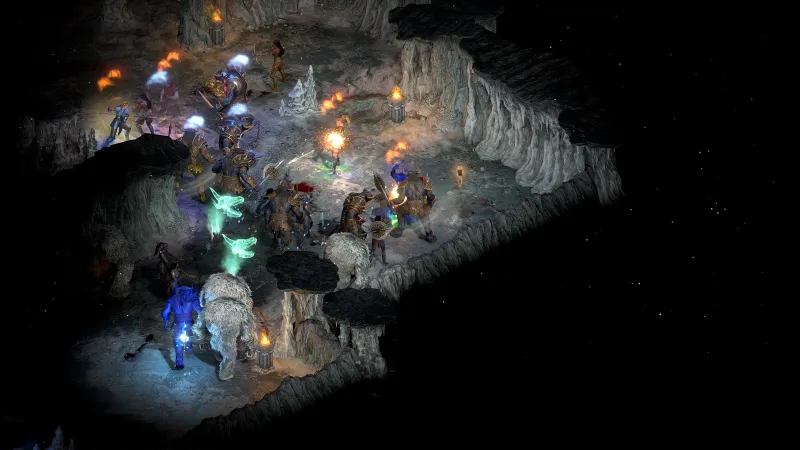
The significant change here is, of course, the graphics, which go up to 4k. At first glance, the new look might not seem like much. I said “Well, that’s pretty much how it was…” However, that’s incredibly far from the truth. In a bit of a curious and way-too-enjoyable addition to the game, players can swap between the old graphics and the new graphics with the touch of a button in real-time, even as spells, effects, and abilities fire off. I spent a ton of time with this feature, experiencing jaw-dropping moments as I compared the old with the new in each Act. While the old graphics look atrocious today and are even challenging to gaze on for long, they are a testament to Vicarious Visions’ graphical upgrade. The new visuals are incredibly faithful to the old vision, with almost none of the notable missteps we saw with Warcraft 3: Reforged where critical units ended up looking strange. By using some form of technical alchemy, the new game is layered directly over the old, and it’s stunning.

This is the first time Diablo II can be played on a controller, and it’s smooth, intuitive, and responsive. Players can assign skills to buttons easily and should make for a slick console experience. While you will find it hard to pry me away from my mouse and keyboard in a Diablo game, this was the first time I’ve been tempted due to the ease of use.

Miniscule changes give players a few quality-of-life improvements. Players pick up gold by walking over it, which is a godsend given the many stacks of littered coins in dungeons. Players have shared stash space to send items to other characters in their roster, which saves a ton of time and energy, as previously it would take a lot of character/game swapping in order to move items around. And finally, a few other options make life less of a chore, like having dropped items show up on the ground without having to hold a button down. None of these changes alter the fundamental Diablo II core, but they make the experience easier to enjoy.

Click image thumbnails to view larger version


The core of the game is untouched, for better or worse. I’ll still complain about the cramped passageways in the Maggot Lair. Thanks to the isometric environments, one unfortunate click took me directly to my death, derailing a corpse run. A surge of excitement coursed through my body when Baal died and several set items dropped. A wave of despair followed as I had them identified and realized they’re trash. The whole of the gameplay experience can feel quite dated today as you simply walk from area to area, wailing on a single button or two. Nothing has been rebalanced, so some class builds remain much stronger than others.

However, the simple essence of Diablo II – gaining new skills, the never-ending loot discovery and collecting, and blasting through boss after boss and dungeon after dungeon – hold up even after all these years. As in the past, players are encouraged to explore various classes and builds as they collect piles of loot, enabling all kinds of possibilities from paladins that spin magical hammers to bear baron druids. If you have friends to play with, the experience is even more fun, taking on the nightmares together and sharing the rewards.

Diablo II: Resurrected shows why the original title remains the standard against which all other ARPGs are judged. While it doesn’t come with many hooks and ever-evolving content that has become a baseline for the genre as it transformed into a game-as-service model, not all games need to be played with forever in mind. Diablo II: Resurrected proves that Blizzard’s classic is still a blast, even today. Whether it’s your first foray into hell and beyond or your thousandth hour, Diablo II: Resurrected is worth the time.

Score: 8.75

Summary: Two decades later, Diablo II gets a posh layer of flavor.

Concept: Play the formative ARPG Diablo II with a handful of quality of life improvements and drastic visual upgrades

Graphics: The new graphics capture the spirit of the original designs and are lovely to behold

Sound: Surprisingly, the iconic grunts, growls, and hammy quips stand the test of time

Playability: Anyone can pick up Diablo II and begin collecting loot, though some build planning is recommended to tackle higher difficulties

Entertainment: Diablo II: Resurrected is a mastercraft remaster that reminds us how the original game changed the gaming landscape forever

Replay: High

Click to Purchase

Wednesday, September 22, 2021

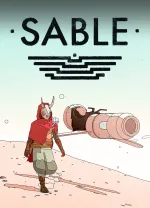
Sable Review – Captivating Gameplay Behind A Beautiful Mask

Publisher: Raw Fury
Developer: Shedworks
Release: 2020
Reviewed on: PC
Also on: Xbox One

In a typical open-world game, the environment is littered with content, populated with interesting side-quests, and full of breathtaking sights, but an overarching singular objective remains. Whatever the quest, exploring the world and helping locals often requires that you step away from your primary purpose. Sable is refreshing in that regard. This expedition allowed me to lose myself in the small details, talk with diverse characters, enjoy the experience, and admire the sights.

My trek into the desert is a rite of passage called the Gliding, during which I must leave my clan to roam the world gathering masks. I can return to my home when I feel like I have traveled enough and pick a mask to represent my adult identity.  Though they lack voices, Sable’s characters have no absence of personality. As the motherly Jadi urges me to take time appreciating the trip, her concern makes leaving the clan bittersweet.

When I leave, my first foray into the larger world is extraordinarily compelling. An immense, trackless landscape opens before me as a celebratory Japanese Breakfast song rings out. The moment skillfully replicates the thrill and trepidation Sable feels thanks to her newfound independence. Fortunately, the clever level design keeps players from wandering aimlessly by putting important locations in hard-to-miss spots, and soon I’m ready to hunt down masks.

To collect most masks, you bring three badges to a mysterious mask-crafting entity. The missions that reward these tokens are usually short, and in some cases, simple fetch quests. On the hunt for Hercules Beetle Mask badges, for example, one assignment leads me to scare the literal crap out of bugs – apparently, it makes excellent fertilizer. In a slightly loftier Guard’s Mask quest, I received a badge for climbing the evocatively named Bridge of the Betrayed, meeting a character examining their own identity. While neither mission is mechanically complex, I appreciate the narrative variety and how the quests inspire me to travel to the ends of the map. As someone who excitedly pursues side content in most games, Sable’s exploration-focused, combat-less gameplay is fantastic.

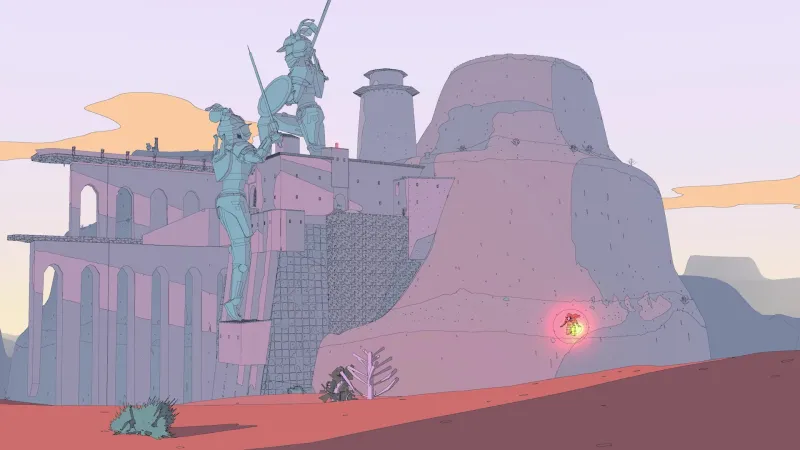
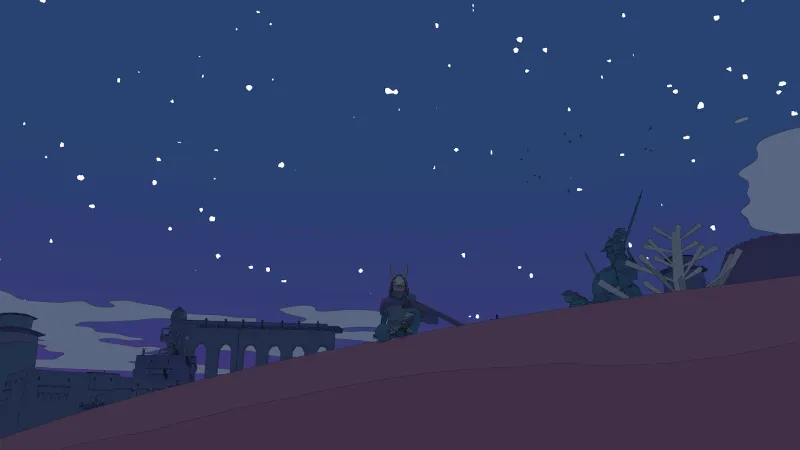
Of course, it doesn’t hurt that my travels took me through an absolutely stunning environment. The art is almost simple, but its vibrancy is astounding. Some may be thrown off by the main character’s sprinting, which intentionally runs at 12fps while the rest of the world targets 60fps. However, I appreciated this contrast because it accentuates the animation, like a painting that emphasizes its brush strokes. There is so much life in Sable’s visuals. The sand glows under the sunrise, and the stars shine when all the desert’s colors fade into the night. The landscape is rife with structures to climb, and these tempting locations often hide valuables, whether a unique article of clothing, a useful stamina-boosting collectible, or an unexpected character interaction. My curiosity was constantly rewarded. 

Sable’s exploration remains engrossing thanks to its smooth, stamina-dependent climbing, which let me navigate simple, environmental puzzles – like connecting a power supply to open doors in a long-abandoned spacecraft. The gliding stone artifact encases Sable in a protective bubble that allows her to float slowly towards the ground – shielding her from fall damage. This mechanic dared me to scale great heights. Whether summiting an obstacle or gliding in the breeze, the act of exploration was entertaining.

Click image thumbnails to view larger version


My favorite mode of transportation is unquestionably the hoverbike. While zipping across the game’s parched expanse on the customizable, futuristic vehicle, I could almost feel the wind in my hair. Many settlements have vendors that sell unique parts, which I could mix and match to make the bike my own. The scene where I worked with my clan’s machinist to assemble my speeder did an excellent job of revealing how the culture respects technology to an almost spiritual level while not overwhelming me with exposition. This introduction built a bond between my bike and me, which helped me forgive the repeated times the speeder failed to come at my call because the AI couldn’t navigate various barriers. Most of the time, I remedied this problem by fast-traveling to an already discovered, nearby location, which would teleport both me and my machine to the same place. It’s a bit inconvenient but never took more than a few seconds away from the action.

Sable ends in the same way it starts, at home with family. The narrative payoff is not actually about your final choice, and that may rub more goal-oriented players the wrong way. However, I found the conclusion a fitting end to a side quest-filled exploration game. For those who love to explore, I can’t recommend Sable enough. Every element – beautiful graphics, compelling traversal, and player-driven plot – works together to ensure I simply lose myself in the world. 

Score: 8.75

Summary: A game for those who have ever wanted to just jump on their hoverbike and ride off into the desert.

Concept: Leave your clan and childhood behind to explore the wide world on your hoverbike and discover who you want to be

Graphics: Every landmark, settlement, and vista bursts off the screen thanks to bright, bold, and consistently captivating visuals

Sound: Japanese Breakfast lends Sable a contemplative and exciting tone while the sounds of the desert and hum of the speeder immerse you in the world

Playability: Climbing, gliding, and riding all feel smooth, though the low-fi running animations may look odd to some

Entertainment: Self-guided exploration is bolstered by quests that give you an excuse to jump on a speeder, climb mountains, and float through unexplained ruins in a dazzling ecosystem

Replay: Moderately High

Click to Purchase

Monday, September 20, 2021

Kena Bridge Of Spirits Review – One Of The Best Adventures Of The Year

Click to watch embedded media
Publisher: Ember Lab
Developer: Ember Lab
Rating: Everyone 10+
Reviewed on: PlayStation 5
Also on: PlayStation 4, PC

From the moment Kena’s staff ignites with magnificent magic, the world around her sizzles with excitement, creating an enchanting atmosphere for one of the best adventure games I’ve played in recent memory. Kena: Bridge of Spirits is Ember Lab’s debut game, but it hits with the sophistication and beauty you’d expect from a studio that’s been doing this for decades.

With environmental puzzles around almost every bend and secrets waiting for those who can solve them, Bridge of Spirits has a strong heart for adventuring. That heart constantly pounds as new areas are discovered, each beat pulling you in different directions to unearth hidden treasures and items that will help rejuvenate a fallen society.

Kena (pronounced “Kay-nuh”) is an inexperienced Spirit Guide who must locate wayward souls that are reluctant to leave this mortal coil. Before sending them on their way, she needs to learn about their lives, and ultimately what happened to them. By exploring the land, their pasts are unearthed, and you learn of their triumphs and hardships through brief flashbacks that make the story sing in intriguing ways and help flesh out its key players. Many of these revelations play out within beautifully animated story sequences that swell with emotion and are amplified by an outstanding soundtrack featuring traditional Balinese music. I found myself humming along to the excellently composed low-key melodies, some sung by Ayu Larassanti, the same actress that brings Kena’s voice to life. How cool is that?

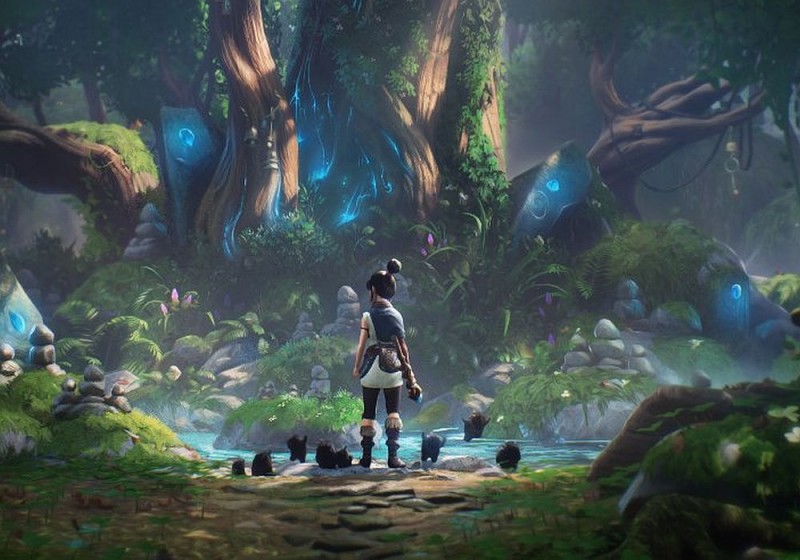
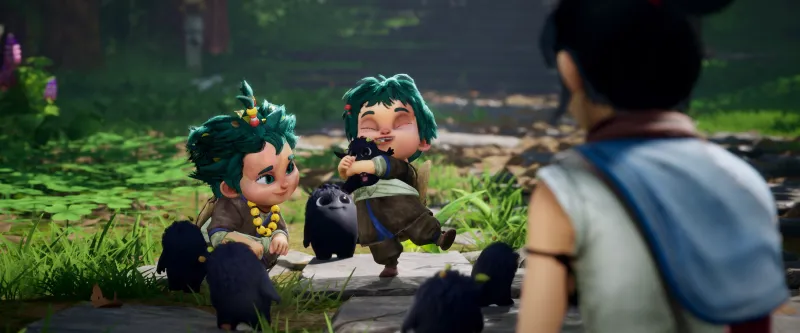
The serenity of the experience extends to the world. Be prepared to enter photo mode numerous times during your playthrough. Bridge of Spirits is as beautiful as games come, and that beauty encourages exploration – you’ll want to see all of this fantasy kingdom. Ember Lab’s artists make every little detail pop, whether within the sprawling forest Kena journeys through or the little creatures she meets along the way. These adorable tiny blobs are called Rot and are one of the game’s most sought-after collectibles. They play a massive role in both the gameplay and story, but more importantly, they wear cute hats (another item to track down). You don’t know what the Rot are or why they are helping Kena, but you keep gathering them (up to 100 in total) and hope they continue to be your allies as the story unfurls.

As Kena bounds through the sun-soaked forest, she’ll come across areas of corruption littered with thorns, muck, and gray vines leading up a red, pulsating blob called a Tangled Heart. When Kena enters these locations, enemies materialize from red mist and combat ensues. Throughout the entire game, Kena only uses her staff to take down these foes, but this simple weapon is about as adaptable as they come.

Kena’s movements are swift, and the staff’s melee strikes land with a satisfying wallop. She can evasive roll, block, and perform parry’s to stun her adversaries. These battle sequences hum with intensity, are loads of fun, and expand with complexity when Kena learns to use the staff in new ways.

Some of the staff’s augmentations unlock through purchase, but the most significant additions are earned by making progress in the story. Along the way, Kena learns how to turn her staff into a bow and channel its powerful energy to create bombs. Tagging an enemy with a carefully placed bomb is good fun, but the bow is the true star of combat. It feels incredible and is designed with pinpoint precision in mind. When Kena leaps into the air and pulls back the bowstring, time slows, allowing for an arrow to hit the exact spot you want – whether it’s a small weak zone on an enemy's chest or a hanging lantern below a galloping behemoth. Landing these shots is an empowering experience, and you are tasked to do it constantly. It's such a satisfying gameplay hook.

Click image thumbnails to view larger version


The Rot, those adorable companions I mentioned earlier, also play a significant role in combat. They can heal Kena, stun enemies, and are game-changers against bosses. These conflicts turn the difficulty to 11 and demand near perfection in your timing and strategies. Don’t be surprised if these bosses throw you around like a ragdoll, and you die often. The leap in difficulty is surprising and is one of the areas where the game struggles a bit. The difficulty setting is switchable at any point, but with unsatisfying results – moving from blistering intensity to cakewalk.

Bridge of Spirits also leans a little too heavily on the same puzzle mechanics, especially in the late game where almost every vertical movement pushes Kena to throw a bomb and detonate it with an arrow to create a path forward. While I appreciate how clever the puzzles are and how fluid the platforming is, using the same motions gets tiring and saps some of the fun out of the exploration.

Click here to watch embedded media

Ember Lab was upfront about Kena’s length going into release, saying it could be completed in a weekend. Given how much I adore this experience, I wish it would last longer, but the shorter footprint works well, especially for seeing all the world has to offer. The final act is the only aspect that feels rushed. The story wraps up nicely (in ways I didn’t expect), but a few of the big reveals and conflicts come and go in a flash and aren’t given the same level of care as other moments in the game.

Bridge of Spirits stumbles a little in spots, yet confidently sprints into the heart of the adventure, rewarding the player with secrets galore and visuals that are almost always worth admiring. If you love Zelda-like games or are just looking for an experience that will make you smile every step of the way, you can’t go wrong with Kena: Bridge of Spirits.

Score: 9

Summary: Ember Lab's debut game is a hit that you don't want to miss.

Concept: A rewarding adventure that encourages exploration and hits hard with combat and puzzles

Graphics: A beautiful journey that catches your eye with its stylistic characters, lush forest, and jaw-dropping next-gen lighting. Little touches like seeing the Rot find places to relax add a playfulness to the already impressive visuals

Sound: Composer Jason Gallaty and the ensemble group Gamelan Çudamani made a score that hums from start to finish. The voice acting and adorable Rot mumbles are also fantastic

Playability: Combat and environmental puzzles deliver plenty of thrills, but repetition is a problem in the final act

Entertainment: The world is fun to explore, and your time is rewarded with secrets galore and hats for your little Rot followers

Replay: Moderate

Click to Purchase

NBA 2K22 Review – Minor But Compelling Roster Additions

Publisher: 2K Games
Developer: Visual Concepts
Rating: Everyone
Reviewed on: PlayStation 5
Also on: PlayStation 4, Xbox One, Switch, PC

Like every NBA team, Visual Concepts must get ready for another season and try to improve its roster and make the lineup stronger. Last year's entry was all about making the jump to new-gen hardware and truly taking advantage of the tech with impressive graphics and lightning-fast load times. You could say the developer found its core players when it made that move, but as with every roster, there's always room to grow into a title contender. Visual Concepts hasn't found its championship year, but it made some solid improvements and changes to get there eventually. NBA 2K22 may not feel significantly different from last year, but some bright spots make it more fun to play and set a promising foundation for the future.

The gameplay, which has always been top-notch, doesn't make any huge shifts from the formula. It took me a few games before I truly appreciated the enhancements. This year focuses on rewarding your basketball IQ and having more realistic features, like fatigue, factor into your performance. That doesn't mean your star players won't shine and easily be able to dominate the game, but you might miss a few more baskets or get blown past for being out of position more than in previous entries. It's a change I'm all for, as previously it felt like overpowered stars mattered more than playing good team basketball. 

The defensive game is where the tweaks are most noticeable, as positioning can make or break you. If you don't cut off your man appropriately or commit to the wrong play, you pay for it. Blocking and shot contests are reworked, so predictable plays are properly defended more realistically. I also really like the new shot meter, which takes into account shooting ability, distance, fatigue, and defensive coverage. Getting a basket is a good mix of skill and player talent that previous entries have struggled to perfect. You also can't take anything for granted and assume that since your player is elite, the shot will go in, and forcing a shot up often fails. Some new dribble moves provide more variety to ball handling, and this is another area where the differences in player skill are evident in how they look and feel when dribbling. 

As for modes, MyCareer probably saw the most significant changes, taking place entirely in The City. In this sprawling multiplayer hub, players can do everything from shopping for new clothing to playing in pick-up games and tournaments. That means you're no longer following a huge cinematic, authored storyline as in previous years; instead, you're living out your NBA career in this venue, visiting agents at their headquarters, meeting with reporters for exclusive interviews, and going to the practice facility for team practices. Visual Concepts has leaned into the RPG elements, with a huge quest system that ensures your player always have something to do, whether it's working on their NBA career, advancing their personal brand, or taking on online challenges for extra goodies.

MyCareer still has a story path, playing as "MP" an up-and-comer who turned heads with his YouTube channel and is carving out his own unique path in the NBA. This approach feels fresher than previous years, with Visual Concepts choosing to show the different ways players can make a name for themselves and how social media can play a huge role in a player's rise to fame. You can decide to focus solely on basketball or build your brand with ventures into music and fashion. During my time, I released a track with rapper The Game and started my own clothing line for comfortable but stylish athletic apparel. The story is silly at times, but I enjoyed it for that reason. This mode also adds some fun diversions from the NBA season, but be aware that if you do enter the fashion track, you're expected to use the virtual currency (VC), which you can earn in-game or buy using real-world money, on clothing to impress. That said, the mode is still a grind, and it doesn't help that most quests are repetitive, sometimes being a rehash of the same content (the music trivia is egregious) or require you to participate in boring fetch quests. The City is still a pain to get around until you open up better vehicles and additional fast travel options beyond your apartment. 

Click image thumbnails to view larger version


You only enter The City as a male MyPlayer, which is disappointing. NBA 2K22 does bring back The W if you want to forge your own WNBA career. While this mode laid a great foundation last year, it's disheartening that Visual Concepts didn't build off it more for NBA 2K22. The only significant addition is the ability to practice with other WNBA stars to learn their skills alongside some gameplay improvements to better mirror the women's game, especially in the passing department. However, the mode feels vacant of meaningful interactions and rewarding content. I'd love to see scenes and press conferences to really showcase my player's personality and choices about her path in the league, as you see in MyCareer. 

MyGM is also very similar to last year, except with more staff members for various positions to hire, such as a sleep doctor or perimeter defense coach. This encourages you to think more about hires. Do they fit your coach's system? Do you put up with staff members who have a negative trait or two in favor of their other superior skills and perks? It's a small addition but gives you a bit to think about when assessing your team's needs. This mode is fun but is beginning to lose its allure due to not having any significant changes in recent years.

MyTeam, where you open card packs to create the roster of your dreams, got one of my favorite additions: drafting. Now you can build a roster by flipping over three cards in a pack of five to create your team at various positions. It adds some unpredictability and luck to the equation, but I enjoyed creating a team this way to play others online. Depending on your wins and losses, you get extra rewards and more attempts at drafting players to keep making your team better. 

For those who like getting goodies and seeing your work going toward something, seasons are now across all the game's main modes. Seasons run every six weeks and allow you to get free items like clothing, card packs, and more. All you need to do is complete objectives (mostly playing games) to reach certain reward tiers. Modes like MyTeam and MyCareer have daily rewards that give you small freebies just for logging in. This is a smart change; I always felt like I had something to look forward to, and it helped to have some rewards to chase as an incentive to keep playing. While this is an improvement, microtransactions still rear their ugly head in NBA 2K22; most players put down VC to up their player's stats faster or get lured by cosmetic items to improve their look. You earn VC by playing games, but it is a grind, which is why so many reach into their wallets. At the very least, clothing pricing seems more reasonable, but players only have slow-moving skateboards to navigate The City seems like a carrot to get them to upgrade. 

Instead of walking into the arena and making a grand statement, NBA 2K22 just plays decent basketball. You'll see a few highlight clips, but none that make you want to keep watching in awe. Still, NBA 2K22 is an improvement over last year, even if it's disappointing that it's not making more significant moves. Hopefully, next year we see more shakeups to the lineup to make the game a little more exciting and feel like Visual Concepts is gunning for that championship title. 
 

Score: 7.75

Summary: NBA 2K22 may not feel significantly different from last year, but some bright spots make it more fun to play and set a promising foundation for the future.

Concept: Build on the innovations from last year's new-gen console debut while adding some new touches across all modes

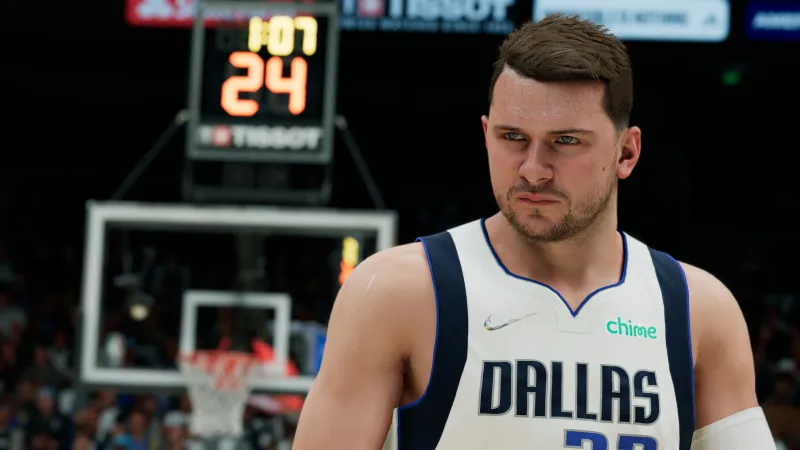
Graphics: The ultra-realistic player models and their on-court moves wonderfully resemble the real world. The little details, from the crowd to sweat on the players, are a nice touch

Sound: Once again, the soundtrack provides energizing beats to get you in the zone, while the commentary still stands as some of the best in sports games

Playability: The new shot meter goes a long way in providing a smoother, more natural experience. Those with high basketball IQ on both sides of the court should often prevail

Entertainment: NBA 2K22 makes some smart and interesting changes and refinements. Unfortunately, they aren't a large enough leap to truly dazzle the audience

Replay: High

Click to Purchase

Thursday, September 16, 2021

Lost Judgment Review – Three Cheers For Sweet Revenge

Publisher: Sega
Developer: Ryu Ga Gotoku Studios
Rating: Mature
Reviewed on: PlayStation 5
Also on: PlayStation 4, Xbox One

(Content warning for mentions of sexual assault)

Is revenge ever justified? Can a person take justice into their own hands and live with the weight of their choice, or should it always be left to a flawed judicial system that can and will betray the people it's designed to protect? These are the core questions at the heart of Lost Judgment, the latest game from Yakuza developer Ryu Ga Gotoku and sequel to its 2019 detective-action brawler Judgment. 

Lost Judgment’s story focuses on two major topics: justice and revenge. Yagami’s journey explores how these two concepts are intertwined. Throughout dozens of hours, the game examines what people are willing to do in search of justice, the failings of the criminal justice system, and how society often fails victims of violence and abuse.

Lost Judgment tackles difficult topics like bullying, murder, and suicide. While it shows the often brutal and tragic realities in excruciating detail, it approaches sensitive issues with care and empathy. Lost Judgment highlights real-world issues, how they affect people, and offers potential solutions for these problems. The game’s cast, full of new and returning characters, brings the story to life through well-acted cutscenes. I especially loved the antagonists, who were always painted sympathetically despite doing evil things. I found myself commiserating with them, even if I disagreed with their actions. Lost Judgment’s care and grace in navigating these topics is refreshing, and I enjoyed playing through a story that treats them maturely and smartly. With one major exception.

Click here to watch embedded media

Lost Judgment’s handling of sexual assault is a mess. Following the #MeToo movement, a plot point that casts doubt on the truthfulness of a victim’s story is, frankly, irresponsible and reinforces negative views towards women who come forward with stories of abuse. Using sexual assault as a plotline, in this case, feels weak and shocking for the sake of shock. This is especially egregious when the narrative tosses that character aside once her usefulness as a plot device is over, forgoing any resolution to her character arc. I found this plot beat incredibly disappointing in a game that otherwise took care in sensitive storytelling. This cast a shadow over the rest of my playthrough, souring me on a story I otherwise enjoyed. I truly hated engaging with all of these moments in the game.

The action should be familiar if you’ve played RGG’s other games, such as the Yakuza series or Judgment. You spend a lot of your time walking around two open worlds – Kamurocho and Ijincho – getting into brutal street fights and chasing story threads around town. Judgment’s investigation mechanics carry over from the previous game and largely remain unchanged; you look around for clues and later present those clues as evidence, which like the first game, is a nice way to break up combat-focused sections.  

Lost Judgment introduces two new mechanics to the series: stealth and parkour. Both are poorly implemented and tedious. Stealth is rudimentary and linear – go to this hiding spot, throw a coin to lure guards away, rinse and repeat. Parkour is somewhat engaging, but the game frequently forces you into investigation mode to find the handholds you need to get around an area. This kills the pacing, especially during the climax of the game where I was constantly stopped so I could search around for where to climb. 

Click image thumbnails to view larger version


Combat is the highlight of Lost Judgment’s gameplay. Yagami is fluid and fast, and the inclusion of the three different fighting types from the first game, which you can swap between on the fly, feels fantastic. I loved encountering a room of enemies and using the three fighting styles to take out each person systematically – especially Snake, which allows for quick take-downs and the ability to disarm enemies. RGG’s iconic heat actions return, and they are as brutal and over-the-top as ever. I loved the combat in Lost Judgment so much that I often found myself just walking around the open world looking for trouble.

By the time credits rolled, I had trouble sorting out my feelings. On the one hand, Lost Judgment’s story is very moving, and I enjoyed exploring the characters' emotions. And there were parts I simply loved playing, such as beating the holy hell out of bad guys. But at the end of the day, Lost Judgment commits a few unforgivable sins. Its handling of sexual assault is wildly irresponsible, and the new gameplay mechanics do little to help it stand out over RGG's other games. If you’re already invested in the Judgment series or RGG’s games in general, then I’d say still check it out. But don't expect this journey into Japan's underworld to have nearly the impact of a game like Yakuza 0 or Like A Dragon. 

Score: 7.25

Summary: When Lost Judgment stumbles, it never recovers. While there's a lot to love in the story and gameplay, at the end of the day, its issues become too much to ignore – especially when those issues are messy and irresponsible.

Concept: Investigate a murder case across two open-world cities by tracking leads, finding clues, and beating up lots and lots of people

Graphics: Lost Judgment features well-directed and striking cutscenes. Walking around the environment also looks excellent on next-gen consoles

Sound: The cast is consistently well-acted, bringing to life the game’s lengthy story

Playability: Combat is one of Lost Judgment’s highlights, though the new stealth and parkour systems are rudimentary and poorly implemented

Entertainment: I found a lot to love in the game, but its sloppy handling of sexual assault left a bad taste in my mouth. After a run of great games from developer RGG, Lost Judgment isn’t quite up to snuff

Replay: Low

Click to Purchase

Tuesday, September 14, 2021

Eastward Review – Pixel Paradise

Publisher: Chucklefish
Developer: Pixpil
Reviewed on: PC
Also on: Switch

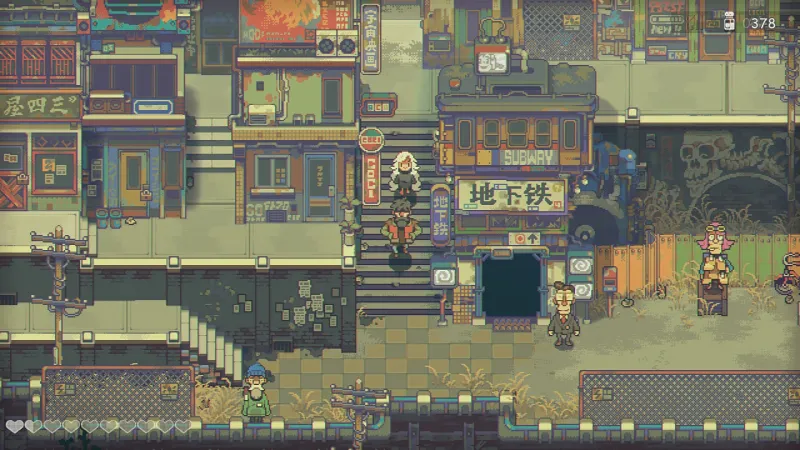
Eastward feels like going back to the days of '80s anime on VHS, where you could experience a clandestine and unusual medium that you couldn’t find anywhere else. As John and Sam, players must head Eastward (whoa, that’s the title!) across a strange and surreal universe. While the characters and lore have a lot of heart and carry this journey to the end with ease, the combat, puzzles, and boss encounters leave a bit to be desired. An excellent score provides an incredible backdrop to pixel-perfect art, creating a whimsical and enchanting atmosphere for this quirky RPG that openly pays homage to titles like Earthbound. In fact, inside Eastward, there’s an entire game called Earth Born, complete with its own (in-game currency) gacha system that’s a blast to play when you just want to take a break from advancing the main story. 

Click here to watch embedded media

The tale starts simply, with a frying pan weapon to swing furtively about, a Zelda-like structure of acquiring heart containers, finding keys to make your way through dungeons, and swapping between characters on the fly to solve puzzles and handle fights. John takes care of the rough fighting at first and uses ranged weapons and a few types of bombs to break walls and take on bosses. Sam can manipulate the world with energy blasts, and she gains even more powerful energy attacks that must be charged up before unleashing them throughout the journey. The combat remains simplistic throughout the game and isn’t really satisfying.

Many dungeons include puzzle segments where the player must control the characters separately, moving them around to interact with the environment to get past elevators, overgrowth, and a multitude of other obstacles. Most of these puzzles are simple to figure out, but a few involve enemies that attack your characters while they are defenseless (forcing you to swap control between them) or involve time trials that overstay their welcome late in the game. Overall, controlling John and Sam both in and out of combat feels alright, but there are only a few truly interesting boss encounters and puzzles, and those are primarily found in the late game.

Click image thumbnails to view larger version


Surprisingly, Eastward does not live and die by its combat or puzzles. Eastward builds a world that feels real, heartfelt, and intriguing. Many game worlds are crafted around archetypal building blocks that draw upon established fantasy, sci-fi, and other well-traveled ground. Refreshingly, Eastward goes in a bizarre and quirky direction and took me on a ride where I never knew exactly where things were headed. This journey across the world has you escaping an encroaching and deadly miasma. At times, you also unravel other threads that have you exploring the world of organized crime, concepts of time travel, the pleasures of simple farm life, and making movies with a decidedly unusual crew. 

The locations and characters that fill these environments are memorable, and I wanted to thoroughly explore the town to make sure I talked to every single NPC. I can’t remember the last time I did that in an RPG, and it’s a testament to what a fine world Pixpil has created. These cozy lore elements probably would have worked with any art style, but Eastward’s combination of spectacular music and pixelated look creates an atmosphere that proves you don’t need 4K resolution and ray-tracing to make something magical. Some of the coziness seeps into the gameplay with the cooking mechanic, where you can craft some amazing meals that provide potent buffs to help take on the more challenging bosses. While I’d love to elaborate more on this world, the less you know about Eastward going in, the more you’ll get out of exploring this enchanting landscape.

While the combat isn’t anything special and the puzzles wear out their welcome, Eastward’s characters, setting, and sounds craft an unforgettable experience. If you’re looking for something quirky, captivating, and somewhat surreal, you’ve found it.

Score: 8.5

Summary: A spectacular soundtrack and stunning sights await you on this vibrant journey.

Concept: Travel and explore a vast, strange world full of exciting characters, fleeing from a deadly miasma

Graphics: Eastward highlights what you can do with perfect pixel placement, and the art style pulls you into the game and story

Sound: The soundtrack is excellent and helps immensely with immersion, whether you’re in a dark cave or a bustling cityscape

Playability: Combat stays simple throughout the entire experience with a few challenging encounters and puzzles – Eastward is well-suited for any puzzle-loving player

Entertainment: Eastward crafts a cozy journey through fascinating and bizarre realms, featuring a memorable cast. While lackluster combat and a few repetitive puzzle styles tarnish the experience, it’s still a ride well worth taking

Replay: Moderate

Click to Purchase

Monday, September 13, 2021

Deathloop Review - The Joys Of Death And Dying

Click to watch embedded media
Publisher: Bethesda Softworks
Developer: Arkane Studios
Rating: Mature
Reviewed on: PlayStation 5
Also on: PC

Deathloop is a paradox, where time is in both infinite supply and quickly running out. Protagonist Colt Vahn is stuck in a timeloop, desperately trying his best to get off the gleefully nihilistic island of Blackreef. The rules of breaking the timeloop seem simple: kill eight targets within 24 hours. Paradoxically, this feat is an intricate clockwork of planning, preparation, and execution that feels impossible at first. It all culminates in one of Arkane Studios' best games to date.

Deathloop begins in media res, as Colt is murdered by a mysterious woman named Julianna Blake. As soon as he dies, he wakes up on a strange beach with no knowledge of who he is or how he got there. Julianna soon makes contact, explaining his situation, and by extension, the game's rules. Colt is on Blackreef, where time is perpetually stuck, and murder is the only way out.

The game revels in its nihilistic world; dying has no meaning on Blackreef, so why not do whatever you want? Death, murder, and all manner of awful things are treated casually, lending dark humor to the whole experience. This kind of storytelling could have become juvenile in the wrong hands, but Deathloop's writing is strong, and I enjoyed seeing the twisted ways it played with the timeloop conceit. Colt and Julianna's interactions – full of bickering and arguments – are almost always entertaining and humorous, and the two are now among my favorite video game characters of the year.

Click here to watch embedded media

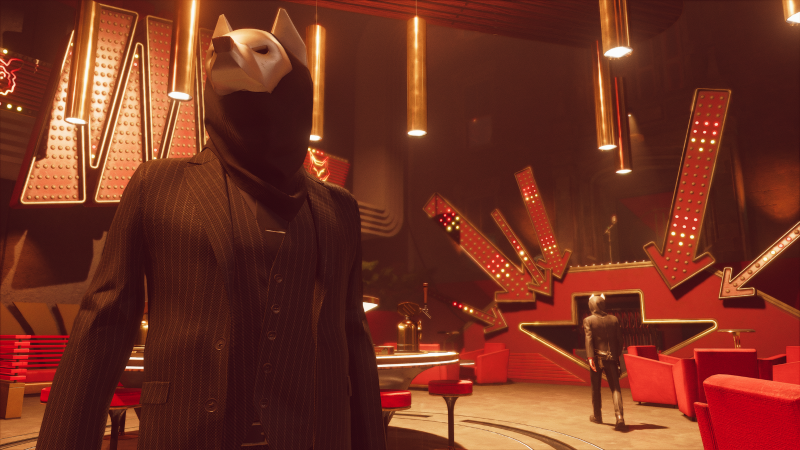
Blackreef is broken into four large districts, each with its own clues on how to proceed, access to targets, and storylines that progress the main plot or serve as side content. Each district has a unique flare – from a city center hosting a massive party to an expansive research station near the coast – and arriving at different times of day changes everything from where guards patrol to who and what is available. You can choose to explore a district at four times of day: morning, noon, afternoon, or evening, and I enjoy the way this makes you plan your routes accordingly.

Tracking leads throughout Blackreef quickly became my favorite part of Deathloop. I loved exploring, seeing how the world opens up and how my opportunities change over the course of a day. It takes a while to get to the bottom of any mystery in Deathloop, but the game does a good job of paying you back for your time with fun new ways to play, such as access to new powers, better weapons, and upgrades for both.

Compared to Arkane's previous immersive sim series, Dishonored, Deathloop encourages players to spill as much blood as they want; no penalty or morality system is punishing you for using all the cool weapons and powers at your disposal. Many of those powers are very similar to those in Dishonored, including teleporting around levels and chaining multiple enemies together so that killing one kills everyone in the chain. From the get-go, these powers seem like upgraded versions of those in Dishonored, meaning Deathloop is effectively one giant power trip. As I honed my skills and memorized its various levels, I loved loading in and ripping through an environment in a matter of minutes – especially when combined with the game's great arsenal, which includes a nail gun for silent headshots and an SMG that can be reloaded while shooting for a non-stop bullet spray. An in-game currency allows weapons, powers, and upgrades to be carried between loops, which is a helpful touch for alleviating the penalties of death.

Click image thumbnails to view larger version


The last trick up Deathloop's sleeve is its online component, which pits players against each other. Where the single player focuses on Colt, players can also jump into a mode where they play as Julianna. The former tries to achieve their objective as the latter invades other players' games and attempts to hunt them down and kill them. This mechanic can be turned off, but I found that these invasions add a fun bit of tension and spontaneity to runs, especially when playing with a friend I could talk and laugh with. My best-laid plans were useless when Julianna showed up, and the dangerous game of cat and mouse that ensued always left me on edge.

The further I got, the more satisfying it became putting all the various puzzle pieces together until finally, I had a finished plan. I had built dozens of routes to get through my final day, assembled an arsenal of perfect weapons, and chosen the right powers to kill all my targets. And then I botched it all at the last second. But that ever-building sense of knowledge and accomplishment present throughout the game led me to immediately start a new playthrough, to experiment further and explore. In Deathloop, dying is fun, killing is even better, and I can't wait to see what the game throws at me next.

Score: 9

Summary: Deathloop is a bloody, chaotic mess. A mess you will fail at over and over until finally, you succeed. And that success – the result of hours of experimentation, iteration, and knowledge – makes for one of the best games of the year.

Concept: Find and kill eight targets in one day, before time resets and you have to start all over

Graphics: Each level has a unique vibe, brought to life by an eye-popping 1960s aesthetic

Sound: A solid soundtrack featuring catchy and fun original, in-game songs that feel era-appropriate. The banter between the two main characters, Colt and Julianna, is consistently funny and entertaining

Playability: Mastering Deathloop takes time, but once you do, combining its various powers and weapons almost always has satisfying (and bloody) results

Entertainment: Deathloop is a rare game I started replaying as soon as the credits finished rolling. Now deep in a second playthrough, I'm still discovering new secrets and ways to play

Replay: High

Click to Purchase

Friday, September 10, 2021

Lost In Random Review – Playing Its Cards Right

Publisher: EA Originals
Developer: Zoink!
Rating: Everyone 10+
Reviewed on: PlayStation 5
Also on: PlayStation 4, Xbox One, PC

What happens if we give in to fear? If we let it drive us, allow it to mold our world? Setting off from her home in the lowest realm of the six kingdoms, our heroine, Even, uncovers these mysteries in Lost in Random’s compelling coming-of-age story. Of course, examining fear’s effects isn’t Even’s goal. With singular determination, Even leaves behind her parents, town, and everything she has ever known to get her sister back.  

Even’s older sibling, named Odd, turns 12 as the game begins – a birthday with special significance for children in the kingdom of Random. By order of the Queen, the preteens participate in a dice-rolling ceremony which forces them into a new life based on the whims of chance. The game’s early hours concentrate on building an authentic-feeling world. From childish games to a propaganda-packed speech, every element underscores – like a Grimm’s fairy tale – how the laws in Random are both dark and unquestionable. Which ultimately succeeded in making me want to help Even break them.

Odd rolls a six and is ripped from her family and home in Onecroft, the village at the hierarchical and literal bottom of the multi-tiered kingdom. While the scene should tug at my heartstrings, it would have hit harder if it focused more on the family’s reaction to Odd’s abduction. However, this inciting incident provides an understandable motivation for my quest and sets an unnerving tone for the rest of the game.

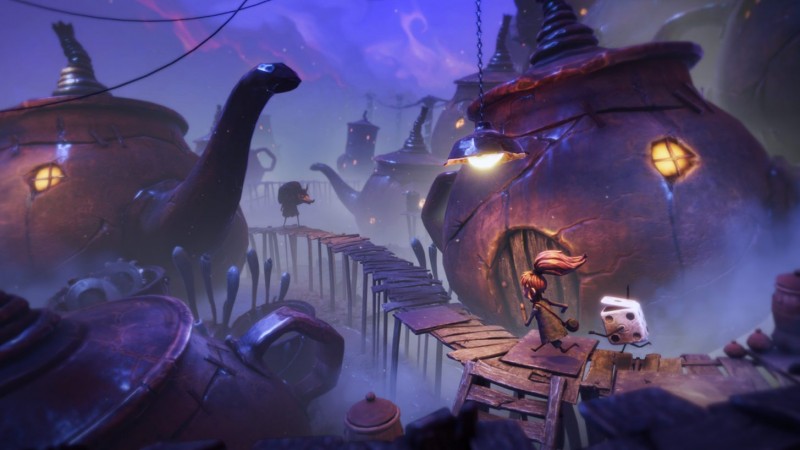
Though honestly, Lost in Random is plenty unsettling thanks to its gloomy but beautifully sculpted visuals. The clay-like art paired with the gothic vibe screams Tim Burton, and Lost in Random absolutely knows it. The opening narration mirrors the beginning of Burton’s The Nightmare Before Christmas in a bold, playful way and that energy that runs throughout the game’s writing. This lighthearted undercurrent nicely balances Lost in Random’s disquieting exterior.

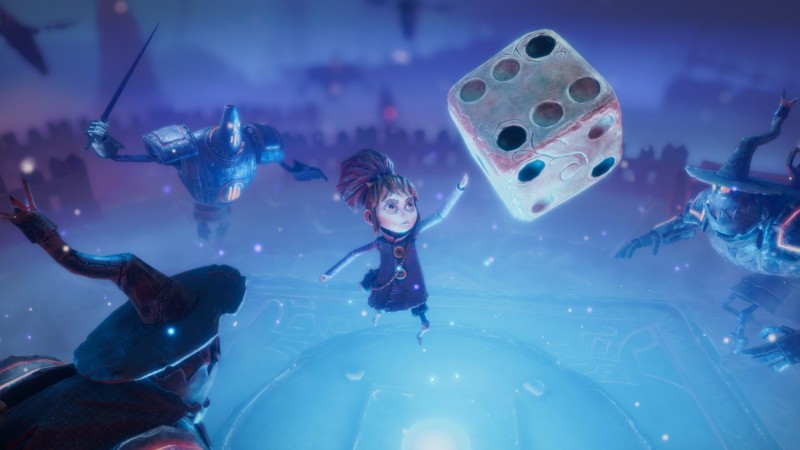
Beginning my quest, I wander into a fog-shrouded, forgotten valley where I discover my cubic partner, Dicey. Armed with my animated die, a handful of playing cards, and a slingshot, I’m ready to take on any enemy. Lost in Random’s innovative combat integrates several, usually mutually exclusive, systems. Real-time combat is the central gameplay layer, using elements of card and dice-based strategy.

While your slingshot can’t damage the Queen’s minions, it can break off pieces of energy-providing crystals growing on them. By collecting fallen crystal shards, you fill an energy meter. Each time it’s filled, a card in your deck moves to your hand, but you can only hold five total at one time. This is where Dicey comes in. When you are ready, you can move to the strategic portion of combat by rolling the die. This slows time, giving you an opportunity to consider your options. Rolling a high number with Dicey allows you to play more, or higher valued cards from your hand; these will then manifest imaginative, sometimes humorous, items for you to use in the real-time fight. For instance, I enjoyed summoning a sword comprised of floating metal shards and polyhedral dice to attack enemies. If I needed a more hands-off approach, I called forth a large blob whose scream can harvest crystals or do damage if combined with a specific card. The combat constantly flows back and forth between playing cards and the button-mashing fight.

The system is genuinely creative, smoothly executed, and every layer works in tandem to create a unique experience. Disappointingly, these systems don’t meaningfully evolve over time, and by the adventure’s midway point, my deck was stagnating. But Lost in Random keeps things from growing stale by alternating combat challenges with tabletop-inspired arenas. In one of my favorite arenas, I use Dicey and my sling to steer balls into a large goal while avoiding the enemies spawning around me. The different arenas cleverly shake things up by changing my objective from defeating foes to accomplishing a game-specific goal, introducing much-appreciated variety.

Click image thumbnails to view larger version


As Even treks across Random’s distinct districts, she witnesses how the actions of others, borne from mistrust and selfishness, make the world worse. In Threedom’s feudally-inspired society, noble triplets rip their realm apart, waging war on each other in the wake of their father’s mysterious death. Two particularly terrifying citizens of Fourburg lose their humanity and nearly kill Even over greed. And Even’s sister, who appears to her in visions, also seems to succumb to the corrupting influence of fear. Each wonderfully scripted moment makes me feel, in turns, angry, horrified, and disappointed alongside the protagonist. When Even felt like giving up, I was right there with her. But overcoming these struggles in Lost in Random’s well-crafted story transforms Even into a hero, not just for her sister, but for the entire realm.

This shadowy fairy tale ties together a thoughtful story, evocative art style, and clever combat system in one engaging experience. Lost in Random has a lot to offer at any time, but the game’s bizarre world and characteristic, spooky atmosphere make it an excellent pick for the Halloween season.

Score: 8.25

Summary: This shadowy adventure will get you in the mood for Halloween all year around with its atmospheric design, creative combat system, and well-crafted story.

Concept: Battle your way across the six districts of Random with the help of a living die to save your sister from a wicked Queen

Graphics: From the lowliest cobblestone street to the highest castle rampart, Lost in Random’s eerie world appears lovingly crafted from clay

Sound: Quality voice acting combines with the atmospheric score to pull you into this dark adventure

Playability: The multilayered combat gives players a bit of strategy and real-time action in a system that is surprisingly slick, though a bit static

Entertainment: The lively writing and warm characters show through Lost in Random’s spooky façade, offering players an intriguing world shaped with evident care

Replay: Moderate

Click to Purchase

Thursday, September 9, 2021

Tales Of Arise Review – A Work Of Astral Art

Publisher: Bandai Namco
Developer: Bandai Namco
Release: 2020
Rating: Teen
Reviewed on: PlayStation 5
Also on: PlayStation 4, Xbox One, PC

Bandai Namco’s Tales franchise has unwaveringly upheld timeworn visuals and mechanics throughout its storied 25-year history. Anime-inspired art, high fantasy settings, linear motion battle iterations, and character-focused interactions are all synonymous with past entries, but these qualities are both a gift and a curse, establishing the JRPG series as a unique, albeit less successful, alternative to mainstream hits like Final Fantasy and Dragon Quest. Tales of Arise is a significant evolutionary step. Smart gameplay changes, Unreal Engine 4 augmentations, and a mature narrative with an engaging roster of playable characters revitalize the series in ways that can’t be ignored. The latest adventure in the Tales saga more than rises to the occasion. 

From candid conversations beside a crackling fire to heady encounters with tentacled monstrosities, Tales of Arise juggles several enjoyable peripherals and rarely misses a beat. When I wasn’t raising livestock for stat-boosting meal ingredients or bringing rare ore to local blacksmiths, I was fishing in some secluded paradise or interacting with stray owls in exchange for goofy cosmetics. A bevy of engaging side activities is a welcome reprieve because Tales of Arise is anything but a low-stakes journey. I spent dozens of hours wading through intense sociopolitical issues like racism, authoritarianism, and mental illness (specifically, PTSD). These central motifs thoughtfully catalyze character motivations and never felt like shallow gimmicks.

Click here to watch embedded media

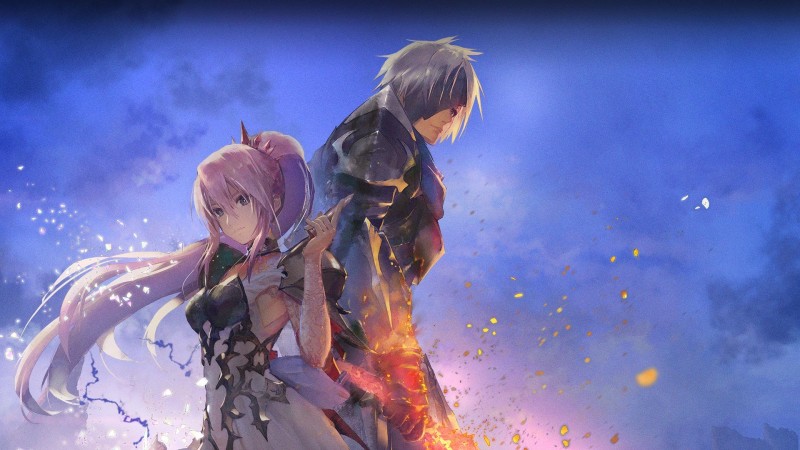
Protagonists Alphen and Shionne might be traveling companions, but they are, allegorically, worlds apart. A centuries-long race war between the technologically adept Renans and the naturalistic Dahnans has culminated in labor camps, surveillance states, and rampant hate crimes. Furthermore, Renan-made creatures called zeugles patrol the far reaches of Dahna, indiscriminately claiming the lives of unwary travelers and asylum seekers. Regardless of their ethnic differences and unpredictable feelings toward one another, Alphen and Shionne are peas in a pod; the amnesiac warrior literally can’t feel pain, and the gun-toting fashionista inflicts nothing but pain. Watching the two grow closer – through trivial arguments and earnest revelations – over the course of their arduous mission to enact positive change was a narrative highlight.

The remarkable level of sophistication present in Arise’s story is also expressed visually. Dahna’s realms house magnificent geographical structures like sizzling canyons overlooking lava lakes and winter wonderlands with sparkling sheets of snow. Elde Menancia, a verdant expanse, boasts my favorite postcard-worthy vista: a flourishing kingdom seated comfortably atop an ancient forest. I traversed linear microcosms of these locales, narrow passages giving way to hubs smattered with mineable crags, edible foliage, and rabid wildlife. I appreciated not having to stray too far off the beaten path to find chests or secret awe-inspiring views. Still, dungeon segments like age-old sewer systems, abandoned ruins, and multi-floor castles that relied on dry puzzle designs were obvious rough patches – finding keys to remove obstructions or acquire other dull, progression items got old quickly.

Combat, of course, is the crux of the experience and makes up for some of Tales of Arise’s mundane environments. If there were enemies to contest, I was satisfied. Even sub quests, which often amounted to negligible fetch objectives, were tolerable as long as I got to slay zeugles to my heart’s content. Don’t let the minimalistic battle UI fool you; effectively chaining combos for optimal damage numbers is harder than it seems. Even together, Alphen and Shionne’s fighting prowess is limited. Throw in the various other heroes that you’ll meet along the way, and things start to get interesting.

Victories stem from elemental weaknesses, astral arte (or magic) usage, well-timed “boost attacks” that call on party members to incapacitate foes single-handedly, and team-finishers called “boost strikes.” Simple button inputs and a free camera streamline the action so you can focus on what matters most: the multicolored explosions and stylish cinematics that come with pummeling your opponents to bits. Aerial attacks and last-second dodges provide bonus flair and, more importantly, temporary damage boosts. Swapping to another party member who can capitalize on staggered enemies is satisfying because each character comes equipped with their own perks and playstyle. For instance, nothing beats juggling a wild boar in midair then having the party’s resident martial artist, Law, swoop in with a flying kick or your unparalleled arte caster, Rinwell, batter multiple adversaries with beams of fire.

Boss fights forced me to change tactics as simply activating abilities without forethought often lead to swift and sudden K.O.s. Tales of Arise offers a plethora of avenues to prepare for its toughest engagements – eating meals at rest points for bonus attribute points, customizing party behaviors to prioritize healing artes, and traditional grinding, which, when coupled with “battle chain” effects, meant that the more zeugles I’d encounter in a row, the higher chance I’d have of netting better rewards or encountering high-tier challengers. Having a varied assortment of options to progress was always empowering, even when I cleared these harrowing battles by the skin of my teeth.


Other incentives like “titles” carry over from older Tales games and come with new artes and permanent stat increases. Unlocking different nodes for each title with my accumulated skill points was a fun way to fine-tune the roles of my favorite party members. I loved investing in “arte gauge” modifiers across the board so I could spam as many devastating attacks as I wanted without worrying about troublesome ability cooldowns. Micromanagement is key to progressing in Tales of Arise. However, user-friendly accessibility options like auto and semi-auto battle control could be useful for players that get overwhelmed with split-second decision-making.   

Tales of Arise harmoniously balances beloved systems like visual novel-inspired skits and upgradable titles with new-and-improved gameplay tweaks. Intricate world-building in sub-quests and even mundane discussions help with pacing and narrative cohesion. Campy JRPG-centric themes like the power of friendship and slow-burn romantic tension are prevalent throughout. Nevertheless, I found myself completely invested in the tragedies and achievements the cast faced, even when awkward pauses and stiff cutscene animations threatened to break immersion. Tales of Arise is a fantastic reinvention of Bandai Namco’s tried and true formula. It might even be the best installment in the franchise to date.

Click image thumbnails to view larger version


Score: 9.25

Summary: Flashy combat, dynamic characters, and a masterfully realized game world make Tales of Arise one of the best JRPG experiences of the year.

Concept: Help bridge the gap between two warring cultures while making life-long bonds with diverse comrades

Graphics: Character models look gorgeous during cutscenes, but an eye-popping feast of elemental attacks and sword swipes emerge as the most memorable visuals once encounters are initiated

Sound: Your fighters incessantly announce their activated abilities which is irritating after spamming hundreds of attacks during longer engagements

Playability: Artes, boost attacks, and boost strikes are mapped nicely to face buttons and the directional pad so increasing the combo/damage counter is as easy as waiting for a cooldown to finish. Boss battles, on the other hand, require better resource management

Entertainment: There’s a lot to do in Tales of Arise – set up camp, hook some fish, help townsfolk with missions of varying importance, etc. The main plot is incredible, but the secondary stories you uncover are far more memorable

Replay: Moderate

Click to Purchase