Pages

Thursday, October 28, 2021

Mario Party Superstars Review – Reliable Party Tricks

Publisher: Nintendo
Developer: Nintendo
Reviewed on: Switch

Parties are great places to expand your horizons, meet new people, and make fun memories, but the best celebrations are often the ones spent reminiscing with old friends. Mario Party Superstars capitalizes on that notion, forgoing new content to deliver a greatest-hits compilation of boards and minigames from previous titles. The result is a celebration of the franchise that anyone can enjoy regardless of their experience level.

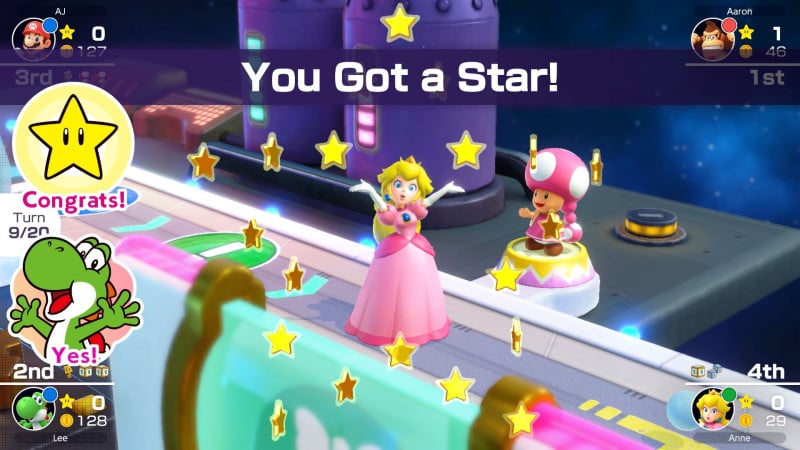
Mario Party Superstars features the same structure as nearly every other game in the series: Players take turns rolling dice to progress across dynamic gameboards with the ultimate goal of gaining the most stars. At the end of each turn, you take part in a four-player minigame to earn extra coins. The broad appeal of Mario Party remains intact thanks to simple concepts and controls across the entire package. While I enjoyed 2018’s Super Mario Party, I’m glad Mario Party Superstars allows for Pro Controller support and doesn’t require the use of the cramped single Joy-Con.

Superstars is a tribute to the series’ past, which is reflected in its minigames and gameboards. Additionally, you can adjust the rules on how many turns the game lasts and even select which pool of minigames you want to encounter during your session. I’m glad Superstars gives me the option to turn off the pesky end-of-game bonus stars or choose to only play games based on skill. You also have preset options. For example, you can opt to play only games that appear on Nintendo 64 or GameCube or pick minigames that are easy to enjoy for players of all ages.

Click image thumbnails to view larger version


As you play through the primary board game mode, you can choose between five of the most iconic stages from the Nintendo 64 titles, all with modern graphics and music. Revisiting Peach’s Birthday Cake from the first title is awesome, and I love Woody Woods from Mario Party 3. However, I was disappointed by the low number of boards. These levels are iconic, but I would have loved to see more than five, especially considering they’re all remakes of pre-existing stages.

The meat of Mario Party remains its minigames, and thankfully, Superstars makes up for its lack of boards with 100 of the most beloved bite-sized competitions from previous titles. Through the eclectic collection, players compete in a solid mix of skill-based matches and chance-driven minigames. I still adore personal favorites like Face-Lift, Paint Misbehavin’, and Motor Rooter. The inclusion of games from nearly every era of Mario Party, many of which are among the best from their respective game, gives Mario Party Superstars an unrivaled minigame pool

I was excited to see many of my all-time favorite games return in Superstars. However, I’m perplexed by the revival of the infamous Tug o’ War game, which resulted in broken controllers and blistered hands on N64 thanks to its stick-rotation controls. This version has a warning to avoid injury by not using your palm, but even ignoring the renewed potential for blistered hands, bringing this minigame back seems like a dangerous choice given that the Switch’s analog sticks are notorious for drifting after even regular use. Thankfully, only a couple of minigames, in the catalog of 100, rely on quick stick rotations.

While most people associate Mario Party with the board game mode, you can experience the minigames on their own through the surprisingly robust Mt. Minigames. Here, you can participate in free play where you choose from any game in the collection, or run the gauntlet as established teams in 2v2 and 3v1 modes. I love having a dedicated space for the excellent sports and puzzle minigames, with options that let you extend the length of activities like volleyball, hockey, and the color-match puzzle titles.

Click here to watch embedded media

In addition, you can take the competition online and play against people across the globe. You can also connect to online-specific modes to see who can string together the most wins in Survival or take part in themed Daily Challenges that give you three minigames in which to compete. Daily Challenges are fun ways to enjoy a three-pack of activities with similar mechanics – I loved playing the Shoot ‘em Up challenge, which let me compete in three aim-based contests.

Mt. Minigames’ quick-hit nature might make it the best fit for online play, but you can also experience the board game mode online. Random matchmaking is available, but playing with friends is more fun. On top of being a great game for close acquaintances, you can save your progress in friend matches, letting you pick up where you left off later. In my experience playing on pre-release servers, latency was minimal, though it was more noticeable on timing-based minigames like Hot Jump Rope. Unfortunately, native voice chat remains absent, but you can choose various reaction stickers to communicate with other players.

The Mario Party franchise, with its interchangeable boards and minigames, is tailor-made for the compilation format. Mario Party Superstars aptly executes the notion of bringing together the best of the franchise while adding improved online features, plus options to let you play the way you want. Despite its lacking selection of game boards, Mario Party Superstars is a blast regardless of how many parties you’ve attended in the past.
Score: 8

Summary: Mario Party Superstars is either a delightful stroll down memory lane or a great way to experience these games for the first time. No matter your history, it's a worthwhile celebration of the Mario Party franchise.

Concept: Relive some of the best and most iconic minigames and boards from the long history of Mario Party

Graphics: Seeing series favorites remade with modern visuals is a delight

Sound: Modernized music brings back memories of time spent exploring these boards on N64, and having the option to toggle to the original tracks is a nice touch

Playability: Allowing for the use Pro Controllers – after the last game required single Joy-Cons – is a beyond-welcomed change

Entertainment: Whether you grew up with these games or this is your first time partying, Mario Party Superstars is a fun way to celebrate the series

Replay: Moderate

Click to Purchase

Tuesday, October 26, 2021

NHL 22 Review – Superstar Letdown

Publisher: Electronic Arts
Developer: EA Vancouver
Rating: Everyone 10+
Reviewed on: PlayStation 5
Also on: PlayStation 4, Xbox One

Every team depends on its star players to be difference-makers. They’re the ones fans look to when the pressure’s on to make the play and get the win. The problem is star players don't always live up to their promise, and when there’s not enough supplemental talent around them, a team can crash quickly to the bottom of the standings. NHL 22 makes the grave error of investing everything in the league’s elite talent to elevate the game in all modes, creating an entire ability system around them to showcase their more dangerous assets on the ice. The problem? These top players don’t make a huge impact on the game, and without any other meaningful additions, fans don’t have much to cheer for. 

Inspired by EA’s Madden, this year EA Vancouver introduced Superstar X-Factors, which provide special skills to the best of the best. For instance, Alexander Ovechkin has the “One Tee” ability, which not only gives him exceptional power and accuracy to one-time the puck, but also increases his ability to one-time less than ideal passes. X-Factors are a welcome effort to shake up the metagame, which hasn’t changed in some time, and I like the thought process behind them: raise players’ awareness when these elite talents step on the ice and make them feel different. However, I never felt the tension defensively or power offensively that X-Factors should provide. All the players – star or fourth-liner – still feel pretty similar on the ice, and that’s a big problem. X-Factors, like star players, should be difference-makers, but instead, they’re just kind of there, and I rarely felt like they were contributing to some impressive play destined for the highlight reel. Where’s the fun in that?

Unfortunately, EA Vancouver went all-in with X-Factors, adding them to most major modes as the big, new change and not much else to go with them. Again, they’re not a major shakeup to the experience, so that left me feeling like I was playing more of the same. Sure, in franchise mode, you want to target players with X-Factors in the draft, but the mode still has the boring trade deadline minigame, the baffling player demands, and no way to really communicate a direction for the team to the coach. 

Be A Pro, where you create your own rookie and get drafted to an NHL team, received a fresh coat of paint last year, and it felt like a promising start. Imagine my disappointment when the bland dialogue, half-baked salary perks, and lackluster events returned. You can earn X-Factor abilities by playing games and completing certain milestones, but even after unlocking a few, I didn’t feel like they made a huge difference in my game. I was also frustrated to see the conversation system still makes you choose between being a “star” or “team” player, and your responses to be a star are something any real coach would bench a player for saying. Additionally, the mode still lacks meaningful events to keep the NHL season exciting for the long haul. 

Click image thumbnails to view larger version


The only place I felt X-Factors enhanced the game was in World of CHEL’s EASHL, as they allowed me to build a player more to my style. I play power forward, and I have the “Unstoppable Force” X-Factor, which makes it hard to knock me off the puck, even when I’m off-balance. I also like that when you pick a position, you can redistribute some of your stat points. I hate how slow the power forward is, so I was happy to sacrifice some of my slap shot accuracy for some extra speed. EA has balanced this, so some valuable skills, like speed, cost more points than others, but I like that it encourages you to experiment with a build that works best for you. The only possible negative is it feels much easier to score this year in EASHL. Most games I played ended up high-scoring, and my stats felt padded compared to previous years. I don’t mind feeling the exhilaration of scoring more, but I saw many questionable goals, like weak wristers, go in.

The overall gameplay does feel a bit different from last year, with a more realistic, slower pace. Body checks seem properly balanced; there were only a few occasions where I felt knocked off the puck too easily. However, the poke check remains overpowered, especially since it’s easy to spam without taking penalties, even in online play. Hockey players certainly poke check, but it’s not used to anywhere near this degree in the real NHL. In addition, the puck can be hard to track, especially in the corners, which has been an issue in the past but is somehow even worse this year.

I also experienced some technical shortcomings, such as my player indicator disappearing, NHL star players appearing on my minor league roster, and glitchy animations. PS5 users are treated to haptic feedback, as well as goal songs, coach commands, and puck noises going through the controller. At first, it’s a neat little feature, but it quickly wears out its welcome. Worse yet, it can’t be turned off unless you go outside of the game and into the PS5 settings, which is a huge oversight. 

Sports teams build around their core players, rarely making sweeping changes until the inevitable rebuild must occur. Sports games are no different; each year offers a chance to improve a mode or feature, but at some point, more meaningful changes need to happen to the foundation before things become stale. The Superstar X-Factors were an attempt at this, but EA Vancouver ultimately fell short of having them impact the game in exciting and worthwhile ways. The lack of a critical eye to various modes also doesn’t help. Truth be told, playing NHL 22 is like watching a predictable team. On the one hand, there’s comfort in knowing what to expect. On the other, it’s not fun seeing the same plays over and over again. 

Score: 7.25

Summary: NHL 22 relies on its superstar talent, and it’s not impressive enough to give the gameplay the new life it so desperately needs.

Concept: Finally move to EA’s Frostbite engine and make the leap to new-gen, while attempting to change up the metagame with Superstar X-Factors

Graphics: The graphics look the best they ever have, with better lighting, uniform improvements, and realistic-looking ice. New animations for faceoffs and blocking are a nice touch, and more real-world player likeness has made its way into the game

Sound: Broadcasters James Cybulski and Ray Ferraro continue to thrive in bringing life to the on-ice action. Expanding the role of rinkside reporter Carrlyn Bathe adds a good variation to the mix

Playability: NHL 22 plays close to its predecessors, meaning those who learn to play a complete game should have the most success

Entertainment: NHL 22 relies on its superstar talent, and it’s not impressive enough to give the gameplay the new life it so desperately needs

Replay: High

Click to Purchase

Monday, October 25, 2021

Marvel's Guardians Of The Galaxy Review – Enthralling Space Madness

Click to watch embedded media
Publisher: Square Enix
Developer: Eidos Montreal
Rating: Teen
Reviewed on: Xbox Series X/S
Also on: PlayStation 5, PlayStation 4, Xbox One, Switch, PC

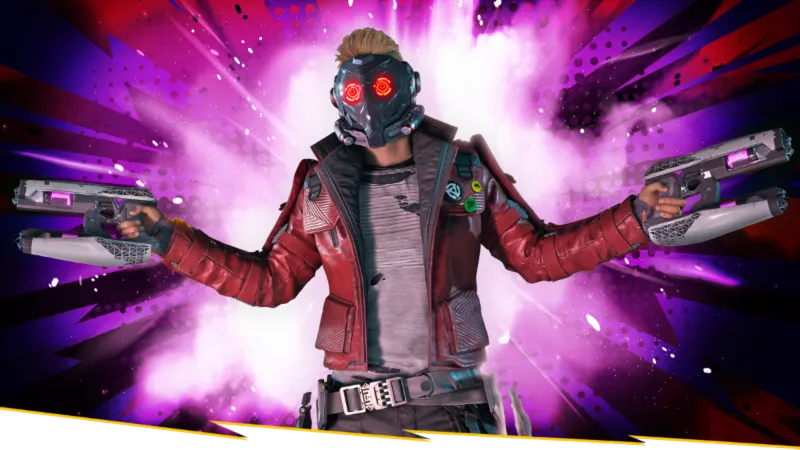
From the moment the Guardians of the Galaxy are introduced as a space-faring team that will do anything for a quick buck, it’s abundantly clear how much of a dysfunctional mess they are. Gamora and Rocket are at each other’s throats. Drax and Star-Lord don’t see eye to eye. And no one is paying attention to Groot. For the next 15-plus hours of gameplay, I listened to these misfits bicker, hurl insults, and chatter nonstop – much to my enjoyment.

When I say “nonstop,” I mean they never stop talking. A second rarely goes by without the Guardians sharing their thoughts. I’m not exaggerating this frequency. Any moments of quiet made me question if the game was not working properly. The amount of dialogue that Eidos-Montreal crafted is off the charts, and most of it is nicely penned, offering the witty humor, heartfelt intimacy, and sheer chaos you’d expect from the Guardians.

Drax’s inability to comprehend common colloquialisms and phrases brings big laughs and is just as good as James Gunn’s take on the character in the Guardians’ movies. I’ve never said this in a review before, but the dialogue is the best part of the game. Eidos-Montreal knocked it out of the park. The rest of the game delivers plenty of fun but with varying levels of quality and polish – the latter subtly hurting critical areas of the experience.

It took me a few hours to warm up to both Star-Lord and the combat system. Peter Quill is a bit grating from the outset but comes around when the team dynamic begins to gel, and the story softens from its overall bombastic tone to allow him to show his emotional side. I ended up adoring him over time, especially when he’s talking to himself.

His story is well written, and Eidos-Montreal did an excellent job injecting his leadership qualities into the action and decision-making. Players are in total control of Star-Lord and will determine the road your team takes. These choices aren’t on the same seismic scale as a Mass Effect game and don’t change the story much, but do offer fun alternate sequences and even more dialogue.

I can’t speak to all of the outcomes that stem from these choices, but the dozen-plus I experienced in a second playthrough were just as good and flowed as naturally as those in my first run through the game. While it was to fun to take in the different humor or unique gameplay sequences I missed before, they weren’t enough for me to want to keep going to see how the second journey would be different. Again, things aren't changing much.

Click here to watch embedded media

This is a game where the narrative consumes just as much time as gameplay. Given how enjoyable the story is, I didn’t have a problem sitting back and watching for a big chunk of my time, especially when I had control over the most significant decisions. The allure of discovery anchors the story and touches each Guardian in ways that flesh them out thoroughly. I don’t want to give away too much of the plot, but the Guardians are chasing something evil that they unleash. That hook remains strong through most of the experience, moving at a nice clip and striking a delicate balance between serious and outright absurd.

Eidos-Montreal fully embraces “science-fiction” themes in the worlds, characters, and that evil entity of note. The worlds steal the eye with their wildly colored and oddly designed vistas. The characters are just as weird (sometimes for comedic sake), and that evil beast moves in the most peculiar and astonishing ways.

Click image thumbnails to view larger version


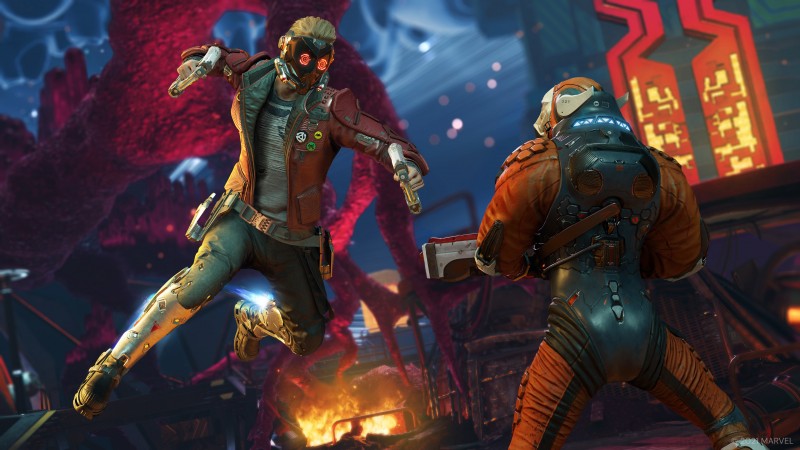
Each world pushes the Guardians to lean into their unique abilities to navigate treacherous terrain. The paths forward are always linear and filled with platforming sequences and combat arenas, much like the Uncharted games. While the player only controls Star-Lord – a decision that works well for all gameplay aspects – each Guardian can be summoned with a button press to perform a specific task. These brief inputs work well, and Eidos-Montreal even warps the character to the desired location to make sure you are moving forward at a solid pace. You can summon Drax to knock over a pillar or Gamora to leap up onto a wall to give you a boost up to a platform. All the Guardians’ moves are used for environmental puzzle solving, which starts fun but loses its luster through repeated solutions.

The Guardians also play massive roles in combat and are as powerful as you would hope. Groot can upend enemies with a swarm of roots, Rocket blasts foes with a silly number of guns, and Drax and Gamora use blades to slice and dice. For Star-Lord, however, this is not a game I’d bill as a power fantasy. His blasters are weak, and he must work hard to drop even the lowliest of foes. All the Guardians need to be used in strategic ways to find success. Star-Lord can dash around quickly and tick away at the enemy’s health, but his most significant contribution is as a play-maker. When he wants to call upon a Guardian, time slows, and he can tell them to perform a desired ability. It’s not a power fantasy, but a teamwork fantasy that ends up being immensely satisfying when everything is clicking as it should.

Click here to watch embedded media

At its peak, combat is handled admirably through the controls, allowing the player to whip across the arena, quickly highlight targets, and just as swiftly tell each Guardian what to do. Given how many characters are onscreen at any given time, the fray looks chaotic, but there’s a violent beauty to it, and you oversee all of it, barking out commands to rain death in various ways. The Guardians can also chain together most moves to truly show the team's power. By the end of the game, the battles are wildly entertaining and deliver a good challenge. Oddly, the game’s most powerful ability is a pep talk by Star-Lord, which always carries a little humor, but pauses combat for far too long and ends up being quite annoying.

Now the bad news: The opening hours of combat are a rough and uneventful ride. Before legitimate threats come out of the woodwork, the Guardians take on gelatinous cubes and spheres, conflicts that are as dull as they sound. With a good majority of abilities locked away for over half of the game, the true potential of the Guardians is kept at bay for far too long, and the experience suffers. This game is at its best when it’s over the top, and it eventually gets there, but not quickly enough. The training wheels are on for half of the game. A lack of polish across the entire experience also hurts. Some animations are a bit jumpy, specific gameplay mechanics like sliding don’t offer much precision, and combat’s framerate can be rough at times.

Marvel's Guardians of the Galaxy

Another misfire is controlling the Milano in space-combat sequences. It’s cool in concept, but awkward controls and lack of a threat make these moments little more than a visual showcase. The game’s other distractions fare much better. Tracking down different suits for each Guardian is a nice reward, and some collectibles that appear on the Milano open new conversations and backstory.

As a fan of the Guardians’ comic books and movies, I thoroughly enjoyed Eidos-Montreal’s unique take on this supergroup. The nonstop character banter and nicely designed choices make this a journey worth taking, even if the gameplay takes a little too long to highlight the team’s true potential.

Score: 8.5

Summary: Nonstop banter between the misfit superteam makes for a surprisingly fun time.

Concept: A linear, story-driven action game that embraces the true spirit of the Guardians through extensive dialogue. The gameplay delivers mixed results

Graphics: The worlds are science-fiction works of art that blend colors in fascinating ways. The character models are also quite good and convey true emotion even without any words being spoken

Sound: A wonderful soundtrack filled with 1980s hits and great orchestration – both are used to heighten dramatic moments. All of the voicework is top notch, but Star-Lord takes a while to truly find his groove

Playability: Star-Lord controls admirably, and issuing commands to his teammates is a simple process with plenty of depth

Entertainment: A rarity in gaming that is at its best when the characters are rambling on

Replay: High

Click to Purchase

Age of Empires IV Review - The Once And Possibly Future King

Publisher: Xbox Game Studios
Developer: Relic Entertainment
Rating: Teen
Reviewed on: PC

Age of Empires IV gives players eight different civilizations to explore in both single-player and multiplayer real-time strategy. While there is a lengthy campaign that spans multiple civilizations, the longevity of the experience lies in multiplayer encounters. If multiplayer isn’t your thing, you do miss out on a hefty chunk of the game, but there are always skirmishes to take on A.I. at a comfortable difficulty level if you don’t feel like taking on other players.

Age of Empires IV is incredibly safe in its execution, channeling the spirit of Age of Empires II for many of its systems, mechanics, and features. While the divisive Age of Empires III hit 16 years ago, it’s a bit of a dulling anesthetic seeing IV play things so close to Age of Empires II.

Click here to watch embedded media

There’s a meaty campaign in which the first segment functions as an extensive tutorial that can teach even an RTS neophyte to harvest resources, form control groups, and learn how to break down walled fortifications. These campaign offerings are heavily rooted in classical RTS and mostly involve building up forces and resources and taking out your opponents, but there are some nice surprises here too. Much of the good stuff here outside of the ordinary involves historical figures that lead troops that have been given special abilities for the campaign, adding a bit of zest and flair to the rote.

However, the most enjoyable aspect of the campaigns wasn’t the gameplay. Instead, I had a blast nerding out during History-channel-style videos and segments between missions. I haven’t had a Magna Carta refresher like this since high school. Some of the video segments occur in an offbeat fashion where ancient battles and history are superimposed onto modern environments. Whatever the case, it works, and I found myself motivated to complete each fierce war involving William the Conqueror, King John, and others to unravel the next layer of edutainment. The video vignettes and bonus history content keep things interesting among many traditional “resource up and go” missions.

Click image thumbnails to view larger version


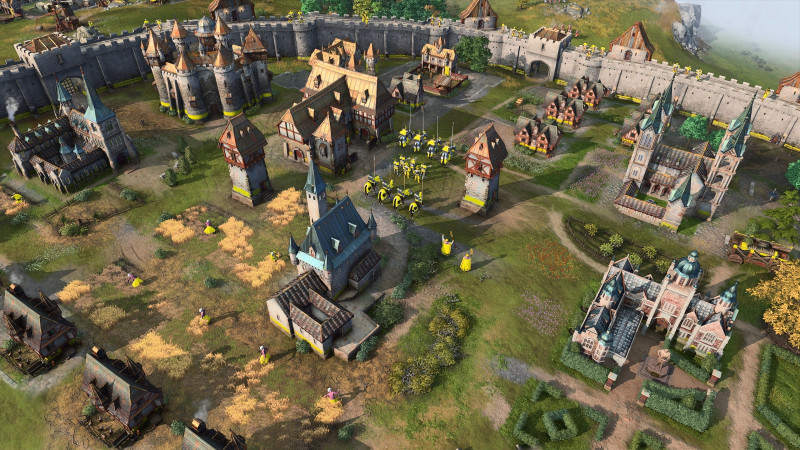
Within the eight different civilizations, there is a ton of gameplay diversity, even inside each culture. Feel like playing incredibly aggressive? Pick the Mongols and begin expanding immediately and putting pressure on your opponent. Want to annihilate the enemy at long range? Get some English longbowmen in the ranks! And when nothing else but giant elephant wrath will do, pick the Delhi Sultanate and rip through opposing fortifications. Exploring other unique elements like one culture not requiring any resources to execute research provides plenty of depth. There’s a lot to learn and experiment with each faction’s unique buildings, units, and game mechanics, and it’s fun to try out different build orders and routes to victory.

Click here to watch embedded media

Even if you don’t want to play against other players in multiplayer, you can team up with them and take on co-op vs. AI encounters. Pretty much every game you play grants experience points that go towards unlocking new cosmetics you can show off with, including portraits, coats-of-arms, and town monuments. These don’t force you to play any way you don’t want to but offer those that choose to master a faction some visual flair to take into their matches.

The real-time strategy genre remains relevant, fueled by a few big titles once in a while. While Age of Empires IV lacks any ambition to even gently jostle the standards set by Age of Empires II decades earlier, it’s a good way to play a classic-feeling RTS today with some slick polish and panache.

Score: 8.25

Summary: Gather resources, raise an army, and obliterate your opponents in real-time strategy.

Concept: Play as various civilizations through their early development in a multitude of battles against other players or A.I.

Graphics: The graphics are clean, and it’s enjoyable to zoom in on big encounters for a closer look

Sound: The effects are pretty crisp, with the booming sound of a culverin crack echoing across the battlefield. A solid soundtrack accompanies the action

Playability: While classic real-time strategy is not the most approachable genre, there are a ton of tutorials and guides to help ease players into the experience within the game

Entertainment: Age of Empires IV successfully captures some of the magic of earlier titles in the franchise with clean, crisp gameplay and varied playstyles.

Replay: High

Click to Purchase

Thursday, October 21, 2021

The Dark Pictures Anthology: House Of Ashes Review – A Respectable Reign Of Mild Terror

Publisher: Bandai Namco
Developer: Supermassive Games
Rating: Mature
Reviewed on: PlayStation 5
Also on: PlayStation 4, Xbox One, PC

The Dark Pictures Anthology’s yearly offerings of horror adventure games have been middling at best, and House of Ashes, the third entry in the series, retains the status quo. While it boasts a cool antagonist and enjoyable moments, its scares and overall adventure lack the punch to make it a terrifying standout.

If you’re new to the series, House of Ashes is essentially an interactive horror movie with players watching lengthy cinematics and hitting surprise button prompts to make split-second actions at a moment’s notice. An ill-timed button press can send a character to an early grave and out of the story for good. I always liked how this kept me engaged in scenes and ensured the controller never left my hands. However, this design could be frustrating for those lacking a quick trigger finger, which is why I love the new customization and accessibility options. Easy, Normal, and Hard modes allow players of all skill levels to enjoy the story as leisurely or intensely as they see fit. It’s great that you can also adjust how fast prompts appear, their duration on-screen, and assign all interactions to the same button. House of Ashes does a great job of widening its doors to players who don’t possess Spider-Man-caliber reflexes or want to absorb its tale with less pressure involved.

Another great addition is 360-degree camera control, which allows for a more liberating sense of exploration. It makes searching for gameplay-vital information or premonitions of potential deaths feel more natural and made me want to poke around more. However, it’s irksome that characters turn around like tanks and move slowly overall. A flashlight mechanic lets you illuminate areas at will at the expense of movement speed, but I’m disappointed that the game never takes advantage of this feature to use in its scares. Many areas have enough light that I kept mine off. 

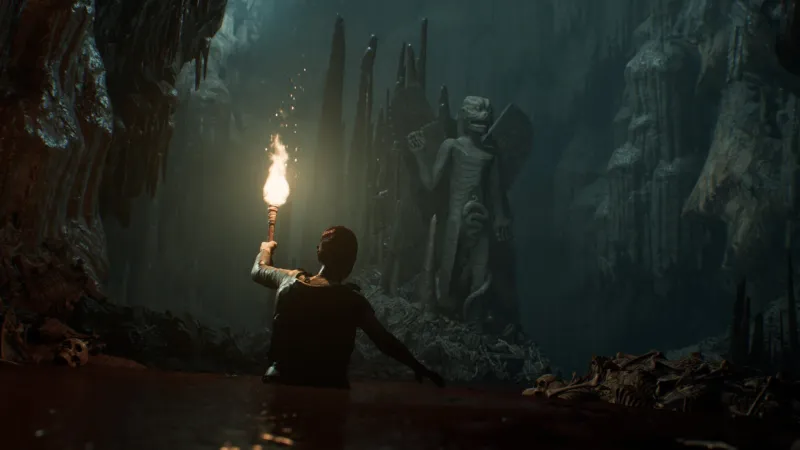
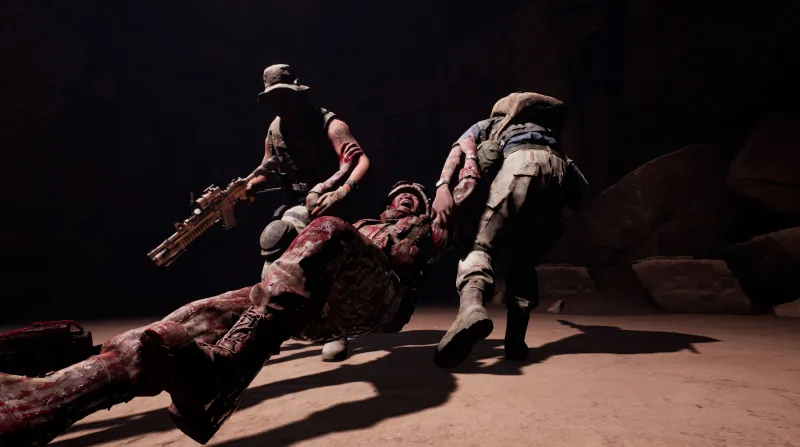
House of Ashes unfolds in 2003 Iraq and uses the United States’ controversial war on the country as a backdrop to tell its story. While searching for Saddam Hussein’s supposed chemical weapons, a dysfunctional squad of U.S. marines and one Iraqi soldier become stranded together in an underground temple. Trapped, they must cooperate to survive a legion of ancient monsters lurking within. While you can find historical elements along the edges, the game largely avoids wading into a deeper political conversation outside of “war is bad” and “uniforms are just uniforms,” which I believe is for the best. It ultimately serves to push the theme of “the enemy of my enemy is my friend” and works in a surface-level sense. I got the point without having to worry about Supermassive bungling its sensitive subject matter.

If you’re hoping for House of Ashes to scare your pants off, odds are you’ll be disappointed. While the creatures look great and have an intimidating design, I rarely found the game unsettling. House of Ashes feels more like a supernatural action thriller that constantly lobs its killers at players after a short build-up while relying on a handful of predictable, ineffective jump scares to startle them. That said, once I gave in to what House of Ashes is going for, a popcorn-munching monster romp, I had fun, and the story has enough intrigue and exciting moments that made me want to watch the crew dive deeper into the belly of the beast. Unfortunately, it culminates in a disappointing revelation that flips the premise of these beasts on its head, and it evaporated any semblance of remaining dread I had left.

Click image thumbnails to view larger version


The small cast of playable characters suffers internal issues and interpersonal conflicts that stir the pot of drama, some of which feel silly. A love triangle between Rachel (played by Ashley Tisdale), her estranged husband, and her subordinate serves as the primary conflict. It feels like a weird thing to unpack, given the circumstances. In the face of bloodthirsty, nigh-invincible creatures, is this really the time to hash out who you’d rather sleep with? It doesn’t go anywhere meaningful and makes the three lovebirds look like dopes who don’t have much personality beyond their romantic affairs.

Lapsed Iraqi soldier Salim became my favorite character due to his understandable motivation to return home to his son and his ability to see the forest from the trees in terms of cooperation. Surprisingly, the intolerant “America #1” Jason grew on me too; I found his sobering trauma and gradual acceptance of Salim, while cheesy, endearing, nonetheless. These unfortunate souls may not all hit, but strong performances across the board back them, and the game’s impressive graphical presentation remains a highlight.

House of Ashes never came close to terrifying or surprising me, but I still found it a respectable thriller that should make for an entertaining night alone or with up to four friends passing the controller. If you’ve enjoyed the Anthology up to this point, you’ll likely get a kick out of this too. But if you’ve been waiting for The Dark Pictures to reach the heights of Until Dawn, don’t get your hopes up for another year.

Score: 7.5

Summary: House of Ashes' storytelling doesn't always land, and its scares feel shallow, but it can be a tense and enjoyable monster thriller.

Concept: Set in the 2003 Iraq War, a group of U.S. and Iraqi soldiers become stranded underground and must work together to survive ancient, otherworldly predators

Graphics: Character faces look incredible though body animations appear stilted at times. The superb lighting sells the sense of being trapped in a dark cavern

Sound: Top-notch performances sell the drama and dialogue while the foreboding score does its best to instill a sense of dread

Playability: Full 360-degree camera control is a liberating godsend, though characters still maneuver awkwardly in narrow spaces. Expanded input options allow prompts to appear as slowly or quickly as desired

Entertainment: House of Ashes doesn't always land but it can be an exciting “check your brain at the door” thriller. Its largely toothless scares will disappoint horror fanatics while inviting a broader audience

Replay: High

Click to Purchase

Wednesday, October 20, 2021

Resident Evil 4 VR Review - Breathing New Life Into A Familiar Feeling

Publisher: Capcom
Developer: Armature Studio
Rating: Mature
Reviewed on: Quest

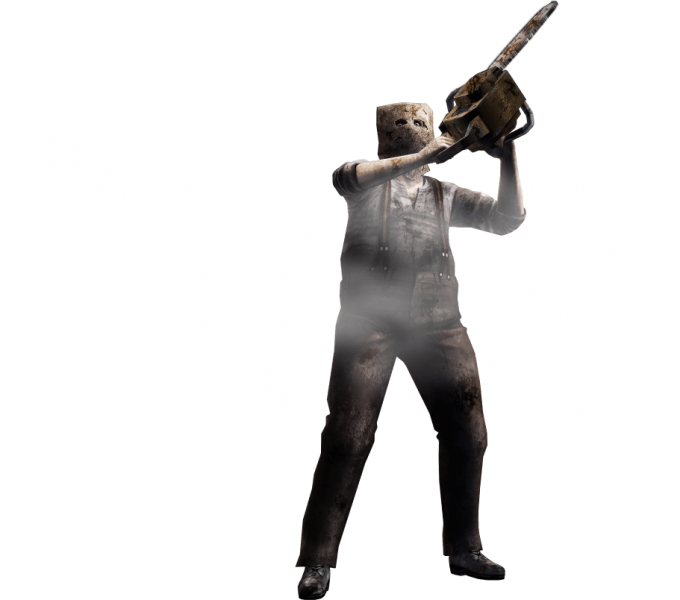
I'm of two minds when it comes to whether or not someone should play Resident Evil 4 VR. If you've never touched the original RE4, then by no means should you jump into this version; everything that made (and makes, for that matter) it important would completely go over your head in VR. However, if you have played Resident Evil 4 – especially if you've completed it numerous times over the years – then RE4VR should be played at all costs. 

As the name implies, RE4VR is just that. It's Resident Evil 4 but in VR. There's an immediate novelty to the game's perspective shift – bringing it into first-person allows an intimate look at the game's world third-person could never afford. Being effectively a remaster of a 16 -year-old game, RE4VR shows its age at times – mainly when up close to certain muddy textures and assets – but it doesn't look bad by any means. As someone who's played the original more times than I count, getting the chance to see a 1:1 recreation of RE4's levels, characters, and monsters was constantly amusing. 

Changes specifically made for VR are also welcome in most cases. The giant interactable attache case where protagonist Leon Kennedy holds all his weapons and gear is a blast to assemble in VR. It feels as-close-as-possible to doing it in real life, even if you are more or less just playing Tetris with guns. Speaking of, the guns look fantastic. I had a great time holding up iconic weapons like the Red9 handgun and Striker shotgun and getting a good look at the added detail. Same with items throughout the world such as keys, money, and herbs. Everything can be picked up and examined before you throw it in your inventory. I'm sure I looked like an idiot to all my neighbors constantly staring at my hands, but they didn't know I was looking at a yellow herb up-close-and-personal for the first time – their loss. 

Combat received the most significant overhaul in RE4VR, and it's what sent me over the moon. Famously, the original changed the typical third-person camera perspective from fixed angles to the now-modern behind-the-back view. But it still featured tank controls, meaning Leon only moved in the direction he was facing. Additionally, he couldn't move while aiming or shooting. While it was revolutionary for the time, there's an obvious narrative and mechanical dissonance in the original's gameplay. The game pitches Leon as some American Badass action hero, but once you control him, you're still bumbling around like the same old fool of past Resident Evils. RE4VR completely ditches this model if you choose to play with full-motion turned on instead of teleporting. I can't recommend it enough; it marries the mechanics and story in a way the original never did. 

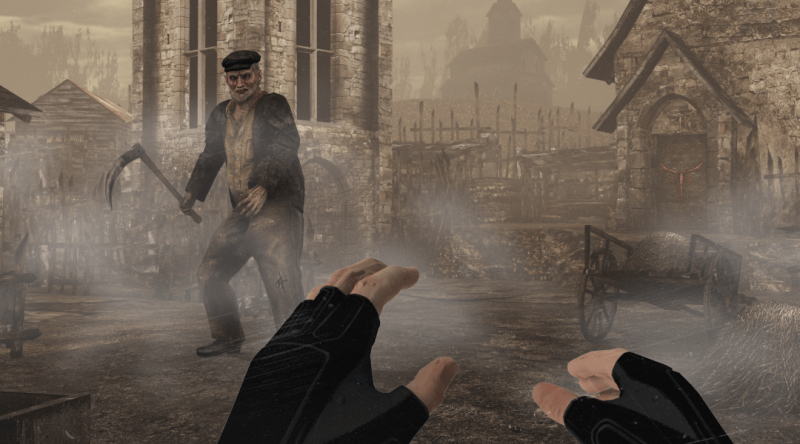
Running around a combat arena freely profoundly changes the way enemy engagements work in RE4. Rather than try and line myself up with a row of enemies, doing as much damage as I can before they reach me, I was constantly on the move, adapting my playstyle to the moment and acting offensively against enemies rather than defensively. From the get-go, I had a blast running around shooting enemies like some virtual reality John Wick. I figured RE4 would never feel "new" to me again at this point in my life, but RE4VR completely changed how I played one of my favorite games. It felt fresh, exciting, and wholly different from every playthrough of RE4 I've had in the last 16 years. For the first time in ages, I was no longer going through the motions, and iconic moments like the early village encounter, the El Gigante fights, and the minecart rollercoaster have rarely been more fun. 

Moving RE4 into first-person also does a lot for its horror – though it's still not the scariest thing you can play on the market. There's an inherent tension to being surrounded by enemies in VR, especially when you become overwhelmed. The many impossibly large bosses are also incredibly menacing when you see them towering far overhead. More than once, RE4VR put my heart in my throat as I frantically tried to out-maneuver whatever threat was closing in on me. Occasionally, this exacerbated some issues with the tracking on two-handed weapons, which would not register one of my hands or an input such as cocking a shotgun or aiming down a scope. Luckily, this was few-and-far-between but still led to some annoying deaths. Until I unlocked the Striker, which let me shoot an automatic shotgun with one hand like I was Arnold Schwarzenegger in Terminator 2 – but cooler.

In 2020, I played the original RE4 front-to-back three times. It's something I usually play for comfort; I can load up and blast through without much thought. RE4VR completely turned my relationship with a game I know better than most on its head. If you're a fan of RE4, have access to an Oculus Quest 2, and don't mind the morally and ethically questionable need to have a Facebook account to play an Oculus game, I can't recommend RE4VR enough. It's like breathing new life into an old, familiar feeling. 

Score: 8.75

Summary: Resident Evil 4 VR is a must-play if you're a fan of the original. It fundamentally changes the experience in meaningful ways, adding new depth, strategy, and tension to a video game most people know like the back of their hands at this point

Concept: Play through Capcom's iconic and fantastic Resident Evil 4, but this time in first-person and in VR

Graphics: This is a 16-year-old game, so it doesn't drop jaws very often, but there is a fun novelty to seeing a 1:1 recreation of RE4's world up-close-and-personal

Sound: The use of surround sound is great, and hearing enemies close in around you on all sides is nerve-wracking and tense

Playability: After a bit of time with the game's full-motion option, my VR-induced nausea subsided. Running around levels feels great, and fighting through waves of enemies in first-person radically sets this version of RE4 apart from the original

Entertainment: RE4VR is an absolute blast. The perspective shift from third to first-person and the ability to freely run around during combat fundamentally altered how I play one of my favorite games

Replay: Moderate
Click to Purchase

Friday, October 15, 2021

Nickelodeon All-Star Brawl Review – Almost Ready For Slime Time

Publisher: Game Mill Entertainment
Developer: Ludosity, Fair Play Labs
Rating: Everyone 10+
Reviewed on: PlayStation 5
Also on: PlayStation 4, Xbox One, Switch, PC

To say Nickelodeon All-Star Brawl is fighting an uphill battle is an understatement. It wears its Super Smash Bros. inspiration firmly on its sleeve by bringing together a host of beloved characters in a platform fighter, but Nick Brawl does so without the spectacle. While I think it has a lot of heart and is a good fighting game at its core, All-Star Brawl is missing the magic and wonder that Smash Bros. embodies and lacks meaningful casual appeal.

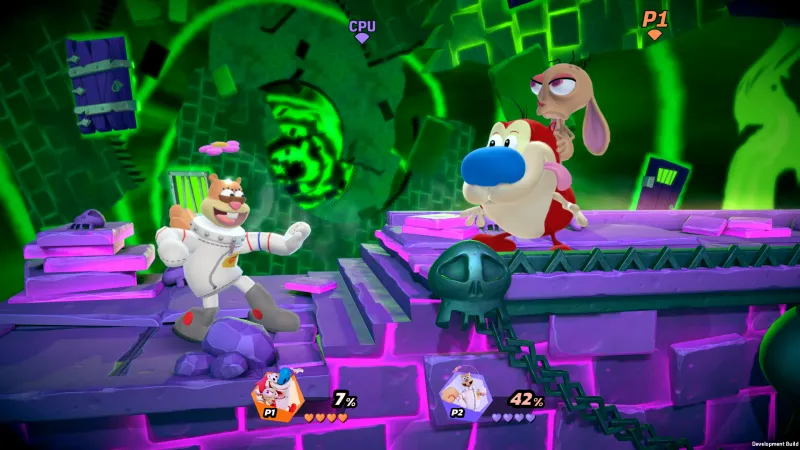
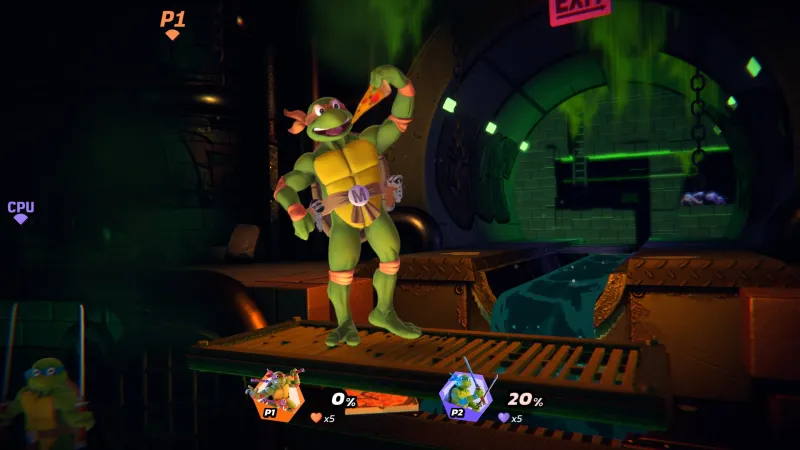
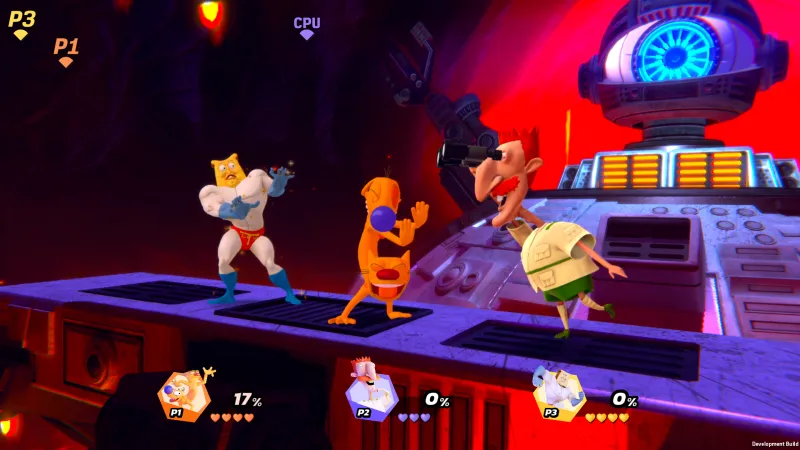
All-Star Brawl brings together different eras of Nickelodeon cartoons to fight on stages based on scenes and locations from various Nicktoons. The roster is not comprehensive, but it is diverse enough and hits several notable eras across its 20 characters. Familiar faces like Ren and Stimpy and Rugrats’ Reptar mix it up with Nigel Thornberry, Zim, and Danny Phantom. Current favorites such as Lincoln and Lucy Loud hold down the fort for newer toons. Still, the cast also has a few notable big names: Spongebob Squarepants and friends, a handful of Ninja Turtles, and the duo of Avatars, Aang and Korra, bring some much-appreciated star power to the mix.

My favorite part of Nick Brawl is how it plays. You have buttons for jumping, attacking, special moves, throws, and blocking. Your goal is to slap around your opponents and increase their damage percentage, making them more likely to fly off the screen when hit with a strong attack. Characters move quickly, which made me worry that I wouldn’t always feel in control, but the snappy and responsive inputs alleviated those worries in practice. Advanced techniques like wavedashing are surprisingly easy to pull off, and thanks to the faster tempo, performing combos on the fly is a cinch.

Nickelodeon All-Star Brawl's fighting fundamentals make the experience enjoyable, but there's not much to combat aside from the basics. A standard story-free arcade mode and training are the only single-player content on hand. Arcade mode rewards you with unlockable art and music to listen to in the Jukebox, but unlocking that content didn't feel meaningful. You can also take on up to three friends or CPU opponents in custom timed matches or bouts where each player has a set number of lives.

These fights reveal Nick Brawl's biggest drawback, and that's a lack of prominent party content; you won't find items or weapons to use in battle here. Since its gameplay heavily emphasizes fast reflexes and masterful, character-controlling skill, I sorely missed having some outrageous gadgets to level the playing field for new or casual players. Stages provide additional personality from the Nickelodeon licenses and shake up battles. Each stage is set within a Nicktoon's world and contains a range of platforms and moving obstacles to keep players on their toes. These locations look great and provide some much-needed flavor. Some of my favorites include the Hey Arnold-inspired Traffic Jam (which features a great, chill saxy tune) and The Flying Dutchman's Ship from Spongebob.

All-Star Brawl's closest party mechanic is a Sports mode, a mildly fun feature that splits competitors into two teams where the objective is to smack or throw a ball through goals placed around on the stage. Soccer balls only reacts to attacks, the Plankton-themed ball is heavier and moves slower, and a football with a hat on it – a cute nod to the lead of Hey Arnold – interacts exclusively with grab and throw moves. Sports mode isn’t a very exciting diversion from the regular fisticuff fare, but it's there if you want to try something different.

You can take fights online in 1v1 competitive or quick match scenarios, and 12-player lobbies where players can break out into individual 2-4 player matches. The seat for spectating fights is a fantastic addition for tournament organizers or those who want to watch friends scuffle for a while. Nickelodeon All-Star Brawl features rollback netcode, which is designed to smooth out animation during online play. However, this implementation is pretty rough. Half of my one-on-one matches had plenty of freezes and stutters outside of the normal range of rollback frames. Sometimes rematches against someone with a great connection resulted in a jittery, slowed-down mess; this happened multiple times when playing online. Four-player brawls brought out the worst of online play, with even more freezing and connection issues. I managed to have quite a few good matches with little-to-no problems, but your mileage may vary online.

Nickelodeon All-Star Brawl is a complicated package. Its core combat and attention to character detail are great, but everything around that is bone dry. Playing as these lovable Nicktoons may interest some, but I didn’t want to stick around for the no-frills matches. Hopefully, Ludosity and Fair Play Labs can keep adding to Nick Brawl post-launch and flesh out what's missing while getting Nickelodeon’s full backing to make it a better product for the fans.

Score: 7

Summary: Fighting with Nickelodeon's 'toon crew can be fun, but Nickelodeon All-Star Brawl lacks the magic of other platform fighters.

Concept: Most of your favorite Nickelodeon characters are here to brawl in a platform fighter akin to the Smash Bros. series

Graphics: Characters and stages are great representations of their television counterparts, but attack visuals could be more exciting

Sound: All-Star Brawl lacks familiar tunes or sound effects from your favorite Nick shows. A handful of stage themes are great, but some are bad enough to actively avoid

Playability: Combat is the best part of Nick Brawl. Movement is fast, and maneuvers like combos or airdashing are easy to utilize, even for novice players

Entertainment: Nickelodeon’s characters and stages translate well into Nick Brawl with easter eggs of character-favorite moments hidden in each move. However, it’s missing the accessibility and party feel of other platform fighters

Replay: Moderate
Click to Purchase

Thursday, October 14, 2021

The Good Life Review – Shoot For A Higher Standard Of Living

Publisher: White Owls
Developer: White Owls
Release: 2020
Rating: Teen
Reviewed on: PC
Also on: PlayStation 4, Xbox One, Switch

The Good Life has been in development for a long time – it failed its initial funding campaign in 2017. But after several development pauses, funding attempts, and visual alterations, its bumpy development led to a bumpy gameplay experience. Despite that, The Good Life contains flashes of fun in the more absurd moments, and its slice-of-life aspects are unexpectedly engaging. However, these don’t offset the overall outdated design.

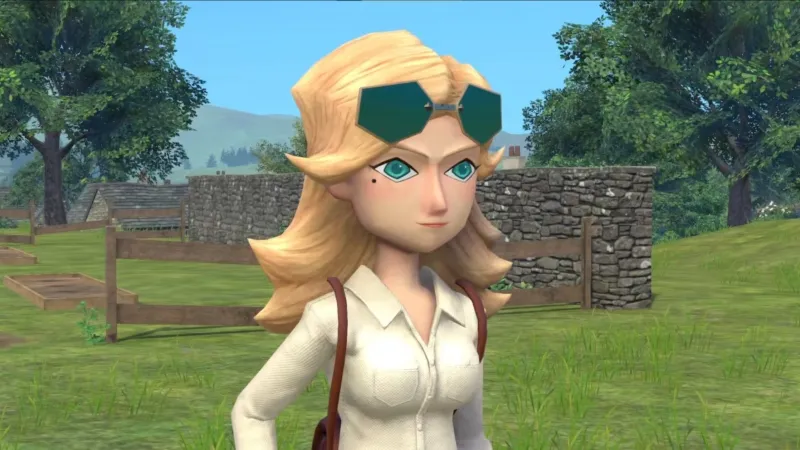
Journalist Naomi Hayward’s goal is clear: pay off an astronomically large debt to Morning Bell News by uncovering the secrets lying beneath the surface of England’s one-time happiest town. At the end of every major quest, a chunk of Naomi’s debt is forgiven, which motivated me to delve into the town’s absurdly diverse mysteries. In one quest, I crashed a centuries-old party; in another, I dug into classified documents in a secret military base. These surreal tasks stitch together a plot so over-the-top and playful that I found it hard not to crack a smile even as I shook my head in disbelief.

However, the writing sometimes crosses the line from delightfully strange to juvenile. For instance, city-slicker Naomi takes almost every opportunity to call the town of Rainy Woods a “goddamn hellhole.” The unrelenting use of this phrase makes the character feel like an angsty teenager trying to sound more adult by cursing. There is also some glaring narrative hand-waving. Digging into the game’s setup, even a little, causes it to topple. Why does a New York journalist owe a debt to an English news outlet, and how has she entered into what’s essentially indentured servitude? Questions like these aren’t addressed in any meaningful way, which left me to disappointedly accept the incoherent backstory.

Even narrative elements that initially seem important get this muddled treatment. Early on, I learn the residents of Rainy Woods have mysterious shape-shifting abilities tied to the moon’s cycle. Confusingly, when I gain my own transformation powers, it inexplicably works differently than the celestially influenced townsfolk. My abnormal skin-changing becomes just another weird plot point I’m not supposed to think about too much. But the talent comes in handy when I need to track down scents or scale buildings to uncover those debt-clearing secrets. 

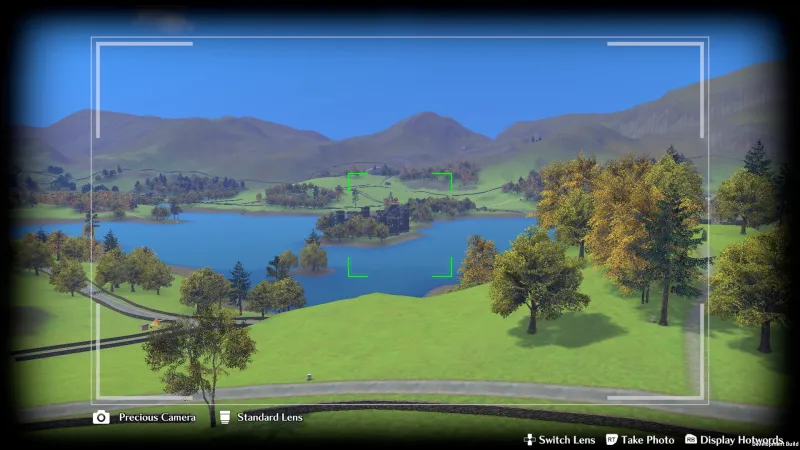
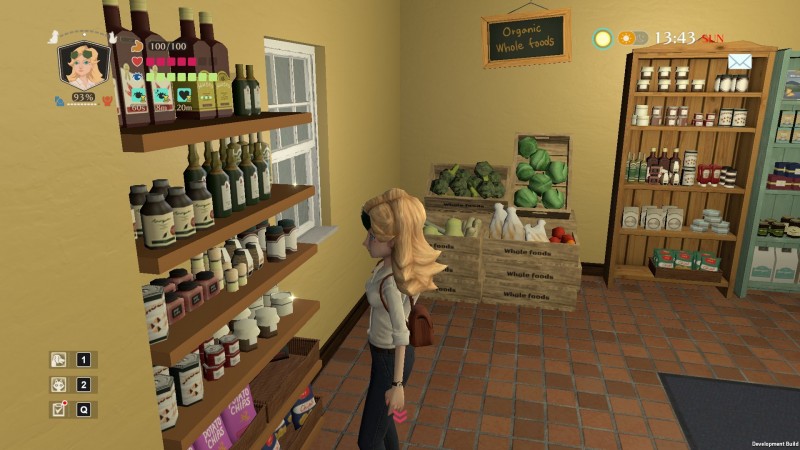
The gameplay is likewise puzzling as it haphazardly mashes together genres and mechanics. The Good Life is a murder mystery. It’s also a life simulator with collectible resources for making meals, fabricating clothes, concocting potions, and upgrading your dwelling. At times, it’s an action game with button-mashy combat, a survival game that asks you to consume food or starve, and a photography game with camera-based challenges to earn money. I enjoyed some of these elements, but they don’t build on or support each other very well. For instance, I was initially excited to learn different recipes, which Naomi collects by purchasing the same meal at a restaurant several times. However, money can be tight, so I felt like I needed to stop in order to spend cash on more crucial things, like fixing my camera when it inevitably breaks.

This problem also sometimes interferes with the story. In one instance, I was steps away from the final confrontation in a quest but realized I was dangerously low on sleep and had no consumables to keep me awake. This put me in the position of either risking exhaustion or cutting my urgent task short to get back to bed. Collapsing from fatigue would stop the sequence anyway and leave me with a small medical bill, so I offered money to a nearby shrine to transport me back.

Returning home to rest, and even to save, feels jarringly dated, and it’s not the only questionable design choice. The visuals are unimpressive, with stone walls that are entirely smooth up close and characters that don’t have any life behind their eyes. Abrupt changes in the music took me by surprise multiple times. Sometimes walking out of a shop to the town’s main square causes the background music to lurch noticeably. The narrative also played to outdated stereotypes; for example, Naomi is characterized as a ditzy blonde by characters at times that don’t seem warranted. There are exasperating walls lining the countryside that make it all but impossible to take shortcuts across fields. Fast travel costs hard-earned money and can only be initiated from specific areas.

In spite of its lack of polish, I enjoyed The Good Life. It has some rough edges, but these can contribute to its charm, and it’s undeniably entertaining when the story is purposely silly or when I had time to just breathe in the world. The Good Life has heart, even if its features don’t always work together and its design holds it back. 

Score: 7

Summary: The Good Life has fantastic moments of humorous absurdity, but the archaic design and overabundance of features get in the way of it living its best life.

Concept: New York native and professional journalist Naomi Hayward is sent to Rainy Woods, an outwardly normal-looking English town, to uncover its secrets on behalf of a news corporation to which she is she’s deeply indebted

Graphics: It’s hard to warm up to The Good Life’s flat textures, low-quality vegetation, and lackluster character models

Sound: Some scenes are fully voiced, while others rely on the main character repeating phrases like “seriously?!” or “yeah, baby!” ad nauseam. The background music transitions can be shaky

Playability: The Good Life contains a few fantastic moments of intentional, humorous absurdity, but the archaic design and overabundance of features get in the way of a good time

Entertainment: This surreal, multifaceted experience has its charms; but technical and storytelling snags that hold it back

Replay: Moderate
Click to Purchase

Wednesday, October 13, 2021

Unsighted Review – The Ultimate 'Beat The Clock' Challenge

Publisher: Humble Games
Developer: Studio Pixel
Rating: Teen
Reviewed on: Switch
Also on: PlayStation 4, Xbox One, PC

Unsighted combines entertaining and thoughtful combat and engrossing exploration with a devilish premise. As Alma, you’re a human-like automaton who awakens with amnesia and faces two problems. First, your partner, Raquel, is missing. Second, the world has lost its Anima, the energy source that gives automatons emotion and free will. When an automaton runs out of Anima, it devolves into an Unsighted, a mindless monster. Alma’s action-adventure romp becomes a genuine race against the clock to spare as many friends as possible from this fate. 

I love that Unsighted’s unique premise isn’t a bluff. You and everyone you meet has a timer, visible in conversations and measured by in-game hours, indicating how long they have before they turn into monsters. Friends, shopkeepers, quest-givers, your fairy-like sidekick. No one is exempt – yourself included. If someone goes Unsighted, you’ll have to put them down, which means you miss out on sidequests or, if it’s a vendor, the option to buy certain goods. An Animal House-style “where are they now?” ending shows what happens to the people you save and provides plenty of good reasons to replay the adventure. 

Click here to watch embedded media

These genuine stakes kept me engaged throughout the journey as I tried to save whoever I could, making me question my actions in ways I normally wouldn’t. Do I spend precious minutes solving an optional puzzle for its prize or hunt for scarce, time-extending Meteor Dust to prevent someone from turning? This system can be stressful, but time doesn’t fly too fast, providing room to comfortably explore for the most part. Unsighted further alleviates the pressure in other creative ways. For example, if you lose a vendor, you can craft goods instead and perhaps save Meteor Dust for someone else. There’s even a character who can kill an NPC of your choice and add their remaining time to yours. This option poses an interesting moral quandary, but I utilized her services twice and always left feeling dirty but relieved.

Unsighted does an excellent job covering its bases in the event everyone gets wiped, and while selfish players can get by letting everyone suffer, I found compelling reasons to keep characters around. Meteor Dust also raises NPC’s affection level, which rewards discounts on valuable gear or opens side missions that you discover as you talk to folks about their backstories. I fought tooth and nail to keep Iris, Alma’s fairy-like companion, around long enough to learn the fate of her missing sister. I genuinely felt bad when someone turned, either because I lost easily accessible items or because I grew to appreciate their colorful personality. 

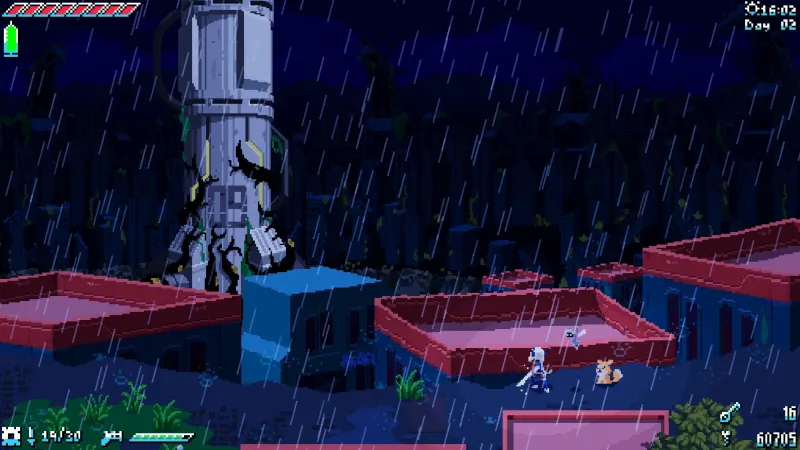
To save the world, you must collect five meteor shards scattered across interconnected, multi-level biomes, each guarded by a big boss. Unsighted’s slick combat allows players to dual-wield combinations of melee weapons and firearms. The action feels great and requires a thoughtful approach thanks to a stamina meter and a satisfying parry, which stuns foes for devastating counterattacks. I loved deflecting multiple incoming assaults, then one-shotting stunned attackers. Pistols, shotguns, and even flamethrowers sport an active reload for added tension, but nailing that timing is a bit tricky. The wide variety of enemies and creative bosses are tough but hit the sweet spot between challenging and fun. 

Click image thumbnails to view larger version


I enjoyed tinkering with Alma’s capabilities using ability-granting chips, which let you create specific builds and negate more restrictive elements. For example, I found a chip that removed the stamina cost for running. Cogs compliment chips with temporary effects like an instant revive or limited invulnerability. Platforming feels great and is more fluid than I expected in a top-down game but judging distances and angles during certain jumps is tricky given the perspective. Falling doesn’t damage Alma, but it is still irritating. As a whole, though, Unsighted plays like a dream. 

I had a great time exploring the beautiful, pixel-art world and uncovering hidden upgrades and shortcuts. Dungeons boast exceptional design and plenty of variety, each with a distinct theme centered around fun items such as a grappling hook or ice grenade. Marching through a lava-filled factory in a mech suit is as entertaining as surfing rail networks atop a giant, Beyblade-esque spinning top. The puzzles are well designed overall, although the back-and-forth runaround required to complete some of them is tedious and clearly designed to force you to burn time. Like the best Metroid-style games, progression-based abilities serve more purposes than opening paths. I loved using the grapple hook to yank enemies towards me as much as zipping across gaps. 

Unsighted hooked me thanks to its fascinating world, awesome combat, and a doomsday clock that enriches the adventure. It’s one of my favorite surprises of the year because my actions made a genuine impact on the world, and they didn’t always pan out the way I hoped. Though I lost friends along the way, my desire to see this exceptional adventure to its end only grew with each passing hour.

Score: 9

Summary: Unsighted is an engrossing and action-packed race against time where everything you do impacts which of your friends survive who turns into monsters.

Concept: As a machine with amnesia, you must rescue your lost lover and restore your allies’ lifeforce before they turn into monsters

Graphics: The pixel art world looks great, and biomes have a nice visual variety. Animated cutscenes sell the drama while further showing off the art

Sound: Unsighted is full of jazzy, hum-worthy tunes, especially in its dungeons

Playability: The hack n’ slash combat requires a fun mastery of parrying and stamina management. Shooting works, too, though the active reload is tough to execute

Entertainment: Unsighted boasts engaging gameplay and lore, strong dungeon design, all wrapped around an effective and impactful countdown mechanic

Replay: High

Click to Purchase

Tuesday, October 12, 2021

Back 4 Blood Review - A Familiar Fright

Back 4 Blood

Publisher: Warner Bros. Interactive
Developer: Turtle Rock Studios
Rating: Mature
Reviewed on: Xbox Series X/S
Also on: PlayStation 5, PlayStation 4, Xbox One, PC

Back 4 Blood’s concept is a slam dunk. Give the team responsible for trailblazing the zombie co-op shooter with Left 4 Dead another shot at the genre, adding a plethora of modern trappings and a new wrinkle to differentiate it from Turtle Rock Studios’ past work. But after countless tech tests and some massive shoes to fill, can the frenetic first-person shooter recapture the magic? While not perfect, Back 4 Blood is a genuinely fun time with friends, and it has enough new tricks to keep fans coming back for more.

Click here to watch embedded media

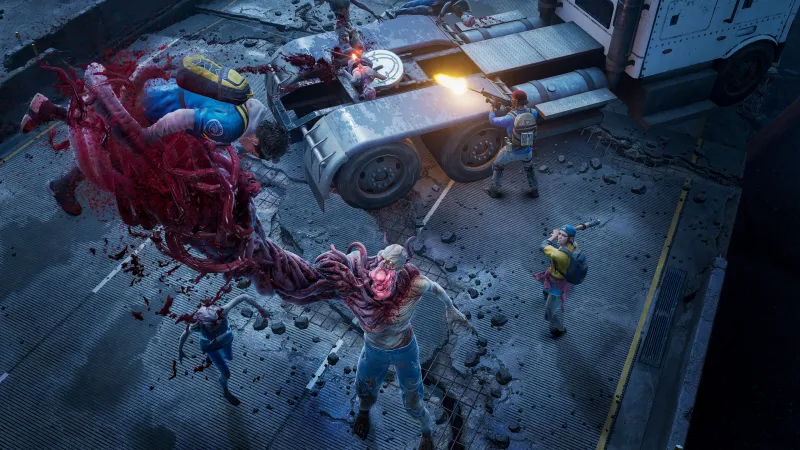
Back 4 Blood’s gunplay is a major highlight. The weapons should be familiar to anyone who’s played titles like Left 4 Dead before, but the thrilling moment-to-moment battles with the undead are satisfying. Everything from crushing Ridden craniums with your nail-covered bat to mowing down zombie hordes with an LMG has the proper weight, controller-rumble, and sound effects to immerse you in an intense experience.

Back 4 Blood is difficult, especially at the start, and I was surprised by its unrelenting enemy mobs. While I loved the heated moments where victory is in question, the difficulty balance is off. The changes in challenge come from the Game Director. This system tinkers with players’ experiences from level to level, throwing everything from fog to flaming infected at you, meaning two playthroughs of the same stage can be completely different. There were too many times I would get through a level with minor hiccups, only to get overpowered within minutes of the next segment and vice-versa. The Director also seems to overcorrect after zombies became too oppressive, and my squad would easily walk through the rest of a level with little more than a scratch after a big fight. The game can strike the right balance, but I wish those highs and lows had been tuned to offer a more consistent experience.

Click here to watch embedded media

That difficulty curve is more manageable thanks to the card system, Turtle Rock’s wrinkle on the classic formula. As players progress through the co-op campaign, they gain supply points that can be spent on upgrade cards for each Cleaner. These range from minor 10 percent boosts to vital skills such as gaining health back from kills to an extra life if your team fails its objective.

The experience started to click for me when I began to build classes that matched my situation. By Act 3, I had assembled enough cards to create a shotgun-wielding tank that could sprint into the fray, mow down dozens of zombies, and run back without losing much HP, thanks to a card that gave me health for landing hits with my boom shot. Another time, my team and I were failing to finish off a boss, only to roll over him when we all added a card that added 20 percent damage to the special Ridden’s weak spot. The more my team varied our decks and loadouts, the less we’d have to drop ammo for one another, and we became a more efficient unit. Even after I faced the final boss, I still had plenty of cards to unlock and new reasons to return to the earlier levels.

As with most co-op-focused games, B4B shines brightest when you have a full team shredding through the special Ridden. Whether we were yelling orders to one another or laughing as someone shrieked after being tackled by one of the wall-hugging Sleepers, Back 4 Blood reminded me why I spent so many hours fighting the undead in the past and why I’m excited to do it all over again in 2021.

On the flip side, solo players may have fewer reasons to be excited. Back 4 Blood’s AI companions are competent and helpful when you need an extra health boost or ammo. But the lack of stat tracking, supply points, or even achievement unlocks kept me far away from the solo action. This is disappointing for players who want to enjoy the game on their own.

Click image thumbnails to view larger version


Finally, I passively enjoyed Back 4 Blood’s Swarm mode, which pits Cleaners against the Ridden in sub-sections of the campaign to battle in round-based encounters. Teams take turns playing as either Ridden or Cleaners, and whoever lasts the longest as the humans wins the round. I enjoyed playing as the undead, but I don’t love how some of the special Ridden like the Tallboy control and longed for the intense matches of the campaign. The mode isn’t offensively bad but pales in comparison to the rest of the game’s engrossing co-op package, and after a few rounds in this PvP mode, I was content to put it down to go back to PvE.

Back 4 Blood is one of my comfort food games of 2021. It is an excellent time with friends that scratches an itch I’ve had since the glory days of Left 4 Dead. While it never reaches the heights of its inspiration, the addition of cards makes me hungry to play more, even when the game isn’t at its strongest.

Score: 8

Summary: Turtle Rock Studios' latest shooter excels at supplying the familiar frights fans of the genre have been hoping for.

Concept: Squad up with friends to take down hordes of undead while trying to clean the world of Ridden

Graphics: The levels start to feel a bit samey, but Back 4 Blood’s world contains an impressive amount of grotesque detail

Sound: The music ramps appropriately to amp up the tension, and mowing down zombies has the satisfying pop you’d come to expect from the game

Playability: Using the card system and a satisfying array of combat tools, players mold their characters to adapt in a difficult everchanging undead landscape

Entertainment: Back 4 Blood shines when playing with others and has enough systems, spooks, and FPS fun to make players want to come back for more

Replay: High

Click to Purchase

Wednesday, October 6, 2021

Metroid Dread Review – Astro Dreadnought

Click to watch embedded media
Publisher: Nintendo
Developer: MercurySteam
Rating: Teen
Reviewed on: Switch

The Metroid series is largely defined by its haunting atmosphere and ominous tone. Inspired by the Alien film franchise and the works of H.R. Giger, Metroid has always been only a few steps removed from the horror genre. Metroid Dread inches the series even closer. The moment Samus sets foot on Planet ZDR, she becomes prey. Every deadly creature – and machine – in the world is hungry for Samus' blood, and she is trapped miles below the planet's surface, far from her ship. And, the only way out is through the barrel of her arm cannon. While Samus' latest adventure delivers the classic exploration-based platforming/action we've come to expect, I never shook the all-encompassing anxiety that gives this adventure its name … and I loved every minute of it.

Metroid helped pioneer the idea of exploring large, non-linear spaces, so the world of ZDR and its disparate zones are essential to Metroid Dread. The quiet subterranean waterfalls of Artaria stand in stark contrast to the deadly lava flows of Cataria. Meanwhile, Burenia is home to a massive underground ocean teeming with carnivorous sealife. These environments feel alive; rainwater runs down the sides of an alien tram system, cool air drifts off the sides of frozen platforms, and exotic bugs gather around light sources only to scatter to the shadows when Samus approaches.

Click image thumbnails to view larger version


Exploring these foreign locales is continually rewarding thanks to essential upgrades scattered across Planet ZDR like a trail of bread crumbs. The handful of new abilities are incredibly empowering. I especially enjoyed Samus' new storm missiles, which allow her to lock onto multiple targets before unleashing a volley of explosives. Unfortunately, most of Dread's upgrades are old standbys that MercurySteam seemed obligated to include. I recognize that Metroid wouldn't feel the same without the morph ball, which allows Samus to squeeze into narrow vents, but finding this upgrade several hours into a new Metroid game isn't exciting. I wish Samus had started with more of her traditional abilities, leaving room for flashier upgrades. As it is, Metroid Dread feels like it's occasionally retreading old ground, but this is a small disappointment in an otherwise great experience.

Thankfully, Dread does a few things to shake up the old formula, and one of the most significant new additions comes in the form of a new enemy type called E.M.M.I. These Extraplanetary Multiform Mobile Identifiers are powerful robots equipped with an arsenal of gadgets that could make a starship blush. E.M.M.I.s are so sturdy that Samus cannot beat them in a fair fight; she must evade them or hide, using a new cloaking device that grants temporary invisibility. These tense cat and mouse encounters left me sweating, and each time I encountered an E.M.M.I., I felt my stomach drop as I franticly ran for safety. 

Click here to watch embedded media

At set moments in the story, Samus temporarily upgrades her arm cannon, allowing you to turn the tables on the E.M.M.I. Even fully armed, these encounters require careful timing and quick footwork as one wrong move can leave you staring at a Game Over screen. Naturally, overcoming these challenges is a rewarding triumph. Likewise, Dread's other boss encounters offer a sizeable challenge. For example, the giant three-eyed green reptile Kraid returns. This battle takes place in a confined space, and dodging the spikes from his belly then bounding up the sides of the wall to shoot him in the face was incredibly harrowing. Thankfully, each boss has a recognizable pattern, so these battles seem fair. Overcoming each combat mountain left me in a heart-pounding euphoric state.

Metroid Dread begins with Samus stranded at the bottom of Planet ZDR's sprawling unground network. This is an inversion of the traditional opening that frequently has Samus descending into the heart of darkness, implying that MercurySteam (the developers of the 3DS Metroid: Samus Returns) is ready to rearrange the Metroid formula. Don't be fooled; Metroid Dread follows Nintendo's familiar blueprint for better or worse – but mostly for the better. This journey isn't scary in the traditional sense. I never jumped out of my seat after rounding a corner and coming face-to-face with an alien monstrosity. Nevertheless, Dread's atmosphere is powerful, and its imposing boss encounters are enough to ensure it earns its title. Despite a few hiccups in this timeworn pattern, Metroid Dread is a white knuckle thrill ride that you shouldn't fear.


For more great Metroid-like games, read our list of the Top 10 Metroidvanias to play right now

Score: 9

Summary: After 19 years, Nintendo finally delivers an official sequel to Metroid Fusion that concludes Samus Aran's lifelong battle with a race of deadly alien organisms.

Concept: After 19 years, Nintendo finally delivers an official sequel to Metroid Fusion that concludes Samus Aran's lifelong battle with a race of deadly alien organisms

Graphics: Laser flashes, smoke plums, and other visual effects are a feast for the senses, but the action remains easy to read, so you never feel lost

Sound: Combat effects and boss music get the blood pumping, but the ambient and atmospheric soundtrack is more subdued than previous entries

Playability: The action is smooth, and a constant drip-feed of new abilities and upgrades helps you navigate the sprawling caverns of Planet ZDR

Entertainment: Intense combat and a series of challenging boss fights require a high level of play, but the thrill of victory is incredibly sweet

Replay: Moderate
Click to Purchase