Pages

Monday, February 28, 2022

Lost Ark Review - Dungeons And Demons

Reviewed on: PC
Publisher: Amazon Games
Developer: Smilegate
Rating: Mature

Smilegate and Tripod Studio’s newly localized Action/RPG Lost Ark initially launched in South Korea several years ago, and thanks to its western publisher Amazon Games, English territories are now getting their hands on it. While Lost Ark may look and play like Diablo or Path of Exile, it’s an MMO through and through, featuring engaging group content like dungeons, raids, and world bosses within a vast, explorable globe. My time with Lost Ark has had some ups and downs, but the more I stuck with it, the more I wanted to spend time in its world.

The open hours of Lost Ark are sometimes dull but necessary, setting the stage for what’s to come. After creating my character, I was whisked away to search for a mythical artifact known as an Ark, which stands at the center of a rather milquetoast fantasy narrative. Much of the leveling experience follows a military campaign to help a prince win back his land and claim his rightful crown as king while battling relentless demonic forces. Despite much of the plot not keeping my attention, it has some great moments. Important characters, such as the conflicted half-demon priest Arden and the magnanimous Prince Thirain, have compelling arcs that occasionally snapped me out of my boredom.
The world eventually opens up, allowing for free travel by ship to other continents that dabble in much more diverse and interesting aesthetics and themes. The critical path took me to places like an island with a Honey I Shrunk the Kids-like adventure featuring diminutive Mokokos where I was miniaturized smaller than a ladybug, a martial arts tournament in a Japanese-inspired land, and a high-tech continent full of futuristic robotics and mechs. Once I set sail for these unknown lands, the world of Lost Ark lost any sense of a cohesive identity, but after the opening hours I was ready for a drastic change in scenery, and the variety presented brings a lot of life to the experience. Because of this I find myself adoring the diverse late-game content much more than I care about why one country is living with cyberpunk body mods while others are living in the dark ages. I’m constantly looking forward to the surprises that await on islands I haven’t yet visited.

As an isometric game, Lost Ark’s world lacks some of the environmental splendor of other MMOs, though it shines in set-piece moments where we get a new angle on the world. The most spectacular points in the narrative or dungeons are spiced up and highlighted with camera shots that present a greater sense of the surrounding world and environments. The world becomes a much more interesting place when cutscenes pan and spin the camera to show off the ruins I am exploring or the hundreds of fiends storming a contested castle. These moments go a long way to making it feel like there’s much more to Arkesia – that this is a fleshed-out world that’s lived in and not just a primarily flat dungeonesque landscape.

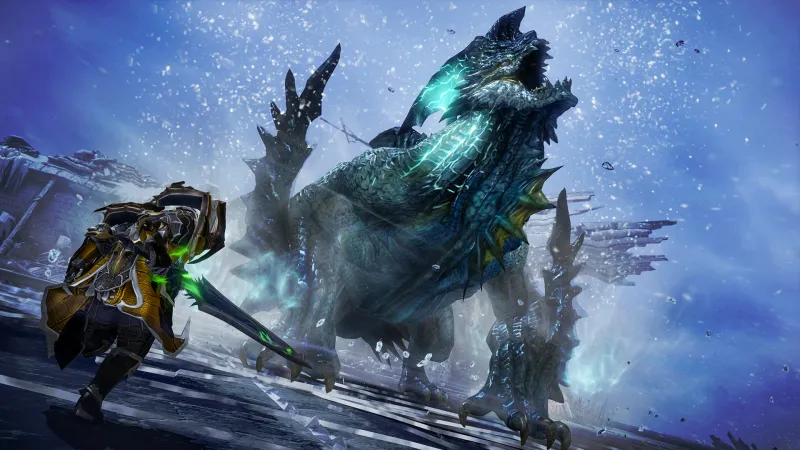
I’m astonished by the level of customization available for each of Lost Ark’s 15 classes, thanks to the Tripod system. This gives each of your class skills three tiers of perks to choose from that can greatly modify those abilities. Some perks modify smaller aspects of a skill such as its attack speed or resource consumption; others apply elemental bonuses and can fundamentally change larger characteristics of the attack or spell. With my Soulfist character, I’ve set up my skill bar to focus on capturing enemies near me in stunning AOE attacks and finishing them with massive meteoric palm strikes or shredding them down with machinegun energy blasts. Skill points and the Tripod perks can be changed at any time for no cost, which left me happily experimenting for hours on cool combos that left hordes of demons exploding into a satisfying gory mess.

Click here to view embedded media


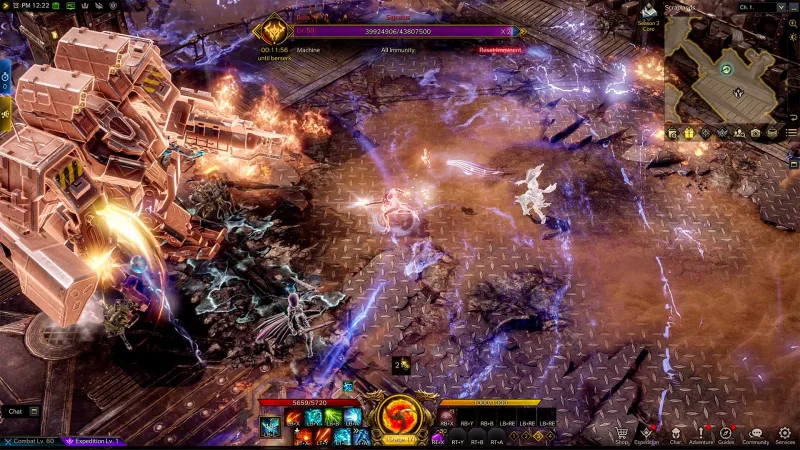
Much of the game’s content can be completed alone, including dungeons, which I appreciate as a mostly solo MMO player. Though, it is a lot more fun to delve into a dungeon with a group of other adventurers. Players can form guilds and group up with friends on a given server, but unfortunately, leveling with friends can be a nuisance. When playing with a group, you’re often forced to separate when moved into a story instance, causing the team to have to re-invite and regroup when the infringing narrative content finishes. Having other players roaming the world makes Arkesia feel much more alive and dynamic, especially when I came across and joined a disparate group of players joining forces to take down a goliath missile-loaded walking tank or a brutish boss in the middle of nowhere in the desert. The map is loaded with these types of encounters, and they’re a joy to find every time.

Lost Ark has no shortage of activities to complete and items to collect, much of which I loved to seek out. World bosses, dungeons, raids, PvP, naval exploration, seeking out the 1000+ Mokoko seeds, card collecting, item crafting, material farming, befriending NPCs, and so much more can fill hours and hours. Just about every one of these tasks has a series of rewards which makes doing nearly everything worthwhile. There’s even an entire island stronghold to build out and customize that feels like an entire game in and of itself. I feel like I’ve barely scratched the surface with my collection of items, which thankfully in many cases carries over progress to the other characters I’ve created on the server. Although any regional achievements that are tracked in the Adventurer’s Tome will have to be completed on each character.

Amazon Game’s second run at the MMO market is very impressive. The years of content already created for Lost Ark provide an enticing package filled to the brim with fun activities and exciting locals to explore. Each class is wonderfully unique, and the customization systems allow for an abundance of freedom to tailor to a variety of playstyles. I’ve had a great time with Lost Ark in these early days, and I’m looking to sink many more hours into it with friends over the coming weeks and months. Those looking to scratch an Action/RPG itch or sink time into an MMO won’t go wrong giving this adventure a fair shot.
Score: 8.25

About Game Informer's review system

Purchase

Friday, February 25, 2022

Martha Is Dead Review - Martha Ain't Great, Either

Martha Is Dead Game Informer Review

Reviewed on: Xbox Series X/S
Also on: PlayStation 5, PlayStation 4, Xbox One, PC
Publisher: Wired Productions
Developer: LKA
Rating: Mature

Martha Is Dead starts extremely strong, introducing immediately a dynamic between twin sisters Martha and Giulia that sets the stage for the entire game. Giulia’s mother never loved her the way she loved Martha, and this relationship, or lack thereof, has eaten away at Giulia’s spirits for years. After Giulia finds Martha, drowned in a lake, her mother runs to embrace Giulia, mistakenly believing her least-favorite child perished. Finally, she gets the love and affection she’s always wanted. What happens next is unexpected, jaw-dropping even, and I was immediately captivated by the premise. Unfortunately, Martha Is Dead quickly becomes a chore to play.   

I felt at odds with the gameplay the moment I began exploring Giulia’s family villa. Walking feels like trudging through mud, which is especially frustrating because this game is all about walking around and interacting with objects to learn more about what’s going on. Occasionally you run through poorly-explained dream-like scenarios, or participate in simple minigames, like using a camera and its photos to piece together answers about who was at the lake the night of Martha’s death. However, for the most part, you do a lot of walking and a lot of looking at things. One scenario makes you avoid an enemy, which adds some tension that I wish was more present in other areas of the game. But, because most of what you’re doing is walking, the game feels less like traditional horror and more like watching a story unfold that happens to be horrific in nature.

Click here to view embedded media


To make matters worse, interacting with objects is also a bore. Pressing on the right thumbstick reveals interactive objects, which quickly grows annoying because the on-screen symbols disappear within seconds. As a result, I continually pressed the right thumbstick over and over. As if to make this annoyance an even bigger stumbling block, the controls sometimes completely change. Instead of interacting with an object by pulling the trigger, you inexplicably have to press A. These frustrations coupled with progress-stopping bugs began to tear down the initial intrigue I felt during the opening. 

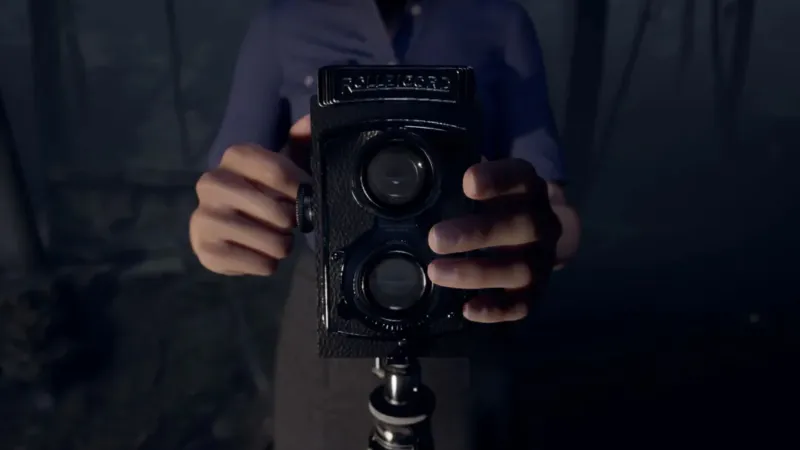
Interacting with some objects, like letters or your dead sister’s body, leads to side objectives. None of these are as engaging as the main mystery, but a handful of side tangents are serviceable, like one where I found a tire pump to unlock a bike that made traveling around the villa slightly faster. For some, I had to use an in-game camera that can be decked out with accessories that change how the camera can be used and skins, which are collectibles that are purely cosmetic. I enjoyed the mechanics around the camera’s focus, distance, lens types, and more, such as having to use the d-pad ever-so-slightly to make an image snap into focus. I was glad the camera was such a big part of the main objective, too. The game’s darkroom, which tasked me with developing my photos in an old-school realistic way using a timer and the controller sticks, made the use of this camera even more immersive.

Despite a few engaging segments, a lot of objectives are half-baked or poorly explained. For example, I spent 30 minutes looking for a side-quest key (or so I thought), only to discover later that I couldn’t obtain it until I completed a significant story moment much later in the game. I wish LKA did a better job indicating when you can’t progress in a quest until furthering the main story. 

For a game that leans so heavily on narrative, the story of Martha Is Dead rubbed me the wrong way in many ways. Some of the most significant moments in the game ask you to sympathize with Martha and Giulia’s parents: a Nazi general and a woman who doesn’t seem fazed to be married to a Nazi. I particularly enjoyed helping Italian resistance forces defeat Nazis near my family’s villa. Oddly, though, the game asked me if I wanted to help the Italian resistance fighters or foil their plans by telling my Nazi father about them. Naturally, I didn’t entertain that option. LKA wove some big narrative threads into the family dynamic, but I didn’t connect with them because ultimately, I was never going to sympathize with a Nazi. 

In these moments, I was put off. There are ways that games have used Nazis to tell interesting stories, but this was not that. Martha Is Dead doesn’t praise Nazis or even indicate support for them, but the family’s Nazi connection doesn’t play into anything other than the fact that WW2 is happening. The parents are only used in ways to further enhance Guilia’s torture and trauma, but their Nazi beliefs aren’t an aspect of that. Why are they Nazis and why does it matter in Martha Is Dead that they are? These are questions I wished were answered. LKA uses the war surrounding this villa to showcase the grip Nazi Germany was losing on Italy in 1944, and Giulia’s dad eventually faces consequences for his part in it, but instead of using that moment to show him getting what he deserves, Martha Is Dead instead uses this narrative beat to further torture Giulia. 

Click here to view embedded media


Sadly, Martha Is Dead never reached beyond surface-level depictions of war. Martha Is Dead attempts to blend psychological horror and the horrors of war in a compelling way, but because one half of that equation falls short, the two never come together to create something truly satisfying. The story leans into gore and disturbing imagery, asking me to do things more gruesome than anything I’ve done in a game before, but these moments don’t add meaningfully to the narrative or the experience. I was left feeling the gore was simply present for shock value as a result. 

When Martha is Dead isn’t about war, it is about the central mystery of how Martha died. There are some supernatural elements at play, and a few captivating revelations. Too often, however, Martha Is Dead uses the “your memories betray you” trope right before a big reveal about how events really played out. These cheap twists are disappointing every time because they don’t feel earned. 

Without spoiling the story, I finished the game dissatisfied and confused about everything I played. This was especially unfortunate because the initial premise was so compelling. The delivery of the story’s twists, and the way the game touches on some serious mental health themes, was disappointing. When the credits roll, the game displays a message about getting help if you need help, something Giulia wasn’t able to do in Martha Is Dead. While that’s true, it felt more like a sticker slapped onto this game, which in the six hours prior, never made a real or meaningful commitment to exploring these feelings in a respectful and sensical way. 

LKA made the best recreation of an Italian setting I’ve ever seen in a game and I wanted nothing more than to enjoy it. However, LKA’s love of Italy is the only warmth I felt in Martha is Dead. The rest left me feeling as cold as Giulia’s dead sister. 


Score: 6

About Game Informer's review system

Purchase

Far: Changing Tides Review - Call Of The Sea

Reviewed on: PlayStation 5
Also on: PlayStation 4, Xbox One, Switch, PC
Publisher: Frontier Foundry
Developer: Okomotive
Rating: Everyone

Every adventure is a journey of some sort, but we are often so consumed with the destination we sometimes forget to enjoy the ride. Far: Changing Tides pushes you to soak in the small moments that can be overlooked in our rush to reach the peak. Okomotive newest side-scrolling platformer is a meditative odyssey full of trials and triumphs. But this pilgrimage is so powerful I was often content to forget about my end goal.

Okomotive’s freshman release, Far: Lone Sails, followed in the footsteps of atmospheric puzzle platformers like Inside and Little Nightmares. While Lone Sails wasn’t nearly as dark or brooding as those other titles, it set a striking tone as the players navigated a giant land sled across a desolate post-apocalyptic landscape, all the while looking for a new home. Far: Changing Tides is – in many ways – more of the same, but that isn’t necessarily a bad thing.

Click here to watch embedded media

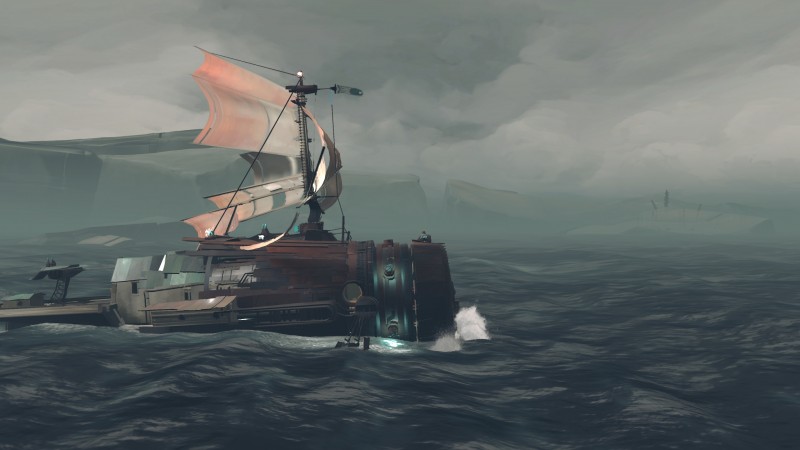
Instead of piloting a vehicle over land, Changing Tides puts you at the helm of an oversized boat. The mechanics of this ship are complex enough to be engaging without feeling overbearing. I enjoyed hoisting the sails and moving the mast to catch the wind or shoveling fuel into my engine to give my vehicle a nice push across the water. Along the way, you find ship upgrades, such as a chain to hoist up sunken treasure or an overcharger that grants short-lived but thrilling speed boosts. I couldn’t wait to uncover my next upgrade and see how it changed the way I navigated these freezing waters.

You encounter various roadblocks during this journey and are often forced to abandon your ship to solve environmental puzzles. These moments are rarely taxing, but I enjoyed stretching my legs to power up a rusted windmill, study the inner workings of a rotted locomotive, or dive for secrets on the ocean floor. Much like Lone Sails, Changing Tides doesn’t bother you with tooltips or gameplay explainers; instead, you learn about this world and how everything works through trial and error. Occasionally, I scratched my head at what looked like a dead-end, but after tinkering with the environment for a few minutes, I was always able to find what felt like a well-earned solution.

Click here to view embedded media


Between puzzle breaks, you experience long stretches where you watch the scenery zip by. These sequences reminded me of the best moments of a long car ride, where you soak in nature’s beauty. It helps that Far: Changing Tides is full of striking vistas and backed by a moody, often-wistful score.

Far: Changing Tides isn’t an action-packed roller coaster ride – it’s a contemplative journey that isn’t afraid to slow down and ask you to reflect on your expedition. Of course, this adventure is full of challenges to overcome. But whether I was watching the clouds glide over a flooded city with the wind at my back or white-knuckling through a storm as ten-foot waves bombarded my ship, I was always completely enrapt by the moment. It’s a journey I hope to take again someday.

Score: 8.25

About Game Informer's review system

Purchase

Wednesday, February 23, 2022

Elden Ring Review – Absolutely Astonishing Adventure

elden ring review

Reviewed on: PC
Also on: PlayStation 5, PlayStation 4, Xbox One
Publisher: Bandai Namco
Developer: From Software
Release: 2020

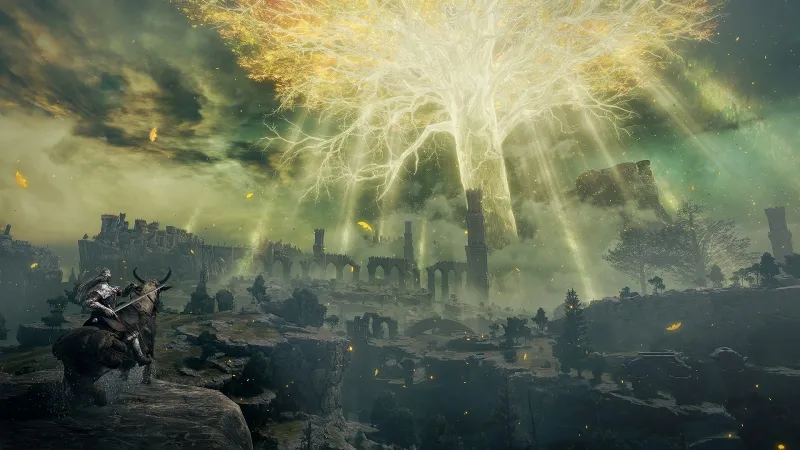
Once in a great while, a game comes along that seamlessly combines impeccable gameplay, a wondrous world, incredible tone-setting music, and unparalleled art direction. That game is From Software’s Elden Ring, an action RPG that channels the best aspects of the studio’s last decade of work into one enormous package. This absurdly ambitious open world captivated my curiosity, enticed me with puzzles, secrets, and mysteries, and served up unbelievably satisfying moments as I experienced one of the most extraordinary adventures of all time. From my initial foray into the world to the final moments, every step of the journey is a note in a personalized epic that kept me coming back for more. This trek through dark and twisted fantasy is an endless exploration, continually serving up sensational sights that only get more enthralling and fantastic as the voyage goes on.

Click here to watch embedded media

The Lands Between is a world full of discovery, and while a clear path forward exists for those seeking guidance, roaming the lands unfettered without a particular goal in mind often yields surprises. I often had a spot to explore marked on my map and got off-track along the way, sometimes leading to entirely new areas and feature-dense zones. Elden Ring is not a theme park-style open world where each ride is bolstered by breadcrumbs so they won’t be missed – there are significant areas, bosses, dungeons, and other huge revelations that can be passed by, making these finds even more delightful. Even after over 55 hours, I know that I’ve missed plenty. Instead of pining over what I haven’t found, I’m inspired to keep exploring. The grandiose world is chock full of characters, quests, and various dungeon crawls ranging from tiny catacombs to massive multilayered tombs. While the journey starts with little caves, mines, and other dungeon delves, these experiences become more complex. Two-room affairs eventually become intricate teleport puzzles or scenarios where you discover unusual ways to interact with the environment, like learning to use traps for traversal or sniffing out secret walls. 

Even the most straightforward overworld dungeons house hidden boss rooms and treasures, in addition to their standard yields, rewarding the most inquisitive adventurers. Finding creative ways to travel to places that don’t appear accessible before the standard path guides you there feels remarkably refreshing, and more than one area delivers picturesque vistas upon arrival. Looking over a new area for the first time and realizing you can go everywhere you see is breathtaking and overwhelming. Some open-world locals, like churches, ruins, and Erdtrees, feel a bit familiar from realm to realm, but make no mistake there are numerous and unique points to explore and get lost in for hours. From mysterious castles to haunted magical grounds, the world is full of exciting diversions.  

Click here to view embedded media


Your character is incredibly customizable, which I found highly rewarding. You can attach various skills and scaling mechanics across the board, allowing you to truly create your own vision of a traveling hero. Respecialization and alterations allow you to finely tweak your creation without worrying too much about experimentation along the way as you arm yourself with everything from explosive pots to potent perfumes to complement your ever-growing arsenal. Combat will vary greatly from player to player and build to build, but the precise dance of melee combat is more refined and diverse than ever. Featuring a behind-the-scenes stagger system that rewards players for taking chances with timing, the flow of battle makes the singular spammy strike a lesser choice in the face of a daunting foe.

The open world is majestic, dripping with flavor and atmosphere, and full of fabulous finds. However, the legacy dungeons are the stuff of legend, often connecting to the outside from multiple points. These curated sprawls are a dream to dissect, and Elden Ring often offers different ways to maneuver through these areas. For instance, in one of these giant dungeons, I discovered a completely different way to “solve” the route to the final boss – and then went back and found a divergent path through another environment, leading to a wealth of battles, bosses, and loot. Sometimes, access to certain areas is in the last place you look, but the route to unearth it is laden with even more attractive paths to pursue.

Click here to watch embedded media

While some monster and boss designs are reused, the scope and scale of Elden Ring are enormous, which makes the repetition easy to ignore. I feel like I ran into around one hundred bosses in my playthrough. I’m not exaggerating. Some of these can feel commonplace and uninteresting, at the end of a small dungeon, like a repeat cave troll or magma drake, but the overall diversity of encounters meant that I never knew exactly what I was going up against at the end of any given expedition. I might run into a reskinned knight, but I might also go toe-to-toe against something truly astronomical. 

The big bosses, generally found at the end of legacy dungeons, feel like wonderful wars against demigods. These brilliant set piece battles are thrilling exclamation points to an outrageous odyssey, absolute spectacles, and masterful combinations of tension and triumph. Elden Ring has the distinction of having the best and most challenging boss battle in any From Software game to date. Hidden away and optional, this encounter had me waking up in the middle of the night to come back and crash against its beautiful and terrifying destruction over and over again. After finally besting this opponent, I let loose a triumphant victory roar there while sitting in the dark and wearing my pajamas, wanting nothing more than to experience the encounter again. This example speaks to how unbelievably compelling and immersive Elden Ring is; I regularly put it down with the intent of doing something else and found myself back within minutes. There is always one more gnawing mystery to unravel, one more boss to beat, and one more hidden route to find.

Elden Ring challenged me, captivated me, and enchanted me, an unyielding deluge of discovery and artistic vision unbound. Elden Ring represents a truly amazing combination of various game elements that all come together to create something fascinating, special, and unforgettable. Elden Ring isn’t just the best game this year; it’s one of the best games ever made.

GI Must Play

Score: 10

About Game Informer's review system

Purchase

Friday, February 18, 2022

Infernax Review - 8-Bit Blood On My Hands

Infernax Review Game Informer Berzerk Studio

Reviewed on: Switch
Also on: PlayStation 5, PlayStation 4, Xbox One, PC
Publisher: The Arcade Crew
Developer: Berzerk Studio

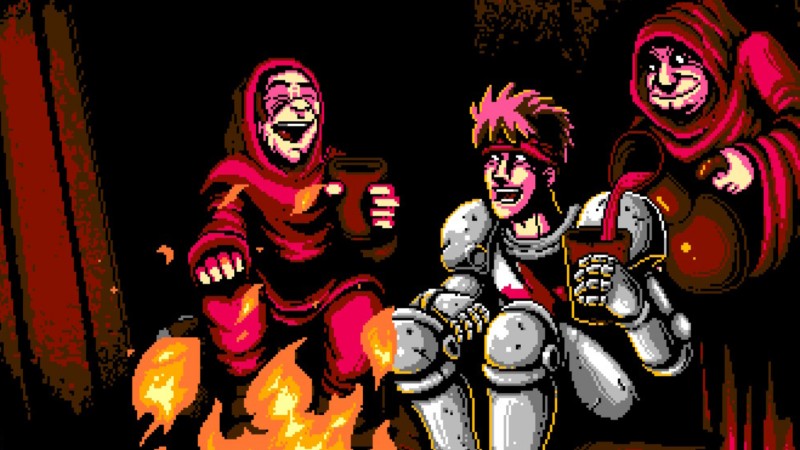
In the first 10 minutes of Infernax, I faced a choice to kill or spare someone who asked to die. I chose to kill them, and without a moment’s hesitation, my character’s mace crushed through their skull. Their face was mangled, with eyes popping out the sides, as the mace destroyed everything between their nose and the cowlick on the back of their head. It is a brutal introduction to the “kill or spare” choice system that presents itself a handful of times throughout Infernax, and it was only a taste of the carnage that’d soon color my crusader’s journey to defeat evil once and for all. 

Infernax’s quick and beautiful prologue is reminiscent of Castlevania II: Simon’s Quest, which this game seems to be heavily inspired by. It plays right after you begin a new game, setting up what’s in store for you. Infernax is one part an homage to those retro games of old – sometimes to a fault if the punishing difficulty of the NES era is not something you enjoy – and another part Berzerk Studio’s crack at creating something new. For the most part, it expertly replicates those experiences that defined that era of games. 

Click here to view embedded media


You begin Infernax as a crusader returning to your homeland, but you haven't lost your urge to crusade. Towns like Darsov are overrun with mysterious monsters seemingly controlled by a devil-like figure. Pentagrams and other satanic relics and imagery are scattered about to remind you that these once holy lands are now infested with demons and other monstrous beings. But, Alcedor has the power of prayer and a bloody mace on his side. Over the next 10 hours, I’d defeat hundreds of monsters, decide the fate of evildoers and the unlucky, complete quests, and cheekily solve problems, all while attempting to track down and destroy five orbs that protect the big demonic baddie haunting the lands. Throughout it all, I was always intrigued by what was inside the next dungeon or what mischievous plan a mysterious citizen was up to. The combat alone was enough to keep me progressing forward, but the world that Berzerk built was just as interesting. 

The game’s Castlevania II inspiration is present throughout Darsov and its neighboring areas, and Berzerk skillfully raises the stakes by using troubled citizens like cursed husbands or nightmare-ridden children to revel in the misery that drapes the land. From the start, I bought into Berzerk’s narrative that a devilish figure was bringing dark magic to this otherwise normal and holy place, and not once did it fall short of selling that premise. 

Infernax features some light Metroid and Castlevania-style elements that bring new life, entrances, and secrets to places you’ve explored dozens of times. A previously unreachable house is a quick jump away after you gain an ability that drags you high into the sky. You can purchase a spell that makes teleporting from one shrine to the next a breeze, and you can purchase another that might be the key to discovering a sunken castle. On top of more subtle world changes like this, a constant day-and-night cycle keeps you on your toes. There are more enemies during the day, but they’re easier to kill than the battle-hardened ones that only appear at night. 

Click here to watch embedded media

I began Infernax with a simple weapon but quickly learned the Shield spell, which saved my life more than once by decreasing the amount of damage I’d take. When the credits rolled, I had multiple weapons, pieces of armor, potion flasks, and over half a dozen spells at my disposal. I found many of these indispensable, such as a potion that restored my mana, which in turn allowed me to use my Drain Life spell once more. This spell sucks health out of nearby enemies to restore my own, and it was essential in reaching the deepest depths of Infernax’s many dungeons. Watching my arsenal grow was great, but I was disappointed that weapons and armor didn’t really change my approach to combat in any way. When I purchased a new mace, it felt exactly the same as the one I was previously using – it just hits harder. When I first booted up Infernax and saw that I had four weapon slots, I was excited to see how different weapons might shake up the action. Sadly, the combat doesn’t evolve much over the course of the game, except for spells, which do greatly affect your approach to battles.

I primarily used spells that increased my health and buffed my defense, but more offensive magic, such as the ability to imbue my weapon with holy light that can be tossed at enemies from a distance, were clutch more than a few times. 

Some spells aid in exploration, although I wish Infernax more clearly communicated when you need a spell to progress through certain areas. For example, you unlock an ability that allows your hero to shoot high into the air. Shortly after, you unlock an ability that allows you to dash either left or right through the air. More than once, I encountered a gap that looked like I needed to quickly dash right and then launch immediately upward using these two skills. However, I could never pull off this maneuver. Instead, I was missing a spell that summons a crow that could fly to a lever that reveals a bridge. I loved this spell and how it added to my ability to progress forward. Unfortunately, Infernax doesn’t always clearly telegraph which abilities you need to progress past certain obstacles, which lead to a few of these moments of frustration. 

Click here to view embedded media


Annoyances like that are minor nitpicks, though, because across my 10 hours with Infernax, less than an hour was spent dealing with issues such as these. A few dungeon layouts are frustrating, and if you lose all of your lives, you’ll be sent right back to your last save. This meant that I constantly had to remember to save at the shrine right outside the dungeon before actually entering. Thankfully, Infernax’s difficulty feels fair, and I almost always felt that it was my fault that I died and not an element out of my control. 

If you play on classic mode, you’re sent back to your last save point when you expend all of your lives. Because saving only happens manually, if you go an hour without saving, a few mistakes can cost you an entire hour of progress. Of course, you can switch off of classic at any time to play in the casual mode, which saves some of your money and experience when you reach game over. I stuck with Classic for my entire journey, even with the annoying progression resets. I appreciated that Casual mode was a little more accessible, but unfortunately, once you switch over to Casual you can no longer switch back to Classic, which is a bummer because for the most part, I enjoyed the challenge of Classic. 

My time with Infernax was colored by wonderful “ahh ha!” moments of discovery, a challenging gameplay loop, unique bosses, and plenty of gorgeous 8-bit blood and guts. I only hope that a sequel (which I’d love to see happen) cleans up and tweaks some of the smaller frustrations that tainted this otherwise fun and retro romp. 

From the moment you step onto these demon-infested lands to the moment you deal the killing blow to the game’s final boss, you’ll experience plenty of surprises – the Konami Code does something really cool, for example. Infernax’s retro soundtrack that rips from start to finish, beautiful art, challenging gameplay, and a fun Castlevania-inspired design, make it worth the price of admission. 


This review pertains to the Switch version of Infernax. The game is also available on PlayStation 5, Xbox Series X/S, PlayStation 4, Xbox One, and PC.

Score: 8

About Game Informer's review system

Purchase

Cuphead Review – Tempest In A Teacup

Reviewed on: Xbox One
Also on: PlayStation 4, Switch, PC, Mac
Publisher: Studio MDHR
Developer: Studio MDHR
Release:
Rating: Everyone

Cuphead made me shout obscenities at a flower. Its cheerful dragon tempted me to head-butt my television. And the candy princess? Oh, you don’t even want to know. I didn’t appreciate it until much later, but those early maddening hours with Studio MDHR’s run-and-gun platformer were like a kiln, hardening my skills and turning me into the best damned Cuphead player that I could be. That trial by fire is ultimately one of the most satisfying parts of the overall experience, but players who just want to enjoy its unique aesthetic are going to get burned.

The hand-drawn animation is mesmerizing, and makes for one of the most visually appealing games I’ve played in years. Studio MDHR faithfully recreated nearly every facet of classic animation from the ‘20s and ‘30s, from the title cards that introduce each stage to the jazzy score that accompanies the action. If you have any fondness for that era, you’re in good hands. Going into the game, I wondered if there would be certain homages to long-lost techniques, and, without spoiling some of the most satisfying little moments of the game, the answer is “Yep!” The attention to detail is wonderful, and I was immediately pulled into its scratchy Technicolor world. But once I got there, I was in for a surprise.


Cuphead may lure you close like the visible aroma from a cartoon pie, but its difficulty is the windowsill slamming shut on your hands. Studio MDHR was inspired not only by classic animation, but by tough arcade games that fed off a steady diet of quarters. The bulk of Cuphead is built around boss battles, each of which has several different phases. They can be knocked out in a couple of minutes, but that assumes you’ve mastered the various tricks each one requires. You have unlimited continues, but no checkpoints or shortcuts through the encounters. When you fail – and you will fail – you have to fight that boss from its opening moments again. This approach walks the razor-thin balance beam between being frustrating and rewarding, and it mostly succeeds. About half the time I finally landed the final blow on a boss, I’d cheer. The other times, I’d flip it the bird with both hands. You can play simplified versions of the boss fights, but you won’t get to see many of the game’s best moments. You also need to beat them on the regular difficulty if you want to fight the last pair of bosses. Trust me, it’s worth it.

Compared to the intense boss encounters, the run-and-gun action levels feel uninspired, full of straightfoward enemy gauntlets and platforming challenges. These sections aren't nearly as interesting as the rest of the game, and include some of Cuphead’s worst moments, such as a poorly implemented gravity-swapping section and a few fatal end-of-stage surprises that feel more like active trolling. Unfortunately, they’re the main source of gold coins, which you need to buy additional weapons and special abilities. Fortunately, these levels aren't numerous, and you never have to revisit them once you get all the coins.

Those weapons and abilities add a welcome wrinkle to Cuphead. You can equip two weapon types, one of three ultimate attacks, and a special charm. At first, I gravitated toward abilities that gave me additional health. Then I got better at the game and found that I wasn’t getting hit nearly as often. At that point, I switched to a power that let me avoid damage by dashing, and that changed everything. The arsenal is small but diverse, and part of the fun is finding a loadout that works best for you. On several occasions, when I thought a boss was impossible, I breezed through it after picking the right tools. Getting good at the parry ability, which allows you to slap away pink projectiles, is also key. 

When I got stuck, I enlisted help through local co-op. By bringing along a buddy (who plays as Cuphead’s friend, Mugman), you can revive your comrade if you manage to parry their ghost before it floats to the top of the screen. I thought this would be overpowered, but it comes with a tradeoff: Sharing space with another character can be distracting, especially when you need to watch out for subtle tells that the bosses have before attacking. I got through some tricky stages thanks to co-op, but I managed to beat the rest of it solo, so assistance isn't a requirement.

Cuphead is a singular experience. Studio MDHR knew what it wanted to make, then went ahead and made it. A tough boss-rush game based on classic animation archetypes? It shouldn’t work, but here we are. It’s fun to play, and possibly even as satisfying to watch, since you can fully absorb what’s going on screen. It would have been easy to dial down the overall difficulty (and I wouldn’t have complained), but that wouldn’t have been Cuphead, either. Stick with it, is all I can say. We don't often get something that will make you laugh and grind your teeth in such close proximity. 

Score: 8

About Game Informer's review system

Concept: Take on a host of cleverly designed, deviously difficult bosses in a gorgeously animated action/platformer

Graphics: The presentation is absolutely stunning, with lovingly hand-drawn animations that would be right at home in the best (and weirdest) cartoons from the ’20s and ‘30s

Sound: The audio is an appropriate throwback to the retro visuals, with ragtime piano, Dixieland jazz, and other tunes that will make you want to crank up your gramophone

Playability: Cuphead is tough, and it asks a lot from the player. Thankfully, the precise controls and visual feedback are up to the task

Entertainment: Cuphead’s friendly exterior masks a game that denies all but the most persistent players its many rewards. Those who stick with it will have a great (and frustrating) time

Replay: Moderately High

Purchase

Tuesday, February 15, 2022

OlliOlli World Review - Video Days

Reviewed on: PlayStation 5
Also on: PlayStation 4, Xbox One, Switch, PC
Publisher: Private Division
Developer: Roll7
Rating: Everyone 10+

Last week, I noticed my hand was sore. I didn't think much of it, mostly because I wasn't sure why it would be hurting. On Monday, while playing OlliOlli World, I found my reason. I'm not sure there's a better way to recommend World than that; it pushed my hands to their limit. 

Compared to the previous two OlliOlli games, which could be prohibitively difficult, World is simultaneously an easy-to-approach 2D skateboarding game with an impossibly high skill ceiling. Early on, the game does a great job quickly teaching you the basics of its trick systems (mostly tied to flicking and rotating the left and right thumbsticks) and then getting out of your way, dropping you in levels, giving you objectives, and letting you skate. Within minutes, I was pulling off increasingly large combos, and more importantly, having a fun time doing it. While I never truly got the hang of the first OlliOlli, in World, I felt compelled to continue to learn its systems because the game isn't front-loaded with frustration. Players of all skill levels should be able to find something enjoyable here. 

As the game goes on, that demanding challenge reveals itself – in the best and worst ways. As levels grow more complex, as you might expect, so too does your bag of tricks. There's an undeniable thrill to beating a level in one long combo – utilizing grinds, grabs, flip tricks, and manuals across varying verticality and secret routes. 

Click here to watch embedded media

Doing so means getting good at playing OlliOlli World very fast. Maintaining a long combo in later levels means constantly pulling off new tricks and being ready for what's next. It's fun and exhilarating to barely feel in control of what my hands are doing, yet impressed with myself for doing it at all – even if the complexity of controller inputs began to wear and tear on my hands. 

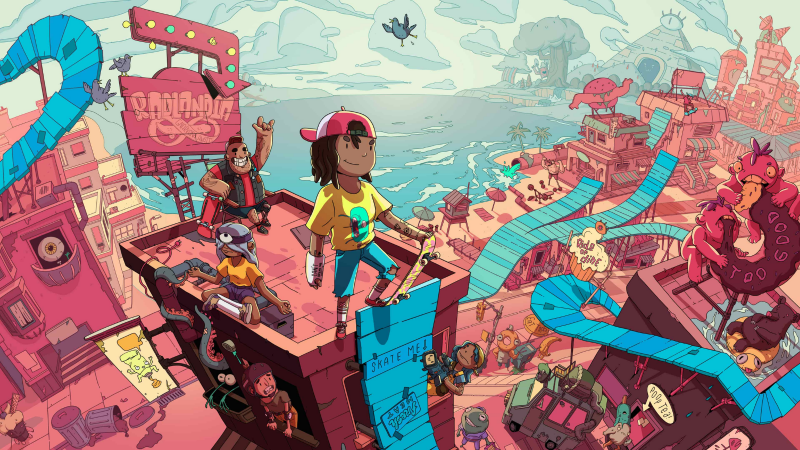
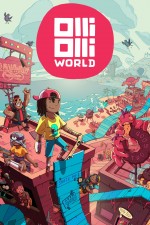
This is amplified by fantastic level design from both layout and aesthetic standpoints. While the game's cel-shaded, colorful veneer may present itself at first blush as simple and minimal, there are levels in World that are monstrous in size. The camera will sometimes pull out, leaving your player a tiny dot onscreen as it reveals the mess of rails and ramps surrounding you. Each level's various explorable paths also means you can replay them to discover new experiences and combo opportunities. Often, I immediately revisited a level to see how other routes stacked up and what challenges I could find there. The fact that the entire game looks like a watercolor painting come to life adds to World's overall charm – goofy characters and over-the-top designs were humorous to catch glimpses of as I sped by. 

Click here to view embedded media


But one major sticking point with World is when it halts that speed. On several levels, I'd find myself stuck on a particular ramp or jump, trying over and over to find the ostensible single-pixel I needed to launch myself from to make the next clearing. On the one hand, this is arguably part of the challenge. On the other hand, repeating these sections ad nauseam as I repeatedly tried to find the precise place the game required me to jump broke up the overall flow of levels. Luckily, this isn't an issue with every stage, but I found myself increasingly stuck in particular pain points, especially as I got towards the end game. 

All in all, I really enjoyed my time with OlliOlli World. It's a gorgeous and goofy game that onboards new players well while also giving veterans plenty of challenge. There's even a silly story tied in about searching for the mythical skate gods of "Gnarvana" in the world of "Radlandia." It's sufficiently dumb in an endearing way and entirely skippable if you're not interested – which I wasn't after an hour or so. Despite some headaches thrown in the mix, I welcomed all of OlliOlli World's challenges, even when they came at the detriment of my own hands.

Score: 8

About Game Informer's review system

Purchase

Monday, February 14, 2022

Horizon Forbidden West Review – Leaping To Greater Heights

Click here to watch embedded media

Reviewed on: PlayStation 5
Also on: PlayStation 4
Publisher: PlayStation Studios
Developer: Guerrilla Games
Rating: Teen

Horizon Zero Dawn was just the introduction to Guerrilla Games’ fascinating world and the unlikely hero who would do everything in her power to save it. The sequel, Horizon Forbidden West, takes everything to an exciting new level with its novel mechanics and riveting lore. Guerrilla Games improves on the last game’s shortcomings and isn’t afraid to borrow popular features from other big-name series, like Uncharted, Mass Effect, and Assassin’s Creed. The result is a game that’s not only fun to play, but full of surprises and wonder. Zero Dawn was a great proof of concept, but Forbidden West shows Guerrilla Games still has plenty of thought-provoking and compelling places to take Aloy’s adventures.

Forbidden West picks up six months after the events of Zero Dawn. Aloy’s discoveries have only brought more questions and dangers her way, forcing her to head west for answers. With a few returning characters and plot tie-ins from the first game, Forbidden West isn’t ideal for newcomers who want to embrace the narrative. Guerrilla’s writers expertly expand upon Horizon’s rich lore and dive into the series’ sci-fi elements, which are the sequel’s most gripping aspects. Some of the most fun I had was piecing together Aloy’s journey, but certain revelations and “ah ha” moments aren’t as satisfying without the full context from the first game. The overall narrative kept me engaged, but certain parts feel rushed, and I was disappointed that villainous characters like Regalla are not given more time to shine.

In the last entry, Aloy’s journey was often solitary, but Forbidden West makes other characters central to her success, which is a nice change of pace. Returning faces like Varl and Erend get to show more of their personalities, and newcomers like the kindhearted Zo and tragic warrior Kotallo have interesting backstories that explain their tribes’ beliefs and values. To make these burgeoning relationships more authentic, Aloy establishes a home base, a la Mass Effect, where she can talk to her companions about new developments in the main quest, learn their thoughts about one another, and get to know them more on a personal level. I loved watching the base populate with new members and seeing new areas open within it. If anything, I wanted more time to hang out with the characters. It was that fun to be around them and listen to their banter. 

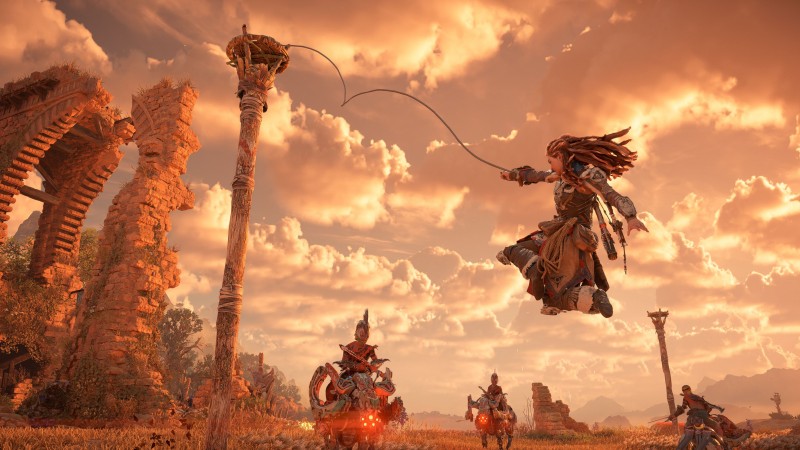
The world is the star of the show. Forbidden West is a technical marvel, with breathtaking vistas, vibrant underwater corridors, and lush jungles. Every locale has its own flavor; just wait until you see Las Vegas. Traversal has been greatly improved, with smoother climbing mechanics and a new tool called the Shield Wing, which acts almost like a futuristic umbrella to let you descend from great heights. However, the world’s constant sense of discovery really had me glued to my controller. Forbidden West is a much bigger game than its predecessor, featuring an impressive number of quests and items to uncover. The story-focused side quests add so much to the lore that I never wanted to miss one, as they provided great insight into the tribes. One side quest forced me to pick between two imperfect characters vying to lead a tribe, while another had me battling the most vicious combination of machines flying on top of a Sunhawk.

Click here to view embedded media


The side content also allowed me to unlock new locales and dungeons, and this doesn’t even factor in the additional activities like clearing rebel camps, climbing Tallnecks to reveal more of the map, and exploring Cauldrons for new machine overrides. I wasn’t expecting such a dense and vast world, and I always felt like I had something to do. Side quests offer great rewards, making them worth your while – some of my best weapons and armor came from these pursuits. I especially enjoyed revisiting settlements to see how some of the environments and their residents changed due to my actions. And as a nice touch, even more side quests would open regularly.

Battles are still adrenaline-pumping affairs, and the satisfaction of besting monstrous machines never dissipates. You can expect more destructibility and bigger setpieces for fights, and I loved how the variety in the locales, from fighting in close quarters to rocky areas with plenty of places for cover, kept things fresh with new strategies to consider. Forbidden West allows you to embrace your own playstyle, offering many ways to get the upper hand on machines. This has its advantages and disadvantages. I loved the creativity at my disposal, like shooting weapons off machines and using them against the enemy or causing chain reactions with specific elements to cause big explosions. But at the same time, I never felt a growing sense of power that keeps combat interesting over time, and a lot of this comes down to my disappointment in the skill trees.

The abilities you learn via the skill trees feel more like tiny perks than exciting upgrades. For instance, you can unlock the ability to set up traps faster, more potent potions, and extra ranged damage alongside weapon techniques that do anything from guaranteeing a knockdown shot to increased shredder damage. The best addition to the skill trees is Valor Surges, which are special attacks you tactfully unleash. I wish there were more of these abilities to experiment with, because once I unlocked and fully upgraded the radial blast, which triggers a powerful AoE shockwave, I never found another that felt as valuable. Some others include dealing more damage with melee attacks for a limited time and a damage-absorbing energy shield. That being said, the skill trees were so inconsequential to my success that I let my skill points pile upward of 10 without even touching them.

Thankfully, the game is full of worthwhile improvements that make for a better experience, from a cleaner HUD to less inventory management. My favorite enhancements were being able to use Aloy’s focus to see climbing points and her ability to tag specific machine parts in a different color for easier targeting. The latter comes in handy for key upgrade resources, as certain machine components are crucial to upgrade your armor and weapons. Upgrades are a greater time investment as a result, and I grew tired of fighting the same machines repeatedly. As far as performance, I ran into a few minor glitches alongside some poor A.I. pathing and bad checkpoints, but none of these were significant issues that caused me much frustration. I was actually impressed by how smooth the game played considering its size and scope.

Horizon Forbidden West reaches a new high bar for Guerrilla Games. It does more than surpass its predecessor; it takes Horizon’s fiction to captivating places and builds a rich world that rewards you for the effort you put into it. Mostly, it’s an entertaining experience, complete with jaw-dropping moments and unforgettable fights.

GI Must Play

Score: 9.25

About Game Informer's review system

Purchase

Horizon Forbidden West Review – Leaping To Greater Heights

Click here to watch embedded media

Reviewed on: PlayStation 5
Also on: PlayStation 4
Publisher: PlayStation Studios
Developer: Guerrilla Games
Rating: Teen

Horizon Zero Dawn was just the introduction to Guerrilla Games’ fascinating world and the unlikely hero who would do everything in her power to save it. The sequel, Horizon Forbidden West, takes everything to an exciting new level with its novel mechanics and riveting lore. Guerrilla Games improves on the last game’s shortcomings and isn’t afraid to borrow popular features from other big-name series, like Uncharted, Mass Effect, and Assassin’s Creed. The result is a game that’s not only fun to play, but full of surprises and wonder. Zero Dawn was a great proof of concept, but Forbidden West shows Guerrilla Games still has plenty of thought-provoking and compelling places to take Aloy’s adventures.

Forbidden West picks up six months after the events of Zero Dawn. Aloy’s discoveries have only brought more questions and dangers her way, forcing her to head west for answers. With a few returning characters and plot tie-ins from the first game, Forbidden West isn’t ideal for newcomers who want to embrace the narrative. Guerrilla’s writers expertly expand upon Horizon’s rich lore and dive into the series’ sci-fi elements, which are the sequel’s most gripping aspects. Some of the most fun I had was piecing together Aloy’s journey, but certain revelations and “ah ha” moments aren’t as satisfying without the full context from the first game. The overall narrative kept me engaged, but certain parts feel rushed, and I was disappointed that villainous characters like Regalla are not given more time to shine.

In the last entry, Aloy’s journey was often solitary, but Forbidden West makes other characters central to her success, which is a nice change of pace. Returning faces like Varl and Erend get to show more of their personalities, and newcomers like the kindhearted Zo and tragic warrior Kotallo have interesting backstories that explain their tribes’ beliefs and values. To make these burgeoning relationships more authentic, Aloy establishes a home base, a la Mass Effect, where she can talk to her companions about new developments in the main quest, learn their thoughts about one another, and get to know them more on a personal level. I loved watching the base populate with new members and seeing new areas open within it. If anything, I wanted more time to hang out with the characters. It was that fun to be around them and listen to their banter. 

The world is the star of the show. Forbidden West is a technical marvel, with breathtaking vistas, vibrant underwater corridors, and lush jungles. Every locale has its own flavor; just wait until you see Las Vegas. Traversal has been greatly improved, with smoother climbing mechanics and a new tool called the Shield Wing, which acts almost like a futuristic umbrella to let you descend from great heights. However, the world’s constant sense of discovery really had me glued to my controller. Forbidden West is a much bigger game than its predecessor, featuring an impressive number of quests and items to uncover. The story-focused side quests add so much to the lore that I never wanted to miss one, as they provided great insight into the tribes. One side quest forced me to pick between two imperfect characters vying to lead a tribe, while another had me battling the most vicious combination of machines flying on top of a Sunhawk.

Click here to view embedded media


The side content also allowed me to unlock new locales and dungeons, and this doesn’t even factor in the additional activities like clearing rebel camps, climbing Tallnecks to reveal more of the map, and exploring Cauldrons for new machine overrides. I wasn’t expecting such a dense and vast world, and I always felt like I had something to do. Side quests offer great rewards, making them worth your while – some of my best weapons and armor came from these pursuits. I especially enjoyed revisiting settlements to see how some of the environments and their residents changed due to my actions. And as a nice touch, even more side quests would open regularly.

Battles are still adrenaline-pumping affairs, and the satisfaction of besting monstrous machines never dissipates. You can expect more destructibility and bigger setpieces for fights, and I loved how the variety in the locales, from fighting in close quarters to rocky areas with plenty of places for cover, kept things fresh with new strategies to consider. Forbidden West allows you to embrace your own playstyle, offering many ways to get the upper hand on machines. This has its advantages and disadvantages. I loved the creativity at my disposal, like shooting weapons off machines and using them against the enemy or causing chain reactions with specific elements to cause big explosions. But at the same time, I never felt a growing sense of power that keeps combat interesting over time, and a lot of this comes down to my disappointment in the skill trees.

The abilities you learn via the skill trees feel more like tiny perks than exciting upgrades. For instance, you can unlock the ability to set up traps faster, more potent potions, and extra ranged damage alongside weapon techniques that do anything from guaranteeing a knockdown shot to increased shredder damage. The best addition to the skill trees is Valor Surges, which are special attacks you tactfully unleash. I wish there were more of these abilities to experiment with, because once I unlocked and fully upgraded the radial blast, which triggers a powerful AoE shockwave, I never found another that felt as valuable. Some others include dealing more damage with melee attacks for a limited time and a damage-absorbing energy shield. That being said, the skill trees were so inconsequential to my success that I let my skill points pile upward of 10 without even touching them.

Thankfully, the game is full of worthwhile improvements that make for a better experience, from a cleaner HUD to less inventory management. My favorite enhancements were being able to use Aloy’s focus to see climbing points and her ability to tag specific machine parts in a different color for easier targeting. The latter comes in handy for key upgrade resources, as certain machine components are crucial to upgrade your armor and weapons. Upgrades are a greater time investment as a result, and I grew tired of fighting the same machines repeatedly. As far as performance, I ran into a few minor glitches alongside some poor A.I. pathing and bad checkpoints, but none of these were significant issues that caused me much frustration. I was actually impressed by how smooth the game played considering its size and scope.

Horizon Forbidden West reaches a new high bar for Guerrilla Games. It does more than surpass its predecessor; it takes Horizon’s fiction to captivating places and builds a rich world that rewards you for the effort you put into it. Mostly, it’s an entertaining experience, complete with jaw-dropping moments and unforgettable fights.

Score: 9.25

About Game Informer's review system

Purchase

Monday, February 7, 2022

Sifu Review – A Test Of Resolve

Click to watch embedded media
Publisher: Sloclap
Developer: Sloclap
Rating: Mature
Reviewed on: PlayStation 5
Also on: PlayStation 4, PC

Mastering a martial art takes years – if not a lifetime. Disciples must hone their bodies to the point that they perform every attack, every counter, every movement with pinpoint precision. A skilled warrior must move without thinking. Likewise, mastering Sifu's combat system takes a high degree of dedication and practice. Like a true martial artist, you must push through the practice pains before you reap any rewards.

In 2017, Sloclap released the martial arts-themed action/RPG Absolver, which let players design their own combat system as they battled other online players in a unique fantasy world. Absolver suffered from its barren environments and uninspired quest design, but its core combat was solid. Sloclap's follow-up game sharpens that combat system around a more focused single-player adventure. The premise is promising, though the execution is flawed.

At its heart, Sifu is a simple revenge story. Eight years ago, a band of mysterious thugs brutally murdered your master, and you've dedicated your life to hunting them down and enacting justice. Unfortunately, the ringleaders of this attack hide behind dozens of bodyguards, and the odds aren't in your favor. But where your opponents have the numbers, you have the gift of resurrection. A magical talisman at your hip revives you when you fall in battle. The catch is that each time you die, you age. Every death adds one digit to a death counter that dictates how many years you age during rebirth. For example, after your first death, you only age one year, but after a few knockdowns, you can lose five or six years in a matter of seconds. This aging system is a neat way to track your progress across the game, and I liked watching my character's posture change as the grey hair and wrinkles set in. 

Click image thumbnails to view larger version


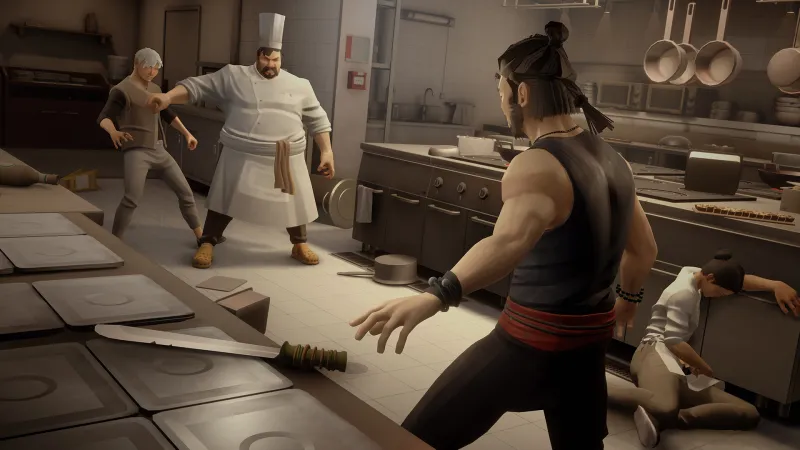
Sloclap designed its combat system around the movements of Pak Mei kung fu, a centuries-old martial art full of fluid and often explosive attacks. These stylized characters and fluid animations allow for stunning combat encounters that feel ripped from the very best Kung-Fu films. In one moment, I smashed an enemy into a table, sending broken glass and table legs in all directions. The next second, I kicked a basket across the room, sending one attacker tumbling to the floor before smashing a bottle across the face of another nearby foe. When everything fires on all cylinders, Sifu's battles are well-choreographed ballets of broken bones. And standing atop a pile of beaten enemies is an incredible rush I chased throughout the entire experience.

Unfortunately, flawlessly navigating Sifu's battles takes incredible precision with strict timing requirements that detract from the flow of play. Expert use of blocks, dodges, and counters are required to survive on these mean streets, and one simple slip-up exposes you to an opponent's attack. These foes also hit hard, taking off a generous portion of your health bar, which feels punishing. You earn a sliver of health back by performing advanced takedowns, but that recovery is meager compared to what you lose during a single enemy combo. Fighting enemies in packs ramps up the challenge, and you must maintain situational awareness and balance every threat while dishing out the pain. I love this added tactical element to combat, but I don't appreciate having to simultaneously fight the camera; enemies occasionally pop in from offscreen to disrupt your combos, and those attacks feel like cheap shots.   

Completing any level of Sifu is a sizeable but rewarding challenge. Unfortunately, the game's structure exacerbates that challenge. Once you reach the ripe old age of 70, your talisman completely breaks, and it's game over. When this happens, you must completely restart the level. A few unlockable shortcuts make each run at a boss a little more manageable, but I still grew tired of running through the same areas repeatedly until I'd perfected my approach. To make matters worse, you start each level at whatever age you completed the previous level. This makes logical sense, but from a gameplay perspective, it compelled me to continually revisit earlier levels to finish them at a younger age, so I had more years to play with later.

Click here to watch embedded media

As you earn your lumps, you also gain experience, which you can use to purchase new abilities. Some of these skills seem essential, such as the ability to kick environmental objects at foes. Shrines scattered across the environment offer additional perks like upgraded weapon damage or a boost to the amount of heath you regain after each takedown. Sadly, some abilities and perks are locked off as you age, which forced me to, once again, return to the early levels to grind out enough experience to unlock those skills before I aged out of them permanently. This entire process was a bit exhausting.

Like a 20-year-old combatant, Sifu comes out of the gate strong. Its core combat feels excellent, and the moment-to-moment action looks better than most Hollywood blockbusters. Sadly, as you progress, the action begins to show its teeth and eventually becomes a tiresome grind. Sifu deserves props for its incredible sense of style and tone, but it is also a great example of why growing old isn't always fun. 

Score: 7.25

Summary: Mastering Sifu's combat system takes a high degree of dedication and practice, but like a true martial artist, you must push through the practice pains before you reap any rewards.

Concept:

Graphics:

Sound:

Playability:

Entertainment:

Replay:

Click to Purchase

Sunday, February 6, 2022

Sifu Review – A Test Of Resolve

Publisher: Sloclap
Developer: Sloclap
Rating: Mature
Reviewed on: PlayStation 5
Also on: PlayStation 4, PC

Mastering a martial art takes years – if not a lifetime. Disciples must hone their bodies to the point that they perform every attack, every counter, every movement with pinpoint precision. A skilled warrior must move without thinking. Likewise, mastering Sifu's combat system takes a high degree of dedication and practice. Like a true martial artist, you must push through the practice pains before you reap any rewards.

In 2017, Sloclap released the martial arts-themed action/RPG Absolver, which let players design their own combat system as they battled other online players in a unique fantasy world. Absolver suffered from its barren environments and uninspired quest design, but its core combat was solid. Sloclap's follow-up game sharpens that combat system around a more focused single-player adventure. The premise is promising, though the execution is flawed.

At its heart, Sifu is a simple revenge story. Eight years ago, a band of mysterious thugs brutally murdered your master, and you've dedicated your life to hunting them down and enacting justice. Unfortunately, the ringleaders of this attack hide behind dozens of bodyguards, and the odds aren't in your favor. But where your opponents have the numbers, you have the gift of resurrection. A magical talisman at your hip revives you when you fall in battle. The catch is that each time you die, you age. Every death adds one digit to a death counter that dictates how many years you age during rebirth. For example, after your first death, you only age one year, but after a few knockdowns, you can lose five or six years in a matter of seconds. This aging system is a neat way to track your progress across the game, and I liked watching my character's posture change as the grey hair and wrinkles set in. 

Click image thumbnails to view larger version


Sloclap designed its combat system around the movements of Pak Mei kung fu, a centuries-old martial art full of fluid and often explosive attacks. These stylized characters and fluid animations allow for stunning combat encounters that feel ripped from the very best Kung-Fu films. In one moment, I smashed an enemy into a table, sending broken glass and table legs in all directions. The next second, I kicked a basket across the room, sending one attacker tumbling to the floor before smashing a bottle across the face of another nearby foe. When everything fires on all cylinders, Sifu's battles are well-choreographed ballets of broken bones. And standing atop a pile of beaten enemies is an incredible rush I chased throughout the entire experience.

Unfortunately, flawlessly navigating Sifu's battles takes incredible precision with strict timing requirements that detract from the flow of play. Expert use of blocks, dodges, and counters are required to survive on these mean streets, and one simple slip-up exposes you to an opponent's attack. These foes also hit hard, taking off a generous portion of your health bar, which feels punishing. You earn a sliver of health back by performing advanced takedowns, but that recovery is meager compared to what you lose during a single enemy combo. Fighting enemies in packs ramps up the challenge, and you must maintain situational awareness and balance every threat while dishing out the pain. I love this added tactical element to combat, but I don't appreciate having to simultaneously fight the camera; enemies occasionally pop in from offscreen to disrupt your combos, and those attacks feel like cheap shots.   

Completing any level of Sifu is a sizeable but rewarding challenge. Unfortunately, the game's structure exacerbates that challenge. Once you reach the ripe old age of 70, your talisman completely breaks, and it's game over. When this happens, you must completely restart the level. A few unlockable shortcuts make each run at a boss a little more manageable, but I still grew tired of running through the same areas repeatedly until I'd perfected my approach. To make matters worse, you start each level at whatever age you completed the previous level. This makes logical sense, but from a gameplay perspective, it compelled me to continually revisit earlier levels to finish them at a younger age, so I had more years to play with later.

Click here to watch embedded media

As you earn your lumps, you also gain experience, which you can use to purchase new abilities. Some of these skills seem essential, such as the ability to kick environmental objects at foes. Shrines scattered across the environment offer additional perks like upgraded weapon damage or a boost to the amount of heath you regain after each takedown. Sadly, some abilities and perks are locked off as you age, which forced me to, once again, return to the early levels to grind out enough experience to unlock those skills before I aged out of them permanently. This entire process was a bit exhausting.

Like a 20-year-old combatant, Sifu comes out of the gate strong. Its core combat feels excellent, and the moment-to-moment action looks better than most Hollywood blockbusters. Sadly, as you progress, the action begins to show its teeth and eventually becomes a tiresome grind. Sifu deserves props for its incredible sense of style and tone, but it is also a great example of why growing old isn't always fun. 

Score: 7.25

Summary: Mastering Sifu's combat system takes a high degree of dedication and practice, but like a true martial artist, you must push through the practice pains before you reap any rewards.

Concept:

Graphics:

Sound:

Playability:

Entertainment:

Replay:

Click to Purchase

Thursday, February 3, 2022

OlliOlli World Review – Video Days

Publisher: Private Division
Developer: Roll7
Rating: Everyone 10+
Reviewed on: PlayStation 5
Also on: PlayStation 4, Xbox One, Switch, PC

Last week, I noticed my hand was sore. I didn't think much of it, mostly because I wasn't sure why it would be hurting. On Monday, while playing OlliOlli World, I found my reason. I'm not sure there's a better way to recommend World than that; it pushed my hands to their limit. 

Compared to the previous two OlliOlli games, which could be prohibitively difficult, World is simultaneously an easy-to-approach 2D skateboarding game with an impossibly high skill ceiling. Early on, the game does a great job quickly teaching you the basics of its trick systems (mostly tied to flicking and rotating the left and right thumbsticks) and then getting out of your way, dropping you in levels, giving you objectives, and letting you skate. Within minutes, I was pulling off increasingly large combos, and more importantly, having a fun time doing it. While I never truly got the hang of the first OlliOlli, in World, I felt compelled to continue to learn its systems because the game isn't front-loaded with frustration. Players of all skill levels should be able to find something enjoyable here. 

As the game goes on, that demanding challenge reveals itself – in the best and worst ways. As levels grow more complex, as you might expect, so too does your bag of tricks. There's an undeniable thrill to beating a level in one long combo – utilizing grinds, grabs, flip tricks, and manuals across varying verticality and secret routes. 

Click here to watch embedded media

Doing so means getting good at playing OlliOlli World very fast. Maintaining a long combo in later levels means constantly pulling off new tricks and being ready for what's next. It's fun and exhilarating to barely feel in control of what my hands are doing, yet impressed with myself for doing it at all – even if the complexity of controller inputs began to wear and tear on my hands. 

This is amplified by fantastic level design from both layout and aesthetic standpoints. While the game's cel-shaded, colorful veneer may present itself at first blush as simple and minimal, there are levels in World that are monstrous in size. The camera will sometimes pull out, leaving your player a tiny dot onscreen as it reveals the mess of rails and ramps surrounding you. Each level's various explorable paths also means you can replay them to discover new experiences and combo opportunities. Often, I immediately revisited a level to see how other routes stacked up and what challenges I could find there. The fact that the entire game looks like a watercolor painting come to life adds to World's overall charm – goofy characters and over-the-top designs were humorous to catch glimpses of as I sped by. 

Click image thumbnails to view larger version


But one major sticking point with World is when it halts that speed. On several levels, I'd find myself stuck on a particular ramp or jump, trying over and over to find the ostensible single-pixel I needed to launch myself from to make the next clearing. On the one hand, this is arguably part of the challenge. On the other hand, repeating these sections ad nauseam as I repeatedly tried to find the precise place the game required me to jump broke up the overall flow of levels. Luckily, this isn't an issue with every stage, but I found myself increasingly stuck in particular pain points, especially as I got towards the end game. 

All in all, I really enjoyed my time with OlliOlli World. It's a gorgeous and goofy game that onboards new players well while also giving veterans plenty of challenge. There's even a silly story tied in about searching for the mythical skate gods of "Gnarvana" in the world of "Radlandia." It's sufficiently dumb in an endearing way and entirely skippable if you're not interested – which I wasn't after an hour or so. Despite some headaches thrown in the mix, I welcomed all of OlliOlli World's challenges, even when they came at the detriment of my own hands.

Score: 8

Summary: OlliOlli World is a fun ride through a goofy world. Even when it caused me actual pain, I enjoyed its many twists and challenges.

Concept:

Graphics:

Sound:

Playability:

Entertainment:

Replay:

Click to Purchase

Wednesday, February 2, 2022

Dying Light 2 Stay Human Review –  An Apocalyptic Renaissance

Click to watch embedded media
Publisher: Techland
Developer: Techland
Release: 2020
Rating: Mature
Reviewed on: Xbox Series X/S
Also on: PlayStation 5, PlayStation 4, Xbox One, Switch, PC

Decades into the apocalypse, the undead forces roaming the world evolve and grow stronger with each passing night. And humanity is fighting back. Within strongholds scattered across The City, technological breakthroughs are born, and the tide of war is changing to favor the living. An electronic wristband keeps people from turning after a zombie bite, and even the most aggressive monster variants don’t stand a chance against the latest weapon innovations. But all is not well beyond these walls. Darkness lies within, and humanity’s most significant threat for survival is itself. Greed, lust, betrayal, and arcane politics could ultimately lead to its downfall.

Dying Light 2 Stay Human blends the terrors of the dead with the strife of life to create one of the most entertaining RPGs I’ve ever played. It is a triumph of storytelling, player choice, open-world design, cooperative play, character customization, and perhaps most importantly, dropkicking zombies off skyscrapers. It’s everything a sequel should be, growing the core formula in significant ways to make high-flying, zombie-slaying sizzle again.

Dying Light 2 does a fantastic job of creating relationships and making you question the motivations of characters you meet. These moments are brought to life with stunning visualization and plenty of dialogue
During the 50-plus hours I invested in this fantastic game, I often thought about playing The Elder Scrolls V: Skyrim for the first time, feeling overwhelmed by its wealth of content and not knowing if I screwed something up with a hasty decision. Dying Light 2 is drawn from that same breath, blending a rich world of discovery with choices galore. It’s an experience you can lose yourself in, and almost all of the content you unearth is significant to evolving both the story and your character.

Our guide into this wasteland is Aiden Caldwell, a survivor haunted by ghosts of his past who re-enters society at a tipping point. Aiden is a likable lead who is defined mainly by his choices. He lords over the city like an apocalyptic judge, often determining who lives, who dies, and which factions gain wealth and power. Most of his choices carry weight and bring closure or new beginnings for many of the characters he meets along the way. I often had to stop to think about the benefits and ramifications of a decision. Techland sometimes forces your hand in these moments by putting a timer on the more pressing matters to heighten their impact. And it works.

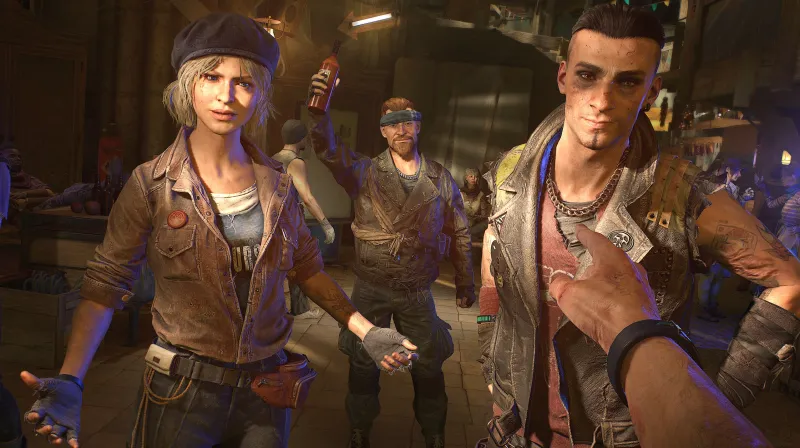
The city is vertical and varried, offering fun traversal paths and secrets galore
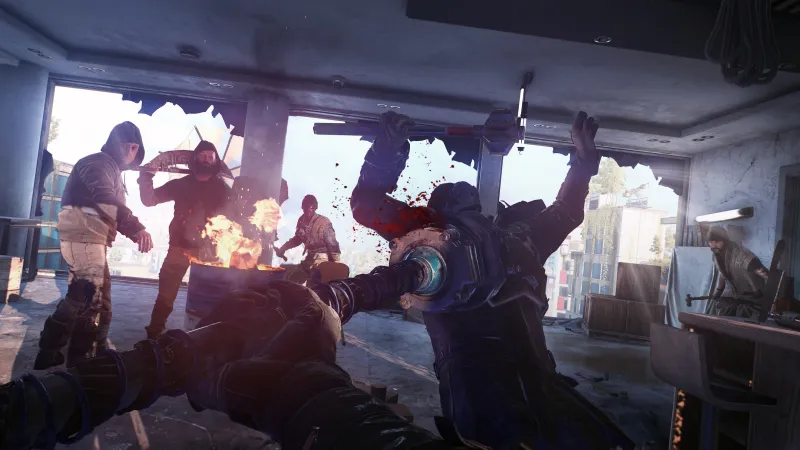
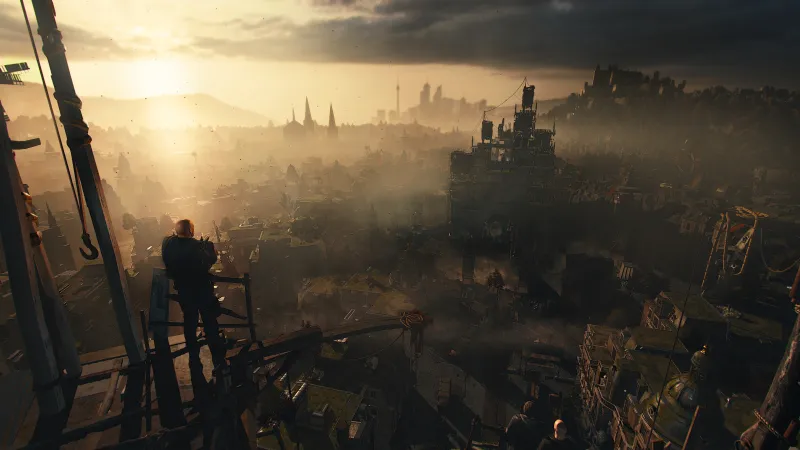
When Aiden heads out on a mission, the player is in for a real treat. Not only are the objectives well written, but they unfold dynamically and almost always push Aiden to bound across rooftops. Dying Light 2’s parkour system is a work of art set within a beautiful, sprawling city that doubles as an architectural playground. Clear pathways are littered across the environments, allowing Aiden to keep momentum and reach almost any location by just running, jumping, and using some of the game’s awesome gadgets. I won’t go into what they are as discovering them is part of the fun, but they all enhance the locomotion and are a blast to use. All told, this is one of the most satisfying and nicely designed traversal systems in FPS gaming. It feels better than the original game, is much more forgiving in reading jump intent, and reaches new heights through The City's soaring verticality.

Choice is even intertwined in a clever way for traversal. Depending on which factions you distribute wealth to, new interactive elements and other handy tools unlock in areas of the city. As I learned, sometimes Aiden's personal gains outweigh the needs of the people. These choices don't make you feel good, but they can make traversal and combat easier and should pay off in the long run.

Aiden’s missions offer plenty of variety, and sew puzzles and combat into most objectives. I was impressed by how varied, well-written, and dynamically composed the missions are. The critical path delivers the big set-piece moments, but the side material is vital to the overall narrative and is often lengthy. Nothing in this game feels tacked on – it’s all worth investigating. And it’s all made better through cooperative play, as you and three of your friends can team up or divide and conquer to claim territories, clear out dangerous dark hallows, and find valuable loot (like inhibitor boxes that raise your stamina and health). The dark hallows make it worth the risk of going out at night when the zombies are more aggressive.

Combat upgrades allow for punishment to be delivered, but not much variety in the weapons
Combat is the one area that takes a bit of a backseat to the other great content. It’s a huge part of the experience, and it's a heck of a lot of fun to eviscerate Biters, but the melee isn’t as advanced as the other parts of the game, and it doesn’t evolve much, either. Regardless, crafting blades that cough fire and electrocute zombies is satisfying, and that dropkick I mentioned is worth using as much as you can. Boss battles and swarm battles are made better through cooperative play as the difficulty (and hit points) scale up and create more dynamic encounters.

One fight against a titan pushed my group of four players to unload everything they had – Molotov cocktails, arrows, and carefully timed sword combos – before it finally dropped. The rewards that came after were well worth the effort. Mastering parry timing against human foes – who are as abundant as zombies – is tricky but not something you have to rely on as more combat moves unlock.

Click here to watch embedded media

Dying Light 2 is an engaging journey of discovery and gaining power. Almost everything you do embraces those dynamics. In evolving beyond the first game's offerings, putting a stronger emphasis on the characters helps shape the world in meaningful ways. Some of Aiden’s choices are difficult, especially those surrounding a character named Lawan – who is given a hell of a pulse by Rosario Dawson. I can’t say enough great things where his and her stories go. I adored almost every second of this game and see myself often revisiting it, as Techland has announced at least five years of DLC is on the way. That’s a wonderful promise to hear when starting a new game that has turned out this well.

Score: 9.5

Summary: Techland has crafted a monster of a sequel that is bigger and better in almost every way.

Concept:

Graphics:

Sound:

Playability:

Entertainment:

Replay:

Click to Purchase