Pages

Thursday, March 31, 2022

Weird West Review – A Fantastical Frontier

weird west review

Reviewed on: PC
Also on: PlayStation 5, Xbox Series X/S, PlayStation 4, Xbox One
Publisher: Devolver Digital
Developer: WolfEye Studios
Rating: Mature

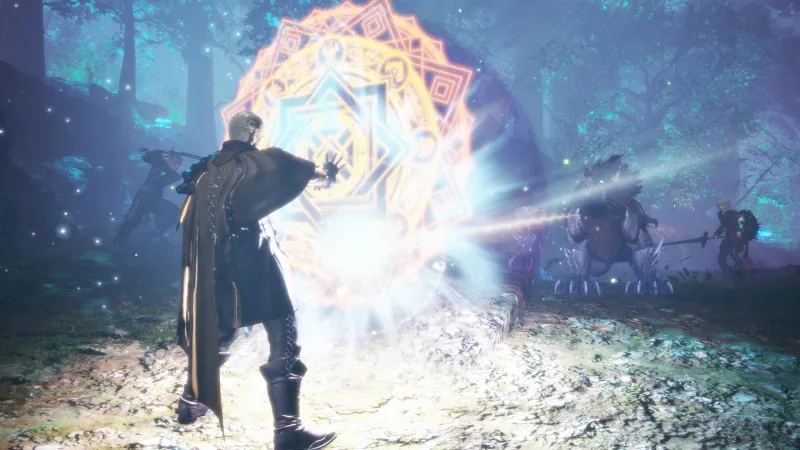
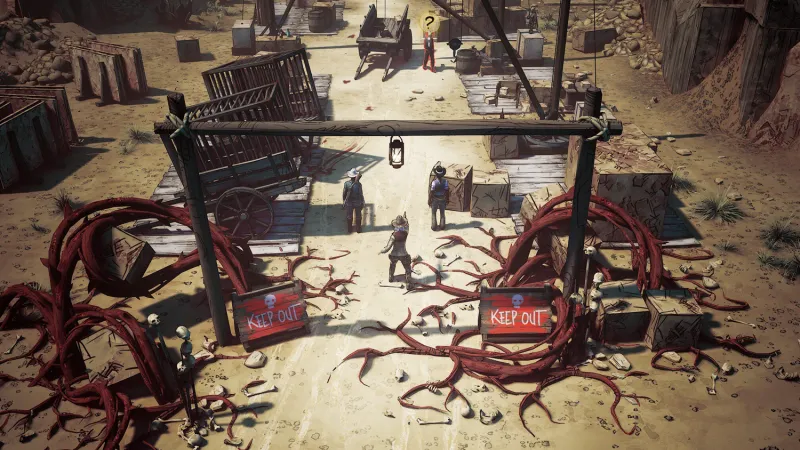
Weird West is a spellbinding, isometric portrayal of the Wild West. From the minds behind Dishonored and Prey, this compelling immersive sim is unlike any western tale you’ve experienced. Its macabre frontier isn’t just a land of cowboys and cattle but one brimming with old magic and hideous monstrosities like werewolves, flesh-eating sirens, gold-hungry zombies, and bewitched trees capable of trapping the souls of men. 

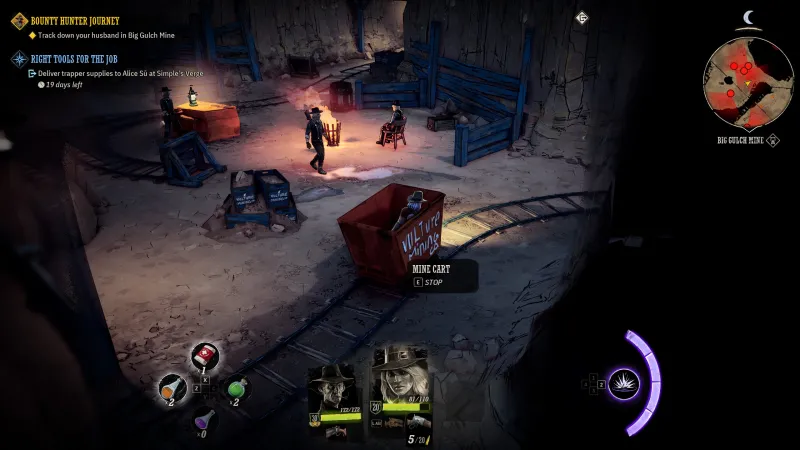
The game’s main narrative is a five-chapter anthology following the lives of five “heroes” – a bounty hunter, a man-turned-pig, a tribal protector, a werewolf, and a zealot – whose journeys are unknowingly connected. You play as the Passenger, a faceless entity who possesses a new protagonist in every chapter for mysterious reasons. The story begins by following a rancher who’s given up her old life as a bounty hunter but must dig up her irons to rescue her kidnapped family member. What starts as a safe, conventional cowboy revenge story unravels into a tale of unbelievable outcomes. You’ll help a poet lift a curse in one moment, causing him to only speak in rhymes. In another, you’ll contemplate turning in a sheriff after discovering they’ve converted the jail into a meat market and are feeding on imprisoned criminals’ corpses. After a slow start, Weird West quickly ups the ante in thrilling and absurd ways, and just when you’ve figured things out, something unexpectedly changes. It’s so fun seeing how each chapter spirals into another with every new revelation. 

Click here to watch embedded media

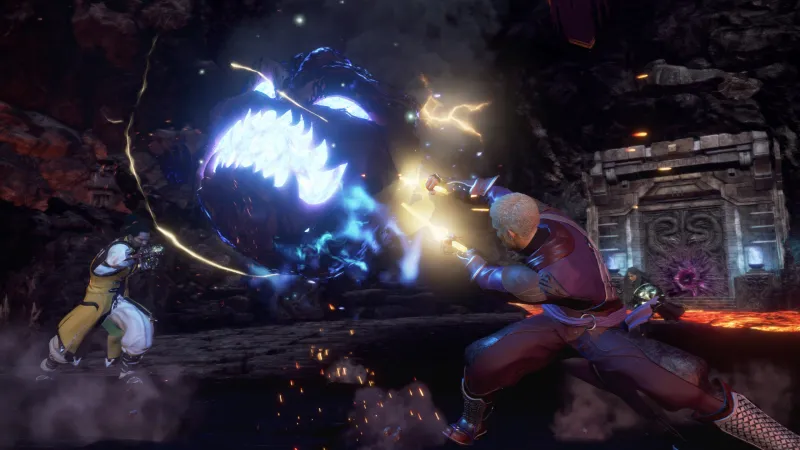
While the mythology of Weird West is enchanting, its sandbox gameplay brings the world to life. You can solve most problems via stealth as long as you stay out of sight and adequately hide bodies, though there’s a bevy of guns, bows, and melee weapons enticing you to engage in the game’s raucous twin-stick-style shoot-outs. Blast foes into bits with the shotgun’s screen-shaking burst, fan the revolver’s hammer to unleash a rain of bullets, or quietly eliminate opponents with Sentry Silencer. This unlockable rifle ability silences your next shot and doubles damage to unaware enemies. 

Each of the five protagonists wields unique spells in addition to perks like increased health or movement speed they share with the other characters. The Pigman can deflect bullets with his rubbery skin, soak the surrounding ground in poison, or charge enemies headfirst to deal devastating damage. At the same time, the Protector is capable of summoning spirit bears or tornadoes that can be imbued with elemental properties. Combat requires a level of precision best suited for mouse and keyboard, but if your only option is to play Weird West with a controller, I’d recommend using the game’s Tactical Mode, which slows time down to let you better plan out your movements. 
weird west review

You could aim at the apparent red-hued TNT barrel for a loud explosion or blast away at a box of ammunition, sending a barrage of bullets in every direction. However, I don’t recommend the latter method if you’re low on ammo. Many enemies have weaknesses like fire or poison, but sometimes you’ll find yourself low on supplies. Instead of using a dynamite stick or molotov cocktail to cause a fire, equip the bow and arrow next to a nearby flame to create a fire arrow. Make sure you don’t accidentally blow yourself up, as I did several times. If you set yourself on fire, quickly find a water source – a pond, bathtub, or even a water pump – before burning to death. These physics-based interactions make me enjoy solving the game’s challenges, though it’s frustrating when awkward camera angles hinder my best-laid plans.

The overworld of Weird West is large and populated with dozens – nearly hundreds – of diamond-shaped nodes representing the many homesteads, towns, and stretches of wilderness you can travel between. The map’s abundance of locations is sometimes overwhelming, with new areas cropping up on almost every trek, though I am often rewarded with new loot when I stop. In addition to serving as trade hubs and places of rest, towns are often places you can hire mercenaries to join your posse as party members. While some hired hands will help your cause free of charge – revenge often serves as a better currency than coins – many will require a hefty upfront fee before lending their trigger finger. 

Click here to view embedded media


How will you earn money, though? You could break into the bank and rob its coffers if you have enough dynamite or lockpicks. Though choices often come with consequences (even outside of story moments), it’s better to return at night when the bank’s closed if you want to avoid a shoot-out or a criminal reputation. With a rope in your inventory, scale the bank’s rooftop and quietly enter through the chimney chute. Regardless of approach, Weird West entertains a bevy of playstyles, often encouraging me to look at situations through a different lens. 

Whether in notable moments or otherwise forgettable encounters, Weird West remembers everything you do. Side characters you betray will show up much later, sometimes during pivotal moments, to enact swift vengeance. On the flip side, new friends – like the lady whose land deed I retrieved – might show up in your time of desperation if you assisted them earlier in your journey. These consequences add significance to even the smallest choices, and you never know how the world might react to a decision. If you eradicate all of the people in a town – yeah, I’m looking at all of you sickos who did this while playing Skyrim in high school – the space will become abandoned. After enough time passes, it will become a literal ghost town, as ghoulish monsters attracted by the smell of rotting corpses take up residence and permanently transform the establishment into a hellish domain.  

Click here to view embedded media


Weird West’s best assets are its well-developed characters and deep gameplay systems, but its overall production value is underwhelming. The game’s cell-shading looks good enough on higher settings and large screens, but the composition quickly becomes muddy on less-powerful machines like my Steam Deck. Additionally, a minor bug prevented me from saving my game occasionally, leading to several frustrating deaths. 

Regardless, developer Wolfeye Studios has crafted one hell of a debut release. Weird West subverts expectations, twisting well-trodden cowboy tropes into dark fantasy vignettes brought to life by immersive sandbox elements. 

GI Must Play

Score: 8.5

About Game Informer's review system

Purchase

Thursday, March 24, 2022

The Ascent Review – Mindless Mechanical Mayhem

Click here to watch embedded media

Reviewed on: PC
Also on: PlayStation 5, Xbox Series X/S, PlayStation 4, Xbox One
Publisher: Curve Digital
Developer: Neon Giant
Rating: Mature

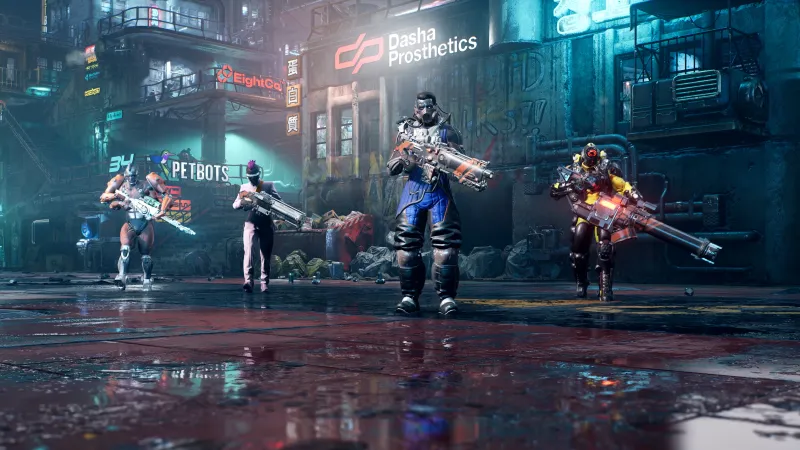
From the iconic works of Philip K. Dick to the seminal table-top RPG by Mike Pondsmith, fans of the cyberpunk genre are familiar with the theme of characters in search of an identity and purpose. The Ascent suffers from a similar identity crisis in its attempts to pull from dungeon-crawling RPGs and twin-stick shooters, but it never ascends to the heights of either genre. This mindlessly fun co-op experience features bombastic gunplay, engaging cybernetic abilities, and a visually impressive world to wreak havoc in.

The Ascent takes place in the tech-obsessed world of Veles, controlled by maniacal corporations, and players control an indentured laborer who becomes wrapped up in a mystery as they battle for their freedom. While I enjoy the cyberpunk genre, The Ascent’s grating narrative contains all my least favorite tropes: incessant expletives, human rights abominations, and a profoundly bleak world. Those tropes aren’t inherently bad when handled with nuance, but the main story never dives into anything of substance, making those dark themes more set dressing than meaningful commentary. Combine that with a lot of confusing jargon and lore, and I found myself wanting to skip through dialogue to get back to what the game does best: turning you into a cybernetic warrior.

Click here to view embedded media


Combat is The Ascent’s main strength. The moment-to-moment gunplay is exhilarating, with waves of varied baddies headed your way at virtually every moment. Developer Neon Giant also ups the fun with a diverse inventory of weapons and some truly fantastic augmentations and tactical weapons that can send enemies flying. Some of my favorite moments included blowing away corporate goons with a rocket-spitting Gatling gun then finishing them off with a devastating energy punch.

While most of the fights left me satisfied (if not overwhelmed, but more on that later), the combat grows slightly monotonous as the game goes on. Through an upgrade vendor, I started to find my favorite weapons and boost them, which outpowered most loot drops, making them largely irrelevant. That lack of variation also extends to your armor as well.

The Ascent is a shallow RPG experience, with stats that don’t always feel purposeful. I was always thankful to have points to boost my health and energy levels, but I found some of the other categories and even the armor inconsequential outside of the generic protection buffs. It’s hard to know what specific attacks you’re even trying to protect against. I seldom paid attention to attributes such as fire protection because I could usually blaze through enemies with the right tactics and augmentations. That was especially true when playing with others when the onscreen tumult becomes extremely difficult to track.

The Ascent is best experienced in co-op. Up to four players can enjoyably play the majority of The Ascent’s 15-20 hour story. The bombastic fights are more manageable with a team alongside you, and the combat starts to sing when you’re synched with explosive weaponry and chaotic augmentations.

While co-op is the highlight, co-op play still has a plethora of annoyances. A limited pool of health drops aided in my team’s demise, as the number of HP pickups doesn’t seem to scale to the greater player count. It is also hard to find your partners in the world as player indicators blend in with the rest of the map. That problem is exacerbated thanks to a surprisingly large play space. My other complaint is how progress is handled. I jumped into a coworker’s game for a few hours, only to find my progress was utterly gone because I wasn’t hosting the match.

Co-op is the main draw, but solo players shouldn’t despair. Half of my time was spent on my own, and I still enjoyed the experience with some caveats. Picking up health is easier alone, but I grew frustrated in many encounters as I was quickly overwhelmed by the sheer number of enemies ­– it seems that the game was balanced with co-op in mind. These encounters aren’t impossible, but you’ll have to play smarter and plan your augmentations instead of the normal running and gunning.

Click here to watch embedded media

The game’s other great strength lies within its presentation. Neon Giant has crammed a staggering amount of detail into the world. Each corner of Veles is disgusting in the best sort of way, with its denizens throwing garbage onto the dilapidated metal plates of the sprawling megacity. The game’s lighting is equally beautiful if, at times, a little bit of a neon-soaked strain on the eyes. The camera work is also impressive and moves in cinematic and engaging ways. Finally, the music hits a high mark, with clear callbacks to iconic sci-fi fiction of the past, such as Vangelis’ work on the original Blade Runner film.

The world of Veles is worth exploring, but doing so can also be a hassle. I was grateful for the fast travel points, but it still takes too long to get from point to point. I also found my co-op partners and I sometimes had the same objective, but our tracker would occasionally take us in entirely different directions. It also didn’t help that we’d consistently run into groups of overpowered baddies that would instantly shred us. Neon Giant does a great job of rewarding curiosity with loot, but I found myself exploring less out of fear of another ambush and a game over screen as time went on.

The Ascent has issues, but those issues don’t detract from my overall enjoyment of the game. I won’t write my thesis on its commentary on capitalism, but I’ll fondly remember my co-op sessions where I tore through this cyberpunk world. That being said, the shallow RPG elements, lack of meaningful narrative, and exploration frustration were constants that really dragged the experience down. Neon Giant has made a solid foundation to build on, and I hope we can see future installments grow into something truly worthy of ascension.

Score: 7.25

About Game Informer's review system

Concept: Command a cybernetic warrior through the cyberpunk streets of this twin-stick shooter/RPG hybrid

Graphics: The neon-clad lighting, the sheer amount of detail, and overall visual fidelity is wildly impressive, especially when combined with some beautiful cinematic camera movements

Sound: The soundtrack is a highlight, with clear inspiration from some of the most iconic sci-fi scores in entertainment

Playability: Blasting cybernetic baddies feels excellent when combined with exciting augmentations that can obliterate your enemies in the blink of an eye

Entertainment: The Ascent is a mindlessly fun co-op experience that is easy to pick up and play with an emphasis on quick-hitting gunfights and enjoyable cybernetic abilities

Replay: Moderate

Purchase

Wednesday, March 23, 2022

Tiny Tina's Wonderlands Review – A Spellbinding Hit

Reviewed on: PC
Also on: PlayStation 5, PlayStation 4, Xbox One
Publisher: 2K Games
Developer: Gearbox Software
Rating: Teen

Tiny Tina's Wonderlands is Gearbox Software's best game. Built upon the studio's successful Borderlands formula, this experience adds a whimsical element to the familiar looter-shooter thrills and delivers so much firepower to your fingertips you'd think you were wearing the Infinity Gauntlet. Caked in silliness and always trying to make you laugh, Wonderlands hits with distinct charm and handles its characters and world with care, making you engage with both on a journey I didn't want to end.

From the outset of play, we learn that Borderlands mainstay Tiny Tina has invited a few of her friends to play a tabletop game called Bunkers & Badasses, which is essentially Borderlands' version of Dungeons & Dragons. Tina is the game's Dungeon Master, and you are the party's newest recruit – a hero of your design, right down to the deep class proficiencies and facial feature detailing.

Click here to watch embedded media

Playful chemistry is established immediately between Tina and her friends, each bringing humor-filled banter and the sensation they know each other well. Tina is once again brilliantly brought to life by Ashly Burch, who plays well with the careless adventuring qualities of Captain Valentine (Andy Samberg), the strict rules-driven guidance of robot Frette (Wanda Sykes), and the dishonest and vile virtues of the Dragon Lord (Will Arnett). These powerful personalities often entertain and make questing an absolute blast, as you never know how they will react to the situation. The story bounces between Tina and her cohorts sitting at the board game table to discuss the next chapter in the adventure, and your character dreaming it up and traveling into that scenario, a point where control is given to the player. This story flow works incredibly well and is a nice way to bookend chapters and set up the next event at hand.

Tina has the most influence over the quest and can use her god-like powers to alter it at any time. With her imagination leading the way, she can turn an ordinary forest into a magical mushroom kingdom – a stunning visual transformation you witness as you run through the environment. Your party members also influence the world and can propose their character do something to overcome a challenge, such as Valentine romancing a drawbridge to make it open or the team collectively figuring out how to remove a cheese curl from the board. The situations are often zany, nicely penned, and fun to see through to the end.

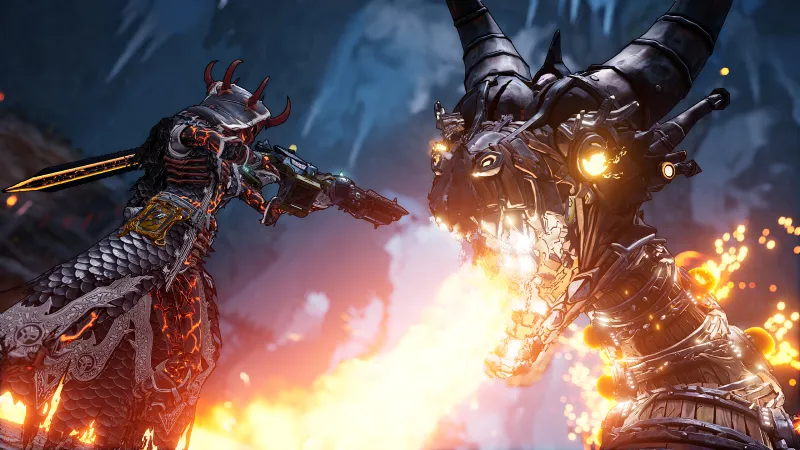
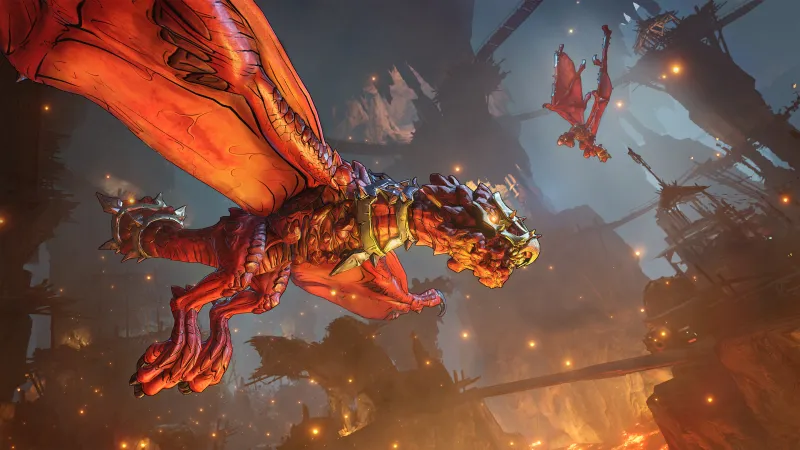
The missions draw you in with humorous setups and shine in combat, giving good reasons to unleash everything you have in your arsenal. Borderlands' overindulgence in weapons is alive and well in Wonderlands and is made better with the wide selection of spells. The gunplay is highly polished and feels like Borderlands, but packs more of a punch through the fantasy elements. For instance, in a battle against land sharks, I alternated use between a crossbow that fired explosives and an acid gun that chained enemies together in a gooey spray. My pet wyvern barfed fire on these foes as it swooped onto the battlefield, and I added elemental chaos to the mix by firing electrical crows from my fingertips. If an adversary somehow survived this frenzied onslaught, I could smash them with a massive hammer that creates an earthquake. You start the game plenty powerful and reach the point of being a ridiculous war machine at the midway point when class blending is enabled – a proposition that is downright awesome.

The loot enemies drop can completely change loadouts and approaches to combat. Most of the weapons are awesomely unique, melding fantasy tropes with modern weaponry to create something to behold. The devastation that the rarer weapons unleash gives plenty of incentive to scour environments for secret stashes and take on side activities. I also enjoyed diving into smaller wave-based dungeons to earn items that unlock even bigger secrets. Thanks to smooth platforming mechanics and cleverly hidden areas, exploring the world is good fun. There's plenty to keep you occupied, including story-rich side missions that scale with you and never become too easy, and a great post-game dungeon called the Chaos Chamber that changes every time you enter it. This endless gauntlet is a nice way to grind out levels and unlock the Myth rank.

Click here to view embedded media


Borderlands' DNA is recognizable throughout most of Wonderlands, except for the overworld, which has more in common with an old Final Fantasy game. The viewpoint switches from first person to isometric when you enter it, and you can no longer engage in combat. The overworld removes most of the downtime experienced in the Borderlands games. You move between areas quickly and within seconds can engage in any activity. The overworld holds many secrets, just as much humor, and does an excellent job of charting progress, so you know what you've accomplished and still need to mop up.

Wonderlands' cooperative play couldn't be any better, offering an experience where everyone has equal footing on the battlefield. A level 5 player will encounter a level 5 enemy, whereas that same foe reads level 20 for a level 20 player – meaning you don't need to grind for XP or power level to play with friends. Players can also determine how loot is divvied up, allowing for everyone to get their own drops or for it to be shared. Crossplay and split-screen are both offered, but I did not get the chance to check out either during my review.

Click here to watch embedded media

Wonderlands is upbeat and fun from start to finish, offering a rewarding adventure filled with goofy characters, imaginative bosses, and a great sense of ownership over your character through it all. Even with one of Borderlands' most loved characters leading the charge, this experience feels like the start of something new: a rare spinout from an existing series that deserves just as much of the spotlight. As someone who has played plenty of Dungeons & Dragons, I adored how often Wonderlands reminded me of rolling a 20-sided die with friends. It’s a love letter to on-the-spot creativity and friends enjoying each other’s company in a make-believe world.

GI Must Play

Score: 9.5

About Game Informer's review system

Purchase

Kirby and the Forgotten Land Review - Stretching Into A New Dimension

Reviewed on: Switch
Publisher: Nintendo
Developer: HAL Laboratory
Rating: Everyone 10+

Nintendo’s insatiable pink mascot finally has his first full-featured 3D adventure with Kirby and the Forgotten Land. After being sucked into a mysterious vortex (oh, how the tables have turned), he finds himself transported to what looks to be an unknown post-apocalyptic world. By building upon his old bag of tricks and adding successful new gimmicks like Mouthful Mode, Kirby makes a fantastic transition to the third dimension. 

Kirby’s classic suite of abilities are all here and are as fun to use as ever, only now he’s able to use them in 3D space. He can jump and float as well as vacuum enemies and items into his mouth to fire them out at targets. I rarely felt like I wasn’t in control and I’m able to platform with precision when it’s required. The series’ staple of copy abilities that let Kirby absorb an enemy’s powers and use them as his own is, as always, the foundation of his arsenal. These copied powers range from giving Kirby a sword, making him a Katamari-like rolling ball of needles, and creating massive, screen-clearing explosions with the Crash ability.

Click here to watch embedded media

Abilities can be upgraded in Waddle Dee Town after finding corresponding blueprints in levels. These upgrades add new twists and tweaks to each style of attack. My favorite is the evolution of the Bomb skill, which trades regular, rollable bombs for ones that chain together, causing larger explosions the more that are attached to one another. And later, another evolution allows for homing explosives. These more powerful takes on abilities are swappable with their earlier versions, but while there are probably use cases for each variation, I never found a reason to look back after upgrading. When Kirby’s natural talents aren’t enough to get him through certain obstacles, he can stretch into a new realm of transformations in the Forgotten Land.

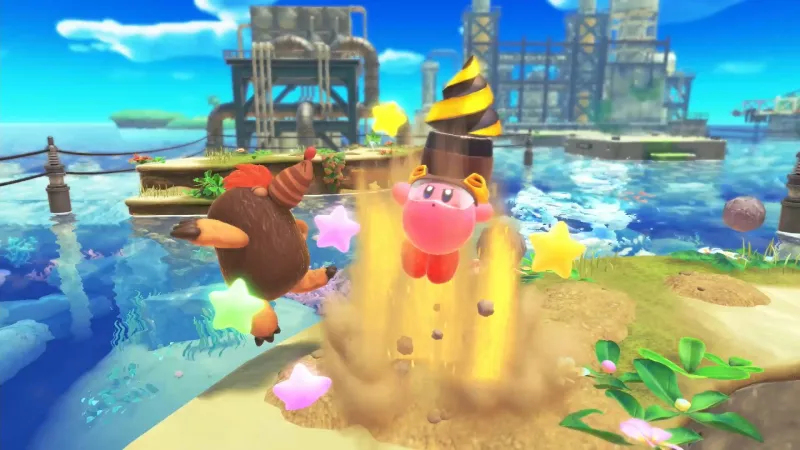
Mouthful Mode is a new tool at Kirby’s disposal that allows him to vacuum up large objects with awkward shapes, stretching Kirby’s form around it to take control to solve puzzles. With a mouthful of traffic cone, Kirby can slam the cone-tip into cracks in the ground to break through to what’s beneath. Or, after eating a car, he can speed around the level and bust through obstacles with ease. These Mouthful objects are found in just about every level, and while usually confined to certain areas to be used for a specific purpose, the game allows for more flexibility to take these forms through levels than I expected. Just about every Mouthful form is great for taking out any Beast Pack minions in and around the area, and it's an opportunity I take whenever it's presented. Often, if a level doesn’t force Kirby to cough up one of these abilities when expected, there’s a reason for it, making for an opportunity to explore even further. Mouthful Mode is a lot of fun and does a great job of breaking up each level, and each transformation brings a different pace and gameplay hook to mess around with. Plus, it easily brings a smile to my face whenever Kirby finds another ridiculous and helpful gadget to envelop.

Click here to view embedded media


While I enjoy just about everything about Kirby’s moveset, I have a couple of tiny grievances to air. One unfortunate side effect of moving to 3D is that Kirby sometimes has an arbitrary limit to vertical movement, capping his ascent far lower than expected. It’s not a huge problem, but it’s frustrating when I can’t jump up to a surface that looks scalable, while other times, I can make daring escapes from pits with ease. Also, the overall speed of the gameplay is much slower than other Nintendo platformers, making exploration sluggish. This is made up for a bit with fun exploration and abilities that can sometimes accelerate the speed at which Kirby moves throughout the varied areas of the new world he’s been stranded on.

Kirby finds himself in this land full of overgrown malls, towns, and theme parks; all of the original residents of these areas are long gone. The setting is quite different from the typical worlds Kirby visits, and despite the appearance of the lands’ society crumbling into ruin, the game doesn’t dwell on the mystery of why everyone is missing. That’s not to say it isn’t addressed, but the game instead focuses on the urgency of saving the missing Waddle Dees and recovering their ransacked village from the ones who kidnapped the residents.

Occupying the Forgotten Land now is the Beast Pack, a formidable force of animals led by tough monstrous bosses that have kidnapped the Waddle Dees and serve as tentpole boss fights at the conclusion to each world. Bosses are given open arenas to do battle in where the camera focuses on them, unlike the usually fixed camera angles present in the rest of the game’s stages. This gives them a big fight feel. At times, these bosses, like the agile cheetah Clawroline or goofy dancing armadillo Sillydillo, offer complex moves to evade and make battles pleasantly play out like a third-person action title rather than a platformer. I loved learning the patterns of these big bads and conquering them using whichever Copy Ability I happened to have on hand.

Click here to view embedded media


Each level starts with a striking establishing shot to set the scene, often highlighting the beauty of the once-lived-in locations. Forgotten Land looks great, often merging Kirby’s typically whimsical style while accentuating the more realistic areas. Hal’s use of textures, lighting, and depth of field make the game’s environments and important cinematic shots shine. 

Once let loose on a stage, Kirby’s primary goal is to rescue the caged Waddle Dee’s found at the end of every somewhat linear, yet explorable, level. Additionally, there are a handful of secondary mystery objectives peppered throughout each area, offering even more Waddle Dees as rewards for completing them. I enjoyed seeking out secret rooms, finding and tearing down wanted posters, or consuming a certain number of donuts. It’s a natural way to extend my visit to each level, and I find myself returning to unfinished tasks to search every nook and cranny and fully complete a level. The mainline levels aren’t all that difficult, leaning more on general exploration than platforming prowess. That’s not to say there aren’t tough moments, but the difficulty I often craved was to be found elsewhere in the world.

Accompanying the standard levels in each world are extra stages called Treasure Road, which are challenges that I loved going out of my way to complete. These provide Kirby with a specific Copy Ability or Mouthful form the level is built around and tasks the player to finish the stage in a certain amount of time. Completing a level of Treasure Road supplies a precious Rare Stone, which can be cashed in for ability evolutions, making these side missions worth playing. These helped me recognize the nuances of Kirby’s many abilities and were a lot of fun to solve and complete the task at hand. Each Treasure Road level has an even tighter target time to hit, rewarding some additional coins, which keeps me coming back to try to hit those more demanding times.

Click here to view embedded media


I enjoyed the loop of completing the main levels, hitting the Treasure Road stages that opened, heading back to Waddle Dee Town to see what new buildings were available, and evolving my Copy Abilities with Rare Stones and blueprints I found on my journey. There always feels like there’s something new to check out, fueling the urge to dive into another level. Even the minigames that unlock in town, like a simplified foodservice game inspired by games like Cook, Serve, Delicious or angling in a fishing hole, are fun diversions. More challenging tasks such as the boss rush available at the colosseum rewards welcome items like blueprints, coins, or other collectibles.

Kirby and the Forgotten Land is great and should not be missed for Kirby and platforming fans alike. This isn’t quite the pink puff’s rendition of Super Mario 64, but it brings the series successfully into the 3D realm and doesn’t need to rely solely on its latest entertaining gimmick. Kirby thankfully remains as charming as ever and this new adventure can effortlessly provide hours of glee.

GI Must Play

Score: 9

About Game Informer's review system

Purchase

Monday, March 21, 2022

GhostWire: Tokyo Review - Graveyard of Horror

Click here to watch embedded media

Reviewed on: PlayStation 5
Also on: PC
Publisher: Bethesda Softworks
Developer: Tango Gameworks
Rating: Teen

GhostWire: Tokyo has a completely dead world, empty of any other human beings or people to talk to. It also has rote and repetitive combat with a bland and uninspired story. And yet, I love it more than I like most games, even if I think a lot of people won't. It might take a bit to explain why, but it all starts with GhostWire's best feature: its cold, lifeless map. 

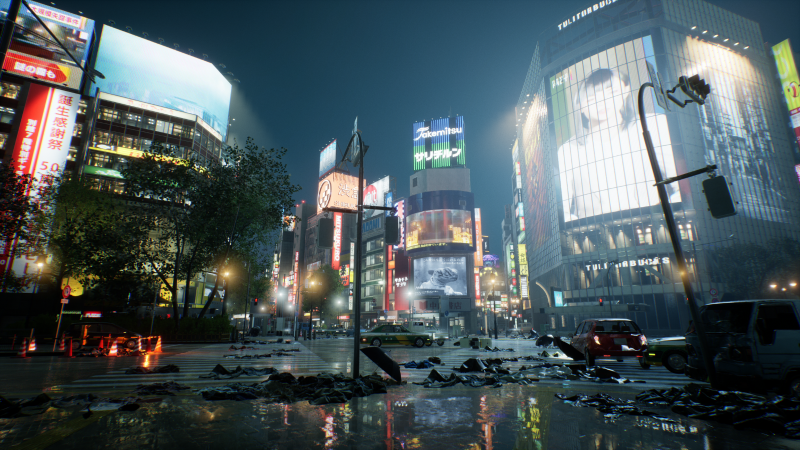
Early in the game, a supernatural force causes everyone roaming around the Shibuya Ward of Tokyo, Japan, to vanish. A mysterious man flashes on the many LED screens around Shibuya Scramble – the famously busy real-world intersection where the game also begins – spouting some nonsense about saving people's souls and so on. The long and short of it is: that guy has stolen the souls of everyone around you, except yours. 

You assume the role of Akito, who is spared from death when possessed by a spirit named KK. For reasons never abundantly clear, KK being in your body also means you have elemental powers. And wouldn't you know it? Spooky ghosts and monsters are now roaming Tokyo's streets without a care in the world. KK needs Akito's body to save the world from this maniac terrorizing Tokyo. Akito just wants to save his sister. If you can put your differences aside, you might just be able to do both. 

It's a bland story that never does anything unexpected and never reaches beyond just okay. I did enjoy Akito and KK's banter, but beyond that, I never found myself all that invested in their arcs. There are a small number of side characters throughout GhostWire – both friend and foe – but none get much screentime or development beyond whatever gameplay purpose they're serving in the given moment, be that a boss fight, new objective, mechanic, so on, and so forth. 

Click here to watch embedded media

What the story does, however, is give narrative justification for why Shibuya is empty (save for those spooky ghosts). And I think this is one of the more interesting parts of GhostWire; its open-world take on Shibuya is a fantastic recreation of architectural density – minus the people. Not only are buildings tightly packed together, but they feel massive in the way real skyscrapers do. Thanks in no small part to GhostWire being in first-person, this is immediately apparent. I loved craning my neck up at the buildings around me, feeling the game's sense of space and scale. That scale extends far outward, too, as it captures Tokyo's urban sprawl; crossing the map takes time, though I rarely felt bored walking around like a virtual tourist. 

GhostWire is obsessed with the idea of urban isolation, that even in a city where millions of people live on top of each other, you can feel alone. GhostWire achieves this feeling by completely taking people away. There's an eerie quality to walking around a city without its population, knowing there's no one to talk to beyond yourself and the (literal, in this case) voice in your head. More often than not, I found myself wishing there were people – or even just one friendly person – I could find on GhostWire's streets. Not because I was ever bored walking through an empty world, but rather its sense of isolation and loneliness was incredibly effective and haunting. 

And I genuinely mean haunting. GhostWire takes every chance it has to sell its spiritual apocalypse. Occasionally, the game will mess with you. Walking around, I'd see the painted lines on the street waving in the wind as if they were thin pieces of paper. Or I'd turn a corner and realize that, in just maybe one alley or one small city block, the rainfall was now blood, soaking the surrounding buildings and street in a dark, sludgy red. More dramatically, at key story elements, the world breaks around you. In fantastic set-piece moments, levels twist, warp, and change seamlessly before your eyes, as if M.C. Escher has taken over as art director. It's endlessly impressive and fun to look at, and I loved using photo mode to capture the bizarreness surrounding me. 

Recalling classic rapture imagery, personal belongings litter the map exactly where they were left – you can't take your purse or cellphone with you to the afterlife. Most strikingly, clothes are everywhere. Especially in high-population areas, there are often vast seas of garments littering the floor where people vanished. It's imagery like this that hammers home not just the scale of the game's rapture but how terrifying something like this would be. Add that the city is still functioning – lights are on, speaker systems play, you can go into the subway or inside convenient stores – and GhostWire has a world not hampered by its lack of things to do but strengthened by its commitment to being desolate. 

Desolate except for those spooky creatures, of course. GhostWire's antagonist is fusing the worlds of the living and the dead. This sets the stage for most of its gameplay and combat. 

Bringing together this world with the next leaves Shibuya overrun with spirits. The vast majority of GhostWire is running from point A to point B, fighting a variety of hostile yōkai littering the streets on the way, getting to your destination, and then fighting some more. There's a solid weight and crunch to combat that's satisfying from an audio and visual perspective. All Akito's elemental powers have their unique advantages, too. I enjoyed swapping between my fire attack, which casts a high-damage explosion, and my water attack, which sends out a wide arc that hits multiple enemies at once. Other fun powers, like a wind attack with a high rate of fire, magical bow-and-arrows, and talismans that freeze enemies, among others, are all fun to experiment with. And using the ethereal weave – which is basically a magic string – to rip out enemy cores always looked great. 

Even though it doesn't have guns, GhostWire effectively plays like a first-person shooter. But not a very good one. Aiming is often clunky and imprecise, and I found myself missing more attacks than not. Encounter design also rarely changes from: there's a handful of enemies surrounding this point of interest, kill them, move on. It's not necessarily bad insofar as it gets the job done, but combat quickly becomes repetitive. The game's handful of bosses don't fare any better, which often feel awkward and sluggish to fight. 

Not every spirit is out to kill you, though. When you're not blasting your way through Shibuya, you're rounding up spirits trapped between the two worlds. There are over 240,000 lost souls you need to help usher back into the mortal coil, which means spending a ton of time walking around collecting – which boils down to holding a button, or very rarely, solving a small puzzle – and depositing at various payphones throughout the map. Luckily, you pick up spirits in mass, so you don't have to individually collect all 240,000, but it's still a tedious side-objective. 

Click here to view embedded media


But I don't find myself coming down too hard on the game's core loops. On the one hand, it is a repetitive, fairly bland take on the tired Far Cry formula. On the other, on top of loving GhostWire's world, its yōkai designs stand in a league of their own – it has some of my favorite enemy designs in years. Mixing traditional Japanese folklore with its contemporary setting, looking at the terrifying enemies never got old. My favorites include the Lamentation and Shiromuku, whose long black hair is reminiscent of classic Japanese horror film characters Sadako (Ring) and Asami Yamazaki (Audition), as well as the various takes on Kuchisake-onna, the slit-mouthed woman, who borrows heavily from her design in 2007's Carved. For a horror fan, especially one who grew up watching Japanese horror movies, I couldn't help but nerd out on all the various creature designs, no matter how many times I fought them. 

It also helps that GhostWire is really short. I completed the campaign in about 14 hours, though I've spent a few extra afterward cleaning up side stuff. Bland as a lot of its gameplay and story may be, GhostWire never wastes your time. It gets in and out long before anything gets too old, letting you enjoy everything you like about the game without wearing you down with things it does poorly.

Which makes GhostWire a strange game to review – at least within the often-restrictive confines of a scoring system. The things I like about GhostWire, I really like. I'd go so far as to say that some elements – its world, enemy design, etc. – are among my favorites in a game in years. That said, there are plenty of elements, such as story and gameplay, where GhostWire is hardly up to snuff. 

I fully expect some people won't be smitten with the game the way I am, and I think it's completely understandable if you don't want to forgive the game for that. But if GhostWire connects with you, I think it'll really connect with you. It's weird and unique, and I think it's great to see this kind of game get this kind of budget, put it all on the table, and use that money to do some baffling and great art. And for that alone, I can't help but love GhostWire.

Score: 8

About Game Informer's review system

Purchase

Wednesday, March 16, 2022

Tunic Review – A Dyed-In-The-Wool Treasure

Reviewed on: PC
Also on: Xbox One
Publisher: Finji
Developer: Tunic Team
Rating: Everyone 10+

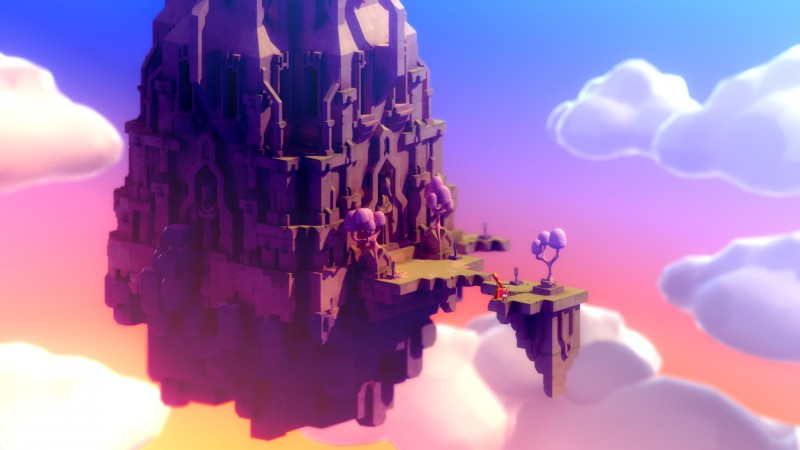
Tunic brilliantly captures the feeling of that special childhood title that made you fall in love with video games. Using a virtual simulation of an old-school guidebook, the game masterfully balances telling players almost nothing with giving them all the information they need. The result is a game brimming with genuine, triumphant discovery.

With its every pixel stuffed with reverence for gaming as a medium, Tunic revels in its historically inspired design. Players steeped in the hobby’s traditions will find following their instincts richly rewarding as they quest through its gorgeous world. Impressively, Tunic also melds the charm of the past with the sensibility of modern titles. As an isometric action/adventure, Tunic has a heaping helping of early Zelda games with generous handfuls of the Souls titles thrown in for good measure. It’s a winning combination.

Click here to watch embedded media

The real-time combat had me tackling foes by watching for offensive openings while keeping a careful eye on my stamina. Every swing, dodge, or block took a chunk of the bar. Mercifully, low stamina never kept me from attacking, but I did take more damage when the bar ran out. The distinctly relaxing music introduces an intriguing contrast to the tough battles, and the ‘Chill Beats To Fight To’ vibes take the sting out of being viciously cut down. As does the world’s simple-but-beautiful visual aesthetic. Dying meant dropping a portion of the hard-earned currency I’d won from my victories. The nice thing about Tunic, though, is that you never lose everything. So, you can run directly back to the spot you died to regain the contents of your wallet, or you can spend what you have left on items to give you an edge.

For those turned off by this kind of gameplay, Tunic offers players of all kinds the chance to enjoy its combat system, as the accessibility options include a no-fail mode and the ability to turn off stamina restrictions. The Souls-like combat is intense, but the challenge feels satisfying rather than punishing – though a few later bosses definitely gave me trouble. Each boss has its own feel, with different attack patterns to study, but most play out similarly. An imposing challenger does its best to take you down in a closed-off battlefield; that means no running away from the conflict.

Tunic’s fighting is great, but discovery and exploration might be its most impressive elements. Your adventure is linear, but its myriad paths contain branches that split off into more branches and then more still. No matter which direction I went in, the destination was usually noteworthy, with some paths unexpectedly leading me to new objectives or undiscovered, late-game areas. It made the world feel boundless, which is a commendable feat for a game made up of strictly defined pathways.  

Every route was also packed with things to uncover, and there were an unbelievable number of treasure chests. Many of these were seemingly inaccessible until I noticed an inconspicuously hidden passage or used some clever combination of items to get where I needed. Without resorting to busywork puzzles, Tunic constantly compelled me to feel proud of my puzzle-solving skills. In an amazing display of unintrusive design, the sense of discovery didn’t stop once I’d collected my prize.

Some things – like the sword or the very Zelda-esque key items that opened new zones or allowed me to get past obstacles – were self-explanatory. However, others, which I won’t spoil, were complete mysteries. One of my favorite moments from the game involved a curiously mundane object that didn’t seem to do anything. Later in my journey, a wild idea popped into my head on what it might be for. Thinking to myself there was no way I was right, I tested my theory and was greeted by surprising success. I audibly celebrated my accomplishment, along with the developers’ skill in designing a wonderful ‘ah-ha!’ moment.

I wasn’t left entirely without guidance, however. Tunic’s gameplay is inextricably linked to collecting the pages of an instruction booklet scattered throughout the world. Despite being predominately filled with unreadable glyphs, the nostalgia-inspiring manual somehow contained all the information I ever needed to know about Tunic – if I paid close attention. One page might demonstrate combat mechanics, while another serves as a map, and still another could give a veiled look at the game’s narrative. As I uncovered more pages, I discovered there was actually an entire section dedicated to the story. But the snatches of largely incomprehensible text didn’t tell the whole tale. Despite its lack of transparency, Tunic still paints a compelling narrative picture that gave me a sense of what was happening but also left a lot of details up to my interpretation, which I enjoyed.

Looking closely at the manual, I quickly realized there were copious, hand-written pearls of wisdom scribbled in the margins. This gave me the sense that I had received Tunic – along with its booklet – from an older sibling, a friend, or a second-hand store and had inadvertently gained access to secret knowledge. I studied the pamphlet’s official print as well as the helpful, if obscure, ink-scrawled hints meticulously, and the game constantly rewarded me for it. If I ever got stuck at any point in my quest, the answer was somewhere in the pages. I love when a game includes me, as the player, in its meta-narrative. With this conceit, Tunic invoked my youthful memories of inheriting games and mixed those real-world experiences into the gameplay, making my connection to the game deeper and more personal. 

While Tunic is an experience I would recommend to any player, the obscureness that makes it uniquely rewarding can also lead to genuine frustration. Mostly, the game is so well designed that it is easy, especially in the beginning, to find answers or check out a different avenue while puzzling something out. But when I got stuck near the end of the game, I couldn’t simply run down another path, and my progress slowed to a halt. However, this was a rare exception to the overall sparkling experience. And my frustration gave way to admiration when I discovered the easy-to-miss secret I’d been glossing over had been right there in the booklet the whole time. The developers’ attention to detail and the work poured into those collectible pages is remarkable.

I was constantly veering off from the main quest to track something down or look into a newly discovered path, and so it took me about 20 hours to roll credits. Despite that, I know there’s still a lot for me to do in the game, and I’m excited to go back in to find every secret and experience everything its aesthetically striking world has to offer. Tunic is a stunning achievement that manages to embody the best of nostalgia while being completely refreshing. It’s absolutely a must-play gem.

GI Must Play

Score: 9.75

About Game Informer's review system

Purchase

Monday, March 14, 2022

Stranger Of Paradise: Final Fantasy Origin Review

Reviewed on: PlayStation 5
Also on: PlayStation 4, Xbox One, PC
Publisher: Square Enix
Developer: Koei Tecmo
Rating: Mature

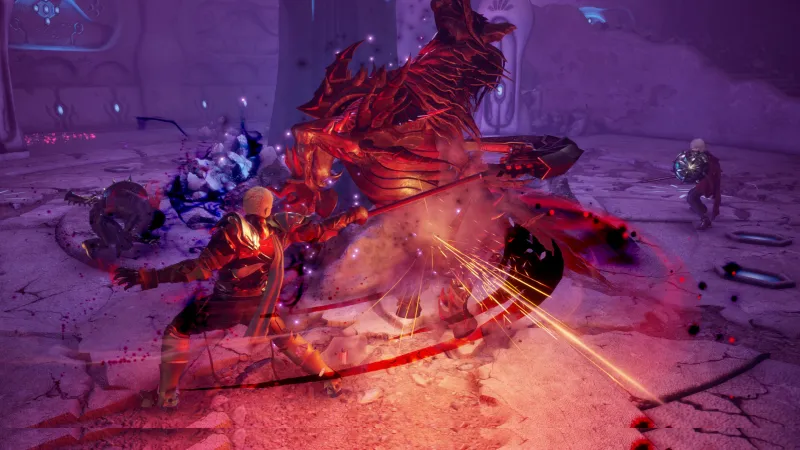
Even if you love Final Fantasy games, expect to feel like a stranger in a strange land when playing Stranger of Paradise: Final Fantasy Origin. This violent retelling of the original Final Fantasy game from 1987 largely sidesteps the series’ adventurous spirit and heartfelt mysticism to focus on muscle, attitude, and everything extreme. Square Enix labels this remake as a “hardcore action/RPG,” an apt description for a game that rarely relents in its aggression. When swords are drawn and giant beasts enter frenzied states, this edgy experiment shines, as the battlefield lights up with a flurry of combos and magics against awesome monsters that pose a real threat. When the swords are holstered and the characters need to converse or explore, Stranger of Paradise hits lows rarely seen in Final Fantasy's storied 35-year history.

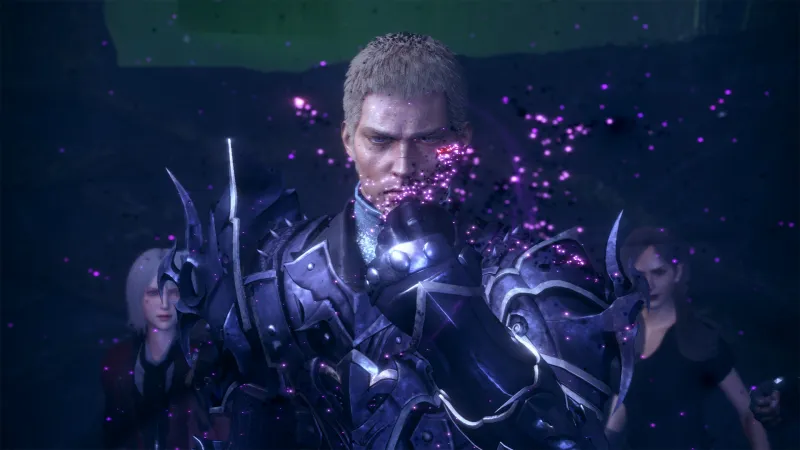
Don’t be surprised if you let out your first audible groan within minutes of meeting protagonist Jack. Showing the emotional range of a brick, Jack is a blank slate of a lead, offering little in terms of backstory or personality, yet he amuses for all the wrong reasons given how frequently he talks about wanting to kill a dark being named Chaos. He growls this dark ambition to almost anyone who will listen, sometimes dropping f-bombs along the way because he’s that angry. The story clings for dear life to the silly Chaos thread, which offers a couple of interesting twists near the conclusion, but mostly falls flat and does little to build up the characters or world around them.

Jack eventually befriends a handful of like-minded individuals to journey with, but they are just as lifeless as he is, and the reasons they are together are flimsy at best. At one point, Jack meets Jed and Ash on a road, and after conversing about Chaos and crystals for just a few seconds, they agree to journey together and cement the occasion with a fist bump. The fist bump is as awful as it sounds, and is oddly notable, as you’ll see this gesture many times, each one as unintentionally comedic as the last. I didn't care for most of the story, but did enjoy where it ends. No, the final moments don't make the journey worthwhile, but at least it ends with a bang.

The hunt for Chaos unfolds within the land of Cornelia, a place lush with most of the fantasy tropes this series is known for. Developer Team Ninja does an excellent job of changing up the locales frequently within its level-based progression – throwing the party into lava caverns, icy mountains, and glowing forests filled with wild beasts. Most of these places are confusing in design, sending Jack and company down mazelike paths, some featuring puzzle qualities that require backtracking to solve. Without a map, expect to get lost periodically. In an odd twist, the party can dart through swarms of enemies uncontested, meaning you can cover ground quickly and find your bearings again. You can also run from the start of a level to the concluding boss without confronting a single foe – a design flaw I exploited to speed up exploration in some of the more confusing levels.

Click here to watch embedded media

It’s not that I didn’t want to engage in combat. As messy as Stranger of Paradise is in its story and world, it fully embraces the rage of a warrior to deliver an exceptional combat experience. The nicely implemented melee combat and long-range magic sizzle with excitement, and Jack can switch between them on the fly. Enemy movements and unblockable attacks are easy to read, making all fights feel fair and a true test of skill. Even the two A.I. companions who join you are competent and rack up kill counts of their own, even against bosses if you need to keep your distance. Some bosses are incredibly challenging, and your allies may not be enough of a help, but you can always lower the difficulty for this one fight at any save point – another nice touch.

The combat mechanics are robust, allowing for Jack to bombard the enemy with abilities at a liberal pace. The evasive move works well, as does the soul shield counter that allows Jack to bank magic and send long-range attacks hurling back at his attacker – the latter is quite ingenious, yet is sometimes difficult to use given how frenzied battles can be. When foes are giving you fits, saving up magic to activate devastating Lightbringer attacks can turn the tide. Best of all, when an adversary’s break gauge depletes, you can execute them immediately with a stylish finishing move that even delivers splash damage to any other enemy nearby.

Jack lives up to his name as a jack of all trades on the battlefield. Rather than focusing on just one job, Stranger of Paradise encourages the player to use over a dozen of them, switching to whichever style best fits the situation at hand. Each class is fully featured and fun to use. I enjoyed being able to morph in the blink of an eye from a samurai with precise sword strikes to a black mage that carelessly rains down death from afar. Figuring out which jobs work best with each other is part of the fun and reason to experiment often.

Applying points to skill trees allows each job to grow more potent in the way the player wants. Specific armor pairings also deliver worthwhile statistical bumps. Each class can reach a master rank at level 30 and offer a variety of nice customizations, like determining which special attacks trigger at specific points on combo chains. Again, the combat absolutely sizzles in Stranger of Paradise and gives you a true sense of ownership over it.

Almost every defeated enemy drops a weapon or armor, and you quickly learn that you must pace how often you dive into the menus to tinker with each character’s loadout, as you could spend just as much time in menus as combat. The weapons offer almost every kind of attribute bump you would expect, and armors deliver cosmetic changes galore. The "cool" factor of the gear is tied to their levels, meaning at level five, you are wearing leather, and at level 105, you glisten in an awesome dragon-scale suit.

Having so many different options at your fingertips – from the gear to jobs – is where Stranger of Paradise shines the brightest and delivers excitement. These thrills extend to two friends in online cooperative play, but only if they keep pace with your combat level. If you aren’t in the same level range, you must play at the lowest player’s level, which can be a bust if they are just starting and you are in the mid- or endgame.

Click here to watch embedded media

Stranger of Paradise is the strangest Final Fantasy game yet, bounding wildly between awful and fantastic. If you can tolerate Jack (and that’s a big ask), the excellently crafted combat is worth a look. You may be coming to this game for the story and Final Fantasy experience, but it’s all about combat and little else.

Score: 7

About Game Informer's review system

Purchase

Friday, March 11, 2022

WWE 2K22 Review – A Big Step In The Right Direciton

Reviewed on: PlayStation 5
Also on: PlayStation 4, Xbox One, PC
Publisher: 2K Games
Developer: Visual Concepts
Rating: Teen

WWE 2K22’s long road to release stands as a redemption story as dramatic as any of the TV storylines. The series took a few years off to regroup following the trainwreck that was 2019’s 2K20, and the time away allowed it to learn some useful new holds. Though it doesn’t catapult the franchise to bold new heights, a revamped gameplay engine and a renewed focus on approachability make it the most entertaining – and most of all, playable – WWE game in some time.

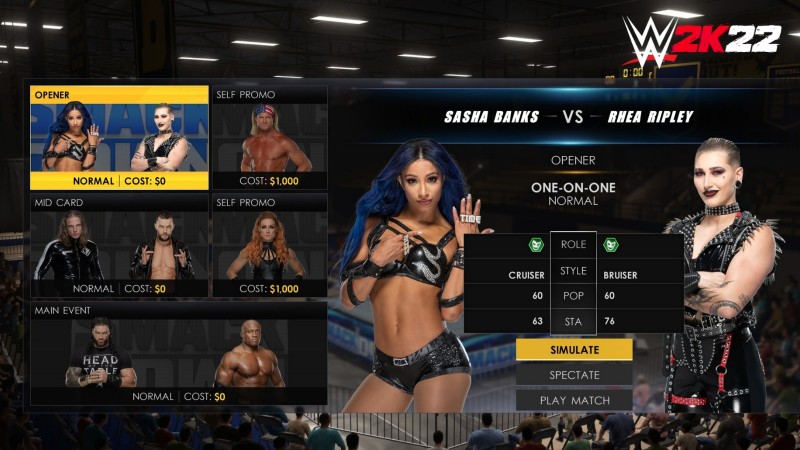
The new engine strips away some of the complicated mechanics that made the previous 2K games a chore to play. Instead, it adopts a more arcade-style approach. 2K22 is not the second coming of the beloved Smackdown series, but the simplified grappling feels more intuitive and allows for faster-paced matches. Grappling is condensed to light and heavy moves mapped to two buttons, which I found easier to remember and execute. Melee combos reward big hits by chaining simple inputs, giving button-mashers a viable form of offense. Speaking of which, I love that pins and submissions ditch the annoying “stop the needle” minigames and return to the more fun intensity of slamming buttons to break free.

To reduce the non-stop countering that often occurs between advanced players, a new counter called Breaker forces you to predict incoming moves by pressing the same button you think your opponent will. Breakers only apply to strikes and grapple-based attacks; a universal reversal still exists for everything else, but I have mixed feelings this new addition. The element of chance means I absorbed strings of offense for guessing the wrong input regardless of my reversal timing which frustrated me at times. On the other hand, it allows both players to actually perform moves on each other instead of only finding cheap ways of interrupting prolonged counter-fests. Plus, even though I often took a beating, I rarely lost. The more skilled player will still win the day regardless of how many powerbombs they eat on the way to victory. Breakers aren’t the perfect solution, but I lean more in favor of them.

Click here to watch embedded media

2K22 feels easier to play overall but executing certain maneuvers still feels convoluted. The command differences between various springboard and apron attacks could be simpler, for example. A nice tutorial at the start of the game walks players through the basics, but I wish it went further since I still had to look up crucial mechanics like positioning opponents or entering/exiting the ring. Picking up objects can still feel unresponsive, and some actions retain the sluggish, over-animated feel the 2K games have suffered from for years. 

By and large, 2K22 looks great. Character models appear largely accurate to their real-world counterparts, smoother animations replicate superstar-specific nuances, and improved cinematography and lighting make everyone look better than ever. I especially love the era-specific lighting for historical arenas, like Halloween Havoc ’97. The roster is horrifically outdated thanks to the inclusion of numerous superstars who departed WWE in 2021, but this works in 2K22’s favor. Names like Jeff Hardy, Keith Lee, and Ember Moon may now perform elsewhere, but getting to use them anyway beats having a more realistically thin roster. 

Best of all, I didn’t encounter any catastrophic glitches. Smaller hiccups can still occur like the occasional spaghetti rope or a character getting snagged or warped on geometry, but those fall into the harmless (and humorous) camp. They didn’t happen often enough to spoil the experience. Unfortunately, online play feels unstable at the time of publishing. I've had trouble connecting to matches and the ones I have gotten into have suffered from severe lag at times. Hopefully, this is addressed sooner than later but you may want to avoid the online mode in the immediate future.  

2K22 has no shortage of modes, the most prominent of which is Showcase. This interactive documentary lets players follow the legendary career of cover star Rey Mysterio by playing a selection of 12 matches. Previous Showcases did a great job covering their respective topics, but 2K22’s falls short of the mark. Although the presentation rocks per usual – the mid-match transitions to actual footage of the fight you’re playing is notably rad – most of the chosen bouts made me scratch my head. 

The wide 1997-2005 stretch of Rey’s career only focuses on Eddie Guerrero, in which you wrestle him twice, and one of them is the mode’s sole WCW offering. Rey’s WrestleMania 22 World Title win is absent since Kurt Angle isn’t in the game. Big feuds against the likes of Chavo Guerrero, Chris Jericho, CM Punk, and Cody Rhodes don’t make the cut either due to the listed names working for rival organizations. They’re replaced by less memorable bouts, such as Mysterio’s SummerSlam 2009 Intercontinental Title defense against Dolph Ziggler or a random Raw match against Gran Metalik. I don’t expect Showcase to hit every milestone of Rey’s career, but this feels like an abridged summary of his run that plucked out most of the truly great stuff.

Following Rey’s career may have been underwhelming, but I had a better time building the legacy of my own superstar in MyRise. Creating a wrestler from scratch, including choosing their background RPG-style, had me engaged in my star’s fate from the get-go and the mode is pleasantly dense. From training in the Performance Center to NXT to the main roster, I enjoyed guiding my arrogant Hollywood transplant to the top of the company through choice-driven scenarios, many of which are delightfully cheesy. I won a match to force my opponent to wrestle in a chicken suit for a month and picked fights with big stars on social media to goad them into the ring. Is the writing often stupid and/or campy? Yes, but the same is usually true of the real product. At least this made me chuckle instead of facepalming. 

Simple sidequests, such as beating up MVP for enforcing a dress code, can be tackled at your leisure to gain extra stat points, but I mostly enjoyed how seemingly mundane stories spiral into giant angles. I choose to make a name for myself by assaulting a visiting Mayor Kane backstage which exploded into a multi-match side story that concluded in a Hell in a Cell match against The Undertaker. Various story paths exist depending on your choices and face/heel alignment, which offers a nice element of replayability. I don’t know if I’m compelled enough to make another full run, but MyRise had me thinking about what titles to chase and the shenanigans I’d instigate when I was away from the mode. I always itched to get back to it. 

The Creation Suite isn’t significantly better than what’s been offered before, but it remains a fun time sink. I lost hours making superstars, championships, arenas, titantron videos, and more. Universe Mode provides more options for playing Vince McMahon as you book shows, matches, rivalries, and more. You can now follow an individual career as well, but Universe is about making your own fun and doesn’t offer enough tangible rewards to keep my interest for long. Universe Mode feels especially flat compared to MyGM, which gives you direct control of a single brand including drafting superstars, booking shows, and appeasing personalities to win a ratings war against rival brands. This destination satisfied the fantasy booker in me. I had a great time creating quality rivalries and contests by strategically matching superstar in-ring styles and managing my budget to put on killer shows. MyGM offers a granular level of data but offers regular guidance that kept me on track and informed my decisions. Like MyRise, MyGM unexpectedly hooked me and often had me thinking outside of the game about how to build to the next show, what talent to sign next, and how to sabotage my competitor. 

MyFaction is another new destination that feels like a separate game in itself. Fans of WWE mobile games like Supercard may feel right at home as you buy card packs (using real and in-game currency) to assemble a “faction” of the best cards based on their stats and other perks. You’ll battle other factions, but the combat unfolds in the ring rather than as a pure TCG. There’s not much more to it than that. There are various daily, weekly, and tower challenges, but it boils down to playing matches, filling achievement bars, and buying cards. Packs are reasonably priced, and you’ll earn enough currency to buy a pack by playing a small batch of matches, but you’ll always go farther using your wallet as per the norm with this stuff. MyFaction adds the satisfaction of watching meters fill up while playing random matches, but it’s not my favorite mode and is worth ignoring if the card aspect doesn’t speak to you. 

Is 2K22 the next No Mercy or Here Comes the Pain? No, but it’s a substantially improved comeback that’s more fun to play than WWE games have felt in ages. Plus, the sheer amount of modes, all of which are at least decent, means there’s something enjoyable to gnaw on outside of random exhibition matches or online play. There’s still work to be done, but like a retired veteran returning to put on a surprisingly solid match, WWE 2K22 manages to shake off the ring rust and perform better than the naysayers expected. 

Score: 8

About Game Informer's review system

Purchase

Thursday, March 10, 2022

Young Souls Review – Dungeon Brawling With The Best Of Them

Reviewed on: Stadia
Also on: PlayStation 4, Xbox One, Switch, PC
Publisher: The Arcade Crew
Developer: 1P2P

Young Souls stars two orphans who are used to being overlooked, but you shouldn’t ignore their adventure. This RPG brawler sports more depth than your run-of-the-mill beat ‘em up thanks to slick combat, enjoyable customization, and sharp writing. Whether you’re cutting down monsters alone or alongside a buddy, brawler connoisseurs should take notice. 

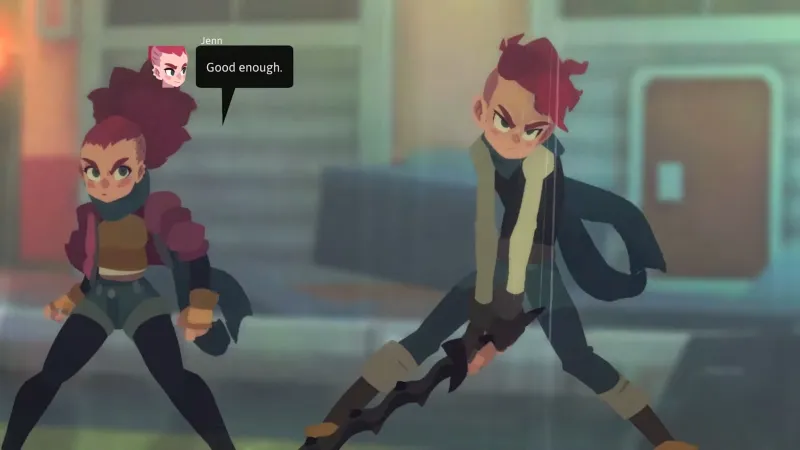
Orphaned twins Jenn and Tristan feel like they’re up against the world. The foul-mouthed, hot-headed teens are conditioned to fend for themselves, earning a reputation as troublemaking outcasts in their small town. The only person they respect is the Professor, their adoptive father who opened his home to them a year prior. The three enjoy a harmonious though emotionally awkward relationship, but things take a turn for the weird when the twins discover the Professor has been kidnapped. Even stranger, a portal in his laboratory reveals an underground world inhabited by goblins whose leader plans to assault their town. While that’s a problem, Jenn and Tristan’s primary concern is rescuing the Professor, and they are more than eager to pick up swords, shields, and other weapons to cut down goblin after goblin standing in their way.

Click here to watch embedded media

Young Souls’ solid writing treats players to a likable cast and a more emotionally charged story than expected. Seeing Jenn and Tristan ponder over their actions and discover that both sides of a conflict can commit atrocities with good intentions brings welcome self-awareness. I also found it refreshing to see a villain genuinely care that invaders are systemically murdering his subjects. The twins feel earnest and relatable instead of one-dimensional edgelords, especially when asking themselves if they’re ready to call the Professor “dad.”

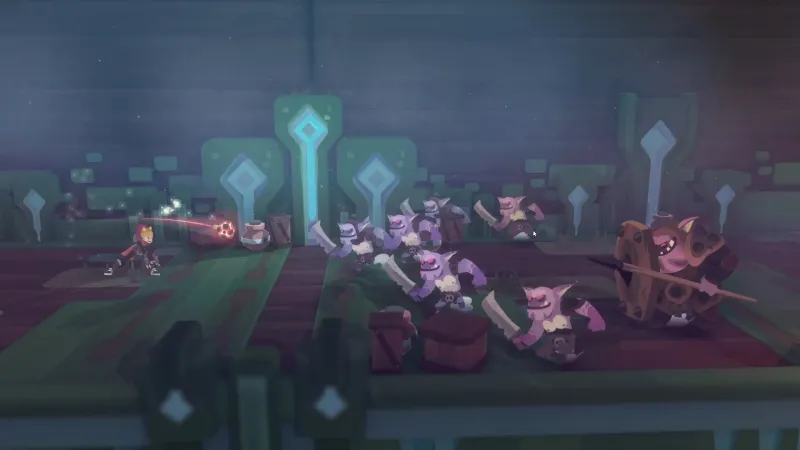
Kicking goblin butt rocks thanks to combat’s fluidity and the impactful feedback from landing blows. It doesn’t matter if you’re using daggers, swords, hammers, or heavy axes, stringing combos and air-juggling baddies feels great. The timing window for blocks and parries feels inconsistent, which is frustrating, but a successful parry triggers a satisfying slow-motion effect. Upgradable sub-weapons add further depth, such as a bow, a screen-hopping teleportation spell, mob-clearing bombs, and, my favorite, a chain that yanks enemies towards you or vice versa. Young Souls might not break the mold, but it’s an absolute blast to play. 

Goblins pose a more significant threat than the average beat ’em up fodder. They often evade, block, and parry, presenting an enjoyable challenge that kept me from mindlessly swinging my weapon. I was pleasantly surprised at how often I had to consider my offense instead of just mashing the attack button, especially against bosses. A few enemy types are annoying to deal with (shield-wielding spearmen block way too often), but Young Souls brings the fight in the best way. I encourage seasoned players to choose the developer’s recommended difficulty.

Playing alongside a buddy is probably ideal, but co-op is local only, unfortunately. Still, I’m impressed with how much fun Young Souls is to play alone. An awesome tag team system allows you to quickly swap between siblings at a button press which you can use to set up cool combo chains. This is great for making dramatic split-second saves since each sibling has their own health bar and a limited number of revives. I like the fighting game strategy behind constantly tagging in/out to allow the other twin recovery time while mixing up your offense. 

Jenn and Tristan initially play identically, but that changes in fun ways since each has their own loadout. Weapons and armor fundamentally alter their playstyles depending on their weight and type. For example, I had Jenn emphasize swift attacks and evasion while Tristan became my death-dealing tank. The game is at its best when you have two distinct twins to cover your bases against all threats, but having them both play similarly is a valid strategy, too. My Jenn’s speedier build fared better against a slow-moving boss, so doubling up on that strategy helped me take it down quicker. 

Young Souls’ structure resembles a condensed run-based dungeon crawler. You’ll battle your way through rooms of enemies to earn treasure, resources, and keys to unlock new zones and chests. Level design is largely straightforward to a fault. The game mixes things up with boss rush challenges and encounters against a legendary warrior who rewards a new weapon type each time she’s defeated. The most imaginative level pits players against ghosts that you can only kill using a particular weapon; however, the weapon renders you vulnerable to a one-hit kill. Young Souls can stand to shake up its exploration like this more often as most levels feel too mundane. On the plus side, backtracking to nab every item is a breeze thanks to a flexible fast-travel system, plentiful checkpoints, and the fact that the map marks locked chests. Young Souls may be the breeziest game to obtain 100 percent completion in some time. 

Click here to view embedded media


In between dungeon runs, you’ll zip around town on your moped to sell items and buy outfits, including buff-granting sneakers. You can even hit the gym to complete simple but enjoyable exercise mini-games to raise the twins’ physical attributes. However, warping home to level up is a tad annoying, as is the fact that you can’t equip battle gear in the human world. 

As the kind-hearted Professor learned, give Jenn and Tristan a chance, and they’ll impress you in more ways than one. Young Souls is an exceptional adventure you shouldn’t miss if you’re searching for the next great game to tackle with a friend or want a quality RPG brawler to dig into alone. 

Score: 8.5

About Game Informer's review system

Concept: Wage a two-person war against an underground empire of monsters as a pair of rebellious teenagers

Graphics: Young Souls’ colorful art is sharp and oozes personality. It’s like playing a graphic novel for young adults

Sound: While the soundtrack doesn’t stand out as strongly as the art, solid tunes fit the spirit of adventure on and off the battlefield

Playability: The smooth combat has more depth than the average beat ’em up, and a varied loadout provides several entertaining approaches for laying the smackdown

Entertainment: Kicking butt in Young Souls is a blast and one of the rare co-op brawlers that is as enjoyable to play solo

Replay: Moderate

Purchase

Wednesday, March 9, 2022

Gran Turismo 7 Review - Earning Its Place On The Podium

Gran Turismo 7

Reviewed on: PlayStation 5
Also on: PlayStation 4
Publisher: PlayStation Studios
Developer: Polyphony Digital

Gran Turismo has been a gold standard for the simulation-racing genre for over 25 years. The franchise has continually served as a showcase for PlayStation’s latest hardware both from visual and technical standpoints. Gran Turismo 7 is no different in this regard; the racing has never felt more precise, nor have the vehicles ever looked truer to life. However, in the time since that initial entry, the field has caught up to Gran Turismo. This new entry is still an excellent driving simulation, but it’s no longer lapping the competition.

Gran Turismo 7 sets the tone early; this is the sim-racing series at its most self-indulgent. The several-minute-long, unskippable credit-reel chronicling the history of the automobile followed by a long in-game cutscene demonstrates just how serious it takes car culture. While other racing games have taken intentional strides to remove as many barriers to the fun as possible, Gran Turismo 7 has no qualms about doling out the action at its own pace. While this delivery is sometimes too slow in the early goings, once the career mode opens and rubber meets the road, sim racing doesn’t get much better than this.

Click here to watch embedded media

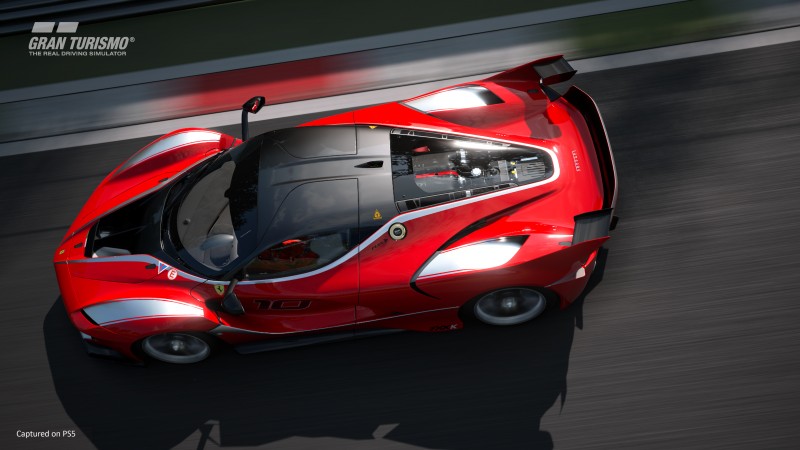
Whether you’re driving a finely tuned supercar north of 200 miles-per-hour on a straightaway or are precariously navigating a twisting offroad course in a four-wheel-drive vehicle, Gran Turismo 7 masterfully delivers one of the best driving experiences in gaming. Every inch of the road traveled carefully considers the conditions in which you’re driving; elevation changes, weather, driving surface, road bank, vehicle downforce, and countless other factors seamlessly contribute to whether you successfully carry your momentum into a turn or spin out into the grass.

Even the most minor miscalculation sends you sliding off the track. With no rewind functionality as seen in many modern racing games, I love the tense feeling of victory and defeat balanced on a razor's edge around every single corner. Unfortunately, if you want to use the assist tools to help you better compete on the track, the drive-line tool, which tells you the best path to follow through the course, is not only less informative than those of Gran Turismo’s contemporaries, but it’s also unreliable. On several occasions, I followed the line’s advice and still slammed into the barrier, only to realize the brake indicator didn’t properly populate on the track. Every time I got into one of these accidents, Gran Turismo 7’s lack of damage modeling took me out of the experience; when a game is so focused on realistic visuals and controls, emerging from a high-speed wreck with little damage is jarring.

Polyphony Digital’s adoration of auto culture remains evident as you progress through Gran Turismo 7’s unconventional career mode. Constantly returning to the in-game café, where you retrieve quests like collecting specific vehicles or winning a grand prix, you get an effective tour of the game’s many modes and offerings. Each time you complete a car collection mission, you’re treated to a rundown of the real-world history of whatever the theme is; I learned a lot about the history of the Ford Mustang in my early hours. Each time you get a new objective, Gran Turismo 7 clearly communicates what you need to do to complete it. Even the side modes, like time trials set to music, mission-based challenges, and specialized license events, had me mashing the retry button because I knew I could achieve a better time.

Click here to view embedded media


Progression happens every step of the way, giving you incentive to play “just one more race.” I lost track of time on more occurrences than I can count as I discovered the reward for the next race was a car I coveted. I was hooked by the career mode’s structure around vehicle collecting, with each activity rewarding you with money, cars, and more. As your garage expands with the more than 400 cars available at launch, your collection level rises, unlocking more missions and features. The cyclical ecosystem Polyphony Digital leveraged in Gran Turismo 7 is satisfying, and by placing the emphasis more on building a garage than winning races, I rarely felt my progress stall, even if I couldn’t take home the checkered flag in each event. Still, I loved juicing up my favorite rides using the robust tuning features to give myself the best chance to finish first.

Sadly, the multiplayer suite often pumps the brakes on the fun. Currently, your options are to take part in scheduled Sport events, where you sign up for a session and then wait for it to start, or join multiplayer lobbies. Sport events are great fun – I particularly love Gran Turismo 7’s emphasis on being well-mannered in your driving, actively discouraging collisions – but they take too long to get into the action. After signing up for a Sport event, you sometimes must wait longer than 10 minutes before the race starts. Sure, you can drive practice and qualifying laps while you wait for the race to start, but I wish these events just began once you entered a full session. Lobbies are a great way to circumvent the waiting period while setting your own rules, but with the front pages often populated by near-empty groups, the barrier to jump into a multiplayer session sometimes wasn’t worth the hassle.

Despite its multiplayer shortcomings, Gran Turismo 7 is a terrific racing experience. I love the emphasis on car collection and the respect paid to the history of automobiles and racing culture. Gran Turismo 7 provides some of the best driving mechanics available and gives you several guided ways in which to engage with it. While it sometimes spends too much time off the track, every long cutscene is clearly done with love, and that sentiment shines through even more on the track.

GI Must Play

Score: 8.75

About Game Informer's review system

Purchase

Tuesday, March 8, 2022

Destiny 2: The Witch Queen Review - Putting All The Pieces Together

Reviewed on: PlayStation 5
Also on: PlayStation 4, Xbox One, Stadia, PC
Publisher: Bungie
Developer: Bungie
Rating: Teen

Destiny enthusiasts had a long wait for this latest expansion, and Bungie rewarded that patience with an outstanding installment. The Witch Queen is one of the studio’s most sophisticated releases, both in terms of storytelling and gameplay systems, and that complexity is especially rewarding to longtime players. That same depth across the breadth of the expansion also means it may be difficult for newer or lapsed players to climb aboard. For those that embrace the full scope of what’s on offer, the Witch Queen has both tricks and treats aplenty.

Destiny 2’s story has been building to this conflict for some time, and I’m impressed with the way that narrative investment pays off as so many of the pieces slot into place. Savathûn is a wily and intriguing villain, and it’s great fun to finally see her schemes brought to light. But The Witch Queen’s more impressive narrative accomplishment is the nuance with which it now treats its characters and plotlines. Prior implications of the universe’s simple light and dark duality get systematically overridden with twists rooted in character motivations and moral quandaries.

The campaign missions, in particular, are especially strong this time around. That excellence is thanks to some awe-inspiring environments and several cleverly designed battles, but it’s also enhanced by the new legendary playthrough option. Playing that way, the missions take longer and demand strategic loadouts and careful approaches, but with commensurately better rewards to make it worthwhile. I also am very fond of the new Light-wielding Hive enemies, and the way they shake up combat. As an approach to high-challenge enemy types, it feels more exciting than the Champion system we’ve seen in recent iterations and more rooted in the fiction as well.

Whether fighting those new Ghost-bearing Hive or more familiar enemies, I’m especially pleased with the balance work done on the legendary missions to make them challenging and interesting whether played solo or as a fireteam. The entire campaign experience is framed as a mystery story that plays out across a psychic mindscape of memory and hidden truths, and that narrative framework dovetails into the post-campaign storytelling in a satisfying way.

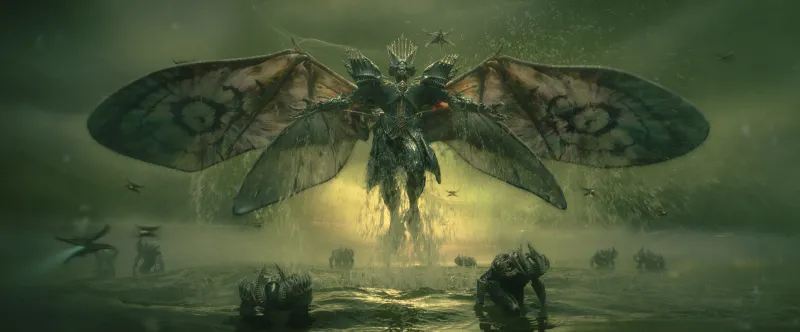
The new Throne World destination is one of the series most visually intriguing, defined by two extremes. On one side is the towering edifice of Savathûn’s sprawling palace grounds – a testament to her power and moth-like beauty. That aesthetic gives way to a miasmic otherworldly swamp that feels dirty and overgrown. At both ends, there are secrets to uncover and impressive sights to see.

Click here to watch embedded media

Weapon crafting is an especially welcome new diversion, providing Guardians the chance to shape many of the newest weapons into exactly the form they want. Doing so takes a long time and encourages a mini-leveling experience for each preferred weapon on top of character progression. The options for tweaking and setting a preferred loadout are great fun, but it’s also a system that dramatically exacerbates the game’s already potent currency bloat problem. The process requires so many items that even as a longtime player, I find myself throwing up my hands and just acquiring new resources at random, hoping I will eventually garner what I need. I also have been frustrated by some of the weapons I can’t craft with the system; some of my new favorite additions to the arsenal just aren’t supported by crafting.

The centerpiece to the new weapon building options is the arrival of the glaive weapon archetype; the hybrid weapon is enormously entertaining. I’ve been getting a kick out of its ranged single-shot blasts, blocking with a shield, and then rushing in for a high-risk melee exchange. The weapon type does what a new archetype should do; feel like something new that fulfills a niche and need I didn’t know I had.

The build-crafting potential from weapon crafting is further enhanced by the rework of the Void subclasses. Now structured in the same way as the recently introduced Stasis powers, the new approach to Void is incredibly flexible and powerful. Smart perk and power applications can transform a character’s capabilities. At this point, my biggest problem is that Stasis and Void are now the only ways I want to play; the promised Arc and Solar reworks can’t come soon enough, as they now feel lackluster in comparison.

Alongside the campaign, a bevy of special weapon missions, new multiplayer assaults, and exploration quests have dropped into place, especially if you choose to buy into the season pass. In general, from the new PsiOps to the recently raid-unlocked story missions, the focus is in keeping with what we saw in last year’s content – lots of enemies, big play spaces, and plenty of opportunity for large-scale destruction. I especially enjoy the push and pull dynamic of the new Wellspring activity, as each day vacillates between attack and defend variants. Like with the currency and resources problem, my biggest issue with the newest activities is that the language has grown especially opaque. “Risen Umbral Energy is found by using Psychogenic Intel to decode the Runic Chest awarded after PsiOps Battlegrounds” is a mouthful, even for lore devotees.

At the pinnacle of all these high-level activities is a thrilling new raid. Vow of the Disciple is a deep dive into one of the mysterious pyramid ships, and it’s one of the most novel locales yet, filled with relics of arcane experiments and forgotten cultures. The reliance on visual icons and symbolism is well beyond what players have had to confront before – it’s the equivalent of learning a whole new alphabet of runes – and the encounters have a genuine sense of accomplishment as you learn the vocabulary. I appreciate the technical intricacy of the encounters but do sometimes long for a bit less local vernacular and constant callouts.

The Witch Queen is an especially robust expansion, with a particular focus on customizing the play experience and rewarding longtime players’ investment in story and systems. If it’s not the most welcoming moment for players to jump in, that may be a price the developers at Bungie are willing to pay at this point. The long-running story arc that opened in 2014 is gradually steering toward a climax, and it’s possible the developers are increasingly interested in building a ride for those who have been in the vehicle for a while now.

Click here to view embedded media

  GI Must Play

Score: 9

About Game Informer's review system

Purchase

Triangle Strategy Review – Powerful Conviction Shines Over Dark Times

Reviewed on: Switch
Publisher: Nintendo
Developer: Square Enix

Political storylines are often a reminder of the ugliness that exists in our world. Greed and corruption usually drive the ship, leading those in charge to make difficult decisions about no-win situations. Triangle Strategy represents the worst side of humanity in these instances, forcing you to question if peace is a naive dream and if we can ever get out of the cycle of war.

As a newly appointed leader, that’s up to you to decide. Thought-provoking questions about how to handle horrible situations make Triangle Strategy a gripping experience, while the entertaining strategy combat keeps you coming back to face them. Unfortunately, some stumbles along the way keep Triangle Strategy from fully capitalizing on these appealing aspects, but even so, it offers an engaging experience on and off the battlefield. 

Triangle Strategy excels at its turn-based strategy mechanics. As you play, you build up an army of different units with classes to help you fight in grid-based battles, where positioning and flanking are key. I used elevation to my advantage, as you can deal great damage and stay safe from counterattacks, and I enjoyed finding new places to get an edge, whether it was positioning myself on top of houses or cliffs. However, the best part is the different abilities your party members have and seeing the synergy in action. My favorite moment was when I pushed back an enemy off a cliff for fall damage straight into a trap I set with another character a few turns earlier. 

You also get a great variety of fighters; I had a martial arts granny and a child circus performer join my ranks. The circus performer could make a decoy to fake out the competition and absorb damage, while another character could change the weather to affect the power of my magic. Speaking of, the elemental power you have at your disposal is extremely satisfying when combined with the environment. See an enemy standing in a puddle? Use a lightning spell to electrocute and paralyze them. 

There’s also great delight in watching your team level up, learn new abilities, and roam your headquarters. Three different weapon tiers and class promotion levels exist for upgrading your characters. The former is more about unlocking stat boosts and passive abilities, while the latter improves your stats and opens cool new abilities. Due to how linear progression is, I wish there was more customization in building characters, but it’s an easy system to grasp, and I always looked forward to new abilities due to the new strategies they’d open. 

Unfortunately, battles can be a little repetitive and long-winded; don’t be surprised if you spend 30 to 45 minutes in a single encounter. Towards the end of the game, more variety in your objectives open, such as escort missions and defusing bombs, but I wouldn’t call these fun, mostly when they only prolong already-lengthy combat sequences. Also, don’t expect to get through the journey without having to level grind, especially as you get to the later stages. Battles have a limit to how many members you can bring in, and even the characters you take into every bout won’t match the recommended level for every battle stage. Thankfully, grinding isn’t too much of a pain, as there are mock battles that give great items for upgrades and allow you to gain a level or two for completing. 

Click here to view embedded media


Triangle Strategy’s story centers on three nations that control vital resources, which caused great conflict in the past. For the last 30 years, the countries have worked together, sharing the resources to maintain peace. However, history tends to repeat itself, and a power-hungry leader turns everything on its head, bringing out the worst in all the nations’ leaders for some Game-of-Thrones style levels of political scheming. As a newly appointed leader named Serenoa, you must decide the foundation to lay for a new era.

The overall plot isn’t anything new, and it’s told through boring, protracted cutscenes. However, it’s the way Triangle Strategy presents decisions and deceptions that keeps things fresh. Often, you see the different nations plotting in the background their next move, just enough to get you to question if you can trust them. Then you’re usually presented with a choice that involves the suspicious party in some way. When’s the best time to confront them? Do you use them to gain allies and supplies to get stronger for now, or cut all ties for fear of their inevitable betrayal? 

You decide your strategy, which usually caters to one of three convictions: Utility, Morality, or Liberty. This will often influence who joins your army. Each conviction is also represented by a character close to Serenoa: his childhood best friend, new fiancé, or loyal advisor. It adds a nice personal touch, as I was often torn between these personalities I liked versus their position on what to do next. When I chose against their preferred path, I felt the sting of letting them down, and sometimes the consequences impacted whether they’d even join me in battle. 

Every decision has layers; I could see equal advantages and disadvantages and often felt fearful over their potential repercussions. It made me weigh every choice very carefully. I even found myself surprised by some of my selections. Do you battle with an enemy to take on an even greater threat? Should a few suffer for the greater good of many? Triangle Strategy does a fantastic job at making you feel the plight of a leader, and the narrative isn’t afraid to take dark turns. Sometimes the ominous and hopeless tone made the game hard to play, but I appreciate the writers not dialing back on humanity’s darker tendencies, especially in times of war and political unrest. 

Playing Triangle Strategy’s battles is probably the easiest and most carefree part of the experience. There’s a lot of fun in strategizing and watching your characters’ abilities shine, and I loved outsmarting the competition. The hardest part of the journey is the choices alongside the bleak realities it makes you confront about injustices of the world. The game has multiple endings, letting you pick your vision for the future. Even with my ending, which was one for a much more idealized, compassionate world, I was left a little disheartened. But, maybe, that’s the point. And for that, Triangle Strategy isn’t like most games you’ll play, which is what makes it special, even if it’s not always perfect in the delivery of its harsh truths. 

Score: 8.25

About Game Informer's review system

Purchase