Pages

Tuesday, October 25, 2022

Bayonetta 3 Review - For Extravagance's Sake

Reviewed on: Switch
Platform: Switch
Publisher: Nintendo
Developer: Platinum Games
Release: 2019
Rating: Mature

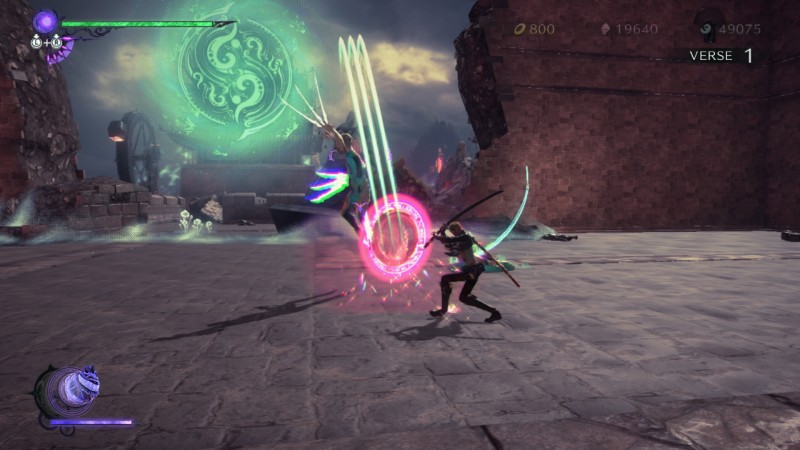
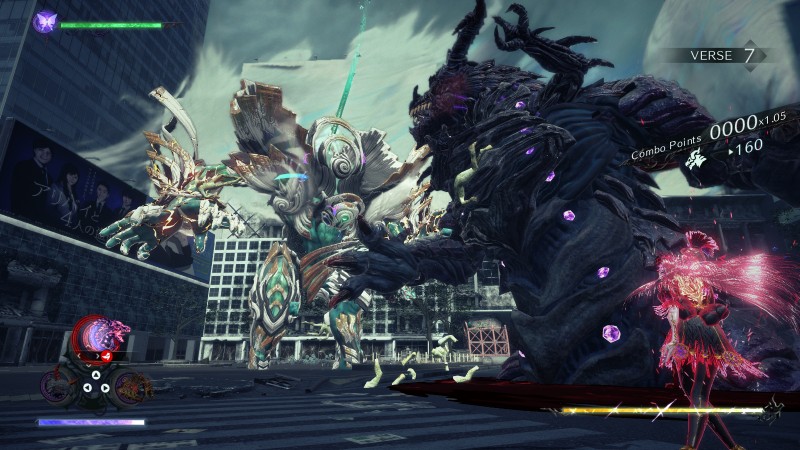
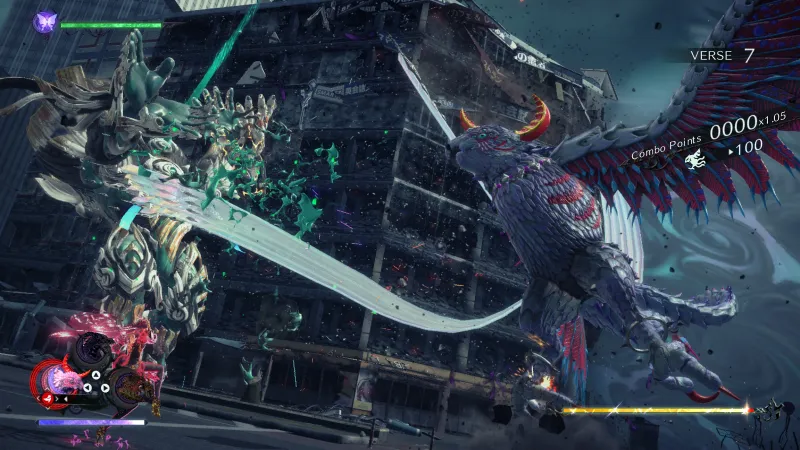
By the end of Bayonetta 3's third chapter, it's operating on a scale that dwarfs most video games. Buildings twist and crumble like flimsy plastic, giant craters pock-mark the earth, and mountain-sized creatures level entire cities; the bombastic culmination of an opening three hours that feel like they're running a mile a minute; a never-ending barrage of stimuli.

It's loud, obnoxious, and frankly a bit exhausting. And I was hootin' and hollerin' the entire time. 

The Bayonetta series has always been at its best when you're staring slack-jawed at your TV, repeatedly muttering, "What the hell is happening?" The series is excessive by nature in terms of violence, action, and sexuality. Rapid and repeated combos lead right into flashy, bloody, and extravagant animations, all bookended by goofy cutscenes where the titular witch flaunts her sex appeal, using it to distract, taunt, and encourage those around her. 

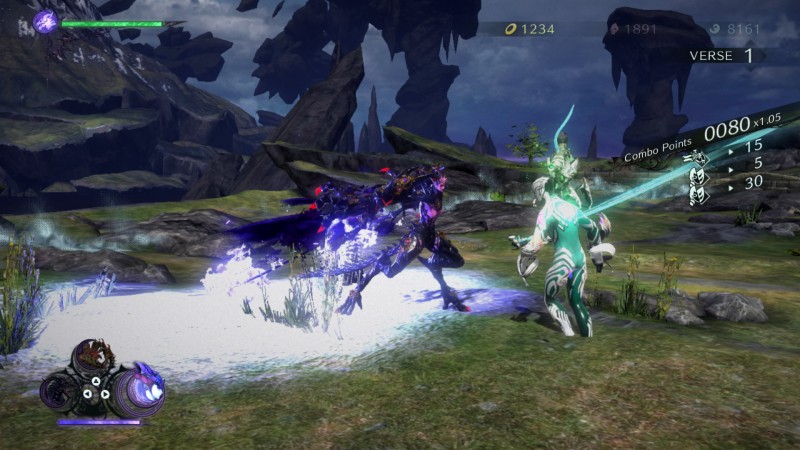
Bayonetta 3 is, of course, no different. From its opening seconds, you're thrown into large-scale fights necessitating you juggle numerous enemies at once while switching weapons, summoning giant monsters, and dodging attacks. And to that end, when you're playing as Bayonetta, it's the best the series has ever felt. For more than 12 hours, I never tired of her combat, happily welcoming every new wave of enemies or difficult boss. 
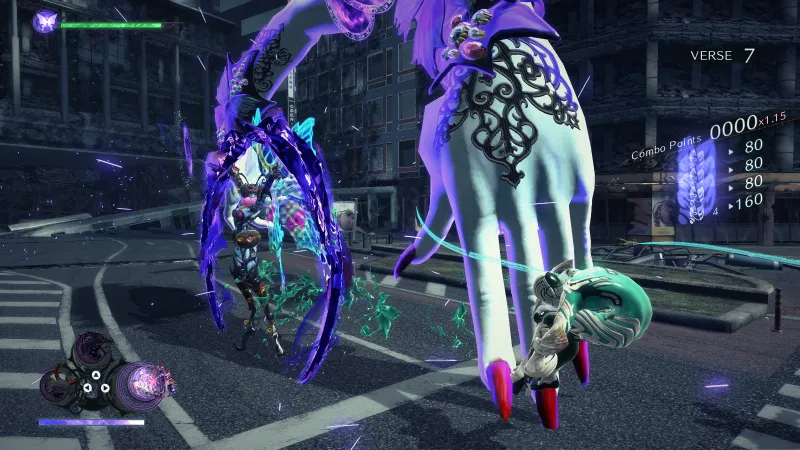
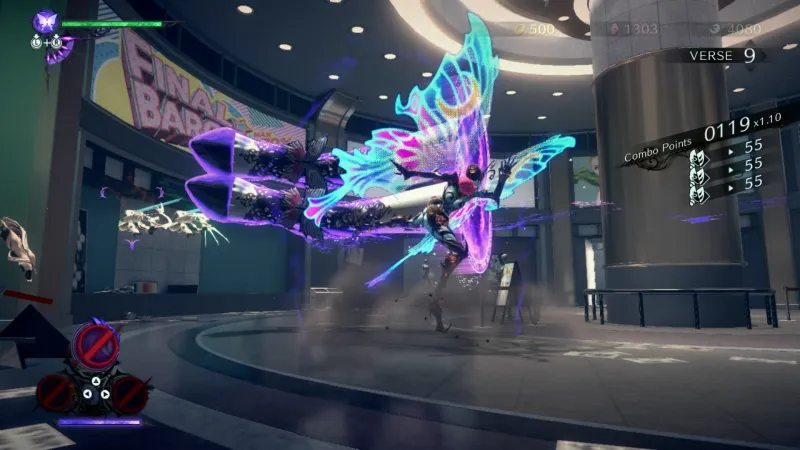
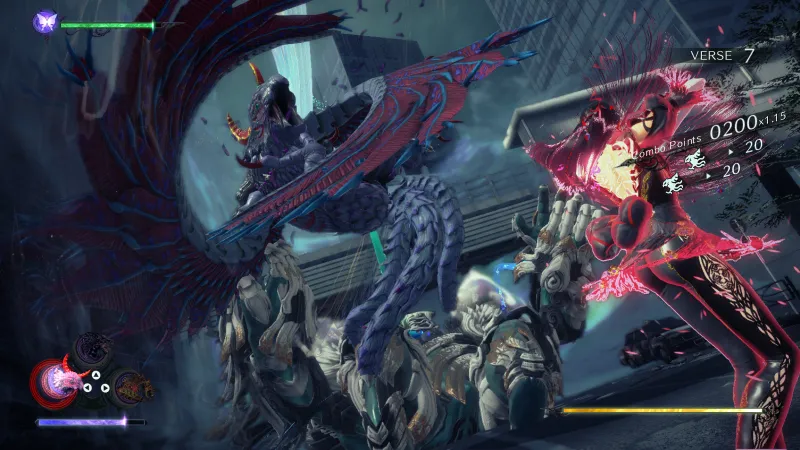
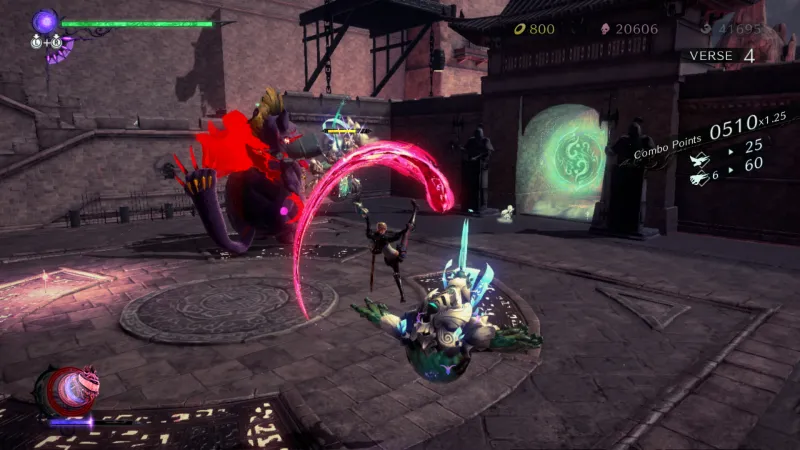
This is largely due to how Bayonetta 3 changes the series' formula. The game no longer relegates Infernal Demons (basically large monsters Bayonetta summons to fight alongside her) to cutscenes at the end of a boss fight; they're an entire mechanic. So long as you've filled your magic gauge, you can summon one of these beasts, called Demon Slave here, almost whenever you want and control them while you fight. Somewhat against their intended use, I mainly used mine as finishing moves. Capping off a combo with a massive attack from one of my four equipped monsters always felt powerful and weighty and went a long way in leveling the odds against the game's many, many bosses. For the entirety of Bayonetta 3, it's constantly throwing Infernal Demons your way, and I loved testing out each new addition. That said, outside of gameplay-specific sections, I mainly went back to the first two the game gives you, Gomorrah and Madama Butterfly, but that's more an issue of my complacency than a lack of viable variety. 

Perhaps the defining characteristic of Bayonetta 3 is an absurd amount of options and variety. Equal to the massive amount of Demon Slaves is Bayonetta's weapons, each with its own gimmick, strength, and disadvantage. I mainly stuck to the lightning-fast, far-reaching Ignis Araneae Yo-Yo as my primary weapon, with the massive Dead End Express hammer-saw hybrid for slower but heavier attacks. Quickly striking with the former, dodging to trigger Bayonetta's signature Witch Time (which slows everything but you), then slamming enemies with my massive hammer before summoning an Infernal Demon as a finisher was constantly entertaining. If anything, I wish there were more encounters. I often dropped most normal enemies after only a couple of big combo strings, leaving me to rush to find the next idiot to beat up. 

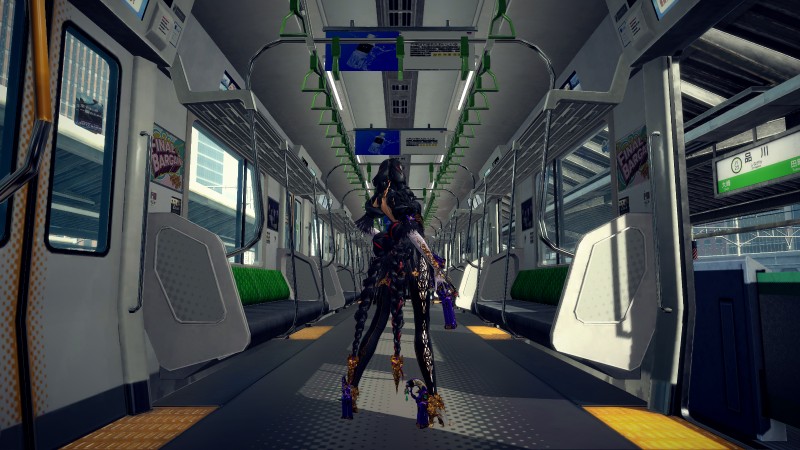
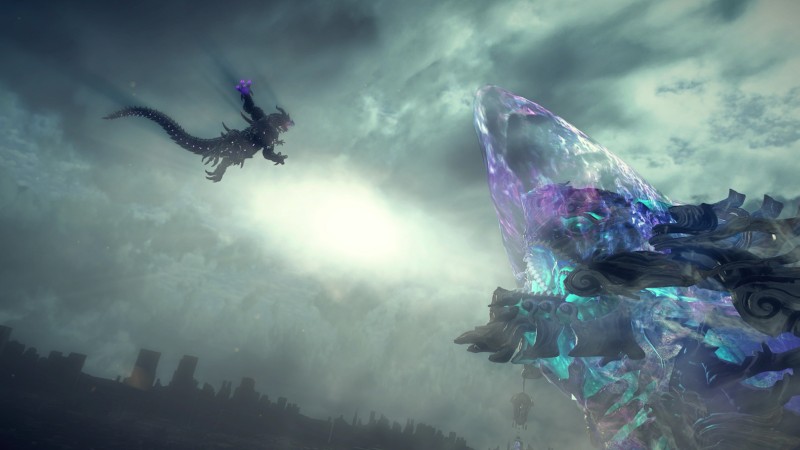
Bayonetta 3's 14 chapters constantly fluctuate between settings, sending you quite literally around the world and then some. From Japan to New York to Egypt, to beyond the reaches of space and time, every level has a unique visual palette and core conceit. I loved figuring out where in the world I was going next, but more than that, I loved the ending of each chapter, which featured a bombastic, larger-than-life setpiece that more often than not completely flattened the level you just explored. These include massive kaiju battles (a personal favorite), a fight high above the Earth's stratosphere where a God-sized being blows bubbles at their opponent, and a literal battle of operatic proportions, among others. Some sequences are better than others, but they're all a spectacle, so for the few that don't feel quite as good, at least they're fun to look at. 

This all moves along at an incredible speed. Bayonetta's pace is nearly non-stop, constantly throwing new enemies, bosses, and setpieces at you and asking you to deal with them. It's overwhelming, and I loved it. Bayonetta 3 never wants you to be bored and does everything in its power to keep your eyes glued to your TV or Switch screen, no matter how exhausting that might be.
 

For what it's worth, Bayonetta 3's story is the most comprehensible in the series. Which is to say it's not largely gibberish. Bayonetta is charming throughout, as is most of the cast of returning characters, such as Jeanne, Luka, and Rodin, but the larger narrative is a rote multiverse story. Some big bad man is trying to seize control of the various dimensions to control space and time. This introduces multiple different Bayonettas (a fun narrative way to give you those aforementioned different weapons), and there's a late-game twist that neatly alters the Bayonetta lore. For the most part, though, the narrative is largely forgettable beyond surface entertainment value. 

The story does, however, introduce the weakest parts of Bayonetta 3: all the levels in which you don't play as Bayonetta. Early on, the new character Viola is introduced, a young punk from a different dimension who needs Jeanne and Bayonetta to help her save the multiverse. This sends Jeanne on a mission to find a scientist to help the trio. Jeanne's levels play out as a stealth-focused side scroller, though it's never all that engaging beyond running from point A to B and occasionally fighting a boring boss. 

The handful of Viola's levels are mechanically interesting but don't nail the landing. Viola is a hack 'n' slash-focused character, and her Witch Time is tied to a parry rather than dodge. That parry window is incredibly tight and my opening hours with the new witch were frustrating until I finally got the hang of it, at which point it became only slightly more fun. She does have her own Demon Slave, a giant cat named Cheshire (a nod to previous games), that came in handy when I just wanted to brute force my way through levels. 
I like the idea of introducing new playable characters to the Bayonetta series, but Viola did nothing for me. Cosmetically, she's an office worker's approximation of a punk rocker, more Spencer's Gifts than 924 Gilman Street. But even then, she's bland and uninteresting. The game forces you to spend numerous hours playing as her, and I struggle to think of a single defining characteristic other than her corny mall punk aesthetic. Viola being bland and forgettable is unfortunate because despite the series' often lackluster storytelling, it has always featured incredibly fun characters. Considering the implication that Viola may play a much larger part in potential upcoming games, I'm disappointed she doesn't match the charm of Bayonetta. 

But that's a small complaint at the bottom of a mountain of compliments. Bayonetta 3, for the vast majority of its runtime, is an absolute blast. It's bombastic, over-the-top, and extravagant for the sake of extravagance, leaving ruins, literally, in its wake. I'm already going back through each level trying for better scores, and I have no immediate plans of stopping. I may be hesitant about the series' future, but at present, this is the best Bayonetta has ever been. 
Score: 8.25

About Game Informer's review system

Purchase

Friday, October 21, 2022

Ghostbusters: Spirits Unleashed Review – Frightening 4v1

Reviewed on: Xbox Series X/S
Platform: PlayStation 5, Xbox Series X/S, PlayStation 4, Xbox One, PC
Publisher: IllFonic
Developer: IllFonic
Rating: Everyone 10+

Pairing asymmetrical multiplayer experts IllFonic with the Ghostbusters license is a match made in the spirit realm. Previous outings Friday the 13th and Predator: Hunting Grounds pit Jason and Predator against camp counselors and mercenaries with flashes of greatness, but technical issues and uneven design choices held them back. With Ghostbusters: Spirits Unleashed, the team has applied everything it’s learned about compelling asymmetrical multiplayer to a property that perfectly lines up with the game style.

Four fully-customizable Ghostbusters face off against one ghost on five maps ranging from an Alcatraz-inspired prison to a cozy lodge. The key difference from other asymmetrical games is both sides are fun to play. You’re not just biding time until you can play as the ghost. If that’s all you want to do, however, it’s easy to set your preference and be haunting random players online with hardly any wait time (at least during my tests on launch day). The active early player base and full crossplay between all platforms combine to make this happen, and it’s impressive to see such smooth execution out of the gate. If you’re a Ghostbusters fan who doesn’t like online multiplayer, it’s easy to play against not-so-challenging bots and still experience all the content.

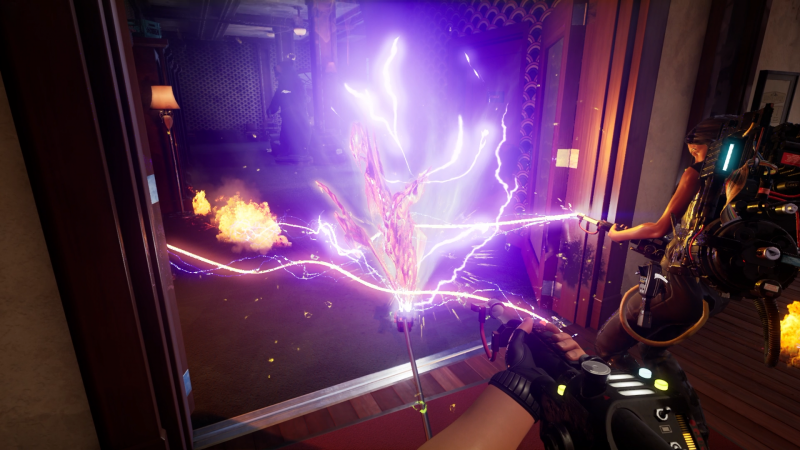
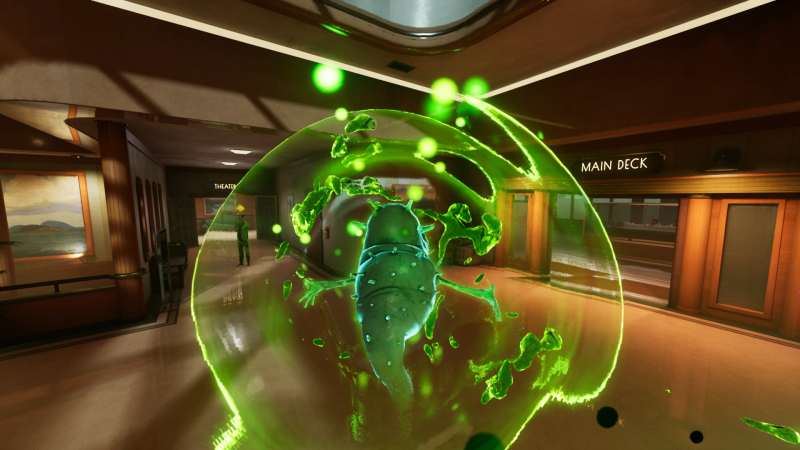
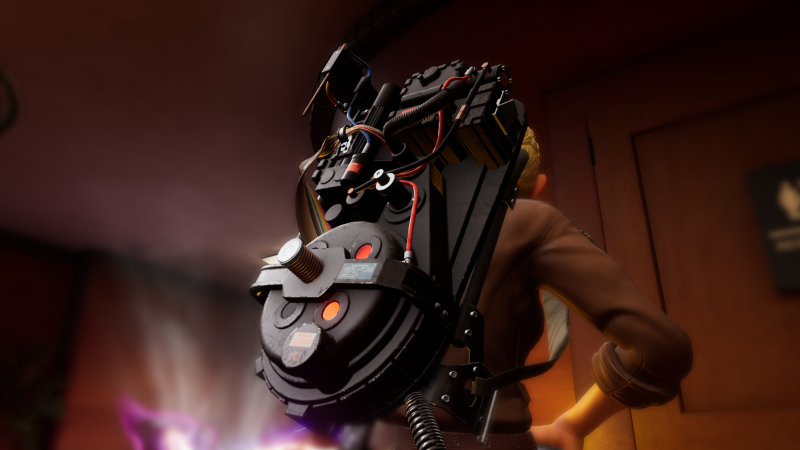
The match flow starts with Busters fanning out with P.K.E. meters drawn to track down the ghost and its respawn points. These rifts are hidden within objects, and destroying them takes away one of the ghost’s three “lives.” If you encounter the ghost directly, you can zap it with your Proton Pack and wrangle it into a trap to eat up a life as well. On the ghost side, you try to haunt as many objects as possible and scare the NPC civilians wandering around to increase the overall haunting level of the map. Once haunting reaches 100 percent or the ghost runs out of rifts, a final endgame timer begins. If the Busters capture the ghost in that time, they win. The map is officially haunted if the ghost evades capture, and the Busters scurry away in shame. 
Calling to your buds when you spot the ghost and cramming it into a trap as a team is extremely satisfying. While the Busters can be temporarily incapacitated with slime, no one is ever stuck on the sidelines watching the rest of the match play out. There’s always hunting or blasting to do. The only low point on the Buster side is calming NPCs with the same VO lines ad nauseam.

The five ghost types account for a variety of play styles. Do you want to be quick and mischievous, go on the offensive with God of War-style chain attacks, or use tricks to manipulate and misdirect? All ghosts have a basic attack, a minion summon (for occupying Busters or frightening civilians), an ultimate move with a long cooldown, and a unique action that’s different for every skin. Possessing objects is key to hiding from Busters and recharging the energy you need to do pretty much anything. Experimenting with how everything handles is interesting, like a smooth rolling beer keg or a floppy giant teddy bear. While ghosts are extremely powerful and mobile, they’re also vulnerable to capture at any time. One minute you’ll be triumphantly sliming all four busters and sabotaging their Proton Packs, and the next you’ll be frantically mashing buttons to escape the pull of the streams and deadly traps. It’s a delight to hear opponents’ confusion while you stay out of sight, or their frustration as you cover the whole team in a whirlwind of slime. 

The classic firehouse serves as a multi-use hub when you’re not actively in matches. A handful of cutscenes tell a basic story through the game's early hours. The narrative is nothing to get excited about, but hearing Dan Aykroyd and Ernie Hudson reprising their roles as Ray and Winston is nice. As you level up, you find new cosmetics, gear parts that affect stats, collectibles, and contracts that reward special items and experience bumps. Daily and weekly jobs encourage you to check in regularly as well. I found the steady flow of goodies kept my group dashing to the lockers to try on a new shirt or silly glasses between jobs. And the gear upgrades feel tangible, especially when your particle thrower can let loose for longer without overheating.

While the core gameplay is strong and engaging, I have concerns about Spirits Unleashed’s long-term sustainability. There’s only one match type, so if you get tired of that, you’re out of luck. The five current maps are solid, but I’m ready for more (IllFonic claims additional free maps and ghosts will roll out in the future). Story and unlocks keep things interesting during your first 30 character levels, but then the story comes to a hard stop. You’ll get all the core unlocks by 50. Beyond that, the current endgame consists of completing high-level contracts such as “do X-objective 25 times” and so on. Sometimes I would learn new aspects of the game I hadn’t realized before, but other times I’d be firing up bot matches hunting for floor waxers to shoot, or repeatedly throwing out my trap and picking it up to check off some annoying requirement.

The pre-release version of the game had some hard crashes, and I also got stuck in the geometry as a ghost a couple of times until the end of the match. I couldn’t replicate these issues after the day one patch, but it’s something to watch out for. 

The ideal way to experience Spirits Unleashed is to round up your buddies, rotate through maps, take turns playing as the ghost, and proceed to hoot and holler. If that’s not an option, matchmaking with random players is smooth and quick, and in-game markers make teamwork possible even if everyone’s playing off-mic. The thrill of Ghostbusting eventually starts to wane, but it takes a while to get to that point, and updates down the road could help to keep those Proton Packs humming.

Note: IllFonic Inc. provided game codes for this review.

Score: 7.75

About Game Informer's review system

Purchase

Thursday, October 20, 2022

Mario + Rabbids Sparks of Hope Review – Refining The Formula

Mario + Rabbids Kingdom Battle Review

Reviewed on: Switch
Platform: Switch
Publisher: Ubisoft
Developer: Ubisoft Milan, Ubisoft Paris
Rating: Everyone 10+

2017's Mario + Rabbids Kingdom Battle proved naysayers wrong by offering a well-crafted tactics game that successfully blends two very disparate franchises. Its sequel, Sparks of Hope, now must live up to fan excitement rather than dispel their doubt. Ubisoft Milan accomplishes this feat by returning to the drawing board, reworking its template, and creating a more streamlined, dynamic experience that maintains strategic depth. The core combat remains strong, but Ubisoft fleshed out the rest of the offerings to create a more wholly engaging package. 

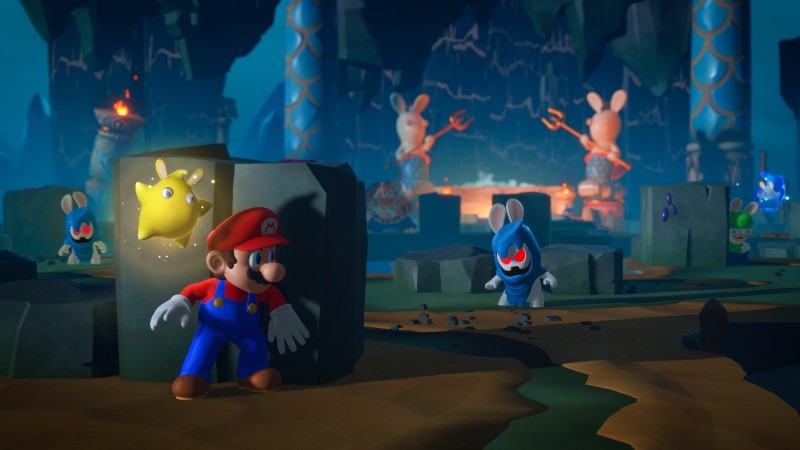
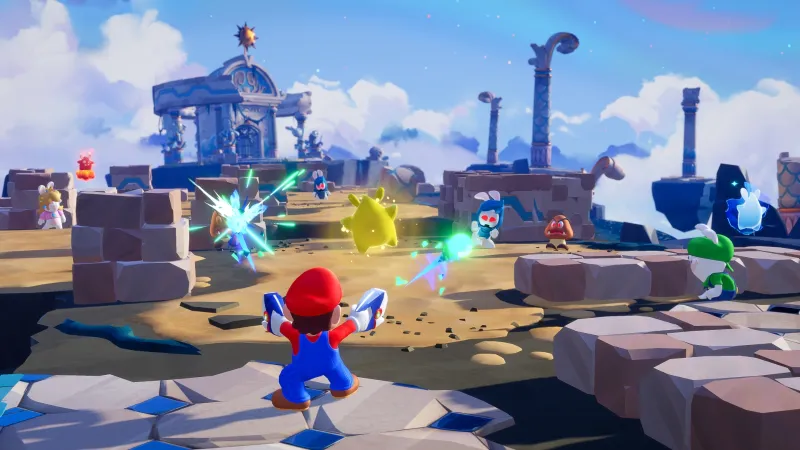
Sparks of Hope plays identically to the last game; you’ll engage in tactical turn-based battles as a squad of Mario icons and their Rabbid doppelgängers. However, the grid-based movement is gone. Instead, you freely move your three-member team as you would in a standard third-person game. The game still restricts you to a character’s movement range, but positioning feels more natural and kinetic, expanding your offensive flexibility. 

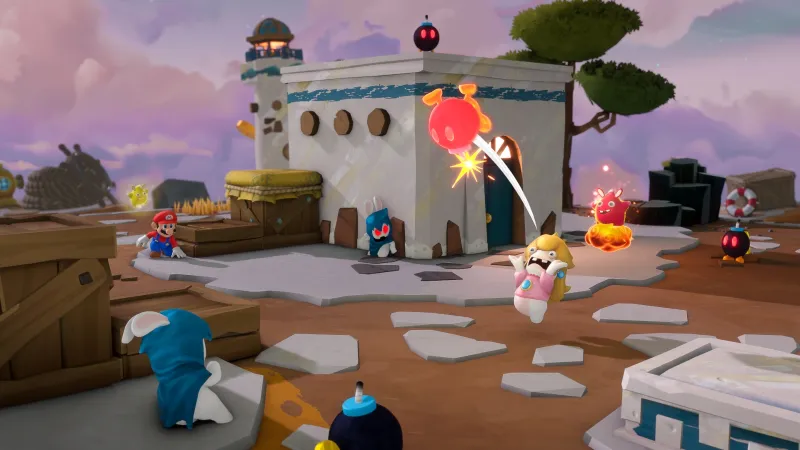
An optimal turn using a single hero often looks like this: I sprint toward a foe and slide into them for damage. I then retreat to a nearby ally to perform a team jump launching me airborne. I hover to a higher vantage point, activate a hero action such as Peach’s damage-negating shield, and move again. After finding new cover, I use my primary attack to blast another enemy before I’m finally forced to end my turn. I love how the looser framework allows me to squeeze more actions from a turn, and combat feels more exciting as a result. Chaining moves, such as launching targets into the range of, say, Mario’s automatic counterattack, adds to this satisfaction. 

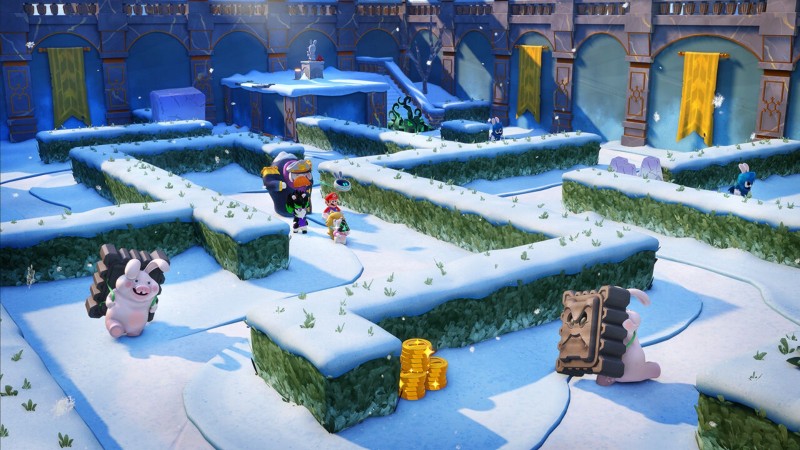
The plethora of colorful stages sometimes incorporates real-time elements that put this freedom to good use. One winter stage features timed wind gusts that blow players off the course. I avoid this by simply running past at the right times rather than adhering to a rigid turn order. One enemy explodes when killed, so I quickly flee its blast radius, again in real-time. Sparks of Hope also mixes up its objectives often enough to keep the action from getting too stagnant. I enjoy battling a giant rampaging Wiggler aboard a moving train or shattering dams with bombs to restore a region’s water flow. 

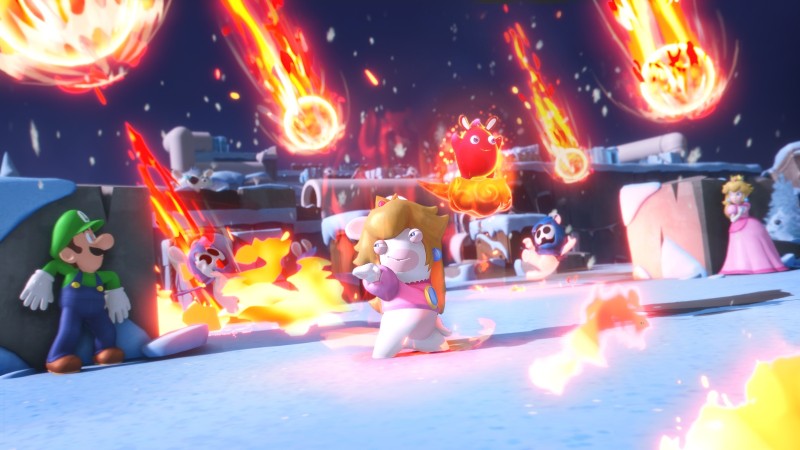
A decently varied enemy roster and elaborate arenas mean battles remain thoughtful affairs where your positioning and offensive order of operations matter. Sparks of Hope offers enough challenge that poor planning can lead to a punishing team wipe. This time, however, you have the help of Sparks: hybrids of Rabbids and Super Mario Galaxy’s Lumas. Equipping these critters to heroes bestows a wide range of powers and perks, such as adding elemental traits to their attacks (like fire and ice). Other Sparks disrupt enemy formations by repelling or attracting foes. One of my favorites temporarily renders a character invisible. The most powerful Sparks unleash wide-reaching assaults, such as a fiery meteor shower. Feeding star bits to Sparks levels them up, letting you improve the capabilities of your favorites. 

Since each hero can carry two Sparks, they feel more versatile as individuals resulting in more well-rounded teams. I love that I can have Rabbid Luigi handle foes weakened by shock and frost attacks on his own. I appreciate how enemy vulnerabilities forced me to constantly switch Sparks and prevent me from sticking with the same loadout or team out of complacency. 

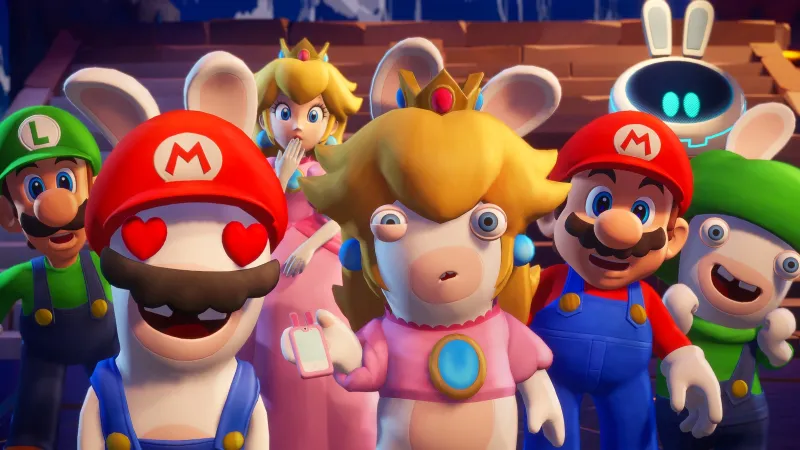
It’s also great that party building allows for any combination of heroes, ditching Kingdom Battle’s restriction of only using Mario and at least one Rabbid. Since heroes have inherent specialties – Luigi is a long-ranged sniper, Rabbid Peach serves as a healer, and Rabbid Mario doles up-close physical damage, for example – assembling squads feels more interesting since I can mix things up better. Heroes also have skill trees, which largely improve or enhance existing moves, that you can respec anytime, granting additional flexibility in what talents they bring to each fight. 

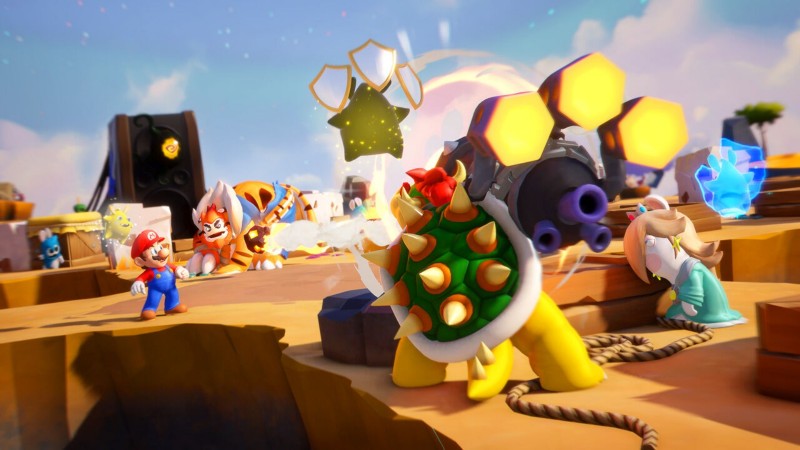
Three newcomers join the fray: Bowser, Rabbid Rosalina, and Edge, a mysterious tough-as-nails Rabbid. They feel like good additions for the most part. Edge is my favorite, thanks to the high damage she deals by hurling her whirling blade to eviscerate lines of targets. Bowser and his Bow-zooka rocket launcher make him a punishing tank that can obliterate groups and cover terrain. Rabbid Rosalina’s lackadaisical personality is amusing, but I often struggle to find a spot for her. She conjures debilitating effects that hinder or outright stop foes in their tracks, but her machine-gun-like doll doesn’t feel like it satisfies a particular need.


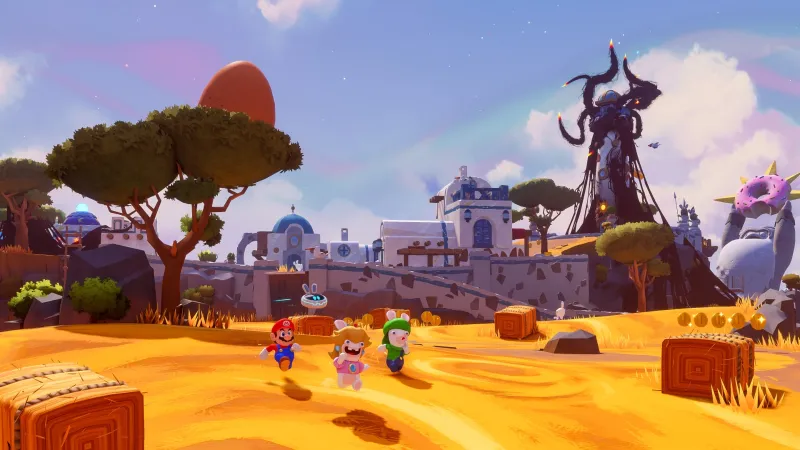
Expanded overworld exploration adds more engagement outside the battlefield. Multiple themed planets, such as a tropical beach or a mechanic’s junkyard, are packed with sidequests, puzzles, and secrets. I like that I’m not required to complete quests to progress. You’re free to mainline the sizable critical path, and you’ll largely remain appropriately leveled. But if you do, you’ll miss out on earning planet coins (native currency unlocking special keys, weapon skins, and more), useful combat items like POW blocks, and more Sparks. Tasks include helping a DJ find his missing records, solving a series of entertaining riddles for an enthusiastic explorer, or chasing and catching fish in a timed minigame. These missions aren’t the deepest, and I wish some had more variety; expect to fulfill the same “kill X-amount of X-enemy type” task on each world. But they’re enjoyable enough and can be welcome breaks from constant battling. 

I have the most fun upgrading my robotic companion, Beep-0, with new abilities used to unlock inaccessible areas. Along the way, I acquired a sonic pulse to shatter weak walls and move blocks and a special light that exposes invisible paths and treasures. These abilities give Sparks of Hope’s worlds a light Metroid feel in that I regularly revisited destinations to unlock new zones. Solving environmental puzzles is also fun, offering adequate challenges without feeling tedious.

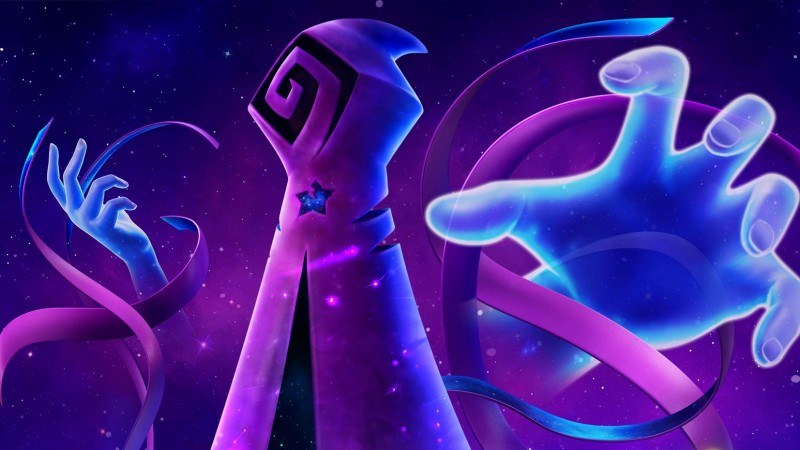
A charming though uneventful narrative about stopping a cosmic darkness from consuming the galaxy rounds out this delightful package. Like the best sequels, Mario + Rabbids Sparks of Hope builds upon Kingdom Battle’s foundation with smart tweaks and fun additions to emerge as a better game in every way. 

GI Must Play

Score: 9

About Game Informer's review system

Purchase

Gotham Knights Review - Keeping Busy

Reviewed on: PlayStation 5
Platform: PlayStation 5, Xbox Series X/S, PC
Publisher: Warner Bros. Interactive
Developer: Warner Bros. Games Montreal
Rating: Teen

Batman may be dead, but his mission carries on as Nightwing, Batgirl, Robin, and Red Hood take up the calling to protect Gotham. Pulling the most well-known and popular character of the mythology from the mix comes with some notable downsides, as much of the pathos and psychological drama goes with him. However, the young generation of heroes manages to put on a relatively good show even without their mentor along for the ride, albeit one that feels like it’s not quite in the same league as the Dark Knight’s greatest adventures. 

Gotham Knights is not part of the celebrated Arkham series, but enough similarities exist that you’d be excused for thinking otherwise. Players take their chosen hero on nightly patrols across a large but not especially lively Gotham, halting crimes, helping allies, and hunting down clues. The freedom of exploration across a vast cityscape is inviting, but the space feels empty and lacking in memorable locales.

There’s plenty to do on your patrols, from gathering lost Batarangs to completing races on your Batcycle. But as the hours wore on, I increasingly felt like the gradual leveling and mission structure were heavy on busy work and light on original and exciting moments or reveals. 

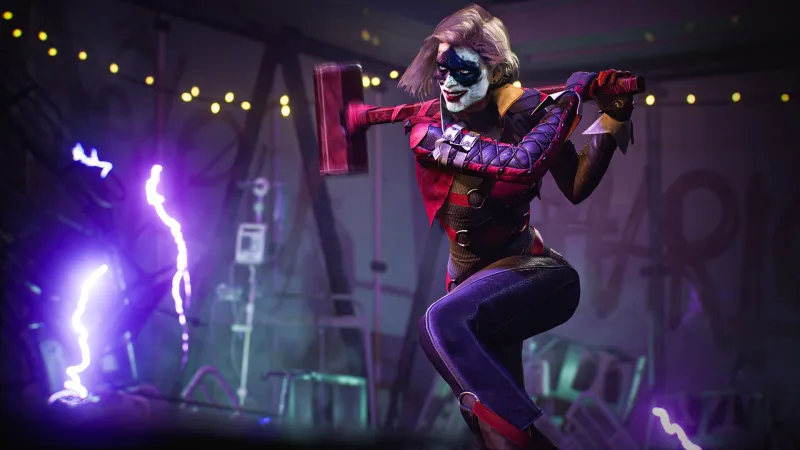
Several more established mission locations are scattered across the game, where storytelling and structured encounters are more common. But even these felt extremely linear, lacking in the ingenious encounter problem solving the game needs. Even so, it’s fun to see some of the most enjoyable rogues show up, from individuals like Harley Quinn and Penguin to groups like the mysterious Court of Owls. 

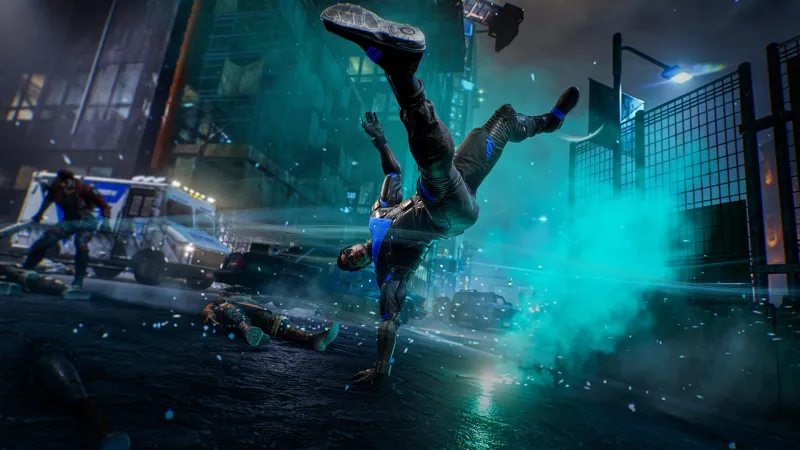
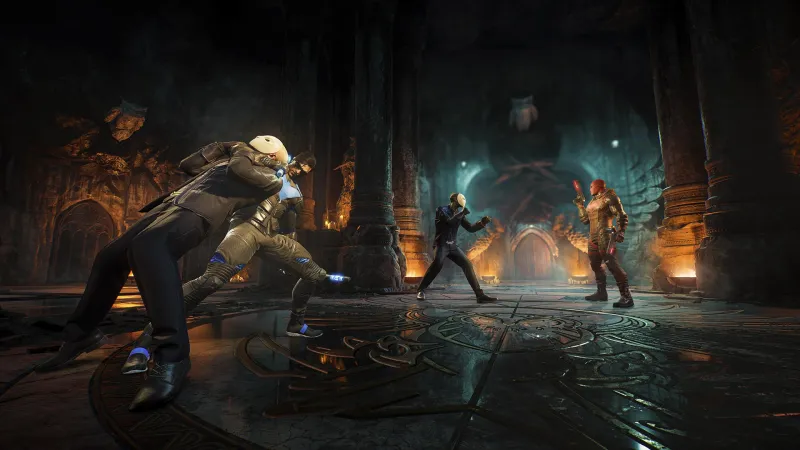
Combat and stealth work mechanically well but lack the breadth of creativity that makes predator-style combat experiences so fun. I had too few tools to manipulate and terrify my foes while in hiding, and combat too frequently devolved into the same timed button press combos. Momentum abilities (unlocked over time) add flash and flexibility to combat. However, even with those special tricks up my sleeve, as the game drives toward its climax, enemies increasingly take too long to bring down, and fights drag on unpleasantly. Even knowing this is a different game, I consistently longed for the more nuanced encounters of earlier Arkham games. 

It’s interesting to watch a cast of characters who were originally sidekicks all rally together to step into lead roles. The sense of family camaraderie works, and all the characters can hold their own as they venture forth onto solo missions. But from the dialogue to the storytelling beats, I couldn’t escape the feeling that I was experiencing “Batman Jr.,” with a tone that feels out of step with the dark setting. Nothing has quite the gravitas it needs to land. 

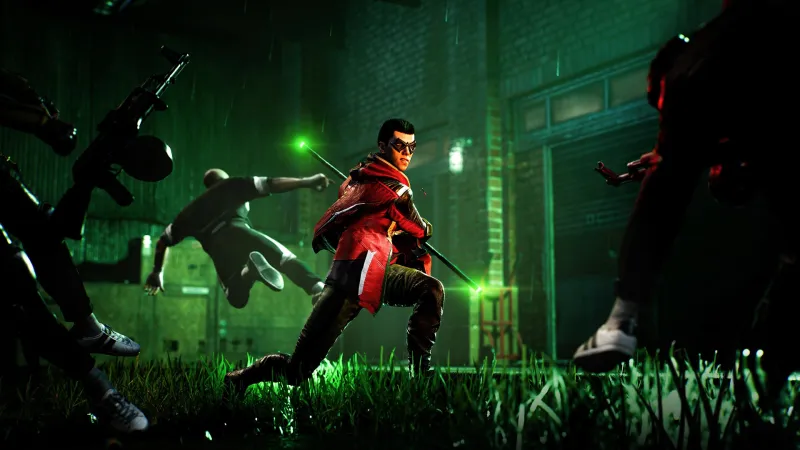
A rewarding progression system offers many ways to tweak your characters; the plethora of awesome suit designs is especially fun. I enjoyed crafting new weapons and modding them with my preferred bonuses. Each character also has a unique ability tree; the further into the game I explored, the more each character felt distinct in playstyle. I liked most of them, except for Red Hood, whose slightly slower movements and focus on ranged weapons didn’t really click. 

Warner Bros. Montreal deserves significant praise for its approach to two-person cooperative play. The drop-in, drop-out experience is seamless and enjoyable, readily adjusting difficulty so that both players are on par. Players can work in tandem in a single fight or range far across the city from one another – without a hitch. It’s a multiplayer system that works so smoothly that you won’t notice any complications beyond the chance to beat up some bad guys with a buddy – and that’s as it should be.

Gotham Knights didn’t wow me with its overly familiar objectives, combat, and activities, but it didn’t leave me sour. It’s fun to control some new heroes as they brood over Gotham from its building overhangs and uncover hidden plots against its people. Those heroes are right to wonder if they’re living up to a vaunted legacy. And even if they’re not quite up to snuff, Gotham has enough baddies to punch to make for a good time, whoever you are. 


Score: 7.25

About Game Informer's review system

Purchase

Monday, October 17, 2022

A Plague Tale: Requiem Review – A Bold Epic

A Plague Tale Requiem Review Game Informer

Reviewed on: PlayStation 5
Platform: PlayStation 5, Xbox Series X/S, Switch, PC
Publisher: Focus Entertainment
Developer: Asobo Studio
Rating: Mature

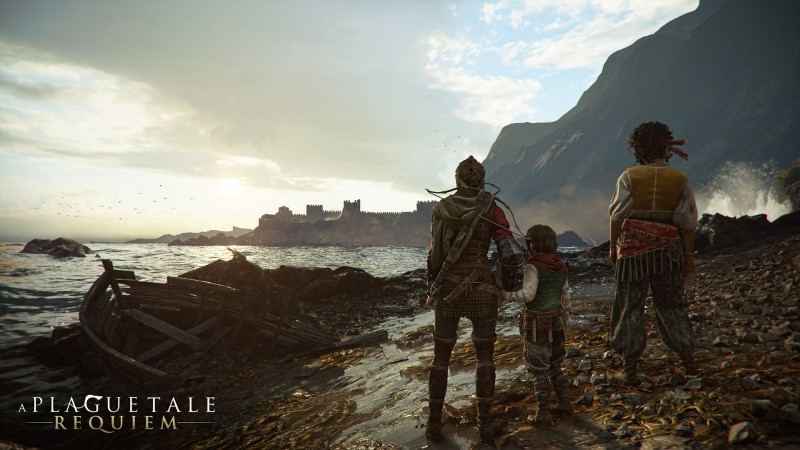
Going into A Plague Tale: Requiem, developer Asobo Studio’s follow-up to 2019’s A Plague Tale: Innocence, I was prepared for the usual jump in quality and scale that most sequels embrace. I underestimated just how significant that leap would be, though. Calling Requiem a standard sequel is a disservice; Asobo has created a Plague Tale epic. It feels Odyssean in scope and storytelling prowess. Although much of it came together for me by the end of my 20-plus hour journey through medieval France, the game feels strained by its sheer size, especially in its first half. Still, I’m more impressed by Requiem’s boldness and near across-the-board improvements than not.

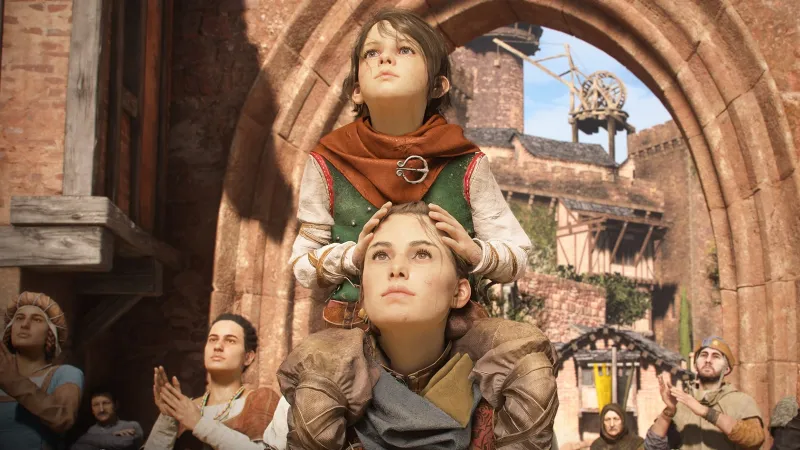
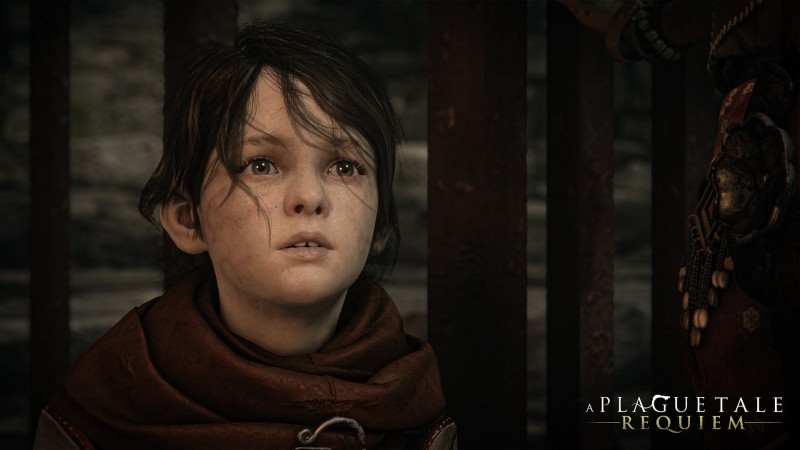
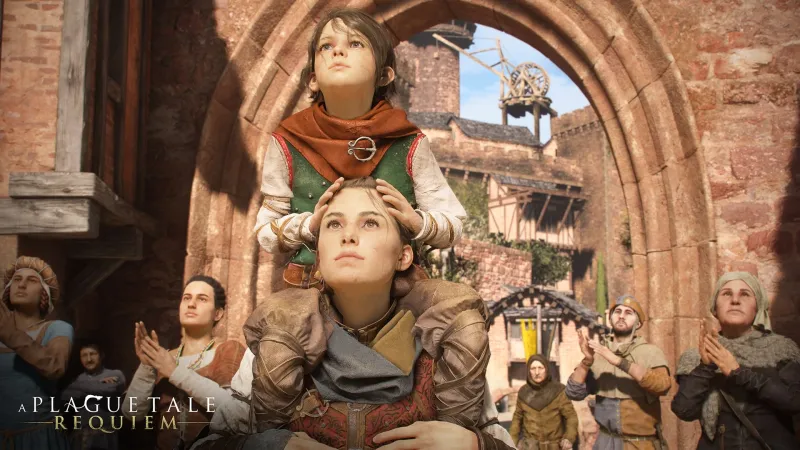
Requiem begins roughly six months after the events of Innocence, and while it is possible to piece together what’s happening if you’re new to the series, I’d really recommend playing Innocence or at least getting caught up on its story before Requiem. Siblings Amicia and Hugo de Rune are looking for a semblance of an ordinary life, despite Hugo’s rat-infested Macula condition. And for some time, the game demonstrates what that normality is like for Amicia, Hugo, and their mother. Still, as you might guess, the Macula plague begins to rear its ugly head once more, forcing Amicia back into protector mode. This shift sees Amicia, Hugo, and returning alchemist Lucas travel south to a mysterious island, searching for answers and a cure. 

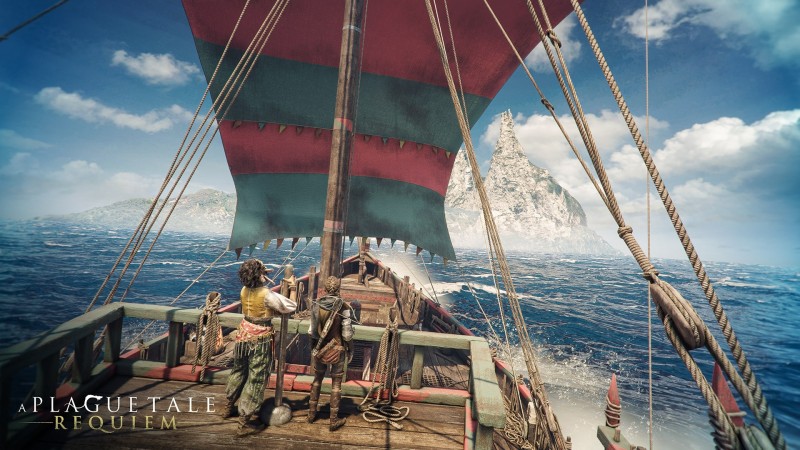
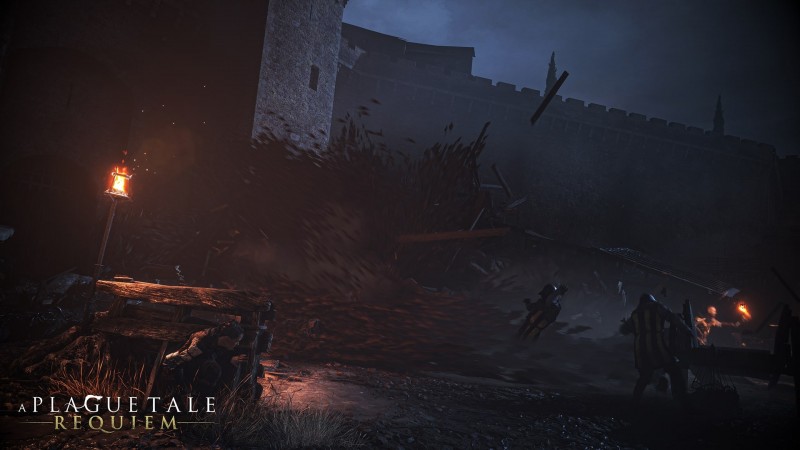
I was excited about this change in setting and all the “new” it brings to the series, but it takes far too long to reach it. At least half of this game is spent escaping your new home to reach a boat that sails to the island. Don’t get me wrong, these 10 to 12 hours are good Plague Tale fun, but they resemble Innocence so much that, at times, it hardly felt like the fresh experience I expected from a sequel. It mostly dragged on, even though I was meeting characters that would become some of my favorites in the game, like battle-hardened but soft-hearted Arnaud or pirate queen Sophia. It didn’t help that I experienced various technical issues like distracting (but not game-breaking) framerate drops, visual bugs, and one complete hard crash. 

Upon reaching the island, though, my thoughts changed entirely. The story ramps up in pace and excitement, introducing new allies and villains, a cult, intriguing lore, and a new mystery to wrap my head around. Even mechanically, the isle represents a miniature open world to explore that’s more sprawling than any other area in the series. The way the game’s narrative pulls you here and there on this island is good fun, whether you’re solving the mystery of ancient underground ruins or fighting off secretive slavers awaiting the Child of Embers. By the end of my playtime, I felt like I intimately knew its layout. 

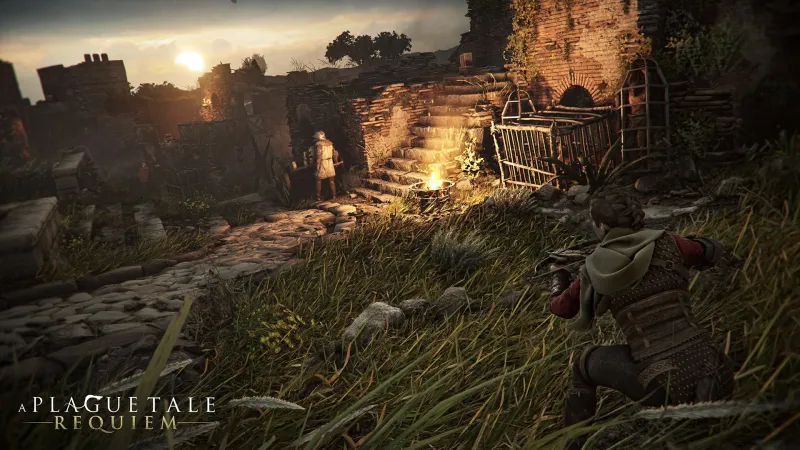
This part of the game impressed me the most because everything is firing on all cylinders. Ingenious puzzles that let you manipulate the rats’ aversion to fire to make them stealthily take down enemies always satisfied me – using a special projectile to extinguish an enemy’s sole flame, allowing the rats to feast on their live body, never grew old. The story’s twists and turns kept me guessing, as did the island’s central mystery. 

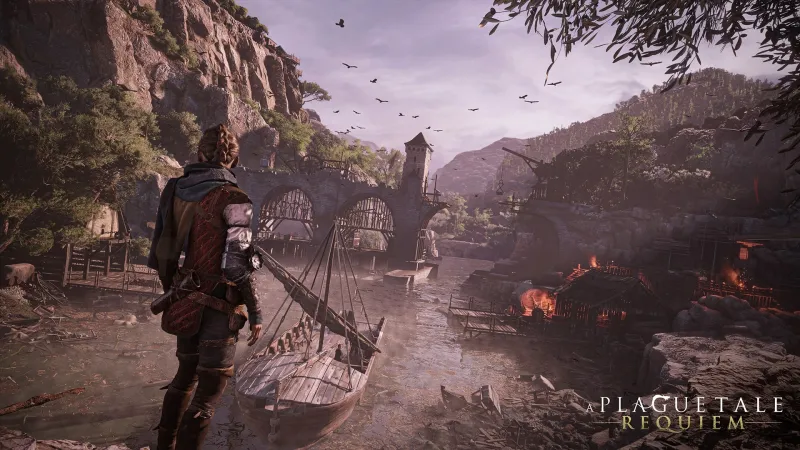
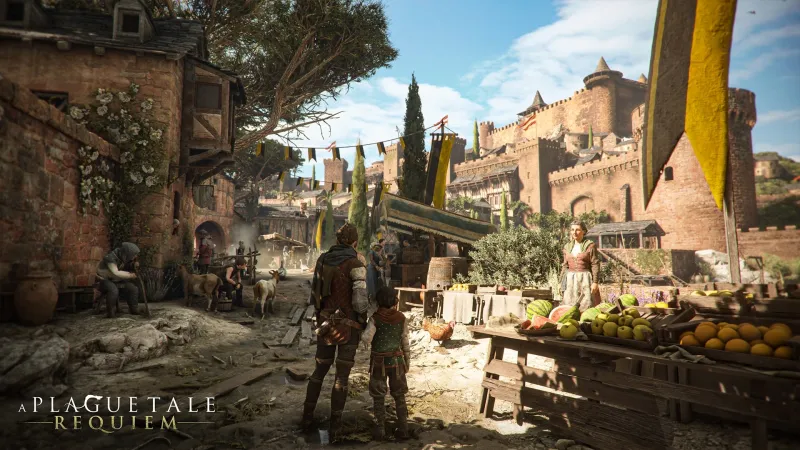
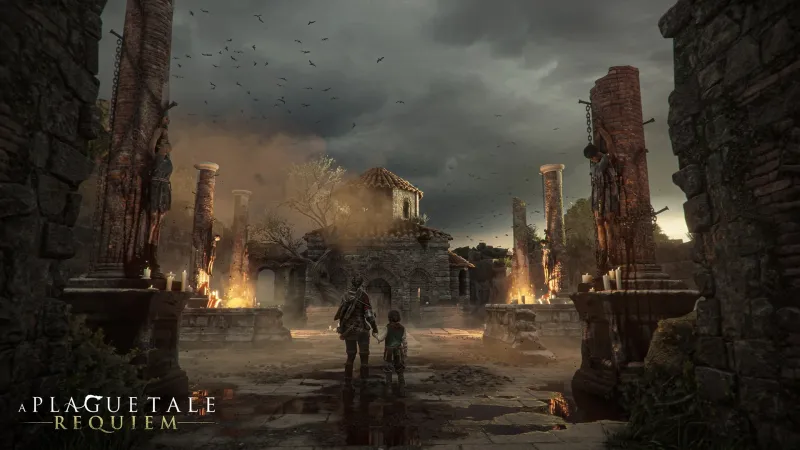
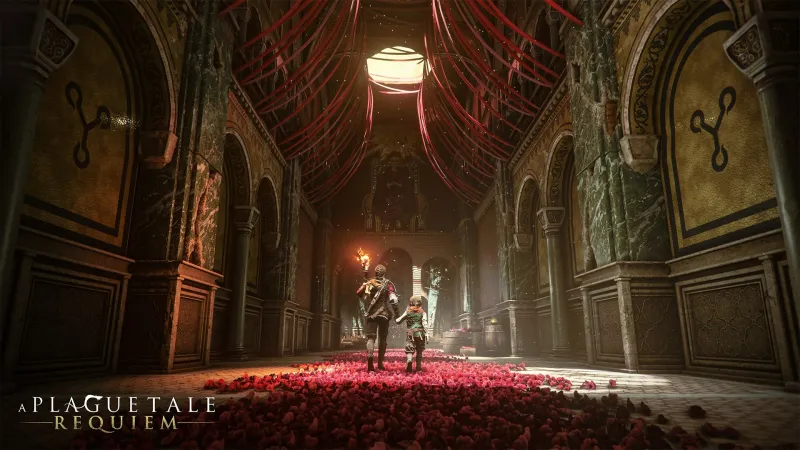
Requiem is visually stunning, too, as Asobo has crafted an almost painterly look for the game with unique and playful color palettes that complement the medieval setting excellently. I recall a moment when it seemed like everything around the de Runes was crashing down atop them, and Requiem represented that visually with a unique, almost grayscale, palette that heightened the enclosing metaphorical darkness. In other moments, I found myself stopping to tinker with photo mode to capture the colorful beauty of blooming flowers on the coast of this scenic island. Requiem really is a treat for the eyes. 


Elsewhere, Crash Bandicoot-like sequences that see Amicia fleeing from massive hordes of rats toward the screen, or sprinting in the opposite direction to safety, were especially welcomed breaks from the game’s otherwise quieter but stressful stealth moments. These segments speak to the more bombastic nature of Requiem, which at times goes to places I could outright spoil here, and I don’t think you’d believe me anyway. Again, I want to stress how epic Requiem’s scale and size are – it’s bigger than Innocence in every way.  Even beyond the story, new additions to Amicia and Hugo’s arsenal, like a one-hit-kill crossbow (don’t rely on it too much, though, because arrows are tough to come by) or Hugo’s ability to control rats and feast on the enemies around you, up the ante of the moment-to-moment gameplay. 

Still, despite what I enjoyed upon reaching the island, I can’t help but feel that Asobo could have cut a large portion of this game. That’s not to say the sections I want trimmed are bad – they’re good due to A Plague Tale’s quality gameplay and storytelling – but they feel more like unnecessary padding that hinders Requiem’s pacing. 

I was relieved when Requiem’s second set of credits rolled. Not because I didn’t enjoy playing the game, but because the de Runes’ journey in this game is tense and stressful for much of it. At times, it feels too long and oddly sadistic in its focus on inflicting fakeouts, pain, and suffering on the de Runes. Other times, I admired Asobo’s command of this series, its rat-infested stealth mechanics, and its grandiose storytelling. Fortunately, the latter edges out the former, and Requiem feels like much more than just a follow-up. With this journey behind me, I’m excited about where the series might go from here, but if Asobo plans a break for the franchise, rest assured that Requiem goes out with an impressive bang.

Score: 8

About Game Informer's review system

Purchase

Tuesday, October 4, 2022

Overwatch 2 Review - A Heroic Return

Overwatch 2

Reviewed on: PC
Platform: PlayStation 5, Xbox Series X/S, PlayStation 4, Xbox One, Switch, PC
Publisher: Blizzard Entertainment
Developer: Blizzard Entertainment
Rating: Teen

Overwatch took the gaming world by storm when it launched in 2016, thanks to its well-balanced roster of unique heroes and terrific objective-based, first-person-shooting gameplay. The game’s popularity endured through the years thanks to a wealth of new content like characters, maps, cosmetics, and game modes, adding to the terrific foundation. However, once the content dried up for Overwatch, the public interest followed shortly afterward. Overwatch 2 represents the re-emergence of one of the top multiplayer games of the last generation, delivering a 5v5 format, a free-to-play structure, and a ton of new content. The result is an action-packed and enjoyable progression of the beloved hero-shooter franchise, but one that feels less revolutionary and more iterative than expected.

The core gameplay feels simultaneously familiar and fresh. Capturing an objective with a coordinated assault or activating your Ultimate during a crucial last-second push to secure the victory is just as breathtakingly exciting as ever. The ways the heroes interact with each other – both in gameplay and personality – create watercooler moments I imagine I’ll bring up with my fellow players for years to come. The mechanics and match flow remain mostly intact, but developer Blizzard implemented various changes to the core formula to deliver something that changes how battles play out.

Overwatch 2

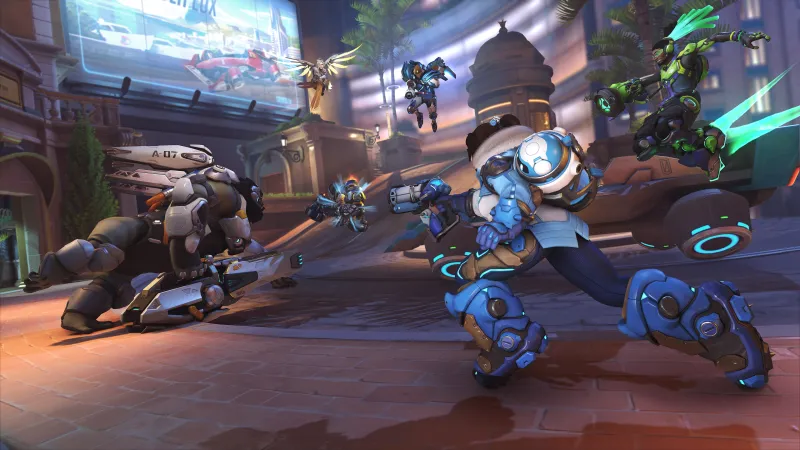
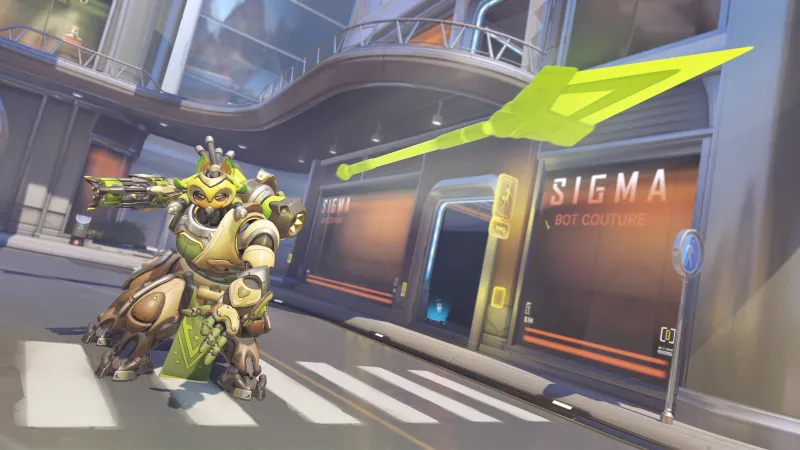
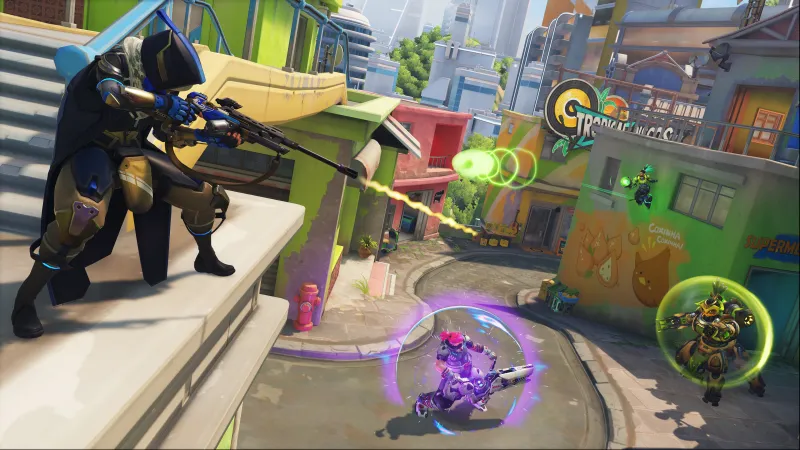
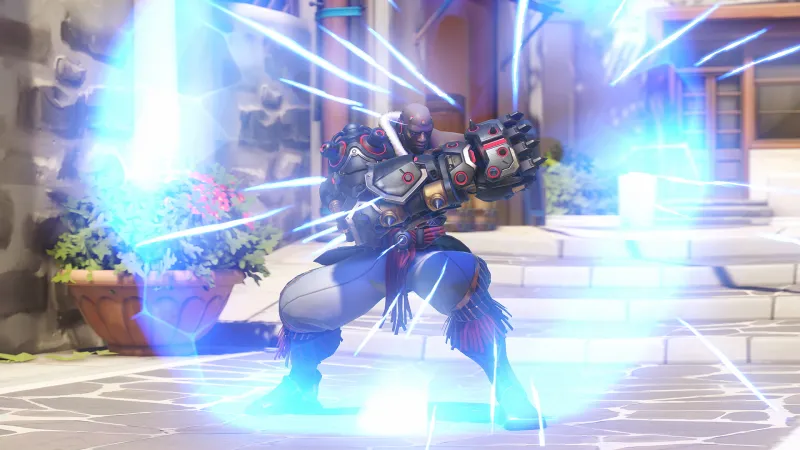
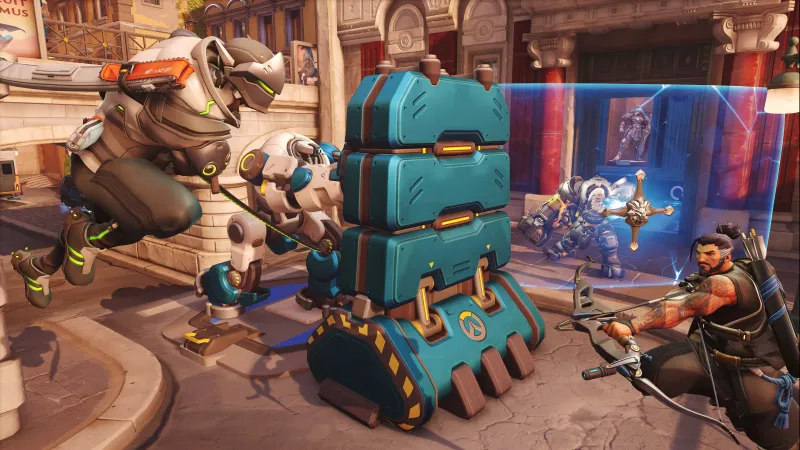
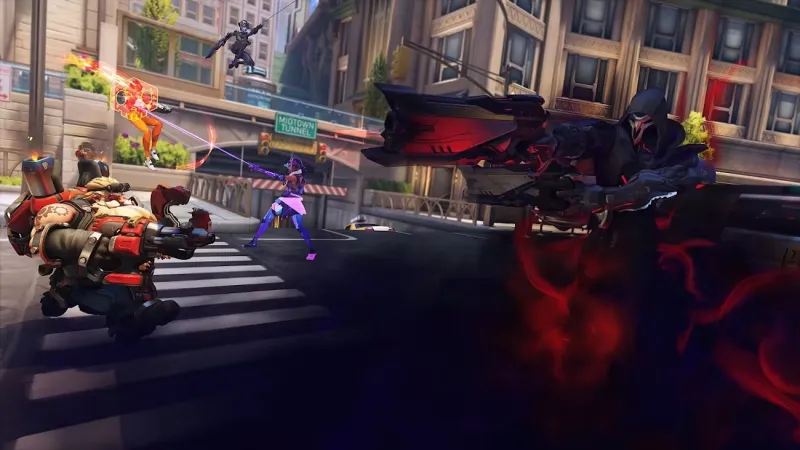
The new 5v5 format is perhaps the most significant change in Overwatch. Now, traditional team comps drop to one tank, making its role as a damage sponge and utility player more critical than ever. With Doomfist now a tank and Orisa reworked to be more offense-minded, you now have a broader range to choose from in the category. Outside of tank play, this 5v5 format opens the door for faster-paced blitzes and ensures that every player carries more importance in each match. This shift is particularly evident in Push, the new game mode where players escort a robot to the other team’s spawn point. This mode is fast-paced and can swing the other way quickly, playing perfectly into the new 5v5 format.

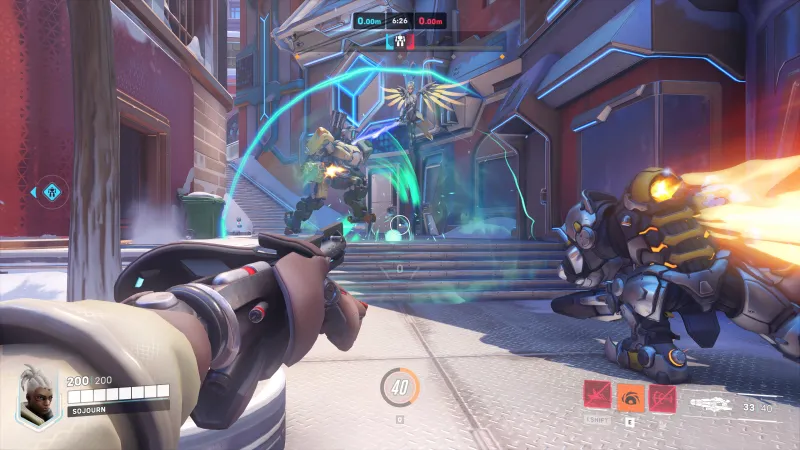
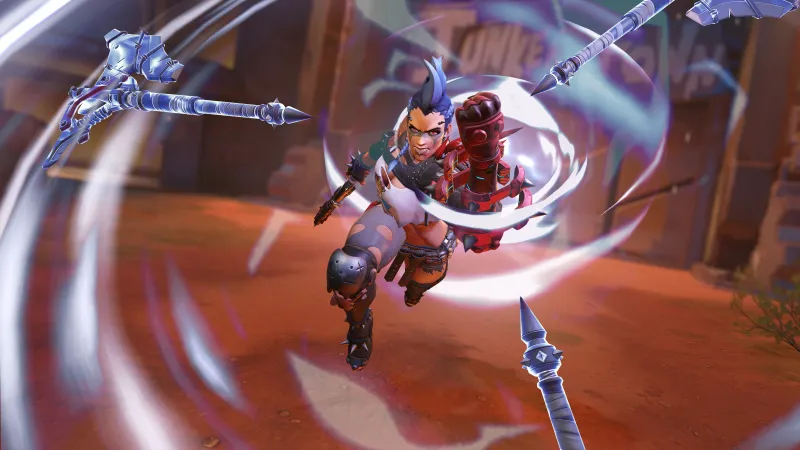
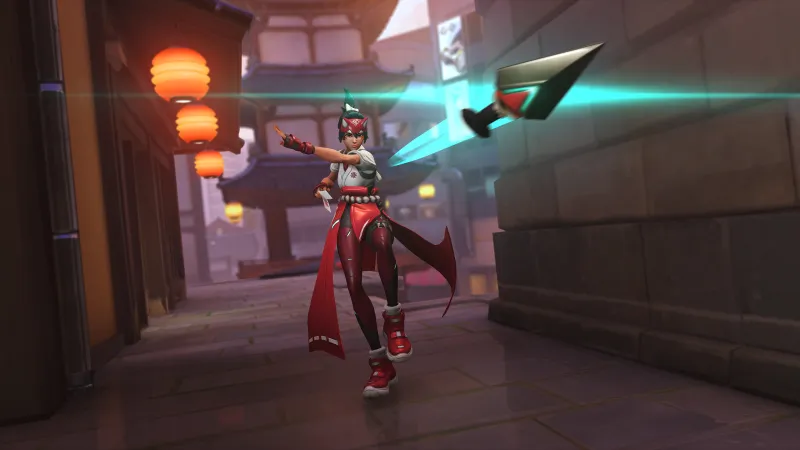
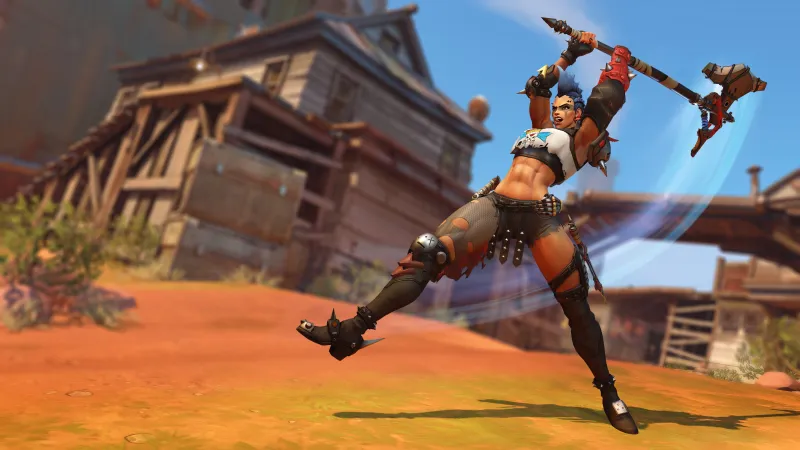
When you first jump into Overwatch 2, you can expect a ton of new content right out of the gate: three heroes, six maps, a game mode, and more than 30 skins. The new heroes and maps are stellar additions to the preexisting lineups; Junker Queen and Sojourn are formidable in battle, but Kiriko, with her substantial healing and buffing capabilities and deadly kunai attack, is one of my favorite support heroes to date. When you combine these new characters with the reworks of longtime favorites like Orisa, Doomfist, Zarya, and Bastion, the roster feels refreshed, and the meta flipped on its head.

Whenever a formerly premium title becomes free-to-play, players are rightfully wary, thanks to predatory monetization schemes that permeate the category. While players should still approach Overwatch 2’s shift to free-to-play with caution, Blizzard keeps the paywall-locked content cosmetic. The best part is that players no longer must cross their fingers for anything but duplicate cosmetics in their loot boxes.

Now, loot boxes are replaced by an in-game shop and Battle Pass, which progresses by completing in-game challenges. These objectives range from winning a game playing as a healer to using a specific character’s Ultimate three times; some challenges refresh daily, others weekly, and others on a seasonal basis, ensuring you always have new goals towards which to strive. Each time you complete a challenge, you gain experience towards the next tier.

Progress accumulates steadily regardless of if you pay the $10 (or the equivalent of in-game coins) for the boosted premium Battle Pass. However, it’s disappointing that you need to reach level 55 of the free Battle Pass to unlock that season’s new hero; if you purchase premium, the hero joins your roster at level 1. The rest of the rewards are cosmetic, but with so many exclusive to the premium pass, non-paying players may find limited satisfaction from this new structure. And with seasons lasting nine weeks, those who buy each premium Battle Pass at $10 will eclipse the $60 MSRP of the original Overwatch in just over a year.

While I’m certainly wary of this new system going forward, for now, the structure seems like a reasonable alternative to the previous framework. Thanks to a sneak peek of the content on the horizon, Blizzard has impressive plans for its resurgent hero shooter, and I like the existing challenge system. However, I most appreciate the intentionality in unlocking rewards, which starkly contrasts Overwatch 1’s loot box system.


Those who never played the first Overwatch have additional hurdles, like needing to unlock the original heroes by playing a set number of matches. Blizzard bills this as a way to fend off cheaters since it’s now free to start a new account. But it ultimately feels like punishment for not paying the price for the first game. The silver lining is that this drip-feed approach could onboard new players without overwhelming them with many characters to learn. However, requiring players to complete up to 130 matches to unlock the full roster feels steep. Thankfully, wins count double towards that number, and you can use the original heroes in custom games. Plus, if you enjoy Overwatch 2’s moment-to-moment gameplay as much as I do, those unlock requirements fly by. Still, I’m glad I didn’t have to complete them as a returning player.

Overwatch 2 doesn’t flip the formula the way you might expect a long-awaited, numbered sequel would. But through various clever tweaks, it’s a well-rounded evolution of the experience into which I’ve poured more than a thousand hours since 2016. I may never recreate the magic of those first few years in Overwatch, but Overwatch 2 is a big step towards restoring the faith in the franchise and has me thinking it’s time to pour a few more hundred hours into my favorite team-based shooter.

GI Must Play

Score: 9

About Game Informer's review system

Purchase