Pages

Wednesday, June 28, 2023

AEW: Fight Forever Review Stuck In The Mid-Card

AEW: Fight Forever review

Reviewed on: PlayStation 5
Platform: PlayStation 5, Xbox Series X/S, PlayStation 4, Xbox One, Switch, PC
Publisher: THQ Nordic
Developer: Yuke's
Rating: Teen

When All Elite Wrestling superkicked its way onto the scene in 2019, it shook up the business by offering wrestling fans the first truly viable competition to WWE, in terms of financial funding and television prominence, since WCW’s closure in 2001. Much like how AEW differentiated itself with its more mature-rated product and increased emphasis on in-ring action, Fight Forever aims to be the alternative to WWE’s simulation-based 2K series by offering old-school arcade-style action. While it mostly delivers on that core bullet point, the overall package is far from elite.

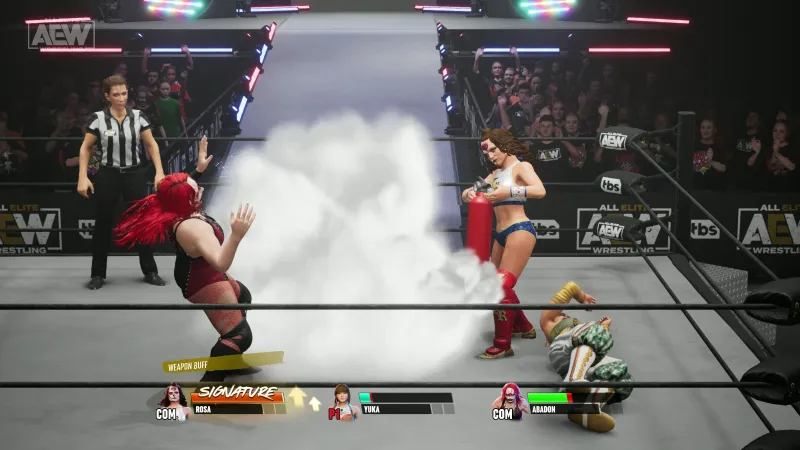
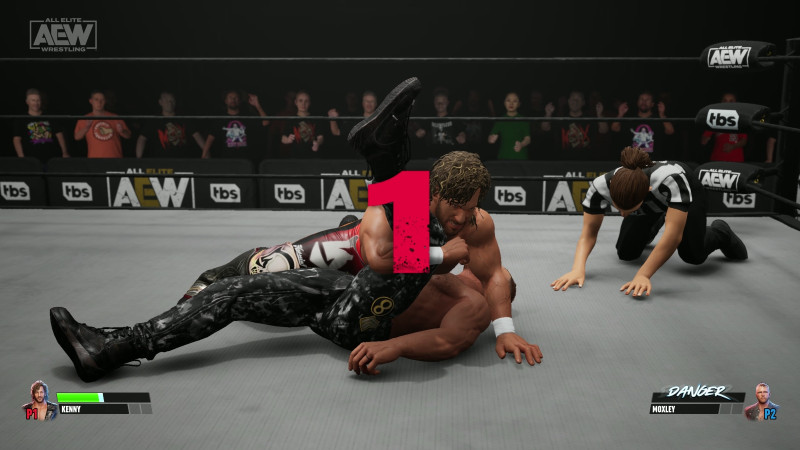
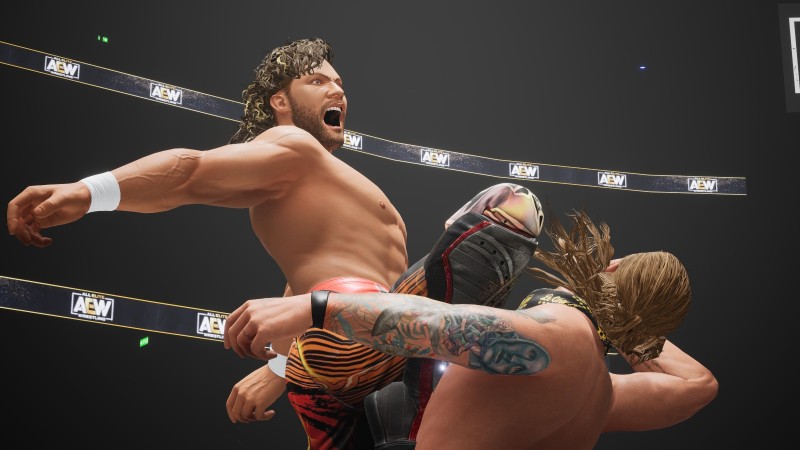
Fight Forever’s big selling point is that it’s patterned after the AKI-developed wrestling games of yesteryear, such as WWF No Mercy and WCW/nWo Revenge. It’s been over two decades since I last played those titles, so my hands-on memory is too fuzzy to accurately compare, but Fight Forever is indeed a quicker, more pick-up-and-play-friendly experience. After years of navigating WWE 2K’s dense control scheme, it’s nice to hit a move by simply hitting a button plus a cardinal direction, and there’s no mini-game in sight. I enjoyed building to my signature and finishing moves with the momentum-based offense, which rewards you for staying on top and punishes you for getting beat up; nothing feels better than literally beating an opponent down so bad they lose their finisher. 

You also gain various attack buffs for actions such as executing strike combos, mixing up your offense, or taunting, but they don’t feel beneficial enough to meaningfully turn the tide. Generally, the action feels smooth and has an enjoyably faster pace than WWE’s offerings, but it’s not without its headaches. Opponent A.I., particularly tag team partners, can range from questionable to dumb. Picking up weapons, a historical pain in this genre, remains such. The default auto-targeting is also a nightmare, so I suggest switching to manual. The game’s lack of a formal tutorial (a training room only lets you spar with a dummy without direction) and sporadic tooltips are less than ideal methods of onboarding. Expect to bumble your way through early matches, trying to learn essentials such as targeting and positioning opponents. 

Fight Forever offers some of the expected match types (singles, tags, multi-person, and ladder matches), and AEW staples like the Casino Battle Royale and Exploding Barbwire Deathmatch are adequately recreated. But it’s a relatively shallow package overall. Strange mini-games, such as a Simon Says-style rhythm exercise starring Penta, offer diversions that didn’t inspire me to play them more than once. No matter how you throw down, everything is wrapped in an underwhelming presentation, from the dated graphics, abbreviated entrances, and lack of match commentary or real voice-acting. Fight Forever is a mid-card competitor with a main event price tag. 

The roster has some cobwebs reflecting the game’s long development, offering a snapshot of AEW circa 2021/early 2022. Kris Statlander is still an alien, Anna Jay is in the Dark Order, and Cody Rhodes gets to appear in two wrestling games this year. The roster consists of 36 men but only 13 women (including referee Aubrey Edwards). Both sexes can compete against each other in any match, and while that’s a cool touch, I suspect that’s to make up for the smaller match diversity on the ladies’ side. 

It would be unfair to expect even most of AEW’s massive roster to be included, and while the core stars are here – The Elite, Jericho, Moxley, Baker, Punk – some omissions are nonetheless disappointing. It’s a bummer not to see bigger names like Jamie Hayter, Samoa Joe, Toni Storm, or The Acclaimed, especially since it leaves many factions off the table, like the Blackpool Combat Club, House of Black, and J.A.S. Jeff Hardy is present, but Matt is a head-scratching pre-order exclusive, meaning you don’t get the Hardy Boyz out of the box. For the most part, I like the stylized wrestler designs and proportions, giving them the look of semi-cartoony action figures, though the resemblances to the real versions are hit-and-miss. 

 

Fight Forever’s other big mode, the story-focused Road to Elite, falls flat. As either an AEW star or a custom-made wrestler, you’ll take a pretty bland, occasionally bizarre journey from new signee to world champ. A couple of the small handful of stories offer condensed re-tellings of old angles, like the Inner Circle vs. The Pinnacle and the debut of the FTW championship (one of the few titles you can compete for). Between bouts, you’re encouraged to engage in activities such as hitting the gym to raise stat points, dining at local restaurants to maintain energy, and embarking on social outings like sightseeing. However, you can’t alter AEW stars’ stats, negating the need to exercise. That’s fine; eating is the only truly important stat, and the other stuff feels like tedious fluff. Outside of seeing silly moments like taking selfies with wrestlers, I recommend skipping straight to the matches. 

The most frustrating and baffling aspect of Road to Elite is that playing as a female wrestler only offers a women’s division-centric story for the first month before it repeats the male storyline for the rest of the mode. That means instead of feuding with the likes of Hikaru Shida and Jade Cargill, you’ll only wrestle the men, with no explanation, in the exact same path. It’s like Yuke’s started making a separate women’s storyline and then gave up, and it’s a disappointing and, frankly, insulting representation of that division. 

The creation suite is perhaps the biggest letdown due to a dearth of options. Create-a-wrestler lacks facial sculpting, offering a few pre-set face assets that severely limit who you can make and how different they’ll look. Tack on a shallow amount of gear and apparel and no clothing designs, and you can expect to parade as largely plain approximations of existing stars or yourself. There’s also no option to share characters online. Building custom arenas is a little better but still underwhelming. Additional creation assets can be unlocked with in-game currency earned by completing daily challenges, but they’re neither good nor plentiful enough to inspire me to spend the same hours I usually would carefully crafting the wrestlers of my dreams. 

If nothing else, AEW: Fight Forever has potential. I’m happy to have a more arcade-style wrestling game, especially one based on a major promotion. The gameplay has a strong foundation, and when it's firing on all cylinders, the action channels the simple fun of the ‘90s and early 2000s. The rest of the package just needs to catch up. Until it does, even the most passionate AEW fans may have a hard time sticking around for this main event.

Score: 6.25

About Game Informer's review system

Purchase
Tuesday, June 27, 2023

Story of Seasons: A Wonderful Life Review - An Updated Classic That Hasn't Quite Caught Up

Story of Seasons: A Wonderful Life

Reviewed on: PlayStation 5
Platform: PlayStation 5, Xbox Series X/S, Switch, PC
Publisher: Xseed, Marvelous Games
Developer: Marvelous Inc.
Rating: Everyone

Remakes and remasters are more common than ever in 2023. What's most interesting is seeing how these new versions handle the issue of completely rebuilding versus simply making modern visual improvements. Story of Seasons: A Wonderful Life is a remake of Harvest Moon: A Wonderful Life that straddles the line between these two philosophies fairly evenly but still delivers an outdated experience in various aspects.

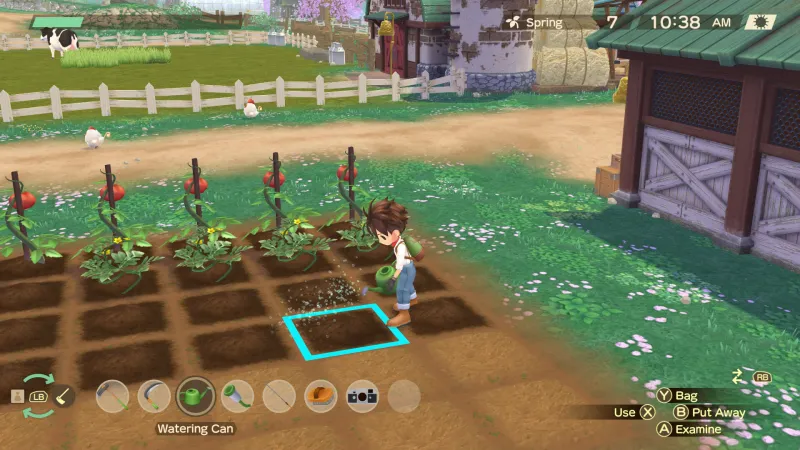
Releasing on modern consoles, Story of Seasons: A Wonderful Life initially looks like nothing more than an updated re-skin on the surface. However, some significant changes have made it more inclusive for players. A Wonderful Life establishes each player as a young person who has inherited a farm from their father in a small town called Forgotten Valley. Before claiming your inheritance, you must name yourself and decide your appearance.

The customization suite is where the updated version exceeds its predecessor. Players can customize their avatars with gender-inclusive pronouns, body, and fashion options. Beyond that, none of the clothing or hair options are gendered either. You can combine any body type with any hairstyle or outfit you want. Once you settle on your name, look, and pronouns, you're ready to head to Forgotten Valley. But note that you can't change your pronouns after the selection screen, so be sure of your decision before you depart.


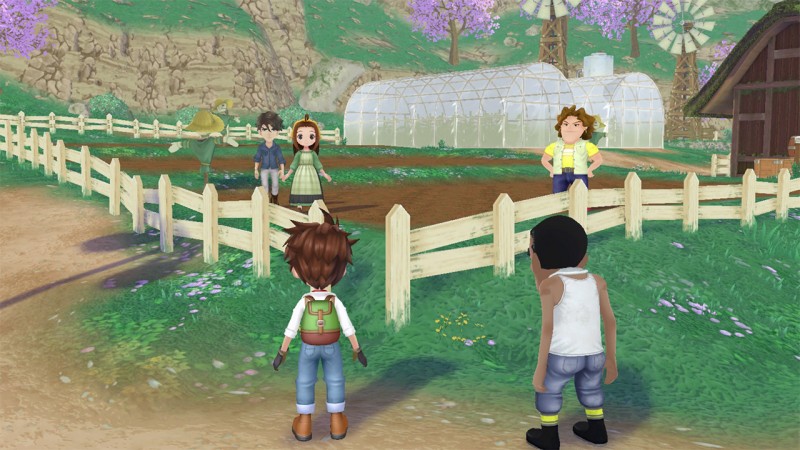
In what has become a staple of the farming sim genre, your character packs up and moves from the big city to the farm to live a quieter life. When you arrive, an old friend of your father gives you a tour of the farm and provides you with notes that serve as the game's tutorial. These notes are extremely useful in the early game, offering guidance when questions come up without forcing players to sit through a restrictive tutorial sequence.

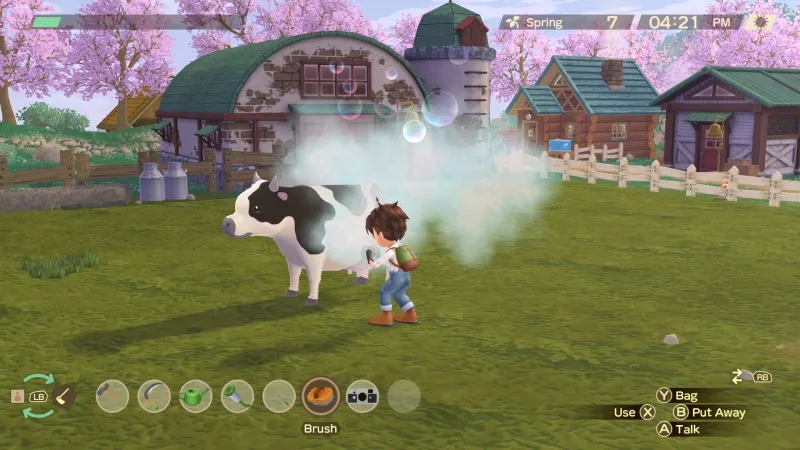
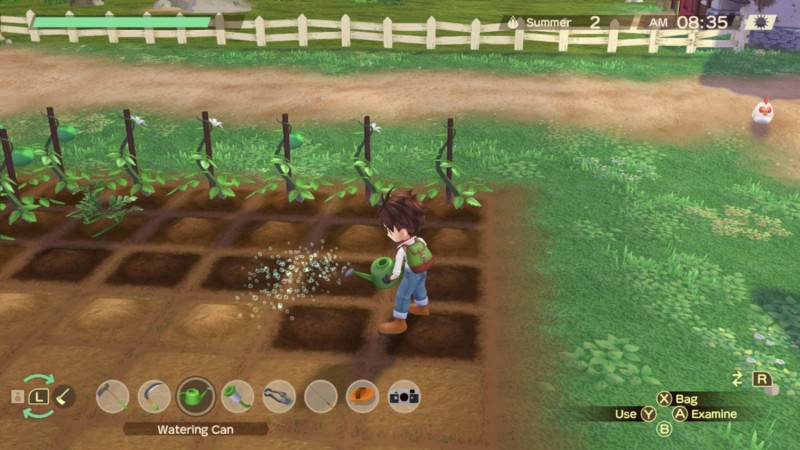
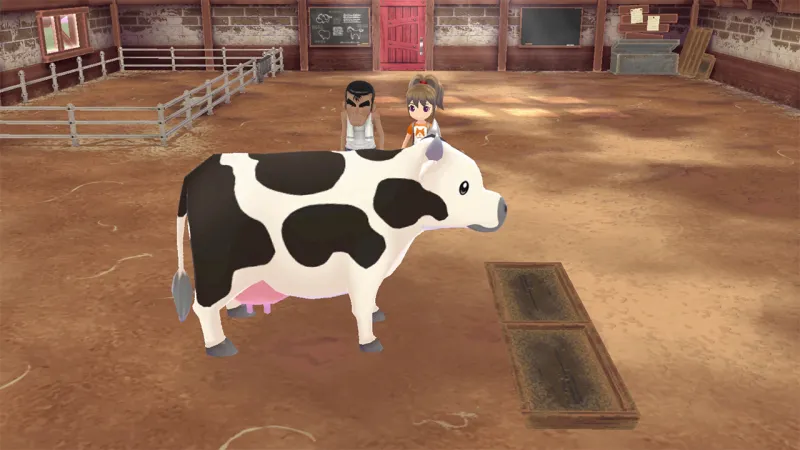
As you'd expect, you grow crops and raise animals whose products you can sell for profit. There are the usual four seasons in A Wonderful Life, and each lasts 10 in-game days. These days last 24 real-life minutes, which doesn't sound long but can start to drag the longer you play. Ideally, your daily loop includes tending your crops and animals, visiting the forest spirits to see if they have any new recipes for you, helping to dig at the archaeology site, fishing, foraging, cooking, and chatting with your neighbors around Forgotten Valley.

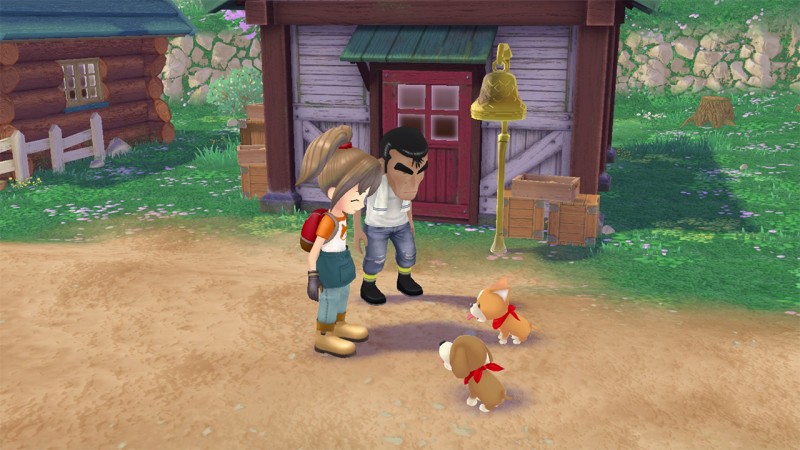
Getting to know the other residents of your small town is key, as the game insists that you must get married to one of the local singles by the end of your first year there. I appreciate that A Wonderful Life removes the gender-locked nature of the original game's romances, meaning players can marry any eligible single in Forgotten Valley, opening the door for queer romances.

That said, these relationships are disappointingly shallow. Since your courtship is barely a year long, you don't get much time to build an attachment to your future spouse. There are relationships already ongoing between some of the villagers when you arrive, which are then never really addressed if you decide to marry one of them. This takes away a potentially interesting element of small-town drama from the game and is also unsatisfying from a storytelling perspective.

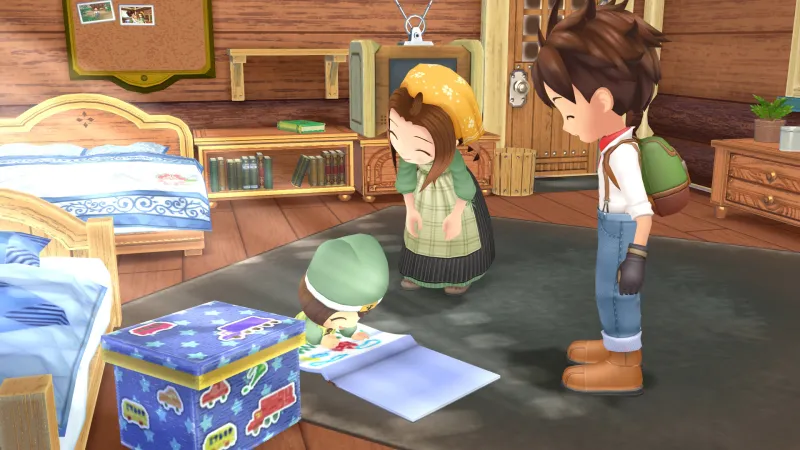
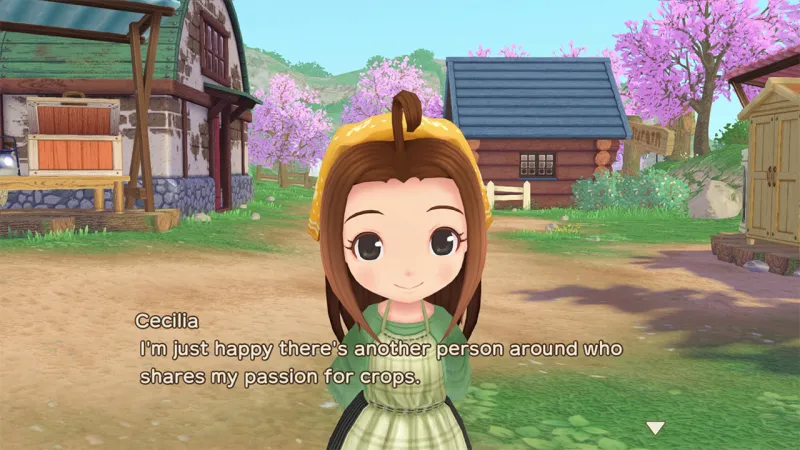
In addition, in-game spouses don't have much that's novel or interesting to say once you tie the knot. After marrying Cecelia, she largely stayed in our house and repeated the same line about learning new things about housework over and over again. My young child had more unique dialogue for me than she did outside of cutscenes.

Unfortunately, A Wonderful Life's mechanics feel similarly shallow during your day-to-day loop. While the pronouns, customization, romances, and visuals have been updated, your daily life in the game hasn't received the same treatment. Doing your daily chores doesn't take long, especially once you start upgrading your tools. Chatting with the forest spirits is also a quick errand. Digging for artifacts can take as long as you want, but the process is slow and monotonous. The game encourages you to chat with everyone in town to help build your relationships with them, but their dialogue is often repetitive, and it takes almost no time to give them gifts from your inventory. Even fishing and foraging can be done while you do other tasks around Forgotten Valley.

When the original version of this game came out, I'm sure this seemed like plenty to do. But in the wake of games like Stardew Valley, this level of activity is underwhelming. It's easy to find yourself going to bed early to advance the calendar instead of utilizing every waking hour to maximize what you can get done. In theory, some of this time should also be devoted to cooking, but I often only used my kitchen when I really needed to. Story of Seasons: A Wonderful Life has a Fullness meter, but it doesn't decrease quickly. I only really paid attention to it when my character gave me the hungry icon, which usually seems to trigger when the bar is about one-third full.

This meter is somewhat emblematic of my overall experience of this game. Ideas that were once novel are outdated or uninteresting by today’s standards. While Story of Seasons: A Wonderful Life is a welcome update to a classic farm sim, stripping away nostalgic fondness leaves you with an experience that feels lacking in the genre's modern landscape.

Score: 6

About Game Informer's review system

Purchase
Friday, June 23, 2023

Park Beyond Review - Life Is A Rollercoaster

Park Beyond

Reviewed on: PC
Platform: PlayStation 5, Xbox Series X/S, PC
Publisher: Bandai Namco
Developer: Limbic Entertainment
Rating: Everyone

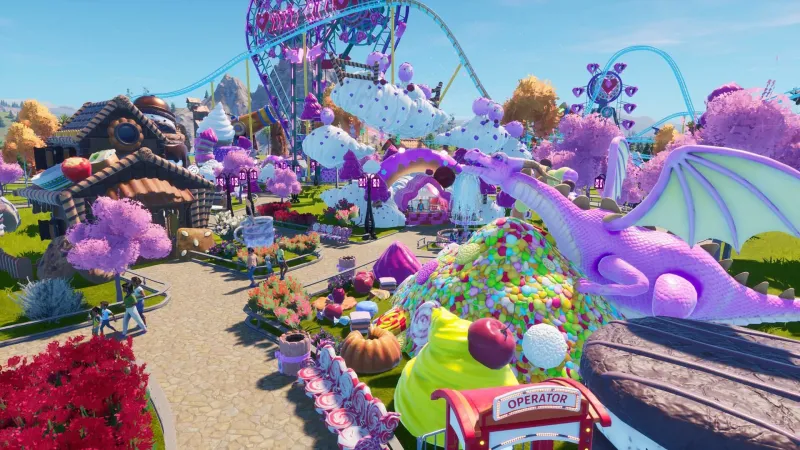
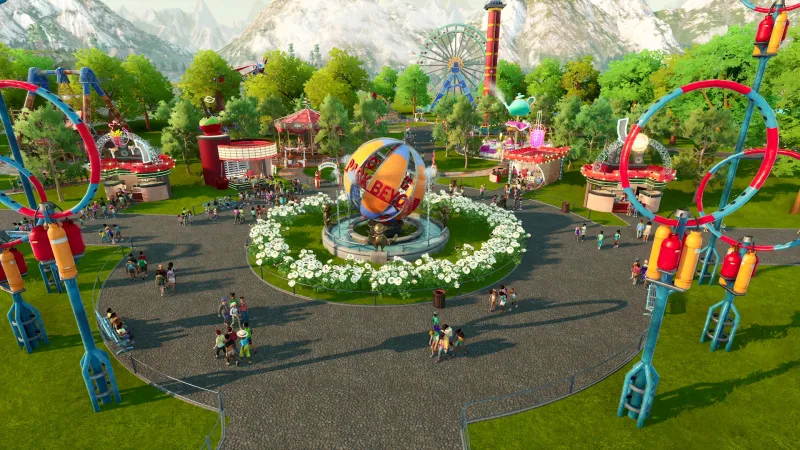
Promising an unconventional approach to rollercoaster construction as players design the theme park of their dreams, Limbic Entertainment’s Park Beyond is yet another business-building simulator that attempts to blend "unlimited" creativity with fiscal responsibility. A familiar pitch with some quirky set dressing, you’ll create your own custom coasters, plop down drag-and-drop shops, and hire staff to create a successful venture that’s profitable and exciting – but most importantly, profitable.

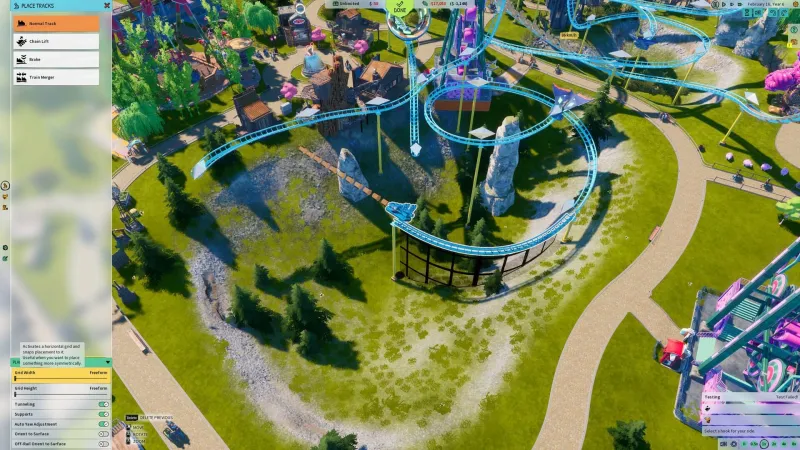
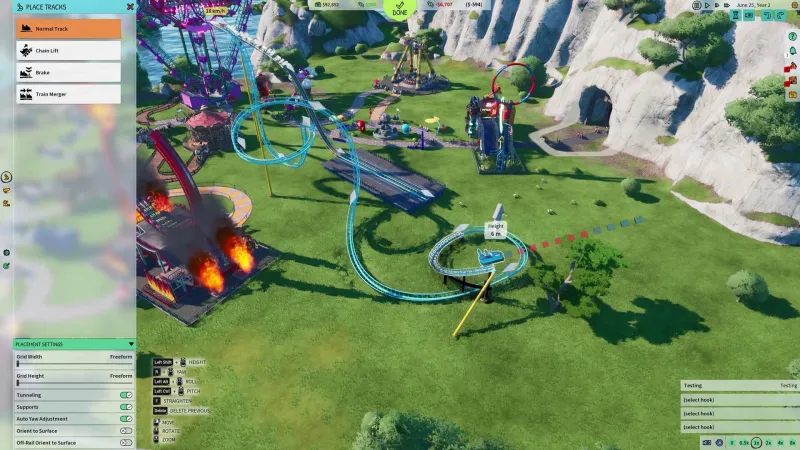
Despite a feature-length tutorial in custom coaster construction, Park Beyond’s campaign starts strong by consistently letting you tinker with exciting new mechanics, empowering you to unleash your wildest creations in dusty deserts and lush alpine forests. But as I started to balance my building around the proposed financial and spacial limits, I felt my creativity was quickly kneecapped by frustrating forced goals.

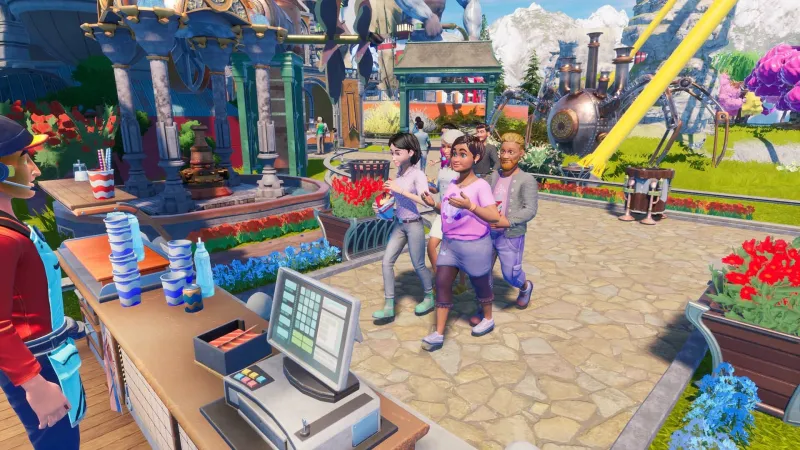
Simulations are always a balancing act between resources and imagination. However, the finickiness and overcomplication of some of Park Beyond’s tasks made for play sessions where, more often than not, I was sitting at my desk fast-forwarding through in-game months to trudge through dull, unskippable busywork. Surprisingly, making my toilets profitable was not on my "Build Your Dream Theme Park" bingo card.

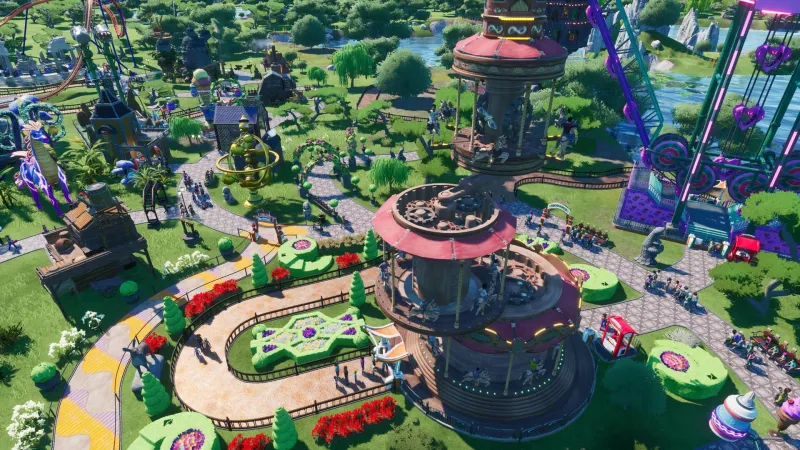
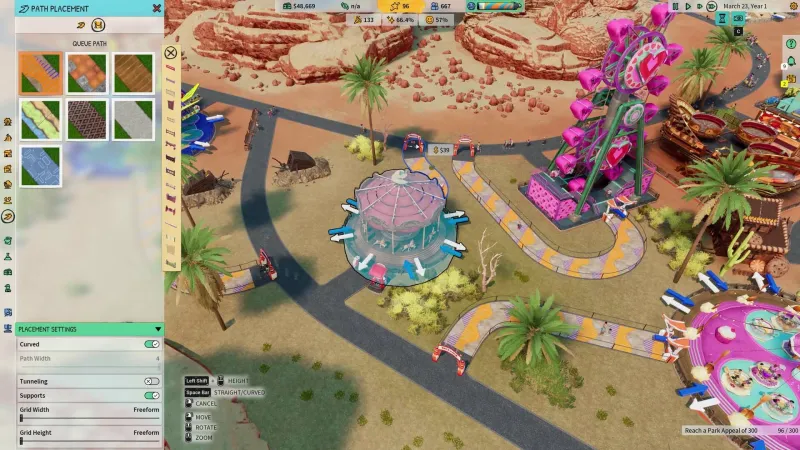
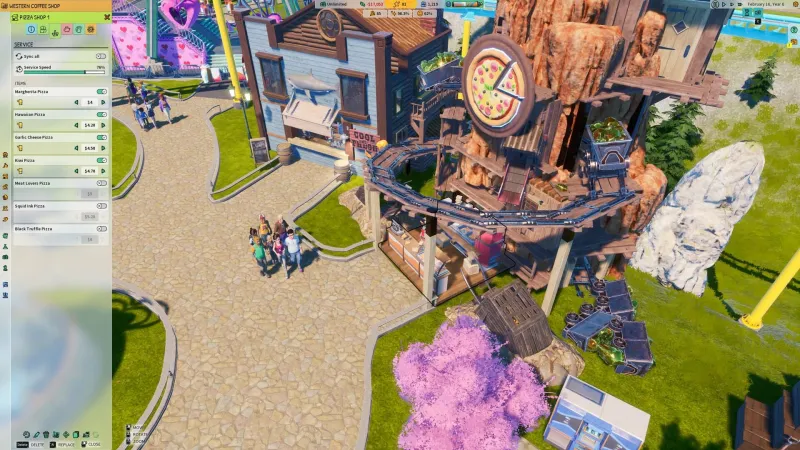
Not all building systems are made equal in Park Beyond, with different types of customization arriving with different rules. Where the prefab buildings and custom coaster builds use a modular placement system and require specific amounts of space, miscellaneous decorative items like trees and rocks can be placed freeform onto your structures. This made manipulating the space an approachable process and encouraged me to create organic and appealing environments. One nice addition was the ability to completely customize shops by building extensions around a base structure which, with significant effort, can result in a truly bespoke creation. However, this method does come with some caveats, as it can get a little finicky and time-consuming when you get into the weeds of roofing and signage.

Your park’s success depends on three main requirements: Money, Fun, and Amazement. Each ride, shop, toilet, and staff member contributes in differing amounts, meaning you’ll be spinning plates to keep the lights on. Amazement is the most compelling currency, as it allows you to "Impossify" your rides, shops, and staff, adding visual flair and increasing their efficiency. This lets you meaningfully develop and personalize your setup, but the slow burn of filling up the meter eventually became a chore.

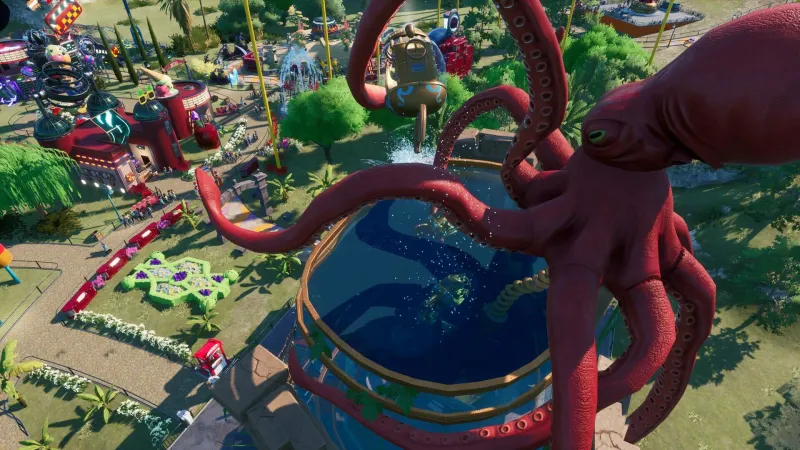
Despite its pacing stumbles, Park Beyond succeeds with its delightful animations and dramatic ride designs that made my stomach twist and turn. There’s a wonderful twinkling ambiance in the evenings too, and this let me clock out of my fiscal fears occasionally so I could enjoy the zany world I’d built in peace. Though, that all comes crashing down as the sun rises the next morning, and you notice your margins aren't good enough to fund your latest silly endeavor.


Sandbox Mode ended up becoming a refreshing alternative, where I could focus on my own design dreams without the ceaseless interventions. Here you can decide on a starting budget and location and set specific goals curating your own set of challenges. While you still have to manage your dreams, I finally felt like I was my own boss. I could build and experiment with greater depth while accepting financial defeat – which feels like a better distillation of the game’s ambitions.

Even with its twisted takes on nostalgic ride designs and copious whimsical fanfare, I was left feeling deflated by Park Beyond's business-oriented objectives and lack of investment in unbridled player creativity. For a game that endeavors to push the limits of your imagination, it's a little too concerned with whether you’re tall enough to ride.

Score: 6.5

About Game Informer's review system

Purchase
Wednesday, June 21, 2023

Crash Team Rumble Review - A Bandicoot Bash

Crash Team Rumble

Reviewed on: PlayStation 5
Platform: PlayStation 5, Xbox Series X/S, PlayStation 4, Xbox One
Publisher: Activision
Developer: Toys for Bob
Rating: Everyone 10+

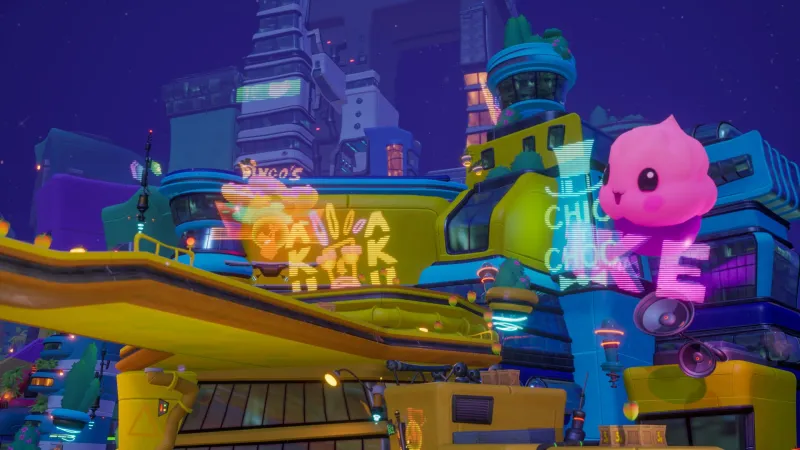
The match was too close to call – 1990 to 1995 – but I wasn't keeping track. All that stood between my team and victory was a chubby crocodile with a vacuum. I danced and jumped around him as he used his big belly and Luigi's Mansion-like hoover to bounce me around like a loose piece of cat fluff. I just needed a few moments to deposit my Wumpa Fruit, and victory would be ours. I had my blinders on, and that was a mistake. The enemy team's Wumpa Fruit meter quickly filled to 2000, and the match was over. My team had been defeated, but I was still hungry for more of Crash Bandicoot's favorite fruit. 

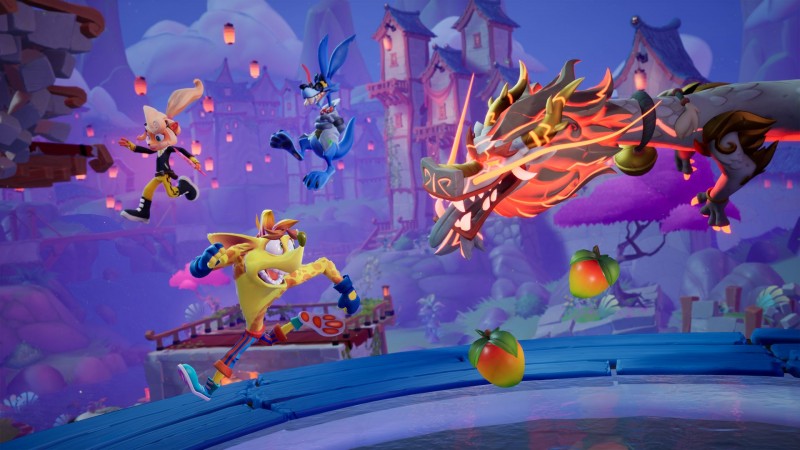
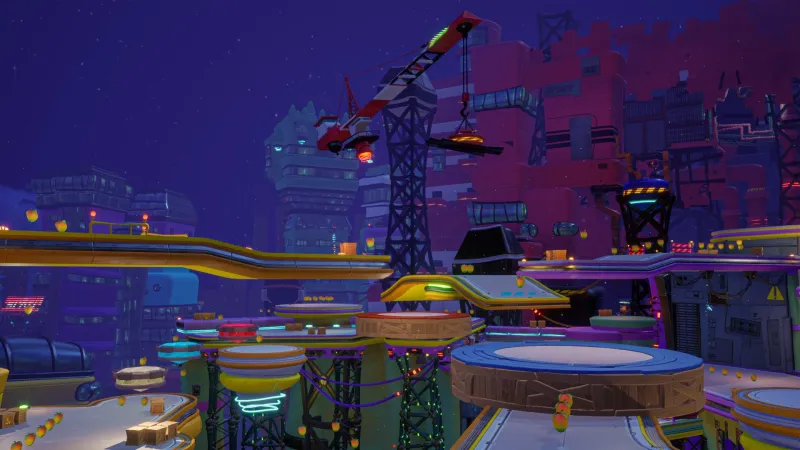
Crash Team Rumble, like Crash Bash and Crash Team Racing Nitro-Fueled before it, is a hectic multiplayer take on the famously difficult 24-year-old platforming franchise. It pits two teams of four against one another in a race to see which team can collect and deposit 2000 Wumpa Fruit first. It's a simple formula, enhanced by streamlined controls, that makes for a delightful bite-sized and competitive multiplayer experience. 

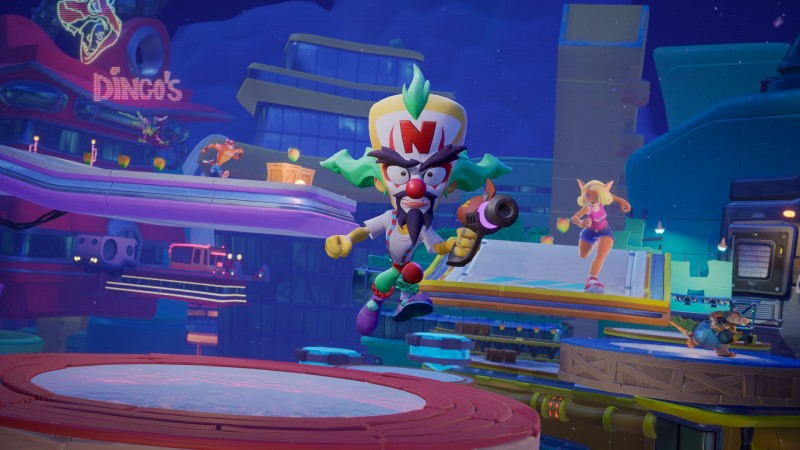
That simplicity is one of Crash Team Rumble's most enticing features. There is a barrel full of DNA brought over directly from the mainline Crash Bandicoot series. Running, jumping, and attacking all feel like another run through Cortex Castle. Controlling Crash – or one of nine other starting characters from the franchise – feels wonderful. 

You can enjoy Crash Team Rumble with these elements alone. All you need to know how to do is navigate around the map, collect Wumpa Fruit (either directly off the ground or by smashing boxes), deposit them into your team's capture point, and avoid any enemies who want to fight. You'll learn all that within seconds of jumping into Crash Team Rumble, but there is far more depth to unlock as you explore everything these fast-paced bouts of berry collecting have to offer. 

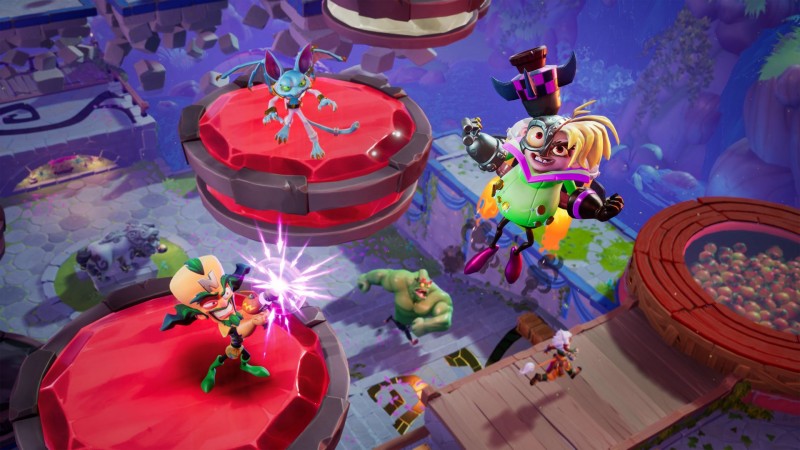
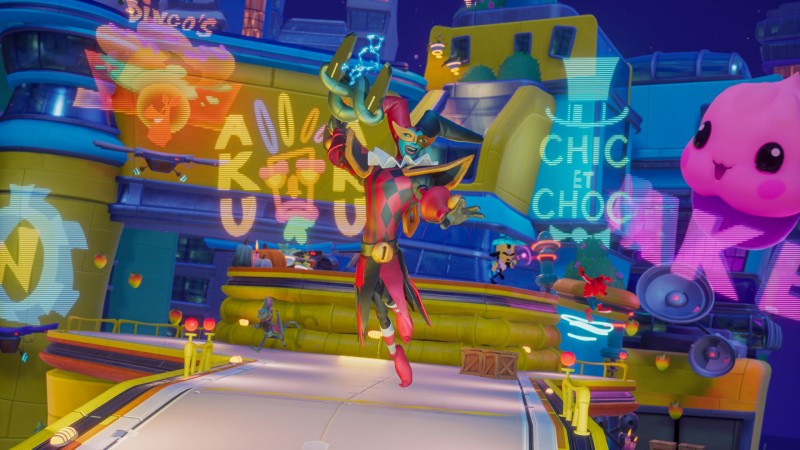
A lot of the extra complexity falls to the wayside as you jump, claim gems, and use Dingodile's vacuum to hover in the air for a few seconds. The three character classes – scorer, blocker, and booster – can also sometimes shift to little more than tidy organizational buckets, as any character can fill any role if used creatively. 

Your team's needs will change organically as a match progresses, so you may need to do all three in a single game. Dingodile is classified as a blocker, although I found myself going after gems and boosting my Wumpa-collecting teammates instead of solely blocking for several matches. 

The joy of single-player Crash Bandicoot games is all about execution. You have to learn every inch of a map to conquer and unlock all its secrets. It's easy to move on to the next level or to a new game once every box is smashed and boss defeated. 

Even though Crash Team Rumble is built off part of the foundation of single-player Bandicoot games, the end goal couldn't be more different. The only bosses you defeat are other players, and it often won't be through perfect execution. It is messy, chaotic, platforming-filled matches that come down to the wire. 

Abilities, gems, and relics add significant layers of complexity to Crash Team Rumble. Claiming multiple gems, usually three diamond-like platforms positioned next to each other, gives your team extra Wumpa Fruit for every deposited batch. Side abilities can be dropped almost anywhere on the map. Relics, also collected, can be used to unlock special stations all over the map. 


Outlining many of these abilities and relic stations would ruin part of the fun of exploring them. Unlocking a spiky-vine ball for the first time and rolling onto the enemy point like Miley Cyrus made me unreasonably happy, and you are likely to feel the same way when you discover some of these wacky tools. Various team compositions, map-oriented squad movements, and well-timed item usage lead to considerable strategic depth – so much so that some players may find it intimidating. 

Those hours are incentivized like most modern multiplayer games. You unlock the full cast of characters and abilities as you play and earn cosmetics as part of the game's battle pass. While giving Crash a whole new wardrobe before you send him out to pick more fruit is rewarding, players who aren't looking for a battle-pass-driven multiplayer grind may succumb to frustration. 

Crash Team Rumble could be viewed as the natural progression of difficulty in the Crash Bandicoot franchise. It takes an entirely different type of preparation and offers a different reward, though. Crash Team Rumble's take on multiplayer platforming madness is unique, with enough depth to keep you on your toes after hours of gameplay. Those searching for a fresh take on the long-running series should give it a try. 

Score: 8

About Game Informer's review system

Purchase
Aliens: Dark Descent Review - New Terrifying Potential

Aliens: Dark Descent

Reviewed on: PC
Platform: PlayStation 5, Xbox Series X/S, PlayStation 4, Xbox One, PC
Publisher: Focus Entertainment
Developer: Tindalos Interactive
Rating: Mature

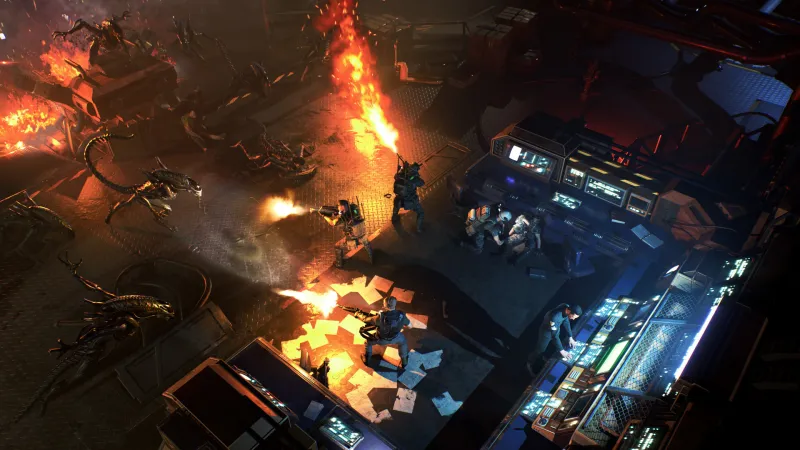
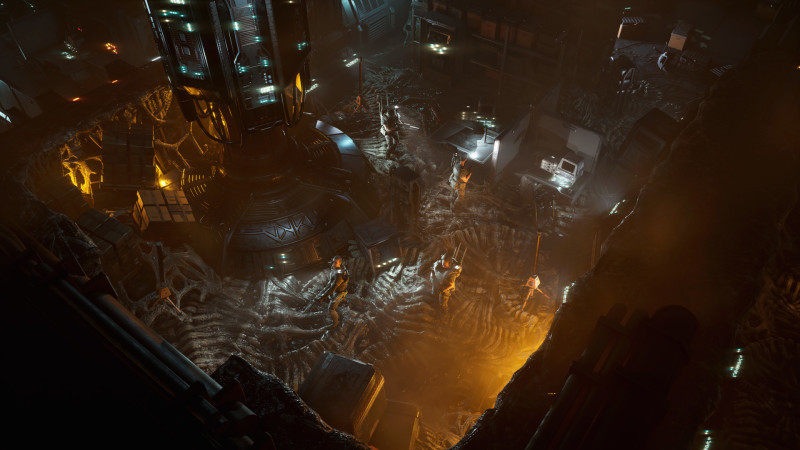
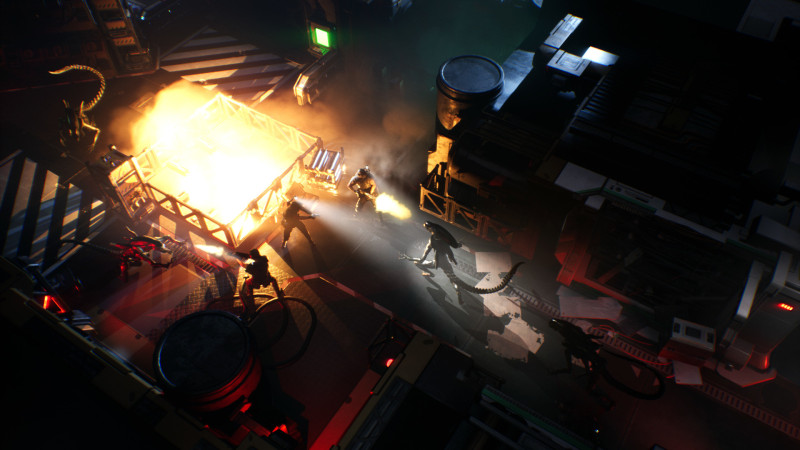
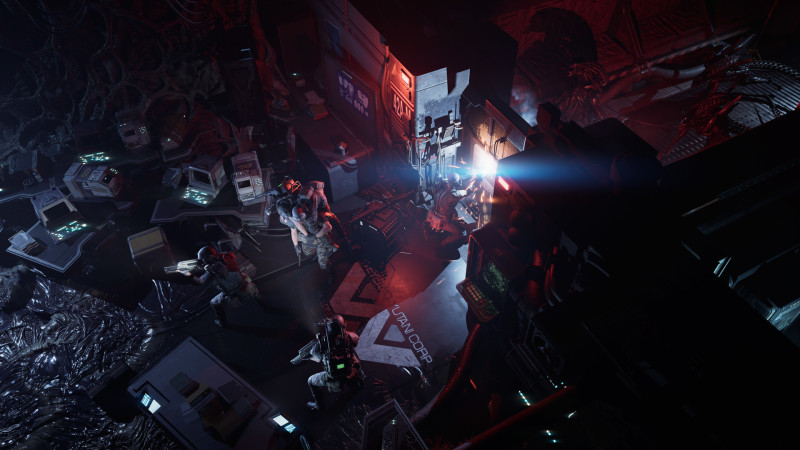
An unsettling stillness permeated the station. Buildings were scrambled on the inside – rooms dotted with bloody streaks and furniture upturned. Guttural sounds echoed from ebony nests; pounding steps grew louder the longer my marines stayed still. While not a survival-horror title, Aliens: Dark Descent masterfully bottles the franchise’s menacing ambiance. It comes packaged as a solid squad-management XCOM-lite puffing a new terrifying style. But while it respects the source material and nails its inspirations rather well, squad coordination and battles can be a bit unruly and frustratingly unfair at times.

Crash landing on the moon known as Lethe, a Xenomorph outbreak slings you into the shoes of former Wayland-Yutani administrator Maeko Hayes and U.S. colonial Marines officer Jonas Harper. The narrative comes out swinging in that everything-goes-to-hell Alien fashion but slips in a few jaw-droppers and humanizes characters, keeping you hooked and pleasantly paying off for investing in where Dark Descent heads.

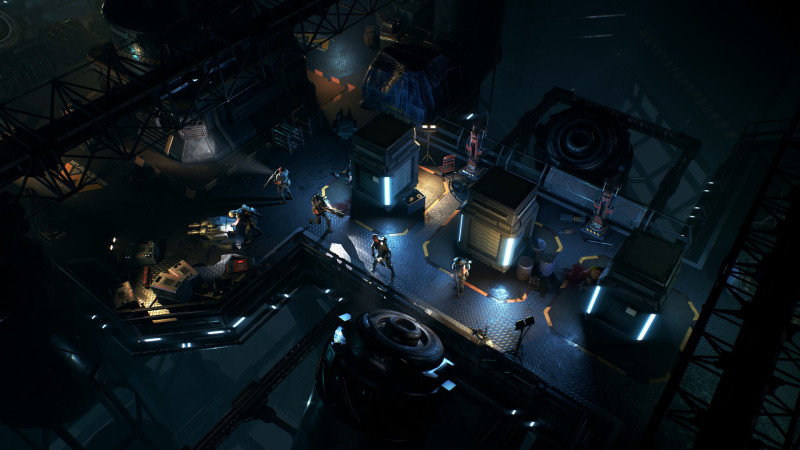
You lead a squad as a single unit into mission zones colored with objectives and resources. Fog of war concealed enemies as I huddled troops through doorways — keeping an eye on a pulsing radar. During these times, memories of Alien: Isolation came to mind, and Dark Descent actually replicates aspects of that hair-raising hook. Suspense and zone layout add terrifying substance to exploration, and that tension explodes during battles.

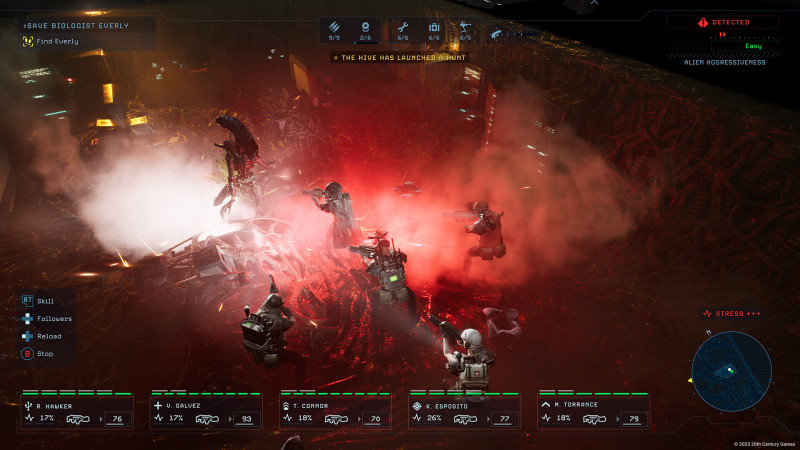
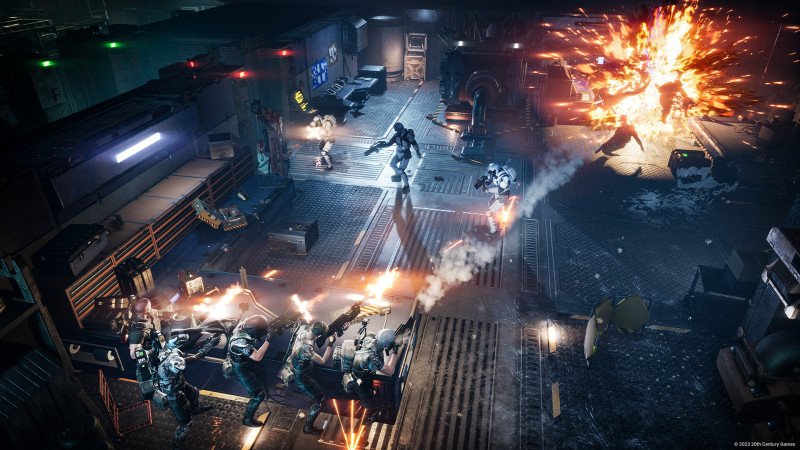
Players gun down iconic creatures like Facehuggers and Alien Queens through real-time battles. A click of a button slows down or pauses encounters to focus squad fire. The mannerisms of Xenomorphs are faithful to the series, with them wildly charging and dragging off my soldiers when possible. Using squad resources to shoot a wide-spreading shotgun or flamethrower provided loadout depth and control as my marines automatically fired.

Unfortunately, stealth sections through packs of sleeping Xenomorphs make squad movement feel cumbersome. And at times, crouching and clicking other buttons aren’t snappy, leading to deadly encounters with enemies. Depending on your last save after a sour death, you may have to backtrack to prepare and slog back to try again. Dark Descent is aware of its difficulty – as noted by the tutorials – but the difficulty spikes, backtracking, and clunky controls can be annoying to work around.


When not in sweaty combat scenarios, battles are fast and lean into more playful complexity as you level up troops. Harkening to XCOM, there are role-based classes that excel at gunnery or hacking with a flying bot. Without a Tecker, I couldn’t unlock specific doors. Medics revive teammates from a comatose state, and Sergeants provide crucial stat boosts. Each class feels instrumental during a given mission.

At your home base, you can spend supplies to get your class’ unique skills or assign physicians to get injured soldiers back into the field quicker. Under the hood of Dark Descent is the framework of an XCOM game. I initially believed this design to be a safe crutch, but there’s a satisfying progression loop cooking here that works jointly with the setup of an Alien story, becoming enjoyable the more you pour into it.

Soaked in dark sci-fi environments and human personalities, Dark Descent nails the hallmarks of an Alien title and executes much of its squad-based gameplay. Despite some downsides and squad control during precise moments, plenty of its elements kept me jacked in to see its conclusion. It was a thrilling ride with ups and downs, but I left fulfilled and appreciated its experimental twists.

Score: 8

About Game Informer's review system

Purchase
Final Fantasy XVI Victory In The Land Of Gods And Monsters

Final Fantasy XVI 16 Game Informer Review gameplay square enix creative business unit III

Reviewed on: PlayStation 5
Platform: PlayStation 5
Publisher: Square Enix
Developer: Square Enix
Rating: Mature

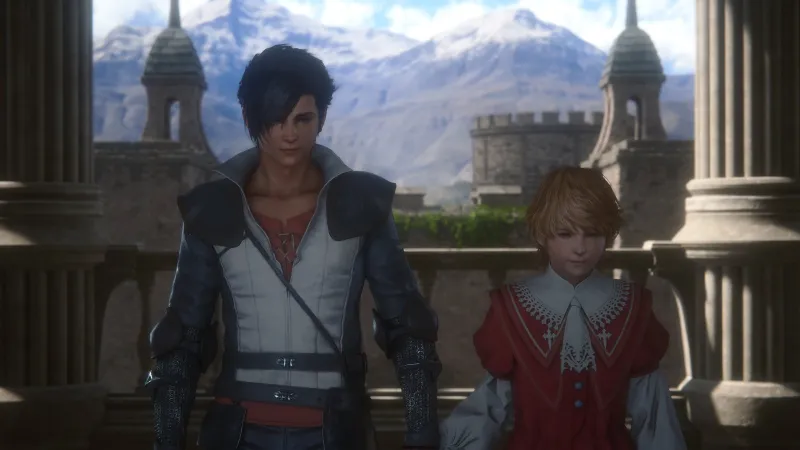
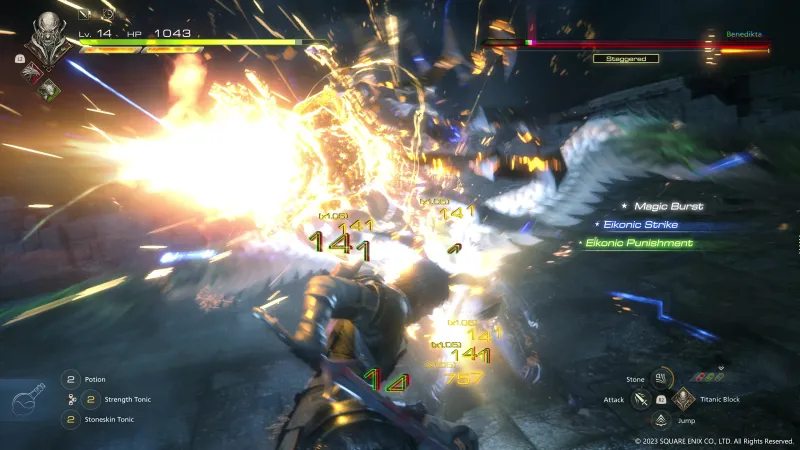
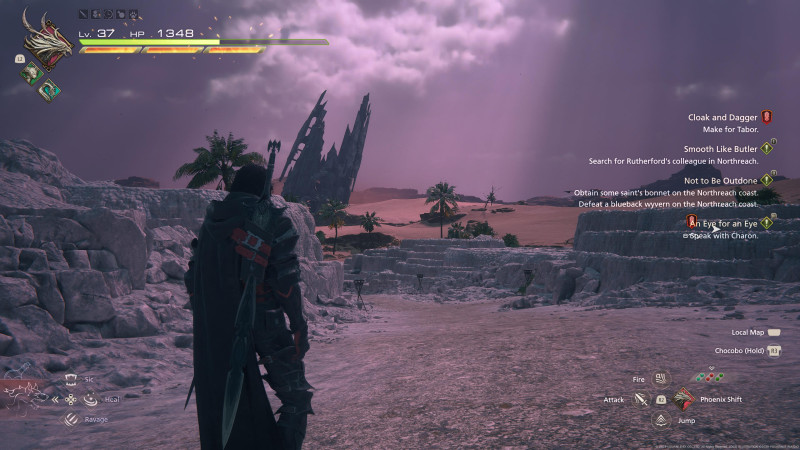
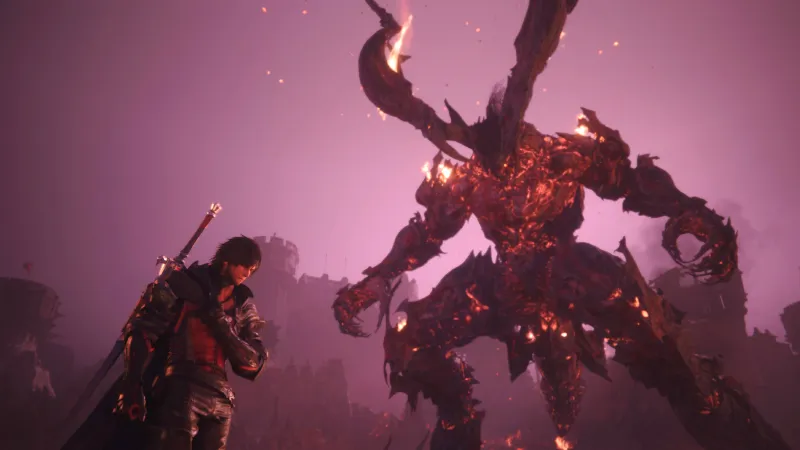
Final Fantasy XVI is bombastic, indulgent, and extreme, breaking far beyond the limits of what I thought an action-oriented Final Fantasy could pull off. It represents a pivotal shift for the series, ditching any semblance of turn-based move selection, active-time battles, or anything else in its history in favor of a fast-paced, extravagant, combo-heavy combat system that continued to grow more robust throughout my 60-plus hour journey. 
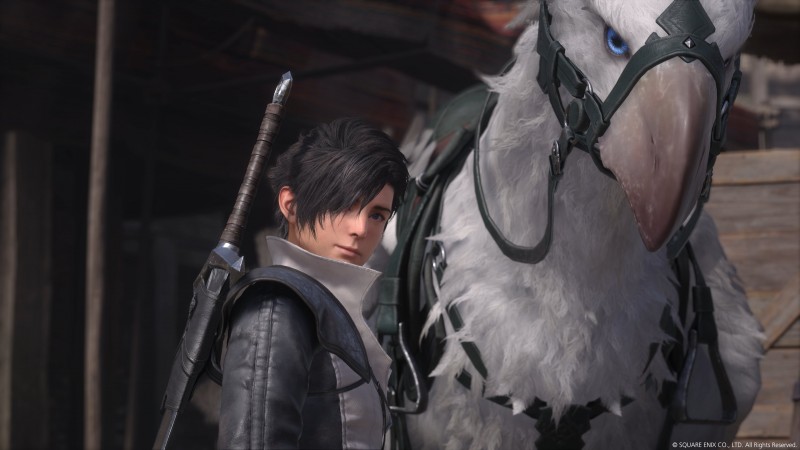
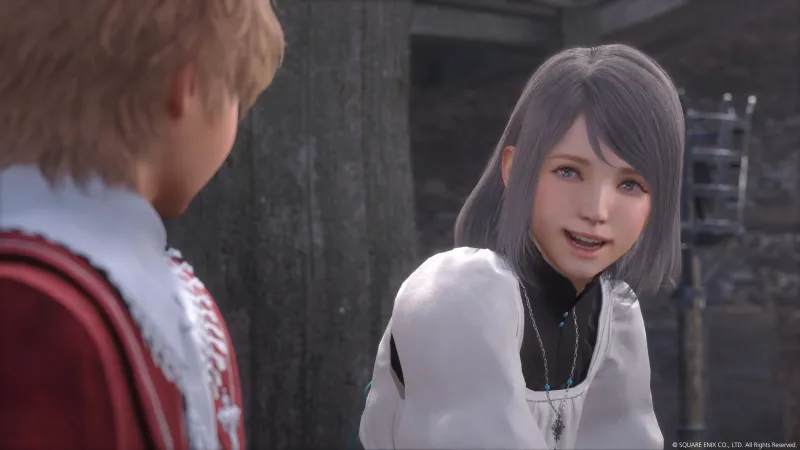
There’s a linear action game in FFXVI, and it’s the highlight of the experience. But standard RPG tropes, mechanics, and the game's more open nature outside of the story-based dungeon quests slow an otherwise explosive story about gods, Eikons, crystals, and the meaning of free will. Still, Final Fantasy XVI’s highs are easily some of the highest in the series and even action games. 

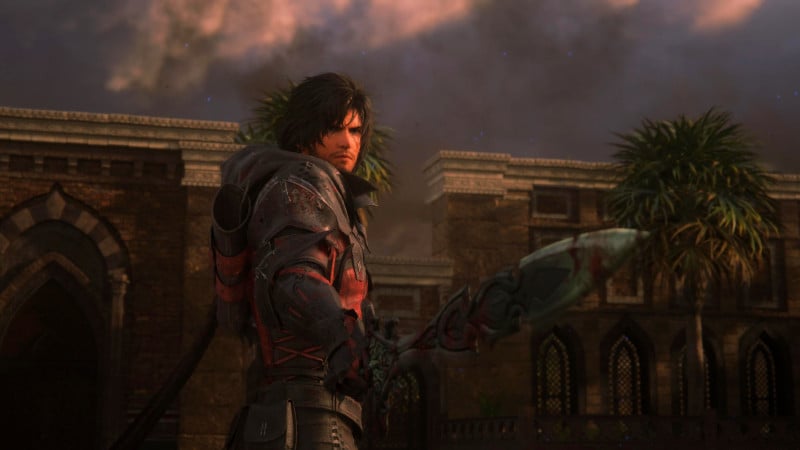
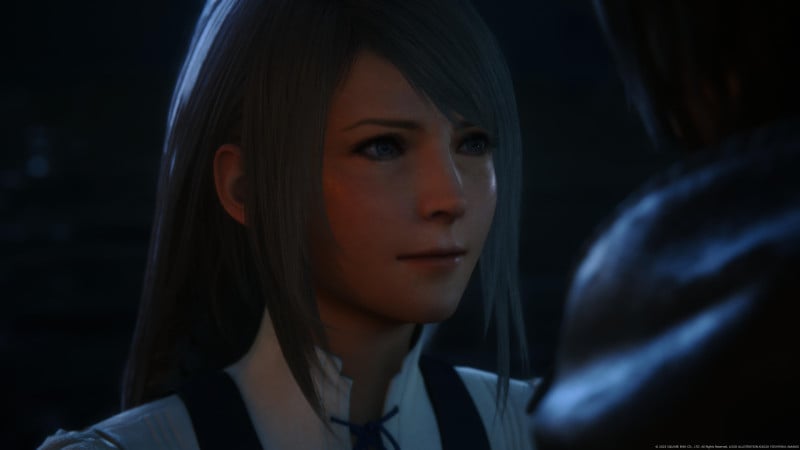
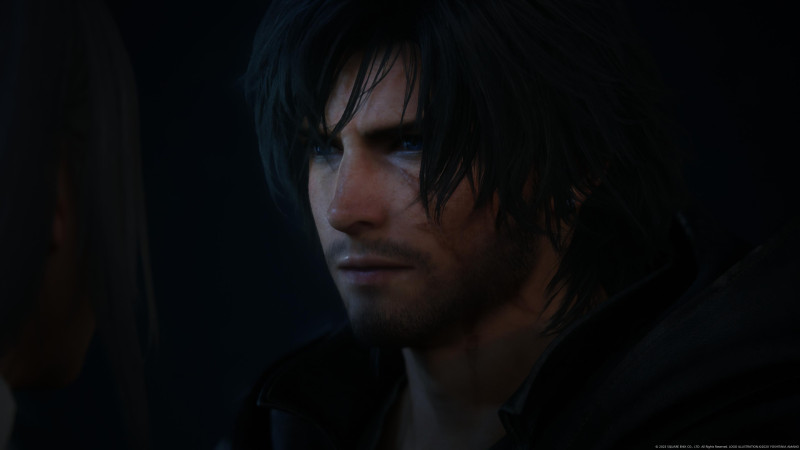
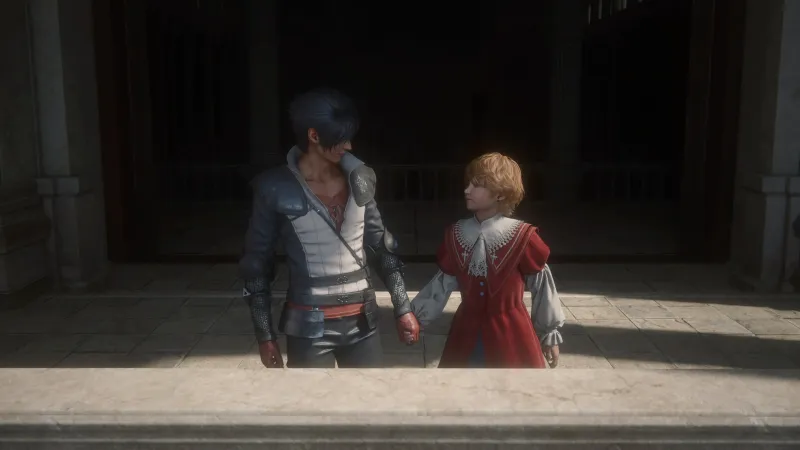
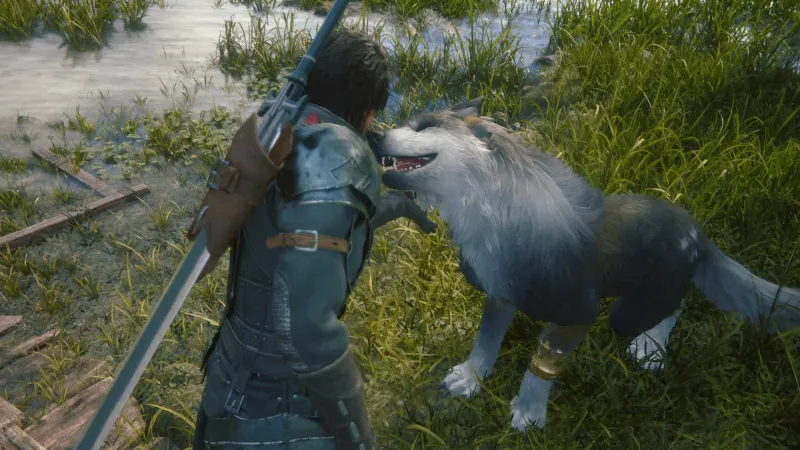
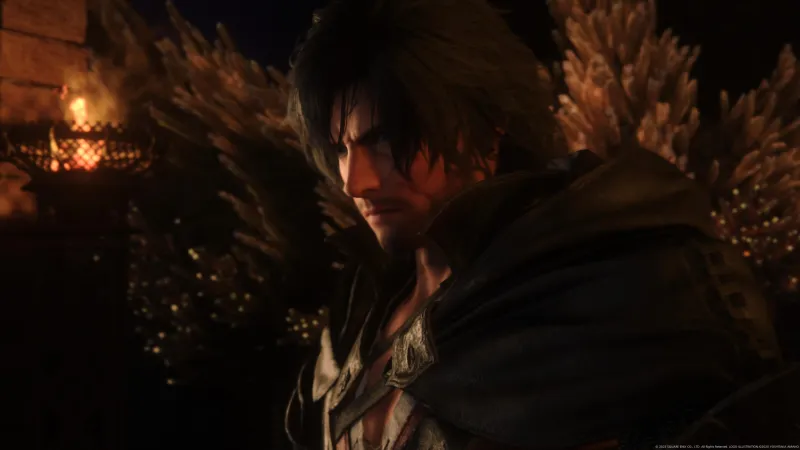
“The legacy of the crystals has shaped our history for long enough,” reads the tagline of FFXVI. It's a theme you’ll see talked about and around throughout the game. Narratively, protagonist Clive Rosfield and his gang of outlaws, which includes Cid, Jill, and many others that make up the excellent cast, are revolutionaries. In more ways than one, they set out to topple pillars of Valisthean society that have only strengthened throughout history, looking to reshape life on the continent. 

The story begins as a revenge tale against the backdrop of slavery; in Valisthea, Bearers, or people that can use magic, are enslaved, traded, and sold to whomever and wherever they’re needed. FFXVI fails to say anything new or remarkable on this front; a miss made all the more glaring given the main cast of FFXVI features few people of color. Inspired by medieval Europe, a majority-white cast commenting on and fighting against slavery and the systems that uphold it, with little insight or representation from the types of real-world people often affected by slavery, is the biggest miss of FFXVI. 

The story eventually drops that discussion to focus on other, more general pillars of Valisthean life that must be toppled. And it’s here that the story shines. Though sometimes a little too close to its Game of Thrones inspiration to feel original, the voice cast behind these characters commits to every beat nonetheless, and it works. Final Fantasy fans and enthusiasts of series like Kingdom Hearts, who love a dose of cheesy love in their stories (both romantic and platonic), will enjoy how FFXVI plays out. 


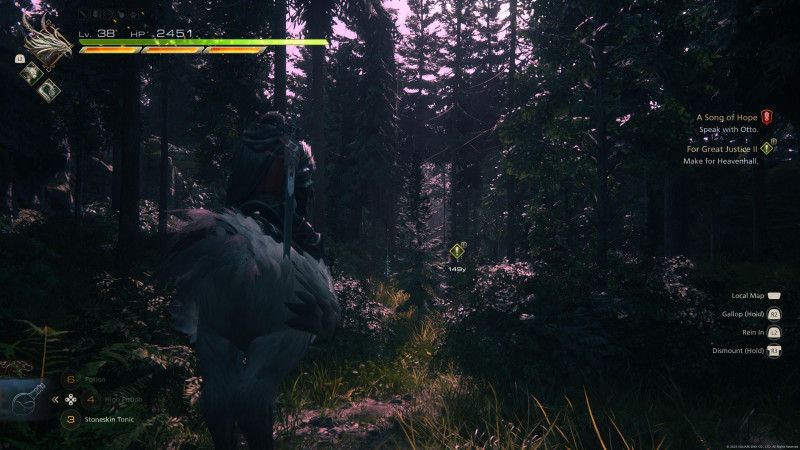
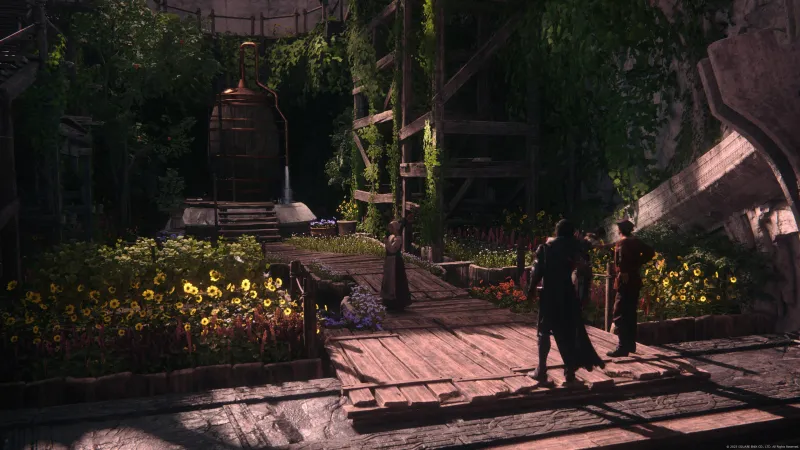
FFXVI’s story is strengthened by a visual style that, at times, is gorgeous, although there are areas where I am less than impressed, even disappointed. NPC models, especially those of non-main characters, are often plastic and stand in stark contrast to the main cast. Performance mode struggles to hit 60 FPS, but even when it does, it fails to remain consistent. 

FFXVI is more stylized than realistic, very much “medieval Final Fantasy.” When the visual pieces, like the UI, environments, and flashy combat effects, blend, the entire visual presentation shines. However, it’s sometimes hard to see through it all to understand what’s happening. 

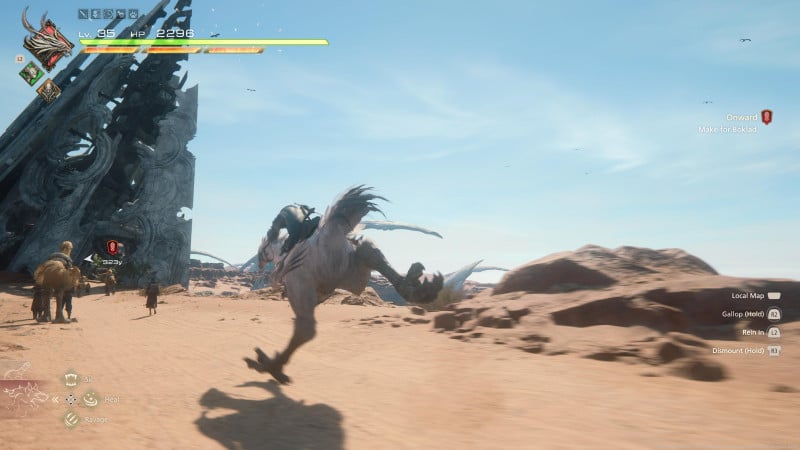
The open-field areas are the least impressive. They’re large but mostly unmemorable empty spaces, save for an occasional side quest, random treasure, or horde of enemies. Their emptiness speaks to my largest issue with FFXVI – it’s an excellent action game, but the same can’t be said for it as an RPG. There are dozens of crafting materials, and I can’t tell you one because crafting is less of a system in FFXVI and more of a word. There aren’t weapons that work better with this type of build or that – there’s only the strongest weapon, and it’s obvious it’s the one you should craft. And save for some endgame weapons, you’ll always have the materials needed if you complete story missions and the occasional side quest. The same goes for other pieces of gear.

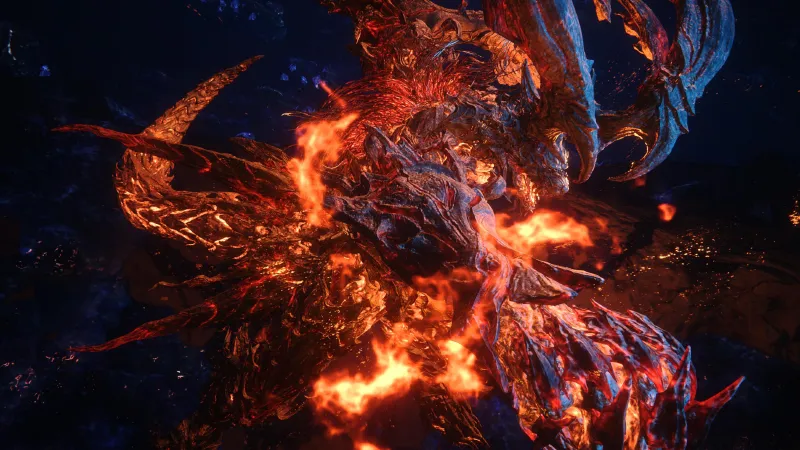
It’s the Eikonic powers where FFXVI’s RPG mechanics come into play. As Clive gains the powers of more Eikons throughout the story, he gains access to new abilities, allowing you to rework your build. I especially fell in love with my Phoenix-Garuda-Bahamut combo. Additional accessories strengthened this, such as one that reduced the cooldown on my heavy-hitting Phoenix attack by 12 seconds. But outside of these abilities and accessories, FFXVI is disappointingly linear for an RPG. Players who reach the credits will likely have access to the majority of the same weapons, accessories, and skills. It’s how they’re mixed and matched where playstyle diversity appears. 

Side quests are almost always some variance of fetch quests. Talk to this person, go here, attack some enemies, and return for your reward. And while not always the case, many of them feature a surprising amount of dialogue and detail, and it’s usually a great read. Creative Business Unit III adds a quality-of-life feature I’d like to see in every RPG – side quests with a plus sign on the marker means completing it will reward you with something beyond gil or resources. This marker is how I knew to complete side quests that eventually rewarded me with increased potion inventory, potion potency, and even a rideable Chocobo. 


Plus, many of these side quests build on each other, and as these stories progress, I like how they give life to the surrounding world. This was an especially welcome feeling because Clive is engaged in war, and the narrative of FFXVI takes place over decades. Seeing how the world outside of Clive’s mission changes visually and narratively over time adds extra gravity to the actions I take. 

However, the pace and content of these side quests, and really everything that happened outside of main story quests, simply don’t compare to what the main missions are doing, and they feel significantly slower and less exciting as a result. I enjoy collecting new songs to play in my Hideaway’s orchestration jukebox and stopping in with loresman Harpocrates to learn new things about Valisthea, but these side activities often felt more like doing my due diligence than something I actually wanted to do. 

Perhaps that’s the point. Clive and the gang need downtime after what they accomplish in story missions – mind you, missions that constantly left me in awe, goosebumps covering my arms – but deserved downtime for the characters doesn’t mean it’s welcome downtime for me. It’s less that everything happening outside of the main story is rote, but rather, what Creative Business Unit III does in those story missions is so great that I constantly found myself rushing as best I could to the next one. 

I’m not exaggerating when I say that there was a moment in FFXVI, a boss fight that lasted what felt like an hour, I’d call my favorite moment in Final Fantasy, and even more than that, all of gaming. It’s unforgettable and demonstrates Creative Business Unit III's confidence and command over the brand. That this moment is nearly topped by another later in the game speaks to the extreme highs of FFXVI, which accentuate the otherwise fine and predictably bloaty lows of a Final Fantasy RPG. 

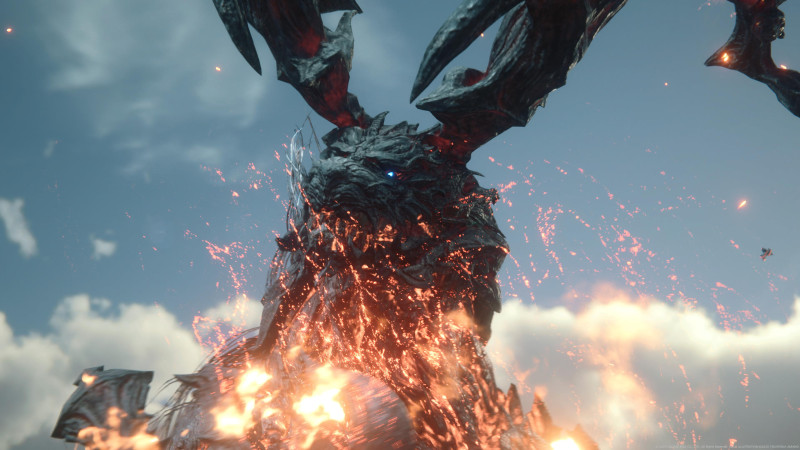
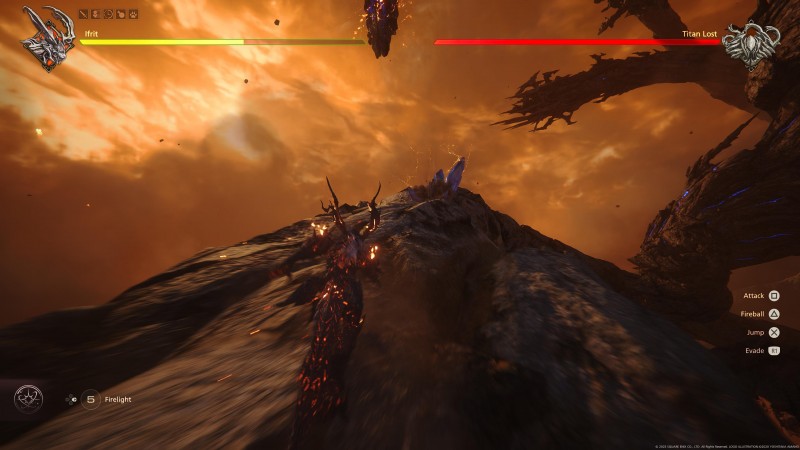
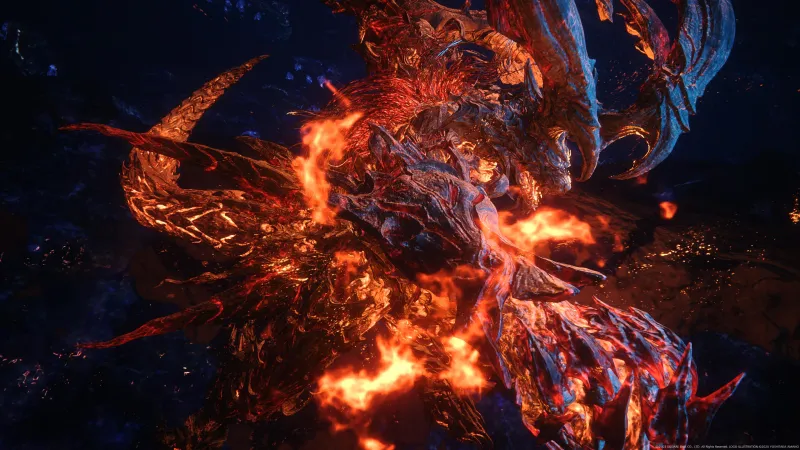
These peaks stretch as high as they do for a couple of reasons. Creative Business Unit III has created my favorite action combat system to date. It’s fast and easy to understand on its surface. But it has a lot of depth, and how far you want to go with it will depend on how willing you are to engage with its various systems. Adding in Eikonic abilities only heightens the action, and I found go-to ability combos I relied on to stagger and ultimately defeat even the toughest of enemies. Controlling the Ifrit Eikon during setpiece moments wasn’t as varied as I would have liked from a gameplay perspective, but the spectacle surrounding these moments makes up for it and then some. 


Those familiar with FFXIV will find this unsurprising, but composer Masayoshi Soken’s FFXVI score nearly outshines every element of the game. And I don’t say that to dampen expectations about playing the game and what’s in store; I say that to raise your expectations of Soken’s score, which features new personal favorites in the expansive Final Fantasy catalog. Wavering between soft piano keys and robust chorus-backed epics that envelop entire scenes, Soken masterfully demonstrates why he’s a fan-favorite Final Fantasy composer multiple times throughout FFXVI’s runtime. 

With more than 65 hours of FFXVI behind me, I still have a lot to do beyond the story, and I’m glad my time with Creative Business Unit III’s latest isn’t at its end yet. FFXVI has some of my favorite moments in modern Final Fantasy, but its lows threaten the pace at which they arrive. I wish FFXVI’s various elements were intertwined more seamlessly. Still, when I look back at my time with Clive, his friends, his enemies, and Valisthea, it’s those highs that I vividly remember. FFXVI is very different from its predecessors, but in many ways, very familiar; And it’s still a Final Fantasy, through and through, reminding me why I love this series so much.

GI Must Play

Score: 8.5

About Game Informer's review system

Purchase