Pages

Monday, November 27, 2023

SteamWorld Build Review - A Bustling Town Built on Shaky Ground

SteamWorld Build

Reviewed on: PC
Platform: PlayStation 5, Xbox Series X/S, PlayStation 4, Xbox One, Switch, PC
Publisher: Thunderful Publishing
Developer: Thunderful Development
Rating: Everyone 10+

The most endearing aspect of the SteamWorld series is how each of its games relates to one another despite their disparate genres. From tower defense to turn-based RPG, each title offers a unique spin on a specific gameplay experience while adhering to a shared mythos, resulting in a fun collection of games that coalesce thematically. SteamWorld Build, Thunderful's city-builder/RTS hybrid, serves as the latest iteration of this formula. Sporting streamlined genre mechanics, intuitive controls, and charming visuals, many essential parts are in place. Unfortunately, despite a solid foundation, SteamWorld Build struggles to maintain an engaging experience throughout its campaign.

Like most of the SteamWorld series, Build doesn't directly connect to any of the previous games. Instead, it tries to provide a unique perspective on critical events that feed into the series' overarching narrative. This familiar setup works in parts. The plight of a group of travelers settling near an abandoned mine at the behest of a mysterious robot companion is initially attractive. Fans will especially enjoy the nods to past happenings and some extra lore surrounding an established planetary threat. That said, it won't take long for players to realize that SteamWorld Build's campaign is paper thin.

While the SteamWorld series isn't known for its character-driven stories, each new release offers more meaningful reasons to dive into its steampunk universe. SteamWorld Build's nearly nonexistent story is a step backward in this regard. There aren't any notable characters, worthwhile encounters, or imaginative events to speak of. Essentially, the why of it all doesn't matter, as the campaign's few cutscenes offer just enough exposition for it to be considered a means to an end.

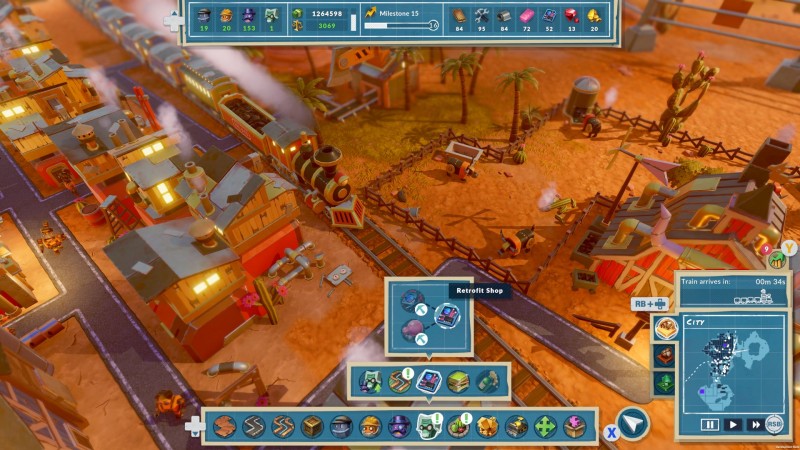
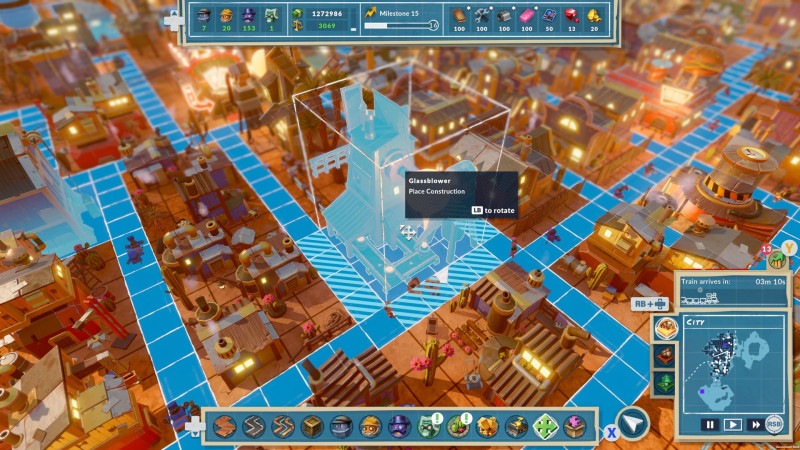
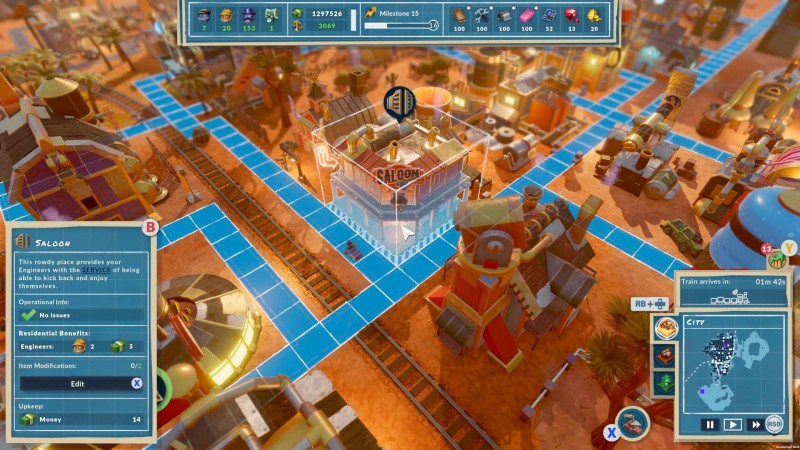
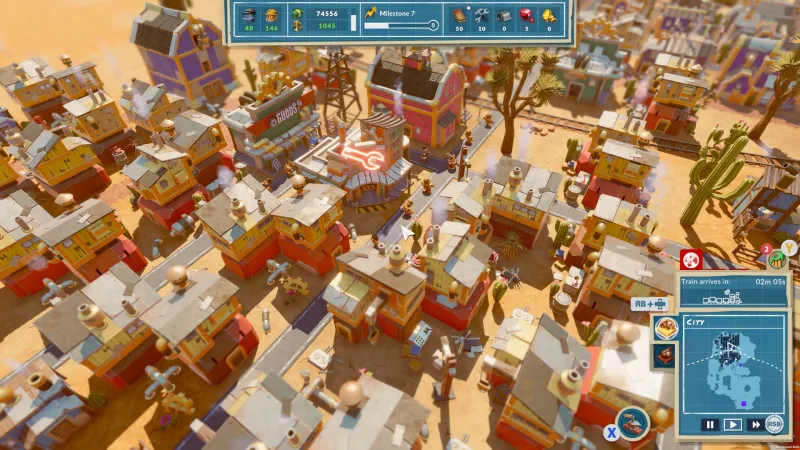
Story woes aside, SteamWorld Build is entertaining. This is partially due to the streamlined approach to city-building and solid tutorial prompts. There are some genre staples, especially when it comes to building placement. You'll be told, for instance, to place Foresters (a giant tree-chopping machine) and lumber mills next to wooded areas to acquire logs. But most of the finer details involving the inner workings of a town/city – tax rates, zoning, population density in relation to the neighboring structures – are either handled automatically or simplified to a large degree.
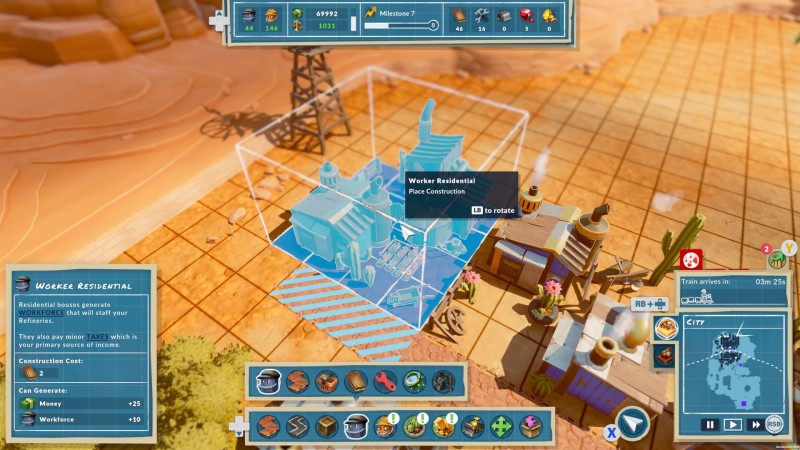
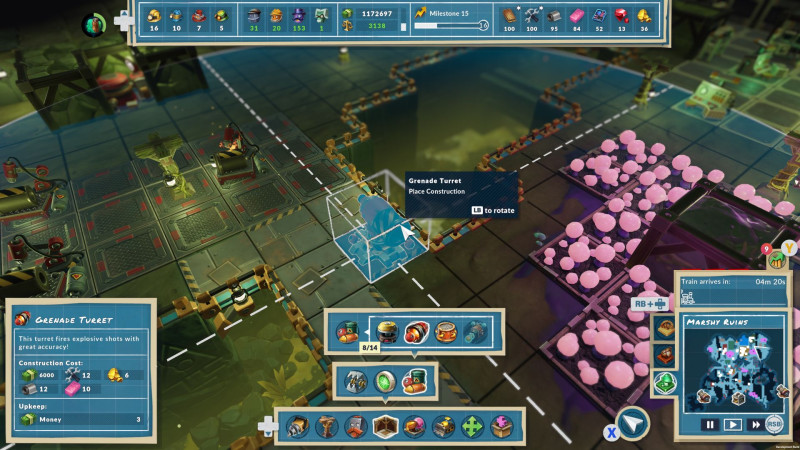
 

There's no urban decay or adverse environmental issues to worry about. As long as your buildings are connected to their corresponding facilities and the central train station by road, they'll function as expected. And since the game's intuitive controls (whether using a gamepad or keyboard and mouse) do most of the heavy lifting, nearly every action can be carried out with just a few button presses. SteamWorld Build is more arcade than sim, offering a welcoming experience for newcomers.

Despite its simplified mechanics, SteamWorld Build appeals to genre vets thanks to its puzzling play. Instead of fixating on every minor detail linked to actual urban planning, the game emphasizes keeping your steambots happy by placing key structures. Your workers, who start economically at the bottom of the totem pole, are usually satiated by a general store and service shop. They don't need much to stay productive. Once you hit certain milestones, usually tied to the town's number of employable steambots, you can upgrade them into engineers. This next tier of citizens requires more service buildings and attractions to stay in good spirits. They also pay more in taxes.

Your main goal is to develop your town to the point where its citizens can mine specific relics (namely rocket parts) needed to escape a seemingly dying planet. This makes the continual growth of your town important as each tier of citizen is responsible for specific branches of productivity. This process can prove tricky as the requirements needed to satisfy them all are weighed against your town's overall needs. Creating too many workers means spending less money on new construction projects. Too few, and you won't have enough steambots to gather the basic materials (wood, coal, etc.) needed to keep the town functioning. The same goes for higher-tiered citizens; their larger financial contributions are offset by the cost of keeping them content. 

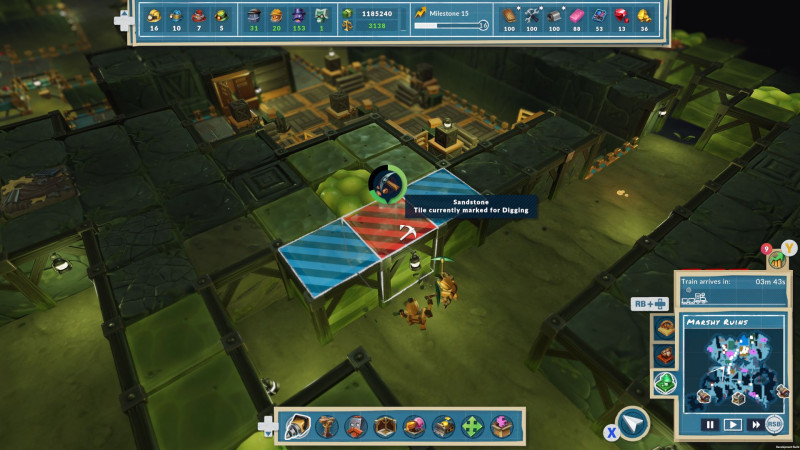
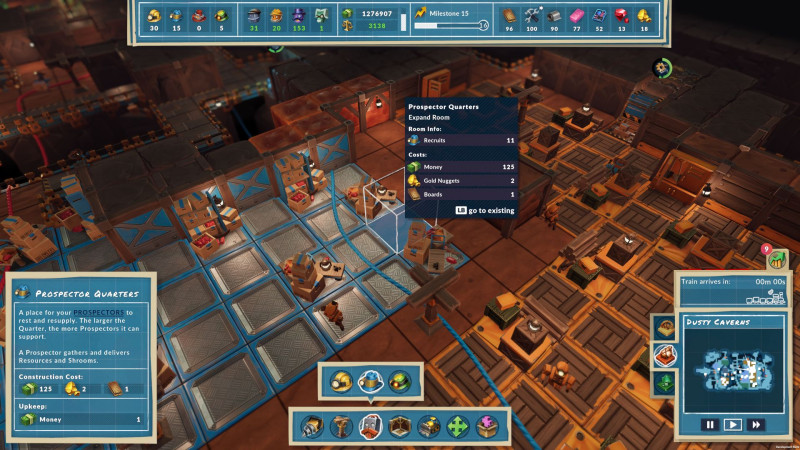
Learning to juggle these different factors is vital when playing SteamWorld Build early on. Some of it comes down to properly positioning certain services and attractions. Plopping a general store at the corner of an intersection makes it accessible to more workers. You can also use stat-boosting items, tradable resources, improved roads, and more. Your management duties double once you gain access to the mines. These underground areas feature RTS mechanics requiring a more hands-on approach. Instead of buildings, you place miner, prospector, mechanic, and guard quarters needed to spawn the corresponding steambots around the map. Aside from the guards and mechanics – who are there to protect and heal bots/build machines, respectively – these bots aren't autonomous. They must be assigned jobs like mining gold deposits, knocking down walls, placing turrets to repel pests, and building machines to harvest important materials.

Most of my time playing SteamWorld Build was spent hopping between my town's surface and subterranean areas. Watching the tiny steambots carry out their tasks as I slowly upgraded my residential areas was fun. I also enjoyed overseeing the developments underground; micromanaging these steambots offered a nice contrast to the above-ground activities. 

All of that changed during the game's last few hours due to a combination of competing systems. To collect the final component needed to leave the planet, I had to turn a few of my bots into scientists and make sure they were content for a set duration of time. The problem is that this directive has no wiggle room. When the other steambots weren't at 100 percent, and their collective numbers started to dwindle, the few that remained still pitched in. That wasn't the case here, as it was an all-or-nothing situation.

The other issue was that the scientist was the highest citizen level, meaning it takes a lot to keep them happy. Since my town had grown, it was easy for a given resource – water, food, etc. – to occasionally dip below a certain threshold. During those moments, my scientists became unhappy. I tried to mitigate some of this by improving all my roads, trading for the needed items, relocating attractions, buffing facilities, and so on. Nothing worked. The only thing I could do was wait for my steambots to produce enough of whatever was missing to meet my scientists' needs briefly.

Many sim-based games have this point where the player has seemingly optimized themselves into a corner. Their final objective is within reach, but because its strict parameters don't allow for alternative completion options, they can only wait as the game plays. That's what happens with SteamWorld Build. It's a shame, considering how enjoyable the core gameplay loop initially is. Things fare a little better once you've finished the campaign, though. Since each of the five maps offers rewards like free roads or faster miners upon completion, starting a new campaign with these unlocked bonuses is possible. You can also sidestep the story and focus on building the best town you can, which might be the ideal scenario.

SteamWorld Build is a unique hybrid that entertains for a time. Its early hours are fun, thanks to how well it uses simplified genre staples to create a more arcade-friendly gameplay loop, a sentiment bolstered by a solid tutorial and intuitive control scheme. Regrettably, SteamWorld Build's campaign overstays its welcome. The lackluster story and rigid final objectives turn what was initially an engaging experience into a tedious grind.

Score: 7

About Game Informer's review system

Purchase
Friday, November 17, 2023

The Talos Principle II Review – Profoundly Puzzling

The Talos Principle 2 review

Reviewed on: PC
Platform: PlayStation 5, Xbox Series X/S, PC
Publisher: Devolver Digital
Developer: Croteam
Rating: Teen

The Talos Principle II often left me staring at my screen in awe. Sometimes, from sheer intimidation in the face of a seemingly formidable puzzle. Other times,  from my incredulous pride after unraveling said problem. But most of all, the experience regularly gave me pause as I pondered a philosophical idea or argument that challenged my viewpoints on the nature of existence and humanity’s place in the cosmos. These moments spurred me to solve the game’s 100+ puzzles in search of answers, and I’m largely satisfied with what I discovered. 

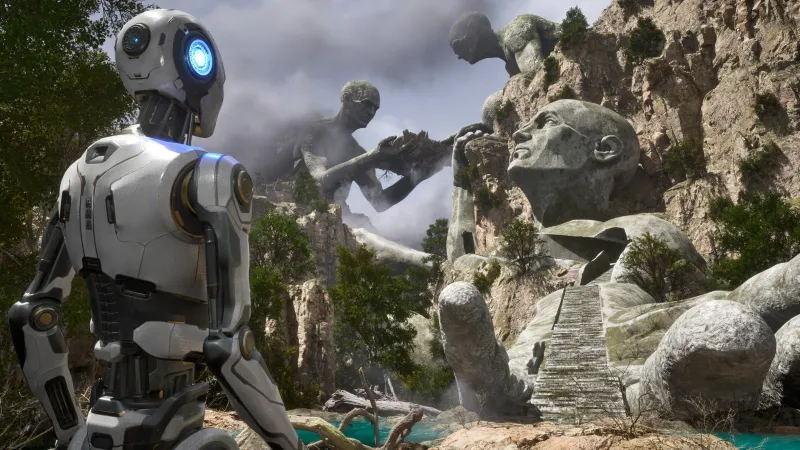
Set hundreds of years after its 2014 predecessor, The Talos Principle, you awaken in a utopian civilization as its 1000th – and final – sentient robot resident. Following mankind’s extinction due to a global virus centuries prior, intelligent machines designed by a brilliant scientist have inherited the Earth. As the sum of all human knowledge, these machines have resigned themselves to living within a single, modest city with strict population, exploration, and consumption limits to avoid repeating humanity’s mistakes. However, these beliefs are flipped on their heads when a mysterious entity taking the form of the Greek titan Prometheus beckons the machines towards a mysterious island with a pyramid-like megastructure, towers, and, of course, puzzles. You join a small expedition to discover the island’s origin and purpose. 

Despite the puzzles being the stars, I enjoyed The Talos Principle II’s focus on storytelling and character development, highlighted by choice-driven conversations that do a great job of emphasizing the machines’ inherited sense of humanity. I became invested in getting to know my crew, such as two close friends with opposing yet valid viewpoints on how society should advance or having more lighthearted chats with a resident unsure of whether or not to keep its surfer-style speech pattern. Decisions influence the city’s direction and your standing in ways you won’t see for hours, and while I found the outcomes to be adequately satisfying, some optional threads, such as choosing whether or not to join an Illuminati-style secret group, don’t always lead to an impactful payoff.

Regardless, The Talos Principle II presents many angles on important topics and leaves it up to its cast and players to decide what they believe. Fascinating philosophical concepts on the morality and responsibility of being an intelligent entity in a chaotic universe, numerous lore notes and audio logs, and even the city’s social media feed had me reconsidering my biases and beliefs in enriching and enlightening ways, even if I didn’t always agree. I’m still mulling over a log’s musings over humanity’s puzzling attitudes on natural extinction versus human-made extinction.  

I like that the game doesn’t prop any viewpoint as the “correct” one, and it doesn’t need to; the point is that you should ask such questions to see things from as many angles as possible, and players will draw their own conclusions to determine one of the story’s several endings. A plethora of dialogue choices does an admirable job of letting players express several potential perspectives, while the plot is an engaging and insightful mystery boasting neat twists and heavy revelations. 

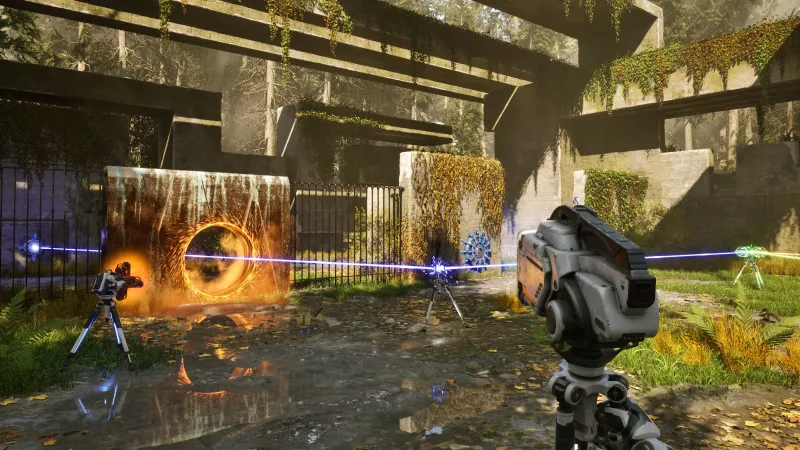
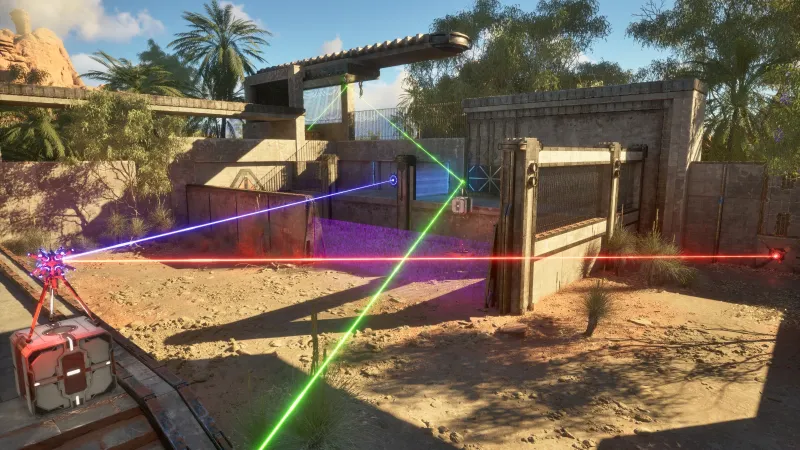
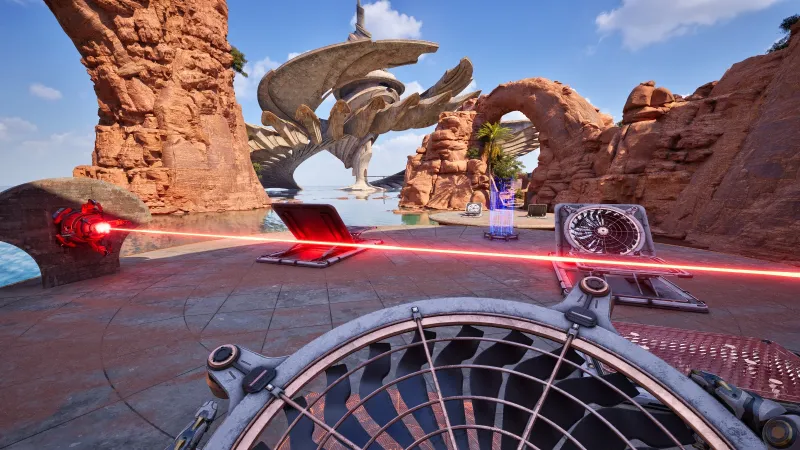
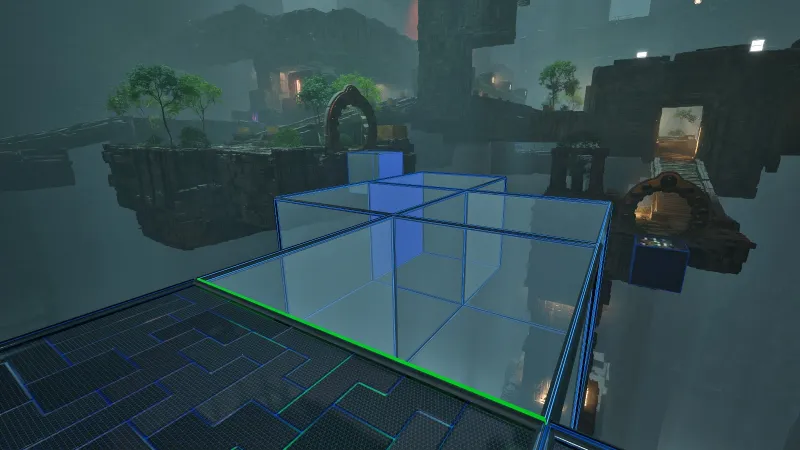
Like the first game, placing crystal refractors to direct light beams around obstacles to the correct lock(s) to open the exit is the core puzzle-solving experience. New mechanics add exciting and creative layers while eliminating the annoying death-dealing hazards, such as bombs and turrets, from the last game. New tools include a device that creates portals on certain surfaces, an anti-gravity machine that lets players (and objects) stand on walls and ceilings, and a refractor that inverts light colors, among others. Each tool is a treat to work with alone, but the game soars highest when challenging you to use several in concert. 

Puzzle-solving is still a tricky exercise of placing, moving, and/or stacking objects in the correct spots or sequence, a process thankfully expedited by speedy player movement. Still, lengthier puzzles require a lot of running around to rearrange things, which sometimes wore on me. The final puzzle is the worst offender, as it requires a tedious amount of back-and-forth trekking to execute such a precise order of operations that slipping up often meant restarting the whole thing from scratch. Despite these headaches, I was consistently impressed with how developer Croteam managed to concoct so many well-thought-out puzzle rooms, and solving them never stopped feeling like a well-earned achievement. 


Unlike the last game, there’s no hint system, but you can skip puzzles entirely by spending a collectible resource. The catch is that finding these helpful tokens is a task in itself, as they’re hidden throughout the open areas. I don’t mind this as someone too stubborn to skip unless a puzzle is truly mind-boggling, and it gave me another excuse to explore, but it does create more work for those eager to move on and see the rest of the narrative. 

The biodiverse island is broken up into four cardinal regions composed of three smaller open hubs, each sporting eight primary puzzles plus optional riddles and collectibles. I enjoyed roaming these expansive regions between puzzles in search of smaller rewards such as lore notes, ancient human tech, or secret laboratories containing tantalizing secrets. The worlds also look quite nice despite frequent geometry pop-in. Though an overhead compass provides some guidance on how to find points of interest, the lack of a proper map made relocating some destinations more of a chore than I would have liked. Environmental puzzles, such as rerouting an island-wide light beam or chasing hidden particle clouds to statues, offer neat side diversions and welcomed breaks from the critical path. The other major recurring puzzle comes in the form of assembling bridges by correctly rotating and connecting giant Tetrinomo pieces, though this exercise lost its luster after a few hours. 

The Talos Principle II is a long game, perhaps to a fault. I clocked in around 34 hours, and despite my generally consistent enthusiasm, I was ready to see the end before it hit me with another round of puzzles or a story-focused exploration segment. It’s an ambitious and ultimately well-made package with many social, artistic, and scientific ideas that I’ll be thinking about for the foreseeable future, long after the solution to its final riddle has faded from memory. That enlightenment makes The Talos Principle II’s challenges worth the effort.

GI Must Play

Score: 8.75

About Game Informer's review system

Purchase
Wednesday, November 15, 2023

Super Mario RPG Review - Toady Nostalgia

Reviewed on: Switch
Platform: Switch
Publisher: Nintendo
Developer: Nintendo
Rating: Everyone

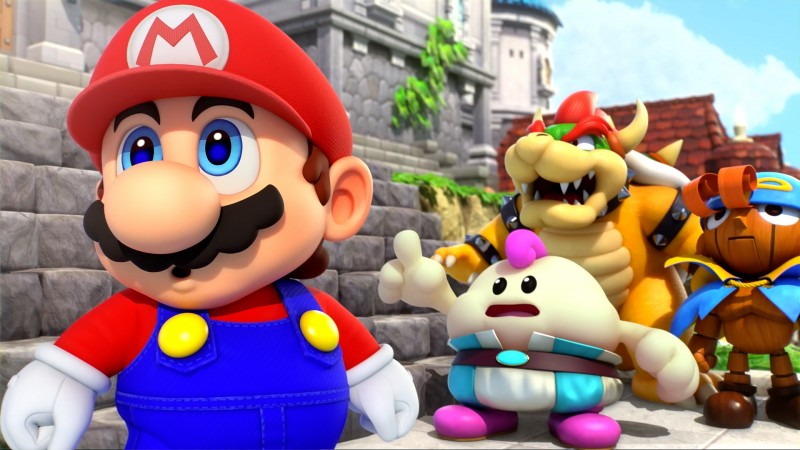
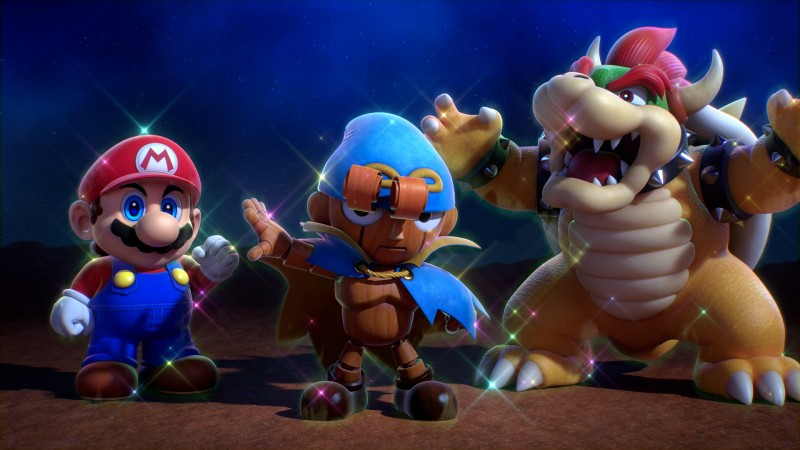
The original Super Mario RPG, released for Super Nintendo in 1996, felt like it was meant to be your first RPG. In an era when Final Fantasy tried its best to tell mature stories within the medium's limitations and Dragon Quest demanded hours and hours of your time, Mario’s adventure felt much brighter and more manageable. Familiar characters, a lighthearted story, a reasonable length, and timed button-pressing during combat made it stand out against the competition. Revisiting the game more than 25 years later in this new remade shape shows the original formula did not need much tweaking to deliver an engaging and enjoyable journey. Super Mario RPG is not entirely innocent of the sins of video games past, but old fans will relish the chance to see the game in a new light, and I’m confident newcomers will find something to love.

Beyond the fun combat, visuals, and story, the best part of Super Mario RPG is that it is incredibly bizarre. The Nintendo of 1996 was still figuring out the rules of Mario’s universe, and as a result, developer Square (not yet Square Enix) was able to create characters and put Mario in positions his parent company would likely never agree to today. The remake, thankfully, maintains all of that weirdness. I didn’t find anything salacious or offensive, but there are entire races of characters that we have never seen again in the Mario universe, Shy Guys have full conversations, and some dialogue choices make Mario come off as a jerk. In one scene, a party member has to hold Mario back from punching a child Toad who casually insulted him. I am grateful the game has not been sanitized and is still full of admittedly inconsequential references to other franchises and Nintendo games.

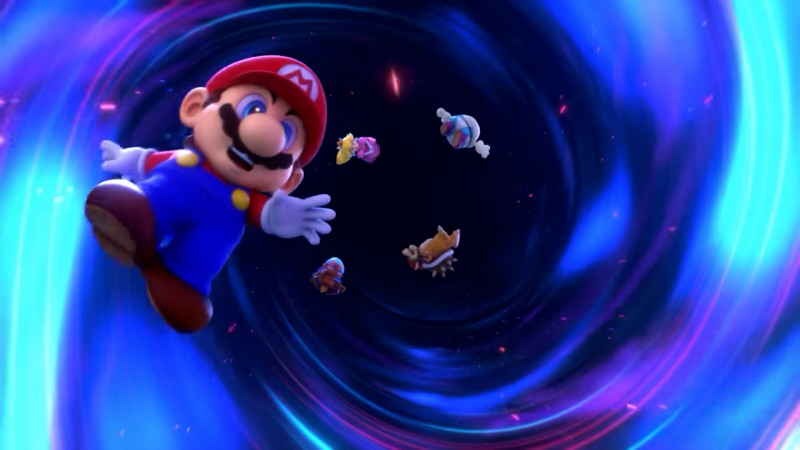
The story is also still quite funny. It never reaches the comedic heights of its spiritual successors like Paper Mario or Mario & Luigi, but I chuckled often. Mario’s primary means of communication is jumping to prove he is actually Mario, and every time I pressed the jump button to move the conversation forward; I appreciated the commitment to the bit. Outside of the comedic moments, the actual plot is perfunctory, with few, if any, emotional moments, but I was still eager to see where I was going and who I was going to meet next. Added in-engine character introduction moments and the occasional pre-rendered cutscene help deliver the story in new ways, but I am disappointed that the whole game doesn’t feature the same visual fidelity.


As it was in the past, combat is a highlight, and the additions for the remake improve the action without detracting from what made it fun to begin with. A new Action Gauge fills as you successfully pull off Action Commands (the timed button-pressing) across battles, and when full, you can pull off powerful and flashy Triple Moves. I went out of my way to try every party combination to see all of them and enjoyed tracking how high I could get my Action Command Chain across battles. One shortcoming, however, is pulling off Action Commands isn’t always clear beyond seeing your chain number ticked up. Subsequent games inspired by Mario RPG’s combat, like 2023’s Sea of Stars, have done a better job at iterating on this system and offering better feedback.

Much of what has changed about Super Mario RPG for the remake beyond the visuals is behind the scenes. The pace is brisker, and my hour count (even after beating the big optional boss) came in lower than the average playtime of the original. The game has been tweaked only slightly to add some new mechanics and make the adventure even more welcoming than it already was. The result is an experience that only shows its age slightly and rewards longtime fans and newcomers alike.

GI Must Play

Score: 8.75

About Game Informer's review system

Purchase
Tuesday, November 14, 2023

Persona 5 Tactica Review - One More Uprising

Persona 5 Tactica

Reviewed on: PlayStation 5
Platform: PlayStation 5, Xbox Series X/S, PlayStation 4, Xbox One, Switch, PC
Publisher: Sega
Developer: Atlus
Rating: Teen

Persona 5 has become its own sort of mini-franchise within the Persona series. With many spin-off titles released over the years, such as Persona 5 Strikers, Persona 5: Dancing in Starlight, and Persona Q2: New Cinema Labyrinth, Atlus seems to love using Persona 5’s popularity to explore new stories and gameplay ideas. However, I applaud Atlus for making all of these spin-offs in completely different genres from each other. The latest, Persona 5 Tactica, delivers an entertaining story, a colorful cast of characters, and fun combat mechanics within the context of a strategy RPG. Longtime Phantom Thieves can look forward to an enjoyable side adventure, but its uneven pacing and low enemy variety hold it back from being a true revolution.

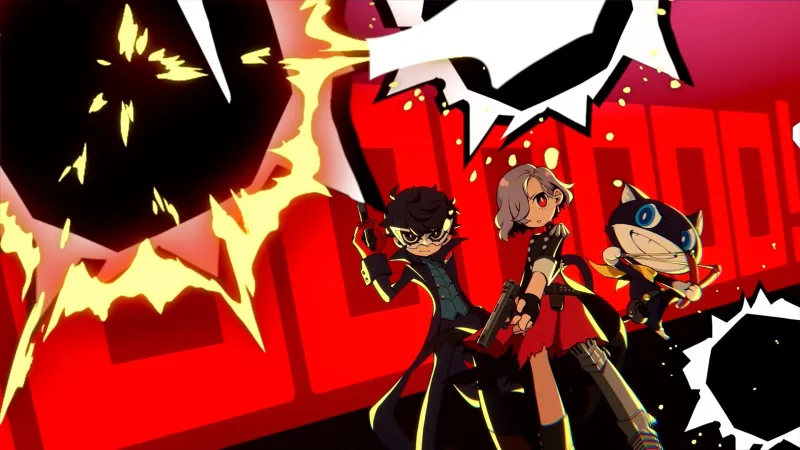
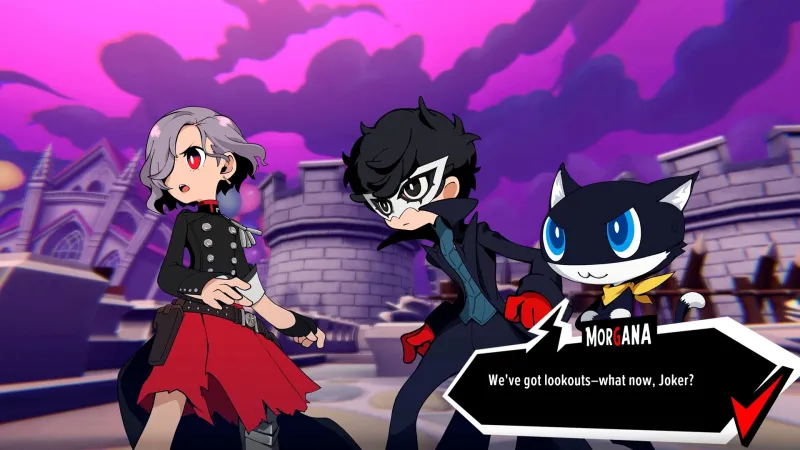
Persona 5 Tactica’s story follows the core roster of characters from the original RPG. After finding themselves sucked into an alternate dimension, the group teams up with Erina, the local leader of the Rebel Corps, who wants to liberate citizens from the oppressive rule of the Legionnaires. Toshiro Kusakabe, an amnesiac politician from the real world, also somehow gets swept into the conflict. Their unknown connections to this alternate dimension have enough mystery to keep them interesting throughout the game. As the Phantom Thieves search for a way back home, the antagonists’ motivations intertwine with the origins of these newly introduced characters.

The camaraderie between the cast members can be seen through optional conversations that naturally unlock as you progress through the story. Scenes like these are fun side conversations that allow characters’ personalities to shine, such as Erina’s natural leadership skills after a scene where she feels like a liability, or Ryuji’s role as the comic relief character when a treasure chest he’s seeking turns out to be useless villain-branded merchandise. Viewing these talks also gives the party members GP, which are skill points to be allocated to learn new abilities, so there’s a useful gameplay incentive too.

These conversations are bright and fun to listen to, thanks to the game’s excellent voice acting and art direction. The presentation style is more in line with an exaggerated cartoon style like Persona Q2’s rather than the more realistic proportions like in the original game and Strikers. This helps give Tactica a more lighthearted feel to balance out its darker themes, including illness, death, and trauma. The Persona series is also well known for its music, and Tactica’s soundtrack doesn’t disappoint. The soaring vocals and electrifying guitars will have your head bumping as the Phantom Thieves and Rebel Corp overthrow dictators in battle.

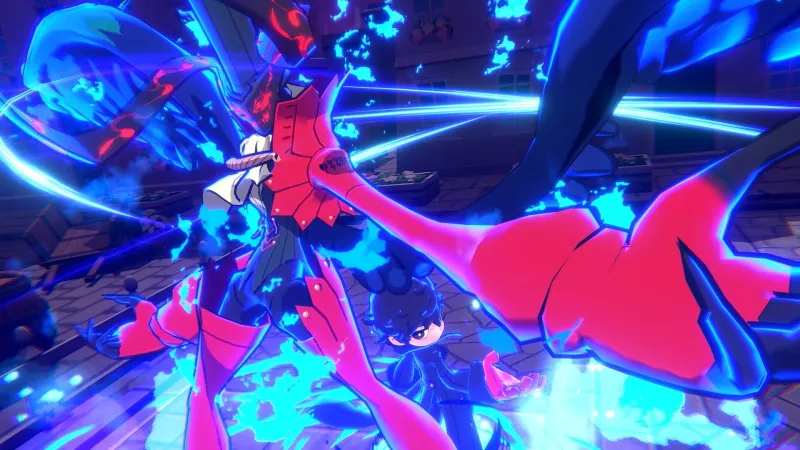
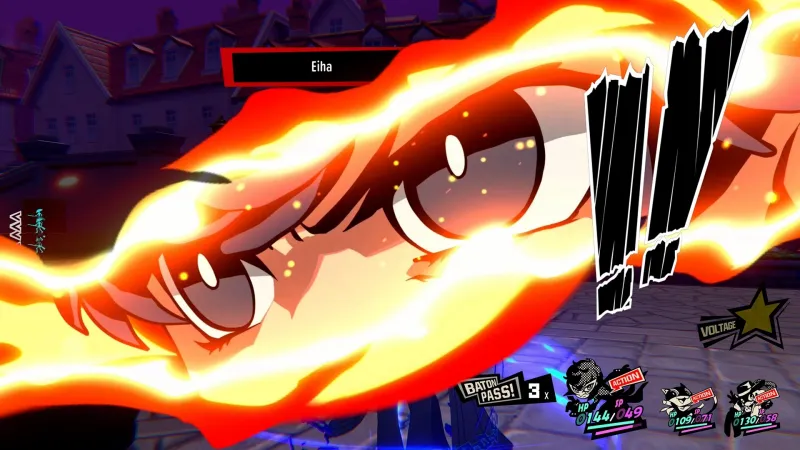
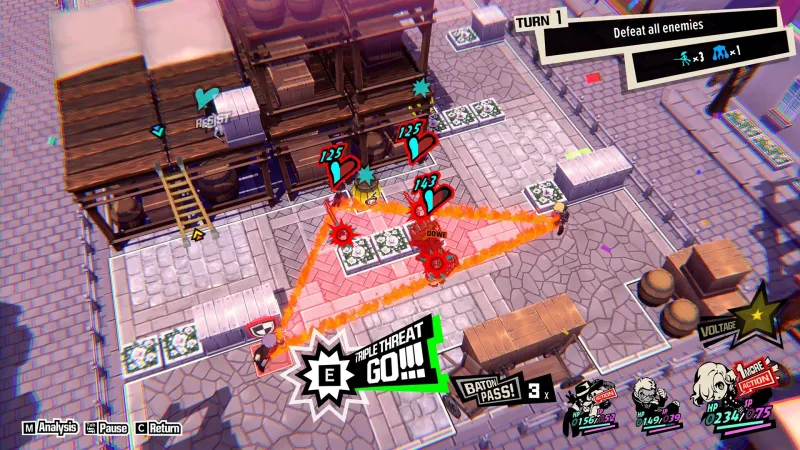
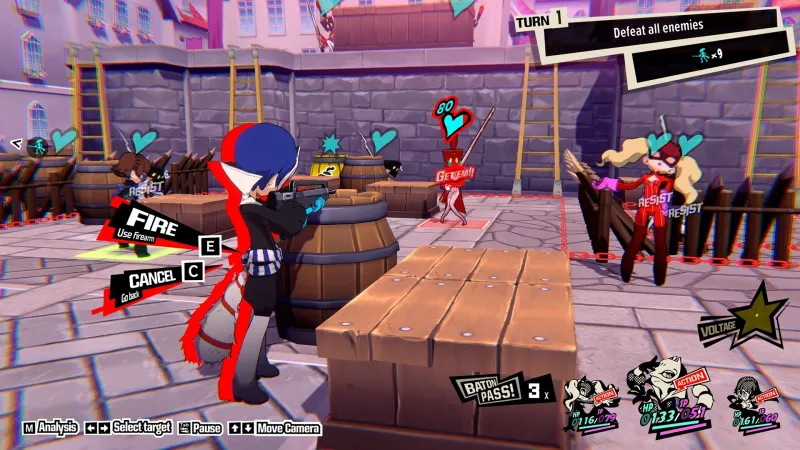
Tactica’s combat is more similar to XCOM than Fire Emblem in terms of strategic battles. Your team of three characters can hide behind cover and gain either partial cover, which drastically decreases incoming enemy damage, or full cover, which provides complete immunity. Tactica cleverly utilizes Persona 5’s main battle mechanics to fit the strategy genre. The most impressive implementation is the franchise’s signature “1 More” mechanic. In Tactica, instead of hitting enemy weaknesses or scoring a critical hit to trigger an additional turn, any unit on the field that isn’t behind cover becomes vulnerable. Being able to chain multiple 1 More turns and extending my movement range each time replicates the same sense of accomplishment that I felt when triggering multiple 1 More turns in the main game.

The 1 More mechanic is even more important when it comes to the game’s side quests. These side quests have restrictions, such as only being allowed to use certain characters or having to complete the battle under a fixed number of turns. I found these to be challenging but also incredibly fun, as they commanded me to think much more strategically than standard story missions. The side missions where I was required to beat them in only one turn were exhilarating.


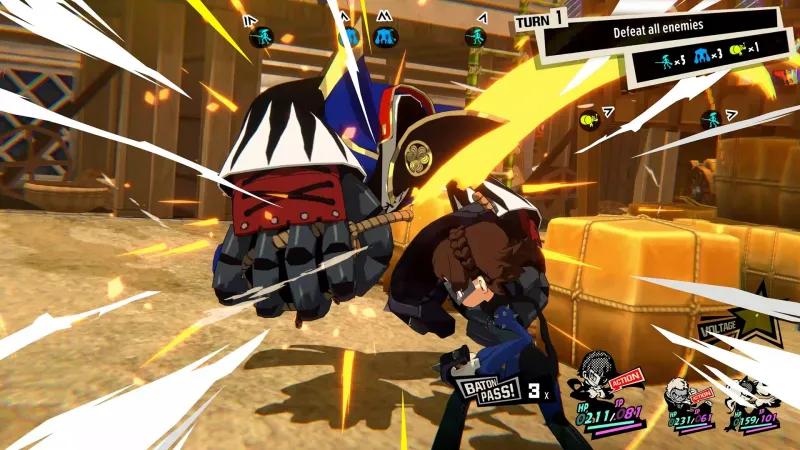
I had to activate as many 1 More turns as I possibly could while also trying to keep my teammates in a triangle formation. Triangulating on a downed enemy activates Triple Threat, which is Tactica’s version of the RPG’s All-Out-Attacks, where enemies caught in the blast receive massive damage. Mastering these techniques to come out on top of these challenging side missions is rewarding, and they come with an equally amazing prize: Completing them nets you 20 GP as opposed to 2 or 3 when viewing conversations.

However, the gameplay suffers from uneven pacing when it comes to introducing new mechanics. This is especially true during the first 10 hours; you don’t receive the powerful follow-up mechanic until the second chapter. I’m confused as to why these highly effective attacks, which let teammates attack an extra time if you knock an enemy off a higher place, weren’t introduced earlier, as that would’ve kept the early hours fresh.

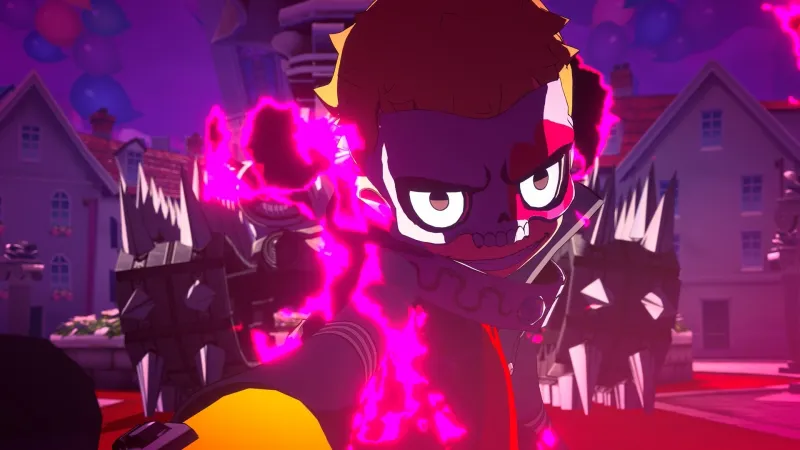
Enemy variety is also sorely lacking. Much of the time, you end up facing regular enemies with guns that don’t have any special traits to them. There’s also a bigger enemy that can only be downed if you hit it twice. Aside from some unique boss mechanics towards the end of a chapter, new enemy types are introduced sparingly. Enemy variety does improve later on, but not quick enough; it’s usually only a single new one per chapter. As a result, it’s boring to simply go through the motions when you’re repeatedly fighting the same kind of enemies.

Persona 5 Tactica is a fun time for someone who’s looking for a more casual strategy game. The Phantom Thieves are just as charming as ever, and the newly introduced characters mesh well with them. It’s not an essential experience in the same way that Persona 5 Strikers was, but fans who aren’t tired of Persona 5 yet will find plenty to like with Tactica.

Score: 7.25

About Game Informer's review system

Purchase
Monday, November 13, 2023

Call of Duty: Modern Warfare III Review - Not-So-Special Ops

Reviewed on: PlayStation 5
Platform: PlayStation 5, Xbox Series X/S, PlayStation 4, Xbox One, PC
Publisher: Activision Blizzard
Developer: Sledgehammer Games
Rating: Mature

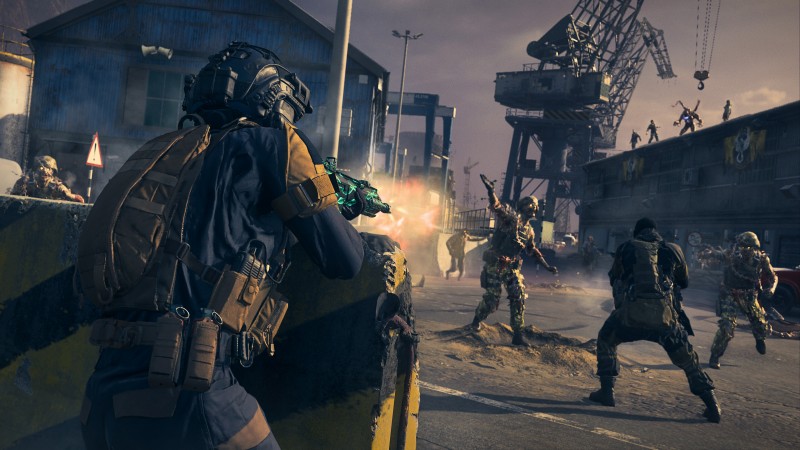
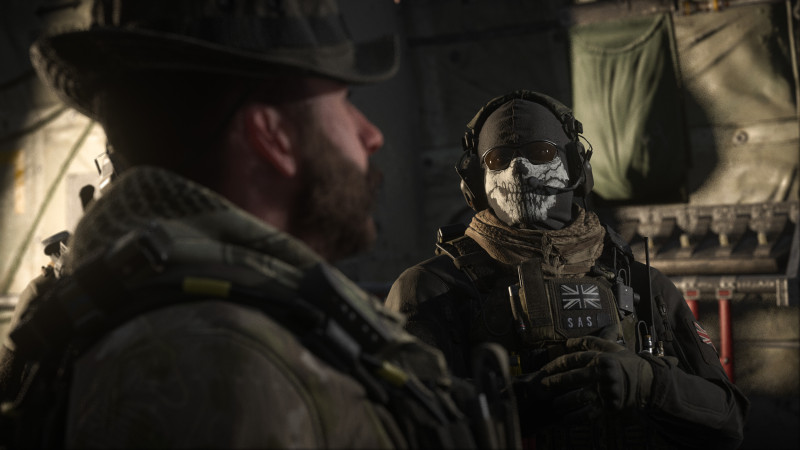
Call of Duty cycles through its lineup of villains on a yearly basis. Sometimes it's Nazis, other times it's Russian nationalists or zombies. But the most dangerous threat is one without a lust for brains or access to weapons of war; it's stagnation. And while many Call of Duty teams often switch up just enough variables to stave off monotony, Call of Duty: Modern Warfare III fully submits to the annual churn.
 
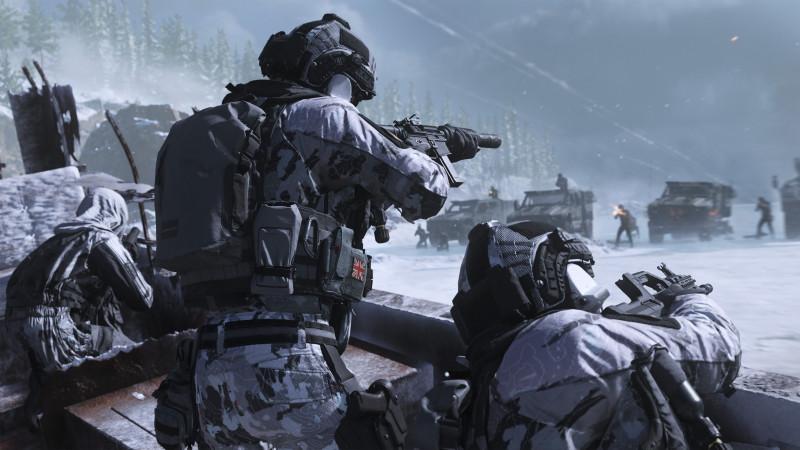
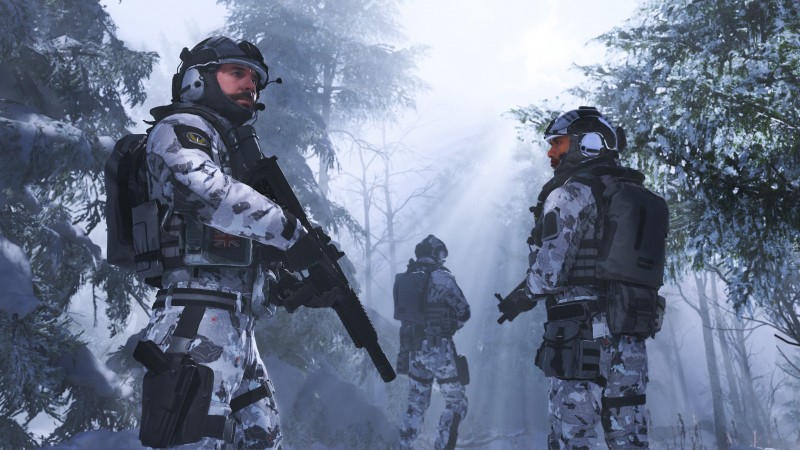
The campaign embodies this, as it rushes to a conclusion with little care for the details. COD missions usually follow a predictable yet mostly effective formula of packing together various one-off gameplay mechanics through fluctuating levels of intensity. Modern Warfare III cuts out necessary buildup and most of the variety, leading to basic stages riddled with pacing issues. Many max out at around 15 minutes, which means the usual rollercoaster of ups and downs has been stripped down to only include the descents. The spectacles are also less bombastic, and the abbreviated journey to them only further diminishes their appeal.

Speeding ahead also impedes the storytelling since it barrels through beats at an astonishing clip. How Call of Duty: Modern Warfare II’s antagonist is alive and why they’re now an ally was haphazardly glossed over in a cutscene from a previous multiplayer season. Vital details like that are just more casualties of its hurried pacing.

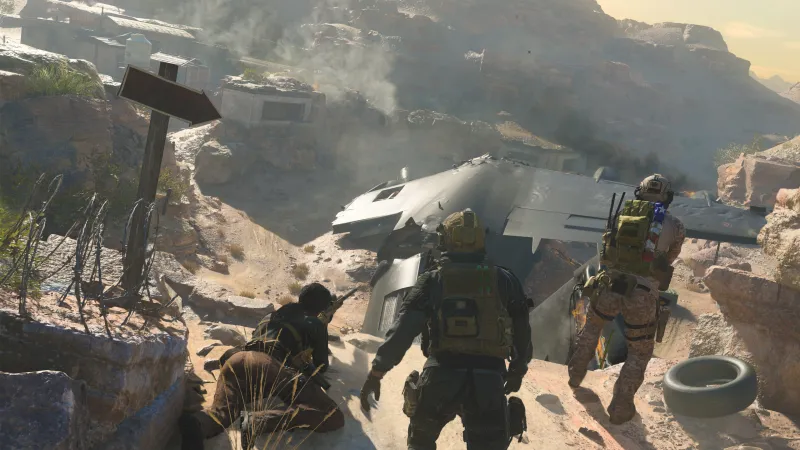
While much of the campaign poorly emulates what COD has already done, the wider Open Combat missions attempt to take that blueprint into new territory. However, the promise of more agency is undone by how shallow these stages are. Exploring these larger levels is not worthwhile as unlocking new guns is often redundant. Upgrades and weapons also don’t carry forward between missions.

Objectives can be tackled in different ways, but these options don’t go far beyond going loud or sneaking through using rudimentary stealth mechanics. Static mission and map design, limited interactivity, and a lack of meaningful rewards deflate their intended replayability and mean one run is more than enough. Nonlinearity is novel here, but novelty alone is not enough.


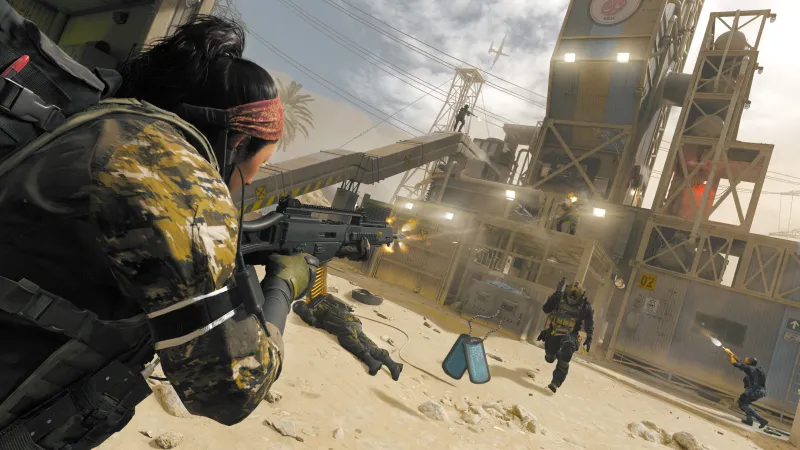
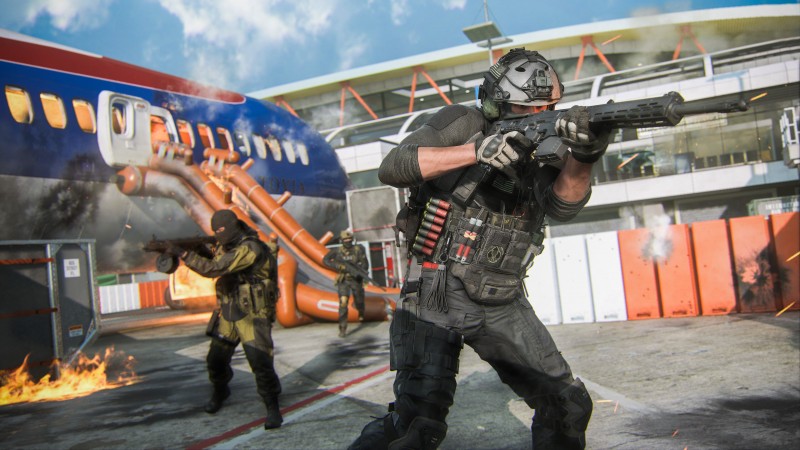
MWIII’s multiplayer modes more clearly flex COD’s signature smooth gunplay and impressive sound design, but are not exempt from the malaise that affects the whole experience. Lower score thresholds and more agile movement mean competitive multiplayer matches have a faster tempo that’s still kept in check by the higher time-to-kill. This cadence allows for thrilling firefights, but time spent out of combat is a drag. Earning all the same gear each year is already a tiring process made even more laborious by MWIII’s grindy unlock system and busy menus.

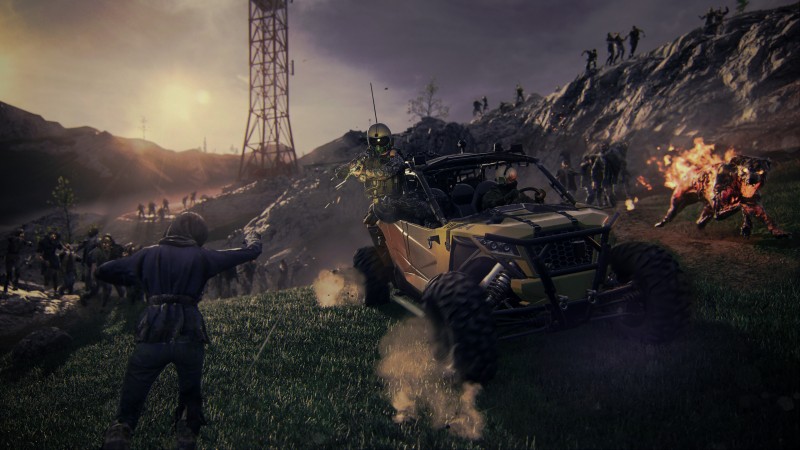
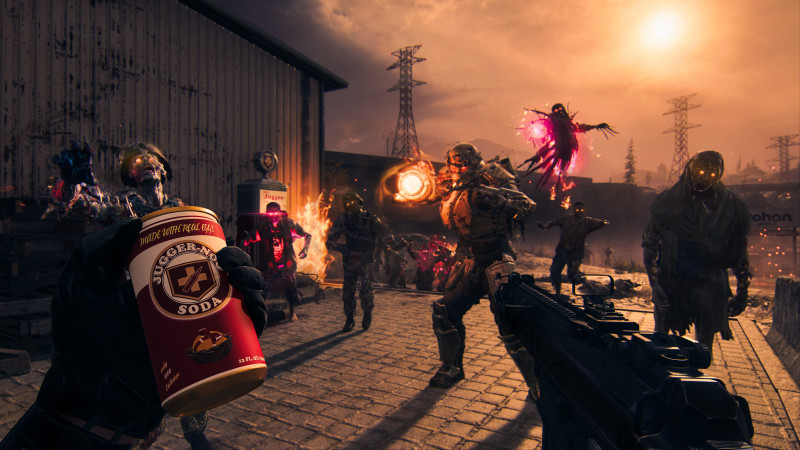
Competitive multiplayer, while familiar, highlights at least many of the series’ strengths, but the Zombies mode can’t even shamble over that low bar. Turning Zombies into an extraction shooter waters down the formula since success now requires multiple matches. The high difficulty means players must repeatedly drop in and acquire better gear before moving forward. The process is slow and tedious and full of uneventful loot runs and, if killed, lost progress.

Zombies feels more like a limited-time Warzone event cobbled together from existing ideas and assets and that sentiment permeates throughout MWIII. Each pillar is an inferior patchwork of past ideas from its stunted campaign to its multiplayer that, while the strongest mode, is comprised of systems lifted wholesale from MWII with maps from 2009’s Call of Duty: Modern Warfare 2. This year’s COD is a threadbare expansion masquerading as a sequel and an embarrassing way to mark the series’ 20th anniversary.

Score: 5

About Game Informer's review system

Purchase
Tuesday, November 7, 2023

Nickelodeon All-Star Brawl 2 Review - A Slime Fight in The Limelight

Reviewed on: PlayStation 5
Platform: PlayStation 5, Xbox Series X/S, PlayStation 4, Xbox One, Switch, PC
Publisher: GameMill Entertainment
Developer: Ludosity, Fair Play Labs

When the original Nickelodeon All-Star Brawl came out in 2021, it was a relatively bare-bones experience, but those bones were solid. Despite lacking many single-player modes, items, and even character voices, the core gameplay was good enough to keep the game afloat until it received refinements via online updates over the next two years. Nickelodeon All-Star Brawl 2, however, comes packaged with all those improvements and more. Developer Fair Play Labs has learned its lessons, and while the game isn't without its faults, it's a more-than-worthy follow-up.
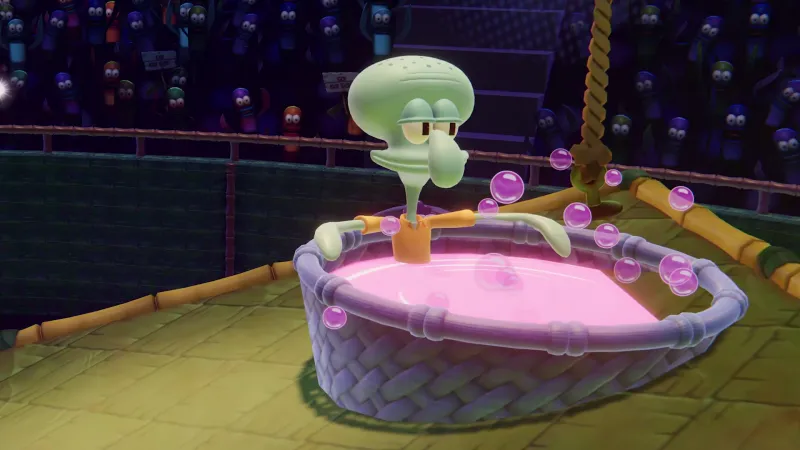
Nickelodeon All-Star Brawl 2 starts you off with 25 characters, which is the same amount currently available in its predecessor if you include DLC. A surprisingly large number of characters do not return for the second entry, however; only 14 fighters return, meaning 11 were replaced. If one of your favorites was cut, you have every right to be disappointed, but it's a blessing as well. For one, notable exceptions from the first game, like Squidward and Jimmy Neutron, are included here. A new roster also means the team at Fair Play has more opportunities to be creative with character mechanics, and the game feels more novel, even though the basic gameplay is similar.

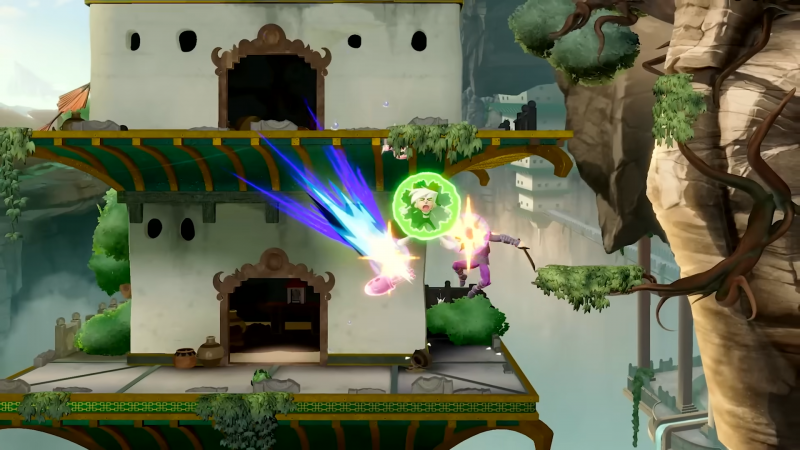
Luckily for All-Star Brawl 2, its strongest elements are its core combat mechanics. All the side content in the world means nothing if the game doesn't feel good to play in its most basic modes, so it's a good thing the franchise still feels great. Movement is quick and precise, powerful attacks are satisfying to land and devastating to absorb, and a new slime meter raises the skill ceiling higher than before. Fair Play has struck a successful balance between depth and approachability.

This balance is exemplified in the slime meter system. As you play a match, your meter slowly increases, and by holding one of the triggers, you can spend that meter on a variety of actions. You can make attacks stronger, cancel attacks, make your shield last longer, or use a slimeburst to halt your momentum and save yourself from flying offscreen. For casual players, however, the slime meter will probably only ever be used when it hits maximum level, at which point you can unleash an ultimate move. These character-specific, cinematic attacks are only lethal when your opponent is at a high damage level, making for exciting finishes to matches.

While the slime meter allows for more complex high-level play, I would have liked some more comprehensive tutorials to help newcomers reach that level. There's a "how to play" section tucked away in the single-player tab in the menu that gives a good overview of the basic mechanics, but more complicated maneuvers (like some slime skills) are reduced to quick text boxes you click through. Character-specific tutorials for some mechanics would have been appreciated as well, but you can always pause the game and see move descriptions in the "movesets" section.

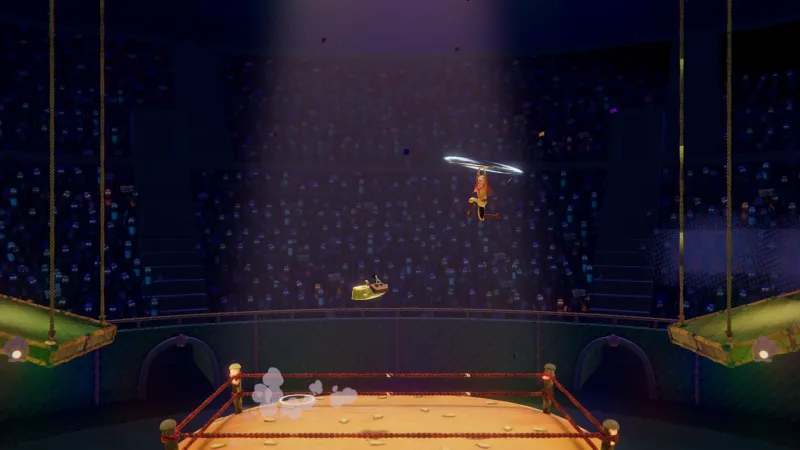
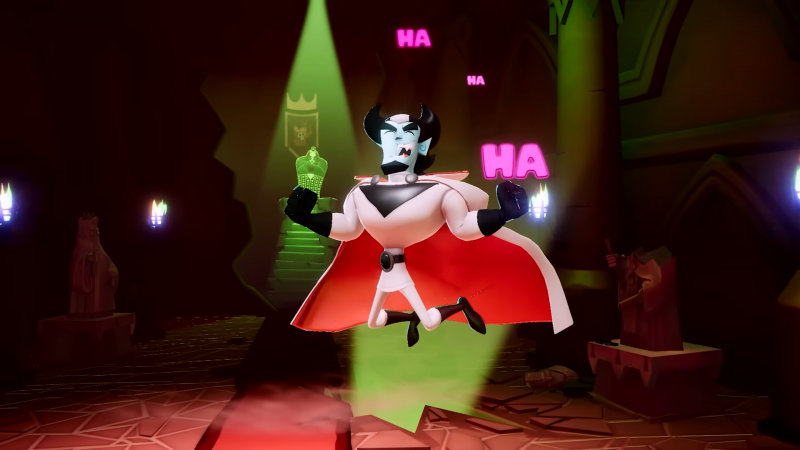
The biggest new feature All-Star Brawl 2 introduces is a campaign mode. Because of a dastardly plot helmed by Danny Phantom villain Vlad Plasmius, the universe is doomed to explode. Luckily, Clockwork (also from Danny Phantom) sucks Spongebob into a hub outside time and space, allowing him to journey through a series of levels to defeat Plasmius, with Clockwork rewinding time if you fail. The narrative itself is nonsensical and frustrating, frequently undermining achievements the player makes by pulling the rug out from under them and immediately inventing a new problem. It ultimately didn't ruin the campaign, though, because it takes up a relatively small amount of the experience, and the gameplay itself is shockingly fun.

Structurally, it's a roguelite. Runs are divided into three areas which you navigate via a series of paths in a menu screen. Activities vary by level, with some having you face off against henchmen from various Nickelodeon shows, and others having you pop balloons or complete platforming challenges. You can also fight mind-controlled versions of characters from the game's roster, gaining the ability to play as them in future runs if you succeed. Finally, each area is capped with a boss, like Sartana of the Dead or Shredder. These battles are hit or miss; late-game bosses are oddly much easier thanks to their simpler stages and general lack of movement – The Flying Dutchman, a boss from the first area, consistently gave me the most trouble.

You can also unlock various upgrades from Professor Wakeman in the hub world, granting you extra lives, opportunities to heal, and better upgrades from shopkeepers mid-run. By the time I reached the end, I had an absolutely busted Azula build where most attacks poisoned foes and healed me. It's an incredibly satisfying power crawl. And even though the narrative falls completely flat overall, I enjoyed interacting with various shopkeepers along my runs, including Mrs. Puff, Hugh Neutron, and the Cabbage Merchant from Avatar: The Last Airbender. Each playable character has unique dialogue with each shopkeeper and boss, and it's fun to play as different characters to see how they interact.

Nickelodeon All-Star Brawl 2 is a successful second attempt at the groundwork laid by its predecessor. Fair Play delivers a solid platform fighter that simultaneously improves the franchise's core mechanics and introduces side content to flesh out the overall package. It's nothing mind-blowing, and it's certainly not the next Super Smash Bros., but it's engaging, exciting, and worth your time.

Score: 8

About Game Informer's review system

Purchase