Pages

Wednesday, January 31, 2024

Granblue Fantasy: Relink Review - The Borders Of The Skies

Granblue Fantasy: Relink

Reviewed on: PlayStation 5
Platform: PlayStation 5, PlayStation 4, PC
Publisher: Cygames
Developer: Cygames
Rating: Teen

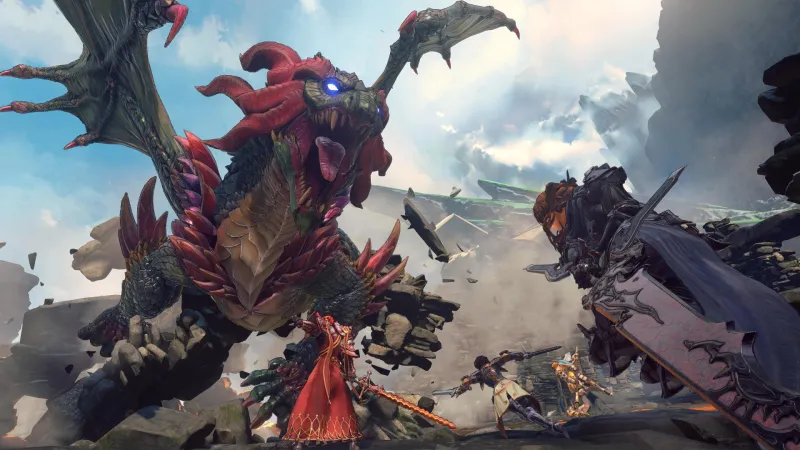
The thrill of adventure in a boundless playground tickles the imagination, something intimately familiar to players of Granblue Fantasy, a mobile/browser-based title that has been a hit internationally for over a decade. The original title resembles 16-bit turn-based RPGs like the Final Fantasy or Dragon Quest games of old, leaving daydreams of grander scale and exploits a hopeful wish rather than an inevitable reality. With Granblue Fantasy: Relink, developer CyGames has an opportunity to explore a fantasy world of open skies and magic while pulling the game from a comparatively modest mobile title into a full-blown 3D action game. While not completely successful, Granblue Fantasy: Relink should be lauded for getting most of the way to being a memorable title, but it needed a little more ambition and unique content to reach that goal.

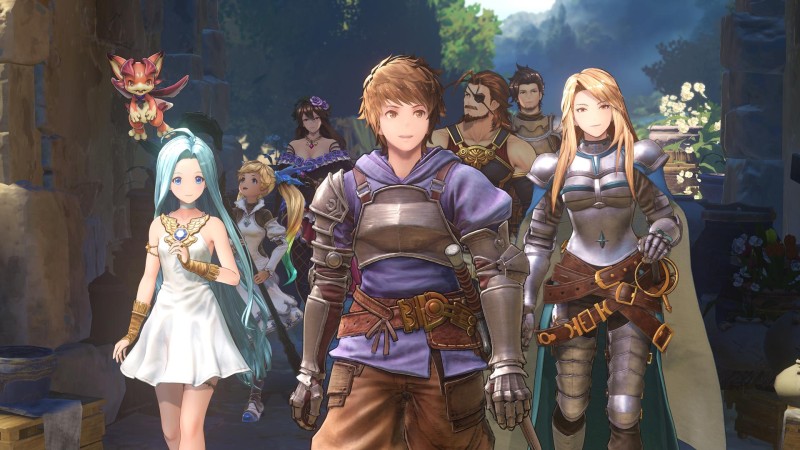
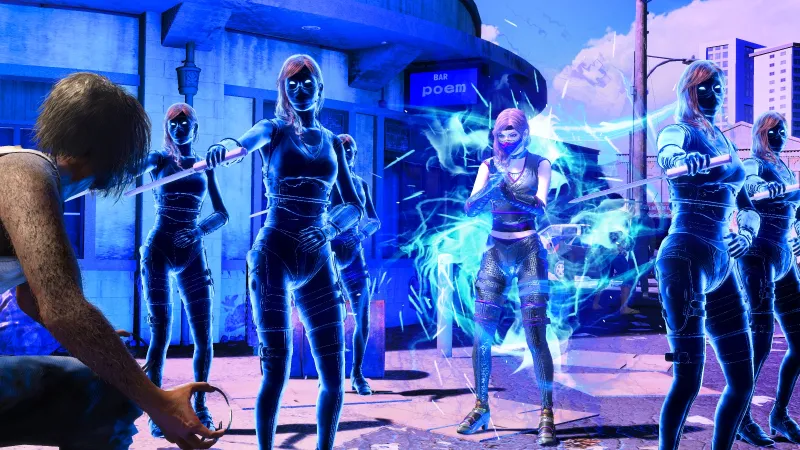
Relink guides players through a single-player campaign with the crew of the Grandcypher, a band of skyfarers that has combat-resolved adventures on every new island it comes across. For this title, a wholly original island and story was created, tasking the crew with rescuing one of their own by defeating giant monsters called Primal Beasts and defeating a sorceress controlling them.

Those unfamiliar with the story and characters of Granblue Fantasy will not find Relink particularly interested in catching the player up. Small vignettes of how the characters met and how they arrived at the latest pitstop island that sets up this game’s adventures are essentially all the player receives without the aid of fanmade wikis filling in the rest. It has a similar energy to picking up the anime One Piece halfway through or jumping into the middle of a Tales game, with no intention or desire to dwell on its past history the player is presumed to have seen.

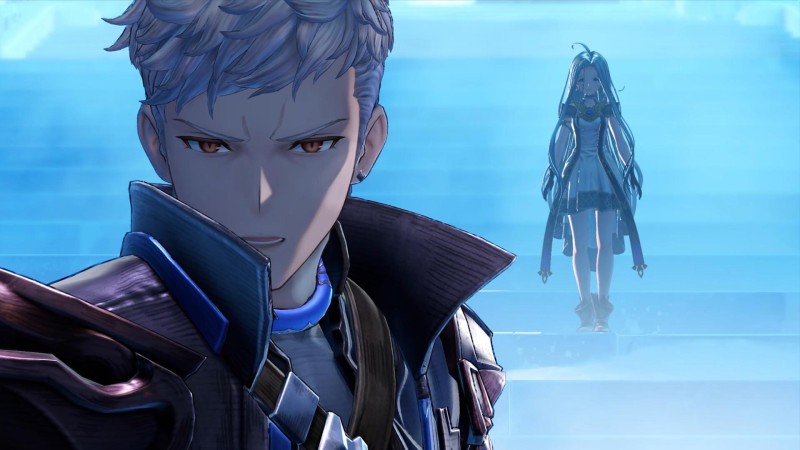
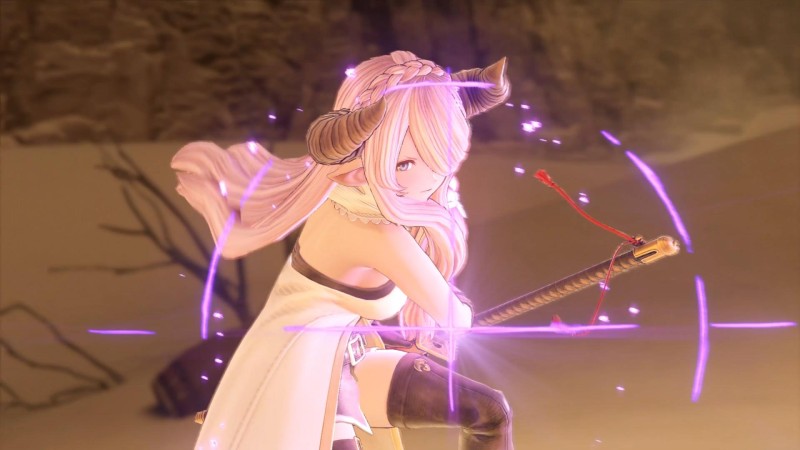
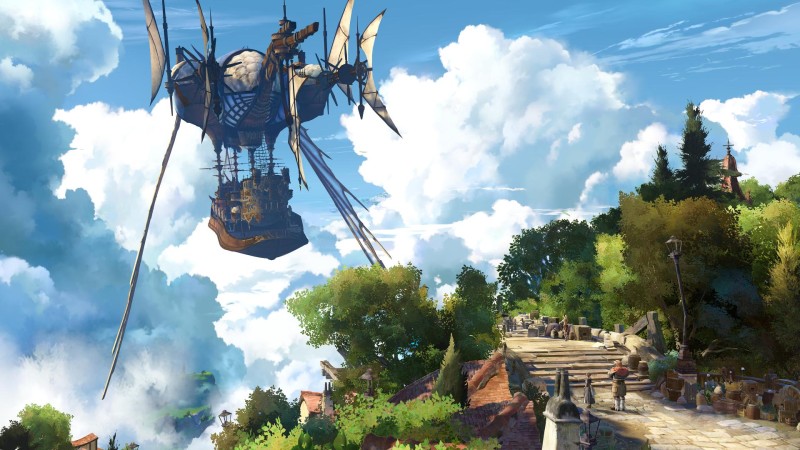
Relink can also look beautiful, especially with its painterly environments, but it is difficult not to notice that the art style translates inconsistently among the characters. Arc System Works’ Granblue Fantasy Versus is a much more successful experiment using the same designs.

The single-player campaign, while short, presents interesting plights like climbing toward a wind god at the top of a blustery mountain or taking back a castle from an invading force. Players take control of an unlockable cast of 19 characters with different fighting styles and special moves to follow a somewhat basic storyline that does not take too many big or unpredictable swings.

These characters all share a similar template of using four special moves and movement options, but they vary significantly in special skills and meters. My favorite character bounced on top of enemies and specialized in parries on the ground, but a late unlock focused more on transformations and building up meter, making even just those two feel distinct.

Unfortunately, levels are largely linear pathways without much in the way of exploration. The endless skies and hovering islands are rarely used for anything but backgrounds and transference to the next fight, leaving little reason to poke your nose anywhere but the most linear path. A world where the characters talk about inexhaustible space for escapades and capers but spend much of their time in caves and on walkways is incongruent in a way that grates as time goes on.


After completing the single-player campaign, players can take combat quests that can be played co-op with friends or strangers. Difficulty rises alongside progressing ranks, and characters must power up through elective means like skill trees and weapons to keep up. By endgame, keeping a team powerful enough to solo these missions requires a lot of grinding, but focusing on one character discourages variety, especially when there is the option of 18 others to use. There is no real way to work around this grind, which wants you to redo missions over and over to get admittedly guaranteed materials and experience to upgrade, though the reversal from how smooth the early game’s progress felt can act as a frustrating brick wall.

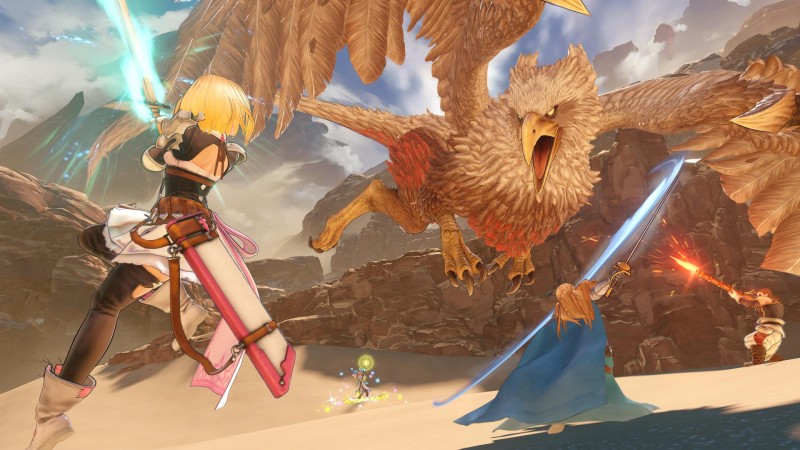
Endgame bosses are monstrous with equally gargantuan HP bars, making battles tedious. Unlike a Monster Hunter, your quarry never escapes or requires different strategies, and the likelihood of powering through any knock-out state means the player is mainly in a race against ending the battle before getting bored.

The saving grace of these extended gameplay encounters is that the combat is reasonably engaging, and interactions between characters will likely delight existing Granblue Fantasy fans. Relink is unlikely to be any newcomer’s favorite game. Still, the basic gameplay is fun and keeps you moving along the treadmill, especially if you have a gathering of like-minded source material fans to help you slay its biggest figurative and literal dragons.

Score: 7

About Game Informer's review system

Purchase

Tuesday, January 30, 2024

Persona 3 Reload Review - Into The Light

Persona 3 Reload

Reviewed on: Xbox Series X/S
Platform: PlayStation 5, Xbox Series X/S, PlayStation 4, Xbox One, PC
Publisher: Atlus
Developer: Atlus
Rating: Mature

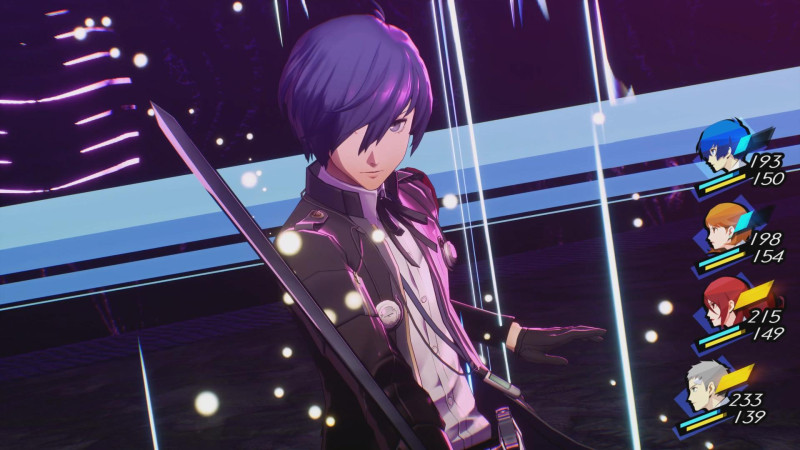
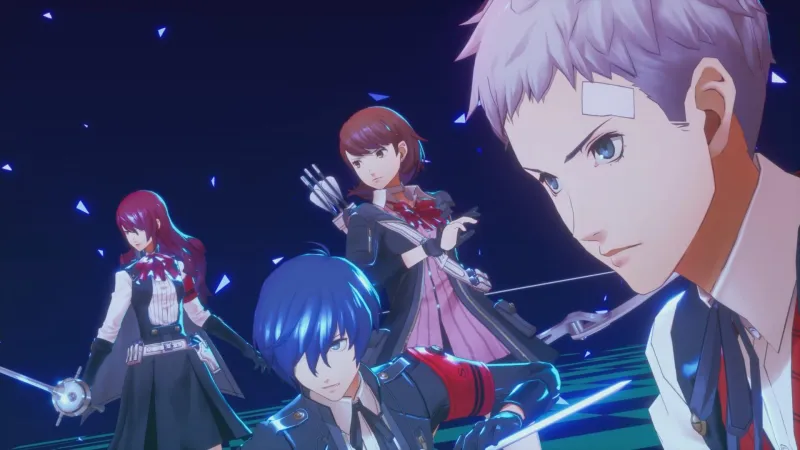
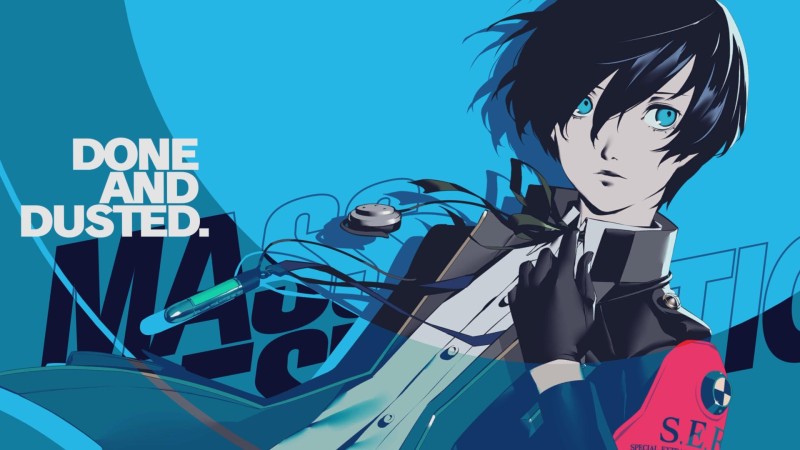
Persona 3 is perhaps the most important entry in the Shin Megami Tensei spin-off franchise. By establishing several series mainstays, including the popular Social Links system, Persona 3 laid the foundation upon which the next two mainline entries would be built. Unfortunately, by today’s standards, that 18-year-old title is unapproachable in many ways. Persona 3 Reload remedies that, bringing forward the outstanding cast, story, and turn-based battles in a faithful remake with the modern amenities of Persona 5 Royal. While it is a massive success, some persistent outdated elements from the original prevent Reload from reaching the heights of other modern games in the series.

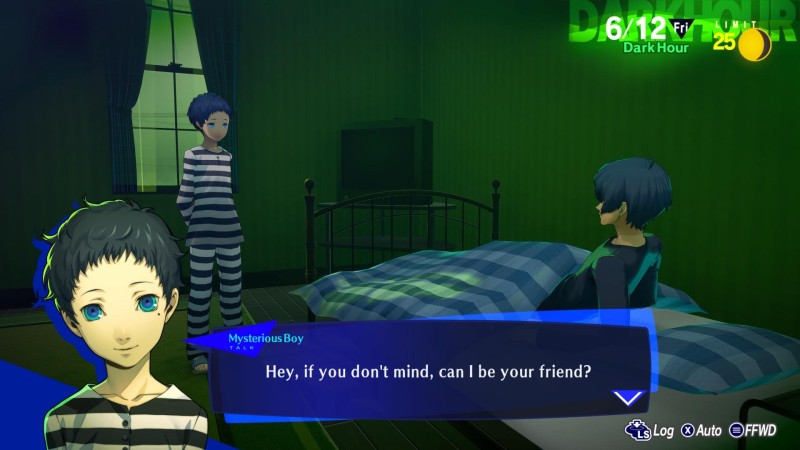
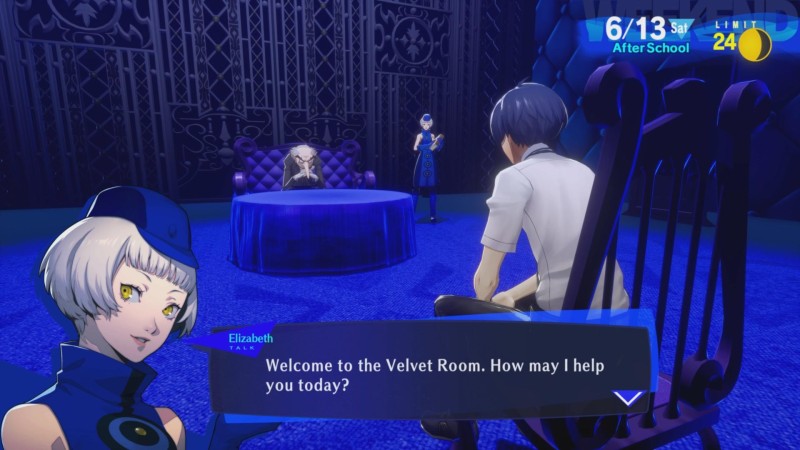
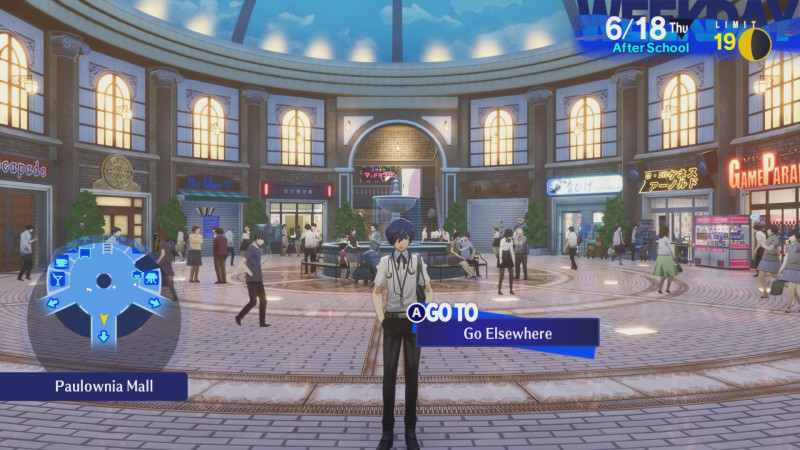
In a premise familiar to Persona fans, you control a transfer student arriving at his new high school. However, when night falls, it’s far from an ordinary schoolkid’s existence as you enter an anomaly known as the Dark Hour. Here, everyone is confined to coffins except for powerful humans who can wield magical entities known as Personas. Using these, the cast must hunt down Shadows around the city, primarily in a procedurally generated tower known as Tartarus.

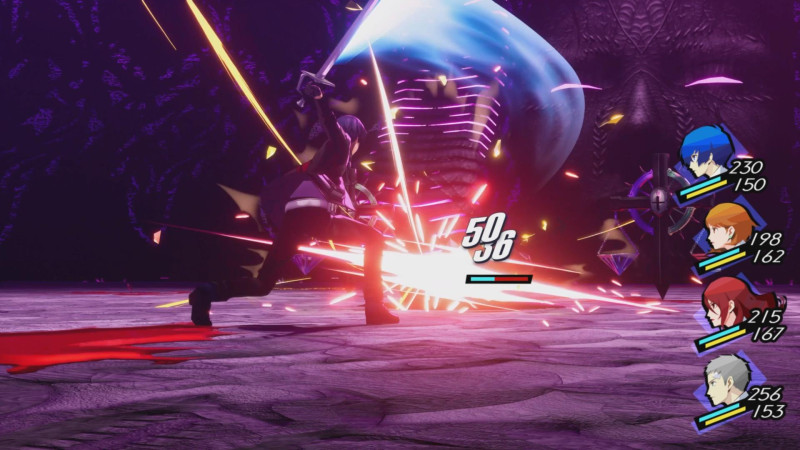
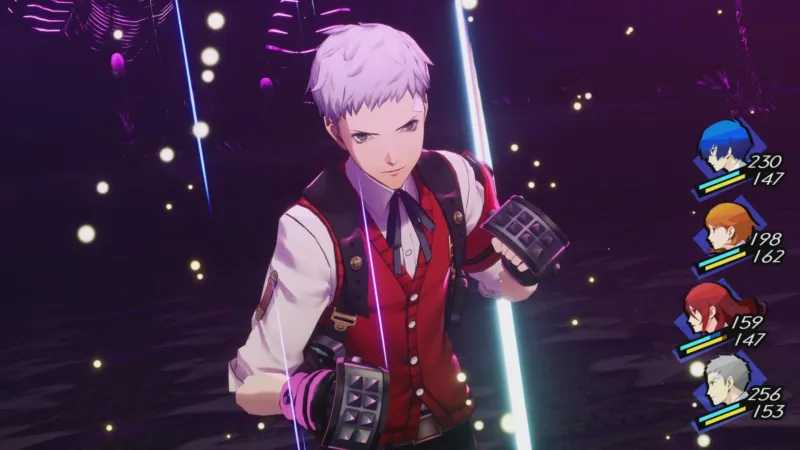
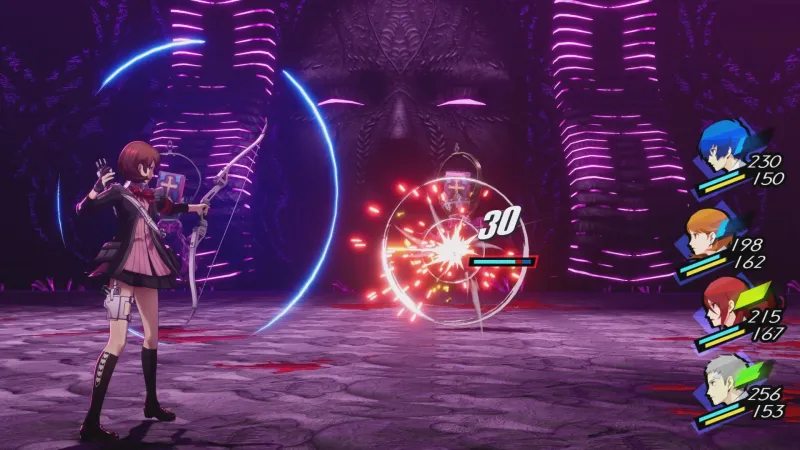
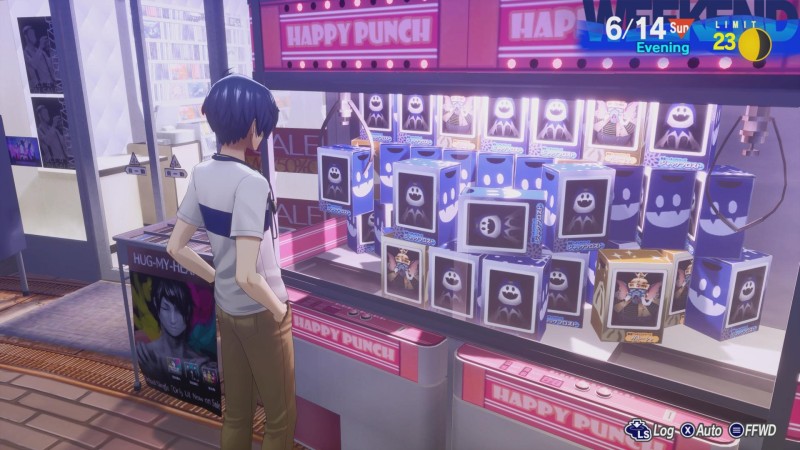
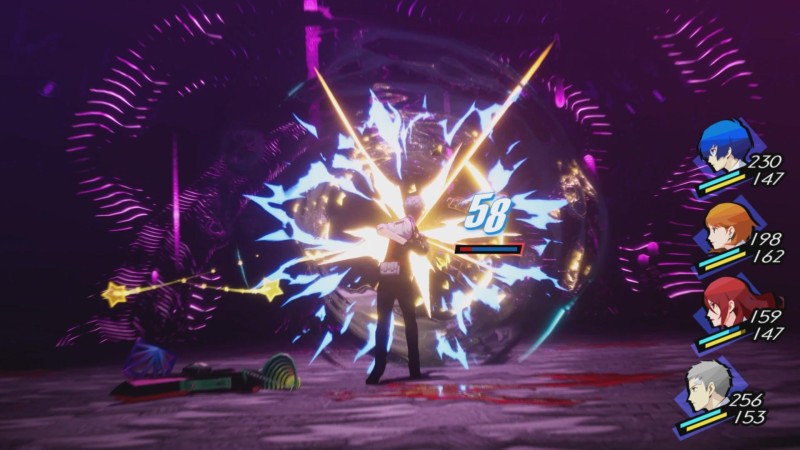
I love exploiting the combat system’s many quirks en route to victory. Landing a critical hit with one character before shifting to another to hit an elemental weakness, then polishing the foes off with a powerful All-Out Attack, is ceaselessly thrilling. Being able to directly control all characters in your party is a no-brainer by today’s standards and a huge quality-of-life improvement over the original base game. In fact, nearly all the innovations from Persona 5 are present, and the addition of the Theurgy system diversified my combat strategies in fun ways.

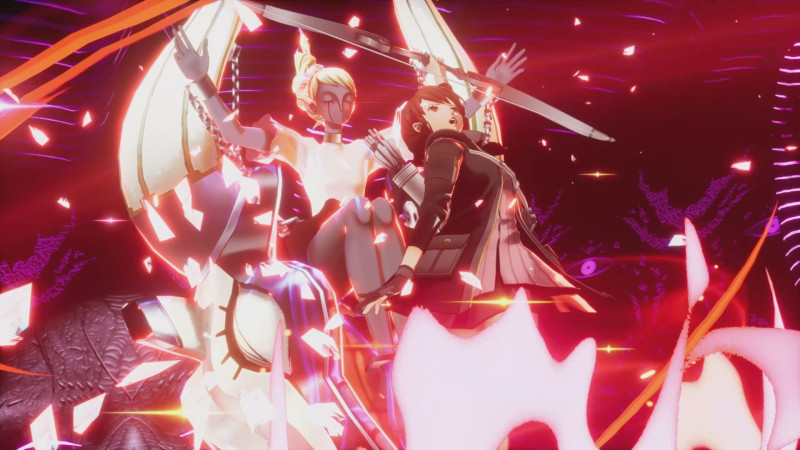
Theurgies are powerful, cinematic ultimate abilities that charge over the course of battle. Since each character’s meter charges (and each ability provides different effects), I often went out of my way to perform the character-specific actions – whether that be healing, summoning Personas, or attacking with physical abilities – during battles with lesser enemies. Entering a tough battle with a full party of charged meters always gave me a boost of confidence, even if they were far from instant-win buttons.

The battles are as exciting as the series has ever seen, but one key improvement from Persona 5 didn’t make it into this remake: handcrafted dungeons. Even with this version’s addition of Monad Doors that house powerful minibosses and special rewards, the randomly generated floors of Tartarus serving as the game’s main dungeon feel outdated. After hours of dungeon-crawling, the experience can become monotonous when you’re climbing through hundreds of generic floors full of the same monsters. Thankfully, the boss battles and sequences leading up to them are as compelling as ever, delivering the best combat in the game and often revealing my favorite character moments in the story.

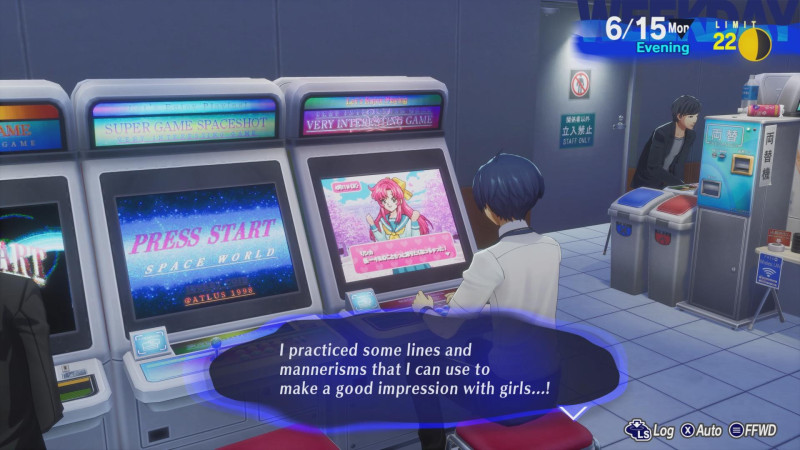
Speaking of characters, the excellent cast of Persona 3 is allowed to shine brighter than ever through additional voice acting and more social scenes. I loved balancing the social elements of a typical high school experience with the extraordinary circumstances presented to my protagonist. However, I am disappointed that the female protagonist option included in Persona 3 Portable is neither present nor the added epilogue from FES. In a modern remake arriving decades later, it’s unfortunate to have content missing from older re-releases.


Due to modernized and expanded Social Links, I truly felt I got to know many of the supporting characters better. I became emotionally invested in stories involving a motivated track athlete pushing through an injury to inspire a younger family member, an elderly couple coping with the loss of their son, and a young girl struggling amidst her parents’ divorce.

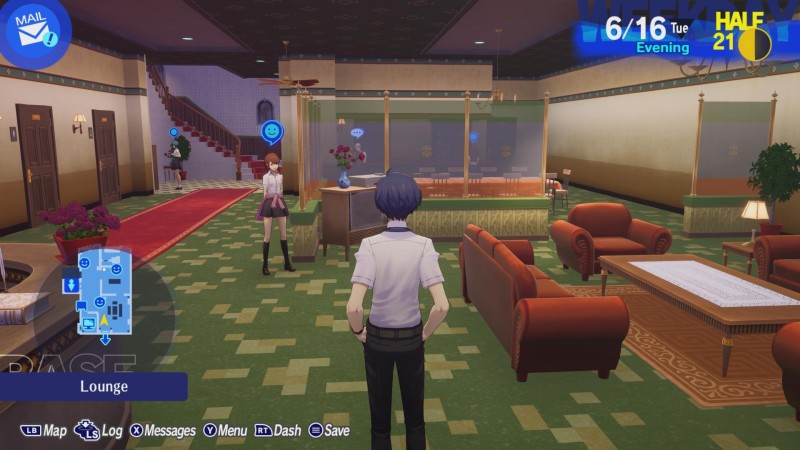
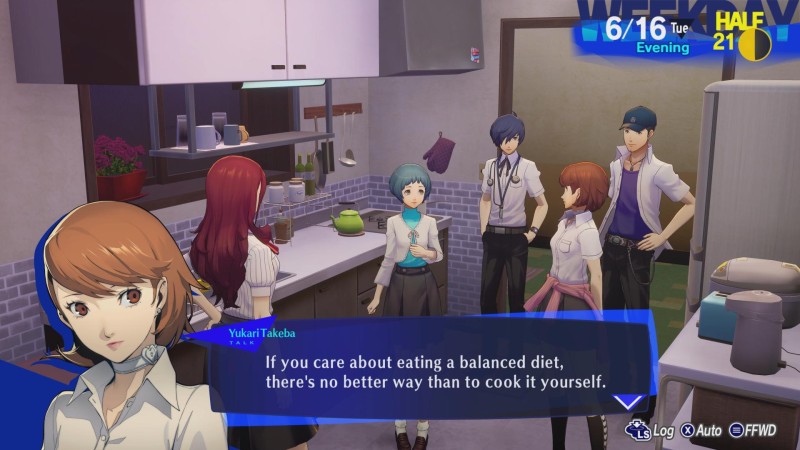
Forming bonds with these characters grants boosts for certain Persona fusions, but I primarily pursued the Links to further unravel the narrative threads. Later, you can also form closer bonds with your party members, but even before that, you can awaken new abilities within your team by cooking, gardening, or watching movies with them at the dorm. Though stilted, repetitive animations sometimes took me out of the moment, Persona 3 Reload’s emotional beats hit hard as the themes of death and loss resonate throughout this long story.

Even after nearly 100 hours, I was sad to part ways with my team, feeling as though I had formed bonds with them that transcend any kind of in-game Social Link metric. Even with some outdated and repetitive elements inherited through the 18-year-old structure of the original, Persona 3 Reload is one of the best entries in one of the most acclaimed modern role-playing franchises in video games.

GI Must Play

Score: 8.75

About Game Informer's review system

Purchase

Wednesday, January 24, 2024

Like A Dragon: Infinite Wealth Review – Passing The Torch

Reviewed on: PlayStation 5
Platform: PlayStation 5, Xbox Series X/S, PlayStation 4, Xbox One, PC
Publisher: Sega
Developer: Ryu Ga Gotoku Studios
Rating: Mature

By the time I saw the credits on Like a Dragon: Infinite Wealth, I felt like I had been through the emotional ringer. I was mentally exhausted. I think that's by design. Infinite Wealth is developer Ryu Ga Gotoku's (RGG) most ambitious project by a long shot – an epic tale told across multiple characters and continents, featuring the conclusion of some nearly 20-year-old plot threads that leave at least one character, quite literally and relatably, asleep in the streets. Some of this is the best work the developer has ever done, a new watermark for the series going forward. And some of it is some of the studio's worst. Like everything in Infinite Wealth, it's complicated.  

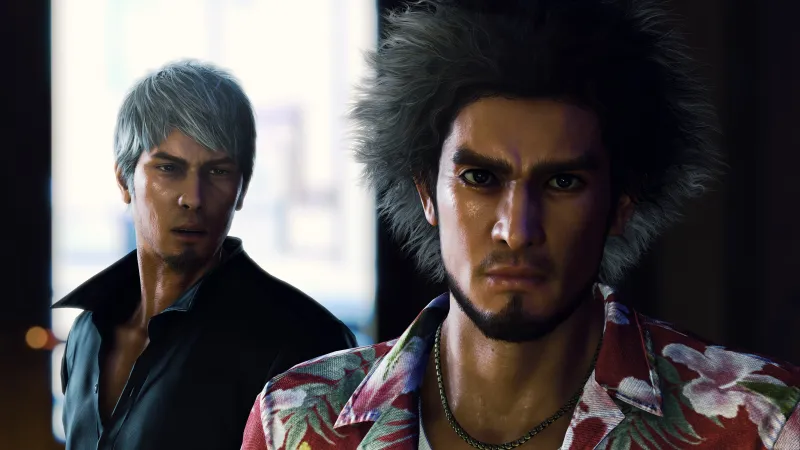
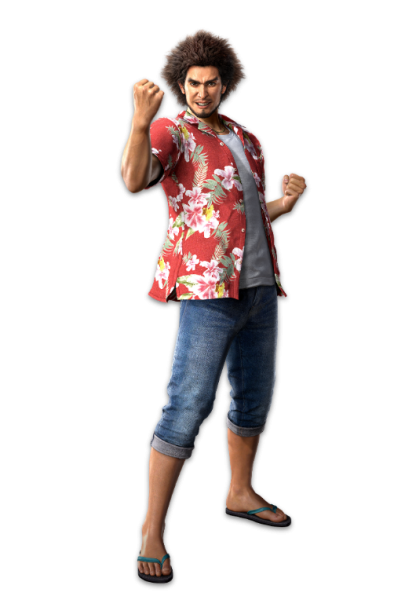
Infinite Wealth picks up a few years after the events of Yakuza: Like a Dragon and continues the story of dual-series protagonist Ichiban Kasuga, a former yakuza who's now taken up work trying to help rehabilitate other yakuza members back into society by finding them jobs. By the laws of narrative, this goes horribly wrong, and it's not long before Ichiban and friends, who now all find themselves out of work, are back in the folds of the criminal underworld. After the dissolution of the nation's two biggest families, the Tojo Clan and the Omi Alliance, in the previous game, the Seiryu Clan reigns supreme in Yokohama's Ijincho district. The group is not only working on its own dissolution program and trying to give former yakuza work, but it also has information on Ichiban's long-lost mother, Akane. He just needs to go to Hawaii to find her.

Once in Hawaii, Ichiban quickly runs into his counterpart and former star of the show Kiryu Kazuma. Kiryu plays a much larger role in this game than in Like a Dragon before it – mainly because he's also a playable character. Ichiban and Kiryu being playable in the same game represents a passing of the torch of sorts, and I truly love the time I got to spend with Kiryu. He's an old man now with cancer and a few months to live. He's coming to terms with his life, and Infinite Wealth goes a long way in softening and humanizing him. I always felt that letting Kiryu live after the events of Yakuza 6, where he faked his death, was the wrong call. This game reckons with that idea a lot, and even if I'm not totally sold on where it ends up, I like the road it takes to get there a lot.

The dual protagonists also give the cast the chance to expand and breathe. At one point in the story, Kiryu and a small team of characters from the previous game return to Japan, leaving Ichiban with a cast of mostly new characters. The game jumps back and forth between the two, allowing tons of time to get to know everyone. I especially love newcomers Chitose and Tomizawa and never skipped a moment to learn more about the central cast. 
Moving a bulk of the game's story to Hawaii allows RGG to open up its narrative potential. No longer confined to just Japan, the studio aims common issues facing America today – including further criticisms of the treatment of the unhoused and sex workers, something it examined in Japan in previous games. America's corrupt police state gets especially harsh criticism as we see how the police abuse its position to exploit common citizens and foreigners and ignore its roles within society. The Yakuza/Like a Dragon series has always been political, and RGG has always been very opinionated. While the studio hasn't always stuck the landing, Infinite Wealth reinforces how the studio is insistent on tackling these concepts. Seeing a studio successfully approaching these issues with maturity is incredibly refreshing. 

That's not to say this game isn't still about the yakuza. Infinite Wealth pulls from the real-world laws against former members of Japanese crime families. It examines whether or not they're actually useful means of rehabilitation while also looking at the ways these groups can be easily exploited by those in power. Kiryu, as a character, beautifully fits this narrative hook. He is a criminal, after all; for all the good he's done, his past is full of darkness. Ichiban, too. What does it mean to reintroduce criminals into society, rehabilitate them, allow them to be sorry, and offer them forgiveness? What does it mean to let these people live normal lives again, and will society ever actually allow that? The best moments of Infinite Wealth are when these questions are called into focus, and I was constantly surprised at the empathy and nuance RGG showed throughout the story.

But it takes some pretty spectacular stumbles on the way to that greatness. Much of the Hawaii plotline revolves around the Palekana religious cult, which Akane is a member of, and its figurehead, Bryce Fairchild. For all the nuance and thought put into its real-world topics, the game's portrayal of cults and religious fanaticism is laughable at best and completely superfluous at worst. Bryce is certainly evil; it's just that he's evil in a way with no depth. RGG has gone to great lengths to humanize its villains and give meanings to their actions – and the other antagonists of Infinite Wealth have loads of interesting motives. But not Bryce. He's just a bad guy. And a boring one at that. The game is all too quick to shove the Palekana story aside, including characters it spent dozens of hours building up to focus on other topics. Almost like the game itself knows it isn't very good. It's unfortunate because this plotline is stacked against some of the best moments in the series.


Unfortunate, too, is how that story is delivered. As usual, Infinite Wealth features some of the best acting in the entire game industry – most of the time. A lot of the Japanese talent behind the main cast is incredible, especially newcomers such as Satoru Iguchi, of King Gnu fame, who plays Tomizawa. His entire arc is wonderfully realized, moving, and funny. On the other hand, other characters fall entirely flat. For example, Bryce is written to be fluent in both Japanese and English. His Japanese is great. His English sounds like someone reading the words out phonetically in a different language. In fact, many of the American characters are clearly voiced by actors struggling to deliver their English lines. Switching to the English VO doesn't help much either, as the main cast feels awful when contrasted against who they are as people – with the exception of maybe Danny Trejo's character. The voice acting is full of odd choices such as this that, depending on the character, can really pull you out of the moment.

Luckily, Infinite Wealth’s gameplay is often stellar across the board. As always, it's a joy to explore RGG's open worlds, and the three here – Kamurocho, Ijincho, and Honolulu – are all fantastic. Honolulu, especially, has a completely different vibe than other RGG worlds, and I loved exploring its bright beaches, seedy back streets, and luxurious hotel districts. Taking Kiryu back to the streets of Kamurocho is wonderfully nostalgic, too, and Infinite Wealth wastes no time letting him reminisce and enjoy his old haunts. I spent so much time taking Kiryu to places from the old games, loving how much thought went into how we would react.

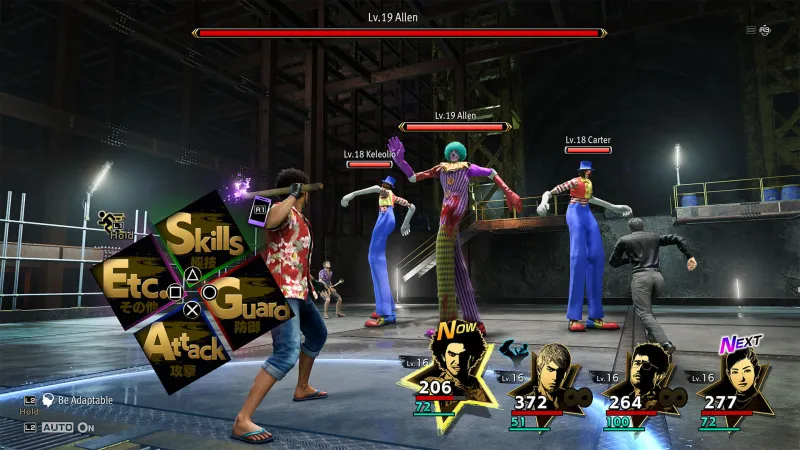
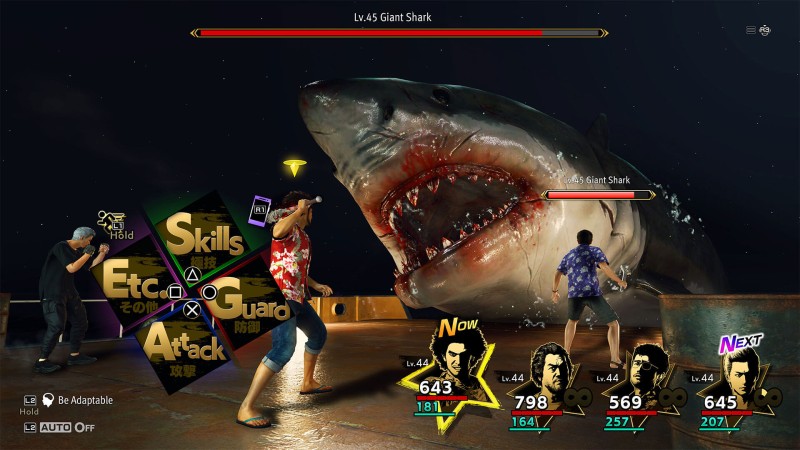
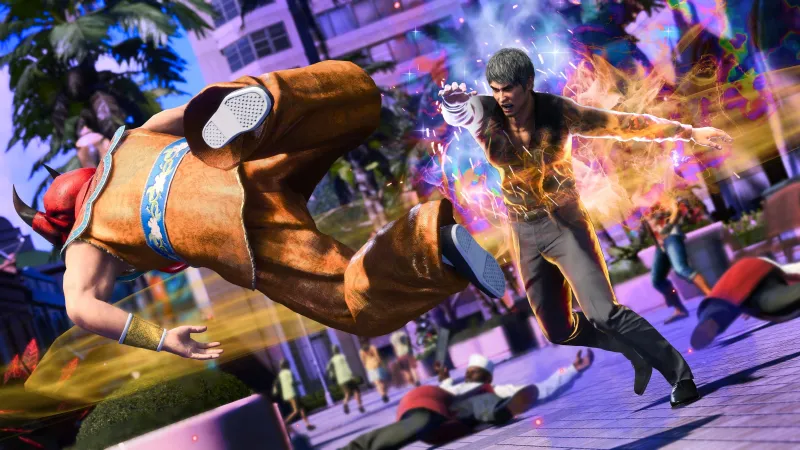
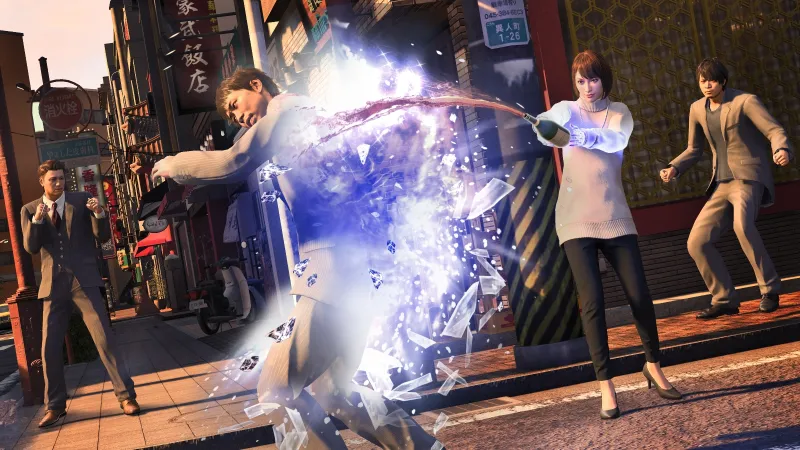
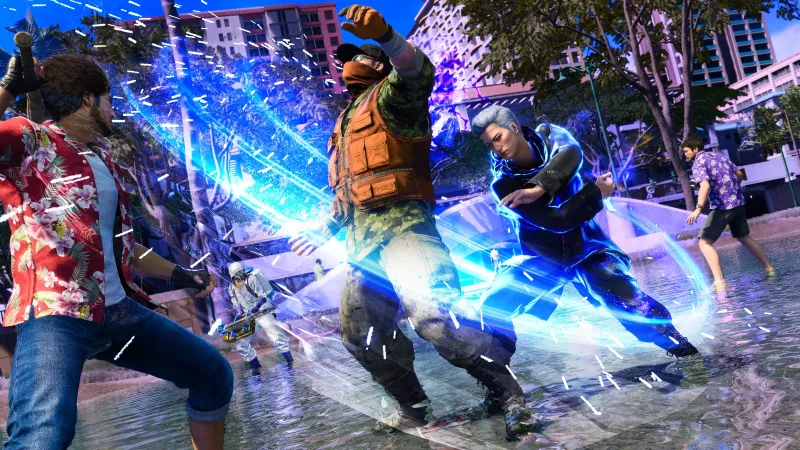
You spend the vast majority of your time as you do in any other RGG game: beating the holy hell out of dudes in the street. Infinite Wealth continues Like a Dragon's change to turn-based combat, and the updates here make for a surprisingly deep and engaging system. Including directional and combo attacks adds interesting layers to how you approach an enemy. Exploiting an enemy's weakness and, in turn, having multiple members of your party dynamically attack the same foe in one turn consistently feels great. And I was always excited to see what new whacky animations I'd see when getting new magic attacks. 

Is infinite wealth a good starting point for the series?

Probably not. I'd wager you'd need to play at least Yakuza 6: The Song of Life, Yakuza: Like a Dragon, Like a Dragon Gaiden: The Man Who Erased His Name, and have some awareness of the rest of the mainline series to fully understand what's going on in Infinite Wealth. There are even passing mentions of the Judgment series, the zombie spin-off Yakuza: Dead Souls, Like a Dragon: Ishin!, and a game that never came to America. If you haven't done your homework, best of luck.

Infinite Wealth's job system – effectively how you change character classes and a returning mechanic from the previous game – creates a ton of interesting team line-ups, and I really enjoyed experimenting and building out as well-rounded a party as I could. Upgrading your job level also allows you to import skills from other jobs, leading to some truly dynamic characters with various elemental attacks. That said, while I do love combat, grinding out levels in the game's dungeon was a real chore at times – boring, monotonous, and took way too long for its own good.

Your mileage will vary with the game's unbelievable amount of side content. Infinite Wealth surprised me with its substories, which I've historically never really enjoyed in other games. Here, I found some of them deeply funny (there's one about a dating app that's great) and well-thought-out. I also enjoyed a lot of the mini-games, such as the Crazy Taxi-inspired food delivery game and finding all the optional conversations and character links. However, I did not enjoy the Animal Crossing-inspired Dondoko Island or the Pokémon-like collecting and fighting games, which I found incredibly dull and convoluted. Luckily, they are optional after their introduction, but that intro grinds the game to a halt so it can slowly explain all the various rules and mechanics. There are plenty of other side activities I didn't have time to even touch, and I imagine there are easily 100-plus hours of the game for the most dedicated. Some of it's pretty dang good. I just hope I never have to go back to Dondoko Island ever again.
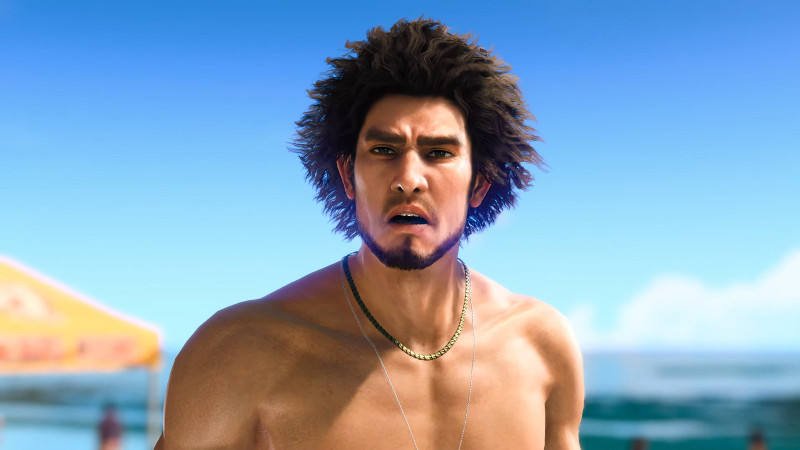
Infinite Wealth is a swing for the fences for RGG. At one point, the Yakuza series was a cult classic relegated to small fanbases outside of Japan. That changed in 2017 when Yakuza 0 finally hit it big. By the time Yakuza: Like a Dragon came out in 2020, it was clear RGG had a phenomenon on its hands. The result of that success is a massive game brimming with things to do and say. Sometimes, it's too much. There's a version of Infinite Wealth that leaves a lot on the cutting room floor and saves itself loads of tedium. There were so many hours that I wished that was the game I was playing instead.

And yet, I can't help but be amazed by what it does pull off over its impressively long run-time. It's rare to see a triple-A video game have anything worthwhile to say about the need for criminal rehabilitation, the police state, and even nuclear disposal. Somehow, this game has all those topics and smart (albeit somewhat surface-level) things to say about them. I'm shocked that its combat system consistently felt new and fresh after 60 hours and that I was finding new ways to use it. That it gave me so much time with some of my favorite characters in video games, allowing me to know them so much deeper than I ever knew before, was just the cherry on top.  

In one of the final moments of Infinite Wealth, one of the characters falls exhausted into the street, beaten down by everything that just came before. As he does so, he looks satisfied and happy, even though arguably nothing is going right for him at that moment. In a lot of ways, I felt the exact same by the end of the game. I was tired. And yet, I was also ready to see what this crew would get up to next. 

Score: 8.5

About Game Informer's review system

Purchase
Tuesday, January 23, 2024

Tekken 8 Review – Aggressively Absurd

Tekken 8 Review

Reviewed on: PlayStation 5
Platform: PlayStation 5, Xbox Series X/S, PC
Publisher: Bandai Namco
Developer: Bandai Namco
Rating: Teen

The bar for the fighting game genre has been uppercut to astronomical heights in recent years. Exceptional one-on-one combat remains the primary bullet point, but other series have complimented their packages with robust suites of destinations, from cinematic story campaigns to comprehensive training dojos. Although Tekken 8’s fighting remains a treat thanks to some neat tweaks to its strong formula, the rest of the package, while respectable, falls short of some of its contemporaries.

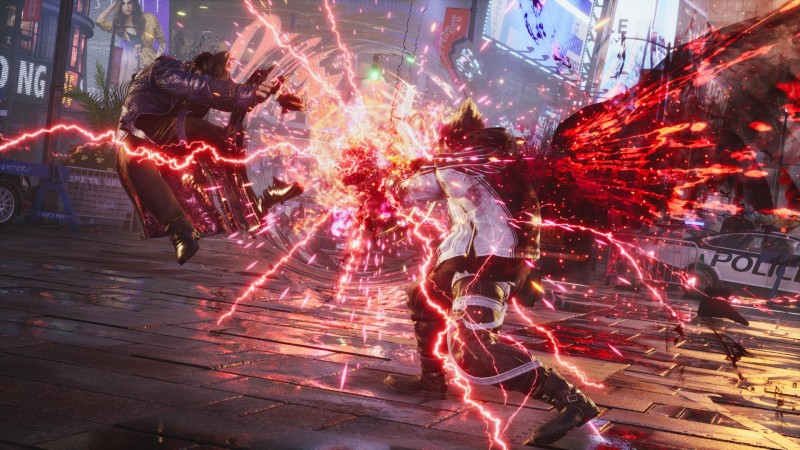
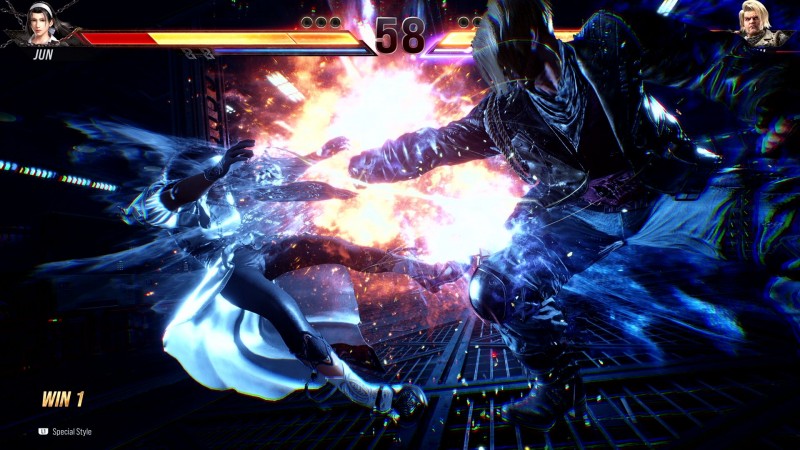
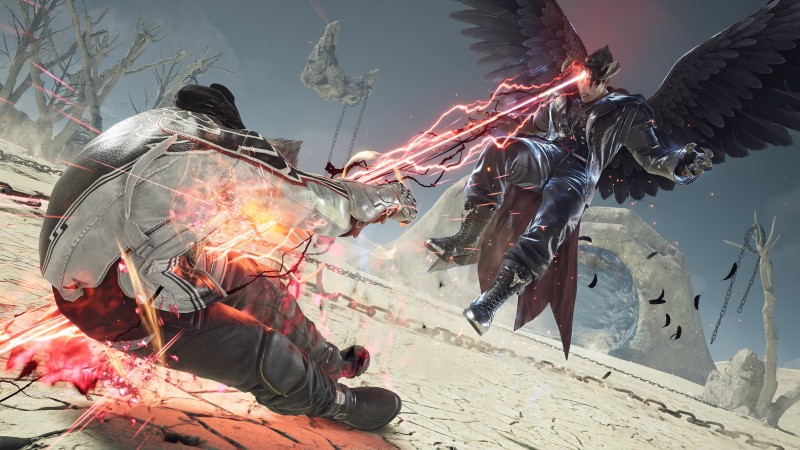
The Heat system is the big new addition, adding a new gauge that, when activated, adds chip damage to attacks, buffs your blocks, and even adds follow-up moves to extend certain combos. My favorite use is spending the full meter to unleash a unique and powerful combo attack, and weaving this into an assault can be devastating. Heat offers a fun and effective new trick that rewards aggression while also providing a solid counter to an opponent’s relentless assault. Combined with the returning Rage system, it’s another way to help turn the tide of a one-sided battle without feeling like a protective crutch – pure skill still wins the day. 

Rage Arts have been smartly simplified to a universal button for easier execution and more spectacular finishes. Another good tweak is that health bars are divided into sections displaying recoverable and non-recoverable HP, the former of which is replenished by attacking (even if blocked). I like seeing when I should turn up the heat to regain a few hit points. I also like being encouraged to end an opponent before they can heal themselves, once again promoting aggression in a way that speaks to my playstyle.

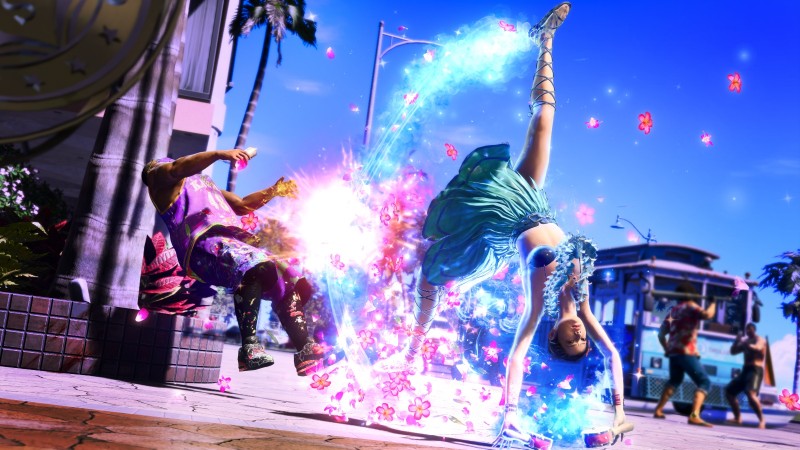
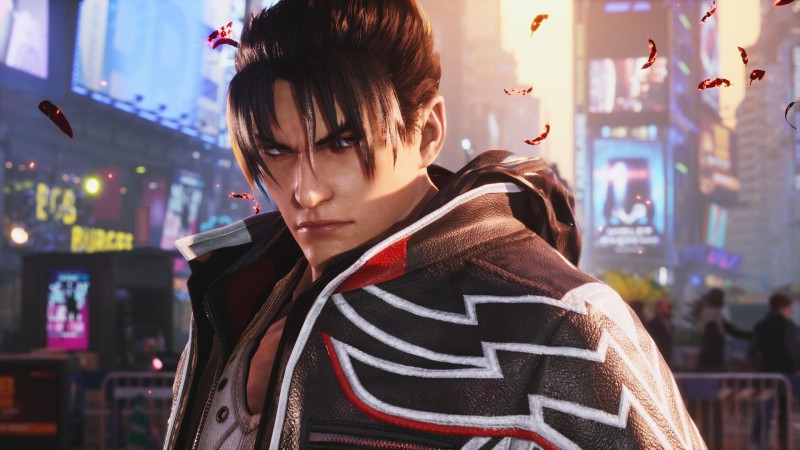
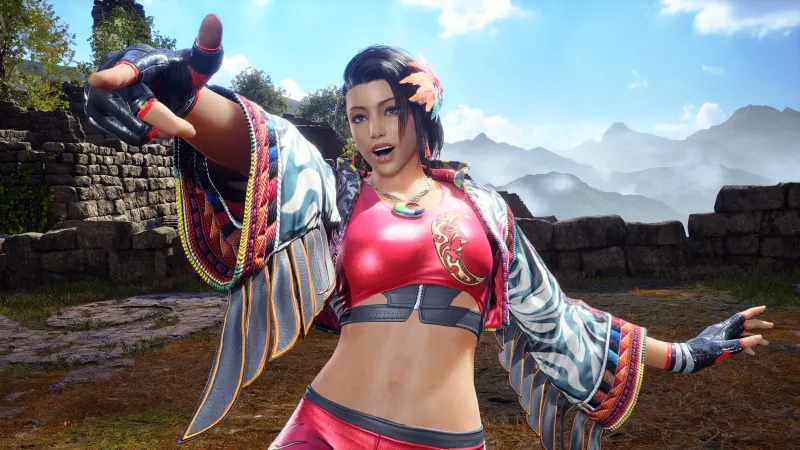
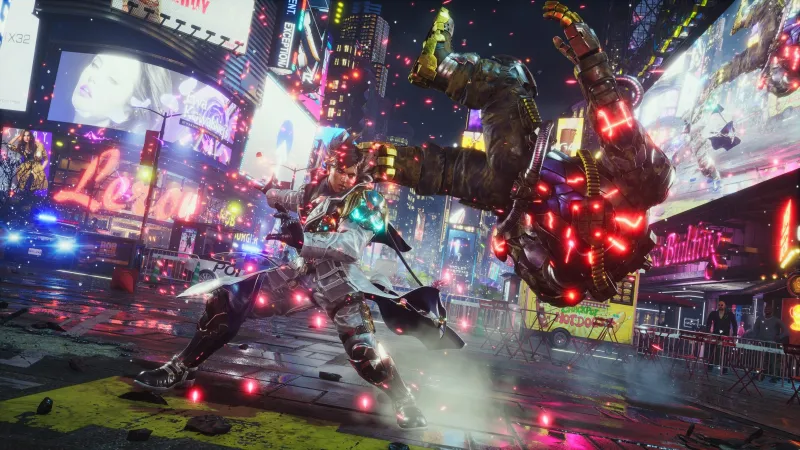
Tweaks aside, as far as the basic meat and potatoes go, if you want some good old-fashioned Tekken, this eighth entry delivers. The 32-character roster feels as great as it ever has, and new faces, such as the enigmatic Reina or the coffee-obsessed Azucena, are fun additions I’m enjoying mastering. Tekken 8 also scores a win in the looker category. Powered by Unreal Engine 5, our favorite combatants have never looked or been animated better. Stages pop and are packed with details, whether you’re battling under the neon lights of an urban city square or amid Peruvian ruins with roaming alpacas. As nice as they appear, they fall apart even better when you’re knocking opponents through walls or slamming them through the floor. 

Tekken 8’s cinematic story mode, which centers on the ultimate clash between Jin and Kazuya, is a step above Tekken 7’s. Admittedly, that’s a low bar to cross; not having a monotone journalist narrate the tale already raises it several notches. Absurdity is the name of the game, thanks to the narrative’s onslaught of laugh-worthy action scenes, culminating in a final bout that takes the series as high as it’s ever been on the “outrageous” meter. While more fun than Tekken 7’s story, Tekken 8’s tale is still an uneven experience. A choose-your-fighter tournament arc in the middle is a cool idea, but your selection is meaningless. A gigantic battle reminiscent of Avengers: Infinity War unfolds as a generic, ill-designed brawler where players pummel waves of foes in a manner reminiscent of Tekken 3’s Tekken Force mode, and feels just as dated. The final confrontation, while epic, drags on for so many rounds that it becomes a slog. It almost feels like a parody of climactic boss fights while playing it totally straight. 

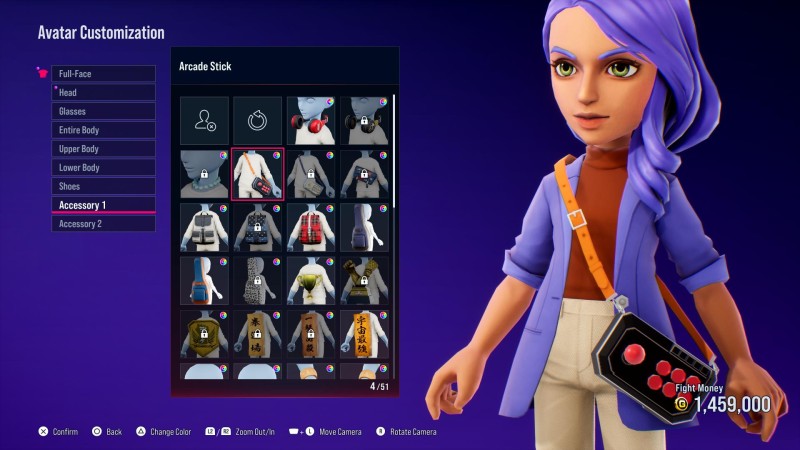
While the main story mode is a solid starting point for Tekken 8, Arcade Quest offers another narrative-driven quest better suited for teaching players the ropes. As a customizable Xbox 360-esque avatar, you and your Tekken-obsessed friends travel to various arcades to climb the ranks of the competitive scene while learning the power of friendship and having fun. It does a decent job of providing thorough tutorials on new mechanics like the Heat system and teaching helpful combos and general fight psychology, making it ideal for both newcomers and returning veterans. The downside is suffering through a supremely bland tale that feels more like a saccharine lesson in fighting game etiquette (i.e., let people play how they want and don’t be a jerk) for kids. 


Offline offerings are otherwise underwhelming. Character Episodes remain succinct ladder climbs to watch Tekken’s trademark humorous fighter endings. Tekken Ball returns as a cute addition, but nothing worth revisiting after a round or two. I enjoyed testing myself in Super Ghost Battle, which pits you against a learning A.I. mirroring your behavior and tendencies. While the practice mode features robust breakdowns of stats such as frame data, a more guided experience would have been welcomed. You’re still largely left to wade through menus for desired lessons (which boil down to inputting commands without much context as to why it’s effective and when to use them) and sift through tons of combo lists. The Gallery is disappointingly slim compared to 7’s, leaving the bulk of fight money spent on unlocking new pieces for the popular character creator. 

Hardcore players will likely spend their time trading blows in the largely smooth online mode. Bandai Namco has jazzed up online play with an explorable hub to show off your Arcade Quest avatar while challenging players to bouts. This presentation is mostly for show; you still access the same menu options available elsewhere. But it adds a little flair to the tried-and-true fun of gaining ranks and spectating fights. 

As a complete package, Tekken 8 doesn’t reach the heights of recent rivals like Street Fighter 6 and Mortal Kombat 1. But when the match begins, and you’re exploiting openings to unleash flashy combo strings and air juggles, it remains a thrilling, if very familiar, one-on-one experience. The latest King of Iron Fist tournament still has work to do to feel wholly satisfying or ground-breaking, but it remains a fun arena to test your mettle against friends and rivals.

Score: 8.25

About Game Informer's review system

Purchase
Monday, January 22, 2024

Apollo Justice: Ace Attorney Trilogy Review - Doing Ace Attorney Justice

Reviewed on: Switch
Platform: PlayStation 4, Xbox One, Switch, PC
Publisher: Capcom
Developer: Capcom
Rating: Teen

Outsiders of the Ace Attorney series might not be familiar with the name Apollo Justice, but fans know the character is a big deal. He's second only to Phoenix Wright in terms of playable appearances, and his new collection, the Apollo Justice: Ace Attorney Trilogy, gathers all of those outings in one convenient package. While there's not much new content in this package, quality-of-life improvements and a visual overhaul do a lot to modernize Apollo's courtroom saga, making it a worthwhile journey for fans new and old.
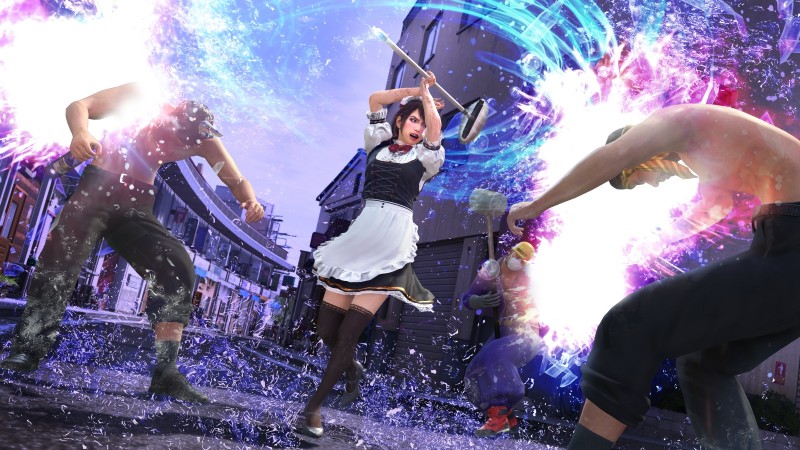
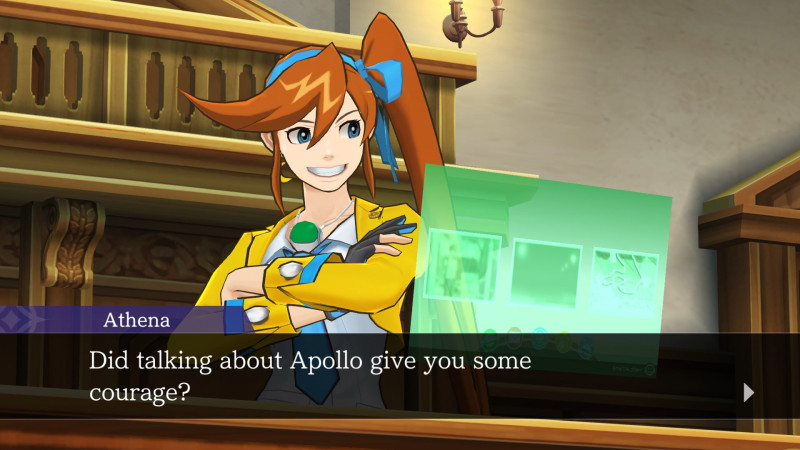
The package includes three games: Apollo Justice: Ace Attorney, Phoenix Wright: Ace Attorney - Dual Destinies, and Phoenix Wright: Ace Attorney - Spirit of Justice. While Apollo's name is only in one of these three titles, he's a crucial character in all three games, so the name is a fitting one. The package also includes DLC trials and outfits from the 3DS games, so if you want to rock Phoenix's classic suit in Dual Destinies or dress Athena as a maid in Spirit of Justice, you're free to do so. The DLC trials vary in quality (the second is great, the first is not), but they're meaty pieces of content that I'm glad made it into the final collection.

Apollo Justice prepares for his first trial in Apollo Justice: Ace Attorney

Besides the obvious convenience of being available on modern platforms, there are two main reasons to play the Apollo Justice Ace Attorney Trilogy instead of the original games. The first is the improved graphics; the Trilogy looks excellent. I'll miss the pixel art of the DS days, but I quickly got used to the updated art style in Apollo Justice's first outing. The animations translate exceptionally well – the series hasn't lost an ounce of charm. The real improvement, however, comes in the latter two games in the Trilogy, which were originally released on the 3DS. While the first game is a good translation of the old art style into a new form, the 3D games look much better, and I often had to remind myself they weren't released on the Switch from the get-go. It's also great to view their anime cutscenes on a full-sized TV.

The other reason to play the Trilogy over old versions is its wonderful suite of quality-of-life improvements. I especially love Auto Advance, which moves the dialogue forward without forcing me to mash buttons, and the History button, which allows you to scroll back through dialogue you might've accidentally skipped. This game also includes a story setting, which automatically advances the game through trials and investigations if you don't feel like solving any puzzles. While they're mostly returning features from other modern Ace Attorney collections, the quality of life improvements return for a reason – they make these games significantly smoother to play, and I am extremely grateful to have them here.

Athena Cykes in Phoenix Wright: Ace Attorney - Dual Destinies

Apollo Justice: Ace Attorney Trilogy also includes a Museum section that allows players to look at concept art, listen to music, rewatch cutscenes, and look at character animations from each game in the Trilogy. It's a nice touch, and I had some fun glancing at some of the art and animations, but it's more of a novelty than anything else. 

Outside of quality-of-life improvements, the games are unchanged and still worth your time. Apollo Justice: Ace Attorney is a relatively faithful continuation of the original Trilogy that stars Apollo Justice, a plucky new protagonist. With 2D art and game direction by series creator Shu Takumi, it's essentially an epilogue to the original Phoenix Wright games, giving players a glimpse into its world seven years after Ace Attorney 3. Today, its trials hold up as an exciting exploration of the failings of the court system and why it's important to let a new generation take the reins.

Where Apollo Justice: Ace Attorney honors the older games, Dual Destinies seeks to forge a separate path with a new game director, three protagonists, and a new 3D art style. It's the weakest game of the series, especially at the start, but the last few trials tie everything together with a genuinely satisfying conclusion. Its ambitions don't always pay off, but now that a decade has passed, I can appreciate those ambitions more, especially how they paved the road for the next game.

Phoenix Wright in Phoenix Wright: Ace Attorney - Spirit of Justice

Spirit of Justice is the final game in the Trilogy and my favorite. It primarily occurs in the fictional country of Kura'in, where defense attorneys are sentenced to the same fates as those they defend. To complicate things even further, the royal family can conduct séances to play back the memories of the dead as evidence. The new location and heightened stakes do a lot to make this entry feel distinct from the others. In fact, Spirit of Justice is the first game in the Trilogy that doesn't feel like it's struggling to match the tone of the older games, fully setting itself apart by putting its trials in a new context. It's not just the best in this collection; it's one of my favorites in the entire series.

Apollo Justice: Ace Attorney Trilogy succeeds with everything it sets out to do, bringing three great games to modern consoles in their most approachable forms to date. I was fully immersed in its classic courtroom battles in the 80 or so hours it took me to get through all three titles. Even though not every trial is a winner, the majority are, and with a new suite of quality-of-life improvements, it's never been easier or more enjoyable to experience Apollo Justice's journey.

GI Must Play

Score: 8.5

About Game Informer's review system

Purchase