Reviewed on: PC Platform: PlayStation 5, Xbox Series X/S, PlayStation 4, Xbox One, Switch, PC Publisher: Annapurna Interactive Developer: Open Roads Team
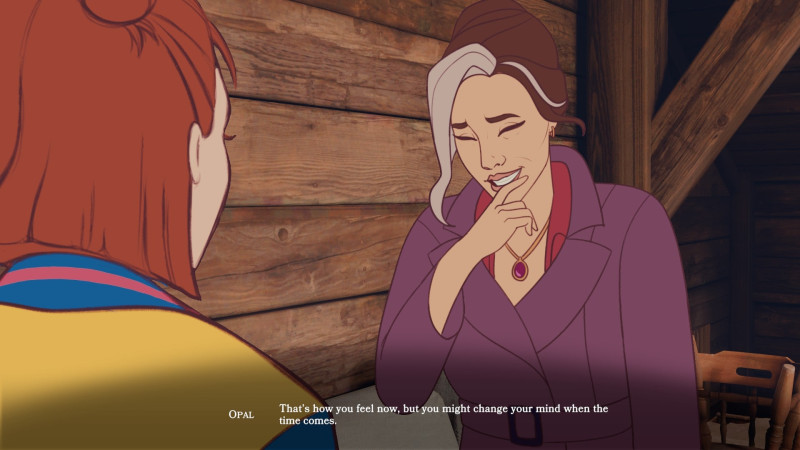
Tess and her mother, Opal, have a lot on their plates. In addition to losing their grandmother/mother, they must quickly move out of her now-foreclosed home. Tess is graduating high school and is conflicted over whether to go to college or pursue her personal web design business. Opal is cross at her sister August’s refusal to help with the move. She also finds herself playing the “bad cop” in the complicated relationship between Tess and her father. And if that wasn’tenough, they also discover a secret surrounding their grandmother that could change everything they thought they knew about their family. Compelled to learn more, Tess and Opal embark on a road trip to learn the truth. I was as captivated by the mystery as the characters at the start, but this road trip peters out after a few miles.
Open Roads’ hooks are initially enticing, and strong performances from the lead actresses – Kaitlyn Dever (Tess) and Keri Russell (Opal) – drive the story forward. Open Road’s art direction is also a highlight, with Opal and Tess depicted as 2D hand-drawn characters against 3D environments. It gives a fitting, distinct look, but the lack of lip sync and limited facial animations sometimes diminish the weight of more emotional line deliveries.
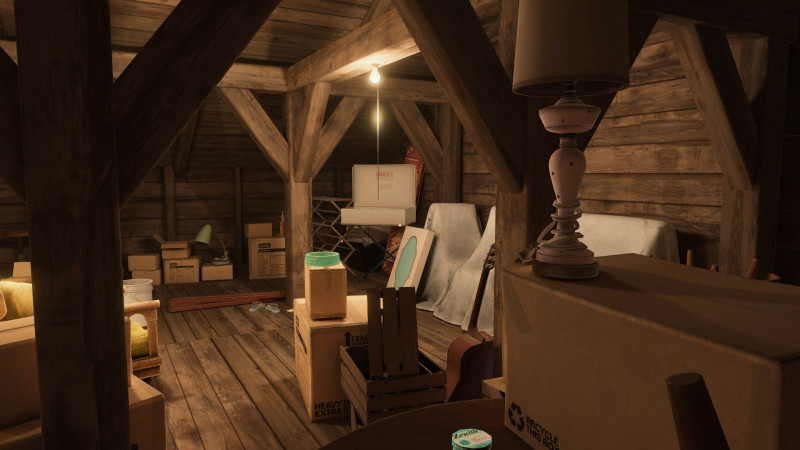
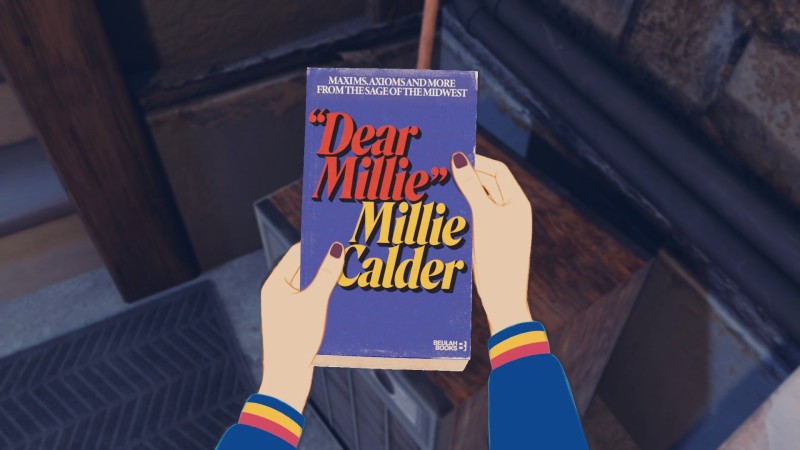
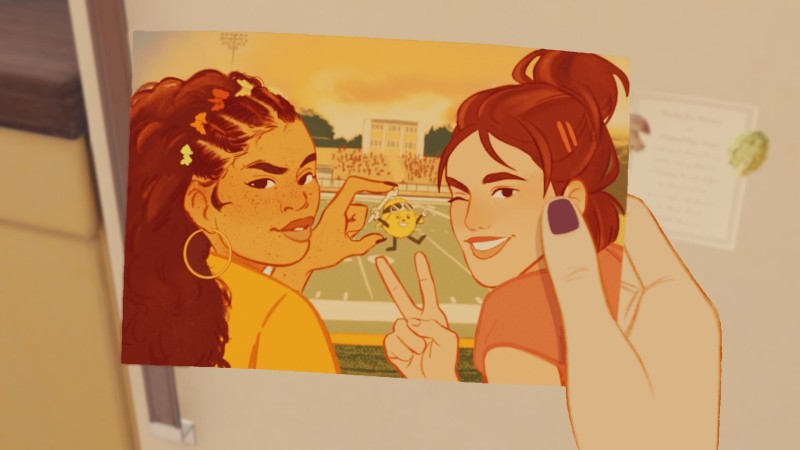
Players control Tess, and despite the premise, sitting in the car and chatting with Opal only accounts for less than half of the adventure. The rest of the game unfolds as a first-person adventure more in line with The Open Roads Team’s first title, Gone Home, in that you explore a few densely detailed environments to inspect objects for clues. I enjoy the personal hand-crafted touches of these items (such as the team member’s actual handwriting on notes) and how they immersed me in 2003 Michigan without the need for words. Playing on PC, controller support feels hit and miss as the camera sometimes snaps to odd angles after inspecting items.
Open Roads’ laid-back atmosphere means no problem ever evolves beyond finding the right object to advance the plot, looking for keys to open doors, or finding alternative routes into areas. I hesitate to call any obstacles true puzzles, as solutions boil down to picking up everything until you find what you need. Some items prompt Tess to call Opal over to have a discussion about it, which can lead to some humorous or serious anecdotes. More often, however, an ashtray or cup is just an ashtray or cup.
The story is king here, but its initial intrigue gradually loses steam. The central mystery results in an underwhelming revelation, and the resolutions of other threads are largely left up in the air. Even Tess and Opal’s relationship doesn’t evolve much. By design, dialogue choices don’t meaningfully alter the story’s trajectory or Opal’s view of you. You may elicit a particularly terse response, but nothing Tess says, nor the big reveals, changes the overall dynamic of their contentious but loving relationship in a significant way. The result is a story with stakes that feel lower and less impactful than I initially expected, and while it has good moments, it left me wanting more.
With a brief runtime of a couple of hours, Open Roads is a respectable tale that sometimes feels ready to hit that higher narrative gear before easing off the gas again. Although visually pleasing and well-acted, the emotional impact is muted. While I didn’t mind sitting shotgun as Opal and Tess had lighthearted debates over the semantics of trailer vs. mobile homes and reminisced about old flames, it’s not a road trip that will stick with me for the long haul.
Reviewed on: Switch Platform: Switch, PC Publisher: Devolver Digital Developer: Ahr Ech
Sometimes, all it takes to get started on a great game is to come up with a compelling mechanic, and Pepper Grinder is a prime example. The titular grinder is as powerful as it is versatile, able to drill through the ground and power all sorts of wacky devices. The difficulty curve can be choppy, and ends more quickly than it should, but that core mechanic builds a sturdy foundation that kept me entertained from start to finish.
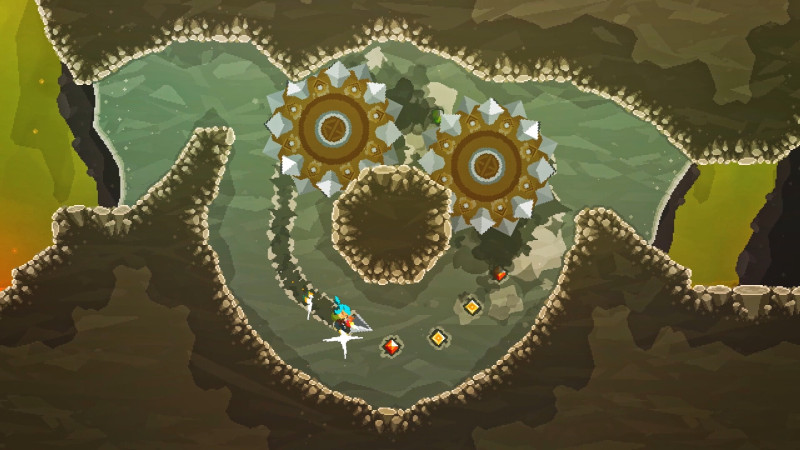
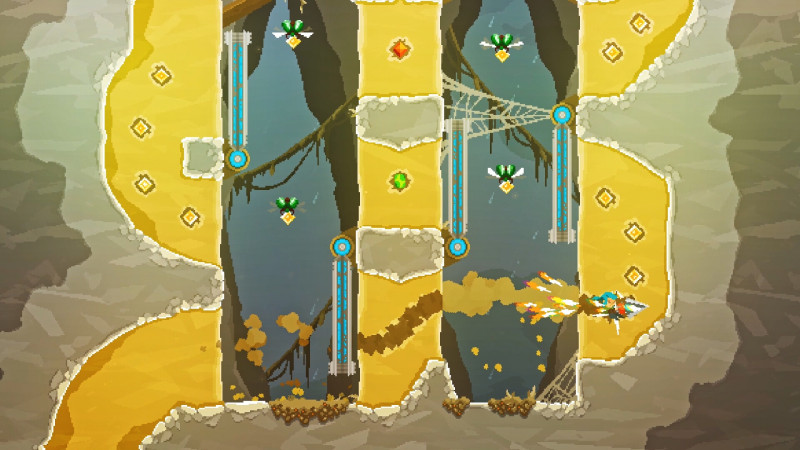
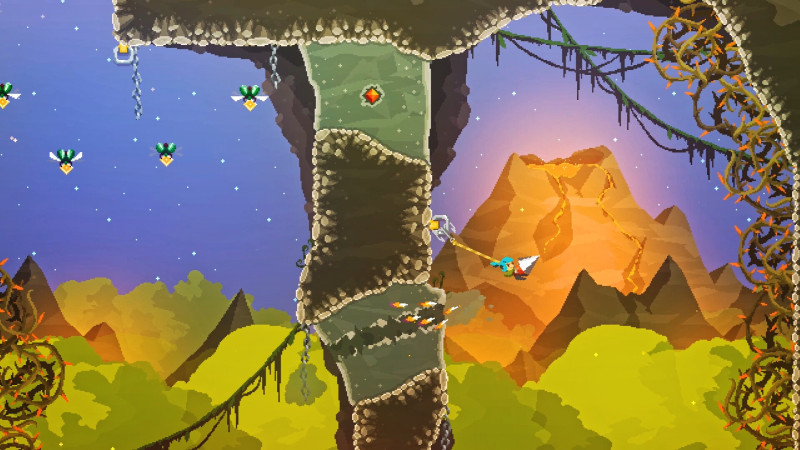
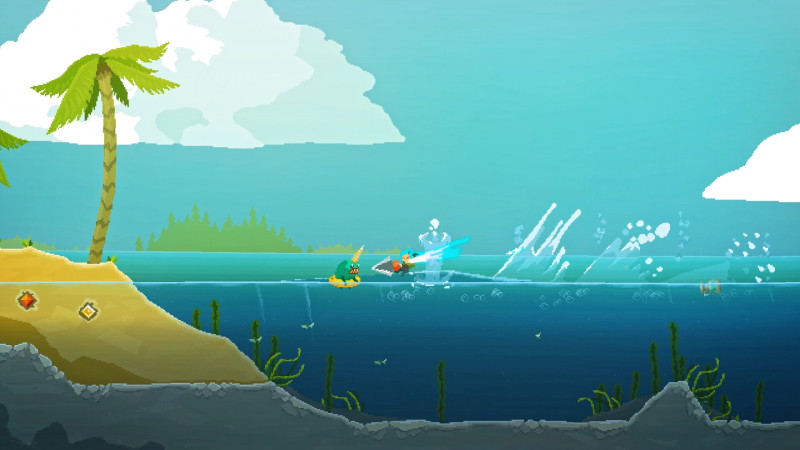
That core mechanic is, of course, the Grinder, a conical drilling device protagonist Pepper uses to burrow through terrain, spin switches, and defeat enemies. Level design is consistently clever, and I won't spoil anything, but I was impressed by the number of uses the team found for a device that could easily get old quickly. That said, while popping in and out of dirt patches, swinging on grappling hooks, and boosting over gaps is fun, it's not as easy as it looks.
Don't let Pepper Grinder's pixel art and cheery exterior fool you – this game can get tough, particularly in its platforming challenges. Some jumps need to be boosted at just the right time, and if you're not ready for a certain grapple point to appear, you plummet to your death. The hardest levels are Pepper Grinder's boss stages, thrilling battles that make creative use of the game's mechanics. Because bosses have large health bars, these are tests of endurance, but despite that, they manage to maintain the game's blisteringly fast pace. The arenas and the bosses themselves also look fantastic, showcasing developer Ahr Ech's talent for pixel art at the highest degree.
While I enjoy being challenged, the difficulty sometimes frustrated me with its inconsistency, with one level killing me repeatedly and the next one flying by without harming me once. Dying against a tough boss was never an issue because their difficulty is well-forecasted and fitting, but some levels have difficult jump sequences or waves of enemies right before a checkpoint, which annoyed me when I had to try again and again. While there are a few reasons this can happen, it's at least partially a symptom of the game's length; including fewer levels makes it harder to smooth out the difficulty curve, resulting in spikes like this.
I've alluded to it a few times, but Pepper Grinder is a surprisingly short experience. It only took me three and a half hours to complete the main story and then another half hour or so to go back and collect enough coins to play the locked levels I'd skipped over. I don't mind short games, but rolling credits on this one caught me off guard. There are plenty of ideas and mechanics that could have easily been expanded, and by extending the earlier part of the game, the difficulty spikes near the end likely wouldn't be as frustrating.
That said, I do appreciate its efficiency. Ahr Ech had an idea for a platforming mechanic and iterated on it just enough to complete a story – there's not a wasted moment in the entire playthrough, and that's more than a lot of games can say. Pepper Grinder is a well-cooked meal – I just wish the portion was bigger.
And there are ways to spend more time with the game after defeating the final boss. In addition to a time attack mode, completionists will be glad to see five collectible skull coins in each level, though they're worth collecting for more casual players, too. With 10, you can access a locked level in each world, and they're some of the most enjoyable levels in the entire game, sometimes even introducing completely new mechanics. Skull coins can also be used to unlock hair and clothing colors, but I wish they were separate – it feels odd to choose between playing more of the game and changing my hair color. I recommend prioritizing level unlocks, but I won't blame you for springing for the pink hair.
Pepper Grinder is an innovative indie experience, packed with tense battles, fluid platforming, and eye-catching visual design. While its short runtime left me wanting more, I'm happy with what it is: a bright action platformer that's anything but a grind.
Reviewed on: Switch Platform: PlayStation 5, Xbox Series X/S, PlayStation 4, Xbox One, Switch, PC Publisher: Konami Developer: WayForward Technologies Rating: Teen
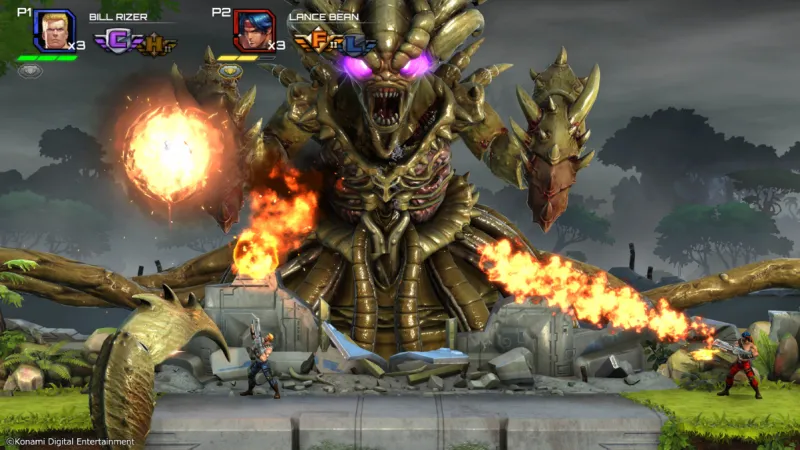
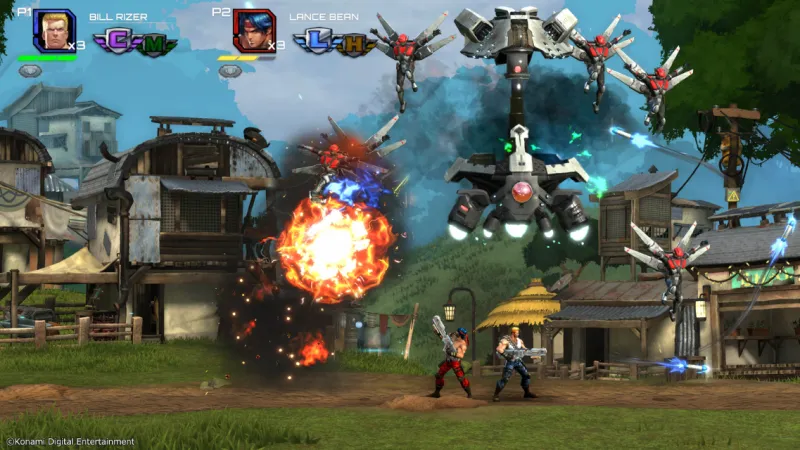
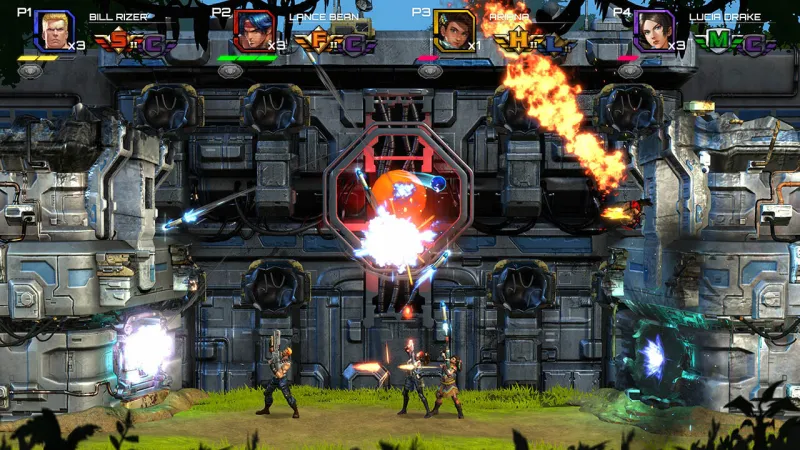
Once a tentpole franchise in the popular run-and-gun subgenre of action games, Contra has experienced a stark downturn in recent decades. Konami's (mostly) side-scrolling shooter franchise has often gone long stretches without a release, and the games that have come out in recent years range from middling to downright bad. With Contra: Operation Galuga, Konami taps renowned retro-style developer WayForward, best known for its work on the Shantae series, to bring the once-renowned series back to its roots. While far from a one-to-one remake, Contra: Operation Galuga effectively captures the spirit of the original game while modernizing just enough to make for an exciting, albeit short, adventure.
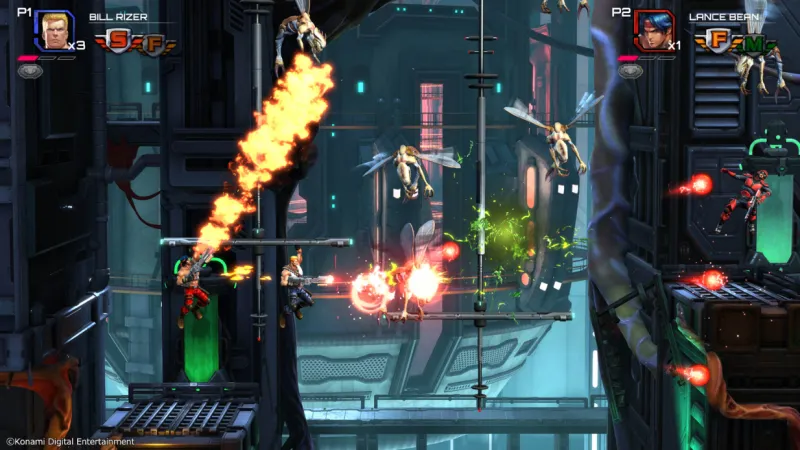
The core conceits of the original Contra carry forward into this modern reimagining. Smooth platforming, solid 2D gunplay, and a wealth of power-ups are at your disposal as you take on a tough-as-nails campaign consisting of eight missions. The spread gun power-up remains extremely effective, but I adored blasting through hordes of enemies with items like the flamethrower, heat-seeking missiles, and lasers. Operation Galuga ups the ante by allowing you to stack power-ups, meaning the upgrade becomes more potent if you gather duplicate power-ups. On top of that, if you find your back against the wall or you're about to pick up a new power-up, you can sacrifice your existing weapon to unleash a powerful Overload ability. These ultimate-style abilities provide aid in the form of additions like drones, shields, and clusters of attacks. I loved balancing the risk and reward of maximizing damage and effectiveness in tough combat scenarios.
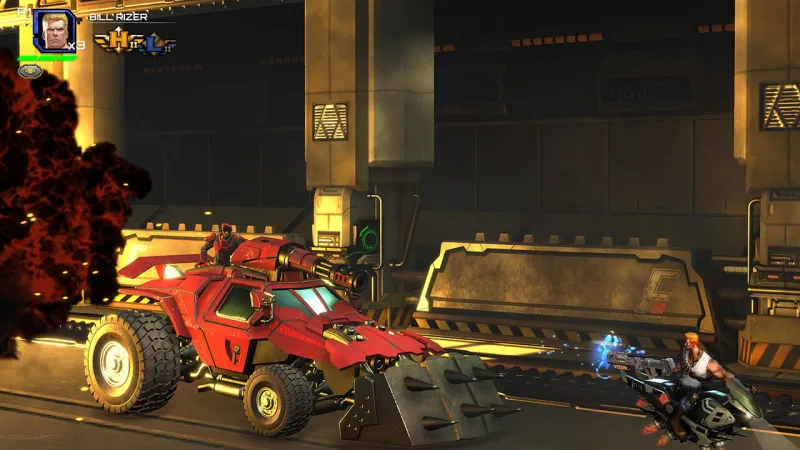
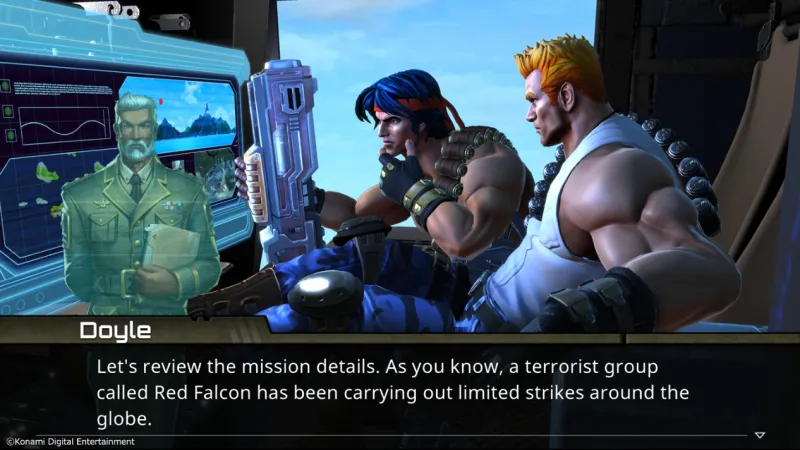
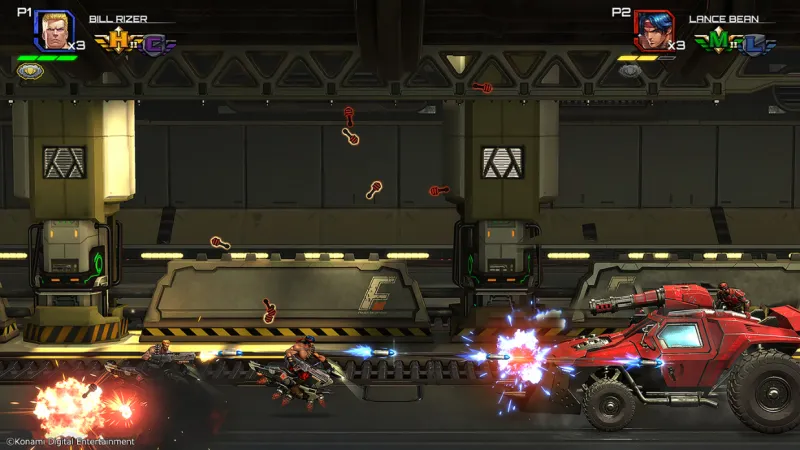
WayForward proves supremely capable of delivering stellar gameplay and strong level design within the confines of the established classic Contra games. By using the original levels more as guides than slavishly adhering to their layouts, WayForward competently injects big setpiece moments late '80s technology could only dream of. Though the initial level and the ascent up a waterfall hold a special place in my heart due to nostalgia, I most enjoyed when WayForward added elements like a hoverbike to the base mission, or inserting a train into the ice level. Though there are only eight missions in Story Mode, these different formats go a long way to diversifying the experience, as do the multiple unlockable characters, each with unique special abilities. However, I am disappointed in the lack of 3D-style shooting gallery levels that were so iconic in the original NES game.
Additional enemy types, bosses, and areas to explore pad out the stages, and unless you hone your skills, it will be an uphill battle to get through Story Mode. While the term "bullet hell" wasn't yet coined when Contra hit the NES in 1988, that term can retroactively be applied to certain sequences of that title. Those same sections have been reimagined and easily earn that designation in Operation Galuga. On various occasions, it took me multiple attempts to understand what I even needed to do to push through a difficult situation and, even more still, to execute the plan. True to its source material, Operation Galuga is a hard game.
Thankfully, you can adjust the difficulty in a couple of ways to make it more approachable. In both Story and Arcade Mode, you can choose a difficulty setting and decide if you'd rather have your character operate on the one-hit kill style of the original game or if you want HP associated with each life. These modernizations drastically improve the experience, though don't expect these settings to make the missions a walk in the park.
These settings also don't impact the aptly named Challenge Mode, which gives you 30 bite-sized objectives to complete. You can try your hand at speedrun, survival, boss battle, and weapon-specific challenges, but outside of the initial attempts, I never felt compelled to return to these. Arcade Mode offers a similar experience to that of Story Mode, but minus the superfluous cutscenes and narrative character restrictions. You can also play Arcade Mode in four-player co-op instead of the two-player limit in Story.
All these activities reward you with credits, which are used to buy perks from the in-game shop. These equippable boosts offer upgrades like additional HP, extra lives, new characters in Arcade Mode, and even bonuses like additional soundtracks and a fast-paced Speedrun Mode. Unfortunately, the perks are expensive, and I grew tired of farming credits long before I reached the amount I needed for the perks I was eyeing. Even entering the famous Konami Code just adds an expensive, purchasable perk in the shop.
Though the stages are much longer than their original forms, sometimes clocking in at around 15 minutes, playing through Story Mode only takes a couple of hours. Still, Contra: Operation Galuga packs a whole lot of action into those hours. When you add the more flexible Arcade Mode and difficult Challenge Mode, Operation Galuga is an admirable modernized reimagining of one of the most influential games of the late '80s.
Reviewed on: PlayStation 5 Platform: PlayStation 5, Xbox Series X/S, PlayStation 4, Xbox One, Switch Publisher: PlayStation Studios, MLB Developer: Sony Interactive Entertainment San Diego Studio Rating: Everyone
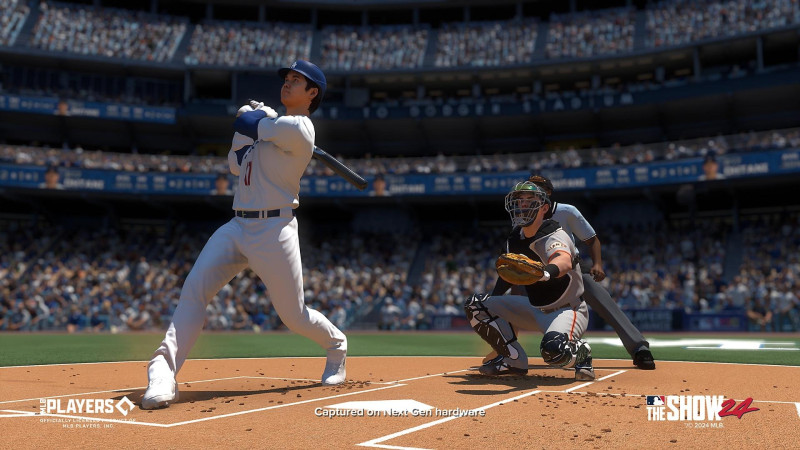
MLB The Show’s commitment to nuance, iteration, and diversity is what sets it apart. Since the long-running series arrived on Xbox in 2021, the baseball sim has recontextualized sports games – emphasizing the purpose of communities while fitting in new features like Pinpoint Pitching, custom stadiums, and online ranked co-op. The Show 23 pushed the bar further with Storylines: The Negro Leagues, an interactive museum that detailed eight stars of baseball’s segregated past. This year’s iteration mirrors it with new Storyline episodes, a 60-minute tribute to Yankee legend Derek Jeter, and an original RTTS narrative where “Women Pave Their Way.” While it isn’t a hyper-creative leap forward, MLB The Show 24 finds a new swing by tethering style and strategy to baseball’s fundamentals.
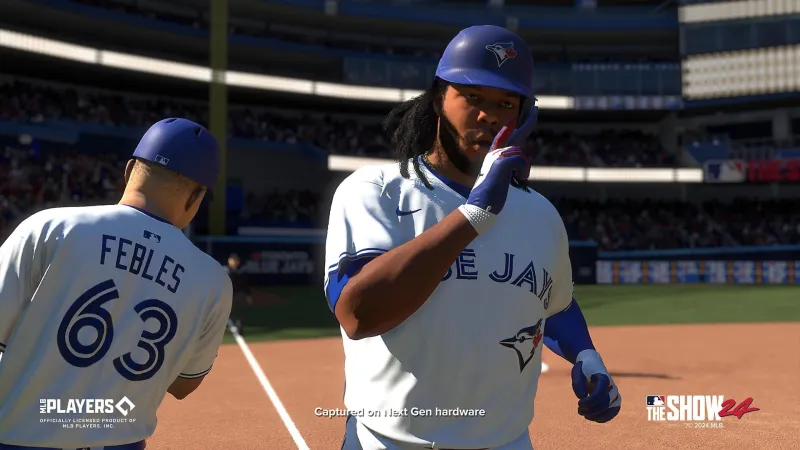
MLB The Show 24’s gameplay is almost identical to The Show 23 – complete with 23’s quirks (Break Outlier, Pick Off Artist), throwing interfaces, swing feedback, and updates to attributes that associate the clutch attribute with RISP. There are 400 new animations in 24, plus logic improvements, new base sizes, and “Impact Plays” that add major league realism to defensive assists. However, it lacks an innovative change to a hitting and pitching engine we’ve seen in past entries. The new face and hair details are a sight to behold when Bryce Harper and Fernando Tatis Jr. are bat-flipping home runs next to cherry-kissed skies, but the immersion breaks when a star player drops a pop fly, misses routine grounders at third, or “soft tosses” a double play ball in extra innings. The Show 24’s updated lighting system provides a sharper, detailed look at the diamonds across Major League Baseball, and it takes advantage of a boost in exit velocities. This shift makes it easier to hit the ball in Petco Park, Chase Field, and Kauffman Stadium, all of which were problematic in past entries.
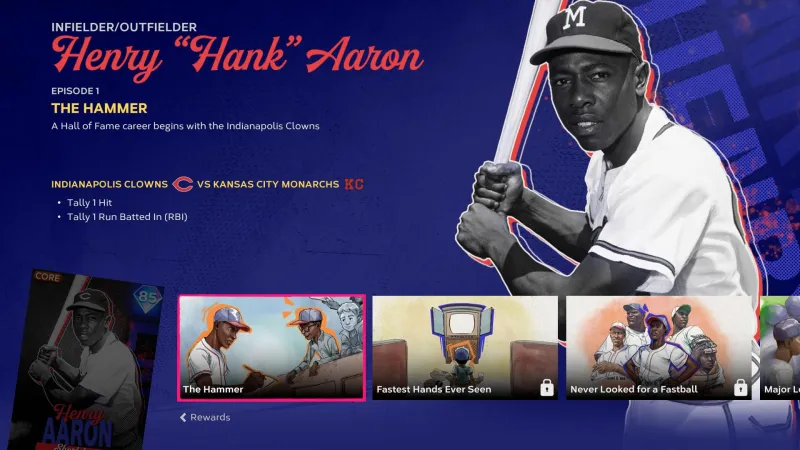
As expected, Storylines: Season Two is a delight. The docuseries, narrated by Negro Leagues Baseball Museum President Bob Kendrick, stands by the NLBM’s mission to “educate, enlighten, and inspire,” and it continues to combine archival footage, gameplay-driven scenarios, and personal anecdotes to illustrate why baseball is the most romanticized sport on Earth. The new season introduces 10 new Negro League heroes, with four episodes available at launch – reducing the initial runtime to institute a more immersive environment for Kendrick’s narrations.
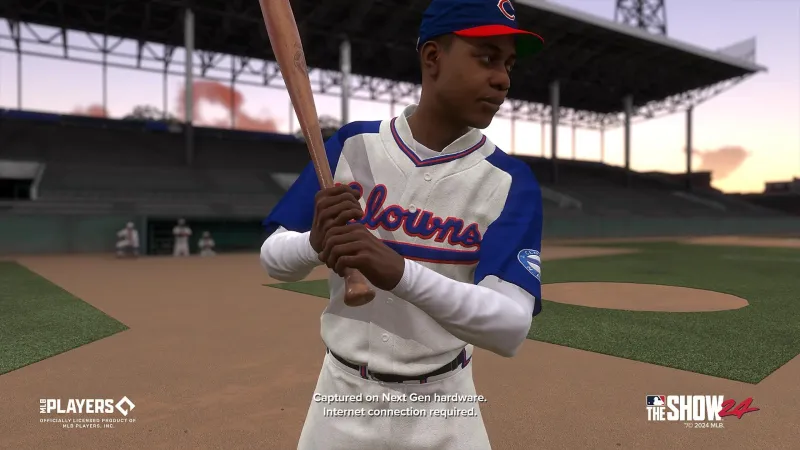
And it doesn’t miss. Season Two embraces the Negro Leagues’ revered architects, highlighting how the introduction of “night baseball” in the 1930s led to the discovery of a phenom known as Josh “The Black Babe Ruth” Gibson. It recalls how Walter “Buck” Leonard was a thinking man’s player and a fixture for Pittsburgh’s Homestead Greys; how Henry “The Hammer” Aaron started his career with the 1952 Indianapolis Clowns as a “skinny, cross-handed hitting” shortstop; and how Toni “The Trailblazer” Stone learned how to play with the fellas before becoming the first of three pioneering women to play professional ball. All four narratives are accompanied by iconic moments – such as recreating Stone’s single against the immortal Satchel Paige and hitting a home run with Aaron and the Milwaukee Braves in Sportsman’s Park – and it never once feels overly dramatized. Instead, every photograph, audio excerpt, and subtle ode to Pennsylvania’s Greenlee Field and Newark’s Ruppert Stadium is an organic lesson in American history. Bold and full of soul thanks to scores by Stevie Wonder, Marlena Shaw, and A Tribe Called Quest.
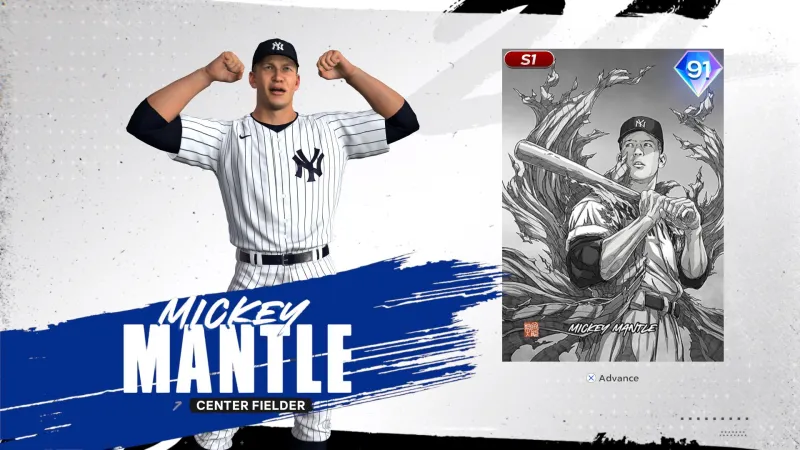
That attention to detail is also embedded in Storylines: Derek Jeter – a ‘90s-based spinoff mode that pays homage to “The Captain” and his New York Yankees-inflected path to baseball nobility. Much like Season Two, it’s a collection of career-defining, playable moments from 1995 to 2000, including his first career hit versus the Mariners in Seattle’s Kingdome, his famous “jump throw” from Game 1 of the 1998 American League Championship, and how the Yankees’ initial All-Star Game MVP drove the club past the New York Mets to seal a three-peat in the 2000 World Series. It’s not the most compelling narrative, particularly if you’re a fan of the Yankees’ rivals, but thanks to San Diego Studio’s Live Content team, it does offer a surplus of in-game rewards, including Atlanta’s 2000 All-Star Game uniforms and Subway Series player items for Diamond Dynasty.
There’s also an interactive subway map, complete with graffiti, billboards, and “New York-isms", that provides a snapshot of the city and a fan base with high expectations, but it’s difficult not to imagine Storylines being a distinctive voice for pockets of culture that are less commercialized.
Other modes like Franchise and March To October have been largely untouched – pairing The Show 23’s amateur scouting system, postseason formats, and “Ohtani Rule” with custom game conditions and Prospect Promotion Incentive (PPI). Road To The Show is directly tied to the Draft Combine, a four-day event where hitting, pitching, and fielding is graded to provide an accurate projection for attributes, comparisons, and club interest for the MLB Draft. It provides explanations for multiple ballplayer archetypes and their position’s focus, but the core narrative lacks creative ingenuity that goes beyond dated minigames and dialogue systems. Especially when it reaffirms what the community already knows: RTTS is for ‘80s mullets and XP bugs.
“Women Pave Their Way” is a fresh addition that alters the Road To The Show formula in new and exciting ways because it presents an atypical narrative about breaking barriers in baseball. It’s a unique pivot, led by narrative designer Mollie Braley and USA Baseball’s Kelsie Whitmore, and it’s one that promotes awareness of the women who play baseball and that other aspiring athletes are capable of competing at multiple levels. It sounds like “marketing jazz,” but Braley and SDS use pre-recorded video content with MLB Network’s Robert Flores, Lauren Shehadi, Dan O’Dowd, Melanie Newman, and Carlos Peña to stress the physical and mental adversity that is attached to carving a path in minor-league systems. They don’t sugarcoat anxieties or rewrite old baseball traditions; their intention is to inspire new and returning players to chase their lifelong dreams, and it’s a vision that gets its own full circle moment when MLB.com’s Sarah Langs starts detailing RPMs and spin rates.
With the exit velocities, Diamond Dynasty is off to its best start in years. The Show 24 alters 23’s Ultimate Team concepts to reintroduce “Seasons 2.0” – an expansion on “Sets & Seasons” that ditches 99 OVR player items on Day One for a traditional power creep, multiple Wild Card slots, monthly Team Affinity drops, and reward paths that differentiate Ranked, Events, and Conquest. There are Cornerstone Captains that implement seasonal archetypes for team building and new Team Captains that add comparable boosts to hitting and pitching attributes for all 30 MLB clubs – solely to create hypotheticals like Yankees vs Dodgers, Cubs vs Phillies, and Rays vs Padres. There are still microtransactions, sure, but The Show’s monetization policies are less iniquitous than Madden NFL, FIFA, and NBA 2K’s practices because they rarely “gatekeep” limited drops when there are hundreds of diamond player items “sitting at home.” Diamond Dynasty is still in need of a visual overhaul, a Custom Practice mode, a new uniform creation system, and more unique customization options that tap into collaborations with Sanford Greene, King Saladeen, and Takashi Okazaki, but listening to a community’s input is a start – especially if it continues.
MLB The Show 24 doesn’t hit it out of the park at every at-bat, but it doesn’t have to. The series is in the middle of an experimental phase that’s trying to mitigate its perpetual “online vs. offline” war. Despite a clear lack of innovation in mechanics, it has still found a way to impress, inspire, and engage with a younger generation that shares an interest in history. The Show’s art team is second to none, its OST shuffles Eladio Carrion, IDLES, Flowdan, and Brittany Howard with the grace of a 2 Chainz verse, and its “Grind 99” mantra has been edited to be a modern ideology – “play however and whenever.” It’s why Diamond Dynasty is the best take on Ultimate Team in terms of approachability and competition and why The Show 24 hopes to reignite annual titles through personalization. As the great Toni Stone once implied: “Get you one ‘cause I got mine.”
Reviewed on: PlayStation 5 Platform: PlayStation 5 Publisher: Koei Tecmo Developer: Team Ninja
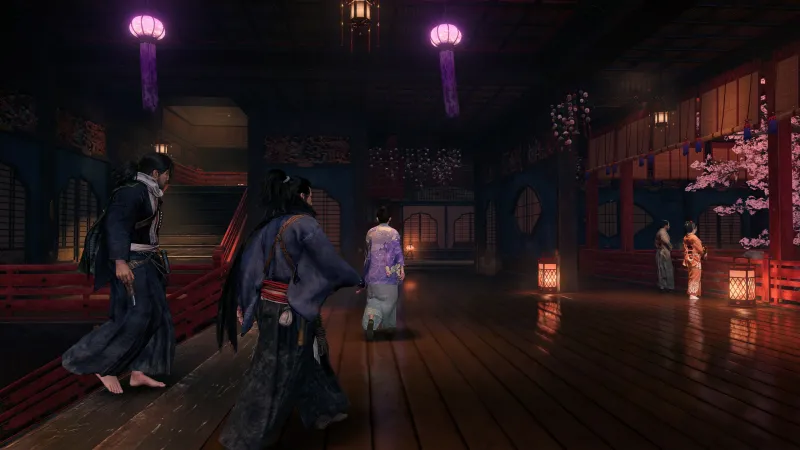
“In a mad world, only the mad are sane,” a stirring line from Akira Kurosawa’s 1985 samurai epic Ran, urges us to remember that in times of chaos, strange or unconventional ideas may actually be wise. In Rise of the Ronin, I argue Team Ninja exemplifies that madness with an open-world title far outside its usual comfort zone. Unfortunately, even in a mad world, seeing the wisdom in many of the decisions made here is difficult.
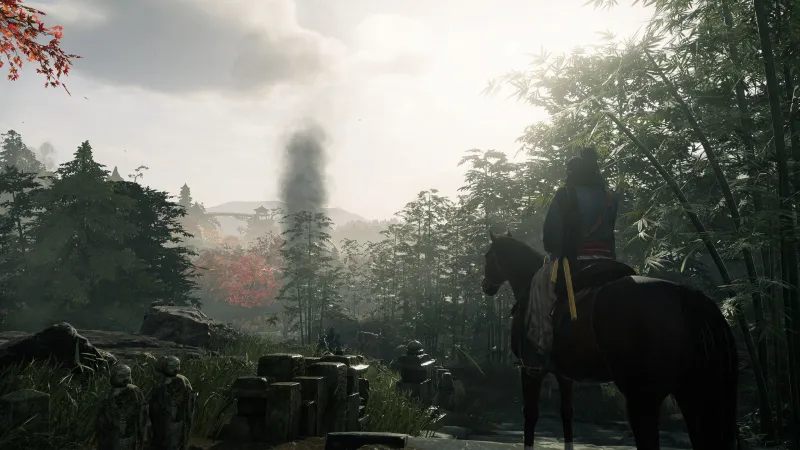
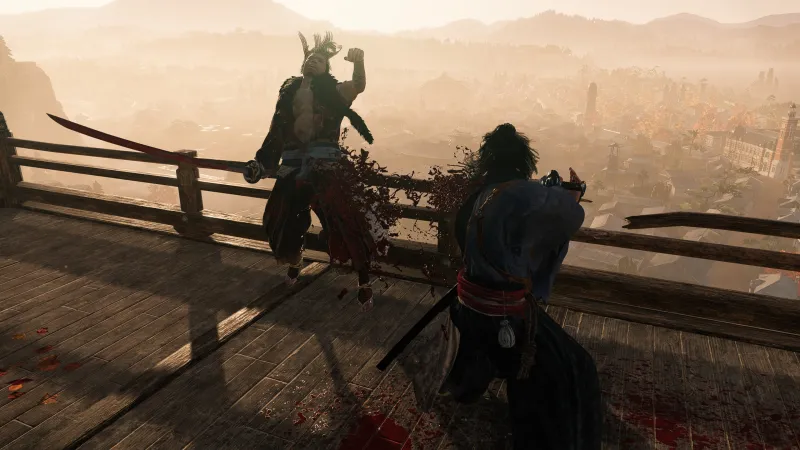
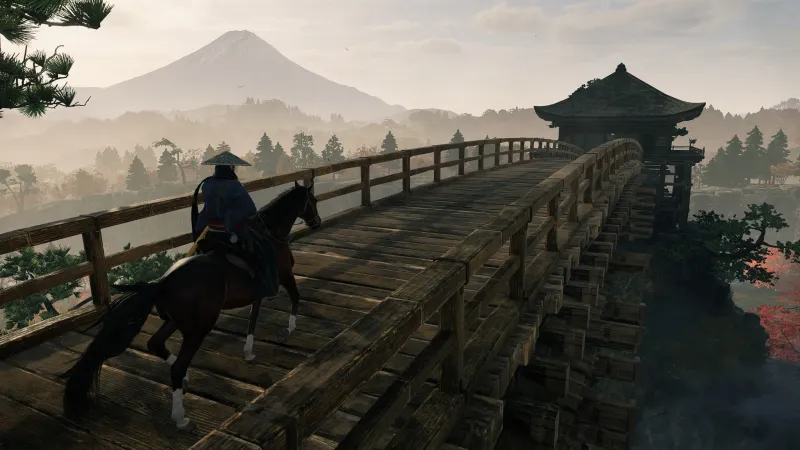
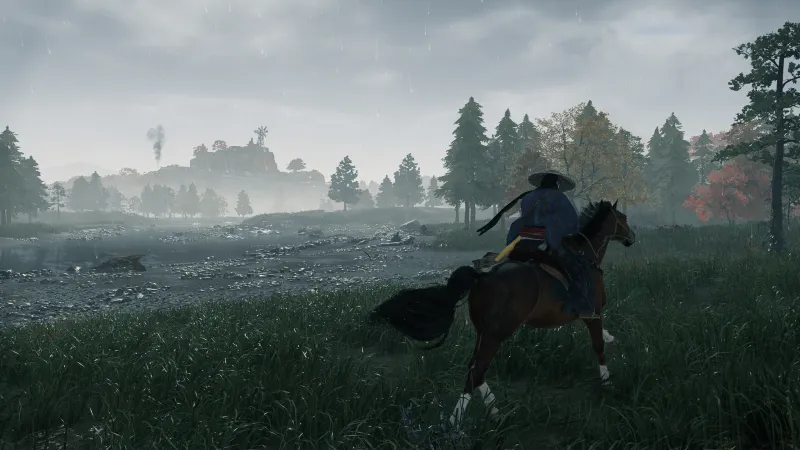
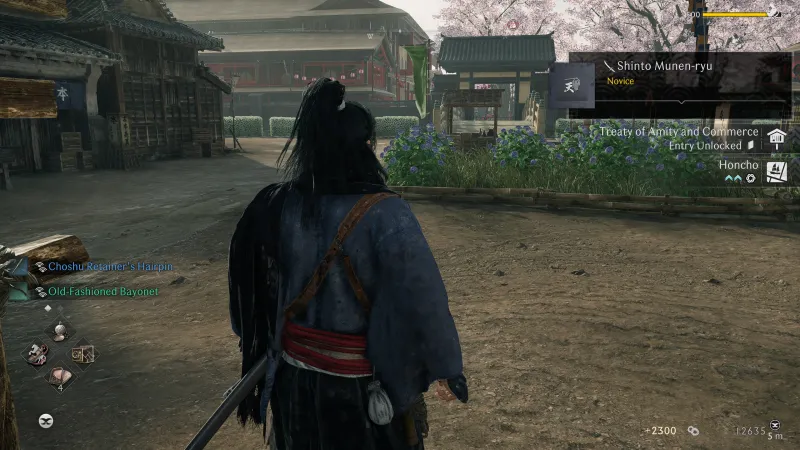
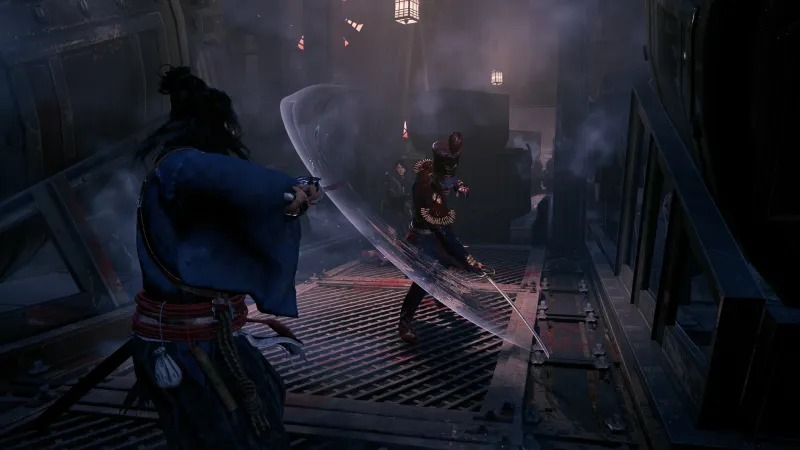
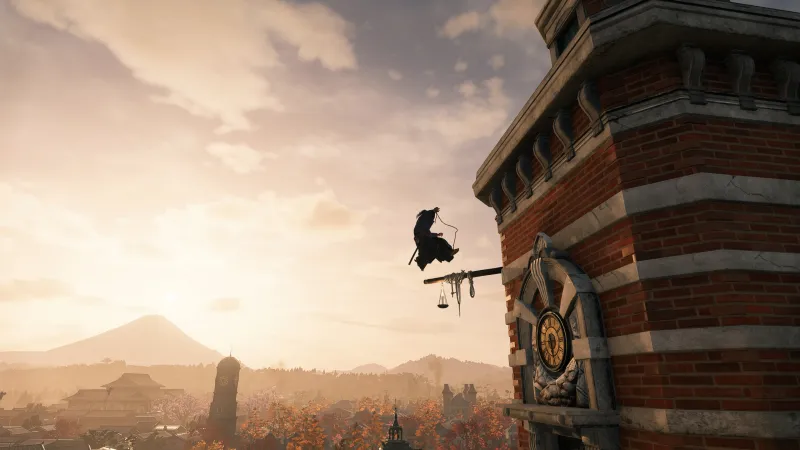
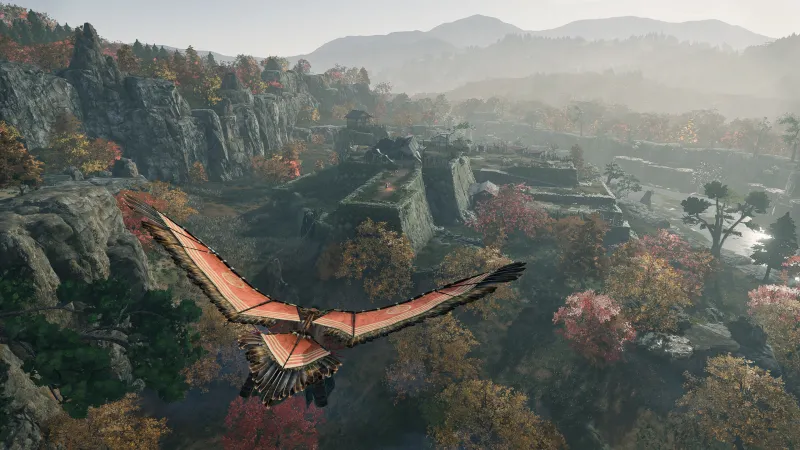
Rise of the Ronin is Team Ninja’s first open world, set against a backdrop of 19th century Japan to tell a historical story of political upheaval and revolution. As a new pathway for a developer that primarily focuses on tightly designed levels, there is little to be upset about in its open-world execution. It is, lamentably, about as standard as open-world design comes, with content littered across the map but little of it compelling enough to seek out.
Collecting cats for one quest-giver, foreign books for another, photographs for a third, and so on, starts out feeling shallow and only ends up crumbling into busywork that grates over time more than it enhanced. These activities are clearly meant to freshen up the standard gameplay loop with distractions, but they left me scratching my head at the necessity of being an open-world game in the first place.
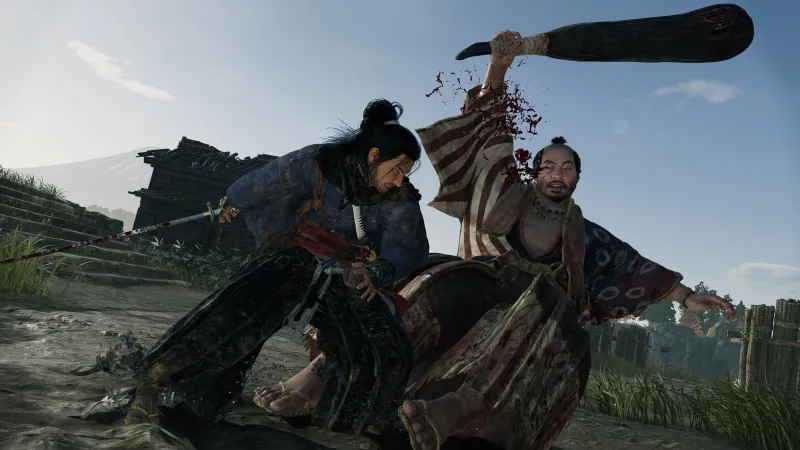
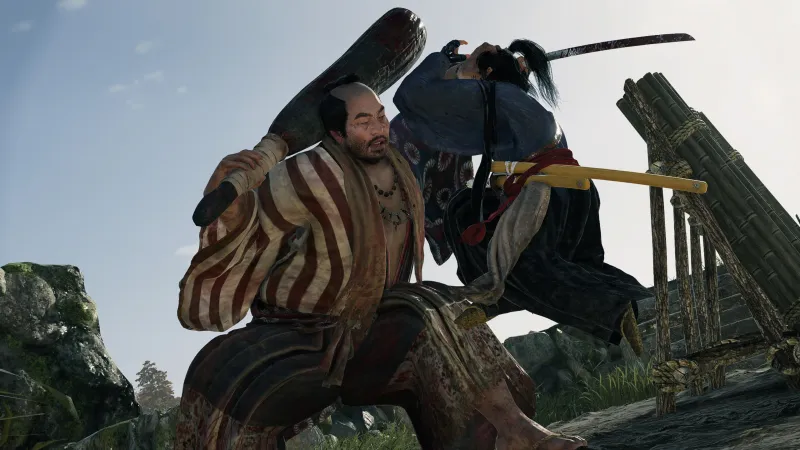
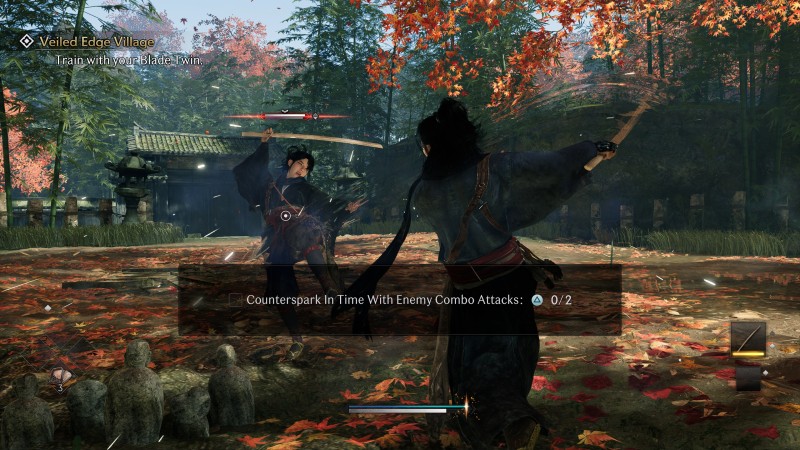
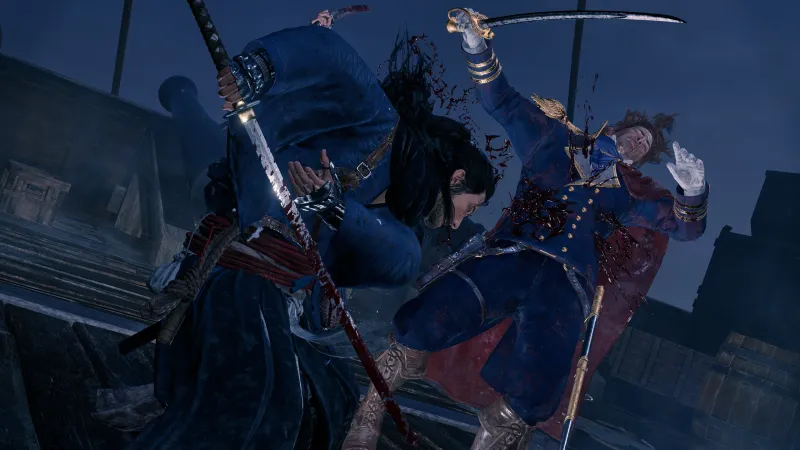
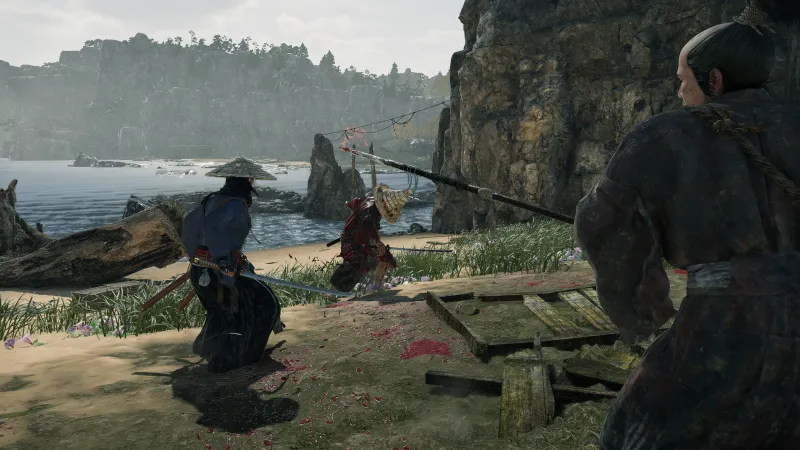
As a successor to games like Nioh and Wo-Long: Fallen Dynasty, Rise of the Ronin once again employs Team Ninja’s parry-heavy core to an impressive degree. Even when I might prefer to use stealth, most missions eventually become parry-fests where I wait for an enemy to get aggressive and go back and forth until I can perform a critical attack in return. Like those previous games in Team Ninja’s portfolio, it is consistently exciting to successfully parry every strike of an enemy’s combo and make them pay for it.
Where Ronin suffers is how intensely concentrated the game is on this single mechanic, as fun as it may be, to the exclusion of all other variety. The repetition of solving every single problem in the game with parries takes an often enjoyable action and forces me to do it thousands of times with little in the way of combat diversity. I began to feel like a hammer in a world full of nails with a litany of the same tasks to do that lost their novelty long before I hit the credits, regardless of the different stances and skills that do not feel especially additive to the experience.
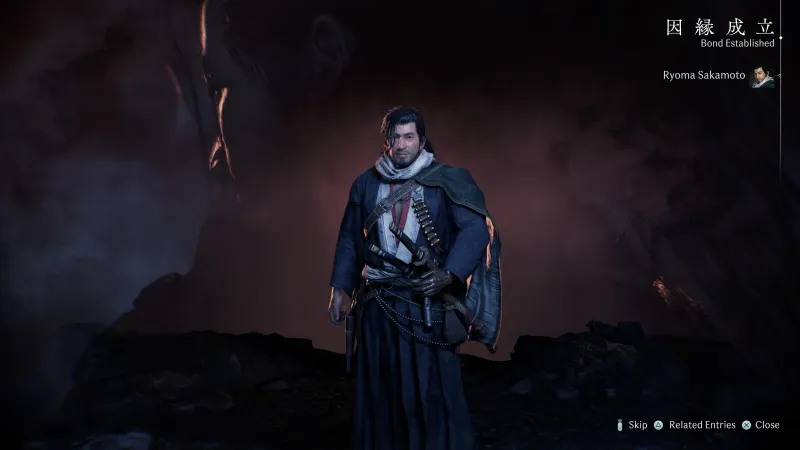
Team Ninja made a conscious effort to limit enemies to humans in this history-based story, as opposed to the demons and monsters and other supernatural creatures of the night. While understandable, this self-imposed restriction to the assortment of enemies exacerbates the echoing monotony that builds toward the end of the game. There are only so many Very Large Men with Two Swords I could come across before feeling like I had fought entirely too many of them.
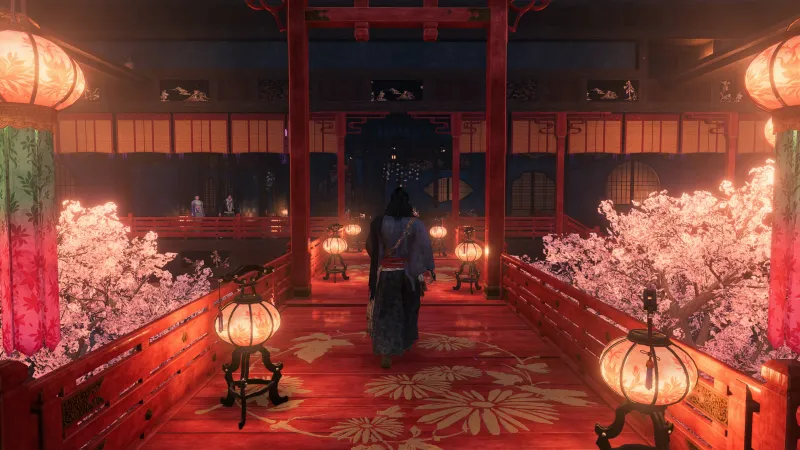
Rise of Ronin’s sweeping green fields and cascading waves of falling red leaves paint a beautiful picture that the game’s graphical prowess does not keep up with. Aesthetically, it makes the open world feel peaceful, but sometimes shoddy character models and simplistic environments break that immersion in half. The game’s graphical fidelity mode is borderline unplayable, with framerates that would test even the most stalwart frame-ignorer of their tolerances.
Almost nothing in Rise of Ronin is outright bad, but it is Exhibit A in any argument about why action games are not dozens of hours long or why open-world designs do not fit every mold. For all the inspirations the game wears on its sleeve, it never rises above them, and thus feels like a title in search of an identity and desperate for a specific kind of player. It’s sometimes a good time, just not for a long time.
Platform: PlayStation 5, Xbox Series X/S, PC Publisher: Capcom Developer: Capcom Rating: Mature
Creating a sequel to a 12-year-old game is never an easy task. Recapturing the magic of the original while implementing modern technology and design strategies can mangle the core values that made the original special. Dragon’s Dogma 2 never loses sight of its roots, and constantly finds big and small ways to surprise me even 50 hours in. At its core, Dragon’s Dogma 2 captures a sense of adventure. While you’re the center point of the conflict and strife in the world, Dragon's Dogma 2 isn’t afraid to make you feel small. Around every bend, it reminds you that you’re just one part of a larger whole.
The game doesn’t waste any time setting the stage for the political power struggles and the role you play in them. The main plot serves as your reason for adventuring, but it isn’t until the last roughly 15 hours that it takes some big swings and absolutely nails them.
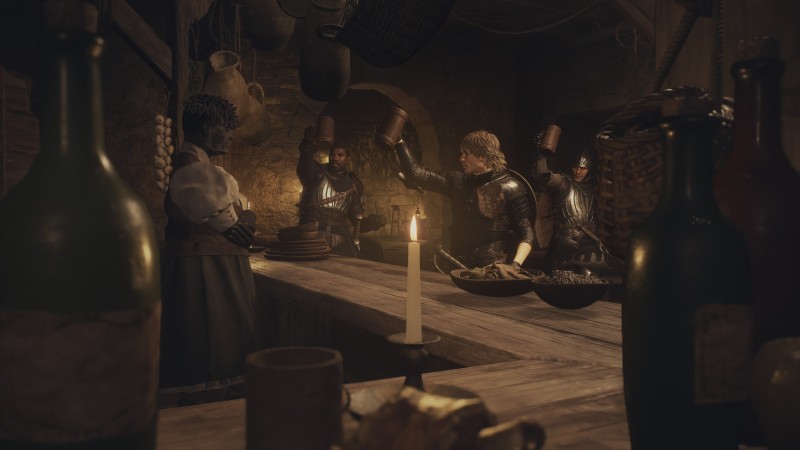
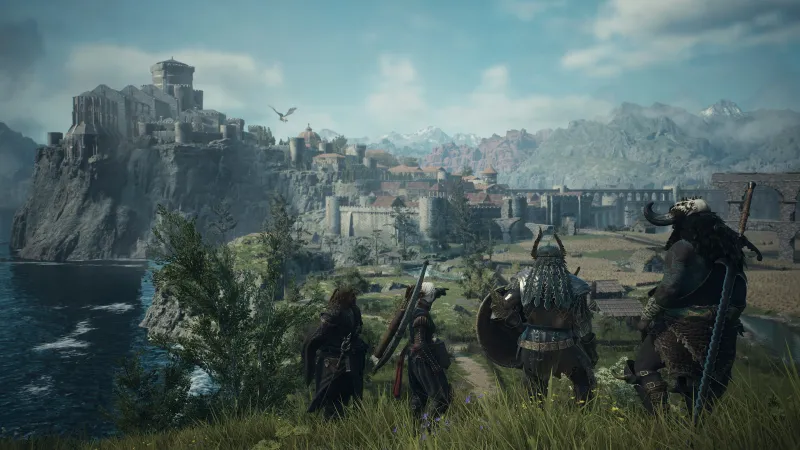
The capital city of Vernworth, where you will spend large chunks of the game, is a bustling town with merchant stalls lining the streets, the affluent noble quarters and their gaudy homes, and the castle grounds guarded to the teeth. NPCs roam around, shop, and stumble into you with quests and smaller tasks for you to handle. It pushes the notion that people live their lives whether you’re around or not.
However, the majority of this game is traveling outside the safety of the city walls and testing your mettle in the wild. Every adventure I set forth required me to think in novel ways about how I needed to prepare. I constantly juggled the weight of my pack versus the healing items and camping materials I would need to survive. Dragon’s Dogma 2 makes every step outside of the city walls a critical decision and one I loved making.
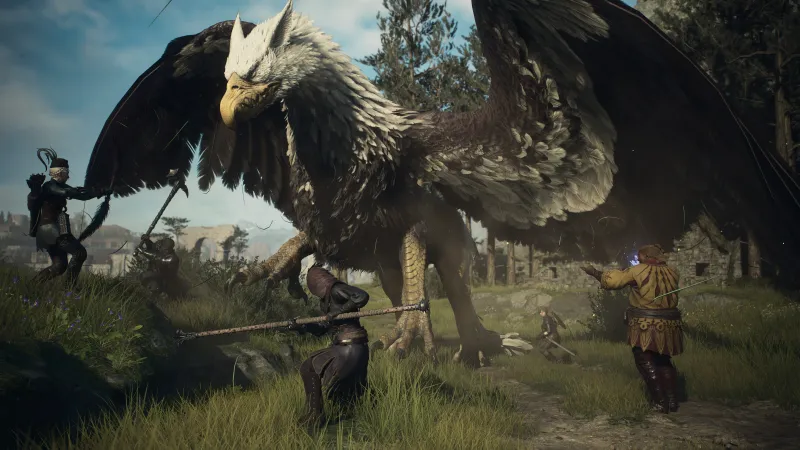
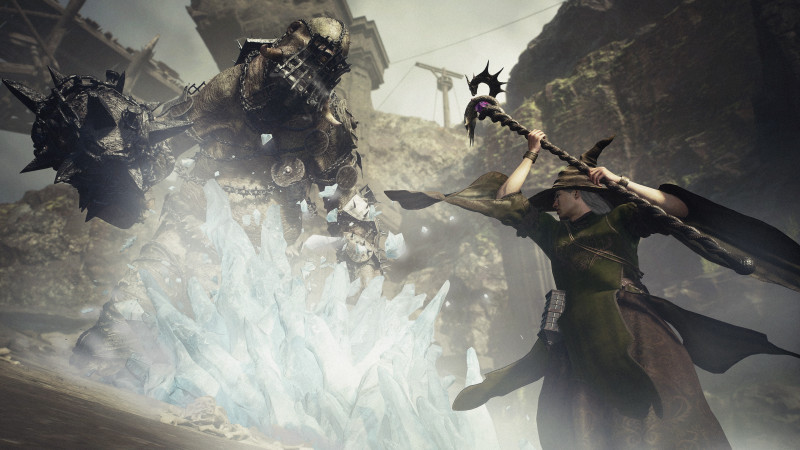
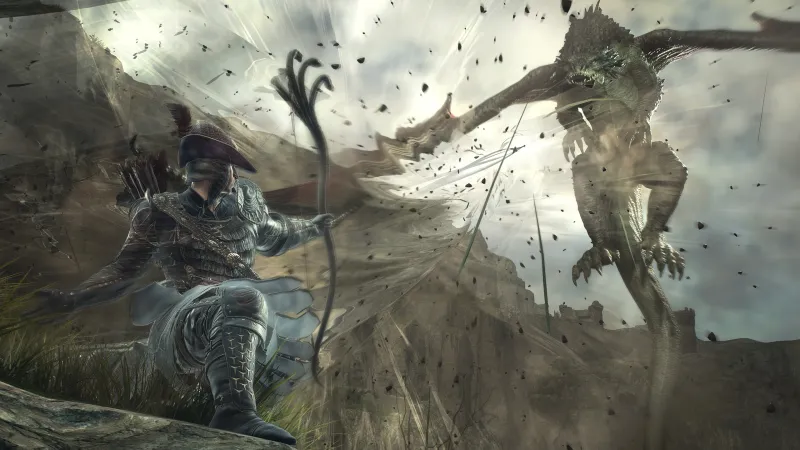
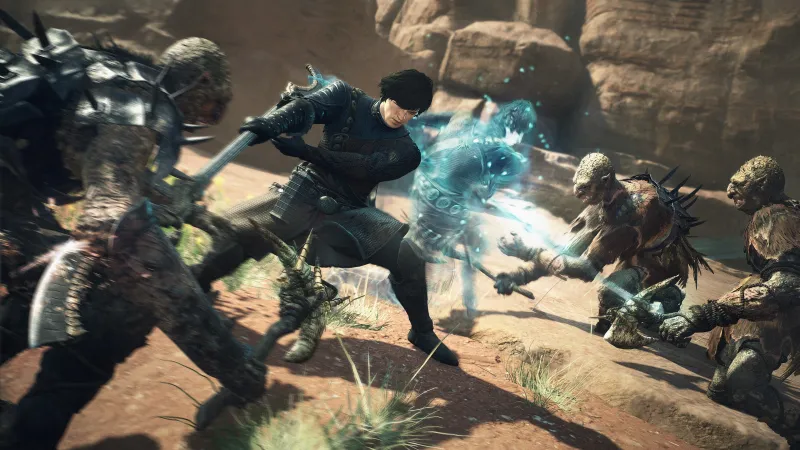
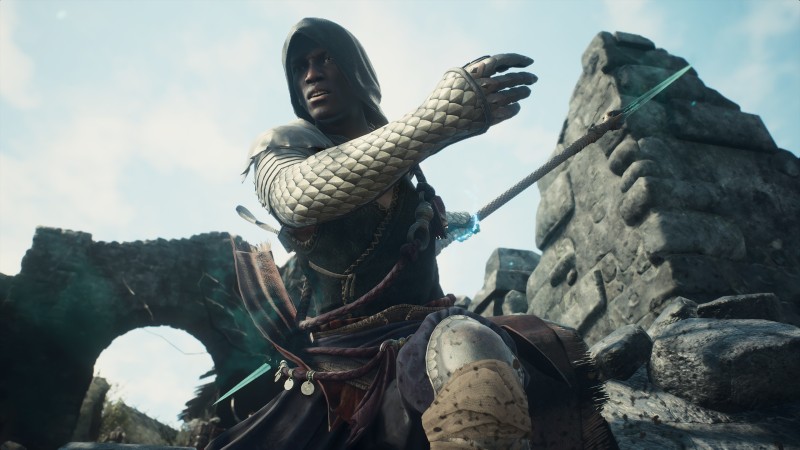
Vocations offer different classes for you to use in combat. While I spent most of my time as a Thief, which excels at scaling large monsters like Cyclops or Griffons, there’s plenty to choose from. The Sorcerer's slow, powerful magic casting is vastly different from the quick and deadly blade of the Mystic Spearhand. Dragon’s Dogma 2 invites experimentation, and you can choose from these Vocations at will, granted you’ve completed some of the questlines to unlock them.
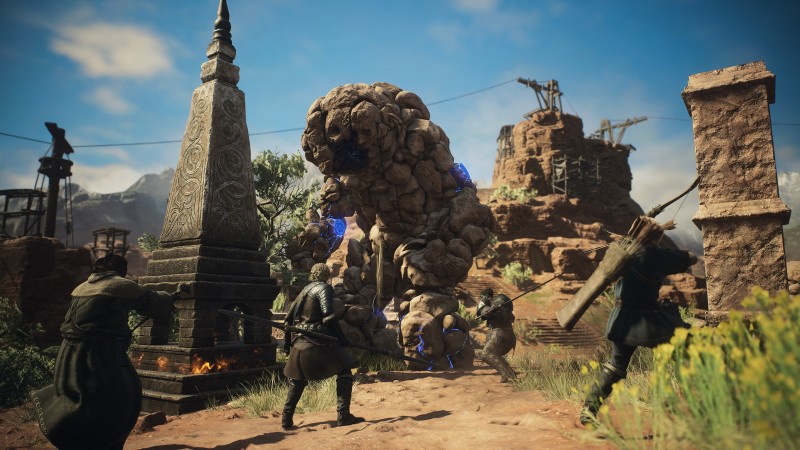
Combat is brutal, long, and can leave you and your party on your last leg. The further you stray from the village and the longer you stay out imposes incredible risk. However, it’s a risk I happily took and one that always felt like the reward was high enough, even if my party died trying.
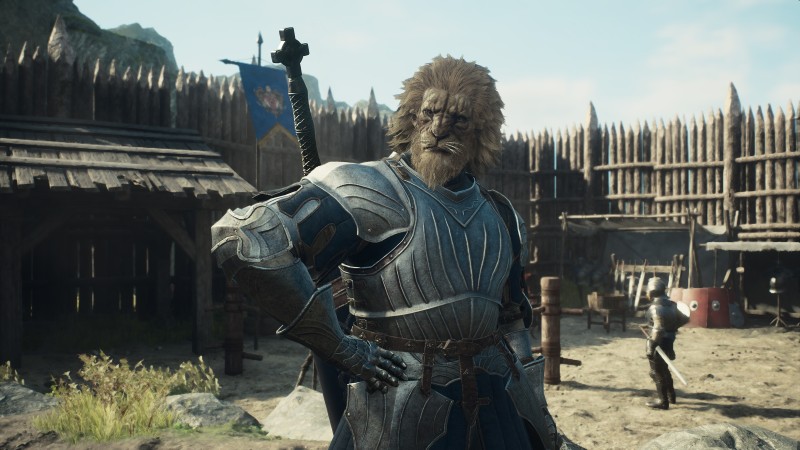
The Pawn system from the original game returns, allowing you to create your central party member, customize their looks, vocations, and even their attitude toward players. The new improvements to the system are smart and incentivize you to experiment with other players' Pawns. I constantly switched out Pawns at every Rift Stone I could to see the best party composition possible, and it made all of the difference in battle. Having a team of fighters allowed me to swiftly trounce monsters, even if it meant not having a healer and relying on potions on scavenged fruit. These constant small decisions feed into the game’s larger idea of player freedom.
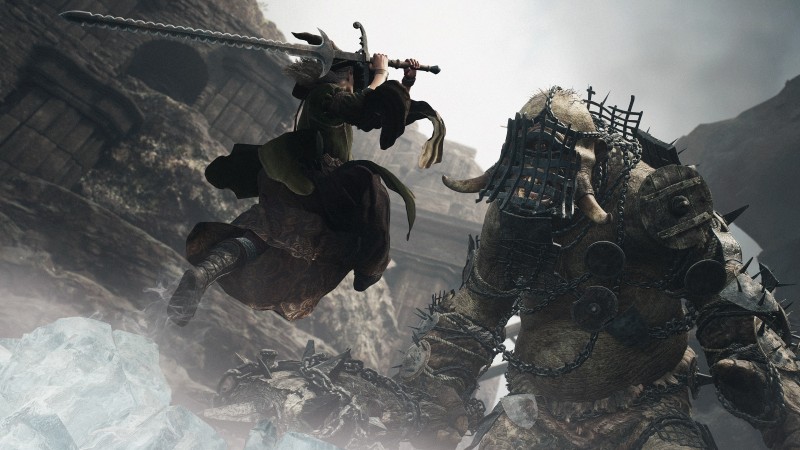
Your Pawns are instrumental in taking down the gruesome foes of Dragon’s Dogma 2. Whether it’s the hulking nature of the Minotaur or the sharp and jagged claws of a Griffon, Dragon’s Dogma 2 revels in its spectacle, making every battle a nailbiter.
However, large-scale battles are where you will see the performance on consoles take a big hit. When I had multiple enemies on screen, and a pawn would cast a big spell, the frame rate would dip tremendously.
Map markers and icons are few and far between in Dragon’s Dogma 2. It often feels like you’re playing detective and leaning into the role-playing elements; having a eureka moment when uncovering clues about a person's whereabouts never gets old. On a few occasions, I wasn’t given enough information to deduce the location of an NPC or monster correctly. This dilemma led me on a wild goose chase that felt unearned and a little tedious, especially because there are few fast travel options, so every time you leave the city, you’re going to be gone for hours at a time.
Dragon’s Dogma 2 captures the spirit of the original without sanding down the edges of what made it excellent. Its insistence on player exploration and discovery, coupled with an ending I will think about for the rest of the year, makes Dragon’s Dogma 2 a standout game and a worthy successor.