This is default featured slide 1 title

Go to Blogger edit html and find these sentences.Now replace these sentences with your own descriptions.This theme is Bloggerized by Lasantha Bandara - Premiumbloggertemplates.com.

This is default featured slide 2 title

Go to Blogger edit html and find these sentences.Now replace these sentences with your own descriptions.This theme is Bloggerized by Lasantha Bandara - Premiumbloggertemplates.com.

This is default featured slide 3 title

Go to Blogger edit html and find these sentences.Now replace these sentences with your own descriptions.This theme is Bloggerized by Lasantha Bandara - Premiumbloggertemplates.com.

This is default featured slide 4 title

Go to Blogger edit html and find these sentences.Now replace these sentences with your own descriptions.This theme is Bloggerized by Lasantha Bandara - Premiumbloggertemplates.com.

This is default featured slide 5 title

Go to Blogger edit html and find these sentences.Now replace these sentences with your own descriptions.This theme is Bloggerized by Lasantha Bandara - Premiumbloggertemplates.com.

Friday, June 29, 2018

Lost In America

Like some American lives, The Crew 2 experience basically amounts to being bored, frustrated, and wanting to get the hell out of Florida. This sequel gives you various ways of racing across the country, but it counters this freedom with limited gameplay and the feeling that this isn’t really the land of opportunity. Like the first game, developer Ivory Tower’s vision of America is not one that captures the imagination.

The Crew 2 has no shortage of things to do. With plenty of events to tackle, you earn reputation and money to take on rivals in specific racing disciplines. Planes and boats are new for The Crew 2, offering their own gameplay nuances such as learning not to scrub off speed while turning in a boat. However, you can go long stretches without coming across an event or an environmental skill challenge. After a while, I didn’t use the map at all; I went from race to race via the pause menu since I didn’t want to drive everywhere with the chance of nothing happening along the way. The police cars and landmarks of the original game have been removed, which exacerbates the feeling that there’s not a lot going on. I miss the landmarks in particular since they rewarded exploration while offering a flavor of the surroundings. A photo mode alerts you of pictures you can take of animals, but I stopped doing these since it isn’t fun creeping along slowly trying to find the creatures.

The story is the barest of setups, and it doesn’t curate the experience to offer choice moments on a platter. While the freedom to race a larger selection of events at any one time is an improvement, I quickly realized that throwing the doors open to the whole country isn’t as fulfilling as it may seem, since The Crew 2 doesn’t have much compelling content within.

Despite the general lack of inspiration, The Crew 2 still has some fun spots. Interestingly, these were freeform moments outside of the basic races, like hopping sand dunes in a buggy or bouncing from crest to crest in a speedboat. But these flashes are simple and fleeting, and the majority of events and random skill challenges struggle to hold your attention either because of aggressive rubberbanding, lack of difficulty, or uninteresting layouts. I like flying planes, but you can only be asked to do so many barrel rolls before they lose meaning. A checkpoint race that brags you can use your imagination to get from gate-to-gate doesn’t do much good if it funnels you into a single path before a checkpoint.

Multiplayer should be a way to fill the gaps, but The Crew 2 has no PvP at launch (only leaderboards), and provides no compelling reason to team up with friends to defeat an event since you’re off in your own areas and don’t need each other to complete the event. Similarly, the game fails to connect players meaningfully or add to its world, despite its title, because you can’t spawn spontaneous in-world challenges, and your friends are not part of a larger organization to bind together all you’ve done. The consequence is even your friends feel like acquaintances barely relevant to the experience.

In what I can only assume was an unintentional parallel, progressing in The Crew 2 depends on getting enough social-media followers to up your reputation to unlock new tiers of events so you can do it all over again. Jumping through all these hoops for other people’s amusement (but not my own) is a hollow purpose – a kind of vain attempt for validation that quickly grows thin.

Wednesday, June 27, 2018

Prime Cut Paranoia

Arkane Studios’ immersive reboot of Prey was entertaining, even if it lurked a little too long in the shadows of Deus Ex and System Shock for its own good. I loved exploring the mysterious space station Talos 1 and learning how to bypass obstacles by turning into coffee cups or raising former crewmates to fight my battles. However, tedious backtracking and dull combat often muddied Prey’s offerings. The Mooncrash expansion pack remedies most of the base game’s ills and creates the experience I wish I had played last year.

Mooncrash is a side story, taking place after the base game. You assume the role of Peter, a hacker working for TranStar’s chief competitor, Kasma Corporation. Peter’s been monitoring TranStar’s secret lunar base. Something’s gone wrong on the moon, and he has to find out why by running simulations of five base personnel who made it off the base, then recording that data for Kasma. The setup is delightfully odd,  a strange structure that wisely puts experimentation with Prey’s enjoyable toolbox of skills and weapons first, even if (once again) the narrative payoff is lacking.

The narrative wrapper requires that you play as all five crewmates. Each one represents a different character build you might have made during the Prey campaign, like the gifted mentalist who has access to a ridiculous arsenal of powers (such as telekinesis or energy blasts) but limited health, and the security officer who’s good with a gun. While the universal goal for everyone is to escape the moon by any means possible, each character also has a special objective for you to complete. Most of them are enjoyable short stories that give you a little insight into each character, like the security officer’s friendship with a custodian who’s actually a backstabbing Kasma operative. The tales make each playthrough more interesting than just getting out alive. You also have to complete certain story missions to unlock other characters.

Mooncrash’s biggest feature is its roguelike ambitions, which is the expansion’s biggest success and failure. If one of your characters is killed by an enemy or environmental negligence, the whole simulation resets, wiping out your progress and creating a new base where enemy and item layouts are randomized. To make matters worse,  a corruption timer ticks away during every simulation. With every new level of corruption it reaches, enemies you’ve killed respawn stronger than they were before. Once corruption hits level five, the simulation crashes. Though you have a way to reset the corruption level counter, the countdown is more of an annoyance and resource drain than a mechanic that intensifies gameplay.

To help alleviate the stress of losing everything, discovering fabrication plans for items during a simulation means you can purchase those items before each run using skill points earned by accomplishing objectives, discovering items, and killing monsters. While it might sting to lose your characters’ progress in a simulation wipe, at least you can start the next run with that high damage dealing pistol you crafted (if you’ve got enough skill points), keeping losses from being too frustrating.

One of Mooncrash’s wrinkles that I love is how every choice you make affects all the characters in that simulation. For example, you might be tempted to take all the snacks you find in one area to replenish your health, but it means that another character won’t be able to access them. A bigger, more concerning example is that the moon only has five ways to escape. If you use the shuttle to escape with your first character, you can’t use it again to escape with another. Each escape method is also more than just discovering and selecting the method. A second or even third step is always involved, like searching out a pilot’s corpse and injecting their knowledge of flight into your brain so you can escape with the shuttle. These objectives are enticing to the point that I don’t want to spoil any of the others here, but rest assured: plenty of zany and grotesque sci-fi story beats are waiting to be found. The multi-tiered objectives liven up every area, and character playthrough makes exploration an exciting prospect as opposed to the tedious backtracking that made Talos 1 feel woefully underused.

Like Prey, the expansion pack rewards only those who play carefully, sneaking around corners, scavenging everything in sight, and wisely managing resources. Unless you go in guns blazing or have tremendously bad luck, you can get out of most scraps if you take the time to study your character’s abilities and play to your strengths. While this might sound disappointing to those expecting a hardcore challenge, I never felt the tense atmosphere relent, knowing that every mistake could cost me all my progress with these characters. Deadly encounters with the dreaded psychic behemoth telepath left me running to lick my wounds and restock on ammo and objects as the timer ticked down. Following up those moments with a Hail Mary play is an exhilarating experience, like sucking the horde of enemies about to lay the killing blow into a miniature (and fatal) dark hole with a special grenade.

Those who yearn for more gadgets will be disappointed, as Mooncrash only offers a few, such as the admittedly cool Psychostatic Cutter energy dagger. However, the expansion pack’s achievement is more substantial than a bunch of doodads thanks to how it takes the promise of the base game, slices out the fat around it, and then serves up an experience as thrilling as it is challenging.  Arkane Studios excels at creating fun, inventive playgrounds in which players are given a bevy of tools that wreak havoc and create memorable moments. In that regard, Mooncrash ranks among the developer’s strongest offerings.


Monday, June 25, 2018

A Great Escape

Video games are often described within the context of escapism, immersing players in wondrous worlds and putting them at the center of epic quests. From that angle, The Awesome Adventures of Captain Spirit is relatively mundane; it’s set in a plain house on a regular Saturday morning, and stars a typical kid obsessed with superheroes, robots, and dinosaurs. Even so, the concept of taking refuge in fantasy is the compelling core of this sad and powerful story, which is partially about the places we escape to, but even more about the situations we escape from.

It may not have “Life is Strange” in the title, but The Awesome Adventures of Captain Spirit is a new (and free) tale in that universe from series creator Dontnod Entertainment. Players control Chris, a 10-year-old boy who lives alone with his dad. Chris’ mom was killed a few years ago, his dad is an alcoholic, and life in their house is not easy. The situation is painful, but it also paves the way for the game’s best narrative flourish: As a reprieve from his unpleasant reality, Chris often retreats to a fantasy world in which he becomes the heroic Captain Spirit.

You spend most of your time doing chores in the house and yard. The gameplay consists mainly of walking around and examining highlighted objects, but Chris’ wild imagination transforms these interactions into comic-book scenarios that capture an authentic sense of playfulness. Through the eyes of Captain Spirit, a beat-up truck is a spaceship waiting for take-off. A box of mementos is a secret treasure to protect. A water heater is a sinister foe lurking in the dark. These vignettes are creative and interesting, whether they are accompanied by visual transformations, sci-fi sound effects, or simple dialogue. I always looked forward to seeing how the spectacle of these scenes contrasted with Chris’ normal actions in reality.

At the same time, these interludes are also bittersweet, because you can’t separate them from their sad circumstances. Chris’ dad spends the morning drinking whiskey in front of the TV, leaving Chris to tidy up the filthy house, do laundry, and wash dishes. Left with these lonely tasks, it’s no surprise that Chris turns to a superhero alter-ego to make his life more exciting. Sometimes, you even get the option to super-charge your basic interactions, like “irradiating” the mac and cheese you’re microwaving, or turning on a TV with your mind (and a remote control). All of these retreats into imaginary exploits remind me of a less grotesque Pan’s Labyrinth (or a darker Calvin & Hobbes), and are portrayed in a way that feel genuine.


The insidious nature of the dad’s drinking problem is also handled deftly. Alcoholic parents are often shown as screaming and slovenly monsters, but here the menace is more complicated. In one scene, Chris’ dad worriedly asks if anyone has noticed the bruises on Chris’ arm. But minutes later, the two characters are playfully shooting Nerf darts and pretending to be monsters. These interactions are complex and uncomfortable; you see the world from Chris’ perspective, and it emphasizes how difficult it is for children to process bad situations – especially involving the people they love.

Though the general scenario and storytelling prove captivating, the segments that lean into more traditional adventure game mechanics are the weakest. Aligning two images to make a map, or finding a PIN to unlock a phone isn’t fun, and does more to pull you out of the world than draw you in.

Normally, games like this depend on satisfying narrative arcs to keep players engaged, but not this one. Instead of feeling like the first chapter in a multi-part story, The Awesome Adventures of Captain Spirit is more like a snapshot. It only takes a couple hours to finish, and depicts a routine day in the life of Chris and his dad. It has explicit connections to the upcoming Life is Strange 2 that have me excited, but The Awesome Adventures of Captain Spirit also stands alone as a clever and heartbreaking look at a kid who deserves better.

Wednesday, June 20, 2018

Dripping With Unrealized Potential

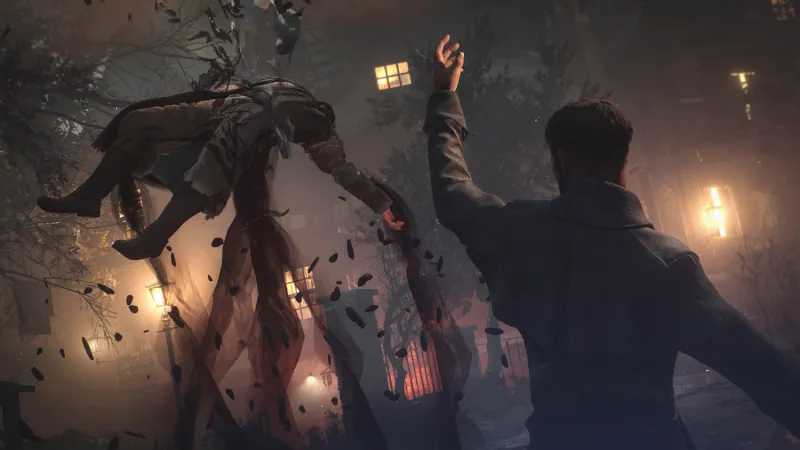
When I was a kid, I tried assembling a model car. This was back before “Nailed it!” was a meme (and before the internet in general), but I remember being disappointed by the disparity between the picture on the box and my final result. Compared to the idealized image, my car was lopsided, painted poorly, and glued together in the wrong places. This memory came back to me several times while playing Vampyr. Dontnod’s gothic action/RPG has conceptual components that could have been assembled into a great open-world vampire experience, but they weren’t. The gulf separating that perfect vision from the flawed reality is ever-apparent, and admirable ambitions can’t atone for clumsy execution.

You play as Dr. Jonathan Reid, a recently transformed vampire who must balance his need for blood against his desire to help treat London’s Spanish flu epidemic. The grim atmosphere is well-crafted, with evocative music punctuating your trips down foggy and deserted streets. You explore different parts of London, meet the residents, and fight beasts and hostile humans. The unique premise is Vampyr’s biggest strength, putting players in the position of a morally upstanding character who has to wrestle with immoral impulses to hold a crumbling world together.

Despite an intriguing narrative backdrop, a meaty chunk of Vampyr’s gameplay involves a clunky third-person combat system. Keeping an eye on your health, stamina, and blood (i.e. mana), you fight a too-small selection of enemy types like vampire hunters and zombie-like skals. You can also invest in various vampire powers, like a bloody claw slash or a blood shield that absorbs damage. These expand your options, but not enough; encounters are repetitive and the mechanics are functional at best, and battles never settle into a sweet spot because the action fluctuates wildly between too hard and too easy.

The team at Dontnod made it the player’s responsibility to tune the difficulty through their choices, which creates major problems. If you want to get stronger and unlock more health, stamina, and vampiric abilities, you need to drink blood for XP. The only significant source of blood is civilians (all of which are named and have dialogue), and when you kill them, you are locking yourself out of potential side missions or story content. This choice is interesting in theory, but punitive in practice because the things you’re weighing feel mismatched. One is narrative and one is mechanical, so you don’t get the fun of seeing different-but-equivalent paths unfold.

Considering how brutally difficult combat becomes if you elect not to feed, all but the most hardcore players need to kill to improve their stats. To make each sacrifice count, you must get to know your victims to maximize the richness of their blood. This fascinating idea occasionally makes you feel like a twisted predator; you help people, heal sickness, and build friendships all to make your ultimate betrayal as bountiful as possible. However, the process of talking to people and interrogating their friends to get clues feels mechanical. I got so sick of the back-and-forth and fetch quests that I eventually just did a sweep of London and murdered every civilian I could in a single night. Districts collapsed, innocents died, and my bad ending was assured, but I got a ton of XP to spend on powers that made every battle thereafter a breeze.


Vampyr’s attempts to let you forge your own destiny are ultimately unsatisfying. Though you can make decisions in dialogue trees, the game doesn’t respond to those choices in interesting ways. How you deal with the community pillar in each district has the most noticeable repercussions, but the game doesn’t provide a clear sense of what the outcomes might be. For instance, I unknowingly lost my opportunity to get an important treatment for other citizens by drinking the blood of a rogue nurse. I later learned that the optimal choice in these scenarios is to let the characters live – in which case, offering the decision seems pointless.

Vampyr is also riddled with basic technical problems like long loads, odd collision, and stilted animation. The rough edges can tap into a similar appeal that I find in games like Deadly Premonition or Earth Defense Force, but they are also frustrating – especially when the whole game crashes at critical moments. Nothing that Vampyr provides makes it worth putting up with these problems, or any of the other issues plaguing the game. Through the fog awkward mechanics and unsatisfying decisions (not to mention some dumb story twists), the fun and intriguing core of Vampyr is sometimes visible. Unfortunately, that fog lifts only rarely, leaving most of the experience shrouded in darkness.

Tuesday, June 19, 2018

A Square Peg In A Round Hole

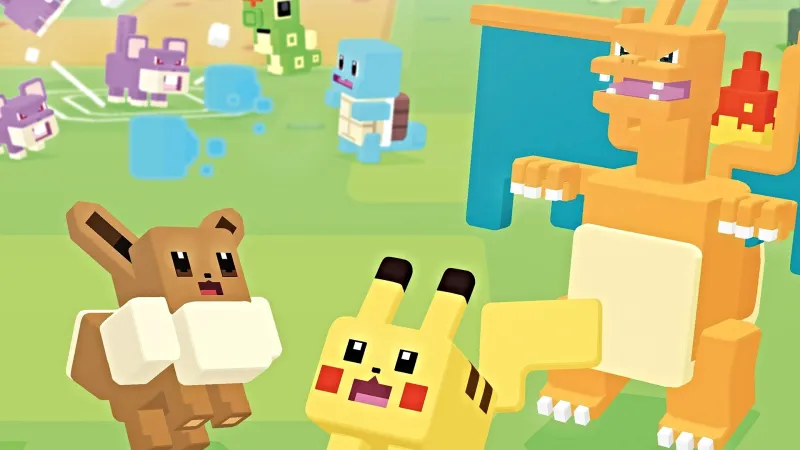
Pokémon has seen its share of strange offshoots, but Pokémon Quest goes in unique directions with both its gameplay and art style. Taking place on an island where everything is shaped like a cube, the free-to-play Pokémon Quest has you exploring the region, collecting Pokémon, and powering up your monsters through fights. However, those high-level concepts are where the similarities to other games in the beloved series ends, along with the appeal. With uninteresting gameplay, frustrating collection mechanics, and tedious grinding, Pokémon Quest is spin-off that fails to live up to its namesake.

Pokémon Quest takes the familiar creatures from the first generation, turns them into cubes, and delivers a passive, top-down strategy experience. You select a group of three characters from your collection and guide them through levels. It’s more strategic than simply choosing your best Pokémon, as each of the 10 worlds grants a significant buff to a specific Pokémon type. I like that this gives you reason to level up creatures outside of your core squad; my team of fire Pokémon might breeze through one world, but they aren’t the best choice for the world full of water monsters.

Your Pokémon move through the level and toward enemies on their own; all you need to worry about is telling them which move to use. Combat is uneventful and unengaging overall, but I like the strategy of knowing which moves to use based on the situation. You factor in which attacks have pushback, or which ones have a chance to inflict a status ailment, like paralysis or confusion. If an enemy is gearing up to attack, you can also press the scatter button to cause the Pokémon to run in opposite directions, hopefully to safety. Navigating the user interface with a joystick-controlled cursor is clunky, meaning you should play Pokémon Quest in handheld mode to use the touch controls. 

Pokémon Quest is still about catching ‘em all, but that has nothing to do with the wild-Pokémon encounters in the levels. Instead, you cook stews that complete after you play a certain number of levels. Filling out a collection of monsters is always addictive, but the process is far more frustrating than ever before. While you discover which dishes attract specific types of Pokémon, the creature that comes running at the end is random. Need a Squirtle? Rather than going to the level where you can find a Squirtle, you must cook the water-Pokémon dish and hope you don’t get your twelfth Horsea instead. You also receive a random Pokémon in your camp as a daily login bonus, which helps, but doesn’t solve the problem.

Leveling up Pokémon through battle is often slow, meaning you must grind to gain experience. Even when Pokémon level up, they only gain small stat boosts and slow progress toward a new gem slot. The random-drop gems provide the real stat boosts, as they improve that Pokémon’s attack or defense by hundreds at a time. Rarer gems also providing boosts to stats like critical hit and recovery time, but opening new equip slots for your Pokémon takes a lot of experience. I enjoy the decision-making process of which gems to equip to which Pokémon, and the choices of replacing a lower-level gold-tier gem that grants several additional bonuses with a substantially higher-level common gem is always excruciating. While I don’t like how random the drops are in the levels, I do enjoy the rush of securing a powerful gem and watching a Pokémon’s stats leap when I equip it.

The grind is accentuated by the fact that you can only complete five stages at a time before you must wait for your in-game battery to recharge (you gain one charge every 30 minutes). Playing through the same levels repeatedly and only making incremental progress each time, meaning you’re going to be playing a lot of older levels on repeat to push your Pokémon to the next level. By the time I was powerful enough to take on the next level, I was equal parts excited and relieved that I could finally move on. Thankfully, you can set the game to auto mode and let your Pokémon choose their own moves for a completely passive experience. This delivers the least engaging gameplay experience possible, but I was happy to I didn’t have to actively control my Pokémon as they fight through waves of Exeggcute for the eighth time.

You can also power Pokémon up through training, which can either give an experience boost or teach a character a new move. This process is particularly annoying, as you must sacrifice other Pokémon in your collection to have a chance at progress. The more Pokémon you sacrifice, the greater the likelihood of success. I hate losing creatures from my roster only to see the training fail. You can guarantee success by serving up the same Pokémon as the one you’re trying to train, but that’s usually not an option thanks to the random nature of Pokémon acquisition.


As you continue through the island, you earn statues that decorate your base and grant often-hollow rewards. Some give experience bonuses for Pokémon up to a certain level to minimally assist with the grind, but most just award a small boost in the number of cooking ingredients you earn from completing levels. The best statue grants you an extra charge on your battery to let you complete six continuous levels, but as you may have guessed, it’s also the most expensive.

These statues can be purchased using tickets you earn or buy with real money. I can’t imagine spending cash on the statues, as the bonuses aren’t worth it, and even the best ones aren’t completely out of reach to earn from your daily bonus tickets, meaning the microtransactions are thankfully noninvasive. If you’re tempted to buy statues or expand your Pokémon or item-storage boxes, you earn tickets at a steady enough rate that you can do so without spending real money.

Pokémon Quest delivers cute moments, but the novelty wears off fast. By the time I reached the later stages, I was disenchanted by the necessary grinding and random elements permeating nearly every aspect. I enjoy parts of Pokémon Quest, but the adventure never amounts to anything memorable.

Saturday, June 16, 2018

Life Doesn't Always Find A Way