This is default featured slide 1 title

Go to Blogger edit html and find these sentences.Now replace these sentences with your own descriptions.This theme is Bloggerized by Lasantha Bandara - Premiumbloggertemplates.com.

This is default featured slide 2 title

Go to Blogger edit html and find these sentences.Now replace these sentences with your own descriptions.This theme is Bloggerized by Lasantha Bandara - Premiumbloggertemplates.com.

This is default featured slide 3 title

Go to Blogger edit html and find these sentences.Now replace these sentences with your own descriptions.This theme is Bloggerized by Lasantha Bandara - Premiumbloggertemplates.com.

This is default featured slide 4 title

Go to Blogger edit html and find these sentences.Now replace these sentences with your own descriptions.This theme is Bloggerized by Lasantha Bandara - Premiumbloggertemplates.com.

This is default featured slide 5 title

Go to Blogger edit html and find these sentences.Now replace these sentences with your own descriptions.This theme is Bloggerized by Lasantha Bandara - Premiumbloggertemplates.com.

Friday, May 27, 2022

Evil Dead: The Game Review – Not Very Groovy

evil dead: the game review

Reviewed on: Xbox Series X/S
Platform: PlayStation 5, Xbox Series X/S, PlayStation 4, Xbox One, Switch, PC
Publisher: Saber Interactive, Boss Team Games
Developer: Saber Interactive
Rating: Mature

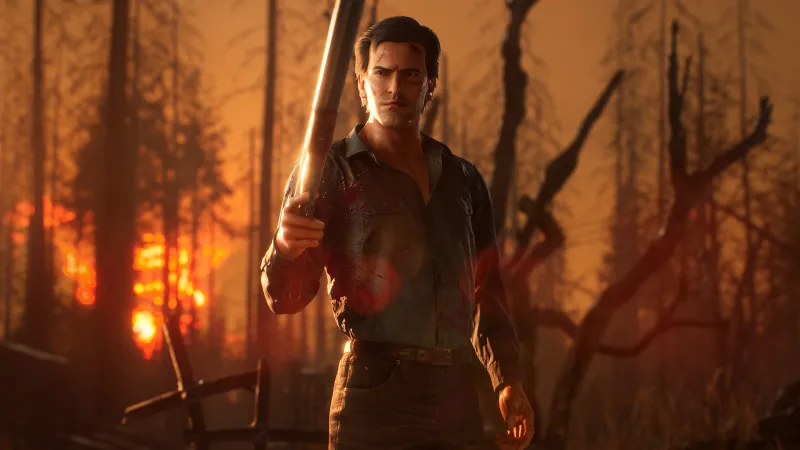
Evil Dead: The Game is a faithful adaptation, full of subtle and not-so-subtle homages to the classic horror series. You can visit iconic sites like The Knowby Cabin, wield boomsticks and chainsaw prosthetics, fight off a possessed severed hand, play as your favorite cast members, or command armies of Deadites as the series’ antagonist, the Kandarian Demon. They even recreated the first-person, off-axis camera effect synonymous with Sam Raimi’s directorial style from the movies. But while these elements fill the title with fanservice, none of them make for a very good video game, certainly not one that stands out in a growing subgenre. 

Asymmetrical multiplayer games are inherently uneven, with each side traditionally offering vastly different perspectives – and playstyles – from their counterpart. And this is what makes my time playing Evil Dead so frustrating: It’s incredibly one-sided for a game all about two sides. And it’s majorly unbalanced. 

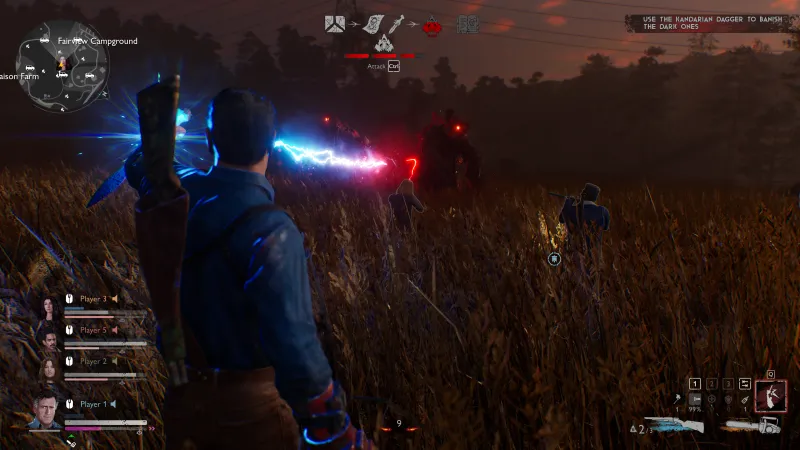
The game's premise is simple: A team of four Survivors must banish the Kandarian Demon – who an opposing player controls – by activating the Necronomicon within 30 minutes. However, the Survivors must solve two problems: The Necronomicon is missing pages, and a group of evil wraiths called The Dark Ones are guarding the book. Therefore, the squad’s primary goal is to track down pieces of a map leading to the Kandarian Dagger and the Lost Pages of the Necronomicon – two of the franchise’s iconic MacGuffins – and use them to win the match. The Kandarian Demon’s goal is to stop these events from happening. All players slowly increase their abilities throughout the game by collecting items and skill points. However, during the early game, the demon feels less effective (and a little boring) since a leveling system locks away its core abilities until later. 

If you play as a Survivor, you’ll participate in a co-op shooter offering nail-biting scares, solid combat, and thoughtful mechanics involving light and darkness while fighting off waves of zombies controlled by a single opposing player. The cast of playable characters is complete with performances by the original film actors, including fan favorites like Henry The Red, Cheryl, Kelly Maxwell, and four versions of protagonist Ash Williams. While the actors’ performances are mostly fine, they don’t sound like they’ve been recorded in the same acoustic space. It’s not a big deal, but it’s noticeable and pulls me out of the experience at times. 
evil dead: the game review

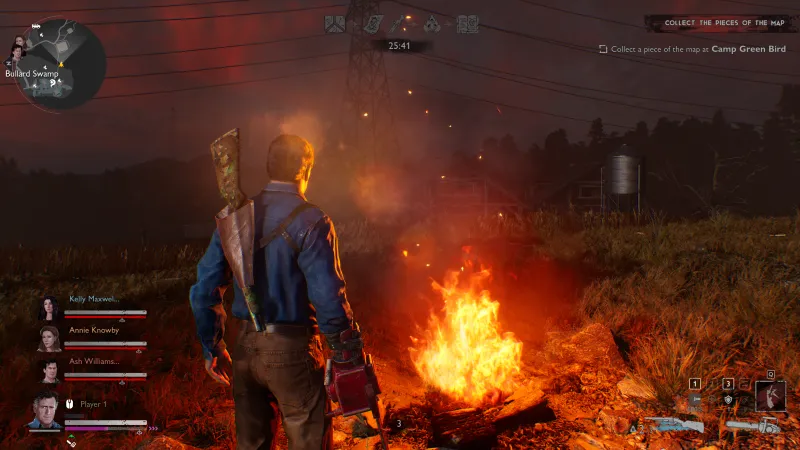
Besides the basics like health, ammo, and shields, which you find by scavenging abandoned locations, there are two systems you have to manage as a Survivor. The first is a simple flashlight with finite battery life. Obviously, the lamp illuminates the path ahead, making it easier to navigate through darkened environments, but it also highlights hidden items like special ammo you’d otherwise be unable to collect. I like this mechanic as it requires players to be methodical in their light consumption and adds consequences for exhausting the flashlight’s battery. You need to be strategic with your use of light as Survivors’ fear levels increase while in the dark or away from teammates, making them vulnerable to demon possession and creating an exciting cat-and-mouse relationship between them and the opposing player. 

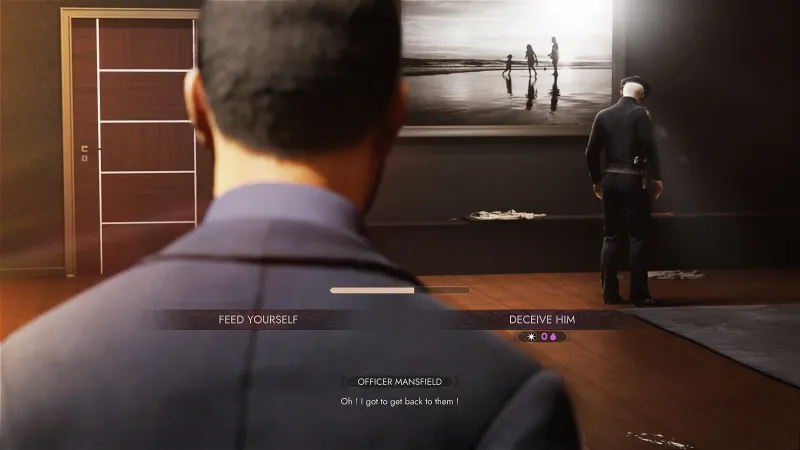
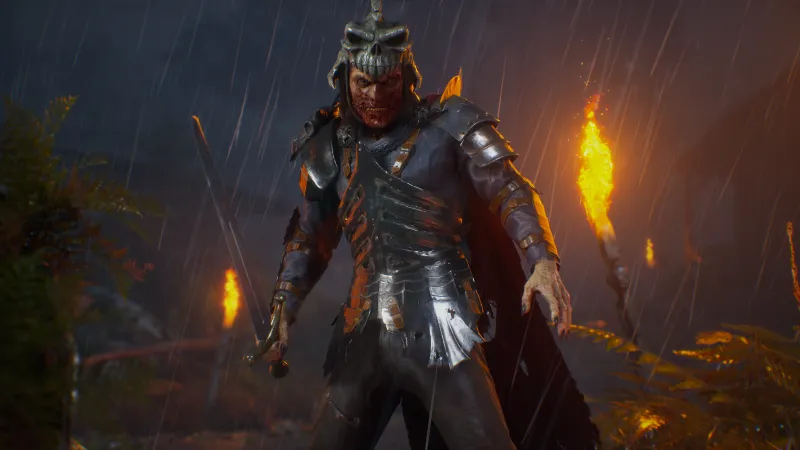
Being a Survivor is enjoyable with the right teammates; however, if you prefer to play as the solitary big bad, the Kandarian Demon, I struggle to recommend Evil Dead: The Game. As the antagonist of the match, you pick one of three demon armies to control and then use their unique abilities and units to eliminate the team of Survivors or thwart their plan to banish you. The Puppeteer army specializes in electricity, telekinesis, and improved possession. The Warlord army, led by Deadite Henrietta Knowby, specializes in up-close encounters with brute force and toxic gas abilities. Lastly, fan-favorite antagonist Evil Ash leads the Necromancer army, specializing in summoning, buffing, and resurrecting fallen minions. Each army’s playstyle is distinct, making it satisfying to explore various strategies from match to match. 
evil dead: the game review

Typically, the killer is my favorite role in asymmetrical horror games, but playing as the demon often feels like controlling a household poltergeist knocking plates off a shelf, whose presence is more a nuisance than a looming evil threat. The demon’s gameplay loop involves tedious cooldowns, thoughtlessly placing traps to scare other players, and the monotonous task of flying around the environment to collect energy orbs anytime an ability depletes your resources. This results in a bizarre amount of downtime, even when there should be intensity at the end of the match. 

The best part of controlling the Kandarian Demon is strategically placing Deadite summoning portals to ambush careless players or persuade them to flee into the darkness, where their fear levels will rapidly increase. Once a player is scared enough, you can possess them and wreak havoc on their teammates with shotguns, chainsaws, or whatever weapons they currently have. The game is at its best during these moments. However, the fun is often short-lived due to the minions’ small health bars, your overly harsh ability cooldowns, and how easy it is for Survivors to run away from the fight (especially since you have to simultaneously collect energy orbs). To that last point, it’s frustrating to spend energy possessing a nearby Deadite to attack a player, only to have a player just barely outrun you. These scenarios happen often and are a waste of energy orbs, which are already tedious to obtain, and it’s not fun. 

Evil Dead: The Game features two large maps at launch, with a third, Castle Kandar from Army of Darkness, coming via free DLC in the months ahead. The unnamed maps feature a couple of unique points of interest like The Knowby Cabin, Flight 666, or Misery Manor, but most locations are unremarkable. However, despite their lack of personality, they are beautiful. Post-processing effects like fog, lens debris, and bloomed highlights create a film-like look that helps sell the environment’s eeriness. 
evil dead: the game review

Despite its beauty, Evil Dead lacks polish. Characters become stuck on seemingly flat surfaces, items spill out of containers unnaturally, and matchmaking lobbies are frequently interrupted by player disconnections. And many minor frustrations pull the experience even further down. For example, as the Kandarian Demon, you can possess vehicles for 100 energy. However, since you’re required to deposit those resources when you cast the ability, you can’t drive the car if you only have the minimum power since the possession slowly empties your energy bar. This leads to scenarios where you’ll spend all of your energy possessing a car, thinking you’re about to have a strategic advantage, only to lose control immediately after. The game lets you write checks you can’t cash, and the result is a frustrating waste of resources.

The good news is future updates can address most of my more minor gripes, but the game is an unbalanced mess at release. Developer Saber Interactive’s commitment to fan service is commendable, and die-hard Evil Dead fans will find this release enjoyable. However, it’s hard to see the lasting appeal for the rest of us.
Score: 6

About Game Informer's review system

Purchase

Kao The Kangaroo Review – A Flat Punchline

Reviewed on: Xbox Series X/S
Platform: PlayStation 5, Xbox Series X/S, PlayStation 4, Xbox One, Switch, PC
Publisher: Tate Multimedia
Developer: Tate Multimedia
Rating: Everyone 10+

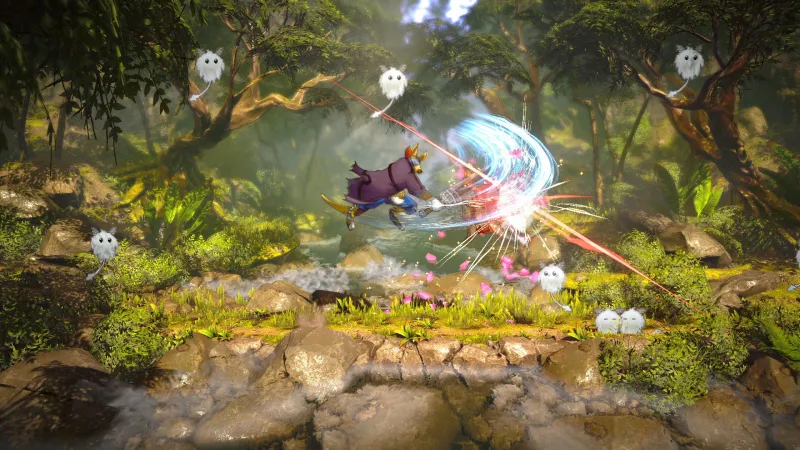
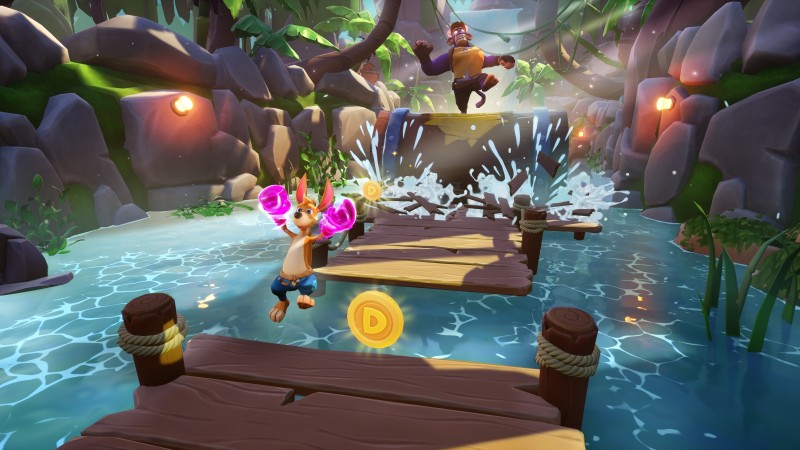
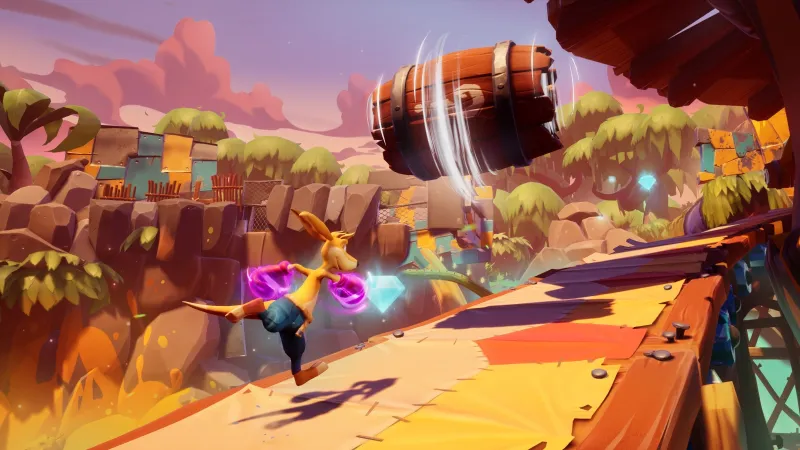
For decades, Kao the Kangaroo has languished in the purgatory of platforming mascot obscurity. Unfortunately, his big comeback does little to change this status quo. His latest adventure is competent, but uninspired design and noticeable technical problems make for a hollow excursion that inspires mild indifference at best.

Kao (pronounced “K.O.”) is a young kangaroo on a journey to find his missing sister and father. He enlists the help of his wizened martial arts teacher and acquires a pair of talking magical boxing gloves. While clearly geared towards younger players, the plot, writing, and performances are dull and half-baked. The story doesn’t go anywhere remotely interesting, and Kao himself can be especially grating thanks to bad comedic delivery. Hit the mute button or fire up your favorite podcast because you likely won’t feel you’re missing much of the experience. 

Gameplay takes a page from the 3D collect-a-thons of old but the design feels banal. You spend hours roaming sizable-yet-unexciting overworlds to collect coins, heart pieces, lore notes, and runes for unlocking platforming levels. It satisfies the part of my brain that enjoys cleaning up icons but it’s a hollow sense of nostalgia. The four overworlds, which include your island home, a tropical jungle, and a snowy mountaintop, lack exciting secrets or activities beyond nabbing easy-to-find runes or purchasing cosmetic items to play dress-up.  

Entering a platforming level ramps up the excitement, but only barely. Kao pummels pushover enemies with a basic flurry of punches. No matter the shape or size of the foe, they don’t require much finesse other than mashing the attack button until they fall. Boss battles aren’t much better in terms of interest or challenge. Kao features on an old-school life counter but I can count on one hand the number of times I died. I’m not bragging; if you’re competent at platformers, you’ll be swimming in lives because the game fails to provide a worthwhile challenge. Tack on mostly generous checkpoints and a short runtime, and Kao is a breeze to get through. 

Imbuing Kao’s gloves with fire, ice, and wind magic bestow abilities such as igniting flammable barriers, freezing water solid, or pulling distant platforms towards you. However, the game only has two basic ideas for each power and constantly repeats them, never mixing up puzzles or letting you use your powers in more compelling ways. The only other significant mechanic involves activating crystals that make platforms disappear/reappear. Like the rest of the game, this idea feels rote and like it's stuck in first gear. 

Kao isn’t without its merits. It controls fine, the presentation is colorful if uninteresting, and it executes its basic ideas adequately. However, technical glitches often rear their ugly heads. Certain actions lack sound effects, sapping them of their impact. Breakable coin pots and enemies occasionally blip out of existence when struck. Certain boss fights and cutscenes lack music, making them awkwardly silent affairs until the soundtrack randomly kicks in. Conversely, one boss’ theme continued to blast loudly during a post-fight cinematic, muffling the dialogue. These issues make Kao feel even more like a budget title in the worst ways. 

I initially thought that Kao the Kangaroo would, at the very least, be a great recommendation for younger players. Then I remembered that I and generations of kids cut their teeth on games like Mario, Crash Bandicoot, or Ratchet & Clank – kid-friendly platformers that still offer plenty of mechanical depth, polish, and design creativity. Children are much more capable than we sometimes give credit for, and Kao’s by-the-numbers design would likely bore all but the most nascent of gamers. Kao the Kangaroo isn’t a total disaster by any means. It just feels aggressively average and forgettable which, sadly, has been the case for the mascot for years.

Score: 6

About Game Informer's review system

Purchase

Tuesday, May 24, 2022

The Centennial Case Review – An Unconventional And Alluring Mystery

Reviewed on: Switch
Platform: PlayStation 5, PlayStation 4, Switch, PC
Publisher: Square Enix
Developer: h.a.n.d.
Rating: Teen

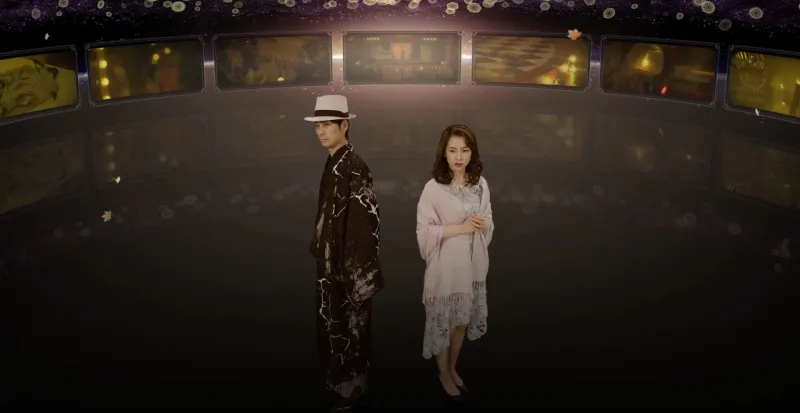
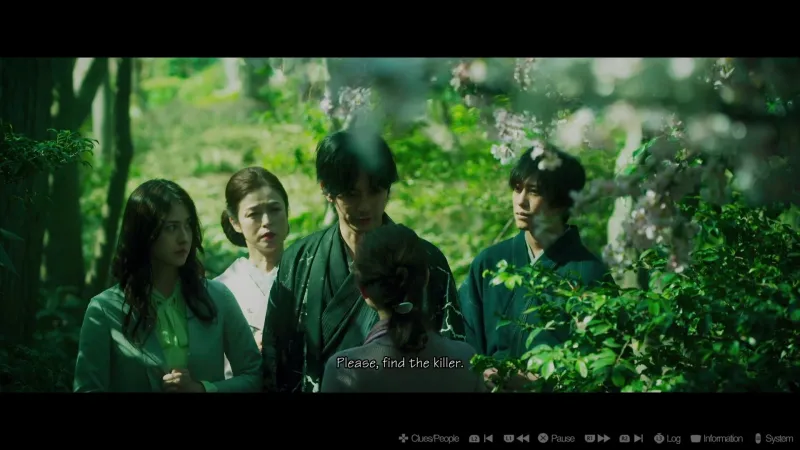
What if there was a way to stop the aging process and only your family knew the secret? How far would you go to protect it? And at what cost? The Centennial Case isn’t your typical murder-mystery adventure game. It goes out of its way to be different, whether it’s swapping you to various murders over the course of 100 years or using live-action footage to make you feel like you’re participating in a movie. The latter evokes a nostalgic feeling of the FMV games of yore, but the advanced tech and heavy focus on deduction create an experience that’s equally gripping and engaging, even if it doesn’t always hit the mark.

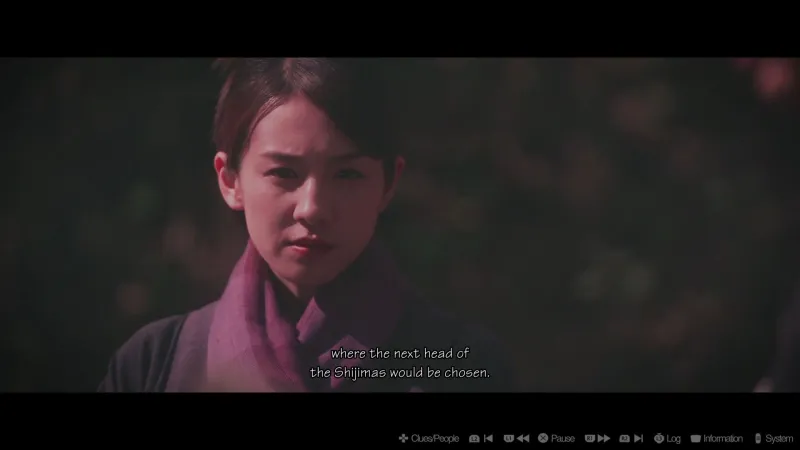
The Centennial Case is a narrative-focused adventure centering on the Shijima family, who are connected to a string of suspicious murders over the last century. They also hold a unique item that promises eternal youth. Is it real or a myth? As protagonist and mystery novelist Haruka Kagami, you must discover the truth, connecting various events and murders to uncover the family’s long-kept secrets.

The majority of The Centennial Case plays out in live-action scenes. You watch these more than you interact with any gameplay mechanics, but the story is so engrossing it holds your attention. The high point of the experience is your role as a detective and how you’re constantly wondering how all these pieces fit together in the greater scheme of things. Learning a new clue always gave me something to ponder, and I relished forming my theories based on people’s reactions or conflicting information. Every case has multiple layers; not only are you trying to figure out the culprit and events behind each murder, but you’re always getting a step closer to seeing how every death is connected and if the family actually has the ability to stop aging.

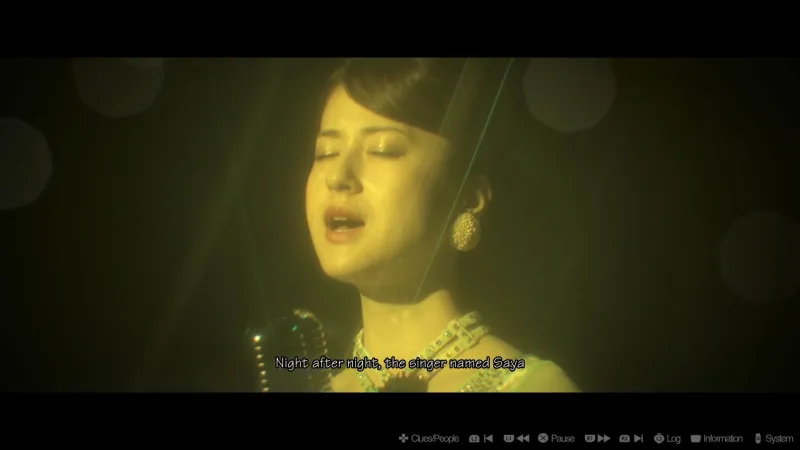
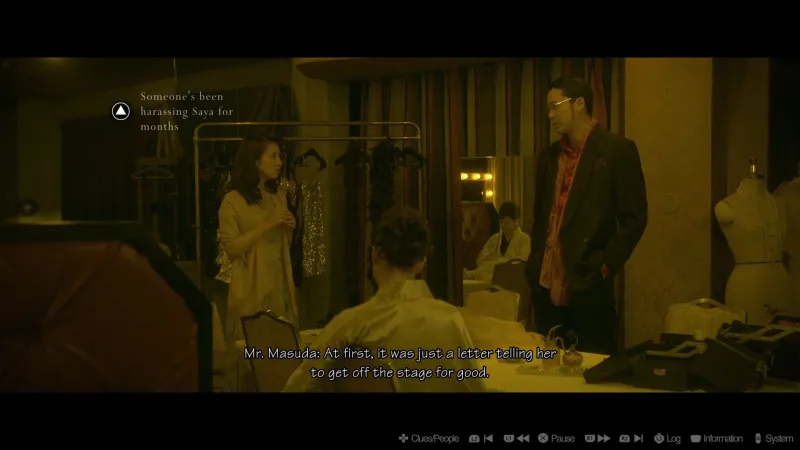
I enjoyed that the cases are set in different time periods, as the story often jumps from the past to the present. This dynamic adds variety and a new flavor to each murder mystery while allowing you to see how it impacted elements in the present day. My favorite case took place at a 1970s nightclub, capturing the extravagance and pressures of showbiz. Every case casts suspicion on every person involved, bringing in a multitude of motives, from jealousy and duty to revenge and anger. Not all the cases are equal, however. Some mysteries felt like they had obvious answers, and the later cases throw in new elements, such as logic and gameplay puzzles, which I wish were present earlier in the game.

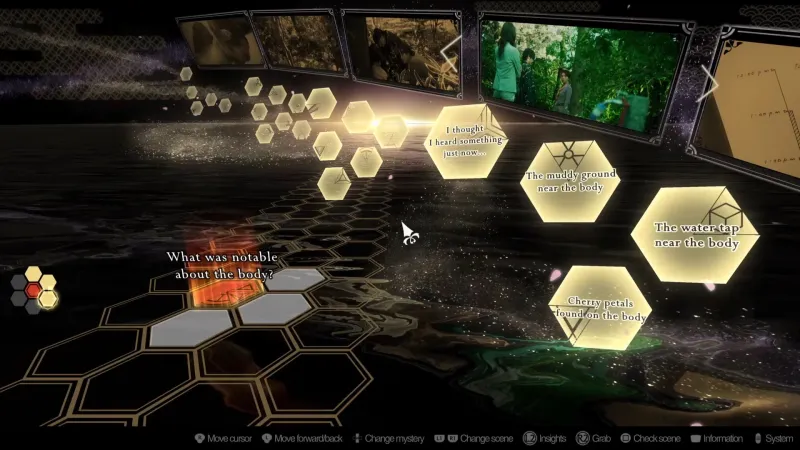
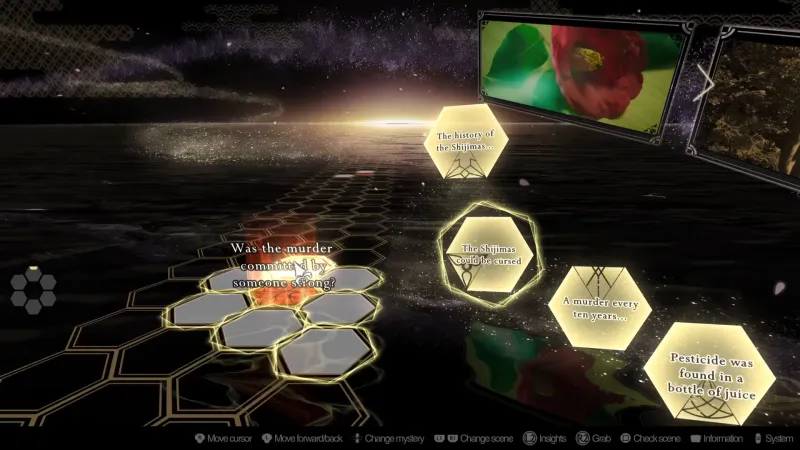
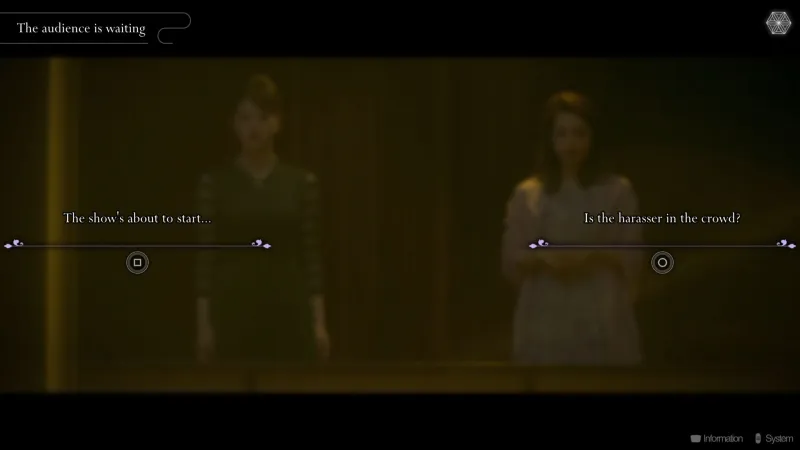
Still, it truly is the mystery-solving that makes this game so interesting. After collecting all your clues, you are taken to a 3D hexagonal grid. Here, you select the clues and fit them into potential hypotheses, looking at every possible way events could have unfolded. Sometimes this leads you down false paths that almost try to toy with your certainty. I enjoyed looking at every angle of evidence, from alibis to the placement of items at the crime scene. It only made me more confident in my reasoning and how I wanted to present my case.


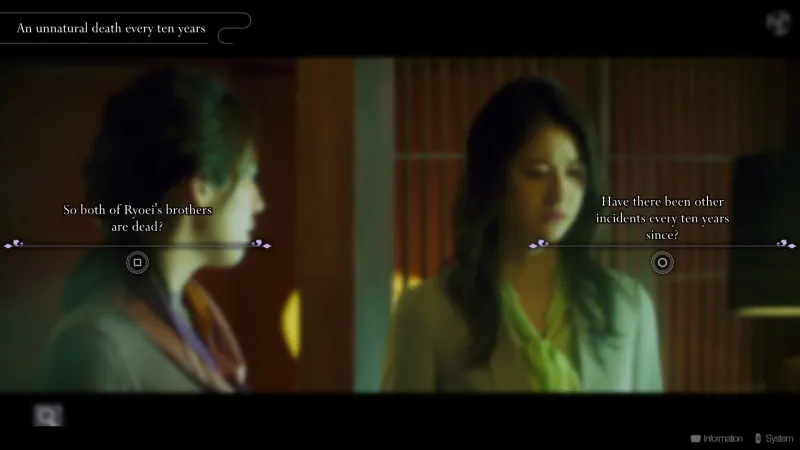
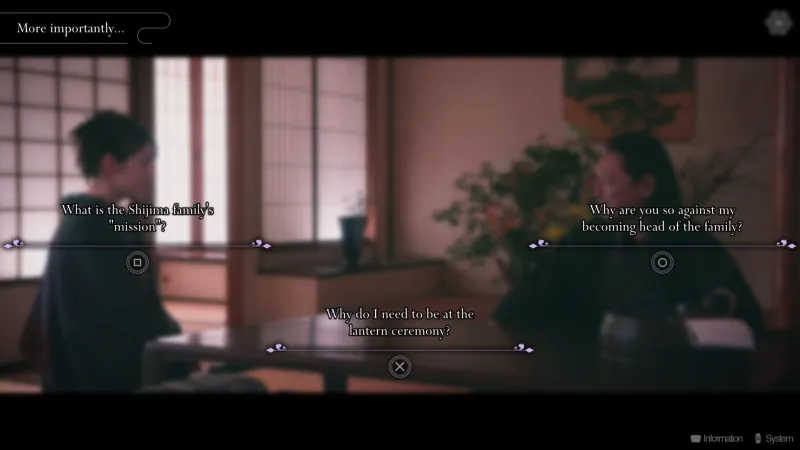
The next phase is presenting your theory to the group, which feels akin to an Ace Attorney courtroom, albeit without the wacky antics. You get multiple-choice options to say what you think really happened, and at the end of each case, you receive a score depending on how many mistakes you made. Every person involved tests your reasoning, forcing you to back it up appropriately. I liked the tension here; nothing feels like a safe bet because many possibilities seem feasible.

However, due to how involved the hypothesis period is, you never feel like you’re completely taking a stab in the dark - although sometimes you will be surprised by how the evidence adds up and brings new elements to light. I sometimes went into cases not being entirely certain who the culprit was but being confident in the evidence that was askew, and that brought me to the correct answer. Hints are available if you get really stuck, but I never felt like I needed them.

Unfortunately, the acting is hit-and-miss. Sometimes actors go over the over-the-top with their performances, and you can’t tell if it’s deliberate or not. Part of it feels campy, but there’s some good acting, especially in the more tense and emotional situations. Some people may find it confusing that the same actors appear in all cases playing different roles. For instance, one may be the victim in a case, only to be the culprit in the next. This didn’t bother me, as you clearly know when you’re moving into a different time period. Some people may have a hard time adjusting, though. My only other knock on the game is it gives you dialogue options that don’t influence anything. In fact, in most cases, what you pick delivers the same lines. It’s the illusion of having some role-playing or choice where there isn’t any, which disappointed me.

Not many games are built like The Centennial Case, and I enjoyed the ambition behind trying something different to tell a complex story and involve the player in piecing it together. It gave me the feeling of reading a great mystery novel, where your head is spinning with possibilities, but the interactivity and structure allow you to better understand the clues and what they all mean. Sometimes The Centennial Case stumbles, but it’s worth enduring for the wild ride it puts you on and the broader questions it poses about what’s ethical in the world of science.

Score: 8

About Game Informer's review system

Purchase

Monday, May 23, 2022

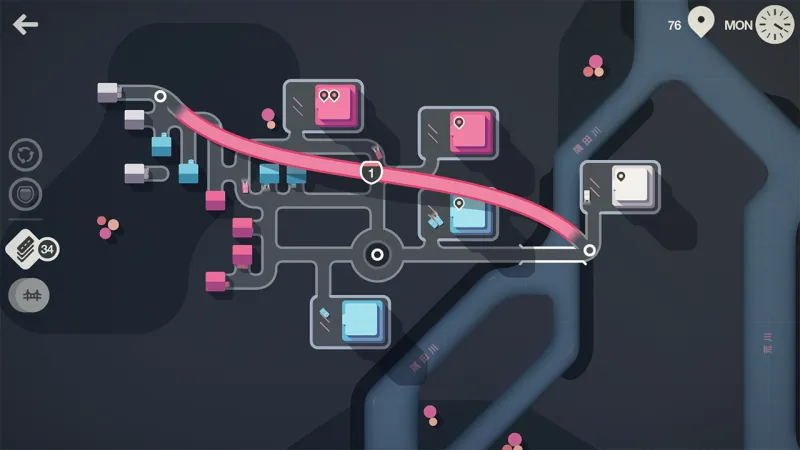
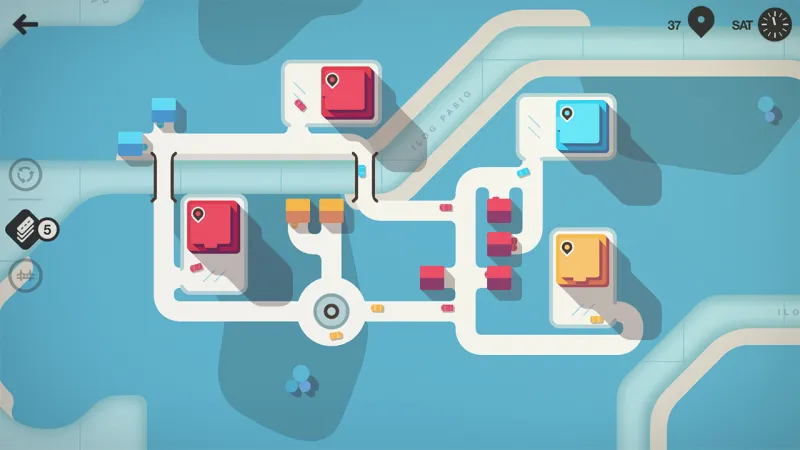
Mini Motorways Review - Contemplative Commute

Mini Motorways review

Reviewed on: Switch
Platform: Switch, PC, Mac, iOS
Publisher: Dinosaur Polo Club
Developer: Dinosaur Polo Club

It’s said that even the best-laid plans often go awry, and that is fully evident in Mini Motorways. What starts as a pleasant city-planning simulation evolves into a frantic puzzle you must solve before time runs out. The stress of having your carefully planned city infrastructure crumble before your eyes is undeniable. However, it’s in that often-sudden transition from meditative to manic where Mini Motorways shines, offering players a unique take on both the puzzle and city-planning simulation genres.

It all starts with choosing a real-world city in which to build. Whether you want to contend with the L.A. River and Santa Monica Bay of Los Angeles or the mountains surrounding Mexico City, each map provides unique problems to solve. My favorite area, Wellington, combines myriad elements like a bay, harbor, and mountains to test your resource management.

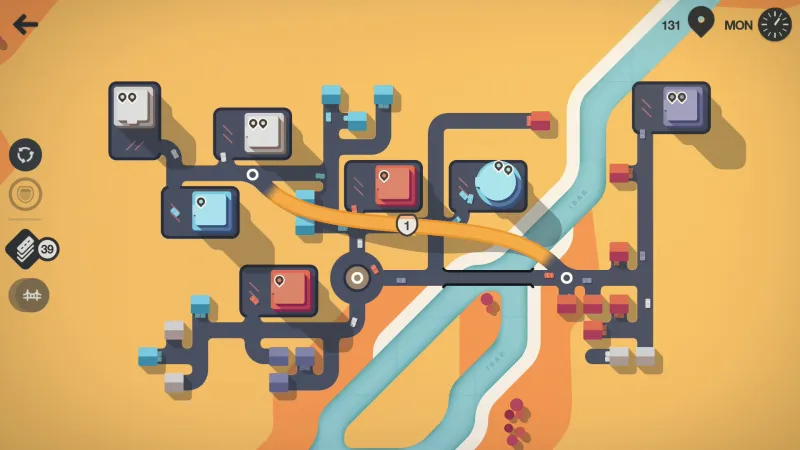
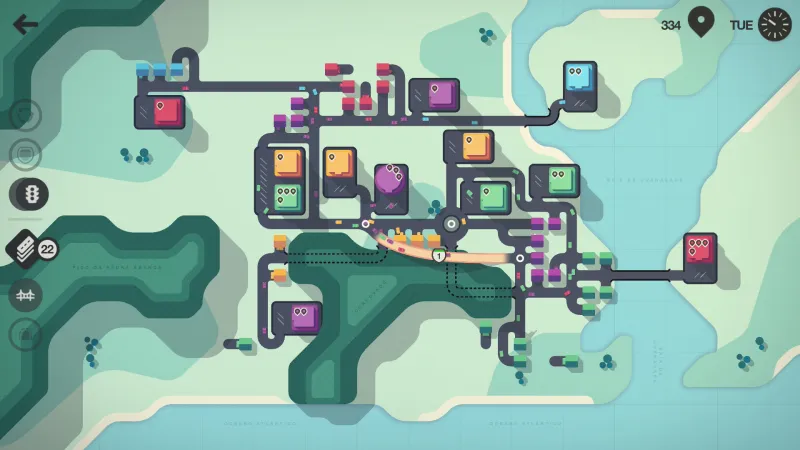
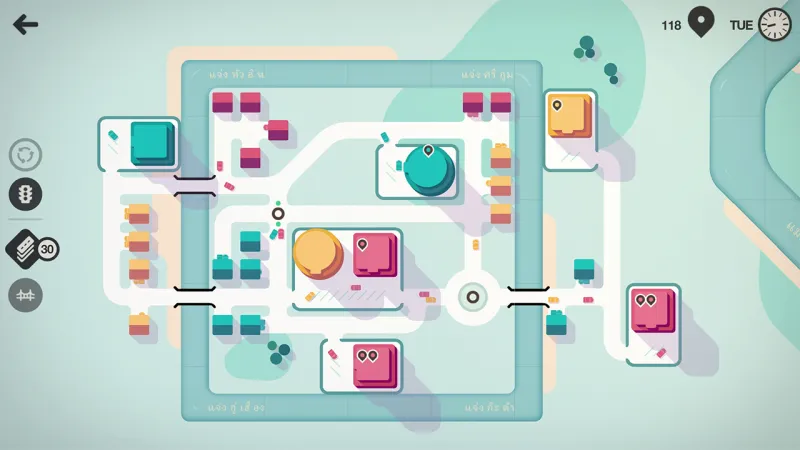
At its core, Mini Motorways is about connecting randomly spawned houses and destinations that progressively appear over the course of your run; the house colors correspond with the destinations the vehicles must reach. You’re given a set number of road tiles you can place, meaning you need to be efficient to ensure the roads you need are possible. Some of my favorite head-scratching moments came from redrawing the map on the fly once I realized my current plan wasn’t going to work; thankfully, you can pause the action to plan if things get too overwhelming. Each in-game week, you choose additional resources and tools to add to your inventory. You always receive more road tiles for the coming week, but Mini Motorways also gives you a choice between objects like roundabouts, traffic lights, bridges, tunnels, and motorways to help you alleviate traffic jams and reach new buildings.

With each week lasting about two and a half minutes at normal speed (though I typically keep my speed on fast), new resources arrive in your inventory at a rapid pace. That’s a good thing because even the best runs are one poorly planned intersection away from failure. I loved adding a stoplight at a busy intersection to improve the flow, while a perfectly placed cross-town motorway made all the difference between immediate failure and extending my run for a few more weeks. Roundabouts are perhaps the most effective tool for preventing game-ending jams, but placement limitations are sometimes frustrating with their space requirements.

The goal of Mini Motorways is to keep your city operational even as the map slowly zooms out, and you have more real-world topography with which to contend. Each run starts pleasant and slow-paced, but as the map expands and your city grows, so too does the cadence at which houses and destinations spawn on the map. Despite being designed for a touchscreen or mouse, using a Switch Pro Controller is a surprisingly precise way to move the cursor around (especially since the control options are so customizable). Though, in moments of panic, the control scheme caused a few flubs. If controlling the cursor with the joystick bothers you, you can draw your roads on the touchscreen in handheld mode.


I love how each on-map building requires equal attention as the playable area grows; if even one destination backs up and people are stranded for too long, it’s game over. While its quiet, easy moments are satisfying in their own way, I love when the action and difficulty ratchet up and I need to address the rapid-fire problems that emerge efficiently. With so much on the screen at that point in the run, it’s easy to lose track of new destinations or houses that pop up, but the minimalist user interface and art style lend themselves well to keeping track of the statuses of all your buildings.

While I appreciate the real-world map systems Mini Motorways uses, it features less than half the number of maps as its predecessor, Mini Metro. Mini Motorways supplements these 14 maps with daily and weekly challenges, which take the mainline scenarios and add different modifiers (like bridges costing double the road tiles or starting your run with maxed out motorways in your inventory). However, these don’t meaningfully add to the game’s overall content, particularly when the rest of the feature set is similarly barebones.

Though it lacks content and features, Mini Motorways has consumed much of my gaming time since I downloaded it more than a week ago. The simple gameplay, clean interface, and satisfying difficulty ramp led me to say, “Just one more run,” several times a session before ultimately calling it quits. Mini Metro hooked me when it first came to iOS years ago and has remained one of my favorite games to enjoy in short bursts, and I’m glad to add Mini Motorways to that same gaming rotation.

Score: 8.5

About Game Informer's review system

Purchase

Citizen Sleeper Review – A Sleeper Hit

Citizen Sleeper Review

Reviewed on: Xbox Series X/S
Platform: Xbox Series X/S, Switch, PC
Publisher: Fellow Traveller
Developer: Jump Over The Age
Rating: Teen

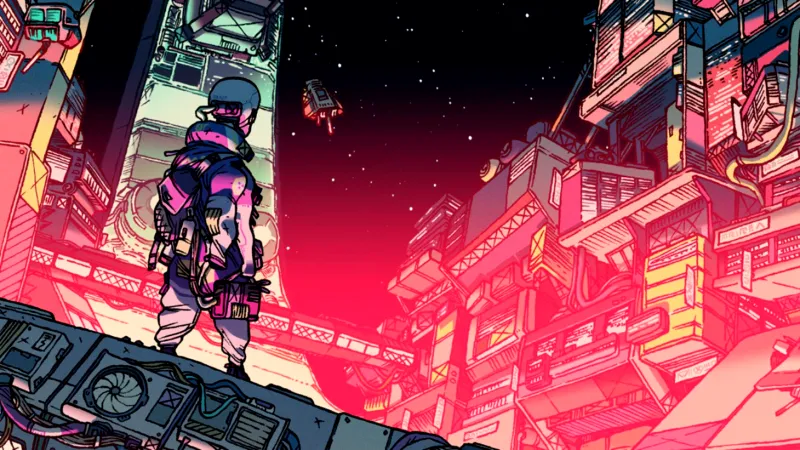
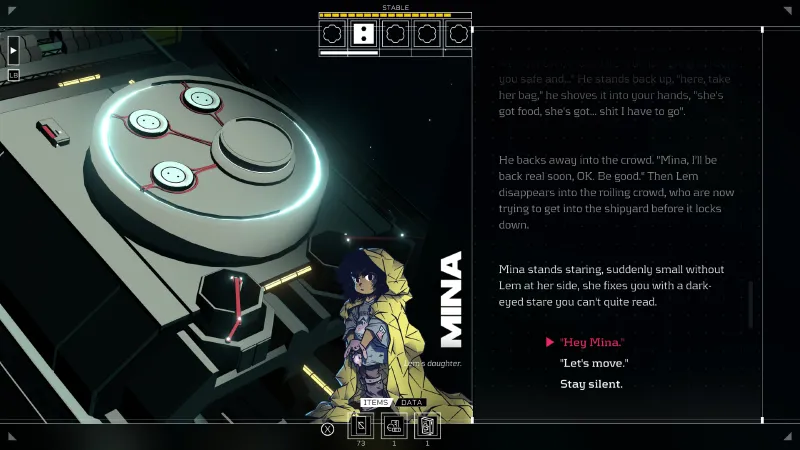
When I booted up Citizen Sleeper for the first time, it immediately enthralled me with its premise. Its dystopian transhumanist pitch – surviving as a digitized consciousness of a human body implanted into a robot designed to work for a mega-corporation – is refreshing in the cyberpunk genre of games. Its slick, clean, and unique art style, coupled with its score, a Tycho-esque take on sci-fi beats, told me I was in for a good time, assuming the gameplay would click. And at first, I wasn't sure if it was going to because its early moments are overwhelming, with a barrage of new mechanics and systems defining the first hour. I was rewarded for sticking with it because all aspects of Citizen Sleeper, including its gameplay, had me hooked after that introduction. Seven hours later, I rolled credits on one of my favorite gaming experiences of 2022. 

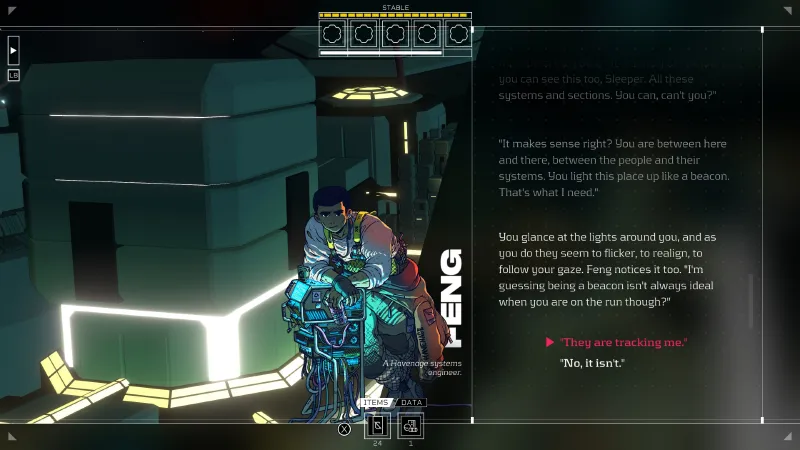
You awake as a Sleeper, a robot powered by a consciousness that belongs to somebody else. In this instance, it belongs to someone that owes mega-corp Essen-Arp money, and to repay that debt, their mind has been digitized and put inside a machine explicitly designed to work for them; that's the typical life of a Sleeper. You, however, have escaped, and the narrative of Citizen Sleeper begins there, unfolding as you learn to survive and thrive. 

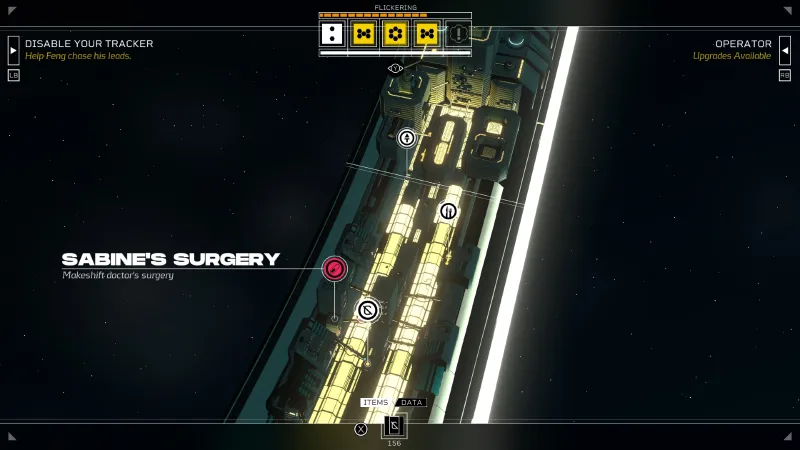
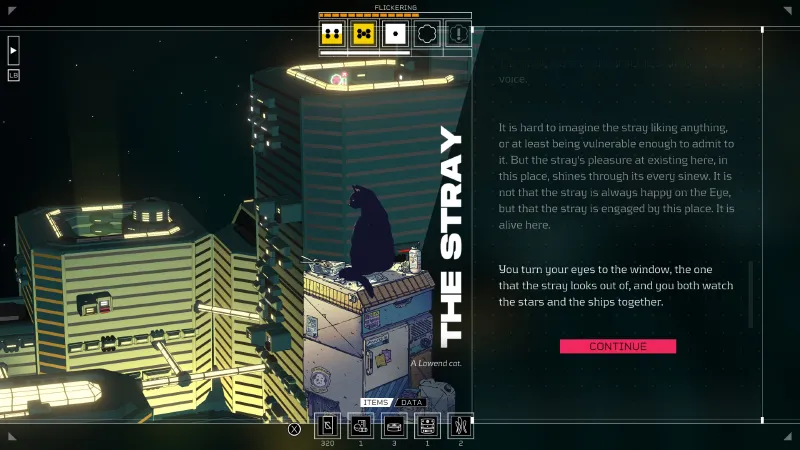
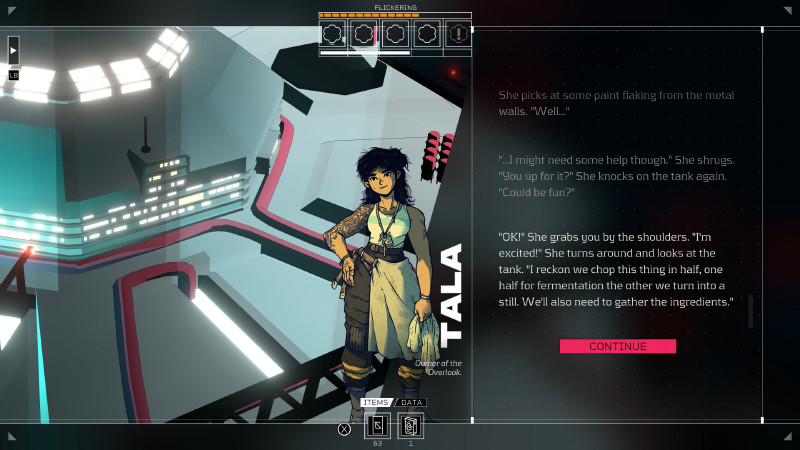
The story of Citizen Sleeper is simple: Evade Essen-Arp's bounty hunters who want to reclaim you while securing a future for yourself. Erlin's Eye, a space station that acted as my refuge before becoming my new home, is the backdrop of all this. I love how I became intimately familiar with the quasi-metropolis over time. Citizen Sleeper lovingly forced me to understand this space station as both a map for my objectives and a hub for deepening my relationships with its residents. To achieve this, I needed to complete various objectives aboard Erlin's Eye ranging from paying off one of these bounty hunters to live another day to affording medicine I desperately needed to heal my constantly degrading body. 


How that, and nearly every objective, plays out is determined by a unique dice mechanic and its connection to your physical condition. Citizen Sleeper's primary gameplay loop is simple on paper: You're given up to six pre-rolled dice each cycle. The healthier you are, the more dice you get. A six-dice roll carries a higher chance of getting a positive outcome when attempting to do something like earn money or fix a ship. A lower dice count, like a two, comes with an increased likelihood of a negative outcome, which can be pretty detrimental in some cases. 

I enjoyed how often this mechanic put me in the hot seat. Do I use a six-dice roll to guarantee a positive outcome for an objective I really need to complete, or do I use it on a job that will net me a lot of money because I need it to afford medicine to replenish my condition? And on that same note, should I use my one die on a safer task or risk it on something that could greatly reward me right now? These decisions colored my entire Citizen Sleeper experience. Some were so stressful, especially those that felt like life or death, that I needed to pause and put the controller down for a few minutes. The way the game's musical score amps up the stress levels in these situations was also devilishly delightful. 

Citizen Sleeper uses these moments to take me through every throe of capitalism, which is the true antagonist in developer Jump Over The Age's story. When I first arrived, I struggled to make it through one cycle without feeling completely overwhelmed and unseen. I couldn't make money, so I was unable to buy food, which was necessary to keep my energy up. As a result, my health quickly worsened, and because of this struggle, I couldn't afford medicine. This built on itself until I hit rock bottom, which locked me out of one of my Sleeper's core abilities displayed on a sleek skills screen. I could only unlock it with an upgrade point, which is earned after completing main objectives. But, to accomplish that, I needed some great dice or at least multiple dice. With my condition in the dumps, getting either felt impossible. 

Over time, I overcame these challenges. Little by little, I earned enough money that I could spend less time obtaining medicine and food and more on actually completing objectives on the horizon. By the end of Citizen Sleeper, I stopped thinking about money, and I was instead focused solely on helping the NPCs around Erlin's Eye that had become my friends and, in some cases, my family. I loved how this narrative arc felt personalized to me because everything that happened resulted from how I chose to use my dice over the dozens of cycles I lived through. 

With various narrative options in place, I could have ended up as terrible as the corpos I was trying to take down, but I didn't. I appreciated that Citizen Sleeper allowed for so many narrative branches because the more I played it, the more it felt like my own story. It would have been disappointing to end it pigeonholed into a set ending that didn't align with my actions. If I failed one story, I might see those consequences play out in another. If I succeeded somewhere else, I might open up an entirely new storyline that affects not just one character but also others I met earlier. Above all of this interconnectedness, I was especially blown away by how my in-game actions connected to Citizen Sleeper's themes, which, at its core, is a game about trying to survive under capitalism as an outsider. 


In the end, though, Citizen Sleeper is less a critique of capitalism itself, which in its defense has been done countless times in the cyberpunk genre, and more an opportunity to showcase how those under its thumb persevere and succeed despite it. Its hopeful and inspiring message is backed by a branching, heartfelt narrative, and a great gameplay loop, making it tough to put down. Add in its enriching visual style and my favorite musical score of 2022 so far, and Citizen Sleeper is a game I'll be thinking about for years to come.

Score: 9

About Game Informer's review system

Purchase

Wednesday, May 18, 2022

Vampire: The Masquerade - Swansong Review

Reviewed on: PC
Platform: PlayStation 5, Xbox Series X/S, PlayStation 4, Xbox One, Switch, PC
Publisher: Nacon
Developer: Big Bad Wolf
Rating: Mature

Vampires secretly walk among us. They drive fast cars. Lord above us in penthouses. And are so refined in their tastes, they bite our wrists gently when feeding, hopefully keeping us alive for future snacks. Vampire: The Masquerade – Swansong explores the nightwalkers' place in our world through a nicely designed narrative lens that embraces player choice in deep and satisfying ways.

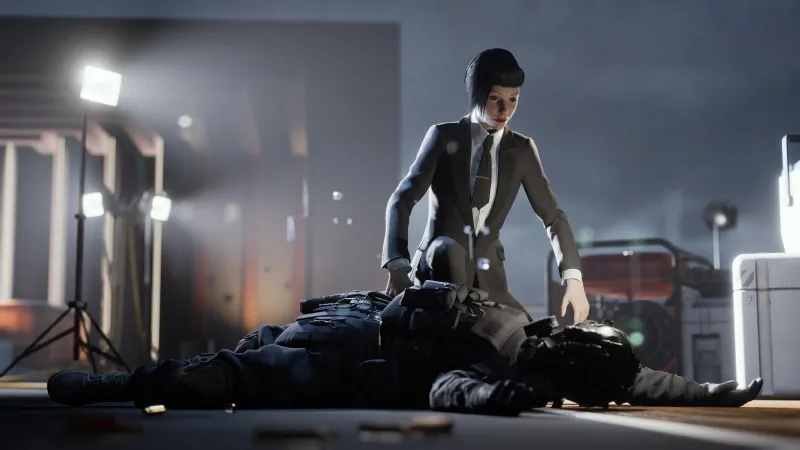
Within the opening seconds of play, we learn that the vampires' Boston Camarilla is on high alert; trouble arising moments after crowning a new prince to oversee their operations. The vampiric Masquerade law, which keeps their kind hidden from mortals, may have been broken, and it's up to you to dive into the mystery to find out what happened and who is to blame. What comes next is roughly 20 hours of noteworthy discoveries.

As you pick up clues and blood trails, you'll come across gruesome crime scenes, and will have to interrogate intelligent beings who want to bend your will. Most of the notable narrative beats pay off handsomely with big twists and empowering you with the feeling that you had an actual hand in figuring out the riddles. You also feel like a skilled vampire, using a variety of dark gifts to move the outcomes in desired directions.

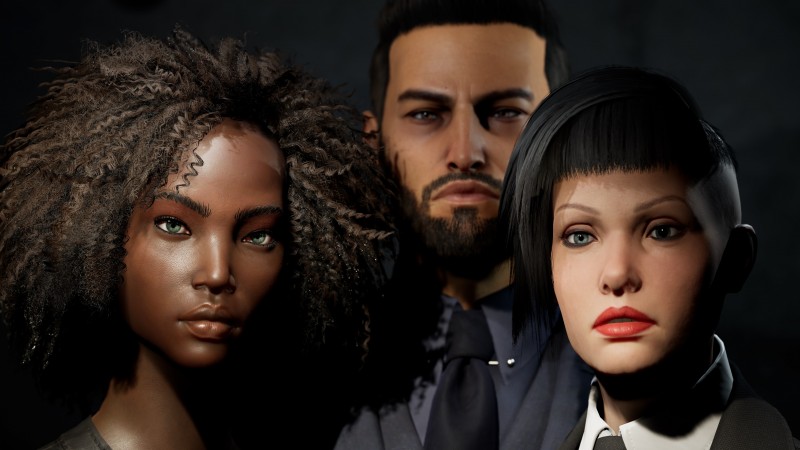
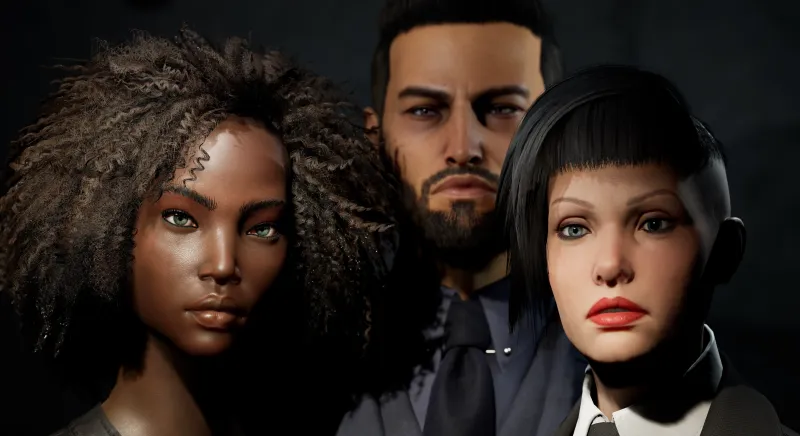
This cryptic tale unfolds through the eyes of three different vampire protagonists, each at least one hundred years of age, with unique viewpoints into their society's hierarchy. The story flows seamlessly between all three characters, some scenarios giving them time to breathe independently and other moments uniting them on the same hunt.

The most dynamic lead is Emem Louis. Strong in conviction and capable of visualizing clues tied to the five senses, Emem is often in control of conversations and can quickly pick up trails that lead to more profound mysteries. Leysha is equally interesting but a wild card, given how soft-spoken and forgetful she can be. Leysha can turn invisible or mimic other people's appearances to remain undetected when investigating. Galeb Bazory is the weakest of the leads, struggling to take to the spotlight due to his comically gruff attitude and scenario designs not being as dynamic as the other characters'.  

In most video games, vampires are monsters that use their teeth and supernatural abilities to tear living things to shreds. In this narrative RPG, we see a different side of vampiric might. All three leads solve most of their problems through conversations and deductive reasoning. Yes, they still feed on humans and rats to fill their tanks, but most gameplay is discussion-based. Getting into the mind of vampires is as wild and fun as it sounds. This unique invitation gets better when you learn the vampires don't always play fair and can use their unique gifts to prey on the weak-minded.

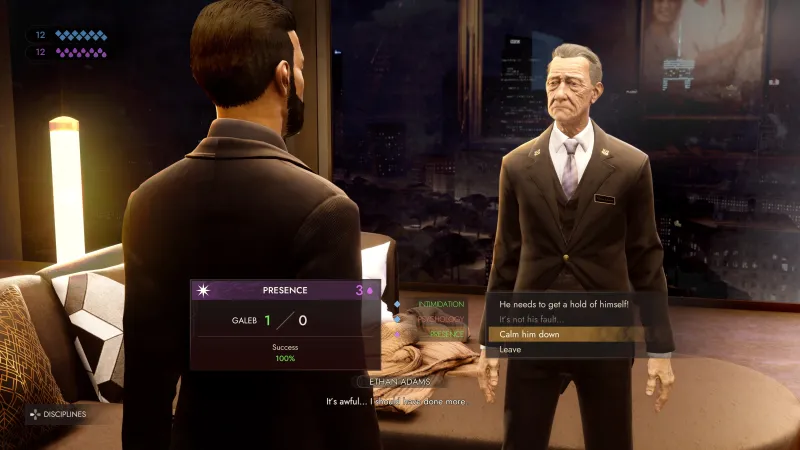
The vampiric powers come to life through surprisingly deep RPG systems used to manipulate dialogue. From the outset of play, you choose what gifts each vampire has and can further enhance these powers or add others throughout the game. As conversations unfold, the vampires can lean into intimidation, persuasion, psychology, and rhetoric to move the narrative in new directions, only if their skill levels are high enough.

Even after meeting a skill threshold in a conversation, success isn't automatic. The people you talk to (both human and vampiric) are also gifted in their own ways and may counter your moves. You can cash in valuable willpower to increase your chance of success, but your opponent can do the same thing. You must weigh how aggressive you get in these conversations, paying close attention to what's really at stake or there to gain. If you run out of willpower early in an investigation, you'll have to play it safe for the remainder of it or scour the environment for consumables that can aid you (although they are hard to find). Character development is tied heavily to vampiric power usage, rewarding you with additional skill points whenever you succeed. I adore how this reward system works, as it ties in directly with the heart of gameplay.

When both characters apply the same amount of skill – both delivering +3 in intimidation, for example – the success or failure of that narrative choice comes down to a dice roll. You actually see a die roll across the dialogue box to determine if you succeeded. It's a surprisingly intense moment that happens often and is just one of the ways that show just how dynamic and challenging these chats can be.

The dialogue system that Big Bad Wolf Studio implemented is excellent to the point I anticipate seeing it in other developers' games moving forward. The player is continually rewarded well by the backend RPG systems, as well as the narrative script, which does an excellent job of breathing unique life into each new character you meet.

A seemingly innocent chat can suddenly turn intense and transform into something like a boss fight. These moments are called confrontations, which force the vampires to use their skills to achieve a certain number of successes. Each confrontation brings different win conditions, such as "you can only fail twice." Failure doesn't mean you have to start over; the narrative just veers in another direction. I don't know how wildly different each outcome is, but I did see some dramatic changes in both setting and flow on a couple of missions I replayed. The game also offers a variety of endings, yet I can only speak to one of them, which I thought was quite good.

When the vampires aren't talking, they study crime scenes. These moments are enhanced by RPG attributes, such as the ability to pick locks or use more sophisticated electronic equipment. Deductive skills and heightened education help make informed decisions. Unique character-specific skills also come into play. For instance, Emem can teleport using a power called Celerity, and Leysha's stealthy abilities help uncover areas that others can't explore. Big Bad Wolf does a nice job of not overselling solutions and pushes the player to read documents, dissect evidence, and follow the narrative threads to find clues hidden in rooms. The investigative elements are not as engaging as the conversations but still deliver plenty of fun, especially when exploring blood-soaked crime scenes.

You can feed on humans to replenish your hunger (another meter that governs ability usage). The feeding delivers that well-known vampire quality but feels shoehorned in and at odds with the investigative flow. And don’t expect to be dazzled by the visuals. The environments look nice, but most animations are mechanical, especially in the characters' facial movements, which you always see.

Swansong is this year's Forgotten City, a distinct narrative adventure that soars from the chances it takes. Player choice is front and center, and it’s nice to see these decisions turn into little games that carry significant narrative weight. Rarely have I played a game where I wanted to restart a scenario to undo bad decisions as I have here. Swansong makes you pay for your missteps and should be an excellent game for watercooler discussions with others who have played it.

Score: 8.5

About Game Informer's review system

Purchase

Tuesday, May 17, 2022

Salt and Sacrifice Review - Consumed By Frustration

Reviewed on: PC
Platform: PlayStation 5, PlayStation 4, PC
Publisher: Ska Studios
Developer: Ska Studios

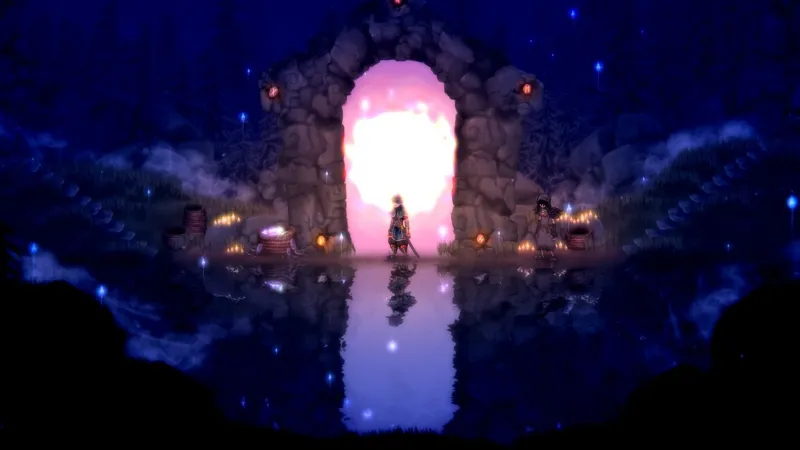
The sting of another death fades as I attempt to shake off my nerves. I’m preparing to clash with a Sanguimancer I’ve tried to slay a dozen times. Maybe I’ll learn something new as I dash back into the fray, though I’ve been down this path many times on prior hunts, and I know I’m more likely to survive on sheer luck than anything else. Salt and Sacrifice often leaves me lacking a feeling of accomplishment and, in the process, sullies the promising additions like its bounties and crafting systems.

After choosing a class from a handful of options and customizing my gloomy marionette-like character, I venture into an unwinnable encounter with a devastating beast and perish as quickly as I assumed. Here Salt and Sacrifice shows it wears its Dark Souls influence on its sleeve. An herbalist uses mystical arts to revive my avatar, who is now a “Spellmarked” being that’s not quite living or dead, but somewhere in-between. Those that restored me with this dark magic are Marked Inquisitors, who work in the name of their king to hunt mages and destroy them by consuming their hearts.

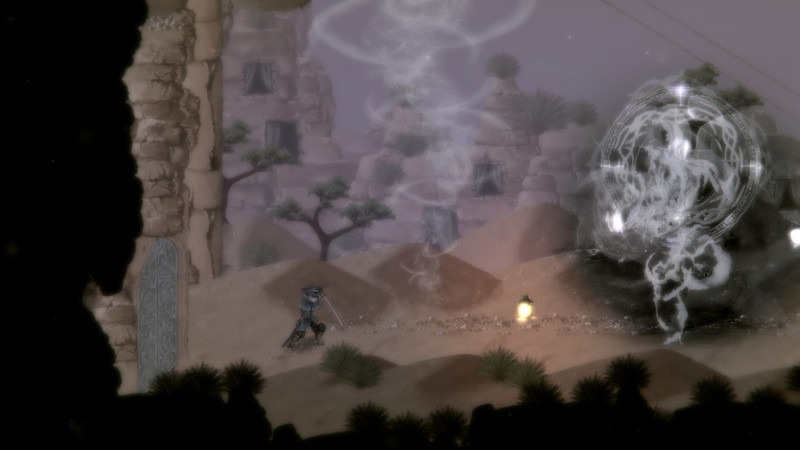
Using a runic portal in the Inquisitor settlement transports me to any locations where I know the runic words travel. The damp and deciduous Ashborne Village, dry and ruinous Bol Gerahn, and the frozen highlands of Dreadstone Peak are just a few of the destinations Marked Inquisitors can explore in search of Mages. While there are but a handful of locations, they are expansive. There are plenty of caves and enclaves to discover, and vertical landscapes to platform through. These lands are where I also cut my teeth in battle, hacking and slashing the various trolls, spiders, and wolves that dared get in my way. If you choose other classes than my Highblade, you swing a thunderous hammers, crack a deadly whip, or cast arcane spells at your enemies instead.

I enjoyed learning the ins and outs of each locale, such as where my prey would most likely appear and which plants I could harvest for precious healing items. Key areas are gated by doors requiring several mage hearts to open, or an object is needed like a grappling hook or a parachute-like cloth to soar to unreachable platforms. Stepping foot in a new and likely treacherous place is always exciting and became a highlight of my time with Salt and Sacrifice, and even made the required mage boss fights easier to swallow.

The mages that Marked Inquisitors hunt were once ordinary people until they took their magics too far. They’ve become monstrosities embodying whatever element they specialize in, like pyromancy, venomancy, or chronomancy, and each poses a considerable threat to the player. Embarking on a hunt tasks an Inquisitor to track these monstrous mages and slay the minions it summons before the boss whisks away to another area. The process repeats until the mage settles in a final battle arena, where their hearts can be consumed and their power removed for good.

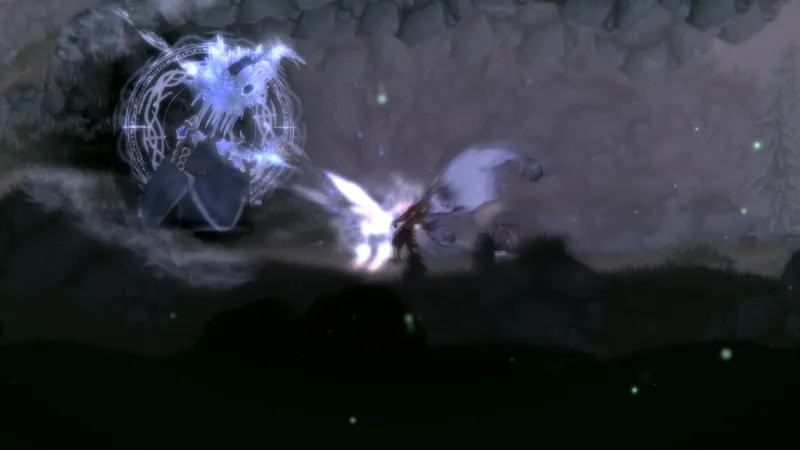
Mage hunts are the centerpiece of the Salt and Sacrifice experience but are wildly annoying in most cases. I’ve found myself properly leveled and geared up, with my armor and weapons upgraded, and I still end up getting caught repeatedly by minions who stun-lock me into oblivion or blast me off a cliff to my death. Against the mages themselves, fights consist of bafflingly strong attacks with uninteresting patterns from the towering threats, which will take a majority, if not all, of my life in a single hit. I’m all for punishing bosses and challenging encounters, but mages are usually a snore to learn the patterns of, and their cheap shots cause an abundance of frustration.

Besting a mage and consuming its heart grants a motherlode of items that can be crafted into armor and weapons representative of that mage and its elements – physical, fire, cold, light, dark, and/or poison. Mages can be found outside hunting quests as well, allowing for more materials to be gathered to craft an entire set of gear. I’ve enjoyed tracking specific targets to land ingredients to create the next set of equipment I needed to make another fight bearable with proper elemental defenses. However, I am unable to use most of those hard-earned weapons and armor without a severe penalty due to my character build.

Salt and Sacrifice’s progression systems are unintuitive and limit any flexibility enabled by crafting new equipment by locking the use of gear in the skill web. Leveling my character with the salt dropped from enemies grants a meager HP boost and Black Starstone, a currency to unlock nodes on the Tree of Skill. Some skills can be used to pump up specific stats while others unlock the use of weapons and armor and their subsequent quality tiers. So, while I went deep into the Highblade weapon and dexterity stat path early on, I was unable to use any of the armor upgrades I had built without exploring other segments of the skill tree to allow me to wear that tier of armor effectively. And to use the flame-imbuing special move of my preferred katana requires me to contribute to one of two magical paths of the web. Many times, I’ll want to try out the different weapon and armor combinations I’ve collected ingredients for and crafted, but the restrictions in place make that obtuse and difficult to do so freely. Though, when I am prepared with the proper gear and skill tree unlocks, a mage’s attack may end up killing me instantly, making it a moot point anyway.


I want to like Salt and Sacrifice, and in some stretches, I do. I enjoyed exploring the world, concepts of hunting and crafting, and the moody atmosphere, which kept me continuing for dozens of hours. But its clunky progression systems and many maddening enemy encounters quickly make the fun times easy to forget.

Score: 7

About Game Informer's review system

Purchase

Monday, May 16, 2022

Eiyuden Chronicle: Rising Review – Lots Of Chores, Little Reward

Reviewed on: Switch
Platform: Xbox Series X/S, Xbox One, PC
Publisher: 505 Games
Developer: Natsume Atari
Rating: Everyone 10+

Summed up, Eiyuden Chronicle: Rising is a simple and straightforward action/RPG. It’s easy to get lost in its tranquil cycle of collecting stamps via fetch quests and combat. However, Rising doesn’t have much substance. The whole experience is bland and commits various RPG transgressions, which is disappointing. Especially as it’s a prequel introducing the Eiyuden world ahead of Eiyuden Chronicle: A Hundred Heroes – a spiritual successor to the Suikoden series. If this is a sign of what’s to come, I’m concerned.

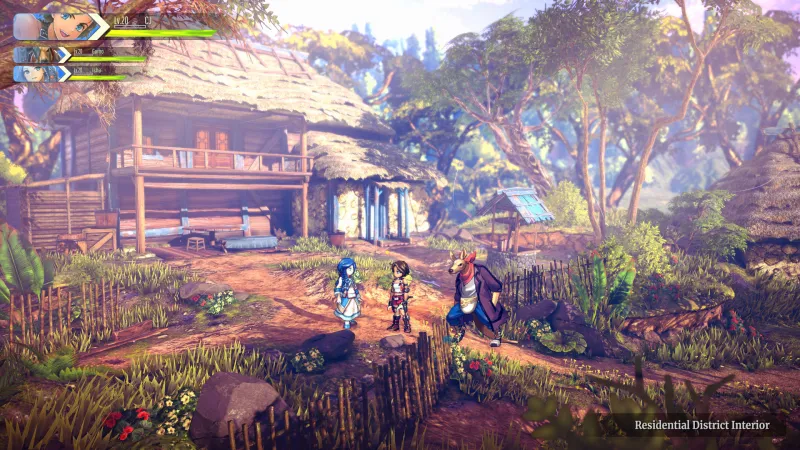
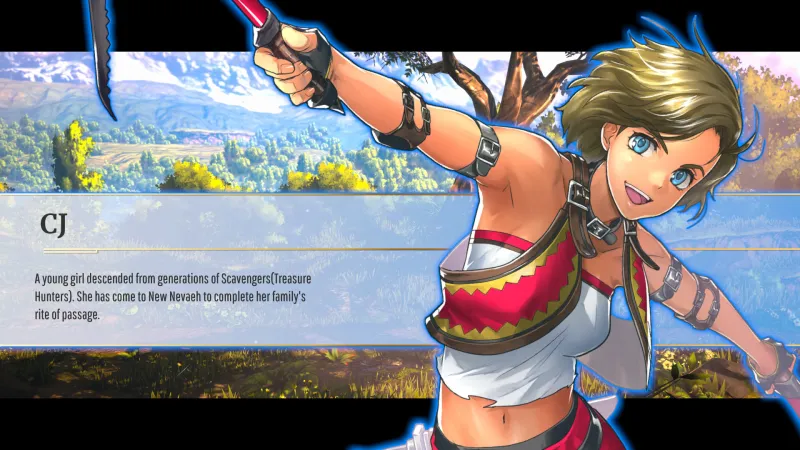
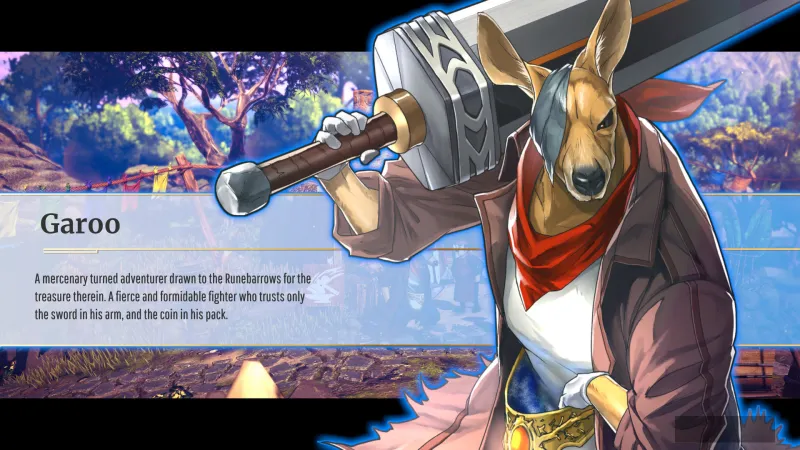
Rising’s protagonist, CJ, is a young adventurer who wants to make a name for herself as a treasure hunter. She sets up in a town that attracts adventurers far and wide for its valuable nearby resources; think of the Gold Rush. During her trek, she teams up with a grumpy and feisty kangaroo appropriately named Garoo and a sharp and elegant magic user named Isha. The main story primarily serves to get you moving to your next destination, serving up a few revelations about why mysterious, dangerous threats have appeared. Overall, the narrative is very predictable and generic.  

With a dry story, the lack of bonding moments between the characters disappointed me. A few charming interactions play out in CJ and Garoo’s banter, and I took great delight in the appearance of a magical girl named Mallore, which is a clear homage to Sailor Moon. Still, there’s not much depth to these personalities, and they feel more like character outlines than fully developed individuals. Sadly, this makes it hard to feel any connection to them.

A huge aspect of Rising is its town-building feature, which lets you help various villagers set up their shops to attract people to the settlement, making it more prosperous. You’re constantly leveling up various stores, such as a tavern, inn, apothecary, weapons shop, and more. At first glance, the town-building seems like a fun additional wrinkle, but its tedious fetch quests make it one of the game’s biggest letdowns. You trek to the same areas and then back again to the quest giver, who usually asks you to obtain a certain amount of a resource or locate a person for them.
The town-building quickly turns into a long list of chores. On the one hand, they aren’t all that difficult to complete. On the other hand, they’re mindless and don’t offer much satisfaction for the effort. The shops get some new stock, and the town gets a little more crowded, but it’s such a hollow sense of progression. Every effort earns you stamps, which showcase your town completion level. After doing a chunk of these, I lost interest in prioritizing the side content, but then realized I was under-leveled if I didn’t engage with it since the quests offer a great deal of experience. This is frustrating, as you’re forced into boring pursuits with no substance and very little in the way of storytelling. A side quest should feel optional, not required.


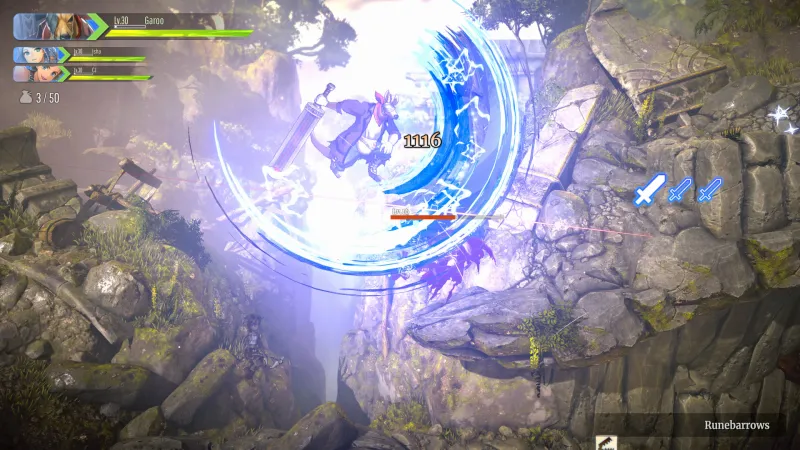
Dungeons are broken up into short romps, which I liked because they didn’t feel bloated and lent themselves well to short play sessions. That was until I had to keep backtracking to the same dungeons, fighting the same minibosses repeatedly. The game is linear overall, which isn’t an issue if the exploration is interesting. That’s not really the case here; dungeons have very minimal hidden paths, and their main appeal is picking up rare items that you can use in crafting, equipment upgrades, and cooking. Their overall design is also very basic, tied to different elements (e.g., ice, earth, fire). At the very least, the final bosses of each dungeon are visually appealing and provide a decent challenge. One of my favorites was the furry ice twins, who could turn the floor to pure ice, forcing you to stay in the air with double jumps and combos until it lifted.

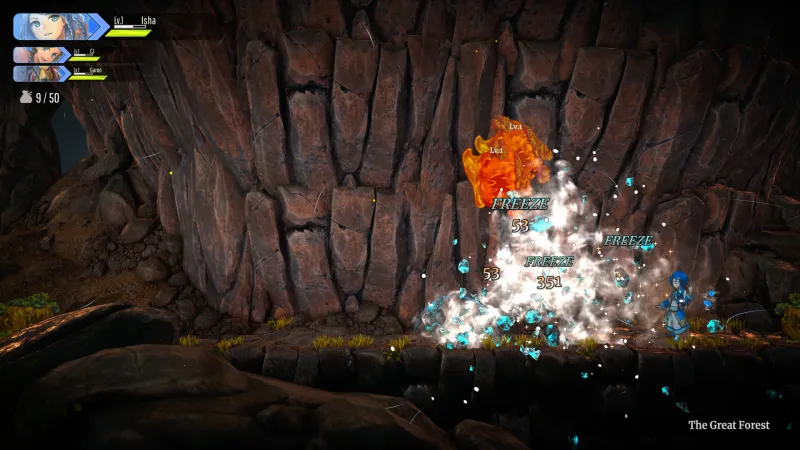
The action combat is another area of the game that is just adequate. Your party members and their attacks are tied to different face buttons on the controller, and if you swap to another character at just the right time in the middle of an attack, you can chain powerful combos. As you level up, you unlock newer abilities, such as different jumping attacks like air and quick steps, alongside upward and downward attacks. Unfortunately, I never felt a growing sense of power or satisfaction from these; the link combos were more fulfilling and deadly. Still, everything controlled well, and I didn’t run into any glitches or serious technical issues during my time with the game on Switch.

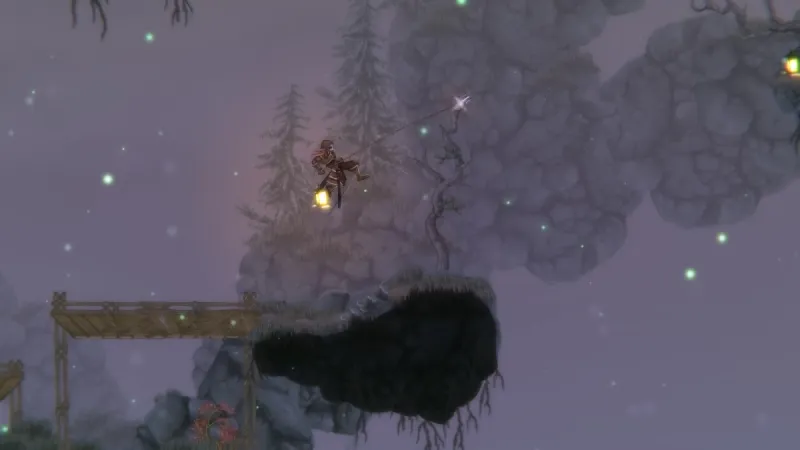
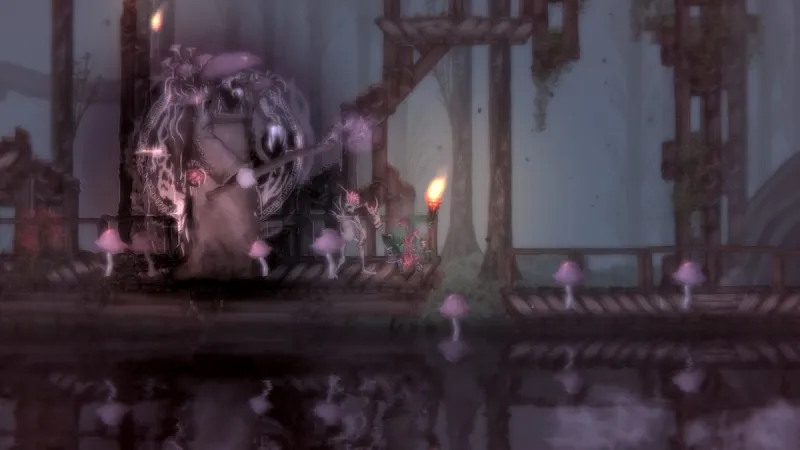
The 2.5D art style deserves its own praise. Rising is a vibrant and inviting adventure, with beautiful hand-drawn visuals that add a nice personal touch. The graphics have this retro vibe reminiscent of Suikoden, while still modernizing just enough to feel like an exciting visual upgrade. The character portraits are detailed and alluring, and the little details in the landscapes pop, such as grass swaying in the wind or blistering snow falling.

Rising was created to reward fans for reaching a Kickstarter stretch goal, but it’s not just an add-on, it is a complete game, running around 20 hours. Natsume Atari took point as developer, with input from Rabbit & Bear Studios, the masterminds behind Hundred Heroes. Unfortunately, the experience falls short as every element of it is just passable or run-of-the-mill. However, its art style is a bright spot, making me hopeful for the main game that is still to come.

Pretty visuals can only get you far, however, and Eiyuden Chronicle: Rising doesn’t offer enough entertaining or unique content to keep it from being anything more than a passable RPG. At the very least, it introduces the Eiyuden world and some characters involved in Hundred Heroes, but that’s very little incentive for putting up with tedious gameplay and boilerplate characters.

Score: 6.75

About Game Informer's review system

Purchase