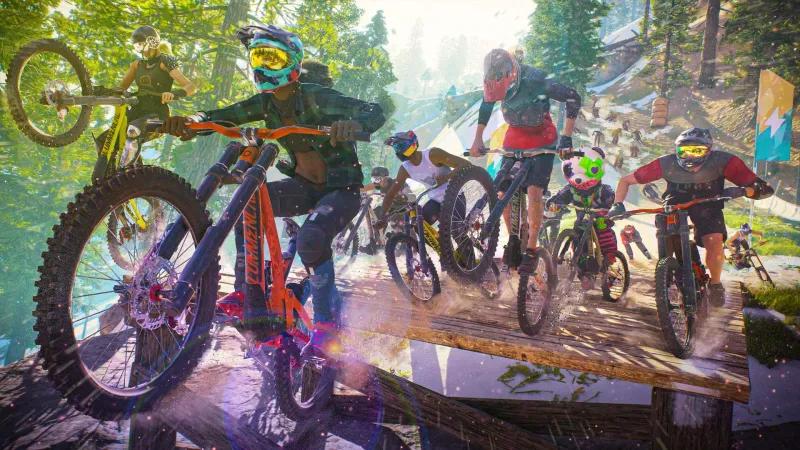
This is default featured slide 1 title

Go to Blogger edit html and find these sentences.Now replace these sentences with your own descriptions.This theme is Bloggerized by Lasantha Bandara - Premiumbloggertemplates.com.

This is default featured slide 2 title

Go to Blogger edit html and find these sentences.Now replace these sentences with your own descriptions.This theme is Bloggerized by Lasantha Bandara - Premiumbloggertemplates.com.

This is default featured slide 3 title

Go to Blogger edit html and find these sentences.Now replace these sentences with your own descriptions.This theme is Bloggerized by Lasantha Bandara - Premiumbloggertemplates.com.

This is default featured slide 4 title

Go to Blogger edit html and find these sentences.Now replace these sentences with your own descriptions.This theme is Bloggerized by Lasantha Bandara - Premiumbloggertemplates.com.

This is default featured slide 5 title

Go to Blogger edit html and find these sentences.Now replace these sentences with your own descriptions.This theme is Bloggerized by Lasantha Bandara - Premiumbloggertemplates.com.

Thursday, November 11, 2021

Shin Megami Tensei V Review – Beauty In An Unforgiving World

Publisher: Sega
Developer: Atlus
Reviewed on: Switch

The Shin Megami series has always reflected the darkness and cruelty of the world we live in, offering a reminder that the odds are often stacked against us, and unfair circumstances can cause great loss. But it also captures the beauty of rising up against those daunting challenges to stand tall – even when things seem impossible, we somehow persevere. That’s what makes the Shin Megami Tensei franchise shine, but the road to these victorious highs is filled with demoralizing lows. Voluntarily putting your energy into something that requires extra fortitude, commitment, and patience may not seem that appetizing at first glance, but no game has made me feel the rush of victory and satisfaction of testing my skill quite like Shin Megami Tensei V. 

SMT V sticks close to the franchise’s roots, meaning if you’ve played any entry in the series, you know what to expect: confronting a world in ruin, taking on extremely challenging bosses, and feeling the rush of getting more powerful by recruiting demons to fight at your side. Shin Megami Tensei V is content giving fans more of the same while making a few improvements along the way, mainly in the scope of the world and customization available for your protagonist and demons’ skill sets. These are worthwhile enhancements, and the core formula remains wildly entertaining, but I’m disappointed that Atlus didn’t take more risks and shore up more of the series’ weaknesses, such as confusing map layouts, archaic save points, and maddening difficulty spikes. 

Even with these frustrations, the stellar gameplay and progression loop kept me engaged. The turn-based combat is at its best in SMT V, and it’s reminiscent of III’s Press-Turn system. It requires a lot of thought to optimize your turns, which comes down to a mix of buffs/debuffs and exploiting elemental weaknesses. Watching your bonus actions pile up each turn by landing critical strikes or hitting an enemy’s weaknesses is a delight. Special “Magatsuhi skills,” which can be used once you fill a gauge by doing things like blocking or landing attacks, only add to the fun. These special skills drastically change the tide of battle, doing everything from refilling your party’s MP to guaranteeing critical strikes. I experimented more than I ever have with finding complementary skills to increase damage, and I loved coming up with new tactics based on my demons’ powers. 

SMT V is a challenging game. At times, you will likely die and ultimately lose progress. I relished the tension of trying to stay one step ahead of the enemy and improving at every turn. A lot of your success hinges on demon recruitment and creating an ideal party for each area. Demon negotiation, which has you selecting dialogue options and presenting gifts to sway enemies to your side, is a guessing game at times, as demons can be fickle and unpredictable, and I found it hard to anticipate their desired responses. You can eventually unlock a skill that gives you a second chance if you fail, but the moon phase also alters their behavior and likelihood to join you. For instance, a full moon may be too bright for them, so they won’t negotiate. Other times, a new moon offers the chance to give them less money or items to join my side, or they may join on the spot, unprompted. Getting demons felt less like a hassle than in previous entries due to these additions. 

Click image thumbnails to view larger version


Demon fusion, which allows you to combine the demons you recruit for better ones, is extremely satisfying. I love besting my last creation and deciding which skills to pass on to them. Atlus added more customization here, with a new feature called essences. Once you gain a demon’s essence, you can transfer its skills to other demons or your protagonist. The latter can also gain a demon’s affinities. For example, if you find a demon’s essence that blocks or reflects multiple elements, your main character can inherit those for the upper hand in battle. It seems like a small thing, but it can make a big difference in difficult fights. I also enjoyed how it allowed me to pass on skills to newly-recruited demons who only had a few abilities.

The demon fusion system is what makes the grinding tolerable, as there’s great reward for leveling up in battle. Whether your demons are gaining powerful abilities or your main character opens up new fusion options, I enjoyed the thrill of reaching these milestones. However, this doesn’t excuse SMT V’s nasty difficulty spikes toward the end of the game, and I felt forced to put my progress on hold just to grind. But there is something to be said about the satisfaction of coming back stronger. What SMT V does really well is provide satisfaction when you fuse a highly powerful demon that just crushes a boss. However, in the next big battle, they may be utterly useless. You can never depend on one demon and must constantly fuse to get the best, most balanced party possible. 

Another area that impressed me was the expanded exploration, with a newfound verticality to the world that has you platforming your way to discoveries. I was compelled to scour every inch of each area and found worthwhile rewards for doing so, such as statues that raise all your demons’ levels and special bosses/quests. In addition, hidden throughout the world in hard-to-reach places are creatures called Miman. Collecting these little fellows grants you some of the best items in the game for improving your party. I just wish the areas you explored were more visually impressive and easier to navigate. I often felt like I was searching for a needle in a haystack to find a well-hidden path. The game has a few short dungeons, but they’re hit-or-miss. I hated one that required you to use fans to blow your character to certain ledges as a missed ledge meant starting from the beginning, but I enjoyed a later dungeon that had you figuring out a path by stopping time and entering doors in the right order.

The narrative is another area begging for improvement. I love the compelling subject matter of SMT games, as they present philosophical conundrums about the world, but the execution often feels haphazard. Shin Megami Tensei V is no different. You play as a modern-day student who gets transported to an alternative apocalyptic version of Tokyo called “Da’at” after an earthquake. From here, you earn special powers to survive in this dangerous landscape and learn that not only is the future of Tokyo in jeopardy, but there’s a war waging between the angels and demons. 

It could be the end of the world as you know it, and like past SMT games, the power is in your hands to save it and also decide how it should function going forward. Do you maintain the status quo, shake up the current structures in place, or tear it all down to create a superior society? These are interesting questions, but the game presents them in such a humdrum way, with sparse, cryptic exposition and painfully slow pacing. Characters represent different philosophies, spanning law and chaos alignments, on how you reshape the world, but they don’t offer much explanation or reasoning. In fact, by the time I got to this big decision, I didn’t feel like I had a compelling choice to make. Everything in the game leads to this pivotal moment, and I felt like I was blindly throwing a dart at a board when selecting my answer. At the very least, the path I selected had some interesting revelations. I like how SMT V never wavers from its dark tone and tries to be more succinct, but for all you go through in besting the highly formidable bosses, more rewarding scenes would go a long way. 

If one thing can be said for SMT V, it’s that it demands the player give their best at all times. There is no sleepwalking or blindly spamming attacks through battles; you must think through every move and constantly weigh risk versus reward. For someone who plays a lot of RPGs, this is a refreshing challenge, but it is also exhausting. Still, I can’t deny the feeling that washed over me as I saw the credits roll, especially after taking on a seemingly endless spawn of bosses to get there. I felt on top of the world, like I had earned the right to define it; I wish making the actual choice was a little more satisfying. Still, Shin Megami Tensei V makes smart improvements to its already strong core, creating an entertaining and rewarding journey I won’t soon forget. 
 

Score: 8.25

Summary: Shin Megami Tensei V makes smart improvements to its already strong core, creating an entertaining and rewarding journey.

Concept: Recruit demons and gods to withstand great challenges and save Tokyo from ruin

Graphics: The striking demon designs look the best they ever have, oozing with creativity. The bigger backdrops and added verticality are welcome additions but aren’t that impressive to explore

Sound: Minimal voice acting gets the job done, but the music often feels repetitive. That being said, the different demon noises add great tension, keeping you on high alert

Playability: Multiple difficulty levels make the journey more approachable, but the game doesn’t onboard new players well. The mechanics seem simple on the surface, but have a lot of intricacies to master

Entertainment: Shin Megami Tensei V enhances its formula with expansive areas and more ability customization. The result is a mostly entertaining ride, albeit with a few bumps along the way

Replay: Moderate
Click to Purchase

Bright Memory: Infinite Review – Finite To A Fault

Publisher: Playism
Developer: FYQD Studio
Rating: Mature
Reviewed on: PC
Also on: PlayStation 5

Bright Memory: Infinite feels like an interactive cheesy sci-fi action movie, for better or worse. It boasts incredible – and wonderfully improbable – action sequences propelled by a story that barely qualifies as narrative. Infinite even has a run time that is comparable to some films. Unfortunately, Bright Memory: Infinite burns out before it fades away, peaking early and showing great promise before concluding sooner than expected.

Bright Memory doesn’t have a story as much as it has a series of events that just happen. You’re Shelia Tan, an emotionally wooden but capable soldier specializing in supernatural phenomena. A black hole appears in the sky, consuming anything within range and causing catastrophic weather. This void is somehow connected to an ancient mystery in which an ostensibly evil organization – led by the blandest villain in years – has a vested interest. Your goal is to stop these guys and figure out what the heck is happening. When you’re not tangling with high-tech soldiers, you’re battling centuries-old warriors and otherworldly demons for reasons that are not adequately explained. The plot barely tries to make sense of its events, only telling you enemies are bad and must be shot and/or stabbed in the face. Even after telling my brain that its services weren’t required for this story, I was still floored by its horribly abrupt ending. Just when it seems like the second half is kicking off, the story pulls the plug with hardly any resolution. This whiplash is jarring, and I’m still shaking my head in disbelief.

Click here to watch embedded media

I care less about the story wrapping up quickly and more disappointed that I couldn’t play more of the game itself. Playing Bright Memory: Infinite is thrilling thanks to its silky smooth, fast-paced combination of sword and gunplay. Slicing apart foes with Shelia’s sword feels incredibly satisfying. So does a parry that deflects bullets and stuns foes, allowing you to launch and air-juggle them Devil May Cry-style. Even better is an upgrade that fires energy beams with each swing, essentially turning the sword into another long-range weapon. The four firearms – an assault rifle, shotgun, handgun, and sniper rifle – feel good in their own right, and each has a fun alternate firing mode, some of which are delightfully silly. I’m not sure why a sniper rifle would also fire a sticky grenade, but I loved using it to blow apart multiple targets.

Shelia’s Exo Arm offers another fun tool, letting you manipulate gravity to pull enemies toward you, then blow them apart with an EMP blast. This is great for dealing with distant threats and becomes practically broken (in a good way) once fully upgraded. Thanks to a very generous cooldown, I constantly plucked foes from the other side of the map, with little consequence at times. Odds are you’ll obtain this power and others much sooner than later. The game showers players in collectible upgrade points easily found across the linear environments. I fully upgraded half of the available abilities within the first 90 minutes. Parkour-style traversal and a grappling hook make exploration enjoyable, but the platforming challenges themselves are basic and don’t take full advantage of your maneuverability.

Click image thumbnails to view larger version


As entertaining as Bright Memory: Infinite is, the action peaks early. Expect to confront limited combinations of the small batch of enemy types during the roughly two-and-a-half-hour adventure (you read that right). Some battles unfold within a temple courtyard, others atop passenger airplanes careening into the black hole. No matter the ridiculous backdrop, confrontations eventually plateau since enemy encounters don’t get enough time to evolve. In turn, neither did my approach after a while, which is a shame. I loved mixing up my abilities in awesome ways but eventually settled into a familiar rhythm, though the entertaining boss fights against equally capable swordsmen or a mythical colossus provided the challenge I desired. Bright Memory: Infinite ended just as I’d gained a firm grasp on my basic capabilities; a disappointing payoff to its enjoyable learning curve. 

In many ways, Bright Memory: Infinite feels like an extended tech demo. The jaw-dropping action and stellar graphics would serve as a great selling point for any new platform and almost appear too good to be true. Developer FYQD Studio proved some killer concepts but didn’t evolve them across a more complete adventure. Short games aren’t inherently bad, but Bright Memory: Infinite leaves me wanting so much more and is full of unrealized potential.

Score: 7

Summary: Bright Memory: Infinite boasts dazzling and entertaining combat but its full potential goes unrealized thanks to a largely flat design and an insultingly brief runtime.

Concept: When a black hole appears on Earth, you must discover its origin while stopping an evil military force from reaping the rewards of its power

Graphics: In terms of pure graphical fidelity, Bright Memory: Infinite is gorgeous. The art direction is largely generic but has enough creative flourishes around the edges to make it interesting

Sound: A satisfying “shing!” sound effect accompanies parries, but you can play this game on mute and miss absolutely nothing

Playability: The well-crafted blend of solid gunplay, stylish sword attacks, and powerful support abilities make you feel like an overpowered ass-kicker. A fast tempo means little downtime between skirmishes

Entertainment: Bright Memory: Infinite is a stupidly written good time spoiled by a way-too-brief runtime and insultingly abrupt ending

Replay: Low

Click to Purchase

Tuesday, November 9, 2021

Riders Republic Review – A Missed Opportunity

Publisher: Ubisoft
Developer: Ubisoft Annecy
Rating: Teen
Reviewed on: PlayStation 5
Also on: PlayStation 4, Xbox One, Stadia, PC

I have never hated a game that I also find immensely fun, but somehow Riders Republic pulled this off. Ubisoft's open-world action sports game begins with a promising premise: you, a voiceless action sports aficionado, arrive at Riders Ridge, a mecca for shredders everywhere. Somehow, against all laws of national parks and state regulations, multiple states' worth of national parks –  including Mammoth and Yosemite – have been reappropriated by the action sports industry for the explicit purpose of hauling ass. 

Rider's Republic's map looks about as great as any other Ubisoft open world – which is to say it's visually easy on the eyes, but without much meaningful or interesting depth. Giant mountains and deep valleys consume the map, giving the entire game a great sense of varying verticality.  Multiple biomes – forest, desert, snowy, et cetera – do a decent job of adding visual variety as you go back and forth between objectives. 

And, you go back and forth a lot. While Rider's Republic offers a bunch of collectibles throughout its map – such as discovering landmarks or popping balloons (... for some reason?) –  the world isn't all that engaging. I rarely felt the need to go off the beaten path, because my curiosity was never rewarded with anything other than menial collectibles – ways to cross off never-ending boxes on various checklists. After a while, I grew bored going from place to place and started fast-traveling to save time. Riders Republic's map is really big, so going from one end to the other for a race can take 10-plus minutes. Since that journey is always boring, I felt it was best skipped. This beautiful world was just set dressing rather than something I wanted to engage with. 

Click here to watch embedded media

Whether I was in time trials or in its 64-person mass races, barreling down the open-world's numerous roads and pathways at breakneck speeds, sometimes down what feels like a 90-degree decline, captures a sense of speed that few games have. Every time I blazed through a race, I felt I was barely in control, that one wrong move would send me to disaster, and it was thrilling. This was especially true of wingsuit and rocketsuit races, where you navigate through the air trying to get through checkpoints. During these intense races, you fly up and down at wildly different altitudes, creating constant near-misses and collisions with the ground and mountains around you. I loved taking on the races in the game, testing my skills as Riders Republic slowly increased the challenge. Coming in first place always felt great.  

I also enjoyed the races that mix Riders Republic's various action sports together. Many long races force you to alternate between your bikes, snowboards, wingsuits, and rocketsuits on the fly, testing your skill and punishing every mistake. As I got better at the game, these races pushed my understanding of Riders' mechanics in constantly satisfying ways. I always jumped at the opportunity to do a new multi-sport race when it unlocked. 

Trick challenge races, where you try to rack up a score of points by completing aerial maneuvers, aren’t nearly as engaging. Pulling off these tricks doesn't feel rewarding and you're not incentivized to master complex maneuvers because you can get by simply performing the same basic tricks over and over again. I often button-mashed my way through these races, so I rarely knew what trick I was going to pull off when hitting a ramp. Trick challenge races failed to test my knowledge or skills with the trick systems, leading me to largely ignore the system. Especially considering the number of these various trick races there are in Riders Republic – dozens or more for each sport – this eventually became a repetitive slog when I'd run out the more standard race events to play. 

After nearly every race, you gain some new bike or vehicle. With this constant stream of new equipment, I never grew attached to any one piece of gear. As such, I wasn’t compelled to search through my gear. I just picked the one with the biggest number and went about my day. These are small complaints in the grand scheme of things, but in a game as long as Riders Republic these little issues wore on me. 

riders republic preview

Riders Republic’s biggest issue is how it betrays everything good about the gameplay with non-stop obnoxiousness. This game is desperate to make you think it's cool. At all times, it bombards you with its endlessly long script, full of unbelievably annoying characters, spouting a neverending slew of irritating jokes and one-liners. A few choice standouts include, "You're working these events like a pork rib! Nummies," and you're breaking out "a whole new level of steeze," repeated constantly in unskippable dialogue prompts that play every time you scroll over a certain part of the game's map or traverse the world. These lines aren’t cool the first time; they’re unbearably insufferable after a dozen times. 

The soundtrack has the same problem, which unbelievably features a cover of Coolio's song "Gangsta's Paradise," softly performed by Les Ukulélés Girls, featuring the artist Zita. This is truly one of the worst songs I have ever heard. Sprinkle choice cuts from Green Day's latest record, "Black and Yellow" by Wiz Khalifa, and you have a soundtrack completely out of touch with music popular today. The soundtrack is such a big sticking point for me because Riders shoves it down your throat. There is an in-game radio with different genres and stations, but once you enter the race, the game has a predetermined soundtrack. Play a dozen races and there's a really good chance you're going to listen to the same three songs a dozen times. 

Rider's Republic offers an experience that, while fun and exhilarating, gets under my skin in ways no other game has. It does one or two things that I think are great, but that doesn't outweigh the things I can't stand. In the end, Riders Republic dies by a million cuts. I can only hear the same song or dialogue so many times before it stops being annoying and becomes infuriating. Riders Republic is a missed opportunity at a unique and fun action sports game – a genre I grew up on that I sorely miss. It's a game I don't see myself returning to anytime soon. 

Score: 6.75

Summary: Even though I liked the racing in Riders Republic, overall, I can't say I enjoyed my time with it. It's a missed opportunity of a game, focusing on all the wrong things, making for an experience worth skipping.

Concept: Race on bikes, snowboards, wingsuits, and more in a massive open world that amalgamates a handful of the United States' national parks

Graphics: The world is beautiful and its sheer sense of scale is impressive, even if its largely boring. The character models look bland

Sound: The game's licensed soundtrack is one of the most grating elements of Riders Republic. There are four songs by The Offspring in this game, showing a clear lack of variety or creativity in song choice

Playability: Racing is the true highlight in Riders Republic – and it's where the game absolutely excels. Barreling at breakneck speeds down a mountain captures a terrifying sense of speed in a way no other game has

Entertainment: Riders Republic has some great moments – namely its dozens upon dozens of races – but all of that is cut down by an impressively obnoxious script, unskippable dialogue, and predetermined soundtracks that play ad nauseam

Replay: High

Click to Purchase