This is default featured slide 1 title

Go to Blogger edit html and find these sentences.Now replace these sentences with your own descriptions.This theme is Bloggerized by Lasantha Bandara - Premiumbloggertemplates.com.

This is default featured slide 2 title

Go to Blogger edit html and find these sentences.Now replace these sentences with your own descriptions.This theme is Bloggerized by Lasantha Bandara - Premiumbloggertemplates.com.

This is default featured slide 3 title

Go to Blogger edit html and find these sentences.Now replace these sentences with your own descriptions.This theme is Bloggerized by Lasantha Bandara - Premiumbloggertemplates.com.

This is default featured slide 4 title

Go to Blogger edit html and find these sentences.Now replace these sentences with your own descriptions.This theme is Bloggerized by Lasantha Bandara - Premiumbloggertemplates.com.

This is default featured slide 5 title

Go to Blogger edit html and find these sentences.Now replace these sentences with your own descriptions.This theme is Bloggerized by Lasantha Bandara - Premiumbloggertemplates.com.

Thursday, August 4, 2022

Recipe For Disaster Review - An Appetizing Restaurant-Management Sim

Recipe for Disaster

Reviewed on: PC
Platform: PC
Publisher: Kasedo Games
Developer: Dapper Penguin Studios

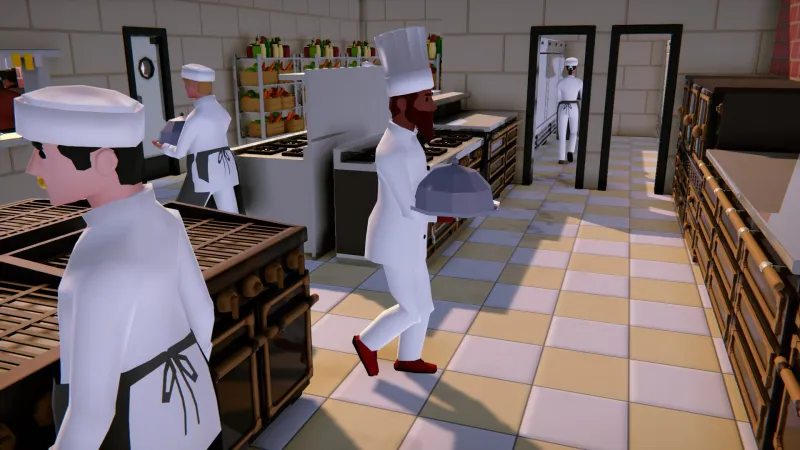
Wisdom from those who have tried opening a restaurant informs you that it isn’t the easiest way to make money. If Recipe for Disaster is any indication, running a successful eatery is a challenging, trial-and-error affair with plenty of stress and frustration, but one that, once mastered, offers excitement and gratification to balance it all out.

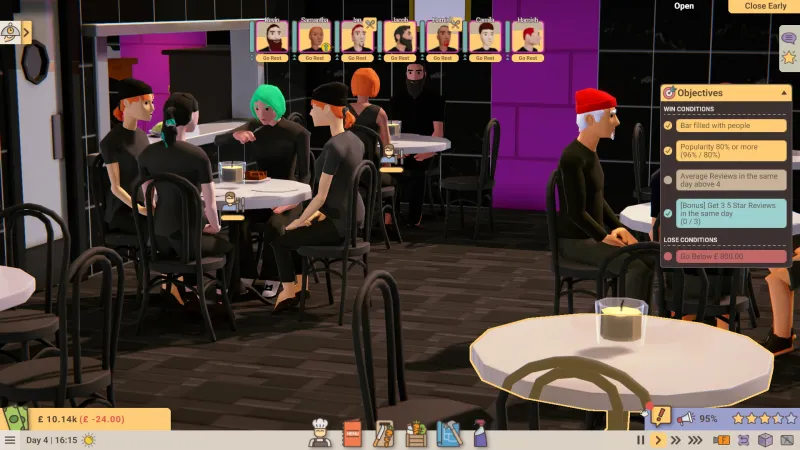
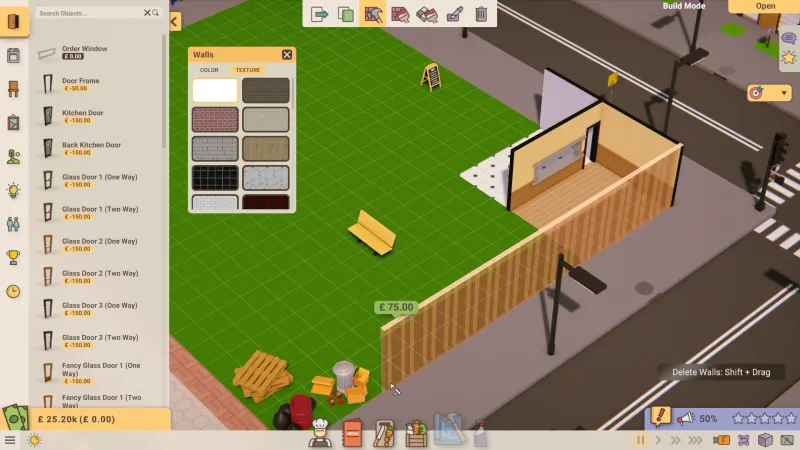
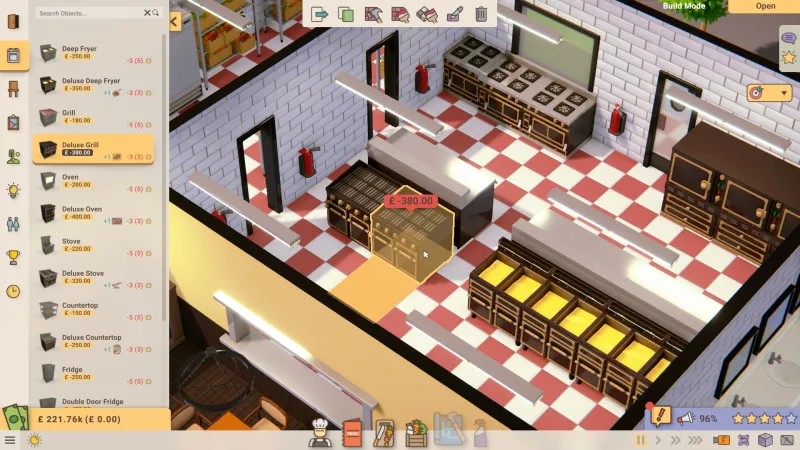
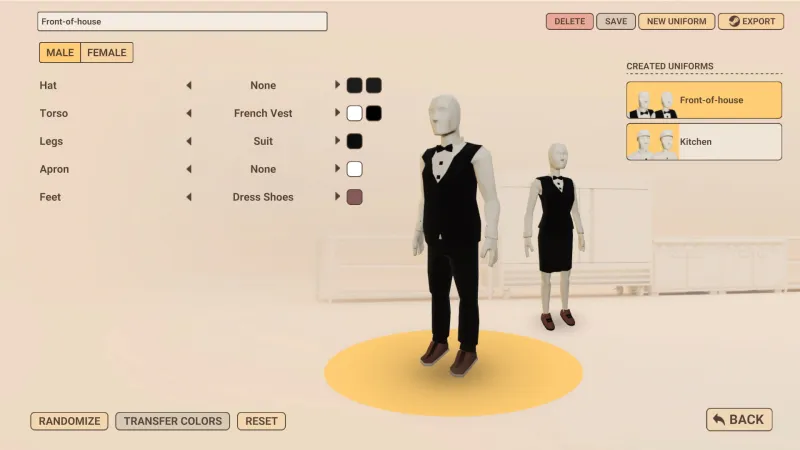
In this restaurant-management sim, you manage staff, monitor your business, and work to ensure your lights stay on. Hiring the right employees to develop a balanced team composition and designing a functional and visually appealing restaurant are important, but this game goes deeper with its management tools. I particularly love how you can drill into the menu, even allowing you to create your own recipes.

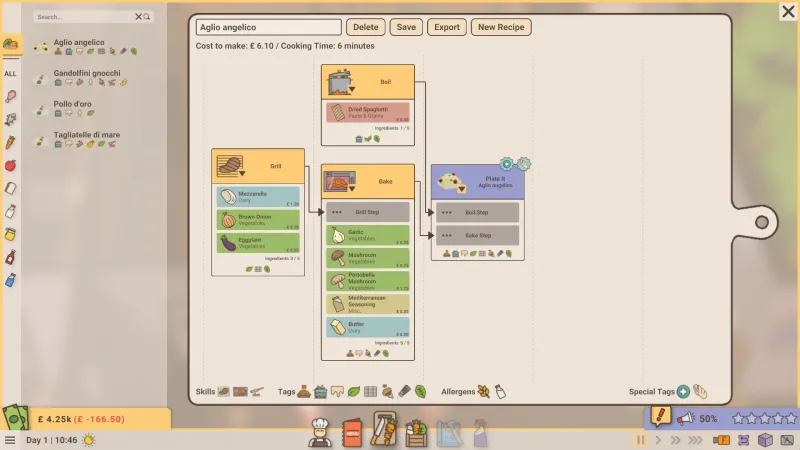
Through its intuitive creation tool, Recipe for Disaster allows you to concoct your own mouth-watering recipes. Using sequential columns, you can instruct your kitchen staff on how to prepare your latest dish. I like that this isn’t a simple step-by-step layout; instead, you can have different tasks going simultaneously. Each ingredient or process you put in a recipe adds to the time it takes to cook, meaning that your chef will be pulled away for longer, and those appliances are inaccessible to anyone else. On multiple occasions, I grew overly ambitious with my dishes; it caused my kitchen to fall behind on their orders, and the restaurant crumbled as a result.
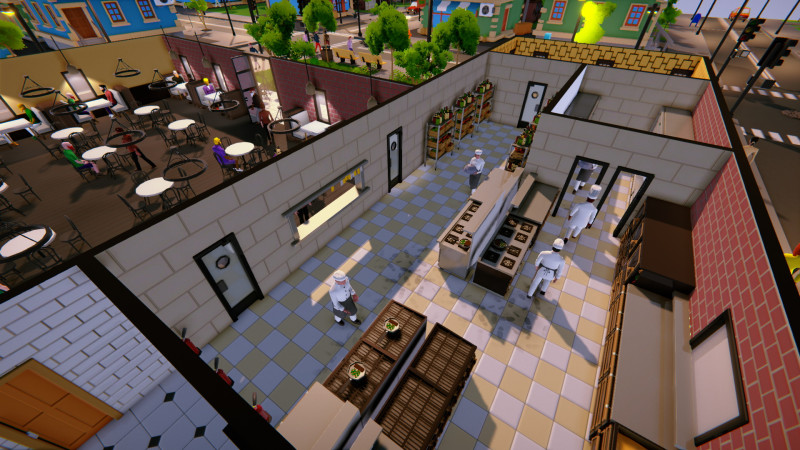
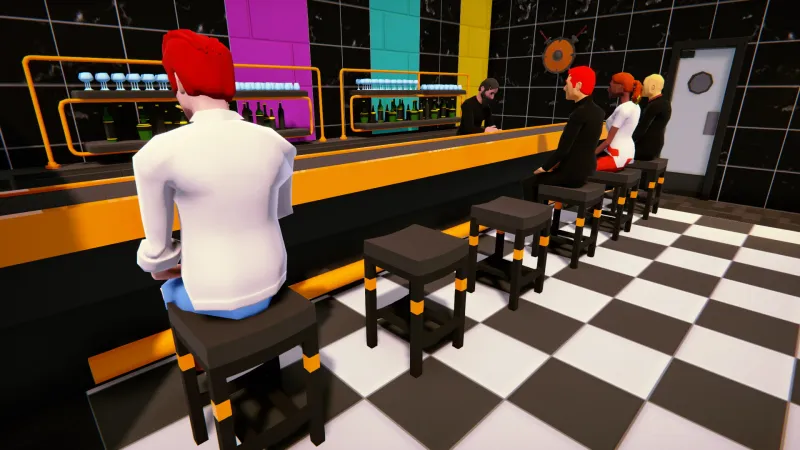
 

In fact, much of Recipe for Disaster operates on a delicate balancing act that had me weighing risks and rewards before opening the doors each day. Do I add a second grill to my kitchen to help with efficiency but start the day in debt? Would my dining room benefit from a couple of extra tables, or would that just inundate my kitchen staff with too many orders? Should I hire an amazing grill master with a bit of an ego and risk him walking out or annoying the rest of the staff? I loved walking the razor’s edge with every choice.

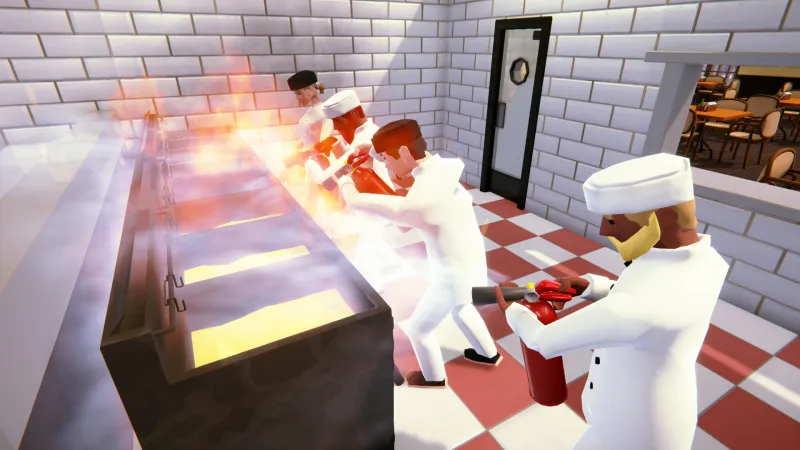
Of course, things fell apart on multiple occasions thanks to overconfidence or miscalculated risks. From an over-ambitious hiring plan to a poorly designed dining room, these instances are all frustrating since they can result in game overs, but I appreciate how each failure let me walk away with lessons on how to address different problems that crop up. These situations also allow for memorable, emergent stories to develop, like when a health inspector arrived just as my kitchen caught on fire or when a restaurant critic came in during rush hour while my entire staff was on the brink of quitting.

Unfortunately, the baked-in stress of managing a restaurant amplifies when employees sometimes stand around doing nothing when there’s work to be done or when the simulation incorrectly says an area isn’t accessible, leaving me unable to realize my dream designs fully. On multiple occasions, someone came into the building looking for a job, only to never return after I hired them. Thankfully, these unintended hardships are minor inconveniences in the grand scheme of this restaurant sim.

The number of things that can go wrong during any given day is remarkable, but if you strike the right balance, the resulting satisfaction as your leveled-up staff executes your perfect plan is astounding. Watching my team effortlessly handle a bus full of people and a line out the door never failed to make me smile, and by monitoring the in-game notifications and myriad meters, I could ensure my business continued operating like a well-oiled machine. While the main presentation is clean and streamlined, with icons that accurately and efficiently convey their meaning, the user interface is often overwhelming, thanks to the sheer volume of information it needs to communicate.

Whether you’re playing the goal-based scenarios or the open-ended sandbox mode, I still can’t stop thinking of ways to design a perfect dining hall. Though the frustration of failure sometimes got the better of me, I often couldn’t wait to get back in front of Recipe for Disaster to play through several more days of this enthralling restaurant simulation.


GI Must Play

Score: 8.5

About Game Informer's review system

Purchase

Two Point Campus Review – Making The Grade

two point campus review

Reviewed on: PC
Platform: PlayStation 5, Xbox Series X/S, PlayStation 4, Xbox One, Switch, PC
Publisher: SEGA Europe
Developer: Two Point Studios
Rating: Teen

As a kid who grew up with little money, I’ve always loved the fantasy tycoon games realize: the possibility of cashing in on whimsical business schemes like theme parks, restaurants, and aquariums. It’s always been satisfying to start with an empty plot of land and then build the foundation of a business atop it, customizing small details like paint colors, furniture layouts, and walking paths along the way. 

But the genre’s bubble gum aesthetics often mask a darker side – one prioritizing profit over people. More recent big-budget entries forego subtlety altogether, cashing in on oppressive industries like prisons, drug manufacturing, and even cartel operations. I’m sure those games are fun in their own right, but I’m not interested in engaging in the fantasy of generating capital from those systems.

This is why Two Point Campus, the follow-up to the popular business management sim Two Point Hospital, feels so refreshing. You aim to invest in massive universities and specialized colleges to attract students worldwide, but you have to put people first if you want to turn a profit. 

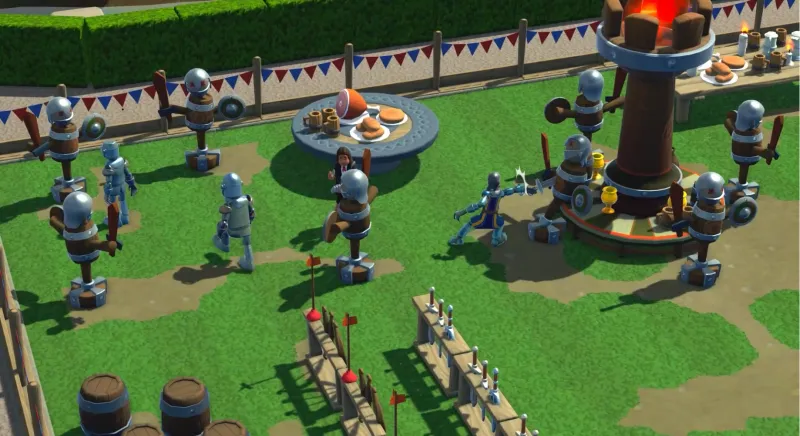
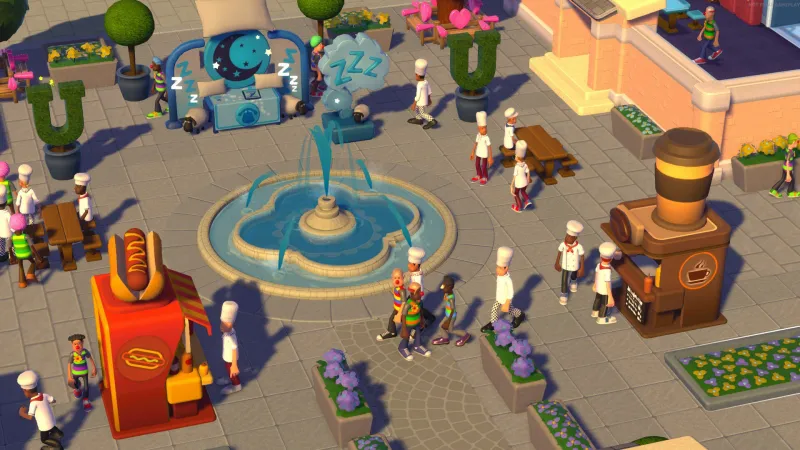
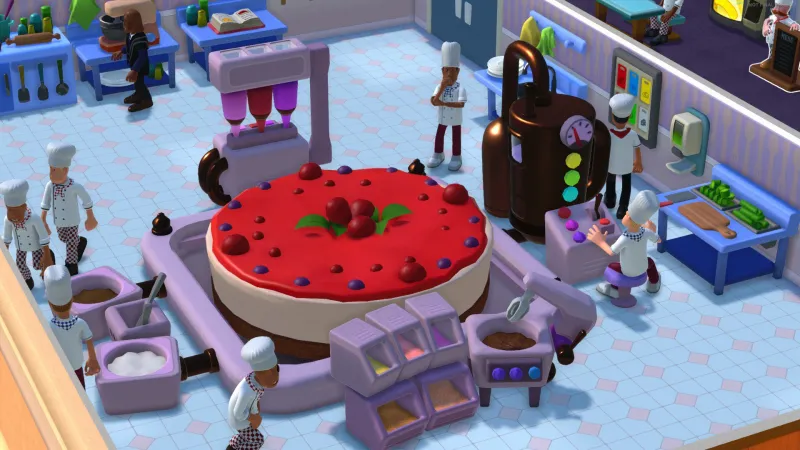
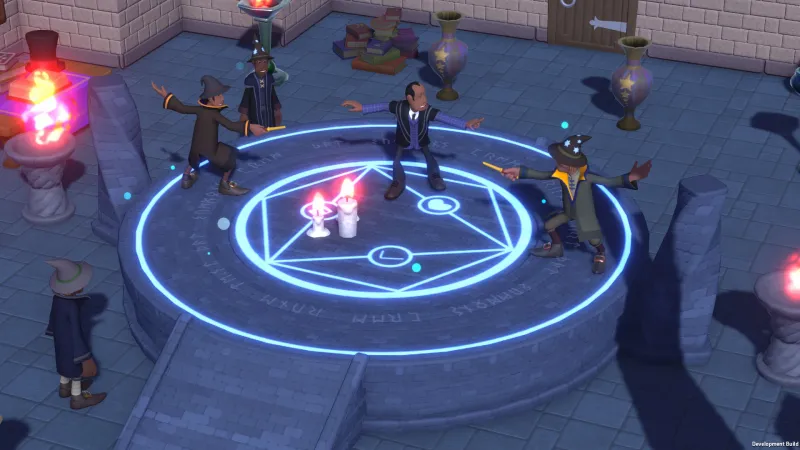
Between screening qualified professors, hiring janitorial staff to maintain the premises, and expanding the interior and exterior of your campus, you’ll invest in, well, less-than-normal curricula. No, there aren’t mathematics courses or language electives in this game. Instead, campuses host classes focused on ridiculous topics like chivalry and knighthood, wizardry, and how to be a spy agent. Even typical subjects like gastronomy or athletics are exaggerated, featuring conspicuous draws like car-sized hamburgers and cheese-based sports. Two Point is full of surprises and even more laughs, and I love discovering its clever twists on academia throughout its 12-level campaign. 

However, don’t be fooled by this whimsical portrayal of college life. There are plenty of challenges on campus that require a strategic mind to overcome. Every student has specific traits and personalities, and they’ll drop out if you don’t satisfy their needs. The only way to reach the campus ratings you need to succeed is to develop an environment ripe for education, which includes managing systems like hygiene, hunger, entertainment, social interaction, campus attractiveness, and in some cases, external factors like extreme temperatures. 

two point campus review

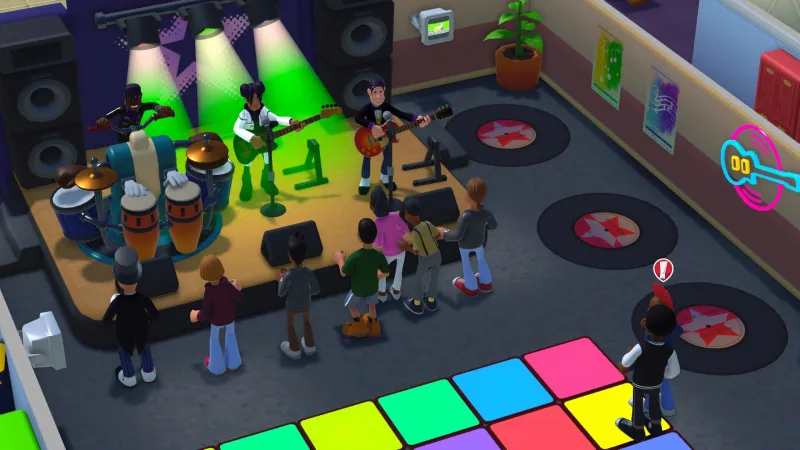
Some students might be great at studying but lower your school’s rating with poor hygiene if you don’t install ample shower rooms and bathrooms. Others might drop the campus’ average grade but can become relatively low-maintenance tenants with a tutoring course or more stimulation via a music concert or jousting tournament. The same principle applies to faculty. Highly skilled staff come at a price, namely a salary, but they’ll also need on-site comforts like break rooms to blow off steam. As you fulfill these requests, you’ll unlock Kudosh, the in-game currency required to purchase new decorations and amenities. 

But therein lies the challenge of Two Point Campus. All these programs require money, and there’s only so much room in the budget. If you’re flippant with renovation approvals, you’ll be out of funds quickly, especially at campuses with a high-maintenance student body. In the case of an empty wallet, you can borrow loans, but it’s easy to get into hot water fast with interest payments. This balancing act is sometimes frustrating but is an effective gameplay loop and is one of the main reasons I love playing Two Point Campus. If you’re feeling overwhelmed, you can change the game’s speed or outright pause, giving you time to solve problems or simply focus on designing without the pressure of the in-game calendar. 


Two Point Campus features robust creation tools, allowing me to design most things to my desired specifications – inside and outside. I especially love the new pathing tools since I prefer to build food parks and gardens outside my academics. However, sometimes I wish I had more flexibility in placing decorative items like plants or rugs without worrying about colliding with other objects. It’d be great to stack smaller assets atop larger ones like desks and tables, too. 

Despite its bleak inspirations – privatized education – Two Point Campus never feels callous. It’s more ideological than anything else, depicting a world where businesses and people flourish together. Profit and expansion are undoubtedly crucial to the experience, but you can only achieve those goals by cultivating a top-tier environment for students. This isn’t to say Two Point Campus shies away from low-hanging fruit; its signature British humor is at its best when poking fun at students and faculty. But ultimately, Two Point Campus is a deeply-engaging management sim that doesn’t force you to punch down, and it’s more enjoyable for it.

GI Must Play

Score: 8.5

About Game Informer's review system

Purchase

Tuesday, July 26, 2022

Xenoblade Chronicles 3 Review – A Dull Knife

Xenoblade Chronicles 3 Review

Reviewed on: Switch
Platform: Switch
Publisher: Nintendo
Developer: Monolith Soft

Monolith Soft has struggled to recreate and magnify the novelties of the first Xenoblade Chronicles adventure since its 2012 release. The third chapter in the science-fantasy JRPG series suffers the same frustrating fate as XC X and XC 2. Despite its first-rate combat and character progression features, Xenoblade Chronicles 3 is a bloated trek across vast but lifeless environments further diminished by an unaffecting narrative with one of the worst ensemble casts in the franchise.

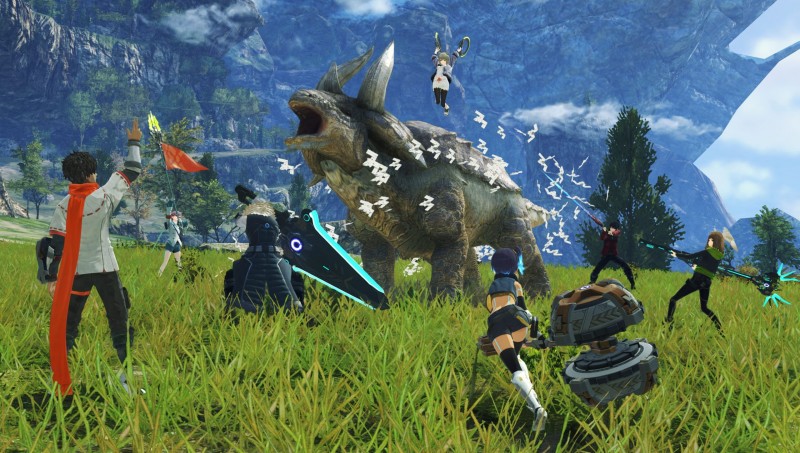
XC 3 employs a real-time battle system where “Arts,” advanced skills mapped to the controller’s face buttons, give fights a natural, straightforward cadence. By canceling auto-attacks into Arts while balancing cooldown timers, I made quick work of most early-game enemies. However, seeking stronger challengers defending rare treasures or simply grazing off the beaten path forced me to reconsider conventional attack patterns and interact with every mechanic. From taking control of a healer and issuing a “group up” tactic so I could save my team with wide-reaching AoE Arts to toppling staggered enemies with combos, every decision I made felt valuable and rewarding. 

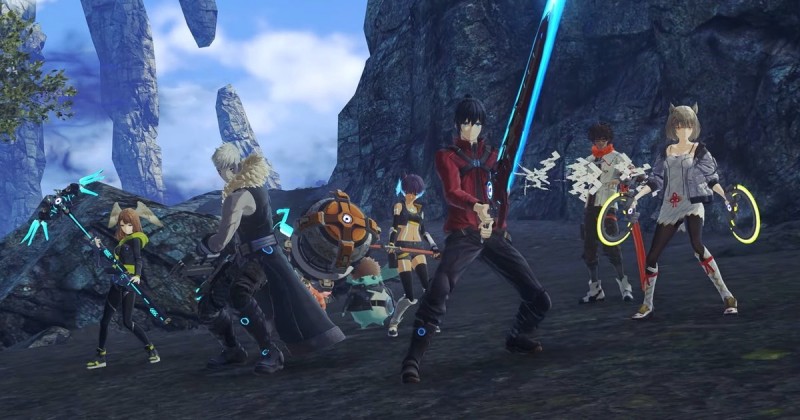
Classes add more excitement to the loop. The six playable party members can learn any class, encouraging me to experiment with combinations. Even seventh “hero” characters, recruited from main and side quests, offer rarer, hybrid classes to choose from. Some of my fighters touted robust health and defensive stats, making them shoo-ins for tank classes, while the dexterous were better suited for DPS roles. Each class came equipped with its own set of Arts/passive skills and was a joy to play. I liked drawing aggression with heavy guard taunts and then switching to a dual-sword attacker to pierce the preoccupied foe in the back. Healing the squad moments before a devastating strike made mid- to late-game engagements invigorating.

My favorite combat features were Interlinks and Chain Attacks. Both are activatable after filling gauges by performing class abilities, with the former allowing two party members to fuse into a humanoid robot called Ouroboros. These gargantuan deities eliminate swaths of opponents in one fell swoop or even the odds with mighty bosses. Chain Attacks are team-wide specials that dramatically slow the action, allowing a sequence of character Arts to not only dole out severe damage but also enable bonuses like reduced aggression and high evasion. Interlinks and Chain Attacks were power trips that always made me smile, even when my patience with the plot and exploration wore thin.

The Keves and Agnus nations are locked in perpetual conflict, with both sides suffering tremendous losses. Soldiers are subject to morbid, bloody 10-year lifespans. So, when Noah, Eunie, and Lanz join forces with Agnus operatives Mio, Taion, and Sena, the crew settles on new goals: end the intercultural violence, defeat the “true” enemy, and find a righteous reason to live. This premise is eerily similar to last year’s Tales of Arise. Where infectious, likable personalities remedied that game’s occasional thematic blunders, XC 3’s protagonists are forgettable caricatures that lack the emotional complexity a story of this nature requires. Stiff cutscene animations coupled with mind-numbingly repetitive barks – “I’m the MVP!” or “That’s a rare doodad!” – do the six champions no favors.

This superficiality extends to the explorable backdrops, which lack the awe-inspiring points of interest and vistas from previous Xeno entries. These open-world zones are chockful of dangerous creatures, from flying stingrays to ferocious, kaiju-sized apes and collectible items which can be sold for a profit or submitted to fetch quest NPCs. Beyond challenging monsters, collecting respawnable drops, and recruiting heroes at Keves or Agnus settlements, there’s not much to do or see. The generic locales – forests, deserts, mountains; you can probably guess the rest – were barren spaces I’d navigate for hours to arrive at the next underwhelming story checkpoint.


Thankfully, character progression systems helped alleviate the monotony. XC 3 offered an impressive number of ways to amplify the strength of my party. At camps scattered throughout each biome, I’d level everyone up, craft gemstones that increase specific stats, and cook meals that affect XP and CP (Class Point) gains. There’s even an Interlink skill tree that let me augment the combat prowess of my Ouroboros. Smaller-scale upgrades, like improved running speed or meal effect duration, came from completing fetch quests, speaking with NPCs, and freeing Keves or Agnus settlements – this usually amounted to working alongside a hero to beat a powerful adversary. The customization depth made gameplay more enjoyable, but after dozens of hours doing the same activities to bolster my combat efficiency, the sheen wore off.  

My party of seven felt like a little army when explosive Arts and flashy Ouroboros combos lit up an already-chaotic battlefield. And the quality-of-life improvements like customizable shortcut hotbars and in-game GPS streamlined menu-surfing and traversal. Still, the narrative and world designs left much to be desired as critical plot twists are frustratingly obvious, character growth is virtually nonexistent, and navigation in each uninspired environment proves to be a tiring exercise. Xenoblade Chronicles 3 is a double-edged sword that needs a bit more sharpening.

Score: 7.25

About Game Informer's review system

Purchase