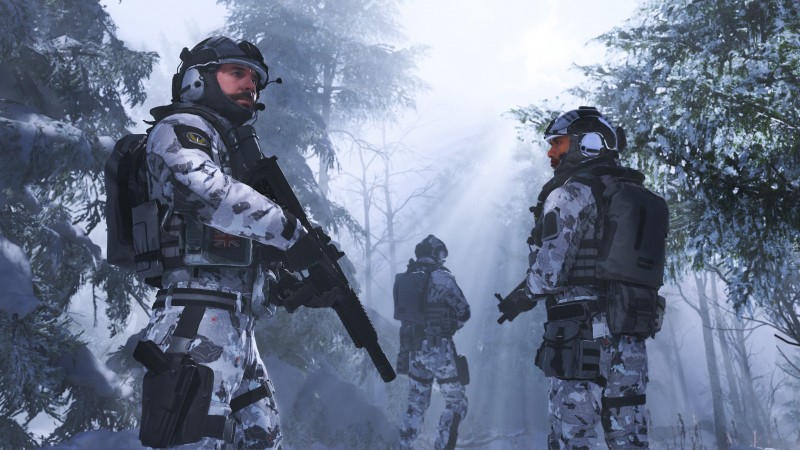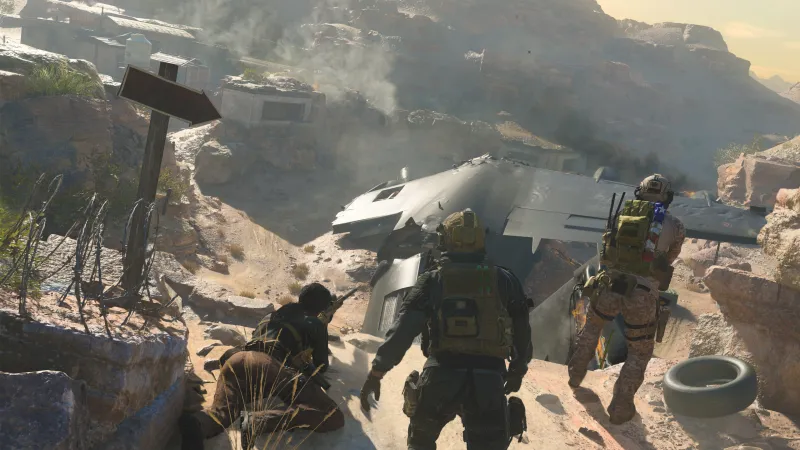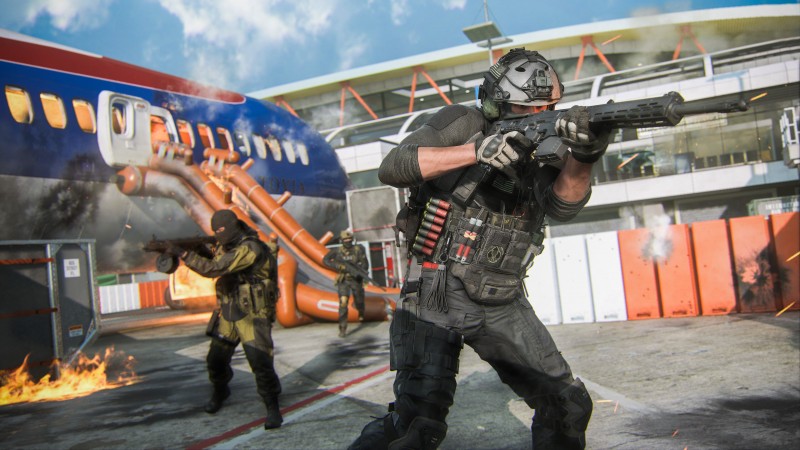
This is default featured slide 1 title

Go to Blogger edit html and find these sentences.Now replace these sentences with your own descriptions.This theme is Bloggerized by Lasantha Bandara - Premiumbloggertemplates.com.

This is default featured slide 2 title

Go to Blogger edit html and find these sentences.Now replace these sentences with your own descriptions.This theme is Bloggerized by Lasantha Bandara - Premiumbloggertemplates.com.

This is default featured slide 3 title

Go to Blogger edit html and find these sentences.Now replace these sentences with your own descriptions.This theme is Bloggerized by Lasantha Bandara - Premiumbloggertemplates.com.

This is default featured slide 4 title

Go to Blogger edit html and find these sentences.Now replace these sentences with your own descriptions.This theme is Bloggerized by Lasantha Bandara - Premiumbloggertemplates.com.

This is default featured slide 5 title

Go to Blogger edit html and find these sentences.Now replace these sentences with your own descriptions.This theme is Bloggerized by Lasantha Bandara - Premiumbloggertemplates.com.

Monday, November 13, 2023

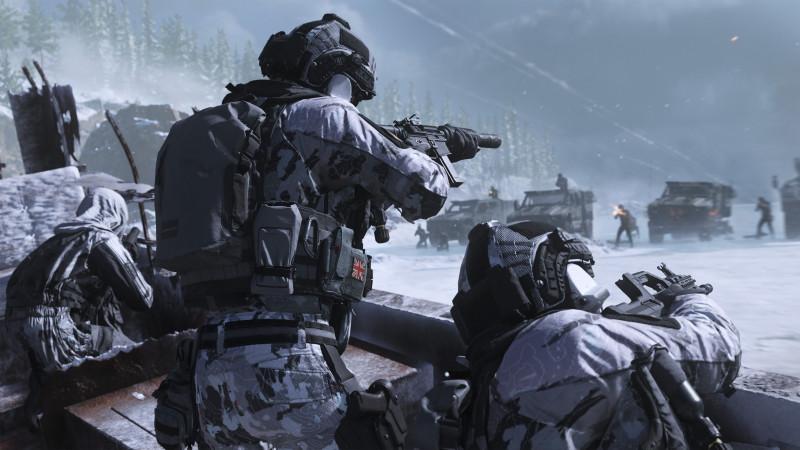
Call of Duty: Modern Warfare III Review - Not-So-Special Ops

Reviewed on: PlayStation 5
Platform: PlayStation 5, Xbox Series X/S, PlayStation 4, Xbox One, PC
Publisher: Activision Blizzard
Developer: Sledgehammer Games
Rating: Mature

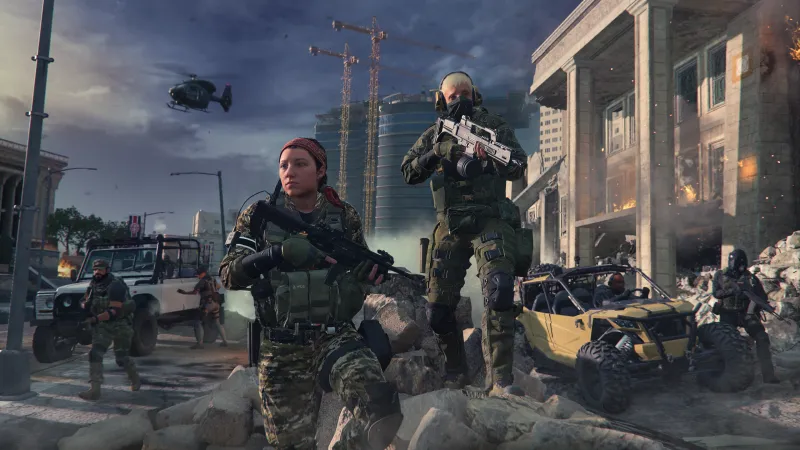
Call of Duty cycles through its lineup of villains on a yearly basis. Sometimes it's Nazis, other times it's Russian nationalists or zombies. But the most dangerous threat is one without a lust for brains or access to weapons of war; it's stagnation. And while many Call of Duty teams often switch up just enough variables to stave off monotony, Call of Duty: Modern Warfare III fully submits to the annual churn.
 
The campaign embodies this, as it rushes to a conclusion with little care for the details. COD missions usually follow a predictable yet mostly effective formula of packing together various one-off gameplay mechanics through fluctuating levels of intensity. Modern Warfare III cuts out necessary buildup and most of the variety, leading to basic stages riddled with pacing issues. Many max out at around 15 minutes, which means the usual rollercoaster of ups and downs has been stripped down to only include the descents. The spectacles are also less bombastic, and the abbreviated journey to them only further diminishes their appeal.

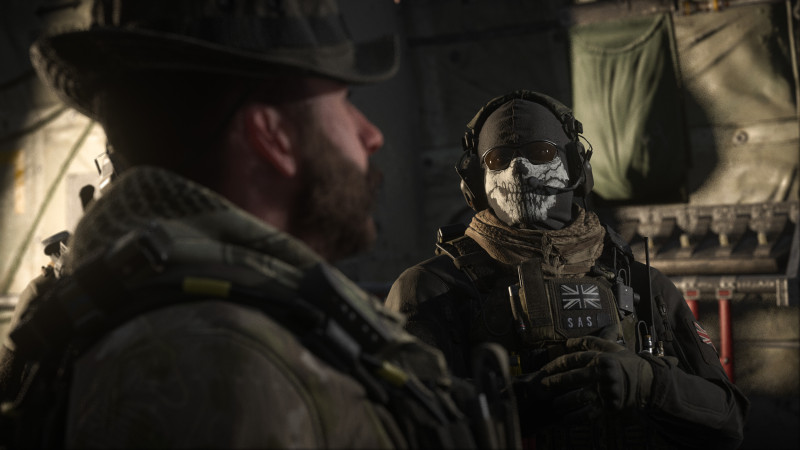
Speeding ahead also impedes the storytelling since it barrels through beats at an astonishing clip. How Call of Duty: Modern Warfare II’s antagonist is alive and why they’re now an ally was haphazardly glossed over in a cutscene from a previous multiplayer season. Vital details like that are just more casualties of its hurried pacing.

While much of the campaign poorly emulates what COD has already done, the wider Open Combat missions attempt to take that blueprint into new territory. However, the promise of more agency is undone by how shallow these stages are. Exploring these larger levels is not worthwhile as unlocking new guns is often redundant. Upgrades and weapons also don’t carry forward between missions.

Objectives can be tackled in different ways, but these options don’t go far beyond going loud or sneaking through using rudimentary stealth mechanics. Static mission and map design, limited interactivity, and a lack of meaningful rewards deflate their intended replayability and mean one run is more than enough. Nonlinearity is novel here, but novelty alone is not enough.
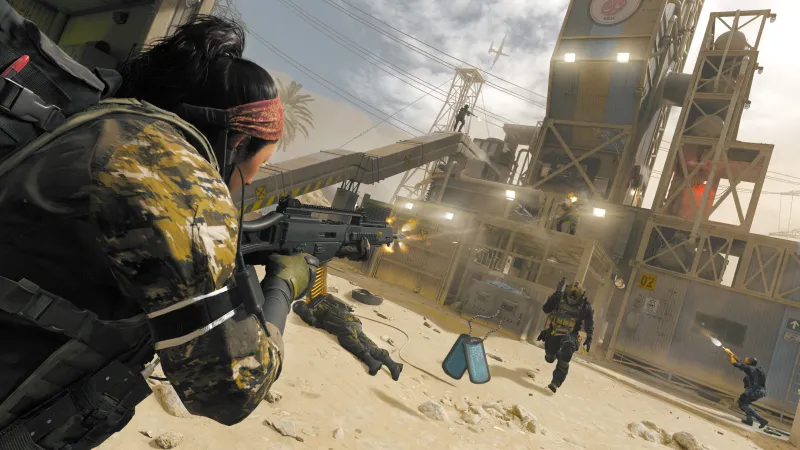
 

MWIII’s multiplayer modes more clearly flex COD’s signature smooth gunplay and impressive sound design, but are not exempt from the malaise that affects the whole experience. Lower score thresholds and more agile movement mean competitive multiplayer matches have a faster tempo that’s still kept in check by the higher time-to-kill. This cadence allows for thrilling firefights, but time spent out of combat is a drag. Earning all the same gear each year is already a tiring process made even more laborious by MWIII’s grindy unlock system and busy menus.

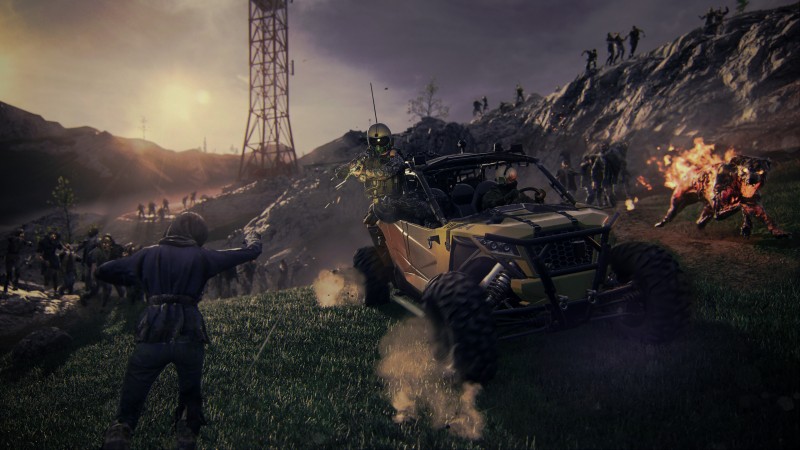
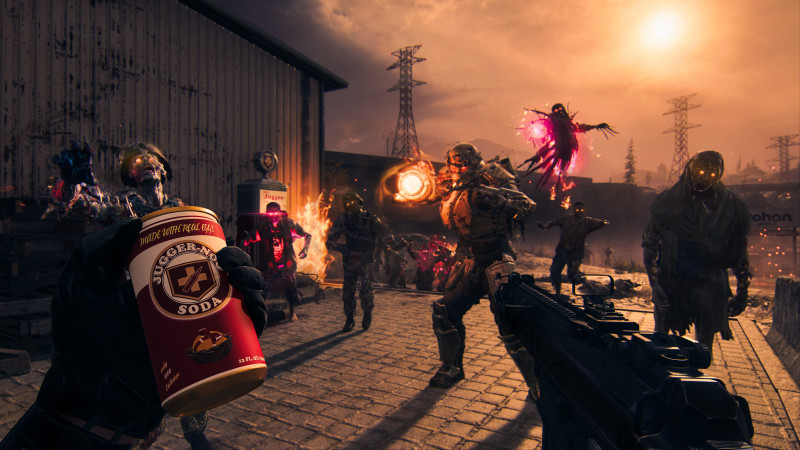
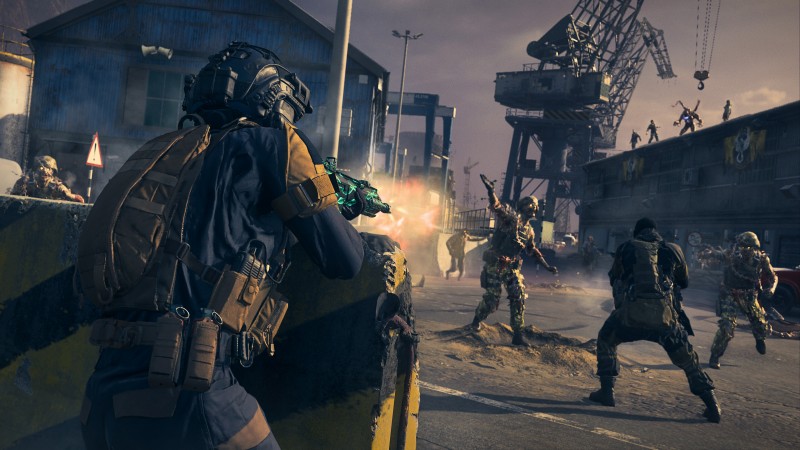
Competitive multiplayer, while familiar, highlights at least many of the series’ strengths, but the Zombies mode can’t even shamble over that low bar. Turning Zombies into an extraction shooter waters down the formula since success now requires multiple matches. The high difficulty means players must repeatedly drop in and acquire better gear before moving forward. The process is slow and tedious and full of uneventful loot runs and, if killed, lost progress.

Zombies feels more like a limited-time Warzone event cobbled together from existing ideas and assets and that sentiment permeates throughout MWIII. Each pillar is an inferior patchwork of past ideas from its stunted campaign to its multiplayer that, while the strongest mode, is comprised of systems lifted wholesale from MWII with maps from 2009’s Call of Duty: Modern Warfare 2. This year’s COD is a threadbare expansion masquerading as a sequel and an embarrassing way to mark the series’ 20th anniversary.

Score: 5

About Game Informer's review system

Purchase
Tuesday, November 7, 2023

Nickelodeon All-Star Brawl 2 Review - A Slime Fight in The Limelight

Reviewed on: PlayStation 5
Platform: PlayStation 5, Xbox Series X/S, PlayStation 4, Xbox One, Switch, PC
Publisher: GameMill Entertainment
Developer: Ludosity, Fair Play Labs

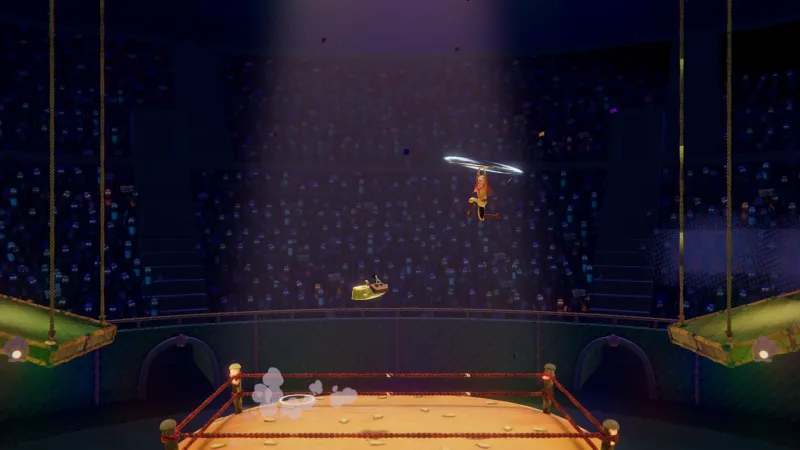
When the original Nickelodeon All-Star Brawl came out in 2021, it was a relatively bare-bones experience, but those bones were solid. Despite lacking many single-player modes, items, and even character voices, the core gameplay was good enough to keep the game afloat until it received refinements via online updates over the next two years. Nickelodeon All-Star Brawl 2, however, comes packaged with all those improvements and more. Developer Fair Play Labs has learned its lessons, and while the game isn't without its faults, it's a more-than-worthy follow-up.

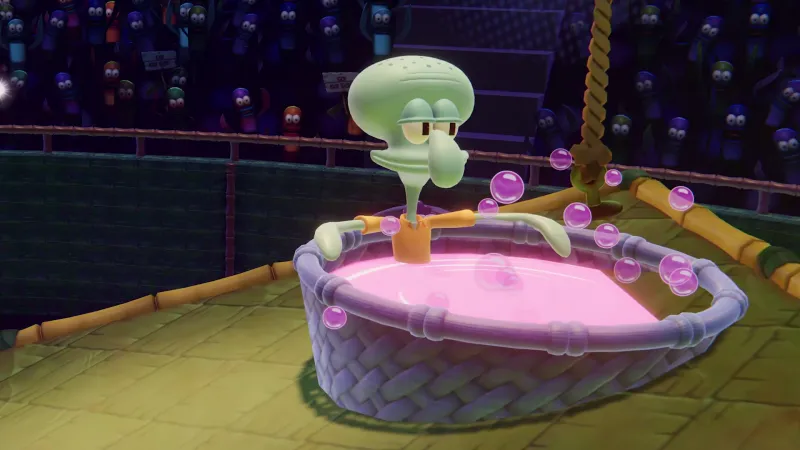
Nickelodeon All-Star Brawl 2 starts you off with 25 characters, which is the same amount currently available in its predecessor if you include DLC. A surprisingly large number of characters do not return for the second entry, however; only 14 fighters return, meaning 11 were replaced. If one of your favorites was cut, you have every right to be disappointed, but it's a blessing as well. For one, notable exceptions from the first game, like Squidward and Jimmy Neutron, are included here. A new roster also means the team at Fair Play has more opportunities to be creative with character mechanics, and the game feels more novel, even though the basic gameplay is similar.

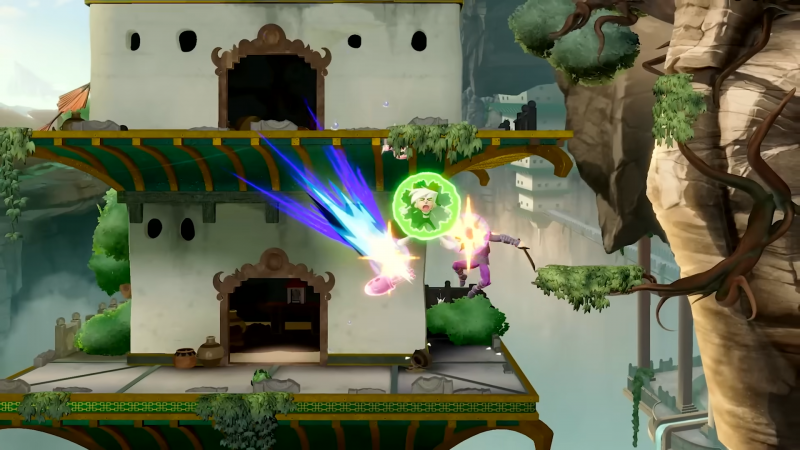
Luckily for All-Star Brawl 2, its strongest elements are its core combat mechanics. All the side content in the world means nothing if the game doesn't feel good to play in its most basic modes, so it's a good thing the franchise still feels great. Movement is quick and precise, powerful attacks are satisfying to land and devastating to absorb, and a new slime meter raises the skill ceiling higher than before. Fair Play has struck a successful balance between depth and approachability.

This balance is exemplified in the slime meter system. As you play a match, your meter slowly increases, and by holding one of the triggers, you can spend that meter on a variety of actions. You can make attacks stronger, cancel attacks, make your shield last longer, or use a slimeburst to halt your momentum and save yourself from flying offscreen. For casual players, however, the slime meter will probably only ever be used when it hits maximum level, at which point you can unleash an ultimate move. These character-specific, cinematic attacks are only lethal when your opponent is at a high damage level, making for exciting finishes to matches.

While the slime meter allows for more complex high-level play, I would have liked some more comprehensive tutorials to help newcomers reach that level. There's a "how to play" section tucked away in the single-player tab in the menu that gives a good overview of the basic mechanics, but more complicated maneuvers (like some slime skills) are reduced to quick text boxes you click through. Character-specific tutorials for some mechanics would have been appreciated as well, but you can always pause the game and see move descriptions in the "movesets" section.

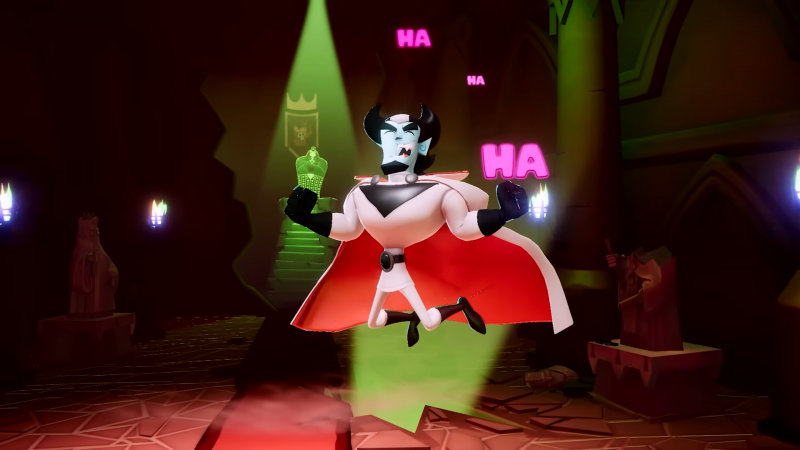
The biggest new feature All-Star Brawl 2 introduces is a campaign mode. Because of a dastardly plot helmed by Danny Phantom villain Vlad Plasmius, the universe is doomed to explode. Luckily, Clockwork (also from Danny Phantom) sucks Spongebob into a hub outside time and space, allowing him to journey through a series of levels to defeat Plasmius, with Clockwork rewinding time if you fail. The narrative itself is nonsensical and frustrating, frequently undermining achievements the player makes by pulling the rug out from under them and immediately inventing a new problem. It ultimately didn't ruin the campaign, though, because it takes up a relatively small amount of the experience, and the gameplay itself is shockingly fun.

Structurally, it's a roguelite. Runs are divided into three areas which you navigate via a series of paths in a menu screen. Activities vary by level, with some having you face off against henchmen from various Nickelodeon shows, and others having you pop balloons or complete platforming challenges. You can also fight mind-controlled versions of characters from the game's roster, gaining the ability to play as them in future runs if you succeed. Finally, each area is capped with a boss, like Sartana of the Dead or Shredder. These battles are hit or miss; late-game bosses are oddly much easier thanks to their simpler stages and general lack of movement – The Flying Dutchman, a boss from the first area, consistently gave me the most trouble.

You can also unlock various upgrades from Professor Wakeman in the hub world, granting you extra lives, opportunities to heal, and better upgrades from shopkeepers mid-run. By the time I reached the end, I had an absolutely busted Azula build where most attacks poisoned foes and healed me. It's an incredibly satisfying power crawl. And even though the narrative falls completely flat overall, I enjoyed interacting with various shopkeepers along my runs, including Mrs. Puff, Hugh Neutron, and the Cabbage Merchant from Avatar: The Last Airbender. Each playable character has unique dialogue with each shopkeeper and boss, and it's fun to play as different characters to see how they interact.

Nickelodeon All-Star Brawl 2 is a successful second attempt at the groundwork laid by its predecessor. Fair Play delivers a solid platform fighter that simultaneously improves the franchise's core mechanics and introduces side content to flesh out the overall package. It's nothing mind-blowing, and it's certainly not the next Super Smash Bros., but it's engaging, exciting, and worth your time.

Score: 8

About Game Informer's review system

Purchase
Monday, November 6, 2023

Like A Dragon Gaiden: The Man Who Erased His Name Review – Bridging The Gap

Like A Dragon Gaiden: The Man Who Erased His Name

Reviewed on: PC
Platform: PlayStation 5, Xbox Series X/S, PlayStation 4, Xbox One, PC
Publisher: Sega
Developer: Ryu Ga Gotoku Studios
Rating: Mature

As far as pitches go, Like a Dragon Gaiden: The Man Who Erased His Name, the next game in what used to be called the Yakuza series, is hard to beat: Find out what happened to series protagonist Kiryu Kazuma between Yakuza 6: The Song of Life and Yakuza: Like a Dragon. The former ended with Kiryu faking his death to keep his adopted family of orphans safe. The idea was his story was over – he was moving on to the next chapter of his life. Developer Ryu Ga Gotoku Studio pitched it as such. Until the latter, when he showed back up, playing a large part in a game that was supposed to, and somewhat did, launch new series protagonist Ichiban Kasuga into the limelight. For the most part, Gaiden is an interesting bridge between those two games – even if it doesn't always go as deep into Kiryu's character as I hoped.

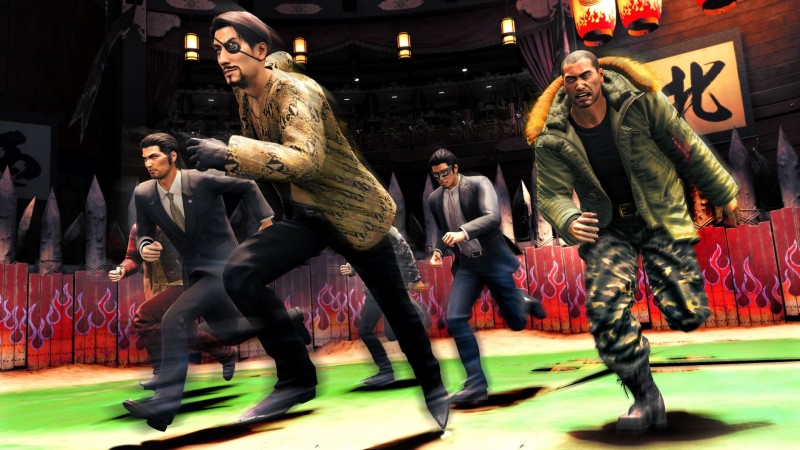
As it turns out, Kiryu was a secret agent for all those years. Following the events of Yakuza 6, Kiryu, now called Joryu, made a deal with the Daidoji, a secret organization with its hands seemingly in every part of Japan – from the underworld to the upper echelons of the government. Because the Daidoji helped stage Kiryu's death, he's now the group's errand boy, acting as muscle by beating the holy hell out of anyone he's instructed to. Until he gets involved in a hodgepodge of various conspiracies that ultimately lead to him helping disband the Omi and Tojo yakuza groups – a plot point Like a Dragon players may remember.  

Gaiden's story is in line with the quality we've come to expect from RGG's titles, which is to say, it's very well-told and gripping. I like the noir slant on what is often fantastical crime dramas, and Daidoji's role in Japan makes it easy to buy into the plot's more spectacular moments. And I especially like the way the back third of the game mixes in with Like a Dragon, even having you play through some of the events of that game. Hilariously, though, despite going to great pains to remind the player over and over that Kiryu is dead, just about everyone sees through his disguise; no one buys this Joryu front. Kiryu, always a lovable idiot, commits to the bit to the very end, but you spend large swaths of the game listening to the same conversations about how people thought Kiryu died and Kiryu telling them he doesn't know what they're talking about – he's Joryu.


Where the story falters is being a satisfying bridge between Yakuza 6 and Like a Dragon. On one hand, I now know what Kiryu was up to – spy stuff. On the other hand, the reason he faked his death in the first place often feels like an afterthought. There are conversations gesturing towards Kiryu's adopted family, but we don't get a ton of time to examine the psychological impacts his staged death has had on him as a character; I never really got the sense that he was filled with sorrow or regret for having lived a life that got him to this point. That is until the ending, which is one of the best and most affecting in the entire series, but it would've been nice to see more of that paid off throughout the game rather than backloaded. 

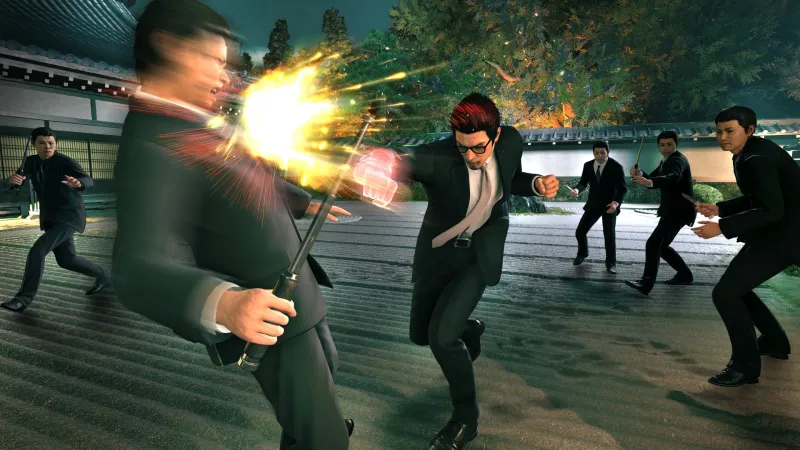
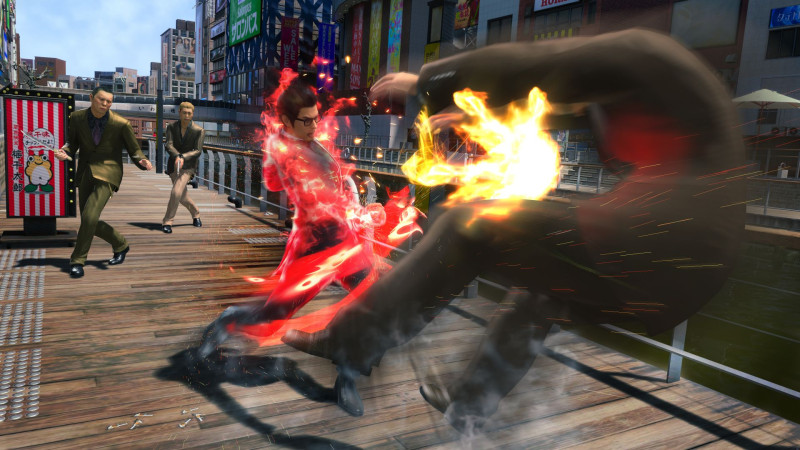
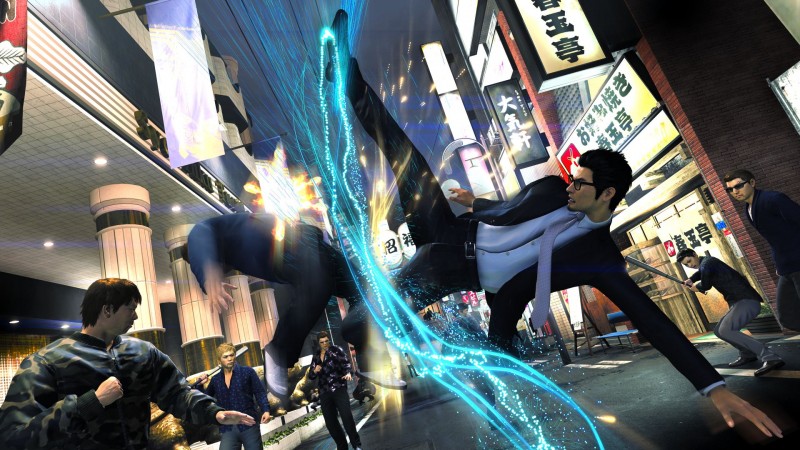
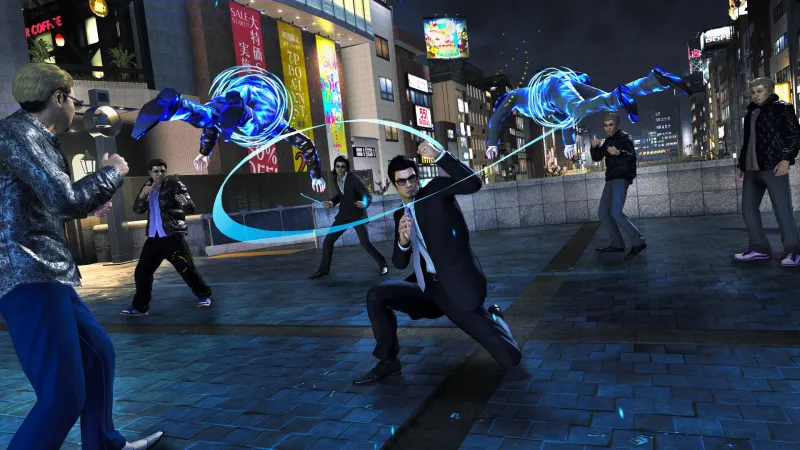
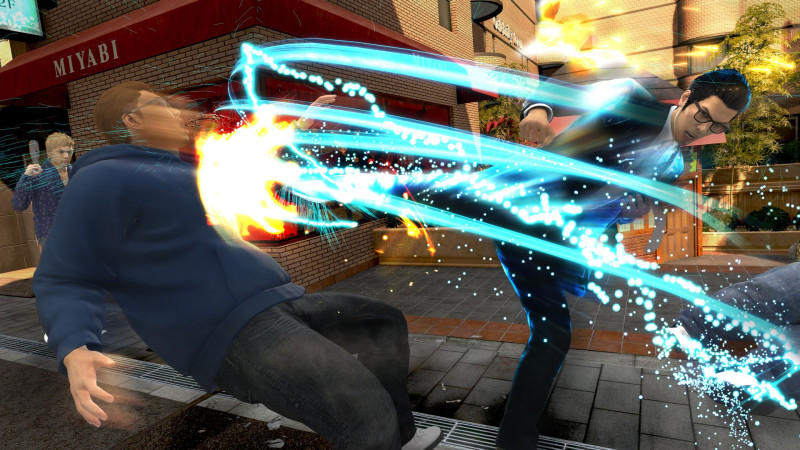
Gaiden returns to the series' trademark brawler combat, and it has satisfying twists on the formula in line with Kiryu's new job. There are two fighting styles: Yakuza and Agent. Yakuza plays similarly to other RGG games – you punch, kick, and beat up anything in your way. Agent is a faster but weaker combat stance, but with the addition of cool spy tools. – including an exploding cigarette, drones, and a cord that can tie up enemies. I like swapping between the two fighting styles. For example, starting with the Agent style to tie up and throw enemies around was great for crowd control and building up my special meter to unleash heavy attacks. After thinning the herd, I'd often switch to the Yakuza style to focus my powerful attacks on stronger enemies. It's a layer of strategy I don't feel like many other RGG games have had, which are often fun but mindless.

Like A Dragon Gaiden: The Man Who Erased His Name

One last welcome change to the overall formula is how substories play out. At the risk of alienating the Yakuza fanbase, I've never been a fan of the wacky side stories in these games; I always want to keep the dramatic main story going. But the series often forced these diversions down your throat by making them automatically trigger out in the open world; it's no exaggeration to say that in older games, this could happen five or six times on a short walk to an objective, depending on your route. Gaiden introduces Akame, a new character who is sort of like Kiryu's manager. Most substories are now accessed through her rather than stumbled upon in the open world. It's a small touch, but one I welcomed with my entire heart. 

At only 14 to 15 hours, Gaiden is a fun, comparatively short return to the world of Kiryu "Joryu" Kazuma. By the time credits roll, Gaiden neatly establishes Kiryu's role in the next mainline game, Like a Dragon: Infinite Wealth, and since that game's out in a few months, the brief taste gave me plenty to be excited for. I wish the story were more interested in exploring who Kiryu is now that he's forced into this double life, but as a thin bridge between games, Gaiden is a neat one. And I'll always appreciate an excuse to hit the streets and the thugs therein with my favorite dummy.

Score: 8

About Game Informer's review system

Purchase