This is default featured slide 1 title

Go to Blogger edit html and find these sentences.Now replace these sentences with your own descriptions.This theme is Bloggerized by Lasantha Bandara - Premiumbloggertemplates.com.

This is default featured slide 2 title

Go to Blogger edit html and find these sentences.Now replace these sentences with your own descriptions.This theme is Bloggerized by Lasantha Bandara - Premiumbloggertemplates.com.

This is default featured slide 3 title

Go to Blogger edit html and find these sentences.Now replace these sentences with your own descriptions.This theme is Bloggerized by Lasantha Bandara - Premiumbloggertemplates.com.

This is default featured slide 4 title

Go to Blogger edit html and find these sentences.Now replace these sentences with your own descriptions.This theme is Bloggerized by Lasantha Bandara - Premiumbloggertemplates.com.

This is default featured slide 5 title

Go to Blogger edit html and find these sentences.Now replace these sentences with your own descriptions.This theme is Bloggerized by Lasantha Bandara - Premiumbloggertemplates.com.

Wednesday, March 10, 2021

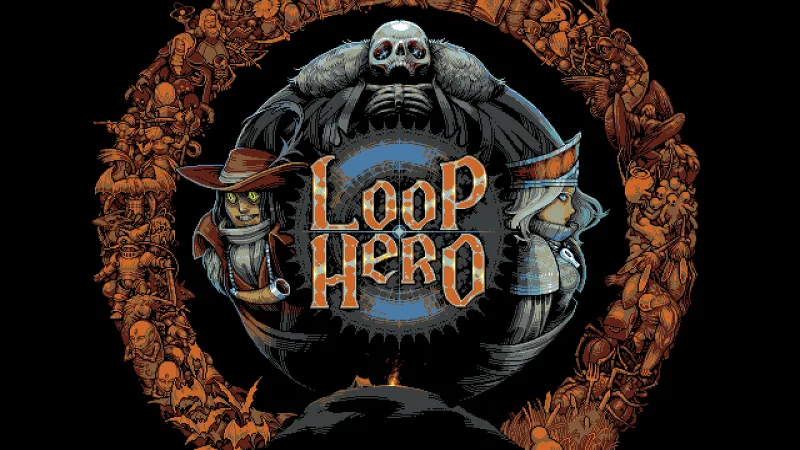
Loop Hero Review – Refreshing Reiteration

Publisher: Devolver Digital
Developer: Four Quarters
Reviewed on: PC

Ever wanted to trudge through a grim, desolate landscape while slaughtering spiders, vampires, and deadly bosses? Yep, you’ve played that game before. But what if, instead of controlling combat directly, you placed all the hazards, bonuses, and environments that your hero would encounter? As you become the worldshaper of a dark fantasy simulation, Loop Hero tasks you with creating a world that won’t kill your character but is tough enough to forge a hero. As the grand designer and dungeon master, it’s up to you to break the game in all sorts of fun and inventive ways. Loop Hero is an addictive amalgamation that captivated me completely with its initial hooks, but the experience isn’t as deep as the first few hours would indicate.

Click here to watch embedded media

As your champion tackles the loop (a never-ending path that heals up every time you complete a cycle), they pass through dangers and boons of your own design. You have no direct control over their actions in combat, from swinging a sword to summoning a skeleton. Once you’re in battle, it’s going to play out a certain way and there’s nothing you can do butch watch. Basically, just imagine that your “attack” button is taped down on your favorite turn-based RPG. However, this isn’t a game for idle minds; effective play requires a quite fastidious attention to detail, planning, and constant tweaking. The path through each loop is filled with decisions big and small, so you are continually thinking about how to improve your current run and the ones after, which feels satisfying and cerebral.

Instead of picking character actions, you engage with simulation-style dungeoncraft by setting up villages for the hero to pick up quests, crafting archer towers to help defeat high-tier monsters, and taking in the healing tranquility of peaceful meadows. Assembling a deck full of the right attractions, environments, and enemies to go with your talent choices and loot drops is the clever challenge of Loop Hero. Building the correct set of elements for your traveler to struggle through is a creative and enjoyable endeavor as you tackle different stages as a warrior, rogue, or necromancer.

Experimenting with your toolkit of tiles and seeing how they combine in interesting ways is the best part of Loop Hero. Combine rocks and mountains to make a towering peak that provides big bonuses, but also summons dangerous harpies that land on the loop.  Turn your vampires into arcane acolytes by setting them up near a bookery, creating vampire mages that drop powerful resources. Use road lights to reduce the number of deadly foes on your carefully assembled battle track. Trying out all the possible tile combinations is delightful for double-digit hours, but once you learn the best possible choices, it drains considerable joy from the exploration. While Loop Hero appears to have a great deal of depth and complexity in tile choices, it has fewer viable options to start each run than it initially appears. After my early enchantment wore off, Loop Hero left me mired in repetitive resource runs until I was ready to take on the final boss.

Click image thumbnails to view larger version


Loop Hero is a roguelite, and you unlock new tools, options, and powers and as you keep playing (and dying) via an encampment you develop outside of the loops. Think of it like building up a tabletop collection of pieces for your Dungeons & Dragons game with new monsters, environments, and treasures. The roguelite elements are quite significant, so even as you fall over and over in your looping quest, you get to keep resources to grow. If you die on a run, you only get to keep a third of the resources you were holding. But if you choose an opportune moment to escape, you get to keep it all, creating a risk/reward dilemma that’s fun to engage with on each dive into the loop. If you’re like me, you’re almost always going to risk it all and curse your judgment after getting annihilated by a boss. That’s okay – you’re still going to grow and learn but it may take a little longer to advance to the harder chapters.

Loop Hero is a creative and clever little game that should be on your radar if you enjoy strategy, RPGs, deckbuilders, roguelikes, or all of the above. While its novelty begins to wither the further you get away from your opening hours, the journey is worthwhile and engaging.

Score: 8.5

Summary: A roguelite dungeon manager simulation that keeps you coming back for more, Loop Hero makes hours fly by.

Concept: Play through roguelike time loops with different adventurers, building up a powerful assortment of options over repeated plays

Graphics: The grainy, pixelated visuals capture a CRT monitor vibe, but the aesthetic works well for the game

Sound: While the effects don’t stand out, the music is incredible and makes your many runs delightful

Playability: Loop Hero’s mysteries make experimenting and exploring satisfying, but don’t expect the game to elaborate on the mechanics and functions

Entertainment: This is a fun and intriguing genre mashup, placing the player in a management role instead of controlling the swing-to-swing minutia of combat

Replay: High
Click to Purchase

Tuesday, March 2, 2021

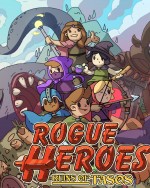
Rogue Heroes: Ruins Of Tasos Review – Simple Pleasures

Publisher: Team17
Developer: Heliocentric Studios
Rating: Everyone 10+
Reviewed on: PC
Also on: Switch

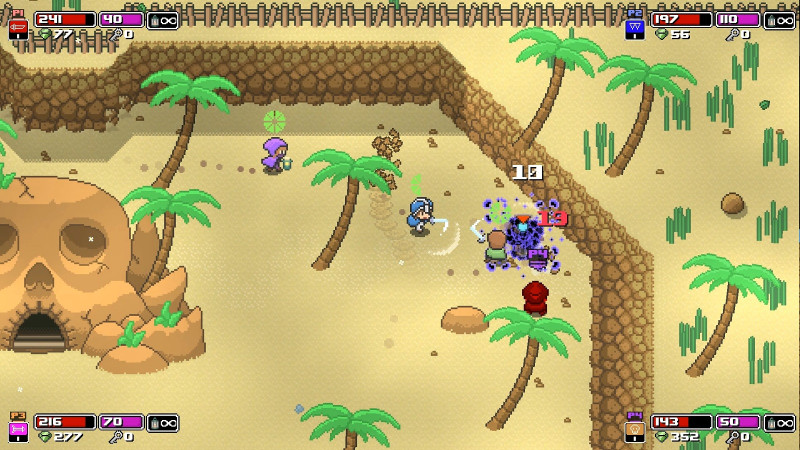
Rogue Heroes: Ruins of Tasos places the player on a fantasy journey of progression, puzzle-solving, and adventure; a jaunt that is clearly inspired by older entries in The Legend of Zelda series, like A Link to the Past. You pick up a boomerang, a magic wand, a grappling hook, and all the other dungeon-crawling essentials. You work your way through flames, swamps, and icy peaks. But you also build up a powerful character. The result is a pleasant journey that’s a snug sweater in winter weather, but there are a few frayed threads. You can take on the trek with up to three other players, which is a nice option, but ultimately a chaotic diversion from the more streamlined single-player affair.

Click here to watch embedded media

As you work your way through the quest-filled overworld and procedurally generated dungeon confines, death is sure to happen. Other roguelikes might offer small boons, but make no mistake, Rogue Heroes essentially rewards the player with experience points that can be spent after each run for substantial, permanent upgrades. As you build up your town from nothing, you create various buildings to increase your health, mana, sword perks, stamina, item powers, and more.

The upgrade system is varied enough to spread your points around across multiple facets and gives incredible power boosts over time – you never struggle to get more powerful to take on any given encounter, even if you want to “face tank” it. This is both a blessing and a curse, as your potent upgrades strip some of the weight out of the final quarter of the game. Early-game tuning seems to be right on par with what could be considered an adventure, while the later boss encounters are a bit anticlimactic in nature as you explode them with a hyper-critical, max-damage sword. That said, the big lean-in on comfort is right in line with what makes Rogue Heroes a special game.

While all the systems are quite shallow, it’s quite pleasant to build up a village from scratch, complete with friendly NPCs, fishing, and farming. It’s a soothing little pixel paradise that you can call your own, and it seems perfect for a cold winter’s day with a cup of cocoa by your side. The world, with its little baby slimes and scattered secrets, conjures up wafts of nostalgia from my old-school Zelda-playing days. If you don’t harbor those enchanted memories, that’s alright too – it’s a welcoming and warm place to be, even if it is filled with monsters and dungeons.

Click image thumbnails to view larger version


The otherwise pleasurable romp through Tasos is marred by several small but potentially significant bugs. On PC, I noticed that the audio would be occasionally marred by a thick crackling, and slowdowns and interference that necessitated a reset every hour or so to avoid the game becoming unplayable.

Multiplayer can be fun but chaotic, depending on how many adventurers you want to cram into a session. I found the sweet spot to be one other companion, where you can resurrect each other while dungeoneering and make light work of puzzle mechanisms together. Dead players can even manipulate the world by activating traps or possessing pots as ghosts while they wait to be brought back to life, which is a nice touch. While I had difficulty ever getting matched into a random game, it was easy to pair with a friend on Steam to play.

Rogue Heroes is simple yet satisfying, painting an enjoyable and low-stress adventure for one or a group of friends. Nothing about the experience is likely to blow your mind but basking in its comfy confines might be just the recipe you’re looking for.

Score: 8

Summary: A fun journey that taps into classic vibes with pixelated charm.

Concept: A cozy dive into the old-school of Legend of Zelda experiences with roguelite and citybuilding development on top

Graphics: While some of the style doesn’t always mesh well with the core aesthetic, much of it looks and feels like a warm homage to the SNES days

Sound: None of the sounds or tracks are inspiring and are mostly forgettable. I encountered some strange audio glitches from time to time

Playability: Don’t let the “roguelite” designation fool you. Rogue Heroes is incredibly approachable, since the RPG aspects allow you to overcome any obstacle

Entertainment: Rogue Heroes is the essence of pixelated comfort food and should put a smile on your face as you work your way through a low-impact adventure pulled from the past

Replay: Moderate

Click to Purchase

Monday, March 1, 2021

Maquette Review – Put On Your Shrinking Cap

Publisher: Annapurna Interactive
Developer: Graceful Decay
Rating: Everyone 10+
Reviewed on: PlayStation 5
Also on: PlayStation 4, PC

A good puzzle involves a delicate balance. The perfect brainteaser should leave players confused just long enough to feel clever once they reach a “eureka” moment, but the solution shouldn’t be so obtuse that players want to throw up their hands in frustration. Maquette fails to strike that balance. This gorgeous indie game explores the heady concept of recursive worlds while it tells a touching love story, but its puzzle design wavers too far between excitement and tedium. 

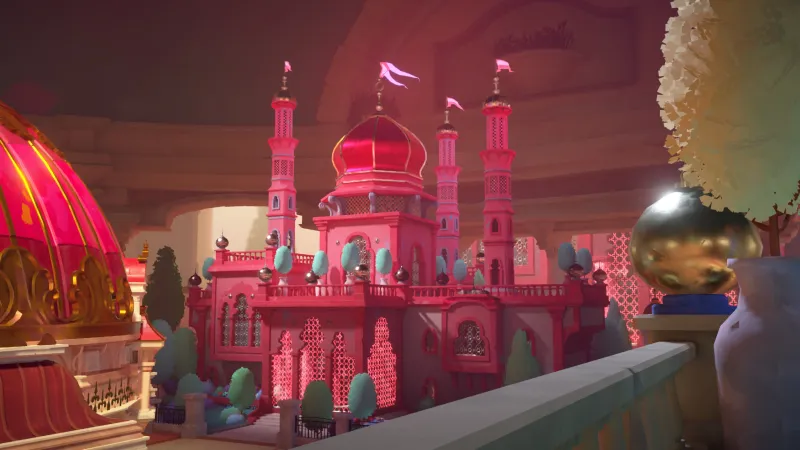
Maquette is a thoughtful meditation on worlds within worlds. Many of the early puzzles revolve around a maquette model, which resembles your environment. Whenever you manipulate objects inside the model, your actions also affect your surroundings. If you place a normal-sized key into the model, a giant-sized version will drop into view at the corresponding location in your environment. Using this mechanic, you can create ramps or bridges using everyday objects, or shrink larger items so they can slide through the cracks in a fence. I loved how Maquette challenged me to carefully explore my environment and think about how objects can be used in multiple ways. 

Click image thumbnails to view larger version


Throughout this journey, you’re treated to a somber love story about a young couple’s struggles to understand and live with each other. This story is told primarily through voiceover (you never actually see the characters), but they are well-performed, and listening to this couple’s cutesy banter regularly brought a smile to my face. Given the heady nature of the gameplay, Maquette’s narrative is surprisingly down to earth, but the characters and their struggles were so relatable that I sympathized with their plight. 

Unfortunately, the road to Maquette’s conclusion is bumpy. As much as I liked Maquette’s recursive world design, it offers a few uncomfortable player moments. Just as the model in front of you is a facsimile of your environment, your environment is also a model of the larger biomes that extend onto the horizon. Late in the game, you begin to explore those large spaces, which means you much walk across a variety of big, open areas. I loved the chilling vastness of these spaces, but solving some of these puzzles requires trial and error, which means you have to do a lot of walking. This quickly grows tedious, and I hated reaching my destination only to realize that I needed to adjust the model in the center of the world, which required a long march back. 

Click here to watch embedded media

In addition to Maquette’s tedious navigation, a handful of puzzle solutions are so obscure that I had to scour the environment many times before accidentally stumbling into an interactive element. I actually solved a couple of puzzles in ways that I don’t think the designers intended, and reaching these solutions didn't make me feel clever; it just felt like I had jury-rigged my way forward. One time I even worked myself into a corner; by the time I had calculated the puzzle's solution, it was clear that I could no longer achieve it. At that point, I was forced to reset the chapter, losing about 30 minutes of progress. 

When Maquette is firing on all cylinders, it is a beautiful journey through a series of ever-larger environments, and Maquette’s love story is poignant and a little heartbreaking. Sadly, my interactions with the puzzles were also full of heartbreak. While Maquette has some missteps, I look back fondly on my time with it. Much like a real-life romance, my affection for this game is complicated. — Ben Reeves

Score: 7.75

Summary: Explore recursive worlds within worlds. Change one thing in a model in front of you to affect the space around you.

Concept: Explore recursive worlds within worlds. Change one thing in a model in front of you to affect the space around you

Graphics: Maquette’s environments aren’t highly detailed, but the visuals are vibrant and colorful

Sound: Bryce Dallas Howard and Seth Gabel do a stellar job with the voice work, and a scattering of indie-rock ballads set a contemplative mood

Playability: The world is easy to navigate, but interactive elements are sometimes hard to spot

Entertainment: Many of Maquette’s puzzles offer a satisfying challenge, but some require abstract thinking to the point of frustration. The lengthy backtracking also gets old

Replay: Moderately Low

Click to Purchase