This is default featured slide 1 title

Go to Blogger edit html and find these sentences.Now replace these sentences with your own descriptions.This theme is Bloggerized by Lasantha Bandara - Premiumbloggertemplates.com.

This is default featured slide 2 title

Go to Blogger edit html and find these sentences.Now replace these sentences with your own descriptions.This theme is Bloggerized by Lasantha Bandara - Premiumbloggertemplates.com.

This is default featured slide 3 title

Go to Blogger edit html and find these sentences.Now replace these sentences with your own descriptions.This theme is Bloggerized by Lasantha Bandara - Premiumbloggertemplates.com.

This is default featured slide 4 title

Go to Blogger edit html and find these sentences.Now replace these sentences with your own descriptions.This theme is Bloggerized by Lasantha Bandara - Premiumbloggertemplates.com.

This is default featured slide 5 title

Go to Blogger edit html and find these sentences.Now replace these sentences with your own descriptions.This theme is Bloggerized by Lasantha Bandara - Premiumbloggertemplates.com.

Friday, May 21, 2021

Knockout City Review – Dodgeball Delight

Knockout City

Publisher: Electronic Arts
Developer: Velan Studios
Rating: Everyone 10+
Reviewed on: Xbox One
Also on: PlayStation 4, Switch, PC

Stepping onto the court for a dodgeball match used to either fill you with excitement or dread depending on where you stood in the gym-class pecking order. The same could be said of multiplayer shooters, as poorly matchmade games deliver feast or famine results based on your level of skill. Knockout City masterfully combines the best from both dodgeball and multiplayer shooters to create an experience that is frantic, fun, and welcoming to players of all skill levels.

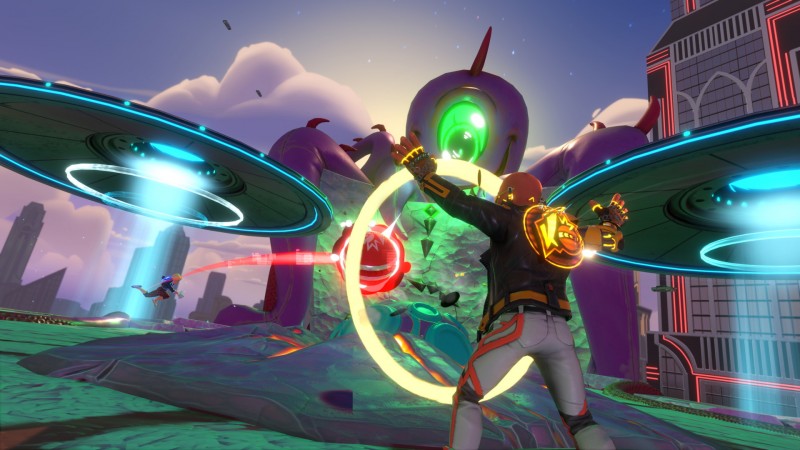
Joining a match is hardly an intimidating affair thanks to Knockout City’s streamlined gameplay. All you need to know at the start is that you find a ball on the map, then find someone to throw it at; the game automatically locks on to targets, making the action less about how elite your aim is and more about the strategy of how to approach each rubber-ball firefight. Once you have the basics down, you can learn different kinds of trick shots, ways to capitalize on the various special balls, and how to master the timing of catching incoming balls. These matches become fast-paced, so gaining a keen awareness for when you’re targeted (as indicated by a red outline on your screen) and learning how to read when balls come your way is where most improvement occurs.

As I learned to contextualize the action and strung together effective plays, the excitement ramped up. In one chaotic sequence, I was at a two-on-one disadvantage, and both opponents had a ball. As the first one fired at me, I timed my catch perfectly, which immediately gave me a pre-charged throw, allowing me to fire back at the thrower at full speed before they knew what hit them, knocking them out. Then, I dashed to avoid the second incoming throw, snagged another nearby ball, and performed a spin move to put a curve on my throw, wrapping it around a pole and hitting the second opponent from an unexpected angle. Moments like that, where you flow from one satisfying move to the next off instinct is supremely rewarding, making you feel like a dodgeball master.

Click here to watch embedded media

Despite moments like these, all modes (save for the tense one-on-one Face-Off mode) place you in two teams of three. Teams do more than just even the odds, however, as you can interact with your teammates to perform stronger attacks. Balls gain an instant charge when you pass them to a teammate, letting your friends immediately fire them off at full speed to deliver the final blow to an enemy player. Players can even turn into a ball themselves, allowing teammates to pick up and throw each other at enemies, or perform an ultimate attack which turns the held teammate into a bomb that rains an area-of-effect explosion on targeted players.

Knockout City’s five maps are entertaining playgrounds full of concentrated battlefields, naturally flowing lanes, and unique obstacles. I loved the rotating center structure of the Galaxy Burger map, while the opposing skyscrapers of Rooftop Rumble creates intriguing dynamics with the two teams. The maps are also well populated with balls, meaning you’re rarely struggling to find something to fire your opponents’ way.

Scattered through traditional matches are special balls that augment your dodgeballs so they explode, gain extra distance and speed, and move with moon-like gravity. These power-ups are rare in most modes, but they take center stage in the over-the-top Party Team K.O. where all standard balls are replaced by special balls. Those matches are exciting and unpredictable, but the chaos can be a little too much at times, and during a typical play session I would migrate back to standard Team K.O. after a few Party matches.

Every action you take counts toward a suite of goals listed in the menu. These objectives range from scoring knockouts with a particular type of throw to assisting your teammates in various ways. As you complete objectives and level up, you earn cosmetic rewards and Holobux, which can be traded in for rewards like new outfits, emotes, and gliders. Thankfully, all the upgrades are cosmetic, meaning nobody has a competitive advantage from unlocks.

Click image thumbnails to view larger version


Outside of the approachable gameplay, perhaps the biggest boon to making sure everyone can enjoy Knockout City together is the fact that the title supports crossplay and cross-progression. Without any issues, I was able to party up PC players while I played on my Xbox. I still needed to find each player’s in-game player name, but the intuitive social menu makes connecting with friends and recent players a breeze. You can also join a Crew, a unique twist on the traditional Clan system, letting you further customize your character with a logo, vehicle to enter the match, and more. You also earn additional rewards and experience when you play with your Crewmates.

Unfortunately, Knockout City lacks significant content at launch. The game contains four base modes and only five maps. Developer Velan Studios has ambitious plans for post-launch life, including new maps, modes, and playlists, but that’s all still forthcoming. The existing content is strong, but I grew weary of what was initially on offer after a few short hours.

Content concerns aside, Knockout City has a superb base to build off. With gameplay that eases you in, then encourages you to experiment with those mechanics to increase your mastery, Knockout City offers a refreshing take on both the multiplayer shooter and the classic game of dodgeball.

Score: 8.5

Summary: With a fun core, approachable gameplay, and intense rubber-ball firefights, Knockout City lets everyone get in on the enjoyable dodgeball action.

Concept: Replace the guns typically found in an arena shooter with dodgeballs to reimagine the gym-class staple

Graphics: Cartoony visuals hammer home the fast-paced and lighthearted action

Sound: A fun soundtrack complements the battles well, but the star here is the true-to-life thud the dodgeballs make on impact

Playability: Easy to pick up but tricky to master, Knockout City offers fun for players of a wide range of skill levels

Entertainment: At launch, Knockout City lacks in content, but it makes up for it with a strong base game and a ton of potential to grow in the future

Replay: Moderately High

Click to Purchase

Wednesday, May 19, 2021

Famicom Detective Club: The Missing Heir Review – A Beautiful Update To A Boilerplate Mystery

Publisher: Nintendo
Developer: MAGES
Rating: Teen
Reviewed on: Switch

The Famicom Detective Club games are a special part of Nintendo’s adventure game history. Released in the late ‘80s for the Famicom Disk System, they were influential in opening the door for visual novels on the console market, and Famicom Detective Club’s creator, Yoshio Sakamoto, went on to be a driving force behind the Metroid series. Three decades later, thanks to new remakes of both titles on Switch, audiences outside Japan can finally step into the shoes of a young detective trying to get to the bottom of a couple of deadly mysteries. The Missing Heir was the first in the two-game series, exploring an affluent family’s cursed history.  

The mystery in The Missing Heir centers on the powerful Ayashiro family, who built a corporate empire from the ground up. But the family has a few skeletons in their closet that come to light after the head of the family ­and chairwoman of its corporation, Kiku Ayashiro, releases her will. Greed, betrayal, and murder ensue. That’s where you come in. As a young hotshot detective, you must uncover the truth about this family dynasty entangled in lies and well-kept secrets. But you’re not in the best shape yourself: you have recently washed ashore with a nasty head wound and have no recollection of your past. There’s a serious tone from the onset that helps sell the stakes, and plenty of red herrings kept me guessing along the way. However, none of that distracts from the obvious: the plot is well-worn with a tired amnesia trope.

That said, considering this game came out in the late ‘80s, the adventure still holds up. With suspenseful moments and exciting twists, I stayed invested until the end, even if parts are predictable and I figured certain details out well before the credits rolled. My biggest disappointment is that the key players in the story never evolve beyond suspects or plot devices – don’t expect much character development or any meaningful dialogue exchanges to advance the plot.  The storytelling is run-of-the-mill, which could be a testament to the game’s age, but it is unfortunate nonetheless, especially in a visual novel where the narrative drives the game.


As mentioned, the Famicom Detective Club games are visual novels with some adventure elements, meaning you read a lot of text as you examine surroundings, interview the locals for information, and collect evidence to get new clues. You don’t enter the courtroom like in the Ace Attorney games, but you do investigate and make deductions based on your findings. I was a bit disappointed with the limited interactivity, and the bulk of my strategy boiled down to asking questions and presenting evidence at the right times. The occasional riddle shakes things up, but I didn’t find them very interesting to solve, as they usually require following tedious instructions. I enjoyed trying to learn more about each family member so I could piece together motives, but the slow pacing and repetitive dialogue often brought down the momentum.

For this update, Nintendo recreated the graphics, added Japanese voice acting, and updated both the music and sound effects, which helps modernize this classic visual novel. Unfortunately, this remake only goes so far in fixing antiquated elements, which is a shame because some archaic design choices hold the game back. For instance, you often must ask characters the same question three times before getting the response you want, and sometimes you have to approach questioning and evidence presentation in a specific order to progress the plot. I often resorted to trial-and-error, spamming every possible option in every potential order to get past certain sequences. This isn’t fun and breaks immersion when you just want to see the mystery unfold.

As the first entry in the Famicom Detective Club series, The Missing Heir gives you a chance to experience a key point in visual novel history. Piecing together this mystery and seeing where it leads has this undeniable appeal. However, while the new graphics offer a beautiful leap in quality, this remake doesn’t alter some of the more archaic aspects of the experience, or even attempt to make the characters or story more interesting to keep with modern times. If anything, it’s an enticing way to look back at the history of this franchise, which I’m glad to have as it satiates my curiosity about this classic series. Unfortunately, it doesn't make more of an impact than that.  

Click image thumbnails to view larger version


Score: 7.25

Summary: The Missing Heir gives you a chance to experience a key point in visual novel history.

Concept: As a detective with amnesia, you must unravel the dark history behind a wealthy family that’s being targeted for murder

Graphics: This remake’s updated visuals are straight-up gorgeous, with colorful backdrops and detailed character models that make an instant impression. Too bad the environments aren’t all that interesting to explore

Sound: The music and sound effects help sell intense moments and bring personality to situations, but they are minimal. Also worth noting is the voice acting, which is in Japanese with English subtitles

Playability: Some archaic and obtuse design choices make advancing the plot of this standard visual novel a bit of a chore

Entertainment: Famicom Detective Club: The Missing Heir lets Western audiences experience an adventure game they never could before. The story is engaging for what it is, but its pages are well-worn, and it shows

Replay: Moderate

Click to Purchase

Aerial_Knight's Never Yield Review – Running Wild

Publisher: Headup Games
Developer: Aerial_Knight
Rating: Teen
Reviewed on: Switch

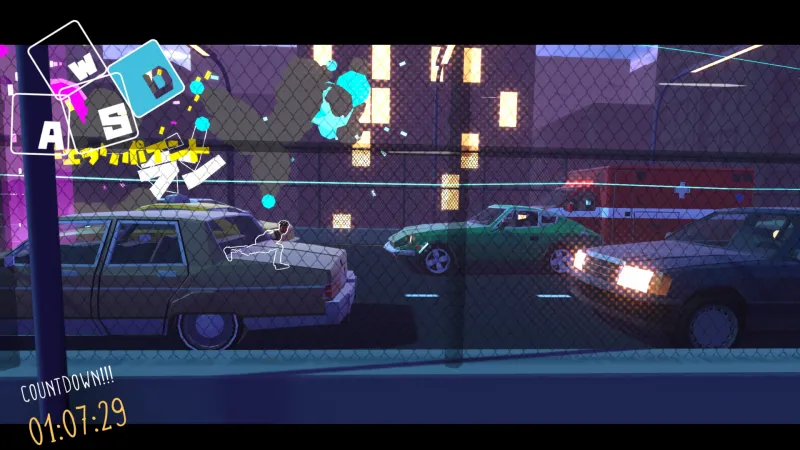
On its surface, the gameplay of Aerial_Knight's Never Yield is not all that interesting. You run from left to right, sliding, jumping, and sprinting past obstacles until you reach the end of a level a few minutes later. After a while, it gets a bit bland on the easier difficulties. However, bolstered by a fantastic soundtrack and strong-if-redundant art style, Never Yield is an engaging journey through a dystopian Detroit that, at only an hour or so, is worth taking.

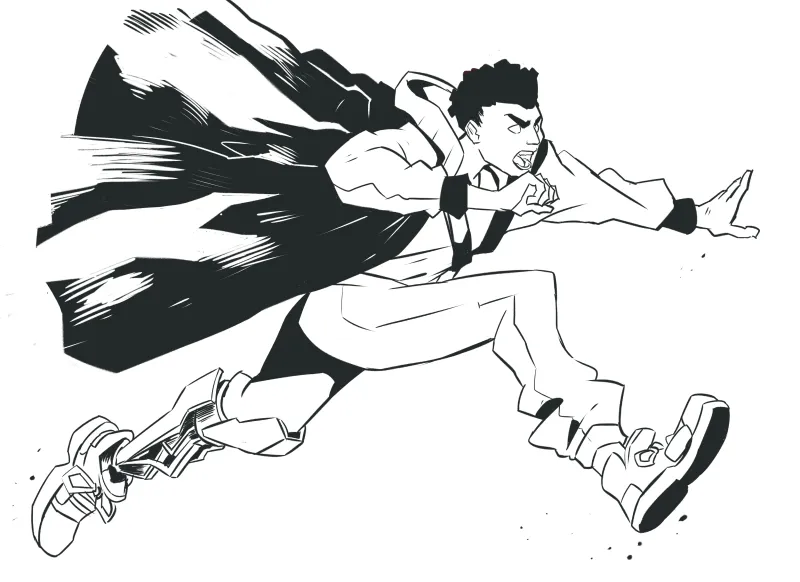
You assume the role of Wally, as he races through Detroit after retrieving his stolen property. Along the way, police, drones, traffic, and all manner of roadblocks get in his way, attempting to stop him from taking back what’s his. The story, which is told through brief cutscenes before each level, is serviceable at best and not much deeper than the set-dressing that establishes why you're running and what you're running from. But in a game that consists of only running, it is enough to get the job done.

Never Yield is an autorunner, so Wally automatically dashes forward, leaving you to focus on dodging what's in your way. You have four moves at your disposal – small jump, high jump, slide, or dash – each tied to a different directional button and colored to match on-screen prompts. For example, when Wally approaches a slide, blue highlights appear on the right side of the screen. Additionally, the hurdle itself is blue, and time slows briefly, allowing you to gauge the distance before you need to pull off your move. I really like how Never Yield telegraphs oncoming obstacles before I reach them. More often than not, missing one felt like my fault; I had the information needed, I just messed up the execution. There were only a few exceptions. For example, I struggled to nail the timing in one mid-game level where I jumped over a moving van. I had to retry this sequence more times than I wanted, which tested my patience, but these moments are few and far between.

On the Normal difficulty, there's an argument to be made that Never Yield is actually too good at warning you about oncoming threats. Throughout my first playthrough, I rarely felt challenged. By the end, the whole game started to feel bland, as the difficulty rarely ramps up from one level to the next.

Never Yield feels specifically made for its harder difficulties, where the time-slow and warnings are either diminished or removed and obstacles appear more frequently. I became much more engaged with my runs when playing on higher difficulties, and in turn, found the gameplay a lot more interesting and fun when actually challenged. I recommend bumping your difficulty up as soon as you can.

Never Yield's Detroit takes liberal inspiration from cyberpunk properties that came before – which is mainly to say it's an American city viewed through the lens of Tokyo. While amalgamating an American city with an Asian one to insinuate retro futurism is pretty derivative at this point, Never Yield does have a good style. The cel-shading makes the game look slick and the neon against the nighttime sky offers a nice contrast. Even though I can't say I was floored by the game's setting, I did enjoy it.

What did blow me away in Never Yield was its soundtrack, which without a doubt is the star of the entire game. Composed by artist Danime-Sama, the soundtrack combines jazz, hip-hop, rock, and a whole host of different genres into a completely fluid soundscape that fits the gameplay and setting in equal measure. Every time I went to a new level, I was excited to hear the next song, and never once did any of them disappoint. There's even a level where you fight against a guitarist, who's playing the solo in that level's song, creating physical music in the world you must avoid. That rules.

Never Yield is a slick package. Once I raised the game's difficulty, the fantastic soundtrack, fun world, and engaging gameplay made it an experience I've enjoyed playing through a couple different times. Especially on Switch, it’s a game worth seeking out if you can. While it may have some minor stumbles, I found it a worthwhile run.

Click here to watch embedded media


Score: 7.5

Summary: A fun run through cyberpunk Detroit

Concept: Run through a cyberpunk Detroit, jumping, dodging, and dashing past obstacles in your way

Graphics: While cyberpunk cities are overdone at this point, the cel-shaded art style lends itself to a pretty, if derivative, world

Sound: Combining jazz, hip-hop, rock, and more, Never Yield's soundtrack is the best part of the game, complimenting its graphics and gameplay excellently

Playability: A bit too easy on its Normal difficulty, once bumped up to be harder, it’s an engaging and fun experience

Entertainment: Amplified by the soundtrack, Never Yield is a fun run through Detroit, one I felt encouraged to take multiple times

Replay: Moderately High

Click to Purchase