This is default featured slide 1 title

Go to Blogger edit html and find these sentences.Now replace these sentences with your own descriptions.This theme is Bloggerized by Lasantha Bandara - Premiumbloggertemplates.com.

This is default featured slide 2 title

Go to Blogger edit html and find these sentences.Now replace these sentences with your own descriptions.This theme is Bloggerized by Lasantha Bandara - Premiumbloggertemplates.com.

This is default featured slide 3 title

Go to Blogger edit html and find these sentences.Now replace these sentences with your own descriptions.This theme is Bloggerized by Lasantha Bandara - Premiumbloggertemplates.com.

This is default featured slide 4 title

Go to Blogger edit html and find these sentences.Now replace these sentences with your own descriptions.This theme is Bloggerized by Lasantha Bandara - Premiumbloggertemplates.com.

This is default featured slide 5 title

Go to Blogger edit html and find these sentences.Now replace these sentences with your own descriptions.This theme is Bloggerized by Lasantha Bandara - Premiumbloggertemplates.com.

Tuesday, March 8, 2022

Destiny 2: The Witch Queen Review - Putting All The Pieces Together

Reviewed on: PlayStation 5
Also on: PlayStation 4, Xbox One, Stadia, PC
Publisher: Bungie
Developer: Bungie
Rating: Teen

Destiny enthusiasts had a long wait for this latest expansion, and Bungie rewarded that patience with an outstanding installment. The Witch Queen is one of the studio’s most sophisticated releases, both in terms of storytelling and gameplay systems, and that complexity is especially rewarding to longtime players. That same depth across the breadth of the expansion also means it may be difficult for newer or lapsed players to climb aboard. For those that embrace the full scope of what’s on offer, the Witch Queen has both tricks and treats aplenty.

Destiny 2’s story has been building to this conflict for some time, and I’m impressed with the way that narrative investment pays off as so many of the pieces slot into place. SavathĂ»n is a wily and intriguing villain, and it’s great fun to finally see her schemes brought to light. But The Witch Queen’s more impressive narrative accomplishment is the nuance with which it now treats its characters and plotlines. Prior implications of the universe’s simple light and dark duality get systematically overridden with twists rooted in character motivations and moral quandaries.

The campaign missions, in particular, are especially strong this time around. That excellence is thanks to some awe-inspiring environments and several cleverly designed battles, but it’s also enhanced by the new legendary playthrough option. Playing that way, the missions take longer and demand strategic loadouts and careful approaches, but with commensurately better rewards to make it worthwhile. I also am very fond of the new Light-wielding Hive enemies, and the way they shake up combat. As an approach to high-challenge enemy types, it feels more exciting than the Champion system we’ve seen in recent iterations and more rooted in the fiction as well.

Whether fighting those new Ghost-bearing Hive or more familiar enemies, I’m especially pleased with the balance work done on the legendary missions to make them challenging and interesting whether played solo or as a fireteam. The entire campaign experience is framed as a mystery story that plays out across a psychic mindscape of memory and hidden truths, and that narrative framework dovetails into the post-campaign storytelling in a satisfying way.

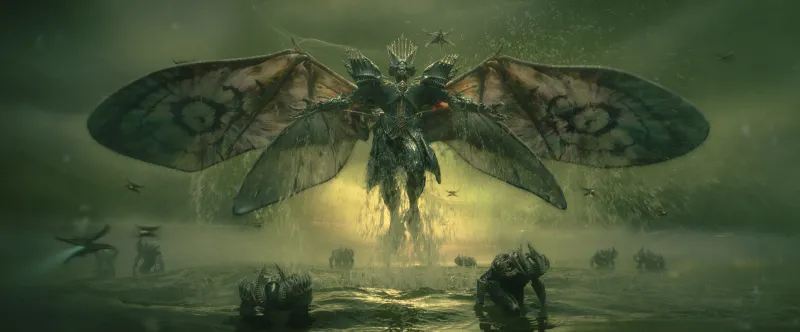
The new Throne World destination is one of the series most visually intriguing, defined by two extremes. On one side is the towering edifice of SavathĂ»n’s sprawling palace grounds – a testament to her power and moth-like beauty. That aesthetic gives way to a miasmic otherworldly swamp that feels dirty and overgrown. At both ends, there are secrets to uncover and impressive sights to see.

Click here to watch embedded media

Weapon crafting is an especially welcome new diversion, providing Guardians the chance to shape many of the newest weapons into exactly the form they want. Doing so takes a long time and encourages a mini-leveling experience for each preferred weapon on top of character progression. The options for tweaking and setting a preferred loadout are great fun, but it’s also a system that dramatically exacerbates the game’s already potent currency bloat problem. The process requires so many items that even as a longtime player, I find myself throwing up my hands and just acquiring new resources at random, hoping I will eventually garner what I need. I also have been frustrated by some of the weapons I can’t craft with the system; some of my new favorite additions to the arsenal just aren’t supported by crafting.

The centerpiece to the new weapon building options is the arrival of the glaive weapon archetype; the hybrid weapon is enormously entertaining. I’ve been getting a kick out of its ranged single-shot blasts, blocking with a shield, and then rushing in for a high-risk melee exchange. The weapon type does what a new archetype should do; feel like something new that fulfills a niche and need I didn’t know I had.

The build-crafting potential from weapon crafting is further enhanced by the rework of the Void subclasses. Now structured in the same way as the recently introduced Stasis powers, the new approach to Void is incredibly flexible and powerful. Smart perk and power applications can transform a character’s capabilities. At this point, my biggest problem is that Stasis and Void are now the only ways I want to play; the promised Arc and Solar reworks can’t come soon enough, as they now feel lackluster in comparison.

Alongside the campaign, a bevy of special weapon missions, new multiplayer assaults, and exploration quests have dropped into place, especially if you choose to buy into the season pass. In general, from the new PsiOps to the recently raid-unlocked story missions, the focus is in keeping with what we saw in last year’s content – lots of enemies, big play spaces, and plenty of opportunity for large-scale destruction. I especially enjoy the push and pull dynamic of the new Wellspring activity, as each day vacillates between attack and defend variants. Like with the currency and resources problem, my biggest issue with the newest activities is that the language has grown especially opaque. “Risen Umbral Energy is found by using Psychogenic Intel to decode the Runic Chest awarded after PsiOps Battlegrounds” is a mouthful, even for lore devotees.

At the pinnacle of all these high-level activities is a thrilling new raid. Vow of the Disciple is a deep dive into one of the mysterious pyramid ships, and it’s one of the most novel locales yet, filled with relics of arcane experiments and forgotten cultures. The reliance on visual icons and symbolism is well beyond what players have had to confront before – it’s the equivalent of learning a whole new alphabet of runes – and the encounters have a genuine sense of accomplishment as you learn the vocabulary. I appreciate the technical intricacy of the encounters but do sometimes long for a bit less local vernacular and constant callouts.

The Witch Queen is an especially robust expansion, with a particular focus on customizing the play experience and rewarding longtime players’ investment in story and systems. If it’s not the most welcoming moment for players to jump in, that may be a price the developers at Bungie are willing to pay at this point. The long-running story arc that opened in 2014 is gradually steering toward a climax, and it’s possible the developers are increasingly interested in building a ride for those who have been in the vehicle for a while now.

Click here to view embedded media

  GI Must Play

Score: 9

About Game Informer's review system

Purchase

Triangle Strategy Review – Powerful Conviction Shines Over Dark Times

Reviewed on: Switch
Publisher: Nintendo
Developer: Square Enix

Political storylines are often a reminder of the ugliness that exists in our world. Greed and corruption usually drive the ship, leading those in charge to make difficult decisions about no-win situations. Triangle Strategy represents the worst side of humanity in these instances, forcing you to question if peace is a naive dream and if we can ever get out of the cycle of war.

As a newly appointed leader, that’s up to you to decide. Thought-provoking questions about how to handle horrible situations make Triangle Strategy a gripping experience, while the entertaining strategy combat keeps you coming back to face them. Unfortunately, some stumbles along the way keep Triangle Strategy from fully capitalizing on these appealing aspects, but even so, it offers an engaging experience on and off the battlefield. 

Triangle Strategy excels at its turn-based strategy mechanics. As you play, you build up an army of different units with classes to help you fight in grid-based battles, where positioning and flanking are key. I used elevation to my advantage, as you can deal great damage and stay safe from counterattacks, and I enjoyed finding new places to get an edge, whether it was positioning myself on top of houses or cliffs. However, the best part is the different abilities your party members have and seeing the synergy in action. My favorite moment was when I pushed back an enemy off a cliff for fall damage straight into a trap I set with another character a few turns earlier. 

You also get a great variety of fighters; I had a martial arts granny and a child circus performer join my ranks. The circus performer could make a decoy to fake out the competition and absorb damage, while another character could change the weather to affect the power of my magic. Speaking of, the elemental power you have at your disposal is extremely satisfying when combined with the environment. See an enemy standing in a puddle? Use a lightning spell to electrocute and paralyze them. 

There’s also great delight in watching your team level up, learn new abilities, and roam your headquarters. Three different weapon tiers and class promotion levels exist for upgrading your characters. The former is more about unlocking stat boosts and passive abilities, while the latter improves your stats and opens cool new abilities. Due to how linear progression is, I wish there was more customization in building characters, but it’s an easy system to grasp, and I always looked forward to new abilities due to the new strategies they’d open. 

Unfortunately, battles can be a little repetitive and long-winded; don’t be surprised if you spend 30 to 45 minutes in a single encounter. Towards the end of the game, more variety in your objectives open, such as escort missions and defusing bombs, but I wouldn’t call these fun, mostly when they only prolong already-lengthy combat sequences. Also, don’t expect to get through the journey without having to level grind, especially as you get to the later stages. Battles have a limit to how many members you can bring in, and even the characters you take into every bout won’t match the recommended level for every battle stage. Thankfully, grinding isn’t too much of a pain, as there are mock battles that give great items for upgrades and allow you to gain a level or two for completing. 

Click here to view embedded media


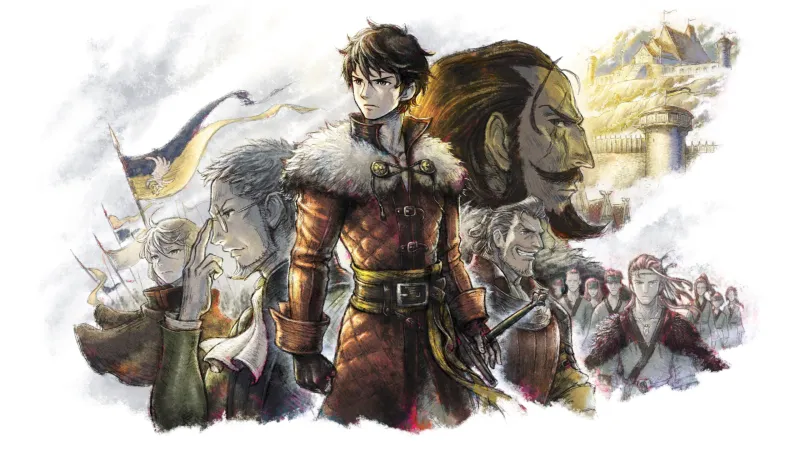
Triangle Strategy’s story centers on three nations that control vital resources, which caused great conflict in the past. For the last 30 years, the countries have worked together, sharing the resources to maintain peace. However, history tends to repeat itself, and a power-hungry leader turns everything on its head, bringing out the worst in all the nations’ leaders for some Game-of-Thrones style levels of political scheming. As a newly appointed leader named Serenoa, you must decide the foundation to lay for a new era.

The overall plot isn’t anything new, and it’s told through boring, protracted cutscenes. However, it’s the way Triangle Strategy presents decisions and deceptions that keeps things fresh. Often, you see the different nations plotting in the background their next move, just enough to get you to question if you can trust them. Then you’re usually presented with a choice that involves the suspicious party in some way. When’s the best time to confront them? Do you use them to gain allies and supplies to get stronger for now, or cut all ties for fear of their inevitable betrayal? 

You decide your strategy, which usually caters to one of three convictions: Utility, Morality, or Liberty. This will often influence who joins your army. Each conviction is also represented by a character close to Serenoa: his childhood best friend, new fiancĂ©, or loyal advisor. It adds a nice personal touch, as I was often torn between these personalities I liked versus their position on what to do next. When I chose against their preferred path, I felt the sting of letting them down, and sometimes the consequences impacted whether they’d even join me in battle. 

Every decision has layers; I could see equal advantages and disadvantages and often felt fearful over their potential repercussions. It made me weigh every choice very carefully. I even found myself surprised by some of my selections. Do you battle with an enemy to take on an even greater threat? Should a few suffer for the greater good of many? Triangle Strategy does a fantastic job at making you feel the plight of a leader, and the narrative isn’t afraid to take dark turns. Sometimes the ominous and hopeless tone made the game hard to play, but I appreciate the writers not dialing back on humanity’s darker tendencies, especially in times of war and political unrest. 

Playing Triangle Strategy’s battles is probably the easiest and most carefree part of the experience. There’s a lot of fun in strategizing and watching your characters’ abilities shine, and I loved outsmarting the competition. The hardest part of the journey is the choices alongside the bleak realities it makes you confront about injustices of the world. The game has multiple endings, letting you pick your vision for the future. Even with my ending, which was one for a much more idealized, compassionate world, I was left a little disheartened. But, maybe, that’s the point. And for that, Triangle Strategy isn’t like most games you’ll play, which is what makes it special, even if it’s not always perfect in the delivery of its harsh truths. 

Score: 8.25

About Game Informer's review system

Purchase

Wednesday, March 2, 2022

Shadow Warrior 3 Review – Humorous Repetition

Reviewed on: Xbox One
Also on: PlayStation 4, PC
Publisher: Devolver Digital
Developer: Flying Wild Hog
Rating: Mature

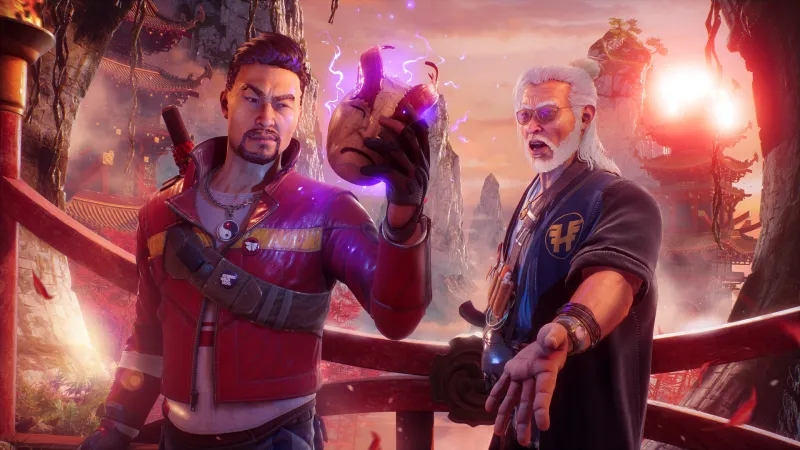
Within Shadow Warrior 3’s opening minutes, protagonist Lo Wang stands in dirtied underwear, screaming profanities at a massive dragon outside his window. This comedic introduction sets the stage for a lighthearted and breezy approach to storytelling and combat – both satisfying in over-the-top ways while coming up a little short in scope and variety.

No matter what is happening on screen, developer Flying Wild Hog almost always goes for the cheap laugh. Zany pop culture references, a near endless stream of lines like “I think I just peed a little” when barely making a jump, and jokes about human body parts are delivered like they are going out of style. Some hit in comedic ways, but most don’t, yet there’s a charm to these swings and misses that work in Shadow Warrior 3’s favor – it’s almost funnier when the humor is terrible.

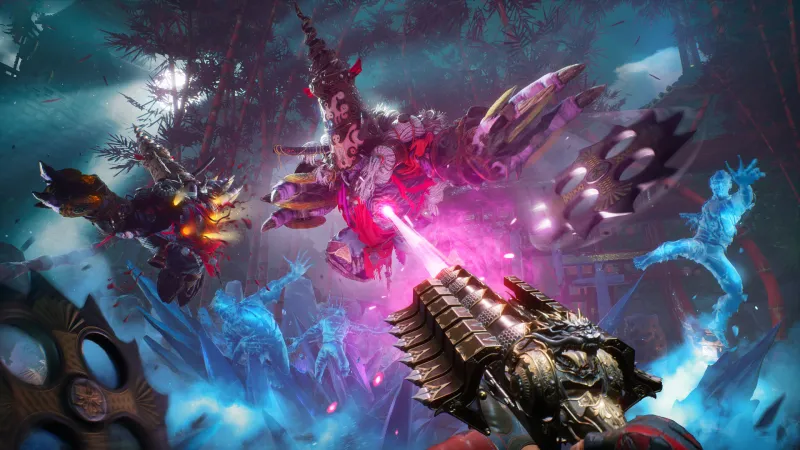
After putting some clothes on and hatching a plan to use dark magic to kill the dragon, Wang shows us he’s no slouch on the battlefield. Given his move set and overly violent approach to killing, he looks like the understudy of Doom’s Slayer – a strange and mouthy version of him who is a blast to control. He doesn’t stop moving once combat begins, lighting up demons of all sizes with a rattle of machine guns, a flurry of swords, and even using their own weapons against them. If Wang pauses for a brief second, the enemy will likely kill him quickly. Thankfully, the vertically-designed arenas work in his favor, with traversal lines and escape routes liberally littered throughout to create separation from the swarms. With a small yet balanced selection of armaments, chaining together kills can be a lot of fun, especially when adding in the nicely designed environmental maneuvers of double jumping, wall running, grappling, and dashing. Some arenas even do the fighting for you, such as spinning sawblade traps that can be activated from afar to chop up foes. All told, the combat flow feels nice and makes you feel powerful.

This run-and-gun action is not for the faint of heart, however: Demons pop like zits to the shotgun, intestines soar through the air like party streamers after sword slashes, and every explosion turns an enemy into a bloody mess. When Wang racks up enough carnage, he can direct a finishing move to one enemy. Just like Doom, the action pauses for a gory fatality, like ripping off a giant’s arm and using it as a hammer or tearing off someone’s head and squishing it to juice. The carnage is a bit much, and seeing the identical death sequences frequently grows tiring, but some moments bring about humor – more of that is desperately needed to change things up.

Click here to view embedded media


After an hour of play, Wang says, “Chopping demons to pieces is the one thing I can’t ever get tired of,” and it’s not meant to be sarcastic, but comes across that way given just how frequently the same conflicts erupt. Flying Wild Hog tries to inject variety into the battles with new enemy types in each zone, but relies too heavily on the same grunts, which pose little threat and end up stealing excitement from almost every battle.

Platforming sequences usually occur after most encounters, but rarely last more than a few seconds and don’t do much for the player, other than give you a chance to catch your breath before the next brawl. This is a shame as the motions are quite good, yet the action rarely shows how exciting they can be. The best diversions are a harrowing rooftop ascent, and a set-piece moment in which Wang chases a tanuki through a cavern – a moment lasting long enough to give the platforming meaning in a goofy way.

Click here to watch embedded media

When moving between areas, the player is encouraged to keep an eye out for hidden upgrades that can enhance Wang’s weapons and base attributes in significant ways (like headshots triggering explosions), but a good number of these items are found on the critical path or are earned as rewards for completing challenges. Sadly, the game doesn’t let you revisit past levels to collect perks you may have missed.

Shadow Warrior 3 rushes along with zaniness and gore dispensed in loads, and that combo is oddly satisfying. It feels different, doesn’t take itself too seriously, and is wildly aggressive in how much it wants to make you laugh. I appreciate this approach and had a good time with this game, despite how often it hits the same gameplay and humor notes. When most major releases these days are 100-hour juggernauts, Shadow Warrior 3’s five-hour playthrough is a nice alternative and is worth a look. Just be prepared to groan frequently and be oddly amused by those groans.

Score: 7.5

About Game Informer's review system

Purchase