This is default featured slide 1 title

Go to Blogger edit html and find these sentences.Now replace these sentences with your own descriptions.This theme is Bloggerized by Lasantha Bandara - Premiumbloggertemplates.com.

This is default featured slide 2 title

Go to Blogger edit html and find these sentences.Now replace these sentences with your own descriptions.This theme is Bloggerized by Lasantha Bandara - Premiumbloggertemplates.com.

This is default featured slide 3 title

Go to Blogger edit html and find these sentences.Now replace these sentences with your own descriptions.This theme is Bloggerized by Lasantha Bandara - Premiumbloggertemplates.com.

This is default featured slide 4 title

Go to Blogger edit html and find these sentences.Now replace these sentences with your own descriptions.This theme is Bloggerized by Lasantha Bandara - Premiumbloggertemplates.com.

This is default featured slide 5 title

Go to Blogger edit html and find these sentences.Now replace these sentences with your own descriptions.This theme is Bloggerized by Lasantha Bandara - Premiumbloggertemplates.com.

Monday, April 4, 2022

Lego Star Wars: The Skywalker Saga Review

Reviewed on: Xbox Series X/S
Also on: PlayStation 5, PlayStation 4, Xbox One, Switch, PC
Publisher: Warner Bros. Interactive
Developer: TT Games
Release: 2020
Rating: Everyone 10+

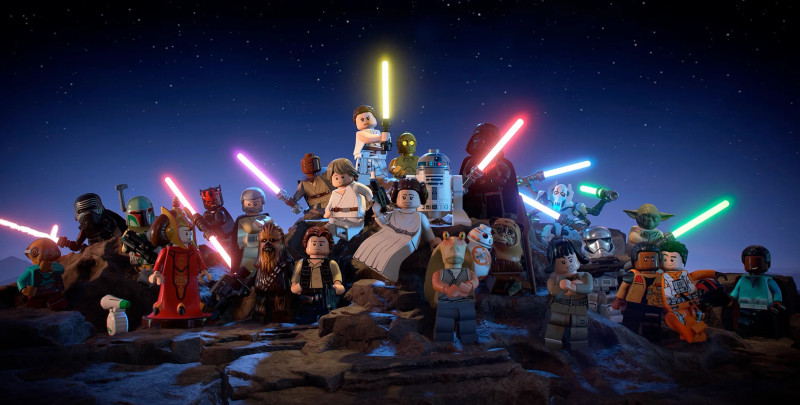
Lego Star Wars: The Skywalker Saga is a massive game, consisting of roughly 400 playable characters, nine movies to journey through, and more puns, jokes, and sight gags than even Jar Jar Binks can handle. Developer TT Games has been making Lego games for a long time, and this ambitious project shows this studio at the top of its game, delivering brick-smashing fun and wonderfully absurd Star Wars humor from start to finish. While nailing the little moments, the immense scale of the project appears to have been too wide for TT Games to harness, as some of the content is uncharacteristically dull or uneven.

The perfect example of this experience bouncing between highs and lows occurs on the planet Ahch-To, where Luke Skywalker retreats to close himself off to the Force in The Last Jedi. In this desolate location, TT Games throws in a silly porg joke wherever possible, and makes Luke Skywalker hilarious to the point that he hums his theme song as he tries to ignore Rey. We also learn Luke has set up a sizable operation to harvest green milk from this island’s space walruses. All of this content spins Star Wars' lore in delightful ways, but the journey to it is often a slog, pushing the player to do little more than run great distances from point to point. Along the way, there's little to see or do, and the few diversions that do pop up on Ahch-To lack either the creativity or complexity found within the game's proper levels. The bulk of side content, which is a big part of this experience, mostly comes up short, despite delivering fantastic rewards, like more playable characters.

Click here to watch embedded media

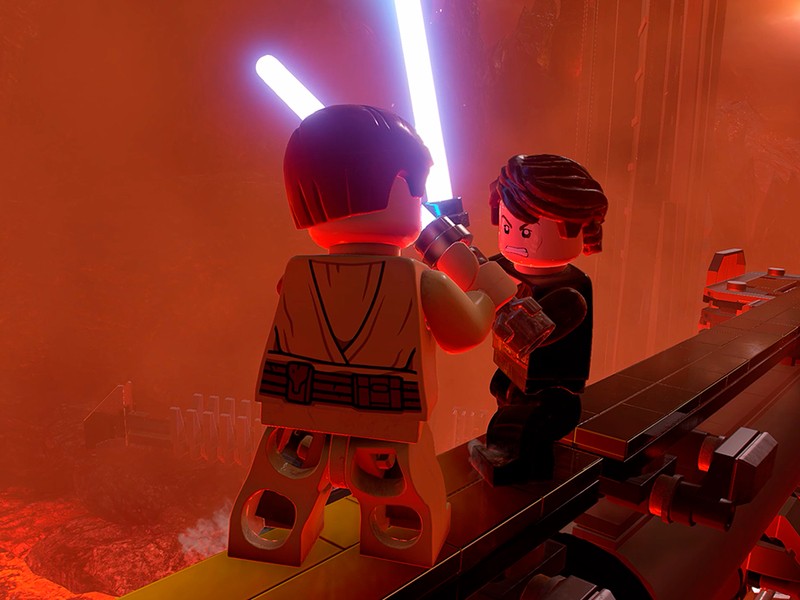
For the first time in a Lego Star Wars game, the galaxy can freely be explored when planets are unlocked by completing episodes. TT Games’ artists did a phenomenal job recreating these planets; each is teeming with life, vivid details, and plenty of fan service. Tatooine’s sprawling Mos Eisley spaceport is densely packed with aliens and vehicles and feels distinctly different than a desolate location like Hoth. All of these locations blend realistic backdrops with clever brick creations that players can interact with. The atmospherics and lighting found in many of these places are particularly impressive. The haze that accompanies Leia’s meeting with R2-D2 on the Tantive IV looks fantastic, and smaller details like a lightsaber’s vibrant glow reflecting off surfaces – including the plastic head of the character wielding it – is another nice touch.

The Skywalker Saga is at its best within the condensed, story-focused levels, which hark back to this series’ earlier designs. Hunting for minikits and kyber blocks is fun, often pushing the player (or couch co-op duo) to solve puzzles or break objects to reveal new paths. These stages are worth replaying when more character classes (such as the Sith) are unlocked. Some minigames are overused, such as R2’s terminal hacking, but the moment-to-moment gameplay flow in these levels is smooth and delivers fewer roadblocks than in other Lego Star Wars titles. On the note of R2's hacking, you can earn an upgrade later that allows you to pay to bypass them.

Strong focus is applied to combat, featuring all-new lightsaber techniques and cover-based shooting – both disciplines get the job done in enjoyable ways. Neither offers much depth, but their simplicity works for the conflicts, allowing stormtrooper platoons to fall quickly. Carefully placed headshots knock their helmets off, and yes, you can wear them! Jedi can also through their sabers and use the Force to hurl objects at enemies. These mechanics get stretched out in boss battles and push the player to sew in evasive maneuvers to dodge attacks like Darth Maul’s rage-filled charge. Even unlikely characters like BB-8 or C-3PO are capable of combat and are fun to control.

Some stages offer vehicular play to bring Star Wars’ intense space battles to life. I had a blast piloting an X-Wing in the Death Star’s trench and the Millennium Falcon in an asteroid field. Most of these conflicts lack difficulty, yet deliver plenty of excitement when chaotic storms of TIE fighters encircle your vessel. Along with the characters, there are plenty of ships to unlock.
The best part of The Skywalker Saga is the pursuit of unlocking all the characters. Given how big the adventure is, this is a dizzying proposition, but thankfully, you won’t feel like you are digging for a needle in a haystack when looking for a specific character you want. You can exchange well-earned studs for clues that lead to character locations and unlocking requirements. Studs can also be spent to enhance skills and unlock new abilities for the different character classes. I like the newfound depth that TT Games has applied to the tried-and-true Lego formula.

Despite being periodically uneventful, the Skywalker Saga is a thorough and fun examination of all three Star Wars movie trilogies. It delivers the same sensation of being overwhelmed as opening a Blu-Ray collection of films and not knowing which one you should start with. The player can bounce between trilogies and veer off a story path at any time to explore the galaxy far, far away. Some discoveries may be as dull as sand, but others may deliver something great, like Babu Frik as a playable character or seeing what Kylo Ren's bedroom looks like.

Score: 8

About Game Informer's review system

Purchase

Friday, April 1, 2022

Rune Factory 5 Review – Enduring Rough Edges For Great Reward

Reviewed on: Switch
Publisher: XSEED Games
Rating: Teen

Some games, like The Sims and Animal Crossing, draw you in with their comfortable routine, easing you into the mechanics and letting you make the experience your own. The Rune Factory series exemplifies this gameplay style, blending farming, socializing, and dungeon crawling.

As someone who has played the franchise since the Story of Seasons spin-off’s first entry 15 years ago, I’ve always loved how the action/RPG captures a sense of discovery. Whether it’s unearthing a new locale that provides fresh items and monsters to raise or learning more about the eccentric people of the town, there is a satisfying sense of progression in the nigh-endless options for how to spend days. Rune Factory 5 succeeds in this regard, and in many ways, it is one of the better entries in the series. Unfortunately, some technical issues, like horrible framerate, alongside poorly designed combat and upgrade systems, dilute the experience. 

Rune Factory 5 continues the tradition of an amnesiac plotline to drive the narrative. You mysteriously end up in the town of Rigbarth, with no recollection of how you got there. All you know is something’s amiss as monsters are invading the land. To search for answers, you take a job as a ranger. This allows you to take on requests from townspeople and go on investigations to suspicious places in hopes of finding your next clue to the greater mysteries at play. Of course, to make an income to live on, you’ll need to farm along the way. 

The plot does its job of getting you in the world and providing twists to keep you exploring, but it’s the townspeople that make the experience. The cast is one of the series’ strongest, with likable and interesting characters aplenty. They’re not as over-the-top as some past entries, but I was engaged by their personal struggles, like Lucy missing her father, in addition to more comical situations, like Ryker always wanting to nap. Having character-focused quests provides additional layers to their everyday personalities. 

As an action/RPG and relationship/farming sim, Rune Factory offers a nice variety of ways to spend your time. Focusing on the townspeople can open side adventures and eventually lead you to love. Catering to farming ups your profits quickly, allowing you to upgrade everything from your house size to even the stock available from stores in town. Entering dungeons and besting their bosses often advances the plot, but you can also level up, learn new weapon combos, pick up items for crafting, and tame some monsters to work on your farm or battle with you. The game has an engaging loop, and I never felt like my days were empty, but it dawned on me quickly that many of these systems are just average or subpar in their design.

For starters, the combat, while improved from previous entries, is clunky, and the awkward multi-button combination abilities don’t help. You tap R to dash, but holding it down brings up your magic. The small difference in input is the recipe for disaster you’d expect; my magic menu came up when I was trying to dodge more times than I’d like to admit. That being said, I liked the number of different weapons available and how they all feel unique, from melee-focused boxing gloves to heavy long swords that pack a punch. Using various weapons changed my approach to combat. For instance, with speedy, less-stamina-depleting dual blades, I could afford to spam attacks and combos, while heavier weapons made me stand back and wait for openings to wail on enemies. 

Unfortunately, Rune Factory 5 doesn’t encourage much experimentation with its different weapons. Players have to level up each weapon’s proficiency to learn combos and new attacks. Starting back at square one didn’t seem worth the effort for me, and had I not been trying to get a panoramic view of the game for the purposes of this review, I would have stuck with only one or two weapons the whole game.

Click here to view embedded media


I enjoyed seeing the bosses’ cool designs (one personal favorite is a colorful octopus), but fighting them is very humdrum. Bosses are about watching enemy patterns, but I never felt challenged, especially once I brought tamed monsters into the fight. You can also bring villagers you befriend to battle alongside you. They provide powerful team-up attacks with your character, but they all start low-leveled and must earn fighting experience before becoming useful. All my villager combatants died too quickly for my liking, and I didn’t find the grind worth it, so I often left them behind in favor of monsters I tamed. 

That’s the thing about Rune Factory 5; everything is fueled by gaining levels. On the one hand, this can be satisfying; on the other hand, it can require tedious grinding. It’s not just about your combat level; your cooking, forging, crafting, and chemistry levels also center on this progression system, where trying new recipes creates better items, weapons, and armor.

The only way to unlock recipes is to blindly experiment, buy recipe bread (available in limited quantities every day), hope an NPC reveals one in random conversation, or receive bread as a quest or festival reward. Once you reach higher levels, seeing what you can create becomes really fun. I made a plush monkey shield, and could cook everything from a chocolate sponge cake to star-shaped hashbrowns. Though, upgrading weapons, armor, or farm tools was too much trial-and-error for my liking.

Since you can craft, harvest, forge, cook, and mix potions, you pick up numerous items on any given day. Unfortunately, inventory management is a mess, making this quite the pain. Your backpack can only carry a certain number of items, and I constantly ran out of space. I lost so much time moving items to storage, which I also had to expand constantly. To add insult to injury, the game doesn’t automatically group items together when you move them to storage, forcing you to find ones to pair together to save space. 

Even though I got annoyed with my inventory space, it never dulled my love for the exploration and joy of finding new things. From searching bandit hideouts, crystal caverns, lava caves, and more, every new area is an opportunity – whether it’s locating rare items and ores for crafting, finding powerful monsters to tame, or acquiring a new fruit that can be used in a cooking recipe. Every trip you take feels rewarding - even if it’s simply to walk around town to discover something new about a villager.

Festivals and special events help split up the calendar, and I liked their interactivity, making me complete mini-tasks like dodging beans and creating my own monster team for a tournament. Sadly, the events are brief, and the rest of the day is lost because villagers just continue to stand around the festival grounds. Having more to them than one main, short event would go a long way toward making these celebrations feel worthwhile and impactful.

Rune Factory 5 is rough around the edges, but I still loved my time with it. Something about how all the parts work together keeps pulling me to it. Even after completing the main story, I’m still playing, as I have recipes I haven’t unlocked, a romantic journey I’m embarking on, and many upgrades I can still do to the town. It has its flaws, but Rune Factory 5’s enchanting loop of constant progression and discovery helps mitigate a lot of these annoyances, so they don’t sting so much. 

Score: 7.5

About Game Informer's review system

Purchase

Thursday, March 31, 2022

Weird West Review – A Fantastical Frontier

weird west review

Reviewed on: PC
Also on: PlayStation 5, Xbox Series X/S, PlayStation 4, Xbox One
Publisher: Devolver Digital
Developer: WolfEye Studios
Rating: Mature

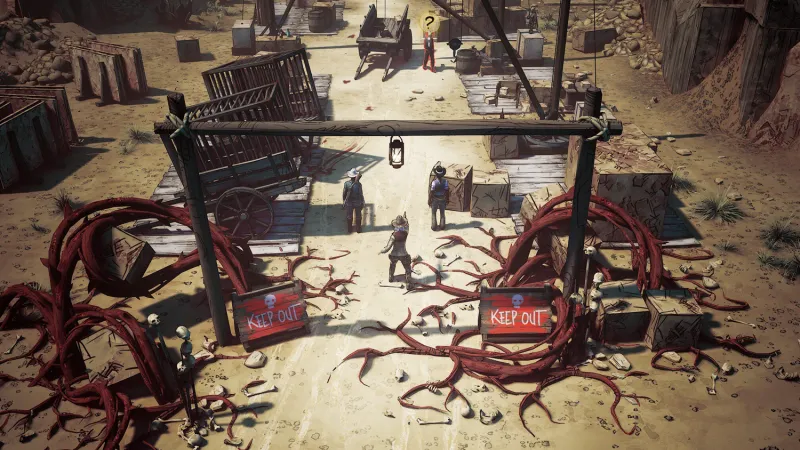
Weird West is a spellbinding, isometric portrayal of the Wild West. From the minds behind Dishonored and Prey, this compelling immersive sim is unlike any western tale you’ve experienced. Its macabre frontier isn’t just a land of cowboys and cattle but one brimming with old magic and hideous monstrosities like werewolves, flesh-eating sirens, gold-hungry zombies, and bewitched trees capable of trapping the souls of men. 

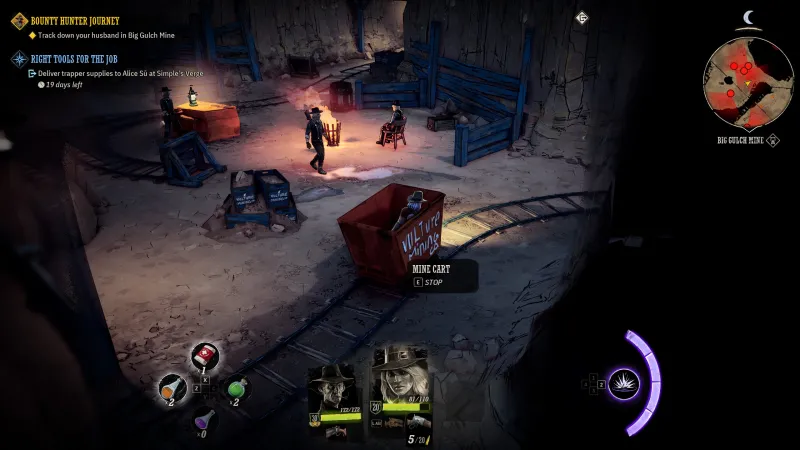
The game’s main narrative is a five-chapter anthology following the lives of five “heroes” – a bounty hunter, a man-turned-pig, a tribal protector, a werewolf, and a zealot – whose journeys are unknowingly connected. You play as the Passenger, a faceless entity who possesses a new protagonist in every chapter for mysterious reasons. The story begins by following a rancher who’s given up her old life as a bounty hunter but must dig up her irons to rescue her kidnapped family member. What starts as a safe, conventional cowboy revenge story unravels into a tale of unbelievable outcomes. You’ll help a poet lift a curse in one moment, causing him to only speak in rhymes. In another, you’ll contemplate turning in a sheriff after discovering they’ve converted the jail into a meat market and are feeding on imprisoned criminals’ corpses. After a slow start, Weird West quickly ups the ante in thrilling and absurd ways, and just when you’ve figured things out, something unexpectedly changes. It’s so fun seeing how each chapter spirals into another with every new revelation. 

Click here to watch embedded media

While the mythology of Weird West is enchanting, its sandbox gameplay brings the world to life. You can solve most problems via stealth as long as you stay out of sight and adequately hide bodies, though there’s a bevy of guns, bows, and melee weapons enticing you to engage in the game’s raucous twin-stick-style shoot-outs. Blast foes into bits with the shotgun’s screen-shaking burst, fan the revolver’s hammer to unleash a rain of bullets, or quietly eliminate opponents with Sentry Silencer. This unlockable rifle ability silences your next shot and doubles damage to unaware enemies. 

Each of the five protagonists wields unique spells in addition to perks like increased health or movement speed they share with the other characters. The Pigman can deflect bullets with his rubbery skin, soak the surrounding ground in poison, or charge enemies headfirst to deal devastating damage. At the same time, the Protector is capable of summoning spirit bears or tornadoes that can be imbued with elemental properties. Combat requires a level of precision best suited for mouse and keyboard, but if your only option is to play Weird West with a controller, I’d recommend using the game’s Tactical Mode, which slows time down to let you better plan out your movements. 

weird west review

You could aim at the apparent red-hued TNT barrel for a loud explosion or blast away at a box of ammunition, sending a barrage of bullets in every direction. However, I don’t recommend the latter method if you’re low on ammo. Many enemies have weaknesses like fire or poison, but sometimes you’ll find yourself low on supplies. Instead of using a dynamite stick or molotov cocktail to cause a fire, equip the bow and arrow next to a nearby flame to create a fire arrow. Make sure you don’t accidentally blow yourself up, as I did several times. If you set yourself on fire, quickly find a water source – a pond, bathtub, or even a water pump – before burning to death. These physics-based interactions make me enjoy solving the game’s challenges, though it’s frustrating when awkward camera angles hinder my best-laid plans.

The overworld of Weird West is large and populated with dozens – nearly hundreds – of diamond-shaped nodes representing the many homesteads, towns, and stretches of wilderness you can travel between. The map’s abundance of locations is sometimes overwhelming, with new areas cropping up on almost every trek, though I am often rewarded with new loot when I stop. In addition to serving as trade hubs and places of rest, towns are often places you can hire mercenaries to join your posse as party members. While some hired hands will help your cause free of charge – revenge often serves as a better currency than coins – many will require a hefty upfront fee before lending their trigger finger. 

Click here to view embedded media


How will you earn money, though? You could break into the bank and rob its coffers if you have enough dynamite or lockpicks. Though choices often come with consequences (even outside of story moments), it’s better to return at night when the bank’s closed if you want to avoid a shoot-out or a criminal reputation. With a rope in your inventory, scale the bank’s rooftop and quietly enter through the chimney chute. Regardless of approach, Weird West entertains a bevy of playstyles, often encouraging me to look at situations through a different lens. 

Whether in notable moments or otherwise forgettable encounters, Weird West remembers everything you do. Side characters you betray will show up much later, sometimes during pivotal moments, to enact swift vengeance. On the flip side, new friends – like the lady whose land deed I retrieved – might show up in your time of desperation if you assisted them earlier in your journey. These consequences add significance to even the smallest choices, and you never know how the world might react to a decision. If you eradicate all of the people in a town – yeah, I’m looking at all of you sickos who did this while playing Skyrim in high school – the space will become abandoned. After enough time passes, it will become a literal ghost town, as ghoulish monsters attracted by the smell of rotting corpses take up residence and permanently transform the establishment into a hellish domain.  

Click here to view embedded media


Weird West’s best assets are its well-developed characters and deep gameplay systems, but its overall production value is underwhelming. The game’s cell-shading looks good enough on higher settings and large screens, but the composition quickly becomes muddy on less-powerful machines like my Steam Deck. Additionally, a minor bug prevented me from saving my game occasionally, leading to several frustrating deaths. 

Regardless, developer Wolfeye Studios has crafted one hell of a debut release. Weird West subverts expectations, twisting well-trodden cowboy tropes into dark fantasy vignettes brought to life by immersive sandbox elements. 

GI Must Play

Score: 8.5

About Game Informer's review system

Purchase