This is default featured slide 1 title

Go to Blogger edit html and find these sentences.Now replace these sentences with your own descriptions.This theme is Bloggerized by Lasantha Bandara - Premiumbloggertemplates.com.

This is default featured slide 2 title

Go to Blogger edit html and find these sentences.Now replace these sentences with your own descriptions.This theme is Bloggerized by Lasantha Bandara - Premiumbloggertemplates.com.

This is default featured slide 3 title

Go to Blogger edit html and find these sentences.Now replace these sentences with your own descriptions.This theme is Bloggerized by Lasantha Bandara - Premiumbloggertemplates.com.

This is default featured slide 4 title

Go to Blogger edit html and find these sentences.Now replace these sentences with your own descriptions.This theme is Bloggerized by Lasantha Bandara - Premiumbloggertemplates.com.

This is default featured slide 5 title

Go to Blogger edit html and find these sentences.Now replace these sentences with your own descriptions.This theme is Bloggerized by Lasantha Bandara - Premiumbloggertemplates.com.

Monday, July 18, 2022

As Dusk Falls Review - No Punches Pulled

Reviewed on: Xbox Series X/S
Platform: Xbox Series X/S, Xbox One, PC
Publisher: Xbox Game Studios
Developer: Interior/Night
Rating: Mature

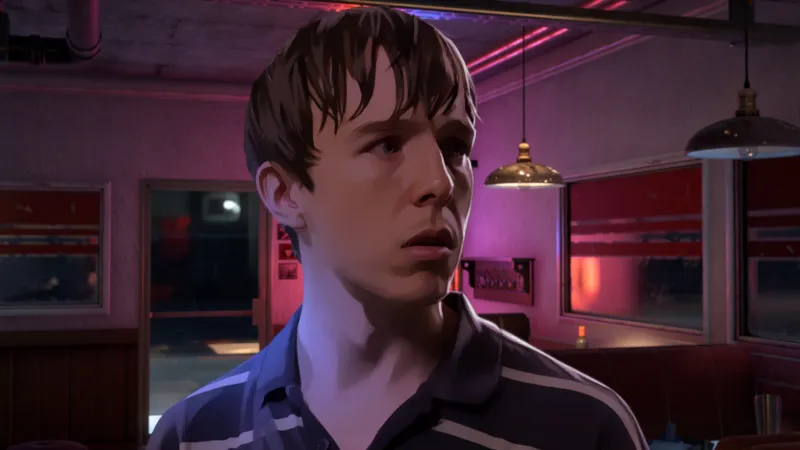
Decisions have unforeseen consequences. If one were to look for the thematic idea that links the story of As Dusk Falls with its gameplay structure, it’s hard to avoid that statement as a driving message. Life is filled with decisions big and small that shape the future, and we don’t always know how an errant word or turn down a different road might eventually conclude. Interior/Night’s emotionally rich and risky debut game isn’t interested in giving you the choice of how the character’s lives turn out; like in real life, that’s impossible to predict. Instead, the studio has crafted an intricate series of character portraits, linked them together by shared trauma, and asked the players to decide how to proceed. The nuanced narrative that unfolds is rewarding, often painful, and frequently gripping.

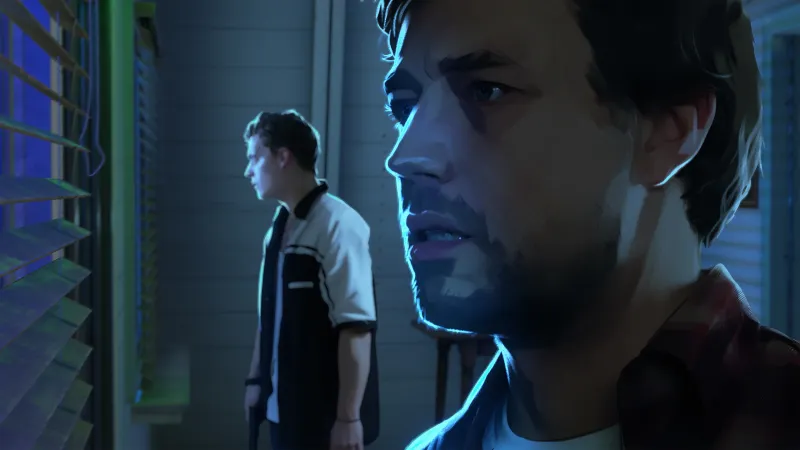
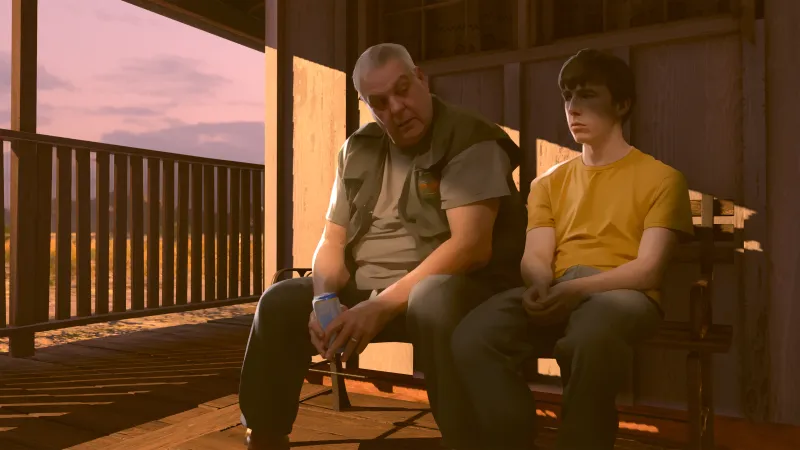
As Dusk Falls is a crime tale primarily focused on two families linked together by a burglary gone wrong and the subsequent hostage situation that follows, along with its involved and lengthy aftermath. Two sympathetic point-of-view characters lead the charge – a down-on-his-luck middle-aged father and a conflicted young man torn by his family bonds – but the broader cast of characters is universally believable and memorable.

Dramatic scenes play out in smaller intimate moments and larger high-energy action scenes, like car chases or police raids. In both cases, conversations come across as natural, thoughtfully written and acted, and emotionally fraught. Sometimes, situations are heavy-handed in tone, but even those moments feel in keeping with the type of TV stories that were probable inspirations, like Breaking Bad, Justified, or Fargo.

While it takes a bit to get used to, the unique art style does a lot to emphasize key moments and keep the many pauses for decision-making from feeling jarring. Live-action actors played out the scenes, after which paused motion art was overlaid on top. The continuous flow of dialogue juxtaposed with the lightly animated frames of visuals lend some of the best traits of both film and comics.

Through a combination of controller usage, mobile apps, and even Twitch chat while broadcasting, As Dusk Falls features a robust approach to multiplayer. The majority rules as choices play out, leading to an intriguing set of often unexpected outcomes and likely many conversations that start something like: “I can’t believe you selected…”

While multiplayer is handled well, it’s undeniably odd subject matter for a shared experience and certainly not played for laughs. The story is unflinching in its approach to content. It includes weighty issues like marriages in trouble, child endangerment, post-traumatic stress and depression, and even suicide – though the last of those is given a content warning ahead of time with the option to skip. If you choose to play with friends, expect a captivating narrative, but not a lighthearted one. With that said, thanks to the ability to play on a phone and the grounded subject matter, As Dusk Falls is an excellent game to share with the non-gamers in your life, illustrating the potential for interactive drama.

I also appreciate the system that plays out in the background to contextualize and navigate the story. A branching tree of narrative choices is visible at any point, and an intelligent approach to game saves and exploration of decisions lets you see the path not taken if desired. When a key character dies, you’re likely to be tempted to go back and take a different way – even if that might go contrary to the message the game is trying to relay. I also love how your choices and approach to play are tracked and fed back to you upon chapter completion, providing critical insights into both the characters as you’ve shaped them, and perhaps even your inclinations.

As Dusk Falls hides many secrets down the winding paths of its story web, and by its nature, you won’t get the full picture in any single playthrough, encouraging replayability. But you may also be tempted to play through one take on the story and then step away, content that you’ve seen “your” version play out. Either way, this is a weighty and gratifying excursion into interactive drama, confident enough in its writing to not rely on superpowers or fantasy. For players interested in the progress of interactive narrative frameworks, it’s a laudable success. But even for someone who never plays games, it works. That’s because good characters and storytelling make for a universal experience, and this is a project that has both.
  GI Must Play

Score: 8.75

About Game Informer's review system

Purchase

Stray Review - Furry Friends

Reviewed on: PC
Platform: PlayStation 5, PlayStation 4, PC
Publisher: Annapurna Interactive
Developer: BlueTwelve

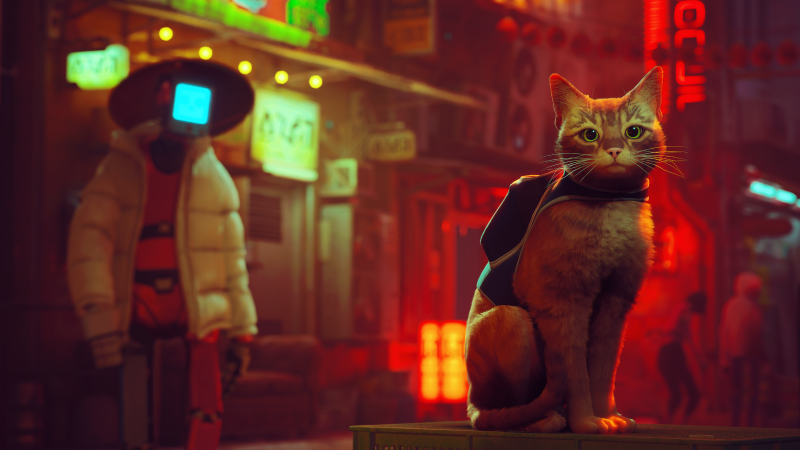
Stray is a game about being a cat. You see, explore, and mess with the world in the ways only they can. Because you're doing so in one of the more densely-packed video game worlds in recent memory, there's plenty of room for kitty antics. Luckily, Stray wastes no moment letting you fulfill any feline aspirations you may have. 

After being separated from their furry friends, the unnamed cat (we'll call "Stray") finds itself deep in an underground city walled off from the outside by a giant dome. Befriending a small drone named B12, Stray sets out to open the city, the wish of many of its android citizens, who have heard rumors but never once seen the sun, clouds, and the like. 

Stray makes excellent use of the fact you play as a cat. Because you're such a small, agile creature, you must rethink platforming. A tiny inaccessible ledge in another video game becomes a critical path. A gate might stand in front of your objective, but because you're so tiny, you just slip through its grates. The animation throughout is fantastic, feeling believable to the minute movements cats make – so much so that my dog growled at my computer when I first started playing. Stray constantly finds new opportunities to play with its character – in both significant and minor ways, like pushing things off tables and scratching at doors – and I had a lot of fun discovering these unique interactions while exploring the world. 


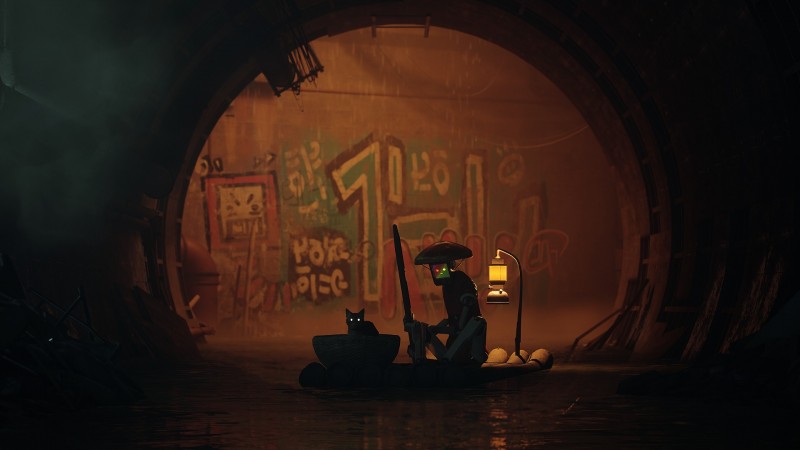
Inspired by Hong Kong's now-demolished real-life Kowloon Walled City – notable for its strikingly dense architecture and population – Stray's world is artistically fantastic. The underground city is constantly impressive and a joy to explore, from underground sewers to cluttered cityscapes full of neon, from highly-detailed apartments to lonely rooftops. Because it's so densely packed, levels often feel like mazes, and I loved learning my way around their labyrinthian streets.

You spend Stray's four-hour runtime exploring the various districts, meeting citizens, and performing tasks. Stray is apparently the most brilliant cat to ever live, able to solve logic puzzles, understand language, and run hyper-specific errands, and I loved this loop. I was excited every time I entered a new district, knowing a new set of puzzles and conversations awaited me. I enjoyed the occasional dips into combat, stealth, and evasion far less as they never did much interesting with the cat. You more or less just run or hide in a corner or shine a light at enemies until they blow up and call it a day. Luckily these were few and far between, but any time they did pop up, it was monotonous.  

While its story is simple, never going beyond surface explorations of the relationships between humans and cities, it's affecting. As I met more citizens, each wrestling with what it means to be alive despite being robots (think Nier: Automata, which the game references), I became invested in the overall world. I also enjoyed the funny and touching relationship between B12 and Stray, who form a solid partnership where the drone helps the cat navigate and understand the world around it. 

Stray is, more than anything, a charming game. Its gimmick – you are a cat, do cat things – never gets old; I constantly found it clever for the few hours it took to complete. But more than gimmicks, exploring a world this dense and detailed is a joy, amplified by the unique gameplay being a cat offers. It's a solid, brief ride through a strange world and one well worth taking.

Score: 8

About Game Informer's review system

Purchase

Thursday, July 14, 2022

Madison Review – Snapshots Of Potential

Reviewed on: PlayStation 5
Platform: PlayStation 5, Xbox Series X/S, PlayStation 4, Switch, PC
Publisher: Bloodius Games
Developer: Bloodius Games
Rating: Mature

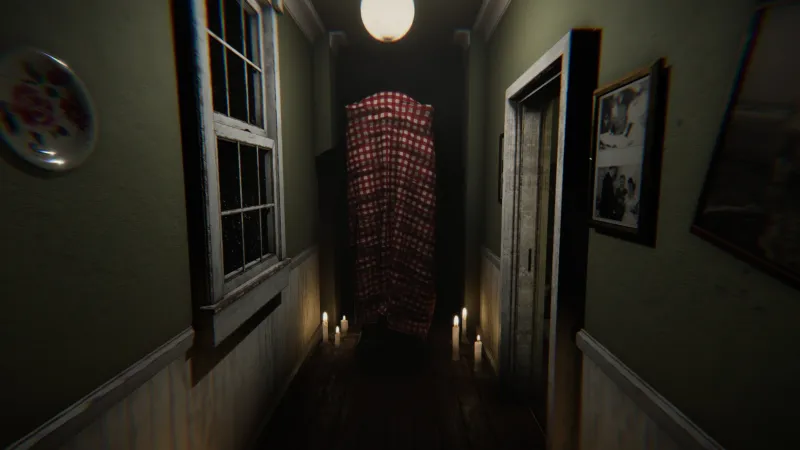
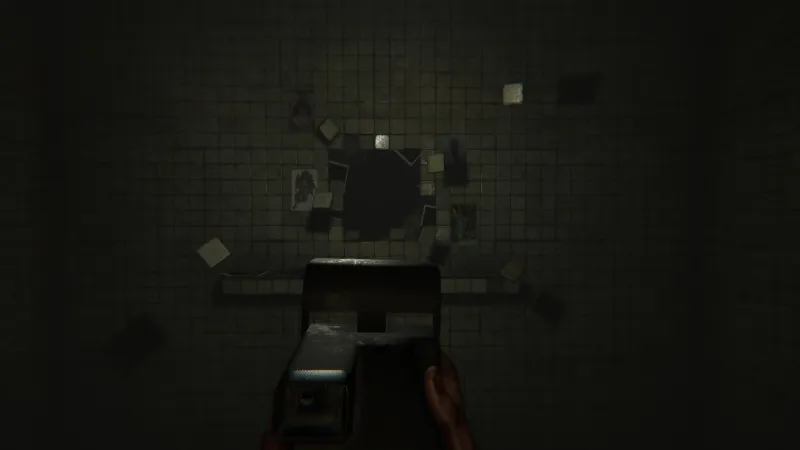
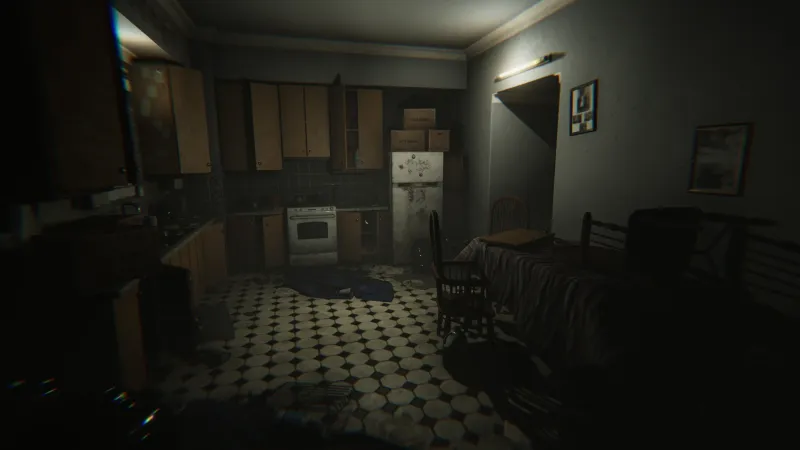
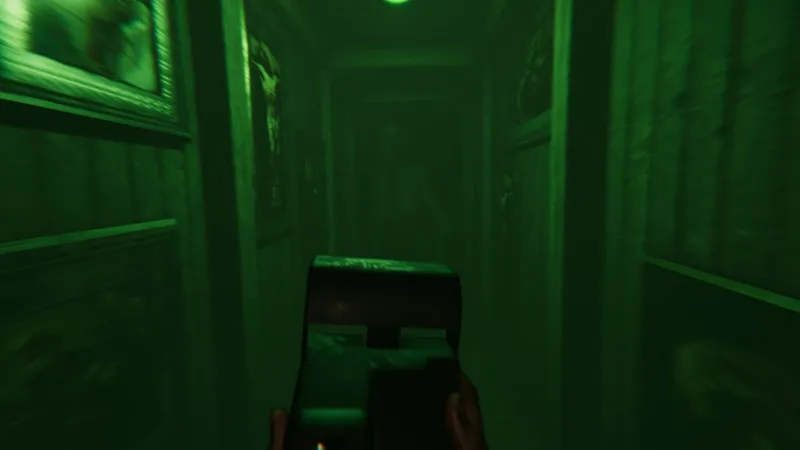
What do a murderous witch, a grandmother’s mysterious death, and demonic possession have in common? An old Polaroid-style camera. Discovering how means braving Madison, an indie horror title that fits within the post-P.T. first-person haunted house mold. Players explore an impressively rendered home solving puzzles and avoiding apparitions armed with a camera that’s more than meets the eye. Despite having a strong premise, presentation, and core mechanic, the experience gets bogged down by flawed puzzle design and repetitive scares.

As Luca, a demon has manipulated you into completing a dark ritual within your haunted family home. Along the way, you’ll learn of Madison Hale, a practitioner of witchcraft who committed a series of grisly ritualistic murders before being killed herself. While she sits at the center of your plight, the story also weaves in your family’s history with the demonic in ways that sometimes feel disconnected to the main plot, making it unclear how, say, a supernatural trip to a 1950s church directly relates to present events. Luca’s panicked, eye-rolling ramblings also became a distraction, so I’m thankful a Silent Mode let me turn him into a muted, subtitled protagonist to raise the creepy factor.

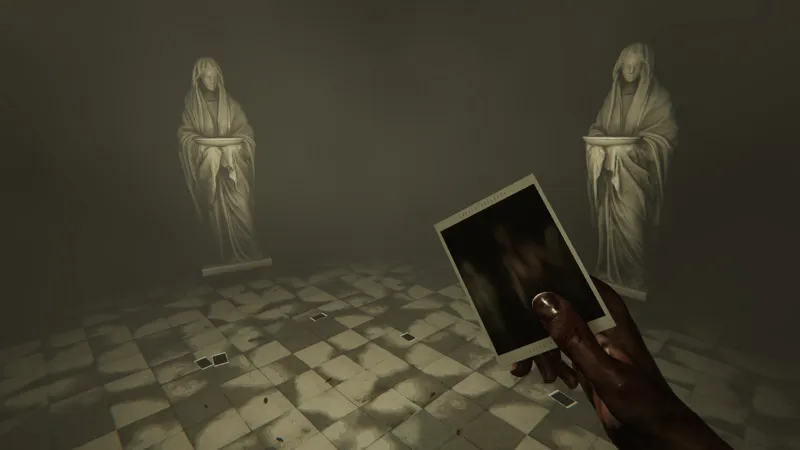
Your supernatural camera serves as your primary interactive tool and occasional weapon. Photographing key locations can shatter barriers, open portals to new areas, and cause other cool, reality-bending effects. The photos themselves often serve as crucial clues. It’s a neat mechanic, and I like the tension of shaking a Polaroid to see what big revelation appears. Since there’s no visual indication of when to take a photograph, I learned to snap a picture of something whenever I hit a wall.

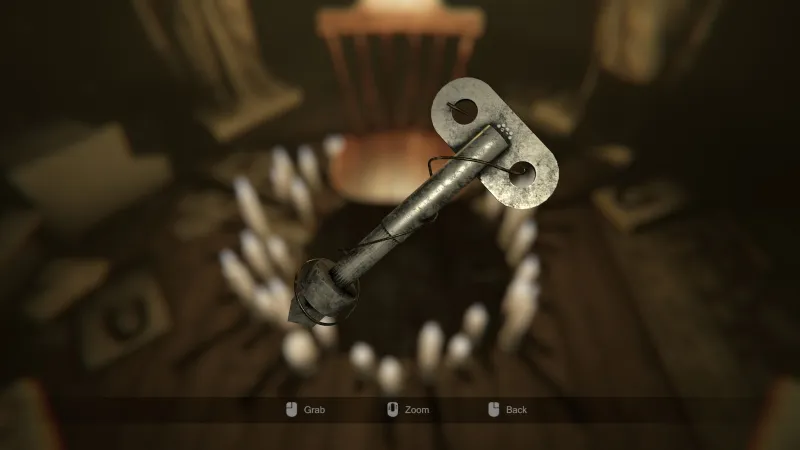
When the camera isn’t the answer, you’ll be rummaging through a limited inventory of items for the right tool to pry open floorboards or snap chains. Puzzle-solving evokes Resident Evil in that sense, and while there are some clever riddles, others can be too opaque, and it can be easy to lose the thread on what to do next.

After receiving a new item, I wandered the house for over an hour looking for a way to use it, only to learn I had to return to a room I’d thoroughly explored to find an unrelated item that had appeared in the corner of the floor. A notebook that conveys your next objective threw in a vaguer waypoint; the solution required such a giant leap in logic that I yelled, “How would I know that?!” These situations occur more than I would have liked, so don’t be afraid to keep a walkthrough open because re-running the house multiple times to find a metaphorical needle in a haystack nullifies the sense of dread. 

Exploring this cursed dwelling during the opening hour or two raised hairs thanks to its oppressive atmosphere and exceptional lighting work. A shadow-covered corner or stairway always gave me pause, and the game’s ambient bumps and camera tricks had me second-guessing each step. Unfortunately, the longer I explored, the more I noticed Madison’s excessive use of its looping soundboard of creaks, moans, and thunderclaps. I eventually stopped jumping at the same door-closing sound effect because I knew it wasn’t threatening, and it made Madison’s home feel closer to a county fair haunted house with a broken record player.


That isn’t to say that Madison doesn’t have terrifying moments; activating a series of record players while being stalked by a demonic creature from a children’s book freaked me out, and the game features its fair share of “nope” moments. I believe that less is more when it comes to horror, and Madison’s at its best when it teases a big scare and follows through sparingly. As the adventure progresses, it begins indulging itself too much. A room-hopping statue spooked me a few times before it started appearing every two seconds in more absurd locations such as in bathtubs and awkwardly placed atop furniture, making me laugh and dispelling its threat.

Madison also begins relying too heavily on cheap jump scares, especially during the back half, where I was hit with a near-constant barrage of them. I even experienced the same jump scare twice in one spot within minutes. After the fourth “surprise” in a row, I became frustrated by them more than anything. I can see Madison becoming a hit with the streaming crowd because of this, but I wish it showed more restraint and creativity on that front.

Despite my misgivings, Madison still offers a respectable evening of frights and is worth a look for fans of psychological horror. It succeeds in building tension and puzzle variety, stumbling when it becomes obsessed with bamboozling players with head-tilting solutions and stopping their hearts with lame jump scares. But when the game hits right, you’ll be glad no one caught the look on your face.

Score: 7.25

About Game Informer's review system

Purchase