This is default featured slide 1 title

Go to Blogger edit html and find these sentences.Now replace these sentences with your own descriptions.This theme is Bloggerized by Lasantha Bandara - Premiumbloggertemplates.com.

This is default featured slide 2 title

Go to Blogger edit html and find these sentences.Now replace these sentences with your own descriptions.This theme is Bloggerized by Lasantha Bandara - Premiumbloggertemplates.com.

This is default featured slide 3 title

Go to Blogger edit html and find these sentences.Now replace these sentences with your own descriptions.This theme is Bloggerized by Lasantha Bandara - Premiumbloggertemplates.com.

This is default featured slide 4 title

Go to Blogger edit html and find these sentences.Now replace these sentences with your own descriptions.This theme is Bloggerized by Lasantha Bandara - Premiumbloggertemplates.com.

This is default featured slide 5 title

Go to Blogger edit html and find these sentences.Now replace these sentences with your own descriptions.This theme is Bloggerized by Lasantha Bandara - Premiumbloggertemplates.com.

Monday, January 16, 2023

Sports Story Review - A Series Of Unforced Errors

Sports Story

Reviewed on: Switch
Platform: Switch
Publisher: Sidebar Games
Developer: Sidebar Games
Rating: Everyone 10+

Golf Story was one of the biggest surprises in the Switch’s extremely strong first year on the market. Thanks to Golf Story’s charming, nostalgic presentation and novel sports/RPG fusion, Sports Story has long been one of my most anticipated sequels. Unfortunately, its unfocused nature and frustrating gameplay are only overshadowed by a pervasive lack of polish that prevents Sports Story from being worth your time. 

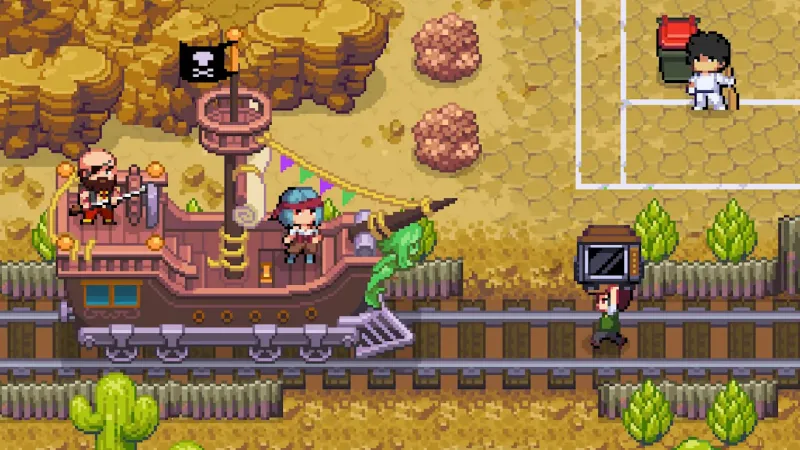
As the name suggests, Sports Story expands the world to include other games while creating a more sweeping and ambitious story. As sports go, golf remains the most prominent; everything in the story is told through the lens of a golf-crazed world, and that often plays to the title’s strengths. Stepping back onto the links, selecting the right club and ball for the job, and teeing off across the eight courses on offer (as well as dozens of minigames) is still as fun as it was in the previous title. The approachable three-click meter usually plays well, and considering the distance, surface, and wind direction to deliver a perfect shot never ceases to satisfy. In these fleeting moments, I’m reminded why Golf Story was such a success. Sadly, despite golf being the best sport in the game’s stable, the less-enjoyable sports and tedious story too often distract from this glaring strength.
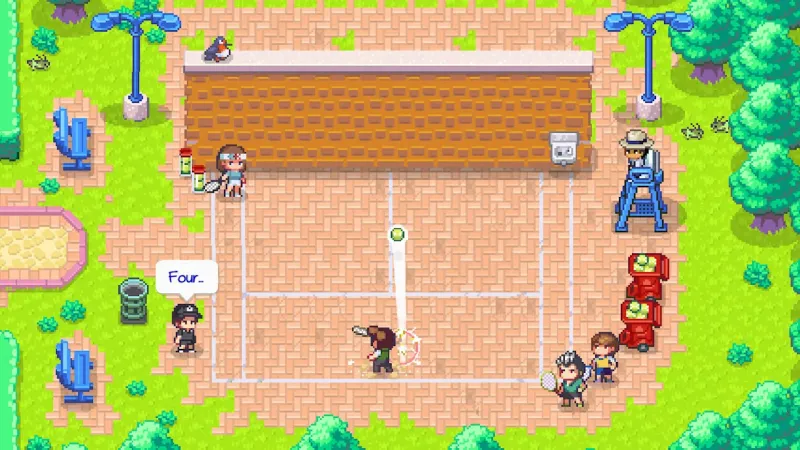

 

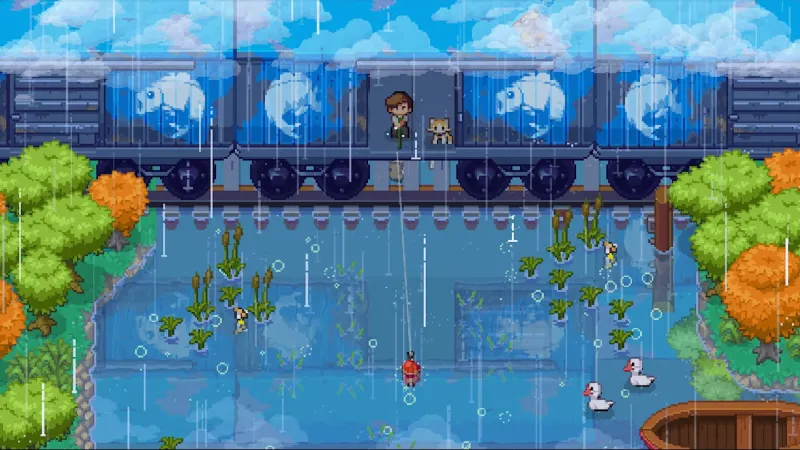
Sports Story adds activities surrounding BMX, tennis, cricket, volleyball, fishing, running, and baseball, but only a few are more than diversions. Tennis takes up perhaps the most time, but it doesn’t live up to golf’s superb blueprint. In addition to requiring far too precise character placement and swing timing, I also encountered moments where the game would simply give the point to my opponent, even when I clearly scored. The other sports are mostly relegated to minigames, with BMX serving up a mix of enjoyable races against the clock and frustratingly tough obstacle courses. Each time a different sporting event appeared, it made me glad when Sidebar Games returned to the world of golf.

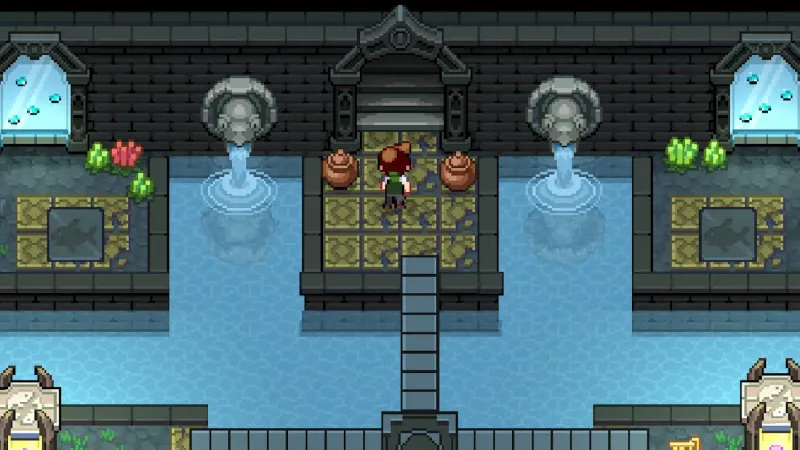
Sadly, the story side of the equation is not much better than the sports side. On top of that, it takes up a disproportionate amount of the more than 20 hours I spent in-game. Where Golf Story used this part of its game to lay on the charm and humor, Sports Story’s dialogue is mostly tedious and unfunny. Save for a few enjoyable bits, the jokes fell flat most of the time, and I never felt invested in the narrative arcs. Not only that, but the constant reliance on fetch-quests meant I spent too much time trying to find the abstract solution of who I was supposed to talk to or what I was supposed to interact with. The more focused dungeons have some simple-yet-enjoyable golf-focused puzzles, but they’re only a small percentage of the overall time spent exploring.

An unignorable lack of polish accentuates all these problems. I rarely went more than a couple of hours without the game crashing me back to the Switch home screen, and on a couple of occasions, I lost a significant amount of progress. Perhaps more substantially, the game doesn’t run well; the frame rate drops and gameplay stutters are annoying when I’m exploring the overworld, but when they happen in the middle of the timing-based backswing in golf or precise gameplay of tennis, they result in me missing a pivotal shot or losing a point. These ever-present problems combine with less frequent issues like quests not properly completing, dialogue not triggering, and my character clipping through the environment, truly hammering home just how buggy Sports Story is. At one point, my character began levitating over the map when I went to cast my fishing rod, allowing me to bypass blockades and essentially break the mission progression chain.

Even if Sports Story was polished and bug-free, it would still fall strikingly short of the first title in the series. The new sports don’t play well, the fetch quests are tiresome, and the story is tedious and less charming than that of Golf Story. What remains of the retro golf experience is fun, but the whole game feels like a textbook example of being unable to deliver on lofty ambitions.

Score: 6.5

About Game Informer's review system

Purchase
Friday, January 13, 2023

Vengeful Guardian: Moonrider Review - Kindred Nostalgia

Reviewed on: PC
Platform: PlayStation 5, PlayStation 4, Switch, PC
Publisher: The Arcade Crew
Developer: JoyMasher
Rating: Teen

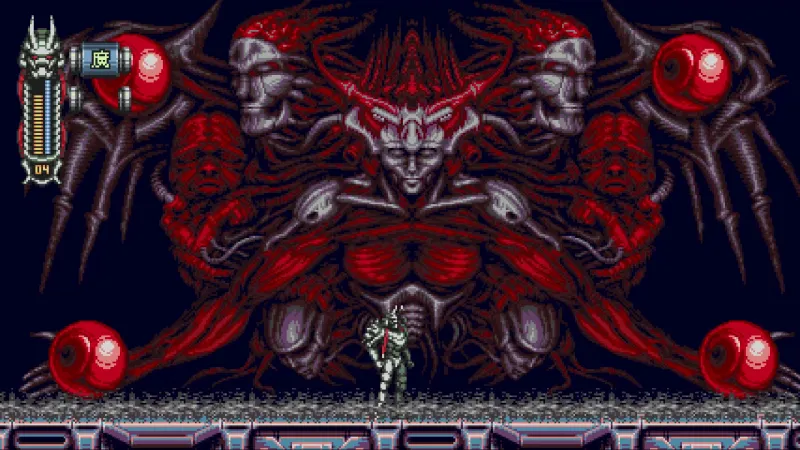
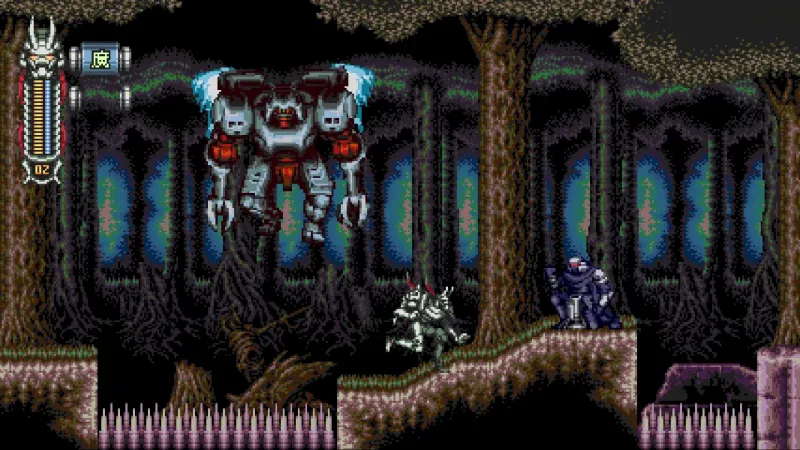
Retro platformers are not hard to come by. I count myself among the group of video game players who welcome efforts from small development teams that play to our nostalgia for an era where playing video games meant tuning to channel 3. Some are fantastic, some are too hard to be enjoyable, but most land somewhere in the middle. Vengeful Guardian: Moonrider won’t go down in history as one of the greats that both embraces the past and modernizes the action, but I would place it closer to the fantastic side of the scale, even if it doesn’t quite make it all the way.

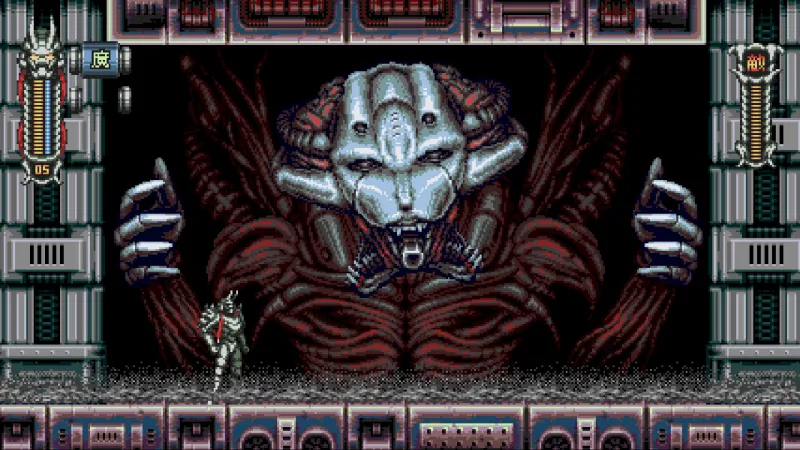
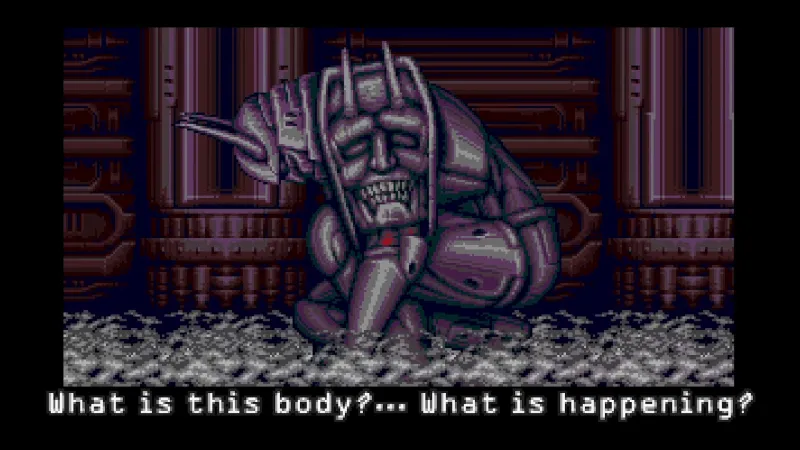
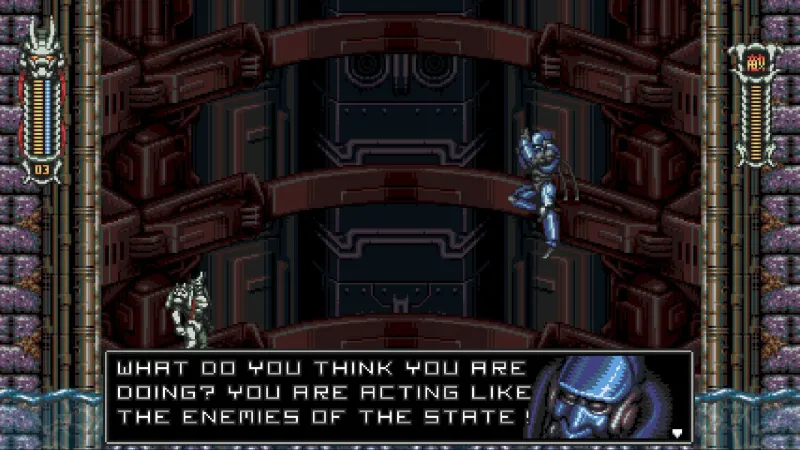
In Vengeful Guardian: Moonrider, you are the titular Moonrider. You break out of your container and destroy the guards in a violent display that would have made you grateful your parents weren't watching had you been playing it on your Genesis in 1992. The story is sparse but enjoyable. For most of the experience, I wondered if I was the bad guy and enjoyed Moonrider’s soliloquies about how unrestricted power isn’t appropriate for anyone, no matter how noble their intentions. I also appreciated the little bits of personality injected into every boss before beginning the fight.

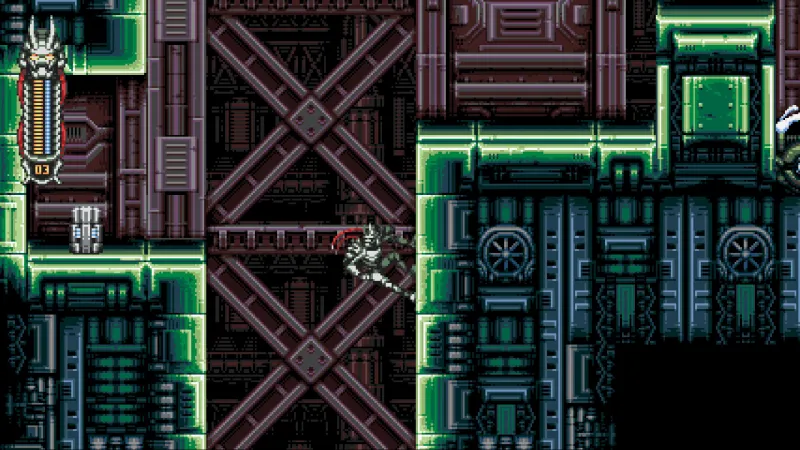
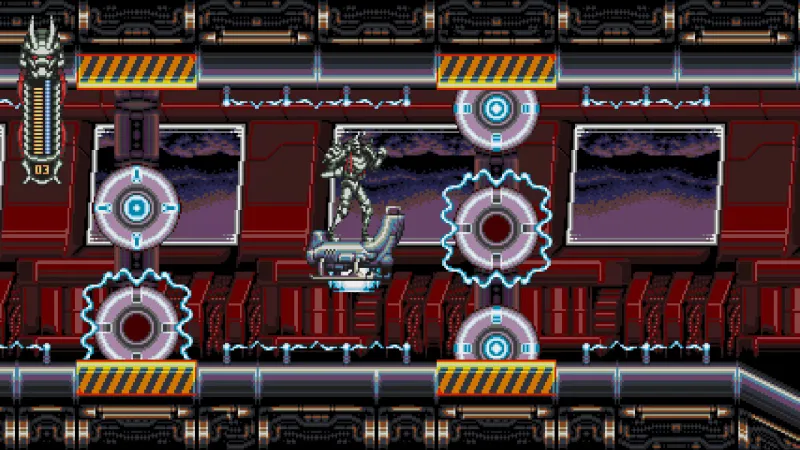
The story is secondary, however, to the platforming and sword action. Moonrider moves well, bounces off walls like Samus Aran, and sprints to leap over large chasms. He feels great to move, but some annoying shortcomings appear where you can’t see your next platform due to the camera limitations. To zoom out would make it feel too much like a modern game, but I don’t know if it was worth the Genesis-era accuracy to be occasionally annoyed.

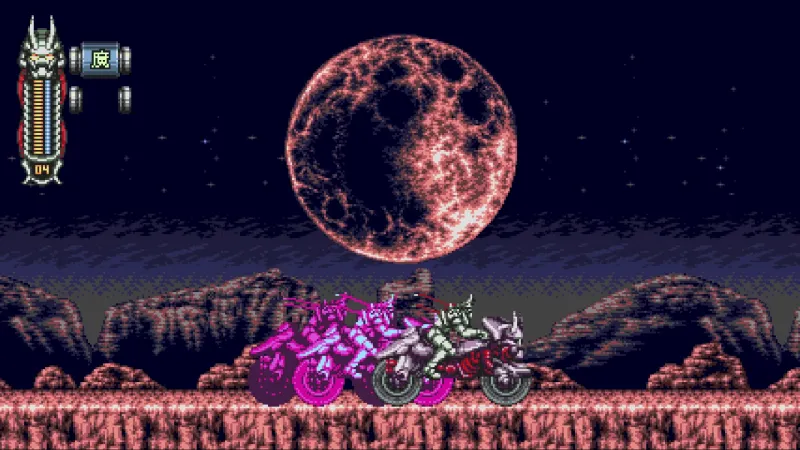
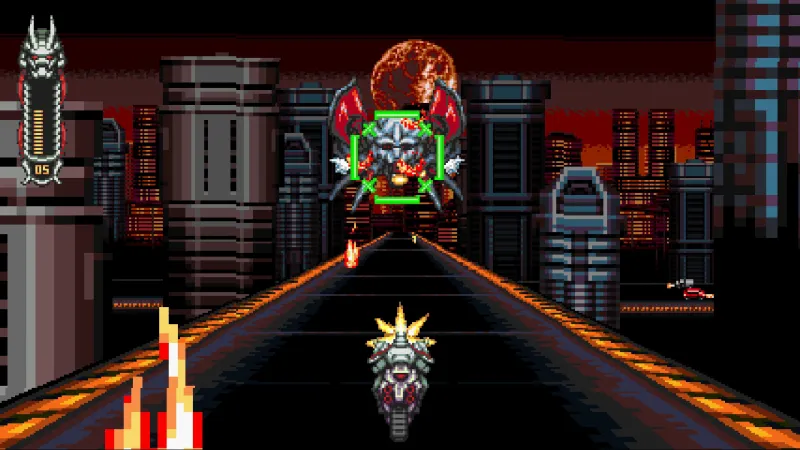
Along with the jumping and sword action, which accounts for most of the game, there are a handful of motorcycle levels. These levels toe a difficult line of looking like they could have existed on a 16-bit console, but I am almost certain they couldn’t. More importantly, however, I enjoyed them as much as the standard platforming.

Difficulty is often a shortcoming for comparable games, with many emphasizing challenge over fun. Thankfully, Vengeful Guardian: Moonrider finds a good balance. Levels are hard, but achievable thanks to reasonable lives and checkpoints, and bosses have patterns that can be tracked and exploited, but probably not on your first attempt.


Taking inspiration from Mega Man, after clearing the first level, the other six can be pursued in any order, and defeating its boss rewards you with a new weapon. The mechanic is a familiar one but it works, and it’s exciting to try out your new tornado weapon, or my favorite, a tentacle that ejects from a portal. Hidden upgrades, like a double jump or the ability to become stronger the more enemies you defeat, can also be found in every level and can optionally be equipped. I enjoyed these as rewards for exploring off the main path, but some are undeniably more useful than others. I found two early on that I never unequipped.

One of the best things going for Vengeful Guardian: Moonrider is its length. Making your way to the last level and defeating the final boss only takes a few hours. In this way, it knows exactly what it is: a brief but enjoyable nostalgic experience that doesn’t overstay its welcome. By the time you start feeling like you’ve completed a full retro meal, credits are right around the corner and I appreciate it for that. Moonrider’s adventure likely won’t linger with you, but I don’t regret playing the short, familiar, and satisfying experience.

Score: 7.75

About Game Informer's review system

Purchase
Thursday, January 5, 2023

Dragon Quest Treasures Review - A Tedious Trove

Reviewed on: Switch
Platform: Switch
Publisher: Square Enix
Developer: Square Enix
Rating: Everyone 10+

Many JRPGs have slow openings, taking their time to establish the story and familiarize the player with the mechanics before letting them loose into the world. I figured that was the case after playing an hour of Dragon Quest Treasures, so I said to myself, “It’ll get good soon!” I said it again two hours in, three hours in, and five hours in, until eventually, I was forced to accept that this was as good as the game would get. Dragon Quest Treasures is never short on charm or style, but simple, sub-par combat and loot-hunting mechanics had me scraping the bottom of the treasure chest in hopes there was something I’d missed.

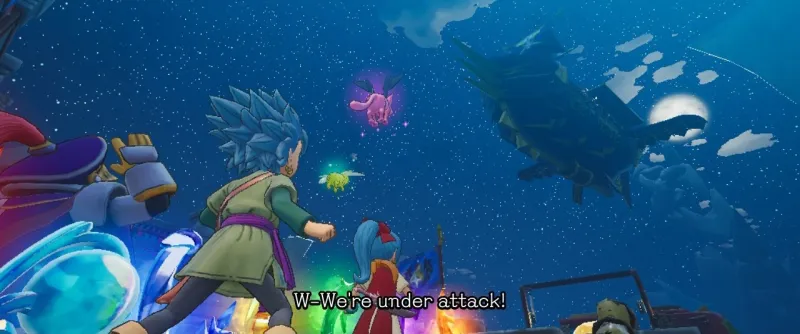
Players of Dragon Quest XI will recognize protagonists Mia and Erik, though they’re much younger in this game. Dragon Quest Treasures is technically a prequel to XI, but there’s hardly any overlap, and the vast majority takes place after the twins jump through a portal into the mysterious world of Draconia. After getting their bearings and making a few friends, they start a treasure-hunting gang and decide to find all seven Dragonstone, magical relics from Draconia’s origin. While the start of the game is story-heavy, most of my 25 hours of play were self-driven, which I appreciated. The plot isn’t particularly interesting or engaging, but I didn’t need it to be; it’s mainly a vehicle to get the player to explore the islands around them.

The bulk of Dragon Quest Treasures involves exploring open-world islands to hunt for valuables, which can be found buried in glowing spots on the ground. Mia and Erik track it down by using magic Dragon Daggers to see “treasure visions,” glimpses of the landscape near the burial site seen through the eyes of the monsters in your party. You can use these images to triangulate the position of the buried chest and claim it as your own. It’s not a terrible mechanic, but it isn’t complex or engaging enough to base the whole game around. I also encountered multiple instances of items spawning in the same areas upon revisiting an island, which suggests that there’s a finite amount of treasure locations to find.

Once you’ve gathered as many valuables as you can, your goal is to return to base unscathed. Treasure storage capacity is limited, and you drop your current spoils whenever you die. There’s also no fast travel. You can use a button in the menu to return home, but this causes you to drop all your riches, effectively voiding your expedition. You can fast travel without dropping anything if you use a chimera wing, but they’re rare, expendable resources that I kept stashed away for emergencies. These mechanics are all purposefully inconvenient, but they bothered me more in theory than in practice. I rarely died in the field, and I was only forced to use a chimera wing two or three times by the time I finished the game.

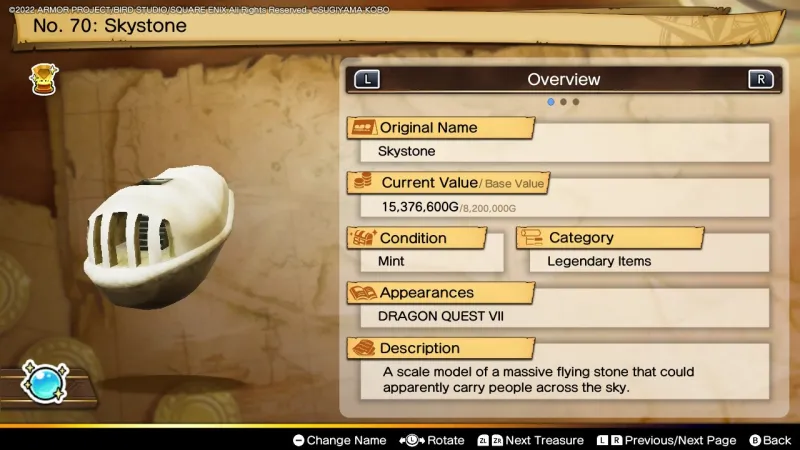
Once you return to your hideout and appraise your haul, it reveals a beautiful rendering of a character or item from past Dragon Quest titles. Even though I didn’t recognize many of the items I found, I appreciated this detail a lot, and I’m certain that nostalgia for the series would greatly heighten the experience. And as much as I didn’t really care for the treasure vision mechanic, I can’t deny the satisfaction I felt when I returned to base with a full inventory and uncovered an iconic, expensive relic that I got to add to my hoard.

When you’re not hunting treasure, you’re fighting enemy monsters. Most Dragon Quest games are turn-based, but Dragon Quest Treasures uses seamless, in-world action combat. Unfortunately, the combat is limited and clunky; the attacks at your disposal feel uncomfortable to use, and often caused me to take damage or miss shots. For example, Mia and Erik can attack with their daggers and roll out of the way of enemy offense, but movement in battle is sluggish and cumbersome. Dodge rolls are helpful when you’re watching an enemy strike from afar, but since rolls don’t interrupt dagger attacks, I didn’t have time to evade when I was up close dealing melee damage. As a result, I learned to avoid the dagger in most dangerous situations.

The other weapon you can use is a slingshot loaded with different elemental pellets, but I wasn’t a huge fan of this either. Up close, everyone moves around too quickly to get a shot off, and while the reticle is capable of locking onto enemies, it’s finicky, and I often had to fight against the controls to line up shots. Still, the slingshot is the only way to deal elemental damage as the player, so it’s not wise to ignore it. Once I had the money to buy pellets consistently, most fights had me hanging back and using my slingshot while the rest of my team fought up close.

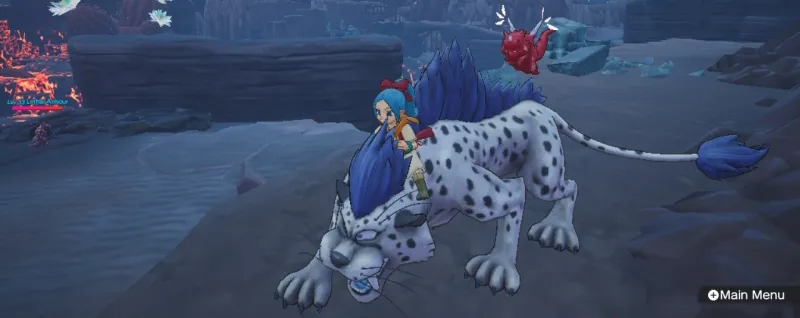
The team in question consists of three monsters that fight enemies automatically. Outside of commands to attack or retreat, you don’t have any control over what they do or where they go. This is fine, though: It gives each monster a sense of personality, and while I wasn’t in control, I could predict their behavior pretty reliably. For example, my silver sabrecat Blanco had a powerful move that caused him to rocket toward the enemy, but my red dragonling Bernie liked to stay back and use magic. You can build a team around their combat roles, but I usually chose mine based on their Forte abilities: traversal techniques specific to each monster species. Blanco was a mainstay because he could sprint, something I couldn’t do otherwise. I also liked having a monster that could glide in case I wanted to jump from a high point without taking fall damage.

Whenever you defeat a monster, there’s a chance that you scout it, making it available to recruit. To add them to your team, you just need to pay a fee of items and food you can find in the world. If you don’t have the correct items, you can see the list to narrow down your search, but it’s never any more specific than one of the five massive islands. This limited my party selection by a surprising amount, and I went the whole game without finding enough resources to recruit certain monsters. I’m sure I could have found more resources if I took the time to grind out a few trips with that express purpose, but I wasn’t struggling in battle, so it didn’t feel worth it.

The whole reason you’re recruiting monsters and hunting for valuables in the first place is to complete Dragon Quest Treasures' main objective: finding the seven Dragonstones. I wrongly assumed they would be hidden behind boss fights or within dungeons, so it took a long time before I grabbed the first one. I thought I needed a higher-level team to compete with the powerful monsters that roamed near the objective marker, but this was totally wrong. In fact, for several early Dragonstones, all you need to do is run past the enemies and then complete a simple objective or just grab the relic and leave. The stones themselves don’t even take up a treasure slot in your inventory, so you can use the menu to return to base and not worry about dropping it; you don’t need to come up with an escape route. Sadly, the game is not clear about this, and I spent a lot of time doing unnecessary grinding.

It’s this buildup of minor annoyances that makes it hard to recommend Dragon Quest Treasures. The experience is driven by charm and nostalgia, but if you don’t have an existing appreciation for the series, there isn’t much here that I could recommend over most other open-world role-playing games. It’s an experience that would greatly vary depending on the player; in other words, one player’s Dragon Quest trash is another player’s Dragon Quest Treasure.

Score: 6.25

About Game Informer's review system

Purchase