This is default featured slide 1 title

Go to Blogger edit html and find these sentences.Now replace these sentences with your own descriptions.This theme is Bloggerized by Lasantha Bandara - Premiumbloggertemplates.com.

This is default featured slide 2 title

Go to Blogger edit html and find these sentences.Now replace these sentences with your own descriptions.This theme is Bloggerized by Lasantha Bandara - Premiumbloggertemplates.com.

This is default featured slide 3 title

Go to Blogger edit html and find these sentences.Now replace these sentences with your own descriptions.This theme is Bloggerized by Lasantha Bandara - Premiumbloggertemplates.com.

This is default featured slide 4 title

Go to Blogger edit html and find these sentences.Now replace these sentences with your own descriptions.This theme is Bloggerized by Lasantha Bandara - Premiumbloggertemplates.com.

This is default featured slide 5 title

Go to Blogger edit html and find these sentences.Now replace these sentences with your own descriptions.This theme is Bloggerized by Lasantha Bandara - Premiumbloggertemplates.com.

Tuesday, March 7, 2023

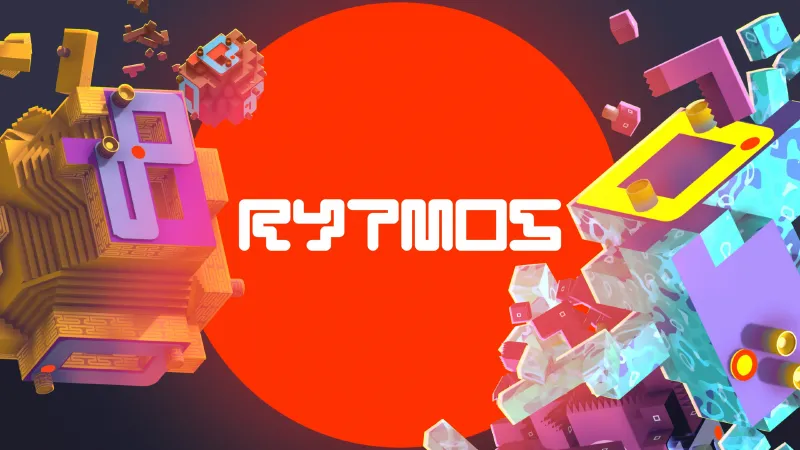
Rytmos Review – Music To My Ears

Rytmos Game Informer review music rhythm puzzle

Reviewed on: PC
Platform: Switch, PC
Publisher: Floppy Club
Developer: Floppy Club
Rating: Everyone

Anyone who makes or writes music knows that the path to a complete track isn’t a linear one. It’s a process where instruments weave in and out of the composition on the whim of the person making it. And even when the vision is clear, and you know exactly where you want to take the song, be it behind a drum set, a keyboard, a loop track, or even a computer, things can get in the way. Rytmos, developer Floppy Club’s first non-mobile game, nails that feeling. It uses puzzles to extract the joy, escalation, triumphs, and trials of making music, and it does so with great success. 

The game begins with a non-descript universe put into disarray and tasks you with repairing each planetary system, made up of 18 puzzles. Each of the seven astral bodies is routed back into orbit after completing the puzzles. It’s a simple setup, and colorful, spacey, lo-fi visuals give Rytmos’ art style a certain warmth that extends throughout the rest of the experience. Floppy Club builds each puzzle upon the same foundation – use the mouse or analog stick (on Switch) to move a red-orange disc through standing pillars on a track. Each pillar represents a different aspect of the song you’re building through these puzzles, and to complete a puzzle, you must move the disc through each pillar and back to the starting point, creating a loop. 

That loop is the first of six loops you’ll make to build the song. Puzzles begin easy but continue to grow in challenge at an engaging pace. Floppy Club throws in different obstacles to tease the brain, like ice cubes that continue to move until they hit a wall, warp portals, origami-like rocks that move with your disc, and more. What I like most about these puzzles is that, much like the rest of the game, they’re more about the feeling of building something than they are obstacles in your way of an end goal. There’s challenge to be had, and one particular puzzle left me stuck for roughly 15 minutes, but the puzzle-wary need not fear what’s in store within Rytmos’ few hours of play. 

I loved hearing each track come to life as I completed puzzles, and learning more about each system’s specific musical genre taught me new things, such as how an instrument is played, a genre’s place in a given culture, and more. One system’s music is inspired by traditional Mbira music from Zimbabwe. There’s another that uses early 1980s Japanese environmental music, which the game taught me was used back then to fill ambient spaces like grocery stores. I especially liked the system inspired by 1960s and ‘70s Ethiopian Jazz, and on top of these genres not often highlighted in games, each set of puzzles rewards you with the primary instrument used to create the track. 

 

Using the game’s built-in loop record system, you can then play that instrument to create your own beats. As someone familiar with real loop systems and the creation of beats, Rytmos’ recording procedure isn’t as in-depth as I would have liked, but it’s a nice introduction to how a loop track can work. 

Those not interested in creating their own beats will still find joy in playing around with the instruments, though. And there’s an excellent selection of instruments, too. The usuals, like guitars, are there, but Floppy Club shows great respect for the art of music by including instruments from different cultures around the world.

Rytmos is short and sweet, and its minimalist visuals and zen-like beats left me feeling warm. Its puzzles match everything else the game is doing, and it all works together well to highlight the music, its inspirations’ place in history, and the instruments that create it. The audiophile pedigree of Floppy Club shines through in Rytmos, and it feels designed specifically with musicians and music enthusiasts in mind, but puzzle fiends will also find a chill afternoon of challenges to play through here, too.

Score: 8.5

About Game Informer's review system

Purchase
Outlanders Review - No Need To Settle

Outlanders

Reviewed on: PC, iOS
Platform: PC, iOS
Publisher: Pomelo Games
Developer: Pomelo Games
Rating: 12+

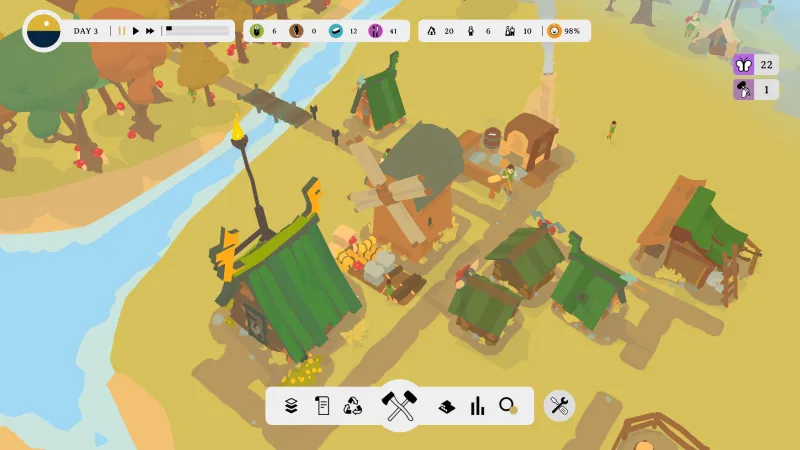
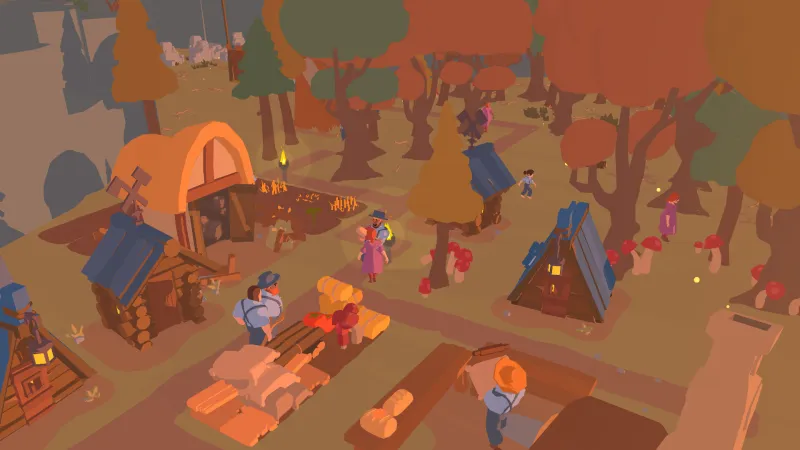
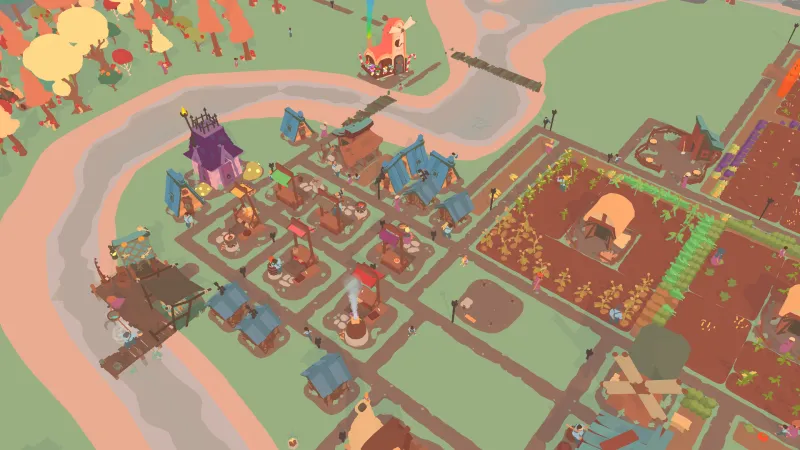
Despite my love for large-scale simulation games like Cities: Skylines as an adult, I was not a SimCity player growing up. Instead, I was pulled in the direction of the more manageable SimTown. The zoomed-in town management, where you can micromanage every aspect of your citizens' lives without the massive scope of SimCity, always appealed to me more. Perhaps that's why Outlanders, a simplistic yet challenging settlement builder, has now sunk its hooks into me on two occasions across both of its platforms.

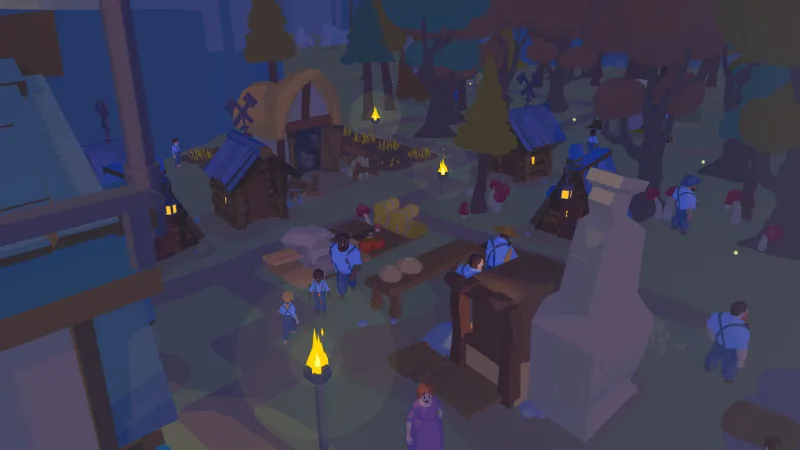
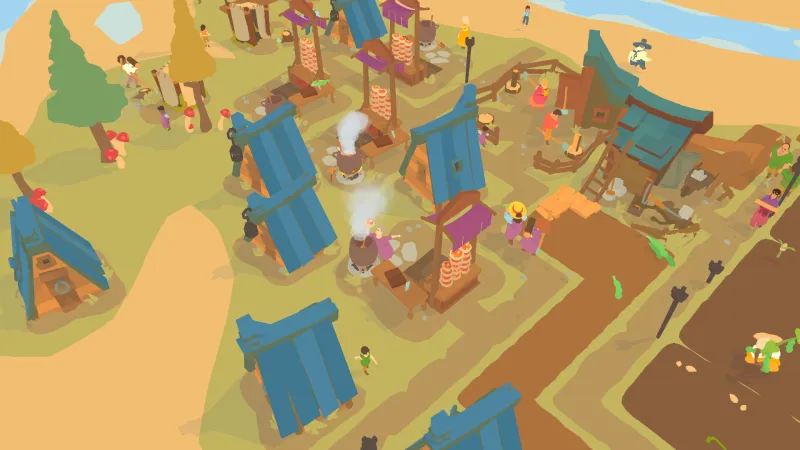
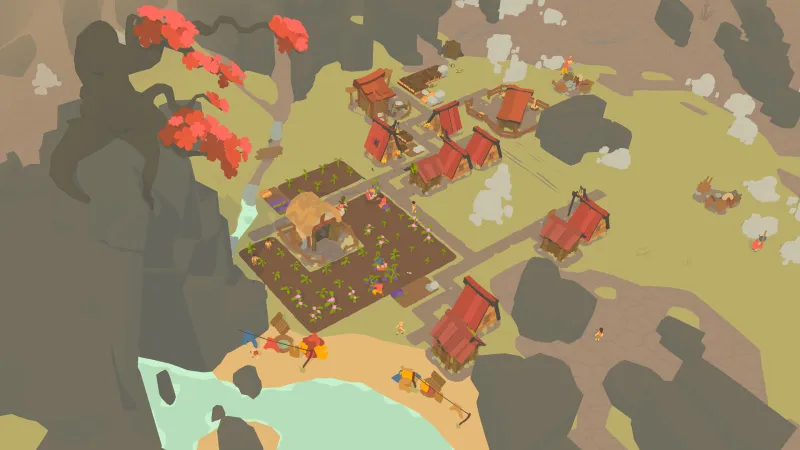
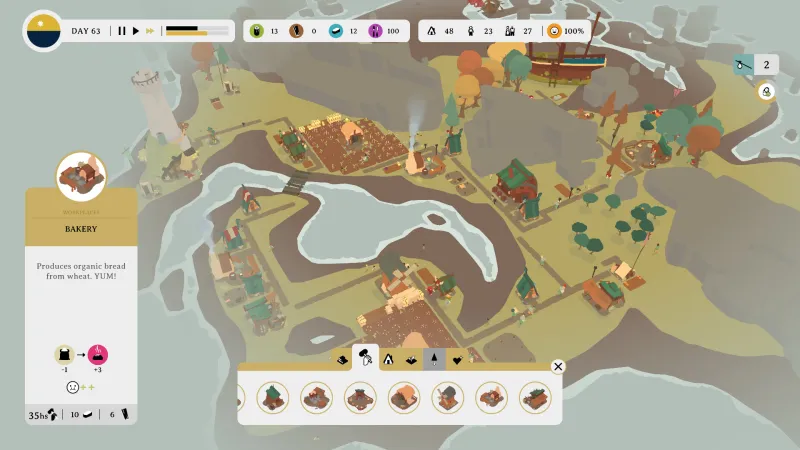
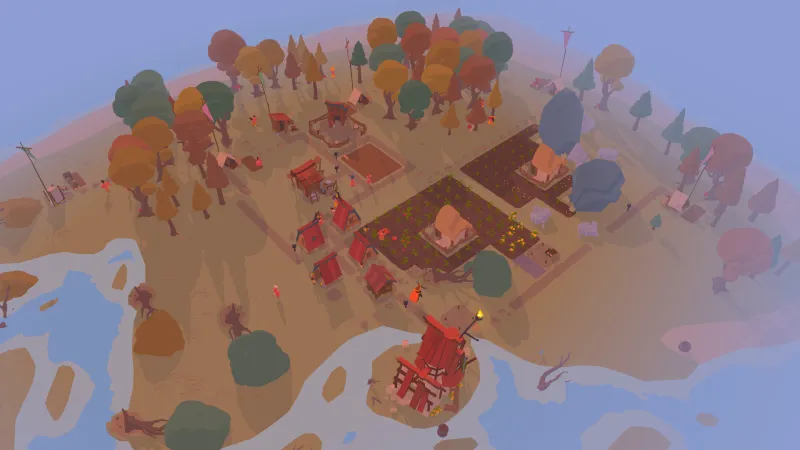
In this small-scale management simulation, you step into the role of the leader of an imperiled settlement across tens of scenarios. Some task you with fixing a destroyed boat so you can escape the island, while others challenge you to learn the game's farming mechanics or construct a giant statue made of bread. Don't be fooled by the simple visual style; these scenarios grow in complexity as you unlock more structures and jobs, like a farm to grow crops, bakeries to generate bread, and breweries to give your followers the gift of beer.

Each time a new structure was introduced, I struggled to keep up with adding another moving part into the equation, but eventually, they just became another part of my growing toolbox, providing for a better simulation experience. This toolset comes in handy in Outlanders' sandbox mode, which lets you customize the biome, map size, starting stockpile, natural resources, and plenty of other variables before creating a settlement without needing to worry about objectives or restrictions.

Outlanders is rather hands-on with its simulation mechanics. Your followers act autonomously, but you, as the town leader, assign them job roles and priorities. Because of this, I was constantly moving followers around to accommodate and adapt to the community's needs. Sometimes, I desperately needed wood, so I put four people on lumberjack duty. More often, though, it's the lack of food that do my settlements in, so foraging and farming have remained my focus. I love calculating which of these areas to invest workers in since foraging provides instant food but depletes quickly, while farming takes time to grow from seeds but is renewable. You need to not only coexist with nature but also learn how to avoid depleting its resources before you have the means to replenish them. Failing at this seemingly simple task results in the death of your civilization nearly every time.

If all else fails, you can issue decrees to your followers, like rationing food or the "hands-off" decree to ensure no babies are born. You can also go the other way to encourage a population boom or tell people to work less to boost happiness. These decrees go a long way to fix problems you may have, but they have unique impacts on happiness, productivity, and other areas. I enjoyed walking the razor's edge of using these decrees to optimize my settlements.

Each scenario includes a primary objective that needs to be completed for success as well as an optional mission; these side goals add an extra wrinkle of challenge, like accomplishing the main mission without exceeding a certain number of followers, keeping your followers housed and happy throughout, or harvesting enough resources to repair other structures following a storm. I always strived to accomplish these objectives, and I often succeeded, but they serve as little more than trophies on my shelf, so outside of the sense of accomplishment, I wasn't heartbroken if I missed some of the side goals.

I love that there aren't many random elements of Outlanders. No tornadoes come to ruin your best-laid plans, no droughts pop up to destroy your crops, and no invaders arrive to raid your stockpiles. This is all about planning and resource management within the scenario you are given. Every failure was my fault. This led to several angry outbursts as I helplessly watched my settlement's predicament snowball out of control due to poor planning; all it takes is a couple of followers to die – whether of old age or hunger – for the well-oiled machine to crumble. In one instance, my 16 adult townspeople were spread out perfectly, but when one member died of old age, I had to reallocate one of the plant foragers to fill in the vacant lumberjack spot. Sadly, that led to a chain reaction where not enough food was being gathered, and before I knew it, four followers died of hunger, and the spiral had begun.


Though I had several settlements quickly meet their doom thanks to the skin-of-your-teeth starting conditions, I always stuck with it, taking the lessons learned forward into the next attempt. I've never loved trial-and-error gameplay, but Outlanders never feels unfair – just unforgiving. Soon, you begin to spot the warning signs of these problems on the horizon. I started anticipating each of my settlements' downfalls before they happened, which let me prevent many of them. This progression – not in the game mechanics but rather in how you think about the gameplay and the domino effects of various in-game actions – is ultimately what kept me coming back for upwards of 20 hours across both PC and iOS. 

Though Outlanders has been available on iOS through Apple Arcade since 2019, the PC release has become my favorite way to play it. I still sometimes have difficulty selecting the correct settler or structure in a crowded area, but not nearly as much with a mouse as I do with a touchscreen. Also, the widescreen format suits the gameplay and art style, and the well-translated navigation keyboard controls feel more intuitive than the Apple Arcade version, which is surprising, seeing as how that version came out years prior to the PC release. Either way is a great way to play this solid sim, but if you have a choice and portability isn't a concern, the PC version is the clear winner.

Though the unforgiving moments where I watched my followers drop like flies wore on me at times, I loved how each scenario challenged me to balance all of these factors to accomplish a set of goals. Outlanders can be challenging and frustrating, but I rarely felt overwhelmed. Outlanders doesn't deliver on the grand scale of the large city simulations many associate with the genre, but its small-scale approach appeals to the task-oriented part of your brain, creating an immensely satisfying experience that brought me back time and time again.

Score: 8.25

About Game Informer's review system

Purchase
Thursday, March 2, 2023

Wo Long: Fallen Dynasty Review - Razor Sharp

Wo Long: Fallen Dynasty

Reviewed on: PlayStation 5
Platform: PlayStation 5, Xbox Series X/S, PlayStation 4, Xbox One, PC
Publisher: Koei Tecmo
Developer: Team Ninja

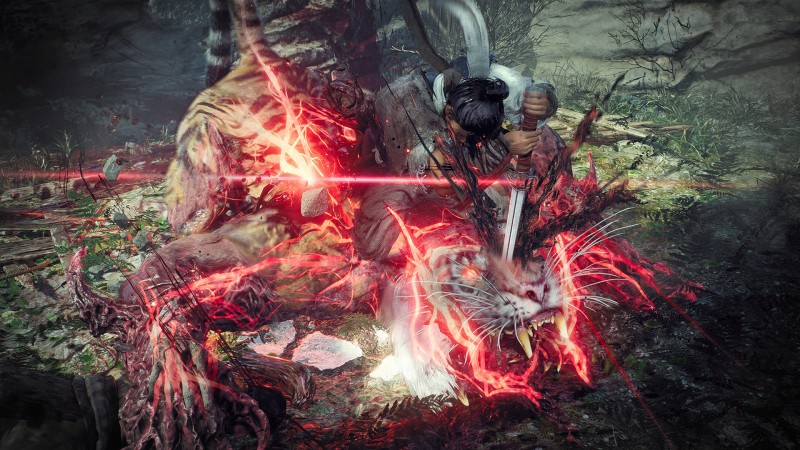
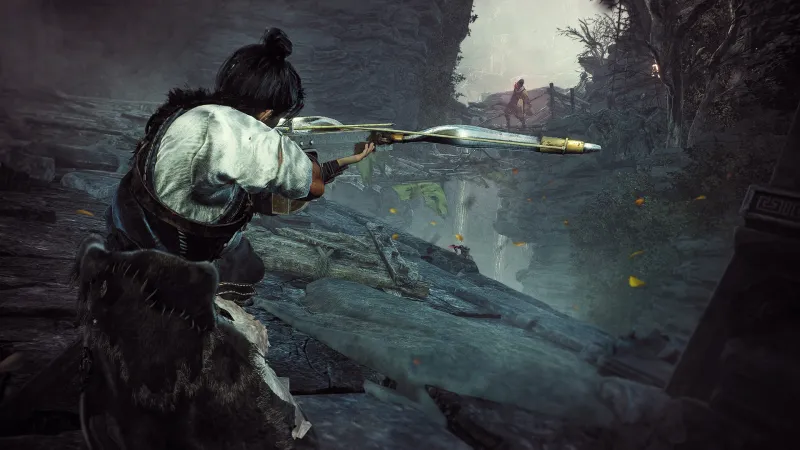
Team Ninja has earned a reputation for crafting some of the most satisfying action games around, nimbly transitioning from the high-octane action Ninja Gaiden series to the Soulslike thrills of Nioh. Its latest effort, Wo Long: Fallen Dynasty, is an unforgiving but deeply rewarding showcase of freneticism that lives up to this lineage. The smooth swordplay, brilliant boss fights, and novel systems further prove Team Ninja’s ability to craft unrelenting experiences. Although its back half is hampered by a lack of enemy variety, its lightning-fast duels make it one of the more gratifying titles in recent memory.

Set in a version of 2nd-century China inspired by the classic novel Romance of the Three Kingdoms, we follow an unnamed militia soldier as they’re drawn into a war over an immortality-granting elixir. While fans of the book will likely enjoy fighting alongside their favorite figures, this narrative does little to communicate their nuances or depth, with storytelling that serves as little more than set dressing.

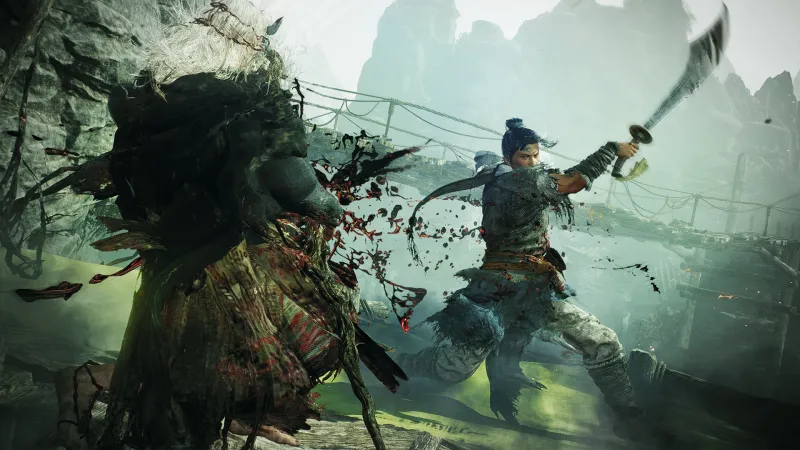
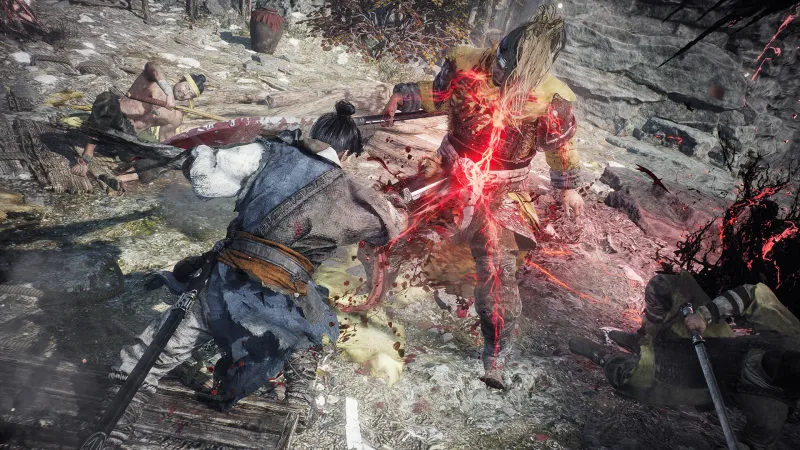
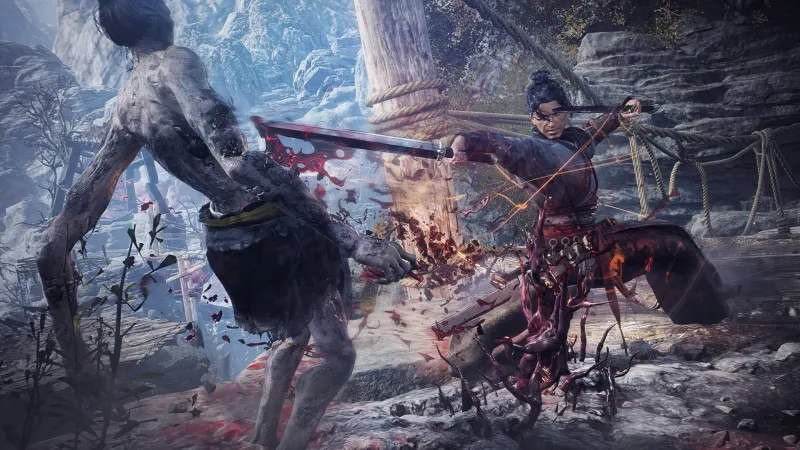
However, while the writing is unremarkable, battles are entrancing. Those familiar with Soulslikes will feel at home with Wo Long’s similar progression systems, online features, and shared brutal difficulty. More specifically, the core combat is directly influenced by Sekiro: Shadows Die Twice, emphasizing parrying attacks so you can eventually break your foe’s poise and land a Fatal Strike.

While plenty of titles have attempted to mimic these elements to varying results, Wo Long: Fallen Dynasty evokes the same joy and despair found in the games that inspired it, its duels capturing a white-knuckled intensity elevated by precise controls and well-telegraphed enemy attacks. Here, deflecting blows lets you build up Spirit, which can be used to shore up your defenses, perform powerful moves, or cast satisfying element-themed spells.

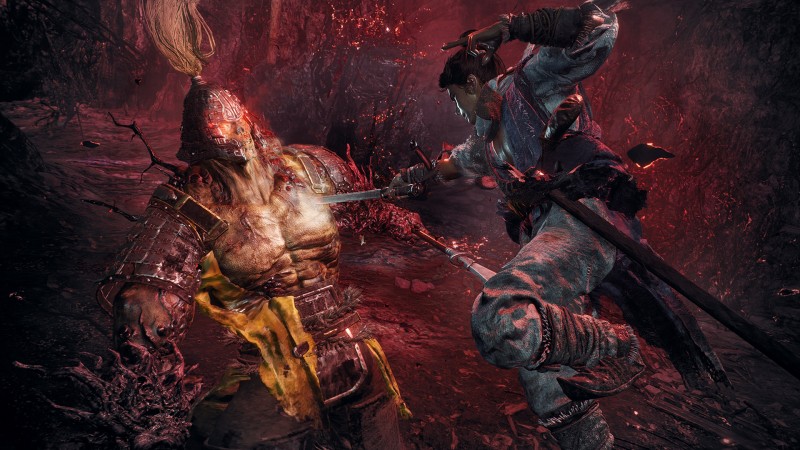
Deflecting is essential for gaining momentum, and once you get used to it, it feels responsive and thoroughly rewarding to pull off. Everything can be parried; sword swings, swipes from hulking monsters, and even lightning bolts, each accompanied by a musical twang of steel that sends tingles. Exchanges can be deliberate as you probe for weaknesses and tactically use your Spirit, or over in the blink of an eye as you parry an unblockable Critical Blow, shatter an enemy’s poise, and demolishing them in a single exhilarating instant. When combined with imposing boss fights, a flexible progression that lets you freely respec your character, and deviously designed levels that invite exploration, at its best, this is one of the finest action entries in some time.


Unfortunately, there are a couple of noticeable drawbacks. Most glaringly, it strains against its long runtime in its last half, resulting in some tedium and stretches that aren’t challenging enough. There are too few unique enemies for an experience based around memorizing patterns, making it feel like a rhythm game that repeats the same songs too often. Other annoyances include a distracting loot system and noticeable technical issues, like pop-ins and framerate drops in larger areas.

But even as its second half failed to match what came earlier, Wo Long: Fallen Dynasty is a finely honed delight. Its action is precise and responsive, and learning the intricacies of each adversary is exceedingly fulfilling. While I wish its back stretch was either pared down or had a wider variety of foes, this is a rare title that induces trance-like focus and euphoric moments of victory. It may not quite reach the heights of the works that inspired it, but it’s not far off.

GI Must Play

Score: 8.75

About Game Informer's review system

Purchase