This is default featured slide 1 title

Go to Blogger edit html and find these sentences.Now replace these sentences with your own descriptions.This theme is Bloggerized by Lasantha Bandara - Premiumbloggertemplates.com.

This is default featured slide 2 title

Go to Blogger edit html and find these sentences.Now replace these sentences with your own descriptions.This theme is Bloggerized by Lasantha Bandara - Premiumbloggertemplates.com.

This is default featured slide 3 title

Go to Blogger edit html and find these sentences.Now replace these sentences with your own descriptions.This theme is Bloggerized by Lasantha Bandara - Premiumbloggertemplates.com.

This is default featured slide 4 title

Go to Blogger edit html and find these sentences.Now replace these sentences with your own descriptions.This theme is Bloggerized by Lasantha Bandara - Premiumbloggertemplates.com.

This is default featured slide 5 title

Go to Blogger edit html and find these sentences.Now replace these sentences with your own descriptions.This theme is Bloggerized by Lasantha Bandara - Premiumbloggertemplates.com.

Wednesday, July 12, 2023

Dave the Diver Review - A Refreshing Departure

Reviewed on: PC
Platform: PC
Developer: MINTROCKET

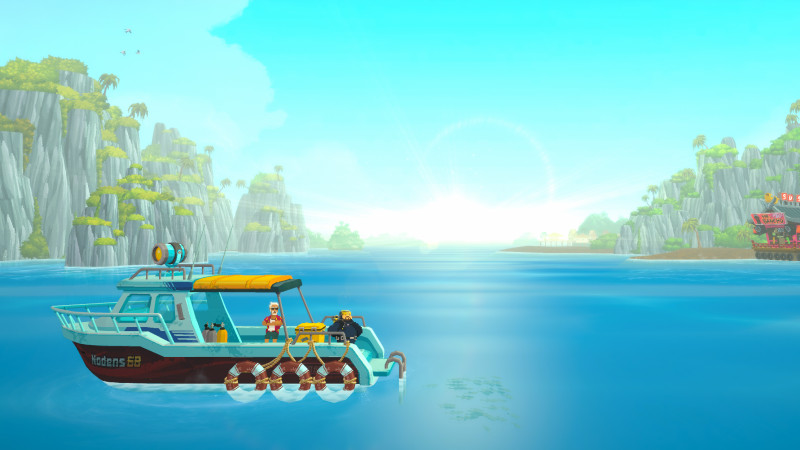
Like a beautiful and unusual fish that has suddenly risen to the surface, Dave the Diver is an unexpected surprise. Juggling two core systems that work in tandem, it’s a game that excels as both an exploration experience and as a management sim and does so in ways that are intuitive and easy to pick up. However, the real triumph is a focus on novelty at every turn, with a near-constant supply of sudden twists, activities, and ways to engage with the game, resulting in a joyful and approachable adventure that is hard to put down.

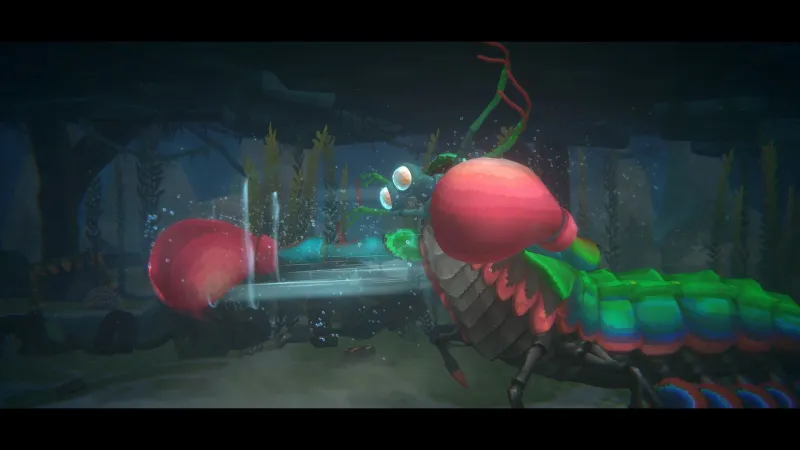
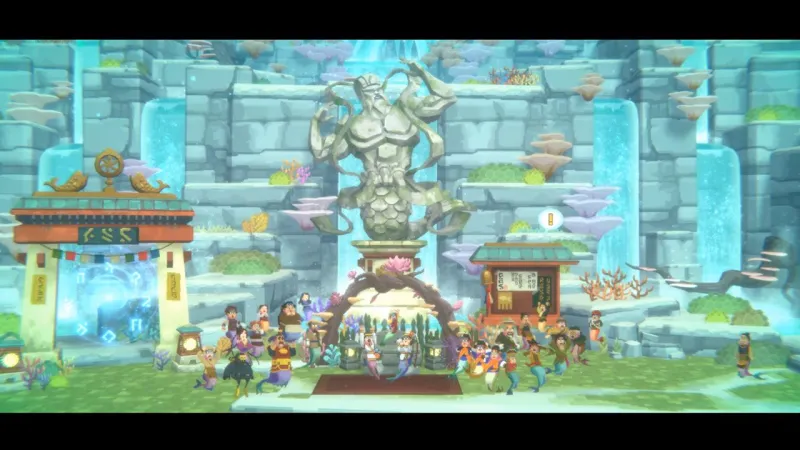
Dave is a scuba diver, summoned to a strange blue hole in the ocean filled with all manner of marine life. He’s there to help capture seafood for a local sushi restaurant and its eccentric but expert chef, and he’s soon drawn into the management of the business to an equal depth as his sea explorations. As those underwater investigations swim ever further from the surface, new fantastical elements enter the equation, from sea people to prehistoric creatures, keeping players guessing on both the story and gameplay front.

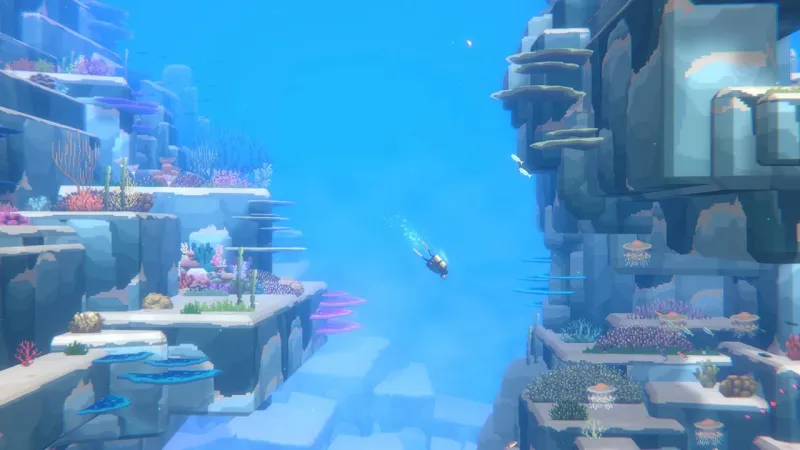
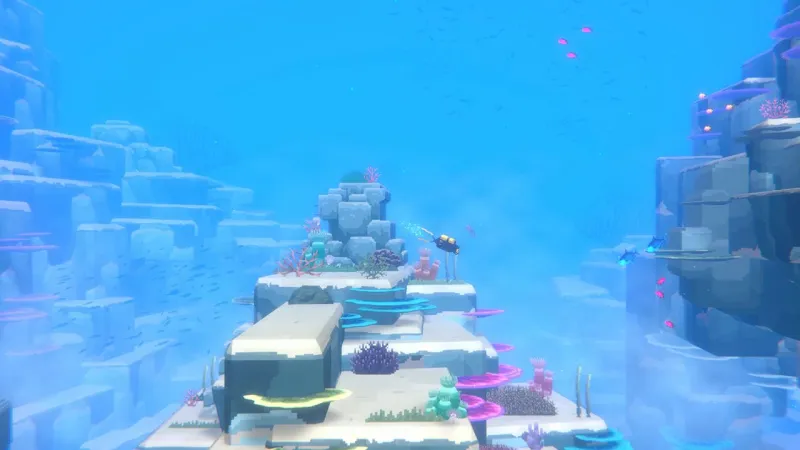
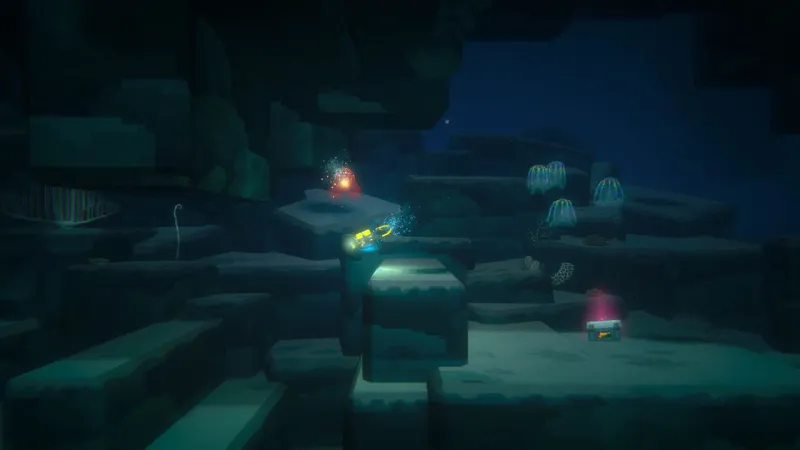
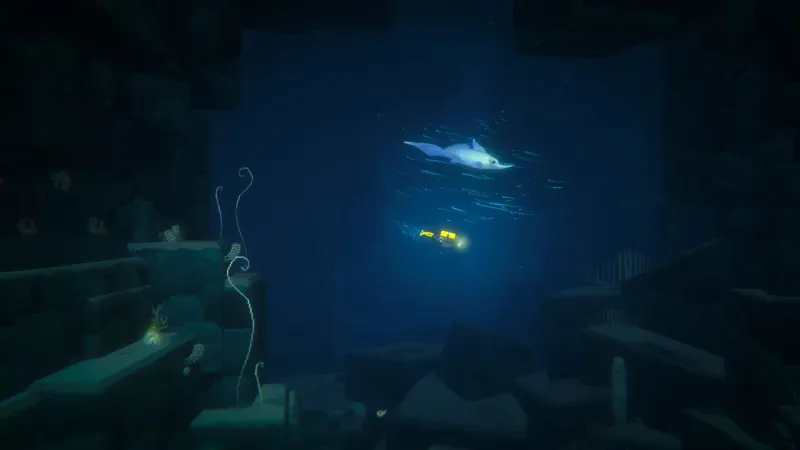
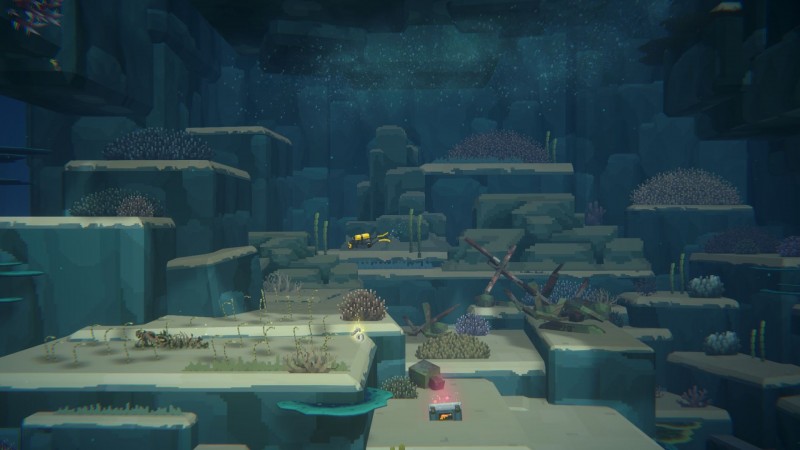
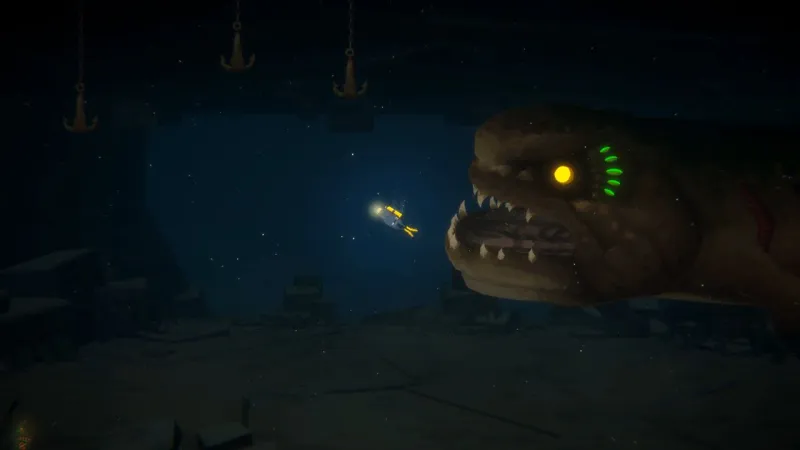
The underwater dives are uncomplicated but gorgeous, leveraging a pixel-art aesthetic to present a considerable variety of undersea life and a constantly shifting landscape of cliffs, chasms, and tunnels. With guns, harpoons, nets, and more, Dave must snag the tastiest morsels to bring back to the restaurant while monitoring his air tank, avoiding hostile species, and gathering additional supplies. The simple aiming and shooting are enjoyable, and the gradual upgrade of equipment provides a rewarding sense of progression. But the search for new sights and locales drives the fun.

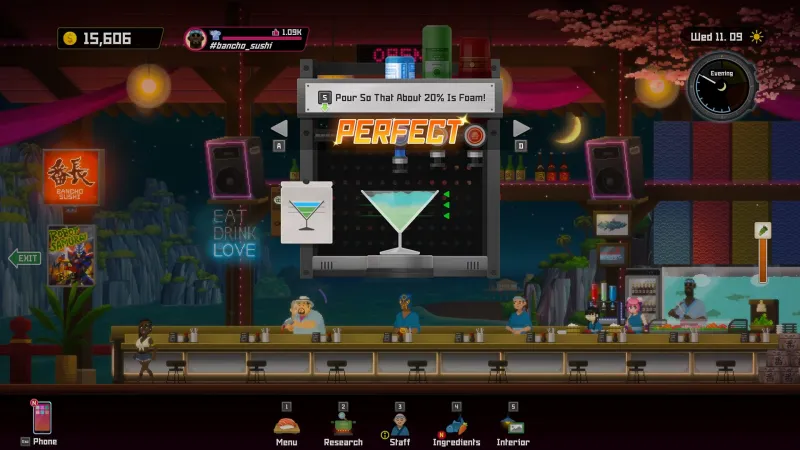
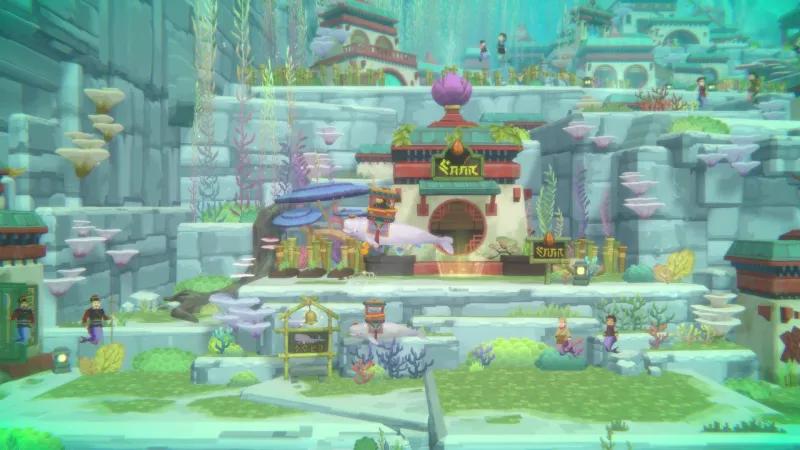
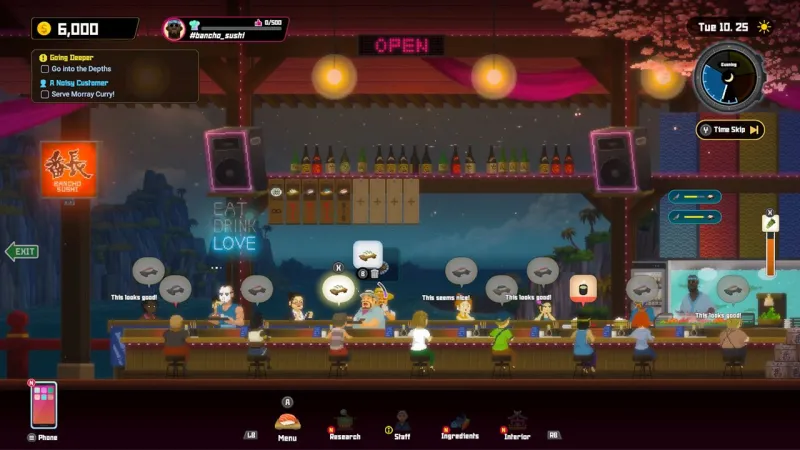
Back above water, Dave is wrangled into serving duties behind the sushi counter amid an offbeat cast of characters, many of whom drive home a theme that people are often more and better than they appear at first glance. Setting menu items, hiring and training staff, and pouring drinks give way to more activities, like running a farm and fish hatchery, competing in reality food competitions, and fleeing pirate boats to protect ancient relics – most with an attached mini-game or interactive component.

The continual layering of these small but rewarding systems transforms Dave the Diver into something exceptional. The flip back and forth between diving action and sushi restaurant management is engaging but might become rote were it not for the constant influx of other new ideas to keep things fresh. Taking wildlife photos, halting invasive fish species, building new weapons, cataloging discovered creatures – everything works together to push the adventure forward while remaining forgiving enough in complexity that a player never feels overwhelmed.

Dave is a charming hero, affable and guileless but capable, kind, and eager to help his friends. As the story grows more outlandish, the bosses ever bigger and more unbelievable, and the story sillier, the grounded and likable lead kept me smiling. A few late-game activities, including some stealth and light beam puzzles, don’t completely hit the mark, but by that point, the investment is high, and it’s easy to push ahead to the end.

You might question whether a sushi restaurant management sim crossed with underwater diving is your cup of tea, but that would be missing the point. Dave the Diver is a unique and memorable vacation away from expectations, and it’s the very fact that you don’t usually play games like this that makes it so satisfying.
 
GI Must Play

Score: 8.75

About Game Informer's review system

Purchase
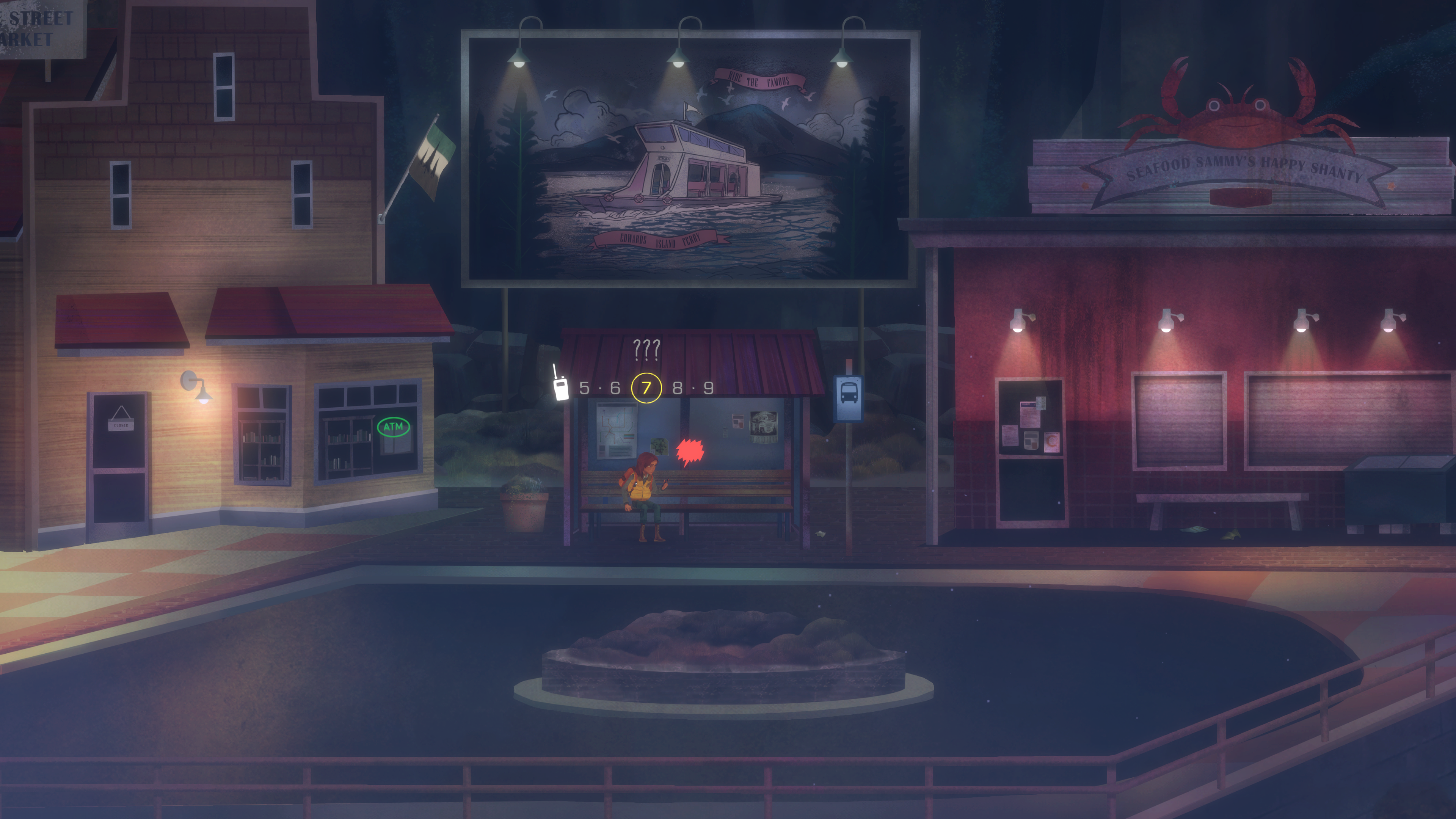
Oxenfree II: Lost Signals Review - A Sequel Worth The Wait

Oxenfree II: Lost Signals review game informer gameplay score

Reviewed on: PC
Platform: PlayStation 5, PlayStation 4, Switch, PC, Mac, iOS
Publisher: Netflix
Developer: Night School Studio
Rating: Teen

Oxenfree II: Lost Signals delivers what I have wanted out of a sequel seven years after the first game's release. Although its overarching A-to-C narrative feels like it is missing a “B” in the journey, I’m impressed with most of what Oxenfree II accomplishes. It brings back the original's simple but charming radio mechanics, adds a walkie-talkie that expands the world around protagonist Riley, and, most importantly, features incredibly well-written and believable characters. While Oxenfree II’s paranormal events are spooky and cold, the cast is warm, bright, and complex, and the entire package feels like an ‘80s summer romp.

If Oxenfree, developed by Netflix-owned Night School Studio, is about teenagers in the idealized 1980s popularized by Hollywood with series like Netflix’s own Stranger Things, then Oxenfree II is about the lesser-seen adults dealing with their mess afterward. Set five years after the original game, Riley arrives in her hometown of Camena for day one of a new environmental research job. She grew up here and left for reasons you discover in the story, only to find herself returning as a 30-something-year-old for work. 

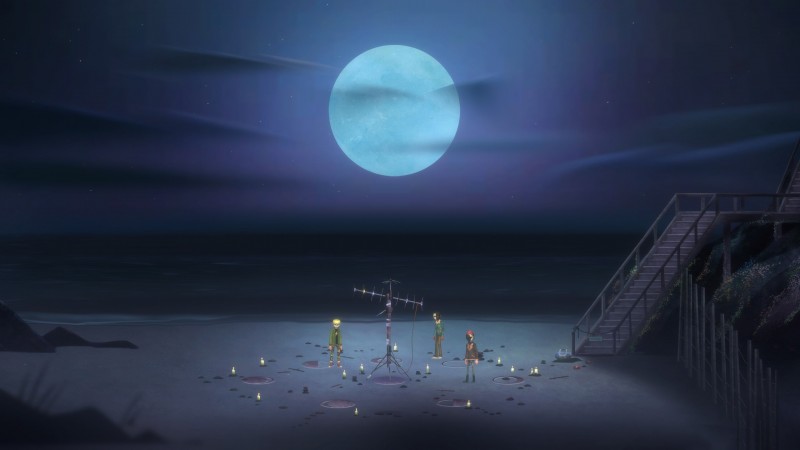
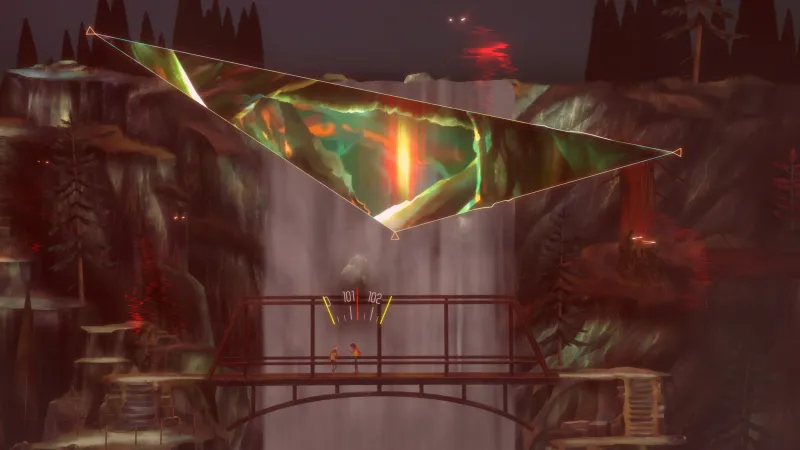
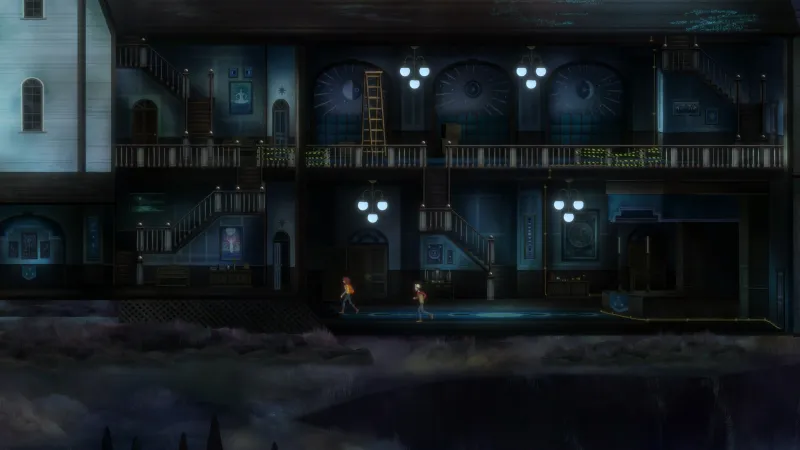
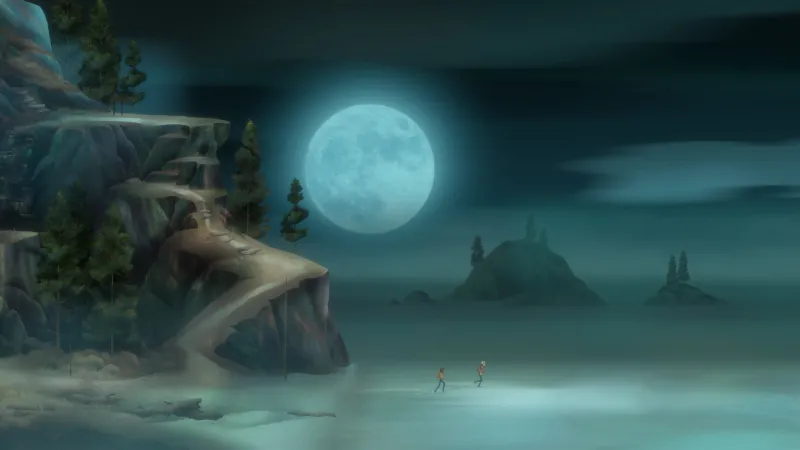
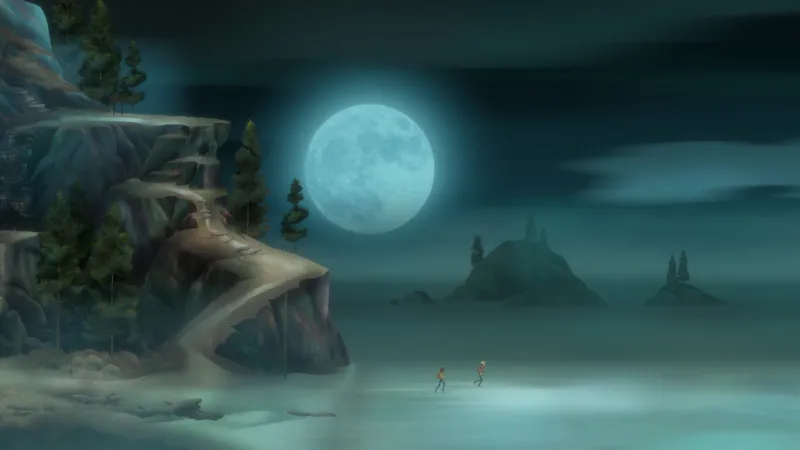
She soon meets Evelyn, a coworker working 20 miles away who shows her the ropes, and Jacob, her now-colleague. After placing a transmitter high on the island, things go awry quickly, and a familiar triangular prism appears over the sky of Oxenfree’s Edwards Island, visible in the distance of Camena. And this isn’t good, so Riley and Jacob set off to end it. As the duo explores more of Camena, trekking through abandoned mines and caves, climbing up cliff sides, and sprinting across moonlit beaches, they discover a cult, angsty teenagers stubborn in their decisions, ghostly apparitions, some familiar faces, and more. I thoroughly enjoy every hike to the following transmitter location because it always leads to more dialogue between Riley, Jacob, and the various people of Camena that Riley can talk to using a walkie-talkie. 

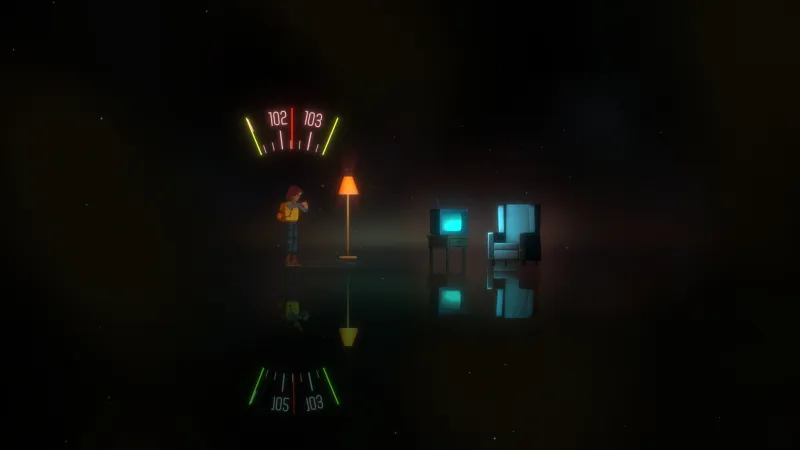
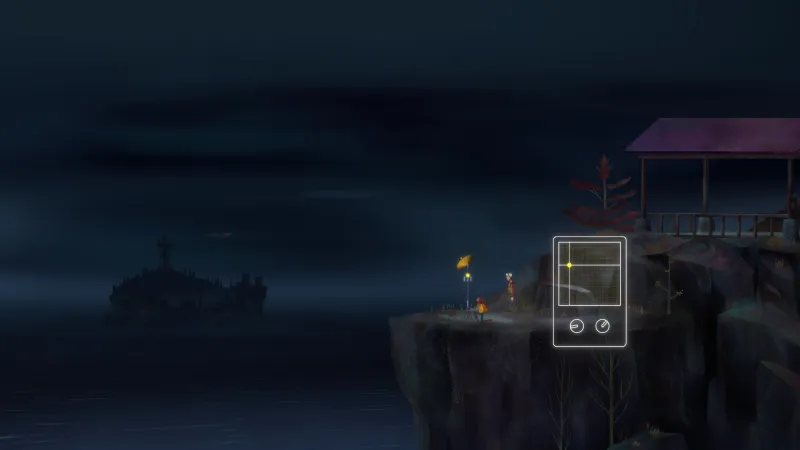
Mechanically, Oxenfree II plays just like its predecessor. You explore an island; pick dialogue options that paint the protagonist as sarcastic, kind, or cold; and solve simple puzzles using a radio. The walkie-talkie is technically a new mechanic, but it’s mostly just another avenue for dialogue. I don’t mind the lack of mechanic innovation in the sequel, but if Oxenfree’s heavy focus on narrative and light gameplay turn you off, this game might do the same. Just be wary when quitting the game, as terrible checkpointing without a clear save function caused me to replay several sections, dampening my excitement from playing them the first time.  


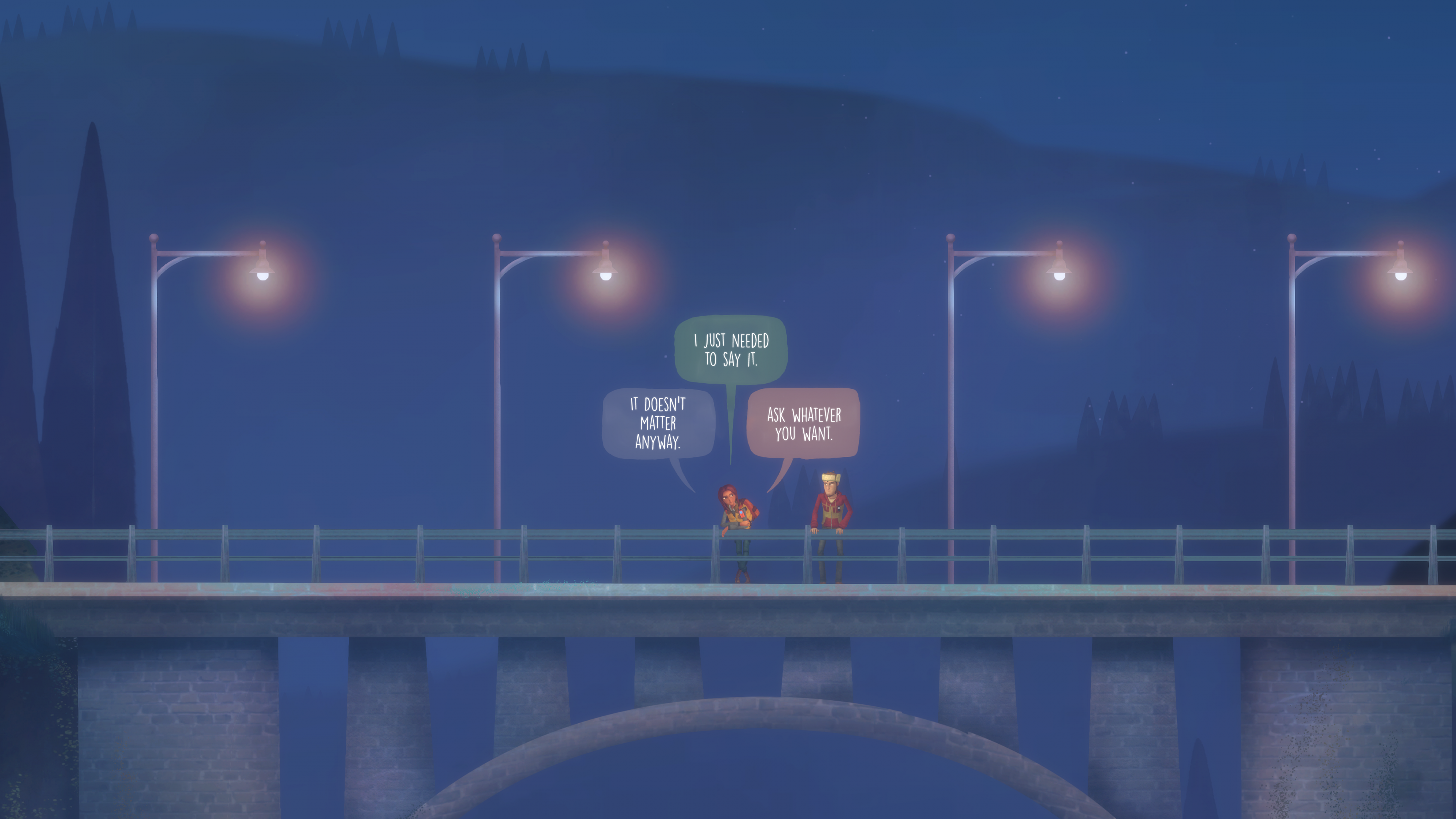
I can’t express enough how much I enjoy the conversations between every character. Not only are they well-written, filled with romanticized language designed to get you in your feelings, but the voice cast delivers sincerity in every line. Riley and Jacob are the clear standouts, and learning at the end that it’s possible not to befriend Jacob in the game was bewildering. Jacob feels intrinsically tied to the story as the light guiding Riley through the night’s mysterious journey and her mind’s attempted takedown of who she is at her core. In more ways than one, Oxenfree II is a story of discovery: of the paranormal, spooky plans conceived by desperate teenagers, and who these characters want to be after the night’s events.

I especially love Oxenfree II’s more mature tone and story because it bucks the trend of adults who think they know what’s best for teenagers. Instead, it lets players decide how Riley and Jacob treat them, and that freedom leads to some surprising twists. These excellent conversations and twists are the highlight of the narrative experience for me, but the overarching story falls somewhat flat, not because I don’t enjoy what it has to say, but because it feels rushed, almost as if it’s missing a second act. Oxenfree II feels methodically slow and then, all at once, desperate to end, and it’s jarring. 

Oxenfree II doesn’t shake up what its predecessor did in 2016, but it delivers more of the excellent writing and charm I expect from Night School Studio. While it's light on gameplay beyond traversal, it’s done in service of the characters. After 10 hours with this cast, I want more, but I’m happy with where this story ends and how my choices shaped that ending. Despite bad checkpointing and a swift rush to the end after an overly long setup, this return feels earned and essential, with a message that resonates far more than Oxenfree's. With Oxenfree II behind me, I’m thrilled Night School Studio delivered something special more than seven years away from this world.

Score: 8

About Game Informer's review system

Purchase

Tuesday, July 11, 2023

The Legend of Heroes: Trails into Reverie Review - The End Of An Era

The Legend of Heroes: Trails into Reverie

Reviewed on: PlayStation 5
Platform: PlayStation 5, PlayStation 4, Switch, PC
Publisher: NIS America
Developer: Falcom

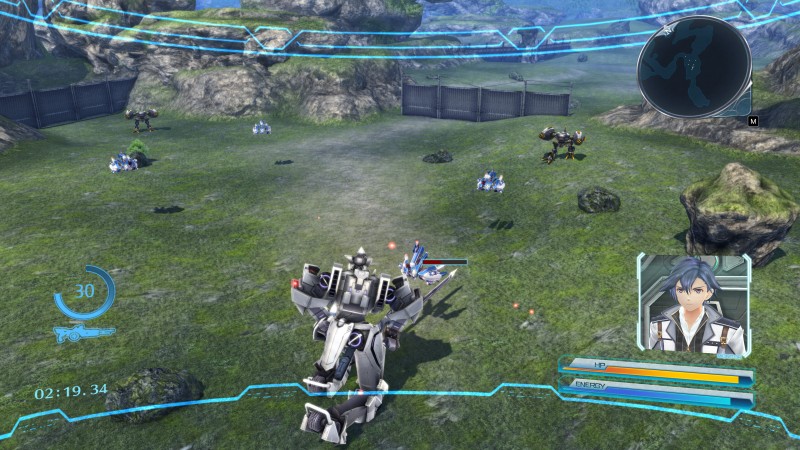
For almost 20 years, Nihon Falcom has created one the richest ensembles of original characters, history, and politics in video games with The Legend of Heroes. Across three narrative arcs (and counting), I’ve explored myriad diverse locations, cultures, governments, and organizations, making the continent of Zemuria the most lived-in world I’ve ever experienced in the medium. Trails into Reverie, the latest entry in the long-running franchise, is a bittersweet culmination; I must potentially say goodbye to some of these characters for good after the series successfully captured my heart.

After the countless emotional moments of joy, shock, and tragedy, the further I progressed in this entry, the more I was afraid of bidding farewell to these wonderful and gratifying characters I’ve come to love so dearly. The combat continues to build and evolve off itself, and even though the story is arguably one of the weakest in the series so far, the profound ongoing theme of what shapes someone into the person they are has stuck with me since. By the time credits rolled, all I could think about was how grateful I was to reach this point and experience this unique epic in the first place.

To be clear, this is the 11th entry to an ongoing series. Starting with Trails in the Sky, playing them in order is crucially important to get the most reward out of its narrative. Trails into Reverie serves more or less as epilogue chapters for both the Crossbell (Trails from Zero/Trails to Azure) and Erebonia (Trails of Cold Steel I to IV) arcs.


Six months have passed since the end of The Great Twilight, and now that the autonomous state of Crossbell has been freed by Erebonia, it is finally going to announce its independence until a familiar foe halts the plans. Compared to the rest of the series, Reverie is arguably the most off-the-beaten-path narrative, weaving a more streamlined experience while continuing to have the high-quality storytelling and character development that longtime fans expect.

Instead of showcasing one main character, three different branches focus on a specific character – a series first. Reverie puts you back in the shoes of former main protagonists Lloyd Bannings and Rean Schwarzer, along with a masked individual who fans of the series will remember that goes by the name “C.” These characters’ paths diverge into another compelling narrative where each of them overcomes the personal burdens they’ve been struggling with for the past several games. Each character's story reaches a satisfying conclusion, and I'm glad there’s a chance for them to return in future entries.

While significant things happen to both Rean and C, Reverie truly feels like Lloyd’s story, with the narrative primarily focusing on his home Crossbell. In the late hours of this nearly 60-hour entry (including recommended postgame content), I could explore Crossbell in full 3D. Trails from Zero and Trails to Azure presented an isometric perspective with characters in a Chibi model style, so it was fun to see everything I explored in those games in a new light while staying true to the original vision.

Even though the series is known to have a level of free exploration, Reverie is a much more straightforward experience, similarly structured to Trails in the Sky the 3rd. There are no traditional side quests, which is ultimately disappointing as I loved learning new lore about the world. However, The Legend of Heroes is masterful at making the locations you repeatedly visit across entries feel evolved; even when there isn’t much to do at a location you haven’t been to in several games, it is still rewarding to roam around and talk to familiar faces.

Combat throughout The Legend of Heroes series, while great overall, has more or less been the same since the beginning. It has been simplified over time, which is upsetting, but the core elements have thankfully remained intact. The one notable mechanic introduced in this entry is called “United Front,” where you can unleash an all-out attack that deals massive damage to your enemies or heal your entire party. It didn’t fundamentally change the way I approached fights compared to previous entries, but it definitely got me out of some tight spots.

Aside from the story, the main gameplay experience unfolds in a pocket place of existence known as the True Reverie Corridor. This not only serves as a home base of sorts for the cast but is also where most of the side content lives, including purchasing equipment, fishing (a series staple), and the simple, but well-designed card game Vantage Masters. Other activities include taking on engaging trials with specific characters to gain unique upgrades as well as a suite of fun minigames like a rail shooter and even trivia about the franchise.

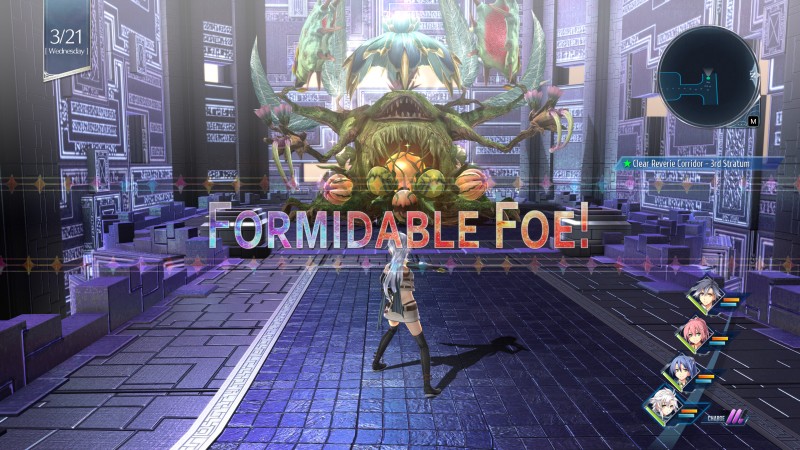
However, the main purpose of the Reverie Corridor is to serve as a dungeon crawler to level up your party. As I explored each floor, I found treasures and formidable enemies that give me sealing stones, which can unlock new characters, minigames, and “daydreams.” These compelling slice-of-life moments are my favorite unlock from the Reverie Corridor, as they focus on events from different members of the cast that happen between the events of Cold Steel IV and Trails into Reverie. Arguably the best part of The Legend of Heroes is the vast number of well-written detailed characters. However, the main story zeroes in on a select few, so this is a great way to get what feels like an intimate last hurrah with them.

By the end game, there were well over 40 characters I could choose to build out my party, and for every one of them, I knew their intimate background and history from one or several of the previous 10 entries that came before. This makes this entry feel like a celebration of these characters and the incredible quality of storytelling that has developed throughout the series.

The Legend of Heroes: Trails into Reverie is not your average game; near decades of world-building, character arcs, and detailed lore have led to this culmination. The franchise isn’t perfect, but this series is wholly one-of-a-kind. It is a monolith that should be recognized alongside icons like Final Fantasy, Dragon Quest, Kingdom Hearts, and Persona. The details of the continent of Zemuria are unlike anything else I have experienced in gaming, and its cast now has several of my favorite characters in the medium. Reverie has the intimidating task of closing the page on three arcs that expanded across almost twenty years of characters and storytelling. Even if the narrative in this chapter falls short compared to past entries, it still stands above most other games in the genre. If Trails into Reverie is the last time we see most of these beloved characters, it serves as a terrific send-off.

GI Must Play

Score: 8.75

About Game Informer's review system

Purchase