This is default featured slide 1 title

Go to Blogger edit html and find these sentences.Now replace these sentences with your own descriptions.This theme is Bloggerized by Lasantha Bandara - Premiumbloggertemplates.com.

This is default featured slide 2 title

Go to Blogger edit html and find these sentences.Now replace these sentences with your own descriptions.This theme is Bloggerized by Lasantha Bandara - Premiumbloggertemplates.com.

This is default featured slide 3 title

Go to Blogger edit html and find these sentences.Now replace these sentences with your own descriptions.This theme is Bloggerized by Lasantha Bandara - Premiumbloggertemplates.com.

This is default featured slide 4 title

Go to Blogger edit html and find these sentences.Now replace these sentences with your own descriptions.This theme is Bloggerized by Lasantha Bandara - Premiumbloggertemplates.com.

This is default featured slide 5 title

Go to Blogger edit html and find these sentences.Now replace these sentences with your own descriptions.This theme is Bloggerized by Lasantha Bandara - Premiumbloggertemplates.com.

Thursday, August 17, 2023

Blasphemous 2 Review - Absolution

Blasphemous 2

Reviewed on: Switch
Platform: PlayStation 5, Xbox Series X/S, Switch, PC
Publisher: Team17
Developer: The Game Kitchen
Rating: Mature

Steeped in religious themes, the narrative of Blasphemous 2 tells of a land unable to overcome the curse placed on it by a higher power, regardless of how repentant its people are. Playing Blasphemous 2, I sometimes felt the same, as I wondered how I could possibly overcome the challenge before me. But like the denizens of The City of the Blessed Name, I persevered. And though the curses being thrown around my house each time I died were of a different variety than those cast in Blasphemous 2’s story, I loved nearly every minute of this challenging Metroidvania journey.

Stepping back into the boots of The Penitent One, the game picks up shortly after the events of the DLC from the first game, but knowledge of that story isn’t necessary to enjoy Blasphemous 2. The lore of Blasphemous runs deep, and you can engage with it as much or as little as you want through item text dumps and cutscenes. However, the bulk of my enjoyment came from exploring the ever-expanding, nonlinear map.
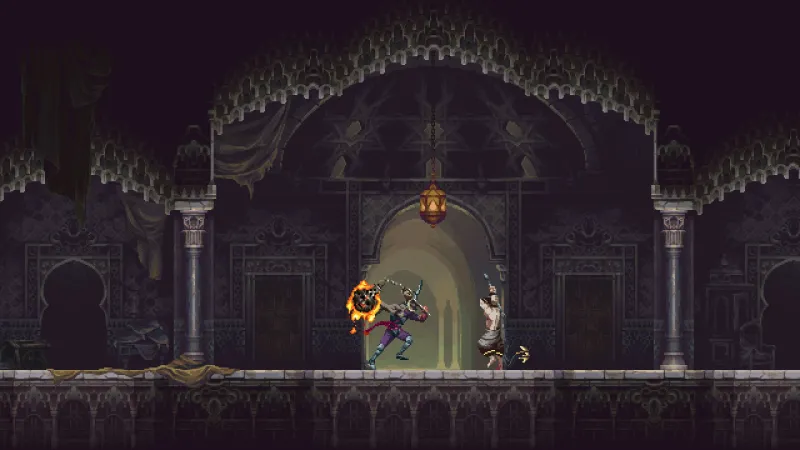
 

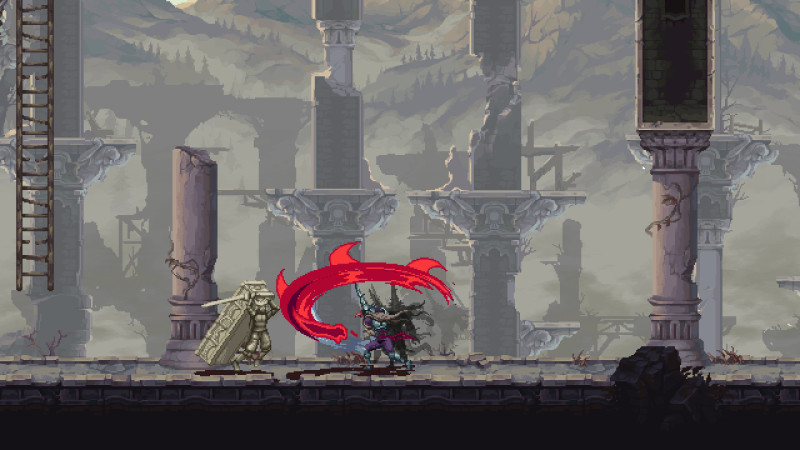
Moving from region to region never ceased to surprise me in all the best ways. Discovering a new NPC who can provide much-needed upgrades to my kit or stumbling upon powerful spells to add to my arsenal were always welcomed, but nothing tops the feeling of figuring out where to go next. Slowly expanding the maze-like map through thoughtful exploration and new traversal abilities became a meditative practice, only interrupted by areas I couldn’t reach with my current moves or by the hordes of grotesque monsters that populate most rooms.

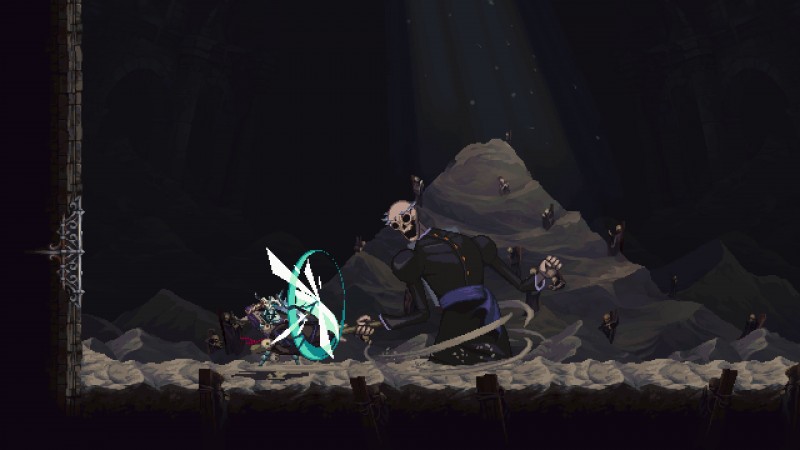
New horrors await in each region, and learning their attack patterns is essential for success. These foes pack a punch, and when they gang up on you or trap you in a corner, it will likely lead to death. Thankfully, Blasphemous 2 gives you smooth and responsive combat to overcome seemingly insurmountable odds. Learning how to slash through enemy types that once troubled you never ceases to satisfy. You can unlock and rotate through three main weapons, each with its own skill tree and traversal abilities, ensuring you have a playstyle that suits you. When combined with various upgrades, spells, and equipable stat boosts, I was happy with the level of customization, even though there’s no proper gear system.

The white-knuckled calculus of whether to counter, dodge, or mount my own offensive in hopes of stunning was common throughout my journey. Though I sometimes dreaded what awaited me in a subsequent room, I always relished the opportunity to show my skills. At times, the difficulty curve feels steeper than it should – a few battle arena rooms tested my patience as much as my skills – and the later checkpoints are a little sparse given how challenging the final sequences are, but it made my eventual victory all the sweeter.

These gauntlets were never more challenging than in the many boss encounters. From a heavily armored knight with projectile slashes to a shape-shifting behemoth that casts various elemental spells, the stiff and diverse challenges you face in boss battles are the ultimate test of your mastery to that point. The knowledge that I was entering a boss arena rarely failed to create a knot in my stomach as I worried about the coming fury, but in retrospect, they stick out as my most memorable moments.

At several points in my lengthy journey through the Gothic delight that is Blasphemous 2, I worried the monstrous foe in front of me would spell an end to my journey. But without these frequent frustrations, the triumphs wouldn’t be as great. Blasphemous 2 takes inspiration from those that came before it, but by intertwining a gorgeous art style, enticing exploration, and rewarding combat, it rises above the horde of Castlevania-inspired action titles.

GI Must Play

Score: 8.75

About Game Informer's review system

Purchase
Wednesday, August 16, 2023

Baldur's Gate 3 Review – A True Soul Stirrer

Baldur's Gate 3

Reviewed on: PC
Platform: PlayStation 5, Xbox Series X/S, PC
Publisher: Larian Studios
Developer: Larian Studios
Rating: Mature

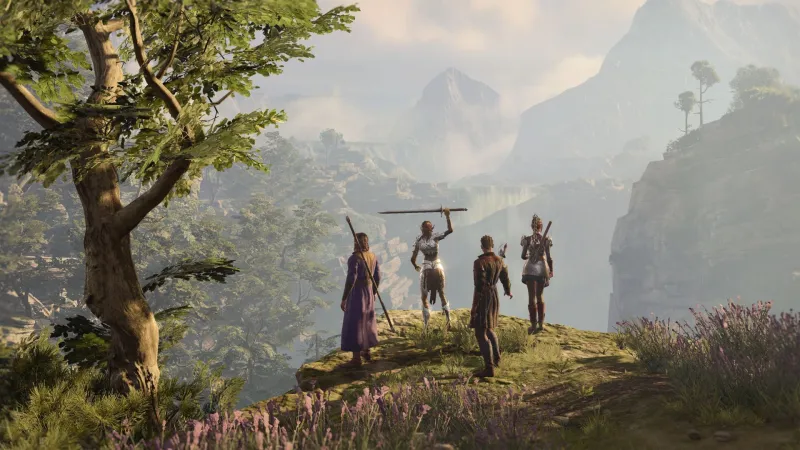
Baldur’s Gate 3 is a surprisingly human tale. That may sound strange to say about a game with space lizards and brain worms at its center, but behind the hags and psychic tadpoles, Baldur’s Gate 3 is about a group of very broken people trying to find their way in life and maybe save the world. Or turn it into a smoldering heap of agony and misery. It depends on how you feel that day. Whether you choose peace or something less savory, Baldur’s Gate 3’s intricate writing and impressive emphasis on experimentation make it one of the most unforgettable games in the genre.

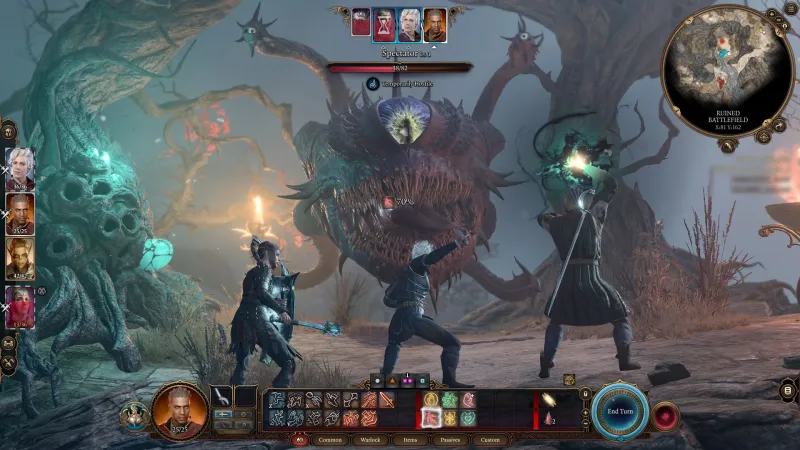
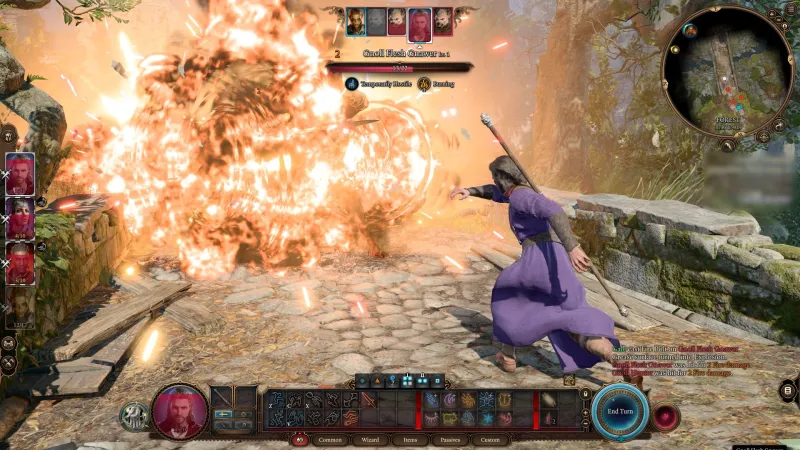
Baldur’s Gate 3 transfers the complexity of Dungeons & Dragons to top-down RPG form, without losing any of the depth. It streamlines dice throws and ability checks so only the important decisions require your attention, leaving you free to focus on exploring the world and choosing your next move in turn-based battles. While you don’t have a dungeon master to keep things unpredictable, you do have a staggering number of choices whose consequences reverberate through the game and an impressive level of depth and freedom on the battlefield.

Your story begins with a mix of deceptive simplicity and a brilliant framework for adventure. After having Mind Flayer tadpoles implanted in your brain, you and your companions – assuming you find said companions and don’t kill them – seek a cure before tentacles and other Ilithid accouterments start replacing your flesh and bones.


The quest for a cure dips into the tired fantasy trope of an Evil Entity who wants to destroy the world, but it defies expectations when you think you have a grasp on the situation. Even when some plot beats are predictable, it never feels stale thanks to how cleverly it intertwines with the much more beautiful and devastating stories of your companions and others you meet. The character writing is consistently superb and makes for one of the most immersive settings in the genre.

After a few hours, you find yourself in a tangled mess of other people’s problems and prejudices, wondering what fresh hell waits around the next corner. Baldur’s Gate 3 excels at the unexpected, at putting you in surprising situations and making you think – or bash or psychic blast – your way out of them.

You walk down the road, and you may run into demons masking as holy soldiers or get tangled up in the pain-loving sisterhood of a cult if the exploding hyenas don’t get you first. It’s the kind of unromanticized nightmare experience you’d expect if someone dropped you in a fantasy land full of strife and said, “good luck, have fun.” Despite the fantasy trappings, it feels more grounded and realistic even at its most deranged – and it gets pretty deranged.

Baldur’s Gate 3 has a strong sense of the ludicrous and is eager to not take itself seriously at times. For example, at the end of an early quest that involves a hag and a distraught widow, you can let the widow lead her zombie husband away to find a cure for him one day or turn him into your lifelong servant. It’s a laughably grotesque situation, and that blend of dark humor with the capacity for doing good, evil, or something in between is why most of Baldur’s Gate 3’s quests stick with you for a long time.

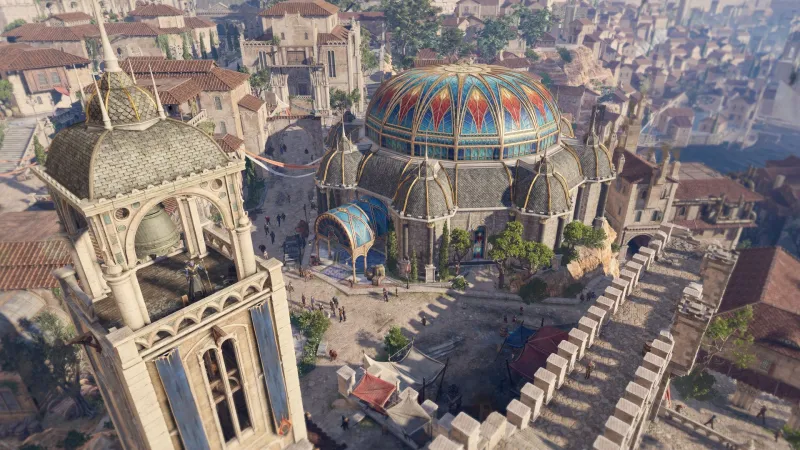
That and the fact that you meet the results of your actions at some point, usually in Baldur’s Gate 3’s eponymous city. A thread of continuity in the game’s events gives greater meaning to your actions and adds a layer of richness to the world and everyone in it.

Well, almost everyone. Devils may get the chance to prove they aren’t so bad, but goblins, Drow, and a few other villain types remain two-dimensional in their lust for evil. Every fantasy has its irredeemable bad guy or group. However, the lack of deeper reflection stands out in a game where complexity defines every person and problem, and it perpetuates some of the more controversial facets of Dungeons and Dragons’ racial determinism.


Whether they’re maligned or malignant, dealing with your foes in Baldur’s Gate 3 is never dull. Battle is a mix of ingenious design and frustrating density. It takes the core of the tabletop experience and automates most of it, so your attack and saving throws happen unseen for a seamless experience – if you’re an encyclopedia of D&D knowledge. The first act throws out dozens of systems without an explainer, so if you’re unfamiliar with the iconic tabletop game, it might be an uphill struggle.

On the bright side, Baldur’s Gate 3 gives you an overwhelming number of skills and approaches to handle every situation. Maybe you want to soften a mighty foe with a little acid spray, build a high-ground advantage with a bench and some garbage, or shove a boss in a hole during their big speech. There’s so much freedom that you can improvise a solution in any situation and feel clever for it, even if it takes a while and reloading save files to get there.

Baldur’s Gate 3 is unforgettable and one of the best experiences I’ve had in games. I may have just finished my lengthy first playthrough, but I’m already eager to delve further and push the boundaries of what’s possible in this exceptional world that Larian created.

GI Must Play

Score: 9.5

About Game Informer's review system

Purchase
Wednesday, August 9, 2023

Stray Gods: The Roleplaying Musical Review - Hades Meets Hadestown

Reviewed on: PC
Platform: PlayStation 5, Xbox Series X/S, PlayStation 4, Xbox One, Switch, PC
Publisher: Humble Games
Developer: Summerfall Studios
Rating: Teen

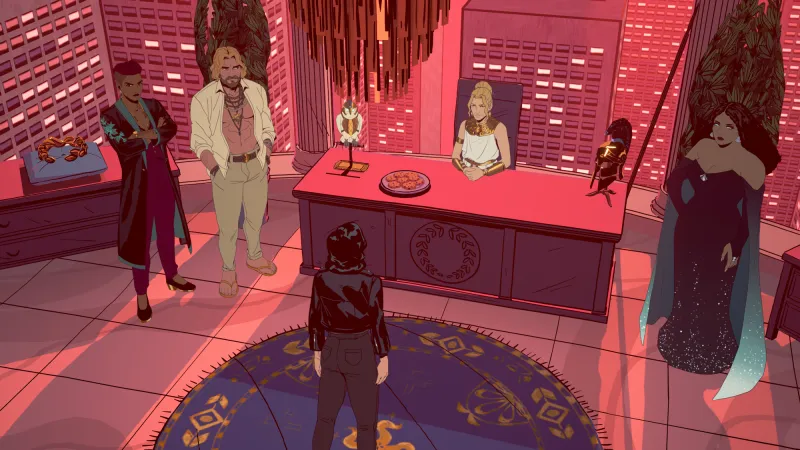
I'm a fan of musicals of all kinds. From Hamilton to La La Land to Bob's Burgers, if the characters in your story burst into song, I'm more than likely on board. For this exact reason, Stray Gods: The Role-Playing Musical caught my eye, exciting both my inner fan of musicals and my inner fan of games. Despite some complaints about glitches and awkward songwriting in a few places, developer Summerfall Studios harmonizes these concepts well, putting on a show I can't help but applaud. 

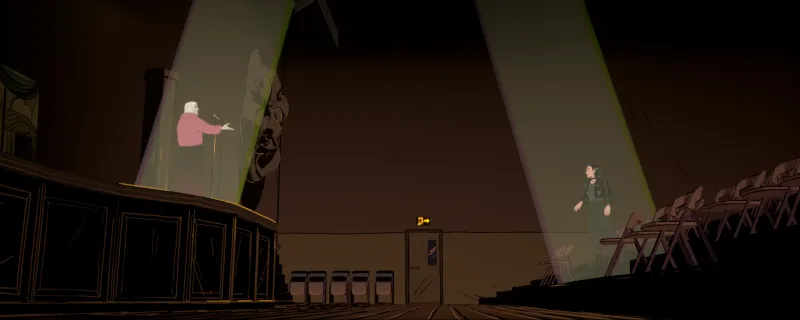
In Stray Gods, you play as Grace, a woman accused of murdering a Muse, a magical being from ancient Greece. In this world, these mythical figures are known as Idols, reincarnations of Greek gods that have died and passed their abilities to humans, granting them immortality and supernatural abilities. Because Grace was there when the Muse died, she's been gifted the power of song and can compel people to sing their feelings in big, interactive musical numbers. I appreciated that there was an in-world reason for this, and found the worldbuilding as a whole to be simple, but fresh. Adaptations of Greek myth are extremely common in pop culture, but Stray Gods tells an original enough story that the world stays unique.

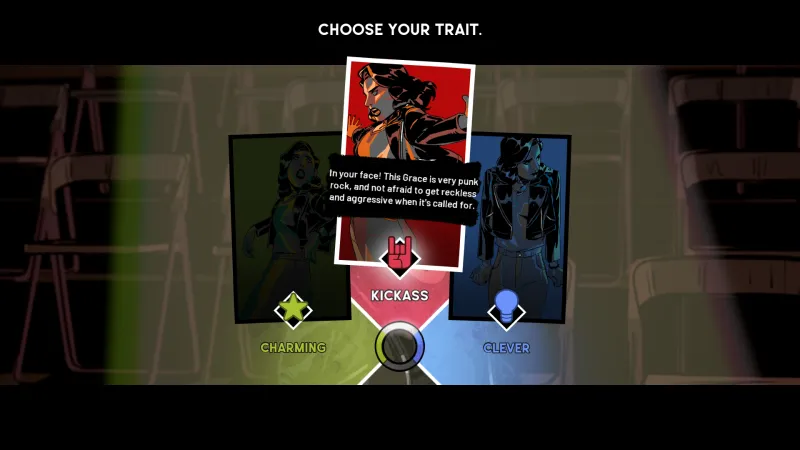
The game's title refers to it as a "role-playing" musical, but that term might be misleading to some. There is no gear, experience, or leveling up – just role-playing in the truest sense of the word by making decisions as your version of Grace. At the start of the game, you get to choose one of three personality traits (Charming, Kickass, or Clever) that unlock different dialogue options during conversations. Most of the gameplay consists of communicating with people and choosing what to say, either through speaking, or when Grace decides to activate her powers through singing.

The songs are Stray Gods' most impressive achievement. As you hear each character sing, you get a list of options for how to respond in the middle of the song. And while the game gives you plenty of time to pick, this selection process is timed with the music, so you have to decide quickly and with your gut. At first, this concept stressed me out, but as the game continued, I grew to love it. I wasn't plotting out the exact reaction I wanted to have, I was truly role-playing and acting as I thought Grace would. If that concept stresses you out or you have some other reason to avoid quick decisions, you can disable timed choices in the settings menu, but I recommend playing with the timer for a better experience.

As you pick different options, songs branch out and evolve into entirely new forms, and affect the story of the game accordingly. Depending on your choices, different characters appear later in the story, while others might live or die. In my first playthrough, I decided to be Charming and tried to empathize with most characters that I met. But on a second playthrough, I decided to test out the Kickass trait, since it was rarely a choice I would have otherwise made. This time, the story was a little different, but mainly altered my relationship with other characters rather than the overall plot. I didn't mind this, as it still makes repeat playthroughs more interesting, but each path still has to guide you to hit the same songs.

However, once I reached those songs, the music was vastly different. I expected similar notes with different lyrics and maybe altered accompaniment, but I was delighted to see just how fundamentally songs can change. Some were completely unrecognizable; a sad, hauntingly beautiful song I'd been looking forward to after my first playthrough made a complete left turn and became a rock song when I selected a different option. Experiencing these songs a second time around hugely improved my opinion of the game. The changes are thrilling to discover, and I liked some songs way more when I picked different lyric options.

Of course, none of these songs or scenes would be enjoyable at all if the cast performing them wasn't talented, so I was glad to see they very much are. The credits are full of seasoned voice actors, so I went in with high expectations, but was still impressed by how well it was cast, especially the side roles. Troy Baker does a great job as Apollo, but supporting characters like Anjali Bhimani's Medusa, Erika Ishii's Hermes, and Rahul Kohli's Asterion were highlights every time I encountered them. 

The cast is led by Laura Bailey's Grace, and while she never drops the ball while acting, there were a few instances where I thought her skillset as a singer didn't exactly match the songs she was singing. In some songs, like in an early confrontation with Persephone, certain selections cause Grace to slip into a faster, rap-like cadence. She's phenomenal at belting and singing more typical Broadway-style songs, but when things get too fast she's definitely out of her element. It's hard to say if it's the lyricism of the section or Bailey's discomfort with the style, but these moments fell short of the standard the rest of the game was able to achieve. Luckily, the game's design allows you to pivot away from a part of a song you don't like – just select a different color at the next decision path and hear a new style you might prefer.

My largest source of complaint, however, is a number of recurring glitches. One is the game's occasional tendency to start a voice line a split second into the first word, creating a jarring clipping effect. It happened most often with Freddie's lines, which also varied in volume to an odd degree, speaking much louder or softer than her scene partners. On a few occasions, I also noticed character models disappearing for a line or two of dialogue, and at one point during my second playthrough, I had to repeat an entire conversation with Pan in a different location, immediately after ending the previous one. Hopefully, these issues are fixed in the future.

While these glitches did detract from my experience, they far from ruined it. Overall, Stray Gods rocks. Between the cast's fantastic performances, a fun twist on Greek mythology, and a genuinely novel game mechanic, it's a game I didn't know I needed, but one I'm happy to give a standing ovation to.

For more Stray Gods, check out our exclusive reveal of the opening song, along with our behind-the-scenes look at how the music was written.

Score: 8.25

About Game Informer's review system

Purchase