This is default featured slide 1 title

Go to Blogger edit html and find these sentences.Now replace these sentences with your own descriptions.This theme is Bloggerized by Lasantha Bandara - Premiumbloggertemplates.com.

This is default featured slide 2 title

Go to Blogger edit html and find these sentences.Now replace these sentences with your own descriptions.This theme is Bloggerized by Lasantha Bandara - Premiumbloggertemplates.com.

This is default featured slide 3 title

Go to Blogger edit html and find these sentences.Now replace these sentences with your own descriptions.This theme is Bloggerized by Lasantha Bandara - Premiumbloggertemplates.com.

This is default featured slide 4 title

Go to Blogger edit html and find these sentences.Now replace these sentences with your own descriptions.This theme is Bloggerized by Lasantha Bandara - Premiumbloggertemplates.com.

This is default featured slide 5 title

Go to Blogger edit html and find these sentences.Now replace these sentences with your own descriptions.This theme is Bloggerized by Lasantha Bandara - Premiumbloggertemplates.com.

Monday, February 19, 2024

Helldivers 2 Review - Bullet Heaven

Helldivers II

Reviewed on: PlayStation 5
Platform: PlayStation 5, PC
Publisher: Sony Interactive Entertainment
Developer: Arrowhead Game Studios
Rating: Mature

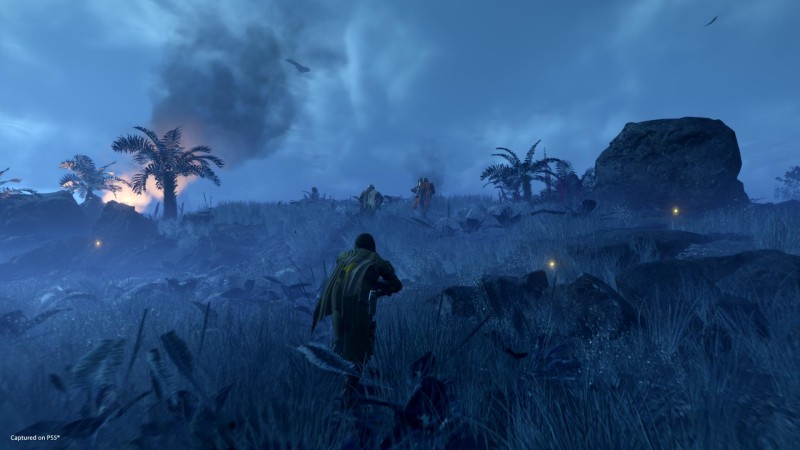
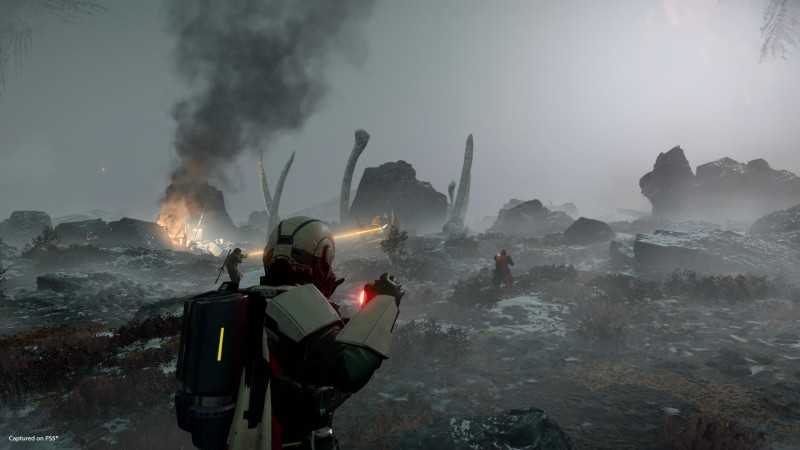
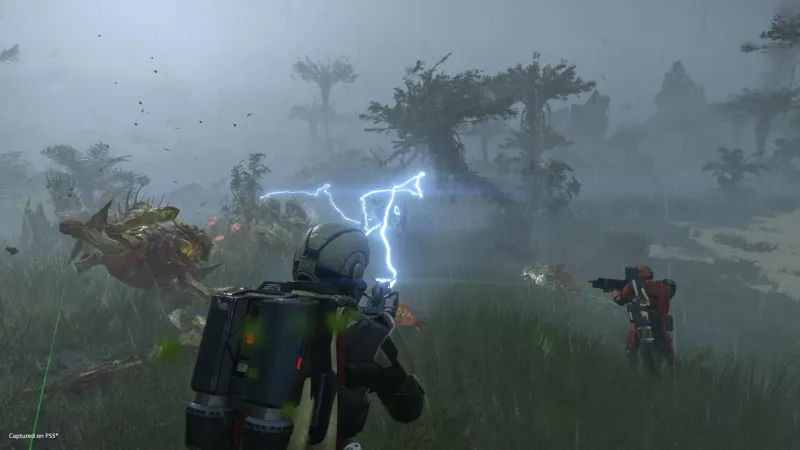
Nearly 10 years on from 2015's Helldivers, Helldivers 2 carefully adapts the simple yet exciting formula of bug-blasting with buddies for a modern audience. Arrowhead Game Studios has swapped the top-down perspective for third-person while maintaining the frenetic, ballistic loop of crash-landing on hostile planets, completing difficult missions, and extracting against all odds.

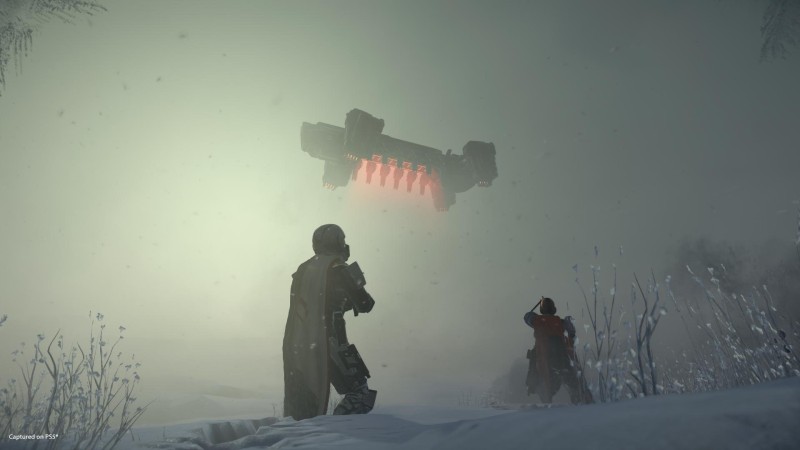
In a galaxy torn apart by war, you and your friends are Helldivers, the brainwashed protectors of Super Earth, invigorated by humorous trite aphorisms espousing patriotism and the importance of so-called democracy. Invading forces of menacing Automatons and craggy, organic Terminids threaten your way of life and have made their home on precious interstellar real estate. After earning the shining cape of “freedom” in the game's boot camp tutorial, you are set loose to tackle an impressive variety of punchy missions. Your objectives range from simple hive exterminations to complicated launch code recovery missions.

However, the exciting unpredictability of Helldivers 2 is secretly the game's best feature. Whether it's challenging terrain, wounded limbs, inclement weather, or a miscommunicated orbital strike that brutalizes your entire squad, your best-laid plans are destined to fall apart in devastating, hilarious fashion.

Combat in Helldivers 2 is all meat, no gristle. The movement feels fluid and reactive, whether you're sprinting to safety or comically leaping into prone to dodge the chainsaw arm of a lurching terminator. This means while you encounter similar biomes and objectives, the journey to meet your goals is always fraught with wonderful chaos. One great benefit to this system is Stratagems – abilities that can be accessed in combat by quickly inputting a sequence of D-pad button presses, like a Mortal Kombat Fatality.

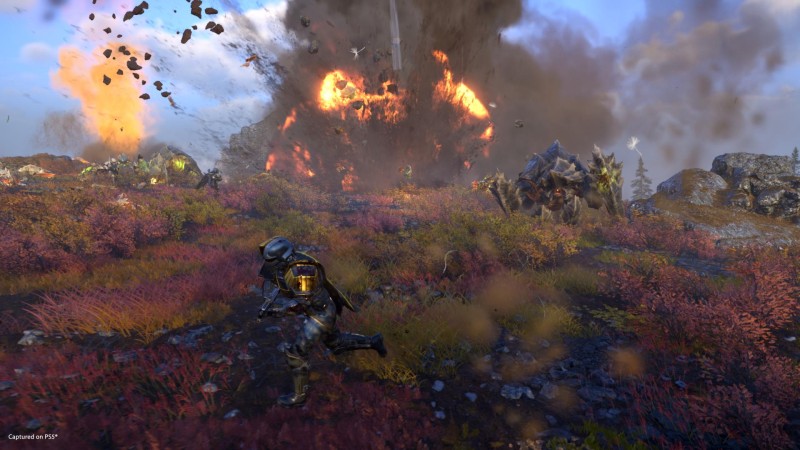
After playing finger DDR, you're given a marker grenade to revive your teammates, resupply and call down offensive airstrikes, top-tier weaponry, minefields, and more. Getting the inputs wrong as bugs nip at your health induces a feverish cocktail of adrenaline and fear. However, when you do smash it in successfully and summon a shower of hellfire, saving your gunned-down compatriots, the heroism is intoxicating. Few games provide such powerful opportunities to play the hero as Helldivers 2.

The efficacy of each snappy run is dependent on who makes it off the planet and how many optional objectives you complete. Subsequently, this determines the XP, Requisition, Samples, and Medals you take home, an uncomplicated suite of resources used to develop your ship and purchase new weaponry, armor, and Stratagems. Helldivers 2 also offers free and premium battle passes and a Superstore where players can use a premium currency called 'Super Credits.' Thankfully, the paid content isn't overly intrusive and can easily be avoided as you progress through the campaign.
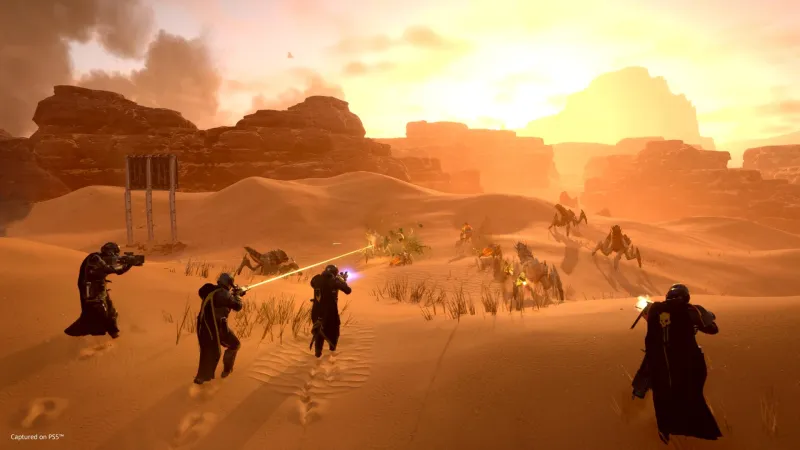
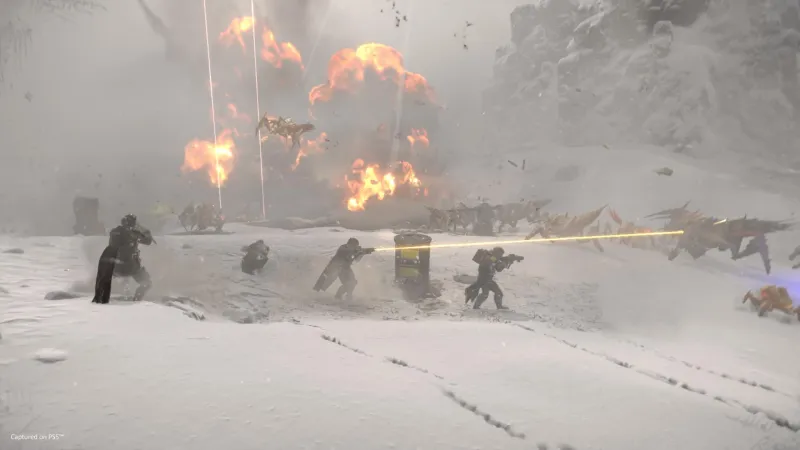
 

Helldivers 2's customizable kit makes it easy to specialize within teams; are you the ammo-carrying support act or the pyromaniac frontman dousing the battlefield in flames?  Despite my efforts, I was my team's problem child, flush with airstrikes and mines that negotiated as many spectacular escapes as they did squad wipes. There's nothing quite as humbling (or humorous) as stumbling into your own minefield during a desperate sprint to the shuttle.

Beyond its refreshingly straightforward feedback loop, even more enthralling is how your personal success impacts the overall narrative. Helldivers 2 operates on a live map, with players around the world slowly liberating quadrants of planets, their actions influenced by Major Orders passed down by central control. In an already collaborative game, this compounds the sense of community, making you feel like you're part of something bigger than even the heady emotional beats of your squad's missions.

Perhaps the biggest hurdle Helldivers 2 has to face is its own success; servers have been overrun since launch, leading to lengthy wait times and faltering progression systems. Yet, for me, the indoctrination is just too strong. I'm still compelled to wait my turn to get another taste of sweet victory in this live-service diamond in the rough.

GI Must Play

Score: 9

About Game Informer's review system

Purchase
Wednesday, February 14, 2024

Mario Vs. Donkey Kong Review - The Rivalry Lives On

Reviewed on: Switch
Platform: Switch

A developer can take many different approaches when remaking a game, but its primary goal always remains the same: to create a new experience that honors the spirit of the original. With Mario vs Donkey Kong, a remake of the 2004 Game Boy Advance title of the same name, Nintendo succeeds in this goal. By combining new worlds and modern quality-of-life features with the game's classic, delightful puzzle design, Mario vs. Donkey Kong is a strong start to Nintendo's 2024.

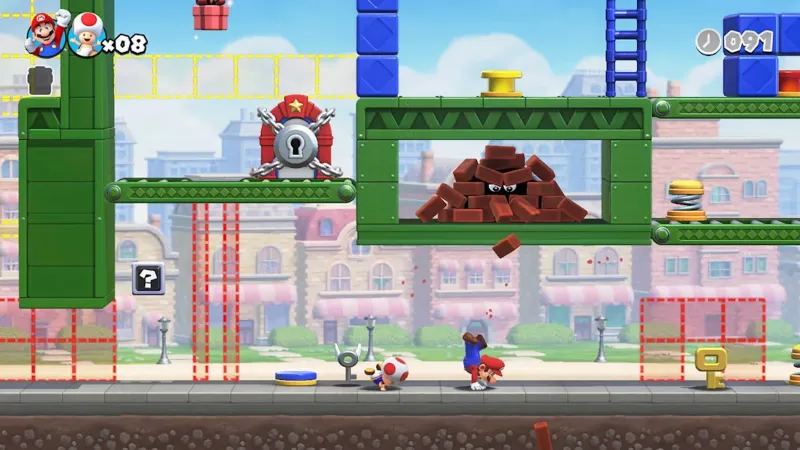
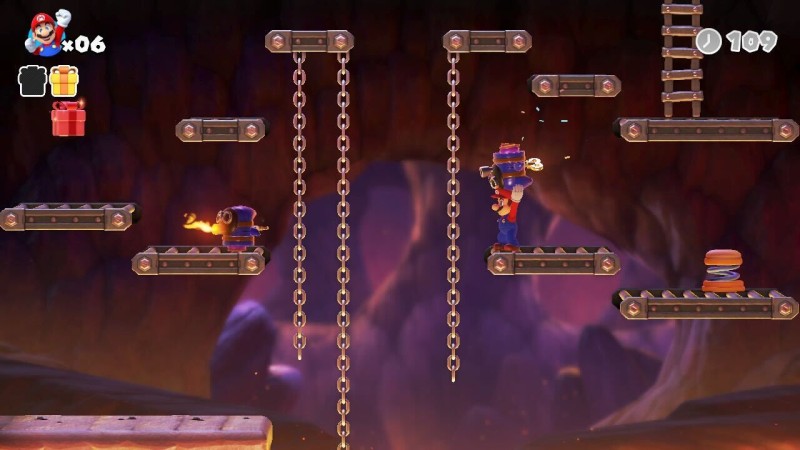
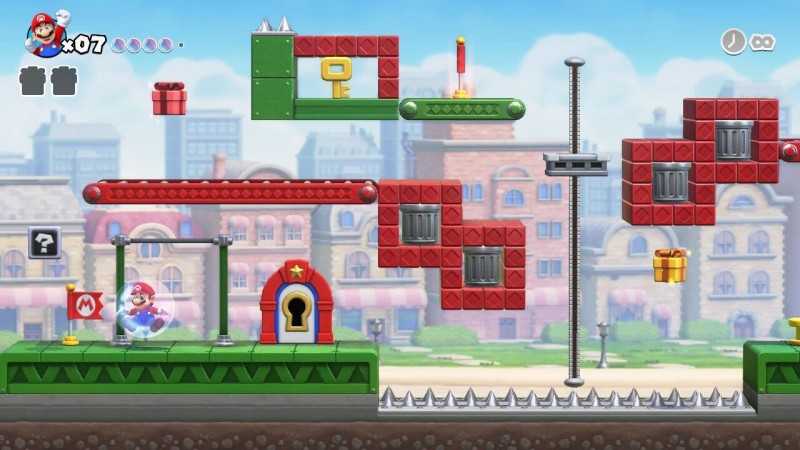
In the game's opening, Donkey Kong raids a toy factory where they make Mini Marios, the hottest new product on the market. To get them back, Mario must chase him down through eight worlds, each with two distinct halves. In the first chunk, he has to carry a key to a locked door, and in the second, he has to reach the Mini Mario located somewhere in the level. On paper, it runs the risk of becoming repetitive, but in practice, there's so much variety from level to level that I was never bored. With only six standard levels in each world, there's a lot of room to play with mechanics and level design, and I was constantly impressed with how the game kept me engaged. It's nothing revolutionary – these are still puzzles from 20 years ago – but they hold up better than many games from the same year.

The element of the game that I enjoyed the most was Mario's versatility of movement. Between handstands, pivot jumps, and triple jumps, it's a blast to move from one side of the stage to another. They're necessary techniques in later levels, but early on, you can become the master of the space and skip entire sections if you know what you're doing. Combining this with its intuitive puzzle design, Mario vs. Donkey Kong makes players feel smart and skilled even when the puzzles are relatively straightforward. Triple jumping out of a handstand over an enemy through the final collectible present and into the end of the level is thrilling every time you pull it off.

The game makes up for its age with a number of new features, my favorite of which is a "casual mode." When activated, Mario no longer resets the level when he dies. Instead, he has a limited number of bubbles that he can use to respawn at nearby checkpoints upon taking damage.  It opens the game to younger players or anyone who might get stuck more easily. The puzzles don't get any less challenging, but the platforming becomes more forgiving, which makes the game less frustrating, especially in some tough-as-nails postgame levels.

This remake also adds two new worlds: Merry Mini-Land and Slippery Summit. While I found them to be a tad easier than the existing levels, they fit the style of the other stages well, and they're welcome additions that slightly extend what was previously a short game. After beating the game, you also unlock a Time Attack mode for every completed level, adding a new challenge for willing players. Add on the + worlds (harder versions of all eight base worlds) and a series of expert stages, and the game has a healthy amount of content if you're willing to dive in. Completing the plus worlds was enough of a challenge for me, but I was glad to know there was more to play if the mood struck.

Mario vs. Donkey Kong is a simple game, but as is the case with Mario's best titles, there's an elegance to that simplicity. Nintendo has done a stellar job adding features to make it more palatable to a modern audience, but it only comes together because of how well the classic levels hold up. Mario and Donkey Kong have been rivals for over 40 years, and this game admirably carries that legacy forward.

Score: 8

About Game Informer's review system

Purchase
Monday, February 5, 2024

Suicide Squad: Kill The Justice League Review - Noise And Confusion

Reviewed on: PlayStation 5
Platform: PlayStation 5, Xbox Series X/S, PC
Publisher: Warner Bros. Interactive
Developer: Rocksteady Studios
Rating: Mature

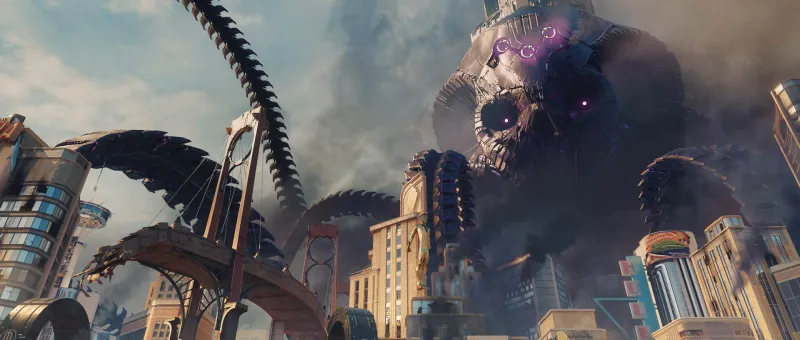
Years ago, when I first heard about the provocative title for Rocksteady’s follow-up to the Arkham games, I recall wondering what mental gymnastics were in store to not actually murder the well-liked central characters of the DC mythos, including the version of Batman the studio had so expertly developed over prior titles. Credit where it’s due: Rocksteady followed through, and Kill the Justice League does just that. Unfortunately, it also killed my interest or enthusiasm through a story that feels juvenile and callous alongside repetitive and confusing gameplay. While many technical features work as intended, I walked away from every session feeling angry and out of sorts, which aren’t sensations that will keep me returning for endless hours of future adventures. 

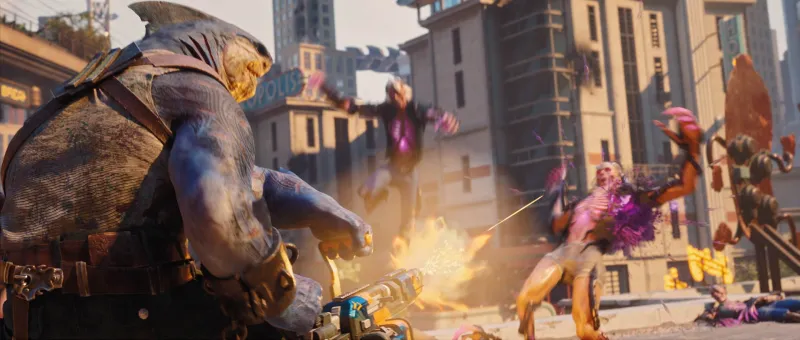
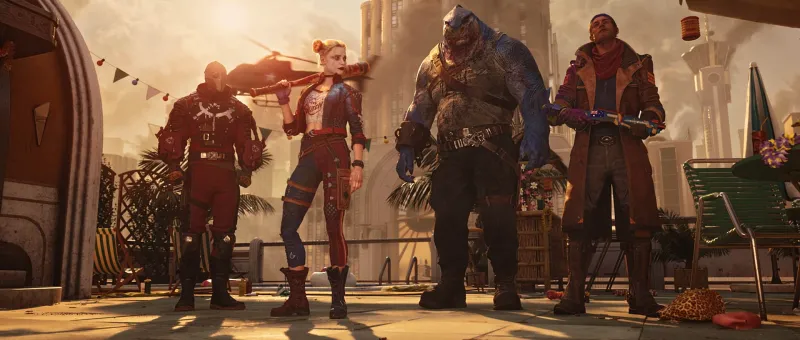
Suicide Squad is a high-octane action shooter where rapid urban traversal and uproarious gun combat are your non-stop companions. A ragtag crew of criminals, including Harley Quinn, Deadshot, Captain Boomerang, and King Shark, must fight through the devastated city of Metropolis, gradually offing the heroes of Earth after they’ve been brainwashed by the villain, Brainiac. Each of the four characters has their variation in how they fling themselves across the city and an upgrade path that allows for some specialization. Still, the core idea is pulling triggers, throwing grenades, and bashing into alien invaders. Each acrobatic navigation style takes some time to master, but I ultimately enjoyed the sense of speed and mobility. In combat, however, the constant vertical up-and-down effect is the first of many issues that make it hard to track what’s happening. 

By default, an incredibly crowded HUD is almost nonsensically busy; the biggest challenge of important fights wasn’t the battle itself but simply seeing what was happening and where certain enemies or objectives were. The HUD may be customized and minimized, but you’re left with the opposite problem and too little information to complete tasks. Enemies have some functional variety but lack visual distinctiveness, adding to a pervasive sense of monotony where all the mission types bleed together into one chaotic smashfest. Everything is loud and obnoxious but rarely exciting.


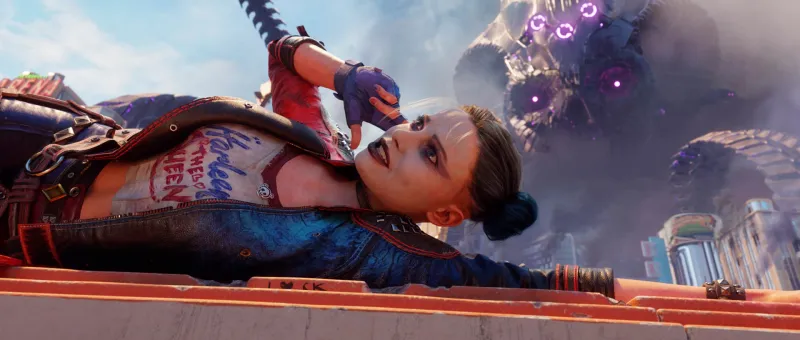
Frequent cutscenes exhibit excellent animation and artwork on characters, especially showcasing some emotive facial expressions. Even with that advantage, the storytelling fails on numerous levels. It’s hard to enjoy a story where I don’t like anybody, and even the anti-heroes and bad guys are endlessly spouting bad one-liners, trash-talking, and shouting at each other. Beyond that tonal disconnect, the narrative is weirdly inconsistent and hard to parse, often with the leads feeling almost like side characters in their own story, with little volition of their own. 

Progress through the game involves gear and character improvement by completing side missions; many tasks set overly specific requirements that rob the combat of variety, like only critical hits or certain types of melees to do damage. The more crafted main missions (especially the ones to take out League members) are more attractive, but are, without exception, weirdly anti-climactic and end with such bleak death scenes that any potential humor is blunted. 

Online cooperative play works well. Especially after the short campaign’s conclusion, four friends could have a good time leaping and swinging around the city, blowing up bad guys in repetitive but action-packed missions. Unfortunately, I never warmed to the player investment loop. Many character upgrades are invisible beyond changes to things like the percentage of damage dealt or how long a power might last. Gear is more compelling, with some unique effects on the best weapons, but it all starts to feel the same after several hours. Post-campaign rewards and activities make a fervent effort to keep players engaged, but I found most to be new window dressing on existing mission types I had already confronted many times.

Suicide Squad is technically sound, and the action can be fast, frantic, and occasionally fun. The game could be considered a deconstruction and satirizing of the superhero concept. But for me, the whole thing feels mean-spirited, pessimistic, and glib. In other media, I’ve generally liked the irreverence of the Suicide Squad tales, but everything in this game feels less about laughs and more just joyless. I suppose it can be fun to piss all over any sense of genuine heroism in a comic book-inspired tale, but it can’t come as a great shock when some fans like myself just aren’t interested in the bloody and smug results. 


Score: 6

About Game Informer's review system

Purchase