This is default featured slide 1 title

Go to Blogger edit html and find these sentences.Now replace these sentences with your own descriptions.This theme is Bloggerized by Lasantha Bandara - Premiumbloggertemplates.com.

This is default featured slide 2 title

Go to Blogger edit html and find these sentences.Now replace these sentences with your own descriptions.This theme is Bloggerized by Lasantha Bandara - Premiumbloggertemplates.com.

This is default featured slide 3 title

Go to Blogger edit html and find these sentences.Now replace these sentences with your own descriptions.This theme is Bloggerized by Lasantha Bandara - Premiumbloggertemplates.com.

This is default featured slide 4 title

Go to Blogger edit html and find these sentences.Now replace these sentences with your own descriptions.This theme is Bloggerized by Lasantha Bandara - Premiumbloggertemplates.com.

This is default featured slide 5 title

Go to Blogger edit html and find these sentences.Now replace these sentences with your own descriptions.This theme is Bloggerized by Lasantha Bandara - Premiumbloggertemplates.com.

Thursday, May 27, 2021

World's End Club – Not With A Bang But A Whimper

Publisher: NIS America
Developer: Too Kyo Games
Rating: Teen
Reviewed on: Switch

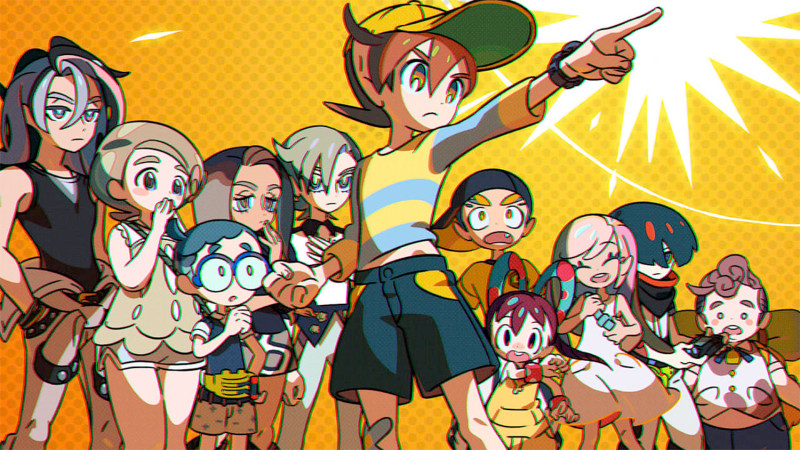
What happens when a crew of angsty students witness the apocalypse during a seemingly normal field trip? World’s End Club answers this question as it examines the various interpersonal relationships of its ensemble cast. However, janky platforming, predictable story beats, uninspired characters, and a forgettable soundtrack prevent World’s End Club from reaching the heights of the two franchises that directly informed it: Danganronpa and Zero Escape.

You’ll spend most of your time in World’s End Club parsing through extensive conversations that give context to the overarching narrative. These dialogue-heavy moments are glorified exposition dumps. Characters announce their ulterior motives and innermost feelings haphazardly, and when a primary villain enters the fray to “accidentally” reveal their diabolical plans (this happens at an alarming rate), the narrative is stripped of its stakes. At times, I was excited to see plotlines resolved, but the emotional stakes got upended so often that I lost interest. This is particularly frustrating because, despite its cartoonish/light-hearted aesthetic, World’s End Club wants to be a game about complex motifs like deceit, trust, and lasting friendship. This could have been interesting, but, as it stands, the narrative feels hollow.

Silent protagonist Reycho is the daring leader of the Go-Getters Club, a quirky band of misfits. When a meteor suddenly crashes into Tokyo one summer afternoon, the world abruptly ends. After the impact, the crew wakes in an underwater amusement park where a floating, Pokémon-esque creature named Pielope forces them to take part in a dangerous “Game of Fate.” The trials that Reycho and company face push the tight-knit fellowship to the brink. Unfortunately, I quickly discovered that each member of the Go-Getters Club is merely a shallow archetype – from the oblivious airhead Vanilla, to the overweight, gluttonous Mowchan. Moreover, the voiceover fluctuates from mediocre to downright laughable. It became increasingly hard to care about the playable cast when they’re awkwardly robotic during emotionally tense moments and even mispronounce each other’s names from time to time.

Click here to watch embedded media

World’s End Club’s gameplay loop is split into three distinct sections: Act, Camp, and Story. During the unremarkable Act phase, you’ll jump over bottomless pits and push crates to clear blocked passageways. Combat usually amounts to tossing blunt objects at slow-moving targets or running for your life while navigating an array of pesky hurdles. I enjoyed the latter moments, but soon realized that getting away from World’s End Club’s zany creatures was deflatingly easy. The less frequent stealth sequences required me to hide behind objects and time my escape sprints. The Go-Getter’s Club get their down time at Campsites, where you can briefly converse with each member to gain a better understanding of character motivations, which are just as shallow as the Story moments.

The one-dimensionality of World’s End Club’s characters is apparent the minute they open their mouths, but when their Awakened Abilities activate, their personalities truly come to life. These awesome super moves help you survive in this dastardly world, and they slowly unlock as you progress through story acts. Awakened Abilities made me feel appropriately powerful and lent themselves nicely to most of World’s End Club’s simple environmental puzzles. For example, I enjoyed using Reycho’s “Big League Pitcher” to toss rocks at overhanging structures, forcing them to collapse on enemies patrolling below. I used other Awakened Abilities to wipe out otherwise indestructible geographical formations or simply slow down undefeatable bosses. The sheer number of applicable abilities made the otherwise boring enemy encounters a bit more satisfying and made uneventful platforming sections mildly entertaining.

That isn’t to say that I didn’t run into my fair share of gameplay issues. Countless times, I found myself staring at a Game Over screen because of wooden controls. Sometimes I’d continuously press the jump button just to watch Reycho saunter towards the edge of a platform. At other times, the characters seemed to fight me as I tried to grab ledges or avoid one-hit-kill obstructions. On several occasions, I was spotted repeatedly by adversaries because of unforgiving stick sensitivity; I’d try to move slightly closer to a ledge, but simply fall off the platform and into the clutches of enemies.

Click image thumbnails to view larger version


The monster and biome design, on the other hand, emerged as my two favorite aspects of World’s End Club. My journey through Japan took me to abandoned prefectures teeming with overgrowth and dangerous obstacles like molten lava, pools of quicksand, and mutated foliage. Underground facilities housed rabid, bipedal canines, and dusty mountainsides were home to gigantic, armored beetles. Some creatures were far more grotesque and interesting to look at with serpentine limbs and unnerving, convulsive movements. Nevertheless, these features weren’t significant enough to distract me from World’s End Club’s myriad narrative and mechanical flaws.

World’s End Club tells as uninteresting story full of obvious twists and turns that’s segmented by linear exploration and low-stakes action. On normal difficulty, you’re killed in one hit, which doesn’t mix well with the finnicky controls. Some character designs and their accompanying abilities are particularly inspired, but I didn’t fall in love with any of their static personalities. World’s End Club ultimately wound up feeling like an unimaginative afterschool activity.

Score: 6

Summary: World's End Club's dull platforming mechanics, story, and ensemble cast make it a chore to play.

Concept: Lead your large crew of friends through a post-apocalyptic Tokyo while avoiding death at the hands of mutated monsters

Graphics: A few of the main character designs are cool, but most are middling. The numerous locations you traverse and creatures you encounter are definitive highlights

Sound: At best, the voicework is subpar, and the cacophonous soundtrack detracts from the already lackluster story

Playability: World’s End Club’s unresponsive controls make it easy to miss key jumps or grapples. On higher difficulties, I died a few times because of these finicky controls, but the story checkpoints are quite forgiving

Entertainment: Most Awakened Abilities are fun to use, but puzzles are boring because they’re such a breeze to complete

Replay: Low
Click to Purchase

Monday, May 24, 2021

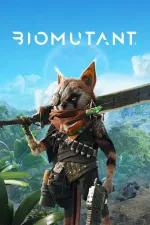
Biomutant Review – A Flawed Mutation

Click here to watch embedded media
Publisher: THQ Nordic
Developer: Experiment 101
Release: 2019
Rating: Teen
Reviewed on: PlayStation 4
Also on: Xbox One, PC

Much like its gene-spliced protagonist, Biomutant is a hodgepodge of ideas stitched together to form what is ultimately a mixed bag. The game blends elements of open-world design with stylish action, gunplay, crafting, a morality system, and more. Like many jacks-of-all-trades it winds up being a master of none, and a thick layer of technical jank on top of half-baked ideas makes Biomutant feel like a case of feature creep that needed to be scaled back.  

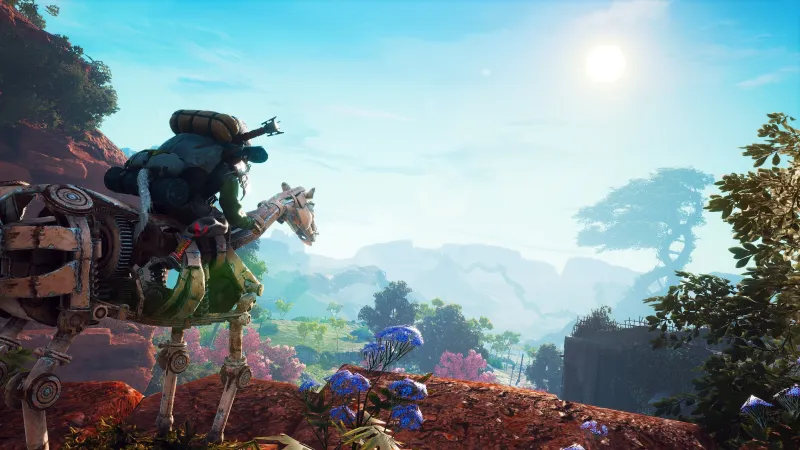
At its core, Biomutant is a typical open-world game featuring a large map littered with basic objectives, points of interests, and various environmental biomes with bizarre wildlife roaming in between. Despite its post-apocalyptic premise, the vibrant overworld is packed with color, and I love how that beauty is juxtaposed with ruins of modern civilization. A majestic Tree of Life sits at the world's center and its four gigantic roots snake for miles overhead for a wondrous sight. The anthropomorphic character and monster designs are a charming blend of strange, funny and, sometimes, unsettling.

I enjoyed Biomutant most when I simply explored, stumbling upon hidden bunkers or abandoned villages and clearing them of their precious loot. Traveling gets even better thanks to a variety of transportation options, from riding various mounts to stomping around in a mech suit to soaring on a glider. Summoning a mech from the sky feels empowering until you realize some vehicles can only be used in vaguely designated zones. Being barred from summoning my boat in one clear body of water but not another puts a damper on the game’s sense of freedom.

Combat blends stylish melee with wacky gunplay but lacks the polish it needs, often feeling messy and imprecise. Parrying feels especially unsatisfying, and the loose lock-on system makes staying on target a finnicky pain. I appreciated the variety of special powers at my disposal such as creating trails of fire or conjuring ice storms. These abilities add a flashy wrinkle to the action, but they also don’t pack as much punch as I wanted in battle, even after investing stat points into them.

Biomutant’s combat became more tolerable once I acquired stronger weapons via a robust and rewarding crafting system. After collecting random junk like old sniper scopes, trumpet horns, or even bananas, you can slap together devastating killing machines. I had a great time maximizing this system, and seeing my creations tear through monsters always felt rewarding. The same goofy satisfaction applies to armor and gear; my character rocked a mascot helmet and a polo shirt that looked ridiculous, but the outfit was augmented to be as sturdy as a suit of armor. The drive to make cooler weapons is potent and scavenging for new parts consistently felt worthwhile even when I found loot that was inferior to what I already had. That’s because you can always sell it or, better yet, break it down into valuable ingredients to craft better parts. 

Biomutant boasts an overwhelming amount of side activities that are mediocre best but too many of them boil down to completing simple actions a set number of times in different locations. The tasks themselves aren’t bad, they’re just the definition of busy work, and the rewards aren’t worth the effort half the time. Still, you don’t need to worry about a lack of content in Biomutant; my quest log overflowed with things to keep me busy for dozens of hours, even if those activities were largely shallow.

While elements around the edges can allow some degree of entertainment, it all feels hollow when it’s funneled into an underwhelming narrative core. Upon bringing your furry hero to life, you’re saddled with several big tasks. Four destructive World Eaters are killing the Tree of Life, and it's up to you to stop them. You also need to bring an end to a tribe war by joining one faction and then uniting or eradicating the rest. On top of that, the brute who murdered your family in childhood has resurfaced and must be dealt with. Did I mention there’s also a life-saving Ark that holds a limited number of seats and you must determine which of your allies gets a free ride should the world go sideways? 

Biomutant juggles a lot of threads but none of them are engaging. Avenging your parents’ death lacks any emotional punch because the killer is barely a factor in the story, and the final showdown unfolds in predictable, anticlimactic fashion. Solving the tribe war simply involves conquering the other settlements in bland confrontations and deciding whether to kill or spare the leaders. World Eater missions have the most meat on their bones by far, with various tasks, such as obtaining vehicles, aimed to prepare you for the big fights. However, facing these beasts consists of sloppily designed boss fights that rob these titanic battles of any sense of awe. The Ark subplot feels entirely unnecessary and doesn’t even make total sense if you manage to save everything anyway. The lackluster storytelling further diminishes an already shallow morality system, which yo-yos between basic black and white choices.

Click here to watch embedded media

Throughout your journey a pleasant British narrator recites the entire adventure. He does an adequate job, but his rampant interjections outside of cutscenes wore on me after a while. The narrator also speaks for every character, which robs them of any individuality, and conversations become tedious since you have to wait for the narrator to translate the native creatures’ gibberish. The only other voices you hear are your two bickering fairies, which represent your light and dark side, and they became my favorite personalities by default for having, well, personality. I like that they’re both jerks constantly belittling each other while rallying you to join their side.

A lackluster presentation and technical issues further spoil the experience. Cutscenes are rough thanks to stilted animations and an overall flat delivery. An occasionally wonky camera can zoom inside of objects during conversations. Cinematics sometimes end abruptly, even cutting off dialogue in progress. Playing on PC offers a smoother outing, but various bugs and hard crashes hindered my adventure on console.

Biomutant consistently shows glimmers of promise but it takes patience and a pair of rose-colored glasses to see them. I genuinely loathed my first several hours with the game, but once I made cooler weapons that made combat more tolerable or admired another postcard-worthy sight, I felt more disappointed than anything. Biomutant has all the ingredients of a unique, entertaining adventure. It just spends too much time doing everything possible to try and impress its audience instead of polishing its handful of strengths.

Score: 6.5

Summary: Despite bursting at the seams with cool ideas, Biomutant is a largely hollow experience that only provides fleeting glimpses of greatness.

Concept: Splice together a hero, save a dying world, avenge your parents’ murder, and end a war in this wildly ambitious open-world title

Graphics: Biomutant’s wonderfully quirky art and creature design makes for bizarre eye-candy but rough animations and an overall lackluster presentation begs for another coat of polish

Sound: The handful of forgettable tracks plus the overwhelming presence of a tiresome narrator makes Biomutant unremarkable to the ears

Playability: Combat feels messier than it looks thanks to rough polish and troublesome targeting but becomes bearable once you craft more powerful and exciting weaponry

Entertainment: Biomutant has fun moments, but it stumbles in too many significant ways to make it a wholly satisfying experience

Replay: Moderately High

Click to Purchase

Friday, May 21, 2021

Knockout City Review – Dodgeball Delight

Knockout City

Publisher: Electronic Arts
Developer: Velan Studios
Rating: Everyone 10+
Reviewed on: Xbox One
Also on: PlayStation 4, Switch, PC

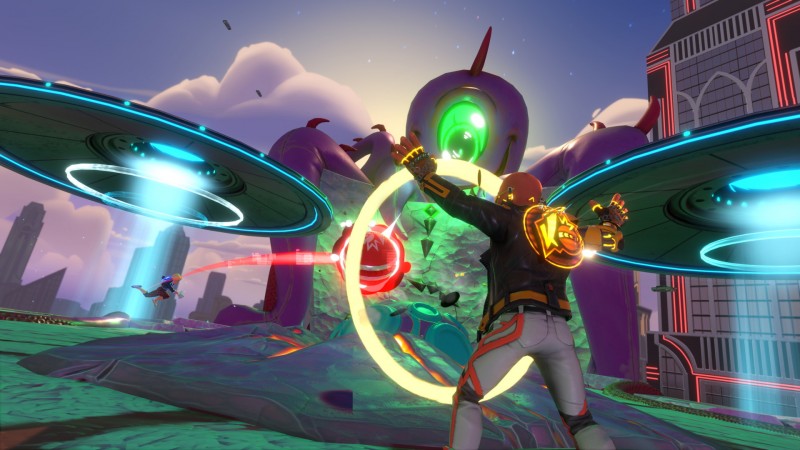
Stepping onto the court for a dodgeball match used to either fill you with excitement or dread depending on where you stood in the gym-class pecking order. The same could be said of multiplayer shooters, as poorly matchmade games deliver feast or famine results based on your level of skill. Knockout City masterfully combines the best from both dodgeball and multiplayer shooters to create an experience that is frantic, fun, and welcoming to players of all skill levels.

Joining a match is hardly an intimidating affair thanks to Knockout City’s streamlined gameplay. All you need to know at the start is that you find a ball on the map, then find someone to throw it at; the game automatically locks on to targets, making the action less about how elite your aim is and more about the strategy of how to approach each rubber-ball firefight. Once you have the basics down, you can learn different kinds of trick shots, ways to capitalize on the various special balls, and how to master the timing of catching incoming balls. These matches become fast-paced, so gaining a keen awareness for when you’re targeted (as indicated by a red outline on your screen) and learning how to read when balls come your way is where most improvement occurs.

As I learned to contextualize the action and strung together effective plays, the excitement ramped up. In one chaotic sequence, I was at a two-on-one disadvantage, and both opponents had a ball. As the first one fired at me, I timed my catch perfectly, which immediately gave me a pre-charged throw, allowing me to fire back at the thrower at full speed before they knew what hit them, knocking them out. Then, I dashed to avoid the second incoming throw, snagged another nearby ball, and performed a spin move to put a curve on my throw, wrapping it around a pole and hitting the second opponent from an unexpected angle. Moments like that, where you flow from one satisfying move to the next off instinct is supremely rewarding, making you feel like a dodgeball master.

Click here to watch embedded media

Despite moments like these, all modes (save for the tense one-on-one Face-Off mode) place you in two teams of three. Teams do more than just even the odds, however, as you can interact with your teammates to perform stronger attacks. Balls gain an instant charge when you pass them to a teammate, letting your friends immediately fire them off at full speed to deliver the final blow to an enemy player. Players can even turn into a ball themselves, allowing teammates to pick up and throw each other at enemies, or perform an ultimate attack which turns the held teammate into a bomb that rains an area-of-effect explosion on targeted players.

Knockout City’s five maps are entertaining playgrounds full of concentrated battlefields, naturally flowing lanes, and unique obstacles. I loved the rotating center structure of the Galaxy Burger map, while the opposing skyscrapers of Rooftop Rumble creates intriguing dynamics with the two teams. The maps are also well populated with balls, meaning you’re rarely struggling to find something to fire your opponents’ way.

Scattered through traditional matches are special balls that augment your dodgeballs so they explode, gain extra distance and speed, and move with moon-like gravity. These power-ups are rare in most modes, but they take center stage in the over-the-top Party Team K.O. where all standard balls are replaced by special balls. Those matches are exciting and unpredictable, but the chaos can be a little too much at times, and during a typical play session I would migrate back to standard Team K.O. after a few Party matches.

Every action you take counts toward a suite of goals listed in the menu. These objectives range from scoring knockouts with a particular type of throw to assisting your teammates in various ways. As you complete objectives and level up, you earn cosmetic rewards and Holobux, which can be traded in for rewards like new outfits, emotes, and gliders. Thankfully, all the upgrades are cosmetic, meaning nobody has a competitive advantage from unlocks.

Click image thumbnails to view larger version


Outside of the approachable gameplay, perhaps the biggest boon to making sure everyone can enjoy Knockout City together is the fact that the title supports crossplay and cross-progression. Without any issues, I was able to party up PC players while I played on my Xbox. I still needed to find each player’s in-game player name, but the intuitive social menu makes connecting with friends and recent players a breeze. You can also join a Crew, a unique twist on the traditional Clan system, letting you further customize your character with a logo, vehicle to enter the match, and more. You also earn additional rewards and experience when you play with your Crewmates.

Unfortunately, Knockout City lacks significant content at launch. The game contains four base modes and only five maps. Developer Velan Studios has ambitious plans for post-launch life, including new maps, modes, and playlists, but that’s all still forthcoming. The existing content is strong, but I grew weary of what was initially on offer after a few short hours.

Content concerns aside, Knockout City has a superb base to build off. With gameplay that eases you in, then encourages you to experiment with those mechanics to increase your mastery, Knockout City offers a refreshing take on both the multiplayer shooter and the classic game of dodgeball.

Score: 8.5

Summary: With a fun core, approachable gameplay, and intense rubber-ball firefights, Knockout City lets everyone get in on the enjoyable dodgeball action.

Concept: Replace the guns typically found in an arena shooter with dodgeballs to reimagine the gym-class staple

Graphics: Cartoony visuals hammer home the fast-paced and lighthearted action

Sound: A fun soundtrack complements the battles well, but the star here is the true-to-life thud the dodgeballs make on impact

Playability: Easy to pick up but tricky to master, Knockout City offers fun for players of a wide range of skill levels

Entertainment: At launch, Knockout City lacks in content, but it makes up for it with a strong base game and a ton of potential to grow in the future

Replay: Moderately High

Click to Purchase