This is default featured slide 1 title

Go to Blogger edit html and find these sentences.Now replace these sentences with your own descriptions.This theme is Bloggerized by Lasantha Bandara - Premiumbloggertemplates.com.

This is default featured slide 2 title

Go to Blogger edit html and find these sentences.Now replace these sentences with your own descriptions.This theme is Bloggerized by Lasantha Bandara - Premiumbloggertemplates.com.

This is default featured slide 3 title

Go to Blogger edit html and find these sentences.Now replace these sentences with your own descriptions.This theme is Bloggerized by Lasantha Bandara - Premiumbloggertemplates.com.

This is default featured slide 4 title

Go to Blogger edit html and find these sentences.Now replace these sentences with your own descriptions.This theme is Bloggerized by Lasantha Bandara - Premiumbloggertemplates.com.

This is default featured slide 5 title

Go to Blogger edit html and find these sentences.Now replace these sentences with your own descriptions.This theme is Bloggerized by Lasantha Bandara - Premiumbloggertemplates.com.

Wednesday, July 7, 2021

Monster Hunter Stories 2: Wings Of Ruin Review – My Monstie And Me

Publisher: Capcom
Developer: Capcom
Rating: Everyone 10+
Reviewed on: Switch
Also on: PC

The mainline Monster Hunter series has seen a number of quality-of-life changes in recent years, but even with those changes the series is a tough sell for newcomers. On the other hand, the sequel to 2017’s Monster Hunter Stories might be the perfect on-ramp for those who want to start hunting. In Monster Hunter Stories 2: Wings of Ruin, Monstie riders are people who create bonds with monsters, entrusting them to fight alongside them in battle. The Stories series has a greater focus on narrative and monster collection, and it converts the epic monster confrontations into turn-based RPG battles, though players can still expect plenty of the franchise’s signature strategy and planning.

The Stories series differs from games like Monster Hunter World or Monster Hunter Rise in that the action is contained to strategic turn-based battles which wonderfully translate the franchise’s hunting experience. Combat has rock-paper-scissors rules where you and your Monstie counter enemy attack types, choosing between speed, power, and technical attacks. Learning a monster’s attack types is the key to surviving, as well as learning which weapon types affect each part of a monster. Veterans of the Monster Hunter series will already be intimately familiar with the ins-and-outs of this system, but Stories does a great job explaining the finer points to newcomers. Your character is the only fully controllable party member, but Stories makes that work. Monsties act on their own by choosing their own attacks and skills in battle, unless you tell them to use a specific skill. Whether I’m switching weapons mid-battle, doing a quick-time event, or targeting parts of a monster, I always feel like I have something to do and I’m making a difference in the battle. Kinship Skills are basically super attacks which allow you hop on your Monstie’s back and unleash awesome, flashy attacks that bring a lot of fun moments to battles and show off each Monstie’s full personality and power. 

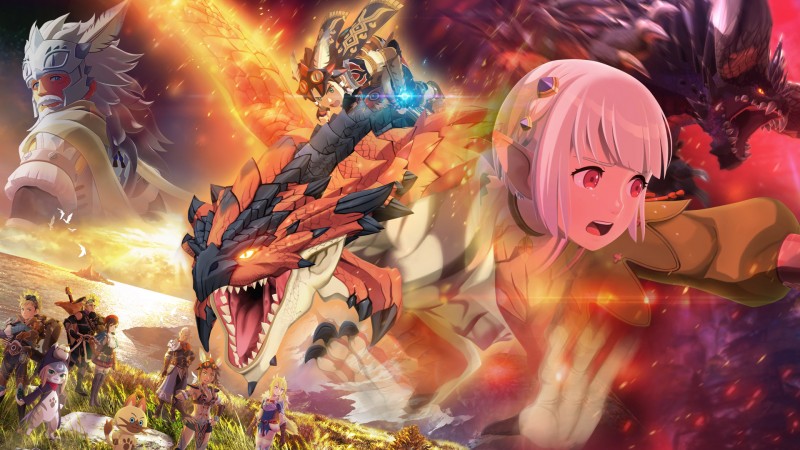
Monsters are really the star of this show, and Wings of Ruin brings along a lot of series favorites to fight and collect. Of course, the series’ mainstays of Rathalos, Nargacuga, Diablos, and Urugaan are here, but so are some offbeat monsters such as the bright yellow and orange lemur-like creature Kecha Wacha and my favorite toothy pale creeper, Khezu. I love how much of Stories feels like an alternate take on a traditional Monster Hunter but keeps your character’s main form of progression tied to their gear. Defeated monsters drop items which can be used to craft rad looking weapons and armor, all of which have their own special properties. While experience and character levels factor into your success in combat, gear is the biggest difference maker. I enjoy pinpointing which monsters to target in the wild to create the next piece of gear to help me beat bigger foes, though having the right Monsties at your side is also important.

Click image thumbnails to view larger version


Monsties aren’t caught in battle but collected by hatching eggs taken from nests in monster dens. You don’t need to defeat a monster to collect eggs but besting monsters in battle can cause them to retreat to their den, almost guaranteeing an egg discovery. A den’s rewards are great, which makes venturing into them seem exciting, but these areas are mostly empty, dull, and repetitive, making the process of gathering eggs tedious.

One of the coolest new additions to Stories 2 is the inclusion of genes that give players the ability to tweak Monsties in fundamental ways. Each Monstie can have a total of nine genes that give different stat boosts or special moves. Genes can be transferred from one creature to another to give Monsties attacks or elemental properties they wouldn’t have otherwise. I loved making wild, unique, and even funny combinations like an Anjanath who slams enemies with ice attacks or a Tigrex that farts toxic gas. This system was also helpful in eliminating weaknesses in my Monstie party by rounding out their potential attack types or empower existing ones. Gene manipulation can greatly extend your time with Wings of Ruin, especially if you’re looking to throw down against other riders and Monsties in competitive multiplayer battles.

Multiplayer has some fun ideas, but It’s a bit limited in scope. You can play with friends or random people online in two different ways. First, are head-to-head battles where you can put your genetically enhanced Monsties to the test by facing other riders in one-on-one or four-player team battles. Coop quests let you take on monsters and explore dens with friends. You won’t be running around the single-player world map, but instead areas designed like dungeons. Players are able to take on monsters side-by-side, emulating the battle buddies who travel with you in the main scenario. Co-op missions lack variety at this point as there aren’t many quest options to choose from, but I do like the option to spend some time collecting eggs and taking down monsters with a friend.

Click here to watch embedded media

Your character, the descendant of a legendary rider named Red, travels alongside Navirou, a talkative feyline, and Ena, a Wyvernian with connections to Red. Their goal is to uncover the secrets of a special Monstie you inherit named Razewing Ratha who is said to hold the power to bring ruin to the world just by flapping its wings. Your journey takes you through golden fields, snowy mountains, vast deserts, and molten volcanos, each with their own roaming monsters to battle and collect. Each area has a hub town where you can craft your gear and collect quests for additional money and resources. This narrative starts with a bang but quickly hits the brakes and doesn’t pick up again until the back half. Much of the story revolves around the responsibility of having Ratha’s immense power at your side, and how it isn’t inherently good or bad. Some of those moral lessons fell flat for me, and I don’t find many of the early flashbacks for some of my partner characters engaging. Stories 2 is at its best when dealing with the conflicts in the present, whether that’s a goofy scenario involving Navirou or the incredible action centered around Ratha and the mysterious glowing pits of energy spread across the land.

Monster Hunter Stories 2: Wings of Ruin’s story might not light the world on fire, but it’s a fun experience that can acclimate new players to the great elements of the Monster Hunter series. Combat encounters are full of rich strategy, and Monstie collecting and gear customization kept me coming back even after the credits rolled. If you’ve been curious about Monster Hunter, but feel intimidated by the main series, Stories 2 might be just the entry point you’re looking for.
Score: 8.5

Summary: Wings of Ruin is a great entry point to the Monster Hunter series while having plenty of monster fun for veterans to enjoy.

Concept: An approachable turn-based Monster Hunter where you befriend monsters and fight by their side

Graphics: Wings of Ruin’s stylized approach to characters and monsters is gorgeous and fits with the vibrant and beautiful open environments

Sound: Monster Hunter Stories 2 features a wonderful orchestral score that’s epic and at times whimsical

Playability: While much easier to start than traditional Monster Hunter games, Stories 2 builds upon its easy-to-understand concept of monster collection and battling in fun and unique ways

Entertainment: Hatching Monsties and battling alongside them against bigger monsters is very fun and pulls its weight more than the lackluster story

Replay: Moderate
Click to Purchase

Monday, July 5, 2021

Griftlands Review – Great Friends In Low Places

Publisher: Klei Entertainment
Developer: Klei Entertainment
Release:
Rating: Teen
Reviewed on: Xbox Series X/S
Also on: PlayStation 4, Xbox One, Switch, PC

Griftlands is a deck building game set on a cutthroat alien planet where conflicts require either a sharp dagger or sharper wit. Your tools to survive are shuffled into decks of cards that grow and evolve through the course of the adventure. Klei Entertainment’s card battler sounds similar to games like Slay the Spire, but the differentiator is an interconnected world full of characters and factions where your actions and relationships actually matter. Griftlands presents a mostly satisfying narrative while scratching my itch for complex deck building roguelikes.

The bulk of Griftlands’ action revolves around card slinging during heated negotiations and battles. However, the combat and negotiation systems both have bespoke decks and mechanics. Battles are straight forward physical fights where you use attack, defense, and augmentation cards to defeat the opposing force. These augmentation cards do everything from apply damage over time to increase the power of other attacks and they do a great job adding strategic depth to the action. Sentient enemies and allies have panic points and surrender once their health drops below a certain threshold. This clever system gives you a powerful and intriguing choice to spare or execute your foes, though accidents happen, and people can die regardless of your intentions. Killing an enemy rewards you with cards to add to your deck, but their death makes the public aware of your pension for violence and can turn a victim’s friend into an enemy. I enjoyed maintaining the delicate balance of keeping foes alive while dispatching of their cohorts to keep my character’s standing in the world as pristine as possible. Adding this combat puzzle to encounters wonderfully extends agency into a system easily boiled down to kill or be killed and helped add additional stakes to each encounter.

Click image thumbnails to view larger version


Negotiations, on the other hand, are my favorite part of the game. I love seeing my conversations represented through game mechanics rather than the typical dialog tree. Additionally, I appreciate being able to navigate conflicts without always resorting to violent tactics. These debates are triggered when trying to get information, pushing for a few more shills on a completed job, or to demoralize an opponent before a real fight. Your goal is to reduce the resolve of your opponent’s core argument. Side arguments have various effects on the discussion, giving benefits to yourself or hindering the opponent. These additional arguments stand separate from your core argument and must be defended as if they were allies in battle. Failing a negotiation doesn’t end the game, so negotiations present a complex, fun, and low-risk solution to some problems. Losing a negotiation may lead to a physical confrontation, but talking things through can avoid some confrontations or provide buffs during street fights, so it’s usually worth a shot. I found it a little overwhelming at first to learn a second set of card mechanics, but ultimately I found the flavor and execution of the negotiation system to be excellent.

Griftlands’ three distinct campaigns are full of meaningful content, each following a unique character in different areas of the harsh continent of Havaria. Sal seeks revenge against someone who sold her into indentured labor in Murder Bay. Rook is a former military agent specializing in espionage who works both sides of the conflict in the Grout Bog – just like he works his trademark lucky coin. Smith, the black sheep of a wealthy family, aims to collect an inheritance he was never promised by bolstering his fame despite his heelish personality. All three stories feel very different, but together paint a great picture of the factions, people, and struggles that tie the world together. Sal’s narrative feels more urgent and dire than the others, while Smith’s story is breezier and lets you revel in playing a self-absorbed jerk. Learning their differing styles of combat and negotiations is a joy. The entire cast is fun to pilot and each employs tactics in-line with their personalities. For instance, Smith uses his notoriety to do the heavy lifting in negotiations while his combat style is a mix of heavy drinking and self-harming pro wrestling moves. Discovering ways to exploit Rook’s reliance on coin flipping manipulation and creating devastating negotiation combos was an absolute highlight of my time in the Griftlands.

Click here to watch embedded media

The main story beats remain the same from one run to the next but the jobs you take each day, and the choices along the way, create a new adventure each time. You may end up on the opposite side of the final conflict or find yourself facing down allies you befriended earlier in the run. These choices make each run through Griftlands rewarding and help sell the procedurally generated story moments. All of the named denizens of Havaria have their own factions, places they frequent, and styles of negotiation and battling. If you are in their good graces, they may even jump in and give you a hand during conflicts. I spent a few shills grabbing a drink with a character one night and then they saved my butt the next day when I got in a jam. It’s important to make friends along the way and hard to survive without a few on your side. This leads to a minor gripe: there aren’t many reasons to want characters to dislike you. In a game where morality and relationships are at the core of your interactions with a harsh, dangerous world, the fact that you can’t use negative emotions to your benefit in some way feels like a missed opportunity to me.

Griftlands is an ambitious package. Not only does it combine two different compelling deck building systems into one game, but it’s attempt at relationship building feels like a small-scale version of what I loved about Mass Effect. Best of all, it pulls it off. Griftlands leverages the strengths of card-based roguelikes, delivering a different experience with each adventure, providing various deck archetypes for each playable character, and every in-game day brings new objectives to keep the experience fresh. The Griftlands may be an unforgiving, harsh place to live, but it’s a world I’d like to keep visiting.

Score: 8.75

Summary: Klei's fun and challenging card mechanics are backed up by great characters and elaborate worldbuilding.

Concept: Survive in a harsh land by talking and fighting your way out of challenging situations with decks of cards

Graphics: Griftlands features beautiful illustrations making each location and character memorable and distinct

Sound: Synth beats and spaghetti western-inspired tracks fill the soundtrack with music tailored well to each grifter

Playability: Winning isn’t easy, and the card systems are full of complexities, but learning their intricacies is very satisfying

Entertainment: Griftlands provides drama, laughs, and fun strategy that’s a great twist on the genre, adding more character depth and lore than the usual deck-builder

Replay: High

Click to Purchase

Friday, July 2, 2021

Dungeons & Dragons: Dark Alliance Review – Missing Ingredients

Publisher: Wizards of the Coast
Developer: Tuque Games
Rating: Mature
Reviewed on: Xbox Series X/S
Also on: PlayStation 5, PlayStation 4, Xbox One, PC

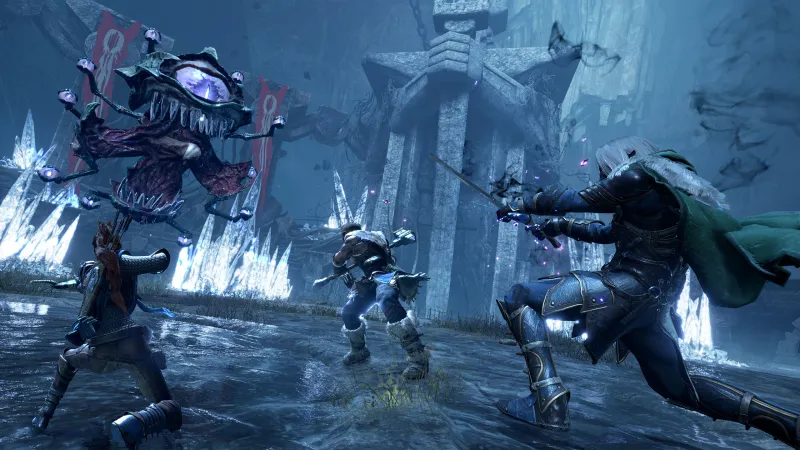
Wanting something to be good doesn’t make it so. I have a deep enthusiasm for the D&D tabletop game, fond memories of the R.A. Salvatore-penned novels that introduced these characters, and I was even excited about the revival of the cooperative Dark Alliance title from 20 years ago – I am the target audience for this fantasy action/RPG. Those preconditions are enough to make Dark Alliance a passable adventure in its early hours, especially when enjoyed with friends. But the deeper I played, the more the level design, character progression, cooperative elements, story, and combat mechanics began to fall apart, leaving the outline of an engaging adventure, but with few of the requisite features to fill in the middle.

The original Dark Alliance offered an isometric adventure in the vein of Diablo, but this new incarnation switches to a more engaged third-person perspective, with a big focus on stringing together combat moves, dodging out of danger, and even jumping and traversal elements. I like the emergent approach to attacks, which encourages players to combine light, heavy, and special moves to create their own favorite assaults. Unfortunately, the fundamentals of a tight melee exchange aren’t there. Hit detection is dicey, and bad physics lead to weird moments, and even insta-death for both you and enemy minions and bosses. Characters feel unwieldy and sluggish, refusing to break out of certain animations, and take too long to drink life-saving potions. Stagger mechanics regularly take away control, leading to a sense of frustration and powerlessness as the bad guys rail on your unresponsive hero.

Click here to watch embedded media

Levels are large and have lots of optional paths full of extra treasure, and I enjoy the variety of environments to discover over the course of play. But some sequences are meandering, with more than a little backtracking. And some are simply too long, especially since the game doesn’t allow for drop-in play during missions. The burden of these longer quests is at odds with the casual hack-and-slash feel of the broader game. The enjoyability of the levels is also held back by lackluster visual fidelity on most characters, environments, and monsters; everything lacks the coat of polish needed to compete in the current landscape of remarkably beautiful games

Multiple selectable difficulties before each mission allow for proportionately higher rewards in gold and equipment. And I quite like the “push your luck” mechanic during a mission, where you can forgo short rests to boost your gear rarity. However, all but the lowest challenge levels are effectively inaccessible to solo players, as the game is clearly balanced with cooperative play in mind. That’s well and good if you’ve consistently got a group of two or three friends at hand, but you’re in trouble if you don’t. The online matchmaking is a mess, frequently failing on a technical level to make a connection. When it does match, there are almost no options for how to cater the group to the challenge or level that each player needs, so potential squadmates are often rightfully dropping to try and find a group that matches their goals.

The matchmaking problems and failure to balance for solo play have a cascading negative effect on progression. The quality of your equipment eventually plateaus, since higher tiers of gear only show up in higher difficulties, and those difficulties offer constant one-hit kills from enemies, especially since your gear is too low to fight them. You can wait to find a team that happens to be doing a mission you want to do at the appropriate difficulty, or create a custom game at that level and hope you have players of an adequate level join from the random queue, but it’s all just a headache that encourages you instead to simply move on to a new game.

Click image thumbnails to view larger version


Developer Tuque Games has a clear affection for both the Forgotten Realms D&D setting, and the storied characters like Drizzt and Wulfgar who are the game’s leads. That affection manifests as a wealth of lore for faithful fans, and the developer has gone to great pains to slot this narrative into an appropriate place within the companions’ previously chronicled journeys. But the tales at hand all feel disjointed and lack cohesion, linking together to create a vague string of barely connected adventures, which never really go anywhere. From beholders to dragons, I had fun seeing some iconic creatures from the tabletop role-playing game make an appearance, but the potential for genuine storytelling or character development is lost in the ceaseless swing of scimitars and hammers.

With multiple collectible gear sets, magic-infused combat, and characters with distinct powers, building up a fun rhythm of play is possible, especially if you choose to tackle the entire game with a consistent group of players who stay in pace with each other’s progress. But even then, the cracks in the core experience are apparent. I wanted to have fun with Dark Alliance’s breezy adventures through a familiar fantasy world, but too many elements left me disappointed, and even the flashing weapons wielded by the Companions of the Hall weren’t enough to blind me to what was missing.

Score: 6

Summary: Affection for the brand and characters may maintain interest if playing with friends, but this by-the-numbers action/RPG has some big problems.

Concept: Team up as well-known D&D characters to take on goblins, giants, and dragons in a by-the-numbers looter

Graphics: Muddy environment textures and drab main character models add up to a game that simply doesn’t meet visual expectations

Sound: Voice acting is solid, and the music is familiar fantasy fare

Playability: Deep problems in control, hit detection, an over-reliance on stagger mechanics, and a poor approach to balancing all hold back the skeleton of a solid combat system

Entertainment: Hacking and slashing with friends is always fun, but Dark Alliance has too many problems to recommend when so many other cooperative experiences offer more

Replay: Moderately Low

Click to Purchase