This is default featured slide 1 title

Go to Blogger edit html and find these sentences.Now replace these sentences with your own descriptions.This theme is Bloggerized by Lasantha Bandara - Premiumbloggertemplates.com.

This is default featured slide 2 title

Go to Blogger edit html and find these sentences.Now replace these sentences with your own descriptions.This theme is Bloggerized by Lasantha Bandara - Premiumbloggertemplates.com.

This is default featured slide 3 title

Go to Blogger edit html and find these sentences.Now replace these sentences with your own descriptions.This theme is Bloggerized by Lasantha Bandara - Premiumbloggertemplates.com.

This is default featured slide 4 title

Go to Blogger edit html and find these sentences.Now replace these sentences with your own descriptions.This theme is Bloggerized by Lasantha Bandara - Premiumbloggertemplates.com.

This is default featured slide 5 title

Go to Blogger edit html and find these sentences.Now replace these sentences with your own descriptions.This theme is Bloggerized by Lasantha Bandara - Premiumbloggertemplates.com.

Monday, October 3, 2022

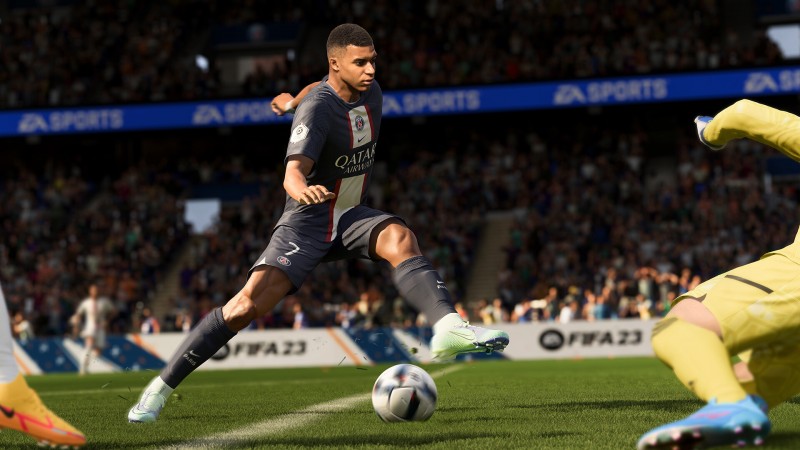
FIFA 23 Review - Form Is Temporary

FIFA 23

Reviewed on: Xbox Series X/S
Platform: PlayStation 5, Xbox Series X/S, PlayStation 4, Xbox One, PC
Publisher: Electronic Arts
Developer: EA Canada
Rating: Everyone

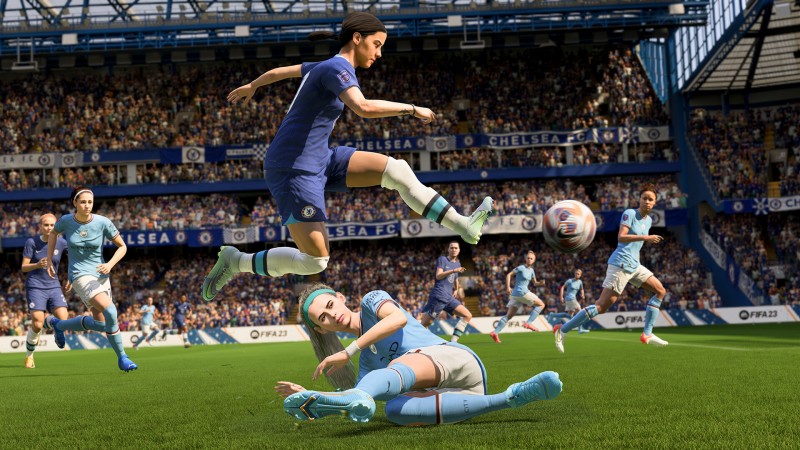
Much like my Liverpool fandom over the past 20 years, I vacillate between happily obsessive and begrudgingly bewildered with FIFA. Like Liverpool, when FIFA works like a well-oiled machine, play on the field is beautiful, slick, and drives my football-loving brain to elation with dopamine hits. However, FIFA 23 feels like FIFA 22, which was similar to FIFA 21, with additions ranging from mildly impactful to invigorating.

FIFA has focused on one facet of soccer for years: the attack. It’s almost arcade-like when you feel how quickly and smoothly players change pace from a controlled dribble to a sprint. Cross-field balls behind defenders for a winger to rush onto are exhilarating. The much-debated trick stick is hard to master, but even a couple of flicks can launch an audacious stepover or the famous Maradona spin to beat a defender.

EA’s HyperMotion2 technology enables more natural animations between dribbling and shooting, but it’s barely noticeable even during replays. Most goals look similar to those scored in FIFA 22, which isn’t bad. It’s just that HyperMotion2 doesn’t revolutionize the presentation, making it feel like just another yearly update that is just a bit smoother.

 

One positive addition this year is the ability to play “Moments” in Ultimate Team. Reminiscent of FIFA 2006 World Cup’s global challenge mode, you play different scenarios, like overcoming a two-goal deficit beginning with a penalty kick in the 70th minute of a match. These scenarios reward stars used to unlock cards like Ted Lasso and his right-hand-man Coach Beard for Ultimate Team. It’s a fun and quick way to grind for cards.

Chemistry in Ultimate Team provides stat boosts to your players if you assemble a team with players in the correct position and of the same nationality or league, and it accumulates differently this year. Players can earn up to three chemistry points, but this time, you can hit chemistry maxes with, for example, an English attack and a La Liga backline, allowing for more satisfying and creative team building. 

Career mode is more robust this year, offering fun for those looking to go through a season solo with their created avatar or a real-world player. Players must complete targets set in-game to please the manager, but it still feels like only scoring and assisting matter to your rating instead of simply staying in position and completing passes. What does spruce it up quite a bit is the addition of Playable Highlights during your player or manager career.

You take control during the Playable Highlight to try to score or stop the opposition from putting the ball in the back of the net. These fun little snapshots of a match let you change a simulated 2-0 outcome to a 4-0 one, but it does make it harder to hit your avatar’s goals as you will mostly control others on the team. Off the pitch, you can sign investment deals to earn money and partake in activities to bolster your stats or earn points in either the Maverick, Virtuoso, or Heartbeat personality types. Each unlocks different skills for your player, like stamina or volleying ability, based on whether you prefer dribbling, passing, or shooting.

Adding women’s club soccer is long overdue, but it doesn’t bring the attention it deserves. You have a scant number of national teams, plus the professional French and English leagues, for use in classic matches, seasons, and cups. However, they aren’t in Career or Ultimate Team, meaning if you were hoping to pair up Alex Morgan and Jordan Pefok on your FUT squad, you’re out of luck.

There’s a famous saying from former footballer Gary Lineker that “football is a simple game – 22 men chase a ball for 90 minutes – and at the end, the Germans always win.” I want to make a similar assessment of EA’s yearly soccer game: FIFA 23 is a good game – it’s flashy, fun to play, and has a lot of modes – but in the end, you realize it’s mostly the same game you’ve been playing for years.
Score: 7.25

About Game Informer's review system

Purchase

Dorfromantik Review – Falling Into Place

Reviewed on: Switch
Platform: Switch, PC
Publisher: Toukana Interactive
Developer: Toukana Interactive

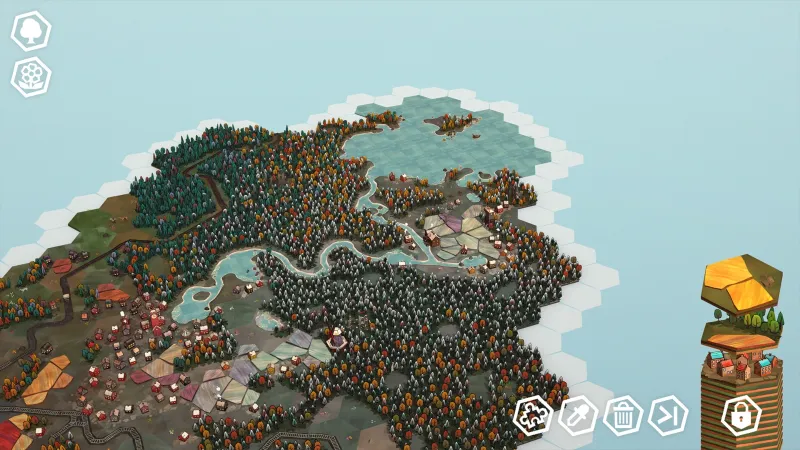
Once you get past its bizarre name, Dorfromantik offers simple, relaxing sessions of tile-matching puzzle goodness. Connecting hexagons to build pretty landscapes offers the thoughtful strategy of a city-builder to provide a stimulating yet overwhelmingly Zen atmosphere. 

Fans of the board game Carcassonne should quickly grasp Dorfromantik's concept of drawing random tiles and finding high-scoring – and aesthetically pleasing – ways to place them on the field based on their scenery. Tiles only fit next to those with corresponding edges; railroad tiles connect with railroads, rivers merge with other bodies of water, and so on. Creating expansive forests or sprawling villages reward more points, and I enjoy the challenge of finding optimal ways to make pieces fit. Completing sections of the map and watching boats sail across my pretzel-like waterways is a small but satisfying touch because of how it brings my model cities to life. 

The classic experience presents objectives, such as building towns to a specific size, to provide nuggets of purpose to make the otherwise freeform experience engaging. You don’t have to complete these tasks, but I always delight in closing the loop on a plot of land I spent ages building up and watching my score skyrocket. Expanding your board can unlock new types of tiles, such as windmills, water wheels, and even new biomes to spice up the draw pool. Seeing the field evolve from the standard lush green to a patchwork of darker, barren earth or snow-frosted trees freshens the visual variety. 

I appreciate how Dorfromantik's selection of modes provides several options for enjoying the experience based on my mood. A Creative Mode allows for building without restriction, even letting you discard ill-fitting tiles. Conversely, Hard Mode offers a steeper challenge with more complex pieces. Quick Mode condenses the game into shorter sessions, great for knocking out quick rounds while on the go. The Monthly Mode mixes up the game long-term with new batches of custom rules each month. 

I spent a substantial amount of time playing the PC version of Dorfromantik when it launched in early access last year. The experience translates well to Switch, though using controller inputs to move tiles and the camera is, unsurprisingly, less intuitive than the snappy precision of a mouse. It's not bad by any means, though it is my least preferred way to play. That said, it's a fair trade-off for the perk of tile-matching in bed or on the couch. Plus, the simple yet colorful art direction, which has a hand-drawn quality, pops on the small screen. 

Dorfromantik balances its strategic and cozy elements well, and it's easy to fall into a serene trance of dropping tiles. Pulling the camera back to reveal the full scope of my landscape always feels like a satisfying reward for my subtle, hard work, much like stepping back to admire a finished painting. While it's not the sort of puzzle game I feel compelled to play more than a session or two a day, I always appreciate the improved mood with which it leaves me.

Score: 8

About Game Informer's review system

Purchase

Thursday, September 29, 2022

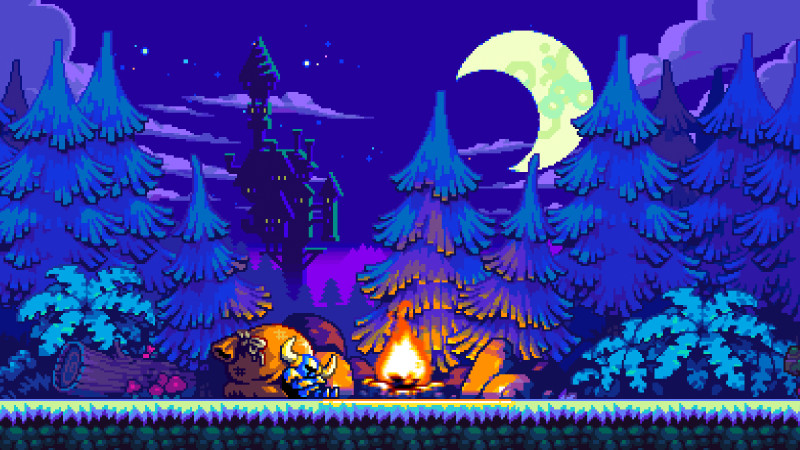
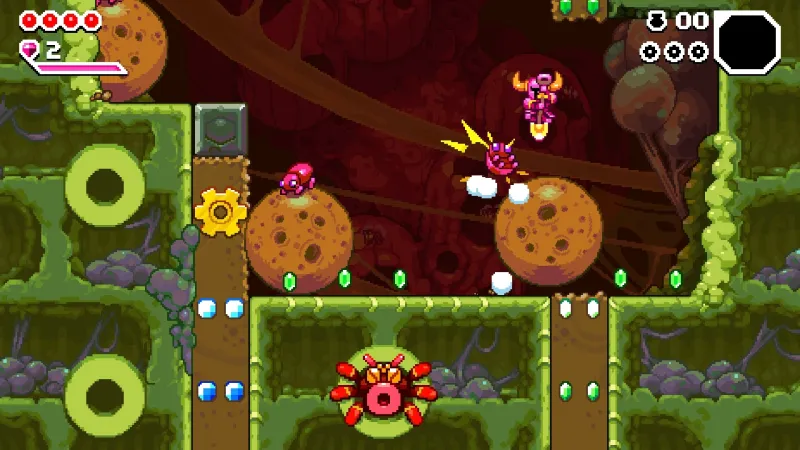
Shovel Knight Dig Review – Digging Down In Glory

Shovel Knight Dig Game Informer Review

Reviewed on: PC
Platform: Switch, PC, iOS
Publisher: Yacht Club Games
Developer: Nitrome, Yacht Club Games

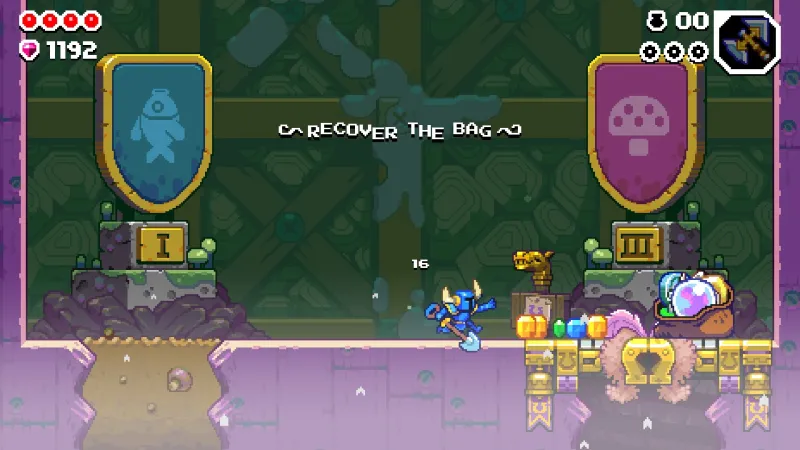
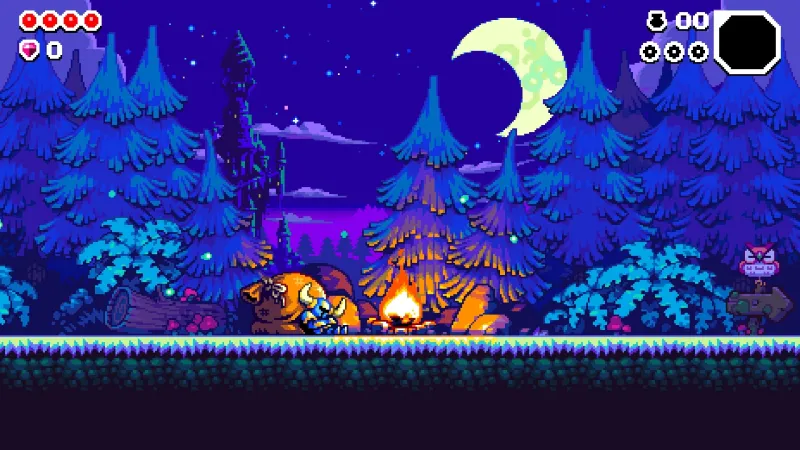
The second I began Shovel Knight Dig, it felt like returning home. As someone who hadn’t played most of Shovel Knight’s post-launch DLC, the last time I touched this series was nearly a decade ago. Gaining control of the titular character immediately felt familiar, and my old Shovel Knight habits returned to greet this new take on the series, led by developer Nitrome this time. The moment-to-moment experience plays excellently, in part because it’s more Shovel Knight with some well-designed gameplay twists. However, the game’s venture into roguelite territory feels inessential and so light-stepped that it didn’t convince me it needed to be a part of this ever-expanding genre. Still, Shovel Knight Dig is more Shovel Knight, meaning retro-game and platforming enthusiasts will find great enjoyment throughout. 

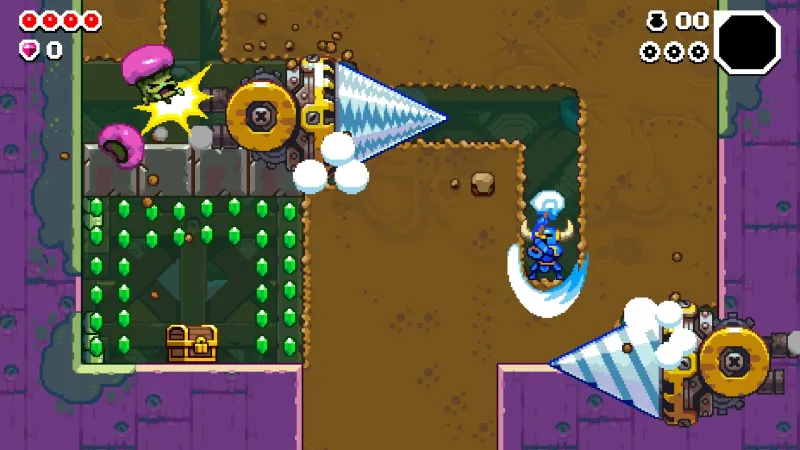
Rather than moving right through a beautifully pixelated stage, Dig tasks players with digging down, deeper and deeper into procedurally generated levels. This presents new feelings in the pantheon of emotions I feel while playing a Shovel Knight game: urgency and stress. Unlike many platformers out there, you can’t take the time to observe where you must go and how best to get there. You have to keep digging down and while going back up a few spaces is possible, it’s not easy. You’re not meant to backtrack because your goal is far below you. If you miss some gems or one of the stage’s three machine cogs, which unlock a special bonus reward, you probably missed your chance. 


On top of that, if you spend too long in any one place, the antagonist Drill Knight will use a massive one-hit-kill excavation machine to bury you deeper into the Smeltworks, Secret Fountain, Grub Pit, or one of the game’s other stages. I like this added stress to Dig’s platforming, which largely feels identical to that of the original Shovel Knight game. 

After completing three stages in a given lair, you face a boss. I love these boss fights, but they’re disappointing in the context of Dig. They feel like Shovel Knight bosses, fast-paced and fun, but they don’t take advantage of the new mechanics specific to Dig. You jump around an arena attempting to damage a boss while dodging their attacks. Only the final boss implements the game’s unique dig platforming mechanics and I wish this type of design was present in the multiple other opponents I faced before this one. 

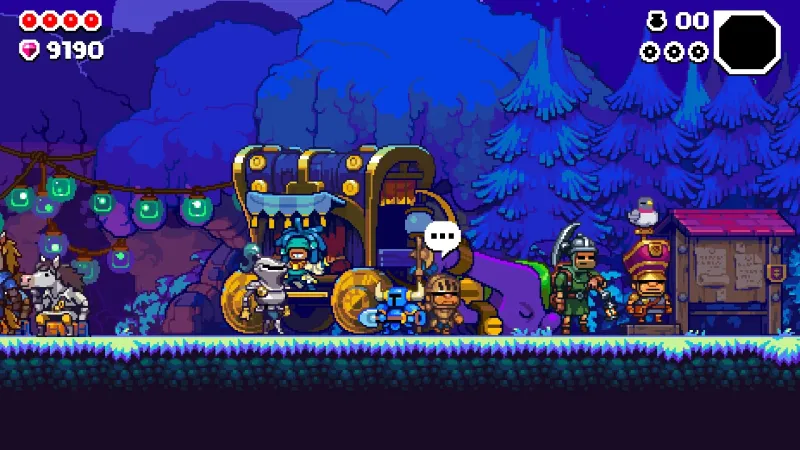
The hours I spent digging down through stage after stage, I rarely felt like I was playing a roguelite. It was only when I died and returned to above ground, which is where a camp of NPCs you’ve met and shopkeepers reside, that I was reminded of the game’s tip-toe into roguelite mechanics. You lose your stage progress and some of your gems upon death, but these losses are so minuscule that I never felt compelled to go out of my way to retrieve my lost currency in the next run. 


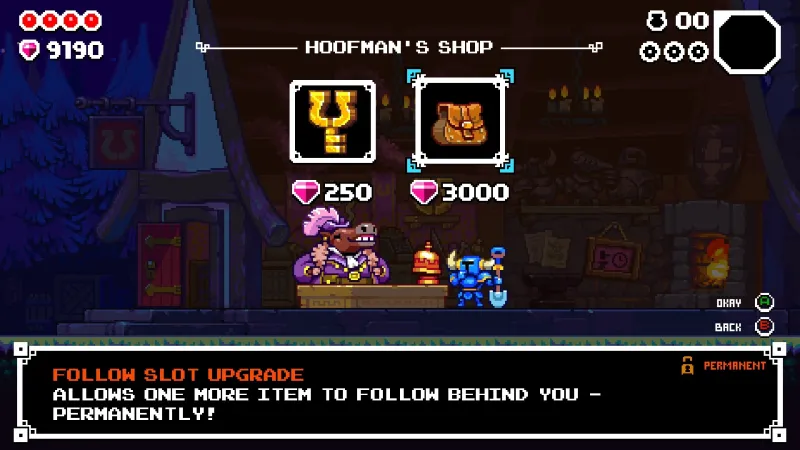
I also never felt the need to equip new sets of armor, which can only be purchased after finding templates of them in secret areas scattered throughout the various stages. In fact, the only permanent upgrade I could make was to my bag, which allowed me to hold onto more than one item, like a door or chest key, at a time. Part of the fun of a roguelite is tracking your progression and growing more powerful each run, but in Dig, each run felt like a brand new start. I didn’t hate this, but it’s not my cup of tea. 

Still though, because most of my eight hours with Dig were spent spelunking through stages leading down, I rarely had to think about the game’s roguelite efforts. I spent most of my time playing through beautiful stages to the tune of chippy synth tunes, fascinated with how far Nitrome and Yacht Club were able to stretch the “dig” aspect of this game. Perhaps the roguelite nature of Dig will play a bigger role in my post-game excavations because I’m rearing to jump back in to discover all of its secrets. Even if it doesn’t, though, I know I still have at least a few more hours of great Shovel Knight gameplay ahead of me and in the world of platforming, that’s a treasure worth digging up.

Score: 8

About Game Informer's review system

Purchase