This is default featured slide 1 title

Go to Blogger edit html and find these sentences.Now replace these sentences with your own descriptions.This theme is Bloggerized by Lasantha Bandara - Premiumbloggertemplates.com.

This is default featured slide 2 title

Go to Blogger edit html and find these sentences.Now replace these sentences with your own descriptions.This theme is Bloggerized by Lasantha Bandara - Premiumbloggertemplates.com.

This is default featured slide 3 title

Go to Blogger edit html and find these sentences.Now replace these sentences with your own descriptions.This theme is Bloggerized by Lasantha Bandara - Premiumbloggertemplates.com.

This is default featured slide 4 title

Go to Blogger edit html and find these sentences.Now replace these sentences with your own descriptions.This theme is Bloggerized by Lasantha Bandara - Premiumbloggertemplates.com.

This is default featured slide 5 title

Go to Blogger edit html and find these sentences.Now replace these sentences with your own descriptions.This theme is Bloggerized by Lasantha Bandara - Premiumbloggertemplates.com.

Wednesday, January 18, 2023

Lil Gator Game Review - Scaly Sentimentality

Lil Gator Game

Reviewed on: Switch
Platform: Switch, PC
Publisher: Playtonic Friends
Developer: MegaWobble

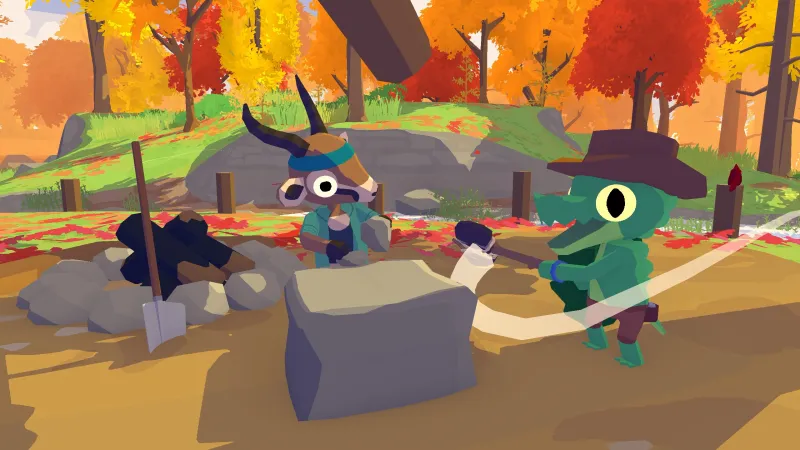
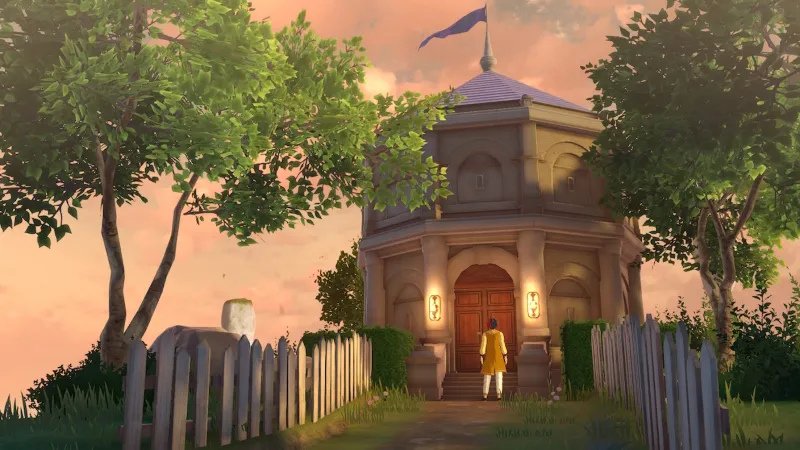
Everyone has something they loved spending time with in the past – a restaurant, a daily-play video game, a group of friends – only to one day unknowingly enjoy doing so for the final time. It's a poignant and often heartbreaking truth of how places evolve, tastes change, and priorities divert as we all grow older. For the eponymous hero in Lil Gator Game, that activity is live-action role-playing with his big sis. With his sister home from college, Gator assembles a master plan to pry her away from her coursework for one more game. The resulting adventure is a short, cute, Zelda-inspired romp that conjures our own bittersweet nostalgia for the activities, places, and people we once spent our days with but no longer do for one reason or another.

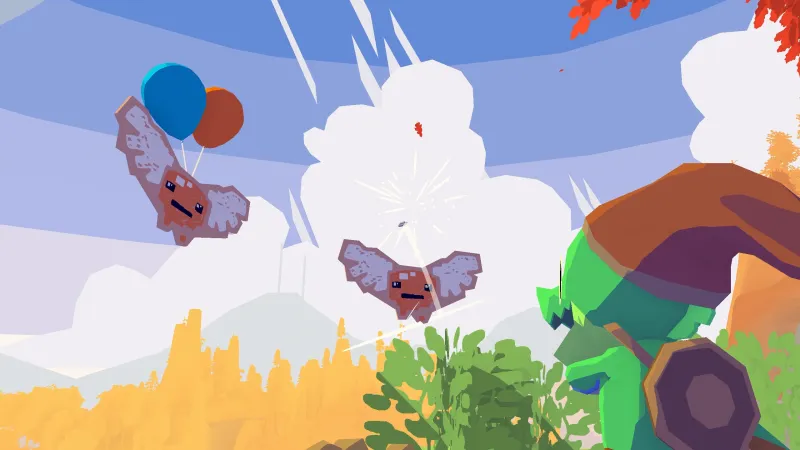
Like the play session the protagonist wants to enjoy with his sister, Lil Gator Game draws heavy inspiration from The Legend of Zelda franchise. Though Gator's plan boils down to recruiting friends to decorate and role-play at the playground, it unfolds like a grand adventure. Cardboard cut-outs of fantasy mainstays like slimes, bats, and carnivorous plants populate every corner of the islands, giving you "enemies" to slash down and collect loot from. Though they take on the appearance of these fantasy-adventure baddies, they are inanimate and essentially sword fodder and window dressing. Still, taking them out is satisfying and rewarding as they crumble enjoyably and drop the primary currency for mostly cosmetic items.
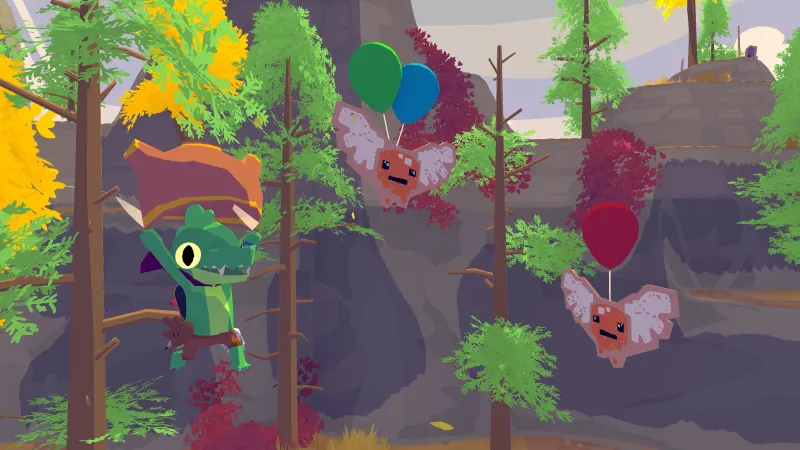
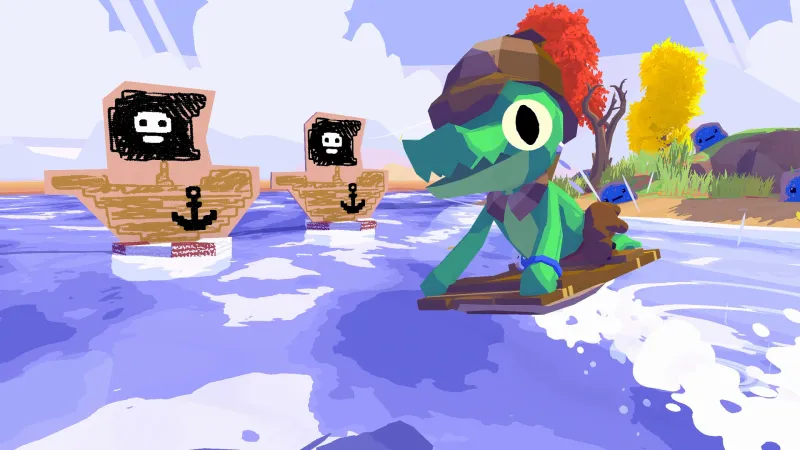
 

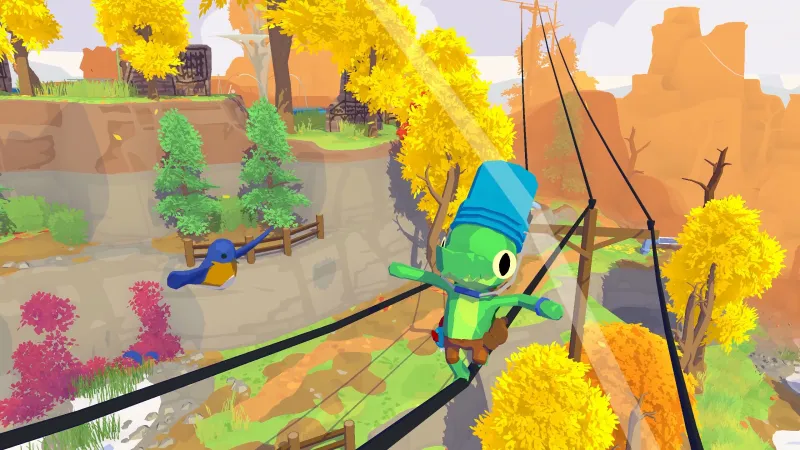
Exploration is the primary focus of Lil Gator Game, as Gator scours the islands for friends to help him renovate the playground. Gator can climb any surface (complete with an upgradeable stamina bar), swim, jump, and paraglide in search of his fellow anthropomorphic island dwellers. Exploration is often intuitive, boiling down to climbing to the highest area to find the nearest friend, then navigating to them. However, with several places in the picturesque main island appearing similar and no access to a minimap, it's easy to get turned around.

Once you find other animals, they often have a small quest for you to complete before joining your cause. I'm typically not the biggest fetch-quest fan, but these are wholesome and quick enough that I didn't mind them. Quests range from sledding down hills on your shield to helping the other animals play their games; one thematically consistent quest required me to interrupt a mom's work call so she could attend a tea party with her daughter. Each mission you complete adds friends to your playground, paving the way for the next upgrade. Lil Gator Game's handful of main quests require you to recruit high-value animals like a theater troupe or "the cool kids" to join your game, and consist of multiple parts. Though most of the quests are uneventful and repetitive, I loved checking them off my to-do list and adding the NPCs to my playground; I even went back after I rolled credits to recruit the remaining friends.

As you navigate the islands, you also uncover memories from Gator's younger days playing with his sister. These are nothing more than quick monologue drops as Gator stumbles upon areas, but they went a long way to making me feel more invested in the modern-day story. I don't want to spoil the narrative, but it culminates in several endearing meditations on the importance of being present, even as your life changes and your priorities shift. As we get older, the world sets expectations for us, and achieving those expectations often comes at the cost of things we once enjoyed. Nothing lasts forever, and Lil Gator Game reminds us that while it's good to be responsible, we should always maintain that childlike sense of wonder, imagination, and fun. 

Lil Gator Game is as short as it is sweet, with the main story lasting just under five hours, but that's all it needs to be. I loved exploring each nook and cranny of the world during that time for new friends, loot, and memories. By the time the story wrapped up, the game had delivered a poignant and touching message about balancing the important parts of our lives. Lil Gator Game isn't the best Zelda-like I've played, but it's probably the one that will stick with me for the longest.

Score: 8.5

About Game Informer's review system

Purchase

Tuesday, January 17, 2023

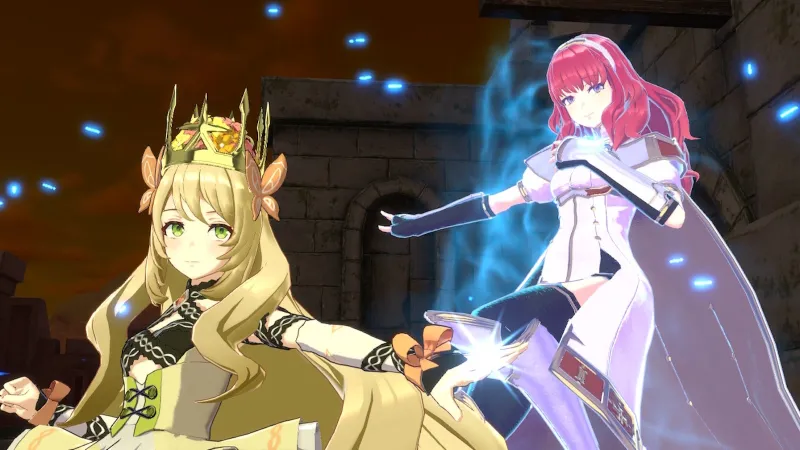
Fire Emblem Engage Review – Propelling To The Future Using The Past

Fire Emblem Engage review game informer

Reviewed on: Switch
Platform: Switch
Publisher: Nintendo

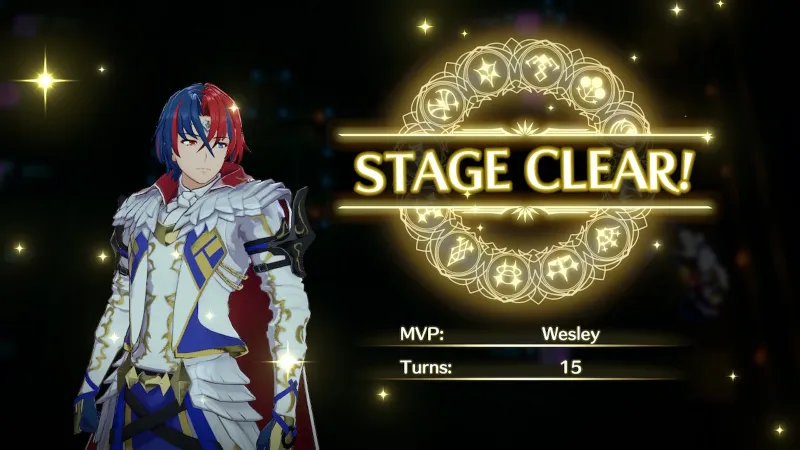
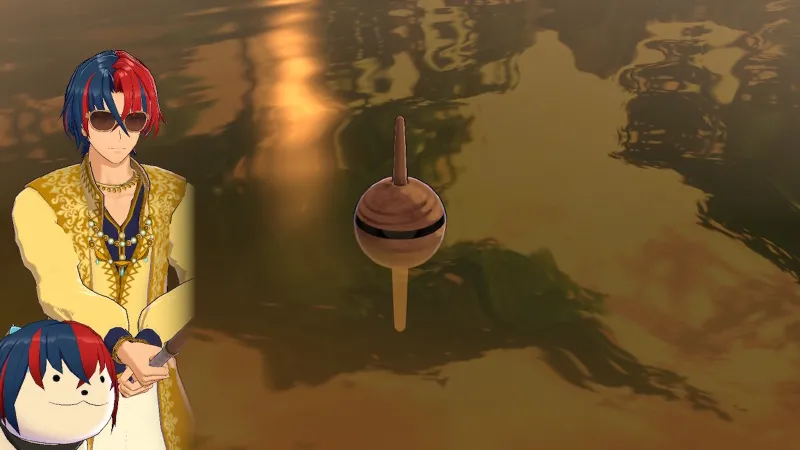
Fire Emblem Engage is the mainline follow-up, in name only, to 2019’s excellent Fire Emblem Three Houses. That game’s focus on story, characters, and its expanded social systems helped make it the best-selling in the series, creating new fans of the franchise out of those who had previously watched Fire Emblem flourish from a distance. I was one of those new converts three years ago, and while I was initially concerned if I was a Fire Emblem fan or just a Three Houses fan, Engage has solidified me in the former. Where Three Houses succeeded by emphasizing its larger-than-life heroes and social systems over combat, Engage triumphs in doing the opposite. Engage is a combat-first, everything-else-second strategy RPG, and although its story takes some time to become engrossing, battles are terrific from the jump and only get better. 

Engage’s story begins in a familiar way: A hero saves the world from the Fell Dragon, an evil divinity, and goes into a slumber afterward. They awake 1,000 years later only to discover their battlefield prowess is needed once more. This hero, your protagonist known as the Divine Dragon, must obtain all 12 Engage rings held by neighboring kingdoms. I was never bored by this narrative, but it was simple and often predictable for a large portion of my 50-hour playthrough. The last third of the game’s story further reeled me in with twists, turns, drama, and heart, though, and by the end of my playthrough, I laughed that I had written the story off initially.

Still, Engage is more straightforward; it’s a traditional fantasy story about saving the day, and while at times it’s melodramatic, I’d be lying if I said I wasn’t all-in on it, especially in the last third. Power Ranger-esque team-up moments left me smiling like a kid again, and I was sad to say goodbye to these characters when the credits began to roll. 

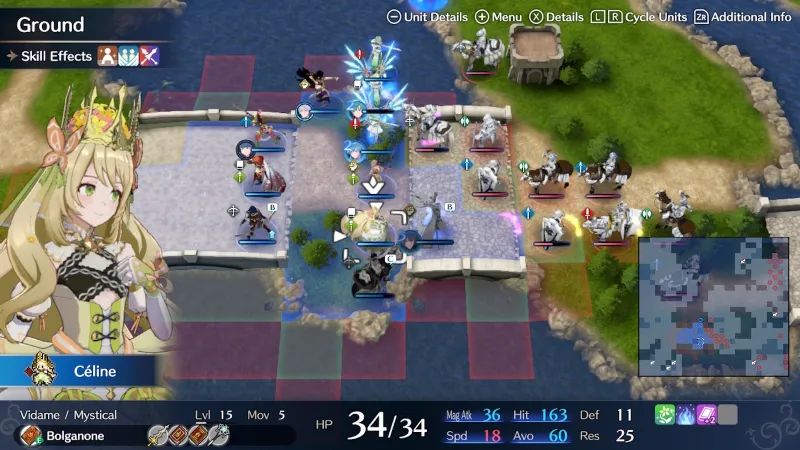
Engage’s combat is a return to form for the Fire Emblem series, bringing back the traditional rock-paper-scissors formula where lances beat swords, swords beat axes, and axes beat lances, while fisticuff fighters have an advantage over archers, mages, and thieves. It’s a simple fighting premise that works because it forces you to examine unit placement, movement, and strategy well in advance based on enemy positioning on a given map. And this formula is strengthened by a game that builds on the combat in virtually every sense; most everything you do ties back to what happens in battle, including the game’s namesake, Engage. 

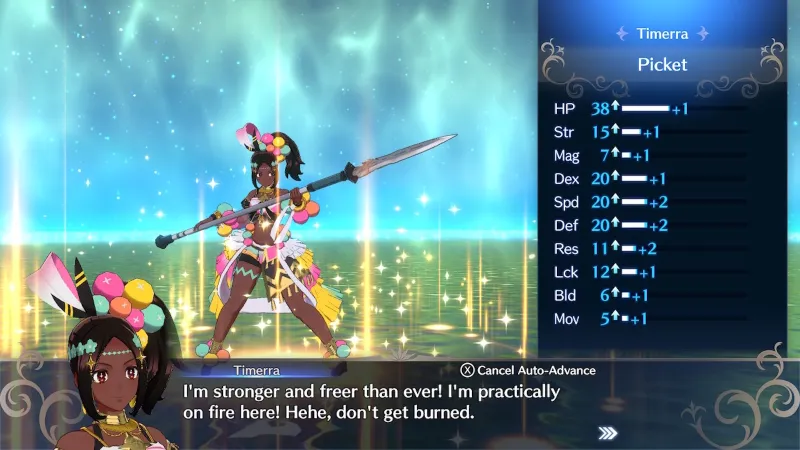
Each unit can wear an Emblem Ring, which gives them the ability to Engage or tap into that ring’s power fueled by the soul of a hero from Fire Emblem’s past. This brings series favorites like Marth, Lucina, Roy, Byleth, and more to the game, and while they aren’t the same person as the hero from their original world, they embody them, bringing a heaping dose of nostalgia to Engage for longtime fans.

For newer fans who might not realize the excitement behind these returns, the Engage mechanic is still a battlefield boon as it allows the wearer to physically change in appearance, almost embodying the past hero, to become significantly more powerful. When you Engage a unit, they get a special one-time move that usually does extreme damage (or healing), standard attacks are more devastating, some units can move even further, and their ability to dodge or withstand enemy attacks is strengthened.

The Engage mechanic felt overly powerful in the first half, but was still exciting to use nonetheless. The second half, however, is a stern reminder that strategy is still required in nearly every battle, including the Paralogue side quests, which is where Intelligent Systems really stretches its combat design prowess with challenging map layouts and matchups.

Social systems between units take a backseat to social standings with Emblem Ring heroes mechanically, but strangely, support conversations between units and heroes are short and shallow compared to those that happen between two unit members. Regardless, these conversations serve as small windows into a hero or unit member's personality, unlocked after ranking up to C, B, or A with someone. Like in previous entries, these support conversations aren't a requirement in Engage but are additional flavor for the game's various characters.

As the bond level between a unit and an Emblem Ring hero increases, so do the skills available to purchase. These skills and abilities, like increased luck or avoid, can be equipped for use even when not wearing a given ring. My Divine Dragon can, for example, equip traits from Marth’s ring even if he’s wearing an Emblem Ring of another hero. And even units that you never equip with an Emblem Ring can tap into these skills and abilities thanks to special Emblem bond training. 

Bond rings created by Emblem Ring heroes further expand the possibilities of combat-focused customization. You can create hundreds of bond rings, meld them to strengthen them further, polish Emblem Rings to increase bonds, and so much more. Engage’s various ring mechanics power much of what you’re doing in the game, but it’s also mostly optional. If you want to play it straight, it feels like you can do that in Engage, but if you’re looking for deep customization and optimization, that’s there too, and I appreciate that flexibility.


Ring creation happens at The Somniel, which is Engage’s open hub where virtually everything outside of combat, like cooking, shopping, and more, occurs. It’s also home to exercise minigames that temporarily boost a given stat in the next battle and a Wyvern riding minigame that earns you additional bond fragments. You can train in the Arena, fish, collect ingredients in the orchard, and explore this hub to find items. The Somniel is expansive enough but, in most ways, a step back to Three Houses’ monastery, which felt like a crucial pitstop in between every combat encounter and a place I came to know like the back of my hand. The Somniel never quite felt like home, but rather a place to strengthen my party for the next battle. Given the game’s focus on combat, though, this wasn’t surprising. Still, I was slightly disappointed it didn’t have more personality. 


The Somniel is also home to the multiplayer-focused Tower of Trials, which is where you can build maps, connect them to other players’ maps, and duke it out in Outrealm Trials. While this is neat in practice, Engage gives you the same square base to build on, and every map felt similar as a result, with the biggest differences coming from where I placed a fire cannon or something like destructible crystals. Every map I played on, including the ones I created, lacked the excitement, variance, and challenge of the developer-made maps in the single-player campaign.

There’s also the Tempest Trial, which has you fighting across multiple battles in one go for increased rewards, and the Relay Trial, which sees multiple players controlling the same units in a relay-style battle. But neither these nor the Outrealm Trials are things I see myself returning to post-game. They’re interesting additions but feel half-baked, only there for those who desperately need more after the core game’s dozens of combat encounters. 

Engage’s characters and social systems never quite hit the high bar set by Three Houses, but it does surpass its predecessor in almost every other way. Players looking for deep customization, expertly crafted strategy RPG combat, and a heartfelt story with adoration for more than 30 years of Fire Emblem history will find that and more in Engage. It’s one of the most gripping games I’ve played on Switch and, ultimately, one I struggled to peel myself away from. If Three Houses was an experiment with where Fire Emblem’s social mechanics can go, then Engage is doing the same for the series’ evolving combat, and excelling just as much, too.

GI Must Play

Score: 9

About Game Informer's review system

Purchase
Monday, January 16, 2023

One Piece Odyssey Review - Fuzzy Memories

One Piece Odyssey

Reviewed on: PlayStation 5
Platform: PlayStation 5, Xbox Series X/S, PlayStation 4, Xbox One, PC
Publisher: Bandai Namco
Developer: Ilca
Rating: Teen

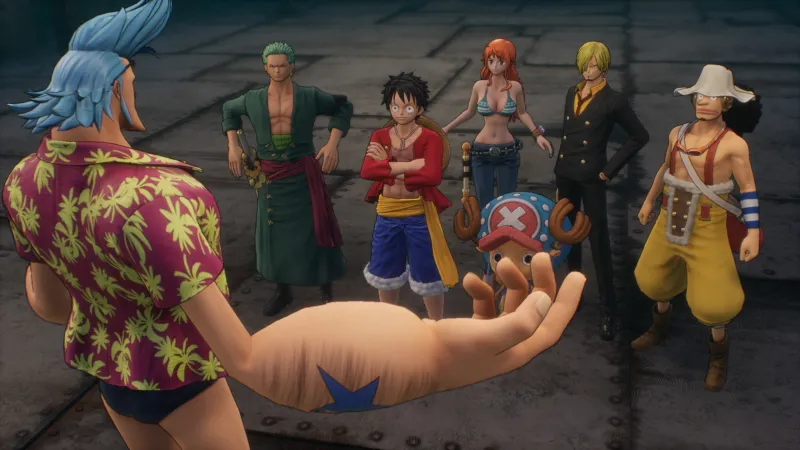
"You know how fuzzy memories can be." It's a convenient and hand-wavy line delivered by the new character Lim, warning the Straw Hat Pirates of the impending adventures into some of One Piece's most popular story arcs. Likewise, One Piece Odyssey can be a fuzzy experience. It oscillates between being thrilling and tedious. The promise of discovering "what if…?" scenarios is enticing for longtime fans, but it rarely follows through in a meaningful way. And as a potential introductory point for new fans, One Piece Odyssey falters as most of the context and characters in the core story flashbacks are stripped away. While I'm conflicted about my time with One Piece Odyssey, it's a testament to the series' RPG outing that I'm fond of the overall adventure despite some glaring holes throughout.

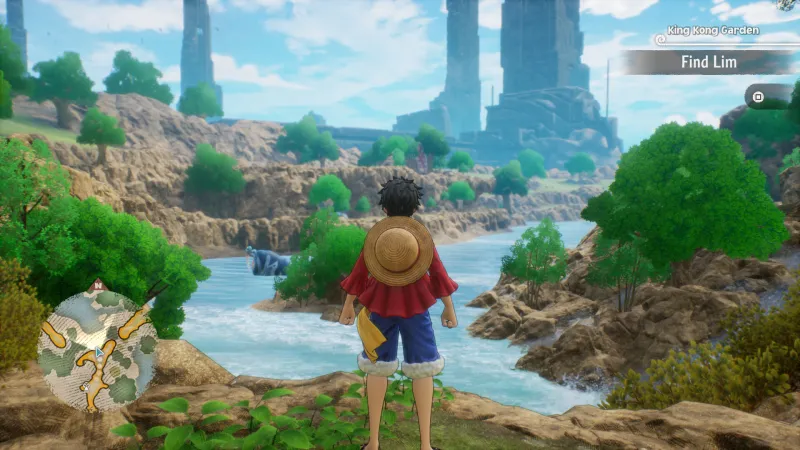
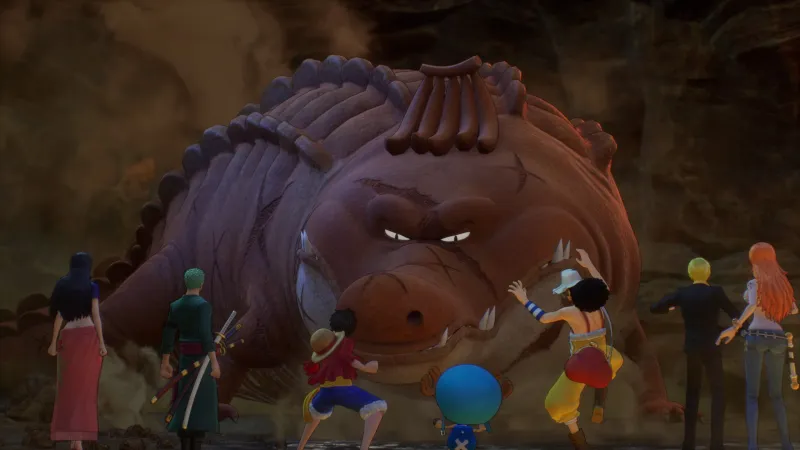
One Piece Odyssey's wholly original content starts slow but builds intrigue well every time I return to the island of Waford. That's where elastic outlaw Monkey D. Luffy and his notorious crew find themselves stranded. Trouble finds them quickly as a stoic girl named Lim uses her powers to separate Luffy and his friends from their strength and abilities, storing them in mystical cubes scattered around the island. Along with her caretaker, an explorer named Adio, Lim helps restore the Straw Hats' power. To do that, they must enter a world of memories to recover what was lost. 


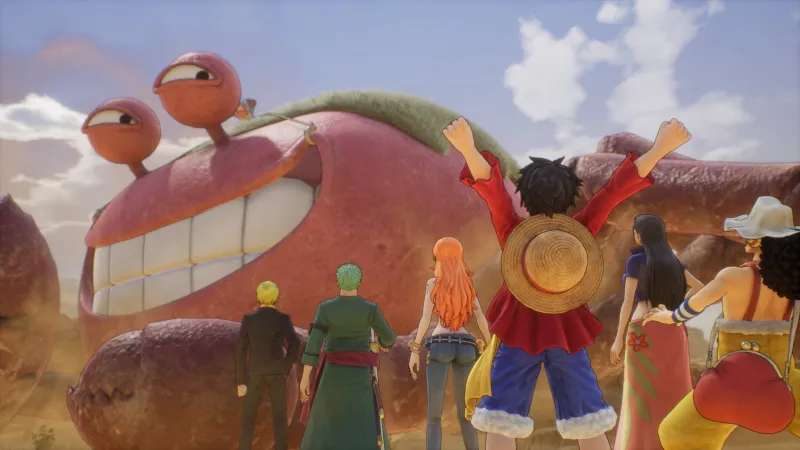
These early hours introduce not only turn-based battles but also exploration. Most Straw Hat crew members can be switched between while traversing the world, each with unique and valuable skills that fit naturally with the character. Being a rubber man, Luffy can stretch his arms to grapple to areas in the environment not accessible to other characters or snag sparkling trinkets in the distance. Likewise, Chopper's small frame allows passage into tight spaces only he can fit. Crafting systems, such as cooking healing items with Sanji and forging accessories with Robin, are delightful touches that extend the characters' ship roles meaningfully into the gameplay. Combined with the authentic dialogue between the crew, One Piece Odyssey wonderfully realizes who these characters are.

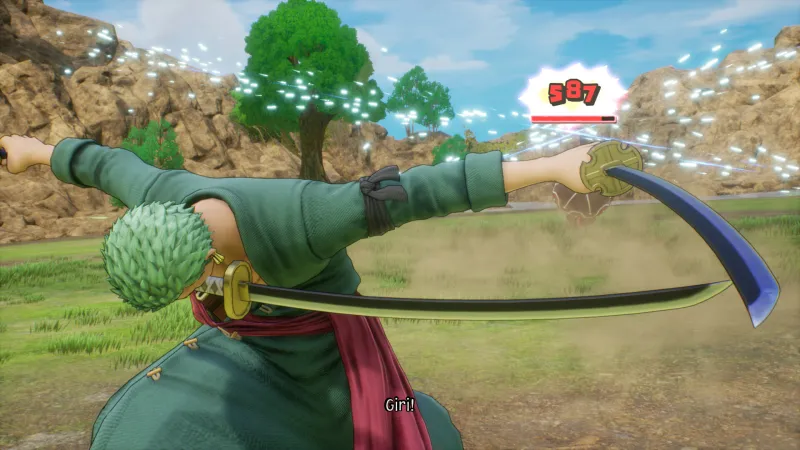
With a mix of sketched and realistic textures, One Piece creator Eiichiro Oda's style translates spectacularly into the character models and world. Areas like Alabasta and Water Seven are well-realized, along with the creatures and funky-looking characters inhabiting them. The signature attacks of the crew, like Zoro's sword techniques or Chopper's transformational Devil Fruit powers, are killer in motion. The anime's Japanese VO cast also adds a welcome level of authenticity, making Odyssey feel like another chapter of the anime. While the addition of English VO or the anime's score and theme music would have been appreciated, what's there works well.

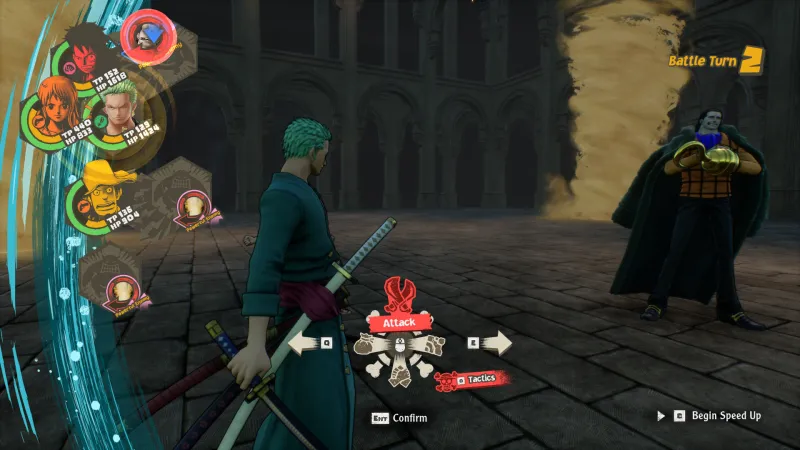
The attention to detail is on full display in Odyssey's turn-based battles, which like Luffy, have an abundance of flexibility. Maybe too much. Combat feels grand, splitting the crew into multiple micro-battles, usually making them fight their enemies before helping elsewhere unless ranged or AOE abilities are on hand. The process of picking off enemies and then consolidating the full force to clean up the surviving foes is satisfying, as is completing bonus objectives that reward additional experience. What helps make fights a little too easy is the option to swap the position of any character at any time with no penalty, as long as they haven't attacked. Exchanging the places of Nami and Brook, who are supposed to be tied down in different zones, feels like cheating. The battle system has a lot of potential but not enough restraint to make it truly special. 

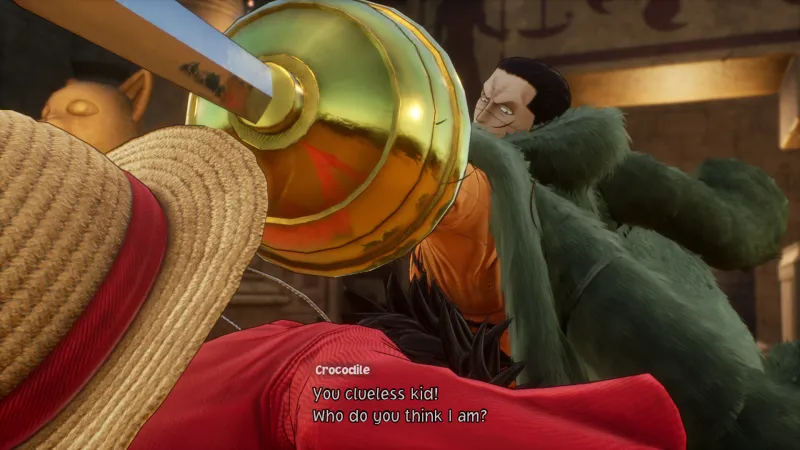
While the initial adventures into Memoria drag, the second half picks up considerably as the action and the stakes in Memoria and on Waford hit a fever pitch. Much of the content Odyssey revisits is underwhelming, and void of context for the events at hand, save for some lore dumps in the game's menus. Still, critical moments in the final hours had me in awe, thanks to fun hypothetical situations with characters that didn't happen in the canon story. I wish more of those moments were spread throughout One Piece Odyssey to make better use of the wonderful settings and characters on hand.

I have reservations about the experience as a whole – however, I can't help but smile thinking about this adventure with the Straw Hats. It nails the core cast of characters, the Memoria areas are fun to revisit, and the revelations surrounding Waford, Lim, and Adio ultimately satisfy. Of course, I can't thoroughly recommend this voyage for someone new to One Piece, but seasoned pirates will find a worthy adventure on the horizon.

Score: 7.5

About Game Informer's review system

Purchase